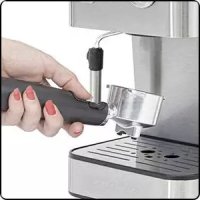
PCES 1209 - Coffee machine PROFICOOK - Free user manual and instructions
Find the device manual for free PCES 1209 PROFICOOK in PDF.

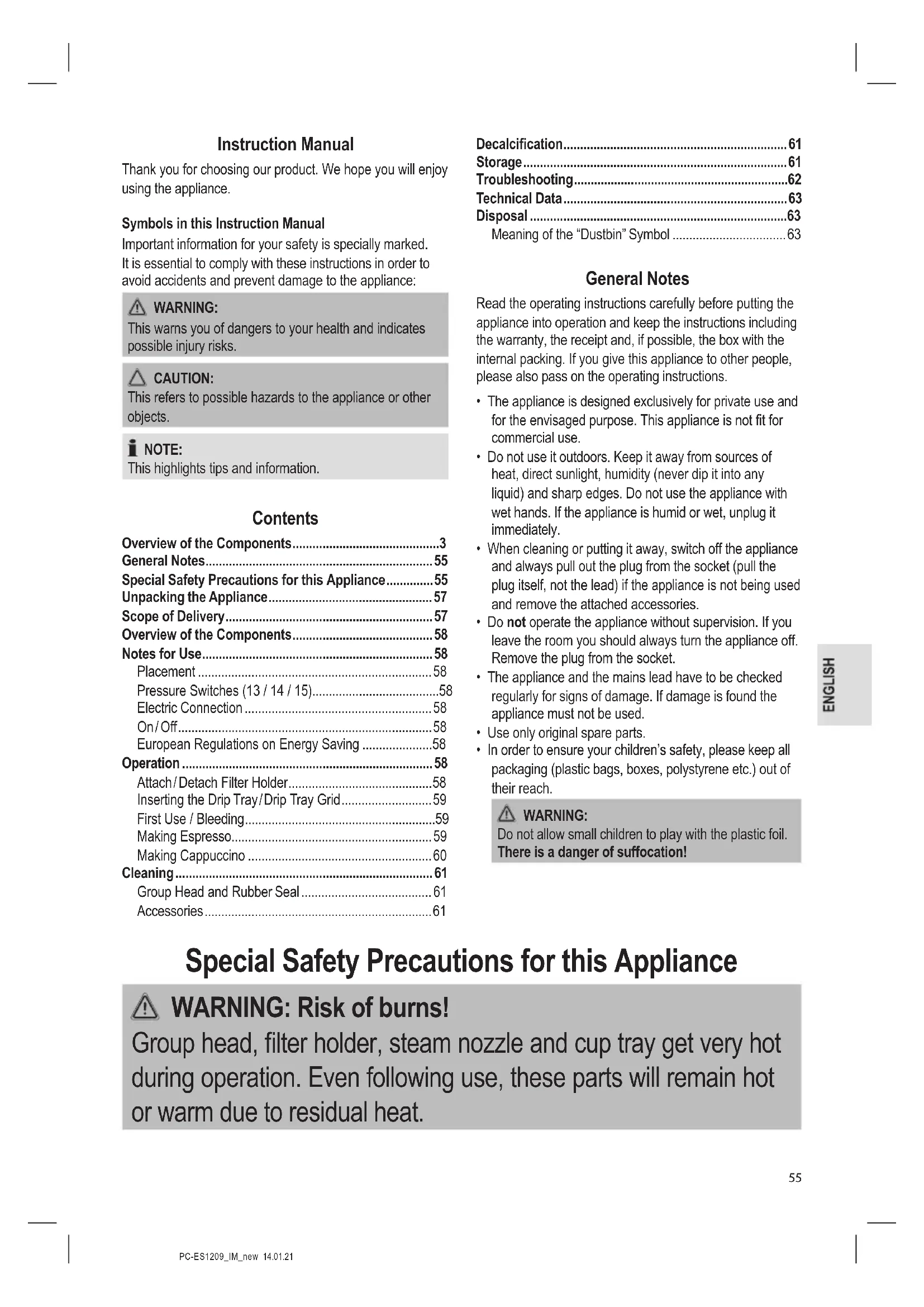


| Product type | Espresso machine with steam nozzle |
| Brand | ProfiCook |
| Model | PC-ES 1209 |
| Power supply | 220-240 V ~, 50/60 Hz |
| Power consumption | 850 W |
| Pressure | 20 bar |
| Water tank capacity | 1.8 L max. |
| Net weight | Approximately 4 kg |
| Protection class | I |
| Main functions | Espresso, cappuccino, steam for milk |
| Included accessories | Removable water tank, filter holder, filter baskets for 1 and 2 cups, drip tray with grid, float, measuring spoon/tamper |
| Maintenance and cleaning | Regular descaling recommended; clean steam nozzle after each use; do not use in dishwasher |
| Safety | Automatic shut-off after 20 min; burn protection (do not touch hot parts) |
| General information | Household use only; do not immerse in water |
Frequently Asked Questions - PCES 1209 PROFICOOK
User questions about PCES 1209 PROFICOOK
0 question about this device. Answer the ones you know or ask your own.
Ask a new question about this device
Download the instructions for your Coffee machine in PDF format for free! Find your manual PCES 1209 - PROFICOOK and take your electronic device back in hand. On this page are published all the documents necessary for the use of your device. PCES 1209 by PROFICOOK.
USER MANUAL PCES 1209 PROFICOOK
natural_image
Modern espresso machine with two white cups on a metal tray, no visible text or symbols on the device itself.Espressoautomat PC-ES 1209
Espressomachine • Machine à expresso • Máquina de espresso Macchina per caffé espresso • Espresso Machine • Ekspres do kawy Eszpresszó kávéfőző • Кофеварка эспрессо • ماكينة صنع الابسيسو
CE
Bedienungsanleitung......Seite 4
Gebruiksaanwijzing......Pagina 15
Mode d'emploi.... Page 25
Manual de instrucciones ...... Página 35
Istruzioni per l'uso....Pagina 45
Instruction Manual...... Page 55
Instrukcja obsługi......Strona 64
Használati utasítás .... Oldal 75
Руководство по эксплуатации ...... стр. 85
103 صفحة ____ دليل التعليمات
natural_image
Hand holding a black tool with an arrow indicating rotation or change, next to a kitchen appliance (no text or symbols visible)Bedienungsanleitung
⚠ WAARSCHUWING: Belangrijk!
natural_image
Hand holding a small metal kettle with a black handle, no visible text or symbolsDécalcification....32
Stockage 32
Dépannage....32
natural_image
Hand holding a metallic kettle with a black handle (no visible text or symbols)natural_image
Close-up of a hand holding a metallic kettle (no visible text or symbols)natural_image
Hand holding a metallic kettle with a black handle (no visible text or symbols)Thank you for choosing our product. We hope you will enjoy using the appliance.
Symbols in this Instruction Manual
Important information for your safety is specially marked. It is essential to comply with these instructions in order to avoid accidents and prevent damage to the appliance:

WARNING:
This warns you of dangers to your health and indicates possible injury risks.

CAUTION:
This refers to possible hazards to the appliance or other objects.

NOTE:
This highlights tips and information.
Contents
Overview of the Components....3
General Notes......55
Special Safety Precautions for this Appliance....55
Unpacking the Appliance....57
Scope of Delivery....57
Overview of the Components....58
Notes for Use....58
Placement 58
Pressure Switches (13 / 14 / 15)....58
Electric Connection 58
On/Off....58
European Regulations on Energy Saving ....58
Operation 58
Attach/Detach Filter Holder....58
Inserting the Drip Tray/Drip Tray Grid....59
First Use / Bleeding....59
Making Espresso....59
Making Cappuccino 60
Cleaning....61
Group Head and Rubber Seal 61
Accessories....61
Decalcification....61
Storage....61
Troubleshooting....62
Technical Data....63
Disposal 63
Meaning of the "Dustbin" Symbol 63
General Notes
Read the operating instructions carefully before putting the appliance into operation and keep the instructions including the warranty, the receipt and, if possible, the box with the internal packing. If you give this appliance to other people, please also pass on the operating instructions.
- The appliance is designed exclusively for private use and for the envisaged purpose. This appliance is not fit for commercial use.
- Do not use it outdoors. Keep it away from sources of heat, direct sunlight, humidity (never dip it into any liquid) and sharp edges. Do not use the appliance with wet hands. If the appliance is humid or wet, unplug it immediately.
- When cleaning or putting it away, switch off the appliance and always pull out the plug from the socket (pull the plug itself, not the lead) if the appliance is not being used and remove the attached accessories.
- Do not operate the appliance without supervision. If you leave the room you should always turn the appliance off. Remove the plug from the socket.
- The appliance and the mains lead have to be checked regularly for signs of damage. If damage is found the appliance must not be used.
- Use only original spare parts.
- In order to ensure your children's safety, please keep all packaging (plastic bags, boxes, polystyrene etc.) out of their reach.

WARNING:
Do not allow small children to play with the plastic foil.
There is a danger of suffocation!
Special Safety Precautions for this Appliance

WARNING: Risk of burns!
Group head, filter holder, steam nozzle and cup tray get very hot during operation. Even following use, these parts will remain hot or warm due to residual heat.

WARNING: Risk of burns!
• Take hold of the filter holder only at the handle.
- Do not touch group head, steam nozzle and cup tray! Let these parts cool down before cleaning.
- Do not point the steam jet towards yourself or other persons. Place a bowl under the steam nozzle.

WARNING:
Ensure that no humidity enters the casing. There is a risk of electric shock.

CAUTION:
• Fill the water tank only with cold water.
- Only use potable water. Do not use carbonated water (sparkling mineral water).
- Ensure that the filter holder is secure and properly locked during operation, since this appliance works under pressure.
- Use the appliance only on a level work surface.
- Only use the appliance when water is filled into the water tank.
- Do not move the appliance when it is in operation.
- This appliance can be used by children aged from 8 years and above if they have been given supervision or instruction concerning the safe use of the appliance understand the hazards involved.
- Cleaning and maintenance by the user shall not be made by children unless they are older 8 years and supervised.
-
Keep the appliance and its cord out of reach of children less than 8 years.
• Children shall not play with the appliance. -
Appliances can be used by persons with reduced physical, sensory or mental capabilities or lack of experience and knowledge if they have been given supervision or instruction concerning use of the appliance in a safe way and if they understand the hazards involved.
- Do not repair the appliance by yourself. Always contact an authorized technician. If the supply cord is damaged, it must be replaced by the manufacturer, its service agent or similarly qualified persons in order to avoid a hazard.
- This appliance is intended to make espresso and cappuccino. The abuse for any other purposes may result in injuries.
- Only use the appliance in a dry, indoor area. It is intended for domestic use and similar areas of use such as e. g.:
- in staff kitchen areas in shops, offices and other working environments.
It is not intended for use in farm houses or in bed and breakfast type environments or by clients in hotels, motels and other residential type environments.

CAUTION:
The appliance must not be immersed in water for cleaning. Refer to the instructions provided in the chapter “Cleaning”.
Unpacking the Appliance
- Remove the appliance from its packaging.
- Remove all packaging material such as plastic films, filler material, cable ties and cardboard packaging.
- Check the content for any missing parts.
- In the event that the packaging content should be incomplete or if damages are noticeable, do not operate the appliance. Return it to the dealer immediately.

NOTE:
There may be dust and production residue on the appliance. We recommend cleaning the appliance as described under “Cleaning”.
Scope of Delivery
1 Espresso machine
1 Removable water tank
1 Attached steam nozzle
1 Filter holder
1 1-cup filter insert
1 2-cups filter insert
1 Drip tray grid
1 Drip tray
1 Float
1 Measuring spoon / tamper
Overview of the Components
Figure A
1 Water tank lid
2 Removable water tank
3 Steam control knob
4 Rubber handle
5 Steam pipe with attached steam nozzle
6 Drip tray compartment
7 Drip tray
8 Float(residual water tank full)
9 Drip tray grid
10 Temperature display (☐ coffee / steam)
11 Heater indicator lamp (green)
12 Operating control lamp (cred)
13 pressure switch (on / off)
14 pressure switch (espresso)
15 pressure switch (steam)
16 Warming plate / cup tray
17 Hooks to hang up the water tank
18 Filter holder
19 Filter safeguard
20 Filter insert for 1 cup
21 Filter insert for 2 cups
22 Measuring spoon / tamper (1 part, 2 functions)
Notes for Use
Placement
- Place the appliance on a stable and level surface.
- Due to rising heat and vapours do not operate the appliance under wall cabinets.
- Do not place the appliance in close proximity to a gas or electric stove or any other heat source.
Pressure Switches (13/14/15)
These pressure switches have the following functions when locked in place or disengaged:
| Switch | Disengaged (■) | Engaged (■) |
| Off | On | |
| Start dispensing coffee | Stop dispensing coffee | |
| The appliance heats up to the coffee temperature | The appliance heats up to steam temperature |
Electric Connection
- Ensure that your mains power corresponds with the specifications of the appliance. The specifications are printed on the type label.
- Check the pressure switch settings! The pressure switches (13 / 14 / 15) must be disengaged.
- Connect the mains cable to a properly installed and earthed wall outlet.
On/Off
- Switch on the appliance by engaging the pressure switch ⏻. The operating control lamp lights up. The appliance starts heating up. The warming plate heats up.
- The Indicator lamp 🎨/Â lights up as soon as the necessary brewing temperature is reached.

NOTE:
The indicator lamp turns on and off during operation. This is normal and indicates that the temperature is thermostat-controlled and maintained. You can see the current brewing temperature on the scale of the temperature display.
- Turn off the appliance by disengaging the pressure switch. The operating control lamp goes out. Then disconnect the mains plug from the socket.
European Regulations on Energy Saving

NOTE:
The European Directive 2009 / 125 / EC (Ecodesign Directive) incorporates measurements for energy saving.
Therefore the appliance switches into standby mode after 20 minutes. The operating control lamp indicates this by pulsing. To use the appliance again, you first have to switch off the appliance, using the pressure switch ⏻. Switch on the appliance again when the operating control lamp has gone out.
You benefit from better safety and lower energy consumption.
Operation

WARNING: Important!
Before use, always check the button settings! The pressure switches must be disengaged and the steam control knob must be in the OFF position before you connect the appliance to a properly installed grounded socket!
Attach/Detach Filter Holder
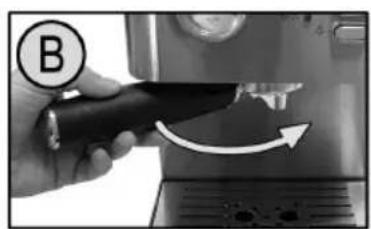
- Hold the handle at the left edge of the appliance to attach the filter holder (see Fig. B on page 3). Insert the three guide tabs in the group head recesses. With the handle pull the filter holder to the right hand side to the middle of the appliance. Ensure that the filter holder is well secured in the group head.
- Pull the filter holder to the left to detach from the group head.

WARNING: Risk of burns!
After brewing the metal parts of filter holder and filter insert are hot.
Inserting the Drip Tray / Drip Tray Grid
- Insert the container for the residual water, with the float (8) inserted, into the compartment (6).
- Place the drip tray grid onto the compartment as a cover.
First Use/Bleeding

CAUTION:
Bleed the appliance before first use and after a longer period of non-use. Do not use coffee grounds during this process!
- Fill the water tank with clean, fresh water to the MAX marking. Close the lid again.
- Set the filter holder.
- Switch the appliance on. The operating control lamp Ⓞ lights up. The appliance starts heating up. The warming plate heats up.
- Set a suitable bowl (heat-resistant / approx. 500 ml) under the brewing head.
- Make sure that the steam pressure switch is disengaged.
- As soon as the control lamp lights up, start the pump with the pressure switch The water flow starts. Let 2 to 3 cups run through. To empty the container in the meantime, switch off the pump. Disengage the pressure switch Before doing so.

WARNING: Risk of burns!
The water inside the bowl is hot.
- Swing the steam nozzle outwards. Make sure that the steam tube is attached.
- Empty the bowl and set it under the steam nozzle.
- Lock the steam pressure switch into place. Wait until the heating process for steam generation has ended. To do this, please consult the scale on the temperature display.
10.

WARNING: Risk of burns!
Hot steam escapes from the steam nozzle.
To generate steam, set the steam control knob to the MAX position. Turn off the pump after water is evenly emitted from the steam nozzle. Set the rotary switch to the OFF position (off).

WARNING: Risk of burns!
-
In case you want to move the steam nozzle after the steaming process, always hold it by the black rubber handle!
• The water inside the bowl is hot. -
The appliance now is vented and ready for operation.
Making Espresso

CAUTION:
Do not brew an espresso when the appliance is still under pressure (for example when milk has been frothed earlier). With too much pressure in the appliance, espresso leaks at the edge of the brewing head. That may lead to a faster wearing of the rubber seal.
- Switch the appliance on. The operating control lamp Ⓞ lights up. The appliance starts heating up. The warming plate heats up.

NOTE:
- Use the warming plate to pre-heat your cup(s).
-
If you want to pre-heat the cup(s) more rapidly, rinse them with hot water.
-
Fill the water tank with the desired amount of clean, fresh water. The water level must be between the MIN and MAX markings. Close the lid again.
- If you frothed milk earlier, completely release the pressure from the appliance:
3.1. Make sure that the pressure switch for the steam is disengaged and the steam control knob is set to OFF.
3.2. Set a suitable vessel under the steam nozzle.
3.3. Set the steam control knob to the MAX position until no more steam comes out.
3.4. Turn the steam control knob back to the OFF position.
- Select a filter insert (20 / 21). Place the insert in the filter holder. Ensure that the filter safeguard is not upright.
- Fill the filter insert with espresso grounds. Use the measuring spoon provided (one measuring spoon filling = 1 cup). Spread the espresso grounds evenly and push down slightly with the tamper. Clean the edge of the filter holder.
- Attach the filter holder to the group head. Ensure that the filter holder is properly attached in the group head.
- The necessary brewing temperature is reached as soon as the indicator lamp lights up. Place your cup(s) under the brewing head exactly on the two holes that you can see in the draining rack.
- Press the pressure switch to lock it into place. The hot water is forced through the filter.

NOTE:
This process ends automatically after about 60 seconds.
-
Stop the brewing process by turning off the pump when the desired amount of espresso is in your cup(s): Press the pressure switch again to release it.
-
Remove the cup(s).

NOTE:
Remove the filter holder every time after making espresso. In this way you extend the lifetime of the group head's rubber seal.
-
Remove the filter holder from the group head.
-
Empty and refill the filter to brew another cup of espresso:

WARNING:
Metal parts of filter holder and filter insert are hot.
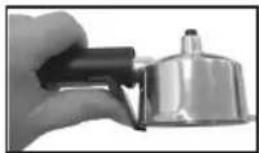
a) Flap the filter safeguard up. Push the filter safeguard with your thumb towards the filter insert while turning the filter holder around (see Fig.
natural_image
Close-up of a hand holding a metallic kettle (no visible text or symbols)b) Tap the coffee grounds out of the filter insert. Use a spoon, if necessary. Rinse the remaining coffee grounds with water out of the filter insert.
- To prepare the next cup / cups of espresso, proceed as described above.
Making Cappuccino
Generally cappuccino consists of one-third coffee, one-third hot milk and one-third frothed milk.
The milk froth should not be firm enough to be shaped with a spoon. It should be creamy, such as not completely whipped cream, of a viscous texture.
For the preparation you need in addition:
- a larger, bellied cup (approx. 180 ml), in which you make the espresso,
- a small frothing jug with spout (e.g. 0.3 ℓ),
• a small, heat-resistant bowl,
• cold milk with at least 3.5 % fat content.

CAUTION: Observe the sequence!
- Brewing of espresso.
- Frothing milk.
For preparation of cappuccino, proceed as described under "Making Espresso".
Froth the milk as follows:

WARNING: Danger of scalding!
Escaping steam can cause injuries. During the heating process hot steam / water can escape from group head and / or steam nozzle!
- Ensure that the steam control knob is set to OFF position before activating the steam function.
-
Do not direct the steam nozzle towards persons.
• Always place a bowl under the steam nozzle. -
Swing the steam nozzle outwards. Make sure that the steam tube is attached.
-
Place a heat-resistant bowl under the steam nozzle.
-
Fill the jug half with cold milk.
- Press the pressure switch to lock it into place. Wait until the indicator lamp lights up.
- Briefly open the steam control knob towards every time before using the frothing function to drain collected condensate. The appliance is ready to use if only steam escapes.
- Place your milk jug with the milk under the steam nozzle.
- Lift the jug so that the steam nozzle sits just under the milk surface.

NOTE:
Do not place the steam nozzle in the centre of the jug but close to the inner wall. This position is important for the milk to get into whirling motion. We recommend using the spout as guide for the steam nozzle.
- Slowly open the steam control knob towards MAX until the desired amount of steam is set. Slightly move the jug up and down. Close the steam control knob towards OFF after the milk has frothed to the desired volume (approx. 50 %).

NOTE:
- To further heat up the milk insert the steam nozzle all the way to the bottom of the jug. Ensure that the milk does not start boiling. In this case the foam will collapse.
-
The water is no longer hot enough if the indicator lamp turns off during frothing. Turn the steam control knob towards OFF. Wait until the indicator lamp lights up again. Now continue frothing the milk.
-
To remove the last coarse air bubbles knock the milk jug after frothing carefully on the tabletop (as if you would set it down a bit hard). Swivel the milk jug slightly around. This helps to mix the foam after frothing. Now waste no time. Pour the frothed milk slowly into the espresso.
- Swivel the milk jug slightly around while pouring the frothed milk slowly into the espresso.

NOTE:
- With a few artful movements you can draw designs into the foam.
-
Sprinkle cocoa powder or cinnamon to taste on the foam.
-
IMPORTANT: Clean the steam nozzle immediately after each foaming! When closing the steam control knob a vacuum is created within seconds, which draws some milk into the steam nozzle. Place your heat-resistant container under the steam nozzle. Open the steam control knob briefly for a shot of steam to flush milk residue out of the steam nozzle. Wipe the steam nozzle with a damp cloth.
- You switch off the steam function by disengaging the pressure switch
Cleaning

WARNING:
- Before cleaning, always remove the mains plug and wait until the appliance has cooled down.
- Do not immerse the appliance in water. Otherwise this might result in an electric shock or fire.
- The steam nozzle is hot immediately after use!

CAUTION:
- Do not use a wire brush or any abrasive items.
- Do not use any acidic or abrasive detergents.
Clean the casing with a slightly damp cloth without detergents.
Group Head and Rubber Seal
Wipe group head and rubber seal with a damp cloth. Use a soft nylon brush to remove stubborn residues. Dry with a soft cloth.
Accessories
You can clean the filter holder, filter inserts, the drip tray grid, drip tray, the measuring spoon, the water tank, and the steam nozzle in a warm rinsing bath. Use a soft nylon brush, if necessary. Rinse with clean water. Dry all parts with a soft cloth.

CAUTION:
These parts are not dishwasher-safe. Heat and aggressive detergents can cause distortion and discolouration.
Water Tank
- Pull the tank with both hands up and out. Replace the tank after cleaning and drying.

NOTE:
The water tank has two hooks.
- Hook the water tank into the two eyelets of the appliance.
- Press the water tank slightly down for the valve to open.
Steam Nozzle
Clean the steam pipe and the attached steam nozzle immediately after preparing milk foam. Dry milk residue is difficult to clean.
-
Pull off the steam nozzle. Leave it for some time in the warm rinsing bath. In this way milk residue is easily removed.
-
Wipe the steam nozzle on the appliance with a damp cloth.

NOTE:
Fill a bowl with hot water to remove dry residue. Set it so under the steam tube that it is immersed in the rinsing bath.
- After cleaning, slide the steam nozzle back onto the steam pipe. Place a heat-resistant empty bowl under the steam nozzle.
Operate the appliance as instructed under "Making Cappuccino" points 4 and 5. After cleaning the steam nozzle is again ready to use.
Decalcification
Scale deposits put the functionality of your appliance at risk. It is necessary to decalcify the appliance regularly. The intervals depend on use frequency and water hardness.
Decalcify with a commercial decalcifier for coffee machines.
- Dose as instructed on the packaging or on the instruction leaflet.
- Operate the appliance as instructed for making espresso until the tank is empty. Let the solution flow through the group head (without filter holder).

WARNING:
- Rinse the water tank and let one full tank fresh water flow through the group head to rinse out the decalcifier residues.
- Do not use this water for consumption.
Storage
- Clean the appliance as described and let it dry completely.
• We recommend that you store the appliance in its original packaging when it is not to be used for a longer period.
• Always store the appliance at a well ventilated and dry place outside the reach of children.
Troubleshooting
| Problem Possible cause Solution | ||||
| The appliance does not function. | The appliance has no power supply. Test the socket with another appliance. | |||
| The appliance has not been bled before first-time use. | Bleed the appliance as instructed under “First Use / Bleeding”. | |||
| The appliance is faulty. Contact our service centre or a specialist. | ||||
| No coffee output. Switch the appliance off! | ||||
| The water tank is empty. Fill the water tank with fresh water. | ||||
| the water tank is not properly attached; the valve is not open. | Press the tank slightly down for the valve to open. | |||
| Loosen the coffee grounds. Spread it evenly and only slightly compress with the tamper. | ||||
| Air entrapped in the heating circuit. Generate steam as instructed under “Making Cappuccino”. Open the steam control knob all the way towards MAX. | ||||
| The pump is noisy. Switch the appliance off! | ||||
| Coffee crema is dark discoloured (coffee runs out slowly). | The coffee grounds are too fine or compressed too much. | Loosen the coffee grounds. Spread it evenly and only slightly compress with the tamper. | ||
| Too much coffee grounds in the filter insert. Use | less coffee grounds. Depending on the filter insert used (1 cup or 2 cups), fill one or two measuring spoon fillings in the filter insert (one measuring spoon filling = 1 cup). | |||
| No crema on the espresso. | The espresso grounds are not suitable. Change | the brand, if necessary. | ||
| The milk does not froth. The milk is not suitable. Use milk with at least 3.5 % fat content. | ||||
| The brewing process cannot be started. The operating control lamp @ pulsates. | This is not a malfunction of the appliance. To comply with the Ecodesign Directive (2009 / 125 / EC), the appliance automatically switches into standby-mode, max. 20 minutes after the brewing process has ended. | To use the appliance again, switch it off using the pressure switch ⏻ Wait until the operating control lamp goes out. Switch on the appliance again. | ||
Technical Data
Model: PC-ES 1209 Power supply: 220 - 240 V\~, 50 / 60 Hz Power consumption: 850 W Capacity: max. 1.8 ℓ Protection class: I Pressure: 20 bar Net weight: approx. 4 kg
The right to make technical and design modifications in the course of continuous product development remains reserved.
This appliance has been tested according to all relevant current CE guidelines, such as electromagnetic compatibility and low voltage directives, and is manufactured according to the latest safety regulations.
Disposal
Meaning of the "Dustbin" Symbol
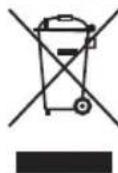
Protect our environment: do not dispose of electrical equipment in the domestic waste. Please return any electrical equipment that you will no longer use to the collection points provided for their disposal.
This helps avoid the potential effects of incorrect disposal on the environment and human health.
This will contribute to the recycling and other forms of re-utilisation of electrical and electronic equipment. Information concerning where the equipment can be disposed of can be obtained from your local authority.
Instrukcja obsługi
natural_image
Close-up of a hand holding a metallic kettle with a black handle (no visible text or symbols)CTC Clatronic Sp. z o.o
Ul. Brzeska 1
45-960 Opole
Usuwanie
natural_image
Hand holding a metallic kettle with a black handle (no visible text or symbols)natural_image
Hand holding a metallic kettle with a black handle (no visible text or symbols)
- Espressoautomat PC-ES 1209
- Bedienungsanleitung
- ⚠ WAARSCHUWING: Belangrijk!
- Symbols in this Instruction Manual
- WARNING:
- CAUTION:
- NOTE:
- Contents
- General Notes
- Special Safety Precautions for this Appliance
- WARNING: Risk of burns!
- Unpacking the Appliance
- Scope of Delivery
- Overview of the Components
- Figure A
- Notes for Use
- Placement
- Pressure Switches (13/14/15)
- Electric Connection
- On/Off
- European Regulations on Energy Saving
- Operation
- WARNING: Important!
- Attach/Detach Filter Holder
- Inserting the Drip Tray / Drip Tray Grid
- First Use/Bleeding
- Making Espresso
- Making Cappuccino
- CAUTION: Observe the sequence!
- WARNING: Danger of scalding!
- Cleaning
- Group Head and Rubber Seal
- Accessories
- Water Tank
- Steam Nozzle
- Decalcification
- Storage
- Technical Data
- Disposal
- Meaning of the "Dustbin" Symbol
- Instrukcja obsługi
- Usuwanie
Brand : PROFICOOK
Model : PCES 1209
Category : Coffee machine