EasyManual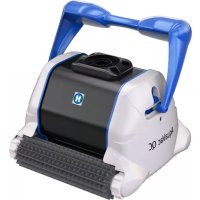
AquaVac Quick Clean RC9730CTB - Cleaning robot HAYWARD - Free user manual and instructions
Find the device manual for free AquaVac Quick Clean RC9730CTB HAYWARD in PDF.


User questions about AquaVac Quick Clean RC9730CTB HAYWARD
0 question about this device. Answer the ones you know or ask your own.
Ask a new question about this device
Download the instructions for your Cleaning robot in PDF format for free! Find your manual AquaVac Quick Clean RC9730CTB - HAYWARD and take your electronic device back in hand. On this page are published all the documents necessary for the use of your device. AquaVac Quick Clean RC9730CTB by HAYWARD.
USER MANUAL AquaVac Quick Clean RC9730CTB HAYWARD
Basic safety precautions should always be followed, including the following: Failure to follow instructions can cause severe injury and/or death. This is the safety-alert symbol. When you see this symbol on your equipment or in this manual, look for one of the following signal words and be alert to the potential for personal injury. WARNING warns about hazards that could cause serious personal injury, death or major property damage and if ignored presents a potential hazard. CAUTION warns about hazards that will or can cause minor or moderate personal injury and/or property damage and if ignored presents a potential hazard. It can also make consumers aware of actions that are unpredictable and unsafe.2
Hayward Robotic Cleaners Scrub, Vacuum, And Filter Your Pool You do not need to install your cleaner or fit accessories to it. You just immerse it in the water and switch it on. The cleaner is fully automatic. The filter is very easy to clean thanks to its new patented cartridge. The Adaptive Seek Control Logic (ASCL) microprocessor optimizes cleaning for each pool size and each pool shape. The cleaner is equipped with an electronic self-diagnostic system and with electrical surge protection. A very simple steering system steers the appliance, with anti-corrosion bearings offering greater reliability. Use: Take some time to become acquainted with your cleaner by looking at the drawings (Figures 1 and 2). Throughout the handbook we refer to these drawings when we are talking about the various components of the cleaner.
1. Choose a 110-120 V ~ socket (outlet) that is close and protected from short-circuits. Fit a 30 mA
differential protection device to protect people from electric shock caused by a possible break in the electrical insulation.
2. Install the power supply box (1) so that your cleaner can reach all of the walls/surfaces of the pool.
The power supply box should be at least 3.5 metres from the edge of the pool (Figure 1a). The standard length of the cleaner cable is 18 metres.
3. Plug the floating cable into the power supply box. Caution: use the original power supply box only.
4. The cleaner has an adaptable handle (3). The handle should be locked in the diagonal position in
order to guarantee optimum cleaning results. Reverse the position of the handle after use every time it is used (Figure 1b) to enable the cord to be wound up without twisting.
5. Place the cleaner in the pool. It will sink gently to the bottom of the pool as it gradually empties
itself of the air that it contains.
6. Plug the power supply box into the socket and switch on the appliance. The cleaner will program a
self-diagnostic test for a few minutes before it starts cleaning the pool. CAUTION: DO NOT SWITCH CLEANER ON OUTSIDE THE WATER. You might damage the pump and render the warranty NULL AND VOID.
7. The cleaner switches off automatically after a 4-hour cycle. If your pool is clean in under 4 hours,
you can switch off the cleaner by switching off the power supply box. If a second clean is necessary, wait for 30 seconds before switching back on again.
8. Once the pool is clean, switch off the power supply box before you take the cleaner out of the
9. Take cleaner out of the water from the shallow end of the pool by pulling the cable until the cleaner
comes up to the surface. Then, lift it out gently by using the handle, NOT the cable. CAUTION: while pulling the cable, wind it in around both of your hands and above all not around your arm. To make the cleaner last, remove the water from it after use, every time it is used. DO NOT GO INTO THE POOL WHILE CLEANER IS OPERATING5
- Ensure that the filter is clean.
- Put the cleaner in the water and observe the height of the waterline on the cleaner. For this purpose, let it perform several cleaning cycles in order to determine an average height.
- Once the waterline is settled, if the cleaner regularly makes excessive rattling noises, takes air in through the bottom cover, climbs up the edge of the wall instead of going back the other way, or if it tends to stagnate in the same zone of the pool, it is probable that the cleaner is climbing too high: install the reducer kit. For The Cleaner To Operate Properly The best water temperature for optimum operation of the cleaner lies in the range 10°C to 35°C. However, the cleaner can be used in water at a different temperature. Regular cleaning of the filter cartridge after use, every time the cleaner is used, optimizes performance of the appliance. If the cleaner is struggling to climb up the walls of the pool, wash the filter and then resume pool cleaning. Replace the brushes (12) when they are worn to maintain effective cleaning. If granulated chemical products are used on a daily basis in the pool, we recommend using a floating or automatic metering feeder because such a feeder retains the calcium sediment that is sometimes contained in that type of product. It is recommended not to use the cleaner before all of the chemical powders are not dissolved because they could clog the filter. In a hard-water pool, more frequent cleaning of the filter is advised. Keep the cleaner packaging for storing it or transporting it (in case any repairs are necessary). The motor unit (13) and the power supply box (1) do not contain any parts that are of use to the user. If they are opened the warranty automatically becomes NULL AND VOID. Quick Clean (QC)
1. For installation and normal use of QC, please refer to the chapter on general use.
2. In order to select the normal cycle or the economy cycle, please follow the following instructions: on switching
on, the economy programme is automatically selected. The “Quick Clean” light, situated on the control box, then comes on. In this mode, The cleaner will switch off automatically after 90 minutes.
3. In order to select the normal programme, please press the “Full Cycle” button. The light situated above the
button comes on and indicates that the normal programme is running. In this mode, The cleaner will switch off automatically after 4 hours. If the economy mode is finished, you should switch off the cleaner and then switch it back on in order to select normal mode: normal mode can be selected only during an economy cycle. Incorrect Waterline HeightOptimum Waterline Height6
1. For installation and normal use of Plus, please refer to the chapter on general use.
2. In order for the remote control to operate properly, the power supply box must be placed in an unobstructed
location about twenty metres from the remote control. The remote control can be used at any time during the cycle without the cycle being interrupted.
3. In order to control a Plus cleaner, press and hold the buttons of the remote control that correspond to the action
you wish to perform. Once you have released the button, a Plus cleaner automatically resumes its normal cycle. If a Plus cleaner does not operate when you press the button:
- Check that you are pointing the remote control towards the power supply box and not towards th cleaner.
- Check that there is no obstacle between the power supply box and the remote control
- The distance between the power supply box and the remote control should be no longer than 20 metres. The closer you are to the power supply box, the better the reception.
- Check the battery of the remote control: if necessary, replace it with a new battery (1x CR2032 Lithium).
- The voltage surge protection might have tripped. Reactivate it by depressing the button located above the connection of the cleaner power supply cable on the power supply box.
- Check that the rotation actuator is not clogged with debris. For this purpose, remove the cleaner from the water, and operate the actuator by hand to clear the debris: the actuator should be able to move easily.7
1. Clean the cartridge of the filter after use, every time the cleaner is used: Lay the cleaner on its side. Undo
the fastenings of the bottom cover (6) (Figures 1c-1d) and remove the bottom cover assembly (7) (Figure 1e). Remove the filter cartridge. If your filter is in 3 parts, remove each element and clean it thoroughly using a hose pipe with a spray head so to remove all of the waste. Hold the elements as shown in Figure 1f to enable the waste to fall off. Wash the inside of the bottom cover. Put the filter cartridge back (Figure 1g). Fit the bottom cover and re-engage the fastenings.
2. Clean the moving parts frequently.
CAUTION: unplug the power supply box before performing this cleaning operation. Inspect the orifice of the pump to check that no waste or hair is obstructing the Venturi tube. It can be cleaned by removing the tube (9) and by turning it (Figure 1h). Clean off all of the waste that has built up between the tracks (10) and the wheels (11). Storage: When it is out of the water, lay the cleaner on its side in a dry and shady place at a temperature between 5°C and 46°C (Figure 1i) Maintenance For The Cable: After a while and with use, the cable can become twisted (like a telephone cord). To remedy this, wedge the handle in the opposite diagonal position (Figure 1b). The cleaner will then turn in the pool in the opposite direction and the cable will untwist itself. It is also possible to pull regularly on the cord in the sun in order to solve the problem. Above all, remember to reverse the position of the handle after use, every time the cleaner is used. IMPORTANT: check the cable regularly to make sure that it has no external damage. If the supply cord is damaged, it must be replace by the manufacturer, its service agent or similarly qualified persons in order to avoid a hazard. SOLUTIONS TO FREQUENTLY ASKED QUESTIONS: The cleaner WILL NOT CLIMB THE WALLS
- Clean the filter. It might be clogged or too heavy due to waste or to too much algaecide being present.
- The brushes might be worn. Examine them and change them if necessary.
- Check the electrical installation and make sure that the voltage is correct: 110-120 V 50/60Hz
- The water temperature should be greater than 15°C, otherwise the PVC brushes might stiffen and affect the cleaner’s capacity to climb the walls.
- Replace the PVC brushes with foam brushes. Ensure that the handle is in the diagonal position. The cleaner HAS LOST SUCTION
- Clean the filter. It might be clogged and be preventing suction.
- Check that the feeds in the bottom cover are not blocked, and clean them if necessary. Check the Venturi tube for any waste or damage. Clean or replace if necessary.
- An intake that clips onto the bottom cover is available from your dealer. This makes it possible to achieve a higher speed and thus improved suction of small or heavy waste. The cleaner STOPS SUDDENLY WHILE IT IS CLEANING
- The Venturi tube might be clogged with waste. Check and clean if necessary, by following the instructions in the chapter on maintenance.
- The bearings of the brushes or the tracks are stuck. Check whether there is any dirt; clean them if necessary.8
USE ONLY HAYWARD GENUINE REPLACEMENT PARTS
Put the cleaner back in the water and switch it back on. In order to protect the fragile components, The cleaner will cut out automatically if it is removed from the water. The cleaner IS NOT WORKING ANY MORE
- Check the socket for the voltage surge switch system to ensure that the power supply is correct.
- Check the power of the power supply box per section (see below).
- The power supply box is protected by an automatic circuit that interrupts the current. To switch it back on, move to the “OFF” position and then to the “ON” position.
- The power supply box is equipped with an internal circuit. The voltage across terminals 1 and 2 of the power supply socket for the cleaner must be 24 V ~. This appliance is not intended for use by persons (including children) with reduced physical, sensory or mental capabilities, or lack of experience and knowledge, unless they have been given supervision or instruction concerning use of the appliance by a person responsible for their safety. All electrical connections must be done by a qualified electrician according to local electrical standard. Electric Standard/Country F NF EN C 15-100 GB BS7671:1992 D DIN VDE 0100-702 EW EVHS-HD 384-7-702 A ÖVE 8001-4-702 H MSZ 2364-702:1994 / MSZ 10-533 1/1990 E UNE 20460-7-702 1993, REBT ITC-BT-31 2002 M MSA HD 384-7-702.S2 IRL Wiring Rules + IS HD 384-7-702 PL PN-IEC 60364-7-702:1999
I CEI 64-8/7 CZ CSN 33 2000 7-702
LUX 384-7.702 S2 SK STN 33 2000-7-702 NL NEN 1010-7-702 SLO SIST HD 384-7-702.S2 P RSIUEE TR TS IEC 60364-7-702 Warranty Conditions All HAYWARD products are covered for manufacturing defects or material defects for a warranty period of:
- 1 year for standard cleaner
- 3 years for QC cleaner As of date of purchases. Any warranty claim should be accompanied by evidence of purchase, indicating date of purchase. We would therefore advise you to keep your invoice. The HAYWARD warranty is limited to repair or replacement, as chosen by HAYWARD, of the faulty products, provided that they have been subjected to normal use, in compliance with the guidelines given in their user guides, provided that the products have not been altered in any way, and provided that they have been used exclusively with HAYWARD parts and components. The warranty does not cover damage due to frost and to chemicals. Any other costs (transport, labour, etc.) are excluded from the warranty. HAYWARD may not be held liable for any direct or indirect damage resulting from incorrect installation, incorrect connection, or incorrect operation of a product. In order to claim on a warranty and in order to request repair or replacement of an article, please ask your dealer. No equipment returned to our factory will be accepted without our prior written approval. Wearing parts are not covered by the warranty. Register your warranty online at www.haywardpool.ca9
USE ONLY HAYWARD GENUINE REPLACEMENT PARTS
CHARACTERISTICS Speed on floor 18 metres per minute Floor coverage rate 5 m≤ per minute Suction capacity 283 litres per minute Ordinary consumption 0.78 amps Weight 21 lbs Length and type of cable 16.76 metres, floating Materials High-impact ABS — metal parts: non-ferrous stainless steel Motor Unit PUMP CONTROL CARD Speed (revolutions per minute) 2700 55 - Voltage 24 V ~ 22 V ~ 5 V ~ Current (amps) 2.62 0.63 - Sealing protection double redundant radial shaft seal Box IP68, sealed, waterproof, and made of high-impact ABS Voltage surge protection automatic electronic system for interrupting current in the event of voltage surge Self-diagnostic system memory self-test system — for use by authorised after-sales ser vice personnel Filter Type removable, reusable, pleated cartridge Material pleated cellulose / polyester mixture Porosity 5 microns Area 64 cm
Operating Control Type Adaptive Seek Control Logic (ASCL) microprocessor Control System Direct control with polyurethane tracks and stainless steel steering system Power Supply Box Voltage 110-120 V ~ Outlet power voltage: 24 V ~ Power current 3,5 - 4A Weight 8 lbs IP IP54 Transport Dimensions of the cardboard box Height: 19 in - Depth: 19 in - Length: 19 in Total weight 35 lbs These specifications may vary depending on the type of pool and on the electrical installations. Although the cleaner has been tested to operate in a broad range of swimming pools, the manufacturer cannot guar- antee that operation will be optimum in all types of pool.10 USE ONLY HAYWARD GENUINE REPLACEMENT PARTSNETTOYEUR ROBOTIQUE