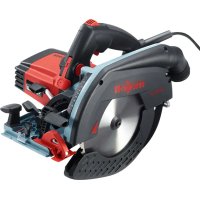
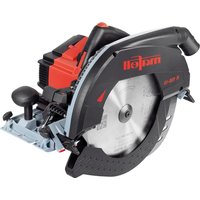
K 65 cc - Saw Mafell - Free user manual and instructions
Find the device manual for free K 65 cc Mafell in PDF.


| Product Type | Portable circular saw |
| Brand | Mafell |
| Model | K 65 cc |
| Dimensions (L x W x H) | 246 x 339 x 267 mm |
| Weight (without cable and guide) | 4.5 kg |
| Rated voltage | 230 / 240 / 110 / 120 V AC |
| Frequency | 50 / 60 Hz |
| Power consumption | 1800 W (230/240 V) / 1500 W (110/120 V) |
| No-load speed | 2700 - 5200 min⁻¹ (electronically adjustable) |
| Cutting depth (0°/30°/45°) | 67 / 62 / 53 mm |
| Bevel range | 0° - 45° |
| Blade diameter | 185 mm (max) / 172 mm (min) |
| Arbor size | 20 mm |
| Kerf width (tool) | 2.4 mm |
| Base body thickness | 1.4 mm |
| Dust extraction hose diameter | 35 mm |
| Safety devices | Fixed and moving guard, riving knife, electric brake, switch-off lock |
| Intended use | Solid wood, wood-based panels, MDF, wood fiber insulation (not for continuous industrial use) |
| Included accessories | Carbide blade 185 mm/24 teeth, riving knife, service tool, parallel guide, carrying case (depending on reference) |
| Maintenance | Regular cleaning, lifetime lubricated bearings, special grease ref. 049040 |
| Spare parts | Available at www.mafell.com |
Frequently Asked Questions - K 65 cc Mafell
User questions about K 65 cc Mafell
0 question about this device. Answer the ones you know or ask your own.
Ask a new question about this device
Download the instructions for your Saw in PDF format for free! Find your manual K 65 cc - Mafell and take your electronic device back in hand. On this page are published all the documents necessary for the use of your device. K 65 cc by Mafell.
USER MANUAL K 65 cc Mafell
Please read all safety instructions and directions. Failure to comply with the safety instructions and directions can cause electric shock, fire and/or serious injuries. Please retain all safety instructions and directions for future reference.
AVERTISSEMENT
GB - EC Declaration of Conformity
We herewith confirm that the machine K 65 cc complies with the EU directives quoted. The standards listed were used for design and construction.
Empowered person for the configuration of the technical documents: Mafell AG
GB - EC Declaration of Conformity
We herewith confirm that the machine KSS 60 cc complies with the EU directives quoted. The standards listed were used for design and construction. Empowered person for the configuration of the technical documents: Mafell AG
1 Signs and symbols 21
2 Product information 21
2.1 Manufacturer's data 21
2.2 Machine identification 21
2.3 Technical data 22
2.4 Emissions 22
2.5 Scope of supply 23
2.6 Safety devices 23
2.7 Use according to intended purpose 23
2.8 Residual risks 24
3 Safety instructions 24
4 Setting/Adjustment 26
4.1 Mains connection 26
4.2 Chip extraction 26
4.3 Sawblade selection 26
4.4 Sawblade change 27
4.5 Riving knife/splitter 27
4.6 Laying the connection cable 27
5 Operation 27
5.1 Initial operation 27
5.2 Switching on and off 27
5.3 Light 28
5.4 Cutting depth adjustment 28
5.5 Setting for bevel cuts 28
5.6 Plunge cuts 28
5.7 Sawing according to tracings 29
5.8 Sawing with the parallel stop 29
5.9 Working with the roller edge guide 29
6 Service and maintenance 29
6.1 Storage 30
7 Visual signal indication of operating condition 30
8 Troubleshooting 30
9 Optional accessories 32
10 Exploded drawing and spare parts list 32
1 Signs and symbols

This symbol is found in all places where you will find information for your safety.
Non-compliance with these instructions may result in very serious injuries.
This symbol indicates a potentially hazardous situation. If this situation is not avoided, the product or objects in its vicinity may get damaged.

This symbol indicates tips for the user and other useful information.
2 Product information
K 65 cc: Art.-No. 91B001, 91B002, 91B020, 91B022, 91B025, 91B030, 91B031, 91B032
KSS 60 cc: Art.-No. 91B101, 91B102, 91B120, 91B121, 91B122, 91B125, 91B130, 91B148
2.1 Manufacturer's data
MAFELL AG, Beffendorfer Straße 4, D-78727 Oberndorf / Neckar, Phone +49 (0)7423/812-0, Fax +49 (0)7423/812-218, e-mail: mafell@mafell.de, Homepage www.mafell.com
2.2 Machine identification
All details required for machine identification are available on the attached rating plate.

Protection class II

CE symbol to document compliance with the basic safety and health requirements according to Appendix I of the Machinery Directive.
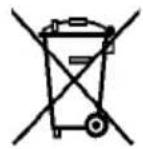
For EU countries only
Do not dispose of electric tools together with household waste material!
In accordance with the European directive 2012/19/EU on waste electrical and electronic equipment and transposition into national law, obsolete electrical tools must be collected separately and recycled in an environmentally-compatible manner.

To reduce the risk of injury, please read the operating instructions.
2.3 Technical data
K 65 cc
| Operating voltage | 230 V AC | 240 V AC | 110 V AC | 120 V AC |
| Mains frequency | 50 Hz | 60 Hz | 50 Hz | 60 Hz |
| Input power continuous operation | 1800 W | 1500 W | ||
| Power consumption continuous operation | 8,0 A | 8.0 A | 14,0 A | 14,0 A |
| Speed during idling | 2700 - 5200 rpm | |||
| Cutting depth 0° /30° /45° | 67 / 62 / 53 mm (2.64 / 2.44 / 2.09 in.) | |||
| Tilting saw unit | 0° – 45° | |||
| Saw blade diameter max./min. | 185 /172 mm (7 9/32 / 6.77 in.) | |||
| Saw blade base body thickness | 1.4 mm (0.06 in.) | |||
| Tool cutting width | 2.4 mm (3/32 in.) | |||
| Saw blade mounting hole | 20 mm (51/64 in.) | |||
| Hose connector diameter | 35 mm (1.38 in.) | |||
| Weight without mains cable, without parallel guide fence | 4,5 kg (9.92 lbs) | |||
| Dimensions (W x L x H) | 246 x 339 x 267 mm (9.69 x 13 23/64 x 10 33/64 in.) | |||
KSS 60 cc
| Operating voltage | 230 V AC | 240 V AC | 110 V AC | 120 V AC |
| Mains frequency | 50 Hz | 60 Hz | 50 Hz | 60 Hz |
| Input power continuous operation | 1800 W | 1500 W | ||
| Power consumption continuous operation | 8,0 A | 8.0 A | 14,0 A | 14,0 A |
| Speed during idling | 2700 - 5200 rpm | |||
| Cutting depth 0° /30° /45° | 67 / 62 / 53 mm (2.64 / 2.44 / 2.09 in.) | |||
| Tilting saw unit | 0° – 45° | |||
| Saw blade diameter max./min. | 185 /172 mm (7 9/32 / 6.77 in.) | |||
| Largest thickness basic saw blade body | 1.4 mm (0.06 in.) | |||
| Tool cutting width | 2.4 mm (3/32 in.) | |||
| Saw blade mounting hole | 20 mm (51/64 in.) | |||
| Hose connector diameter | 35 mm (1.38 in.) | |||
| Weight without mains cable, without parallel guide fence | 5,9 kg (13.0 lbs) | |||
| Dimensions (W x L x H) | 257x750x268 mm (10.12 x 29.53 x 10.55 in.) | |||
2.4 Emissions
The declared noise emission values have been measured in accordance with EN 62841-1 and EN 62841-2-5 and may be used for comparing the tool with another and also in a preliminary assessment of exposure.

Danger
The noise emissions during actual use of the power tool can differ from the declared values depending on the ways in which the tool is used especially what kind of workpiece is processed.
Always wear hearing protection, even when the power toolist running idle in addition to the trigger time!
2.4.1 Noise emission specifications
Noise emission values determined according to EN 62841-1 and EN 62841-2-5:
Sound pressure level L
$$ \mathrm {P A} = 9 2 \mathrm {d B (A)} $$
Uncertainty K
$$ P A = 3 \mathrm {d B} (A) $$
Sound power level
$$ \mathrm {L} _ {\mathrm {W A}} = 1 0 0 \mathrm {d B (A)} $$
Uncertainty K
$$ \mathrm {W A} = 3 \mathrm {d B} (\mathrm {A}) $$
The noise measurement was recorded using the saw blade included in the standard equipment.
2.4.2 Vibration specifications
The typical hand-arm vibration according to EN 62841 is less than 2.5m / s^2
2.5 Scope of supply
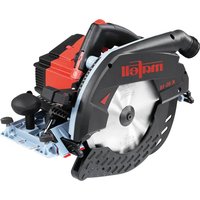
Portable circular saw K 65 cc complete with:
1 carbide-tipped circular saw blade 185mm (7 9/32 in.), 24 teeth
1 riving knife / splitter (thickness 1.5mm / 0.06 in.)
1 service tool in bracket on the machine
1 operating manual
1 folder "Safety instructions"
1 carrying case only for item No. 91B002, 91B030, 91B031, 91B032
1 parallel stop
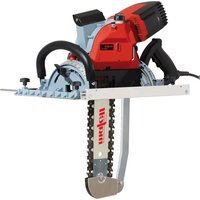
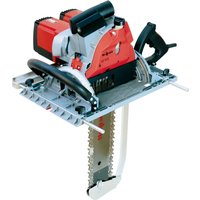
Cross-cutting system KSS 60 cc complete with:
1 carbide-tipped circular saw blade 185mm (7 9/32 in.), 32 teeth
1 riving knife / splitter (thickness 1.5 mm/ 0.06 in.)
1 service tool in bracket on the machine
1 operating manual
1 folder "Safety instructions"
1 carrying case only for item No. 91B102, 91B130, 91B148
1 parallel stop
2.6 Safety devices

Danger
These devices are required for the machine's safe operation and may not be removed or rendered inoperative.
Before operating the machine, check the safety devices for function and possible damage. Do not use the machine with missing or ineffective safety devices.
- Upper stationary saw guard
- Lower retractable saw guard
Large base plate - Handles
- Riving knife / splitter
- Index mechanism and electrical brake
- Hose connector
2.7 Use according to intended purpose
The K 65 cc / KSS 60 cc is exclusively suited for longitudinal and cross cutting of solid wood.
The machine is equipped with the following safety devices:
Panel materials such as chip board, core board and medium density fibre board can also be processed. Use approved saw blades according to EN 847-1.
Processing wood fibre insulation materials is also possible.
The use in industrial continuous operation is not permitted.
Any other use than described above is not permissible. The manufacturer shall not be liable for any damage arising from such other use; such use shall also void all guarantee and warranty claims.
So as to use the machine as intended, comply with the operating, maintenance and repair instructions specified by Mafell.
2.8 Residual risks

Danger
Even if used in accordance with its intended purpose and despite conforming with the safety instructions, residual risks caused by the intended use that can lead to health consequences will always remain.
- Touching the saw blade in the vicinity of the starting aperture below the base plate.
- Touching the part of the saw blade that protrudes below the workpiece when cutting.
- Touching of turning parts from the side: saw blade, clamping flange and flange screw.
- Machine backlash if the blade gets stuck in the workpiece.
- Breakage of the saw blade and risk of the blade or pieces of the blade being hurled away.
- Touching live parts with the housing open and the mains plug not removed.
- Hearing can be impaired when working for long periods without ear protectors.
- Emission of harmful wood dusts during longer operation without extraction.
3 Safety instructions

Danger
Always observe the following safety instructions and the safety regulations applicable in the respective country of use! Please also read the safety information in the enclosed folder 070500 "Safety instructions" (according to standard EN 62841-1).
General instructions:
- Children and adolescents must not operate this machine. This rule does not apply to young persons receiving training and being supervised by an expert.
- Never work without the protection devices prescribed for the respective operating sequence and do not make any changes to the machine that could impair safety.
- When operating the machine outdoors, use of an earth-leakage circuit-breaker is recommended.
- Damaged cables or plugs must be immediately replaced. Replacement may only be carried out by Mafell or an authorised MAFELL service workshop in order to avoid safety hazards.
- Avoid sharp bends in the cable. Especially when transporting and storing the machine, do not wind the cable around the machine.
Do not use:
- Cracked and misshapen saw blades.
- Saw blades made of high speed steel (HSS saw blades).
- Blunt saw blades as they impose an excessive load on the motor.
- Saw blades with a base body with a thickness greater than, or a cutting width (setting) less than, the thickness of the riving knife / splitter.
- Saw blades which are not suitable for the saw blade's idling speed.
Instructions on the use of personal protective equipment:
- Always wear ear protectors during work.
- Always where a dust mark during work.
- Always wear protective goggles during work.
Instructions on operation:
Cutting procedures

Danger
- Danger: Never place your hands in the vicinity or in line with the saw blade. With your other hand, support the supplementary handle or the motor casing. If both hands are holding on to the saw they cannot get hurt by the saw blade.
- Do not reach underneath the workpiece. The guard cannot protect you from the blade below the workpiece.
- Adjust the cutting depth to the thickness of the workpiece. Less than a full tooth of the blade teeth should be visible below the workpiece.
- Never hold the workpiece in your hands or across your leg while cutting. Secure the workpiece to a stable platform. It is important to support the work properly to minimise body exposure, blade binding, or loss of control.
- Hold the power tool by insulated gripping surfaces, when performing an operation where the cutting tool may contact hidden wiring or its own cord. Contact with a "live" wire will also make exposed metal parts of the power tool "live" and could give the operator an electric shock.
- When ripping, always use a rip fence or straight edge guide. This improves the accuracy of cut and reduces the chance of blade binding.
- Always use blades with correct size and shape (diamond versus round) of arbour holes. Blades that do not match the mounting hardware of the saw will run off-centre, causing loss of control.
- Never use damaged or incorrect blade washers or bolt. The blade washers and bolt were specially designed for your saw, for optimum performance and safety of operation.
Kickback causes and related warnings
- kickback is a sudden reaction to a pinched, jammed or misaligned saw blade, causing anuncontrolled saw to lift up and out of the workpiece toward the operator;
- When the blade is pinched or jammed tightly by the kerf closing down, the blade stalls and the motor
reaction drives the unit rapidly back toward the operator;
- if the blade becomes twisted or misaligned in the cut, the teeth at the back edge of the blade can dig into the top surface of the wood causing the blade to climb out of the kerf and jump back toward the operator.
Kickback is the result of saw misuse and/or incorrect operating procedures or conditions and can be avoided by taking proper precautions as given below.
- Maintain a firm grip with both hands on the saw and position your arms to resist kickback forces. Position your body to either side of the blade, but not in line with the blade. Kickback could cause the saw to jump backwards, but kickback forces can be controlled by the operator, if proper precautions are taken.
- When blade is binding, or when interrupting a cut for any reason, release the trigger and hold the saw motionless in the material until the blade comes to a complete stop. Never attempt to remove the saw from the work or pull the saw backward while the blade is in motion or kickback may occur. Investigate and take corrective actions to eliminate the cause of blade binding.
- When restarting a saw in the workpiece, centre the saw blade in the kerf so that the saw teeth are not engaged into the material. If a saw blade binds, it may walk up or kickback from the workpiece as the saw is restarted.
Support large panels to minimise the risk of blade pinching and kickback. Large panels tend to sag under their own weight. Supports must be placed under the panel on both sides, near the line of cut and near the edge of the panel. - Do not use dull or damaged blades. Unsharpened or improperly set blades produce narrow kerf causing excessive friction, blade binding and kickback.
-
Blade depth and bevel adjusting locking levers must be tight and secure before making the cut. If blade adjustment shifts while cutting, it may cause binding and kickback.
-
Use extra caution when sawing into existing walls or other blind areas. The protruding blade may cut objects that can cause kickback.
Lower guard function
- Check the lower guard for proper closing before each use. Do not operate the saw if the lower guard does not move freely and close instantly. Never clamp or tie the lower guard into the open position. If the saw is accidentally dropped, the lower guard may be bent. Raise the lower guard with the pre-feed lever and make sure it moves freely and does not touch the blade or any other part, in all angles and depths of cut.
- Check the operation of the lower guard spring. If the guard and the spring are not operating properly, they must be serviced before use. Lower guard may operate sluggishly due to damaged parts, gummy deposits, or a build-up of debris.
- The lower guard may be retracted manually only for special cuts such as "plunge cuts" and "compound cuts". Raise the lower guard by prefeed lever and as soon as the blade enters the material, the lower guard must be released. For all other sawing, the lower guard should operate automatically.
- Always observe that the lower guard is covering the blade before placing the saw down on bench or floor. An unprotected, coasting blade will cause the saw to walk backwards, cutting whatever is in its path. Be aware of the time it takes for the blade to stop after switch is released.
Riving knife function
- Use the appropriate saw blade for the riving knife. For the riving knife to function, the body of the blade must be thinner than the riving knife and the cutting width of the blade must be wider than the thickness of the riving knife.
- Adjust the riving knife as described in this instruction manual. Incorrect spacing, positioning and alignment can make the riving knife ineffective in preventing kickback.
-
Always use the riving knife except when plunge cutting. The riving knife must be replaced after plunge cutting. The riving knife causes interference during plunge cutting and can create kickback.
-
For the riving knife to work, it must be engaged in the workpiece. The riving knife is ineffective in preventing kickback during short cuts.
- Do not operate the saw if the riving knife is bent. Even a light interference can slow the closing rate of a guard.
Instructions on service and maintenance:
- Regularly cleaning the machine, especially the adjusting devices and guides, constitutes an important safety factor.
- Only original MAFELL spare parts and accessories may be used. Otherwise the manufacturer will not accept any warranty claims and cannot be held liable.
- Risk of injury when changing the saw blade! There is a risk of injury from touching the sharp teeth of the saw blade when changing the saw blade. Wear protective gloves. Exercise caution when changing the saw blade.
4 Setting / Adjustment
4.1 Mains connection
Prior to commissioning make sure that the mains voltage complies with the operating voltage stated on the machine's rating plate.
4.2 Chip extraction

Danger
Substances that are harmful to health must be taken up with an M-suction device.
Connect the machine to a suitable external dust extractor during all work generating a considerable amount of dust. The air velocity must be at least 20m / s (65.6 ft/sec.).
The inside diameter of hose connector 1 (Fig. 3) is 35 mm (1 3/8 in.).
4.3 Saw blade selection
Use a sharp tool to obtain a good cut quality and select a tool from the following list according to material and application:
For cuts especially along the grain in soft or hard wood:
- Circular saw blade carbide 185× 2.4× 20mm (7 9 / 32× 3 / 32× 51 / 64 in.), 16 teeth
For cuts along and across the grain in soft or hard wood:
- Circular saw blade carbide 185× 2.4× 20mm (7 9 / 32× 3 / 32× 51 / 64 in.), 24 teeth
For cuts especially across the grain in soft or hard wood:
- Circular saw blade carbide 185× 2.4× 20mm (7 9 / 32× 3 / 32× 51 / 64 in.), 32 teeth
For cuts especially across the grain in soft or hard wood "fine cut":
- Circular saw blade carbide 185× 2.4× 20mm (7 9 / 32× 3 / 32× 51 / 64 in.), 56 teeth
Cutting of wood fibre insulation materials:
- Circular saw blade carbide Ø 185 x 2.4 x 20 mm, 56 teeth
Cutting of synthetic materials (polystyrene):
- Circular saw blade carbide Ø 185 x 2.4 x 20 mm, 24 teeth
4.4 Saw blade change

Danger
Pull the power plug during all service work.
Risk of injury even if the saw wire is standing still. Wear protective gloves!
- Press the push-button 2 (Fig. 2) and pull the locking lever 3 (Fig. 2) upwards. Now the saw shaft is locked in position and the gearshift lever locked.
- Using the Allen key 4 (brackets Fig. 3) release the flange screw 5 (Fig. 3) counter clockwise. Remove the screw and the front clamping flange 6 (Fig. 3).
- Now you can remove the saw blade after opening the retractable saw guard.
- The clamping flanges must be free of adhering parts.
- Pay attention to the sense of rotation when inserting the saw blade.
- Afterwards, mount the clamping flange, attach the flange screw and tighten it by clockwise turning.
4.5 Riving knife/splitter

Danger
Pull the power plug during all service work.
The riving knife 7 (Fig. 3) prevents the saw blade from jamming during longitudinal cutting. The correct distance to the saw blade is shown in (Fig. 4).
- For adjustment purposes, release the screw 8 (Fig. 3) with the Allen key 4 that is included in the supply (Fig. 3).
- Adjust the riving knife/splitter by moving it in its longitudinal groove and retighten the screw afterwards.
4.6 Laying the connection cable

Danger
While working, pay attention to how the connecting cable is laid. A poorly laid connecting cable can impair safety functions and working functions and come into contact with the tool.
How to lay the cable is shown in Fig. 6 by way of example.
Lead the connecting cable away from the machine in the direction of the cable sleeve. Always keep the connecting cable as far away as possible from the working tool. For support, use the Velcro fastener on the extraction connection.
5 Operation
5.1 Initial operation
Personnel entrusted to work with the machine must be made aware of the operating instructions, calling particular attention to the chapter "Safety instructions".
5.2 Switching on and off
- Switching on: Press the switch-on lock 9 (Fig. 2) forward to unlock it. Then activate the switch trigger 10 (Fig. 2) while keeping the switch-on lock depressed.
As this is a switch without locking device, the machine will only run for as long as this switch trigger lever is pressed.
The built-in electronic system provides for jerk-free acceleration when the machine is switched on and under load readjusts the speed to the fixed setting.
In addition, this electronic system adjusts the motor down in case of overload, i.e. the saw blade will stop.
Switch the machine off then. Then switch the machine on again and continue sawing at a reduced feed speed.
The setting wheel 11 (Fig. 2) can be used to adjust the saw blade speed in a continuously variable manner between 2700 and 5200rpm .
| Level Speed rpm | |
| 1 2700 | |
| 2 3200 | |
| 3 3700 | |
| 4 4200 | |
| 5 | 4700 |
| 6 | 5200 |
Material groups
- PVC, Plexi, PA
Level:1-6
Hardwood,softwood,plywood
Level:4-6
- Coated panel materials
Level:4-6
- Soft fibre
Level: 6
- Switching off: For switching off, release the switch trigger 10 (Fig. 2). The built-in automatic brake limits the saw blade slowing time to approx. 1 - 2 s. The switch-on lock automatically takes effect again and secures the portable circular saw against accidental switch-on.
5.3 Light

Caution
Do not stare into the burning lamp!
The power tool is equipped with a light module 21 (Fig. 5).
The light module is supplied with power for a certain period of time as soon as the machine is switched on, and is then ready for operation.
When the machine is ready for operation, the light module automatically switches the light on when the machine is moved or switches it off when the machine is standing still for longer periods.
5.4 Cutting depth adjustment
The cutting depth is continuously variable between 0 and 66~mm (2.60 in.).
Proceed as follows to adjust it:
- Unfasten the clamping lever 12 (Fig. 1).
- Set the cutting depth with the plunge lever 13 (Fig. 1).
- The set depth can be read off the scale 14 (Fig. 1). The bevelled edge of the plunge lever serves as indicator.
- Retighten the clamping lever 12 (Fig. 1).

Always set the cutting depth approx. 2 to 5mm (5/64 to 13/64 in.) larger than the material thickness to be cut.
5.5 Setting for bevel cuts
For bevel cuts, the saw unit can be set to any angle between 0 and 45^
- In order to incline it, bring the machine into home position and support it such that it is possible to tilt the saw unit.
- Release the lever 15 (Fig. 1).
- Adjust the angle according to the scale on the segment for tilting.
- Retighten the lever 15 (Fig. 1) afterwards.
5.6 Plunge cuts

Danger
Risk of backlash during plunge cuts! Prior to plunging, place the machine with the rear edge of its base plate against a limit stop fastened on the workpiece. Keep a firm hold on the machine handle during plunging and push the saw lightly forward!
- Unfasten the clamping lever 12 (Fig. 1) and put the machine in the topmost position with plunge lever 13 (Fig. 1).
- Completely open the retractable saw guard with the pre-feed lever 16 (Fig. 1), so that the machine can be placed onto the workpiece to be processed. The saw blade is now freely suspended above the material and can be aligned with the marking.
- Switch on the machine and press the plunge lever 13 (Fig. 1) downwards. This causes the saw blade to plunge vertically into the workpiece. While doing so, the plunge depth can be read off the scale 14 (Fig. 1). The riving knife/splitter swings up and away when the blade enters the workpiece. As soon as the slit behind the saw blade is cleared during the forward motion of the machine, the riving knife reverts to its normal position.

In case of repetitive plunge cuts of the same depth, the plunging depth can be preset.
Proceed as follows:
- Set the machine to the desired cutting depth.
- Open the clamping screw 17 (Fig. 2) and set the stop bar 18 (Fig. 2) downwards up to the limit stop.
- Retighten the clamping screw. After completion of the plunge work, set the stop bar into the top position.
5.7 Sawing according to tracings
The retractable marking indicator 19 (Fig. 1) is automatically adjusted for bevel cuts as well. The tracing edge corresponds to the saw blade's inside. For bevel cuts, the tracing can be viewed through the opening on the left-hand side of the upper saw guard.
- Hold the machine by its handles and place the front part of its base plate onto the workpiece.
- Switch on the portable circular saw (see chapter 5.2) and slide the machine evenly forward in the direction of the cut
- When the cut is completed, switch off the saw by releasing the switch trigger 10 (Fig. 2).
5.8 Sawing with the parallel stop
The parallel stop serves to saw parallel to an already existing edge. The limit stop can be attached to the left or right of the machine. While doing so, the cutting
range amounts to 33 - 130 mm (1.30 - 5.12 in.) on the right-hand side (reading indicator "X" Fig. 1) and to 163 - 300 mm (6.42 - 11.81 in.) on the left-hand side (reading edge at indicator edge "Y" Fig. 1). In the range of 163-220 mm (6.42 - 8.66 in.), the machine must be adjusted upwards by approx. 10 mm (0.39 in.) so that the limit stop can be pushed under the motor casing.
- You can adjust the cutting width after releasing the wing screws 20 (Fig. 2) by moving the limit stop accordingly and afterwards retightening the wing screws.
In addition, by simply turning it around (guide face for the workpiece edge points upwards), the parallel stop can also be used as double support to improve guidance of the portable circular saw. Now the machine can be guided along a guide that is fastened on the workpiece.
5.9 Working with the roller edge guide
The roller edge guide serves to work parallel to an already existing edge. The limit stop can be attached to the left or right of the machine. The cutting range on the right-hand side amounts to approx. 12 - 40 mm (0.47 - 1.57 in.) and on the left-hand side to approx. 30 - 210 mm (1.18 - 8.27 in.).
- You can adjust the cutting width after releasing the wing screws 20 (Fig. 2) by moving the limit stop accordingly and afterwards retightening the wing screws.
6 Service and maintenance

Danger
Pull the power plug during all service work.
MAFELL machines are designed to be low in maintenance.
The ball bearings used are greased for life. When the machine has been in operation for a longer period of time, we recommend to hand the machine in at an authorised MAFELL customer service shop for inspection.
Only use our special grease, order No. 049040 (1 kg tin) for all greasing points.
6.1 Storage
Clean the machine thoroughly if the machine is not used for a longer period of time. Spray blank metal parts with a rust-proofing agent.
7 Visual signal indication of operating condition
The colour of the speed adjusting wheel indicates the machine's operating state.
As long as the machine is not overloaded in terms of output, the speed adjusting wheel permanently lights up green during operation.
If the adjusting wheel permanently lights up red, there is a defect (see the Chapter Troubleshooting).
8 Troubleshooting

Danger
Determining the causes for existing defects and eliminating these always requires increased attention and caution. Pull the mains plug beforehand!
Some of the most frequent defects and their causes are listed in the following chart. In case of other defects, please contact your dealer or the MAFELL customer service directly.
| Defect | Cause | Elimination |
| Machine cannot be switched on and the speed adjusting wheel lights up red | Overtemperature shutdown | Allow the machine to cool down |
| Overvoltage switch-off | Have power supply checked by an electrician | |
| Undervoltage switch-off | ||
| Machine cannot be switched on and the speed adjusting wheel does not light up | No mains voltage | Have power supply checked by an electrician |
| Mains fuse defective | Have fuse replaced by an electrician | |
| Machine cannot be switched on and the speed adjusting wheel lights up green | Carbon brushes worn | Take the machine to a MAFELL customer service shop |
| Machine stops during cutting and the speed adjusting wheel lights up red | Overload switch-off | Reduce feed speed |
| Overvoltage switch-off | Have power supply checked by an electrician | |
| Undervoltage switch-off | ||
| Machine stops during cutting and the speed adjusting wheel does not light up | Mains failure | Have mains-side pre-fuses checked by an electrician |
| Saw blade jams as the machine is advanced | Feed rate too fast | Reduce feed speed |
| Blunt saw blade | Release the switch immediately. Remove the machine from the workpiece and replace the saw blade | |
| Tension in the workpiece | Heightened caution during sawing, risk of backlash increases. | |
| Poor machine guidance (for example due to free-hand guidance) | Use parallel guide fence | |
| Uneven workpiece surface | Straighten the surface | |
| Saw blade vibrates in the work piece | Saw blade not correctly adjusted | Retighten saw blade |
| Work piece not fastened | Fasten work piece with clamps | |
| Saw blade stops - motor continues to turn | Saw blade not correctly fastened | Retighten saw blade |
| Burn marks on the cut surfaces | The saw blade used is unsuitable for the task or blunt | Replace saw blade |
| Chip ejection blocked | Wood is too damp | Clean chip ejection Use dry wood |
| Extended operation without extraction | Connect machine to an external extraction, e.g. portable dust extractor | |
| Lower mobile protective cover does not close or closes only slowly | Chips and pieces of wood in the bottom mobile protective cover | Remove chips and pieces of wood |
9 Optional accessories
- Saw blade carbide Ø 185 x 2.4 x 20 mm, 16 teeth (longitudinal cut) Order No. 092 485
- Saw blade carbide Ø 185 x 2.4 x 20 mm, 24 teeth (longitudinal and cross cuts) Order No. 092 487
- Saw blade carbide Ø 185 x 2.4 x 20 mm, 32 teeth (cross cut) Order No. 092 489
- Saw blade carbide Ø 185 x 2.4 x 20 mm, 56 teeth (laminate) Order No. 092 491
- Guide rail F80, 800 mm long Order No. 204 380
- Guide rail F110, 1100 mm long Order No. 204 381
- Guide rail F160, 1600 mm long Order No. 204 365
- Guide rail F210, 2100 mm long Order No. 204 382
- Guide rail F310, 3100 mm long Order No. 204 383
-Aerofix suction-clamping-system F-AF 1 Order No.204770 - guiding device ML Order No. 204 378
- guiding device M Order No. 208 170
- Sliding bevel F-WA Order No. 205 357
-
Accessories for guide rail:
-
Screw clamp F-SZ180MM (2 pieces) Order No. 207 770
- Connecting piece F-VS Order No. 204 363
-
Rail bag TZ-FST1600 Order No. 095 257
-
Rail bag kit F80/160 with sliding bevel consisting of: F80 + F160 + connecting Order No. 209 592 piece + sliding bevel + 2 screw clamps + rail bag
- Rail bag kit F160/160 consisting of: 2 × F160 + connecting piece + 2 screw Order No. 209 591 clamps ^+ rail bag
-Backlash stop F-RS Order No.202867
- Roller edge guide UA Order No. 206 073
- Flexible hose FXS-L, length 3.2 m Order No. 205276
- End caps packed F-EK Order No. 205400
- Adhesive profile packed F-HP 6.8M Order No. 204376
- Splinter guard packed F-SS 3.4M Order No.204375
- Chip bag Order No. 206921
10 Exploded drawing and spare parts list
The corresponding information in respect of spare parts can be found on our homepage: www.mafell.com
Sommaire
$$ P A = 3 \mathrm {d B} (A) $$
Aänitehotaso
$$ \mathrm {L} _ {\mathrm {W A}} = 1 0 0 \mathrm {d B (A)} $$
Epavarmuus K
$$ \mathrm {P A} = 3 \mathrm {d B} (\mathrm {A}) $$
4 Forbereda/stalla in
4.1 Nätanslutting
$$ P A = 3 \mathrm {d B} (A) $$
Lydeffektniveau
$$ L _ {W A} = 1 0 0 \mathrm {d B (A)} $$
Usikkerhed K
$$ \mathrm {W A} = 3 \mathrm {d B} (\mathrm {A}) $$
ypoBHeH 3ByKOBOrO daBJeHnA L
$$ \mathrm {P} _ {\mathrm {A}} = 9 2 \mathrm {d E} (\mathrm {A}) $$
norpeuhoctbK
$$ \mathrm {P A} = 3 \mathrm {D B} (\mathrm {A}) $$
ypoBHeH 3ByKOBOI MOUHOCTN
$$ \mathrm {L} _ {\mathrm {P A}} = 1 0 0 \mathrm {d B} (\mathrm {A}) $$
norpeuHoctb K
$$ \mathrm {P A} = 3 \Omega \mathrm {B} (\mathrm {A}) $$
I3mepenhe yma npoN3BOIDTCa C NOMOuDnCKa NINbI, BXOJaUeRo B cepHbIKOMPJIeKTIIOCTABKN.
2.4.2 DaaHbIe no Bn6paun
TunuHnBn6paunKncn/pykn,yCTaHOBHeHHa cornaHo EN 62841,coCTaJIaTe MeHee 2,5 M/c 2.
2.5 KomnneKt noctabkn
Puyna dNCKOBa nnA K 65 cc B komnIeKeTc C:
1 TBepdoocnnaBbI nnJbHbI dNcK 185 MM,24 3y6a
1packnHnBaIOuHNOx(TOIuaHa1,5MM)
1 INCTpymeNT dny npabneHnB DEpkaTeNe Ha yctpoNCTBe
1HCTpykunno3KcNlyatau
16poHopa «Yka3aHnno TeXnKe 6e3OnacHOCTn»
1ЯцкдяТраHCnOpTIpOBKToTbkoДЯ apT.N9 91B002,91B030,91B031,91B032
1napaJIeJIbHbIyynop
CnCTema TOpOBOUHOn NINbI KSS 60 cc B KOMNJIeKeTe C:
1 TBepdoocnnaBbI nnIbHbI dNcK 185 MM,32 3y6a
1packnHnBaIOuHNOH(TOIuaHa1,5MM)
1 INCTpymENT dny npabnene B depeKaTeNe Ha yctpoNCTBe
1HCTpykunno3KcNlyatau
16poUopa «Yka3aHnno TeXnKe 6e3OnaChOCTn»
1ЯцкдяТраHCnoptnpOBKToJbkoДЯ apT.N91B102,91B130,91B148
1napaJIeJIbHbIyynop
MoXHo TaKKe 6pa6aTbIbAtb nnTHbIe MaTePnAbl, TaKne KaK DpeBeCCHocTpyKeUHbIe NNITbI, CTOnJIrhBIE nnITbI n nnITbI MdΦ. NcNoJIb3yIte pa3peWHeHHbIe nnNbHbIe DNCKn CorNaCHO EN 847-1.
Bo3MOxHa TaKke o6pa6oTKa 30JyUOHHbIX MaTePnaIOB N3 DpeBeCHOrO BOJOKHa.
IcnoJIb3OBAHnE B yCIOBnJx HenpepbIBHO npOMblIeHHoN 3KcnIyatauIN 3aIpeUeHO.
IcnoJIb3OBaHHe He No Ha3HaueHnO, ONncAHOMy BblSe, 3aIpeUeHO. Ipon3BODntel He Hecet OTBeTCTBeHHOCTH 3a yUep6, Bo3NKwB Pe3yltTaTe TAKORIO NCNoJb3OBaHnA, a TaKKe aHHynpyeT rapaHTNIO N OTKa3bIBaET B yDObNETBopeHn rapaHTNHBIX npeTeH3n.
ДяТOrOчTObI npaBnIbHo 3KcPnyaTnpoBaTb MaunHy,co6nIouaIte npednIcaHbIe pIrpMoJ Mafell yCNoBna 3KcPnyaTaauN,TexHnueckoro obcnykuaHnry uXoJa.
2.8 OctaTochbe pNcKn

Onacho
B clyuae nCnoJb30BaHnI no Ha3HaueHnIO HecMOTpHa co6IIOJeHne npaBnTexHnKn 6e3OpaCHocTN Bce JKe OCTaOTcra OCTaTOUHbIe pNCKN, BbI3bIBaemble Ha3HaueHnEM, KOTOpbIE MOryT npNBecTI K IocJIeDCTBnM dJIa 3dOpOBb.
- pRIOKOCHOBEHHe K DnCKy PnIbI B Obnactn Bpe3HOrO OTBepCTn IOI PnIHToO OCHOBAHnA,
- PpIKoCHOBHeHne K BbICTyNaIOUeI NOd 3aROTOBKOJ Yactn DnCKa Nnbl npN pe3aHN.
- Kacahne Bpaaouxcxra Detanei co cTOpohbl: DnCK nIbI, 3axmHoi fnaHeu BNHT fnaHa,
- Oτιαγa MaùnHbI npN 3axmE B 3aROTOBKe.
- Pa3pyuheHne n BbI6poc DnCKa Nnbln nnN acTei DnCKa Nnbl.
- Kacahne TOKonpoBODaIcx DeTaJIe Ipn OTKpbITOM Kopnyce H He N3BJIeueHHo BnJIke NiTaHnI.
- UxydweHne cnyx npn dIInTeJbHo np6oTe 6e3 cpeDCTB 3aunTbI opraHOB cnyxa.
- BbIeJIeHHe onaChOДЯ 3dOpOBbЯ dpeBecHOI bIIN npn DInTeJbHOJ 3KcPnyatauN 6e3 OTCocA.
3 Yka3aHnno TeXnke 6e3OnacHOCTn

Onacho
Bcerda co6IIOdaIte npNBedeHbIe daIee yka3aHnno 6e30nacHOCTn n npabnla texhkn 6e30nacHOCTn, DeiCTByIOUne B cTpaHe, rDe npIMehraETcna!
TakKe npOHTaIte yka3aHnno n o texhke 6e30nacHOCTn B npInarAemoi 6poHope 070500 «yka3aHnno nO texhke 6e30nacHOCTn》(B COOTBETCTBnC Tpe6OBaHnMI cTaHApTa EN 62841-1).
06une yka3aHnra:
-3anpeaaetc06paatabc8c3t0mMaunHOJTeTMMnoDpoctkam.NcknueHne coCTabnHOTnoDPOCTK,pa6oTaUOHe NOHa6NIODeHNEMCneuaNCTa C uebO o6yehna.
- HnB Koem cnyae He pa6oTaIe 6e3 3aunTHbIX npncnocobHn, nCnoJIb3OBAHne KOToPbIX npedncaHO dIg ONpeDeIeHHbIX pa6ouHX onepaui, n He n3MeHnTe B MaUNHe HnUero, yTO MOrNo 6bl OTPuCaTeJbHo cKa3aTbcra Ha ee 6e3OnacHOCTn.
- Pn nCNoB3OBaHmMaunHbI BHe NOMEeHnpeKOMeHnyETcN CNOB3OBaHne BbIKJIOuAtenrTOKa yTeKn.
-Поврждение Кабели Виши Сседует HeMeДленHo 3amehntb.ЗамeHa DoJxHa npOn3BoDHTbcr TOnIbKO CneuJaNCTaMn Mafell nI aBToPn3OBAHbIM cepBnCHbIM ueHtpom Mafell BO n36exKaHne pncOB yrgo3bl ДЯ 6e30NaChoctn.
- N36eaiTe pe3KxN nepen6ob Ka6eI. Oco6eHNO npn TpaHcnpTnpOBke I XpaHeHm MaunHbI He HamaTbBaIte Ka6eIb BOKpyr MaunHbI.
He pa3pewaetcncnoNb3oBaTb:
DnCKN NJIbI C TpeUHHaM N IN3MeHNBWneΦopMy,
- DnCKI NIIbI I3 BbICOKOJIeHIpOBaHHoB 6bICTpopexyuei CTaNN (DnCKI NIIbI HSS),
- 3aTyINBIIeecr DnCKI INIbI N3-3a CInIKOM BbICOKO HArpy3KN Ha DBnraTeJIb,
- DnCKN NINbI, OCHOBA KOToPbIX TOJISe IIN NInpHa npOnnla (pa3BOD 3y6beB) MeHbSe TOJIuHbI packnHnBaIOUeRO HOxa,
-ДИСКИ ПИЛБI, HeпpeДиЗИЧаЧЕНьE ДЯЧАТыВрашЕНИДИСКA ПИЛБI Ha XOJOCTOM XOДY,
Yka3aHnno npmHeHnO cpeCTB IuHOn 3aunTbI:
-BoBpempaobTbI Bcerda nCnoNb3OBaTb 3aunTy opraHOB cnyxa.
-Bo BpempaobTbI Bcerda NcnoJb30BaTb npotNBonblneBOI pecnnapToP.
- Ppi pa6oTe Hocnte 3aunTHbIe OcKn.
Yka3aHnno 3Kcnnyatau:
PpoecpacnnnBaHna

Onachoctb
- OnachocTB! He npu6nxaTe pykn K 3OHe nnJenHn I dNcKy nIbI. DePxNtEcB BTOPOpyko 3a DOnONHtEnbHyo pyKoTky nnKopnyc DBnraTeJI. Ecnn dpXnTe NnNy oBeMNpykAM, INx HEBO3MOxHO TpaBMnPoBaTb DNCKOMnIbl.
- He npocobbIaIte pykn no3arotOBky. 3aHTbIKoKyx He MoKET 3aHTb OT DnCKa NJIbI NOd 3arOTOBKOJ.
- BbIbIpaIte rIy6nHy pe3aHnB 3aBNCmOCTn OT TOJIuINHbI 3arOTOBKn. IOD 3arOTOBKo D0JIxHO 6bITb BNDHO MeHbIe NOnHO BBICOTbl 3y6a.
- Hn B Koem clyuae He depxnte pacnnnnaeMyo 3arotOBky B pyke nHa Hore. 3aФNKcnpyTe 3arotOBky Ha npouHOM KpenJeHH. BaXHo XopoIO 3akpeNTb 3arotOBky, YTO6bl CBeCTN K MInHMMy OAnCHOCTb KOHTaTc TELOM, 3axmAHnI DnCKa NIN NOTEPNI KOHTPOJIA.
-ДерхиTe 3ЛeКТрОнHcTpymeHT 3a ИЗОЛПОВаHHьIЕ NOВePХOCTN 3aXBaTа, ecЛN БыINОЛнЯte pa6OTy, пrN KOTopoR HacaДka МожeТ ПОпаСть Ha CkpbITbI CHNoBOr Ka6eЛь. ПрИ КонтakTe c ПpoBoДяшIMn HapprJxHne ЛИNHЯМN MeTaJIПЧeCKNe DeTaJIN 3ЛeKТрОнHcTpymeHTa TAKKe HaxOДЯТСЯ ПОД HanpЯЖeHnEM N B pe3yЛbTaTe BO3MOxH0 NotapxeHne 3ЛeKТрОчeCKM TOKOM. - Pnp npoDOnbHOM pe3aHn Bcerda nCNoIb3yIte ynop HnnpraMoN KpOMKoHaNPaBHTeIb. 3To yIyUshaET TOHOCtpe3aHnI cokpaIaeT BO3MOXHOCTb 3acTppeBaHnI dNcKa PIIbl.
-
Bcerda nCnoB3yTe DNCKN NnIbI npaBnIbHOro pa3Mepa N C NOxOJaUM nocaoHybIM OTBepCTHeM (HaNPmEp, B fOpMe 3Be3dbl Hnn KpyTbI). DnCKN NnIbI, HenoXoJusne dPn DeTanei dPn c6OpKn NnIbI, paBoTaIOT HepaBHomepHo N BblBaIoT NOTepIO KOHTpOJI.
-
Hn B Koem clyuae He nCnoJb3yIte NOBpeXeHHbI e Nn HEnOxDxOJaIne NOknaHbIe Wai6bl Nn BNHTbl DNCKOB Nnbl. POnKNaHbIe Wai6bl Nn BNHTbl DnCKOB Nnblc KOnHCTpyuPoBaHbI CneuaNbHO dNBAwe Nnbl, DnONTmMaNbHO pON3BOdnteNbHOCTN IN EKcnnyatauOHHO 6e3oNaCHOCTN.
OToaHa, npuHbI n COOTBeTCTByIOUne yKa3aHnno TeXnke 6e3oNaCHOcTN
- OTdaua - 3TO BHe3aHnapeakunB pe3yNbTaTe 3aHyTORO, 3aueIJIIOUeROc, 3actpeBaIOUeRO nIN HEnpaBnblHO BbIPOBHeHHOrO DnCKa Nnbl, KOtOpbl INPbODNT K NOHNMaHIO HEKOHTPoJInpyeMOI Nnbl, KOrDa OHa DBNraEtCn I3 3arOTOBKn B HanpaBJeHmK OnepaTopy.
- Ecni DiCK Nnbl 3aH6aetcra nn 3actparet B nocneHem npoNne, OH 6nokpyetcny ycInne DBnIatela 6bet nny o6paTHO B HappaBHeHH K onepatopy.
- Ecnn Dnck Nnbl nepekpyuBaetc nnn HnnpaBnIbHO BbipOBHeH B pa3pe3e, 3y6b8 3aJHeN KpOMKn DnCKa NNbl MoYT 3aCenNTbc8 3a DepeBraHHyo NOBepXHOCTb, B pe3yNbTaTe Yero DNCK Nnbl BblDnRaETCs n3 pacnna n nna OTCKaKNBaET Ha3ad B HnpaBHeHn OnepaTopa.
OTdaua YBnraTcneCTBnem HnnpabNlbyHoro NnOu6oohoro nCNoIb30BaHnna Nnbl. 3To MOxHO npedotBpataTb, npnHB ONcaHHbIe HNXe IOxOJaune MepbI 6eOnacHoCTn.
- Kpenko ydepxnBaIte nny IaOHOIMN, npBBeJa pyKn B noLoXeHne, B KOToPOM OHn cnoc6HbI BbIepxNBaTb CnblOTdauN. Bcerda depxntecb c60ky dNcKa nNbI, HN B Koem clyuae He yctHaBnBaIte dNcK nNbI Ha odHy nnHIO cTeIOM. PnO OTdauye DnCKOBaY nla MOXET OTCKOHTb Ha3aI, HO ONEpaTOp MOXET OBnaTeB CNIoY OTdauN, pInHAB COOTBeTCTByUoIe MepbI ppeOCTOPOXHOCTN.
-
Ecnn DnCK nNbI 3acTpI INn Bbl npepBaHn pa60y, BblKnIOuHTe nNny u DepKInTe ee cNOKOHO B 3aROTOBKe, nOKA DNCK nNbI He octaHOBNTc. Hn B KOem clyuae He nbITaHTecb N3BJeKaTb nNny n3 3aROTOBKn INn TAnHytbe eHa3aD, nOKA DNCK nNbI DBNXETcN BO3MOXHa OTdau. OnpeJInTe u yCTpaHInTe npuHnY 3actpeBaHnra DNCK nNbl.
-
EcIn Bbl XOTnTe 3anycTnTB nIy, HaxoJauyocB 3aROTOBKe, pa3MecTne DnCK nIbI NO ueHTpy npOnJa N npOBepbTe, He 3actpnn nn 3y6bBy nIbIB 3arOToBKe. EcIn DNCK nINbI 3aHnyIcR, OH MOxET dBNraTbcR n3 3aROTOBKn IIN Bbl3BaTb OTdauy, ecIn CHOba 3anycTnTB nIpy.
- OnnpaTe KpynhbIe nnHbI, YTO6bl COKpaNTb pNCK OTdauB pe3yIbTaTe 3axmAs DnCKa nnbl. BolbUne nnHbIM Omyr nporHytbc noD CO6CTBeHHbIM BecOM. PnHbI Heo6xOJMo ONnpaTb C o6ex CTOpOH, No6n3OCTn OT npOnnla, a TaKke NO KpaM.
-He nCnoJb3yIte TynbIX nnIOBpeXdeHHbIX DnCKOB Nnbl. NnCKN Nnblc Tynblm NnHn HnPaBnblHO BblPOBHeHHbIMN 3y6bMaMn Bbl3bIBaOT n3-3a CnIIuKOM y3KOrO paCnna NOBbIeHHOe TpeHne, 3axmAHne DNCKa Nnbln I OTdauY. - Ppepd pe3aHnem 3aФнкCnpyIte HAcTpoKn rny6nHbI uYrJa pe3aHn. Ecnn BO BpeM paCnINVBaHn N3MeHnTb HAcTpoKn, DnCK nJIbl MOKeT 3aCTpRb I BO3HNKHeT OTdau.
-БудьTe Oco6eHNO OCTOpOxHbI npn pacNINBaHn B cyuecTByUoXn CTehax Nn IN Dpyrnx HeBnIMbIX yuaCTkax. IorpyxeHHbI INCK PIIbI MOKeT npn pacNINBaHn 3aCtP TaB CkpbITbIX npeDMetax N Bbl3BaTb OTdauy.
Функцинхнero 3auntHoro koxya
- Ipeed kaxdbim nCNoIb3OBAHHe m npOBepaIte 6e3ynpueHocTb 3akpbIBaHHa 3aunTHoro Koxya. He nCnoIb3yIte nnly, ecn HxKn H3aunTHbI Koxyx He DBNXETc HecnPENrTCTBeHHo H He 3akpbIBaEt cpa3y. HKOrda He 3axmamte H He 3akpenla Te HxHn 3aunTHbI Koxyx B OTKpbITOM noLoXeHN. Ecn nIina cnyaHno ynaTe Ha non, HxHn 3aunTHbI Koxyx MoKeT NOrHyTbc. OTKpoTe 3aunTHbI KOxyx C NOMOsbIO pbUqara n y6eDntEcB TOM, YTO OH CBO6OHDn DBNraEtcN He KacaetcHn DNCKa NNbl, Hn Dpynx DeTaJIeN npn BCex yrIax n rnybHax pe3a.
-ПроверъпспраВнocь npужин HnxHero 3auntHoro koxyxa.пeped nCnoIb3OBAHne mNblI nopuynte ee TexobcnyxNBaHne,ecn HxHn3aunTHbI Koxyx N npuyxHa He B nDeaIbHOM pa6oyem COCTOHN. ПовржdeHHbIe Detani,лпкne OTIOXeHnЯ IIN
HaKoJIeHHe CTpyKKn CnOCo6CTByIOT 3aIepKam B pa6ote 3aIuTHoro Koxyxa.
- OTKpbIBAaTe HnXHn 3aunTHbIn KOxpyKoTolbKO npB bINONHeHH OcO6bIX BnOBoPa3pe3OB, HAnpIMep «YtanNBAeMbIX NyrnoBbIX pa3pe3OB》.OTkpBaIte HnXHn3aunTHbIn KOxyc c nOMoCbIO pblara NOTnyckaTe erO, KaK TOnbKO dNCK NnblI Norpy3ntcB 3arotOBky. Pnp Bcex dpynxpa60tax no pacnINBaHHo HnXHn 3aunTHbIn KOxYx DoJKeH pa60TaTb ABTomatNueckn.
- He knaiTe nny Ha Bepctak nNoI, KOrda HnXHn 3aunTHbI KOxUx He 3aKpbIBaet DNCK nJIbI. HenoDepXnBAeMbI pa6oTaIOuN no INHePcN DNCK nIIbI DBnAeT nNpy npOTNB HnPaBJeHn paCnJa I nNIIT BCE Ha CBOeM nyTN. Co6JIouaTe npI aTOM BpeMa pa6OtBi DNCKa nINbI NO INHePcN.
4.3 BbI6op dNcKa nNJIbI
Дя obecneueHЯ xopoWero KaueCTBa pe3KINcNoJIb3yIte OCTpbI INHCTpyMeHT N Bbl6paIte COOTBeTCTByUOuM MaTePnAIn npIMeHHeN HhCTpyMeHTa C npNBedeHHoro DaJIee cNCKa:
pe3aHne MЯrkOи TBepDoI DpeBecnHbI CneuaJIbHO BDOJIb BOLOKOH:
- TbePioocnnaBbI nnck nIIbI 0 185 x 2,4 x 20 MM, 163y6beB
pe3aHne MЯrkOи TBePdoI dpeBecnHbI nonepeK I BDOJIb BOJOKOH:
- TbePdoocnnaBbI nnck nIIbI 0 185 x 2,4 x 20 MM, 243y6a
pe3aHne MЯrkOи TBepDoI DpeBecnHbICneuaJIbHO nonepeK BOJOKOH:
- TbePioocnnaBbI nnck nIIbI 0 185 x 2,4 x 20 MM, 32 3y6a
Pe3aHne MЯrkOи TBepdoi DpeBecnHbI cNeuaJIbHO nonepeK BOLOKOH "ToHKn npope3":
- TbePdoocnnaBbI INCK PnIbI 0 185 x 2,4 x 20 MM, 56 3y6bEB
Pe3ka n3oJauOnHbIX MaTePnaIOB n3 dpeBeCHOrO BOLOKHa:
- TBePdoocnnaBbI dNcK nIbI 0 185 x 2,4 x 20 MM, 56 3y6beB
Pe3ka cnHTeTnuecknx MaTePnaJIOB (BCNeHeHHbI INoJIncTnpon):
- TbePdoocnnaBbI dNcK nIbI 0 185 x 2,4 x 20 MM, 24 3y6a
4.4 3aMeHa DnCKa nNJIbI

Onacho
BbHbTe BnIky coeHNHTeNbHO ro shypa neped npoBeDeHneM IIO6bIX pa60 T NO TEXHueckomy 06cnyKBAHIO.
OnachocTb noJyueHn TpaBMbl daXe npn HeNoDBNXHOM nIbHOM dncke. HadeHbTe 3aunTHbIe nepuATkn!
Haxmnte npueh2 (pnc. 2) n notaHnTe pbyar 6loKnpOBKn 3 (pnc. 2) BBepx. Tenepb ocB dNCKOBoi Nnbl φnknpoBaHa n pbyar BbIKIOUeHna 3a6loKnpoBaH.
OTBnHTnTe OTBePTKoN C 7eCTnTpaHHNKOM 4 (KpeIJIeHne pnc.3) BnHT 5 (pnc.3) npOTNB YacOBoN cTpeKN.CHMnTe Tenepb BVHT, a TaIOKe IpeDnN 3axmHbI FnaHeu 6 (pnc.3).
-Пиьhoe NOIOTHO MOXHOCHTb Nocle OTKpbIBaHnno NOBnKHOrO 3aunTHoro Koxyxa.
3axmHoi pnaHeu DOJKeH octaTbC8 be3 KaKnxIi6o Detanei.
- Пи установке диска пьы учтite наразаленье врашени.
3aTeMaHacAnTe 3axmHOn ΦJaHeu, BCTaBbTe BNHT ΦJHaNca N PnOTHO 3aTaNte erO no YacOBoN cTpeIke.
4.5 PackJIINHBAIOUH HOX

Onacho
Pnp npoBeHn HObbix pa60 nToTexHnueckOMy 06cnyxuBaHHIO BblHMaTb BNkCy CoeINHHTeBHOI Ohypa.
PacknHnBaUoui Nox 7 (pnc.3) npenTCTByet 3aKIMaHNO DnCKa Nnbl npn npoDOnbHOJ pe3Ke. PnpabNtBHOe pacctOHHne Do ncka Nnbli Noka3aHO Ha (pnc.4).
- Packpytnte dny perynipOBKn BnHT 8 (pnc. 3) c nOMObIO npnilaraioeicra WectnrgpanHoi OTBepTKn 4 (pnc. 3).
- OTPerynpyte packlnHbauoH NoX nyTe McEeHnB PpAMOu 3aTHe 3aTe BnHT CHOBA.
4.6 IpoknaKa coeHHntbHoro Ka6eJr

Onacho
Bo Bpempa60tbyuHTbIBaHTe npoknadycoeHNHTbHO KabeI. IIOxo npOLOKeHHbI COeHNHTbHbIKabeMbOKET OKa3aTb OTPuateJIbHoe BmraHHe Ha yHKun 6e3oNaCHocTN pa60tbl, a TaIOke KOHTaKIpOBaTb C pa6OUM INCTpyMeHToM.
PpIMep npoknaIkn n3o6paKeH Ha pnc.6.
IpoBeHnTe coeHNHTeNbHbI Ka6eIb B HappaBHeHn HakoHeuHka Ka6eJIa OT MaunHbI. Bcerda pa3MeuaIte Ka6eJIb KaK MOxHO daJbIe OT pa6oeryo HnCTpyMeNTa. IJa IOndepKKn NcNoIb3yIte 3aCTexKy-IlnPyKHy Ha acnnpauOnHHom NaTpye
5 3Kcnnnyataua
5.1 BbO D B 3KcNpyaTaunIO
DaHnyIO INHCTpyKUIO NO 3KcNpyaTcuN CNeDyET DOBecTN DO CBeDeHnRA BEx NlU, KOTOpbIM NOpyuHo ynpabLeHne MaunHO, npuem Oco6oe BHNMaHne cNeDyET o6paTntb Ha pa3dJe ,Ppabnla 6e3OnacNoCTn".
5.2 BkIIOueHne N BbIKIOueHne
BknHueHe: PnKmTe 6nOKnPOBky npOTNB BkHoueHn9 (pnc.2) npa36nOKnPOBaHHn Bnpeid. 3aTeM HaxmTe npn HaxaToi 6nOKnpOBKe npOTNB BkHoueHn HaXIMHOB BBkHouaTeIb 10 (pnc.2).
IockoBkypebO BbIKIOyateNe 6e3 cTOnopa, MaunHa pa6oTaET CToNbKO BpemeHn, CKoIbKO HaXaT HaxIMHOBbIKIOyateNb.
BcTpoEHnHa 3JIeKTPoHnKa o6ecneuHbAe T npi BkIIOUeHN 6e3yIapHOe yckOpEnHe n pni DeIcTBnH Harpy3Kn yCTaHaBnBaet YactOTy BpaueHnHa ycTaHOBLeHHoe 3HaueHne.
Kpome TOrO, B Cnyuae neperpy3Kn 3TO 3JIeKTPOHHOe
obopyoBaHne ocUeCTBnEeT o6paTHyIO
peRynpoBky DnIraTeJia, T.e., DNCK NIIbI OCTaETcY
HeNoDBNXHbIM.
3aTeM BbIKIOUHTe MaUNHy. 3aTeM CHOBA BKNIQUHTe MaUNHy I NINITE daIbWe c yMeHbWeHHoN CKOPOCTbIO NOdauN.
YctaHOBOUHbIM KONECOM 11 (pnc.2) MoXHo HAcTPOINb YactOTy BpaueHn IINbHOrO NIOToHa IINaBHO ot 2700 do 5200 mH-1.
$$ P A = 3 \mathrm {d B} (A) $$
- AVERTISSEMENT
- GB - EC Declaration of Conformity
- Signs and symbols
- Product information
- Manufacturer's data
- Machine identification
- Technical data
- K 65 cc
- KSS 60 cc
- Emissions
- Danger
- Noise emission specifications
- Vibration specifications
- Scope of supply
- Safety devices
- Use according to intended purpose
- Residual risks
- Safety instructions
- General instructions:
- Do not use:
- Instructions on the use of personal protective equipment:
- Instructions on operation:
- Cutting procedures
- Kickback causes and related warnings
- Lower guard function
- Riving knife function
- Instructions on service and maintenance:
- Setting / Adjustment
- Mains connection
- Chip extraction
- Saw blade selection
- For cuts especially along the grain in soft or hard wood:
- For cuts along and across the grain in soft or hard wood:
- For cuts especially across the grain in soft or hard wood:
- For cuts especially across the grain in soft or hard wood "fine cut":
- Cutting of wood fibre insulation materials:
- Cutting of synthetic materials (polystyrene):
- Saw blade change
- Riving knife/splitter
- Laying the connection cable
- Operation
- Initial operation
- Switching on and off
- Material groups
- Light
- Caution
- Cutting depth adjustment
- Proceed as follows to adjust it:
- Setting for bevel cuts
- Plunge cuts
- Proceed as follows:
- Sawing according to tracings
- Sawing with the parallel stop
- Working with the roller edge guide
- Service and maintenance
- Storage
- Visual signal indication of operating condition
- Troubleshooting
- Optional accessories
- Exploded drawing and spare parts list
- Sommaire
- Forbereda/stalla in
- Nätanslutting
- DaaHbIe no Bn6paun
- KomnneKt noctabkn
- OctaTochbe pNcKn
- Onacho
- Yka3aHnno TeXnke 6e3OnacHOCTn
- 06une yka3aHnra:
- He pa3pewaetcncnoNb3oBaTb:
- Yka3aHnno npmHeHnO cpeCTB IuHOn 3aunTbI:
- Yka3aHnno 3Kcnnyatau:
- PpoecpacnnnBaHna
- OToaHa, npuHbI n COOTBeTCTByIOUne yKa3aHnno TeXnke 6e3oNaCHOcTN
- Функцинхнero 3auntHoro koxya
- BbI6op dNcKa nNJIbI
- pe3aHne MЯrkOи TBepDoI DpeBecnHbI CneuaJIbHO BDOJIb BOLOKOH:
- pe3aHne MЯrkOи TBePdoI dpeBecnHbI nonepeK I BDOJIb BOJOKOH:
- pe3aHne MЯrkOи TBepDoI DpeBecnHbICneuaJIbHO nonepeK BOJOKOH:
- Pe3aHne MЯrkOи TBepdoi DpeBecnHbI cNeuaJIbHO nonepeK BOLOKOH "ToHKn npope3":
- Pe3ka n3oJauOnHbIX MaTePnaIOB n3 dpeBeCHOrO BOLOKHa:
- Pe3ka cnHTeTnuecknx MaTePnaJIOB (BCNeHeHHbI INoJIncTnpon):
- 3aMeHa DnCKa nNJIbI
- PackJIINHBAIOUH HOX
- IpoknaKa coeHHntbHoro Ka6eJr
- 3Kcnnnyataua
- BbO D B 3KcNpyaTaunIO
- BkIIOueHne N BbIKIOueHne
Brand : Mafell
Model : K 65 cc
Category : Saw