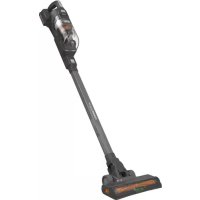
BHFEA18D1 - Hand vacuum cleaner BLACK & DECKER - Free user manual and instructions
Find the device manual for free BHFEA18D1 BLACK & DECKER in PDF.



| Product type | Handheld vacuum cleaner |
| Brand | Black & Decker |
| Model | BHFEA18D1 |
| Voltage | 18 V |
| Battery type | Lithium-Ion (Li-Ion) |
| Battery capacity | 2.0 Ah / 36 Wh |
| Charging time | Approximately 5 hours |
| Weight (with battery) | 2.8 kg |
| Weight (unit only) | 2.4 kg |
| Included accessories | Crevice tool, extension tube, floor nozzle, storage base, charger |
| Power modes | 2 speeds with automatic floor sensor |
| Charge indicator | 3 LEDs indicating charge level |
| Dust container | Transparent, removable |
| Filtration system | Cyclone with washable foam filter |
| Filter maintenance | Wash with soapy water, replace every 6 to 9 months |
| Usage | Dry vacuuming only |
| Warranty | 2 years |
| Double insulation | Yes (charger) |
| Indoor use | Yes (charging station) |
Frequently Asked Questions - BHFEA18D1 BLACK & DECKER
User questions about BHFEA18D1 BLACK & DECKER
0 question about this device. Answer the ones you know or ask your own.
Ask a new question about this device
Download the instructions for your Hand vacuum cleaner in PDF format for free! Find your manual BHFEA18D1 - BLACK & DECKER and take your electronic device back in hand. On this page are published all the documents necessary for the use of your device. BHFEA18D1 by BLACK & DECKER.
USER MANUAL BHFEA18D1 BLACK & DECKER
English (original instructions) 5
Intended use
Your BLACK+DECKER BHFEA18, BHFEA18D1 cordless vacuum cleaner has been designed for vacuum cleaning purposes. This appliance is intended for household use only.
Read all of this manual carefully before operating the appliance.
Safety instructions

Warning! Read all safety warnings and all instructions.
Failure to follow the warnings and instructions listed below may result in electric shock, fire and/or serious injury.
- The intended use is described in this manual. The use of any accessory or attachment or the performance of any operation with this appliance other than those recommended in this instruction manual may present a risk of personal injury.
- Retain this manual for future reference.
Using your appliance
- Do not use the appliance to pick up liquids or any materials that could catch fire.
- Do not use without dust bag and/or filters in place
- Do not use the appliance near water.
- Do not immerse the appliance in water.
- Never pull the charger lead to disconnect the charger from the socket.
Keep the charger lead away from heat, oil and sharp edges.
- This appliance can be used by children aged from 8 years and above and persons with reduced physical, sensory or mental capabilities or lack of experience and knowledge if they have been given supervision or instruction concerning use of the appliance in a safe way and understand the hazards involved. Children shall not play with the appliance. Cleaning and user maintenance shall not be made by children without supervision.
Inspection and repairs
Before use, check the appliance for damaged or defective parts. Check for breakage of parts, damage to switches and any other conditions that may affect its operation.
- Do not use the appliance if any part is damaged or defective.
- Have any damaged or defective parts repaired or replaced by an authorized repair agent.
- Regularly check the charger lead for damage. Replace the charger if the lead is damaged or defective.
- Never attempt to remove or replace any parts other than those specified in this manual.
Additional safety instructions
After use
- Unplug the charger before cleaning the charger or charging base.
- When not in use, the appliance should be stored in a dry place.
- Children should not have access to stored appliances.
Residual risks
Additional residual risks may arise when using the tool which may not be included in the enclosed safety warnings. These risks can arise from misuse, prolonged use etc.
Even with the application of the relevant safety regulations and the implementation of safety devices, certain residual risks can not be avoided. These include:
- Injuries caused by touching any rotating/moving parts.
- Injuries caused when changing any parts, blades or accessories.
- Injuries caused by prolonged use of a tool. When using any tool for prolonged periods ensure you take regular breaks.
◆ Impairment of hearing.
◆ Health hazards caused by breathing dust developed when using your tool (example:- working with wood, especially oak, beech and MDF.)
Batteries and chargers
Batteries (can be sold separately)
- Rechargeable batteries are to be removed from the appliance before being charged.
-
Batteries are to be inserted with the correct polarity.
-
Exhausted batteries are to be removed from the appliance and safely disposed of.
- If the appliance is to be stored unused for a long period, the batteries should be removed.
- The supply terminals are not to be short circuited.
- Never attempt to open for any reason.
- Do not expose the battery to water.
- Do not expose the battery to heat.
- Do not store in locations where the temperature may exceed 40°C.
- Charge only at ambient temperatures between 10°C and 40°C.
- Charge only using the charger provided with the appliance/tool. Using the wrong charger could result in an electric shock or overheating of the battery.
- When disposing of batteries, follow the instructions given in the section "Protecting the environment".
- Do not damage/deform the battery pack either by puncture or impact, as this may create a risk of injury and fire.
- Do not charge damaged batteries.
- Under extreme conditions, battery leakage may occur. When you notice liquid on the batteries carefully wipe the liquid off using a cloth. Avoid skin contact.
- In case of skin or eye contact, follow the instructions below.
Warning! The battery fluid may cause personal injury or damage to property. In case of skin contact, immediately rinse with water. If redness, pain or irritation occurs seek medical attention. In case of eye contact, rinse immediately with clean water and seek medical attention.
Chargers (can be sold separately)
Your charger has been designed for a specific voltage. Always check that the mains voltage corresponds to the voltage on the rating plate and the information in the technical data table.
Warning! Never attempt to replace the charger unit with a regular mains plug.
- Use your BLACK+DECKER charger only to charge the battery in the appliance/tool with which it was supplied. Other batteries could burst, causing personal injury and damage.
- Never attempt to charge non-rechargeable batteries.
- If the supply cord is damaged, it must be replaced by the manufacturer or an authorised BLACK+DECKER Service Centre in order to avoid a hazard.
- Do not expose the charger to water.
- Do not open the charger.
- Do not probe the charger.
- The appliance/tool/battery must be placed in a well ventilated area when charging.
Electrical safety
Symbols on the charger
Read all of this manual carefully before using the appliance.
This tool is double insulated; therefore no earth wire is required. Always check that the power supply corresponds to the voltage on the rating plate.

The charging base is intended for indoor use only.
Labels on appliance
The following symbols appear on this appliance along with the date code
Read all of this manual carefully before using the appliance
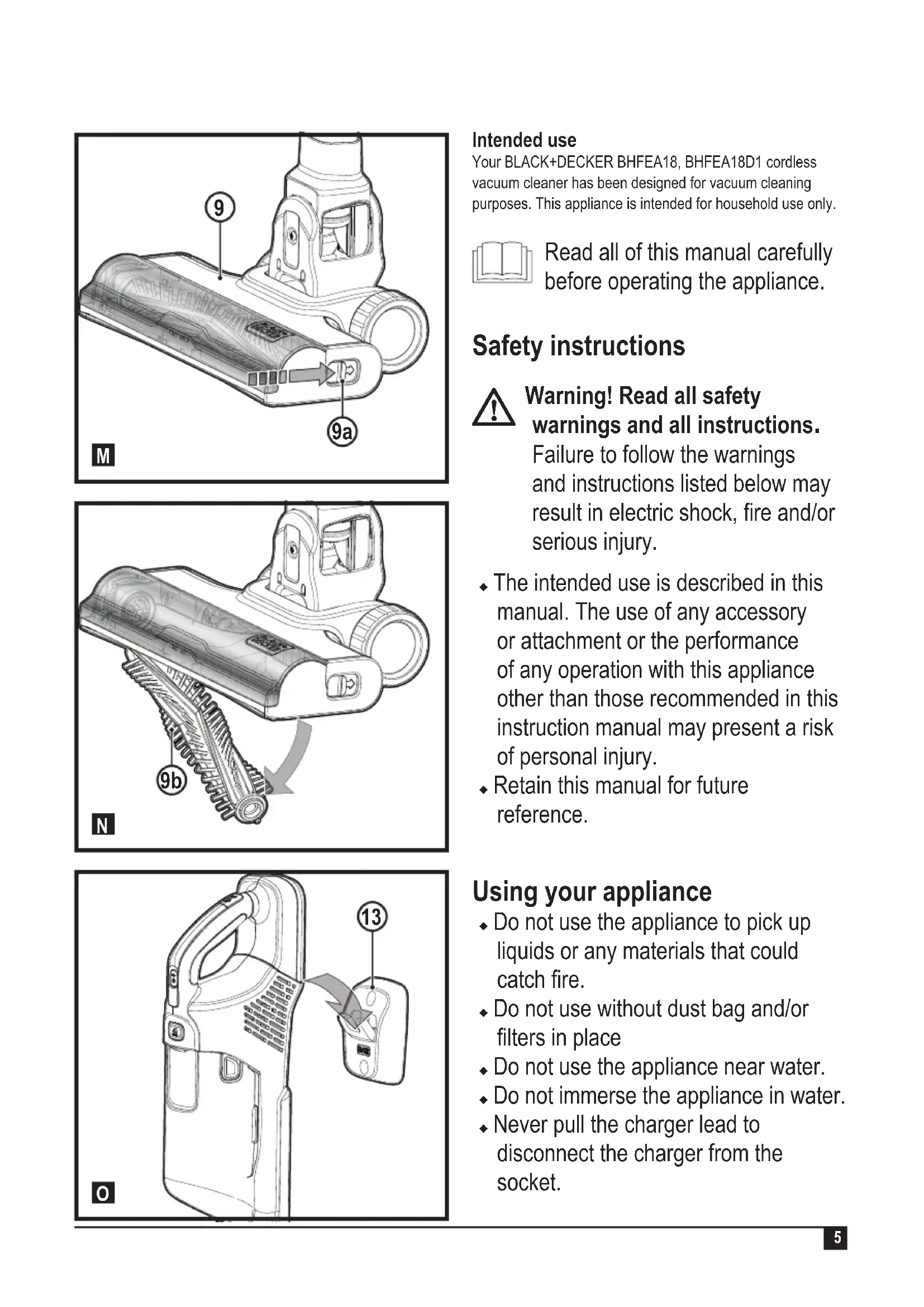
Features
This tool includes some or all of the following features.
-
On/off power button
-
Charging port
-
State of charge indicator
-
Dust bowl relase button
-
Clear dust bowl
-
Cyclonic filter assembly
-
Extension pole release button
-
Extension pole
-
Floorhead (with in-built floor sense)
-
Beater bar release button
-
Crevicetool
-
Battery
12a.Charger
- Storage station
Use
Charging the battery (Fig. A, B)
The standard charger provided will charge a fully depleted battery in about 5 hours
◆ Plug the charger (12a) into an appropriate outlet before inserting the battery pack (12).
◆ Insert the battery pack (12) into the charger (12a) as shown in figure A.
◆ The green LED (12b) will flash indicating that the battery is being charged.
- The completion of charge is indicated by the green LED (12b) remaining on continuously. The pack is fully charged and may be used at this time or left on the charger.
Note: Recharge discharged batteries as soon as possible after use or battery life may be greatly diminished.
Note: The charger and battery pack can be left connected with the green LED glowing indefinitely.
The charger will keep the battery pack fresh and fully charged.
Important charging notes
◆ Longest life and best performance can be obtained if the battery pack is charged when the air temperature is between 18°-24°C. DO NOT charge the battery pack in an air temperature below +4.5°C, or above +40.5°C.
This is important and will prevent serious damage to the battery pack.
-
The charger and battery pack may become warm to touch while charging. This is a normal condition, and does not indicate a problem. To facilitate the cooling of the battery pack after use, avoid placing the charger or battery pack in a warm environment such as in a metal shed, or an uninsulated trailer.
◆ If the battery pack does not charge properly: -
Check current at receptacle by plugging in a lamp or other appliance.
◆ Check to see if receptacle is connected to a light switch which turns power off when you turn out the lights. - Move charger and battery pack to a location where the surrounding air temperature is approximately 18°-24°C.
-
If charging problems persist, take the tool, battery pack. and charger to your local service centre.
-
The battery pack should be recharged when it fails to produce sufficient power on jobs which were easily done previously. DO NOT CONTINUE to use under these conditions. Follow the charging procedure. You may also charge a partially used pack whenever you desire with no adverse effect on the battery pack.
- Foreign materials of a conductive nature such as, but not limited to, steel wool, aluminium foil, or any buildup of metallic particles should be kept away from charger cavities.
Always unplug the charger from the power supply when there is no battery pack in the cavity. Unplug charger before attempting to clean.
- Do not freeze or immerse charger in water or any other liquid.
Warning! Do not allow any liquid to get inside charger. Never attempt to open the battery pack for any reason. If the plastic housing of the battery pack breaks or cracks, return to a service centre for recycling.
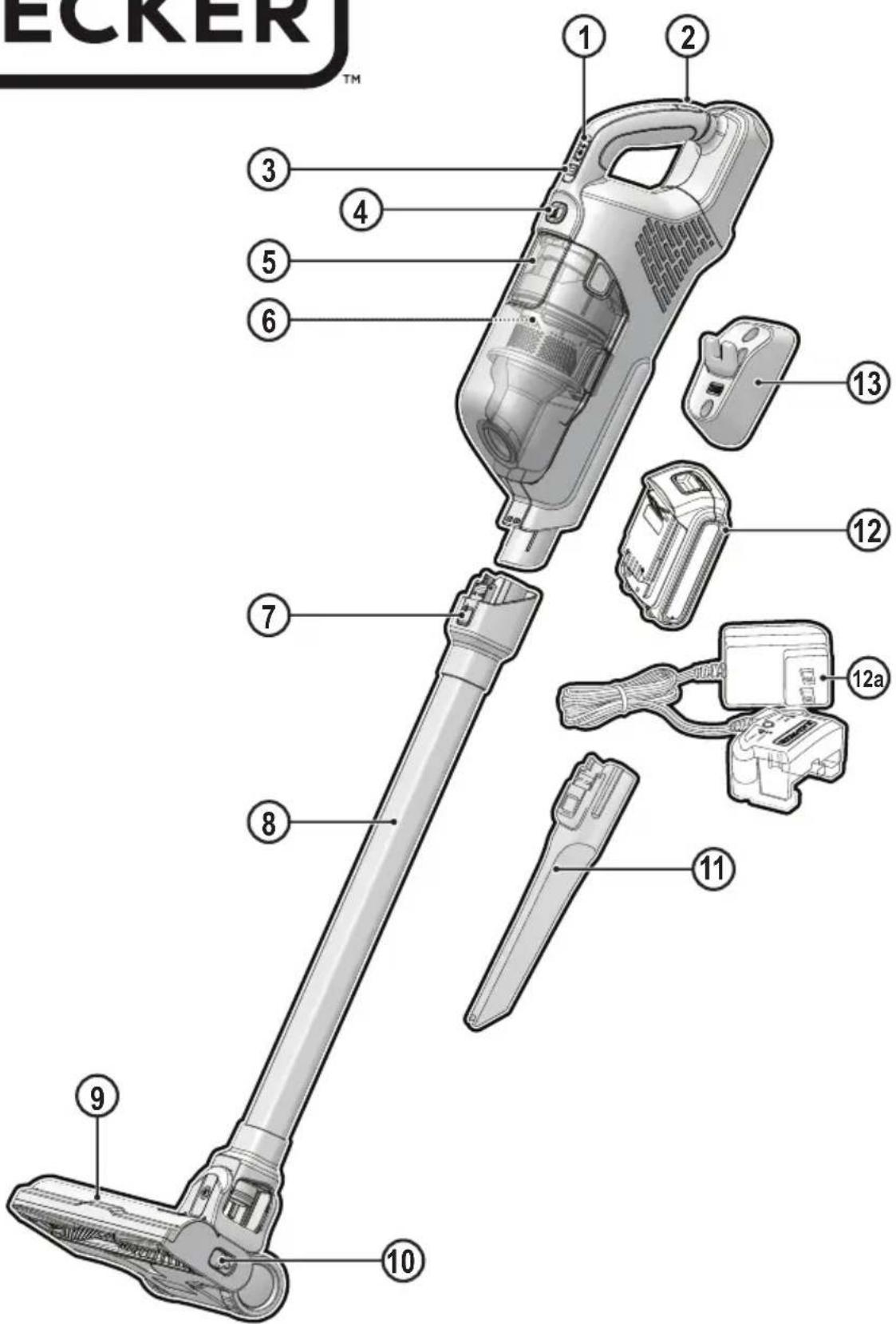
State of charge indicator (Fig. C)
This appliance include a state of charge indicator (3) which consists of three LED lights that indicate the level of charge remaining in the battery. This feature is only activated when the vacuum is powered on and when the vacuum is on charge.
The state of charge indicator is an indication of approximate levels of charge remaining in the battery pack.
The LED battery indicator displays the remaining charge and warns you when the battery is low.
The final LED will flash continuously when there is only very little runtime remaining.
Note: The state of charge indicator is only an indication of the charge left on the battery.
It does not indicate tool functionality and is subject to variation based on product components, temperature and end-user application.
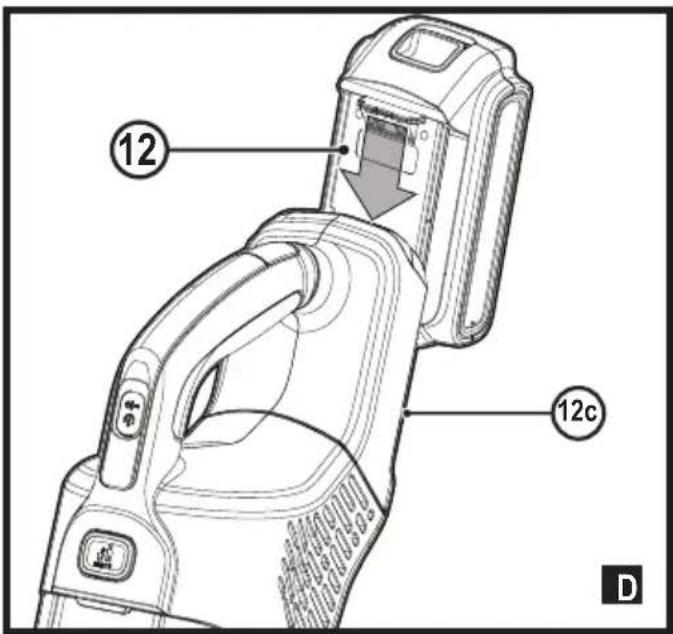
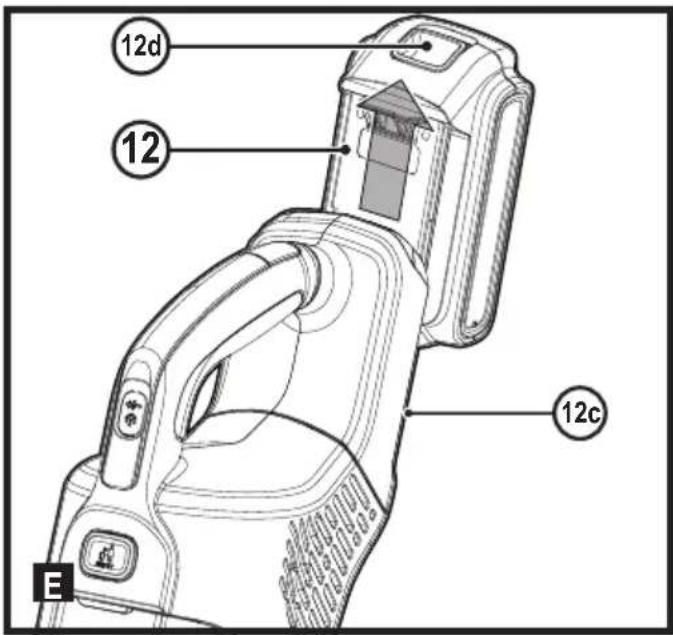
Installing and removing the battery (Fig. D, E)
Warning! Make certain the vac is switched off before removing or installing battery.
To install battery pack
- Insert battery pack (12) into the vac (12c) until an audible click is heard (Figure D). Make sure battery pack is fully seated and fully latched into position.
To remove battery pack
◆ Depress the battery release button (12d) as shown in Figure E and pull battery pack out of the vac.
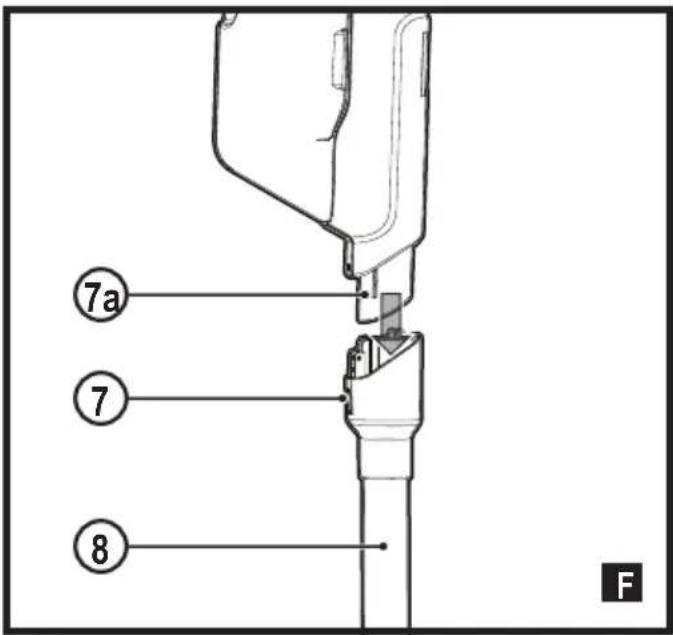
Assembly (Fig. F)
◆ Align the top of the extension tube (8) with the vacuum inlet (7a) as shown in Fig. F.
◆ Push the extension tube (8) onto the vacuum inlet (7a) so it locks into position.
- To remove an the extension tube, press the extension tube release button (7) and gently pull the extension tube off.
Warning! When not in use position the unit with the rear of the vacuum facing a wall so that any inadvertent fall of the unit would contact a wall and not people or pets.
Useage
This vacuum cleaner can be used in one of two ways.
◆ With the extension tube (8) and the floor head (9).
◆ With the crevice tool (11) and the vacuum.
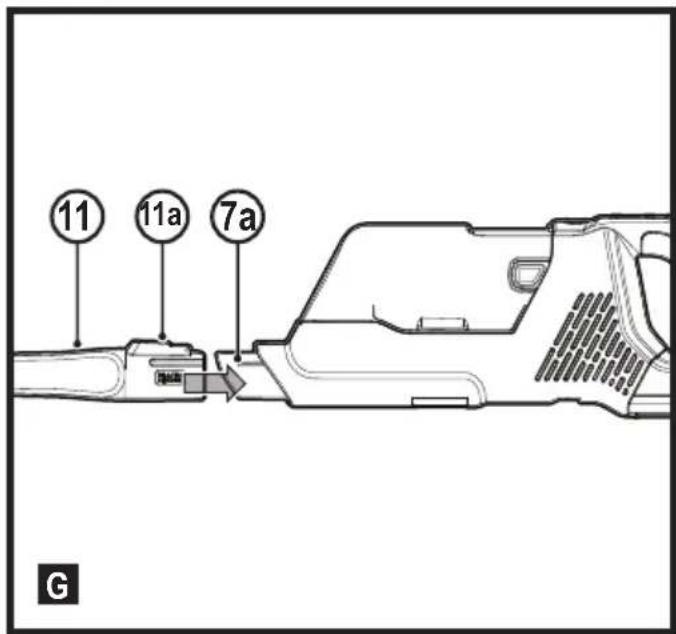
Mounting accessories (Fig. G)
- The crevice tool (11) allows for vacuuming in narrow and hard to-reach places.
◆ To attach the crevice tool (11) press into vacuum inlet (7a) so it locks into position as shown in figure G.
◆ To release the crevice tool (11) press the crevice tool release button (11a) and gently pull the extension tube off.
Switching ON and OFF (Fig. H)
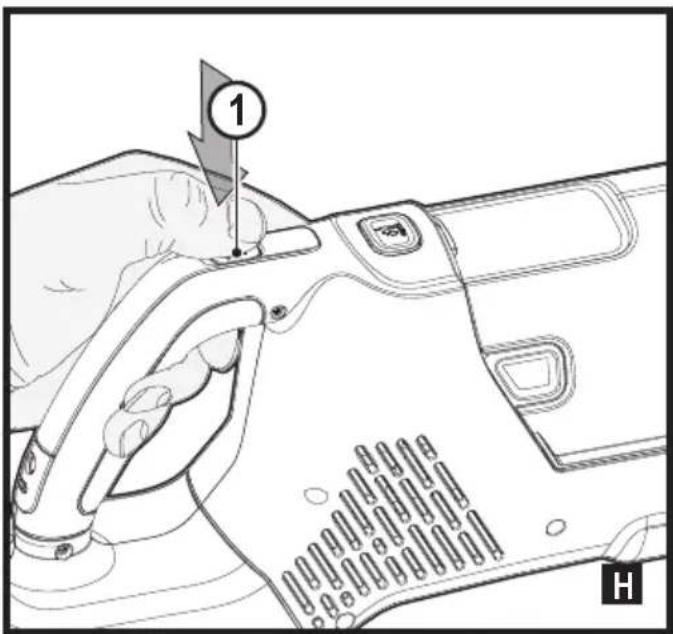
◆ To switch ON, push the on/off power button (1).
◆ For increased power, push the On/Off button (1) again.
◆ Push the On/Off button (1) a third time to turn the unit off.
Note: The state of charge indicator LEDs (3) will illuminate while the vacuum is ON.
◆ To switch OFF, slide the on/off power switch (1) to the "O" position.
◆ Charge the battery (12) immediately after use so that it will be ready and fully charged for the next use.
Floorsense
Floorsense is active in the low speed. When a carpet is detected, the performance of the unit is automatically increased to high speed. When a hardfloor is detected, the performance of the unit reduces to low speed.
Cleaning and emptying the vacuum
Warning! Projectile/Respiratory Hazard: Never use the vac without its filter.
Warning! The filter is re-usable, do not confuse it with a disposable dust bag, and do not throw it away when the product is emptied. We recommend that you replace the filter every 6–9 months depending on frequency of use.
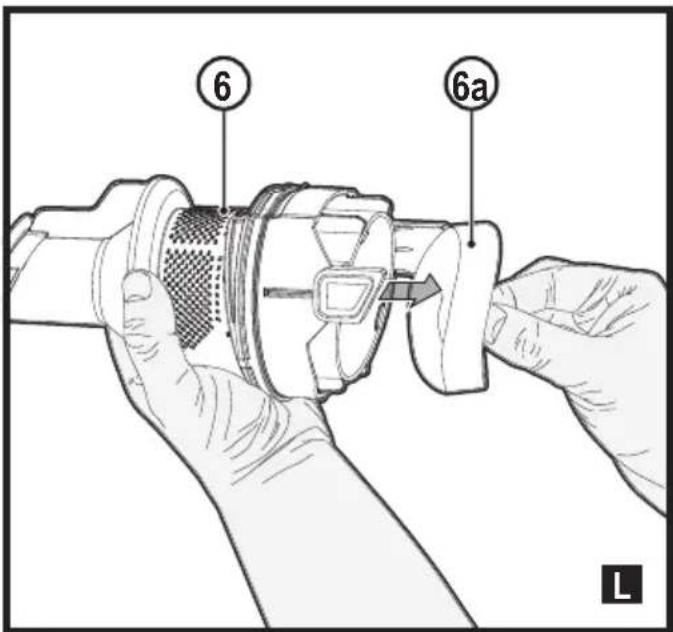
To empty the dust canister (Fig. I, J, K, L)
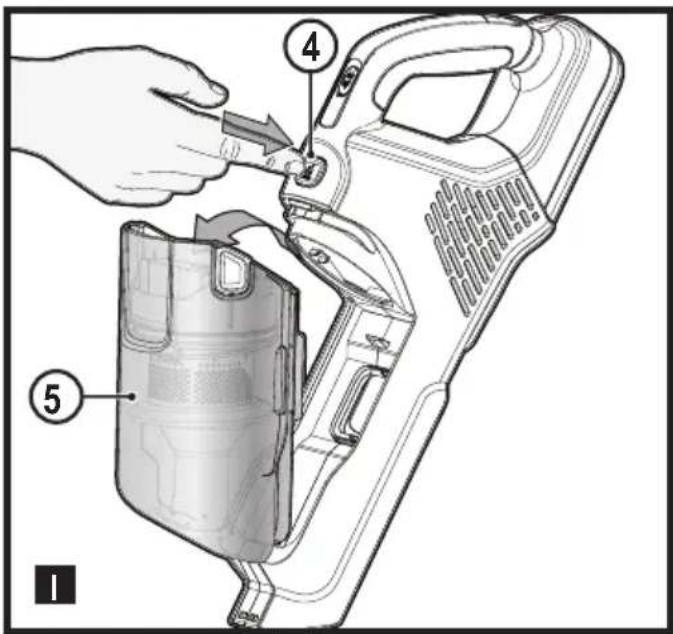
◆ Push down the dust canister release button (4) to release and remove the dust canister (5) from the vacuum.
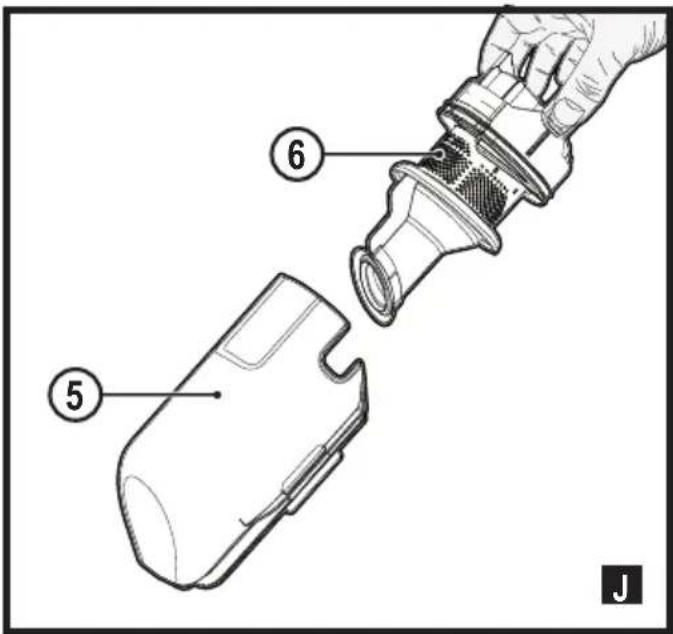
◆ Use your index finger and thumb to pinch the filter housing tabs and pull the filter housing (6) from the dust canister as shown in figure I.
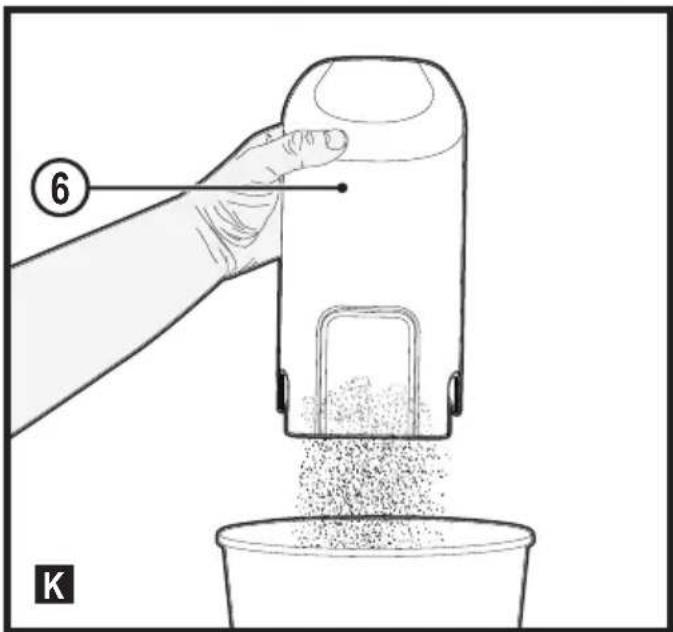
◆ Place the dust canister over a trash can and empty the dust canister as illustrated in figure J.
◆ Remove the foam filter (6a) from the filter housing as shown in figure K.
◆ Shake or lightly brush any loose dust off of the foam filter (6a) and filter (6).
◆ Rinse out the dust canister (5) with warm soapy water.
◆ Wash the filters with warm soapy water.
- Ensure the filters are completely dry before refitting the filters into the filter housing.
◆ Refit the clean and dry foam filter (6a) into the filter housing (6).
◆ Install the filter housing into the dust canister (5).
◆ Install the dust canister onto the vacuum, until it “clicks” firmly into position.
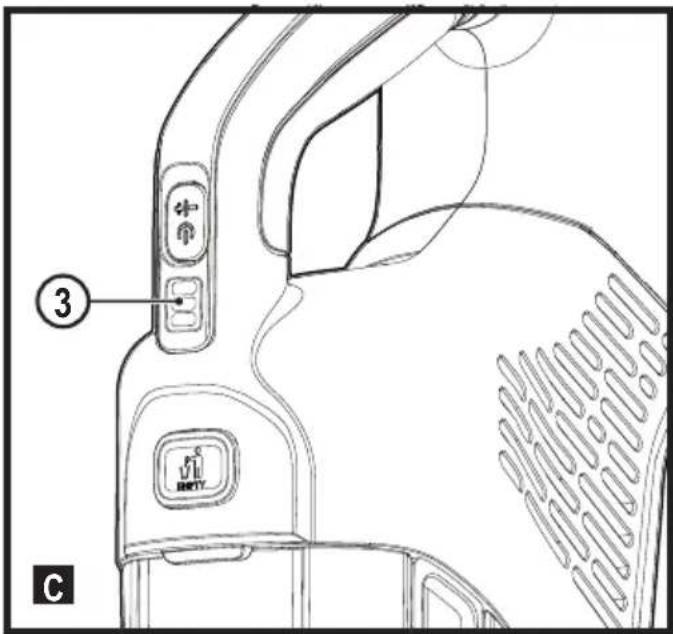
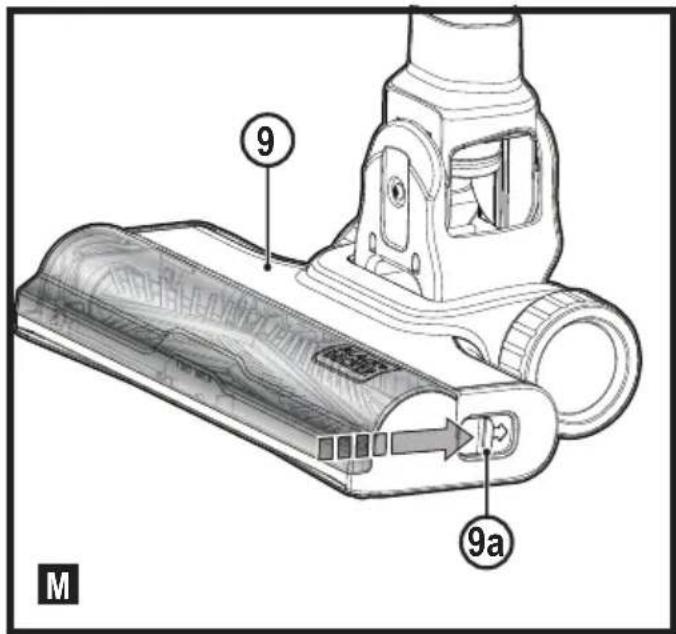
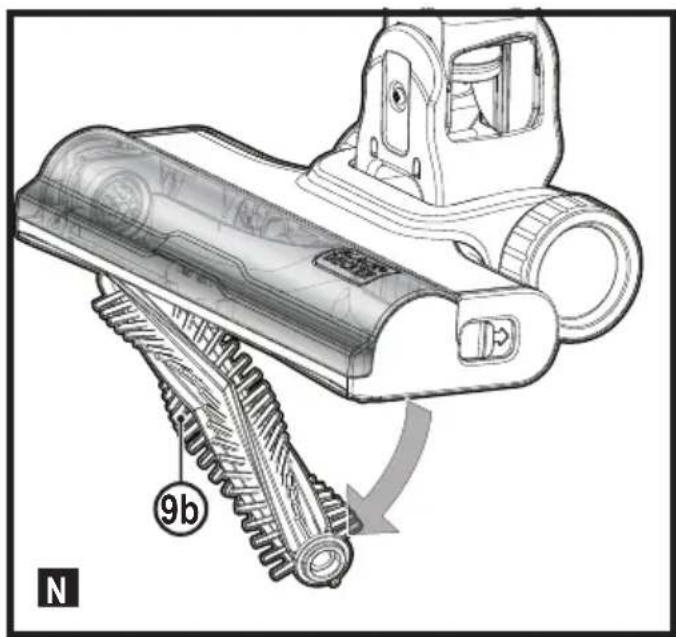
Removing and cleaning the beater bar (Fig. M, N)
Warning! To reduce the risk of injury from moving parts, disconnect the floor head and extension tube from the vacuum before cleaning or servicing.
◆ To remove the beater bar (9b) from the floor head (9) Slide the beater bar release button (9a) to the rear of the unit.
◆ The beater bar (9b) can now be removed and cleaned.
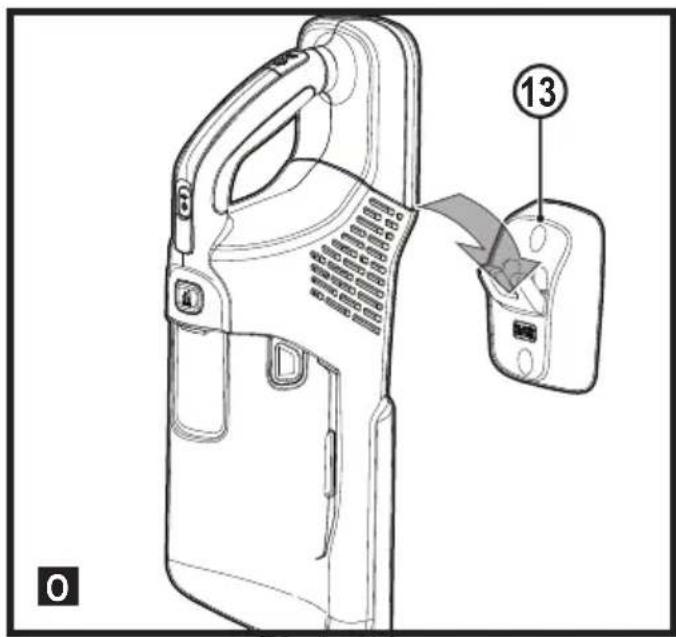
Safe storage (Fig. O)
The unit can be safely stored, when not in use, by placing the catch on the rear of the motor unit onto the storage station (13) as shown in figure O.
Troubleshooting
| Problem Possible | Cause Possible Solution | |
| Unit will not start. Battery | not installed properly.Battery not charged. | Check battery installation.Check battery charging requirements |
| Battery will not charge. | Battery not inserted into charger.Charger not plugged in. | Insert battery into charger until LED appears.Plug charger into a working outlet. Refer to “Important Charging Notes” for more details.Check current at receptacle by plugging in a lamp or other appliance.Check to see if receptacle is connected to a light switch which turns power off when you turn out the lightsMove charger and tool to a surrounding air temperature of above 4,5°C or below +40,5°C. |
| Surrounding air temperature too hot or too cold. |
Maintenance
Your BLACK+DECKER cordless appliance has been designed to operate over a long period of time with a minimum of maintenance. Continuous satisfactory operation depends upon proper tool care and regular cleaning.
Warning! Before performing any maintenance on cordless appliances:
◆ Run the battery down completely if it is integral and then switch off.
◆ Unplug the charger before cleaning it. Your charger does not require any maintenance apart from regular cleaning.
◆ Regularly clean the ventilation slots in your appliance/charger using a soft brush or dry cloth.
◆ Regularly clean the motor housing using a damp cloth. Do not use any abrasive or solvent-based cleaner.
Replacing the filters
The filters should be replaced every 6 to 9 months and whenever worn or damaged. Replacement filters are available from your BLACK+DECKER dealer.
◆ Remove the old filters as described above.
◆ Fit the new filters as described above.
Protecting the environment

Separate collection. Products and batteries marked with this symbol must not be disposed of with normal household waste.
Products and batteries contain materials that can be recovered or recycled reducing the demand for raw materials.
Please recycle electrical products and batteries according to local provisions. Further information is available at www.2helpU.com
Technical Data
| BHFEA18 BHFEA18D | ||
| Voltage 18v 18v | ||
| Watt Hours 36wh (18v 20ah battery pack) | 36wh (18v 2.0ah battery pack) | |
| Approx Charge Times 5 hours 5 hours | ||
| Weight 2.4kg bare unit - 2.8kg with battery | 2.4kg bare unit - 2.8kg with battery | |
| Charger S010**2 | 400040/ | SSC-250040** | S018***1800100/SSC-200100** |
| Input Voltage V | _AC | 100 - 240 | 220 - 240 |
| Output Voltage | V_DC | 8 - 20 | 8 - 20 |
| Current | mA | 400 | 1000 |
| Approx. charge time | Hours | 3 - 5 | 1 - 5 |
| Battery | BL1518 | BL2018 | BL4018 | |
| Voltage | V_AC | 18 | 18 | 18 |
| Capacity | Ah | 1.5 | 2.0 | 4.0 |
| Type | Li-Ion | Li-Ion | Li-Ion |
Guarantee
Black & Decker is confident of the quality of its products and offers consumers a 24 month guarantee from the date of purchase. This guarantee is in addition to and in no way prejudices your statutory rights. The guarantee is valid within the territories of the Member States of the European Union and the European Free Trade Area.
To claim on the guarantee, the claim must be in accordance with Black&Decker Terms and Conditions and you will need to submit proof of purchase to the seller or an authorised repair agent. Terms and conditions of the Black&Decker 2 year guarantee and the location of your nearest authorised repair agent can be obtained on the Internet at www.2helpU.com, or by contacting your local Black & Decker office at the address indicated in this manual.
Please visit our website www.blackanddecker.co.uk to register your new Black & Decker product and receive updates on new products and special offers.
Verwendungszweck
levels of charge remaining in the battery pack.
removing or installing battery.
De accu plaatsen
- Intended use
- Safety instructions
- Warning! Read all safety warnings and all instructions.
- Using your appliance
- Inspection and repairs
- Additional safety instructions
- After use
- Residual risks
- Batteries and chargers
- Batteries (can be sold separately)
- Chargers (can be sold separately)
- Electrical safety
- Labels on appliance
- Features
- Use
- Charging the battery (Fig. A, B)
- Important charging notes
- State of charge indicator (Fig. C)
- Installing and removing the battery (Fig. D, E)
- To install battery pack
- To remove battery pack
- Assembly (Fig. F)
- Useage
- Mounting accessories (Fig. G)
- Switching ON and OFF (Fig. H)
- Floorsense
- Cleaning and emptying the vacuum
- To empty the dust canister (Fig. I, J, K, L)
- Removing and cleaning the beater bar (Fig. M, N)
- Safe storage (Fig. O)
- Maintenance
- Replacing the filters
- Protecting the environment
- Guarantee
- Verwendungszweck
- De accu plaatsen
Brand : BLACK & DECKER
Model : BHFEA18D1
Category : Hand vacuum cleaner