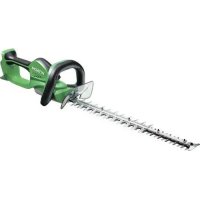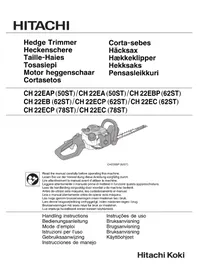
CH 10DL - Hedge trimmers HITACHI - Free user manual and instructions
Find the device manual for free CH 10DL HITACHI in PDF.



| Brand | Hitachi |
| Model | CH 10DL |
| Product type | Hedge trimmer and grass shear (interchangeable blades) |
| Rated voltage | 10.8 V (Li-ion) |
| Battery type | BCL1015, 1.5 Ah, 3 Li-ion cells |
| Charger | UC10SFL, charging voltage 10.8 V |
| No-load speed | 1100 min⁻¹ |
| Cutting capacity (branch) | 8 mm thickness |
| Blade length (hedge trimmer) | 190 mm |
| Blade length (grass shear) | 170 mm |
| Weight (with hedge trimmer blade) | 1.2 kg |
| Weight (with grass shear blade) | 1.2 kg |
| Charging time (20°C) | Approximately 40 minutes |
| Continuous runtime (approx.) | 30 minutes (depending on conditions) |
| Main functions | Hedge trimming, pruning, weeding, lawn mowing |
| Safety | Unlock button, blade sheath/cover, automatic shut-off in case of overload |
| Maintenance and cleaning | Clean with a dry or soapy cloth, lubricate the blade regularly, sharpen once a year |
| Spare parts and repairability | Replacement blades available, original battery and charger, repair by authorized Hitachi service center |
| General information | User manual in French available, manufacturer's warranty, compliance with EN standards |
Frequently Asked Questions - CH 10DL HITACHI
User questions about CH 10DL HITACHI
0 question about this device. Answer the ones you know or ask your own.
Ask a new question about this device
Download the instructions for your Hedge trimmers in PDF format for free! Find your manual CH 10DL - HITACHI and take your electronic device back in hand. On this page are published all the documents necessary for the use of your device. CH 10DL by HITACHI.
USER MANUAL CH 10DL HITACHI
natural_image
Line drawing of a hedgehog with serrated blade and handle (no text or symbols)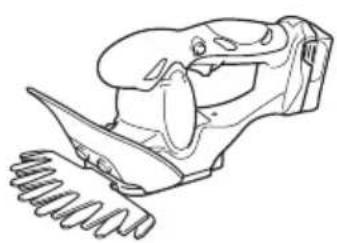
natural_image
Line drawing of a dinosaur skull and angular blade (no text or symbols)Read through carefully and understand these instructions before use. Diese Anleitung vor Benutzung des Werkzeugs sorgfältig durchlesen und verstehen. Lire soigneusement et bien assimiler ces instructions avant usage. Prima dell'uso leggere attentamente e comprendere queste instruzioni. Deze gebruiksaanwijzing s.v.p. voor gebruik zorgvuldig doorlezen. Leer cuidadosamente y comprender estas instrucciones antes del uso. Antes de usar, leia com cuidado para assimilar estas instruções.
Handling instructions Bedienungsanleitung Mode d'emploi Istruzioni per l'uso Gebruiksaanwijzing Instrucciones de manejo Instruções de uso
text_image
1 ② ①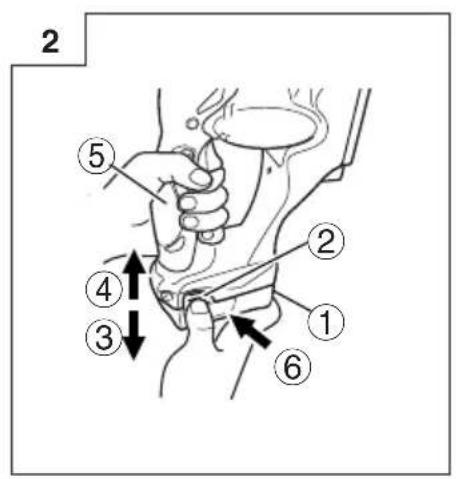
text_image
2 ⑤ ② ④ ③ ① ⑥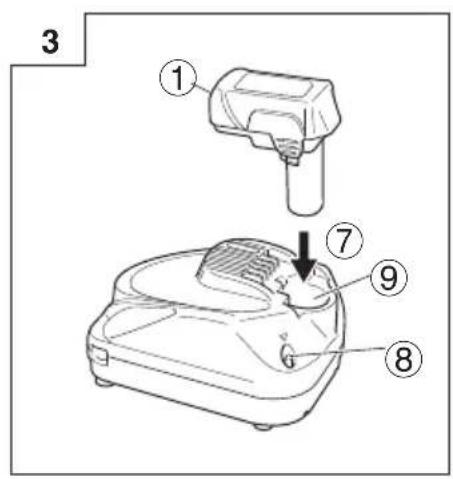
text_image
3 ① ⑦ ⑨ ⑧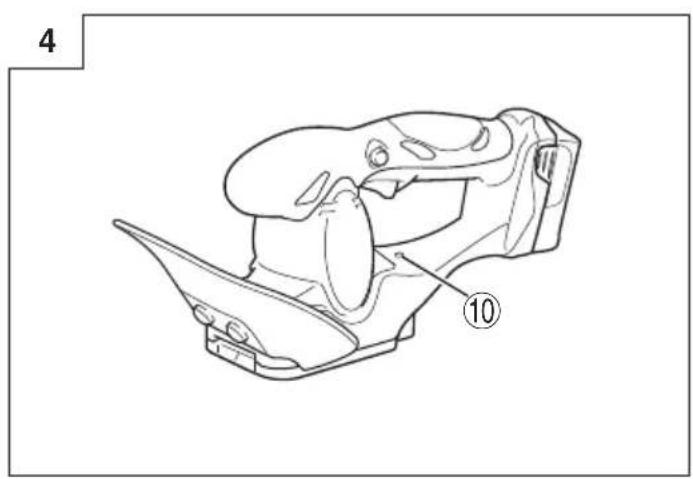
natural_image
Technical line drawing of a mechanical component with labeled part (10), no readable text or symbols present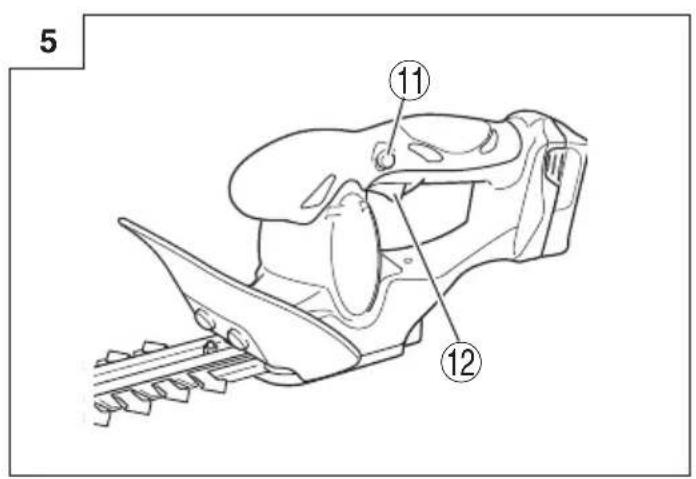
text_image
5 ⑪ ⑫ ⑫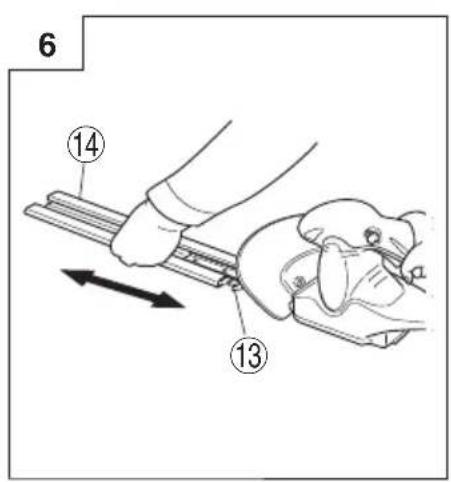
text_image
6 ⑭ ⑬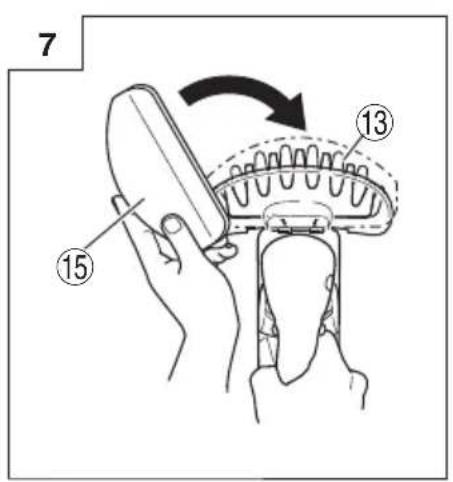
text_image
7 13 15
text_image
8 ⑯ ⑱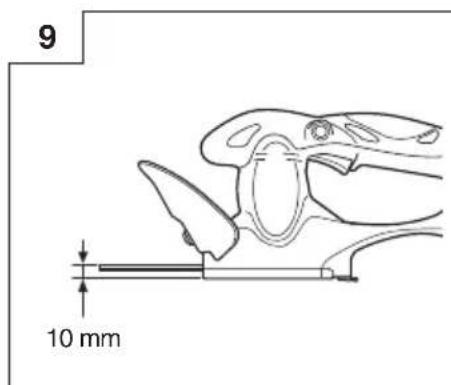
text_image
9 10 mm
text_image
17 mm 25 mm ⑲
text_image
Technical diagram of a biological specimen with labeled parts and dimension line
text_image
10 11 12 ⑳ ②1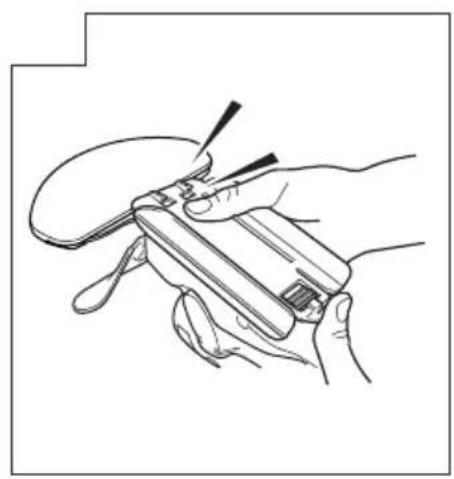
natural_image
Line drawing of hands using a handheld device to interact with a curved screen (no text or symbols)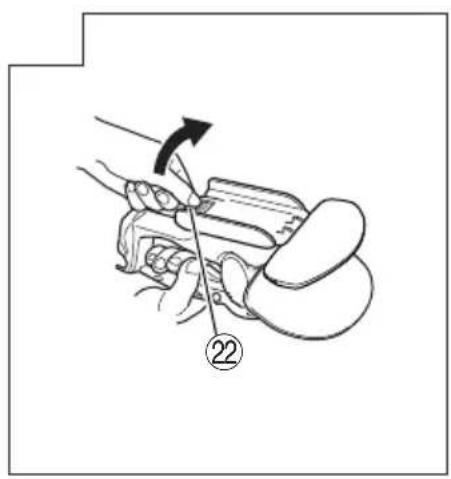
natural_image
Illustration of a hand holding a device with a directional arrow indicating motion (no text or symbols)
text_image
13 23 24 13 14 17 25
text_image
14 CH10DL ⑰
text_image
CG10DL ⑱
text_image
15 ⑭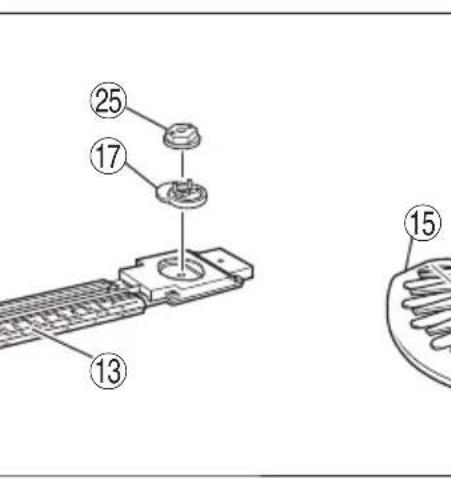
text_image
Technical diagram showing exploded view of a mechanical assembly with numbered components and a separate cross-sectional view.
text_image
Technical diagram of a mechanical assembly with numbered parts labeled 13, 18, and 25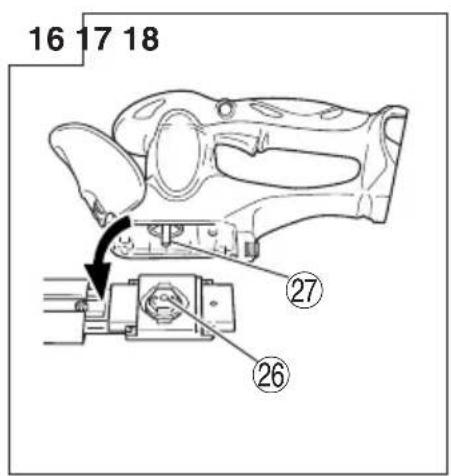
text_image
16 17 18 27 26
text_image
Technical diagram showing a mechanical assembly with labeled component 25 and directional arrow indicating rotation or adjustment.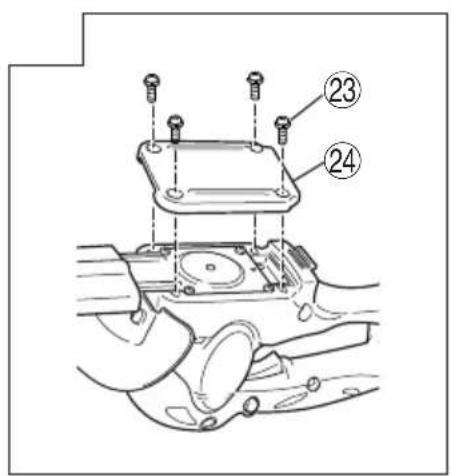
text_image
Technical diagram of a mechanical assembly with numbered parts labeled 23 and 2419
text_image
28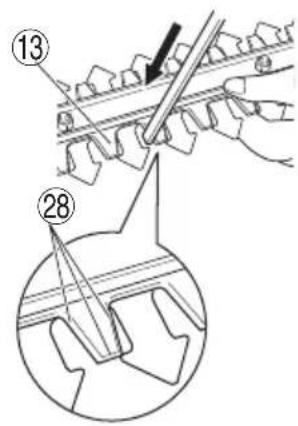
text_image
Technical diagram showing mechanical assembly with numbered components and a magnified view of a component detail| English Deutsch Français Italiano | ||||
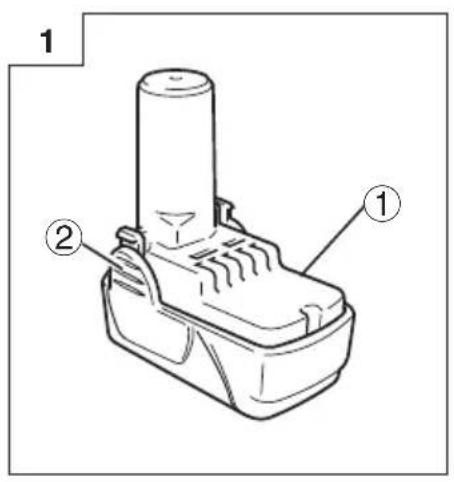
| 1 | Rechargeable battery | Aufladbare Batterie | Batterie rechargeable | Batteria ricaricabile |
| 2 | Latch Verriegelung Taquet Fermo | |||
| 3 | Pull out Herausziehen Tirer vers l'extérieur Estrarre | |||
| 4 | Insert Einsetzen Insérer Inserire | |||
| 5 | Handle Handgriff | Poignée | Impugnatura | |
| 6 | Push Drücken Pousser Spingere | |||
| 7 | Insert Einsetzen Insérer Inserire | |||
| 8 | Pilot lamp | Kontrollampe | Lampe témoin | Spia |
| 9 | Hole for connecting the rechargeable battery | Anschlußloch für Ladebatterir | Orifi ce de raccordemente de la batterie rechargeable | Foro di collegamento della batteria ricaricabile |
| 10 | Battery level warning lamp | Batteriestandwarnlampe | Témoin du niveau de charge de la batterie | Spia di avvertimento del livello batteria |
| 11 | Lock off button | Einschaltspierre | Bouton déverrouillage | Tasto di chiusura |
| 12 | Trigger switch | Trigger Trait noir Interruttore | ||
| 13 | Blade | Klinge | Lame | Lama |
| 14 | Blade case | Klingenschutz | Étui pour lame | Custodia lama |
| 15 | Blade cover | Klingenschutzabdeckung | Cache lame | Coperchio lama |
| 16 | Blade box | Klingenkasten | Casier pour lame | Scatola lama |
| 17 | Crank cam (A) | Kurbelscheibe (A) | Came de manivelle (A) | Gamma a manovella (A) |
| 18 | Crank cam (B) | Kurbelscheibe (B) | Came de manivelle (B) | Gamma a manovella (B) |
| 19 | Adjuster Justiervorrichtung | Ajusteur Regolatore | ||
| 20 | Tab on tool body | Zunge am Gerätegehäuse | Languette sur le corps de l'outil | Linguetta sul corpo dell'utensile |
| 21 | Adjuster tab | Zunge der Justiervorrichtung | Languette de l'ajusteur | Linguetta del regolatore |
| 22 | Latch Verriegelung Loquet | Dispositivo di arresto | ||
| 23 | Screw | Schraube | Vis | Vite |
| 24 | Bottom plate | Bodenplatte | Plaque inférieure | Piastra inferiore |
| 25 | Crank cam holder | Kurbelscheibenhalterung | Support pour came de manivelle | Supporto gamma a manovella |
| 26 | Center hole | Mittelloch | Centre | Foro centrale |
| 27 | Pin | Stift | Axe | Perno |
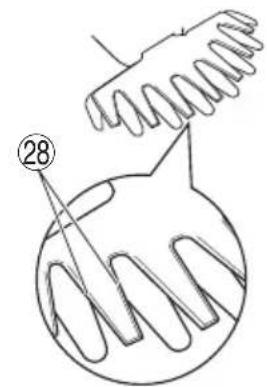
| 28 | Surface to be ground | Zerkleinerungsflächen | Surface à affûter | Superfi cie da mettere a terra |
| Nederlands Español | Português | ||
| 1 | Oplaadbare batterij Batería | recargable Bateria recarregável | |
| 2 | Vergrendeling Cierre Lingüeta | ||
| 3 | Uittrekken Sacar Retirar | ||
| 4 | Insteken Insertar Inserir | ||
| 5 | Handgreep Asidero Cabo | ||
| 6 | Drukken Presionar Empurrar | ||
| 7 | Insteken Insertar Inserir | ||
| 8 | Controlelampje Lámpara piloto | Lâmpada piloto | |
| 9 | Aansluiting voor oplaadbare batterij | Agujero para conectar la batería recargable | Orifício para conectar a bateria recarregável |
| 10 | Accu-waarschuwingslampje | Lámpara de advertencia del nivel de batería | Luz avisadora do nível da bateria |
| 11 | Ontgrendelknop | Botón Lock Off | Botão de bloqueio |
| 12 | Trekkerschakelaar | Conmutador de gatillo | Interruptor de comando |
| 13 | Knipmes | Hoja | Lâmina |
| 14 | Knipmeshouder | Funda de la hoja | Bolsa da lâmina |
| 15 | Knipmesafdekking | Cubierta de la hoja | Tampa da lâmina |
| 16 | Knipmesdoos | Caja de la hoja Caixa da lâmina | |
| 17 | Kruknok (A) | Leva del cigüeñal (A) | Came da manivela (A) |
| 18 | Kruknok (B) | Leva del cigüeñal (B) | Came da manivela (B) |
| 19 | Afsteller | Mecanismo de ajuste | Regulador |
| 20 | Uitsteeksel op gereedschapbehuizing | Pestaña en el cuerpo de la herramienta | Patilha no corpo da ferramenta |
| 21 | Uitsteeksel van afsteller | Pestaña del mecanismo de ajuste | Patilha do regulador |
| 22 | Vergrendeling Pestillo | Trinco | |
| 23 | Schroef | Tornillos Parafuso | |
| 24 | Onderste plaat | Placa inferior | Chapa inferior |
| 25 | Kruknokhouder | Soporte de la leva del cigüeñal | Suporte para a came da manivela |
| 26 | Middengat | Orificio central | Orifício central |
| 27 | Pen | Patilla Pino | |
| 28 | Te slijpen oppervlak | Superficie a afilar | Superfície para o solo |
| Symbols⚠ WARNINGThe following show symbols used for the machine. Be sure that you understand their meaning before use. | Symbole⚠ WARNINGDie folgenden Symbole werden für diese Maschine verwendet. Achten Sie darauf, diese vor der Verwendung zu verstehen. | Symboles⚠ AVERTISSEMENTLes symboles suivants sont utilisés pour l'outil. Bien se familiariser avec leur signifi cation avant d'utiliser l'outil. | Simboli⚠ AVVERTENZADi seguito mostriamo i simboli usati per la macchina. Assicurarsi di comprenderne il signifi cato prima dell'uso. | |
 | Read all safety warnings and all instructions.Failure to follow the warnings and instructions may result in electric shock, fi re and/or serious injury. | Lesen Sie sämtliche Sicherheitshinweise und Anweisungen durch.Wenn die Warnungen und Anweisungen nicht befolgt werden, kann es zu Stromschlag, Brand und/oder ernsthaften Verletzungen kommen. | Lire tous les avertissements de sécurité et toutes les instructions.Tout manquement à observer ces avertissements et instructions peut engendrer des chocs électriques, des incendies et/ou des blessures graves. | Leggere tutti gli avvertimenti di sicurezza e tutte le istruzioni.La mancata osservanza degli avvertimenti e delle istruzioni potrebbe essere causa di scosse elettriche, incendi e/o gravi lesioni. |
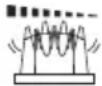 | Cutting means continues to run after the motor is switched off . | Nach dem Abschalten des Motors bewegen sich die Scheren noch weiter. | La lame reste en mouvement une fois le moteur coupé. | I mezzi di taglio continuano a funzionare dopo che il motore viene spento. |
 | Do not use a power tool in the rain and moisture or leave it outdoors when it is raining. | Verwenden Sie die Heckenschere nicht im Regen oder bei Feuchtigkeit, und belassen sie das Gerät bei Regen nicht im Freien. | N'utilisez jamais un outil électrique sous la pluie ou en présence d'humidité. Ne le laissez jamais sous la pluie, même à l'arrêt. | Non usare un utensile elettrico sotto la pioggia e nell'umidità né lasciarlo all'aperto quando piove. |
 | Keep all parts of the body away from the cutter blade.Do not remove cut material or hold material to be cut when blades are moving. Make sure the switch is off when clearing jammed material. | Halten Sie alle Körperteile vom Schneidblatt entfernt.Entfernen Sie das Schnittgut nicht von den Klingen und halten Sie kein zu schneidendes Material daran, während diese in Bewegung sind. Stellen Sie sicher, dass das Gerät ausgeschaltet ist, bevor Sie hängen gebliebenes Material entfernen. | Toutes les pièces de l'outil doivent être tenues à l'écart de la lame. Quand les lames sont en mouvement, ne tentez pas d'ôter le matériau coupé ou de maintenir le matériau à couper. Vérifi ez que l'interrupteur est en position OFF avant de dégager un éventuel matériau coincé. | Tenere tutte le parti del corpo lontano dalla lama della taglierina. Non rimuovere il materiale di taglio né tenere il materiale da tagliare quando le lame sono in movimento. Assicurarsi che l'interruttore sia spento quando si rimuove eventuale materiale inceppato. |
 | Use only for cutting shrub. Nur zum | Heckenschneiden. | Utiliser l'outil exclusivement pour la coupe d'arbustes. | Usare solamente per tagliare l'arbusto. |
 | Use only for cutting grass. Nur zum | Grasschneiden. | Utiliser l'outil exclusivement pour la tonte d'herbe. | Usare solamente per tagliare l'erba. |
 | Keep bystanders away. | Achten Sie darauf, dass keine unbeteiligten Personen in der Nähe sind. | Empêchez la présence de toute personne dans la zone de travail. | Tenere lontani i passanti. |
 | Remove battery before adjusting or cleaning and before leaving the machine unattended for any period. | Entfernen Sie die Batterie vor dem Einstellen und der Reinigung sowie dann, wenn das Gerät unbeaufsichtigt ist. | Ôtez la batterie avant de procéder au réglage de l'appareil, avant de le nettoyer ou de l'entreposer pendant une période prolongée. | Rimuovere la batteria prima di regolare o pulire e prima di lasciare la macchina incustodita per qualsiasi periodo. |
 | Only for EU countriesDo not dispose of electric tools together with household waste material!In observance of European Directive 2002/96/EC on waste electrical and electronic equipment and its implementation in accordance with national law, electric tools that have reached the end of their life must be collected separately and returned to an environmentally compatible recycling facility. | Nur für EU-LänderWerfen Sie Elektrowerkzeuge nicht in den Hausmüll!Gemäss Europäischer Richtlinie 2002/96/EG über Elektro- und Elektronik-Altgeräte und Umsetzung in nationales Recht müssen verbrauchte Elektrowerkzeuge getrennt gesammelt und einer umweltgerechaten Wiederververtung zugeführt werden. | Pour les pays européens uniquementNe pas jeter les appareils électriques dans les ordures ménagères!Conformément à la directive européenne 2002/96/EG relative aux déchets d'équipements électriques ou électroniques (DEEE), et à sa transposition dans la législation nationale, les appareils électriques doivent être collectés à part et être soumis à un recyclage respectueux de l'environnement. | Solo per Paesi UENon gettare le apparecchiature elettriche tra i rifi uti domestici.Secondo la Direttiva Europea 2002/96/CE sui rifi uti di apparecchiature elettriche ed elettroniche e la sua attuazione in conformità alle norme nazionali, le apparecchiature elettriche esauste devono essere raccolte separatamente, al fi ne di essere reimpiegate in modo eco-compatibile. |
| Symbolen⚠ WAARSCHUWINGHieronder staan symbolen afgebeeld die van toepassing zijn op deze machine. U moet de betekenis hiervan begrijpen voor gebruik. | Símbolos⚠ ADVERTENCIAA continuación se muestran los símbolos usados para la máquina. Asegúrese de comprender su signifi cada antes del uso. | Símbolos⚠ AVISOA seguir aparecem os símbolos utilizados pela máquina. Assimile bem seus signifi cados antes do uso. | |
 | Lees alle waarschuwingen en instructies aandachtig door.Nalating om de waarschuwingen en instructies op te volgen kan in een elektrische schok, brand en/ of ernstig letsel resulteren. | Lea todas las instrucciones y advertencias de seguridad.Si no se siguen las advertencias e instrucciones, podría producirse una descarga eléctrica, un incendio y/o daños graves. | Leia todas as instruções e avisos de segurança.Se não seguir todas as instruções e os avisos, pode provocar um choque eléctrico, incêndio e/ou ferimentos graves. |
 | Het snijmechanisme blijft draaien nadat de motor is afgezet. | El medio de corte sigue funcionando una vez apagado el motor. | Cortar signifi ca continuar a trabalhar depois de desligar o motor. |
 | Gebruik een elektrisch gereedschap niet in de regen of in een erg vochtige omgeving en laat het ook niet buiten liggen wanneer het regent. | No utilice una herramienta eléctrica con lluvia y humedad ni la deje fuera cuando esté lloviendo. | Não utilize uma ferramenta eléctrica em condições de chuva e humidade, nem a deixe no exterior quando estiver a chover. |
 | Houd alle lichaamsdelen uit de buurt van het knipmes.Probeer niet om het weggesneden materiaal te verwijderen en houd het materiaal dat gesneden wordt ook niet vast wanneer de knipmessen bewegen. Controleer of de schakelaar afgezet is wanneer u vastgelopen materiaal verwijdert. | Mantenga todas las partes del cuerpo alejadas de la hoja de corte.No retire el material de corte o sujete el material que vaya a cortarse cuando las hojas se estén moviendo. Asegúrese de que el interruptor está apagado cuando retire la material obstruido. | Mantenha todas as partes do corpo afastadas da lâmina de corte.Não retire material cortado nem segure no material a cortar quando as lâminas estão em movimento. Certifi quese de que o interruptor está desligado quando retirar material encravado. |
 | Gebruik alleen voor het knippen van heggen. | Utilizar sólo para cortar arbustos. | Utilize apenas para cortar arbustos. |
 | Gebruik alleen voor het knippen van gras. | Utilizar sólo para cortar césped. Utilize apenas para cortar relva. | |
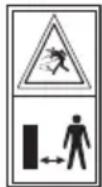 | Houd omstanders op volgende afstand. | Mantenga a las personas alejadas del lugar. | Mantenha afastadas quaisquer pessoas no local. |
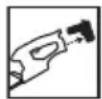 | Verwijder de accu voordat u het gereedschap afstelt of schoonmaakt en wanneer u het gereedschap zonder toezicht achterlaat. | Extraiga la batería antes de ajustar o limpiar el aparato y antes de dejar la máquina desatendida durante un periodo de tiempo. | Retire a bateria antes de ajustar ou limpar e antes de deixar a máquina sem supervisão durante qualquer período. |
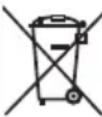 | Alleen voor EU-landen Geef elektrisch gereedschap niet met het huisvuil mee!Volgens de Europese richtlijn 2002/96/EG inzake oude elektrische en elektronische apparaten en de toepassing daarvan binnen de nationale wetgeving, dient gebruikt elektrisch gereedschap gescheiden te worden ingezameld en te worden afgevoerd naar een recycle bedrijf dat voldoet aan de geldende milieu-eisen. | Sólo para países de la Unión Europea¡No deseche los aparatos eléctricos junto con los residuos domésticos!De conformidad con la Directiva Europea 2002/96/CE sobre residuos de aparatos eléctricos y electrónicos y su aplicación de acuerdo con la legislación nacional, las herramientas eléctricas cuya vida útil haya llegado a su fi n se deberán recoger por separado y trasladar a una planta de reciclaje que cumpla con las exigencias ecológicas. | Apenas para países da UE Não deite ferramentas eléctricas no lixo doméstico!De acordo com a directiva europeia 2002/96/CE sobre ferramentas eléctricas e electrónicas usadas e a transposição para as leis nacionais, as ferramentas eléctricas usadas devem ser recolhidas em separado e encaminhadas a uma instalação de reciclagem dos materiais ecológica. |
GENERAL POWER TOOL SAFETY WARNINGS
WARNING
Read all safety warnings and all instructions.
Failure to follow the warnings and instructions may result in electric shock, fire and/or serious injury.
Save all warnings and instructions for future reference.
The term “power tool” in the warnings refers to your mains-operated (corded) power tool or battery-operated (cordless) power tool.
1) Work area safety
a) Keep work area clean and well lit.
Cluttered or dark areas invite accidents.
b) Do not operate power tools in explosive atmospheres, such as in fl ammable liquids, gases or dust.
Power tools create sparks which may ignite the dust or fumes.
c) Keep children and bystanders away while operating a power tool.
Distractions can cause you to lose control.
2) Electrical safety
a) Power tool plugs must match the outlet.
Never modify the plug in any way.
Do not use any adapter plugs with earthed (grounded) power tools.
Unmodifi ed plugs and matching outlets will reduce risk of electric shock.
b) Avoid body contact with earthed or grounded surfaces, such as pipes, radiators, ranges and refrigerators.
There is an increased risk of electric shock if your body is earthed or grounded.
c) Do not expose power tools to rain or wet conditions.
Water entering a power tool will increase the risk of electric shock.
d) Do not abuse the cord. Never use the cord for carrying, pulling or unplugging the power tool.
Keep cord away from heat, oil, sharp edges or moving parts.
Damaged or entangled cords increase the risk of electric shock.
e) When operating a power tool outdoors, use an extension cord suitable for outdoor use.
Use of a cord suitable for outdoor use reduces the risk of electric shock.
f) If operating a power tool in a damp location is unavoidable, use a residual current device (RCD) protected supply.
Use of an RCD reduces the risk of electric shock.
3) Personal safety
a) Stay alert, watch what you are doing and use common sense when operating a power tool. Do not use a power tool while you are tired or under the influence of drugs, alcohol or medication.
A moment of inattention while operating power tools may result in serious personal injury.
b) Use personal protective equipment. Always wear eye protection.
Protective equipment such as dust mask, non-skid safety shoes, hard hat, or hearing protection used for appropriate conditions will reduce personal injuries.
c) Prevent unintentional starting. Ensure the switch is in the off position before connecting to power source and/or battery pack, picking up or carrying the tool.
Carrying power tools with your finger on the switch or energising power tools that have the switch on invites accidents.
d) Remove any adjusting key or wrench before turning the power tool on.
A wrench or a key left attached to a rotating part of the power tool may result in personal injury.
e) Do not overreach. Keep proper footing and balance at all times.
This enables better control of the power tool in unexpected situations.
f) Dress properly. Do not wear loose clothing or jewellery. Keep your hair, clothing and gloves away from moving parts.
the loose clothes, jewellery for long hair can be caught in moving parts.
g) If devices are provided for the connection of dust extraction and collection facilities, ensure these are connected and properly used.
Use of dust collection can reduce dust-related hazards.
4) Power tool use and care
a) Do not force the power tool. Use the correct power tool for your application.
The correct power tool will do the job better and safer at the rate for which it was designed.
b) Do not use the power tool if the switch does not turn it on and off.
Any power tool that cannot be controlled with the switch is dangerous and must be repaired.
c) Disconnect the plug from the power source and/or the battery pack from the power tool before making any adjustments, changing accessories, or storing power tools.
Such preventive safety measures reduce the risk of starting the power tool accidentally.
d) Store idle power tools out of the reach of children and do not allow persons unfamiliar with the power tool or these instructions to operate the power tool.
Power tools are dangerous in the hands of untrained users.
e) Maintain power tools. Check for misalignment or binding of moving parts, breakage of parts and any other condition that may affect the power tool's operation.
If damaged, have the power tool repaired before use.
Many accidents are caused by poorly maintained power tools.
f) Keep cutting tools sharp and clean.
Properly maintained cutting tools with sharp cutting edges are less likely to bind and are easier to control.
g) Use the power tool, accessories and tool bits etc. in accordance with these instructions, taking into account the working conditions and the work to be performed.
Use of the power tool for operations different from those intended could result in a hazardous situation.
5) Battery tool use and care
a) Recharge only with the charger specified by the manufacturer.
A charger that is suitable for one type of battery pack may create a risk of fire when used with another battery pack.
b) Use power tools only with specifically designated battery packs.
Use of any other battery packs may create a risk of injury and fire.
c) When battery pack is not in use, keep it from other metal objects, like paper clips, coins, keys, nails, screws or other small metal objects, that can make a connection from one terminal to another.
Shorting the battery terminals together may cause burns or a fire.
d) Under abusive conditions, liquid may be ejected from the battery; avoid contact. If contact accidentally occurs, fl ush with water. If liquid contacts eyes, additionally seek medical help.
Liquid ejected from the battery may cause irritation or burns.
6) Service
a) Have your power tool serviced by a repair person using only identical replacement parts.
This will ensure that the safety of the power tool is maintained.
PRECAUTION
Keep children and infi rm persons away.
When not in use, tools should be stored out of reach of children and infi rm persons.
SHRUB SHEAR SAFETY WARNINGS
Keep all parts of the body away from the cutter blade. Do not remove cut material or hold material to be cut when blades are moving. Make sure the switch is off when clearing jammed material. A moment of inattention while operating the shrub shear may result in serious personal injury.
○ Carry the shrub shear by the handle with the cutter blade stopped. When transporting or storing the shrub shear always fit the cutting device cover.
Proper handling of the hedge trimmer will reduce possible personal injury from the cutter blades.
○ Hold power tool by insulated gripping surfaces only, because the cutter blade may contact hidden wiring.
Cutter blades contacting a "live" wire may make exposed metal parts of the power tool "live" and could give the operator an electric shock.
- Keep cable away from cutting area. During operation the cable may be hidden in shrubs and can be accidentally cut by the blade.
GRASS SHEAR SAFETY WARNINGS
IMPORTANT
READ CAREFULLY BEFORE USE KEEP FOR FUTURE REFERENCE
Safe operation practices
- Training
a) Read the instructions carefully. Be controls and the correct use of the machine.
b) Never allow people unfamiliar with these instructions or children to use the machine. Local regulations can restrict the age of the operator.
c) Keep in mind that the operator or user is responsible for accidents or hazards occurring to other people or their property.
● Preparation
a) Before use, always visually inspect the machine for damaged, missing or misplaced guards or shields.
b) Never operate the machine while people, especially waychildren, or pets are nearby.
Operation
a) Wear eye protection and stout shoes at all times while operating the machine.
b) Avoid using the machine in bad weather conditions especially when there is a risk of lightning.
c) Use the machine only in daylight or good artificial light.
d) Never operate the machine with damaged guards or shields or without guards or shields in place.
e) Switch on the motor only when the hands and feet are away from the cutting means.
f) Always disconnect the machine from the power supply (i.e. remove the plug from the mains or remove the disabling device or removable battery)
- whenever the machine is left unattended; - before clearing a blockage;
- before checking, cleaning or working on the machine;
- after striking a foreign object; - whenever the machine starts vibrating abnormally.
g) Take care against injury to feet and hands from the cutting means.
h) Always ensure that the ventilation openings are kept clear of debris.
● Maintenance and storage
a) Disconnect the machine from the power supply (i.e. remove the plug from the mains or remove the disabling device) before carrying out maintenance or cleaning work.
b) Use only the manufacturer's recommended replacement parts and accessories.
c) Inspect and maintain the machine regularly. Have the machine repaired only by an authorized repairer.
d) When not in use, store the machine out of the reach of children.
PRECAUTIONS FOR SHRUB SHEAR AND GRASS SHEAR
- Before starting work make sure there are cables in the work area. The blade could come into contact with the power cable causing electric shock, ground faults and other accidents.
- Hold the tool firmly with both hands during use to prevent injury.
- Keep your hands and all parts of the body away from the blade to prevent contact that could lead to injury.
- Make sure the blade and all accessories are properly installed. Improper installation could cause the blade or accessories to come loose resulting in an injury.
- Make sure the blade is not cracked, deformed or excessively worn before starting work. Do not use a blade in this condition as it could break and cause injury.
- Do not use the tool to cut wire, metal plates or other hard objects. The tool could be damaged and cause injury.
- If the tool does hot work normally and is producing strange noise, turn it off immediately and have it inspected and repaired.
- If the tool falls or strikes against an object, check the blade and the body for damage, cracking and deformation. Use of a damaged, deformed or cracked blade could result in injury.
-
Do not disassemble the blade. This may result in injury.
-
This product generates vibration during operation. This makes long continuous work physically strenuous so avoid a poor work posture and be sure to take frequent rests. Also during short work periods, stop work immediately to take a rest when your fingers, hands, arms or shoulders become tired.
- Use gloves, or cloth to protect your hands when handling the blade. Careless handling may lead to injury.
- Do not expose the blade to excessive pressure during cutting as the blade could be damaged.
- The blade is extremely hot after cutting. Do not touch it to prevent burn injuries.
- When working in high places, make sure that no one is standing below. They could be injured accidentally drop the tool or other object.
- To prevent unforeseen accidents, never leave the tool running unattended on a stand or on the floor.
- Do not expose the tool to insecticide and other chemicals. Such chemicals could cause cracking and other damage.
PRECAUTIONS FOR BATTERY AND CHARGER
- Always charge the battery at a temperature of 0 – 40°C. Charging the battery at temperatures outside the range of 0 – 40°C may prevent proper charging and reduce battery life.
The most suitable temperature for charging is that of 20 -25^ . - When one charging is completed, leave the charger for about 15 minutes before the next charging of battery. Do not charge the battery more than 2 hours.
- Do not allow foreign matter to enter the hole for connecting the rechargeable battery.
- Never disassemble the rechargeable battery and charger.
- Never short-circuit the rechargeable battery. Short-circuiting the battery will cause a great electric current and overheat. It results in burn or damage to the battery.
- Do not dispose of the battery in fire. If the battery is burnt, it may explode.
CAUTION ON LITHIUM-ION BATTERY
To extend the lifetime, the lithium-ion battery equips with the protection function to stop the output.
In the cases of 1 to 3 described below, when using this product, even if you are pulling the switch, the motor may stop. This is not the trouble but the result of protection function.
- When the battery power remaining runs out, the motor stops.
In such case, charge it up immediately. - If the tool is overloaded, the motor may stop. In this case, release the switch of tool and eliminate causes of overloading. After that, you can use it again.
- If the battery is overheated under overload work, the battery power may stop.
In this case, stop using the battery and let the battery cool. After that, you can use it again.
Furthermore, please heed the following warning and caution.
WARNING
In order to prevent any battery leakage, heat generation, smoke emission, explosion and ignition beforehand, please be sure to heed the following precautions.
- Make sure that swarf and dust do not collect on the battery.
During work make sure that swarf and dust do not fall on the battery.
○ Make sure that any swarf and dust falling on the power tool during work do not collect on the battery. - Do not store an unused battery in a location exposed to swarf and dust.
Before storing a battery, remove any swarf and dust that may adhere to it and do not store it together with metal parts (screws, nails, etc.). - Do not pierce battery with a sharp object such as a nail, strike with a hammer, step on, throw or subject the battery to severe physical shock.
s Bo Did you use an apparently damaged or deformed battery.
- Do not use the battery in reverse polarity.
- Do not connect directly to an electrical outlets cigarette lighter sockets.
- Do not use the battery for a purpose other than those specified.
- If the battery charging fails to complete even when a specified recharging time has elapsed, immediately stop further recharging.
- Do not put or subject the battery to high temperatures or high pressure such as into a microwave oven, dryer, or high pressure container.
- Keep away from fire immediately when leakage or foul odor are detected.
- Do not use in a location where strong static electricity generates.
- If there is battery leakage, foul odor, heat generated, discolored or deformed, or in any way appears abnormal during use, recharging or storage, immediately remove it from the equipment or battery charger, and stop use.
CAUTION
- If liquid leaking from the battery gets into your eyes, do not rub your eyes and wash them well with fresh clean water such as tap water and contact a doctor immediately.
If left untreated, the liquid may cause eye-problems. - If liquid leaks onto your skin or clothes, wash well with clean water such as tap water immediately.
There is a possibility that this can cause skin irritation. - If you find rust, foul odor, overheating, discolor, deformation, and/or other irregularities when using the battery for the first time, do not use and return it to your supplier or vendor.
REGARDING LITHIUM-ION BATTERY TRANSPORTATION
When transporting a lithium-ion battery, please observe the following precautions.
WARNING
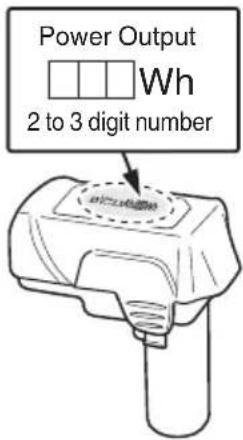
Notify the transporting company that a package contains a lithium-ion battery, inform the company of its power output and follow the instructions of the transportation company when arranging transport.
○ Lithium-ion batteries that exceed a power output of 100Wh are considered to be in the freight classification of Dangerous Goods and will require special application procedures.
☐ For transportation abroad, you must comply with international law and the rules and regulations of the destination country.
SPECIFICATIONS
POWER TOOL
| Model CH10DL CH10DL (CG) CG10DL | ||||
| No-load speed 1100 min | -1 | |||
| Capacity * (Thickness of branch that can be trimmed.) | A | 8 m | m | |
| Blade size (Trimming width) | A | 1 9 | 0 | |
| B | - | 170 mm | ||
| Rechargeable battery | BCL1015: Li-ion DC 10.8 V (1.5 Ah 3 cells) | |||
| Weight | A | 1.2 kg | - | |
| B | - | 1.2 kg | ||
A: With shrub shear blade installed
B: With grass shear blade installed
* Actual performance depends on the type of vegetation cut and the sharpness of the blade.
CHARGER
| Model | UC10SFL |
| Charging voltage | 10.8 V |
| Weight | 0.35 kg |
STANDARD ACCESSORIES
| CH10DL | CG10DL | CH10DL (CG) | |
| 1 Battery (BCL1015) | 1 | 1 | 1 |
| 2 Charger (UC10SFL) | 1 | 1 | 1 |
| 3 Shrub shear blade | 1 | 1 | |
| 4 Grass shear blade | 1 | 1 | |
| 5 Blade case | 1 | 1 | |
| 6 Blade cover | 1 | 1 | |
| 7 Adjuster | 1 | 1 | |
| 8 Blade box | 1 | ||
| 9 Case | 1 | 1 | 1 |
Standard accessories are subject to change without notice.
text_image
Power Output Wh 2 to 3 digit numberOPTIONAL ACCESSORIES (sold separately)
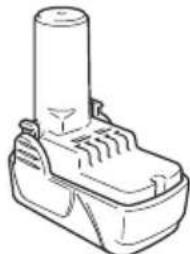
- Battery (BCL1015)
natural_image
Line drawing of a cylindrical battery with cooling fins (no text or symbols)- Shrub shear blade set (with blade case, crank cam and blade box)
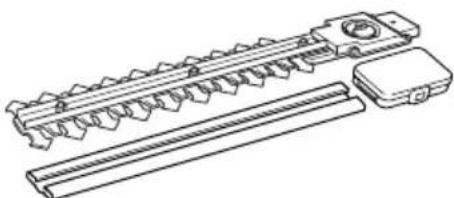
natural_image
Technical line drawing of a mechanical component with gears and shafts (no text or symbols)- Grass shear blade set (With blade cover, crank cam and blade box)
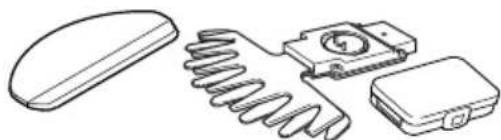
natural_image
Line drawing of a mechanical tool set including a blade, gear, and housing (no text or symbols)- Adjuster (for Grass shear)
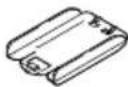
- Case
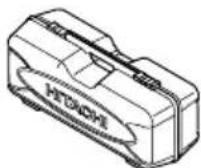
Optional accessories are subject to change without notice.
APPLICATIONS
○ Shrub shear
Fine trimming hedges
Trimming and pruning garden trees
○ Grass shear
Trimming lawns
BATTERY REMOVAL/INSTALLATION
1. Battery removal
Hold the handle tightly and push the battery latch to remove the battery (see Figs. 1 and 2).
CAUTION
Never short-circuit the battery.
2. Battery installation
Insert the battery while observing its polarities (see Fig. 2).
CHARGING
Before using the power tool, charge the battery as follows.
1. Connect the charger power cord to the receptacle
2. Insert the battery in the charger
Position the battery so that the nameplate faces toward the nameplate of the charger and press in the battery until it comes into contact with the bottom plate (See Fig. 3).
Inserting the battery will turn on the charger (the pilot lamp lights up).
CAUTION
If the pilot lamp does not light up, pull out the power cord from the receptacle and check the battery mounting condition.
The pilot lamp goes off to indicate that the battery is fully charged.
CAUTION
If the battery is heated due to direct sunlight, etc., just after operation, the charger pilot lamp may not light. At that time cool the battery first, then start charging.
○ Regarding recharging time
Table 1 shows the recharging time required according to the type of battery.
Table 1 Recharging time (approx. min.) at 20°C
| Battery capacity (Ah) | |
| 1.5 Ah | |
| BCL1015 | 40 min. |
NOTE: The recharging time may vary according to the ambient temperature.
- Disconnect the charger's power cord from the receptacle
4. Hold the charger firmly and pull out the battery NOTE
Be sure to pull out the battery from the charger after use, and then keep it.
Regarding electric discharge in case of new batteries, etc.
As the internal chemical substance of new batteries and batteries that have not been used for an extended period is not activated, the electric discharge might be low when using them the first and second time. This is a temporary phenomenon, and normal time required for recharging will be restored by recharging the batteries 2 – 3 times.
How to make the batteries perform longer
(1) Recharge the batteries before they become completely exhausted.
When you feel that the power of the tool becomes weaker, stop using the tool and recharge its battery. If you continue to use the tool and exhaust the electric current, the battery may be damaged and its life will become shorter.
(2) Avoid recharging at high temperatures.
A rechargeable battery will be hot immediately after use. If such a battery is recharged immediately after use, its internal chemical substance will deteriorate, and the battery life will be shortened. Leave the battery and recharge it after it has cooled for a while.
CAUTION
When the battery charger has been continuously used, the battery charger will be heated, thus constituting the cause of the failures. Once the charging has been completed, give 15 minutes rest until the next charging.
☐ If the battery charger does not work while the battery is mounted correctly, it is probable that the battery or charger is malfunctioning. Take it to your authorized Service Center.
FUNCTIONAL DESCRIPTION
1. Battery Level Warning Lamp
The battery level can be checked by pulling the trigger switch while the power tool is in a no-load state. The battery level warning lamp lights when the battery power is very low. If this happens, charge the battery. (Fig. 4)
NOTE
The level at which the battery level warning lamp lights may vary due to the ambient temperature, characteristics of the battery, etc. and is intended only as a guide.
☐ The battery level warning lamp may light when the power tool is overloaded. This does not mean that the battery power is very low.
Be sure to check the battery level while the tool is in a no-load state.
2. Lock Off button (Fig. 5)
WARNING
Never lock the Lock Off button in depressed position.
Pulling back the switch would then cause the tool to suddenly start operating, which could result in injury.
The tool will not start unless the Lock Off button is pressed while the switch is pulled back.
The Lock Off button can be engaged by pressing it either from the right or left.
When the switch is released, the Lock Off button automatically disengages to prevent inadvertent motor startup.
- Blade case (Fig. 6) (Standard accessory with CH10DL (CG), CH10DL)
When the shrub shear blade is to be attached to or removed from the tool, or when the shear is not used, place the blade in the blade case to prevent injury.
- Blade cover (Fig. 7) (Standard accessory with CH10DL (CG), CG10DL)
When the grass shear blade is to be attached to or removed from the tool, or when the shear is not used, place the blade in the blade cover to prevent injury.
- Blade box (Fig. 8) (Standard accessory with CH10DL (CG))
Place the shrub shear blade and the grass shear blade in the blade box when they are not used.
Also place the crank cam (B) in the blade box to prevent losing it.
WARNING
Be sure to turn the tool off and remove the battery from the tool before attaching and removing the blade case or blade cover.
CAUTION
To prevent injury, take care when placing the blade in the blade case, blade cover or blade box.
- Adjuster (Standard accessory with CH10DL (CG), CG10DL)
WARNING
Be sure to turn the saw off and remove the battery from the tool before attaching and removing the adjuster.
CAUTION
Be sure to place the blade in the blade case before attaching and removing the adjuster to prevent injury by the blade coming into contact with your hands or face.
[Trimming height guide]
The trimming height of the tool can be adjusted to three heights by not attaching the adjuster or changing adjuster orientation. (Fig. 9)
[Adjuster attachment]
(1) Turn the tool over and slide the adjuster tab in the direction of the ribs on the tool. (Fig. 10)
(2) Press the front end of the adjuster to fit the adjuster onto the tool. (A clicking sound will be heard) (Fig. 11)
[Adjuster removal]
Raise the adjuster latch to remove the adjuster. (Fig. 12)
REPLACING THE BLADE
The blade is a consumable that has to be replaced with a new blade when it loses sharpness.
Follow the steps below to replace the blade.
The tool shown in the illustration is the shrub shear, and it is used in examples to explain features it shares grass shear.
Before replacement, turn the switch on and teeth in the upper blade are positioned over the openings between the teeth in the lower blade.
At this time, be careful of the moving blade.
WARNING
Be sure to turn off the power switch and remove the battery from the tool to prevent accidents.
CAUTION
Before blade replacement, be sure to use gloves and attach the blade case or blade cover to prevent the blade from coming into direct contact with your or face.
- Remove the blade (Fig. 13)
(1) Turn the tool over, remove the four screws using a Phillips screwdriver, remove the bottom plate and the blade (with blade case).
(2) Remove the remaining crank holder and crank cam (A) from the tool. The grease used may cause the crank holder and crank cam (A) to stick to the blade.
(3) Remove any chips and other debris from inside the housing.
- Getting a new blade ready
Taking care to prevent injury from contact with the blade, adjust the crank cam position as shown in Fig. 14.
This places the teeth in the upper blade over the openings in the teeth in the lower blade.
- Attach the crank cam and crank cam holder to the blade (Fig. 15)
The same type of crank cam holder is used in the shrub shear and the grass shear. Use the crank holder installed in the product.
- Attach the new blade
(1) Align the pin on the tool with the center hole in the crank holder. (Fig. 16)
(2) When the hexagonal part in the crank holder and the grooves in the gear do not align, fine adjust so that the crank holder aligns with the gear grooves. (Fig. 17)
(3) Turn over the tool making sure that the blade does not fall out, attach the bottom plate and secure it with the 4 screws. (Fig. 18)
NOTE
Be sure to check blade operation after it has been attached. The blade and the crank cam has not been properly fitted if the blade does not operate correctly. Do the instructions over from the beginning.
HOW TO USE
WARNING
-
To prevent accidents, make sure there are no people in the work area.
Keep your hands and all parts of the body away from the blade to prevent contact that could lead to injury.
○ Use protective goggles during work to prevent injury from twigs and wood chips.
☐ Do not use to tool to cut wire, metal plates or other hard objects. The tool could be damaged and cause injury. -
Trimming hedges and garden trees [Shrab shear]
CAUTION
○ Use a pair of pruning shears to cut thick branches before using the shrub shear.
Do not force the tool to prevent it from breaking.
- Stop the tool immediately if the blade stalls against a too heavy branch. Do not allow the motor to seize up as it could damage the motor.
to these a sturdy ladder or step ladder when cutting tall garden trees.
Off Useibthefor cutting shrub.
(1) Clear the area around the garden tree you want to prune and set up a stable platform to work from.
(2) Place the blade in the blade case to prevent accidental contact.
(3) Install the battery in the tool.
(4) Press the Lock Off button and pull back the switch to start trimming.
NOTE
○ Lubricate (using sewing machine oil, mineral oil, etc.) ends the blade before starting and then every hour. Use an adequate amount of oil and wipe away excess oil.
During work (for example, when taking leave the tool in a place exposed to direct sunlight or high temperature. This will prevent proper cooling and could result in damage.
Do not use the tool for work that exceeds its capacity. Such operation could cause the motor to lock up or slow down and will damage it.
Trimming garden trees
○ Use a pair of pruning shears to r branches that are 8 mm or thicker so that they do not interfere with trimming. (Fig. 20)

natural_image
Diagram of a tree with trunks and leaves, no text or symbols presentFig. 20
- Trees with luxuriant foliage should be trimmed starting from the bottom and work up to achieve the desired shape. (Fig. 21)
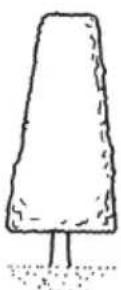
Fig. 21
Trimming hedges
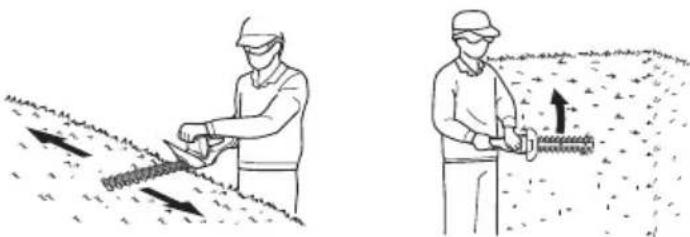
○ Trim the top of hedges by moving the tool from right to left (or left to right) and trim the sides by starting from below and working up. (Fig. 22)
natural_image
Two technical illustrations showing a person using a manual tool to cut through a pile of material, with arrows indicating direction (no text or symbols present)Fig. 22
NOTE
○ Do not use the tool for cutting the lawn or weeds. Grass or weeds could stick to the blade.
○ Cut thick branches by gently pressing the blades against the branch.
2. Trimming lawns [Grass shear] CAUTION
○ Use only for cutting grass.
- Stop the tool immediately should gravel or branches enter the blade during trimming and remove the battery.
Do not allow the motor to seize up as it could damage the motor. Use a pair of tongs to gently remove gravel from the blade. To prevent injury, keep hands, fingers and other body parts away from the blade.
res(1)s Remove gravel and branches from the lawn to be trimmed.
(2) Place the blade in the blade cover to prevent accidental contact.
(3) Install the adjuster when required to adjust trimming height.
(4) Install the battery in the tool.
(5) Press the Lock Off button and pull the switch to start motwaming. cm of
Place the tool on the lawn and slide the tool forward. (Fig. 23)
![HITACHI CH 10DL - Trimming lawns [Grass shear] CAUTION - 1](/content/2026/03/572218/images/87c82a1ad300b67b36659921bf68d41658dba8ebacf5cc88e1f01e7156f053d4.jpg)
natural_image
Illustration of a hand using a tool to clean or store material, with no visible text or symbolsFig. 23
NOTE
○ Lubricate (using sewing machine oil, mineral oil, etc.) the blade before starting and then every hour. Use an adequate amount of oil and wipe away excess oil.
During work (for example, when taking rests leave the tool in a place exposed to direct sunlight or high temperature. This will prevent proper cooling and could result in damage.
Do not use the tool for work that exceeds its capacity. Such operation could cause the motor to lock up or slow down and will damage it.
Do not lower the front end of the blade to prevent sand, gravel or soil from entering the blade and damaging it by making it less sharp.
Trimming tall grass
Attempting to cut tall grass at one go will expose the blade to excessive load and wear the blade. First remove 1/3 of the height starting from the top before trimming it to the desired height.
Trimming around stone walls and curbs
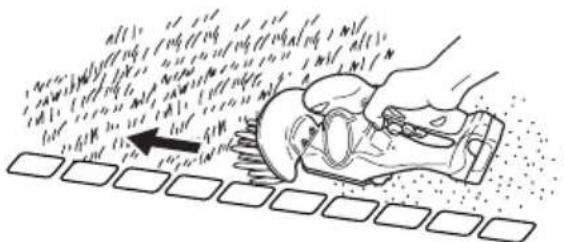
When trimming around curbs, move the blade sideways along the curb. (Fig. 24)
This makes it possible to trim without leaving untrimmed edges.
natural_image
Illustration of a hand cleaning a shoe with a tool, showing no text or symbols.Fig. 24
3. Continuous operating time
Approx. 30 minutes (depending on the work conditions)
MAINTENANCE AND INSPECTION
WARNING
- Be sure to turn the tool off and remove the battery from the tool before making inspections or carrying out maintenance.
Do not disassemble to blade. Failure to heed this warning may result in injury.
○ Use gloves, or cloth to protect your hands when handling the blade. Failure to heed this warning may result in injury.
1. Sharpening the blade (Fig. 19)
Move an iron file in the direction of the arrow for a rough sharpening then use an oil stone to give the blade a good fi nish.
(1) Use a fine iron file or one of intermediate coarseness.
(2) Coat the oil stone with machine oil (bicycle oil or the like).
(3) Use a whetstone to gently remove any burrs from the back of the blade edge.
When to sharpen the blade
While this will vary the type of trees that are trimmed and how often it is used, it is a good idea to sharpen the blade about once a year to maintain a sharp edge.
NOTE
Do not use water for cleaning the blade to prevent rust or other damage.
2. Lubricating the blade
During trimming, sap adhering to the blade edge will increase load and wear down the battery more rapidly. Use machine oil (or bicycle oil or the like) to lubricate the blade and wipe the blade with a cloth. To prevent the blade from rusting, be sure to lubricate the blade after use and when it will not be used for an extended period of time before placing it in the blade case.
3. Inspecting the mounting screws
Regularly inspect all mounting screws and ensure that they are properly tightened. Should any of the screws be loose, retighten them immediately. Failure to do so could result in serious hazard.
4. Maintenance of the motor
The motor unit winding is the very “heart” of the power tool.
Exercise due care to ensure the winding does not become damaged and/or wet with oil or water.
5. Cleaning on the outside
When the driver drill is stained, wipe with a soft dry cloth or a cloth moistened with soapy water. Do not use chloric solvents, gasoline or paint thinner, for they melt plastics.
6. Storage
Store the power tool in a place in which the temperature is less than 40^ C and out of reach of children.
NOTE
Storing lithium-ion batteries.
Make sure the lithium-ion batteries have been fully charged before storing them.
Prolonged storage (3 months or more) of batteries with a low charge may result in performance deterioration, signifi cantly reducing battery usage time or rendering the batteries incapable of holding a charge.
However, signifi cantly reduced battery usage time may be recovered by repeatedly charging and using the batteries two to five times.
If the battery usage time is extremely short despite repeated charging and use, consider the batteries dead and purchase new batteries.
7. Service parts list
A: Item No.
B: Code No.
C: No. Used
D: Remarks
CAUTION
Repair, modification and inspection of Hitachi Power Tools must be carried out by a Hitachi Authorized Service Center.
This Parts List will be helpful if presented with the tool to the Hitachi Authorized Service Center when requesting repair or other maintenance.
In the operation and maintenance of power tools, the safety regulations and standards prescribed in each country must be observed.
MODIFICATIONS
Hitachi Power Tools are constantly being improved and modified to incorporate the latest technological advancements.
Accordingly, some parts (i.e. code numbers and/or design) may be changed without prior notice.
TROUBLESHOOTING
Use the inspections in the table below if the tool does not operate normally. If this does not remedy the problem, consult your dealer or the Hitachi Authorized Service Center.
| Symptom Possible cause Remedy | |||
| Charger The Charge lamp does not go on. | The power plug is not connected to an AC outlet. | Connect the power plug to an AC outlet. | |
| The battery is not properly connected to the charger. | Insert the battery so that it is properly seated in the charger. | ||
| The battery or charger electrodes are soiled. | Use a cotton swab or other tool to clean the electrodes. | ||
| The battery is extremely hot. Allow the battery to properly cool before charging. | |||
| The charge lamp does not go off after 4 hours of charging. | The battery or charger is faulty. Disconnect the power plug and consult your dealer or the Hitachi Authorized Service Center. | ||
| Tool Does not operate. The battery is depleted. (The battery level warning lamp does not go on.) | When a storage battery with little power left is not used for an extended period of time, battery power may drop so low that it cannot turn on the battery level warning lamp. Charge the battery. | ||
| Remove the storage battery from the battery compartment in the tool and check for foreign matter. Also check the battery electrodes for soiling. Make sure that the battery is pressed in until it clicks into place. | |||
| If the blade does not move but the motor is turning, the blade has probably been incorrectly installed. Make sure that the crank holder and crank cam has been installed. | |||
| When there is foreign matter in the blade, remove the battery and use a pair of tongs or similar tool to remove it.Take great care since the tool may start operating when the foreign matter has been removed.Sap or rust may also prevent the blade from operating. Use a wire brush or similar tool to remove sap or rust. | |||
| This is the effect of a function that protects the battery by turning off the motor when the tool is exposed to an excessive load. Release the switch and remove what caused the excessive load and pull back the switch to resume work. | |||
| To prevent accidents from incorrect operation, the Lock Off switch must be pressed while the switch is pulled back to start the motor. | |||
| Symptom Possible cause Remedy | ||
| Tool The tool does not trim well. The blade has become dull. Use a wire brush or other tool to remove sap and rust and use a fi le or whetstone to sharpen the blade. If these eff orts fail to make the blade sharper, the blade has reached the end of its service life. Replace the blade with a new one. | ||
Important notice on the batteries for the Hitachi cordless power tools
Please always use one of our designated genuine batteries. We cannot guarantee the safety and performance of our cordless power tool when used with batteries other than these designated by us, or when the battery is disassembled and modified (such as disassembly and replacement of cells or other internal parts).
GUARANTEE
We guarantee Hitachi Power Tools in accordance with statutory/country specific regulation. This guarantee does not cover defects or damage due to misuse, abuse, or normal wear and tear. In case of complaint, please send the Power Tool, undismantled, with the GUARANTEE CERTIFICATE found at the end of this Handling instruction, to a Hitachi Authorized Service Center.
NOTE
Due to HITACHI's continuing program of research and development, the specifications herein are subject to change without prior notice.
Information concerning airborne noise and vibration
The measured values were determined according to EN60745 (CH10DL) or EN50636-2-94 (CG10DL) and declared in accordance with ISO 4871.
Measured A-weighted sound power level:
81 dB (A) (CH10DL)
84 dB (A) (CG10DL)
Measured A-weighted sound pressure level:
70 dB (A) (CH10DL)
81 dB (A) (CG10DL)
Uncertainty KpA: 3 dB (A).
Wear ear protection.
Vibration total values (triax vector sum) determined according to EN60745 or EN50636-2-94.
No load:
a_h=1.7 m/s^2 , Uncertainty K=1.5 m/s ^2 (CH10DL)
a hw = 1.9 m/s2, Uncertainty K = 1.5 m/s2 (CG10DL)
The declared vibration total value has been measured in accordance with a standard test method and may be used for comparing one tool with another.
It may also be used in a preliminary assessment of exposure.
WARNING
☐ The vibration emission during actual use of the power tool can differ from the declared total value depending in the ways in which the tool is used.
- Identify safety measures to protect the operator that are based on an estimation of exposure in the actual conditions of use (taking account of all parts of the operating cycle such as the times when the tool is switched off and when it is running idle in addition to the trigger time).
natural_image
Line drawing of a cylindrical battery with cooling fins and a handle (no text or symbols)natural_image
Technical line drawing of a mechanical component with threaded shafts and a rectangular housing (no text or symbols)natural_image
Line drawing of various mechanical components including a flat blade, gear, and housing (no text or symbols)natural_image
Diagram of a tree with trunks and leaves, no text or symbols presentAbb. 20
natural_image
Two technical illustrations showing a person using a tool to cut through a pile of material, with arrows indicating direction (no text or symbols present)Abb. 22
HINWEIS
natural_image
Illustration of a hand using a tool to clean or store floor tiles (no text or symbols visible)Abb. 23
HINWEIS
natural_image
Illustration of a hand cleaning a shoe with a tool, showing no text or symbols.Abb. 24
natural_image
Line drawing of a cylindrical electronic component with ports and casing (no text or symbols)natural_image
Technical line drawing of a mechanical component with threaded shafts and a rectangular housing (no text or symbols)natural_image
Technical line drawing of a mechanical tool with a gasket, gear, and housing (no text or symbols)REEMPLACEMENT DE LA LAME
natural_image
Diagram of a tree with conical branches and leaves, no text or symbols presentFig. 20
natural_image
Two technical illustrations showing a worker using a tool to cut through a pile of material, and another holding a saw blade with an upward arrow (no text or symbols present)Fig. 22
REMARQUE
natural_image
Illustration of a hand using a tool to cut or spread material, with no visible text or symbolsFig. 23
REMARQUE
natural_image
Illustration of a hand cleaning a shoe with motion blur effect (no text or symbols)Fig. 24
natural_image
Line drawing of a cylindrical electronic component with ports and casing (no text or symbols)- Set lama del taglia arbusti
natural_image
Technical line drawing of a mechanical component with threaded shafts and a rectangular housing (no text or symbols)- Set lama del tagliaerba
natural_image
Line drawing of various electronic components including a flat pad, coiled spring, battery pack, and case (no text or symbols)natural_image
Diagram of a tree with branches and leaves, no text or symbols presentFig. 20
natural_image
Two technical illustrations showing a worker using a power shaver to cut through a pile of material, with arrows indicating direction (no text or symbols present)Fig. 22
NOTA
natural_image
Illustration of a hand using a tool to cut grass or gravel, with no visible text or symbolsFig. 23
NOTA
natural_image
Illustration of a hand cleaning a shoe with a magnifying glass, surrounded by square tiles (no text or symbols)Fig. 24
natural_image
Line drawing of a cylindrical battery with cooling fins and a cylindrical top (no text or symbols)natural_image
Technical line drawing of a mechanical component with threaded shafts and a housing (no text or symbols)- Grasschaarknipmesset (met knipmesafdekking, kruknok en knipmesdoos)

natural_image
Line drawing of mechanical components including a flat blade, coiled spring, and housing (no text or symbols)FUNCTIONELE BESCHRIJVING
1. Accuniveau-waarschuwingslampje
natural_image
Diagram of a tree with conical branches and leaves, no text or symbols presentAfb. 20
natural_image
Two technical illustrations showing a worker using a tool to cut through a pile of material, with arrows indicating direction (no text or symbols present)Afb. 22
OPMERKING
natural_image
Illustration of a hand using a tool to cut or clean material, with no visible text or symbolsAfb. 23
OPMERKING
natural_image
Illustration of a hand cleaning a shoe with a hand moving through the air (no text or symbols)Afb. 24
natural_image
Line drawing of a cylindrical electronic component with a base and housing (no text or symbols)natural_image
Technical line drawing of a mechanical component with threaded shafts and a rectangular housing (no text or symbols)natural_image
Line drawing of various mechanical components including a flat blade, coiled spring, and a rectangular housing (no text or symbols)natural_image
Diagram of a tree with conical branches and leaves, no text or symbols presentFig. 20
natural_image
Two technical illustrations showing a worker using a tool to cut through a pile of material, with arrows indicating direction (no text or symbols present)Fig. 22
NOTA
natural_image
Illustration of a hand using a tool to cut or spread material on a surface, with no visible text or symbols.Fig. 23
NOTA
natural_image
Illustration of a hand cleaning a shoe with a magnifying glass, surrounded by square tiles (no text or symbols)Fig. 24
natural_image
Line drawing of a cylindrical battery with cooling fins and a handle (no text or symbols)natural_image
Technical line drawing of a mechanical component with threaded shafts and a rectangular housing (no text or symbols)natural_image
Line drawing of a mechanical tool set including a flat blade, coiled spring, and two rectangular enclosures (no text or symbols)- Regulador (para tesoura de relva)

- Caixa

natural_image
Diagram of a tree with conical branches and leaves, no text or symbols presentFig. 20
natural_image
Simple line drawing of a tree stump with two roots and soil at the base (no text or symbols)Fig. 21
Aparar sebes
natural_image
Two technical illustrations showing a worker using a tool to cut through a pile of material, with arrows indicating direction (no text or symbols present)Fig. 22
NOTA
natural_image
Illustration of a hand using a tool to cut or spread material, with no visible text or symbolsFig. 23
NOTA
natural_image
Illustration of a hand cleaning a car wheel with motion blur effect (no text or symbols)Fig. 24
3. Tempo de funcionamento contínuo
text_image
Exploded view diagram of a mechanical assembly with numbered parts and exploded views of components like a motor, battery pack, and switch.CG10DL
| A | B | C | D | ||||||||
| 1 | 3 | 3 | 0 | 8 | 8 | 2 | 1 | ||||
| 2 | 3 | 2 | 4 | 3 | 0 | 6 | 1 | ||||
| 3 | 3 | 2 | 4 | 2 | 9 | 8 | 1 | ||||
| 4 | 3 | 3 | 0 | 0 | 5 | 6 | 1 | 0 | M | 4 | |
| 5 | 3 | 2 | 9 | 8 | 3 | 7 | 2 | ||||
| 6 | 3 | 3 | 0 | 8 | 7 | 9 | 1 | ||||
| 7 | 9 | 4 | 9 | 4 | 2 | 3 | 6 | M | 4 | ||
| 8 | 9 | 4 | 9 | 2 | 1 | 7 | 6 | M | 4 | × 1 2 | |
| 9 | 3 | 0 | 1 | 6 | 5 | 3 | 6 | D | 4 × 2 0 | ||
| 10 ———— 1 | |||||||||||
| 11 3243071 | |||||||||||
| 12 324299 1 | |||||||||||
| 13 320786 1 | |||||||||||
| 14 330058 1 | |||||||||||
| 15 331067 1 BCL1015 | |||||||||||
| 16 329839 1 DC 10.8V | |||||||||||
| 17 330880 1 D15 | |||||||||||
| 18 329835 2 D15 | |||||||||||
| 19 329832 1 | |||||||||||
| 20 330055 1 | |||||||||||
| 21 329831 1 DC 10.8V 17 330880 1 DC 10.8V 18 329835 2 D15 19 329832 1 20 330055 1 21 329831 1 22 329833 1 23 329830 1 24 330887 1 "4, 25, 28-31, 33, 34, 601" 25 330886 1 "26, 27" 26 ———— 1 27 ———— 1 28 331507 1 29 331508 1 30 ———— 1 31 323211 4 M4×8 33 ———— 1 34 328030 1 35 330883 1 36 328023 1 501 ———— 1 UC10SFL 502 330885 1 601 330057 1 | |||||||||||

text_image
Exploded view diagram of a mechanical device with numbered parts and exploded views for assembly or maintenance.| English Nederlands | ||
| GUARANTEE CERTIFICATE1 Model No.2 Serial No.3 Date of Purchase4 Customer Name and Address5 Dealer Name and Address(Please stamp dealer name and address) | GARANTIEBEWIJS1 Modelnummer2 Serienummer3 Datum van aankoop4 Naam en adres van de gebruiker5 Naam en adres van de handelaar(Stempel a.u.b. naam en adres vande de handelaar) | |
| Deutsch Español | ||
| GARANTIESCHEIN1 Modell-Nr.2 Serien-Nr.3 Kaufdaturn4 Name und Anschrift des Kunden5 Name und Anschrift des Händlers(Bitte mit Namen und Anschrift des Handlers abstempeln) | CERTIFICADO DE GARANTÍA1 Número de modelo2 Número de serie3 Fecha de adquisición4 Nombre y dirección del cliente5 Nombre y dirección del distribudor(Se ruega poner el sello del distribudor con su nombre y dirección) | |
| Français Português | ||
| CERTIFICAT DE GARANTIE1 No. de modèle2 No de série3 Date d'achat4 Nom et adresse du client5 Nom et adresse du revendeur(Cachet portant le nom et l'adresse du revendeur) | CERTIFICADO DE GARANTIA1 Número do modelo2 Número do série3 Data de compra4 Nome e morada do cliente5 Nome e morada do distribuidor(Por favor, carímbe o nome e morada do distribuidor) | |
| Italiano | ||
| CERTIFICATO DI GARANZIA1 Modello2 N° di serie3 Data di acquisto4 Nome e indirizzo dell'acquirente5 Nome e indirizzo del rivenditore(Si prega di apporre il timbro con questi dati) | ||
HITACHI
| 1 | |
| 2 | |
| 3 | |
| 4 | |
| 5 |
Hitachi Power Tools Europe GmbH
Siemensring 34, 47877 Willich, Germany
Tel: +49 2154 49930
Fax: +49 2154 499350
URL: http://www.hitachi-powertools.de
Hitachi Power Tools Netherlands B.V.
Brabanthaven 11, 3433 PJ Nieuwegein, The Netherlands
Tel: +31 30 6084040
Fax: +31 30 6067266
URL: http://www.hitachi-powertools.nl
Hitachi Power Tools (U.K.) Ltd.
Precedent Drive, Rooksley, Milton Keynes, MK 13, 8PJ, U.K.
Tel: +44 1908 660663
Fax: +44 1908 606642
URL: http://www.hitachi-powertools.co.uk
Hitachi Power Tools France S.A.S.
Hitachi Power Tools Belgium N.V./S.A.
Koningin Astridlaan 51, B-1780 Wemmel, Belgium
Tel: +32 2 460 1720
Fax: +32 2 460 2542
URL http://www.hitachi-powertools.be
Hitachi Fercad Power Tools Italia s.p.a
Via Piave 35, 36077, Altavilla Vicentina (VI), Italy
Tel: +39 444 548111
Fax: +39 444 548110
URL: http://www.hitachi-powertools.it
Hitachi Power Tools Iberica, S.A.
C/. Puigbarral, 26-28 Pol. Ind. Can Petit, 08227
TERRASSA(Barcelona), Spain
Tel: +34 93 735 6722
Fax: +34 93 735 7442
URL: http://www.hitachi-powertools.es
natural_image
Line drawing of a quill pen in an inkwell (no text or symbols)
natural_image
Line drawing of a quill pen in an inkwell (no text or symbols)| English Nederlands | |||
| Object of declaration: Hitachi Cordless Shrub Shear CH10DL/Cordless Grass Shear CG10DLEC DECLARATION OF CONFORMITYWe declare under our sole responsibility that this product is in conformity with standards or standardized documents EN60745-1, EN60745-2-15, EN60335-1, EN60335-2-94, EN60335-2-29, EN55014-1, EN55014-2 and EN61000 in accordance with Council Directives 2006/42/EC, 2014/30/EU, 2014/35/EU and 2000/14/EC. This product also conforms to RoHS Directive 2011/65/EU.2000/14/ECType of equipment: Hedge TrimmerType name: CH10DL, CG10DLConformity assessment procedure: ANNEX VMeasured sound power level: 81 dB (CH10DL), 84 dB (CG10DL)Guaranteed sound power level: 84 dB (CH10DL), 87 dB (CG10DL)The technical documentation is kept by the head of our design department.The European Standards Manager at the representative office in Europe is authorized to compile the technical file.This declaration is applicable to the product affi xed CE marking. | Onderwerp van verklaring: Hitachi Snoerloze heggenschaar CH10DL/Snoerloze grasschaar CG10DLEC VERKLARING VAN CONFORMITEITWij verklaren onder eigen verantwoordelijkheid dat dit produkt conform de richtlijnen of gestandardseerde documenten EN60745-1, EN60745-2-15, EN60335-1, EN60335-2-94, EN60335-2-29, EN65014-1, EN55014-2 en EN61000 voldoet aan de eisen van EEG Bepalingen 2006/42/EC, 2014/30/EU, 2014/35/EU en 2000/14/EC. Dit product voldoet ook aan de RoHS-richtlijn 2011/65/EU.2000/14/ECType gereedschap: Motor heggenschaarTypenaam: CH10DL, CG10DLConformiteit vaststellingsprocedure: ANNEX VGemeten geluidsdruk: 81 dB (CH10DL), 84 dB (CG10DL)Gegarandeerde geluidsdruk: 84 dB (CH10DL), 87 dB (CG10DL)De technische documentatie is bij het hoofd van onze ontverpafdeling.De Europese Normen Manager bij de vertegenwording in Europa is gemachtigd om het technisch dossier samen te stellen.Deze verklaring is van toepassing op produkten voorzien van de CE-markeringen. | ||
| Deutsch Español | |||
| Gegenstand der Erklärung: Hitachi Akku Heckenschere CH10DL/Akku Grasschere CG10DLEG-KONFORMITÄTSERKLÄRUNGWir erklären mit alleiniger Verantwortung, daß dieses Produkt den Standards oder standardisierten Dokumenten EN60745-1, EN60745-2-15, EN60335-1, EN60335-2-94, EN60335-2-29, EN55014-1, EN55014-2 und EN61000 in Übereinstimmung mit den Direktiven des Europariats 2006/42/EG, 2014/30/EU 2014/35/EU, und 2000/14/EG entspricht. Dieses Produkt stimmt auch mit der RoHS-Richtlinie 2011/65/EU überein.2000/14/EGArt der Ausrüstung: HeckenschereTypname: CH10DL, CG10DLÜbereinstimmungsbeurteilungsverfahren: ANNEX VGemessener Schalleistungspegel: 81 dB (CH10DL), 84 dB (CG10DL)Garantierter Schalleistungspegel: 84 dB (CH10DL), 87 dB (CG10DL)Die technische Dokumentation wird vom Leiter unserer Planungsabteilung aufbewahrt.Die Leitung der repräsentativen Behörde für europäische Normen und Richtlinien ist berechtigt, die technischen Unterlagen zusammenzustellen.Diese Erklärung gilt für Produkte, die die CE-Markierung tragen. | Objeto de declaración: Hitachi Tijeras cortasetos a batería CH10DL/Tijeras cortacésped a batería CG10DLDECLARACIÓN DE CONFORMIDAD DE LA CEDeclaramos bajo nuestra única responsabilidad que este producto está de acuerdo con las normas o con los documentos de normalización EN60745-1, EN60745-2-15, EN60335-1, EN50636-2-94, EN60335-2-29, EN55014-1, EN55014-2 y EN61000, según indican las Directices del Consejo 2006/42/CE, 2014/30/UE, 2014/35/UE y 2000/14/CE. Este producto satisface también los requisitos establecidos por la Directiva 2011/65/UE (RoHS).2000/14/CETipo de dispositivo: CortasetosNombre del modelo: CH10DL, CG10DLProcedimiento de evaluación de conformidad: ANEXO VNivel de potencia acústica medida: 81 dB (CH10DL), 84 dB (CG10DL)Nivel de potencia acústica garantizada: 84 dB (CH10DL), 87 dB (CG10DL)La documentación técnica la guarda el responsable de nuestro departamento de diseño.El Director de Normas Europeas en la oficina de representación en Europa está autorizado para elaborar el expediente técnico.Esta declaración se aplica a los productos con marcas de la CE. | ||
| Français Português | |||
| Objet de la déclaration: Hitachi Sculpte-haies sur batterie CH10DL/Cisaille à gazon sur batterie CG10DLDECLARATION DE CONFORMITE CENous déclarons sous notre seule et entière responsabilité que ce produit est conforme aux normes ou documents normalisés EN60745-1, EN60745-2-15, EN60335-1, EN50636-2-94, EN60335-2-29, EN55014-1, EN55014-2 et EN61000 en accord avec les Directives 2006/42/CE, 2014/30/UE, 2014/35/UE et 2000/14/CE du Conseil. Ce produit est aussi conforme à la Directive RoHS 2011/65/UE.2000/14/CEType de matériel : Taille-HaiesNom du type : CH10DL, CG10DLCProcedure d'évaluation de conformité : ANNEX EVNiveau de puissance sonore mesure: 81 dB (CH10DL), 84 dB (CG10DL)Niveau de puissance sonore garanti: 84 dB (CH10DL), 87 dB (CG10DL)La documentation technique est conservée par le responsable de notre service de conception.Le Gestionnaire des normes européennes du bureau de représentation en Europe est autorisé à constituer le dossier technique.Cette déclaration s'applique aux produits désignés CE. | Objeto de declaração: Hitachi Mini corta-sebes sem fio CH10DL/Tesourade relva sem fi o CG10DLDECLARAÇÃO DE CONFORMIDADE CEDeclaramos, sob nossa única e inteira responsabilidade, que este produto está de acordo com as normas ou documentos normativos EN60745-1, EN60745-2-15, EN60335-1, EN50636-2-94, EN60335-2-29, EN55014-1, EN55014-2 e EN61000, em conformidade com as Diretrizes 2006/42/CE, 2014/30/UE, 2014/35/UE e 2000/14/CE do Conselho. Este produto está também em conformidade com a Directiva RoHS 2011/65/UE.2000/14/CETipo de equipamento: Corta-sebesNome do tipo: CH10DL, CG10DLProcedimento de avaliação de conformidade: ANEXO VNivel medido de potência de som: 81 dB (CH10DL), 84 dB (CG10DL)Nivel garantido de potência de som: 84 dB (CH10DL), 87 dB (CG10DL)A documentação técnica è mantida pelo director do nosso departamento de design.O Gestor de Normas Europeas no escritório de representação na Europa está autorizado a compilar o fi cheiro técnico.Esta declaração se aplica aos produtos designados CE. | ||
| Italiano | |||
| Oggetto della dichiarazione: Hitachi Taglia arbusti a batteria CH10DL/Tagliaerba a batteria CG10DLDICHIARAZIONE DI CONFORMITÀ CESi dichiara sotto nostra responsabilità che questo prodotto è conforme agli standard o ai documenti standardizzati EN60745-1, EN60745-2-15, EN60335-1, EN50636-2-94, EN60335-2-29, EN55014-1, EN55014-2 e EN61000 conforme alle direttive 2006/42/CE, 2014/30/UE, 2014/35/UE e 2000/14/CE del concilio. Il prodotto è inoltre conforme alla diretiva RoHS 2011/65/UE.2000/14/CETipo di apparecchiatura: TosasiepiNome di tipo: CH10DL, CG10DLProcedimento di valutazione conformità: ALLEGATO VLivello di potenza sonora misurato: 81 dB (CH10DL), 84 dB (CG10DL)Livello di potenza sonora garantito: 84 dB (CH10DL), 87 dB (CG10DL)La documentazione tecnica è in possesso del responsable del nostro dipartimento di progettazione.Il gestore delle norme europee presso l'ufficio di rappresentanza in Europa è autorizzato a compilare il fascicolo tecnico.Questa dichiarazione è applicabile ai prodotti cui sono applicati i marchi CE. | |||
| Representative office in EuropeHitachi Power Tools Europe GmbHSiemensring 34, 47877 Willich, GermanyHead offi ce in JapanHitachi Koki Co., Ltd.Shinagawa Intercity Tower A, 15-1, Konan 2-chome,Minato-ku, Tokyo, Japan | CE 30.6.2016John de LoughryEuropean Standard Manager30.6.2016M. HaradaExecutive Officer | ||