Laura - Sewing machine VERITAS - Free user manual and instructions
Find the device manual for free Laura VERITAS in PDF.


| Brand | Veritas |
| Model | Laura |
| Category | Sewing Machine |
| Machine Type | Mechanical Stitch-forming |
| Usage | Domestic |
| Power Supply | Mains via pedal |
| Supply Voltage | 110-240 V (depending on version) |
| Lighting | Integrated LED lamp |
| Maximum sewing speed | Variable via pedal |
| Stitch length | Adjustable |
| Stitch width (zigzag) | Adjustable |
| Available stitches | Straight stitch, zigzag, 3-step zigzag, blind hem, decorative stitches, 4-step buttonhole |
| Buttonhole | Yes, 4-step |
| Bobbin system | Removable bobbin case |
| Threading | Manual, with thread guide and tensioner |
| Reverse | Yes (lever) |
| Presser foot | Interchangeable, with two-step lifter |
| Feed dogs | Removable for embroidery |
| Thread cutter | Integrated |
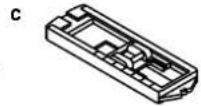
| Included accessories | Multi-purpose foot, zipper foot, buttonhole foot, button sewing foot, seam ripper/brush, quilting guide, needle pack, bobbins (3x), L-screwdriver, darning plate, spool pin holder, felt pad |
| Maintenance | Regular cleaning of feed dogs and hook with the provided brush, lubrication with sewing machine oil |
| Safety | Disconnect before maintenance, never leave unattended, use only on a stable surface |
| Customer service | Toll-free number: 00800 333 00 777, email: service-fr@veritas-sewing.com |
| Manual | 96 pages, available in multiple languages |
Frequently Asked Questions - Laura VERITAS
User questions about Laura VERITAS
0 question about this device. Answer the ones you know or ask your own.
Ask a new question about this device
Download the instructions for your Sewing machine in PDF format for free! Find your manual Laura - VERITAS and take your electronic device back in hand. On this page are published all the documents necessary for the use of your device. Laura by VERITAS.
USER MANUAL Laura VERITAS
Laura Bassi was the first woman to be awarded the title of professor, initially for philosophy and then for physics. Her extraordinary gifts became apparent even when she was a small child, and she was privately educated in natural sciences. She was eventually allowed to lecture at the University of Bologna for the first time in 1732, and was the first woman to enter a domain that had hitherto been the exclusive preserve of men.
Chere cliente, cher client,
Veritas Service Center
c/o TekniHall GmbH
Breitefeld 15
DE-64839 Munster
GERMANIA
Tel. 00800 333 00 777 (apel Gratisuit)
E-mail: service-ro@veritas-sewing.com
RO
INSTRUCIUNI IMPORTANTE DE SIGURANT
We congratulate you on your purchase of your sewing machiner. You have bought a quality product which has been made with great care and, if serviced right, will serve you well for many years.
Before using it for the first time, we ask you to read the manual at hand carefully, paying special attention to the safety instructions. Persons who are not familiar with this manual must not use the appliance.
In this manual, you will find everything there is to know about possible applications of your sewing machine. Should any questions remain unanswered, we kindly ask you to turn to your dealer.
We wish you much pleasure and great sewing successes!
Questions concerning machine, service and customer care
Toll-free customer service number: 00800 333 00 777 service-uk@veritas-sewing.com
Service address: Veritas Service Center c/o Teknihall GmbH Breitefeld 15 DE-64839 Munster GERMANY
EN
IMPORTANT SAFETY INSTRUCTIONS
When using an electrical appliance, basic safety should always be followed, including the following: Read all instructions before using this sewing machine and keep these instructions for future reference.
DANGER- To reduce the risk of electric shock:
- An appliance should never be left unattended when plugged in.
- Always unplug this appliance from the electric outlet immediately after using and before cleaning.
WARNING- To reduce the risk of burns, fire, electric shock, or injury to persons:
- Read the instruction carefully before you use the machine.
- Keep the instructions at a suitable place close to the machine and hand it over if you give the machine to a third party.
- Use the machine only in dry locations.
- Never leave the machine unattended with children or elderly people due to they may not be able to estimate the risk.
- This appliance can be used by children aged from 8 years and above and persons with reduced physical, sensory or mental capabilities or lack of experience and knowledge if they have been given supervision or instruction concerning use of the appliance in a safe way and understand the hazards involved.
- Children shall not play with the appliance.
- Cleaning and user maintenance shall not be made by children without supervision.
- Always switch off the machine if you carry out preparation for work (change the needle, feed the yarn thru the machine, change the footer, etc.).
- Always unplug the machine if you carry out maintenance (oiling, cleaning).
- Always unplug the machine if you leave it unattended, to avoid injury by inadvertently switch on the machine.
-
Don't use the machine if it's wet or in humid environment.
-
Never pull at the cord, always unplug the machine by gripping the plug.
- If the LED lamp is damaged or broken, it must be replaced by the manufacturer or its service agent or a similarly qualified person, in order to avoid a hazard.
- Never place anything on the pedal.
- Never use the machine if the air vents are blocked keep the air vents of the machine and the foot controller free from dust, fuel and leftovers.
- The machine may only be used with foot pedal type KD-1902, FC-1902 (110-120V) / KD-2902, FC-2902A, FC-2902C, FC-2902D (220-240V) / 4C-316B (110-125V) / 4C-326C (127V) / 4C-326C (220V) / 4C-326G (230V) / 4C-336G (240V) / 4C-336G (220-240V).
- The power cord of the foot controller can not be replaced. If the power cord is damaged the foot controller must be disposed.
- The sound pressure level at normal operation is smaller than 75dB(A).
- Do not dispose of electrical appliances as unsorted municipal waste, use separate collection facilities.
- Contact your local government for information regarding the collection systems available.
- If electrical appliances are disposed of in landfills or dumps, hazardous substances can leak into the groundwater and get into the food chain, damaging your health and well-being.
- When replacing old appliances with new ones, the retailer is legally obligated to take back your old appliance for disposal at least for free of charge.
- The appliance is not to be used by persons (including children) with reduced physical, sensory or mental capabilities, or lack of experience and knowledge, unless they have been given supervision or instruction. (For outside Europe)
- Children being supervised not to play with the appliance. (For outside Europe)
SAVE THESE INSTRUCTIONS
This sewing machine is intended for household use only.
Correct Use
Danger! Electric shock due to humidity
- The sewing machine must only be stored and used in dry rooms.
- Humidity and dampness may cause an electric shock.
Danger! Eye injuries due to a broken needle
- Only soft, flexible textiles may be sewn.
- The machine is not designed for sewing materials such as thick, hard or inflexible leather, tarpaulins, canvas, etc.; the needle may break.
- The needle can break if the material is not transported by the motor and is instead pushed or held back by the user.
Danger! Needle-prick injuries if operated accidentally
- The machine may only be used by careful adults.
- Children from 8 years and persons with restricted abilities may only use the machine after thorough instruction and under constant supervision. They must have understood dangers with regard of the use of the machine.
- Children from 8 years and persons with restricted abilities may only do the maintenance and cleaning of the machine after thorough instruction and under constant supervision.
- Never leave an operational machine in areas to which children have access. It must be avoided that children play with the machine.
- The main switch must be turned off or power plug must be disconnected for all preparation or configuration tasks.
Danger! Risk of injury due to defects or modifications.
-
The machine must not be modified.
-
Repars must be carried out by the technical service.
Damage, modifications, or the use of non-original accessories can lead to injuries.
- Defective machines must no longer be used.
- Defective power cords must be replaced by original spare part.
Danger! Unsuitable installation sites (workplaces) can result in accidents.
- The machine must only be operated on a stable surface.
- Shaky, unstable or untidy workplaces can cause the machine to fall down or cause needle-prick injuries.
Danger! Persons without knowledge of these operating instructions may injure themselves or damage the sewing machine.
- Only use this sewing machine if you have a basic knowledge of how to use sewing machines.
Danger! Needle-prick injuries may occur if you do not pay attention.
- Take time, ensure the workplace is tidy and guide the material calmly through the machine without using force.
Caution! This machine is designed for use in a private home. The machine is not approved for professional or commercial use.
DE Inhaltsliste
Details of the machine. 24/26
Fitting the snap-in sewing table 28
Connecting machine to power source. 30
Two-step pressor foot lifter 32
Accessories 34
Threading the Machine
Winding the bobbin 36
Inserting the bobbin 38
Thread tension. 40
Threading the upper thread. 42
Raising the bobbin thread. 44
Sewing
Straight stitching/Zig-Zag stching 46
Reverse sewing. 48
Zig zag stitching in 3 steps 50
Blind hem. 52
Sewing with the hemmer foot 54
Practical stiches. 56
Quilting 58
Applique 60
Gathering 62
Monogramming 64
Sew 4-steps buttonholes .66
Sewing on buttons 68
Zippers 70
Sewing with the cording foot 72
Darning. 74
Dual feed food 76
General Information
Changing the presser foot 78
Needle/Fabric/ThreadChart. 82
Maintenance and Troubleshooting
Inserting the needle. 84
Maintenance. 86
Troubleshooting Guide 90
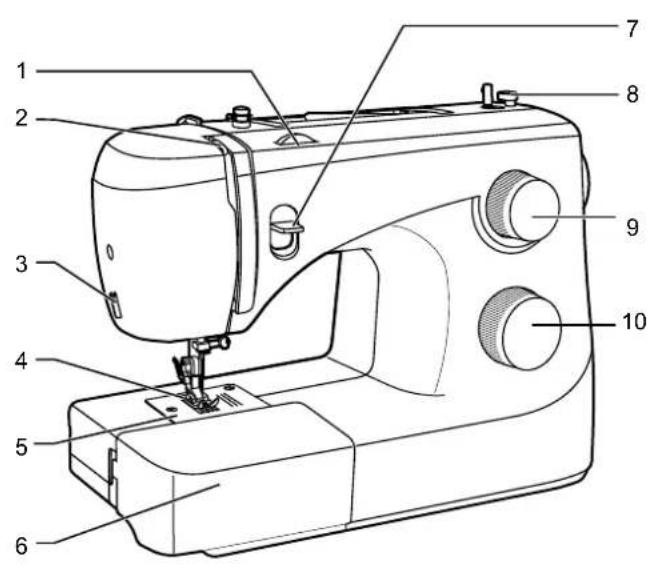
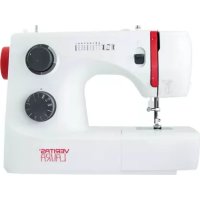
Details of the machine
- Thread tension dial
- Presser foot pressure
- Thread take-up lever
- Reverse sewing lever
- Thread cutting
- Presser foot
- Needle plate
- Bobbin winder stopper
- Stitch length dial
- Stitch selection dial
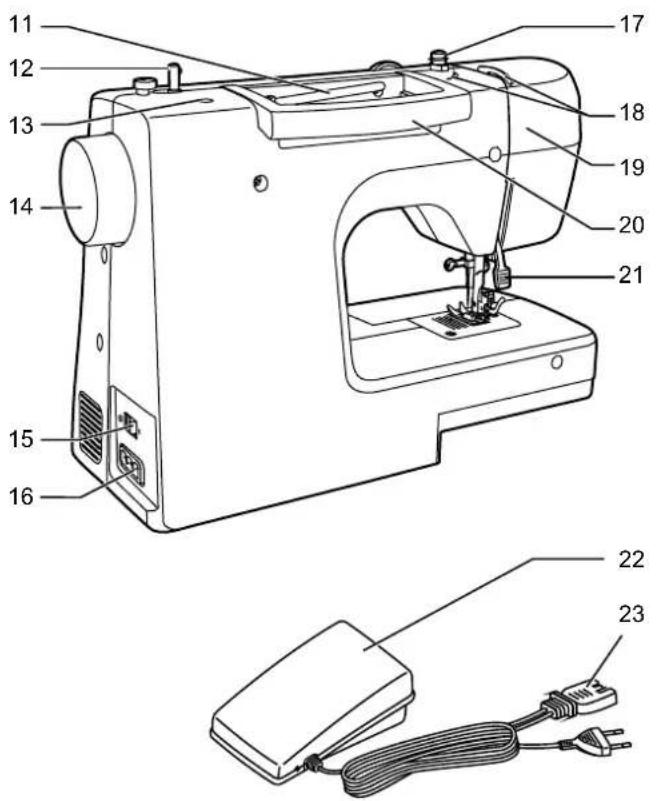
Details of the machine
- Horizontal spool pin
- Bobbin winder spindle
- Hole for auxiliary spool pin
- Hand wheel
- Power switch
- Main plug socket
- Bobbin thread guide
- Upper thread guide
- Face plate
- Handle
- Presser foot lifter
- Foot controller
- Power cord
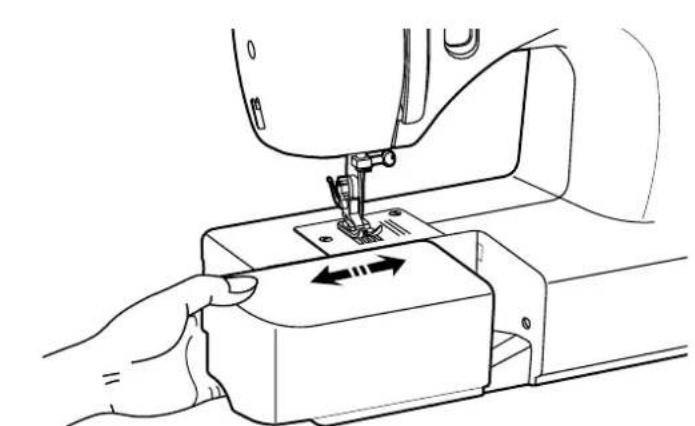
1
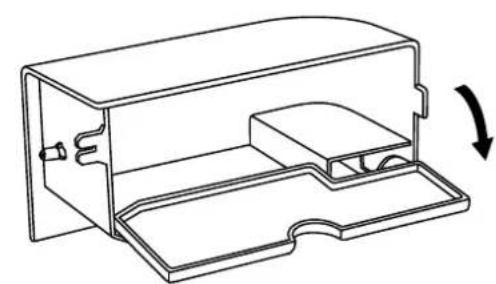
2

Der Anschiebetisch
Hold the removable extension table horizontal, and push it in the direction of the arrow. (1)
The inside of the removable extension table can be utilized as an accessory box.
To open, flip cover down as shown. (2)
2
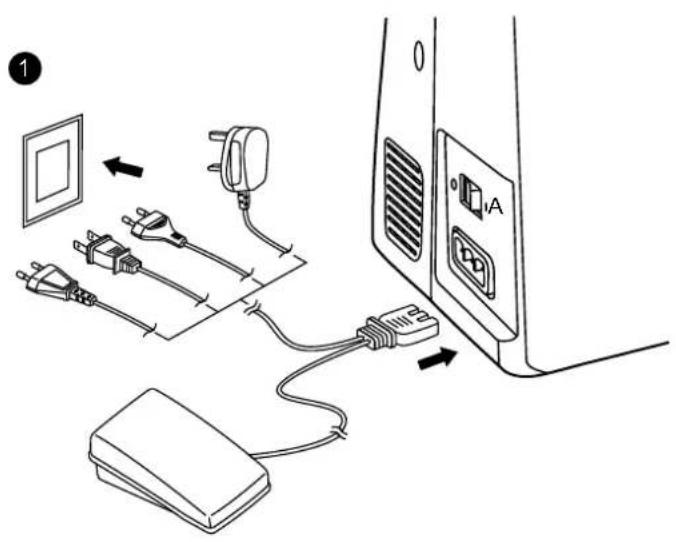
Connecting machine to power source
Connect the machine to a power source as illustrated. (1)
Sewing light
Press main switch (A) to "I" for power and light.
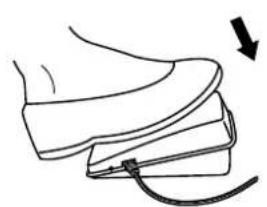
Foot control
The foot control pedal regulates the sewing speed. (2)

Attention:
Unplug power cord when machine is not in use.
Consult a qualified electrician if in doubt of how to connect machine to power source.
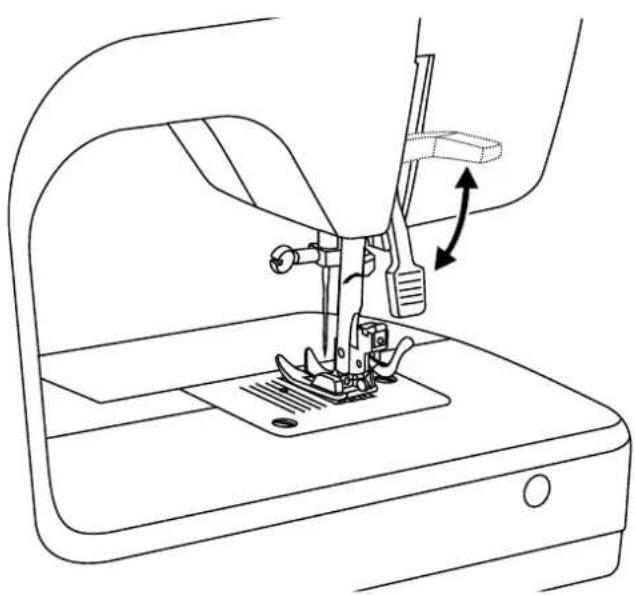
EN Two-step presser foot lifter
The presser foot lifter raises and lowers your presser foot.
When sewing several layers or thick fabrics, the presser foot can be raised a second stage for easy positioning of the work.
1


i



1

2

n
0
p

9


U

Zubehor
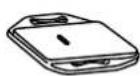
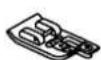
Accessories are stored inside the accessory storage.
Standard accessories (1)
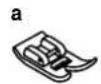
a. All purpose foot
b. Zipper foot
c. Buttonhole foot
d. Button sewing foot
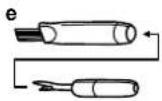
e. Seam ripper/ brush
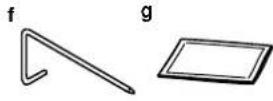
f. Edge/ quilting guide
g. Pack of needle
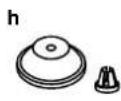
h. Spool holder
i. Bobbin (3x)
j. L-screwdriver
k. Darnig plate
I. Second spool pin
m. Spool pin felt
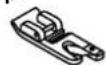
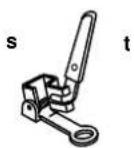
Optional accessories (2)
(Optionai accessories are not supplied with this machine; they are however available as special accessories from your local dealer.)
n. Satin stitch foot
o. Overcasting foot
p. Hemmer foot
q. Cording foot
r. Blind hem foot
s. Darning/ embroidery foot
t. Gathering foot
u. Quilting foot
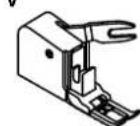
v. Walking foot
EN Winding the bobbin
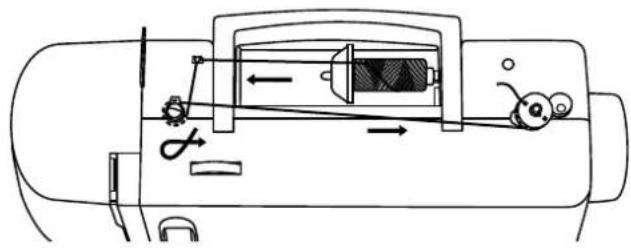
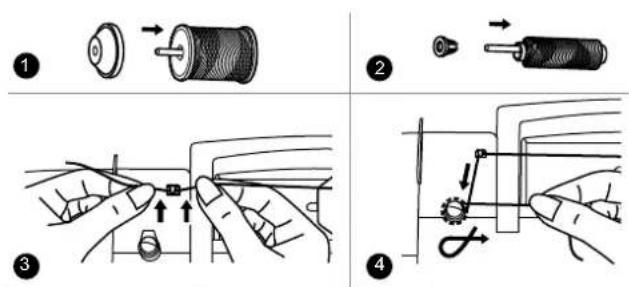
- Place the thread and spool holder onto the spool pin. (1, 2)
- Snap thread into thread guide. (3)
- Wind thread clockwise around bobbin winder tension discs. (4)
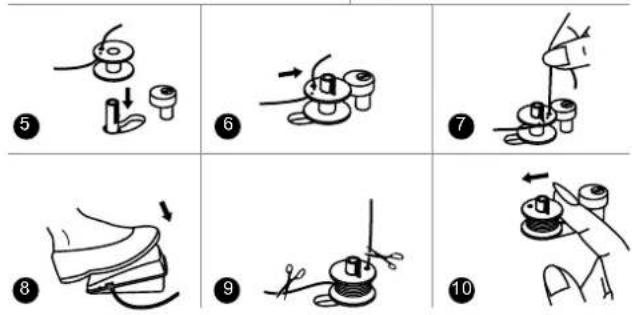
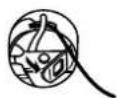
- Thread bobbin as illustrated and place on spindle. (5)
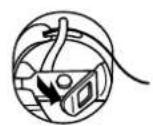
- Push bobbin spindle to right. (6)
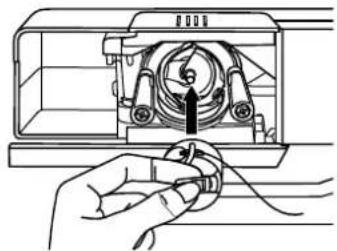
- Hold thread end. (7)
- Step on foot control pedal. (8)
- Release the pedal after a few turns. Release the thread and cut as close as possible to the spool. Press the pedal again. Once the spool is full, it rotates slowly. Release the pedal and cut thread. (9)
- Push bobbin spindle to left (10) and remove.
Please Note:
When the bobbin winder spindle is in "bobbin winding" position, the machine will not sew and the hand wheel will not turn. To start sewing, push the bobbin winder spindle to the left (sewing position).
1
2
3
4
5
6
7

Einsetzen der Spule
Achtung:
Attention: Turn power switch to off ("O") before inserting or removing the bobbin.
When inserting or removing the bobbin, the needle must be fully raised.
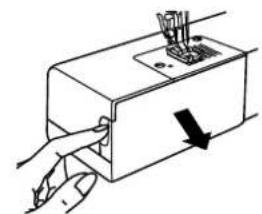
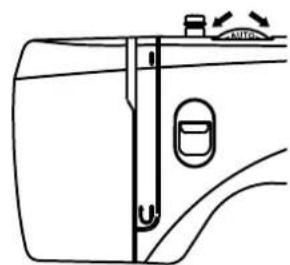
- Remove the sewing table, then open the hinged cover. (1)
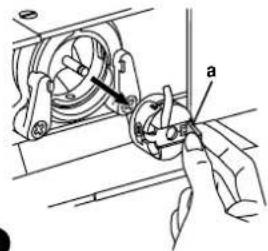
- Pull the bobbin case by the hinged latch (a). (2)
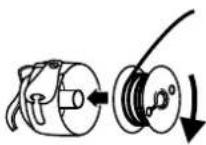
- Remove the bobbin of the bobbin case. (3)
- Hold the bobbin case with one hand. Insert the bobbin so that the thread runs in a clockwise direction (arrow). (4)
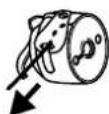
- Pull the thread through the slit and under the finger. (5) Leave a 6 inch tail of thread.
- Hold the bobbin case by the hinged latch. (6)
- Make sure the bobbin case finger (b) fits into the notch (c) at the top of the race as shown in. (7)
1

Fadenspannung
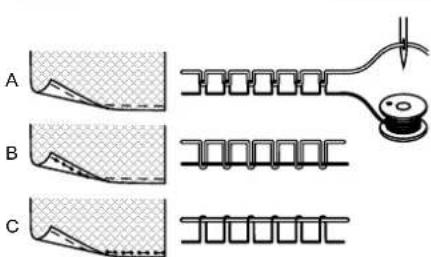
Upper thread tension (1)
Basic upper thread tension setting: "AUTO".
To increase the tension, turn the dial to the next higher number. To reduce the tension, turn the dial to the next lower number.
A. Normal thread tension
B. Upper thread tension too loose
C. Upper thread tension too tight
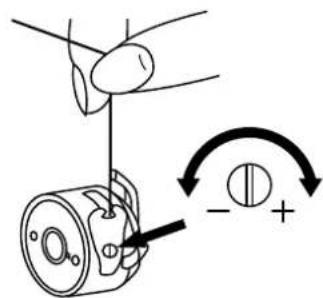
Lower thread tension (2)
To test the bobbin thread tension, the full bobbin is placed in the bobbin case. The bobbin case and gripper are then suspended by the end of the thread. If the tension is correct, the thread will unwind by about 5 to 10cm when gently swung and will then remain suspended. If the full bobbin case unwinds, the tension is too slack. If the tension is too tight, it hardly unwinds or does not unwind at all. To adjust, use the screwdriver.
Threading the upper thread

Note:
For safety, it is strongly suggested you turn off the power before threading.
This is a simple operation but it is important to carry out correctly as by not doing so several sewing problems could result.
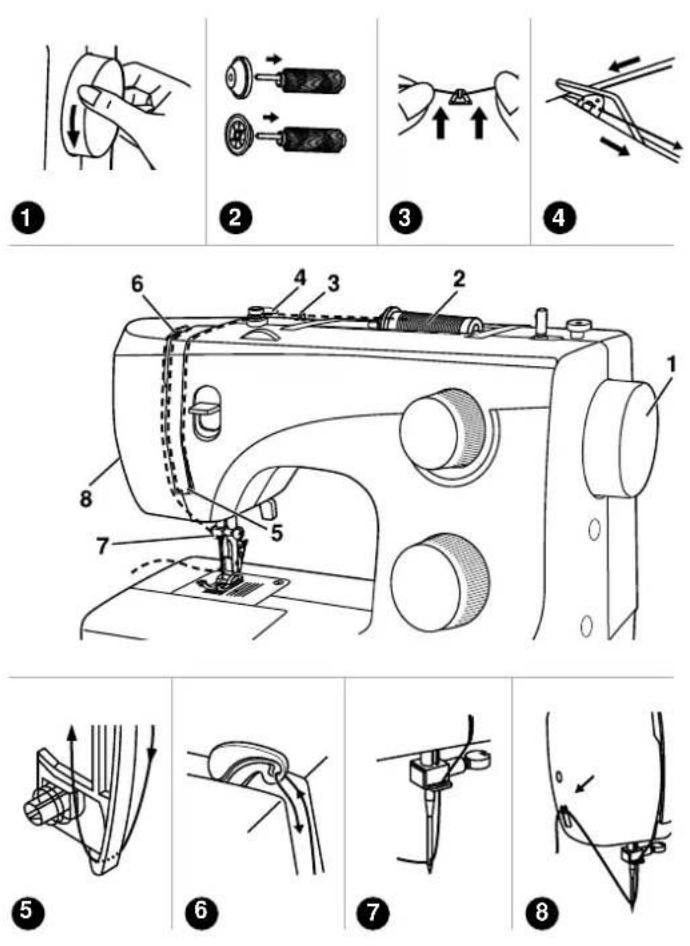
- Start by raising the needle to its highest point (1), and continue turning the handwheel counterclockwise until the needle just slightly begins to descend. Raise the presser foot to release the tension discs.
Place the spool of thread on the spool pin so that the thread comes from the front of the spool, then place the spool cap at the end of the spool pin. (2) - Draw thread from spool through the upper thread guide and pulling thread through pretension spring as illustrated. (3/4)
- Thread tension module by leading thread down right channel and up left channel. (5) During this process it is helpful to hold the thread between the spool and thread guide.
- At the top of this movement pass thread from right to left through the slotted eye of the take-up lever and then downwards again. (6)
- Now pass thread behind the thin wire needle clamp guide (7) and then down to the needle which should be threaded from front to back.
Pull about 15cm of thread to the rear beyond the needle eye. Trim thread to length with built in thread cutter. (8)
1
EN Raising the bobbin thread
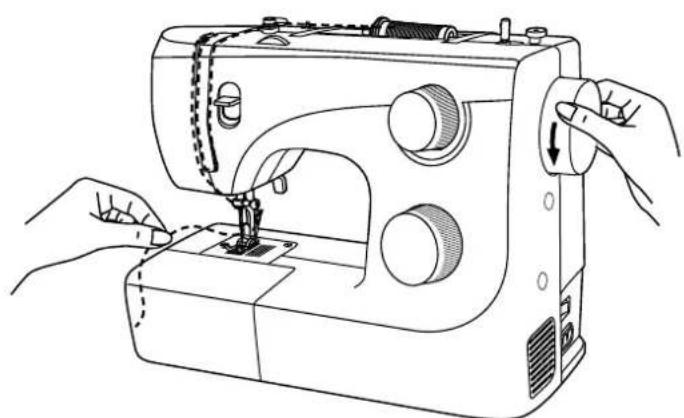
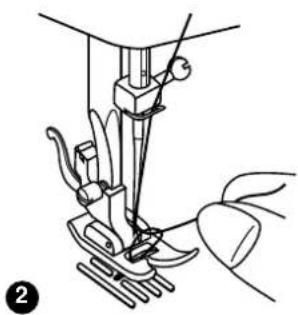
Hold the upper thread with the left hand. Turn the handwheel (1) towards you (counterclockwise) lowering, then raising needle.
Remarque :
If it is difficult to raise the bobbin thread, check to make sure the thread is not trapped by the hinged cover or the sewing table.
Gently pull on the upper thread to bring the bobbin thread up through the needle plate hole. (2)
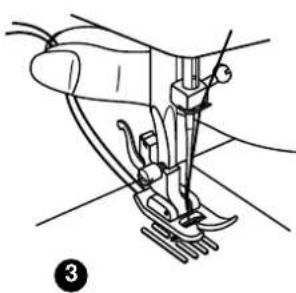
Lay both threads to the back under the presser foot. (3)
Stichmuster
Point droit/Point Zig-Zag
Point droit
Straight stitching/ Zig-Zag stching
Strait stching
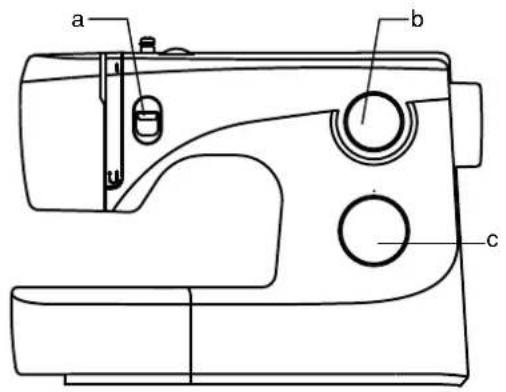
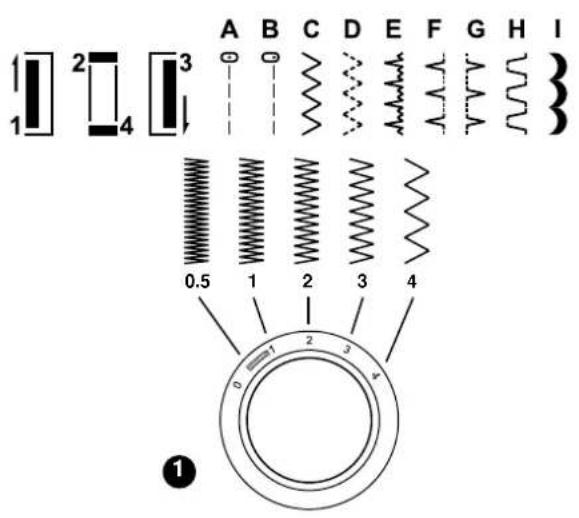
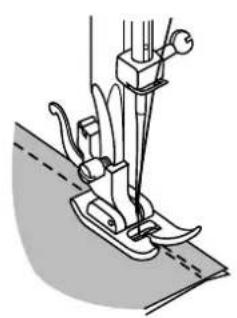
Turn the stitch selection dial so that the pointer is set to the straight stitch position.
Choose your needle position, from center needle position or right needle position "or"
a.Reverse lever
b.Stitch length dial
c. Pattern selector dial
Zig-Zag stching
Turn the stitch selector dial to " 32 ".
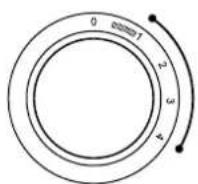
The density of zigzag stitches increase as the setting of stitch length dial approaches the "0" position. Neat zigzag stitches are usually achieved at "2.5" or below. (1)
1
2
3

Verwahrstiche
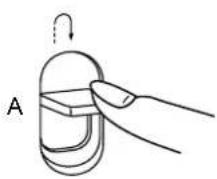
To secure the beginning and the end of a seam, press down the reverse sewing lever (A).
Sew a few reverse stitches. Release the lever and the machine will sew forward again. (1)
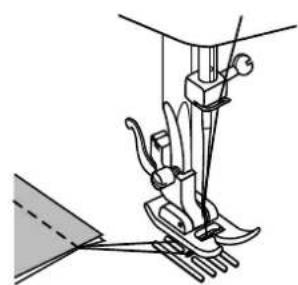
Enlever l'ouvrage
Turn the handwheel toward you (counterclockwise) to bring the thread take up lever to its highest position, raise the presser foot and remove work behind the needle and presser foot. (2)
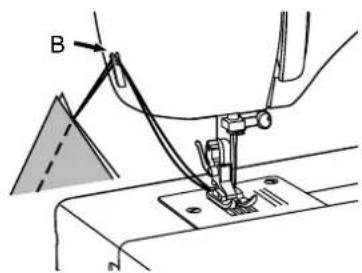
Couper le fil
Pull the threads under and behind the presser foot. Guide the threads to the side of the face plate and into thread cutter (B). Pull threads down to cut. (3)
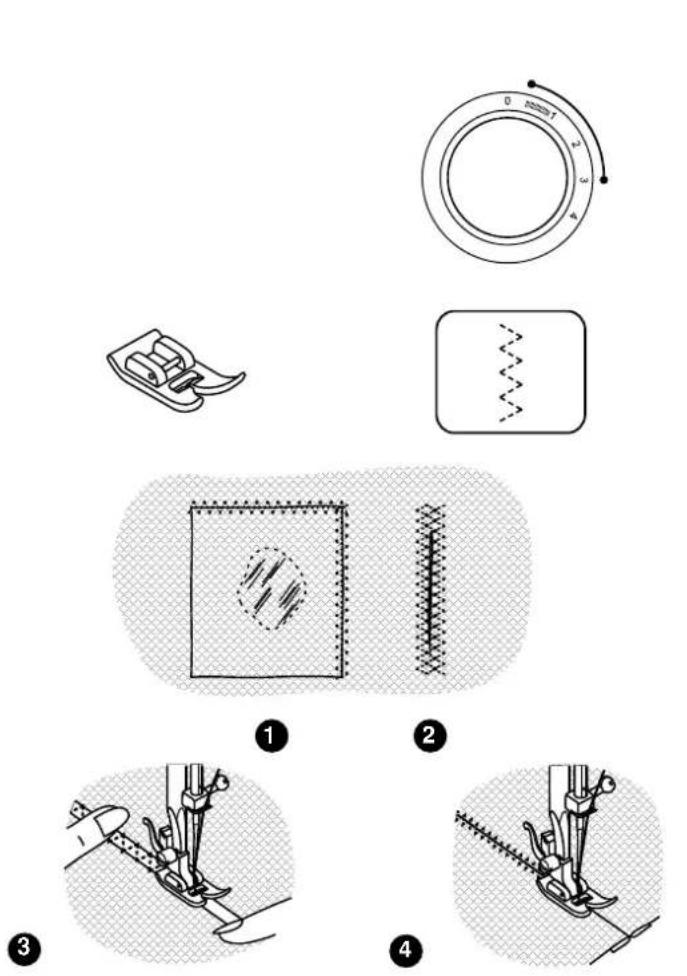
EN Zig zag stching in 3 steps
Sewing on lace and elastic, darning, mending, reinforcing edges.
Set the machine as illustrated.
Place patch in position. The stitch lenght can be shortened to produce very close stitches. (1)
When mending tears, it is advisable to use a piece of backing fabric to reinforce. The stitch density can be varied by adjusting the stitch lenght. First sew over the center and then overlap on both sides. Depending on the type of fabric and damage, sew between 3 and 5 rows. (2)
Sewing elastic
- Place the elastic on the fabric.
- As you sew, stretch the elastic both in the front and behind the presser foot as shown in fig. (3)
Joining fabric
The elastic stitch can be used to join two pieces of fabric together and is very effective when sewing knitted fabrics. If nylon thread is used, the stitch will not be visible.
- Place the edges of the two pieces of fabric together and center them under the presser foot.
- Sew them together using the elastic stitch taking care to keep the two fabric edges close together as shown in fig. (4)

Blindsmaum-Stich
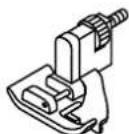
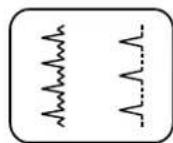
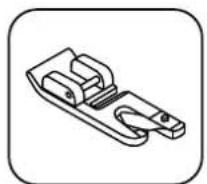
- The blind hem foot is an optional accessory.
For hems on curtains, trousers, skirts, etc.
Blind hem for stretch fabrics.
Blind hem for firm fabrics.
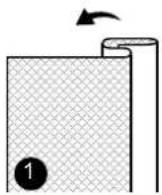
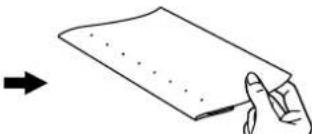
- Fold the fabric as illustrated with the left side uppermost.
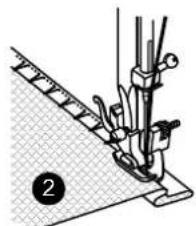
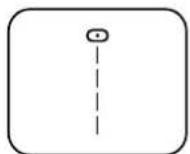
- Place the reversed fabric under the presser foot. Turn the handwheel forwards by hand until the needle is fully to the left. It should just pierce the fold of the fabric.
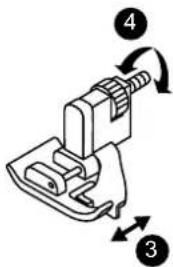
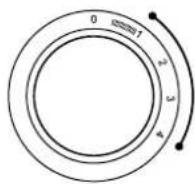
3/4. Adjust the guide (3) by turning the dial (4) so that the guide just rests against the fold. Sew slowly and guide the fabric carefully so that its position does not change in relation to the guide.
Blind Hem:
Turn up the hem to the desired width and press. Fold back (as shown in Fig. 1) against the right side of the fabric with the top edge of the hem extending about 7mm (1 / 4^ ) to the right side of the folded fabric.
Start to sew slowly on the fold, making sure the needle touches slightly the folded top to catch one or two fabric threads. (2)
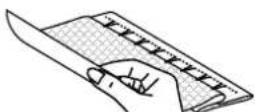
Unfold the fabric when hemming is completed and press.
1
2

EN Sewing with the hemmer foot
- The hemmer foot is an optional accessory not supplied with your machine.
For hems in fine or sheer fabrics.
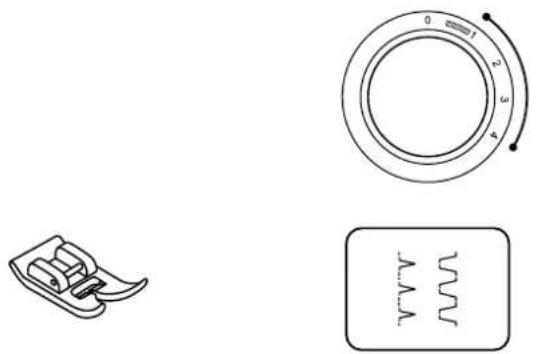
Set the machine as illustrated".
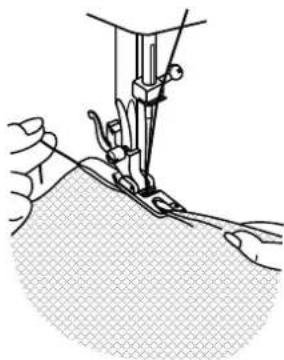
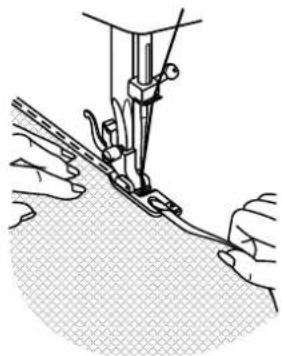
Neaten the edge of the fabric. At the beginning of the hem, turn under the edge twice by about 3mm (1/8") and sew 4-5 stitches to secure. Pull the thread slightly towards the back. Insert the needle into the fabric, raise the presser foot and guide the fold into the scroll on the foot. (1)
Gently pull the fabric edge towards you and lower the presser foot. Begin sewing, guiding the fabric into the scroll by holding it upright and slightly to the left. (2)
DE Nutzstiche
EN Practical stitches
Set the machine as illustrated.
Turn the stitch length dial to suit the fabric.
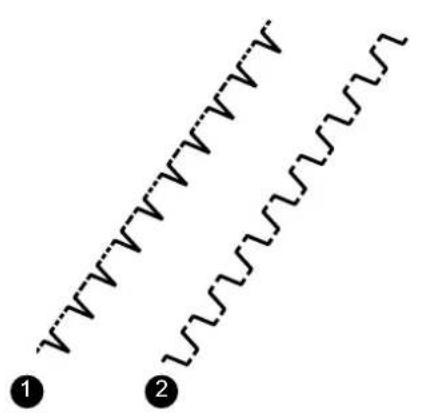
Shell hem (1)
For decorative edges.
Suitable for edges on sheer, fine and stretch fabrics. The larger stitch should go just over the edge of the fabric to create the shell effect.
Rampart (2)
For flat joining seams, sewing on elastic, visible hems. This stitch can be used for firm, thicker fabrics.
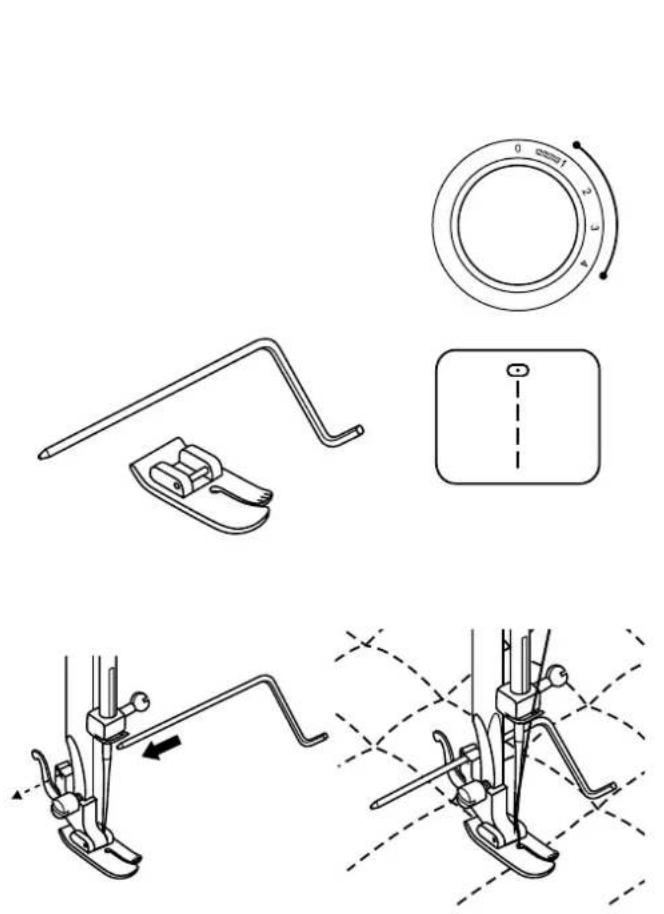
- The quilting foot is an optional accessory not supplied with this machine.
Set the machine as illustrated.
Insert the edge/quilting guide in presser foot holder and set the space as you desired.
Move the fabric over and sew successive rows with the guide riding along on the previous row of stitching.
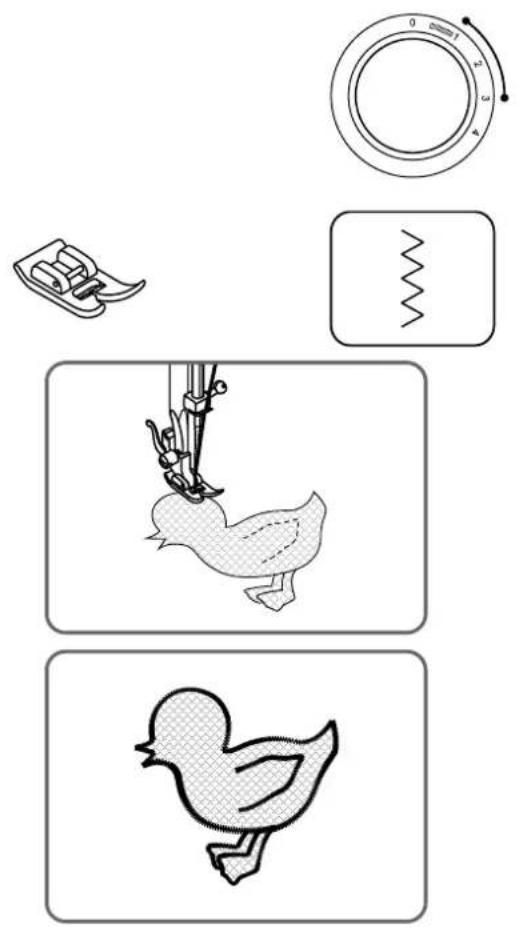
DE Application
Turn pattern selector dial to small zig zag width.
- Cut out the applique design and baste it to the fabric.
- Sew slowly around the edge of the design.
- Trim excess material outside the stitching. Make sure not to cut any stitches.
- Remove the basting thread.
- Tie top and bottom thread under the applique to avoid unraveling.
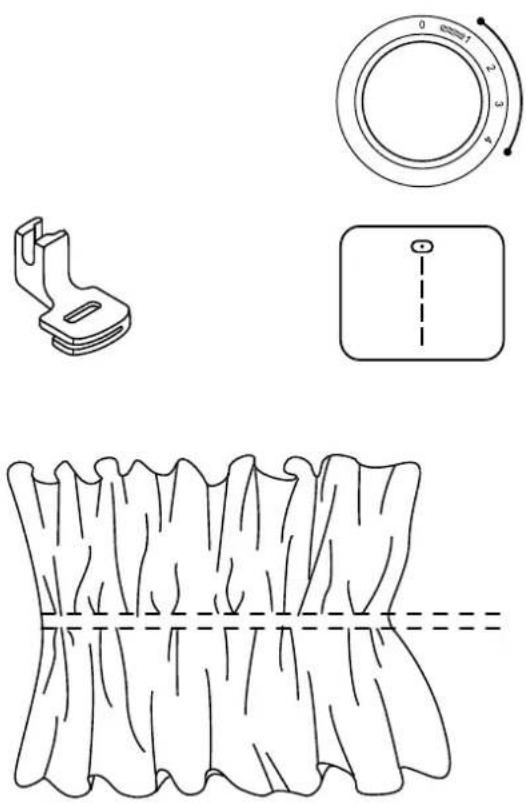
-
The gathering foot is an optional accessory not supplied with this machine.
Set the Pattern Selector as illustrated. -
Attach the gathering foot.
- Sew a single row or multiple rows of straight stitches.
- If more gathering is required, loosen the upper thread (to about 2) so that the lower thread lies on the under side of the material.
- Pull the lower thread to gather more of the material.
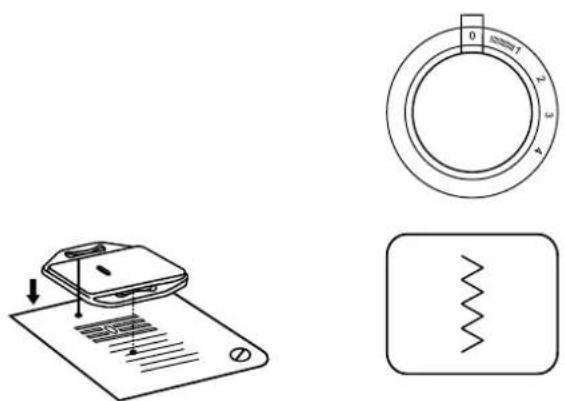
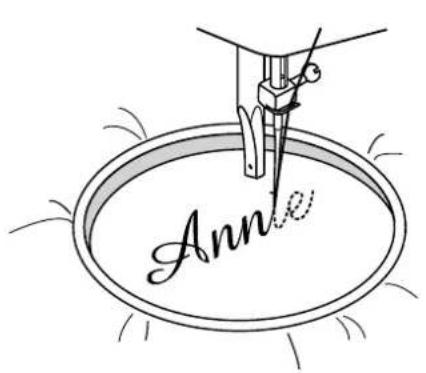
Set the machine as illustrated above.
- Remove the presser foot and the presser foot holder.
- Attach the darning plate.
- Lower presser foot lifter before starting to sew.
Preparation for Monogramming and Embroidering
- Draw the desired lettering or design on the right side of the fabric.
- Stretch the fabric between embroidery hoop as firmly as possible.
- Place the fabric under the needle. Make sure the presser foot bar is down in its lowest position.
- Turn the balance wheel towards you to bring up the lower thread through the fabric. Sew a few securing stitches at the starting point.
- Hold the hoop with thumb and forefingers of both hands while pressing the material with the middle and third fingers and supporting the outside of hoop with smaller finger.
- Embroidery hoop not included with machine.
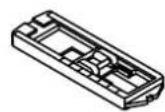
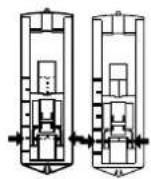
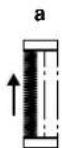
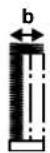
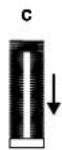
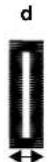

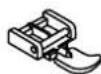
- Take off the all purpose foot and attach the buttonhole foot.
- Measure diameter and thickness of button and add 0.3cm (1 / 8^ ) for bartacks to obtain correct buttonhole length; mark buttonhole size on fabric (a).
- Place fabric under the foot, so that marking on the buttonhole foot aligns with starting marking on fabric. Lower the foot, so that the buttonhole center line marked on the fabric aligns with the center of the buttonhole foot (b).
Adjust the stitch length dial in the "range to set stitch density.
Note:
Density varies according to the fabric. Always test sew a buttonhole on the fabric you are using to sew the buttonhole.
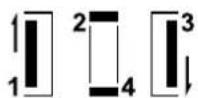
Follow the 4-step sequence changing from one step to another with the pattern selector dial. When moving from step to step through the buttonhole process, be sure that the needle is raised before turning the pattern selector dial to the next step. Take care not to sew too many stitches in steps 2 and 4. Use seam ripper and cut buttonhole open from both ends towards the middle.
Tips:
Slightly reducing upper thread tension will produce better results.
- Use a stabilizer for fine or stretchy fabrics.
- It is advisable to use heavy thread or cord for stretch or knit fabrics. The zig-zag should sew over the heavy thread or cord. (5)seguito sopra il filo spesso o lo spago. (5)
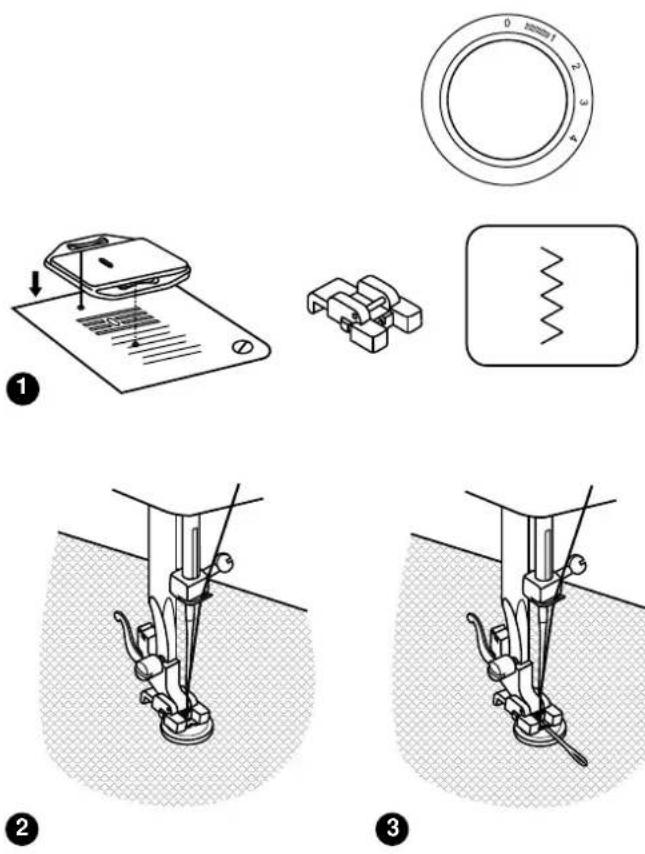
Annahen von Knopfen
Stopplatte installieren. (1)
EN Sewing on buttons
Install the darning plate. (1)
Change presser foot to button sewing foot. Position the work under the foot. Place the button on the marked position and lower the foot.
Set the pattern selector knob on and sew a few securing stitches. Select the zig-zag stitch width according to the distance between the two holes of the button. Turn the handwheel to check if the needle goes into the right and the left hole of the button without any obstruction (adjust the stitch width according to the button). Slowly sew on the button with about 10 stitches. Select pattern " " and sew a few securing stitches. (2)
If a shank is required, place a darning needle on top of the button and sew. (3) For buttons with 4 holes, sew through the front two holes first (2), push work forward and then sew through the back two holes as described. (3)
2
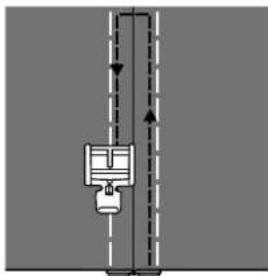

ReiBverschlussse
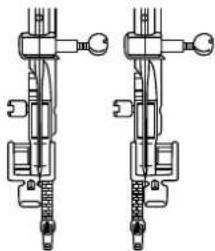
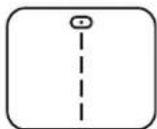
Set the machine as illustrated.
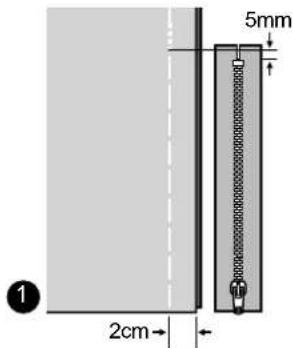
1. Place the right sides of the fabric together.
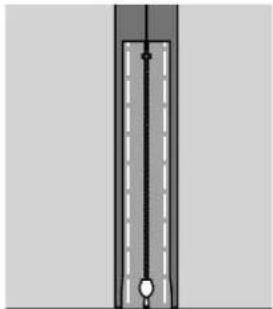
Sew a bottom seam 2cm from the right edge to the zipper bottom stop position. Sew a few stitches in reverse to lock. Increase the stitch length to maximum, set the tension below 2, and baste the remaining length of the fabric.
- Press open the seam allowance. Place the zipper face down on the seam allowance with the teeth against the seam line. Baste the zipper tape in place.
- The zipper foot can be inserted right or left, depending on which side of the foot you are going to sew.
- Stitching around the zipper, then remove the basting.
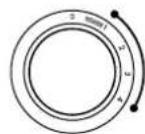
Stitch length dial: Choose 1 - 4
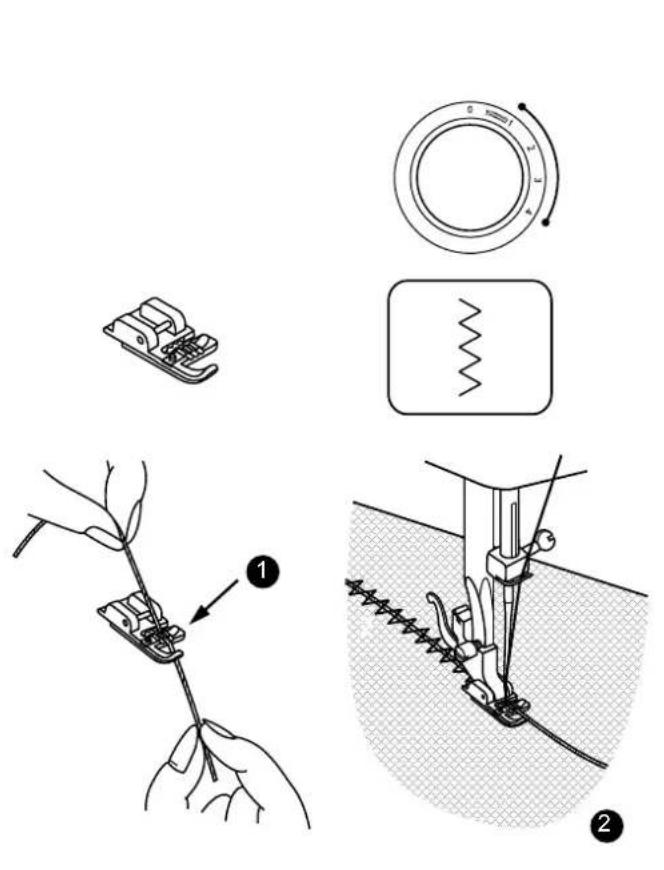
EN Sewing with the cording foot
- The cording foot is an optional accessory not supplied with your machine.
Decorative effects, cushions, tablecloths, etc.
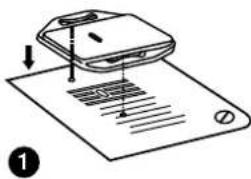
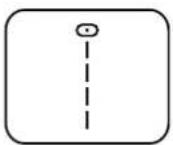
Set the machine as illustrated. Various stitches are suitable for sewing on cord, e.g. Zig-zag, Triple zig-zag, decorative stitches.
Insert the cord between the spring covering the cord groove and the foot. The cord should run in the groove. One, two or three cords can be sewn on. The stitch width is adjusted according to the number of cords and the stitch selected. (1/2)
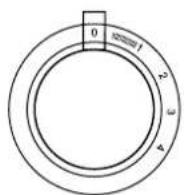
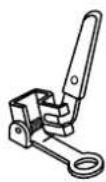
DE Stopfen
- The darning/ embroidery foot is an optional accessory not supplied with your machine.
Set the machine as illustrated.
Install the darning plate. (1)
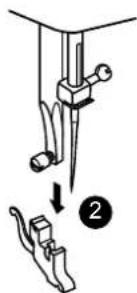
Remove the presser foot holder. (2)
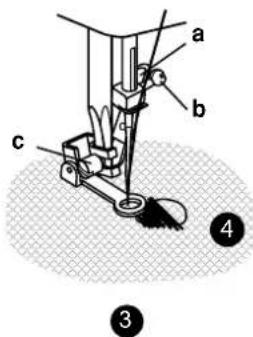
Attach the darning/ embroidery foot to the presser foot bar. The lever (a) should be behind the needle clamp screw (b). Press the darning/ embroidery foot on firmly from behind with your index finger and tighten the screw (c). (3)
First sew round the edge of the hole (to secure the threads). (4)
First row: Always work from left to right.
Turn work by 1/4 and oversew.
A darning ring is recommended for easier sewing and better results.
DE ObertransportfuB
- The dual feed foot is an optional accessory. It is not supplied as standard equipment with the machine.
Always try sewing without the dual feed foot first. It should only be used if absolutely necessary.
It is easier to guide the material and you have a better view of your work when using the standard foot that is usually fitted on your machine. This machine enables you to obtain excellent results when working on a very wide range of fabrics, from the most delicate muslims to multi-layered denim.
The optional dual feed foot regulates the feed of upper and lower layers of material and improves the correct positioning of checks, stripes and other design. This foot helps prevent uneven feed of fabrics that are very difficult to work with.
-
Raise the presser foot bar.
-
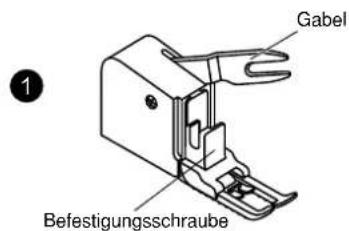
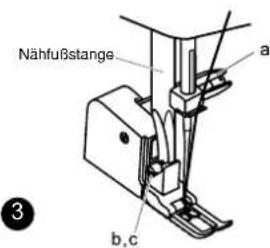
Remove the foot holder by turning the clamping screw on the bar anticlockwise. (3)
- Fit the dual feed foot on the machine in the following manner:
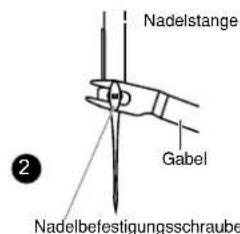
i) The forked arm must be fitted in the needle screw clamping mechanism. (2)
ii) Slide the plastic mounting head from left to right to install it on the presser foot bar.
iii) Lower the presser foot bar.
iv) Reinstall the presser foot bar mounting screw and turn it clockwise to tighten.
-
Make sure the needle clamping screw and the presser foot bar mounting screw are both properly tightened.
-
Pull the bobbin thread upwards and place it behind the dual feed foot along with the needle thread.
1
2
3
4

NahfuB auswechseln

Achtung:
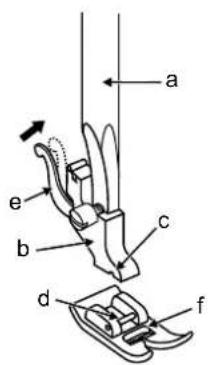
Changing the presser foot

Attention:
Turn power switch to off ("O") when carrying out any of the above operations!
Removing the presser foot
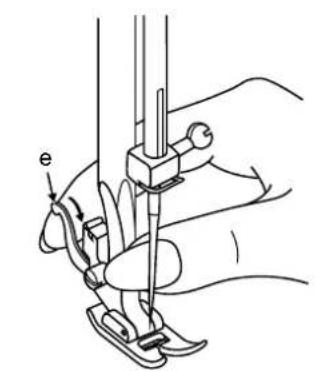
Raise the presser foot using the presser foot lifter.
Raise the lever (e) and the foot disengages. (1)
Attaching the presser foot
Lower the presser foot shank (b) using the presser foot lifter, until the cut-out (c) is directly above the pin (d). (2) The presser foot (f) will engage automatically.
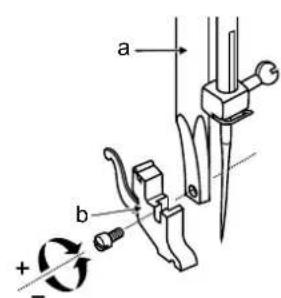
Removing and Attaching the presser foot shank
Raise the presser bar (a) with the presser foot lifter.
Removing and Attaching the presser foot shank (b) as illustrated. (3)
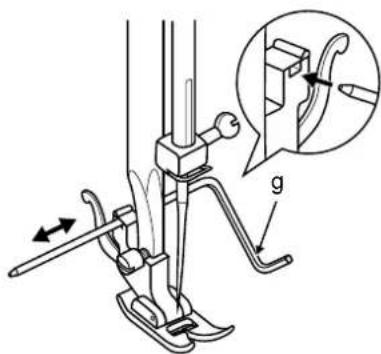
Attaching the edge/ quilting guide
Attach the edge/quilting guide (g) in the slot as illustrated. Adjust as needed for hems, pleats, quilting, etc. (4)
DE Nadel/Stoff/Faden Tabelle
| NEEDLE SIZE FABRICS THREAD | ||
| 9-11(65-75) | Lightweight fabrics-thin cottons, voile, serge, silk, muslin, Qiana, interlocks, cotton knits, tricot,jerseys, crepes, woven polyester, shirt & blouse fabrics. | Light-duty thread in cotton, nylon or polyester. |
| 12(80) | Medium weight fabrics-cotton, satin, kettleclote, sailcloth, double knits, lightweight woollens. | Most threads sold are medium size and suitable for these fabrics and needle sizes. Use polyester threads on synthetic materials and cotton on natural woven fabrics for best results. Always use the same thread on top and bottom. |
| 14(90) | Medium weight fabrics-cotton duck, woolen, heavier knits, terrycloth, denims. | |
| 16(100) | Heavyweight fabrics-canvas, woolens, outdoor tent and quilted fabrics, denims, upholstery material (light to medium). | |
| 18(110) | Heavy woollens, overcoat fabrics, upholstery fabrics, some leathers and vinyls. | Heavy duty thread, carpet thread. (Use heavy foot pressure-large numbers.) |
IMPORTANT: Match needle size to thread size and weight of fabric.
NEEDLE, FABRIC SELECTION
| NEEDLES EXPPLANATION | TYPE OF FABRIC | |
| Hax1 15x1 | Standard sharp needles. Sizes range thin to large. 9 (65) to 18(110) | Natural woven fabrics-wool, cotton, silk, etc. Qiana. Not recommended for double knits. |
| 15x1/705H (SUK) | Semi-ball point needle, scarfed. 9(65) to 18(110) | Natural and synthetic woven fabrics, polyester blends. Knits-polyesters, interlocks, tricot, single and double knits. Can be used instead of 15x1 for sewing all fabrics. |
| 15 1/705HxSUK) | Full ball point needle 9(65) to 18(110) | Sweater knits, Lycra, swimsuit fabric, elastic. |
| 130 PCL | Leather needles. 12(80) to 18(110) | Leather, vinyl, upholstery. (Leaves smaller hole than standard large needle.) |
Note: 1. European needles show sizes 65, 70, 80 etc. American and Japanese needles show size 9, 11, 12 etc.
2. Replace needle often (approximately every other garment ) and / or at first thread breakage or skipped stitches.
1
2

Nadel einsetzen

Achtung:
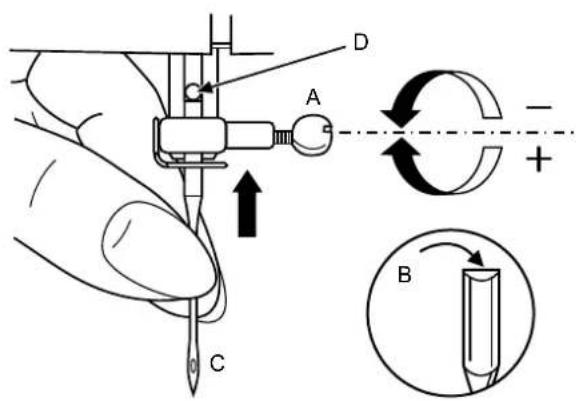
Inserting the needle

Attention:
Turn power switch to off ("O") before inserting or removing the needle.
Change the needle regularly, especially if it is showing signs of wear and causing problems.
Insert the needle as illustrated as follows:
A. Loosen the needle clamp screw and tighten again after inserting the new needle. (1)
B. The flat side of the shaft should be towards the back.
C/D. Insert the needle as far up as it will go.
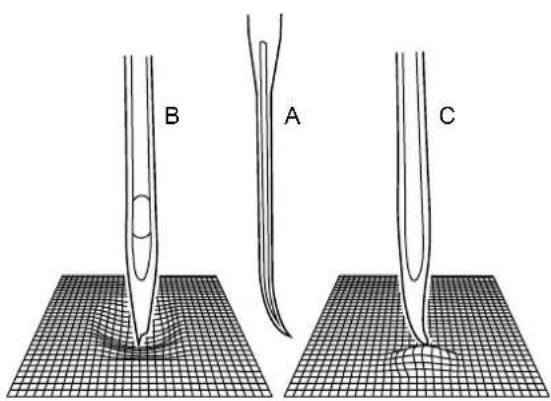
Needles must be in perfect condition. (2)
Problems can occur with:
A. Bent needles
B. Damaged points
C. Blunt needles

Wartung

Achtung:
Disconnect the machine from the electricity supply by removing the plug from the mains socket. When cleaning the machine, it must always be disconnected from the electricity supply.
Remove the needle plate:
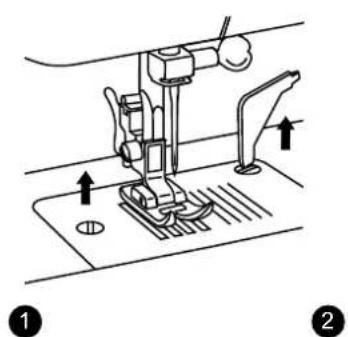
Turn the handwheel until the needle is fully raised. Open the hinged front cover and unscrew the needle plate screws with the screw driver. (1)
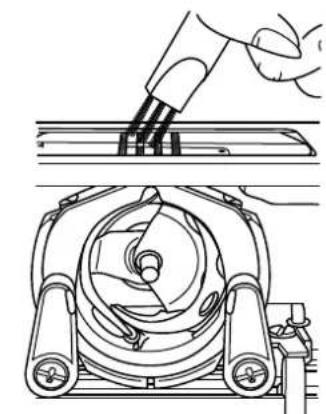
Cleaning the feed dog:
Remove the bobbin case and use the brush supplied to clean the whole area. (2)
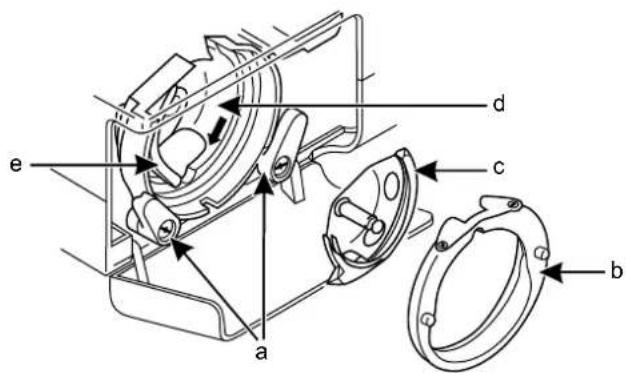
Cleaning and lubricating the hook:
Remove the bobbin case. Snap the two hook retaining arms (a) outwards. Remove the hook race cover (b) and the hook (c) and clean with a soft cloth. Lubricate at the point (d) (1-2 drops) with sewing machine oil. Turn the handwheel until the hook race (e) is in the left position. Replace the hook (c). Replace the hook race cover and snap back the two hook retaining arms. Insert the bobbin case and bobbin and replace the stitch plate.
Important:
Fabric fluff and threads must be removed regularly. Your machine should be serviced at regular intervals at one of our service agencies.erves at one of our service agencies.
| Problem | Cause | Correction |
| Upper thread breaks | 1.The machine is not threaded correctly.2.The thread tension is too tight.3.The thread is too thick for the needle.4.The needle is not inserted correctly.5.The thread is round wound the spool holder pin.6.The needle is damaged. | 1.Rethread the machine.2.Reduce the thread tension (lower number).3.Select a larger needle.4.Remove and reinsert the needle (flat side towards the back).5.Remove the reel and wind thread onto reel.6.Replace the needle. |
| Lower thread breaks | 1.The bobbin case is not inserted correctly.2.The bobbin case is threaded wrongly.3.The lower thread tension is too tight. | 1.Remove and reinsert the bobbin case and pull on the thread. The thread should pull easily.2.Checked both bobbin and bobbin case.3.Loosen lower thread tension as described. |
| Skipped stitches | 1.The needle is not inserted correctly.2.The needle is damaged.3.The wrong size needle has been used.4.The foot is not attached correctly. | 1.Remove and reinsert needle (flat side towards the back).2.Insert a new needle.3.Choose a needle to suit the thread and fabric.4HECK and attach correctly. |
| Needle breaks | 1.The needle is damaged.2.The needle is not correctly inserted.3.Wrong needle size for the fabric.4.The wrong foot is attached. | 1.Insert a new needle.2.Insert the needle correctly (flat side towards the back).3.Choose a needle to suit the thread and fabric.4.Select the correct foot. |
| Loose stitches | 1.The machine is not correctly threaded.2.The bobbin case is not correctly threaded.3.Needle/ fabric/ thread combination is wrong.4 threads tension wrong. | 1.Checked the threading.2 threads the bobbin case as illustrated.3.The needle size must suit the fabric and thread.4.correct the thread tension. |
| Seams gather or pucker | 1.The needle is too thick for the fabric.2.The stitch length is wrongly adjusted.3.The thread tension is too tight.4.Fabric puckers. | 1.Selected finer needle.2.Readjust the stitch length.3.Loosen the thread tension.4.Use a backing for fine or stretchy fabrics. |
| Uneven stitches, uneven feed | 1.Poor quality thread.2.The bobbin case is wrongly threaded.3.Fabric has been pulled. | 1>Select a better quality thread.2.Remove bobbin case and retread and insert correctly.3.Do not pull on the fabric while sewing, let it be taken up by the machine. |
| The machine is noisy | 1.The machine must be lubricated.2.Fluff or oil have collected on the hook or needle bar.3.Poor quality oil has been used.4.The needle is damaged. | 1.Lubricate as described.2CLEan the hook and feed dog as described.3-only use good quality sewing machine oil.4 replacing the needle. |
| The machine jams | Thread is caught in the hook. | Remove the upper thread and bobbin case, turn the handwheel backwards and forwards by hand and remove the thread remands. Lubricate as described. |
| Spool pin on the right position. | Press spool pin to the left position. |
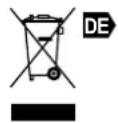
EN Do not dispose of electrical appliances as unsorted municipal waste, use separate collection facilities. Contact your local government for information regarding the collection systems available.
If electrical appliances are disposed of in landfills or dumps, hazardous substances can leak into the groundwater and get into the food chain, damaging your health and well-being.
When replacing old appliances with new once, the retailer is legally obligated to take back your old appliance for disposal at least for free of charge.