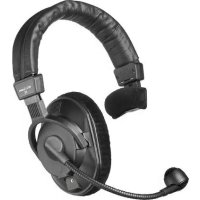
DT 280 MK II - Headphones BEYERDYNAMIC - Free user manual and instructions
Find the device manual for free DT 280 MK II BEYERDYNAMIC in PDF.



| Product Type | Closed single-ear professional headset |
| Brand | Beyerdynamic |
| Model | DT 280 MK II |
| Dimensions (approx.) | 200 x 150 x 80 mm |
| Weight (without cable) | 170 g |
| Microphone power supply | Audio cable power supply 6-27 V (built-in preamp) |
| Headphone impedance | 80 Ω or 250 Ω (depending on version) |
| Frequency response (headphones) | 10 - 30,000 Hz |
| Nominal sound pressure level | 100 dB SPL at 1 mW |
| Microphone type | Dynamic DM 290 |
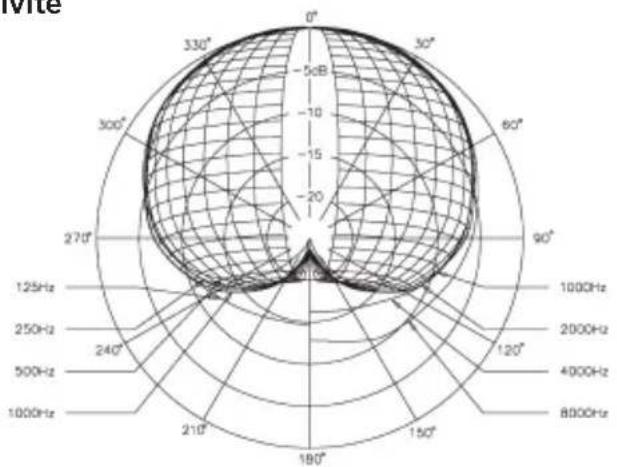
| Microphone directionality | Hypercardioid |
| Microphone sensitivity | Adjustable: 52 mV to 1.3 V for sound pickup at 5 cm |
| Microphone bandwidth | 40 - 12,000 Hz |
| Ambient noise attenuation | About 16 dBA |
| Headband pressure | 4.5 N |
| Cable type | Plug-in, unilateral connection (cable not included) |
| Repairability | Modular design: spare parts available (ear cushions, headband, cables) |
| Maintenance | Regular cleaning with damp cloth and mild detergent; ear cushions and windscreens washable |
| Recommended use | Radio/TV reporting, studio, mobile applications with camera |
| Optional accessories | Cables K 190.00, K 190.28, K 190.40, K 190.41; windscreen WS 97 AZ |
Frequently Asked Questions - DT 280 MK II BEYERDYNAMIC
User questions about DT 280 MK II BEYERDYNAMIC
0 question about this device. Answer the ones you know or ask your own.
Ask a new question about this device
Download the instructions for your Headphones in PDF format for free! Find your manual DT 280 MK II - BEYERDYNAMIC and take your electronic device back in hand. On this page are published all the documents necessary for the use of your device. DT 280 MK II by BEYERDYNAMIC.
USER MANUAL DT 280 MK II BEYERDYNAMIC
natural_image
Technical line drawing of a mechanical valve or pump component with no visible text or symbols5. Limiter - LTD Versionen
• Special model 250 ohm system available
DT 280 / DT 290
Mikrofon
* Special model 250 ohm system available
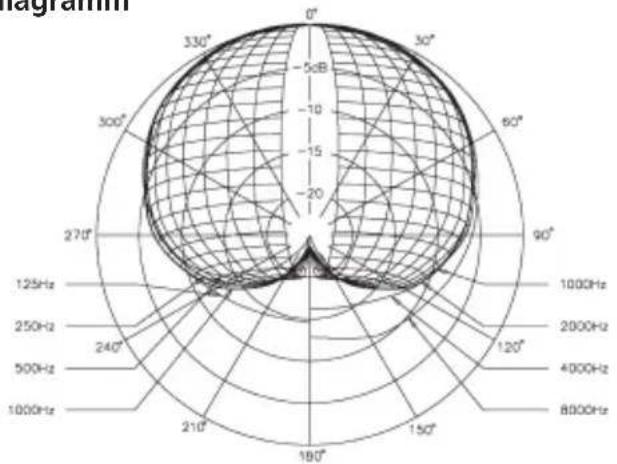
Richtdiagramm
radar
| Frequency | Value | | :--- | :--- | | 1000Hz | -2.0 | | 2000Hz | -1.8 | | 4000Hz | -1.6 | | 8000Hz | -1.4 | | 1200Hz | -1.2 | | 2000Hz | -1.0 | | 3000Hz | -0.8 | | 330° | -0.6 | | 60° | -0.4 | | 90° | -0.2 | | 125Hz | 0.0 | | 180° | 0.2 | | 210° | 0.4 | | 240° | 0.6 | | 270° | 0.8 | | 300° | 1.0 | | 330° | 1.2 |- Safety 14
- Design Features 14
- Connection 15
- Operation 15
- Limiter – LTD Versions ..... 16
- Maintenance 16
- Models ..... 16
- Spares 17
- Optional Accessories 17
- Disposal.... 17
- Technical Specifications ..... 18
OPERATING INSTRUCTIONS DT 250 / DT 252 / DT 280 / DT 290 / DT 297
Thank you for selecting one of the DT 200 series professional studio headphones or headsets. They have been made in Germany from high-grade materials and assembled under stringent quality and performance tests to provide you with a professional communications tool. Please take some time to read through this instruction booklet to give you an idea of the design criterion and some information on connection, use and maintenance.
1. Safety
When plugging in any of the DT 200-series headsets to the drive amplifier, we recommend that this is done before it is fitted over the ears for use. This will give the technician the chance to check that the volume levels are not too high. Please remember that the user could well be a highly-paid presenter and the consequences of damaging his/her ears may well prove to be music to the ears of the lawyer! The very low levels of distortion can make listening levels higher than is perceived and we have to warn you that listening to programme or talkback at high levels for long periods can permanently damage your hearing.
2. Design Features
DT 250 / DT 252
The DT 250 / DT 252 is a closed dynamic headphone offering excellent ambient noise isolation making it suitable for all kinds of applications in broadcasting and recording studios. The headband and earphone cushioning systems have been carefully designed for maximum comfort and unobtrusive style. The powerful neodymium magnet system provides high-fidelity reproduction and a balanced sound. The standard impedance is 80 Ω. Furthermore, versions with 250 Ω systems are available. The connecting cables to the ear monitors run safely in the headband and the main connecting cable is terminated on one side with a multi-pin connector.
DT 280 / DT 290
Same as DT 250, but featuring the dynamic hypercardioid DM 290 microphone. The DT 280 / DT 290 headset is used in intercom and talkback systems as well as other applications where a dynamic microphone is required. The DT 280 has an integrated microphone preamp for AB-powering.
DT 297
Same as DT 250, but featuring a cardioid condenser microphone. The DT 297 PV is equipped with an integrated preamp for phantom powering.
3. Connection
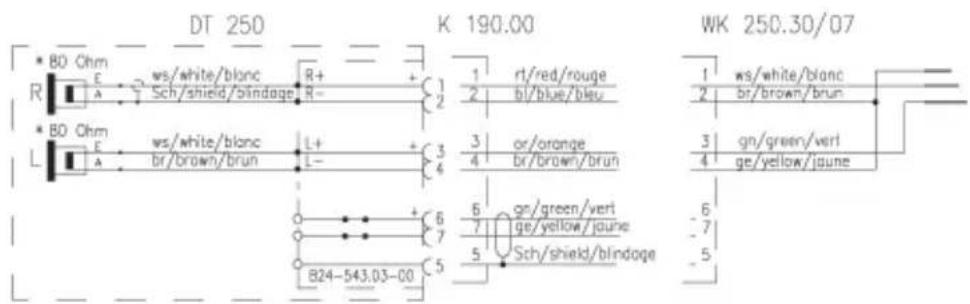
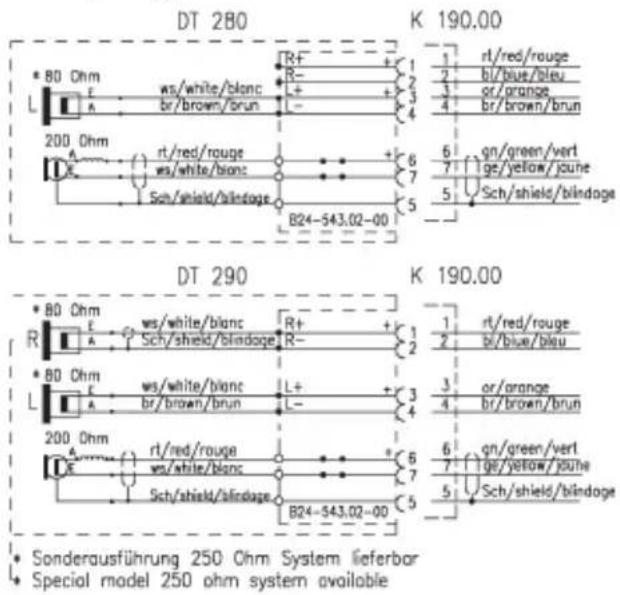
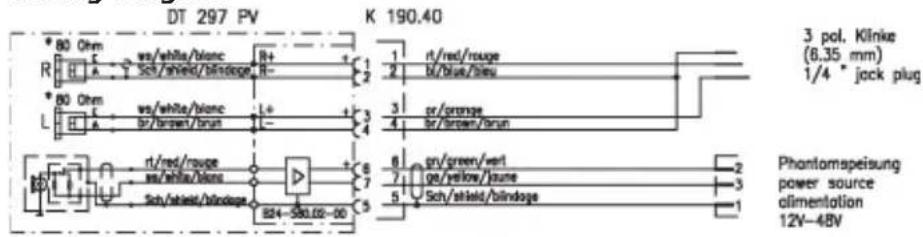
The DT 250 / DT 252 headphones are supplied with an appropriate connecting cable. The the DT 280 / DT 290 / DT 297 headsets are supplied without connecting cable. For appropriate connecting cables, please refer to "Optional Accessories". Direct solder connections can be made to all cables with free ends (for cable connection refer to "Block Diagram"). Upon request the required plugs can be connected at the factory.
It is important that the external equipment the studio headphones or the headsets will be connected to are of good quality and of the correct impedance and power ratings to get the best performance from them. Please refer to the "Technical Specifications" for detailed information.
The microphone of the DT 280 / DT 290 headset is designed for balanced connection. But it can be also connected to unbalanced microphone inputs.
The DT 297 PV headset is suitable for the connection to balanced microphone inputs with phantom power. At a distance of 5 cm the microphone level is 13 mV or 250 mV.
Use the DT 280 headset with integrated preamp for connecting to TV cameras with a microphone input for AB-powering. At a distance of 5 cm the microphone level can be adjusted between 52 mV and 1.3 V at normal speech volumes.
4. Operation
The head phones are fully adjustable and should be positioned for the best fit over the ears. This will give maximum long-term comfort and will minimise sound leakage or spill.
The microphone should be positioned to the side of the mouth, about 20 - 30 mm forward. This will keep it within the direct sound path but out of breath stream, therefore minimising any 'pop' sounds.
All versions:
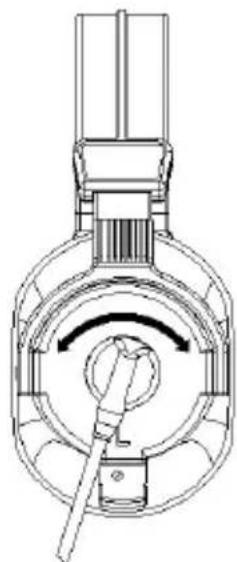
The microphone boom is rotatable so that the microphone can be placed over the left or right ear.
natural_image
Technical line drawing of a mechanical valve or pump component (no text or symbols)5. Limiter - LTD Versions
Headphones of the DT 200 series can also be ordered with an integrated limiter. This option ensures that the hearing of the user is protected at any time while using the product. In order to meet the important health and safety criteria the passive circuitry has been designed to achieve a similar sound impression as a complex VCA limiter. It is a two-phase limiting concept which incorporates a smooth decrease of the audio signal by 6 dB after which a hard, protective brick-wall limiter limits the audio signal when the input volume is still increased. The advantage of this concept is the soft, compressor-like transition between the unlimited audio signal and the brick-wall limiter. This area still sounds very good, but signalises the user without producing immediate distortion that the limiter threshold is reached. The headphones and headsets include the addition "LTD" and can be found in chapter 7. "Models". All models can be ordered with any preferred limiter threshold.
6. Maintenance
As with any equipment which will be used in close proximity to sensitive parts of the body, it is essential that the ear pads, the headband and the microphone pop-shield are kept clean. Use a damp cloth for cleaning the ear-pads and headband using only gentle cleansing agents (such as washing-up liquid). Take care not to allow any water drops into the transducer elements and do not use any solvent cleaners. The microphone pop-shield of the headsets can be easily removed and washed in warm water. Please take care that the pop shield is completely dry when it is replaced. The ear-pads can wear out due to effects of skin moisture, cosmetics and mechanical strains while wearing the headphones. From time to time you will need to replace the ear-pads:
- Remove the ear-pad from the housing part.
- Put the new ear-pad on the housing so that the drop-in pins can lock in the corresponding holes.
- Press the new ear-pad with the thumbs of both hands to the housing until you hear a clear "click" noise.
The modular design of the headphone allows easy servicing as all part can easily be exchanged.
7. Models
DT 250 Studio headphone, 80 Ω, black, with WK 250.07 coiled cable, plug-in type (stereo mini jack plug with 1/4" adapter) .. Order # 442.844
DT 250 Studio headphone, 250 Ω, black, with WK 250.07 coiled cable, plug-in type (stereo mini jack plug with 1/4" adapter) .. Order # 443.530
DT 252 Single-ear studio headphone, 80 Ω, black, with WK 250.07 coiled cable, plug-in type (stereo mini jack plug with 1/4" adapter)....Order # 445.177
DT 280 MK II Single-ear headset, 200/80 Ω....Order # 701.599
DT 280 MK II Single-ear headset, 200/250 Ω....Order # 701.602
DT 290 MK II Headset, 200/80 Ω .... . Order # 701.610
DT 290 MK II Headset, 200/250 Ω .... . Order # 701.629
DT 297 PV MK II Headset, 80 Ω, condenser microphone (cardioid), for 12 - 48 V phantom power .... . Order # 701.467
DT 297 PV MK II same as above, but 250 Ω . . . . . . . . . . . Order # 721.042
DT 250 LTD Studio headphone, 80 Ω, black, with limiter and cable.... Order # 497.924
DT 250 LTD Studio headphone, 250 Ω, black, with limiter and cable.... Order # 497.142
8. Spares
BN 59-59/A Headband cushion .... ... Order # 503.886
EDT 250 V Ear cushions pair (cloth), for DT 25*/28*/29* .... . Order # 942.704
EDT 250 S Ear cushions pair (soft PVC), for DT 25*/28*/29* . . . . . . . . Order # 943.549
WS 97 AZ Wind screen, charcoal-grey. . . . . . . . . . . . . Order # 465.313
9. Optional Accessories
WK 250.07 Coiled cable for DT 25* stereo mini jack plug with 1/4" adapter .. Order # 442.070
K 190.00 Straight cable for DT 28*/DT29*, 1.5 m, free ends. . . . . . . . . . . . . . . . . . . . . . . . . . . . . . . . . . . . . . . . . . . . . . . . . Order # 431.575
K 190.28 Straight cable for DT 28*/DT29*, 1.5 m, with 4-pin XLR socket . . . . . . . . Order # 445.304
K 190.40 Straight cable for DT 28*/DT29*, 1.5 m, with 3-pin XLR plug and 1/4" stereo jack plug .... . . . . . . . . . . . . . . . . . . . . . . . . . . . . . . . . . . . . . . . . . . . . . . . . . . . . . . Order # 445.894
K 190.41 Straight cable for DT 28*/DT29*, 1.5 m, with 5-pin XLR plug.... Order # 445.312
10. Disposal
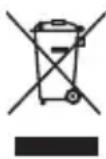
This symbol on the product, in the instructions or on the packaging means that your electrical and electronic equipment should be disposed at the end of its life separately from your household waste. There are separate collection systems for recycling in the EU. For more information, please contact the local authority or your retailer where you purchased the product.
11. Technical Specifications
DT 250 / DT 252
DT 280 / DT 290 / DT 297
Headphone
| Frequency response | 10 - 30,000 Hz(for headsets optimised for highest intelligibility of speech) |
| Nominal impedance | 80 Ω / 250 Ω |
| Nominal sound pressurelevel at1 kHz | 100 dB SPL at 1 mW = 0.28 V at 80 Ω100 dB SPL at 1 mW = 0.5 V at 250 Ω |
| Input power rating | 100 mW = 120 dB = 2.8 V at 80 Ω100 mW = 120 dB = 5 V at 250 Ω |
| T.H.D. | < 0.2% |
| Ambient noise attenuation | approx. 16 dBA |
| Headband pressure | 4.5 N |
| Weight (without cable) | |
| DT 250 / DT 290 / DT 297 | 240 g |
| DT 252 / DT 280 | 170 g |
Wiring Diagram DT 250
text_image
DT 250 K 190.00 WK 250.30/07 * BO Ohm E ws/white/blanc R+ Sch/shield/blindage R- 1 rt/red/rouge 2 bl/blue/bleu * * BO Ohm E ws/white/blanc L+ L+ 3 or/orange 4 br/brown/brun 6 gr/green/vert 7 ge/yellow/jaune 5 Sch/shield/blindage B24-543.03-00 6 7 8 9 10 11 12 13 14 15 16 17 18 19 20 21 22 23 24 25 26 27 28 29 30 31 32 33 34 35 36 37 38 39 40 41 42 43 44 45 46 47 48 49 50• Special model 250 ohm system available
DT 280 / DT 290
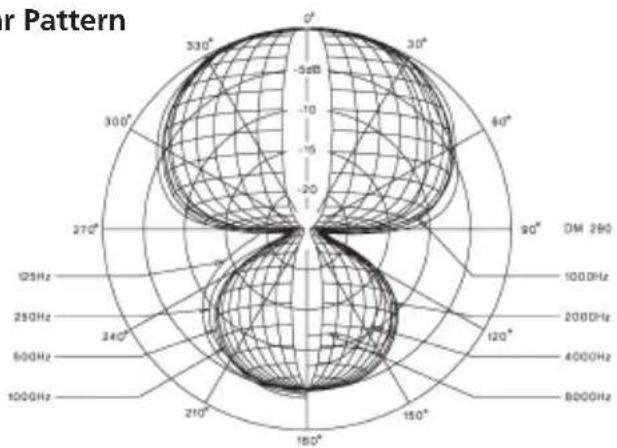
Microphone
Transducer type. . . . . . . . . . . . . dynamic
Frequency response. 40 - 12,000 Hz
Polar pattern.... hypercardioid
Interference discharging ..... 30 dB
Output voltage at a distance
of 5 cm .... approx. 1.3 mV/Pa
Nominal impedance .... approx. 200 Ω
Outer diameter .... approx. 23.2 mm
Weight approx. 45 g
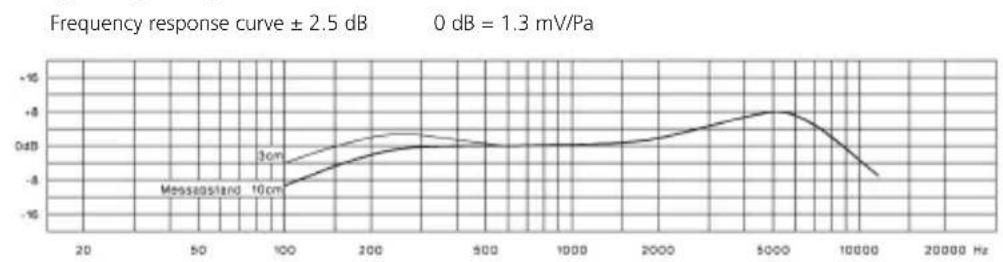
Frequency Response Curve
line
| Frequency (Hz) | Response Curve (dB) | | -------------- | ------------------- | | 100 | -4 | | 5000 | -4 |Wiring Diagram
text_image
DT 280 K 190.00 80 Ohm L A ws/white/blanc br/brown/brun R+ R- L+ L- + 1 2 3 4 rt/red/rouge bl/blue/bleu or/orange br/brown/brun 200 Ohm L A rt/red/rouge ws/white/blanc Sch/shield/blindage B24-543.02-00 6 7 5 gn/green/vert ge/yellow/jouhe Sch/shield/blindage DT 290 K 190.00 80 Ohm R A ws/white/blanc Sch/shield/blindage R+ R- + 1 2 3 4 rt/red/rouge bl/blue/bleu or/orange br/brown/brun 80 Ohm L A ws/white/blanc br/brown/brun L+ L- + 1 3 4 6 7 5 gn/green/vert ge/yellow/jouhe Sch/shield/blindage 200 Ohm L A rt/red/rouge ws/white/blanc Sch/shield/blindage B24-543.02-00 Sonderausführung 250 Ohm System lieferbar Special model 250 ohm system availablePolar Pattern
text_image
ar Pattern 330° 30° 60° 90° DM 280 125Hz 250Hz 600Hz 1000Hz 270° 240° 210° 180° 150° 120° 2000Hz 4000Hz 8000HzDT 297 PV
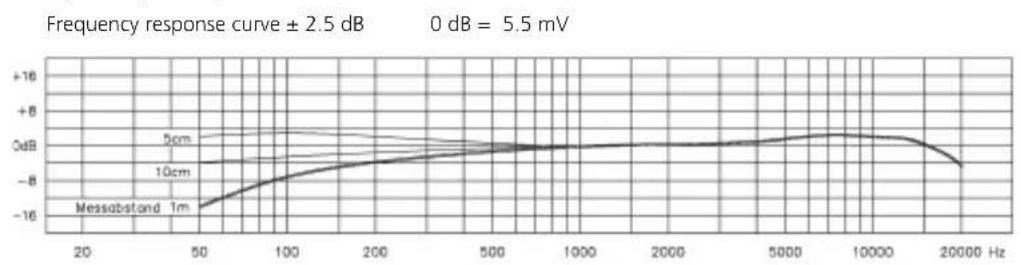
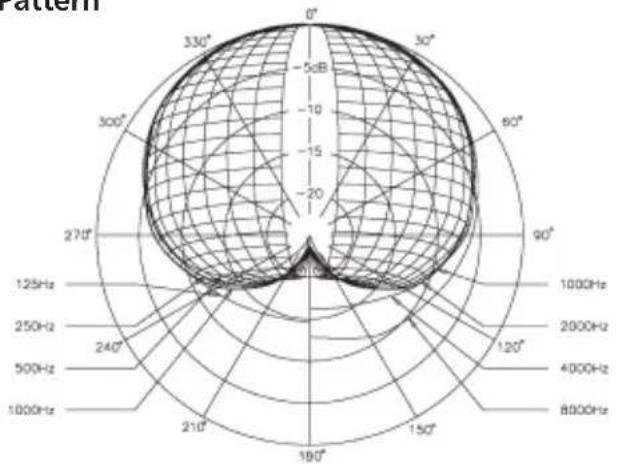
Microphone
Transducer type. . . . . . . . . . . . condenser (back electret)
Frequency response. 40 - 20,000 Hz
Polar pattern....cardioid
Output voltage at a distance
of 5 cm. 5.5 mV
Nominal impedance .... 300 Ω
Load impedance ≥ 1000
Max. SPL....132 dB
S/N ratio 62 dB
Current consumption .... approx. 3.5 mA
Phantom powering .... 12 - 48 V
Weight ..... approx. 30 g
Frequency Response Curve
line
| Frequency (Hz) | +16 dB (Messabstand) | +8 dB (10cm) | +6 dB (5cm) | | -------------- | ------------------- | ------------ | ---------- | | 20 | -16 | -16 | -16 | | 50 | -8 | -8 | -8 | | 100 | -6 | -6 | -6 | | 200 | -4 | -4 | -4 | | 500 | -2 | -2 | -2 | | 1000 | 0 | 0 | 0 | | 2000 | 0 | 0 | 0 | | 5000 | 0 | 0 | 0 | | 10000 | 0 | 0 | 0 | | 20000 | -2 | -2 | -2 |Wiring Diagram
text_image
DT 297 PV K 190.40 3 pol. Klinke (6,35 mm) 1/4 * jock plug * 80 Ohm R L * 80 Ohm R L RT/red/rouge vs/white/blanc Sch/shield/blindage R+ + - 1 2 rt/red/rouge br/blue/bleu 3 or/orange br/brown/brun 6 grn/green/vert ge/yellow/laume 7 Sch/shield/blindage 8 5 Phantomspeisung power source alimentation 12V-48V* Special model 250 ohm system available
Polar Pattern
radar
| Frequency | Value | | :--- | :--- | | 1000Hz | -2.0 | | 8000Hz | -1.5 | | 4000Hz | -1.0 | | 2000Hz | -0.5 | | 1200Hz | 0.0 | | 900Hz | 0.5 | | 600Hz | 1.0 | | 300Hz | 1.5 | | 330Hz | 2.0 | | 270Hz | 1.5 | | 210Hz | 1.0 | | 180Hz | 0.5 | | 150Hz | 0.0 | | 125Hz | -0.5 | | 500Hz | -1.0 | | 240Hz | -1.5 | | 250Hz | -2.0 | | 125Hz | -1.5 | | 330Hz | -1.0 | | 300Hz | -0.5 | | 600Hz | 0.0 | | 300Hz | 0.5 | | 180Hz | 1.0 | | 150Hz | 1.5 | | 125Hz | 2.0 | | 90Hz | 1.5 | | 60Hz | 1.0 | | 30Hz | 0.5 | | 0° | -0.5 |natural_image
Technical line drawing of a mechanical valve or pump component (no text or symbols)* Special model 250 ohm system available
Directivité
radar
| Frequency Range | Angle (°) | Value (dB) | | --------------- | --------- | ---------- | | 1000Hz | 0 | -20 | | 2000Hz | 330 | -15 | | 4000Hz | 60 | -10 | | 8000Hz | 90 | -5 | | 1250Hz | 125 | 0 | | 250Hz | 250 | 5 | | 500Hz | 500 | 10 | | 1000Hz | 1000 | 15 | | 150Hz | 150 | 20 | | 210Hz | 210 | 25 | | 270Hz | 270 | 30 | | 330Hz | 330 | 35 |www.beyerdynamic.com

For further distributors worldwide, please go to www.beyerdynamic.com Non-contractual illustrations. Subject to change without notice.
DE-EN-FR 8 / DT 250 - DT 297 / 611.409 (03.19)