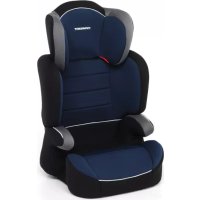
Clever - Car seat Foppapedretti - Free user manual and instructions
Find the device manual for free Clever Foppapedretti in PDF.



| Product type | Car seat |
| Brand | Foppapedretti |
| Model | Clever |
| Safety standard | ECE R44-04 |
| Approval | Universal (compatible with most vehicles) |
| Weight group | 15 to 36 kg |
| Approximate age | 3 to 12 years |
| Installation direction | Forward-facing (direction of travel) |
| Required belt type | 3-point seat belt with retractor |
| Use as booster alone | Allowed from 22 kg, mandatory from 25 kg |
| Safety features | Shoulder and lap belt guides |
| Adjustable headrest | Yes, by notch with audible click |
| Removable backrest | Yes |
| Cover | Removable and machine washable (delicate cycle, max 40°C) |
| Cleaning plastic parts | Damp cloth and mild detergent, do not use abrasive cleaners |
| Maintenance | Do not lubricate, do not modify the seat |
| Warranty | 12 months (standard warranty) |
| Product lifespan | 10 years from production date |
| Manual storage | In a pocket under the base |
| Precautions | Do not use on front seat with active front airbag |
| Compliance | ECE R44-04, series 04 |
Frequently Asked Questions - Clever Foppapedretti
User questions about Clever Foppapedretti
0 question about this device. Answer the ones you know or ask your own.
Ask a new question about this device
Download the instructions for your Car seat in PDF format for free! Find your manual Clever - Foppapedretti and take your electronic device back in hand. On this page are published all the documents necessary for the use of your device. Clever by Foppapedretti.
USER MANUAL Clever Foppapedretti
natural_image
Two black baby car seat designs, one full and one with a red accent, shown against white background (no text or symbols)EN CAR SEAT - Assembly instructions
Complies with ECE R44-04
FR SIÈGE-AUTO – Instructions de montage
EN. IMPORTANT! READ THE INSTRUCTIONS CAREFULLY AND KEEP FOR FUTURE REFERENCE
FR. IMPORTANT! LIRE ATTENTIVEMENT ET CONSERVER SOIGNEUSEMENT A PORTEE DE MAIN POUR UNE UTILISATION ULTERIEURE
ES. IMPORTANTE! LEER ATENTAMENTE Y CONSERVAR PARA FUTURAS REFERENCIAS
PT. IMPORTANTE! LER ATENTAMENTE E GUARDAR PARA FUTURA CONSULTA
EL. ΔΙΑΒΛΣΤΕ ΠΡΟΣΕΚΤΙΚΛΑ ΚΑΙ ΚΡΑΤΗΣΤΕ
ΑΥΤΟ ΤΟ ΕΓΧΕΙΡΙΔΙΟ ΓΙΑ ΝΑ ΤΟ
ΣΥΜΒΟΥΛΕΥΕΣΤΕ ΣΤΟ Μ'ΕΛΛΟΝ
RO. IMPORTANT! CITITI INSTRUCTIUNILE CU ATENTIE ŞI PĂSTRATI-LE PENTRU CONSULTĂRI VIITOARE
natural_image
Illustration of a mechanical component with a red arrow and label '1' pointing to it, no readable text or symbols present.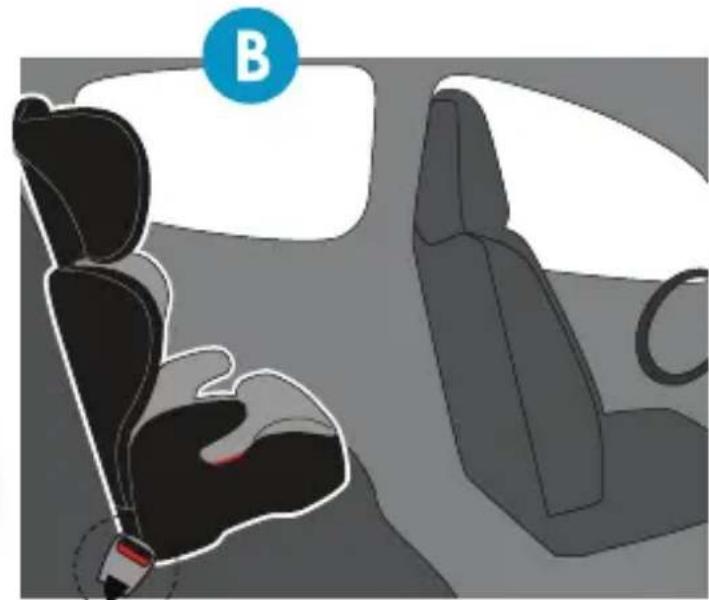
natural_image
Interior view of a car seatbelt and rear seats, showing seatbelt and rear seats with no visible text or symbols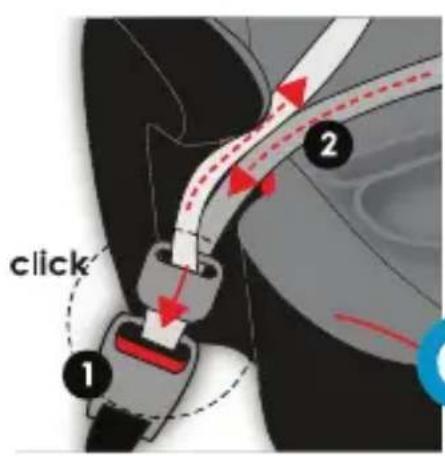
natural_image
Close-up of a mechanical component with a red arrow and numbered label (2), no readable text or symbols present.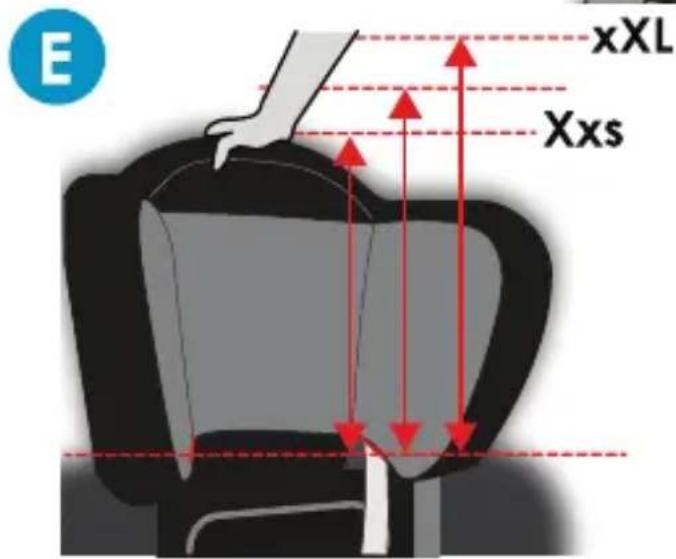
natural_image
Interior view of a car seat with red belt and blue circular background (no text or symbols)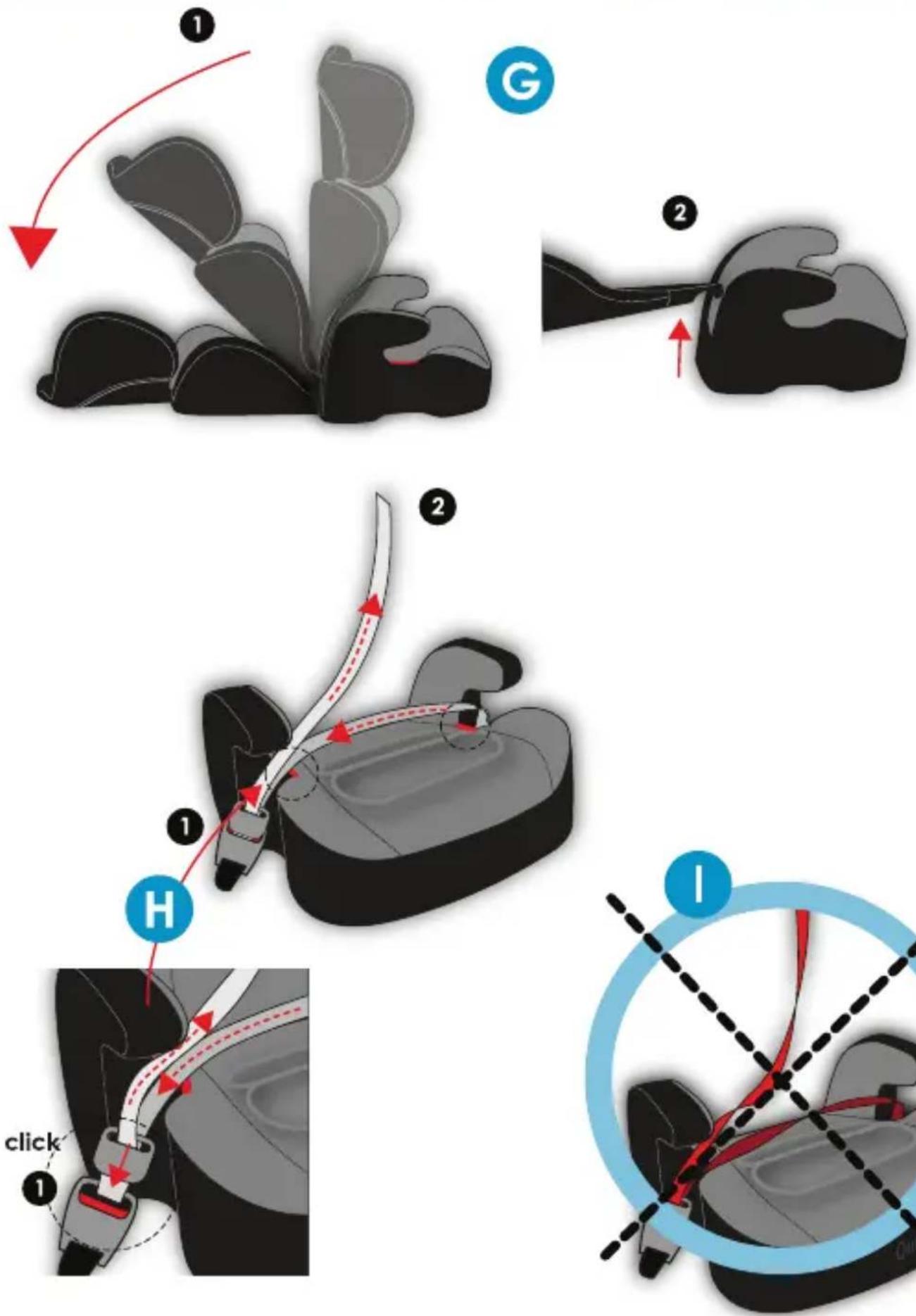
natural_image
Diagram of a car steering wheel with red and black trajectory lines, no text or symbols present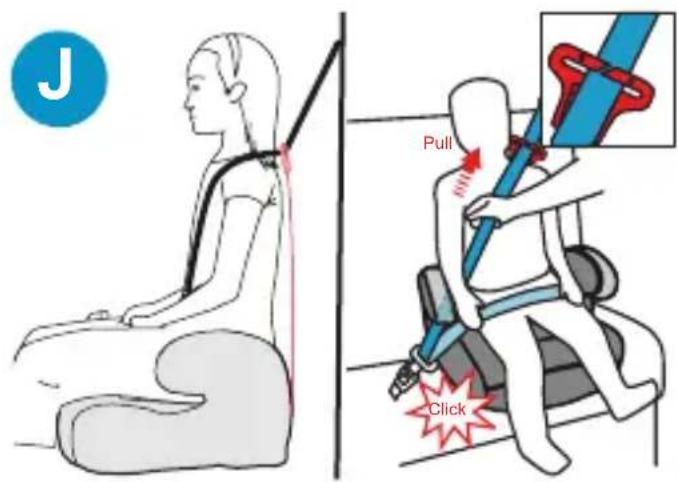
natural_image
Illustration of a person seated in a chair with a red X mark indicating a medical or safety symbol (no text or labels present)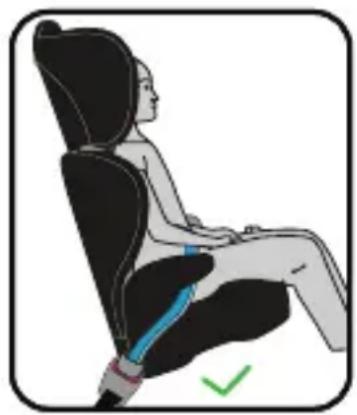
natural_image
Illustration of a person seated in a chair with a blue belt and green checkmark indicating a location (no text or symbols)Car seat components PAG 19
Warnings / General notes PAG 20
Installation in the vehicle PAG 22
How to secure your child Cleaning and PAG 23
Removing the lining PAG 25
Maintenance PAG 25
Conventional Warranty PAG 26
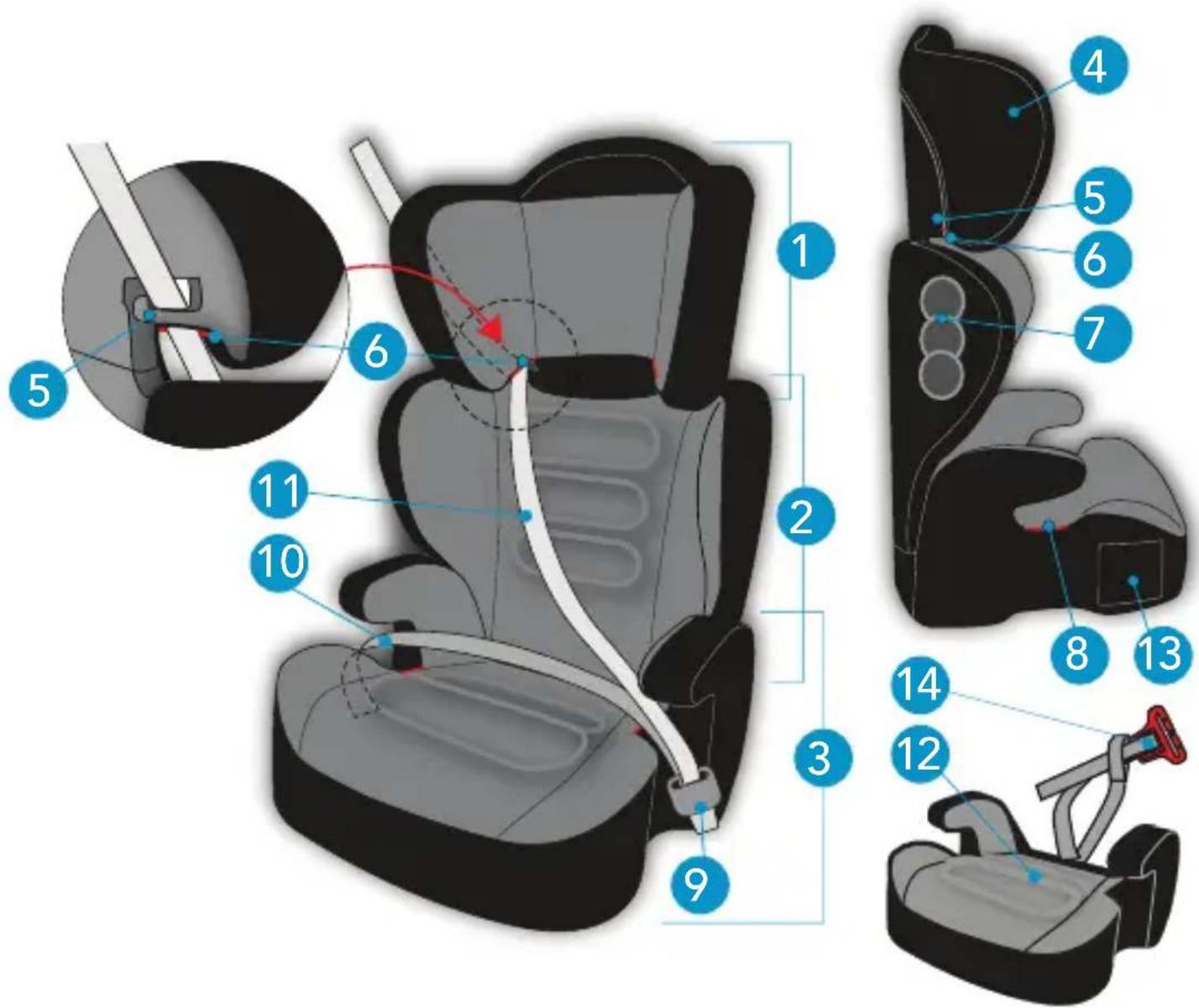
1 Adjustable headrest
2 Backrest
3 Booster
4 Lining
5 Diagonal seat belt hook
6 Diagonal belt guide
7 Label with installation instructions
8 Lap belt guide
9 3-point seat belt buckle
10 Lap belt
11 Strap (3-point seat belt)
12 Pocket for storing the user manual
13 Label with installation instructions
14 Strap
WARNINGS / GENERAL NOTES
Can only be installed if the approved vehicles are equipped with three-point seat belts with retractor, approved according to UN/ECE Regulation no.16 or other equivalent standards.
INSTRUCTIONS FOR USE
IMPORTANT: Read these instructions carefully and keep this manual together with the child seat, storing it in the pocket located on the base, for future reference.
WARNING: For the safety of your child, it is vital that the belt is secured correctly, as shown in red. See the adhesive label with the instructions on the side of the product.
WARNING
- This is a “universal” child restraint system. It is approved under regulation no.44, series of amendments 04, and is intended for general use on vehicles. It can be adapted to most vehicle seats, but not at all.
- The restraint system can be adapted correctly if the manufacturer has declared in the vehicle manual that the vehicle can accommodate a “universal” type restraint system for children in this age group.
- This child restraint system has been classified for "universal" use under more stringent conditions than those applied to previous models without this warning.
- It is only suitable if the approved vehicles are equipped with lap/three-point/static/with retractor seat belts, approved according to UN/ECE Regulation no.16 or other equivalent standards.
- If in doubt, contact the manufacturer of the child restraint, or the retailer.
GENERAL NOTES:
- This product should only be used on a forward-facing seat which is equipped with an automatic 3-point seat belt, approved in accordance with ECE Regulation no.16 or other equivalent standards.
- This product can be placed either on the front or rear passenger seat. However, it is preferable to fit it on the rear seat. DO NOT use it on the front seat where airbags are fitted, as this can be dangerous. This risk does not apply to the side airbags.
- If placed on the front passenger seat, the car seat must be secured in the vertical position.
• The product is approved in accordance with the most stringent European
WARNINGS / GENERAL NOTES
standards on safety and is suitable for children weighing between 15 and 36 kg (from about 3 to 12 years of age).
• After an accident, the car seat may no longer meet the safety requirements because of the damage sustained, even if this is not immediately visible. It is therefore recommended that you replace it.
- Only the manufacturer can ensure that the seat complies with the safety requirements, provided it is an original product. It is strongly recommended that you do not use the product second-hand because the details of its previous use are unknown.
• Make sure that luggage or other objects are immobilised, as these may be dangerous in the event of an accident.
• Never lubricate the moving components of this car seat.
Additional instructions
- Do not use the product without the lining. In view of its importance for safety purposes, it is advisable to always use the original lining.
• Always secure the car seat using a seat belt, even when it is not in use. Sudden braking may cause injury to other passengers if the car seat is not fixed or positioned securely.
• Make sure that the car seat does not sustain any damage due to being placed under heavy objects, or due to reclined front seats or slamming the passenger door, etc.
• Do not alter the product in order that its overall safety is not compromised. - If subjected to high temperatures, the plastic parts may be hot to the touch. You are therefore advised to cover the car seat if you leave your car parked in the sun.
- It is recommended that you do not remove the product logo, to avoid damaging the lining.
• Use the car seat even for short journeys, as most accidents occur in these cases.
• Before purchasing this product, check that the car seat is compatible with your car. - During long journeys, it is advisable to take short breaks, so that your child can move around freely for a few minutes.
- Set a good example by always wearing your seat belt.
• Never let your child play with the buckle of their seat belt.
• Children must always have their seat belt fastened and must never be left unattended. - NEVER leave the child placed in the seat while the car is parked, particularly if it is exposed to direct sunlight or on a hot day.
Start... in the car
- This product must be used with a 3-point automatic seat belt. Do not use with a 2-point seat belt.
- This product can be fixed safely to most passenger seats equipped with a seat belt. In some cases, the belt buckle may be too long and sit too high above the base of the product, which cannot be safely secured. In this case, choose another location inside the car.
- If placed on the front passenger seat, the car seat must ALWAYS be secured in the VERTICAL POSITION.
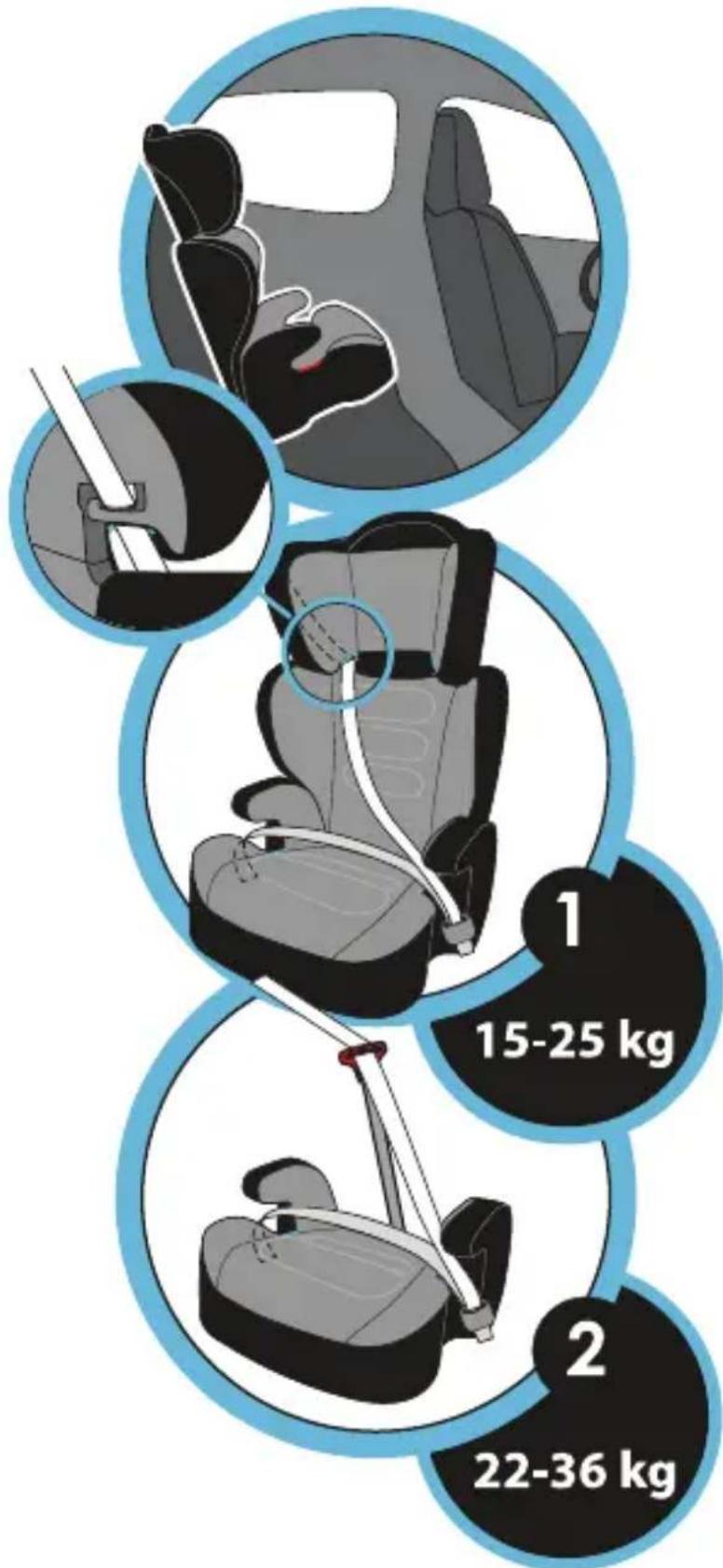
Installing the car seat in a car equipped with three-point seat belts (1-2 pag. 4)
Follow the instructions shown on the label placed on the side of the backrest. It is recommended that you attach the car seat to the rear passenger seat, facing forwards.
The car seat consists of three components: an adjustable headrest, a backrest and a booster.
1: The complete seat is only recommended to be used for children weighing at least 15 kg. Remove the headrest from the chosen passenger seat if it prevents the car seat from being installed correctly.
2: For children weighing 22 kg, it is POSSIBLE to use the car seat as a booster, without the backrest. For children weighing 25 kg, it is COMPULSORY to use the car seat as a booster, without the backrest.
Placing your child in the car seat (illustrations from A to J)
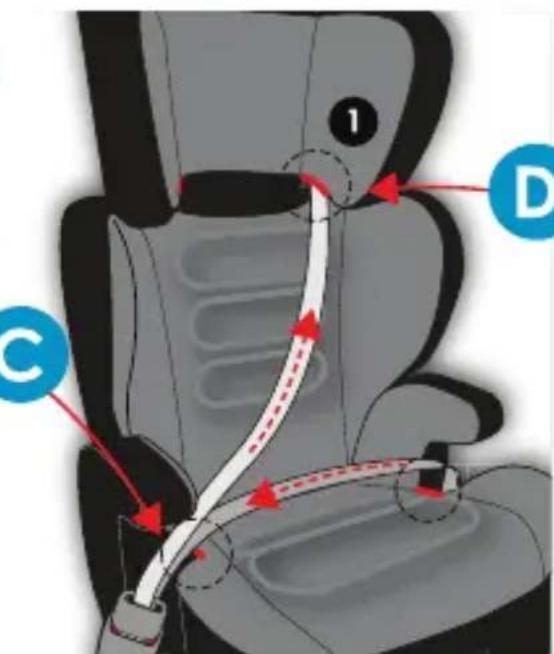
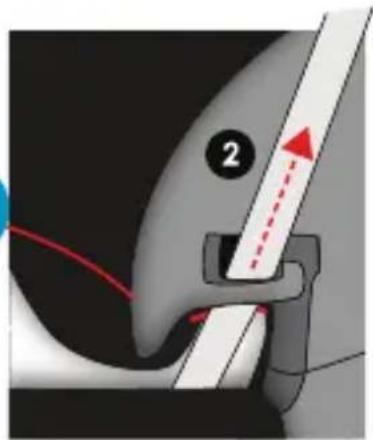
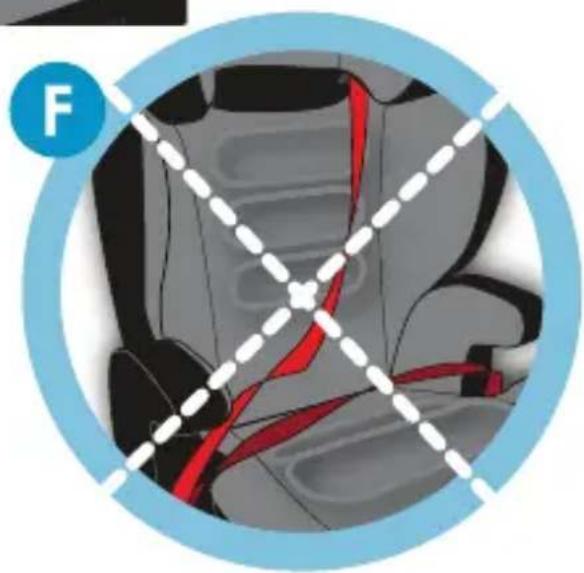
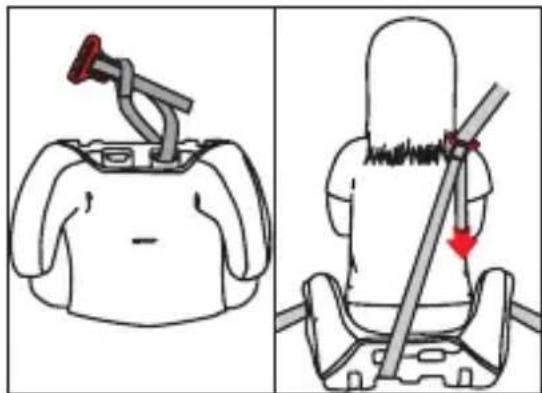
Position the car seat so that the backrest sits firmly against the back of the passenger seat. Make sure that the product has not been placed on the seat belt buckle (B). Position the seat belt around the child. Pass the lap belt under both armrests (following the directions shown in red on the booster). Insert the tongue of the buckle into the seat belt buckle (C1) and tighten the lap belt so that it fits closely (C2). Pass the strap back under the armrest and then above the shoulder through the belt loop (shown in red) on the headrest (D1). For greater safety: pull the strap upwards tightly (D2). Make sure that the belt is not twisted (F).
CHILD
Checking the correct height of the headrest (E)
Before use, it is recommended that you adjust the car seat headrest by lifting it up 2 cm, so that it is in the correct position, to ensure maximum safety.
To make sure that you have adjusted the headrest to the correct height, check that the loop of the belt is placed slightly above the child's shoulders (at a distance of between 0.5 and 2.5 cm). You can adjust the height of the headrest by holding the backrest with one hand and pulling the headrest upwards (or pushing it down) with the other, gripping the upper part. You will hear a "click" when it is positioned at the desired height.
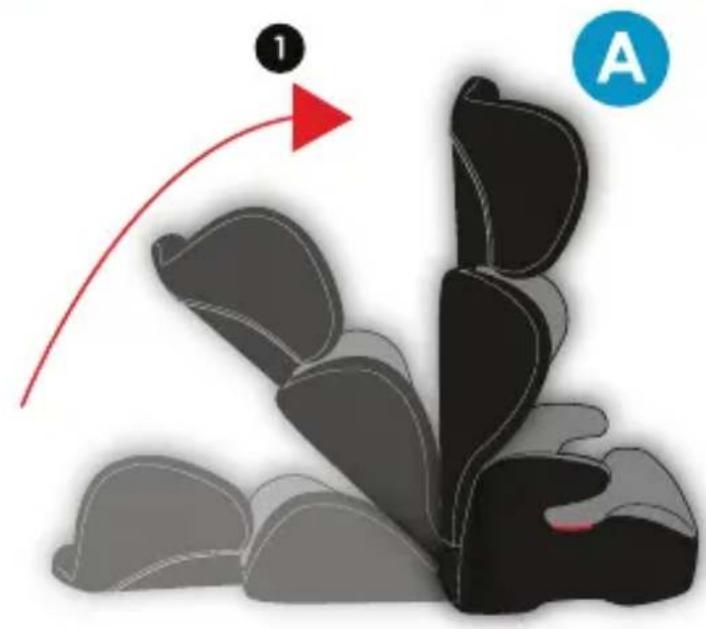
Removing the backrest from the booster (G)
Push the backrest (and the headrest) downwards until you feel some resistance. Gently push the backrest until it is completely lowered (G1), and then remove it by pulling the hooks out from the booster openings (G2).
Installing the booster (H)
Position the seat belt around the child. Pass the lap belt under both armrests (following the directions shown in red on the booster). Insert the tongue into the seat belt buckle (H1) and tighten the lap belt so that it fits closely (H2).
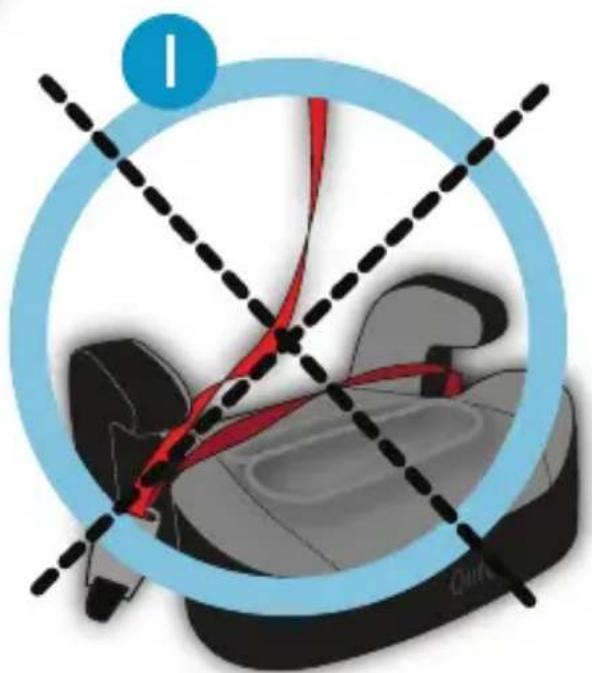
Pass the strap back under the armrest and then over your child's shoulder. For greater safety: pull the strap upwards 13 tightly (H2). Make sure that the belt is not twisted (I).
Loop for the booster strap (J)
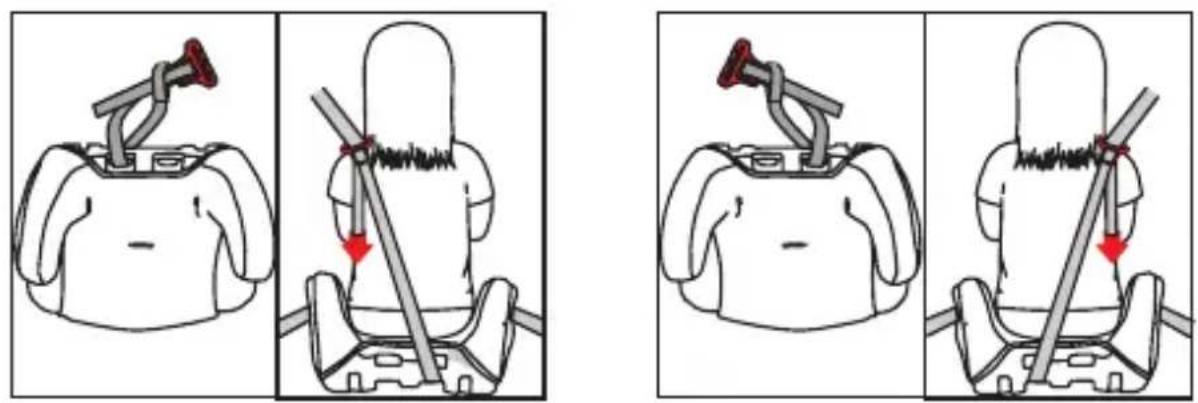
Attach the belt adapter to the base, as shown in the illustration. Follow the arrow to adjust the belt to the desired length.
IMPORTANT: When used alone as a booster, it is important to remember that the position of the strap guide depends on the position of the vehicle's seat belts, as
HOW TO SECURE YOUR CHILD
shown in the illustration above.
Insert the vehicle strap into the guide marked in red and adjust the belts to the desired position. Finally, fasten the belts of the vehicle. Make sure that the diagonal and lap belts are underneath the armrest.
- The tighter the belts, the more protected your child will be. If your child feels that they are too tight, check whether you need to adjust the straps by making them higher. The distance between the seat belt loop and your child's shoulders must be between 0.5 and 2.5 ~cm .
• The seat belt should never be twisted.
• If the tongue does not click when inserted into the buckle, unclip it and try again.
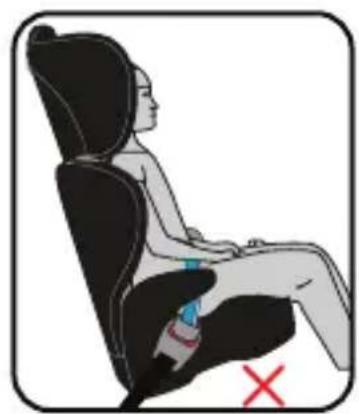
• Make sure that the lap belt is positioned as low as possible so that the sides are properly secured.
- Do not alter or modify the seat without prior authorisation by the approval authority.
• Installing the car seat without following the instructions carefully may cause hazards.
- The vehicle's seat belt buckle must be positioned so that it does not touch the main anchoring point of the car seat. If the seat belt buckle is too long, the car seat is not suitable for the seat chosen. Please contact the manufacturer if you have any queries.
natural_image
Illustration of a person seated in a chair with a red X mark indicating a medical or safety symbol (no text or labels present)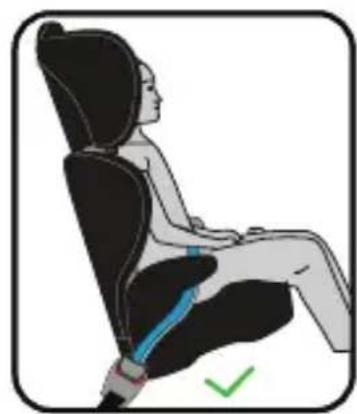
natural_image
Illustration of a seated person wearing a seatbelt and holding a blue belt, with a green checkmark indicating a safety or comfort condition (no text or symbols present)- Do not use anchoring points different to those indicated in this manual and marked visually on the restraint device.
• The instructions for use must be kept in the storage compartment of the car seat.
- DO NOT use this child restraint device after 10 years from the date of manufacturing.
CLEANING AND MAINTENANCE
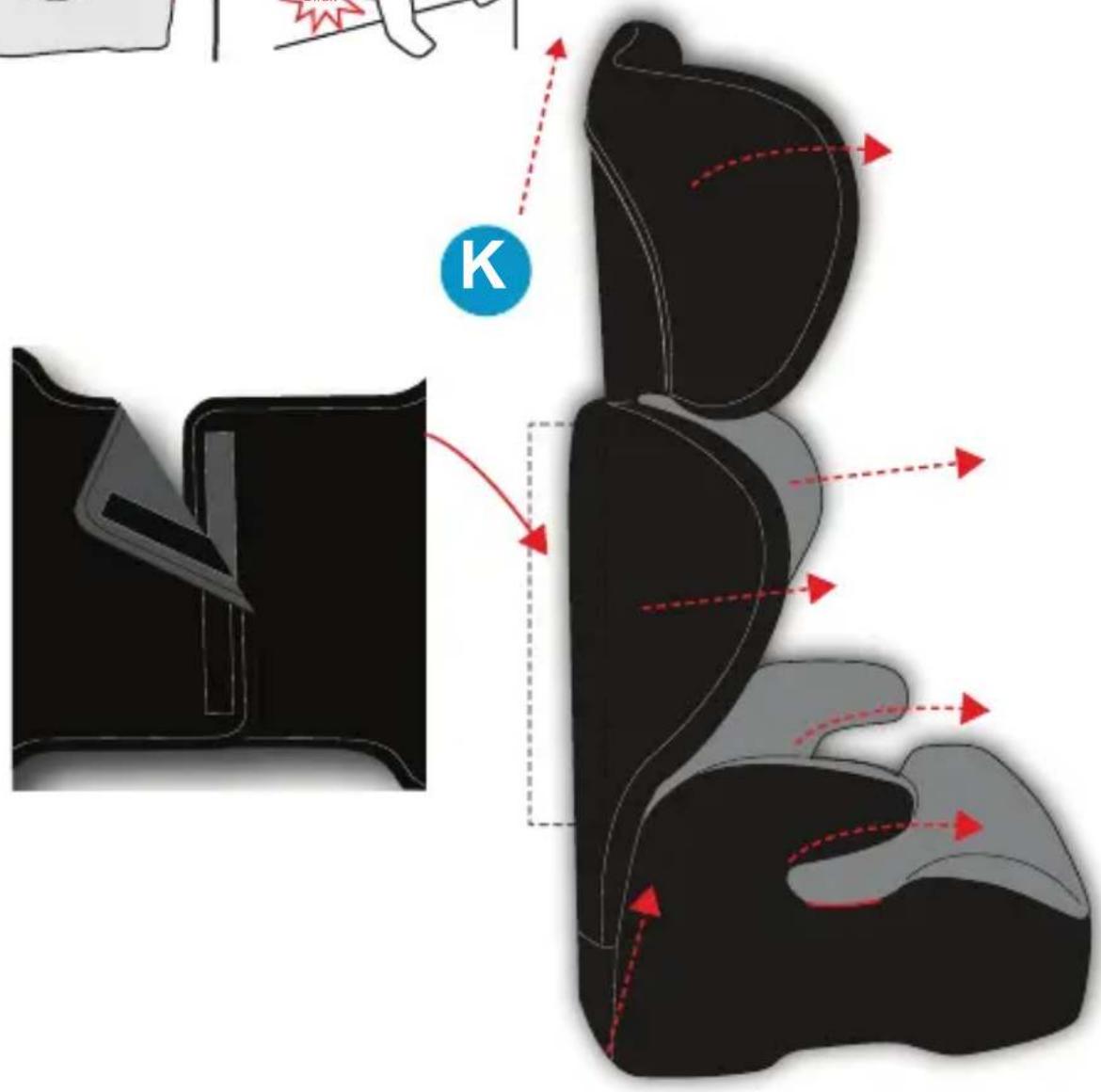
Removing the lining (K)
Headrest: remove the lining from the upper part of the headrest. Make sure that the foam padding remains fixed in position.
Backrest: open up the velcro fastening on the back of the lining and remove it from both the lumbar supports.
Booster: remove the lining from the armrests by pulling it towards you.
To replace the lining, follow the instructions above in reverse order. Make sure that the headrest loops (D2) do not have obstructions that prevent the strap from being passed through freely.
Maintenance
This product requires regular maintenance by the user.
Washing
Clean the plastic parts with a damp cloth and mild detergent and then dry them carefully. Do not use abrasive substances. The lining can be washed by hand or in a washing machine using a programme for delicate items (at a maximum temperature of 40^ C). Do not dry clean and NEVER place in a tumble dryer (see also the washing instructions).

FORMAL GUARANTEE
The contents of this document as stated below will come into effect as from 01.01.2005 and replace, on every account and in full, any previous message referring to the guarantee provided by Foppa Pedretti S.p.A. FORMAL GUARANTEE
Foppa Pedretti S.p.A. the head office of which is located at n. 11 Via Volta, Grumello del Monte (Italy), guarantees directly to the Consumer that this brand new product is free of faults with regard to the materials, design and manufacture and that it complies with the characteristics as declared by the manufacturer.
This formal guarantee is valid in all Member Countries of the European Union and it neither excludes nor limits the Consumer's rights in accordance with mandatory measures provided for by the law with regard to the Retailer of the Product.
To take advantage of this formal guarantee, the Consumer must return the faulty product to the Retailer, presenting to the same the proof of purchase of the Product which must clearly show the Retailer's address, the date of purchase of the Product with the Retailer's stamp and signature and an indication of the Product itself or, alternatively, the receipt which must not have been altered and which must clearly show the same information as that referred to above.
The formal guarantee is valid for twelve (12) months from the date of purchase of the Product.
During this period, Foppa Pedretti S.p.A. will repair or replace the faulty product, at its own discretion. The formal guarantee is granted to the end buyer of the Product (Consumer) and it neither excludes nor limits the mandatory rights of the Consumer as provided for by the law and/or the rights that the Consumer may have with regard to the Dealer/Retailer of the Product.
EXCLUSIONS TO THE FORMAL GUARANTEE.
The formal guarantee is excluded in the case of damage caused to the Product for the following reasons: if the product is used in a way that does not comply with the information contained in the use and assembly instruction sheet, if the product is knocked or dropped, if the Product is exposed to humidity or extreme heat or environmental conditions, or to sudden changes in the same, corrosion, oxidization, unauthorized alterations or repairs to the Product, repairs using unauthorised spare parts, improper use, improper maintenance or failure to carry out the same, improper maintenance compared to the information given on the use and assembly instruction sheet, incorrect assembly, accidents, damage caused by food or drink, damage caused by chemical products, cases of force majeure.
In any case, Foppa Pedretti S.p.A. declines all responsibility for damage caused to persons or to property, other than the Product, when such damage is caused by a failure to comply with the instructions/advice/warnings cont a ined in the manua l or, alternatively, in the use and assembly instruction sheet provided with each Product for the owner/user. (Purely as an example, in the case of a cot: "Check your baby constantly. Make sure that the sheets and blankets do not cover the baby's head...").
to property when the breakage of its products is due to a deterioration in the components of the Product that are subject to wear. All the components of the Product made of plastic are considered to be components subject to wear.
TABLE DES MATIÈRES
natural_image
Illustration of a person seated in a chair with a red X mark indicating a medical or safety symbol (no text or labels present)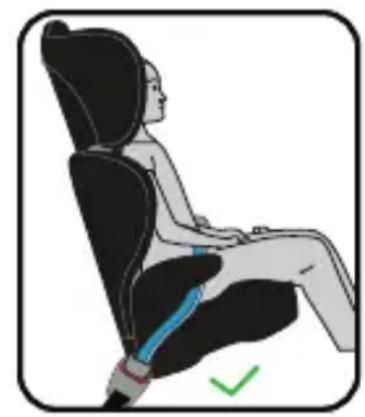
natural_image
Illustration of a person seated in a chair with a blue belt and green checkmark indicating a location or safety marker (no text or symbols present)EXCLUSIONS DE LA GARANTIE CONVENTIONNELLE.
natural_image
Illustration of a person seated in a chair with a blue object on the seat, marked with a red X (no text or symbols present)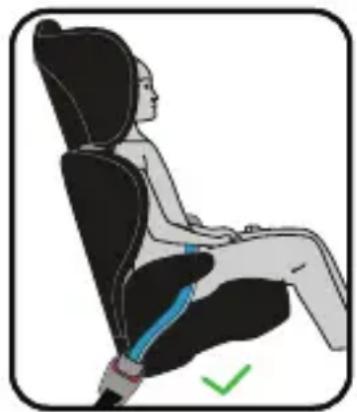
natural_image
Illustration of a person seated in a chair with a blue belt and green checkmark indicating a correct posture (no text or symbols present)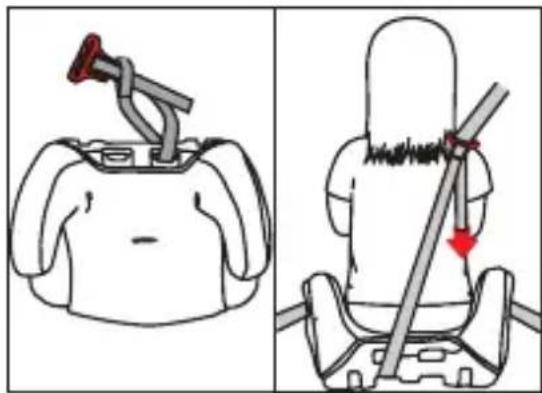
natural_image
Illustration of a person seated in a chair with a red X mark indicating a medical or safety symbol (no text or symbols present)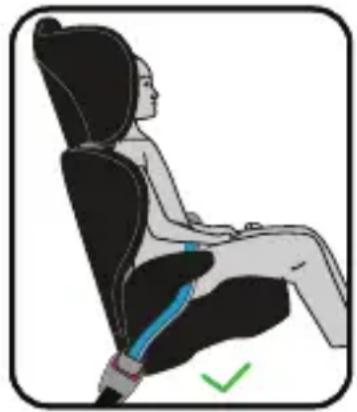
natural_image
Illustration of a person seated in a chair with a blue belt and green checkmark indicating a correct posture (no text or symbols present)
- WARNINGS / GENERAL NOTES
- INSTRUCTIONS FOR USE
- WARNING
- GENERAL NOTES:
- Additional instructions
- Start... in the car
- Installing the car seat in a car equipped with three-point seat belts (1-2 pag. 4)
- Placing your child in the car seat (illustrations from A to J)
- CHILD
- Checking the correct height of the headrest (E)
- Removing the backrest from the booster (G)
- Installing the booster (H)
- HOW TO SECURE YOUR CHILD
- CLEANING AND MAINTENANCE
- Removing the lining (K)
- Maintenance
- Washing
- FORMAL GUARANTEE
- TABLE DES MATIÈRES
- EXCLUSIONS DE LA GARANTIE CONVENTIONNELLE.
Brand : Foppapedretti
Model : Clever
Category : Car seat