IAN 322172 - Bike helmet CRIVIT - Free user manual and instructions
Find the device manual for free IAN 322172 CRIVIT in PDF.


| Product type | Ski and snowboard helmet |
| Brand | CRIVIT |
| Model | IAN 322172 |
| Intended use | Alpine skiing and snowboarding |
| Safety standards | EN 1077:2007 Class B, CE certification by TÜV Süd (No.0123) |
| Shell material | ABS |
| Damping layer | Impact-absorbing foam |
| Available sizes | S/M (56-59 cm) and L/XL (59-62 cm) |
| Ventilation system | Adjustable in 3 positions (open, semi-open, closed) |
| Headband adjustment | Continuous circumference adjustment knob + height adjustment in 3 positions |
| Chin strap | Adjustable with multi-level safety buckle and load-distributing strap |
| Ear pads | Removable, with integrated headphone pocket |
| Ski goggle clip | Yes |
| Inner padding | Removable, hand washable up to 30°C |
| Care | Clean with mild detergent and a soft cloth; do not use solvents |
| Manufacturing date | 07/2019 |
| Recommended service life | 5 years maximum after manufacturing date |
| Warranty | 3 years from purchase date (excluding normal wear) |
| Weight | Approximately 450 g (estimated) |
| Package contents | Helmet, storage bag, user manual |
Frequently Asked Questions - IAN 322172 CRIVIT
User questions about IAN 322172 CRIVIT
0 question about this device. Answer the ones you know or ask your own.
Ask a new question about this device
Download the instructions for your Bike helmet in PDF format for free! Find your manual IAN 322172 - CRIVIT and take your electronic device back in hand. On this page are published all the documents necessary for the use of your device. IAN 322172 by CRIVIT.
USER MANUAL IAN 322172 CRIVIT
text_image
PDF ONLINE www.lidl-service.comSKI- UND SNOWBOARDHELM SKI & SNOWBOARDING HELMET CASQUE DE SKI ET DE SNOWBOARD
DE AT CH
SKI- UND SNOWBOARDHELM
Gebrauchsanweisung
FR BE
CASQUE DE SKI ET DE SNOWBOARD
Instructions for use
NL BE
SKI- EN SNOWBOARDHELM
Gebruiksaanwijzing
CZ
LYŽAŘSKÁ A SNOWBOARDOVÁ HELMA
Návod k použití
CE
IAN 322172_1901
A
text_image
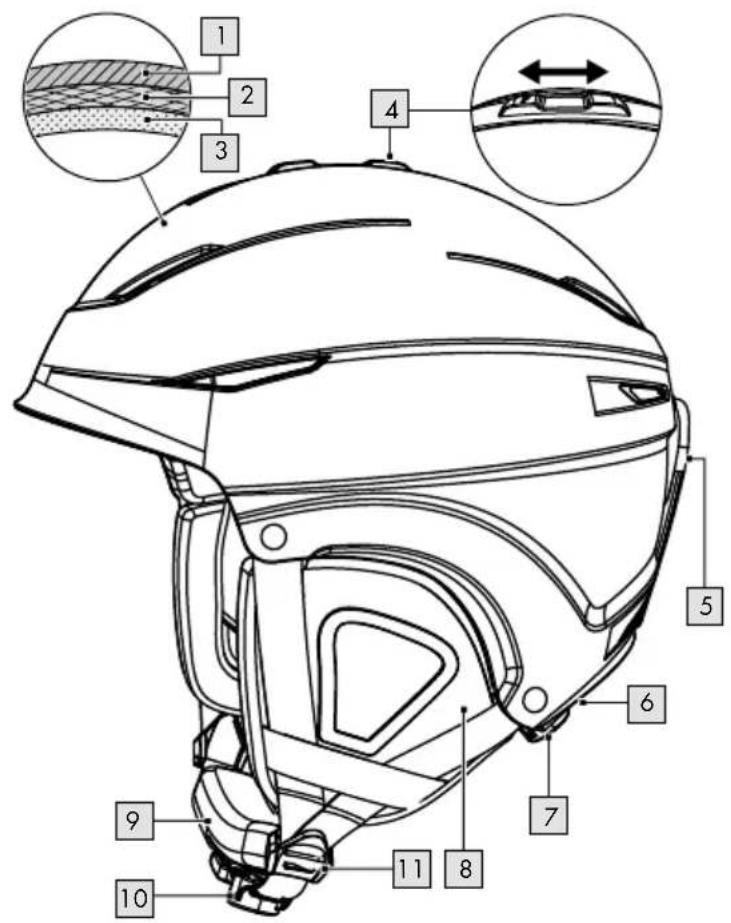
Technical diagram of a helmet with numbered parts and cross-sectional views highlighting structural details.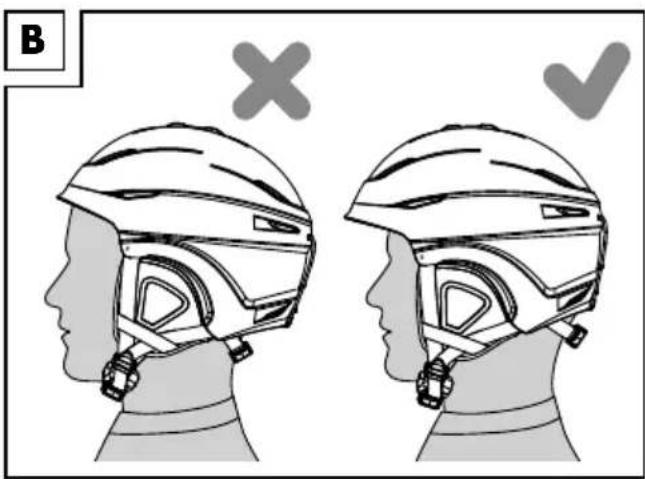
text_image
B × ✓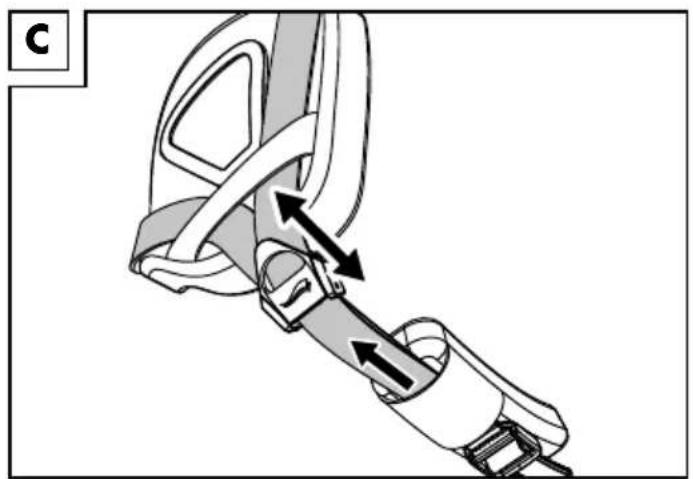
natural_image
Mechanical assembly diagram showing a belt drive mechanism with arrows indicating motion (no text or symbols)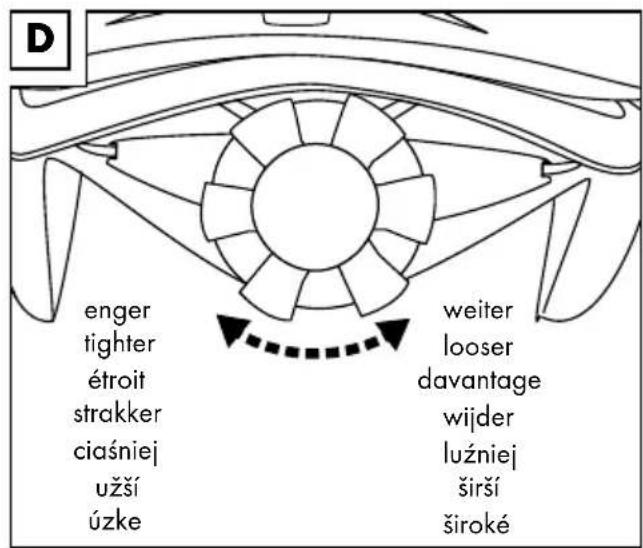
text_image
D enger tighter étroit strakker ciaśniej užší úzke weiter looser davantage wijder luźniej širší široké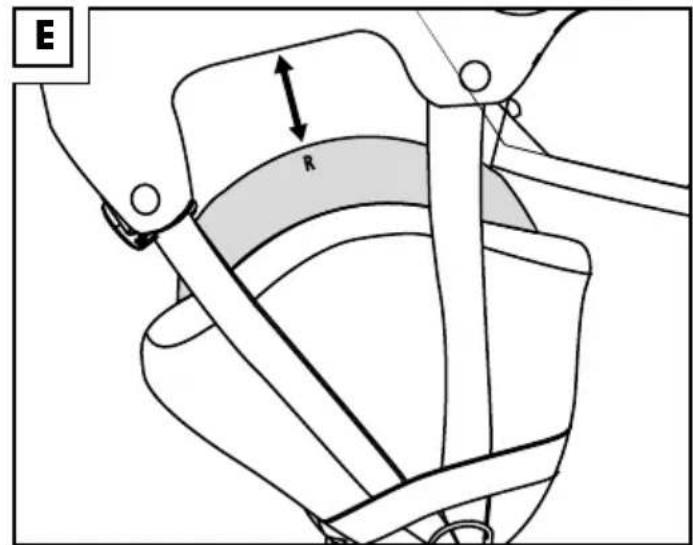
text_image
E R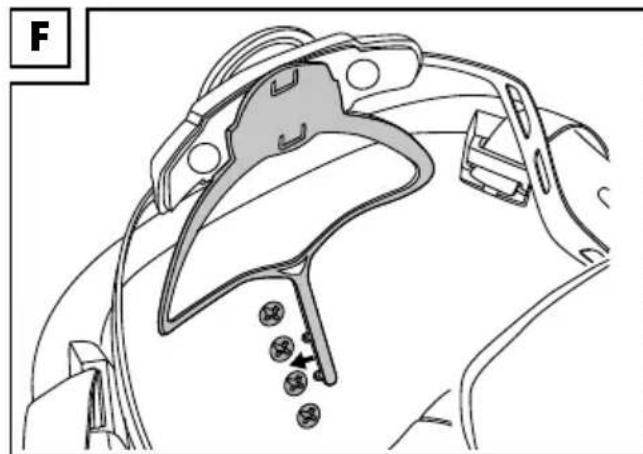
natural_image
Technical line drawing of a mechanical component with no visible text or symbols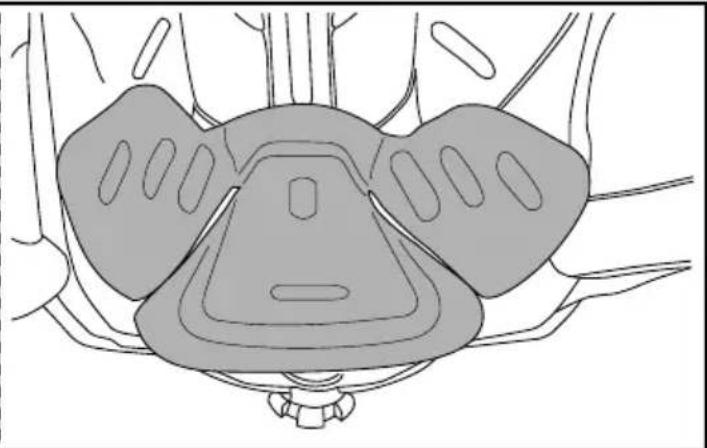
natural_image
Anatomical line drawing of a pelvic region with no visible text or labels
For your own safety we recommend reading and following these instructions for use in their entirety. Keep them for reference!
You have chosen to purchase a high-quality product. Familiarise yourself with the product before using it for the first time.

Read the following instructions for use carefully.
Use the product only as described and only for the given areas of application. Store these instructions for use carefully. When passing the product on to third parties, please also hand over all accompanying documents.
Important information
Before using your new helmet for the first time, please read the following instructions and information carefully.
This helmet was designed for skiing and snowboarding and was manufactured using state-of-the-art technology. However, despite the highest safety standards injuries may occur in the event of severe accidents. In some cases the impact may be so strong that the helmet cannot effectively protect the user from head injuries. A Class A helmet is a high-performance safety helmet for skiers and snowboarders. A Class B helmet is a helmet for skiers and snowboarders that is subject to somewhat less stringent requirements. For this reason a Class B helmet can offer more ventilation and comfort at no great cost to safety. Class A and Class B helmets are intended for alpine skiers, snowboarders and similar groups. Class A helmets offer relatively more protection. Class B helmets can offer more ventilation and better hearing, but protect a smaller portion of the head and offer a lesser degree of penetration resistance. This ski helmet is designed for use with ski goggles.
Make sure that your ski goggles fit exactly into the helmet recess and do not push down onto the bridge of the nose when you have tightly fastened the helmet.
Parts list (Fig. A)
- ABS helmet shell
- Damping layer
- Comfort padding
- Ventilation system
- Ski goggles clip
- Neck padding
- Size adjustment system
- Ear padding with headphones pocket
- Chin strap
- Multi-step snap-in safety clip
- Strap divider
Symbols used

Date of manufacture (month/year): 07/2019

integrated headphones pocket
Conformity with the requirements pursuant to Regulation (EU) 2016/425 for personal protective equipment (PPE) as well as with the requirements of the harmonising technical standard EN 1077:2007 Class B has been certified by the issuing body TÜV Süd Product Service GmbH, Ridlerstraße 65, 80339 Munich, notified body no. 0123. The full declaration of conformity is available under http://www.conformity.delta-sport.com/
Intended use
This product was made for alpine skiers and snowboarders. It is not suitable for other types of sports or riding motorcycles.

Safety information
- The helmet must fit tightly and the chin strap must be tightly locked.
- Do not push the helmet to the back of your neck, otherwise your forehead will not be protected. The strap must run along the jaw bones (Fig. B).
- Do not wear any head covering under the helmet.
- Make sure that air circulation is not restricted.
-
No changes may be made to the helmet, its structure or its individual components.
-
The helmet may not be painted on, nor may stickers or labels be applied to it.
- The helmet is supposed to protect the head in the event of an impact.
After just one (even light) impact this protection is no longer guaranteed. The helmet may no longer be used after a fall or impact. It must be made unusable and disposed of, even if it does not exhibit any visible damage.
- Solvents or abrasives containing petroleum may never be used to clean the exterior or interior of the helmet.
Always use pH-neutral cleaning agents diluted in clear water; carefully rub with a soft cloth. Afterward wipe dry with a lint-free cloth. The padding can be cleaned with a little soap and a soft brush.
- Only use original replacement parts for your helmet.
- The helmets may not be used by children when climbing or playing other games in which there is a risk of strangulation!
- The lifespan of the helmet depends on use. However, the helmet should be replaced five years after the date of manufacture (07/2019) at the latest.
Earphones / headphones
Follow the safety information below for the use of ear- or headphones:

Life-threatening hazard!
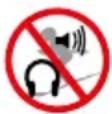
- Never use headphones or earphones while skiing or snowboarding!
- While ascending the mountain or during waiting times, only set the volume to a level at which you can hear all ambient noises and announcements.
• Non-adherence to announcements, such as those from the mountain rescue service, results in a life-threatening hazard! - Make sure that the headphone cables do not disturb you and are not extending from your body. There is a "risk of strangulation" if, for example, they are hanging from the lift or on other skiers.
- The warning signals from the piste bashers and other skiers on the slope can be missed and not perceived.
The sense of balance can also be impaired.
Selecting helmet size
natural_image
Simple line drawing of a human head with arrows indicating rotational motion around the head (no text or symbols)S/M 56-59cm
L/XL 59-62cm
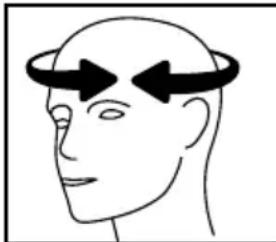
- Measure the circumference of your head and select the helmet size on that basis. Try out multiple helmets before you decide. The skin on your temples should ideally move with the helmet when putting it on.
- Make sure that the helmet does not move around freely on the head, even without the chin strap pulled tight.
- The chin strap must be locked tightly to ensure a secure fit. It is sitting correctly if it is difficult for you to push your fingers beneath the chin strap. But you must be able to comfortably breathe, swallow and turn your head.
- The helmet is sitting correctly if it is tight but still comfortable on the head.
- If the helmet is too big (wobbles, cannot be adjusted tightly enough) or too small (presses, leaves the forehead exposed), select a helmet in the next bigger or smaller size.
- If the helmet cannot be adjusted correctly, it may not be used.
Ventilation system
You can regulate ventilation with the slider. There are three possible settings: open, half open and closed (Fig. A) (4).
Setting the chin strap
You can use the loop to set the general length of the chin strap. You can adjust the position of the chin strap with the strap divider clip. But make sure that the clip divider does not bother you. We recommend positioning it at the end of the ear padding (Fig. C).
Setting headband length
You can use the setting dial to smoothly adjust the helmet to your head circumference in order to ensure an optimal fit of the helmet. Turn the dial left to loosen the headband of the helmet, and right to tighten the headband (Fig. D).
Setting headband height
The height of the headband system can be set separately. There are 3 different possible height settings.
Pull out the comfort padding fastened to the back of the helmet with Velcro. Pull out the connecting pins of the headband system from the locking points in the ABS bowl (Fig. F). You can now fasten the pins of the headband system higher or lower in the other locking points. Press the pins firmly enough into the locking points that they audibly and tangibly lock in place. Both pins must always be locked. Place the padding as shown in Fig. F.
Removable ear padding (Fig. E)
Pull hard on the ear padding until the tabs of the ear padding have loosened from the helmet. Open up the chin strap and remove the ear padding. To apply the ear padding pull the ends of the opened chin strap through the loops of the ear padding, and insert the tabs into the helmet slot until they audibly lock. Pay attention to the left and right marking (L/R) on the respective ear pad.
Maintenance and care
Regular maintenance and cleaning contributes to the safety and preservation of the skateboard.
- Carefully rub away stubborn stains with a soft cloth, lukewarm water and a pH-neutral cleaning agent.
- The padding can be cleaned with a little soap and a soft brush.
- IMPORTANT! Never clean the product with harsh cleaning agents.
Inner padding
• Hand wash up to 30 °C.

30 °C/86 °F


- Let dry at room temperature.
Transportation
Transport the helmet in a box to protect it from being crushed (e.g. in a suitcase or boot of a car).
Storage
When not in use store the helmet in the bag provided and in a dry, well ventilated area at room temperature. Avoid heat sources.
Disposal
Dispose of the article and the packaging materials in accordance with current local regulations. Packaging materials such as foil bags are not suitable to be given to children. Keep the packaging materials out of the reach of children.

Dispose of the products and the packaging in an environmentally friendly manner.

The recycling code is used to identify various materials for recycling.
The code consists of the recycling symbol – which is meant to reflect the recycling cycle – and a number which identifies the material.
Notes on the guarantee and service handling
The product was produced with great care and under constant supervision. You receive a three-year warranty for this product from the date of purchase. Please retain your receipt.
The warranty applies only to material and workmanship and does not apply to misuse or improper handling. Your statutory rights, especially the warranty rights, are not affected by this warranty. With regard to complaints, please contact the following service hotline or contact us by e-mail. Our service employees will advise as to the subsequent procedure as quickly as possible.
We will be personally available to discuss the situation with you. Any repairs under the warranty, statutory guarantees or through goodwill do not extend the warranty period. This also applies to replaced and repaired parts. Repairs after the warranty are subject to a charge.
IAN: 322172_1901
GB Service Great Britain Tel.: 0800 404 7657 E-Mail: deltasport@lidl.co.uk
IE Service Ireland Tel.: 1890 930 034 (0,08 EUR/Min., (peak)) (0,06 EUR/Min., (off peak)) E-Mail: deltasport@lidl.ie
Félicitations!
natural_image
Simple line drawing of a human head with arrows indicating rotational motion around the head (no text or symbols)S/M 56 - 59 cm
L/XL 59 - 62 cm