
5B90S8990 - Oven BLAUPUNKT - Free user manual and instructions
Find the device manual for free 5B90S8990 BLAUPUNKT in PDF.
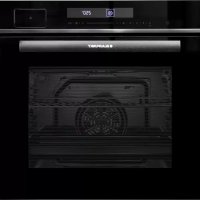



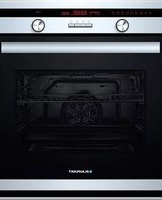
| Product type | Built-in oven |
| Brand | Blaupunkt |
| Model | 5B90S8990 |
| Usable volume | 72 L |
| Weight | 45 kg |
| Power supply | 220-240 V ~, 50-60 Hz, 3.15 kW |
| Energy efficiency class | A+ |
| Consumption (natural convection) | 1.06 kWh/cycle |
| Consumption (fan-assisted) | 0.63 kWh/cycle |
| Cooking modes | Natural convection, fan-assisted, fan-assisted ECO, natural convection + forced air, radiant heat, dual grill + forced air, dual grill, pizza mode, bottom heat, defrosting, dough rising, temperature probe |
| Steam assistance | Yes, 3 levels |
| Automatic programs | 11 recipes (chicken, shrimp, pizza, etc.) + descaling and cleaning |
| Fast preheating | Yes |
| Timer | Yes |
| Child safety | Yes, 3-second touch lock |
| Interior lighting | LED |
| Temperature probe | Yes, removable |
| Included accessories | Cooking grid, drip tray |
| Cleaning | By hydrolysis (steam) and automatic descaling |
| Removable door | Yes, with panel removal |
| Side racks | Removable, 5 levels |
| Maximum temperature | 250 °C |
Frequently Asked Questions - 5B90S8990 BLAUPUNKT
User questions about 5B90S8990 BLAUPUNKT
0 question about this device. Answer the ones you know or ask your own.
Ask a new question about this device
Download the instructions for your Oven in PDF format for free! Find your manual 5B90S8990 - BLAUPUNKT and take your electronic device back in hand. On this page are published all the documents necessary for the use of your device. 5B90S8990 by BLAUPUNKT.
USER MANUAL 5B90S8990 BLAUPUNKT
2 SAFETY INFORMATION 2 Intended purpose 2 Warning 4 Causes of damage
5 INSTALLATION
6 Operating elements 7 Before using the appliance 8 Operating modes 9 Using your appliance
14 ACCESSORIES 16 ENERGY-EFFICIENT USE 17 ENVIRONMENT 17 HEALTH 17 MAINTENANCE OF YOUR APPLIANCE 20 APPLIANCE DOOR 24 TROUBLESHOOTING 26 CUSTOMER SERVICE 27 TIPS AND TRICKS
29 AUTOMATIC PROGRAMMES 31 RECIPES 31 Cakes 32 Bread and pizza 33 Meat
34 TEST FOOD ACCORDING TO EN 60350-1 35 ENERGY EFFICIENCY ACCORDING TO EN 60350-1 36 COOKING IN "ECO" MODE 36 DATA SHEET (EU 65/2014 & EU 66/2014)
SAFETY INSTRUCTIONS
Intended purpose
Thank you for choosing a built-in oven from Blaupunkt. Please read this manual thoroughly before unpacking your new appliance. Only then will you be able to operate your appliance safely and correctly. We strongly recommend that you keep the manual and installation instructions for future use or for future owners.
The appliance has an earth connection for functional purposes.
The appliance is only intended for installation in a kitchen. Please observe the installation instructions.
After unpacking the appliance, check it for possible damage. Do not connect the appliance if it is damaged. Only an authorized technician may connect appliances without a plug. Damage caused by incorrect connection is not covered by the warranty. Use this appliance indoors only. The appliance may only be used to prepare food and beverages. The appliance must be monitored during operation.
This appliance may be used by children over 8 years of age and by persons with reduced physical, sensory or mental abilities or lack of experience and knowledge provided that they have been instructed in the use of the appliance by a person responsible for them and that they understand and appreciate the risks and dangers involved.
The appliance is not a toy. The appliance may only be cleaned and maintained by children over 8 years of age under the supervision of a responsible adult.
Ensure that the appliance and its power cable are out of reach of children under 8 years of age.
Please always push any accessories into the oven the right way round.
WARNING
Danger of electric shock!
- Incorrectly performed repairs are hazardous. Repairs and the replacement of damaged power cables may only be carried out by one of our trained service technicians. If the appliance is defective, disconnect it from the mains or switch off the circuit breaker in the fuse box. Contact customer service.
- The cable insulation of electrical appliances can melt if they come into contact with hot appliance parts. Never allow the cables of electrical appliances to come into contact with hot appliance parts.
- Do not use high-pressure cleaners or steam cleaners, as this can cause an electric shock.
- A defective appliance can cause an electric shock. Never switch on a defective appliance. If the appliance is defective, disconnect it from the mains or switch off the circuit breaker in the fuse box. Contact customer service.
Risk of burns!
- The appliance becomes very hot. Never touch the inner surfaces of the appliance or the heating elements.
- Always let the appliance cool down.
- Always keep children at a safe distance.
- Accessories and ovenware become very hot. Always use oven gloves to remove accessories or ovenware from the cooking chamber.
- Alcoholic vapours can ignite in the hot cooking chamber. Never prepare food that contains large quantities of liquids with a high alcohol content. Only use small amounts of liquids with a high alcohol content. Always open the appliance door carefully.
Risk of scalding!
- Accessible parts become hot during operation. Never touch the hot parts. Always keep children at a safe distance.
- Hot steam may escape when the appliance door is opened. Depending on the temperature, the steam may not be visible. Do not stand too close to the appliance when opening it. Always open the appliance door carefully. Keep your children away from the hob.
- Water in the hot cooking chamber can produce hot steam. Never pour water into the hot cooking chamber.
Risk of injury!
- Scratched glass in the appliance door can cause cracks. Do not use glass scrapers, strong or abrasive cleaning agents.
- The hinges of the appliance door move when the door is opened and closed. In the process, you could trap your fingers or other parts of your body. Keep your hands away from the hinges.
Risk of fire!
- Flammable objects stored in the cooking chamber may ignite. Do not store flammable objects in the cooking chamber. Never open the appliance door if there is smoke inside. If this happens, switch off the appliance and unplug the power plug from the power outlet and turn off the circuit breaker in the fuse box.
- Opening the appliance door creates a draught. This can cause the oven paper to come into contact with the heating element and catch fire. Do not place any oven paper loosely over the accessories while preheating. Always weigh down the oven paper with a tray or baking tray. Only cover the required area with oven paper. The oven paper must not project over the accessories.
Danger from magnetism!
Permanent magnets are used in the control panel or control elements. They can interfere with electronic implants such as pacemakers or insulin pumps. Carriers of electronic implants must maintain a distance of at least 10 cm from the control panel.
Causes of damage
- Accessories, foil, oven paper or ovenware on the cooking chamber floor: Do not place any accessories on the cooking chamber floor. Do not cover the cooking chamber floor with any kind of foil or oven paper. Do not place any ovenware on the cooking chamber floor if the temperature is set above 50°C. This will result in heat accumulation. This will damage the enamel.
- Aluminium foil: Aluminium foil in the cooking chamber must not come into contact with the door glass. This could lead to a permanent discolouration of the door glass.
- Silicone pans: Do not use pans, mats, covers or accessories containing silicone. This could damage the oven sensor.
- Water in the hot cooking chamber: Do not pour water into the cooking chamber when it is hot. This will produce steam. The change in temperature may damage the enamel.
- Moisture in the cooking chamber: Over a long period of time, moisture in the cooking chamber can lead to corrosion. Allow the appliance to dry after use. Do not keep moist foods in the closed cooking chamber for long periods of time. Do not store food in the cooking chamber.
- Cooling with the appliance door open: After using the appliance at high temperatures, only allow it to cool down with the door closed. Do not allow anything to become jammed in the appliance door. Even if the door is left open only a crack, the fronts of adjacent appliances may be damaged over time. Only allow the appliance to dry with the door open if a lot of moisture has been produced while operating the oven.
- Fruit juice: When baking particularly juicy fruit cakes, do not cover the baking tray too generously. Fruit juice dripping from the baking tray leaves stains that cannot be removed. If possible, use a deep universal baking tray.
- Heavily soiled seal: If the seal is heavily soiled, the appliance door will not close properly. This could damage the fronts of adjacent appliances. Always keep the seal clean.
- Using the appliance door as a seat, shelf or worktop: Do not sit on the appliance door, do not place anything on it, and do not hang anything from it. Do not place cookware or accessories on the appliance door.
- Inserting accessories: Depending on the appliance model, accessories may scratch the door panel when the appliance door is closed. Always insert the accessory into the cooking chamber as far as it will go.
- Carrying the device: Do not carry or hold the device by the door handle. The door handle cannot support the weight of the appliance and may break off.
- If you use the residual heat of the switched-off oven to keep food warm, a great deal of moisture can build up in the cooking chamber. This can lead to the formation of condensation water and cause corrosion damage to your appliance as well as damaging your kitchen. Avoid the formation of condensation water by opening the door or using "Defrost" mode.
INSTALLATION
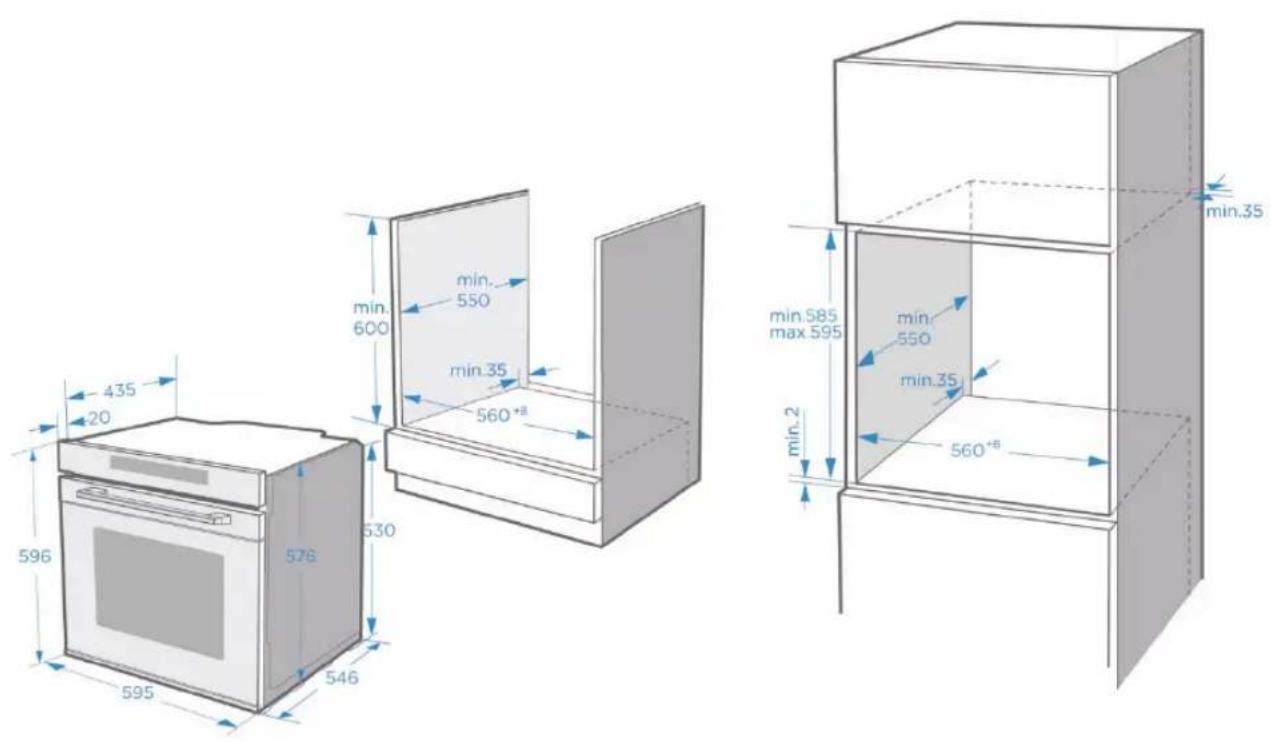
To ensure the safe operation of this appliance, it must be properly installed in accordance with the installation instructions. Damage caused by incorrect installation is not covered by the warranty.
Wear protective gloves during installation to prevent cuts from sharp edges.
Check the appliance for damage before installation. Do not connect it if it is damaged.
Remove all packing material and adhesive foil before turning on the appliance.
The above dimensions are given in mm.
To disconnect the appliance from the power supply if necessary after installation, the plug must be accessible or a switch must be integrated into the fixed wiring.
Warning: To prevent overheating, the appliance must not be installed behind a decorative door.
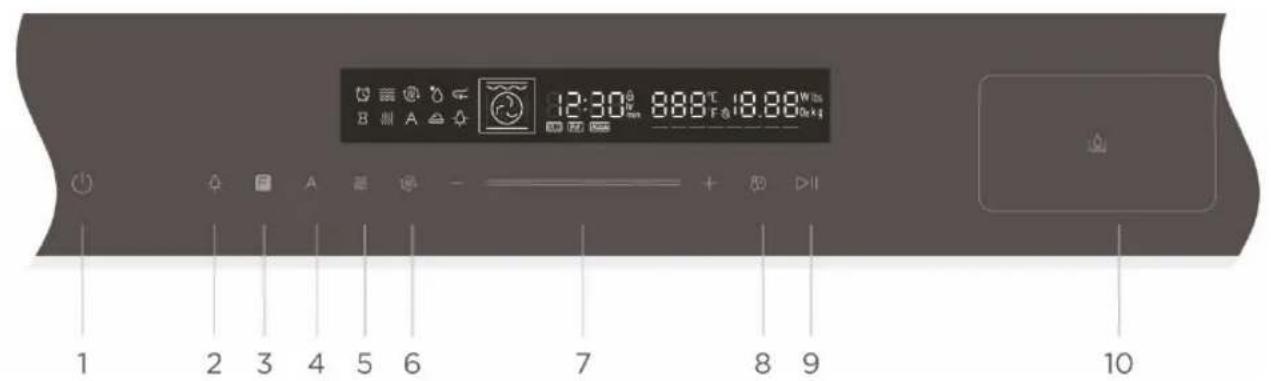
| 1. ON/OFF | Switches the oven on/off. |
| 2. Lamp ON/OFF | Switches the lamp on/off. |
| 3. Oven function | Press this symbol to change the operating mode. Press and hold for 5 seconds to change it quickly. |
| 4. Automatic programmes | Use this option to select automatic programmes or descending and cleaning. |
| 5. Steam support | Steam: Manual addition of steam. |
| 6. Fast preheat | For fast preheating. |
| 7. Smart Slider | You can use the Smart Slider or the “+/-” buttons to change the values shown in the display. |
| 8. Setting the cooking time, clock time and temperature | Set the clock time in standby mode/Switch between time setting and temperature setting. |
| 9. Start/pause | Starts and interrupts the cooking process. |
| 10. Water tank | Water tank for the steam function. The water tank opens after the button is pressed. |
First-time use
Before you use the appliance for the first time to prepare food, you must clean the cooking chamber and accessories.
- Remove all stickers, surface protection films and transport protection parts.
- Remove all accessories and the slide-in strips from the cooking chamber.
- Thoroughly clean the accessories and the guide rails with soapy water and a cloth or soft brush.
- Make sure that the cooking chamber does not contain any packaging residue such as polystyrene balls or pieces of wood, as these can pose a fire hazard.
- Wipe the smooth surfaces in the cooking chamber and on the door with a soft, damp cloth.
- To remove the new odour from the appliance, heat the appliance while it is empty and with the oven door closed.
- Thoroughly ventilate the kitchen when heating the appliance for the first time. Keep children and pets away from the kitchen during this time. Close the door to adjacent rooms.
- Adjust the displayed settings. Please see the next section on how to set the operating mode and temperature.
"Using your appliance" on Page 11
Settings
| Operating mode | |
| Temperature | 250 °C |
| Time | 1h |
After the appliance has cooled down:
- Clean the smooth surfaces and the door with soapy water and a cloth.
- Dry all surfaces.
- Put the guide rails back in place.
Setting the clock time
Before the oven can be used, the clock time should be set.
- After the oven is plugged in, tap the clock symbol to select the time in hours. Use the Smart Slider or the +/- buttons to select the time.
- Tap the clock symbol again. Now use the Smart Slider or the +/- buttons to set the time in minutes.
- Tap the clock symbol again to end the setting process.
NOTE: The clock has a 24-hour display.
Your appliance has various operating modes. To help you choose the right type of heating for your dish, we will now explain the differences and areas of application.
| Operating modes | Temperature | Use | |
| Top/bottom heat | 30~250 °C | For traditional baking and roasting at one level. Especially suitable for cakes with a moist topping. | |
| Hot air | 50~250 °C | For baking and roasting on one or more levels. The heat comes from the ring heater, which evenly surrounds the fan. | |
| Hot Air ECO | 140~240 °C | For energy-saving cooking. | |
| Top/bottom heat + circulation | 50~250 °C | For baking and roasting on one or more levels. The heat from the heating elements in the cooking chamber is evenly distributed by a fan. | |
| Radiant heat | 150~250 °C | For grilling small quantities of food and for browning. Please place the food to be grilled in the middle section under the grill heating element. | |
| Dual grill + circulation | 50~250 °C | For grilling flat food and browning. The fan distributes the heat evenly in the cooking chamber. | |
| Dual grill | 150~250 °C | For grilling flat food and browning. | |
| Pizza mode | 50~250 °C | For pizza and dishes that require a lot of heat from below. The bottom heat and the ring heater are switched on. | |
| Bottom heat | 30~220 °C | For the additional browning of the bases of pizzas, cakes and pastries. The heat comes from the bottom heat. | |
| Defrosting | - | For the gentle defrosting of frozen food. | |
| Dough process | 30~45 °C | For the preparation of yeast and sourdough and for the cultivation of yoghurt. | |
| Temperature sensor | 50~100 °C | For checking the cooking progress of meats such as steak and chicken. | |
Caution!
If you open the appliance door while a process is running, the process will not be stopped. In this case there is a risk of burns!
Notes
- To defrost large portions of food, you can remove the guide rails and place the container on the cooking chamber floor.
- To preheat dishes, remove the guide rails and select the "Hot air grill" and "Circulation" modes with a temperature of 50°C. "Hot air grill" mode should be used if more than half of the cooking chamber floor is covered with the dishes.
- In "Circulation" mode, the fan switches on at certain times during the heating process to ensure optimum heat distribution in the cooking chamber.
Fan
The fan switches on and off as required. Hot air escapes above the door.
Caution!
Do not cover the ventilation slots. This may cause the unit to overheat. To make the unit cool down faster, the fan may continue to run for a while.
USING YOUR APPLIANCE
Cooking with the oven
- After the oven is plugged in electrically, tap the "Oven function" symbol to select functions and use the Smart Slider or the + / - keys to set the cooking temperature.
- Tap the ON/OFF symbol. The oven will start working. If you do not tap the ON/OFF symbol, the oven will display the time again after 5 minutes.
- If you tap during the cooking process, the process will be cancelled.
NOTE: After setting the temperature, tap the clock symbol to set the cooking time.
Fast preheat
You can shorten the preheating time by using the Fast Preheat function. Select a function, and tap the symbol for Fast Preheat. The symbol for Fast Preheat will light up on the display. If Fast Preheat is not available for the selected function, a beep will be heard. Fast Preheat is not available with the "Defrost" and "Dough process" functions.
Changes while cooking
When the appliance is switched on, you can change the operating mode and temperature using the oven function control or the Smart Slider. If no further action is taken after the change for 6 seconds, the oven will accept the change.
If you want to change the cooking time while cooking, tap on and change it using the Smart Slider or the + / - symbol. If no further action is taken after the change for 6 seconds, the oven will accept the change. You cannot make any changes during a cooking process with a specified end time.
If you want to cancel the cooking process, tap
Notes
Changing the operating modes, temperature, or remaining cooking times can have a number of negative effects on the cooking result. We recommend that you avoid doing this – unless you are an experienced cook.
Caution!
After switching on the appliance, it will become very hot, especially inside. Never touch the inner surfaces of the appliance or the heating elements. Use oven gloves to remove accessories or ovenware from the cooking chamber and let the appliance cool down. Keep children at a safe distance to avoid burns.
Timer
Tap to use the timer function. When the set time is up, the oven will signal this with a beep. The first time you tap the symbol, the hours are set. Then tap the symbol again to set the minutes. Tap the symbol once more to end the setting process.
You can set the timer before and during cooking, but if you select the function and temperature, the timer will not be available.
Child lock
Your appliance has a child lock so that children cannot accidentally turn it on or change settings. Press and hold the button for 3 seconds to activate the child lock. Press and hold the button again for 3 seconds to unlock the appliance.
You can activate and deactivate the child lock at any time, regardless of whether the oven is switched on or not. Press and hold the button for 3 seconds to turn the child lock on and off.
When the child lock is on, the symbol is shown in the display.
Temperature sensor
Your oven has a temperature sensor. When you use the temperature sensor, the symbol will light up. The clock will switch to display the temperature setting. You can change this setting using the + and - buttons or the Smart Slider. Then press F, to select the function and temperature.
Next, press to turn on the oven. In this operating mode, the symbol is used to change both the temperature sensor and the core temperature. You can also change the setting during the cooking process.
Notes
- Only use the temperature sensor in connection with food. This way, you can continue to enjoy this accessory for a long time.
- Only use the temperature sensor recommended for this oven.
Steam support
- After setting the desired operating mode, you can add steam support by pressing the button.
- Steam can be added manually during the cooking process by pressing the steam support key.
- The default setting for steam is level 1.
Notes
There are 3 steam levels. The higher the steam level, the more steam is released. Press the steam button once to select level 1. Press twice to select level 2 and three times to select level 3. The light on the right of the display shows the selected level (L01/L02/L03). Press the steam button four times to cancel the addition of steam. This turns off the steam and steam level symbols. Due to vibrations during transport, the water tank may have moved out while opening the packaging. Simply push it back.
Water tank
Refilling the water
1. Press on the water tank. Remove the lid and fill with water.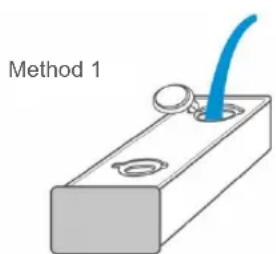
Method 2 2. Press on the water tank. Remove the lid and fill with water.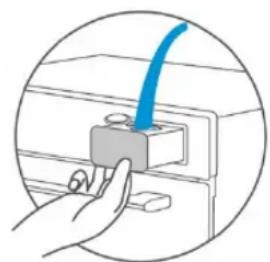
Water tank
Cleaning the water tank
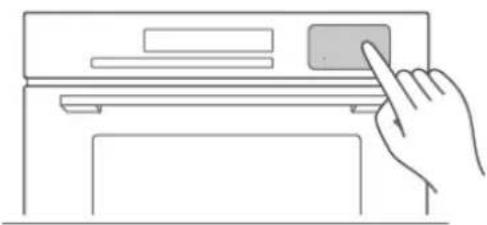
- Press on the water tank and remove it.
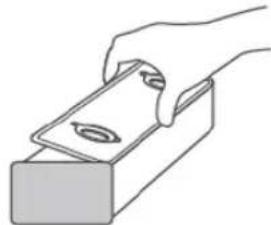
- Remove the cover and clean the water tank.
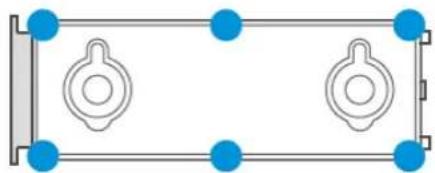
- Replace the cover and lids. Press on the points shown in blue in the illustration. Take care that nothing gets jammed.
Steam cleaning function
This function uses steam to soften deposits inside the cooking chamber, making it easier to clean the cooking chamber.
- Switch on the system. Press on the water tank and remove it. Pour 1000 ml of fresh water into the water tank.
- Push the water tank back in.
- In standby mode, tap the "A" button several times until the display shows "A11". This means that the appliance has switched on the steam cleaning function. The time display will show the standard time of 05:00 min.
- Press to start the program.
Notes
The duration of steam cleaning cannot be set. Press the pause button or open the door to interrupt the cleaning process. Close the door and press the start button to restart the cleaning process.
Automatic deposit removal function
For best cleaning results, we recommend the use of sodium citrate. Follow the manufacturer's instructions on the packaging. If the steam function has been running for 20 hours, the descending function should be switched on afterwards.
- Switch on the system. Remove the water tank and add 1000 ml of fresh water and a pack of descending agent.
- Push the water tank back in.
- In standby mode, tap the A button several times until the display shows "A10". This means that the appliance has switched on the automatic descending function. The 40:00 min display will light up. The symbol for the water tank will show the current water level and other symbols will disappear.
- Press to start the program.
- If 10 min remain, the program will stop and water must be refilled. Remove the water tank and pour the water in. Clean the water tank thoroughly.
- Add fresh water and repeat steps 3 to 4.
Notes
Do not interrupt the descending process. If the descending process is interrupted before the end, the entire program must be restarted starting from step 3.
ACCESSORIES
Your appliance is supplied with several accessories. Here you will find an overview of the accessories supplied and information on their correct use.
Accessories included
Your appliance is equipped with the following accessories:
Baking rack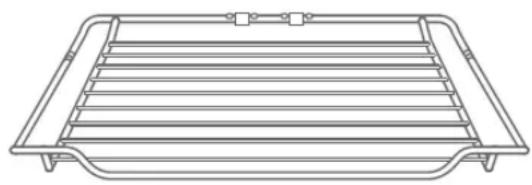
For ovenware, cake tins and ovenproof plates. For roasts and grilled dishes.
Baking tray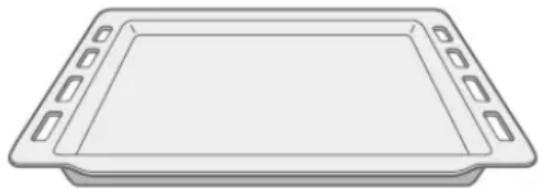
For sheet cakes and small baked goods.
Use only original accessories. It is specially designed for your appliance.
You can find the right accessories in our online shop at
www.blaupunkt-einbaugeraete.com or from your specialist dealer.
Note
The accessories can become deformed when hot. This does not affect their function. Once they have cooled down, they will return to their original shape.
Inserting accessories
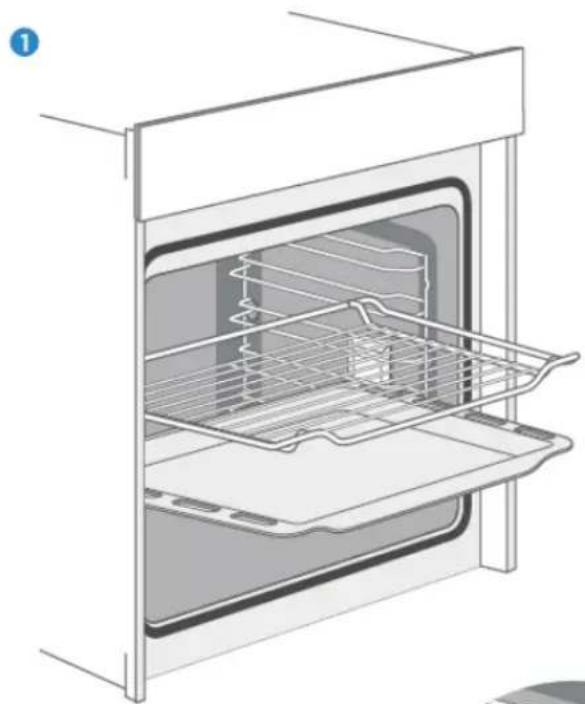
The cooking chamber has five guide rails. The guide rails are counted from bottom to top. The accessories can be pulled out about halfway without tilting.
Notes
- Make sure that you always insert the accessories the right way round in the cooking chamber.
- Always push the accessories completely into the cooking chamber so that they do not touch the appliance door.
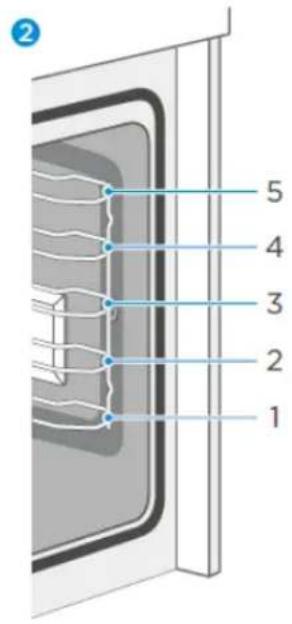
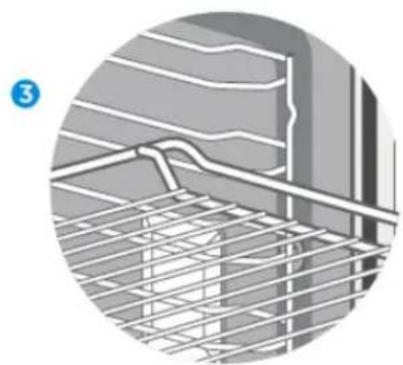
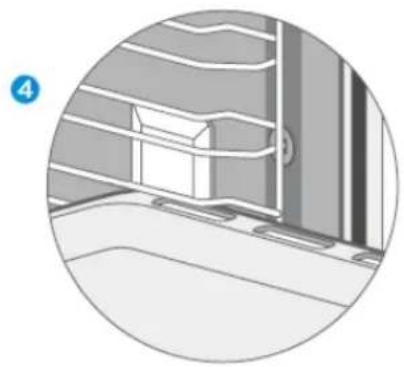
Locking function
The accessory can be pulled out about halfway until it locks into place. The locking function prevents the accessory from tilting due to the gravity of the food and the accessory itself when it is pulled out. The accessories should be correctly inserted into the cooking chamber to ensure proper tilt protection. When inserting the baking rack, make sure that it points in the right direction, as shown in the illustrations 1 3
When inserting the baking tray, make sure that it points in the right direction, as shown in the illustrations 1 to 4.
ENERGY-EFFICIENT USE
- Remove all accessories that are not necessary during the cooking process.
- Do not open the door while cooking is in progress.
- If you open the door while cooking, switch the operating mode to "light" (without changing the temperature setting).
- In the case of operating modes with no fan, reduce the temperature setting to 50°C 5 to 10 minutes before the end of the cooking process. This will allow you to use the heat of the cooking chamber to complete the cooking process.
- If possible, use the circulation function. This will allow you to reduce the temperature by 20°C to 30°C.
- With the hot air function, you can cook and bake on several levels at the same time.
- If it is not possible to cook and bake different dishes at the same time, you can cook them one after the other to make use of the preheated oven.
- Do not preheat the empty oven if it is not needed. Place the food in the oven immediately after it has reached the desired temperature. The control light will switch off once the desired temperature is reached.
- Do not use reflective foil such as aluminium foil to cover the bottom of the cooking chamber.
- If possible, use the timer and/or a temperature sensor.
- Use dark, matt and light baking tins and containers. Do not use heavy accessories with shiny surfaces, such as stainless steel or aluminium.
ENVIRONMENT
The packaging is intended to protect your new appliance from damage in transit. The materials used have been carefully selected and should be recycled. Recycling reduces the use of raw materials and waste. Electrical and electronic devices often contain valuable materials. Please do not dispose of them with your household waste.
HEALTH
Acrylamide is formed especially when starchy foods (e.g. potatoes, chips, bread) are heated to very high temperatures for a long time.
Tips
- Select short cooking times.
- Cook the food until it has a golden yellow surface colour. Do not let food burn until it has a dark brown colour.
- Larger portions have less acrylamide.
- Use the hot air function if possible.
- Chips: Do not cook more than 450 g per tray. Place them on the tray evenly distributed and turn them from time to time. Read the product information if necessary to achieve the best cooking result.
MAINTENANCE OF YOUR APPLIANCE
Cleaning agents
With good care and cleaning, your appliance will retain its appearance and remain fully functional for a long time. We will now explain to you how to properly care for and clean your appliance. Please follow the instructions in the table so that the different surfaces are not damaged by using the wrong cleaning agents. Depending on your appliance model, not all of the areas listed may be on/in your appliance.
Caution!
Risk of surface damage
Do not use:
- Sharp or abrasive cleaning agents.
- Detergents with high alcohol content.
- Hard scouring or cleaning sponges.
- High-pressure or steam cleaners.
- Special cleaners for cleaning hot equipment.
Wash new sponges and cloths thoroughly before use.
Cleaning the oven area
| Stainless steel front | Warm soapy water: Clean with a tea towel and then dry off with a soft cloth. Remove lime spots, grease, starch and albumin (e.g. protein) immediately. Rust can form under such spots. Special stainless steel cleaning agents for cleaning hot surfaces are available from specialist dealers. Apply a very thin layer of the cleaning agent with a soft cloth. |
| Plastic | Warm soapy water: Clean with a tea towel and then dry off with a soft cloth. Do not use glass cleaner or a glass scraper. |
| Painted surfaces | Warm soapy water: Clean with a tea towel and then dry off with a soft cloth. |
| Operating panel | Warm soapy water: Clean with a tea towel and then dry off with a soft cloth. Do not use glass cleaner or a glass scraper. |
| Door panel | Warm soapy water: Clean with a tea towel and then dry off with a soft cloth. Do not use a glass scraper or stainless steel scouring pad. |
Cleaning the oven area
| Door handle | Warm soapy water: Clean with a tea towel and then dry off with a soft cloth. If the door handle comes into contact with descending agent, wipe it off immediately. Otherwise, any stains cannot be removed. |
| Enamel surfaces and self-cleaning surfaces | Follow the instructions for the surfaces of the cooking chamber in the table. |
| Glass cover for the interior lighting | Warm soapy water: Clean with a tea towel and then dry off with a soft cloth. If the cooking chamber is very dirty, use oven cleaner. |
| Door seal Should never be removed. | Warm soapy water: Clean with a tea towel. Do not scrub. |
| Stainless steel door cover | Stainless steel cleaner: Please observe the respective manufacturer's instructions. Do not use stainless steel care products. Remove the door cover for cleaning. |
| Accessories | Warm soapy water: Soak and clean with a tea towel or brush. In case of heavy dirt deposits, a stainless steel scouring pad can be used. |
| Racks | Warm soapy water: Soak and clean with a tea towel or brush. |
| Pull-out system | Warm soapy water: Clean with a tea towel or brush. Do not remove the lubricant when they are pulled out. It is best to clean them when they are pushed in. Do not clean them in a dishwasher. |
| Temperature sensor | Warm soapy water: Clean with a tea towel or brush. Do not clean them in a dishwasher. |
Notes
- Slight colour differences on the front of the device are due to the use of different materials such as glass, plastic and metal.
- Shadows on the door panels that look like stripes are caused by reflections of the interior lighting.
- The enamel is applied at very high temperatures. This can lead to slight colour variations. This is normal and does not affect performance. The edges of thin sheets cannot be completely enamelled. As a result, these edges can be rough. The corrosion protection is not impaired by this.
- Always keep the appliance clean and remove dirt immediately to prevent the formation of stubborn dirt deposits.
Tips
- Clean the cooking chamber after each use. This prevents dirt from caking on.
- Always remove any lime deposits, grease, starch and albumin (e.g. protein) immediately.
- Remove spots from sugary foods as soon as possible while the spot is still warm.
- For roasting, use suitable oven utensils, e.g. a roaster.
APPLIANCE DOOR
With good care and cleaning, your appliance will retain its appearance and remain fully functional for a long time. Here you will learn how to remove and clean the appliance door.
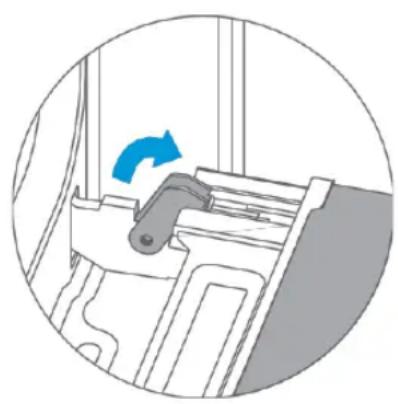
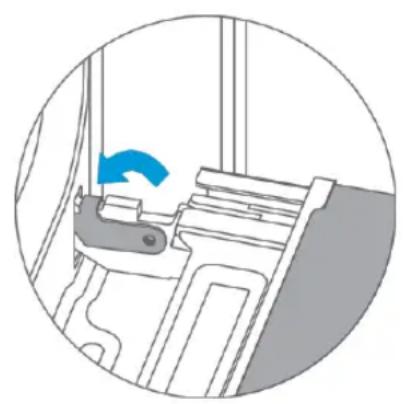
You can remove the appliance door for cleaning and to remove the door panels. The hinges of the appliance door each have a locking lever.
When the locking levers are closed, the appliance door is secured. It cannot be released. When the locking levers for releasing the appliance door are open, the hinges are locked. They cannot snap shut.
Caution! - Risk of injury!
- If the hinges are not locked, they can snap shut with great force. Make sure that the locking levers are always fully closed or fully open when the appliance door is released.
- The hinges of the appliance door move when the door is opened and closed. In the process, you could trap your fingers or other parts of your body. Keep your hands away from the hinges.
Removing the appliance door
- Open the appliance door completely.
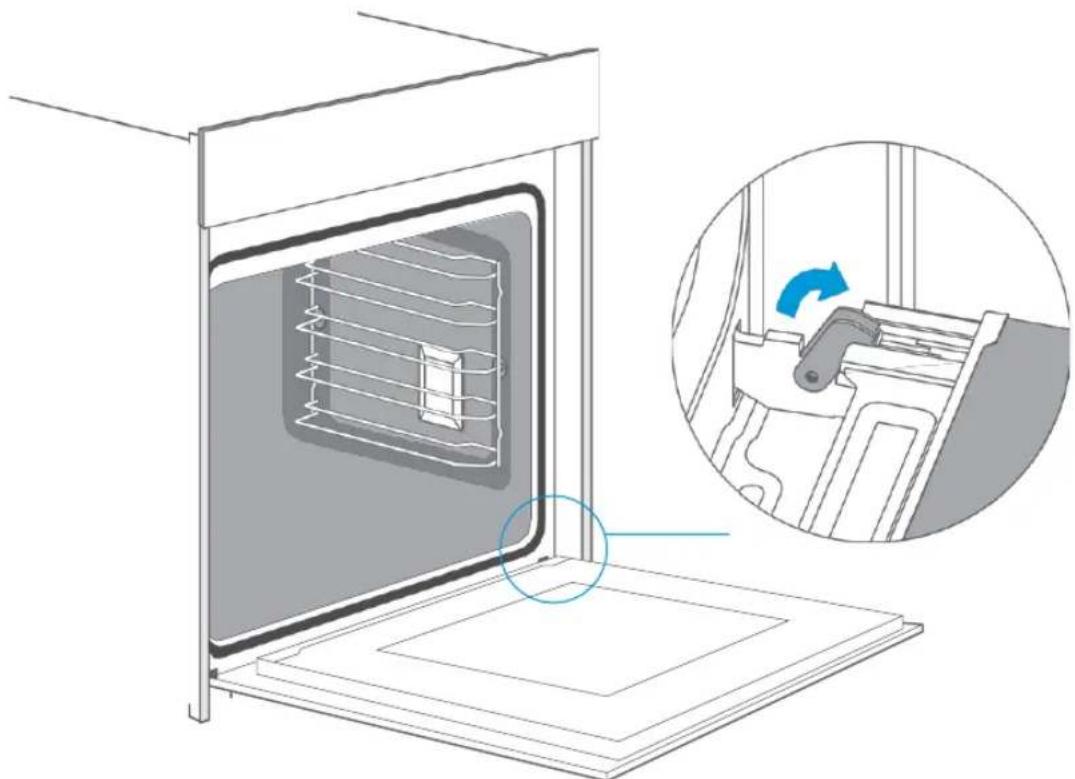
- Open the two locking levers on the left and right.
- Close the appliance door completely.
- Grip the door with both hands on the left and right and pull it out in an upward direction.
Installing the appliance door
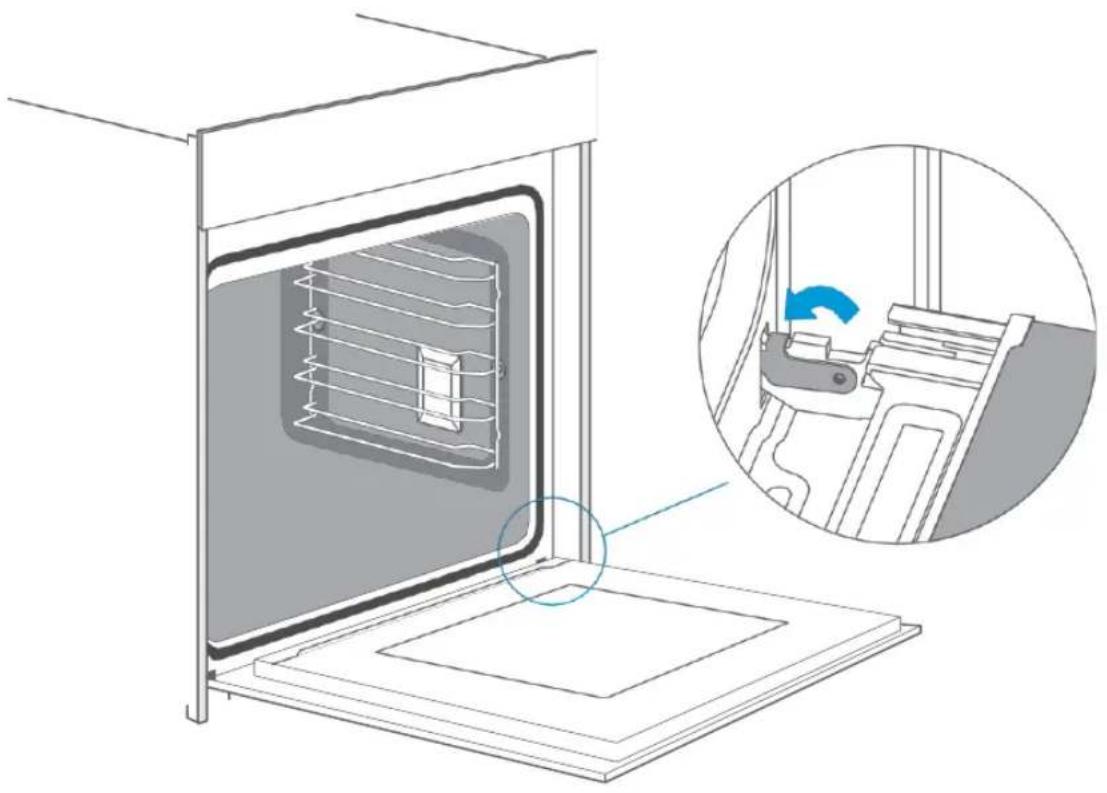
Reattach the appliance door in the reverse order of removal.
- When attaching the appliance door, ensure that both hinges are placed directly on the mounting holes in the front panel of the cooking chamber.
Ensure that the hinges are inserted in the correct position. They must fit easily and without resistance. If you feel any resistance, check that the hinges are correctly inserted in the holes.
- Open the appliance door completely. You can check again that the hinges are in the correct position when opening the appliance door. If they are mounted the wrong way round, you will not be able to open the appliance door fully.
Close both locking levers again.
- Close the oven door. Check again that the door is in the correct position and that the ventilation slots are not half covered.
Removing the door cover
The plastic layer in the door cover can become discoloured. You can remove the cover to clean it thoroughly.
Remove the appliance door as described above.
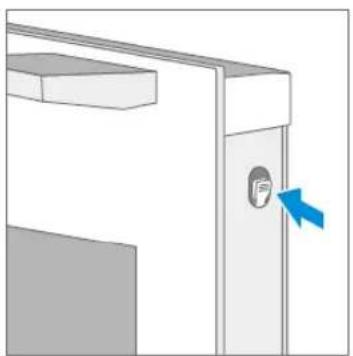
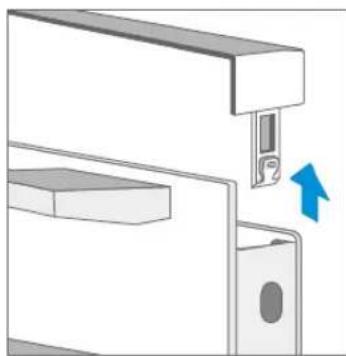
- Press the right and left side of the cover.
- Remove the cover.
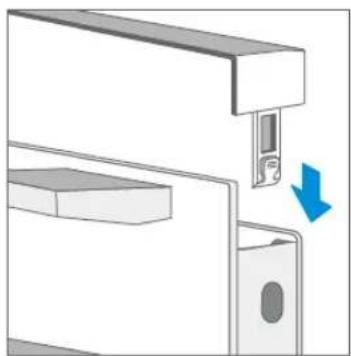
- When you have removed the door cover, the remaining parts of the appliance door can be easily removed so that you can continue cleaning. When you have finished cleaning the appliance door, replace the cover and press it until you hear it click into place.
- Reinstall the appliance door and close it.
Caution!
If the appliance door is well installed, you will also be able to remove the door cover.
- Removing the door cover will cause the inner glass of the appliance door to become loose. The glass may move easily and cause damage or injury.
- Removing the door cover and inner glass can reduce the total weight of the appliance door. The hinges move more easily when closing the door and you might get your fingers caught. Keep your hands away from the hinges.
Because of the two points mentioned above, you should only remove the door cover if the appliance door has also been removed. Damage caused by incorrect handling is not covered by the warranty.
Racks
If you want to clean the guide rails and cooking chamber thoroughly, you can remove the guide rails and clean them. With good care and cleaning, your appliance will retain its appearance and remain fully functional for a long time.
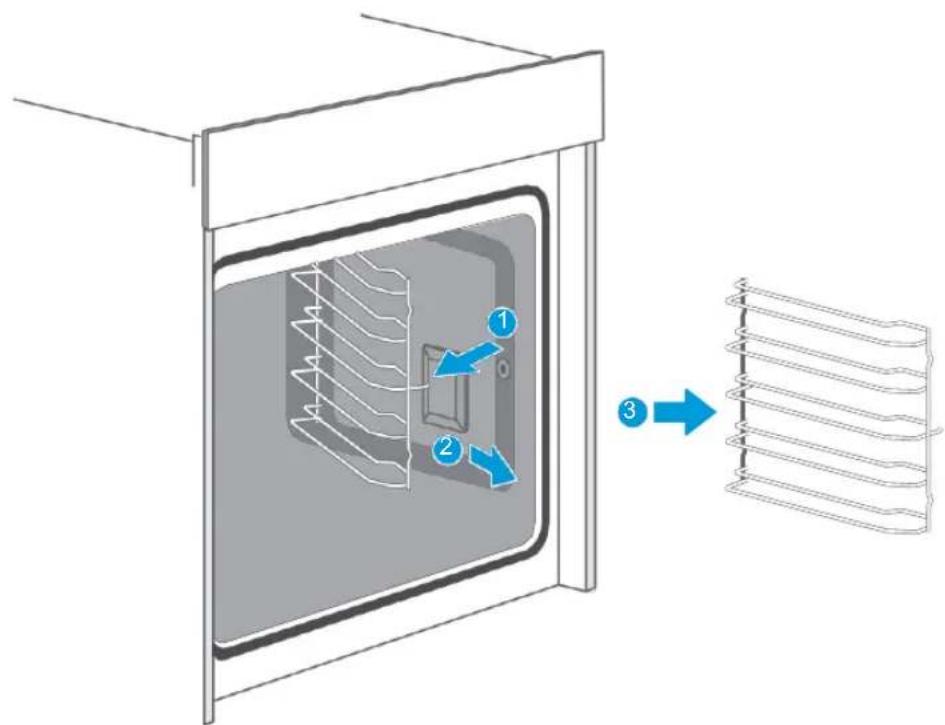
- Pull out the front part of the guide rails horizontally. Then you can remove the guide rails as illustrated in the figure below.
- To push the guide rails strips back into the cooking chamber, the rear part of the guide rails must first be inserted correctly into the holes of the cooking chamber. Then the guide rails can be pushed back into the cooking chamber.
TROUBLESHOOTING
If a fault occurs, be sure that it is not due to incorrect operation before calling customer service. First, try to correct the fault yourself using the following overview. You can often easily correct technical problems with the appliance yourself.
If a dish does not turn out exactly as you would like it to, you will find many cooking tips and instructions at the end of the operating manual.
| Fault | Possible cause | Comments/remedy |
| The appliance does not work. | Defective fuse | Check the circuit breaker in the fuse box. |
| Power failure | Check that the kitchen lamp or other kitchen appliances are working. | |
| The fan is not always switched on in "Circulation" mode. | This is a normal process, ensuring the best possible distribution of heat and the best possible performance of the oven. | |
| After a cooking process, you can hear a noise and observe a flow of air near the control panel. | The fan is still running to prevent high levels of humidity in the cooking chamber and to cool the oven down. The fan will switch off automatically. | |
| Food is not sufficiently cooked in the time specified in the recipe. | A temperature other than that specified in the recipe has been used. Check the temperature setting. The ingredient quantities differ from the recipe. Check the recipe. | |
| Uneven browning | The temperature setting is too high or the dish has not been placed on the correct guide rail. Check the recipe and the settings. The surface finish and/or colour and/or material of the ovenware was not the best choice for the selected oven function. If you use radiant heat, such as in the "Top and bottom heat" mode, you should use matt, dark-coloured, light ovenware. | |
| The lamp does not switch on | The lamp must be replaced. | |
Warning - Danger of electric shock!
Incorrectly performed repairs are hazardous. Repairs and the replacement of damaged power cables may only be carried out by one of our trained service technicians. If the appliance is defective, disconnect it from the mains or switch off the circuit breaker in the fuse box. Contact customer service.
Maximum operating time
The maximum operating time of this appliance is 9 hours, in case you forget to switch it off.
Illumination of the cooking chamber
Your appliance has one or more long-life LED lights to illuminate the interior of your cooking chamber.
However, if an LED light or the glass cover should ever become defective, call customer service. Do not remove the light cover.
CUSTOMER SERVICE
If your appliance needs to be repaired, our customer service is there for you. We always find the right solution. Please contact the dealer where you purchased this appliance or contact Blaupunkt customer service directly. You will find contact information on the back of this operating manual. When you call, please include the model number and serial number so that we can advise you correctly. You will find the type plate with these numbers if you open the appliance door.
Rated voltage: 220-240V~
Rated frequency: 50Hz-60Hz
Power: 3.15 kW
To save time in case of an emergency, you can note the model of your appliance and the telephone number of customer service in the following field.
MAINTENANCE CARD
| Model number | Date of purchase | |
| Serial number | Dealer business |
Warning
This appliance must be installed in accordance with current regulations and used only in a well-ventilated room. Please read this manual carefully before installing or using this appliance.
TIPS AND TRICKS
| You want to prepare your own recipe | First try to use settings of similar recipes and optimise the cooking process based on the result. |
| Is the cake ready-baked? | Insert a wooden stick into the cake about 10 minutes before the specified baking time. If there is no more raw dough on the stick after pulling it out, the cake is ready. |
| The cake loses a considerable amount of volume when it cools down after baking. | Lower the temperature setting to 10 °C and check the recipe concerning the mechanical handling of the dough. |
| The cake is much higher in the middle than on the outer edge. | Do not grease the outer ring of the springform pan. |
| The cake is too brown on top. | Use a lower guide rail and/or a lower temperature (this may result in a longer cooking time). |
| The cake is too dry. | Increase the temperature by 10°C (this may result in a shorter cooking time). |
| The food looks good, but it is too moist inside. | Reduce the temperature by 10°C (this may result in a longer cooking time) and check the recipe. |
| The browning is uneven. | Reduce the temperature by 10 °C (this may result in a longer cooking time). Use the top and bottom heat. |
| The bottom of the cake is not browned enough. | Position it one level lower. |
| Baking on several levels simultaneously: The browning result varies on the different levels. | To bake on more than one level, use an operating mode with fan and remove the trays one by one when they are ready. It is not necessary for all trays to be finished at the same time. |
| Condensation while baking | Steam is part of the cooking process and normally travels out of the oven together with the cooling air flow. This steam can condense on various surfaces on or near the oven and form water droplets. This is a physical process and cannot be completely avoided. |
| What type of ovenware can be used? | Any heat-resistant ovenware can be used. Aluminium should not come into direct contact with food, especially if the food is acidic. Please ensure that the container and lid close well. |
| How is the grill function used? | Preheat the oven for 5 minutes and place the food in the level indicated in this manual. Do not use the oven when the door is open except to place/remove/check the food. |
| How do I keep the oven clean while grilling? | Slide a tray filled with 2 litres of water onto level 1. Almost all liquids dripping from the food standing on the grille will be collected by the tray. |
| The heating element switches on and off in all operating modes with grill. | This is a normal process and depends on the temperature setting. |
| How do you calculate the oven settings if the weight of a roast is not specified by a recipe? | Select the settings next to the roast weight and change the time slightly. If possible, use a meat thermometer to determine the temperature in the meat. Carefully place the tip of the meat thermometer into the meat according to the manufacturer's instructions. Make sure that the tip of the meat thermometer is in the middle of the bulk of the meat, but not near a bone or cavity. |
| What happens if a liquid is poured onto a food in the oven during the cooking process? | The liquid will boil, producing steam as a normal physical process. Please be careful, as the steam is hot. See also “Condensation while baking” for more information. If the liquid contains alcohol, the cooking process will be faster and flames may appear in the cooking chamber. Make sure that the oven door is closed during such processes. Please monitor the cooking process carefully. Only open the door when necessary and with great care. |
AUTOMATIC PROGRAMMES
Various automatic recipes can be prepared with this appliance. To create perfect dishes, simply follow the tips on the display.
- Prepare the ingredients.
- In standby, tap the "A" button once to activate the automatic programmes menu. Tap the - or + button to select one of the various automatic programmes (C01 to C02, A01 to A11).
- There are 11 recipes in five categories, which you can select as required.
Notes
- Please follow the instructions on the display. Otherwise, you might not obtain a perfect cooking result.
- You cannot interrupt the automatic cooking process.
- Only open the door when the display prompts you to do so. Otherwise the cooking chamber will cool down.
AUTOMATIC PROGRAMMES
| Menu | Programme | Number of keystrokes | Operating mode | Temp. in °C | Duration in minutes: Seconds |
| Roast chicken | C01 | 1 | Top/bottom heat | 200 | 22 |
| Grilled prawns | C02 | 2 | Top/bottom heat | 200 | 13 |
| Pizza | A01 | 3 | Top/bottom heat | 220 | 21 |
| Croissant | A02 | 4 | Top/bottom heat | 180 | 13 |
| Biscuits | A03 | 5 | Top/bottom heat | 160 | 22 |
| Roast beef | A04 | 6 | Dual grill | 235 | 17 |
| Sponge cake | A05 | 7 | Dough process | 175 | 35 |
| Cod | A06 | 8 | Top/bottom heat | 200 | 25 |
| Millefoglie from yellow and purple potatoes | A07 | 9 | Top/bottom heat | 180 | 30 |
| Roast chicken with early potatoes | A08 | 10 | Top/bottom heat | 230 | 60 |
| Roast beef | A09 | 11 | Dual grill | 160 | 75 |
| Descaling | A10 | 12 | - | - | 40 |
| Clean | A11 | 13 | - | - | 5 |
RECIPES
| CAKES | Mould | Level | Operating mode | Temp. in °C | Duration in minutes: Seconds |
| Sponge cake (single) in box mould | Box mould | 2 | Top/bottom heat + circulation | 170 | 50 |
| Sponge cake (single) in box mould | Box mould | 1 | Top/bottom heat | 140 | 70 |
| Sponge cake (single) in springform pan | Springform pan | 1 | Top/bottom heat + circulation | 150 | 50 |
| Sponge cake with fruits on baking tray | Baking tray | 1 | Top/bottom heat | 140 | 70 |
| Raisin Brioche Muffins (yeast dough) | Muffin tin | 2 | Top/bottom heat | 220 | Preheat time: 19:00 Baking time: 11:00 |
| Ring cake (yeast dough) | Baking tray | 1 | Top/bottom heat | 150 | Preheat time: 11:00 Baking time: 60:00 |
| Muffins | Muffin tin | 1 | Top/bottom heat | 160 | Preheat time: 08:30 Baking time: 30:00 |
| Muffins | Muffin tin | 1 | Top/bottom heat + circulation | 150 | Preheat time: 08:30 Baking time: 30:00 |
| Apple tart with yeast dough on a baking tray | Baking tray | 1 | Top/bottom heat + circulation | 160 | Preheat time: 10:00 Baking time: 42:30 |
| Water sponge cake (6 eggs) | Springform pan | 1 | Top/bottom heat | 160 | Preheat time: 09:30 Baking time: 41:00 |
| Water sponge cake (4 eggs) | Springform pan | 1 | Top/bottom heat | 160 | Preheat time: 09:00 Baking time: 26:00 |
| Water sponge cake Cake | Springform pan | 1 | Top/bottom heat | 160 | 35 |
| Apple tart with yeast dough on a baking tray | Baking tray | 2 | Top/bottom heat + circulation | 150 | Preheat time: 08:00 Baking time: 42:00 |
| Braided yeast bun | Baking tray | 2 | Top/bottom heat + circulation | 150 | 40 |
| Small cakes, 20 pcs | Baking tray | 2 | Top/bottom heat | 150 | 36 |
| Small cakes, 40 pcs | Baking tray | 2+4 | Top/bottom heat | 150 | Preheat time: 10:00 Baking time: 34:00 |
| Butter cake (yeast dough) | Baking tray | 2 | Top/bottom heat | 150 | Preheat time: 08:00 Baking time: 30:00 |
| Shortcrust pastry | Baking tray | 2 | Top/bottom heat | 170 | Preheat time: 08:00 Baking time: 13:00 |
| Shortcrust pastry 2 baking trays | Baking tray | 2+4 | Top/bottom heat + circulation | 160 | Preheat time: 08:20 Baking time: 12:00 |
| Biscuits | Baking tray | 2 | Top/bottom heat | 160 | Preheat time: 08:00 Baking time: 10:00 |
| Biscuits | Baking tray | 2+4 | Top/bottom heat + circulation | 150 | Preheat time: 08:00 Baking time: 14:00 |
| BREAD | Mould | Level | Operating mode | Temp. in °C | Duration in minutes: Seconds |
| White bread (1 kg flour), box mould | Box mould | 1 | Top/bottom heat | 170 | Preheat time: 09:20 Baking time: 50:00 |
| White bread (1 kg flour), box mould | Box mould | 1 | Top/bottom heat + circulation | 170 | Preheat time: 12:00 Baking time: 45:00 |
| Fresh pizza (thin) | Baking tray | 2 | Top/bottom heat | 170 | Preheat time: 09:30 Baking time: 21:00 |
| Fresh pizza (thick) | Baking tray | 2 | Top/bottom heat | 170 | Preheat time: 10:00 Baking time: 45:00 |
| Fresh pizza (thick) | Baking tray | 2 | Top/bottom heat + circulation | 170 | Preheat time: 08:00 Baking time: 41:00 |
| Bread | Baking tray | 1 | Top/bottom heat | 190 | Preheat time: 09:00 Baking time: 30:00 |
| MEAT | Mould | Level | Operating mode | Temp. in °C | Duration in minutes: Seconds |
| Fillet of beef, 1.6 kg | Baking tray | 2 | Dual grill + circulation | 180 | 55 |
| Meat loaf, 1 kg | Baking tray | 1 | Top/bottom heat | 180 | 75 |
| Chicken, 1 kg | Baking tray | Level 2: Baking rack, level 1: Baking tray | Dual grill + circulation | 180 | 50 |
| Fish (2.5 kg) | Baking tray | 2 | Top/bottom heat | 170 | 70 |
| Spare ribs | Baking tray | 3 | Top/bottom heat | 120 | 85 |
| Roast neck of pork | Baking tray | 1 | Top/bottom heat | 160 | 85 |
| Chicken, 1.7kg | Baking tray | Level 2: Baking rack, level 1: Baking tray | Top/bottom heat | 180 | 78 |
TEST FOOD ACCORDING TO EN 60350-1
| RECIPES | Accessories | F | °C | Level | Time (min) | Preheating |
| Sponge cake | Springform pan, Φ26cm | 170 | 1 | 30-35 | NO | |
| Sponge cake | Springform pan, Φ26cm | 160 | 1 | 30-35 | NO | |
| Small cake | 1 baking tray | 150 | 2 | 30-40 | YES | |
| Small cake | 1 baking tray | 150 | 2 | 40-50 | YES | |
| Small cake | 2 baking trays | 150 | Level 2 & level 4 | 30-35 | YES | |
| Cheesecake | Springform pan, Φ26cm | 150 | 1 | 70-80 | NO | |
| Apple tart | Springform pan, Φ20cm | 170 | 1 | 80-85 | NO | |
| Apple tart | Springform pan, Φ20cm | 160 | 1 | 70-80 | NO | |
| Bread | 1 baking tray | 210 | 1 | 30-35 | YES | |
| Bread | 1 baking tray | 190 | 1 | 30-35 | YES | |
| Toast | Baking rack | Max. | 5 | 6-8 | YES, 5 min | |
| Chicken | Baking rack & baking tray | 180 | Backing rack: Level 2 Baking tray: Level 1 | 75-80 | YES |
ENERGY EFFICIENCY ACCORDING TO EN 60350-1
Please note the following information:
- The measurement to determine the data for forced-air operation and the type plate is performed in "ECO" mode.
- The measurement to determine the data for conventional operation is performed in "Top and bottom heat" mode.
- During the measurement, only the necessary accessories are in the cooking chamber. All other parts must be removed.
- The oven is installed as described in the installation instructions and placed in the centre of the cabinet
- For the measurement, the appliance door must be closed as in normal household use, even if the measuring cable interferes with the sealing function of the seal.
To ensure that the impaired seal has no negative effect on the energy data, the door must be closed carefully during the measurement. It may be necessary to use a tool to ensure that the seal is sealed as in household use, where no cable interferes with the sealing function.
- The determination of the cooking chamber volume for the "Defrost" application is carried out as described on page 14. To ensure efficient use of the oven, remove all accessories including the guide rails.
COOKING IN "ECO" MODE
In "ECO" mode, the heat comes from the bottom heat and the ring heater. This operating mode allows you to save energy during cooking.
| RECIPES | Accessories | °C | Level | Time (min) | Preheating |
| Braided yeast bun | 1 baking tray | 180 | 1 | 45-50 | NO |
| Roast pork | 1 baking tray | 200 | 1 | 80-85 | NO |
| Cherry cake | Springform pan | 200 | 1 | 55-60 | NO |
| Roast beef, 1.3 kg | 1 baking tray | 200 | 1 | 80-85 | NO |
| Brownies | Baking rack and glass plate | 180 | 1 | 55-60 | NO |
| Potato gratin | Baking rack and round plate | 180 | 1 | 65-70 | NO |
| Lasagne | Baking rack and glass plate | 180 | 1 | 75-80 | NO |
| Cheesecake | Springform pan, Φ20cm | 160 | 1 | 80-90 | NO |
DATA SHEET (EU 65/2014 & EU 66/2014)
| Blaupunkt 5B90S8990 | |
| Mass of the oven | 45kg |
| Number of cooking chambers | 1 |
| Heat source | Electrical |
| Useful volume | 72 l |
| ECElectric, cooking chamber (conventional operating mode) | 1.06 kWh/cycle |
| ECElectric, cooking chamber (circulation) | 0.63 kWh/cycle |
| EEICavity | 74 |
| Energy efficiency class (A+++ to D) | A+ |
Note
All the operating modes described on page 8 are main functions of the oven.
Indian/India

- SAFETY INSTRUCTIONS
- INTENDED PURPOSE
- WARNING
- DANGER OF ELECTRIC SHOCK
- RISK OF BURNS
- RISK OF SCALDING
- RISK OF INJURY
- RISK OF FIRE
- DANGER FROM MAGNETISM
- CAUSES OF DAMAGE
- INSTALLATION
- FIRST-TIME USE
- AFTER THE APPLIANCE HAS COOLED DOWN
- SETTING THE CLOCK TIME
- CAUTION
- NOTES
- FAN
- USING YOUR APPLIANCE
- COOKING WITH THE OVEN
- FAST PREHEAT
- CHANGES WHILE COOKING
- TIMER
- CHILD LOCK
- TEMPERATURE SENSOR
- STEAM SUPPORT
- WATER TANK
- STEAM CLEANING FUNCTION
- AUTOMATIC DEPOSIT REMOVAL FUNCTION
- ACCESSORIES
- ACCESSORIES INCLUDED
- NOTE
- INSERTING ACCESSORIES
- LOCKING FUNCTION
- ENERGY-EFFICIENT USE
- ENVIRONMENT
- HEALTH
- TIPS
- MAINTENANCE OF YOUR APPLIANCE
- CLEANING AGENTS
- RISK OF SURFACE DAMAGE
- DO NOT USE
- APPLIANCE DOOR
- CAUTION! - RISK OF INJURY
- REMOVING THE APPLIANCE DOOR
- INSTALLING THE APPLIANCE DOOR
- REATTACH THE APPLIANCE DOOR IN THE REVERSE ORDER OF REMOVAL
- REMOVING THE DOOR COVER
- REMOVE THE APPLIANCE DOOR AS DESCRIBED ABOVE
- RACKS
- TROUBLESHOOTING
- WARNING - DANGER OF ELECTRIC SHOCK
- MAXIMUM OPERATING TIME
- ILLUMINATION OF THE COOKING CHAMBER
- CUSTOMER SERVICE
- TIPS AND TRICKS
- AUTOMATIC PROGRAMMES
- TEST FOOD ACCORDING TO EN
- ENERGY EFFICIENCY ACCORDING TO EN
- PLEASE NOTE THE FOLLOWING INFORMATION
- COOKING IN "ECO" MODE
Brand : BLAUPUNKT
Model : 5B90S8990
Category : Oven