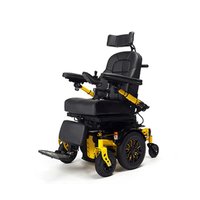
Eclips X4 90° - Wheelchair Vermeiren - Free user manual and instructions
Find the device manual for free Eclips X4 90° Vermeiren in PDF.



| Product type | Manual wheelchair (push by attendant or self-propelled) |
| Brand | Vermeiren |
| Model | Eclips X4 90° |
| Category | Transport wheelchair for children and young people |
| Dimensions (overall) | Length: 830-1000 mm, Width: 500-550 mm, Height: 820-980 mm |
| Folded dimensions | Length: 630-800 mm, Width: 310 mm, Height: 820-980 mm |
| Total weight | Approximately 16 kg |
| Maximum user weight | 80 kg |
| Seat width | 320 mm or 370 mm |
| Seat depth | 310-390 mm depending on adjustment |
| Seat height (front edge) | 420-470 mm |
| Backrest angle | 5° to 95° (continuously adjustable) |
| Rear wheel diameter | 22 inches (approx. 559 mm) |
| Front wheel diameter | 150 mm |
| Brakes | Lever parking brakes (manually operated) |
| Comfort adjustments | Handle height (6 positions), backrest tilt, removable footrests, push bar |
| Use | Indoor and outdoor, for one person |
| Maintenance | Cleaning with damp cloth and mild soap; regular checks of brakes, tires, screws |
| Safety | Do not use as car seat; static stability: descent 7.5°, ascent 4°, lateral 16° |
| Spare parts | Footrests (1.8 kg), rear wheels (3.8 kg) – replacement by authorized dealer |
| Repairability | Repairs reserved for trained persons, original Vermeiren parts |
| Warranty | Subject to the general conditions of the country of sale |
| Serial numbers / identification | Identification plate on chassis |
Frequently Asked Questions - Eclips X4 90° Vermeiren
User questions about Eclips X4 90° Vermeiren
0 question about this device. Answer the ones you know or ask your own.
Ask a new question about this device
Download the instructions for your Wheelchair in PDF format for free! Find your manual Eclips X4 90° - Vermeiren and take your electronic device back in hand. On this page are published all the documents necessary for the use of your device. Eclips X4 90° by Vermeiren.
USER MANUAL Eclips X4 90° Vermeiren
MANUEL D'UTILISATION
GEBRUIKSAANWIJZING
GEBRAUCHSANWEISUNG
natural_image
Yellow and black wheelchair with black backrest, displayed against white background (no text or symbols visible)Contents
Preface
4
1. Your product 6
1.1. Options 7
2. Before use 7
2.1. Intended use and indications 7
2.2. Safety instructions and applicable risks 8
2.3. Symbols on the wheelchair 9
2.4. Transport 10
2.5. Folding/Unfolding 10
2.6. Storage 11
3. Using your wheelchair 12
3.1. Operating the brakes 12
3.2. Moving to/from the wheelchair 13
3.3. Comfort adjustments 13
3.4. Riding the wheelchair 17
4. Maintenance 23
4.1. Points of maintenance 23
4.2. Maintenance instructions 25
4.3. Troubleshooting 26
4.4. Expected lifespan 26
4.5. Reuse 26
4.6. End of use 26
4.7. Warranty 27
5. Technical specifications 27
Preface
Congratulations! You are now owner of a Vermeiren wheelchair!
This wheelchair is made by qualified and committed personnel. It is designed and produced according to high quality standards, guarded by Vermeiren.
Thank you for your trust in the products of Vermeiren. To support you on the use of this wheelchair and its operating options, this manual is offered. Please read it carefully; it will help you to get familiar with the operation, capabilities and limitations of your wheelchair.
If you still have questions after reading this manual, do not hesitate to contact your specialist dealer. He/she will be glad to help you.
Important note
To ensure your safety, and to prolong the lifetime of your product, please take good care of it and have it checked and serviced on a regular basis.
This manual reflects the latest product developments. Vermeiren has the right to implement changes to this type of product without any obligation to adapt or replace similar products previously delivered.
Pictures are used to clarify the instructions in this manual. Details of the depicted product may deviate from your product.
Information available
On our website http://www.vermeiren.com/ you will always find the most recent version of the information in this manual. Please consult this website regularly for possible updates.
Visually impaired people can download the electronic version of this manual and have it read out by means of a text-to-speech software application.
 | User manualFor user and specialist dealer |
 | Installation instructionsFor specialist dealer |
 | Service manual for wheelchairsFor specialist dealer |
 | EC declaration of conformity |
1. Your product
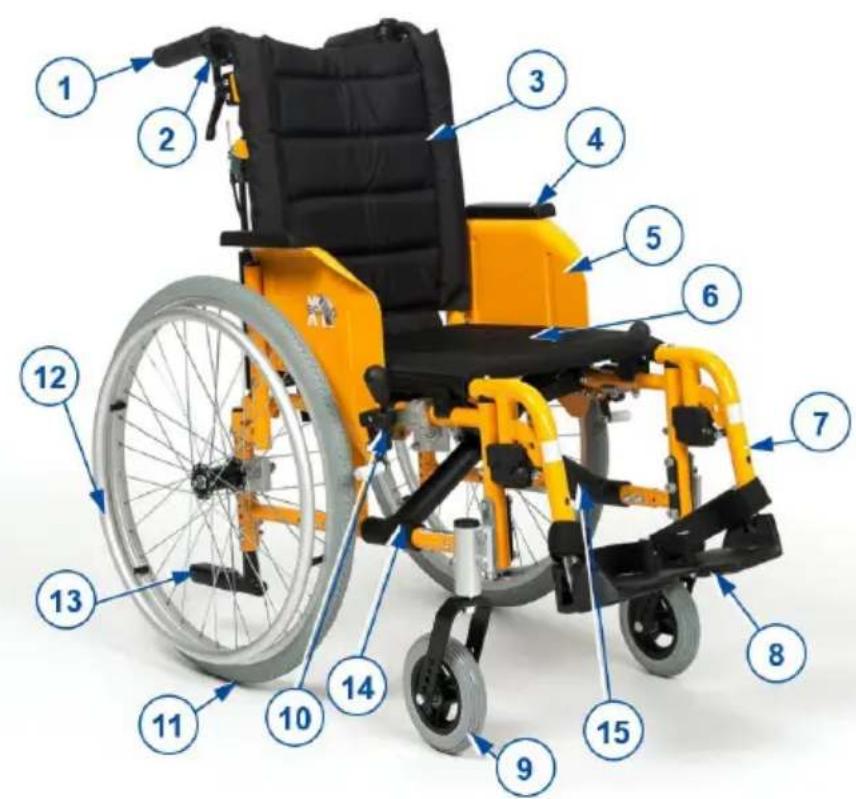
text_image
Labeled diagram of a yellow wheelchair with numbered parts for identification- Handgrips
- Backrest
- Arm pads
- Armrests
- Seat
- Footrests
- Footplates
- Front wheels
- Brakes
- Rear wheels
- Hand rims
- Tipping aid
- Cross
-
Identification plate
-
Lever backrest inclination
1.1. Options
Contact your specialist dealer about options. He will gladly advise you.
2. Before use
2.1. Intended use and indications
• This product is a medical device.
- Indications and contraindications: This wheelchair is intended to be operated by the user sitting in the wheelchair, or it can be pushed by an attendant or parent. The wheelchair is intended to be a transport aid for young people with reduced walking abilities. You should NOT use this wheelchair without an attendant if you suffer from physical or mental impairments that may put you, or other people, in danger when riding the wheelchair. For this reason, consult your doctor first and make sure that your specialist dealer is informed about his advice.
- This wheelchair is suitable for indoor and outdoor use.
- This wheelchair is designed and produced solely to transport/transfer one (1) person with a maximum weight of 80kg. It is not designed for transportation of goods or objects, nor for any use other than previously described.
- Only use accessories and spare parts approved by Vermeiren.
- Please read all technical details and limits of your wheelchair in chapter 5..
- The warranty on this product is based on normal use and maintenance as described in this manual. Damage to your product caused by improper use or lack of maintenance will cause the warranty to lapse.
2.2. Safety instructions and applicable risks
CAUTION
Risk of injuries and/or damage
- Carefully read and follow the instructions in this manual. Otherwise you may get injured or your wheelchair may get damaged.
Keep the following general warnings in mind during use:
- Do not use your wheelchair if you are under influence of alcohol, medicines or other substances that may influence your driving abilities.
- Be aware that some parts of your wheelchair may get very hot or cold due to ambient temperature, solar radiation or heating devices. Be careful when touching. Wear protective clothing if the weather is cold. When going outdoors, riding gloves can be used to improve the grip on the hand rims.
- Do not modify your product in any way.
- If the packaging of your product has been damaged, (unintentionally) opened, or affected by environmental conditions (moisture, heat,...) upon delivery, check the device integrity of your product. When in doubt, contact your specialist dealer.
Be aware that your wheelchair may interfere with some types of anti-theft systems, depending on the settings used. This may cause the shop's alarm to go off.
Any serious incident [MDR (EU) 2017/745 §2 (65)] that has occurred in relation to the device should be reported to the manufacturer and the competent authority of the Member State in which the user and/or patient is established.
2.3. Symbols on the wheelchair
 | Type designation |
 | Catalogue number |
 | Serial number |
 | Medical device |
 | Manufacturer |
 | Date of manufacture |
 | Declaration of conformity |
 | Attention: important information |
 | It is advised to read the manual |
 | Risk of entrapment |
 | Maximum weight of the user in kg |
 | Not intended to be used as a seat in a motor vehicle |
2.4. Transport
2.4.1. Transport by vehicle, as luggage
WARNING
Risk of injuries
- Do NOT use your wheelchair as a seat in a vehicle, see the following symbol.

- Make sure that the wheelchair is attached properly to avoid injury from the passengers during collision or sudden braking.
-
NEVER use the same seatbelt to secure the wheelchair and passenger.
-
Remove footrests and accessories.
- Store footrests and accessories safely.
- If possible, fold the wheelchair and remove the rear wheels.
- Place the wheelchair in the luggage compartment.
- If the luggage and passenger compartments are NOT separated, attach the frame of the wheelchair securely to the vehicle. You can use the available safety belts in the vehicle.
2.5. Folding/Unfolding
CAUTION
Risk of injuries
- Keep fingers away from moving parts of the wheelchair.
2.5.1. Unfolding the wheelchair
- Position yourself behind the wheelchair.
- Use the handgrips to open the wheelchair as much as possible.
- Position yourself at the front of the wheelchair.
- Push both seating tubes down till they are fixed in their position.
- Mount the push bar (see §3.3.4.).
2.5.2. Folding the wheelchair
- Fold the footplates or remove the footrests (see § 3.3.3.).
- Remove the push bar (see §3.3.4.).
- Take the seat on the front side and backside and pull it up.
- Push the handgrips to each other to close the frame.
2.5.3. Mounting the rear wheels
- Take the rear wheel and push button (1).
- Keep the button pushed in and mount the rear wheel axle until it stops.
- Release the button.
- Check that the wheel is secured.
2.5.4. Taking off the rear wheels
- Make sure the brakes are in the off position.
- Take the wheelchair to the side frame where you want to remove the wheel.
- Press the button in the center of the wheel hub.
- Pull the wheel away from the frame.

text_image
Technical diagram of a mechanical assembly with labeled component 12.6. Storage
CAUTION
Risk of damage
- Make sure that your wheelchair is stored in a dry environment to prevent mould from growing and the upholstery from being damaged, see also chapter 5..
3. Using your wheelchair
WARNING
Risk of injuries
- First read previous chapters and inform yourself about the intended use. Do NOT use your wheelchair unless you have read and fully understood all instructions.
- In case of doubts or questions, do not hesitate to contact your local specialist dealer, your care provider or technical adviser to help you with this.
3.1. Operating the brakes
CAUTION
Risk of injuries
- The brakes are not used to slow down the wheelchair during movements. Use the brake only to prevent the wheelchair from unintended movements.
- Good operation of the brakes is influenced by wear and contamination of the tires (water, oil, mud, ...). Check the condition of the tires before each use.
- The brakes are adjustable and can wear. Check the operation of the brakes before each use.
- Make sure the wheelchair is on a flat horizontal surface before releasing the brakes. Never release both brakes simultaneously.
3.1.1. To apply the brakes:
- Push the brake levers forward until you feel a distinctive click.
3.1.2. To release the brakes:
- Release one brake by pulling the lever backwards.
- Hold the hand rim of the released wheel with your hand.
- Repeat this for the second wheel and parking brake.
3.2. Moving to/from the wheelchair
EN
CAUTION
Risk of injuries or damage
- In case you cannot perform the transfer in a safe manner, ask someone to assist you.
- Do not stand on the footplates.
3.2.1. Transfer
- Position the wheelchair as close as possible to the chair, couch or bed to/from which you wish to transfer.
- Apply both parking brakes, see §3.1..
- Fold the footplates or remove the footrests (see § 3.3.3.).
- Transfer to/from the wheelchair using the strength of your arms or with the help of attendant(s) or lifting equipment.
3.2.2. Sitting in the wheelchair
Some recommendations for a comfortable use of the wheelchair:
- Sit down on the seat with your lower back against the backrest.
- Make sure your upper legs are horizontal. If needed adjust the length of the footrests (see installation manual).
3.3. Comfort adjustments
CAUTION
Risk of injuries or damage
- The following comfort adjustments can be done by the attendant or caretaker. All other adjustments are done by your specialist dealer according to the installation instructions, see preface.
• Always keep the swing range of the footplate in mind to prevent bystanders from being injured or objects from being damaged. - Make sure that your fingers, clothes, buckles don't get trapped during adjustment.
3.3.1. Handgrip height
The height of the handgrips can be adjusted in 6 positions (steps of 30 mm):

text_image
30 mm ① ② ③-
Loosen the star knob (1).
-
Adjust the handgrip to the desired height (6 positions).
-
Retighten the star knob (1).
3.3.2. Backrest inclination
WARNING
Risk of injuries
- Be aware that the stability decreases when backrest is adjusted backwards.
- Apply the parking brakes before adjusting the backrest.
CAUTION
Risk of injuries
- Do not place your fingers, clothes between the adjustment mechanism.
It is possible to set the backrest backwards with a maximum inclination of 90^ (stepless). Make sure that the patient sits in the chair when the attendant adjusts the backrest inclination and that the wheelchair does not tip over.

text_image
Technical diagram of a mechanical assembly with numbered components labeled 1 to 4-
Pull the lever (1) on both sides towards the push handle (2) to adjust the backrest.
-
Pull both back tubes backwards continuously to the desired position.
-
Release the lever.
If your wheelchair features drum brakes, the handles are used as brakes.
3.3.3. Mounting or removing the footrests

text_image
Technical diagram of a motorcycle with numbered parts labeled 1 and 23.3.3.1. Mounting the footrests
-
Hold the footrest sideways at the outside of the wheelchair's frame and mount the tube hood (1) into the frame.
-
Swing the footrest inwards until it clicks in position.
-
Swing the footplate downwards.
3.3.3.2. Dismounting the footrests
- Pull lever (2).
- Swing the footrest to the outside of the wheelchair until it comes loose from the guidance.
- Pull the footrest from the tube hood (1).
3.3.4. Mounting or removing the push bar
WARNING
Risk of injuries
- Make sure that the star knobs are well tightened.
- When equipped with the push bar, the push bar should always be mounted to increase the stability of the back.
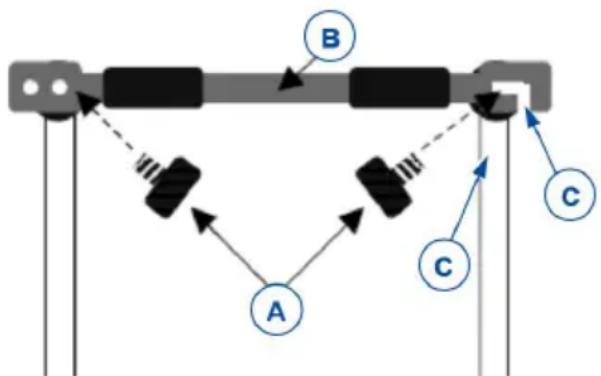
flowchart
graph TD
    A["Component A"] --> B["Component B"]
    B --> C["Component C"]
    A --> A1["External Circuit"]
    B --> B2["External Circuit"]
    C --> C1["External Circuit"]
    style A fill:#f9f,stroke:#333
    style B fill:#ccf,stroke:#333
    style C fill:#cfc,stroke:#333
3.3.4.1. To mount the push bar
- Mount the push bar (B) with the star knob (A) in the left handgrip.
- Screw the star knob (A) in the right handgrip.
- Swing the push bar (B) to the right.
- Mount the hook of the push bar over the screw thread of the right star knob.
- Use the two holes on the left handgrip to adjust the tension of the backrest.
3.3.4.2. To take off the push bar
- Loosen the star knob (A) on the right handgrip.
- Remove hook (C) from the right handgrip (D).
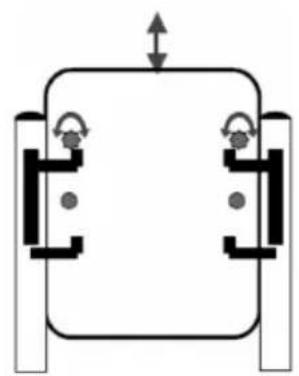
3.3.5. Anatomical backrest
natural_image
Pure mechanical diagram showing a rectangular component with four vertical supports and a central horizontal arrow, no text or symbols present.The anatomical backrest can be easily removed for folding. It is mounted by placing the safety screws of the backrest into the brackets on the backrest tubes.
Make sure that the star knobs are well tightened.
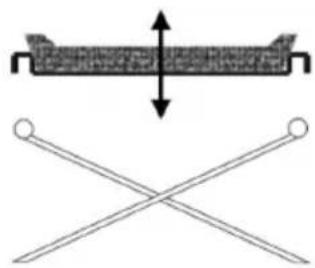
3.3.6. Anatomical seat
natural_image
Diagram showing two crossed tools with a central component and directional arrows (no text or symbols)The anatomical seat can be easily removed for folding. It is mounted by placing the seat supports on the cross hinge.
3.4. Riding the wheelchair
Depending on your medical condition and type of wheelchair, you can ride the wheelchair yourself or have it pushed by an attendant.
CAUTION
Risk of entrapment
- Prevent your fingers from being caught by the wheel spokes.
- Prevent entrapment of your hands on the hand rims when you pass small passages.
- When driving with an attendant, keep your arms away from the wheels and keep your feet on the footplates.
Risk of injuries or damage
- Do NOT drive on slopes, obstacles, steps or kerbs larger than specified in § 5..
- Do not proceed with your wheelchair in traffic. Always stay on the pavement.
- Do not operate the hand rims with wet hands.
- Pay attention if the road has holes or gaps that may cause entrapment of the wheels.
- Avoid stones and other objects that may block the wheels.
• Always keep the swing range of the footplate in mind to prevent bystanders from being injured or objects from being damaged.
- Before every usage, make sure that:
– all adjustments are firmly secured, see §3.3..
– the parking brakes are working properly.
– the tires are in good condition, see §4.2.1..
3.4.1. Riding with an attendant
- Release the brakes or have them released by the attendant, while he/she is holding the wheelchair to prevent movement, see §3.1..
- The attendant grasps the handgrips or push bar to push the wheelchair in the desired direction.
- After stopping, apply the brakes while holding the wheelchair in place, see §3.1..
3.4.2. Riding on your own
- Release the parking brakes one by one, see §3.1..
- Move your hands to the highest position on both hand rims.
- Lean forward and push the hand rims forward until your arms are straight.
-
Swing your arms loosely back to the topside of the hand rims and repeat the push movement.
-
To stop: wait until the wheelchair stops and move forward/backward by operating the hand rims. Apply the parking brakes one by one, see §3.1..
CAUTION
Risk of injuries
- If the attendant has too little strength to control the wheelchair, stop riding and use the brakes immediately.
- When you stop on a (small) slope, use your brakes.

natural_image
Illustration of two people in a wheelchair, one pushing and the other leaning forward (no text or symbols)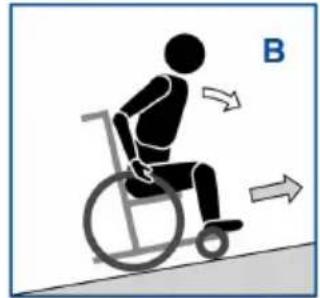
natural_image
Illustration of a person in a wheelchair using a horizontal barbell, with arrows indicating movement direction (no text or symbols)- Secure yourself in the wheelchair with a safety belt.
- Ask an attendant or a bystander to help you.
- Drive slowly and in a straight line. Lean slightly forward (A/B) when going up the slope. Lean backwards, against the backrest, when going down the slope.
- Never reverse on a slope.
3.4.4. Using ramps
CAUTION
Risk of tipping over
- Only use ramps approved by Vermeiren and do not exceed their maximum load.
• Make sure that the wheelchair does not touch the ground or ramp due to the inclination of the wheelchair. -
Only negotiate ramps with the help of one or two attendants.
-
Adjust the position of backrest, seat and footrest to decrease the volume taken by the wheelchair and to increase the stability during inclination.
-
Remove the footrests, see §3.3.3..
-
Follow the instructions in §3.4.3..
3.4.5. Using stairs
CAUTION
Risk of tipping over
• Stairs should always be negotiated with the help of two attendants.
- Never try to use stairs that are not appropriate for wheelchairs.

natural_image
Illustration of four human figures climbing stairs, one pushing a wheel with a crossed-out ring (no text or symbols)- Remove the footrests, see §3.3.3..
- One attendant tips the wheelchair slightly backwards by the handles.
- The second attendant grabs the wheelchair at the front of the frame, on both sides of the wheelchair.
- Stay calm, avoid sudden movements and keep your arms inside the wheelchair.
- Both attendants lift and pull the wheelchair from step to step while the rear wheels roll over the steps.
- After using the stairs, mount the footrests back in place, see §3.3.3.
3.4.6. Coping with obstacles
CAUTION
Risk of tipping over
- If you do not have enough experience with your wheelchair, ask assistance of an attendant.
- Make sure that the footplates do not touch ground while taking an obstacle.
- Do not use your wheelchair on an escalator.
- If available, wear your safety belt.
3.4.6.1. Small kerbs (up or down)
These can be taken forward (E / F) with one attendant, or by experienced wheelchair users alone.

natural_image
Illustration of a person in a wheelchair being assisted by another person, with directional arrows indicating movement (no text or symbols)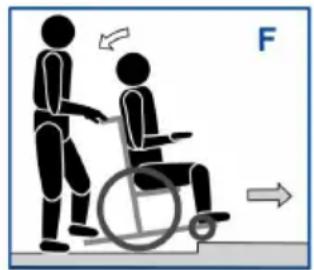
natural_image
Illustration of two people in a wheelchair, one pushing and the other standing, with directional arrows indicating movement (no text or symbols)- The attendant moves the wheelchair forward approaching the kerb. Make sure the footplates won't touch the kerbs.
- Lean backwards to reduce the pressure on the front wheels.
- The attendant holds the handles firmly while moving forward. If necessary he uses the tipping aid to keep the front wheels lifted until they have passed the kerb rim.
- The attendant releases the pressure on the handles and tipping aid to gently put the front wheels on the ground.
- Next, he holds the handles firmly while pushing the wheelchair with the rear wheels up/down the kerb.
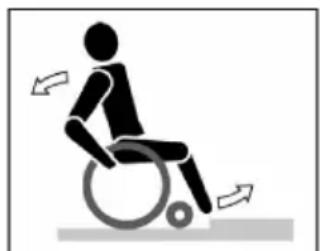
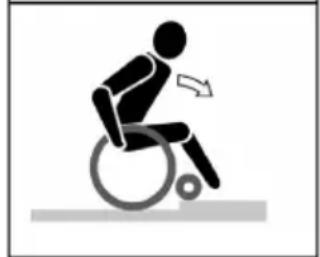
A practiced user can negotiate small kerbs forward by himself:

natural_image
Silhouette of a person in a wheelchair, no text or symbols presentGoing down:
- Bring balance on the rear wheels to reduce the pressure on the front wheels.
- Negotiate the kerb.
natural_image
Silhouette of a person in a wheelchair with directional arrows indicating movement or force (no text or symbols)Going up:
- Drive until the kerb.
- Lean backwards so you are balancing on the rear wheels.
- Role the front wheels balancing over the kerb.
- Bend forwards for more stability.
- Role the rear wheels over the kerb.
natural_image
Silhouette of a person in a wheelchair using a device (no text or symbols)3.4.6.2. Medium kerbs (up or down)
These should be taken backwards with one attendant:

natural_image
Illustration of two human figures in a wheelchair, one moving right and the other seated (no text or symbols)
natural_image
Illustration of a person in a wheelchair being assisted by another person, with directional arrows indicating movement (no text or symbols)- The attendant reverses the wheelchair so that rear wheels approach the kerb first (G / H).
- Going down: Lean forward (G) to move your centre of gravity to the front. Going up: Lean backward (H) to move your centre of gravity to the back.
- The attendant pulls the wheelchair gently from/on the kerb.
3.4.6.3. Higher kerbs
Higher kerbs, but below maximum size, see §5., should be taken with help of two attendants.
Going down:
- Remove the footrests.
- The attendant moves the wheelchair forward approaching the kerb.
- Lean backwards to reduce the pressure on the front wheels.
- The attendant holds the handles firmly and uses the tipping aid to keep the front wheels lifted until they have passed the kerb rim.
- The second attendant grabs the front of the frame and moves backwards while pulling the rear wheels down the kerb.
- The first attendant releases the pressure on the handles and tipping aid to put the front wheels on the ground.
Going up:
- Remove the footrests.
- The first attendant reverses the wheelchair so that rear wheels approach the kerb first.
- Lean backward to move your centre of gravity to the back.
- The second attendant grabs the front of the frame and moves forward while pulling/pushing the rear wheels on the kerb. The first attendant lifts and holds the handles firmly to prevent the wheelchair from tipping over.
4. Maintenance
i Regular care ensures that your wheelchair is preserved in a perfectly functional condition. For the maintenance manual, refer to the Vermeiren website: www.vermeiren.com.
4.1. Points of maintenance
CAUTION
Risk of injuries and damage
- Repairs and replacements may only be undertaken by trained persons and only genuine replacement parts of Vermeiren should be used.
The last page of this manual contains a registration form for the specialist dealer to record each service. The service frequency depends on the frequency and intensity of use. Contact your dealer to agree to a common timetable for inspection/maintenance/repair.
4.1.1. Before each use
Inspect the following points:
- All parts: Present and undamaged or unworn.
- All parts: Clean, see § 4.2.2..
- Wheels, backrest, seat, calf rests, arm rests, footplates: Well secured.
- Condition of wheels/tyres, see § 4.2.1..
- Condition of frame parts: No deformation, instability, weakness or loose connections.
- Seat, backrest, arm pads, calf pads and head rest (if applied): No excessive wear (like dented spots, damage or tears).
- Brakes: Undamaged and functioning.
- Backrest inclination: Undamaged and functioning well (locking, load, no deformation or wear).
Contact your specialist dealer for possible repairs or part replacements.
4.1.2. Yearly or more often
Have your wheelchair inspected and serviced by your specialist dealer, at least once a year, or more often. The minimum maintenance frequency depends on use and should therefore be commonly agreed upon with your specialist dealer.
4.1.3. If stored
Make sure that your wheelchair is stored in a dry environment to prevent mould from growing and the upholstery from being damaged, see also chapter 5..
4.2. Maintenance instructions
EN
4.2.1. Wheels and tyres
Proper working of the brakes depends on the state of the tyres, and can change due to wear and contamination (water, oil, mud, ...).
Keep your wheels free of wires, hair, sand and fibres.
Check the profile of the tyres. If the tread depth is less than 1 mm, the tyres need to be replaced. Contact your specialist dealer for this matter.
Inflate each pneumatic tyre to the correct pressure (see pressure indication on the tyres).
4.2.2. Cleaning
CAUTION
Risk of damage by moisture
- Never use a hose or high-pressure cleaner to clean the wheelchair.
Wipe all rigid parts with a damp cloth (not drenched). If necessary, use a mild soap, suitable for varnishes and synthetics.
The upholstery can be cleaned with lukewarm water and a mild soap. Do not use abrasive cleaning agents to clean.
4.2.3. Disinfection
CAUTION
Risk of damage
- Disinfections may only be undertaken by trained persons. Consult your specialist dealer.
4.3. Troubleshooting
Even if you use your wheelchair properly, a technical problem may occur. In this case, contact your local specialist dealer.
WARNING
Risk of injuries and damage
- NEVER attempt to repair your wheelchair yourself.
The following symptoms may indicate a serious problem. Therefore always contact your specialist dealer if you spot any of the following deviations:
- Strange sound;
- Uneven tread wear on one of the tyres;
- Jerky movements;
- Wheelchair deflects to one side;
- Damaged or broken wheel assemblies.
4.4. Expected lifespan
The wheelchair is designed to have an average lifespan of 5 years. Depending on the frequency of use, driving circumstances and maintenance, the lifespan of your wheelchair will increase or decrease.
4.5. Reuse
Before each reuse, have the wheelchair disinfected, inspected and serviced according to the instructions in § 4.1. and § 4.2..
4.6. End of use
At end of life, you need to dispose your wheelchair according to the local environmental legislation. The best way to do so, is to disassemble the wheelchair to facilitate the transport of recyclable parts.
4.7. Warranty
EN
The warranty on this product is subject to the general terms and conditions of each country.
5. Technical specifications
The technical details below are only valid for this wheelchair, at standard settings and optimal ambient conditions. Take these details into account during use. The values are no longer applicable if your chair has been modified, damaged, or is severely worn.
| Brand Vermeiren | |
| Product group Manual wheelchair | |
| Type Eclips X4 90° Kids | |
| Description Dimensions | |
| Maximum user weight 80 kg | |
| Overall length 830 - 1000 mm | |
| Folded length (without footrest) | 630 - 800 mm |
| Overall width 500 mm | 550 mm |
| Folded width 310 mm | |
| Overall height 820 - 980 mm | |
| Folded height 820 - 980 mm | |
| Total mass ± 16 kg | |
| Mass of heaviest part | 10,4 kg |
| Mass of removable parts Footrests Rear wheels | 1,8 kg 3,8 kg |
| Static stability downhill | 7,5° (in standard configuration) |
| Static stability uphill | Axle block backwards: 4° Axle block forwards: Anti-tipping device must be standard available |
| Static stability sideways | 16° (in standard configuration) |
| We reserve the right to introduce technical changes. Measurement tolerance +- 15 mm / 1,5 kg / 1,5° | |
| Seat plane angle 0° - 6,5° | |
| Effective seat depth 310 mm - 370 mm330 mm - 390 mm | |
| Effective seat width 320 mm370 mm | |
| Seat surface height at front edge | 420 - 470 mm |
| Backrest angle 5° - 95° | |
| Backrest height 350 - 400 mm | |
| Footplate to seat distance 255 - 365 mm | |
| Leg to seat surface angle 11° | |
| Footplate angle 14° | |
| Distance between arm pad and seat | 150 - 180 mm |
| Front location of arm pad structure | 150 mm |
| Horizontal location of axle (deflection) | 70 mm - 120 mm |
| Minimum turning radius 1530 mm | |
| Diameter of rear wheels 22" | |
| Diameter of front wheels | 150 mm |
| Use temperature | +5°C - +41°C |
| Storage and use humidity | 30% - 70% |
| We reserve the right to introduce technical changes. Measurement tolerance +- 15 mm / 1,5 kg / 1,5° | |
Table des matières
FR
Préface
30
1. Votre produit 32
1.1. Options 33
text_image
Labeled diagram of a yellow wheelchair with numbered parts for identificationnatural_image
Technical line drawing of a mechanical assembly with labeled component (1), no readable text or symbols present2.6. Entreposage

TTENTION
Risque de dommages
text_image
30 mm ① ② ③text_image
Technical diagram of a mechanical assembly with numbered parts labeled 1 to 4text_image
Technical diagram of a motorcycle with numbered parts labeled 1 and 2natural_image
Pure mechanical diagram showing a rectangular component with two side supports and directional arrows, no text or symbols present.natural_image
Diagram showing a structural element with an upward arrow and two crossed rods below (no text or symbols)natural_image
Illustration of two people in a wheelchair, one pushing and the other leaning forward (no text or symbols)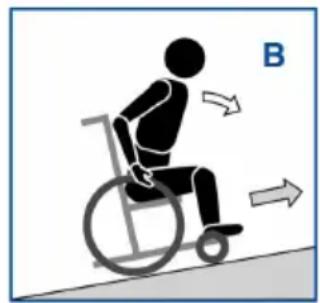
natural_image
Illustration of a person in a wheelchair using a mobility device, with directional arrows indicating movement (no text or symbols)natural_image
Illustration of four figures climbing stairs with a wheelbelt, no text or symbols presentnatural_image
Illustration of a person in a wheelchair being assisted by another person, with directional arrows indicating movement (no text or symbols)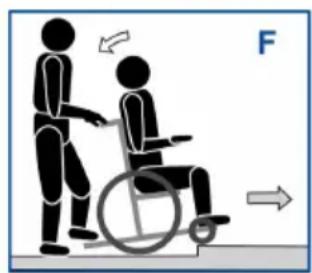
natural_image
Illustration of a person in a wheelchair being assisted by a humanoid figure (no text or symbols)natural_image
Silhouette of a person in a wheelchair, no text or symbols presentDescendre :
natural_image
Silhouette of a person in a wheelchair with directional arrows indicating movement or force (no text or symbols)Monter :
natural_image
Illustration of two figures in a wheelchair, one moving right and the other seated (no text or symbols)natural_image
Illustration of two people in a wheelchair interacting, with directional arrows indicating movement or force (no text or symbols)text_image
Labeled diagram of a yellow wheelchair with numbered parts for identificationtext_image
Technical diagram of a mechanical assembly with labeled component 12.6. Opslag
NL
VOORZICHTIG
text_image
30 mm ① ② ③text_image
Technical diagram of a mechanical assembly with numbered parts labeled 1 to 4text_image
Technical diagram of a motorcycle with numbered parts labeled 1 and 2natural_image
Pure mechanical diagram showing a rectangular component with two side supports and a central shaft, no text or symbols present.natural_image
Diagram showing a structural element with a downward arrow and two crossed tools below (no text or symbols)natural_image
Illustration of two figures in a wheelchair, one pushing and the other standing, with directional arrows indicating movement (no text or symbols)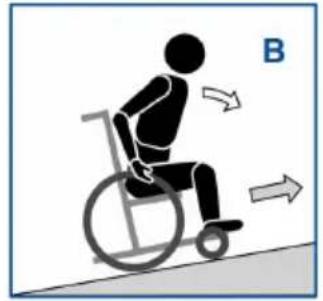
natural_image
Illustration of a person in a wheelchair with motion arrows indicating movement (no text or symbols)natural_image
Illustration of four human figures climbing stairs, one pushing a wheel with a diagonal line (no text or symbols)natural_image
Illustration of a person in a wheelchair being assisted by another person, with directional arrows indicating movement (no text or symbols)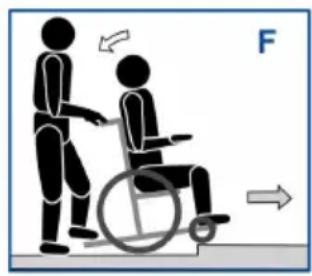
natural_image
Illustration of two people in a wheelchair, one pushing and the other seated, with directional arrows indicating movement (no text or symbols)natural_image
Silhouette of a person in a wheelchair, no text or symbols presentAfrijden:
natural_image
Two identical illustrations of a person in a wheelchair performing a seated motion, with arrows indicating movement direction (no text or symbols)Oprijden
natural_image
Illustration of two human figures in a wheelchair, one moving and the other seated (no text or symbols)natural_image
Illustration of a person in a wheelchair being assisted by another person, with directional arrows indicating movement (no text or symbols)3.4.6.3. Hoge stoepranden
text_image
Labeled diagram of a yellow wheelchair with numbered parts for identificationnatural_image
Mechanical assembly diagram showing a curved conveyor belt system with flanged components and a numbered component (1), no text or symbols present.2.6. Lagerung
AORSICHT
Beschädigungsgefahr
text_image
30 mm ① ② ③text_image
Technical diagram of a mechanical assembly with numbered components for identificationtext_image
Technical diagram of a motorcycle with numbered parts labeled 1 and 2natural_image
Pure mechanical diagram showing two symmetrical components with no text or symbolsnatural_image
Diagram showing a rectangular object with a downward arrow and two crossed metal rods below (no text or symbols)natural_image
Illustration of two people in a wheelchair, one pushing and the other leaning forward (no text or symbols)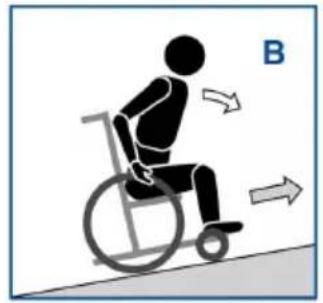
natural_image
Illustration of a person in a wheelchair with directional arrows indicating movement or force (no text or symbols)natural_image
Illustration of four figures climbing stairs with a wheelbelt, no text or symbols presentnatural_image
Illustration of a person in a wheelchair being assisted by another person, with directional arrows indicating movement (no text or symbols)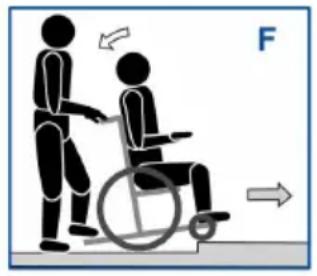
natural_image
Illustration of a person in a wheelchair assisting another, with directional arrows indicating movement (no text or symbols)natural_image
Silhouette of a person in a wheelchair, no text or symbols presentAbstieg:
natural_image
Two identical illustrations of a person in a wheelchair, showing motion and movement directions (no text or symbols)Aufstieg:
natural_image
Illustration of two figures in a wheelchair, one moving and the other seated (no text or symbols)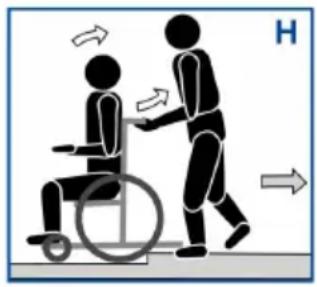
natural_image
Illustration of two people in a wheelchair and walking, with directional arrows indicating movement (no text or symbols)text_image
Labeled diagram of a yellow wheelchair with numbered parts for identificationnatural_image
Mechanical assembly diagram showing a rotating wheel and flanged components (no text or labels)2.6. Magazzinaggio

TTENZIONE
Rischio di danni
text_image
30 mm ① ② ③text_image
Technical diagram of a mechanical assembly with numbered parts labeled 1 to 4text_image
Technical diagram of a motorcycle with numbered parts labeled 1 and 2natural_image
Illustration of two figures in a wheelchair, one pushing and the other leaning forward (no text or symbols)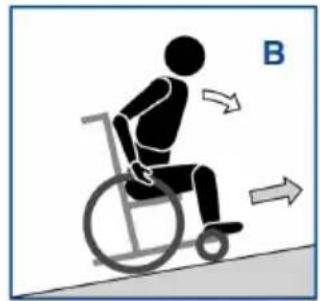
natural_image
Illustration of a person in a wheelchair using a horizontal barbell, with arrows indicating movement direction (no text or symbols)natural_image
Illustration of four human figures climbing stairs, one pushing a wheel with a diagonal line (no text or symbols)natural_image
Illustration of a person in a wheelchair being assisted by another person, with directional arrows indicating movement (no text or symbols)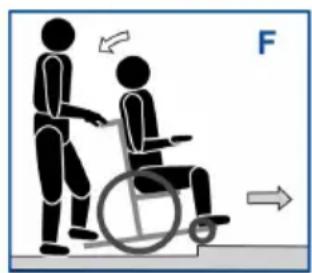
natural_image
Illustration of a person in a wheelchair being assisted by a humanoid figure (no text or symbols)natural_image
Silhouette of a person in a wheelchair, no text or symbols presentIn discesa:
natural_image
Silhouette of a person in a wheelchair with motion arrows indicating movement (no text or symbols)In salita:
natural_image
Illustration of two figures in a wheelchair, one moving right and the other seated (no text or symbols)natural_image
Illustration of a person in a wheelchair being assisted by another person, with directional arrows indicating movement (no text or symbols)text_image
Labeled diagram of a yellow and black wheelchair with numbered parts for identificationnatural_image
Mechanical assembly diagram showing a curved conveyor belt system with flanged components and a numbered component (1), no text or symbols present.2.6. Almacenamiento
PRECAUCIÓN
Riesgo de daños
text_image
30 mm ① ② ③text_image
Technical diagram of a mechanical assembly with numbered components labeled 1 to 4text_image
Technical diagram of a motorcycle with numbered parts labeled 1 and 23.3.3.1. Montar los reposapiés
natural_image
Pure mechanical diagram showing two symmetrical components with arrows indicating upward motion (no text or symbols)natural_image
Diagram showing two crossed tools with a central component and directional arrows (no text or symbols)natural_image
Illustration of two people in a wheelchair, one pushing and the other leaning forward (no text or symbols)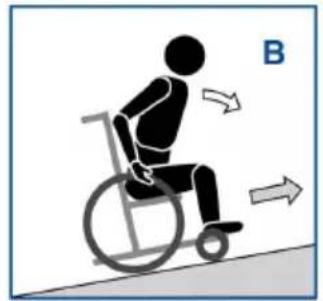
natural_image
Illustration of a person in a wheelchair with directional arrows indicating movement or force (no text or symbols)natural_image
Illustration of four human figures climbing stairs, one pushing a wheel with a diagonal line (no text or symbols)natural_image
Illustration of a person in a wheelchair being assisted by another person, with directional arrows indicating movement (no text or symbols)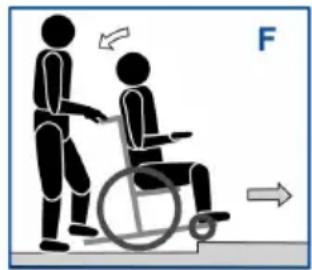
natural_image
Illustration of two human figures in a wheelchair, one pushing and the other standing, with directional arrows indicating movement (no text or symbols)natural_image
Silhouette of a person in a wheelchair, no text or symbols presentBajar:
natural_image
Two identical illustrations of a person in a wheelchair, showing motion and movement directions (no text or symbols)Subir:
natural_image
Illustration of two human mobility scenarios (G and H) showing a person in a wheelchair being assisted by a person in a wheelchair, with directional arrows indicating movement.text_image
Labeled diagram of a yellow wheelchair with numbered parts for identificationnatural_image
Mechanical assembly diagram showing a rotating wheel and flanged components (no text or symbols)2.6. Przechowywanie
!WAGA
Ryzyko uszkodzenia
text_image
30 mm ① ② ③text_image
Technical diagram of a mechanical assembly with numbered parts labeled 1 to 4text_image
Technical diagram of a motorcycle with numbered parts labeled 1 and 2natural_image
Pure mechanical diagram showing a rectangular component with two side supports and directional arrows, no text or symbols present.natural_image
Diagram showing a cylindrical object with an upward arrow and two crossed metal rods below (no text or symbols)natural_image
Illustration of two figures in a wheelchair, one pushing and the other leaning forward (no text or symbols)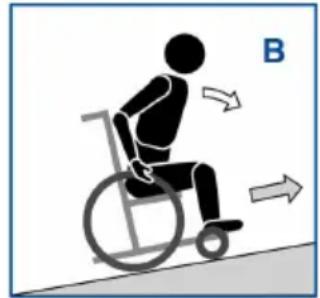
natural_image
Illustration of a person in a wheelchair using a horizontal barbell, with arrows indicating movement direction (no text or symbols)natural_image
Illustration of four human figures climbing stairs, one pushing a wheel with a crossed-out ring (no text or symbols)natural_image
Illustration of a person in a wheelchair being assisted by another person, with directional arrows indicating movement (no text or symbols)
natural_image
Illustration of two figures in a wheelchair, one standing and one seated, with directional arrows indicating movement (no text or symbols)natural_image
Silhouette of a person in a wheelchair, no text or symbols presentZjeżdżanie:
natural_image
Two identical illustrations of a person in a wheelchair performing a seated motion, with arrows indicating movement direction (no text or symbols)Wjeżdżanie:
natural_image
Two-panel illustration showing a person in a wheelchair and a person in a wheelchair, both with directional arrows indicating movement or force (no text or symbols)text_image
Labeled diagram of a yellow wheelchair with numbered parts for identificationtext_image
Technical diagram of a mechanical assembly with labeled component 12.6. Skladování
POZOR
Riziko poškození
text_image
30 mm ① ② ③text_image
Technical diagram of a mechanical assembly with numbered parts labeled 1 to 4text_image
Technical diagram of a bicycle with numbered parts labeled 1 and 2natural_image
Pure mechanical diagram showing two symmetrical components with arrows indicating upward motion (no text or symbols)natural_image
Diagram showing two mechanical components: a cylindrical component with downward force and a crossed tool with straight end (no text or symbols)natural_image
Illustration of two people in a wheelchair, one pushing and the other leaning forward (no text or symbols)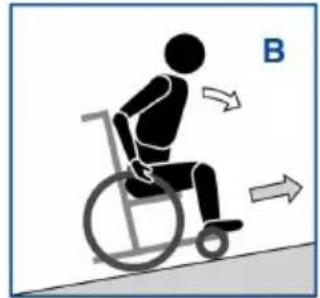
natural_image
Illustration of a person in a wheelchair using a horizontal barbell, with arrows indicating movement direction (no text or symbols)natural_image
Illustration of four human figures climbing stairs, one pushing a wheel with a crossed-out ring (no text or symbols)natural_image
Illustration of a person in a wheelchair being assisted by another person, with directional arrows indicating movement (no text or symbols)
natural_image
Illustration of two people in a wheelchair, one pushing and the other standing, with directional arrows indicating movement (no text or symbols)natural_image
Silhouette of a person in a wheelchair, no text or symbols presentJízda dolů:
natural_image
Silhouette of a person in a wheelchair with directional arrows indicating movement or force (no text or symbols)Jízda nahoru:
natural_image
Illustration of two human figures in a wheelchair, one moving and the other seated (no text or symbols)
natural_image
Illustration of a person in a wheelchair being assisted by another person, with directional arrows indicating movement (no text or symbols)Service registration form
This product (name): ....
was inspected (I), serviced (S), repaired (R) or disinfected (D):
| By (stamp):Kind of work: I / S / R / DDate: | By (stamp):Kind of work: I / S / R / DDate: | By (stamp):Kind of work: I / S / R / DDate: |
| By (stamp):Kind of work: I / S / R / DDate: | By (stamp):Kind of work: I / S / R / DDate: | By (stamp):Kind of work: I / S / R / DDate: |
| By (stamp):Kind of work: I / S / R / DDate: | By (stamp):Kind of work: I / S / R / DDate: | By (stamp):Kind of world: I / S / R / DDate: |
| By (stamp):Kind of work: I / S / R / DDate: | By (stamp):Kind of work: I / S / R / DDate: | By (stamp):Kind of work: I / S / R / DDate: |
| By (stamp):Kind of work: I / S / R / DDate: | By (stamp):Kind of work: I / S /R / DDate: | By (stamp):Kind of work: I / S / R / DDate: |
| By (stamp):Kind of work: I / S / R / DDate: | By (stamp):Kind of work: I / S / R / DDate: | By (stamp):Kind of work: I / S / R / DDate: |
VERMEIREN GROUP
Vermeirenplein 1/15
2920 Kalmthout
Belgium
www.vermeiren.com
Version: D, 2025-07
Basic UDI-DI: 5415174122106EclX490KdsQ5
All rights reserved, including translation.