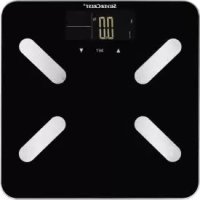
USER MANUAL SPWD 180 I1 SILVERCREST
Last Information Update
Sereate information nonperforming
Operating instructions and safety instructions
NL BE
DIAGNOSE WEEGSCHAAL
NIRS is bound to be spectroscopic phy
图
https://www.targa.gmbh/downloads/conformity/449107_2301.pdf
- Technical specifications 22
- Safety instructions 22
- Copyright 26
- Before you start....26
7.1 Activating the batteries....26
7.2 Entering or changing personal data.... 27
- Getting started 27
8.1 Switching on the scales / measuring weight....28
8.2 Switching on the scales / measuring weight, BMI, recommended calorie intake and body fat, water, bone and muscle percentages.... 28
8.3 Auto power off....29
8.4 Replacing the batteries....30
- Troubleshooting....30
9.1 Nothing is indicated on the display....30
9.2 "Lo" is indicated on the display and the scales switch off 30
9.3 "USEL" is indicated on the display and the scales switch off 31
9.4 "Err" is indicated on the display 31
9.5 "Err2" is indicated on the display....31
-
Maintenance/cleaning 31
-
Environmental regulations and disposal information.... 31
- Conformity notes 33
- Warranty and service information.... 33
Congratulations!
By purchasing the SilverCrest SPWD 180 11 diagnostic scales, hereinafter referred to as the diagnostic scales, you have opted for a quality product.
Before first using it, familiarise yourself with the way the diagnostic scales work and read these operating instructions through carefully. Be careful to follow the safety instructions and only use the diagnostic scales as described in the operating instructions and for the applications given.
Keep these operating instructions in a safe place. If you pass the diagnostic scales on to someone else, make sure to give them all the relevant documents with them.
1. Intended use
These diagnostic scales are used to determine a person's weight. Furthermore, it is possible to measure body fat, water, muscle and bone percentages, to determine your recommended daily calorie intake and the BMI. These diagnostic scales may not be used outdoors or in tropical climates. These diagnostic scales have not been designed for corporate or commercial use. Use the diagnostic scales in domestic environments for private applications only. Any other use does not correspond to the intended use. These diagnostic scales fulfill all relevant norms and standards concerning CE conformity. Any modifications to the diagnostic scales other than recommended changes by the manufacturer may result in these norms no longer being met. The manufacturer accepts no liability for any damage or malfunctions resulting from this. Only use accessories recommended by the manufacturer.
Observe the regulations and laws in the country of use.
2. Package contents
• SilverCrest SPWD 180 I1 diagnostic scales
• 2x CR2032 lithium batteries
• These operating instructions
3. Overview
These operating instructions have a fold-out cover. On the inside of the cover, the diagnostic scales are shown with figures indicated. The meanings of the numbers are as follows:
1 Display
2 ▲ button
3 SET button
4 ▼ button
5 Tread
6 Electrodes
7 Battery compartment
3.1 Display
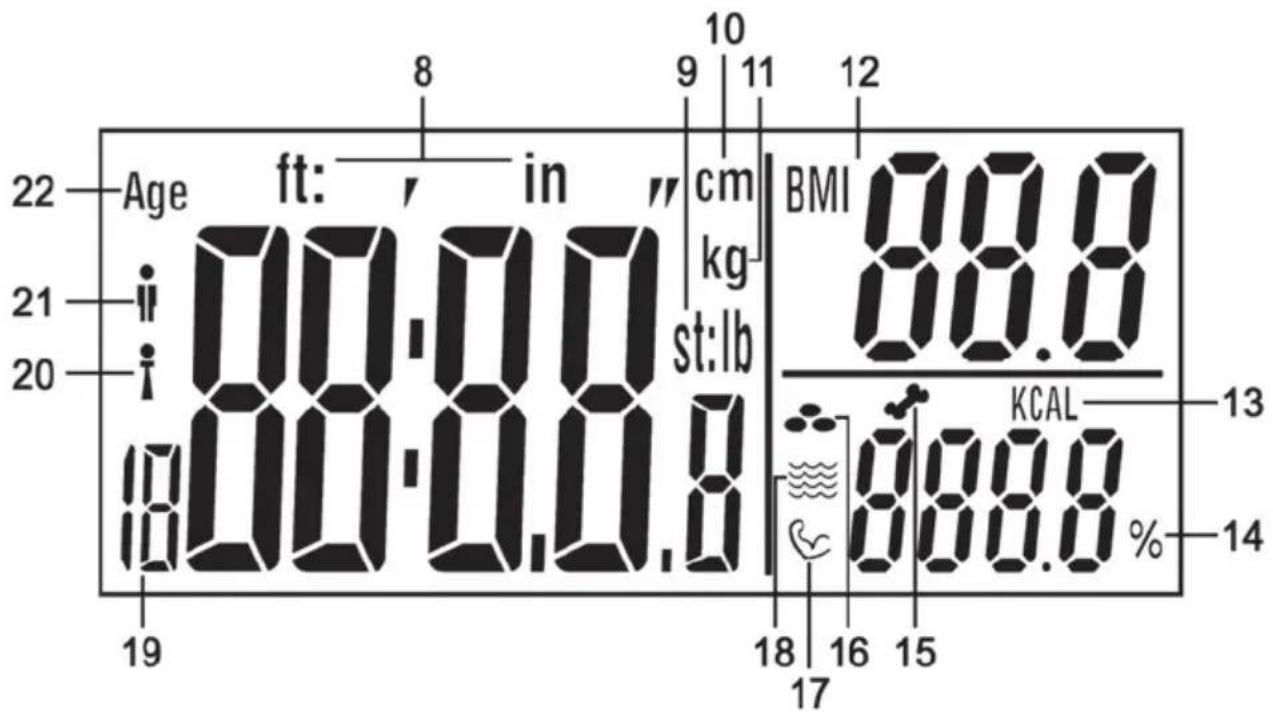
8 Body height in feet:inches
9 st:lb Unit of weight in stones:pounds
1b Unit of weight in pounds
10 Body height in cm
11 Unit of weight in kilograms
12 BMI (Body Mass Index)
13 Recommended calorie intake per day
14 Percentage (of body fat, water, muscle, bones)
15 Bone percentage
16 Body fat percentage
17 Muscle percentage
18 Water percentage
19 User profile memory
20 Female
21 Male
22 Age
4. Technical specifications
Operating voltage: 6 V

Battery: 2 Lithium battery, 3 V, CR2032
Units of weight: kg / st / lb (adjustable)
Maximum weight: 180 kg / 396 lb / 28 st
Graduation: 0.1 kg / 0.2 lb
Measuring tolerance: +/- (1% +0.1 kg/ 0.2 lb) for 30 kg to 180 kg
Auto Power Off function: yes
User profile memories: 12
Gender: female / male
Age range for diagnostic functions: 10-80 years
Levels of activity: 6 (none, little, normal, moderate, intense, athletic)
Supported body heights: 100 - 220 cm
Dimensions (W x H x D): approx. 30 x 2,2 x 30 cm
Weight: approx. 1.6 kg incl. batteries
Operating temperature: +10°C to +40°C
The technical data and design may be changed without prior notice.
5. Safety instructions
Before you use the diagnostic scales for the first time, please read the following notes and heed all warnings, even if you are familiar with handling electronic devices. Keep these operating instructions in a safe place for future reference. If you sell the diagnostic scales or give them away, pass on the operating instructions at the same time.

WARNING! This signal word indicates a danger with a moderate risk, which can lead to death or major injuries if not avoided.
This symbol indicates that one must not step on the diagnostic scales with wet or damp feet. The same applies if the tread is wet or damp. You could slip and injure yourself.
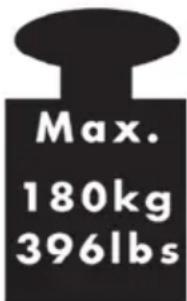
This symbol indicates that the diagnostic scales cannot bear weights over 180 kg or 396 lb. Otherwise, the diagnostic scales could be damaged and there is a risk of injury.

This symbol denotes further information on the topic.
This diagnostic scales may be used by children of 8 years or over (diagnostic function 10 years old minimum) or by persons with physical, sensory or mental impairments or those with no knowledge or experience providing they are supervised or they have been given instructions on the proper use of the diagnostic scales and they understand the associated risks. Do not allow children to play with the diagnostic scales. The product must not be cleaned or maintained by unsupervised children. Keep the packaging materials out of the reach of children. There is a risk of suffocation.
Do not use the diagnostic scales under any circumstances if you wear a pacemaker. Never use the diagnostic scales in the vicinity of anyone who wears a pacemaker or other medical devices.
⚠ The diagnostic scales are not suitable for pregnant women.
Do not step on the diagnostic scales with wet or damp feet or when the tread is damp. You could slip and injure yourself.
Do not overload the diagnostic scales with more than 180 kg or 396 lb. Otherwise, the diagnostic scales could be damaged and there is a risk of injury.
Do not jump on the tread of the diagnostic scales. Otherwise, they could be damaged and there is a risk of injury.
⚠️ If smoke, unusual noises or smells are noticed, remove the batteries from the diagnostic scales immediately. If this occurs, the diagnostic scales should not be used before it they have been inspected by authorised service personnel. Never inhale smoke from a possible device fire. If you do inadvertently inhale smoke, seek medical attention. Smoke inhalation can be damaging to your health.
The diagnostic scales must not be damaged in order to avoid any further risks.
⚠ Make sure that no fire hazards (e.g. burning candles) ar placed on or near the diagnostic scales. Fire hazard!
Do not expose the diagnostic scales to any direct heat sources (e.g. heaters), direct sunlight or artificial light. The product must not be exposed to spray or dripping water or abrasive liquids. Do not use the diagnostic scales near water. The diagnostic scales must especially never be immersed (do not place any containers containing liquids such as drinks, vases, etc. on the diagnostic scales). Take care that the diagnostic scales are not subject to excessive impacts or vibrations. Do not introduce any foreign bodies into the device. as these could damage the diagnostic scales.
Do not short-circuit the batteries. Remove the batteries from the device when you are not going to use it for a long period of time. If the batteries have leaked, remove them to prevent damage to the diagnostic scales. You can wipe off any leaked battery fluid by using a dry, absorbing cloth. Always wear protective gloves! Avoid any skin contact. If the battery fluid comes into contact with the skin or eyes, rinse immediately with plenty of water and seek medical aid.
⚠️ Non-rechargeable batteries must not be recharged.
Different types of batteries or new and old batteries must not be used together.
⚠ Do not short-circuit any battery contacts.
⚠ Batteries must be inserted respecting the correct polarity.
⚠️ Empty batteries must be removed from the device and must be disposed of properly.
6. Copyright
All the contents of this user manual are protected by copyright and provided to the reader for information only. Copying data and information without the prior explicit written consent of the author is strictly forbidden. This also applies to any commercial use of the contents and information. All texts and diagrams are up-to-date as of the date of printing. Subject to change without notice.
7. Before you start
7.1 Activating the batteries
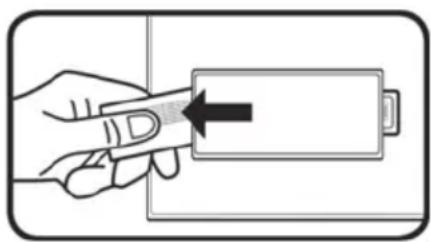
Remove the strip from the battery compartment (7) on the bottom of the diagnostic scales. The diagnostic scales are now ready to use.
7.2 Entering or changing personal data

Make sure that you set the correct unit of weight before you enter your personal data. Refer to the chapter "Switching on the scales / measuring weight".
You must enter your personal data when you first measure your body weight, BMI, recommended calorie intake and body fat, water, bone and muscle percentages. Proceed as follows:
- Briefly step on the scales to switch them on.
- Press the SET (3) button to enter diagnostic mode.
- The user profile memory (19) then flashes on the display (1). Press the ▲ button (2) or ▼ button (4) to select the desired user profile memory (19) [1-12]. Press the SET button (3) to confirm your selection.
- You can then successively enter gender [male (21)/female (20)], age (22), height and level of activity via the ▲ button (2) and ▼ button (4). Press the SET button (3) to confirm each entry.

You can use the level of activity to specify your sporting activity. The following 6 levels of activity are available: AC-1 = none, AC-2 = little, AC-3 = normal, AC-4 = moderate, AC-5 = intense and AC-6 = athletic.
8. Getting started

A solid surface is required to measure weight correctly. Thus always place the diagnostic scales on a solid, horizontal floor covering and never on carpet. This can distort the measurement result.

To obtain comparable measurement results, you should always weigh yourself if possible at the same time of day (preferably in the morning). Always weigh yourself if possible under the same conditions: on an empty stomach, after having gone to the toilet and naked.

Please note that values for the stone unit of weight are not represented as decimal values. The display is divided into two segments by a colon. Only whole numbers are displayed in the "st" unit of weight to the left of the colon. The remaining weight is displayed in the "lb" unit of weight to the right of the colon.
Example: "6:8.2 st:lb" is shown on the display. This corresponds to 6 st and 8,2 lb.

The diagnostic scales must be calibrated before first use or after having been moved to ensure that they can determine one's weight exactly. To do so, step briefly on to the tread (5), step off it again and wait until the diagnostic scales switch off automatically. The diagnostic scales are now calibrated.
8.1 Switching on the scales / measuring weight
Due to the step on power function, the diagnostic scales are switched on automatically when you step on the tread (5) and they start to measure your weight immediately.
In their original state, the diagnostic scales are set to the "kg" (11) unit of weight. Once the selected unit of weight is displayed, press the buttons ▲ (2) or ▼ (4) to change it. The selected unit of weight is then indicated on the display (1).
Stand on the tread (5) of the diagnostic scales so that your weight is evenly distributed. Remain as still as possible during the weighing process as the measurement result may be distorted otherwise. The measurement result is indicated on the display (1) during the weighing process. The measurement is complete when the display flashes.
8.2 Switching on the scales / measuring weight, BMI, recommended calorie intake and body fat, water, bone and muscle percentages
You must first enter your personal data before performing these measurements. Please pay particular attention to the section "Entering or changing personal data". Proceed as follows to perform the measurement:
- Briefly step on the scales to switch them on.
• Press the SET (3) button to enter diagnostic mode.
- Press the ▲ button (2) and ▼ button (4) to select the desired user profile memory (19).
• Stand barefoot on the tread (5) and make sure that you are standing on the electrodes (6).
- The user profile memory (19) flashes several times. The age and body height set are displayed one after the other before the measurement of body weight begins. After the body weight is displayed flashing, measurement of the other values begins. Stay on the electrodes (6) until measurement is complete. During the weighing and measurement process, try to stay as still as possible to ensure an accurate result.
- Once the measurement is completed, your body weight and BMI (12) are displayed. Please note the following table to interpret the BMI (12).
| Weights classification for adult people by BMI (according to WHO, as of 2008) |
| Category BMI (kg/m2) Body weight | |
| Severe underweight < 16 | | Underweight |
| Underweight 16 - 16.9 | |
| Light underweight 17 - 18.4 | |
| Normal weight 18,5 - 24.9 Normal weight | |
| Overweight 25 - 29.9 Obese | | |
| Obese Class I 30 - 34.9 | | Obese |
| Obese Class II 35 - 39.9 | |
| Obese Class III ≥ 40 | |
• The following values are displayed a few times in succession:
○ Body fat percentage (16)
o Water percentage (18)
o Muscle percentage (17)
○ Bone percentage (15)
○ Recommended calorie intake per day (13)
8.3 Auto power off
The diagnostic scales have an automatic switch-off function (Auto Power Off function). After displaying the measurement result, the diagnostic scales switch off automatically.
8.4 Replacing the batteries
Replace the batteries when they are empty. To replace the lithium batteries CR2032, remove the cover of the battery compartment (7) at the rear of the diagnostic scales by inserting a finger into the recess of the battery compartment (7). Then lift the battery compartment (7) cover upwards and remove it.
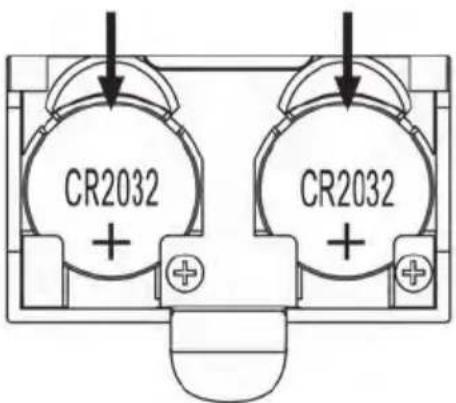
To remove the batteries, push them down a bit (see the direction of the arrow in the illustration). You can then remove the batteries from the holder.
Then insert two new CR2032 lithium batteries. Always pay attention to the polarity. This is indicated in the battery compartment (7), and the + symbol on the CR2032 lithium batteries must be visible, as shown in the adjoining illustration.
Next insert the battery compartment (7) cover back to its original position. The diagnostic scales are now ready to use.

Your input data are stored permanently and will not be lost when replacing the batteries.
9. Troubleshooting
9.1 Nothing is indicated on the display
- The CR2032 lithium batteries are empty. Replace the CR2032 lithium batteries with new ones of the same type. Please note the instructions in the "Replacing the batteries" section.
- The CR2032 lithium batteries are inserted incorrectly. Please note the instructions in the "Replacing the batteries" section.
9.2 "Lo" is indicated on the display and the scales switch off
- The CR2032 lithium batteries are almost empty. Replace the CR2032 lithium batteries with new ones of the same type. Please note the instructions in the "Replacing the batteries" section.
9.3 "USEL" is indicated on the display and the scales switch off
- An error has occurred and the diagnostic scales cannot perform the measurement. If this happens, step off the tread (5) on the diagnostic scales and restart the measurement.
9.4 "Err" is indicated on the display
- Your weight exceeds the maximum load capacity of 180 kg / 396 lb / 28 st. You should step off the tread (5) of the diagnostic scales immediately to avoid damaging the scales.
9.5 "Err2" is indicated on the display
- An error occurred during measurement. If this happens, step off the tread (5) on the diagnostic scales and restart the measurement. Make sure that you are standing on the electrodes (6).
10. Maintenance/cleaning
Repairs are required if the diagnostic scales have been damaged in any way, for example if the device housing is damaged, when liquids or objects have penetrated into the diagnostic scales or when the product has been exposed to rain or moisture. Repairs are also necessary if the product does not perform normally or if it has been dropped. If smoke, unusual noises or smells are noticed, remove the batteries from the diagnostic scales immediately. If this occurs, the diagnostic scales should not be used before they have been inspected by authorised service personnel. All servicing work must be carried out by qualified specialist personnel. Never open the diagnostic scales housing. Only use a clean, dry cloth for cleaning the device. Never use any corrosive liquids.
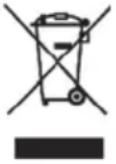 | Devices marked with this symbol are subject to the European Directive 2012/19/EU. All electrical and electronic devices must be disposed of separately from household waste at official disposal centres. Avoid damage to the environment and risks to your personal health by disposing of the device properly. For further information about proper disposal, contact your local government, disposal bodies or the shop where you bought the device. |
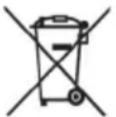 | The symbol of the crossed-out wheelie bin on conventional and rechargeable batteries indicates that they cannot be disposed of in normal domestic waste but must be disposed of separately.Where batteries contain toxic materials, the chemical symbol of the toxic material is shown underneath the symbol, with meanings as follows:- Pb: Battery contains lead- Cd: Battery contains cadmium- Hg: Battery contains mercuryYou are obliged by law to return used batteries. Old batteries can contain toxic materials which can be damaging to health or the environment if not properly stored or disposed of. Batteries also contain important raw materials, such as iron, zinc, manganese and nickel, which can be reused.After use, you can return the batteries to us or to a local collection point (e.g. in retail outlets or a local collection point) free of charge. Please note that batteries must be disposed of fully discharged at appropriate collection points for old batteries. If disposing of batteries which are not fully discharged, take precautions to prevent short circuits. |
 | Dispose of all packaging in an environmentally friendly manner. Cardboard packaging can be taken to paper recycling centres or public collection points for recycling. Any film or plastic contained in the packaging should be taken to your public collection points for disposal. |
 ES/PT ES/PT |
Only relevant for France:  "Sorting made easy"The product, the accessories, the printed material and the packaging are recyclable. They are subject to enhanced manufacturer responsibility and are sorted and collected separately. "Sorting made easy"The product, the accessories, the printed material and the packaging are recyclable. They are subject to enhanced manufacturer responsibility and are sorted and collected separately. |
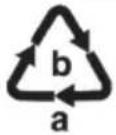
 | Please note the markings on the packaging material when disposing of it, it is labelled with abbreviations (a) and numbers (b), the meanings of which are as follows:1-7: plastic / 20-22: paper and cardboard / 80-98: composite materials. |
 |
| Symbol | Material | Contained in the following packaging elements for this product |
| 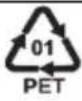 | Polyethylene terephthalate |
|  | Corrugated cardboard Sales packaging and inner box |

The product complies with the requirements of the applicable European and national directives. Evidence of conformity has been provided. The manufacturer has the relevant declarations and documentation.
The product complies with the requirements of the applicable national directives of the Republic of Serbia.

The product complies with the requirements of the applicable national directives for Great Britain.
The complete EU Declaration of Conformity is available for download from this link:
https://www.targa.gmbh/downloads/conformity/449107_2301.pdf
Warranty of TARGA GmbH
Dear Customer,
This device is sold with three years warranty from the date of purchase. In the event of product defects, you have legal rights towards the seller. These statutory rights are not restricted by our warranty as described below.
Warranty conditions
The warranty period commences upon the date of purchase. Please keep the original receipt in a safe place as it is required as proof of purchase. If any material or manufacturing faults occur within three years of purchase of this product, we will repair or replace the product free of charge as we deem appropriate.
Warranty period and legal warranty rights
The warranty period is not extended in the event of a warranty claim. This also applies to replaced and repaired parts. Any damage or defects discovered upon purchase must be reported immediately when the product has been unpacked. Any repairs required after the warranty period will be subject to charge.
Scope of warranty
The device was carefully manufactured in compliance with stringent quality guidelines and subjected to thorough testing before it left the works. The warranty applies to material and manufacturing faults. This warranty does not cover product components which are subject to normal wear and which can therefore be regarded as wearing parts, or damage to fragile components such as switches, rechargeable batteries or components made of glass. This warranty is void if the product is damaged, incorrectly used or serviced. To ensure correct use of the product, always comply fully with all instructions contained in the user manual. The warnings and recommendations in the user manual regarding correct and incorrect use and handling of the product must always be observed and complied with. The product is solely designed for private use and is not suitable for commercial applications. The warranty is rendered void in the event of incorrect handling and misuse, if it is subjected to force, and also if any person other than our authorised service technicians interfere with the device. No new warranty period commences if the product is repaired or replaced.
Submitting warranty claims
To ensure speedy handling of your complaint, please note the following:
- Before using your product for the first time, please read the enclosed documentation carefully. Should any problems arise which cannot be solved in this way, please call our hotline.
- Always have your receipt, the product article number as well as the serial number (if available) to hand as proof of purchase.
- If it is not possible to solve the problem on the phone, our hotline support staff will initiate further servicing procedures depending on the fault.
- You can find this and many more manuals, product videos and installation software available for download at www.lidl-service.com. This QR code takes you directly to the LIDL service page (www.lidl-service.com). There, you can enter the item number (IAN) to access your operating manual.

Service

Phone: 0800 404 7657
E-Mail: targa@lidl.co.uk

Phone: 1800
101010
E-Mail: targa@lidl.ie

Phone: 800
62230
E-Mail: targa@lidl.com.mt

Phone: 8009
4241
E-Mail: targa@lidl.com.cy
IAN: 449107_2301

Manufacturer
Please note that the following address is not a service address. First contact the service point stated above.
TARGA GmbH
Coesterweg 45
59494 Soest
GERMANY
Table des matières
Cher client, chère cliente,
Cher client, chère cliente,
https://www.targa.gmbh/downloads/conformity/449107_2301.pdf
https://www.targa.gmbh/downloads/conformity/449107_2301.pdf
https://www.targa.gmbh/downloads/conformity/449107_2301.pdf
Záruka spoločnosti TARGA GmbH
https://www.targa.gmbh/downloads/conformity/449107_2301.pdf
https://www.targa.gmbh/downloads/conformity/449107_2301.pdf
https://www.targa.gmbh/downloads/conformity/449107_2301.pdf
https://www.targa.gmbh/downloads/conformity/449107_2301.pdf