MEX-BT5000 - Car stereo SONY - Free user manual and instructions
Find the device manual for free MEX-BT5000 SONY in PDF.



User questions about MEX-BT5000 SONY
0 question about this device. Answer the ones you know or ask your own.
Ask a new question about this device
Download the instructions for your Car stereo in PDF format for free! Find your manual MEX-BT5000 - SONY and take your electronic device back in hand. On this page are published all the documents necessary for the use of your device. MEX-BT5000 by SONY.
USER MANUAL MEX-BT5000 SONY
Bluetooth™ Audio System
Operating Instructions ____ GB
Be sure to install this unit in the dashboard of the car for safety. For installation and connections, see the supplied installation/connections manual.
Warning if your car's ignition has no ACC position
After turning the ignition off, be sure to press and hold OFF on the unit until the display disappears.
Otherwise, the display does not turn off and this causes battery drain.
CLASS 1 LASER PRODUCT
This label is located on the bottom of the chassis.
The nameplate indicating operating voltage, etc., is located on the bottom of the chassis.
CE
Hereby, Sony Corp., declares that this MEX-BT5000 is in compliance with the essential requirements and other relevant provisions of Directive 1999/5/EC.
For details, please access the following URL: http://www.compliance.sony.de/
Disposal of Old Electrical & Electronic Equipment (Applicable in the European Union and other European countries with separate collection systems)
This symbol on the product or on its
packaging indicates that this product shall not be treated as household waste. Instead it shall be handed over to the applicable collection point for the recycling of electrical and electronic equipment. By ensuring this product is disposed of correctly, you will help prevent potential negative consequences for the environment and human health, which could otherwise be caused by inappropriate waste handling of this product. The recycling of materials will help to conserve natural resources. For more detailed information about recycling of this product, please contact your local Civic Office, your household waste disposal service or the shop where you purchased the product.
Applicable accessory: Remote commander
BBE®MP DIGITAL
Manufactured under license from BBE Sound, Inc. The BBE MP process
improves digitally compressed sound, such as MP3, by restoring and enhancing the higher harmonics lost through compression. BBE MP works by generating even-order harmonics from the source material, effectively recovering warmth, detail and nuance.
The Bluetooth word mark and logos are owned by the Bluetooth SIG, Inc. and any use of such marks by Sony Corporation is under license. Other trademarks and trade names are those of their respective owners.
SonicStage and its logo are trademarks of Sony Corporation.
“ATRAC” and ATRAC are trademarks of Sony Corporation.

Microsoft, Windows Media, and the Windows logo are trademarks or registered trademarks of Microsoft
Corporation in the United States and/or other countries.
Welcome! 4
Getting Started
Resetting the unit....6
Setting the clock 6
Detaching the front panel 6
Attaching the front panel 7
Inserting the disc in the unit 7
Ejecting the disc 7
Location of controls and basic operations
Audio function 8
Bluetooth function 10
CD
Display items 12
Repeat and shuffle play....12
Radio
Storing and receiving stations ..... 12
Storing automatically — BTM ..... 12
Storing manually....12
Receiving the stored stations ..... 12
Tuning automatically 12
Receiving a station through a list — LIST....13
RDS 13
Overview....13
Setting AF and TA 13
Selecting PTY....14
Setting CT....14
Bluetooth function
Before using the Bluetooth function.... 15
Menu operations of the Bluetooth function 15
Configuring Bluetooth Settings ..... 15
Pairing and connecting this unit with a Bluetooth device. 15
Connecting to registered devices ..... 16
Handsfree talking 16
Making calls.... 17
Receiving calls 17
Ending calls 17
Using the Phonebook.... 18
Using the Preset Dial 18
Music streaming 18
Listening to music from an audio device.... 18
Operating an audio device with this unit 18
Other settings 19
Setting a handsfree device ..... 19
Deleting the registration of a connected device.... 19
Auto connection function.... 19
Other functions
Adjusting menu items — MENU ..... 20
Customizing the equalizer curve — EQ3 Tune .... 21
Using optional equipment.... 21
CD/MD changer.... 21
Auxiliary audio equipment.... 22
Rotary commander RM-X4S 22
Additional Information
Precautions 23
Notes on discs 23
About MP3/WMA files 24
About ATRAC CD.... 24
About Bluetooth function.... 25
Maintenance 25
Removing the unit. 26
Specifications 26
Troubleshooting 27
Error displays/Messages.... 29
Welcome !
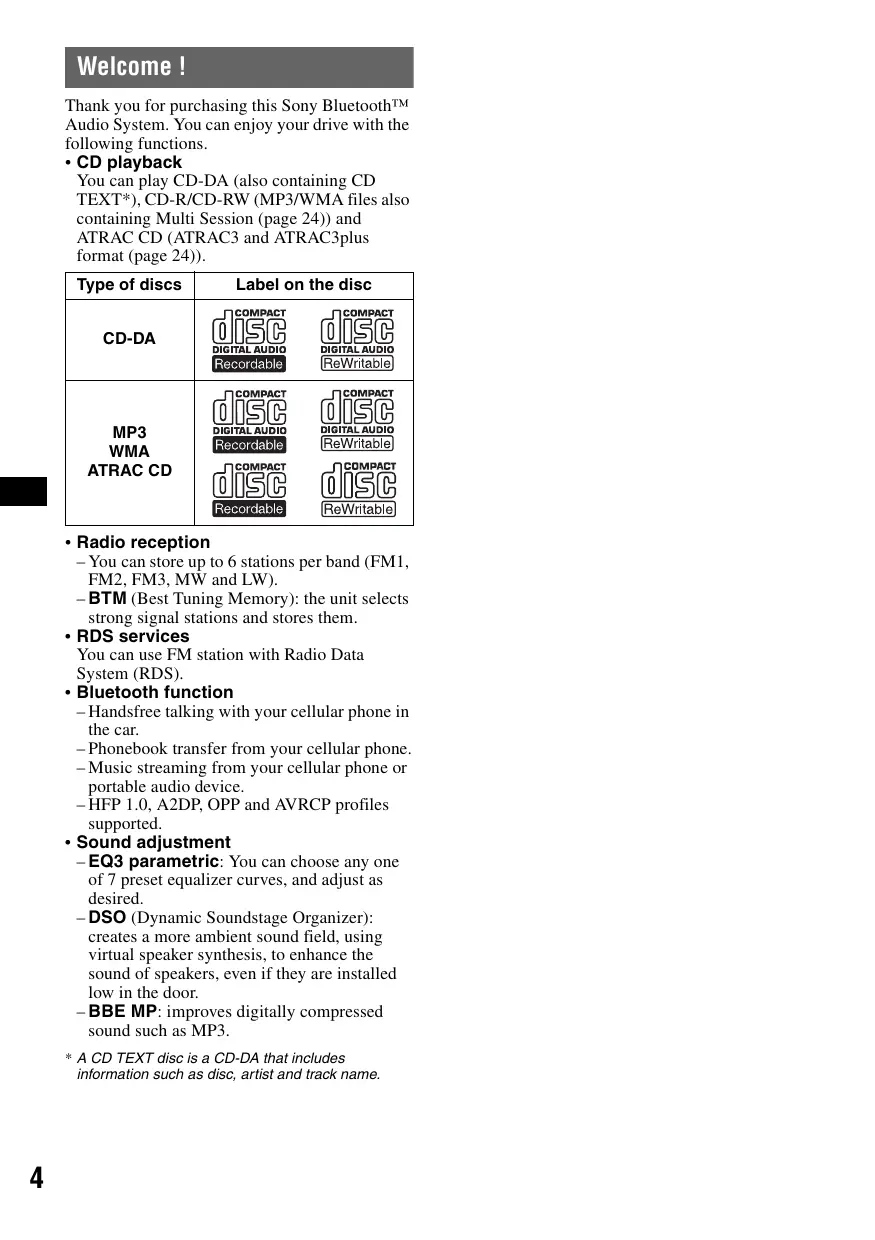
Thank you for purchasing this Sony Bluetooth™ Audio System. You can enjoy your drive with the following functions.
- CD playback
You can play CD-DA (also containing CD TEXT*), CD-R/CD-RW (MP3/WMA files also containing Multi Session (page 24)) and ATRAC CD (ATRAC3 and ATRAC3plus format (page 24)).
| Type of discs | Label on the disc | |
| CD-DA |  |  |
| MP3WMAATRAC CD |  |  |
 |  | |
- Radio reception
- You can store up to 6 stations per band (FM1, FM2, FM3, MW and LW).
- BTM (Best Tuning Memory): the unit selects strong signal stations and stores them.
- RDS services
You can use FM station with Radio Data System (RDS).
- Bluetooth function
- Handsfree talking with your cellular phone in the car.
– Phonebook transfer from your cellular phone.
– Music streaming from your cellular phone or portable audio device.
– HFP 1.0, A2DP, OPP and AVRCP profiles supported.
- Sound adjustment
– EQ3 parametric: You can choose any one of 7 preset equalizer curves, and adjust as desired.
- DSO (Dynamic Soundstage Organizer): creates a more ambient sound field, using virtual speaker synthesis, to enhance the sound of speakers, even if they are installed low in the door.
- BBE MP: improves digitally compressed sound such as MP3.
* A CD TEXT disc is a CD-DA that includes information such as disc, artist and track name.
Caution
IN NO EVENT SHALL SONY BE LIABLE FOR ANY INCIDENTAL, INDIRECT OR CONSEQUENTIAL DAMAGES OR OTHER DAMAGES INCLUDING, WITHOUT LIMITATION, LOSS OF PROFITS, LOSS OF REVENUE, LOSS OF DATA, LOSS OF USE OF THE PRODUCT OR ANY ASSOCIATED EQUIPMENT, DOWNTIME, AND PURCHASER'S TIME RELATED TO OR ARISING OUT OF THE USE OF THIS PRODUCT, ITS HARDWARE AND/OR ITS SOFTWARE.
IMPORTANT NOTICE!
Safe and efficient use
Changes or modifications to this unit not expressly approved by Sony may void the user's authority to operate the equipment.
Please check for exceptions, due to national requirement or limitations, in usage of Bluetooth equipment before using this product.
Driving
Check the laws and regulations on the use of cellular phones and handsfree equipment in the areas where you drive.
Always give full attention to driving and pull off the road and park before making or answering a call if driving conditions so require.
Connecting to other devices
When connecting to any other device, please read its user guide for detailed safety instructions.
Radio frequency exposure
RF signals may affect improperly installed or inadequately shielded electronic systems in cars, such as electronic fuel injection systems, electronic antiskid (antilock) braking systems, electronic speed control systems or air bag systems. For installation or service of this device, please consult with the manufacturer or its representative of your car. Faulty installation or service may be dangerous and may invalidate any warranty that may apply to this device.
Consult with the manufacturer of your car to ensure that the use of your cellular phone in the car will not affect its electronic system.
Check regularly that all wireless device equipment in your car is mounted and operating properly.
Emergency calls
This Bluetooth car handsfree and the electronic device connected to the handsfree operate using radio signals, cellular, and landline networks as well as user-programmed function, which cannot guarantee connection under all conditions.
Therefore do not rely solely upon any electronic device for essential communications (such as medical emergencies).
Remember, in order to make or receive calls, the handsfree and the electronic device connected to the handsfree must be switched on in a service area with adequate cellular signal strength.
Emergency calls may not be possible on all cellular phone networks or when certain network services and/or phone features are in use.
Check with your local service provider.
Getting Started
Resetting the unit
Before operating the unit for the first time, or after replacing the car battery or changing the connections, you must reset the unit. Detach the front panel and press the RESET button with a pointed object, such as a ballpoint pen.
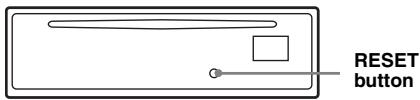
text_image
RESET buttonNote
Pressing the RESET button will erase the clock setting and some stored contents.
Setting the clock
The clock uses a 24-hour digital indication.
1 Press MENU.
2 Push the joystick up/down until "Setup" appears, then push it right.
3 Push the joystick up/down until "Clock Adjust" appears, then push it right.
4 Push the joystick up/down to set the hour and minutes.
To move the digital indication, push the joystick left/right.
5 After setting the clock, press the joystick.
The clock starts.
Tip
You can set the clock automatically with the RDS feature (page 14).
Detaching the front panel
You can detach the front panel of this unit to prevent theft.
Caution alarm
If you turn the ignition switch to the OFF position without detaching the front panel, the caution alarm will sound for a few seconds. The alarm will only sound if the built-in amplifier is used.
1 Press OFF.
The unit is turned off.
2 Press OPEN.
The front panel is flipped down.
3 Slide the front panel to the right, then gently pull out the left end of the front panel.
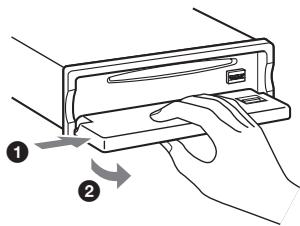
text_image
Diagram showing a hand inserting a device into a device with labeled arrows indicating the process.Notes
- Do not drop or put excessive pressure on the front panel and display window.
- Do not subject the front panel to heat/high temperature or moisture. Avoid leaving it in a parked car or on a dashboard/rear tray.
Attaching the front panel
Place the hole Ⓐ of the front panel onto the spindle Ⓑ on the unit, then lightly push the left side in.
Press SOURCE on the unit (or insert a disc) to operate the unit.
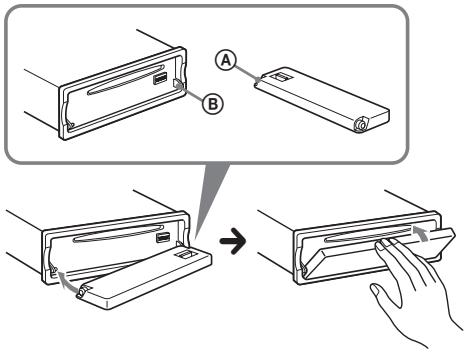
text_image
Diagram illustrating the step-by-step installation of a device's internal components, showing part A and B being inserted into a device with a hand interacting.Note
Do not put anything on the inner surface of the front panel.
Inserting the disc in the unit
1 Press OPEN.
2 Insert the disc (label side up).
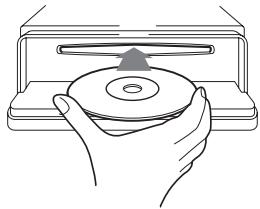
natural_image
Line drawing of a hand holding a circular object on a device (no text or symbols)3 Close the front panel.
Playback starts automatically.
Ejecting the disc
1 Press OPEN.
2 Press ▲.
The disc is ejected.
3 Close the front panel.
Audio function
Main unit
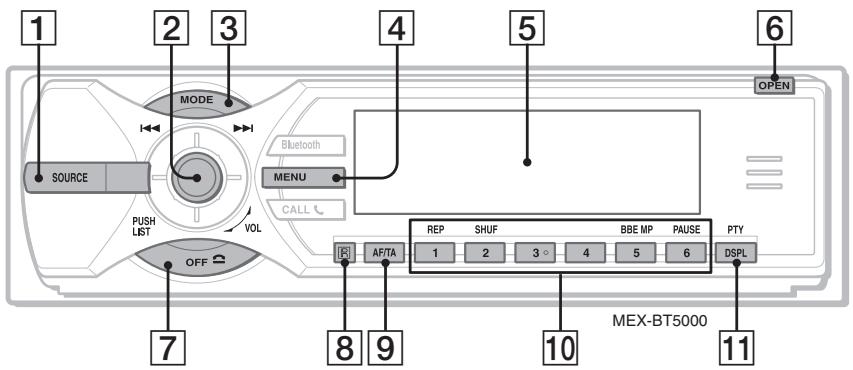
text_image
1 2 3 4 5 6 OPEN MODE Source PUSH LIST VOL OFF Bluetooth MENU CALL 7 8 9 REP SHUF BBE MP PAUSE PTY 1 2 3 4 5 6 DSPL MEX-BT5000 10Front panel removed
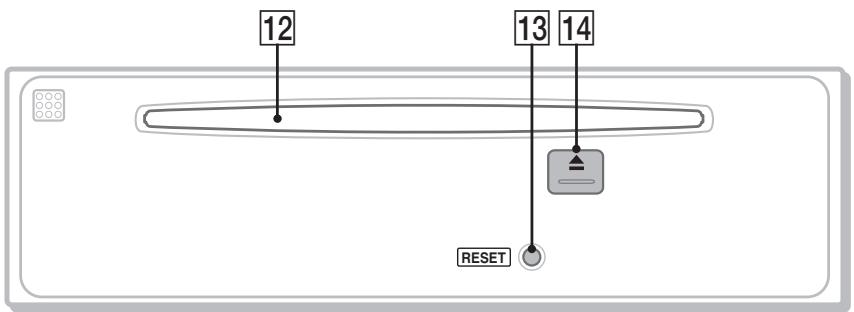
text_image
12 13 14 RESETRefer to the pages listed for details. The corresponding buttons on the card remote commander control the same functions as those on the unit.
1 SOURCE button
To power on; change the source (Radio/CD/MD*1/Bluetooth AUDIO/AUX).
2 Joystick/LIST button 13, 22
Rotate to: Adjust the volume.
Push up/down/left/right to: Select a menu item.
Press to: Apply a setting.
CD/MD*1:
Push up/down to*2:
-Skip groups ^3 /albums ^4 (push).
- Skip groups ^3 /albums ^4 continuously (push and hold).
Push left/right to:
-Skip tracks (push).
– Skip tracks continuously (push, then push again within about 2 seconds and hold).
- Reverse/fast-forward a track (push and hold).
Radio:
Push up/down to:
-Receive stored station.
Push left/right to:
– Tune in stations automatically (push).
– Find a station manually (push and hold).
Press to:
- Display the list.
3 MODE button 12, 21
To select the radio band (FM/MW/LW)/select the unit ^*5 .
4 MENU button
To enter menu.
5 Display window
6 OPEN button 7
7 OFF button
To power off; stop the source.
8 Receptor for the card remote commander
Card remote commander RM-X302
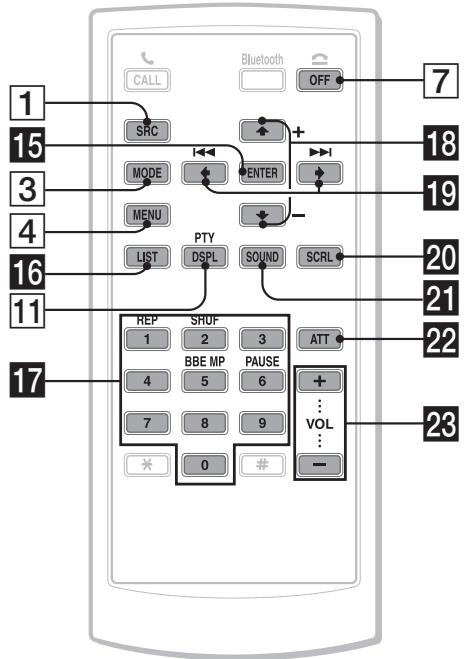
text_image
CALL Bluetooth OFF 1 SRC + 7 15 MODE ENTER 18 3 MENU - 20 LIST PTY DSPL SOUND 21 16 REP SRUF ATT 22 17 1 2 3 4 5 6 BBE MP PAUSE 7 8 9 VOL * 0 # 239 AF (Alternative Frequencies)/TA (Traffic Announcement) button 13
To set AF and TA in RDS.
10 Number buttons
CD/MD*1:
①: REP 12, 22
②: SHUF 12, 22
⑤:BBE MP*6 2
To activate the BBE MP function, set “BBE MP on.” To cancel, set “BBE MP off.”
⑥: PAUSE*6
To pause playback. To cancel, press again.
Radio:
To receive stored stations (press); store stations (press and hold).
11 DSPL (display)/PTY (Programme
Type) button 12, 14
To change display items; select PTY in RDS.
12 Disc slot 7
To insert the disc.
13 RESET button 6
14 ▲ (eject) button 7
To eject the disc.
The following buttons on the card remote commander have also different buttons/functions from the unit.
15 ENTER button
To apply a setting.
16 LIST button
To list up.
17 Number buttons
Buttons 1 to 6 share the same functions as the number buttons on the unit.
18 ↑ (+)/↓ (-) buttons
The same as pushing the joystick up/down.
19 ← (I◄◄) / → (►►I) buttons
The same as pushing the joystick left/right.
20 SCRL (scroll) button
To scroll display item.
21 SOUND button
To select sound items.
22 ATT (attenuate) button
To attenuate the sound. To cancel, press again.
23 VOL (volume) +/- buttons
To adjust volume.
*1 When an MD changer is connected.
*2 If the changer is connected, the operation is different, see page 21.
*3 When an ATRAC CD is played.
*4 When an MP3/WMA is played.
*5 When a CD/MD changer is connected.
*6 When playing back on this unit.
Note
If the unit is turned off and the display disappears, it cannot be operated with the card remote commander unless SOURCE on the unit is pressed, or a disc is inserted to activate the unit first.
Tip
For details on how to replace the battery, see "Replacing the lithium battery of the card remote commander" on page 25.
Bluetooth function
Main unit
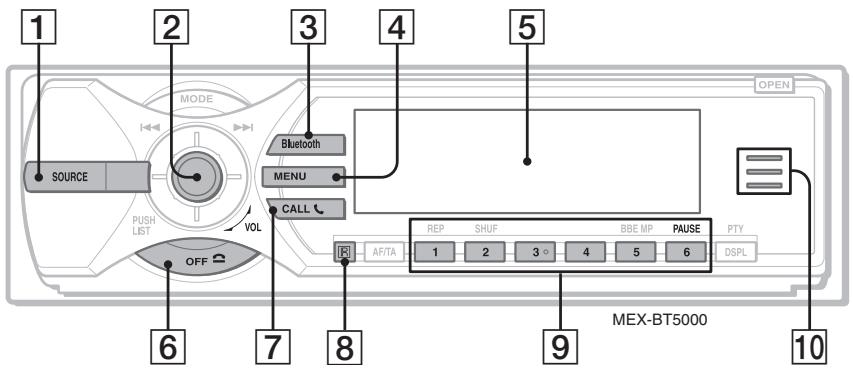
text_image
1 2 3 4 5 MODE Bluetooth MENU CALL PUSH LIST VOL OFF 6 7 8 AFITA REP SHUF BBE MP PAUSE PTY DSPL OPEN MEX-BT5000 1 2 3 4 5 6 9 10Front panel removed
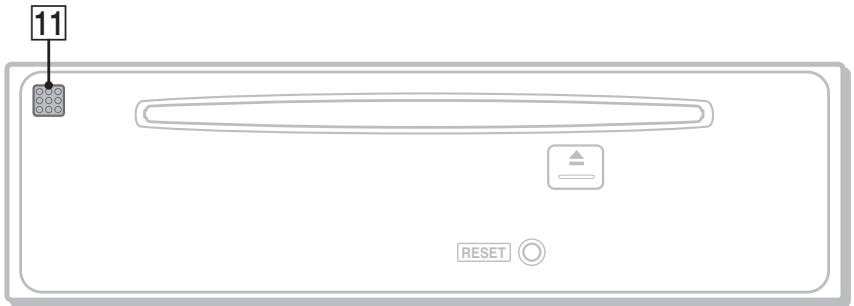
text_image
11 RESET ○Refer to the pages listed for details. The corresponding buttons on the card remote commander control the same functions as those on the unit.
1 SOURCE button
To power on; change the source (Radio/CD/MD*1/Bluetooth AUDIO/AUX).
2 Joystick
Rotate to: Adjust the volume.
Push up/down/left/right to: Select a menu item.
Press to: Apply a setting.
Bluetooth audio device ^*2 :
Push left/right to:
– Skip tracks (push).
- Reverse/fast-forward a track (push and hold).
3 Bluetooth button 15, 16, 17, 19
To access the Bluetooth functions; receive a call.
4 MENU button 17
To enter menu; receive a call.
5 Display window
6 OFF button 17
To power off; stop the source; end or reject a call.
7 CALL button 17
To access the telephone functions; receive a call.
8 Receptor for the card remote commander
9 Number buttons
To call stored dials.
Bluetooth audio device\*2:
⑥: PAUSE
To pause playback.
10 Bluetooth indicator
Lights up when the Bluetooth signal is input/output. Goes off when the Bluetooth signal is off.
11 Microphone 16
Card remote commander RM-X302
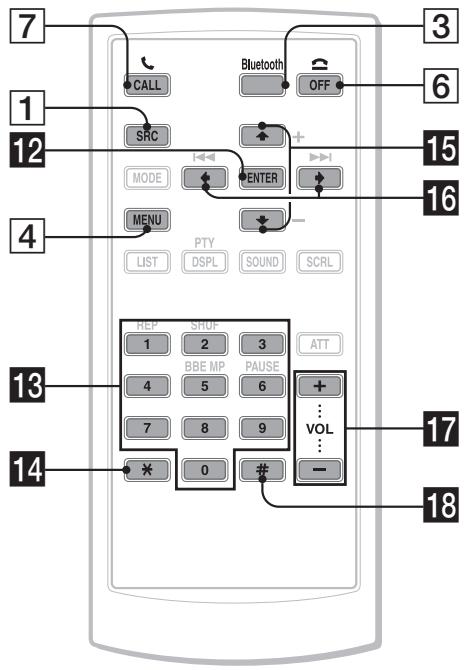
text_image
7 1 12 4 CALL SRC MODE MENU LIST PTY DSPL Bluetooth OFF ENTER SYNC SCRL 3 6 15 16 13 REP 1 BBE MP 4 7 0 SHUF 2 5 8 9 ATT Pause +VOL - # # - 17 18The following buttons on the card remote commander have also different buttons/functions from the unit.
12 ENTER button
To apply a setting.
13 Number buttons 15, 16, 17
To input numbers (phone number, passcode, etc.).
Buttons 1 to 6 share the same functions as the number buttons on the unit.
14 * button 17
15 ↑ (+)/↓ (−) buttons
The same as pushing the joystick up/down.
16 ← (I◄◄) / → (►►I) buttons
The same as pushing the joystick left/right.
17 VOL (volume) +/- buttons
To adjust volume.
18 # button 17
*1 When an MD changer is connected.
*2 When a Bluetooth audio device (supports AVRCP of Bluetooth technology) is connected. Depending on the device, certain operations may not be available.
Note
If the unit is turned off and the display disappears, it cannot be operated with the card remote commander unless SOURCE on the unit is pressed, or a disc is inserted to activate the unit first.
Tip
For details on how to replace the battery, see "Replacing the lithium battery of the card remote commander" on page 25.
CD
For details on selecting a CD/MD changer, see page 21.
Display items
Example: when you set Info (information) mode to “All” (page 20).
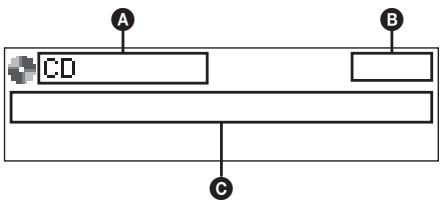
flowchart
graph TD
    A["CD"] --> B[" "]
    B --> C[" "]
    C --> A
A Source/MP3/ATRAC/WMA indication
B Clock
Track number/Elapsed playing time, Disc/ artist name, Album/group number, Album/ group name, Track name, Text information*
* When playing an MP3, ID3 tag is displayed, when playing ATRAC CD, text information written by SonicStage, etc., is displayed, and when playing WMA, WMA tag is displayed.
To change display items Ⓐ, press DSPL; scroll display items Ⓐ, press SCRL on the card remote commander or set “Auto Scroll on” (page 20).
Tip
Displayed items will differ, depending on the disc type, recorded format and settings. For details on MP3/WMA, see page 24; ATRAC CD, see page 24.
Repeat and shuffle play
1 During playback, press ① (REP) or ② (SHUF) repeatedly until the desired setting appears.
| Select | To play |
| Repeat Track | track repeatedly. |
| Repeat Album*1 | album repeatedly. |
| Repeat Group*2 | group repeatedly. |
| Shuffle Album*1 | album in random order. |
| Shuffle Group*2 | group in random order. |
| Shuffle Disc | disc in random order. |
*1 When an MP3/WMA is played.
*2 When an ATRAC CD is played.
To return to normal play mode, select “Repeat off” or “Shuffle off.”
Radio
Storing and receiving stations
Caution
When tuning in stations while driving, use Best Tuning Memory (BTM) to prevent an accident.
Storing automatically — BTM
1 Press SOURCE repeatedly until "TUNER" appears.
To change the band, press MODE repeatedly. You can select from FM1, FM2, FM3, MW or LW.
2 Press MENU.
3 Push the joystick up/down until "Receive Mode" appears, then push it right.
4 Push the joystick up/down until "BTM" appears.
5 Press the joystick.
The unit stores stations in order of frequency on the number buttons.
A beep sounds when the setting is stored.
Storing manually
1 While receiving the station that you want to store, press and hold a number button (① to ⑥) until "MEM" appears.
The number button indication appears in the display.
Note
If you try to store another station on the same number button, the previously stored station will be replaced.
Tip
When a RDS station is stored, the AF/TA setting is also stored (page 13).
Receiving the stored stations
1 Select the band, then press a number button (① to ⑥).
Tuning automatically
1 Select the band, then push the joystick left/right to search for the station.
Scanning stops when the unit receives a station. Repeat this procedure until the desired station is received.
Tip
If you know the frequency of the station you want to listen to, push and hold the joystick left/right to locate the approximate frequency, then push the joystick left/right to fine adjust to the desired frequency (manual tuning).
Receiving a station through a list — LIST
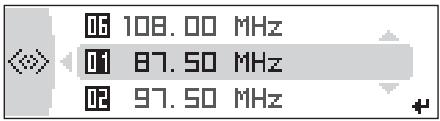
You can list up the frequency.
1 Select the band, then press the joystick.
The frequency appears.
text_image
06 108.00 MHz 01 87.50 MHz 02 97.50 MHz2 Push the joystick up/down until the desired station appears.
3 Press the joystick to receive the station.
The display returns to normal reception mode.
RDS
Overview
FM stations with Radio Data System (RDS) service send inaudible digital information along with the regular radio programme signal.
Display items
Example: when you set Info (information) mode to “All” (page 20).

flowchart
graph TD
    A["FM1"] --> B["TP"]
    B --> C["TF"]
    C --> D["TF"]
    D --> E["TF"]
    E --> F["TF"]
    F --> G["TF"]
    G --> H["TF"]
    H --> I["TF"]
    I --> J["TF"]
    J --> K["TF"]
    K --> L["TF"]
    L --> M["TF"]
    M --> N["TF"]
    N --> O["TF"]
    O --> P["TF"]
    P --> Q["TF"]
    Q --> R["TF"]
    R --> S["TF"]
    S --> T["TF"]
    T --> U["TF"]
    U --> V["TF"]
    V --> W["TF"]
    W --> X["TF"]
    X --> Y["TF"]
    Y --> Z["TF"]
A Radio band
B TA/TP/AF*1
© Clock
D Preset number
E Frequency*2 (Programme service name), RDS data
*1 When Info (Information) "All" is set:
- "TP" lights up while "TP" is received.
- “TA”/“AF” lights up while “TA/AF” is on.
*2 While receiving the RDS station, “RDS” is displayed on the left of the frequency indication.
RDS services
This unit automatically provides RDS services as follows:
AF (Alternative Frequencies)
Selects and retunes the station with the strongest signal in a network. By using this function, you can continuously listen to the same programme during a long-distance drive without having to retune the same station manually.
TA (Traffic Announcement)/TP (Traffic Programme)
Provides current traffic information/programmes. Any information/programme received, will interrupt the currently selected source.
PTY (Programme Types)
Displays the currently received programme type. Also searches your selected programme type.
CT (Clock Time)
The CT data from the RDS transmission sets the clock.
Notes
- Depending on the country/region, not all RDS functions may be available.
- RDS will not work if the signal strength is too weak, or if the station you are tuned to is not transmitting RDS data.
Setting AF and TA
1 Press AF/TA repeatedly until the desired setting appears.
| Select | To |
| AF on | activate AF and deactivate TA. |
| TA on | activate TA and deactivate AF. |
| AF/TA on | activate both AF and TA. |
| AF/TA off | deactivate both AF and TA. |
Storing RDS stations with the AF and TA setting
You can preset RDS stations along with the AF/TA setting. If you use the BTM function, only RDS stations are stored with the same AF/TA setting.
If you preset manually, you can preset both RDS and non-RDS stations with the AF/TA setting for each.
1 Set AF/TA, then store the station with BTM or manually.
Presetting the volume of traffic announcements
You can preset the volume level of the traffic announcements so as to not miss hearing them.
1 Rotate the joystick to adjust the volume level.
2 Press and hold AF/TA until “TA Vol” appears.
Receiving emergency announcements
With AF or TA on, the emergency announcements will automatically interrupt the currently selected source.
Staying with one regional programme — REG
When the AF function is on: this unit's factory setting restricts reception to a specific region, so you will not be switched to another regional station with a stronger frequency.
If you leave this regional programme's reception area, set “Regional off” in setup during FM reception (page 20).
Note
This function does not work in the UK and in some other areas.
Local Link function (UK only)
This function enables you to select other local stations in the area, even if they are not stored on your number buttons.
1 During FM reception, press a number button (① to ⑥) on which a local station is stored.
2 Within 5 seconds, press again a number button of the local station.
Repeat this procedure until the local station is received.
Selecting PTY
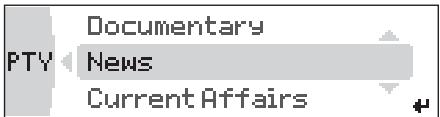
1 Press PTY during FM reception.
text_image
Documentary PTV News Current AffairsThe current programme type name appears if the station is transmitting PTY data.
2 Push the joystick up/down until the desired programme type appears.
3 Press the joystick.
The unit starts to search for a station broadcasting the selected programme type.
Type of programmes
News (News), Current Affairs (Current Affairs), Information (Information), Sport (Sports), Education (Education), Drama (Drama), Cultures (Culture), Science (Science), Varied Speech (Varied), Pop Music (Popular Music), Rock Music (Rock Music), Easy Listening (Easy Listening), Light Classics M (Light Classical), Serious Classics (Classical), Other Music (Other Music Type), Weather & Metr (Weather), Finance (Finance), Children's Progs (Children's Programmes), Social Affairs (Social Affairs), Religion (Religion), Phone In (Phone In), Travel & Touring (Travel), Leisure & Hobby (Leisure), Jazz Music (Jazz Music), Country Music (Country Music), National Music (National Music), Oldies Music (Oldies Music), Folk Music (Folk Music), Documentary (Documentary)
Note
You cannot use this function in countries/regions where no PTY data is available.
Setting CT
1 Set "CT on" in setup (page 20).
Notes
- The CT function may not work even though an RDS station is being received.
- There might be a difference between the time set by the CT function and the actual time.
Bluetooth function
Before using the Bluetooth function
Menu operations of the Bluetooth function
The Bluetooth settings can be configured from the Bluetooth function menu or CALL menu. Menu operations can generally be performed using the joystick.
1 Press Bluetooth or CALL.
The Bluetooth function menu or CALL menu appears.
2 Push the joystick up/down until the desired setting item appears, then push it right.
The digital indication moves to the right (setting selection) side.
3 Push the joystick up/down to select the setting, then press it.
The setting is complete.
4 Press Bluetooth or CALL.
The normal display appears.
To input a character
Push the joystick up/down to select a character, and push left/right to move the cursor.
The characters that can be input are A-Z, a-z, 0-9 and a blank space.
Configuring Bluetooth Settings
Before connecting to a Bluetooth device, configure the Bluetooth Settings on this unit.
1 Press Bluetooth.
The Bluetooth function menu appears.

Phone Settings
Bluetooth Settings
Connectivity
2 Select "Bluetooth Settings."
3 Select the desired menu.
4 Select the setting.
5 Press Bluetooth.
Bluetooth Settings menu
“●” indicates the default settings.
Signal
To switch the Bluetooth signal output of this unit to “ON” or “OFF.”
- “ON”: to output the Bluetooth signal (RF 2.4 GHz).
- “OFF” (●): to not output the Bluetooth signal (RF 2.4 GHz).
Be sure to set to “ON” when you connect to the Bluetooth device.
Visibility
To allow other Bluetooth devices to search for this unit.
- “Show”: to allow the other device to search.
- “Hide” (●): to not allow the other device to search.
Be sure to set to “Show” when you search for this unit from a Bluetooth device.
Device Name
To change the name of this unit displayed on connected device. (Default setting: "Xplod")
Select “Rename” and input characters. Up to 12 characters can be input.
To restore “Xplod,” select “Default” → “yes.”
Note
For details on the settings of other Bluetooth devices, see their respective manuals.
Pairing and connecting this unit with a Bluetooth device
When connecting Bluetooth devices for the first time, mutual registration is required. This is called “pairing.” This registration (pairing) is required only for the first time, as this unit and the other devices will recognize each other automatically from the next time. (Depending on the device, you may need to input a passcode for each connection.)
Searching for a Bluetooth device from this unit
Check that the other Bluetooth device is set to allow for searching (discoverable) beforehand.
1 Press Bluetooth.
The Bluetooth function menu appears.
2 Select "Connectivity" → "Search."
Searching...

The process of searching for a connectable device begins, then the detected device name(s) appear in a list. If a device name cannot be received, “Unknown” will be displayed.
Search time varies depending on the number of Bluetooth devices.
3 Select the device to connect.
Pairing starts.
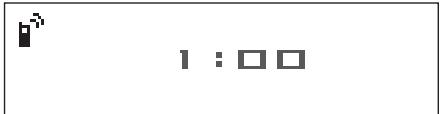
4 Input a passcode\*.
Input the same passcode for this unit and the connecting device using the joystick or card remote commander. The passcode can be either your own selected number or the number determined by the connecting device. For details, see the manual of the connecting device.
Passcode

5 Press the joystick to confirm.
“Connected” appears and connection is complete.
“☐” or “☐” appears during connection.
text_image
1 : 0 0* Passcode may be called "passkey," "PIN code," "PIN number" or "Password," etc., depending on the device.
Searching for this unit from a Bluetooth device
Check that “Visibility” in the Bluetooth Settings menu is set to “Show” (page 15).
1 Set the connecting device to search.
2 When "Allow Connection?" appears on this unit, select "yes."
Connection starts.
Depending on the device, the passcode input display appears.
3 Input the passcode of the connecting device.
4 Press the joystick to confirm.
“Connected” appears and connection is complete.
“☐” or “☐” appears during connection.
Tip
The passcode can also be input with the number buttons of the card remote commander.
Notes
- While connecting to a Bluetooth device, this unit cannot be detected from another device. To be detected, disconnect the current connection and search for this unit from another device.
- Depending on the device, searching from this unit may not be possible. In this case, search for this unit from the connecting device.
- If you search for this unit and the connecting device mutually at the same time, this unit will not recognize the connecting device.
- It may take time to search or connect.
- Depending on the device, the confirmation display of the connection appears before inputting the passcode.
- The time limit for inputting the passcode differs depending on the device.
- This unit can register up to 6 devices each for handsfree and audio devices.
- This unit cannot be connected to a device that supports only HSP (Head Set Profile).
Connecting to registered devices
Devices are registered once paired and connected with this unit. You can select the registered device and connect it.
1 Press Bluetooth.
The Bluetooth function menu appears.
2 Select "Connectivity" → "Handsfree Devices" or "Audio Devices."
The list of registered devices appears.
3 Select the device to connect.
4 Select "Connect."
“Connected” appears and connection is complete.
“☐” or “☐” appears during connection.
To stop the connection
Select “Disconnect” → “yes” in step 4.
Tip
Depending on the device, it may be possible to select this unit from the device, and then connect.
Handsfree talking
Check that this unit and the cellular phone are connected beforehand (page 15, 16).
Notes
- For details on operation when a cellular phone with Bluetooth audio streaming function is connected as an audio device, see “Listening to music from an audio device” on page 18.
- The microphone of this unit is located on the rear of the front panel (page 10). Do not mask the microphone with tape, etc.
- Even if you activate the ATT function during a call, the outgoing sound will not be attenuated.
Making calls
You can make a call from the connected cellular phone by operating this unit.
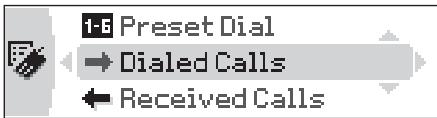
1 Press CALL.
The CALL menu appears.
text_image
1-6 Preset Dial → Dialed Calls ← Received Calls2 Select the items in the following order, then press the joystick to start calling.
CALL menu
Dialed Calls\*
Selects from the dialed call history. (Maximum storable name and phone numbers: 10)
Name and phone number to call → “Call”
Select “Delete” to delete the name and phone number, “Delete All” to clear the history.
Received Calls\*
Selects from the received call history. (Maximum storable name and phone numbers:10)
Name and phone number to call → “Call”
Select “Delete” to delete the name and phone number, “Delete All” to clear the history.
Phonebook\*
Selects from the phonebook list. (Maximum storable name and phone numbers: 50)
“Contact List” → Name to call → the name and phone number
For details on how to store in the phonebook, see “Using the Phonebook” on page 18 and “Setting a handsfree device” on page 19.
Dial
Inputs the phone number using the joystick or card remote commander.
To input “+,” press and hold the 0 button on the card remote commander.
Preset Dial\*
Selects the phone number stored in a number button.
Preset number (P1 - P6) "Call"
For details on how to store in the number buttons, see “Using the Preset Dial” on page 18.
* If you set "Security" (page 19), "Security Locked" appears and operation is not possible.
Tips
- Preset Dial also allows you to make a call by pressing a number button twice after pressing CALL.
- On the "Dialed Calls," "Received Calls" and "Preset Dial" menus, you can make a call by pressing CALL while the phone number is displayed.
Presetting the volume of ring tone and talker's voice
You can preset the volume level of the ring tone and talker's voice.
To adjust the ring tone:
Rotate the joystick while the phone is ringing. "Ring Vol" appears and ring tone volume is set.
To adjust the talker's voice:
Rotate the joystick during a call. “Talk Vol” appears and the talker’s voice volume is set.
Sending DTMF (Dual Tone Multiple Frequency) tones
You can send DTMF tones.
To send DTMF tones, use the joystick or press the required number buttons (0 - 9, * or #) on the card remote commander during a call.
Receiving calls
When receiving a call, ring tone is output from your car speakers.
For details on the settings for receiving a call and during a call, see “Setting a handsfree device” on page 19.
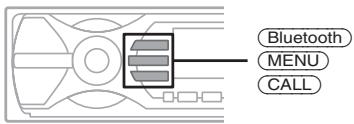
1 When receiving a call, press CALL, MENU or Bluetooth.
text_image
Bluetooth MENU CALLThe phone call starts.
To reject a call
Press OFF.
Tips
- If you set "Auto Answer" to on, the phone call is automatically started in the set time (page 19).
- If (CALL) is pressed during a call, the handsfree function is deactivated, and the microphone and speaker of the cellular phone are activated. In this case, the Bluetooth connection may become disconnected depending on the cellular phone.
Ending calls
1 Press OFF.
When the call ends, talk time appears for a few seconds.
continue to next page →
Using the Phonebook
Receiving phonebook data from a cellular phone
1 Select “Phone Settings” from the Bluetooth function menu.
2 Select “Receive PB.” “Waiting…” appears.
3 Send the phonebook data by operating the cellular phone.
“Data Receiving…” appears while receiving the phonebook data.
“Complete” appears when receiving is complete.
Note
To cancel the transfer of phonebook data, operate the cellular phone. Transfer cannot be cancelled from this unit.
Storing the numbers from “Dialed Calls” or “Received Calls”
1 Select “Dialed Calls” or “Received Calls” from the CALL menu.
2 Select the phone number to store, then select "Save." The "Contact Name" display appears.
3 Input a name.
Up to 20 characters can be input.
4 Select "Save?" → "yes."
Note
Up to 50 phone numbers can be stored in the Phonebook. If you try to register more than 50 numbers, "Memory Full" appears.
Deleting from the phonebook
1 Select “Phonebook” → “Contact List” from the CALL menu.
2 Select the name to delete.
3 Select "Delete" → "yes."
To clear all phonebook data, select “Delete All” in step 1. After clearing, confirm that all phonebook data has been cleared properly.
Changing a name in the phonebook
1 Select “Phonebook” → “Contact List” from the CALL menu.
2 Select the name to change.
3 Select "Edit Name," then input a new name.
Using the Preset Dial
Storing the Preset Dial
You can store a phone number in the phonebook to the Preset Dial.
1 Select "Preset Dial" from the CALL menu.
2 Select the preset number (P1 – P6) to store, then select “Preset Memory.”
3 Select the name to store.
4 Select a phone number of the selected name.
5 Select "yes" when "Save?" appears.
Note
To replace a registered preset number, delete the existing registration first, then store the new phone number.
Deleting the Preset Dial
1 Select "Preset Dial" from the CALL menu.
2 Select the preset number to delete.
3 Select "Delete" → "yes."
Music streaming
Listening to music from an audio device
You can listen to music of an audio device on this unit if the audio device supports A2DP (Advanced Audio Distribution Profile) of Bluetooth technology.
1 Connect this unit and the Bluetooth audio device (page 16).
“☐” appears during connection.
2 Turn down the volume on this unit.
3 Press SOURCE repeatedly until "Bluetooth AUDIO" appears.
4 Operate the audio device to start playback.
5 Adjust the volume on this unit.
Operating an audio device with this unit
You can perform the following operations on this unit if the audio device supports AVRCP (Audio Video Remote Control Profile) of Bluetooth technology. (The operation differs depending on the audio device.)
| To | Do this |
| Skip tracks | Push the joystick left/right. |
| Reverse/fast-forward a track | Push and hold the joystick left/right. |
| Pause | Press 6 (PAUSE)*. |
* Depending on the device, it may be necessary to press twice.
Operations other than the above should be performed on the audio device.
Note
Even if the source is changed on this unit, playback of the audio device does not stop.
Tip
You can connect a cellular phone that supports A2DP (Advanced Audio Distribution Profile) as an audio device and listen to music.
Other settings
Setting a handsfree device
You can set various functions when a cellular phone compatible with the Bluetooth function is connected as a handsfree device.
1 Press Bluetooth.
The Bluetooth function menu appears.
2 Select "Phone Settings."
3 Select the desired menu.
4 Select the setting.
5 Press Bluetooth.
Phone Settings menu
“●” indicates the default settings.
Receive PB*1*2 (Receive Phonebook)
To receive and store the phonebook data from a cellular phone (page 18).
Auto Answer
- “on”: to start a call automatically when received. Set the time to start a call: “1 sec” – “60 sec”
- “off” (●): to not start a call until , or is pressed.
Ringtone
To switch the ring tone.
- “Cellular*3” (●): to output the ring tone set with the cellular phone.
- “Default”: to output this unit’s ring tone.
EC/NC Mode\*4 (Echo Canceller/Noise
Canceller Mode)
To reduce echo and noise in phone call conversations.
Set to “Mode 1” (●) normally. If the quality of the outgoing sound is unsatisfactory, set to “Mode 2” or “off.”
Speaker Sel\*4 (Speaker Select)
To set the front speaker to output the ring tone, dial-tone and other party's voice.
- “FR-L” (●): to output from the left channel of front speakers.
- “FR-R”: to output from the right channel of front speakers.
- “Front”: to output from both front speakers.
Security
To lock the personal information in the following menus by setting a 4-digit password (page 17).
“Dialed Calls,” “Received Calls,” “Phonebook,” “Preset Dial,” “Receive PB”
If you set the security, “Security Locked” appears when the above menus are operated.
To unlock the security, select “Unlock” and input the password number.
*1 If "Security" is set, "Security Locked" appears and operation is not possible.
*2 If a character that cannot be displayed on this unit is used, it is not displayed correctly.
*3 Depending on the cellular phone, this unit's ring tone may be output even if set to "Cellular."
*4 Configurable during a call.
Note
If you select "Initialize" in the Security setting, all stored data is deleted ("Dialed Calls," "Received Calls," "Phonebook" and "Preset Dial").
Deleting the registration of a connected device
1 Press Bluetooth.
The Bluetooth function menu appears.
2 Select "Connectivity" → "Handsfree Devices" or "Audio Devices."
The list of registered devices appears.
3 Select the device to delete.
4 Select "Delete" → "yes."
To clear all devices in the selection list, select “Delete All” in step 4.
Auto connection function
If your car's ignition switch is set to the ACC position, this unit reconnects automatically to the last connected Bluetooth device.
Other functions
Adjusting menu items — MENU
1 Press MENU.
2 Push the joystick up/down until the desired menu item appears, then push it right.
The items changes as follows:
Setup Display Receive Mode Sound
3 Push the joystick up/down until the desired setting item appears, then push it right.
The digital indication moves to the right (setting selection) side.
4 Push the joystick up/down to select the setting, then press it.
The setting is complete.
5 Press MENU.
The display returns to normal play/reception mode.
Note
Displayed items will differ, depending on the source and setting.
Tips
- You can go to the next menu level by pressing the joystick.
- In step 5, push the joystick left until "EXIT" appears, then press the joystick, instead of pressing ⓂMENU.
- You can enter the Sound setting menu directly by pressing SOUND on the card remote commander.
The following items can be set (follow the page reference for details):
“●” indicates the default settings.
Setup
Clock Adjust (page 6)
CT (Clock Time)
To set “on” or “off” (●) (page 13, 14).
Beep
To set “on” (●) or “off.”
RM (Rotary Commander)
To change the operative direction of the rotary commander controls.
- “NORM” (●): to use the rotary commander in the factory-set position.
- “REV”: when you mount the rotary commander on the right side of the steering column.
AUX Audio*
To turn the AUX source display “on” (●) or “off” (page 22).
Version\*
To display the unit's firmware version.
Display
Image
To set various display images.
- “SpaceProducer” (●): to create animated on-screen patterns in time with the music.
- “All”: to step repeatedly through the display images in all display modes.
- “off”: to not display any image.
- “SA 1 - 5”: to display the Spectrum Analyzer.
- “Movie 1 - 3”: to display a movie.
- “Wallpaper 1 - 3”: to display a wallpaper.
- “SA All”/“Movie All”/“Wallpaper All”: to step repeatedly through the display images of each mode.
Info (Information)
To display the items (depending on the source, etc.).
- “All”: to display all items.
- “Simple” (●): to not display any items.
- “Clear”: to have items automatically disappear.
Demo* (Demonstration)
To set “on” (●) or “off.”
Dimmer
To change the brightness of the display.
- “Auto” (●): to dim the display automatically when you turn lights on.
- “on”: to dim the display.
- “off”: to deactivate the dimmer.
Auto Scroll
To scroll long displayed item automatically when the disc/album/group/track is changed.
- “on”: to scroll.
- “off” (●): to not scroll.
ID3 Tag
To switch the priority of the displayed ID3 tag character (when CD is selected as the source).
- “EUR” (●): Western Europe display character priority.
- “RUS”: Cyrillic display character priority.
Receive Mode
Local (Local seek mode)
- “off” (●): to tune normal reception.
- “on”: to only tune into stations with stronger signals.
Mono (Monaural mode)
To improve poor FM reception, select monaural reception mode.
- “off” (●): to hear stereo broadcast in stereo.
- “on”: to hear stereo broadcasts in monaural.
Regional
To set “on” (●) or “off” (page 14).
BTM (page 12)
Sound
EQ3 Preset
To select an equalizer type: “Xplod,” “Vocal,” “Edge,” “Cruise,” “Space,” “Gravity,” “Custom” or “Off” (●).
EQ3 Tune
See “Customizing the equalizer curve” on page 21.
DSO
To select the DSO mode: “1,” “2,” “3” or “off” (●). The larger the number, the more enhanced the effect.
Balance
To adjust the balance between the right and left speakers: “R10” – “±0” (●) – “L10”
Fader
To adjust the balance between the front and rear speakers: “F10” – “±0” (●) – “R10”
Subwoofer
To adjust the subwoofer volume: “+10” – “±0”
(●) - “-10”
(“- ” is displayed at the lowest setting.)
LPF (Low Pass Filter)
To select the subwoofer cut-off frequency: "off"
(●), “125Hz” or “78Hz.”
AUX Level
To adjust the volume level for each connected auxiliary equipment. This setting negates the need to adjust the volume level between sources (page 22).
Adjustable level: “+6 dB” – “±0 dB” (●) – “-6 dB”
* When the unit is turned off.
Customizing the equalizer curve — EQ3 Tune
“Custom” of EQ3 allows you to make your own equalizer settings.
1 Select a source, then press Ⓜ MENU.
2 Select "Sound" → "EQ3 Preset" → "Custom," using the joystick.
3 Select "EQ3 Tune" using the joystick.
4 Select the desired frequency range from "LOW," "MID" and "HI."
5 Select the frequency you wish to adjust.
Adjustable frequency in each range:
LOW: 60 Hz or 100 Hz
MID: 500 Hz or 1.0 kHz
HI: 10.0 kHz or 12.5 kHz
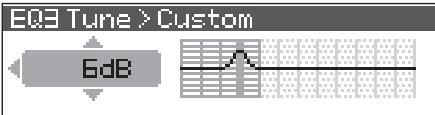
6 Adjust the equalizer curve.
The volume level is adjustable in 1 dB steps, from -10 dB to +10 dB.
text_image
EQ3 Tune > Custom 6dB7 Press the joystick.
Repeat steps 4 to 7 to adjust other frequencies.
To restore the factory-set equalizer curve, select “Initialize” → “Yes” in step 4.
Tip
Other equalizer types are also adjustable.
Using optional equipment
CD/MD changer
Selecting the changer
1 Press SOURCE repeatedly until “CD” or “MD” appears.
2 Press MODE repeatedly until the desired changer appears.
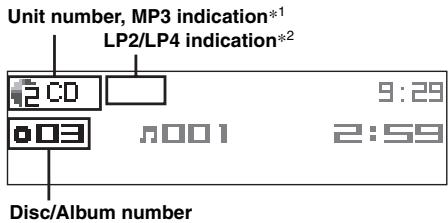
text_image
Unit number, MP3 indication*1 LP2/LP4 indication*2 CD 003 9:29 A001 2:59 Disc/Album numberPlayback starts.
*1 When an MP3 is played.
*2 When MDLP disc is played.
Skipping albums and discs
1 During playback, push the joystick up/down.
| To skip | Push up/down |
| album | and hold for a moment, then release. |
| album continuously | and hold within 2 seconds of first releasing. |
| discs | repeatedly. |
| discs continuously | then push again within 2 seconds and hold. |
Repeat and shuffle play
1 During playback, press ① (REP) or ② (SHUF) repeatedly until the desired setting appears.
| Select | To play |
| Repeat Disc^*1 | disc repeatedly. |
| Shuffle Changer^*1 | tracks in the changer in random order. |
| Shuffle All^*2 | tracks in all units in random order. |
*1 When one or more CD/MD changers are connected.
*2 When one or more CD changers, or two or more MD changers are connected.
To return to normal play mode, select “Repeat off” or “Shuffle off.”
Tip
"Shuffle All" will not shuffle tracks between CD units and MD changers.
Locating a disc by name — LIST
You can select a disc from the list when a CD changer with CD TEXT capability, or MD changer is connected.
If you assign a name to a disc, the name appears on the list.
1 During playback, press the joystick.
The disc number or disc name appears.
2 Push the joystick up/down until the desired disc appears.
3 Press the joystick to play the disc.
The display returns to normal play mode.
Auxiliary audio equipment
You can connect optional Sony portable devices to the BUS AUDIO IN/AUX IN terminal on the unit. If the changer or other device is not connected to the terminal, the unit allows you to listen to the portable device on your car speakers.
Note
When connecting a portable device, be sure BUS CONTROL IN is not connected. If a device is connected to BUS CONTROL IN, "AUX" cannot be selected by SOURCE.
Tip
When connecting both a portable device and a changer, use the optional AUX-IN selector.
Selecting auxiliary equipment
1 Press SOURCE repeatedly until "AUX" appears.
Operate by the portable device itself.
Adjusting the volume level
Be sure to adjust the volume for each connected audio device before playback.
1 Turn down the volume on the unit.
2 Press SOURCE repeatedly until "AUX" appears.
3 Start playback of the portable audio device at a moderate volume.
4 Set your usual listening volume on the unit.
5 Adjust the volume level, following “Adjusting menu items — MENU” on page 20. The input level is adjustable from -6 dB to +6 dB.
Rotary commander RM-X4S
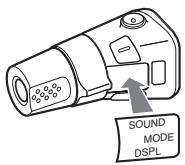
Attaching the label
Attach the indication label depending on how you mount the rotary commander.
text_image
SOUND MODE DSPL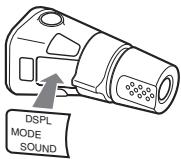
text_image
DSPL MODE SOUNDLocation of controls
The corresponding buttons on the rotary commander control the same functions as those on this unit.
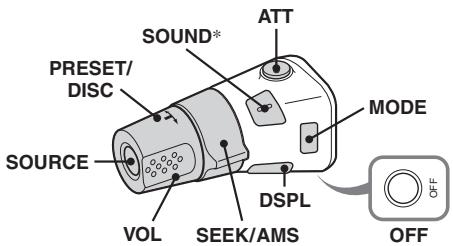
text_image
SOUND* ATT PRESET/ DISC SOURCE VOL SEEK/AMS DSPL MODE OFFThe following controls on the rotary commander require a different operation from the unit.
- PRESET/DISC control
The same as pushing the joystick up/down on the unit (push in and rotate).
• VOL (volume) control
The same as rotating the joystick on the unit (rotate). - SEEK/AMS control
The same as pushing the joystick left/right on the unit (rotate, or rotate and hold).
* Not available for this unit.
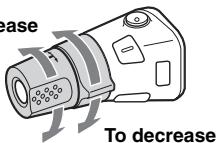
Changing the operative direction
The operative direction of the controls is factory-set as shown below.
To increase
text_image
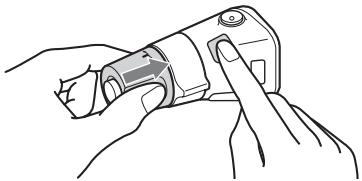
lease To decreaseIf you need to mount the rotary commander on the right hand side of the steering column, you can reverse the operative direction.
1 While pushing the VOL control, press and hold SOUND.
natural_image
Line drawing of hands holding a handheld device (no text or symbols)Additional Information
Precautions
- If your car has been parked in direct sunlight, allow the unit to cool off before operating it.
- Power aerial will extend automatically while the unit is operating.
Moisture condensation
On a rainy day or in a very damp area, moisture condensation may occur inside the lenses and display of the unit. Should this occur, the unit will not operate properly. In such a case, remove the disc and wait for about an hour until the moisture has evaporated.
To maintain high sound quality
Be careful not to splash juice or other soft drinks onto the unit or discs.
Notes on discs
- To keep a disc clean, do not touch its surface. Handle the disc by its edge.
- Keep your discs in their cases or disc magazines when not in use.
- Do not subject discs to heat/high temperature. Avoid leaving them in a parked car or on a dashboard/rear tray.
- Do not attach labels, or use discs with sticky ink/residue. Such discs may stop spinning when used, causing a malfunction, or may ruin the disc.

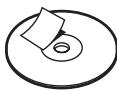

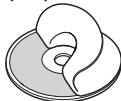

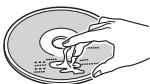
- Do not use any discs with labels or stickers attached.
The following malfunctions may result from using such discs: - Inability to eject a disc (due to a label or sticker peeling off and jamming the eject mechanism).
- Inability to read audio data correctly (e.g., playback skipping, or no playback) due to heat shrinking of a sticker or label causing a disc to warp.
- Discs with non-standard shapes (e.g., heart, square, star) cannot be played on this unit. Attempting to do so may damage the unit. Do not use such discs.
- You cannot play 8 cm CDs.
continue to next page →
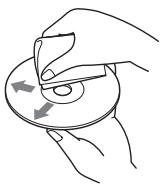
- Before playing, clean the discs with a commercially available cleaning cloth. Wipe each disc from the centre out. Do not use solvents such as benzine, thinner, commercially available cleaners, or antistatic spray intended for analogue discs.
natural_image
Illustration of a hand holding a CD or DVD disc with arrows indicating rotation (no text or symbols)Notes on CD-R/CD-RW discs
- Some CD-Rs/CD-RWs (depending on the equipment used for its recording or the condition of the disc) may not play on this unit.
- You cannot play a CD-R/a CD-RW that is not finalized.
Music discs encoded with copyright protection technologies
This product is designed to play back discs that conform to the Compact Disc (CD) standard. Recently, various music discs encoded with copyright protection technologies are marketed by some record companies. Please be aware that among those discs, there are some that do not conform to the CD standard and may not be playable by this product.
Note on DualDiscs
A DualDisc is a two sided disc product which mates DVD recorded material on one side with digital audio material on the other side. However, since the audio material side does not conform to the Compact Disc (CD) standard, playback on this product is not guaranteed.
About MP3/WMA files
MP3, which stands for MPEG-1 Audio Layer-3, is a music file compression format standard. It compresses audio CD data to approximately 1/10 of its original size.
WMA, which stands for Windows Media Audio, is another music file compression format standard. It compresses audio CD data to approximately 1/22* of its original size.
* only for 64 kbps
- The unit is compatible with the ISO 9660 level 1/level 2 format, Joliet/Romeo in the expansion format, and Multi Session.
• The maximum number of:
– folders (albums): 150 (including root and empty folders).
- MP3/WMA files (tracks) and folders contained in a disc: 300 (if a folder/file names contain many characters, this number may become less than 300).
– displayable characters for a folder/file name is 25 (Joliet), or 50 (Romeo).
- ID3 tag versions 1.0, 1.1, 2.2, 2.3 and 2.4 apply to MP3 only. Displayable ID3 tag is 30 characters (1.0 and 1.1), or 50 characters (2.2, 2.3 and 2.4). Displayable WMA tag is 25 characters.
Playback order of MP3/WMA files
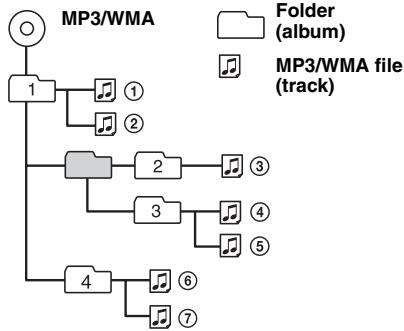
flowchart
graph TD
    A["MP3/WMA"] --> B["1"]
    B --> C["①"]
    B --> D["②"]
    B --> E["③"]
    B --> F["④"]
    B --> G["⑤"]
    B --> H["⑥"]
    B --> I["⑦"]
    style A fill:#f9f,stroke:#333
    style B fill:#ccf,stroke:#333
    style C fill:#cfc,stroke:#333
    style D fill:#fcc,stroke:#333
    style E fill:#cff,stroke:#333
    style F fill:#ffc,stroke:#333
    style G fill:#cfc,stroke:#333
    style H fill:#fcc,stroke:#333
    style I fill:#cfc,stroke:#333
Notes
- When naming an MP3 file/WMA file, be sure to add the file extension “.mp3”/“.wma” to the file name.
- During playback of a VBR (variable bit rate) MP3/WMA file or fast-forward/reverse, elapsed playing time may not display accurately.
- When the disc is recorded in Multi Session, only the first track of the first session format is recognized and played (any other format is skipped). The priority of the format is CD-DA, ATRAC CD and MP3/WMA.
- When the first track is a CD-DA, only CD-DA of the first session is played.
- When the first track is not a CD-DA, an ATRAC CD or MP3/WMA session is played. If the disc has no data in any of these formats, "NO Music" is displayed.
Notes on MP3
- Be sure to finalize the disc before using on the unit.
- If you play a high-bit-rate MP3, such as 320 kbps, sound may be intermittent.
Notes on WMA
- Files made with lossless compression are not playable.
- Files protected by copyright are not playable.
About ATRAC CD
ATRAC3plus format
ATRAC3, which stands for Adaptive Transform Acoustic Coding3, is audio compression technology. It compresses audio CD data to approximately 1/10 of its original size. ATRAC3plus, which is an extended format of ATRAC3, compresses the audio CD data to approximately 1/20 of its original size. The unit accepts both ATRAC3 and ATRAC3plus format.
ATRAC CD
ATRAC CD is recorded audio CD data which is compressed to ATRAC3 or ATRAC3plus format using authorized software, such as SonicStage 2.0 or later, or SonicStage Simple Burner.
• The maximum number of:
– folders (groups): 255
– files (tracks): 999
- The characters for a folder/file name and text information written by SonicStage are displayed.
For details on ATRAC CD, see the SonicStage or SonicStage Simple Burner manual.
Note
Be sure to create the ATRAC CD using authorized software, such as SonicStage 2.0 or later, or SonicStage Simple Burner 1.0 or 1.1.
If you have any questions or problems concerning your unit that are not covered in this manual, consult your nearest Sony dealer.
About Bluetooth function
On Bluetooth communication
- Bluetooth wireless technology operates within a range of about 10 m. Maximum communication range may vary depending on obstacles (person, metal, wall, etc.) or electromagnetic environment.
- The following conditions may affect the sensitivity of Bluetooth communication. - There is an obstacle such as a person, metal, or wall between this unit and Bluetooth device. - A device using 2.4 GHz frequency, such as a wireless LAN device, cordless telephone, or microwave oven, is in use near this unit.
- Because Bluetooth devices and wireless LAN (IEEE802.11b/g) use the same frequency, microwave interference may occur and resulting in communication speed deterioration, noise, or invalid connection if this unit is used near a wireless LAN device. In such as case, perform the following.
- Use this unit at least 10m away from the wireless LAN device.
- If this unit is used within 10m of a wireless LAN device, turn off the wireless LAN device.
- Install this unit and Bluetooth device as near to each other as possible.
- Microwaves emitting from a Bluetooth device may affect the operation of electronic medical devices. Turn off this unit and other Bluetooth devices in the following locations, as it may cause an accident.
- where inflammable gas is present, in a hospital, train, airplane, or a petrol station - near automatic doors or a fire alarm
- This unit supports security capabilities that comply with the Bluetooth standard to provide a secure connection when the Bluetooth wireless technology is used, but security may not be enough depending on the setting. Be careful when communicating using Bluetooth wireless technology.
- We do not take any responsibility for the leakage of information during Bluetooth communication.
- Connection with all Bluetooth devices cannot be guaranteed.
– A device featuring Bluetooth function is required to conform to the Bluetooth standard specified by Bluetooth SIG, and be authenticated.
- Even if the connected device conforms to the above mentioned Bluetooth standard, some devices may not be connected or work correctly, depending on the features or specifications of the device.
- While talking on the phone hands free, noise may occur, depending on the device or communication environment.
- Depending on the device to be connected, it may require some time to start communication.
Others
- Using the Bluetooth device may not function on cellular phones, depending on radio wave conditions and location where the equipment is being used.
- If you experience discomfort after using the Bluetooth device, stop using the Bluetooth device immediately. Should any problem persist, consult your nearest Sony dealer.
Maintenance
Replacing the lithium battery of the card remote commander
Under normal conditions, the battery will last approximately 1 year. (The service life may be shorter, depending on the conditions of use.) When the battery becomes weak, the range of the card remote commander becomes shorter. Replace the battery with a new CR2025 lithium battery. Use of any other battery may present a risk of fire or explosion.
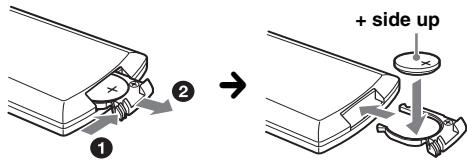
text_image
① ② + side upNotes on the lithium battery
- Keep the lithium battery out of the reach of children. Should the battery be swallowed, immediately consult a doctor.
- Wipe the battery with a dry cloth to assure a good contact.
- Be sure to observe the correct polarity when installing the battery.
- Do not hold the battery with metallic tweezers, otherwise a short-circuit may occur.
WARNING
Battery may explode if mistreated. Do not recharge, disassemble, or dispose of in fire.
continue to next page →
Fuse replacement
When replacing the fuse, be sure to use one matching the amperage rating stated on the original fuse. If the fuse blows, check the power connection and replace the fuse. If the fuse blows again after replacement, there may be an internal malfunction. In such a case, consult your nearest Sony dealer.
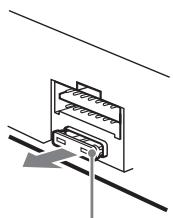
natural_image
Pure electrical circuit lines without any symbolsFuse (10A)
Cleaning the connectors
The unit may not function properly if the connectors between the unit and the front panel are not clean. In order to prevent this, detach the front panel (page 15) and clean the connectors with a cotton swab dipped in alcohol. Do not apply too much force. Otherwise, the connectors may be damaged.
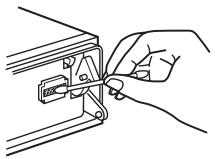
natural_image
Line drawing of a hand using a tool to adjust or install a mechanical component (no text or symbols present)Main unit
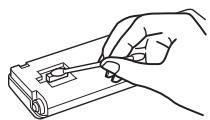
natural_image
Line drawing of a hand holding a small electronic device (no text or symbols)Back of the front panel
Notes
- For safety, turn off the ignition before cleaning the connectors, and remove the key from the ignition switch.
- Never touch the connectors directly with your fingers or with any metal device.
Removing the unit
1 Remove the protection collar.
① Detach the front panel (page 15).
② Pinch both edges of the protection collar, then pull it out.
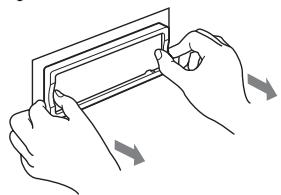
natural_image
Line drawing of two hands holding a rectangular object with directional arrows indicating movement (no text or symbols)↓
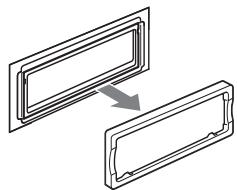
natural_image
Diagram showing two rectangular compartments with a directional arrow indicating flow or movement (no text or symbols)2 Remove the unit.
① Insert both release keys simultaneously until they click.
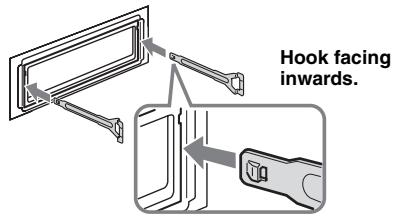
text_image
Hook facing inwards.② Pull the release keys to unseat the unit.
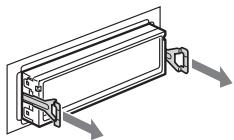
natural_image
Technical line drawing of a mechanical bracket with directional arrows indicating motion (no text or symbols)③ Slide the unit out of the mounting.
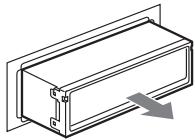
natural_image
Technical line drawing of a rectangular mechanical component with a downward arrow indicating rotation (no text or symbols)Specifications
CD Player section
Signal-to-noise ratio: 120 dB
Frequency response: 10 - 20,000 Hz
Wow and flutter: Below measurable limit
Tuner section
FM
Tuning range: 87.5 - 108 MHz
Aerial terminal: External aerial connector
Intermediate frequency: 10.7 MHz/450 kHz
Usable sensitivity: 9 dBf
Selectivity: 75 dB at 400 kHz
Signal-to-noise ratio: 67 dB (stereo), 69 dB (mono)
Harmonic distortion at 1 kHz: 0.5 % (stereo), 0.3 % (mono)
Separation: 35 dB at 1 kHz
Frequency response: 30 – 15,000 Hz
MW/LW
Tuning range:
$$ \mathrm{MW}: 5 3 1 - 1, 6 0 2 \mathrm{kHz} $$
$$ \mathrm{LW}: 1 5 3 - 2 7 9 \mathrm{kHz} $$
Aerial terminal: External aerial connector
Intermediate frequency: 10.7 MHz/450 kHz
Sensitivity: MW: 30 μV, LW: 40 μV
Wireless Communication
Communication System:
Bluetooth Standard version 2.0
Output:
Bluetooth Standard Power Class 2 (Max. +4 dBm)
Maximum communication range:
Line of sight approx. 10m^*1
Frequency band:
2.4 GHz band (2.4000 - 2.4835 GHz)
Modulation method: FHSS
Compatible Bluetooth Profiles ^*2 :
A2DP (Advanced Audio Distribution Profile)
AVRCP (Audio Video Remote Control Profile)
HFP (Handsfree Profile)
OPP (Object Push Profile)
*1 The actual range will vary depending on factors such as obstacles between devices, magnetic fields around a microwave oven, static electricity, reception sensitivity, antenna's performance, operating system, software application, etc.
*2 Bluetooth standard profiles indicate the purpose of Bluetooth communication between devices.
Power amplifier section
Outputs: Speaker outputs (sure seal connectors)
Speaker impedance: 4 - 8 ohms
Maximum power output: 52 W × 4 (at 4 ohms)
General
Outputs:
Audio outputs terminal (front/rear)
Subwoofer output terminal (mono)
Power aerial relay control terminal
Power amplifier control terminal
Inputs:
Telephone ATT control terminal
Illumination control terminal
BUS control input terminal
BUS audio input/AUX IN terminal
Remote controller input terminal
Aerial input terminal
Tone controls:
Low: ±10 dB at 60 Hz or 100 Hz (XPLOD)
Mid: ±10 dB at 500 Hz or 1 kHz (XPLOD)
High: ±10 dB at 10 kHz or 12.5 kHz (XPLOD)
Power requirements: 12 V DC car battery (negative earth)
Dimensions: Approx. 178 × 50 × 183 mm (w/h/d)
Mounting dimensions: Approx. 182 × 53 × 162 mm (w/h/d)
Mass: Approx. 1.2 kg
Supplied accessories:
Card remote commander: RM-X302
Parts for installation and connections (1 set)
Optional accessories/equipment:
Rotary commander: RM-X4S
BUS cable (supplied with an RCA pin cord):
CD changer (10 discs): CDX-757MX
CD changer (6 discs): CDX-T70MX, CDX-T69
Source selector: XA-C30, XA-C40
AUX-IN selector: XA-300
Your dealer may not handle some of the above listed accessories. Please ask the dealer for detailed information.
US and foreign patents licensed from Dolby Laboratories.
MPEG Layer-3 audio coding technology and patents licensed from Fraunhofer IIS and Thomson.
Note
This unit cannot be connected to a digital preamplifier or an equalizer which is Sony BUS system compatible.
Design and specifications are subject to change without notice.

- Lead-free solder is used for soldering.
- Halogenated flame retardants are not used in the certain printed wiring boards.
- Halogenated flame retardants are not used in cabinets.
- Paper is used for the packaging cushions.
Troubleshooting
The following checklist will help you remedy problems you may encounter with your unit. Before going through the checklist below, check the connection and operating procedures.
General
No power is being supplied to the unit.
- Check the connection. If everything is in order, check the fuse.
- If the unit is turned off and the display disappears, it cannot be operated with the remote commander.
→Turn on the unit.
The power aerial does not extend.
The power aerial does not have a relay box.
No sound.
• The volume is too low.
- The ATT function is activated, or the Telephone ATT function (when the interface cable of a car telephone is connected to the ATT lead) is activated.
- The position of the fader control is not set for a 2-speaker system.
- The CD changer is incompatible with the disc format (MP3/WMA/ATRAC CD).
→Play back with a Sony MP3 compatible CD changer, or this unit.
No beep sound.
- The beep sound is cancelled (page 20).
- An optional power amplifier is connected and you are not using the built-in amplifier.
continue to next page →
The contents of the memory have been erased.
- The RESET button has been pressed.
→Store again into the memory. - The power connecting lead or battery has been disconnected.
- The power connecting lead is not connected properly.
Stored stations and correct time are erased. The fuse has blown.
Makes noise when the position of the ignition key is switched.
The leads are not matched correctly with the car's accessory power connector.
The display disappears from/does not appear in the display window.
- The dimmer is set “Dimmer on” (page 20).
- The display disappears if you press and hold OFF. →Press and hold OFF on the unit until the display appears.
- The connectors are dirty (page 26).
DSO does not function.
Depending on the type of car interior or type of music, DSO may not have a desirable effect.
Any display items do not display.
→ Set to “Info All” (page 20).
CD/MD playback
The disc cannot be loaded.
- Another disc is already loaded.
- The disc has been forcibly inserted upside down or in the wrong way.
The disc does not playback.
• Defective or dirty disc.
- The CD-Rs/CD-RWs are not for audio use (page 24).
MP3/WMA files cannot be played back.
The disc is incompatible with the MP3/WMA format and version (page 24).
MP3/WMA files take longer to play back than others.
The following discs take a longer time to start playback.
- a disc recorded with a complicated tree structure.
- a disc recorded in Multi Session.
- a disc to which data can be added.
The ATRAC CD cannot play.
- The disc is not created by authorized software, such as SonicStage or SonicStage Simple Burner.
- Tracks that are not included in the group cannot be played.
ID3 tag of the MP3 file is not displayed correctly.
- Check the "ID3 Tag" setting (page 20).
- Customers in Russia, set to “RUS”; other customers, set to “EUR.” Note that even if you set to “RUS,” ID3 tag may not be displayed correctly.
The display items do not scroll.
- For discs with very many characters, those may not scroll.
- “Auto Scroll” is set to “off.” → Set “Auto Scroll on” (page 20) or press SCRL on the card remote commander.
The sound skips.
• Installation is not correct.
→ Install the unit at an angle of less than 45^ in a sturdy part of the car.
• Defective or dirty disc.
The operation buttons do not function. The disc will not eject.
Press the RESET button (page 6).
Radio reception
The stations cannot be received.
The sound is hampered by noises.
- Connect a power aerial control lead (blue) or accessory power supply lead (red) to the power supply lead of a car's aerial booster (only when your car has built-in FM/MW/LW aerial in the rear/side glass).
- Check the connection of the car aerial.
- The auto aerial will not go up. → Check the connection of the power aerial control lead.
- Check the frequency.
- When the DSO mode is on, the sound is sometimes hampered by noises. → Set the DSO mode to “off” (page 21).
Preset tuning is not possible.
- Store the correct frequency in the memory.
• The broadcast signal is too weak.
Automatic tuning is not possible.
- The local seek mode is set to “on.”
→ Set to “Local off” (page 20). - The broadcast signal is too weak.
→Perform manual tuning.
During FM reception, the "ST" indication flashes.
- Tune in the frequency accurately.
- The broadcast signal is too weak.
→ Set to “Mono on” (page 20).
An FM programme broadcast in stereo is heard in monaural.
The unit is in monaural reception mode. → Set to “Mono off” (page 20).
RDS
The SEEK starts after a few seconds of listening.
The station is non-TP or has weak signal. →Deactivate TA (page 13).
No traffic announcements.
- Activate TA (page 13).
- The station does not broadcast any traffic announcements despite being TP.
→ Tune in another station.
PTY displays "None."
- The current station is not an RDS station.
• RDS data has not been received. - The station does not specify the programme type.
Bluetooth function
The connecting device cannot detect this unit.
- Set "Signal" to "ON" (page 15).
- Set “Visibility” to “Show” (page 15).
- While connecting to the other Bluetooth device, this unit cannot be detected from another device.
Disconnect the current connection and search for this unit from another device. The disconnected device can be reconnected by selecting from the list of registered devices.
This unit cannot detect the connecting device.
Check the Bluetooth setting of the connecting device.
Connection is not possible.
- Depending on the other device, searching from this unit may not be possible.
→Search for this unit from the other device. - Depending on the status of the other device, searching from this unit may not be possible.
→Search for this unit from the other device. - Check the pairing and connection procedures in the manual of the other device, etc., and perform the operation again.
The name of the detected device does not appear.
Depending on the status of the other device, it may not be possible to obtain the name.
No ring tone.
- Adjust the volume in "Ring Vol" (page 17).
- Depending on the connecting device, the ring tone may not be sent properly.
→ Set “Ringtone” to “Default” (page 19).
The talker's voice volume is low.
Adjust the volume in “Talk Vol” (page 17).
Echo or noise occurs in phone call conversations.
- Lower the volume.
- “EC/NC Mode” is set to “off.” → Set “EC/NC Mode” to “Mode 1” or “Mode 2” (page 19).
- If the ambient noise other than the phone call sound is loud, try reducing this noise.
E.g.: If a window is open and road noise, etc., is loud, shut the window. If the air conditioner is loud, lower the air conditioner.
The phone sound quality is poor.
Phone sound quality depends on reception conditions of cellular phone.
→Move your car to a place where you can enhance the cellular phone's signal if the reception is poor.
The volume of the connected audio device is low (high).
Volume level will differ depending on the audio device.
→Adjust the volume of the connected audio device or this unit.
The sound skips during playback of a Bluetooth audio device.
- Reduce the distance between the unit and the Bluetooth audio device.
- If the Bluetooth audio device is stored in a case which interrupts the signal, remove the audio device from the case while using.
- Several Bluetooth devices or other devices which emit radio waves are used nearby.
→Turn off the other devices. →Reduce the distance from the other devices.
The connected Bluetooth audio device cannot be controlled.
Check that the connected Bluetooth audio device supports AVRCP.
Some functions do not work.
Check that the connecting device supports the functions in question.
The name of the other party does not appear when a call is received.
- The other party is not stored in the phonebook.
→ Store in the phonebook (page 18). - The calling phone is not set to send the phone number.
A call starts unintentionally.
- The connecting phone is set to start a call automatically.
- “Auto Answer” of this unit is set to “on” (page 19).
Pairing failed in Time Over.
Depending on the connecting device, the time limit for pairing may be short. Try completing the pairing within the time by setting a single digit passcode.
The ring tone or other party's voice is output only from one speaker.
“Speaker Sel” is set to “FR-L” or “FR-R.”
→ Set “Speaker Sel” to “Front” (page 19).
No sound is output from the car speakers during handsfree call.
If the sound is output from the cellular phone, set the cellular phone to output the sound from the car speakers.
Error displays/Messages
Audio function
Blank Disc
Tracks have not been recorded on the MD.
→Play an MD with recorded tracks.
Error
- The disc is dirty or inserted upside down.
→ Clean or insert the disc correctly. - The disc cannot play due to a problem.
→Insert another disc.
Failure (Illuminates until any button is pressed.)
The connection of speakers/amplifiers is incorrect.
→ See the installation guide manual of this model to check the connection.
Load
The changer is loading the disc.
→ Wait until loading is complete.
Local Seek +/-
The local seek mode is on during automatic tuning.
NO AF
There is no alternative frequency for the current station.
→Push the joystick left/right while the programme service name is flashing. The unit starts searching for another frequency with the same PI (Programme Identification) data (“PI Seek” appears).
NO Disc
The disc is not inserted in the CD/MD changer.
→Insert discs in the changer.
NO Disc Name
A disc name is not written in the track.
NO Group Name
A group name is not written in the track on the ATRAC CD.
NO ID3 Tag
ID3 tag information is not written in the MP3 file.
NO Information
Text information is not written in the ATRAC3/ATRAC3plus or WMA file.
NO Magazine
The disc magazine is not inserted in the CD changer.
→Insert the magazine in the changer.
NO Music
The disc is not a music file.
→Insert a music CD in this unit or MP3 playable changer.
NO TP
The unit will continue searching for available TP stations.
NO Track Name
A track name is not written in the track.
Offset
There may be an internal malfunction.
→Check the connection. If the error indication remains on in the display, consult your nearest Sony dealer.
Push Reset
The CD unit and CD/MD changer cannot be operated due to a problem.
→Press the RESET button (page 6).
Read
The unit is reading all track and group information on the disc.
→ Wait until reading is complete and playback starts automatically. Depending on the disc structure, it may take more than a minute.

During reverse or fast-forward, you have reached the beginning or the end of the disc and you cannot go any further.

The character cannot be displayed with the unit.
Bluetooth function
Busy
The Bluetooth process is not complete.
→Discontinue receiving the phonebook data.
→ Stop the current operation and wait for a while.
Connection Complete
The Bluetooth connection is complete.
Connection Failed
- Cannot be connected to the device due to problem.
- Cannot be connected to the device because the input passcode is incorrect.
- The time limit for connection has been exceeded.
Disconnected
The Bluetooth signal is disconnected.
Empty
- There is no data in “Dialed Calls,” “Received Calls” or “Phonebook” in the CALL menu.
- There is no data in the phonebook when storing to the Preset Dial.
Error
The phonebook data cannot be received due to a problem.
HF Device is not available
Handsfree device is not connected.
Invalid Code
The input security code is incorrect.
Memory Full
- The phonebook memory of this unit became full while the phonebook data is received.
- The phonebook memory of this unit is full.
Not Available
Bluetooth AUDIO is selected as the source, but no Bluetooth audio device is connected.
No Devices Found
- No connectable device is found after searching.
- The device is not registered in “Handsfree Devices” or “Audio Devices.”
→Register the device in “Handsfree Devices” or “Audio Devices.”
Security Locked
Security is set.
Turn ON Bluetooth
The Bluetooth setting is off.
→ Set the Bluetooth setting to on.
If these solutions do not help improve the situation, consult your nearest Sony dealer.
If you take the unit to be repaired because of CD playback trouble, bring the disc that was used at the time the problem began.
Support site
If you have any questions or for the latest support information on this product, visit the web site below:
http://support.sony-europe.com
Wichtig!
CLASS 1 LASER PRODUCT
text_image
Diagram showing a hand pressing a device with labeled arrows indicating motion or sequenceHinweise
text_image
Diagram illustrating the step-by-step installation of a device's internal components, showing part A and B before and after assembly.Hinweis
natural_image
Line drawing of a hand holding a circular object on a device (no text or symbols)3 Taste Bluetooth 16, 17, 18, 19, 21, 21
16 Tasten ← (I◀◀)/→ (▶▶I)
flowchart
graph TD
    A["CD"] --> B[" "]
    B --> C[" "]
text_image
Documentary PTY News Current Affairstext_image
Phone Settings Bluetooth Settings Connectivitytext_image
1-6 Preset Dial → Dialed Calls ← Received CallsEC/NC Mode\*4 (Echo-/
DSO (Dynamic Soundstage Organizer)
text_image
SOUND* ATT PRESET/ DISC SOURCE VOL SEEK/AMS DSPL MODE OFFnatural_image
Line drawing of hands using a handheld device to interact (no text or symbols present)text_image
Diagram showing a hand holding a disc with a cross symbol and a warning label, indicating a hazard or failure.natural_image
Illustration of hands holding a CD or DVD disc with arrows indicating rotation (no text or symbols)natural_image
Line drawing of a hand using a tool to adjust or install a mechanical component (no text or symbols present)Hauptgerät
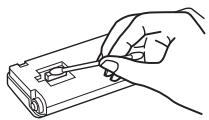
natural_image
Line drawing of a hand holding a small electronic component (no text or symbols)text_image
Diagram illustrating a step-by-step assembly of a device with directional arrows indicating motion or movement.natural_image
Pure technical line drawing of a mechanical component with directional arrows, no text or symbols presentnatural_image
Technical line drawing of a rectangular mechanical component with a downward arrow indicating compression or dislocation (no text or symbols)Technische Daten
CD-Player
A2DP (Advanced Audio Distribution Profile) AVRCP (Audio Video Remote Control Profile) HFP (Handsfree Profile) OPP (Object Push Profile)
HF Device is not available
CLASS 1 LASER PRODUCT
text_image
Diagram showing a hand inserting a device into a device with labeled arrows indicating the process.Remarques
text_image
Diagram illustrating a device lock operation with labeled parts A and B, showing step-by-step insertion and hand gesture.Remarque
natural_image
Line drawing of a hand holding a circular object on a device (no text or symbols)3 Fermez la façade.
3 Touche Bluetooth 16, 17, 19, 20, 21
flowchart
graph TD
    A["CD"] --> B[" "]
    B --> C[" "]
text_image
Documentary PTY News Current Affairstext_image
1-6 Preset Dial → Dialed Calls ← Received CallsClock Adjust (page 6)
CT (Heure)
Demo\* (Demonstration)
Mono (mode monaural)
La lecture commence.
text_image
SOUND* ATT PRESET/ DISC SOURCE VOL SEEK/AMS DSPL MODE OFFnatural_image
Line drawing of hands using a handheld device to interact (no text or symbols present)text_image
Diagram showing a hand holding a disc with a cross symbol and liquid, indicating a physical or mathematical concept.natural_image
Illustration of a hand holding a CD or DVD disc with arrows indicating rotation (no text or symbols)natural_image
Diagram of a cable connector with a cable inserted into a socket (no text or symbols)Fusible (10 A)
natural_image
Line drawing of a hand using a tool to adjust or install a mechanical component (no text or symbols present)Appareil principal
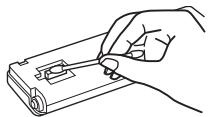
natural_image
Line drawing of a hand holding a small electronic component (no text or symbols)natural_image
Diagram showing two steps of a device being folded, with arrows indicating the process (no text or symbols present)natural_image
Technical line drawing of a mechanical component with directional arrows indicating movement (no text or symbols)natural_image
Technical line drawing of a rectangular mechanical component with a downward arrow indicating compression or dislocation (no text or symbols)Spécifications
Lecteur CD
A2DP (Advanced Audio Distribution Profile) AVRCP (Audio Video Remote Control Profile) HFP (Handsfree Profile) OPP (Object Push Profile)
HF Device is not available
CLASS 1 LASER PRODUCT
text_image
Diagram showing a hand inserting a card into a device, labeled with two arrows indicating the process.Note
text_image
Diagram illustrating the step-by-step installation of a device, showing component positioning and hand gesture.Nota
natural_image
Line drawing of a hand holding a circular object with a triangular pointer above it, no text or symbols present.3 Tasto Bluetooth 16, 17, 19, 21
flowchart
graph TD
    A["CD"] --> B[" "]
    B --> C[" "]
    C --> A
text_image
Documentary PTY News Current Affairs1 Premere Bluetooth.
1 Premere Bluetooth.
1 Premere Bluetooth.
text_image
1-6 Preset Dial → Dialed Calls ← Received CallsInvio di toni DTMF (Dual Tone Multiple Frequency)
1 Premere Bluetooth.
“Dialed Calls”, “Received Calls”, “Phonebook”, “Preset Dial”, “Receive PB”
1 Premere Bluetooth.
text_image
SOUND* ATT PRESET/ DISC SOURCE VOL SEEK/AMS DSPL MODE OFFnatural_image
Line drawing of hands using a handheld tool to adjust or install a component (no text or symbols visible)natural_image
Illustration of hands holding a CD or DVD disc with a tool, showing a circular object and directional arrows (no text or symbols)Note sui dischi CD-R/CD-RW
text_image
Fusibile (10 A)natural_image
Line drawing of a hand using a tool to adjust or install a mechanical component (no text or symbols present)Unità principale
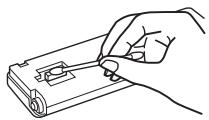
natural_image
Line drawing of a hand holding a battery with a screwdriver (no text or symbols)natural_image
Illustration of hands holding a rectangular object with directional arrows indicating movement (no text or symbols)↓
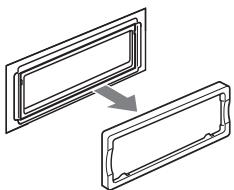
natural_image
Diagram showing two rectangular panels with a directional arrow between them, no text or symbols present.natural_image
Pure technical line drawing of a mechanical bracket with directional arrows indicating motion (no text or symbols)natural_image
Technical line drawing of a rectangular electronic component with a gray arrow indicating direction (no text or symbols)Bluetooth Standard Power Class 2 (max. +4 dBm)
A2DP (Advanced Audio Distribution Profile) AVRCP (Audio Video Remote Control Profile) HFP (Handsfree Profile) OPP (Object Push Profile)
HF Device is not available
CLASS 1 LASER PRODUCT
text_image
Diagram showing a hand pressing a device with labeled arrows indicating motion or sequence stepsOpmerkingen
text_image
Diagram illustrating the step-by-step installation of a device, showing component positioning and hand gesture.Opmerking
natural_image
Line drawing of a hand holding a circular object on a device (no text or symbols)3 Bluetooth toets 16, 17, 19, 20, 21
flowchart
graph TD
    A["CD"] --> B[" "]
    B --> C[" "]
    C --> A
AF (alternatieve frequencies)
text_image
Documentary PTY News Current AffairsDe instelling is voltooid.
text_image
Phone Settings Bluetooth Settings Connectivity2 Selecteer "Connectivity" → "Search".
Searching...

2 Selecteer "Connectivity" → "Handsfree Devices" of "Audio Devices".
4 Selecteer "Connect".
Selecteer "Disconnect" → "yes" in stap 4.
Tip
text_image
1-6 Preset Dial → Dialed Calls ← Received CallsDTMF-tonen (Dual Tone Multiple Frequency) verzenden
U kunt DTMF-tonen verzenden.
De nummers opslaan vanuit "Dialed Calls" of "Received Calls"
EC/NC Mode ^*4 (Echo Canceller/Noise Canceller-modus)
"Dialed Calls", "Received Calls", "Phonebook", "Preset Dial", "Receive PB"
2 Selecteer "Connectivity" → "Handsfree Devices" of "Audio Devices".
4 Selecteer "Delete" → "yes".
De instelling is voltooid.
5 Druk op MENU.
LOW: 60 Hz of 100 Hz
MID: 500 Hz of 1,0 kHz
HI: 10,0 kHz of 12,5 kHz
text_image
SOUND* ATT PRESET/ DISC SOURCE VOL SEEK/AMS DSPL MODE OFFnatural_image
Line drawing of hands using a handheld device to interact (no text or symbols present)natural_image
Illustration of a hand holding a CD or DVD disc with arrows indicating rotation (no text or symbols)– bestanden (tracks): 999
text_image
Zekering (10A)natural_image
Line drawing of a hand using a tool to adjust or install a mechanical component (no text or symbols present)Hoofdeenheid
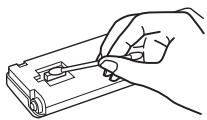
natural_image
Line drawing of a hand holding a small electronic device (no text or symbols)natural_image
Line drawing of hands holding a rectangular object with directional arrows indicating movement (no text or symbols)↓
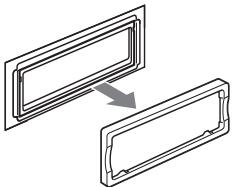
natural_image
Diagram showing two rectangular compartments with a directional arrow indicating flow or movement (no text or symbols)natural_image
Technical line drawing of a mechanical bracket with directional arrows indicating motion (no text or symbols)natural_image
Technical line drawing of a rectangular mechanical component with a downward arrow indicating compression or dislocation (no text or symbols)Technische gegevens
CD-speler
A2DP (Advanced Audio Distribution Profile)
AVRCP (Audio Video Remote Control Profile)
HFP (Handsfree Profile)
OPP (Object Push Profile)
- "EC/NC Mode" is ingesteld op "off".
→Stel "EC/NC Mode" in op "Mode 1" of "Mode 2" (pagina 20).
"Speaker Sel" is ingesteld op "FR-L" of "FR-R".
→Stel "Speaker Sel" in op "Front" (pagina 21).
De Bluetooth-verbinding is voltooid.
Connection Failed
HF Device is not available
De beveiliging is ingesteld.
Turn ON Bluetooth
CLASS 1 LASER PRODUCT
text_image
Diagram showing a hand pressing a device into a folder, labeled with two arrows indicating the process.Примечания
text_image
Diagram illustrating the step-by-step installation of a device's internal components, showing part A and B before and after assembly.Примечание
natural_image
Line drawing of a hand holding a circular object on a device (no text or symbols)flowchart
graph TD
    A["CD"] --> B[" "]
    B --> C[" "]
    C --> A
flowchart
graph TD
    A["FM1"] --> D
    B["TP TQ QF"] --> E
    C[" "] --> E
    D --> E
    E --> D
text_image
Documentary PTY News Current Affairstext_image
Phone Settings Bluetooth Settings Connectivitytext_image
1-6 Preset Dial → Dialed Calls ← Received CallsMID: 500 Hz или 1,0 kHz
HI: 10,0 kHz или 12,5 kHz
text_image
SOUND* ATT PRESET/ DISC SOURCE VOL SEEK/AMS DSPL MODE OFFnatural_image
Line drawing of hands using a handheld device to interact (no text or symbols present)natural_image
Line drawing of hands holding a CD or DVD disc with arrows indicating direction (no text or symbols)natural_image
Pure electrical circuit lines without any symbolsnatural_image
Line drawing of a hand using a tool to adjust or install a mechanical component (no text or symbols present)Основное устройство
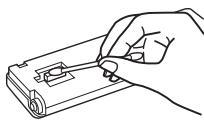
natural_image
Line drawing of a hand holding a tool over a battery pack (no text or symbols)natural_image
Line drawing of hands holding a rectangular object with directional arrows indicating movement (no text or symbols)↓
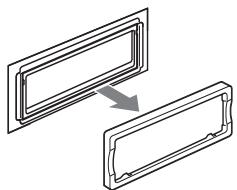
natural_image
Diagram showing two rectangular panels with a directional arrow between them, no text or symbols present.natural_image
Technical line drawing of a mechanical component with directional arrows indicating movement (no text or symbols)natural_image
Isometric line drawing of a rectangular electronic component with a gray arrow indicating direction (no text or symbols)A2DP (Advanced Audio Distribution Profile)
AVRCP (Audio Video Remote Control Profile)
HFP (Handsfree Profile)
OPP (Object Push Profile)
HF Device is not available
Hereby, Sony Corp., declares that this MEX-BT5000 is in compliance with the essential requirements and other relevant provisions of Directive 1999/5/EC.
For details, please access the following URL: http://www.compliance.sony.de/
Deutsch
If you have any questions or for the latest support information on this product, visit the web site below:
http://support.sony-europe.com