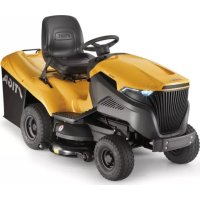
Estate 6102 HW2 - Tractor STIGA - Free user manual and instructions
Find the device manual for free Estate 6102 HW2 STIGA in PDF.



| Product type | Self-propelled lawn tractor |
| Brand | Stiga |
| Model | Estate 6102 HW2 |
| Category | Tractor |
| Engine type | 4-stroke, petrol |
| Fuel | Unleaded gasoline 90 octane min., max 10% ethanol |
| Engine oil | SF-SG quality, SAE viscosity suitable for temperature |
| Spark plug | Specified type, gap 0.6-0.8 mm |
| Air filter | With sponge pre-filter |
| Throttle control | Lever with FAST and SLOW positions |
| Choke control | For cold start |
| Intended use | Lawn mowing for private individuals (amateur use) |
| Maintenance - Oil change | Every 50 hours or at end of season |
| Maintenance - Spark plug | Check every 100 hours, replace if necessary |
| Maintenance - Air filter | Regular cleaning, replace if damaged |
| Safety | Immediate engine stop, disconnect spark plug before maintenance |
| Spare parts | Use only original Stiga parts |
| Repairability | Contact an authorized service center |
Frequently Asked Questions - Estate 6102 HW2 STIGA
User questions about Estate 6102 HW2 STIGA
0 question about this device. Answer the ones you know or ask your own.
Ask a new question about this device
Download the instructions for your Tractor in PDF format for free! Find your manual Estate 6102 HW2 - STIGA and take your electronic device back in hand. On this page are published all the documents necessary for the use of your device. Estate 6102 HW2 by STIGA.
USER MANUAL Estate 6102 HW2 STIGA
WARNING: read thoroughly the instruction booklet before using the machine.
ES Motor-MANUAL DE INSTRUCCIONES
FT Mootori-KASUTUSJUHEND
J 1 J 1 J 1 J 1 J 1 J 1 J 1 J 1 J 1 J 1 J 1 J 1 J 1 J 1 J 1 J 1 J 1 J 1 J 1 J 1 J 1 J 1 J 1 J 1 J 1 J 1 J 1 J 1 J 1 J 1 J 1 J 1 J 1 J 1 J
i.ii.1
1 = 2
3.2
aai 1 aaii iiaai iiaai iiaai iiaai
jg jie
Aaa 1
1 11 11 11 11 11 11 11 11 11 11 11 11 11 11 11 11 11 11 11 11 11 11 11 11 11
. "MAX" 21


3.3
a jall g aalally o jgiall alwll g kyl sluill pll
1
3.4
(1)
wla Lac co cy jil jie cIb .A
B
J.
cgljiecb .D
Jaeilaaeolbe.E
1 = 2.
aill
·
·
·
i 1
.3j 2 jiluaa j
.
5
.
2.5 aaiy
y 1 y
·aball
1 1 1 1 1 1 1 1 1 1 1 1 1 1 1 1 1 1 1 1 1 1 1 1 1 1 1 1 1 1 1 1 1 1 1 1 1 1 1 1 1 1
a gall o 28 y gaiy daley p gaiy
L
aal aaiyaii iiei lai, yaiia jao aiil jao
A
2.6
SsSgJgSgJgSgJgSg
1
aall a JcLai j Saa gai gai ai ji j agai jao
aill aai jiall jaiil gaiyll gaii
aiee 2
sill sll ool o jiei ci jy
0e1 8rsial gall lalai jaiy aaiy o jao liy
aillll aaii lall aie 15y SAE 30 y jn kay . 5+
= 1 + 12 + 13 + 18 + 19 + ·s + 178 + 179 + 1710 + 179 + ·s + 178
Jalaiiai gaiyia Jao aie lai dclg jil 10000000000000000000000000000000000000000000000000000000000000000000000000000000000000000
Jia 3.9
Cui jai jai aalll Cis jai giaiaiial Jaiyil cai 1g5
jbi gai yagall gill n Jaiei iai 2 .
Jaiiall jai
jajn jolal lla f gail jolna
yol921 .4
jai 4.1
aaii i aaii iaii iaii
1 1 1 1 1 1 1 1 1 1 1 1 1 1 1
Joaill piai aac yaa = FAST . Aaiaia ac y = SLOW
4.2
1 1
3.5
y
(a:0)
- a yge 2
.
- 1
y
- all
Jalll Jalil
3.6
aaii iiaiaie 1 1 1 1 1 1 1 1 1 1 1 1 1
.6.6
"FAST" 10000000000000000000000000000000000000000000
J 4
sill
gial alaa jol Jalai jgi 1
(jai)5.3
"FAST" 1
J 2
all
Jalaljolajolil jalalplldi 5.4
eolalil 100000000000000000000000000000000000000
e 1
"FAST"
20 20
JaaJIaJiaeIaIaIaIaIaIaIaIaIaIaIaIaIaIaIaIaIaIaIaIaIaIaIaIaIaIaIaIaIaIaIaIaIaIaIaIaIaIaIaIaIaIaIaIaIaIaIaIaIaIaI
"SLOW" 1
20-15 2d dolal ae gle y jy
J
.3
5.1
Jiai jiai jiai jiai jiai jiai jiai jiai jiai jiai jiai jiai jiai jiai jiai jiai jiai jiai jiai jiai jiai jiai jiai jiai jiai jiai jiai jiai jiai jiai jiai jiai jiai jiai j
bioln
5.1.1
jua 1.
2.2.1
12,2.A (2011)
.3 waiilwac
(2.B)
b1 = 2,b2 = - 4,·s ab⏜ = 4
.4
《MIN》
. 《MAX》 ( a + b) ( a^2 + ab + b^2)
.5
7.IDEHTIΦIUPAHE HA HEN3PABHOCTHTE. 9
1.ObuAHHΦOPMAUHA
1.1 KAHДA CE YETEPbHOBOdCTBOTO
B TeKCTa Ha pBKOBOcTBOTO HAKON naparpaФn, CbDbpKaUHΦOpMaUry OT Oco6eHo 3HaueHHe 3a ZeIInTe Ha 6e3oNaChOCTTa INI eKcNlOaTaUraTAta, Ca NODyepTaHn NO pa3JIuYeH NaHH, B CbOTBETCTBne C TO3N KpITepn:
O3haueHnTe CbC 3AbeJIeHHKA
BAXHO actn npedoctabyt yToUHeHn nn DOnbHLHTeHN CBeDeHn 3a nocOeHn Buee faktn, 3a da He ce nobpeHn MaunHaTa N da He Ce npuHnT uetn.
CIMBOJbT 603HaUaBaOnaCHOCT. Hecna3BaHeTo Ha npEduynpeKdEHHeTO BOIN DO Bb3MOXHOCTTA OT NnHn HapaHbAHn HA TpeTNnua WnNn HaHacrHe Ha 9eTn.
1.2 PENPATHN
1.2.1 Φιγρή
ФигурптБТe3иИнСТукиЗауNotpe6a caHOMepnpaHc1,2,3иТаKaHaTAtbK. ПОКАЗAHNTe HaФигурптКOMNOHEHTNca O3NaueHc6yKBnA,B,C,N.T.H. ПрЕРотКATA KBM KOMNoHETC HaФИура 2ce yKa3Ba cHaДПИС:"BЖ ФИr.2.C"илnpocTo"(ФИr.2.C)".ФигурптCa nOKa3aTeJIH.N.DeЯCTBHTeJIHITe DeTaJInMoKe Da ca pa3JIuHn OTи3O6pa3EHNTe.
1.2.2 3aIabn
PbKOBOcTBOTO e pa3dJeHOn
Ha rIaBn n naparpa.
3aIaBHeTo Ha naparpaF 2.1 O6yHee"e
e noIaRlAbNe Ha "2.IpabNla 3a 6e3oNaChocT".
IpePaTKte KbM 3aIaBna Hn
naparpaFnc a OT6eJ3aHn
CbC CbKpaSeHHeTO rI. nIi pa3D. n CbOTBeTHaTa
uΦpa.HanpImep:"rI.2" nIi "nap.2.1".
2. ПAPВILA 3A БЕЗПАСНСТ
2.1 OByeHne
Ipooyete BHNMaTeJHnHO HactoIte NHCtpyKu, npedn Da n3No3BaTe MaunHaTa.
Pa3yete n CBnHete c HOMaHdnte n C
Noxodjto n3noJ3BaHe Ha MaunHaT.
Hayete ce da cnnpate Dnuratela 6bp3o.
Hecna3BaHTo Ha npedynpeKdeHnra
n INCTpyuNTe MOHe Da npuHN
HHndentn N/NN cepno3Hn HapahRaBnH.
CbxpaHbAte BCnHn npedynpeHdEHHn
INCTpyuN, 3a da rN npereHdaTe B 6bDeue.
- HnKora He nO3BOJRABaIte MaunHaTa Da ce H3PON3BA OT Deca NIN OT NIna, KOINTo He ca 3aNO3HaTc C INCTpyKUnTe. MeCTHNTe 3aKOHMOHe Da npEdBnKdA T MmHmAlHa Bb3pact 3a npaBO Ha n3POn3BaHe.
-Да He ce n3noJ3Ba MaunHaTa KOraTo NOJ3BaTeJIrT e yMOpEn HnHepa3NoJIOHeH, HnE B3mAl JekapCTBa, HApKOTnIyNtpe6nI aIKOXoI nnBpeDnH BeJecTBA, BInReeHn Ha CnOCO6HOCTTa My 3a peΦleKcN i Ha BHNMaHHeTO My.
He 3a6paBnTe, ye onepaTopbT nn nOJ3BaTeJIe e OTROBOpEn 3a npOn3WeCTBnI HEnpeDnDEHn Cb6HTnA, KOnTO MoRat Da HAcTbNt 3a Dpyn Xopa nn 3a TAXHATA CO6CTBEHOCT.
2.2 IPEДВAPHTELN ONEPAUIN
JIuHn npedna3Hn cpectBa (JIIC)
He n3noI3BaIte MaunHaTa, 6e3 da Hocnte noDxoJIO o6JeKNo.
He Hocete shpOKn dpexn, Bpb3KN, 6NHyTa NIN dpyrN npEmdTe, KOHTO e Bb3MOXHO da ce 3anIeTa; npnbepete Dblrnte KOCN n 3acTaHete Ha 6e3OnaCHO pa3CToRHHne NO BpeMe Ha aKTHBnpaHeto.
HoceteaHTnfoHN.
Pa60tha 3oHa /MaunHa
- Ppei Da cTapTnpaTe DnraTeIy, npOBepTe DaJI N CTe H3KIOUyn IBCNKn BINOBe MExAHN3Mn 3a ynpabLeHne, KOnto 3aJeNCTBaT DnHexuNTe Ce Yactn Ha MaunHaTa.
BnraTeN C BbTpewHO ropeHe: rOpHBO
-П配电网电:ROPBOToe cNlHO 3anaHMo.BoPaBeTe C Hero BnMaTeJHo! -BnHaHc bXpaHbAaTe rOpBOTo B NOxOJaUc bDoBe.
-3apeKdaIte HnDOnbIbaiTe Upe3 yHnra cAmo Ha OTKpIto N He nyWeTe, DOHaTO N3BbPWBaTe Te3N OepauH.
-3apeKdaIte, npedn da 3anaJInte DBnraTeIa. He OTbapnTe KanaHkata Ha pe3epBoapa n He 3apeKdaIte, KOraTo DBnraTeIaTpa6OTn nn e OSe TOnbl.
-AKo HMa Teu Ha rOpHbO, He CTapTnpaTte DnIraTeJIa, a OTdAJeUeTe MaunHaTa OT paNoHa, KbTeTo ce e pa3JIIO N He3a6abHO NOChTeTE BCnKcN CLeDNOT rOpHBOTo, KOeTO e NOTEKIO Bbpxy MaunHaTa nn Ha 3emrTa
-3aBnBaIe Do6pe KaNaUKaTa Ha pe3epBoapa HnHa CbIOBeTe 3a rOpNBO.
-Избягваши Конт ha ropnboto Cdpexn n,пи ТаКьСлуан,пpeobleyeTe ce npedn da BKNIOHTe DBNrTaTeJ.
2.3 NO BPEME HA EKCNIOATAUHA
Pa60Tha 3OHa
He n3noJI3BaIte MaIINHaTb B NOTeHcIaJIHO eKcIIIO3NIBha aTMOCfepa, npn HAIuYne Ha 3aIaNIM TeUHOCTn, Ra3OBe IIn npax. EJeKtpnuecknte KOHTaKTn IIn MExAHNuHOTo TpneHe MoRat Da reHepnPAT NCKpn, KOnTO MORat Da Bb3PNaMeHrT npax IIn napn.
He cIapTnpaIte DnIraTeJI B 3aTbOpeHIN NOMeueHnKbJeTo MOraT Da ce HaTpynat ONaCH N3napeHnOT BByIepoDeH OKNC. OnpaunTe No cIapTnpaHne Tp6Ba Da ce N3BbPWBaT Ha OTKpNTO HnB Do6pe npOBETpNBn NOMeueHn.BnHarn NOMHeTe, Ye n3ropeJIte ra3OBe ca TOkCnHn.
- OTdaneyeTe xopa, Deça n JKNBOTHn OT pa6oTHata 30ha. Heo6xOДmO e DeçaTa da ce Ha6JIOnaBaT OT dpyr Bb3paCTeH.
PobedeHne
-Пре徴да ИЗБьршптepmoHT,почнсвае,пpoверка Или Настpoиka,ИЗКлioчete
ДВигателЯ ИзКлioчete Кабela Ha
Сбeцт(aОВЕн aKO He e ИЗрчHo
Уka3aHOpyroВИнстуркиnte).
He doKocBaIte YacHTe Ha DnBraTeJIa, KOInTo ce HArOpEuaBAt NO BpeMe Ha ynoTpe6a. PnCK OT n3rapaHn.
OrpaHnueHna ynoTpe6a
He n3noJI3BaIte MaunHaTa, aKO 3aunITne ca HeIOCTaTbUHn NIn aKO npEJa3HnTe ycToiCTBa He ca NoCTaBeHn IpaBnHO.
He n3KIOUcBaIte n He n3BbPwBaIte BMeWaTeJIcTBA NO HAIuHHTe CnCTEmN 3a 6e3ONaCHOCT.
He npomehnTe HacptpoKHTe Ha DBnraTeJI, HnTO rdoBeHdAaTe Do CBpBXpeHIM. Ako DBnraTeJIaT pa6OTn C npeKomepHa CKoOCT, HapactBa pncbT OT HapaHBAhe.
He n3noI3BaTe ΦIyIuIa 3a CTapTnpaHe nn dpyrnaH aHaIOrnHn npOdykTN.
He haKaJaHЯTe MaShHaTa HaCTpaHn DOToJIKOBA, Ye Da npEiN3BnKa H3TnUaHe Ha rOpHb O T KaNaUkAta Ha pe3epBoapa Ha DBrVaTeJI.
He octabnTe DnraTeIa Ce Bbptn 6e3 3anaHnTeHa Cbeu.
2.4 NOДРьЖHA,СБХPAHEHNE I TPAHCIOPTIUPAHE
I3BbPwBaHeTo Ha peoBHa noDpBkKa I npaBnHOTcBxpaHHeHne ca Heo6xOdMn 3a 6e30NaChocCTTa Ha MaunHaTa.
Поврededнite ИИ ИЗноси ч actu Tp6Ba da 6bDat CmehaHn,И HnHora - nonpaBHH.И3noI3BaIte camo opunHaHn pe3epBHN qactn: ynotpe6ata Ha HeopnHaHn H/IIH He npabHIO MOHTnpaHn pe3epBHN qactn hapwaba 6e3onacHocTt ha MaunHATA,MOHeJa npuHn 3IOnOlyHn IIN HapAHBaHn, INOCBO6OHdAba pON3BOIDTeJI OT BcRAHBN 3aIbJIKeHn IIN OTROBOPHOCTN.
Poaepbka
Ako pe3epboapbT Tp6Ba Da 6bDe n3npa3HeH, n3BbPwBaIe Ta3n Opeaun Ha OTkpnto I npn CTydeH DBuRaTeJ.
3a da HamaIte pIcKa OT noJkap, peIOBHO npOBepBaIte DaJIH HMaI n3TnHaHe Ha MacINo I/IIIN rOpNBO.
Pn6upaHe 3a cxbxpaHenne
He octabreIe ropBO B pe3epBoapa, aKO MaunHaTa ige 6bJe npnbpaHa 3a CbxpaHHe B crpaJa, KbDeTo napte OT rOpBOTO MOKe Da BJIa3aT B KOHTaKT Cbc CBO6OdHn PImMbU, NCKPN INN N3TOUHNu HA TOnnHa.
- OctaBeTe MaunHaTa Da ce OxlaN, npeDn Da n npi6epeTe Ha 3akpnto.
TpaHcnpTupaHe
- TpaHcnpTnpaIe MaunHaTa c npa3eH pe3epBoap.
2.5 ONA3BAHE HA OKOJIHATA CPEDA
Ona3BaHTo Ha OKoHaTa CpeDa Tp6Ba Da 6bDe CbUeCTBeH IN PnOpHTeTeH acNeT npN H3NoJ3BaHTo Ha MaUnHaTa, B N0J3a Ha rpaKaDAnCkOTc BxHTeJICTBO H Na CpeDaTa, B KOrTO JKNBeEM.
- 1368BaIe Da 6bTe eJeMeHT Ha 6e3nOKoICTBO NO OTHOWeHHe Ha CbCeDNTe.
CleBaIte cTpHTHO MecTHHTe HOpMn 3a N3XBbPJIHe Ha ONaKOBKHTe, MacJaTa, RopNBOTo, FNITPHTe, N3HOCEHNTe YaCTNu IIN
KoITO N Da e EeMeH, KOITO MOKe CnIHO Da 3aMbpcN OKoJHaTa CpeDa; Te3N OTNaDbuN He MoRaT Da 6bDaT N3XBpIaHN B 60KnLyKa, a TpIbBa Da 6bDaT OTdEJIaHN IpeDaBaHN B CneuaJIHNTe ueHTPOBe, KbTeTo Ue Ce OcbIeCTBn peUKNIPAhe Ha MaTePnaJIte.
Korato n3BaJdaTe OT eKcNloaTaun, He OCTabYrTe MaunHaTb BOKHnata CpeDa, a ce 06bpHeTe KbM cHTbp 3a Cb6npaHe Ha OTnadBzU, B CbOTBETCTBne C MeCTHnTe DeiCTBaun pa3npoeDn.
2.6 EMHCN
IpocebT Ha ropeHe npOn3BexJa TOKcHn
BeueCTBa KaTo BbIePoDeH OKCnD,
a3OTn OKCNiN BbIeBOOpOdi.
KoHTpOblT Ha Te3n BeueCTBa e BaKeH
nopAdn CBoJCTBOTO m Da pearnpat Ha
ΦOTOHMnHnCMOr n CJIeDoBaTeJHo Ha
IpyKOTO n3laRaHe Ha CJIbHYeBaTa CBETInHa.
BbIePoDnHr OKCnD He pearnpa No cBznn
Haunn Pn n3laRaHe Ha CJIbHYeBa CBETInHa, HO
BbIpeKn TOBa Tpr6Ba Da ce Chnta 3a TOKcHneH.
HaunTe MaunHn ca 6opyDbaHn Cbc cnCTem3a HamaJIbAHe Ha emncHTe Ha nocOeHnTe no-rope BeuecTba.
3. ONO3HABAHE HA MALINHATA
3.1 OINCAHNE HA MAUHHATA IN IPEBnDEHA YNOTPEBA
Ta3n MaunHa npedctablaBa ABnraTeI C BbTpewHO ropene.
Дигагелт e obopydBaHe, chnto pa60THn
XapaKTepeNCTnKn, peryIaRho FoYHKUHOHpaHe
n DblroTaHocT ca obycNoBcHn OT MHOrO
fakTopn, HAKON OT KOnTO Ca BbHNH, a dpyrN
-TACHO CBp3aHn C KaueCTBOTo Ha BLOKeHNTe
npOdyKTn n C peDobHata NODPbJkHa.
No-dOly ca NOcoeHn HAKON DoNbJIHNTeHn
CBeDEHn, KOtTO No3BOJRAbT No-Cb3HaTeJIHo
n3noJ3BaHe Ha BaWata MaunHa.
BcraKa dpyra ynoTpe6a, pa3lnuHa ot
NOCoueHnte no-rope, MOke da 6bDe onacha
n da npuHHn BpeDa Ha Xopa n/Inn BeuN.
BAHHO HeoJxOJaTa yNoTpe6a Ha MaunHaTa BOnI Do HeBaNIOHocT Ha rapaHnraTa I Do OTnAdaHe Ha KaKBaTo N da e OTROBOPHOCT Ha POn3BOInTeNa KaTO TeKeCTHTe, IpOn3TuAaNOT NOBpeDa Hn HapaHbAHe Ha Ce6e CN Nn Ha TpeTn Nua ca 3a CMeTKa Ha No3BaTeNA.
3.1.1 Tn noTpe6nteI
Ta3n MaunHa e npedHa3NayeHa 3a
H3noJ3BaHe OT nOTpe6nteJI,TOEcT
HenpoΦecHOHaJIHn OepaTopn. Ta3n MaunHa
e npedHa3NayeHa da ce H3noJ3Ba KaTo Xo6N.
3.2 3HAUN 3A BE3OINACHOCT
Bbpx MaunHata Hma pa3nHn CnMBOJN.
TnxHata yHKnE e da HanomHrT Ha
onepaTopa 3a NOBeHneTO, KOeTO
Tp6Ba Da ce CJeDBA, 3a Da n3NoJ3Ba C
Heo6xOIMOTO BnHMaHne n IpeJa3JIINBOCT.
3HaueHne Ha CNMBOJNTe:


BHIMAHHE! 3arLyuHTeT MoKe Da 6bJe HaropeueH. He nnaTe.
BHIMAHHE!doJeIteMacNo, DOKATOIOCTHHeTe HnBO“MAX”. HeDOnBaIteHaNnBO“MAX”
3.3 INEHTNΦHRAUHOHEHETHKET
Hannuete pernctpaunOHnna Homep (S/n) Ha mawinHa ha cneuaHnTO MRCTO Ha etnKeTa OT3aHa KOpuata.
3.4 KOMNHOENTH N A DBNFATEJI
MaunHata ce cBcTOn OT CJeHnTe OCHOBN KOMNoHEHTN (fHr.1).
A. Kanayka 3a Пьлесе Ha MacNo C
Ukraine 3a Измервае Ha HNBOTO
B. YdJIHKeIeJI 3a n3TOUbaHe Ha MaCJOTO
C. Kap6ypaTop
D. Kanak Ha Bb3dUnHnA qHtbp
E. Jyna Ha 3anaIteHaTa CBeu
F. Pernctpaunohen Homep Ha DnrgaTeJra
3.5 YCJIOBNA HA OKOJIHATA CPEDA
ФункунинрапToHaЧетиrtaКТOBДВИгATEСВБТРЕSHОROpeHecBЛИREOT:
a) Temnepaotypa:
- Pn pa60Ta npn Hnckn TemnepaTpyn MoKe Da Bb3HKnHaT TpydHocTn Pn CTapTnpaHe B CtydeHo CbCToHHe.
- Pn pa6Ota npM HOro BnCOKN TemnepaTypn e Bb3MOxHNO da CpeuHeTe 3aTpPyDHeHn npi CTapTnpaH e 3aqrTo CbCTOarHne, DblKaun Ce Ha n3napraBaHeto Ha rOpBOTO BbB BaHnUkata Ha Kap6ypaTopa nn B nomnata.
-BbB BceKn CnyaH e Heo6xOdmo TnblT Ha MacIoto Da e NODXODJU 3a ekCnloaTaauNoHHTe Tempeatypu.
b)HaMOpckaBncouHa:
- MaKcHMaJIHaTa MoUHocT Ha
ДВИrTeIЯ C BbTpEShO rOpHe
HamaJIyBa NOCTeENHc C yBéJIuYaBaHe
Ha HAdMOPcKaTa BnCOUHa.
-3aTOBa npn 3NaHTeJIHO yBelenuBaHe Ha NaDMOpCKata BnCOUHa TpI6Ba Da HamaJInte HaTOBapBAHETo Ha MaUNHaTa, KaTo n36yBaTe OcOBeHO TeKHa pa60Ta.
3.6 TOPHBO
IobpoTo KaueCTBO Ha TropNBOTo e BaHNo 3a npabnHOTo yHKUHOHnpaHe Ha DBNrTaTeJ.
TropnbTo Tp6Ba Da otroBapnHa CneHnTe n3nCKBaHn:
a) 3nOJ3BaIte YIcT, CBEx N 6e30IOBeH 6eH3nH C MmHmym 90 OKTaHa;
b) He n3noJ3BaIte rOpHBO c NO-BnCOKo ot 10% cbJbPkaHne Ha eTaHOJ;
c) He doabraIe maclo;
d) 3aДа 3aцHTte rOpNBHata cnCTema OT o6pa3yBaHeTo Ha CMOJIncTn OTlaRaHnI, IDo6aBeTe CTaBnIN3aTop B rOpNBOTo.
H3noJ3BaHeTo Ha Hepa3peWeHrROPnBa,MOKe Da NOBpeDN KOMNoHEHTe Ha DBrTaTeIy He BIn3a ByCIOBnra 3a rapaNz.
3A6EJIeHHA H3noI3BaIte cAmO rOpNBOTo, yHa3aHO B Ta6nIcata C TexHnueChNte DaHN. He n3NoI3BaIte DpyrBn BnIOBE rOpHBo. Bb3MOJHo e Da n3NoI3BaTe eKoIOruHn rOpIBa, KaTO aKnIInpan BeH3IN. CbCTaBbT Ha To3n BeH3IN OKa3Ba NO-MaJIKO BnIAHHe BbPxY XopATA N OKoHata CpeDa. He ce CbO6Uba 3a OTpuAtenHn efeHTN, CbP3aHn C yNtpeBaTa Ha CbUHTe. BCE NaK B TbProBcKaT a MpeHa CbUeCTByBaT BnIOBe aKnIInpan BeH3IN, 3a YnIyTo yNtpeBa He MoHe Da Ce DaDAt TOHn yKa3AHn.
3.7 MACJIO
Bunharu n3noJ3BaIte BnCOKOKaYeCTBeHm Macla, KaTo n3bIpaTe YncIoto, NOKa3BaUO BnCKo3NTeTa, B 3aBNCMOCT OT EKcPiOaTuCAIOHHaTa TEMpePaTypa.
-Изпольваитесамо почесваши Macla c KauectBo haSF-SG.
- N36epete cTeeneHTa Ha BnCKo3nTe SAE Bb3 OCHOBa Ha Ta6nuaTa C TexHnueckn daHH.
- N3noJI3BaHeTo Ha BCEce3OHHO MacNoMOKe Da npEdu3BnHa NO-TOJAM pa3XoD
Ppe3 TOnJInte NepNoi, 3aTOBa Tp8Ba Da npOBepBaTe HnBOTo No-yeCTo.
He cmecBaIte Macla ot pa3nUHm MapKu n c pa3nUHn XapaKTepnCTnK.
- I3noI3BaHeTo Ha macNo SAE 30 npi TemnepaTyprn noD +5^ moKe da Hanece ueTn Ha DBnraTeJn nopadn HeNOxOJaO Cma3BaHe.
3.8 Bb3dUyEHNФИNTbP
EfnkacHocTtHa Bb3dUshnHnФnITbp e OTpeuBaUO 3NaueHne 3a npedOTbpaTBAHe Ha OnaChocTtA OT 3acMyKBAHe Ha OTnaDbUIn npax OT dBnTaTeJI, TbN KaTo HamaJRA baPbTHnte My XapaKTepNCnN n EKcNlloaTaUHOHHn My JHBOT.
IopdbpkaTe fHtpnpaun element OCT OT 60hnyuN BnHaBn B nepfekTHO cbctoHne (nap. 6.5).
Ako e Heo6xOmo Da CMeHnTe 0nTpnpaunra eIeMeHT, H3noJ3BaNTe opnHaJha pe3epBHa Yact; HecbBmecTnMITE oHJTbpHN eIeMeHTn MORaT da KOMnpomEtnpaT efeKTHBHOCTTa N JKBOTA Ha DBNrataJI.
- HnKora He cTapTnpaIte DnRgAteJIe 6e3 npabNIO MOHTnpaH fNITpnpaU eJeMeNT.
3.9 CBEUH
He BCnukn CBeu 3a DnrgaTeJInc C BbTpueHNO rope He ca eHaKBN.
-Изпольваite само CBeци OT NOCOЧЕНВИДСпавинOTOТОПЛINHNO YHCLO.
- O6pbuayte BHNMaHne Ha IbJxHaTa Ha pe36aT; no-roJMaTAtbJxHa Ha pe36aTa yBpeKda HENOppaBIMo DnIraTeJI.
- PpOBepTe YnCToTaHa N npaBnHOTO pa3ctOarHHe MeKdy eEKeTPOdnte (nap. 6.6)
4. ROMAHДИ
4.1 KOMAHDA HA YCHOPHTIEL
Perynpa 6poT Ha o6opOTHe Ha dBnraTeJIy. YnpabIeHneTo Ha yckOpnteJIy (obNKHOBeHO loCTOBO), MOHTnpaHO Ha MaunHaTa, e CBpb3aHO C dBnraTeJIy Upe3 Ka6JI.
BnKTe PbKOBOcTBOTO 3a eKcnIooatauHa MaunHata, 3a da nDeHTnΦnUpaTe IocTa 3a yCKOpHTeJI N CbOTBeTHITE PO3NcII, O6NKHOBEHO 06O3HaueHN CbC CLEdHITe CNMBOJN:
- FAST= cboTBETCTBaHa MaKcImaJIHHa peJHM; TpI6Ba Da ce H3NoI3Ba no BpeMe Ha pa6Ota.
SLOW=cbOTBETCTBaUHa MHHHmAHnpeKHM.
4.2 HOMAHDA CHOKE (Bb3dUsha KJIAna)
BnKTe PbKOBOcTBOTO 3a ekCnloaTaunHa MaunHaTa, 3a Da ce 3ano3HaTe c KOMaHdaTa Choke.
IpeHn3BnKbOoboraTBAHeHa CMeCTaN Tp6Ba Da ce H3NoJ3Ba cAmO 3a Heo6XoDmOTO BpeMe npn 3aJeICTBaHe npn CTyDeH DBratel.
5. ПРавILA 3A ИЗПОЛ3BAHE
5.1 IPEДN BCЯKO H3NOJ3BAHE
Ipei BcAko H3No3BaHe Ha DnraTeJIe npenopbYntelHO Da ce N3BbPsaT npOBepKn, cJiauO OcnpyraHHeTo Ha npaBnHOTo My yHKUOHnpaHe.
5.1.1 Поберka Ha HNBOTo Ha MacNo
- NocTaBeTe MaunHaTa Ha paBHa NOBbpxHOCT.
- Nocntete 3oHaTa OKoN Kaanaykata 3a nJIHe He.
- Pa3BnIte KaNaUkata (ФИR.2.A), NOuHCTeTe KpaHa Ha N3MepBaTeJIHaTa UeHa (ФИR.2.B) IЯ ВkapaIte, KaTO nOCTaBITe KaNaUkTa BbPxy TbpIOBnHaTa, KaHTO e NOKa3aHo, 6e3 DaЯ 3aBnBaTe:
- OTHOBO n3BaDeTe KaNaUKaTa C ΚeKaTa n npOBepTe HnBOTO Ha MacIoTO, KOeTo Tp6Ba Da e B rpaHnCte MeKdY DBeTe pe3Kn «MIN» n «MAX» BkIouHTeJIHO.
5.Ako e Heo6xOIMO,doTbJIHeTe C MacNo OT CbIa TnD OIOCTnraHe Ha HnBO «MAX»,KaTO BHMaBaTe Da He N3JIbAte MacNo N3BbH OTbOpa 3a IIbJIheHe - OTHOBO 3aBnTe DOkpaI KanaKaHaTa (frr.2.A) nNoHCTe BCnKn CJIeNOT pa3JrTOTo MaCNo.
3A6EJIeHHA DonbIbaTe noCTeneHNo,
KaTO Do6aBATE MaIKN KOJIHyEcTBA MacNo, IN BCEKINbT NPOBepRAuTE DOCTURHaTOTO HNBO. HeOnbJaTe HaH NBO «MAX»; 3aBnSeHOTO HNBO MoHe Da npuHHN:
3aDnmeHOCT npu N3nychaHe Ha n3ropeJIInTe ra3OBe;
3aanaBaHe Ha CBeuTa HnHa Bb3dywnHnΦnTbp C nocneBauo OT TOBA TpydHocTN npn CTapTnpaHeTo.
3A6EJEHHA OTHOCHO Bnda MaCNO, KOeTO CJIeDbA Da N3N0JI3BaTe, Ce npIdbpKaHte KbM yKa3aHnraTa, daHeHn B TaBnuaTa C TexHnueeKn DaHHN.
EfeKTHBHOCTTHa Bb3dUWHNnA FnITbpe He3aMeHmO yCIOBHe 3a npaBnHOTo FyHKcHOnHpaHe Ha DBrAteI; He CTapTnpaIte DBnraTeJI, aKO FnITbPnHrTe IeMEHTIINCBa HII e NOBpeDeH.
- Nocntete 3oHaTa OKoJIO kanaKa (fug.3.A) Ha fuiTbpa.
- OTbOpTe KaNaKa (ΦnR. 3.A), KaTo 3aBbPtnte pblKoXbTaKaTa (ΦnR. 3.B).
- Побере тьсторнeto Ha Филърни eIeMeHr (ФИг. 3.C), КОИТо Трабва д БыдЕ HeNoВpeDEн, УСТ N B ПьИна ИЗпразвНоCT; В пOTиBEн СлУЧА, ПпстьпTe KБМ ПОДApьЖКаТа ИЛИ HerOBaTа CMЯHa (ВИХ 6.5).
- 3aTbOpTe KaNaKa, KaTo 3aBbTpTHe pBkoXBaTHaTa (ΦnR.3.A).
5.1.3 3apeKdaHeHa rOpHBO
OnepaunTe no 3apeKdahe c ropnBO ca onHcAHN B pBkoBOdCTBOTO 3a ekCnloaTaun Ha MaunHaTa, a Tyk Ca cAmO cnomeHaTH. 3a da 3apeDnte ropnBO:
- Pa3BnIe KaNaUKaTa Ha pe3epBoapa I OCTpaHeTe.
- NocTabete yHnraTa.
- 3apepeTe c ronpBO n n3BaTe Te yHnraTa.
4.В КразиHa 3apeJdaHeto,3aBnTe Do6pe npo6kaTHa rOpNBOTo nNouchTe eBeHTyaJIHO n3TNUaHe Ha rOpNBO.
BAHHO BnImaBaiTe da He pa3JIbATE rohBO Bbpy NlactMaCobHe TaCTNu Ha DBnIaTeNHa MaunHaTa, 3a Da N36BerHeTe da rN NOBpeHte, H He3a6abHo NouchBaHTe BCNU CJIeIN OT eBEHTyALHO pa3JIrTO rohBO. IapAnuTHe NOKpNBa UeTI N0 PnACTMaCobHe TaCTNu, pInuHHeH N OT rohBOTo.
5.1.4 KanaynHa CBeuNTe
CbpxeTe 3dpaBO KaanuHnTe (fng.4.A) Ha Ka6eJIte KbM CBeUHTe (fng.4.B),KaTo ce yBepNTe,Ye Hma 3ambpcBaHn
OTKbM BbTpewHaTa CtpaHa Ha KaNaYKeH N HA KJIeMNTe Ha CBeuNTe.
5.2 CTAPTIPAHE HA DBNIGATEJI (HE3AΓP)
ДВИТЕЛТТРЯБАда ce CTAPТИра NO нанинITE,посочENВуNTBAHETO3a yNOTpe6a HaMaUNHATA,KATO BINAng BHNMaBaTe,чe ТРЯБАдaCTe ИЗКЛЮЧИВСИЧКУCTPOICTBA (aKOca pEДВИDEHnTaKINBA),KONTO caB СьCTОНеДa reHepuPaTДВИЖЕнeHa MaUNHATAИлДa cnpaTДВИТЕЛ.
- OTBopeTe KpaHcTeTo 3a TOpINBO Ha MaunHaTa;
- BkIIOyTe KOMaHdaTa choke;
3.ПремecTeTe loCTa Ha ychOpnteBNo3nua「FAST»;
4.AKTHBnpaTte CTapTePNH KIOU, KaKTo e NOKa3aHO B PbKOBOCTBOTO 3a EKcNlOaTaunHa MaUnHaTa.
CJIeHrKoIcKeHyNnI3KlOuTe KOMaHdTa choke.
5.3 CTAPTIPAHE HA ДВИГATEЛА (3АРТ)
1.ПремecTeTe loCTa Ha ychOpHTeBA N03nua «FAST»;
2. AHTBnpaTte CTapTePNH KIOU, KaKTo e NOKa3aHO B PbKOBOCTBOTO 3a EKcNlOaTaun Ha MaUNHaT.
5.4 N3NOJ3BAHE HA DBNATEJI NO BPEME HA PABOTA
3a da ce ONTHMnHpaT NOJe3HOT DeICTBHe n EKcNloatauOnHHTe KaueCTBa Ha DBnraTeJI, ToI TpR6Ba Da CE H3NoJ3Ba Pn MaKcImaJIeH 6poi O6OpOTn B MInHyTa, KaTO JoCTbT 3a ra3Ta ce npemeCTn B No3nUyRA "FAST".
BAHHO He pa6oTeHa HaKIOHN ha20°,3a Da He HapuWte npabHnHOTO DeICTBHe HaDbNraTeJI.
5.5 CINIPAHE HA DBNIGATEJIY NO BPEME HA PABOTA
1.Премecтete locta 3a ra3ta B no3nua «SLOW»
2. OctaBeTe DnBaTeJIa pa6oTI Ha npa3eH xOJ noHe 15-20 cKyHdI.
3. Cnpete DnIraTeJI NO HaunHInTe, NocOueHN B INHCTpyKUraTa 3a ekCnIooatauHa MaunHata.
5.6 CINPAHE HA DBNIGATEJI INPI INPHIIOUBAHE HA PABOTATA
1.Премecтete locta 3a ra3ta B no3nua «SLOW»
2. Octabete DnirataTna pa60TuHa npa3eH xoJ noHe 15-20 ckyHdN.
3. Cnpete DnBraTeI NO HaunHnte, NocOeHN B INCTpyKzIyTa 3a eKcPiOaTaUHa MaUnHaTa.
4.CneI KaTo DnraTeJrT Ce OxlaHn, pa3KaueTe KanaQKeTe (OInr. 4.A) Ha CBeUHTe N I3BaJeTe CTapTePnHn KJIou (aKo e npEbnHe).
5. OTeTaPaHeTe BcKaHbN HacIaRBaHnHa 3aMbpcBaHnO T DnIaTeJI N Oco6eHO OT 3oHaTHa 3aIyUHInTe Ipn aycnyxa, 3a Da HaMaJIInTe pncKa OT NOxap.
5.7 NOUHCTBAHE N CbXPAHEHNE
He n3no3BaIte BOdHn Ctpyn nn CTpyHnIPOJ HAJIraHe 3a NOyHCTBaHe Ha BbHsHHTe Yactn Ha DBNarTeJI.
3a npednoHTaHe e da n3noJI3BaTe nIcToIe Tcbc CbCTeH Bb3dyX (MaKc. 6 bar), KaTO n36yBaTe ONaCHOCTTa OTnAbuN I npax Da HABJ3aT BvB BbTpewHInTe My YaactN.
- NocTaBeteMaunHaTaNDbnTaTeJHaCyXoN DoCTaTbUHO pOBeTpINBO MRCTO,3aUNTeHOOT He6laonpHrTHn aTMOCΦepHN yCIOBnA.
5.8 IPOdJIxHITeJIENIPECTOJ
B clyuaye npedBnKdaTe da He
H3noJ3BaTe Dniratela 3a nepnoJ nad 30
dHn (Ha npimep B Kpa Ha ce30Ha), Tp86Ba
da npednpneMeTe HkON npedna3HN
MepKn, 3a Da yIeCHnTe NocleDbaOTo
NOBTOPHO NyCaHe B EKCnloataun.
-Източete peЗервара за горивOTO, за на збerte опасноCTа OT образуваны утуки Вьв ВьтpeшнocTTa My, Като разьеTe KaraЧКаТа (Фиг. 5.A) на ванчКATA Ha Kapбypatopa и сберete ГоривOTO B NOДхОДЯС CBД. Прп пинлочаHe Ha ONEpaцяТа He 3abpaBryte Да 3abneTe obpaTHO KaraЧКaTAt (Фиг. 5.A), Като я ЗATERгhte ДOKрай.
- OTeTpaHHeTe CBeUHTe N BJIeHTe OKOTo 30 Ml YnCTO MOTOPHO MacIO B THe3DOTO 3a CBeUHTe, CLEd KOeTO 3anyUeTe OTBopa c NapuaI n AHTNBUPaHTe CTapTEpa 3a KpaTbK NepNOd OT BpEMe, TaKa Ye DnIRaTeJrT Da HApPaBN HAnKOLKO O6Opota N MacIoTO Da ce pa3npedeNn NO BbTpEshHaTa NobbpxHOcT Ha cnINHDbpa. Hkpar MOHTnpaHTe CBeUHTe OTHOB, 6e3 Da CBbP3BaTe KaNaHHTe Ha Ka6JInte.
6. NOAДРБЖHA
Bcekn onn 3a npomna Ha
CNCTemata 3a KOHTPOJ Ha emncnTe
MOHe da NOBUN HNBOTO Ha emncn
HaD OOnyCTUMNE 3aHOHOBN rpaHnU.
Ta3n DePHHHnRA BHLIOvBa OTcPaHBAHoTo
HIN IpomHaTn Ha Yactn HATO BCMyHaTeHnHa,
ROPHBnA n N3nyCKaTeHnHa TcCTema.
6.1 INHΦOPMAUJN OTOBQUXAPARTEP
IpaBnIata 3a 6e3oNaChOCT, HOnTO TpA6Ba Da ce Cna3BaT NO BpeMe Ha OepaunTe No NOpdpbKHa, ca OnncAH Nap.2.4.
BcnuHn npOBepKn n Onpaun 3a
noDpBHHa Tpa6Ba da ce n3BbPWBat
pnCnPaHa MaunHa Nn3KnUoyen
dBnraTe. Pa3NaYeTe CBeUnte n npOyTeTe
CbOTBEHTHe HHCTpyKUnn, npEn Da
npEnpneMeTe KaHBTo N da 6nNo DeNCTBnA
no NouchTaHe Hn noDpBHHa. CnaarTe
CN noxDxOJaUno6JeHNo, pbKaBuUnn n OOnla,
npEn Da n3BbPWBate NOdpBHHaTa.
- YecToTaN BnIOBete Hameca ca 06o6eHN B "TabIuata Ta 3a noDpBxHa".
- I3noJ3BaHeTo Ha HeOpHnHaJIHn pe3epBHN Yactn n aKceCoapn MoKe da HMa OTpuCaTeJHo Bb3DeIcTBne Bbpxy pa6oTaTn 6e3OpanChocTTa Ha MaunHata. PpOn3BOJNTeJrT He Noema HnKaHba OTROBOPHOCT B ClyuA Hn NobpeDa Nn HapaHBAHe, pInuHHeHn OT Te3n npOdyKTn.
OpnHaHHTpe3epBHN qactn ce doCTaBT OT cepBn3n n OTOpN3npaHn dInIbpn.
BAHHO Bcunn onepaun no noIapbKa n peylnpaHe, KOHTo He ca ONsCaH N TOBa pKOBODCTBO, Tp6Ba da ce H3BpbWBat OT Ba7nJ dNCTpn6byTop HINOT CpeuaJn3npaH ceHTbp.
6.2 TABJIuCA 3A IIOIINPbJHKATA
BAHHO Co6CTBENKbT Ha MaunHaTa eДькeн Да ИЗБЛНЯВа OпepaUNTe NO NOДрбЖКа,ОписиВДОлусToJUcaТаТбИца.
BAHHO NocTBaIe no-yeCTo npn ocObeHo TeHH pa60THy yCIOBn nn npn HauNue Ha 3aMbpcaBaHN BbB Bb3dyxa.
3A6EJELHKA ΦHITPNTe Tp6Ba Da ce NOYCTBaT / CMeHrT No-yeCTo, aKO MaUNHaTa pa6OTn Ha Oco6eHo npaWeH TepeH.
| Операця | След пьвinte 5 ча След пьвinte 5 ча На Всени 5 ча Нд След BCRAKO 3нОТЗВАЕ На Всени 50 ча сим В Края на ceзога На Всени 100 ча След пьвinte 5ча След пьвinte 5ча След пьвinte 5ча След пьвinte 5ча След пьвinte 5ча След пьвinte 5ча След пьвinte 5ча След пьвinte 5ча След пьвinte 5ча Сlend pprnncr 5чa Слend pprnncr 5чa Слend pprnncr 5чa Слend pprnncr 5чa Слend pprnncr 5чa Слend pprnncr 5чa Слend pprnncr 5чa Слend pprnncr 5чa Слend pprnncr 56.6 Слend pprnncr 56.6 Слend pprnncr 56.6 Слend pprnncr 56.6 Слend pprnncr 56.6 Слend pprnncr 56.6 Слend pprnncr 56.6 Слend pprnncr 56.6 Cerma Na B'z3dUnHnФиЛтbp | -√ | - - | ||
| П探测ка на НИВOTO на масло (nap. 5.1.1) | -√ | - - | |||
| Смяна на масло 1 (nap. 6.3) √ | -√ | ||||
| Почиствае на смухателны решетka на двигателя (nap. 6.4) | -√ | - - | |||
| П探测ка и поисвае на вьздUnHnФиЛтbp 2 (nap. 6.5) | -√ | - - | |||
| Смяна на вьздUnHnФиЛтbp | - - | √ - | |||
| П探测ка на с蜱цта (nap. 6.6) | - - | √ - | |||
| Смяна на с蜱цта (nap. 6.6) - - | -√ | ||||
| П探测ка на горовни ФиЛтbp³ | - - | √ |
1 CmeHnTe MacIoTo Ha BceKn 25 Yaca, aHo DnIgAteJIaT pa6Otn npn IIJHO HAtOBapBaHe IIN pRn BnCOKn Tempeatypn.
2 NocTbAaTe B3dUHHnHnHnTbp No-YeCTo, aKO MaunHaTa pa6OTn B 3anpaWeHn 3OHn.
3 Tp6Ba Da ce n3BbPwN B cneunaHn3npaH ceHTbp.
6.3 CMRAHA HA MACJOTO
3a Bnda MacNo, KOeTo CneDba Da n3noJ3BaTe, Ce npNDbpKaIte KbM yKa3aHnraTa, DaJeHN B Ta6nuaTc TExnueckn DaHHn.
H3TOyete MacNoTo,Horato ABnRaTeJIeT e 3aRpT,HaTO BnImaBaTe Da He DoHOCBaTe RopeuNte Yaactn Ha ABnRaTeJIa Hn N3TOyeHOTo MacNo.
OcbeH aKO He e yHa3aHO npyro B PbKOBODCTBOTO 3a ekCnIooataun Ha MaunHaTa, 3a CMHaTt Ha MacIoTO e Heo6xOdmo Da:
- NapKupaTe MaunHaTa Ha paBHa NOBbpxHOCT.
- NocTabNTe CbД 3a Cb6npaHe BCbOTBETCTBNE C yDblHHTeJIHaTa Tpb6a (ФИR.6.A).
-
Hatachte wnnnta (fnr. 6.B);
-
Pa3kaHTe ydbJHKHTeJHaTa Tpb6a ot DbpxHau, KaTo I npMeCTnte HaDony;
- IpeBHeTe yIbJIHnITeJIHaTa Tp6a n da H3TOHTe MacLOTO B NOxOJUc CbD;
- 3aKaHTe OTHOBO yIbJIHKeJIHaTa Tpb6a (ФИг.6.A) Na IbPkaHa (ФИг.6.C),пpeДа npICThbNTe KbM DOJIbBaHETo Ha MacIoTO.
7.ПоиnteTe eBentyaJIHn n3TnuaHnHaMaCNo.
6.4 NOUHCTBAHE HA CMYKATEJIHATA PEWETHA HA DBNIGATEJI
IOnuCTBaHeTo Ha cMyKaTeHaHaTa peWeTka Tp6Ba Da ce N3BbPwn CLeD OxJaDaHeTo Ha MOTopa.
C NOMOHTa Ha CTpyr CbCTeH B3dYx (PHR.7.A) OTcTpaHeTe BCnUKN OTLOMKn HIN 3aMbpcBaHHoT CMyKaTeJIHaTa peWeTKa Ha DBnraTeJ, KOHTo MOrAT Da PrnHHrNt N36yXbaHEnoHa NoHap.
- YBepete Ce, Ye Bb3dUnHnTe OTBOpn He ca 3anyuHen (fnr.7.A).
-Поунсте пл actmacobiteчactnc r66a (ФИ.7.B), hanoeha c Boda n nouchtau npenapat.
6.5 NOA DpBxHHA HABb3dUshnAΦNtbp
- NocTeTe 3oHaTa OKoJIo Kanaka (fIg.8.A) Ha fNITbpa.
- OTbOpTe KaNaKa (ΦnR. 8.A), KaTo 3aBbPTnte pblkoXbaTkaT (ΦnR. 8.B).
- CbaleTeΦnItpaunrteJeMeHT(ΦnR.8.C+8.D).
4.CBaIeTe npEaBapuTeJHnA dyHaPpeHen T bp (ΦnR.8.D) ot nataPoHa (ΦnR.8.C). - IotynaiTe naTpoHa (fHr. 8.C) Ha TBbPda NOBbPxHOCT n rno pOdyXaIte Cbc CrbCTeH Bb3dYx, 3a da OTcTpaHInTe OCTaTbUHTe OT npax H OTLOMKn.
6.ИЗМИТЕпрдВаритELHЯДУнРЕН ФИЛТьр (ФИг.8.D)с ВODА ПОчИСТВацппрелapatИго OCTaБeTe ДА ИЗСБХHe Ha ВБ3ДуX.
BAHHO He n3noJ3BaITe Boda, 6eH3nH, nepiHn npenapaT nn npyTu TeuHOCTNa IONUCTBaHe Ha NaTPOHa.
BAHHO IpeBapntenHnayT dyHaPeneH (ΦnR.8.D) ΦnTbp HE Tp6Ba da ce HanoBa C MacNo.
1.Почисте Гнздото 3а Фнлтбра (ФИг.8.E)OT npaxи OTLOmKn, KaTO 3anyшte cMyKaTeHnЯ KaHaJI C
napaJ (fH. 8.F), 3a da npedeTbpaTne TpoHHBaHeTo IMB dBnraTeJIa.
- OTeTaPaeTe napcaJa (fInr. 8.F), nOCTaBeTe fNITpnpaun eIeMeHT (fInr. 8.D + 8.C) B HeROBTo rHe3do n MOHTpaJte OTHOBO KanaHa (fInr. 8.A).
6.6 IPOBEPHA INIOIDAPbJHKHA HCBEUHTE
1.ДemonHTnpaIte CBeIuTe (ΦnR.9.A) c Tpyx TpB6eH raeueH KInou (ΦnR.9.B).
2.Поистeteе eileKtpoДITE (ФИг.9.C)c MeTaJIHa YeTka, KaTO OTcTpahHTe HaRapa.
3.Проверетслуфтомер (ФИг.9.D)празвиноTo pa3ctонHe Мжду eелкториTe (0,6-0,8 MM).
- MoHTnpaIte OTHOBOCBSeIITe (ΦnR.9.A) n 3aTeHHeTe DOKpaI c rIyx Tp6bEn raeuen KJIou (ΦnR.9.B).
CmeHeTe CBeUHTe, aKo eJeKToDInTe ca n3ropeIIN nn aKO nopZeIaHbTe cCyIeH nn HanyKaH.
OnachocT OT noxap! He n3BbPwBaTe npOBepn Ha nHcTaIauyra 3a 3anaLBaHe, aHO CBeuTa He e HABTu B IerlTO cN.
BAHHO 3no3BaTe camo CBeuOT NOcHnBn (Bk Ta6nata cTexnueckn daHHN).
3.5 PODMINKY OKOLNIHO PROSTREDI
5.2 EKKINHsH TOY KINHTHPA (ME KPYO)
H ekkivnon Tou kivntnpéi va yive tal
ouuφwva uε TiC obnyie cTO EYXepidio xpno
tou unxavnaTOc, aou ξeunlokapTe
πpwta kaθε ouoTma (evv unapxεI) tou
μtopei va pokaλeσει eTakivnon Tou
unxavnaTOc n ΘβnσiO Tou kivntnpa.
- AvoiTe Tn oTpOphiyya kauoiou nou unapxEi OTO mXavna.
- Tpaβηξτε to took.
- Tonoetnte tnaon tou ykaclou stn thcN *FAST" (Pnyopo).
- Evpyonoiote To kIeidi avafoEnc onwuc unoeikvuetai oTo eYxepidio 08nyiw Tou mXavmuatoC
Meta ano i 8eutepoAeTTa, kEioTe to took.
5.3 EKKINHsH TOY KINHTHPA (ME ZEtH)
- Tonoetntne tnaaou ykaocu otn eon *FAST" (Pnyopo).
- Evpyoioote to kai di avapEeNc onwucntodekvctalto yxepidio odnyiw tou xavmuatoC
5.4 XPHSEH TOY KINHTHPA KATA TH AIAPKEIA THS EPRASIA
Tia Tn o o i n o n TnC ano0nc KAI TWV ENIIOOeWV TOU KIVNTnpa, npenei va xpoaiouoiitei otic meyioTec OToPOEc, ToOneTwvTac to oxAo Tou YkaQIoU OTn 0eON "FAST" (Pnyopo).
\SHMANTIKO Ia va aocpaaiεtau i ootn itoupyia tov kivtnpaa, mV epyacote oKkioeic avw twv 20^
5.5 έNAYΣH TOY KINHTHPA KATA TH ΔIAPKEIA TH ΕPΓΑΣΙΑΣ
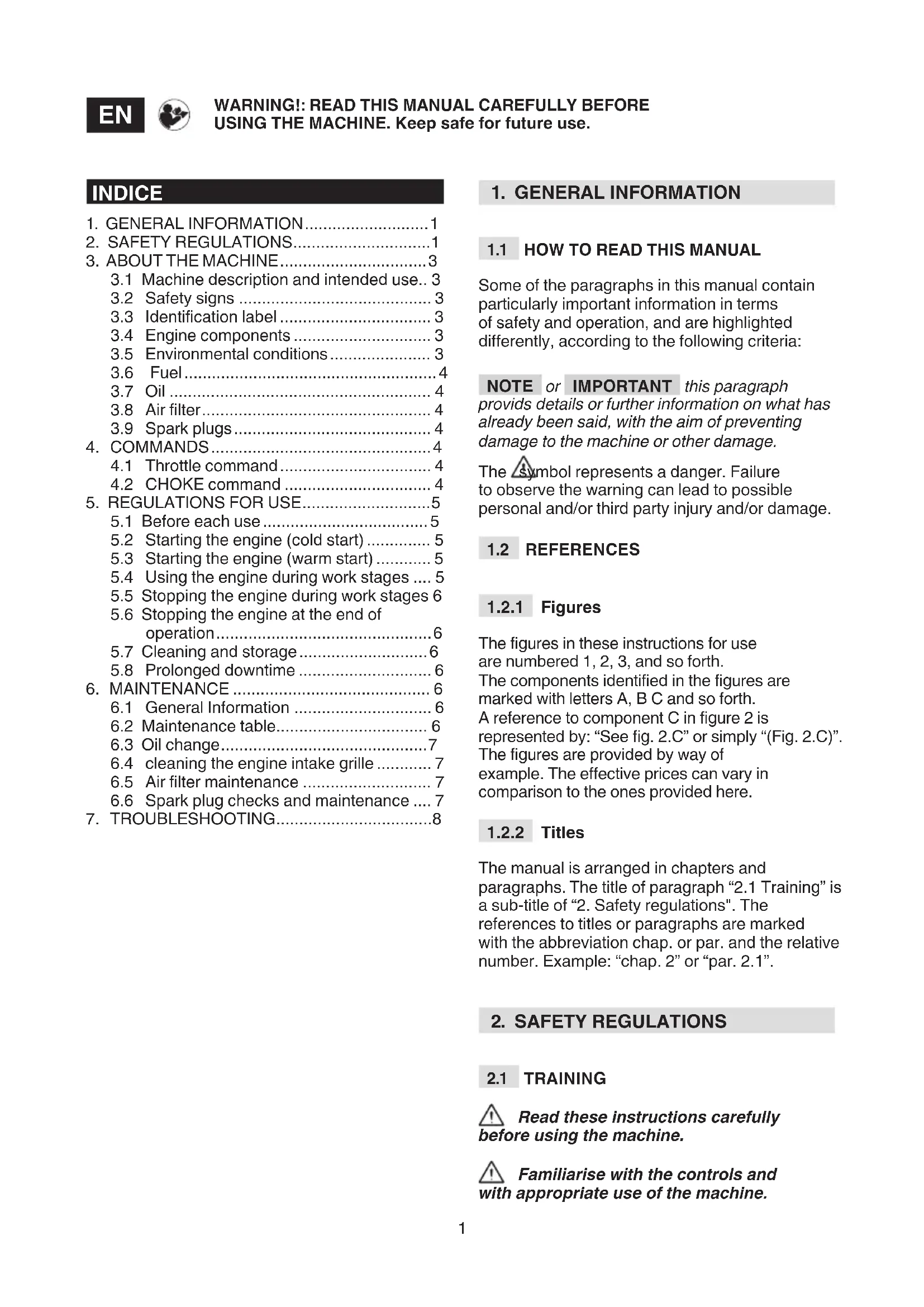
- GENERAL INFORMATION 1
2.SAFETY REGULATIONS. 1
3.ABOUT THE MACHINE 3
3.1 Machine description and intended use.. 3
3.2 Safety signs 3
3.3 Identification label 3
3.4 Engine components 3
3.5 Environmental conditions 3
3.6 Fuel 4
3.7 Oil 4
3.8 Air filter.. 4
3.9 Spark plugs 4
4.COMMANDS. 4
4.1 Throttle command 4
4.2 CHOKE command 4
- REGULATIONS FOR USE 5
5.1 Before each use 5
5.2 Starting the engine (cold start) 5
5.3 Starting the engine (warm start) 5
5.4 Using the engine during work stages .... 5
5.5 Stopping the engine during work stages 6
5.6 Stopping the engine at the end of operation 6
5.7 Cleaning and storage 6
5.8 Prolonged downtime 6
6.MAINTENANCE 6
6.1 General Information 6
6.2 Maintenance table.. 6
6.3 Oil change 7
6.4 cleaning the engine intake grille 7
6.5 Air filter maintenance 7
6.6 Spark plug checks and maintenance .... 7
- TROUBLESHOOTING. 8
1. GENERAL INFORMATION
1.1 HOW TO READ THIS MANUAL
Some of the paragraphs in this manual contain particularly important information in terms of safety and operation, and are highlighted differently, according to the following criteria:
NOTE or IMPORTANT this paragraph provides details or further information on what has already been said, with the aim of preventing damage to the machine or other damage.
The symbol represents a danger. Failure to observe the warning can lead to possible personal and/or third party injury and/or damage.
1.2 REFERENCES
1.2.1 Figures
The figures in these instructions for use are numbered 1, 2, 3, and so forth. The components identified in the figures are marked with letters A, B C and so forth. A reference to component C in figure 2 is represented by: "See fig. 2.C" or simply "(Fig. 2.C)". The figures are provided by way of example. The effective prices can vary in comparison to the ones provided here.
1.2.2 Titles
The manual is arranged in chapters and paragraphs. The title of paragraph "2.1 Training" is a sub-title of "2. Safety regulations". The references to titles or paragraphs are marked with the abbreviation chap. or par. and the relative number. Example: "chap. 2" or "par. 2.1".
2. SAFETY REGULATIONS
2.1 TRAINING
Read these instructions carefully before using the machine.
Familiarise with the controls and with appropriate use of the machine.
Learn how to stop the engine quickly. Failure to observe warnings and instructions can cause fires and/or serious injury. Keep all warnings and instructions safe for future reference.
- Never allow the machine to be used by children or individuals who are not familiar with the instructions. Local laws may establish a minimum age for users.
- Never use the machine if the user is tired or unwell, or has taken medication, drugs, alcohol or substances that impair reflexes and concentration.
- Remember that the operator or user is responsible for accidents and unexpected events that can occur to other people or property.
2.2 PRELIMINARY OPERATIONS
Personal Protective Equipment (PPE)
- Never use the machine without wearing suitable clothing.
- Never wear loose clothing, laces, jewellery of other objects that can get caught; tie back long hair and maintain the safety distance at.
- Wear noise cancelling headphones.
Work / Machine Area
- Before starting the engine ensure that all of the controls operating the moving parts of the machine are disconnected.
Internal combustion engine: fuel
-
Warning: the fuel is highly flammable. Handle with care! - Always store the fuel in suitable containers.
-
Fill up or top up using a funnel, only outdoors and never smoke during these operations.
-
Fill up before turning the engine on. Never open the tank cap or fill up when the engine is running or still warm.
If any fuel spills out do not start the engine, rather, move the machine away from the spillage and immediately clean up every trace of fuel that has spilled on to the machine or ground
-
Firmly screw the fuel container tank cap back on.
-
Avoid getting any fuel or your clothing and, if this should happen, change your clothes before starting the engine.
2.3 DURING USE
Work Area
- Do not use the machine in environments that pose the risk of explosion, in the
presence of flammable liquids, gases or powders. Electrical contact or mechanical rubbing can generate sparks that can ignite powder or vapour.
- Do not operate the engine in confined spaces where dangerous carbon monoxide fumes can collect. The start-up operations must be carried out outdoors or in a well-ventilated area. Always remember that the exhaust gases are toxic.
- Keep people, children and animals away from the work area. Children must be supervised by another adult.
Conduct
- Before making repairs, cleaning, performing inspections, adjustments, turn the engine off and disconnect the spark plug cable (unless explained otherwise in the instructions).
- Do not touch the parts of the engine that heat up during operation. Risk of burns.
Restrictions of use
- Do not use the machine if there are not enough protections or if the safety devices are not set up correctly.
- Do not disconnect or tamper with the installed safety systems.
- Do not change the engine adjustments, or exceed the maximum rpm. If the engine is forced to run at an excessive speed, the risk of personal injury increases.
- Do not use starter fluids or other similar products.
- Do not tilt the machine onto its side to the point where fuel leaks from the fuel tank cap.
- Do not crank the engine without spark plug.
2.4 MAINTENANCE, STORAGE AND TRANSPORT
Servicing the machine on a regular basis and correct storage maintain machine safety.
Broken or worn parts must be replaced and never repaired. Only use original parts: using parts that are not original or installed incorrectly affects machine safety, and can therefore cause accidents or personal injury and relieve the Manufacturer of all obligations and liability.
Maintenance
- If the tank can be emptied, perform this operation outdoors and when the motor is cold.
- To reduce the risk of fire, check for oil and/or fuel leaks on a regular basis.
Storage
- Never leave fuel in the tank if the machine is stored in a building where the fuel vapours can come into contact with open flames, sparks or sources of heat.
- Let the machine cool down before storing it indoors.
Transport
- Transport the machine with an empty tank.
2.5 ENVIRONMENTAL PROTECTION
Protecting the environment must be a significant and top priority for machine use, to the benefit of civil co-habitation and of the environment that we live in.
- Avoid being an element of disturbance to the surrounding area.
- Adhere strictly to the local regulations governing the disposal of packaging, oil, fuel, filters, damaged parts or any other element which may have an impact on the environment; this waste must not be disposed of with regular waste, but must be separated and taken to collection centres, which will recycle the materials.
- When the machine is withdrawn from service, do not dispose of it in the environment, but take it to a waste disposal facility in accordance with the local regulations in force.
2.6 EMISSIONS
The combustion process generates toxic substances such as carbon monoxide, nitrogen oxides and hydrocarbons. It is important to control these substances because they can react with photochemical smog as well as with direct exposure to sunlight. Carbon monoxide does not react in the same way to exposure to sunlight but it must still be considered toxic.
Our machines are equipped with emission reduction systems for the substances mentioned above.
3. ABOUT THE MACHINE
3.1 MACHINE DESCRIPTION AND INTENDED USE
This machine is a spark-ignition engine.
Engine performance, reliability and life are influenced by many factors, some external and some strictly associated
with the quality of the employed products and with the scheduled maintenance. Additional information is provided below for greater awareness of your machine. Any other use that does not comply with the above, can be dangerous and cause damage to people and/or property.
IMPORTANT Improper use of the machine will void the warranty and relieves the Manufacturer of any liability, placing all responsibility for damage or injury, to him/ herself or third parties, on the user.
3.1.1 Type of users
This machine is intended for use by consumers, i.e. non-professional operators. It is intended for "hobby-related activities".
3.2 SAFETY SIGNS
There are various symbols on the machine. Their function is to remind the operator of the correct conduct for use, with due care and caution. Meanings of the symbols:

WARNING! The silencer may become very hot. Do not touch it.

WARNING! Top up with oil as far as the "MAX" level. Do not top up above the "MAX" level.
3.3 IDENTIFICATION LABEL
Write the serial number (S/n) of your machine on the space provided on the label at the back of the cover.
3.4 ENGINE COMPONENTS
The machine is comprised of the following main parts (fig. 1).
A. Oil filler cap with dipstick
B. Oil drain extension
C. Carburettor
D. Air filter cover
E. Spark plug cap
F. Engine code
3.5 ENVIRONMENTAL CONDITIONS
The operation of a four-stroke endothermic engine is affected by:
a) Temperature:
-
When operating at low temperatures, cold starts may be difficult.
-
When operating at very high temperatures warm starts may be difficult due to evaporation of the fuel in the float chamber of the carburettor or in the pump.
- In any case the right kind of oil must be used, according to the operating temperatures.
b) Altitude:
- The higher the altitude above sea level, the lower the max power developed by an endothermic engine.
- When there is a considerable increase in altitude, the load on the machine should be reduced and particularly heavy work avoided.
3.6 FUEL
A good quality fuel is the major issue for the engine reliability of operation.
Fuel must meet these requirements:
a) Use clean, fresh unleaded gasoline, with a minimum of 90 octane
b) Do not use fuel formulated with more than 10% ethanol.
c) Do not add oil
d) To protect the fuel system from gum formation, mix a fuel stabilizer into the fuel.
Use of unapproved fuels will cause damage to engine components, which will not be covered under warranty.
NOTE Only use the fuel named in the technical data table. Do not use other types of fuel. It is possible to use ecological fuels, such as alkylate petrol. The composition of this petrol has less of an impact on people and animals. No negative effects have been reported in connection to their use. Nonetheless, there are types of alkylate petrol on the market for which it is not possible to provide specific indications on their use.
3.7 OIL
Use always high quality oils, choosing their viscosity grade according to the operating temperature.
Only use detergent oil with a quality of no less than SF-SG.
- Choose the SAE viscosity based on the technical data table.
- The use of multigrade oil can lead to greater consumption in hot weather, accordingly it is necessary to check the level more frequently.
- Do not mix oils of different brands and characteristics.
SAE 30 oil, if used below +5^ could result in possible engine damage due to inadequate lubrication.
3.8 AIR FILTER
The air filter must always be in perfect working order to prevent debris and dust from being sucked into the engine, thereby reducing the efficiency and life of the machine.
- Always keep the filtering element free of debris and in perfect working order (par. 6.5).
- If necessary, replace the filtering element with an original spare part Incompatible filtering elements can impair the efficiency and life of the engine.
- Never start the engine without mounting the filtering element properly.
3.9 SPARK PLUGS
Not all the spark plugs for endothermic engines are the same.
- Use only spark plugs of the recommended type, with the right heat range.
- Check the length of the thread, because - if too long - it will damage the engine beyond repair.
Make sure that the electrodes are clean and that the air is correct (para 6.6).
4.COMMANDS
4.1 THROTTLE COMMAND
Regulates the engine's r.p.m.
The throttle control (usually a lever) mounted on the machine is connected to the engine by a cable.
Refer to the owner's manual to identify the accelerator lever and the its related positions, which are usually marked with symbols corresponding to:
- FAST= top speed; to be used during work.
- SLOW = low speed.
4.2 CHOKEMMAND
Refer to the owner's manual to identify the Choke command.
It enriches the fuel/air ratio and should only be used momentarily to start the engine when cold.
5. REGULATIONS FOR USE
5.1 BEFORE EACH USE
Before every use, perform the following checking procedures in order to assure a regular operation.
5.1.1 Oil level check
- Place the machine on a flat surface.
- Clean around the oil fill cap.
- Unscrew the cap(fig. 2.A), clean the end of the dipstick (fig. 2.B) and slide it back in until the cap is touching the hole, as shown without tightening it:
- Remove the cap with the dipstick and check the oil level that must be between the «MIN» and «MAX» marks.
- If oil is required, add oil of the same kind up to the «MAX» mark, being careful not to spill any outside the oil fill
- Fully tighten the filler cap (fig. 2.A) and wipe off any spilled oil.
NOTE Top up gradually, adding small amounts of oil, checking the level each time. Do not top up beyond the «MAX» level; an excessive level can cause:
- smoking from the exhaust;
- soiling of the spark plug or air filter with subsequent difficulty for ignition.
NOTE For the required type of oil, observe the indications provided in the technical data table.
5.1.2 Air filter control
The efficiency of the air filter is essential to correct engine operation; do not start the engine if the filter element is missing or broken.
- Clean the area around the filter cover (fig. 3.A).
- Open the cover (fig. 3.A) by turning the opening k nob (fig. 3.B).
- Check the status of the filter element (fig. 3.C), which must be intact, clean and in perfect working order; if this is not the case, either carry out maintenance or replace it (para 6.5).
- Close the cover gain by turning the opening knob (fig. 3.A).
5.1.3 Refuelling
Refuelling operations are described in the machine manual and are only mentioned briefly here.
To refuel:
- Unscrew and remove the fuel tank filler cap.
- Set a funnel on the hole.
- Refuel and then remove the funnel.
- Close the fuel cap securely after refuelling and clean away any spills.
IMPORTANT Avoid getting fuel on the plastic parts of the engine or machine to avoid damaging them, and immediately clean off every trace of spilled fuel. The warranty does not cover damage to plastic parts caused by fuel.
5.1.4 Spark plug caps
Connect the cable caps (fig. 4.A) firmly to the spark plugs (fig. 4.B), making sure that there are no traces of dirt inside the caps themselves or on the spark plug terminals.
5.2 STARTING THE ENGINE (COLD START)
The engine must be started up as described in the owner's manual, always being careful to uncouple any device (if applicable) that is capable of making the machine travel forwards or stop the engine.
- Open the fuel cock on the machine;
- Engage the choke command;
- Move the throttle lever into the "FAST" position;
- Operate the ignition key as indicated in the owner's manual.
After a few seconds, disengage the choke command.
5.3 STARTING THE ENGINE (WARM START)
- Move the throttle lever into the "FAST" position;
- Operate the ignition key as indicated in the owner's manual.
5.4 USING THE ENGINE DURING WORK STAGES
To optimize engine efficiency and performance, it must be used at maximum rpm by setting the throttle lever in the "FAST" position.
IMPORTANT Do not work on slopes exceeding 20^ to avoid compromising correct engine operation
5.5 STOPPING THE ENGINE DURING WORK STAGES
- Move the throttle lever to the "SLOW" position.
- Allow the engine to idle for at least 15-20 seconds.
- Stop the engine following the instructions contained in the owner's manual.
5.6 STOPPING THE ENGINE AT THE END OF OPERATION
- Move the throttle lever to the "SLOW" position.
- Allow the engine to idle for at least 15-20 seconds.
- Stop the engine following the instructions contained in the owner's manual.
- Once the engine is cool, take the caps off the spark plugs (fig. 4.A) and remove the ignition key (if applicable).
- Remove any debris from the engine and especially around the exhaust silencer to reduce the risk of fire.
5.7 CLEANING AND STORAGE
- Do not spray with water or use pressure washer wands to clean the exterior of the engine.
- Preferably use a compressed air gun (max. 6 bars), thus preventing debris and dust from penetrating inside.
- Store the lawnmower (and the engine) in a dry place, sheltered from the elements and sufficiently ventilated.
5.8 PROLONGED DOWNTIME
If the engine is not going to be used for more than 30 days (for example, at the end of the season), it will be necessary to take a few precautions so that it will start back up again accordingly.
- Empty the fuel tank, to prevent deposits from forming inside, by unscrewing the cap (fig. 5.A) of the fuel tank and collecting all of the fuel in a suitable container. At the end of this operation, remember to screw the cap back on (fig. 5.A) tightly.
- Remove the spark plugs and pour about 3 cl of clean engine oil into the spark plug hole; then block the hole with a rag and run the starter motor briefly to turn the engine by a
few revs to distribute the oil over the inner surface of the cylinder. Lastly, refit the spark plugs without connecting the cable caps.
6. MAINTENANCE
Any attempt to tamper with the emission control system may increase emission levels above legal limits. This definition includes the removal or alteration of parts such as the intake system, the fuel system and the exhaust system.
6.1 GENERAL INFORMATION
The safety regulations that must be followed during maintenance are described in par. 2.4.
All controls and maintenance operations must be carried out with the machine off and the engine off. Disconnect the spark plugs and read the relative instructions before starting any cleaning or maintenance procedure. Wear suitable clothing, gloves and glasses before performing any maintenance.
The frequency and type of procedures are outlined in the "Maintenance table".
- The use of non-original parts and accessories could have negative effects on machine operation and safety. The manufacturer declines any responsibility for damage or injury caused by said products.
- Genuine spare parts are supplied by Authorised Assistance Centres and Dealers.
IMPORTANT All maintenance and adjustment operations that are not described in this manual must be carried out by your Dealer or by an Authorised Service Centre.
IMPORTANT It is the responsibility of the owner to perform the machine maintenance operations described in the table below.
IMPORTANT Clean more frequently when operating in particularly demanding conditions or when there is debris in the air.
NOTE Filters should be cleaned / replaced more often if the machine is used on very dusty ground.
| Operation | After the first 5 hours | Every 5 hours or after every use | Every 50 hours or at the end of the season | Every 100 hours |
| Oil level check (par. 5.1.1) - √ - | ||||
| Oil change (para 6.3) √ - - √ | ||||
| Cleaning the engine intake grille (par. 6.4) | - √ - - | |||
| Checking and cleaning the air filter 2(par. 6.5) | - √ - - | |||
| Replacing the air filter - - √ - | ||||
| Spark plug check (par. 6.6) - - √ - | ||||
| Changing the spark plugs (par. 6.6) | - - - √ | |||
| Checking the fuel filter 3 | - - - √ |
1 Change the oil every 25 hours if the engine is operating under heavy load or in hot weather.
2 Clean the air filter more frequently if the machine is operating in dusty areas.
3 To be performed at am Authorised Service Centre.
6.3 OIL CHANGE
For the type of oil required, observe the indications provided in the technical data table.
Drain the oil out while the engine is warm, being careful not to touch the hot engine nor the drained oil.
Unless otherwise indicated in the owner's manual, change the oil as follows:
- Place the machine on a flat surface.
- Place a suitable container under the extension tube (fig. 6.A).
- Press the cotter (fig. 6.B)
- Release the extension tube from the support by moving it downwards;
-
Bend the extension tube and drain the oil into a suitable container.
-
Refit the extension tube (fig. 6.A) on the support (fig. 6.C) before topping up the oil.
- Clean up any spills.
6.4 CLEANING THE ENGINE INTAKE GRILLE
The intake grille must be cleaned when the engine is cold.
- Using a jet of compressed air (fig. 7.A), eliminate any debris or dirt from the engine intake grille that may otherwise cause a fire.
- Make sure that the air intakes are not obstructed (fig. 7.A).
- Clean the plastic components with a sponge (fig. 7.D) soaked in water and detergent.
6.5 AIR FILTER MAINTENANCE
- Clean the area around the filter cover (fig. 8.A).
- Open the cover (fig. 8.A) by unscrewing the opening k nob (fig. 8.B).
- Remove the filter element (fig. 8.C + 8.D).
- Remove the sponge pre-filter (fig. 8.D) from the cartridge (fig. 8.C).
- Tap the cartridge (fig. 8.C) on a solid surface and blow with compressed air from the inside to remove dust and debris.
- Wash the sponge pre-filter (fig. 8.D) with water and detergent and leave it to dry in the air.
IMPORTANT Do not use water, petrol, detergents or other fluids to clean the cartridge.
IMPORTANT The sponge pre-filter (fig. 8.D) must NOT be oiled.
- Clean any dust and debris from the inside of the filter housing (fig. 8.E) taking care to close the intake duct with a rag (fig. 8.F) to prevent foreign bodies entering the engine.
- Remove the rag (fig. 8.F), refit the filter element (fig. 8.D + 8.C) in its housing and refit the cover (fig. 8.A).
6.6 SPARK PLUG CHECKS AND MAINTENANCE
- Remove the spark plugs (fig. 9.A) using a socket wrench (fig. 9.B).
- Clean the electrodes (fig. 9.C) with a metal brush, removing any carbonaceous build-up.
- Use a thickness gauge (fig. 9.D) to verify that the gap between the electrodes is correct (0.6 - 0.8mm)
- Refit the spark plugs (fig. 9.A) and tighten fully using a socket wrench (fig. 9.B).
Replace the spark plugs if the electrodes are burnt or if the porcelain is broken or damaged.
Fire hazard! Do not check the ignition system when the spark plug is not in place.
IMPORTANT Only use the required type of spark plugs (see Technical data table).
7. TROUBLESHOOTING
| PROBLEM PROBABLE CAUSE SOLUTION | ||
| 1. Difficulty staring the engine | No fuel Check and top up (chap. 5.1.3) | |
| Old fuel or deposits in the fuel tank Empty the fuel tank and add fresh fuel | ||
| Incorrect starting procedure | Perform start-up correctly (para 5.2 and para 5.3) | |
| Spark plugs disconnected | Make sure that the caps are fitted snugly (para 5.1.4) | |
| Wet spark plugs or dirty spark plug electrodes or wrong gap | Check (para. 6.6) | |
| Clogged air filter Check and clean (par. 6.5) | ||
| Incorrect oil for the season Replace with suitable oil (par. 6.3) | ||
| Fuel evaporation in the carburettor (vapour lock) due to elevated temperatures | Wait a few minutes then try starting it up again (par. 5.3) | |
| Carburation fault Contact an Authorised | Assistance Centre | |
| Ignition problems Contact an Authorised | Assistance Centre | |
| 2. Irregular operation. | Dirty spark plug electrodes or incorrect gap | Check (par. 6.6) |
| Spark plug caps mounted incorrectly | Make sure that the caps are fitted firmly (para 5.1.4) | |
| Clogged air filter Check and clean (par. 6.5) | ||
| Carburation fault Contact an Authorised | Assistance Centre | |
| Ignition problems Contact an Authorised | Assistance Centre | |
| 3. Loss of power during operation | Clogged air filter Check and clean (par. 6.5) | |
| Carburation fault Contact an Authorised | Assistance Centre | |
If problems persist after implementing the solution, contact your Dealer.
INDICE
- INFORMACIONES GENERALES. 1
- NORMAS DE SEGURIDAD 2
- CONOCER LA MAQUINA 3
1.1 KUIDAS JUHENDIT LUGEDA
3.3 IDENTIFITSEERIMISPLAAT
Kirjutage omamasina seerianumber (s/n) sildile katte taga.
3.4 MOOTORI KOMPONENDID
Masin koosnej jargmistest peakomponentident (jn 1)).
4.2 OHUKLAPI JUHTSEADIS
3.5 CONDITIONS AMBIANTES
6.2 APKOPES DARBU TABULA
SVARIGI Masinas ipasnieks ir atbildigs part turpmakaja tabula aprakstito tehniskas apkopes daribu veiksanu.
SVARIGI Ipaşi smagos darba apstaklos vai puteklaina gaisa apstaklos veiciet tirišanu biežak.
3.2 O3HAHn 3A B6E3BEdHOCT
Ha MaunHata ce npncTyHn pa3HN cHM60JIH.
HNBHATA yHKuJa e da ro notceTaKOpNCHNKT
Ha HeONXoHocTa OD BHMaTeJHa yNoTpe6a.
3NaueHe Ha cM6OJInte:

PPEyPENEYBAHbE!
PnDyUbaHOT MoKe Da CTaHe MHORY TOnOJ. He ro donnpajTe.

IPEyPDEyBAHbE!HaToneTe ITO BMOACIO DO HNBOTo,He Cmee Da ce NOHN HaNHBOTo MAX
3.3 HAJENHUNA 3A INDEHTNPHAKUNJA
HannweTe ro cepncknot 6poj (S/n) Od BaWata Kocnka Ha MeCTOTo Ha Hanelnncata Ha 3aHNOT DeJ Ha KaNaKOT.
3.4ДЕЛOBH HAMOTOPOT
MaunhaTa ce coCTOn oD cIeHNTe rnaBn deIOBn (cI.1).
A. Kanaye 3a noJHeBe MacNo Co MepaHa HnBO
B. IpoDOnKyBaHBe 3a nCnyTaHBe Ha MacNo
C. Kap6ypatop
D. Kanayeha Bo3dyuHnO TneTep
E. Kanayeha CbeKeuata
F. ПониЗВODICTBEH БpoJ Ha MOTOPOT
3.5 AMBNEHTAJIHN YCJIOBN
Pa6oTaTa Ha YeTnpuTakTHNOT eHDoTePmUKN 3aBnCn Od:
a) TemnepaTypa:
- Ha Hnckn TemnepaTpy MoKe da hMa nOTeWKOTn npn NaIeHBe Ha IaNo.
- Pa6oTejKn Ha BnCOKn TempePaTyprn MoKe Da NMa NOTeKOTn PnI NaJIeHBe Ha TOnIIO NopaDN NcnapyBaHbE Ha TOpNBOTo. Bo KaINuKaTa Ha Kap6ypaTopoT nIn nymNaTa.
-Bo cekoj cnyaj da ce npnilarodn ynoTpe6aTa Ha MacNo Ha HauBopeuHHTe TemepaTypn.
b)HaDmOpcka BnCnHa:
-
MaKcHMaJIHaTa MoK Ha eHDoTePmUHnOT MOTOp Ce HamaIyBa Co 3rOJeMyBaHe Ha HAdMOPCKaTa BcNHa.
-
Co 3NaHTeJIHO 3rOJIeMyBaHBe Ha NaDMOPcKaTa BNCHa Tpe6a Da Ce HAMJI KOpNCTeHbETo Ha MOTOPHaTa MOK.
3.6 TOPHBO
Добрnot KBaJIntTe Ha rOpNBOTo e OCHOBa 3a npabuHa pa6Ota Ha MOTopoT.
TOpnBTo Tpe6a da rH nCnoJHyBa cIeHNTe no6apyBaHa:
a) Kopnctete YHCTO HOBo 6e30IOBHO TROPBO, N CO MHNmym 90 OKTaHn
6) HekopnctTe rOpBO aKO nMa eTaHOL nobKe od 10%.
B) He doaabajTe macno
r)ДодajTe cTaNIN3aTOP Ha rOpHBOTO 3a daTo 3aWTNTTE CNTEMOT Ha COROPyBaHBeOD COZdAbaHe CMOJIeCT TaIOr.
YnoTpe6aTa Ha HecooDBetHO rOpHbO Ke
rOwTeTN DeIOBnTe Ha MOTOPOT n THe
Hema BeKe Da 6nDaT NOr rapaHcNja.
3A6EJELSHA Da ce KopnCTn ropnBO
HaBeJeHO BO TexHnKata TaBeJa. Da He ce
KOpNCTa DpyrNBn BnOBN rOpNBO. MoKnHO
e KopnCTeBHe Ha ekONoWKn rOpNb, KaKO
Ha npMep aIknInpaH bEn3HN. CoCTaBOT
Ha OBOj BeH3IN HMa NOH3OK ekONoWKn
HMnAKT Bp3 Ly'ETO n HnBOTHaTa CpeDInHa.
He Ce IokaHn HeratNBn efeKTn CO
KOpNCTeBHe Ha nCtata. Cenak NoctojaT
MHORY BnOBN ekONoWKn rOpNb pa Na HEMOKe
da Ce daDat Pneu3HN INdHaCuN 3a
eFeKTNTe OD HnBHOTO KOpNCTeBHe.
3.7 MACJIO
KopncTeMaclaCoDobap KbaHITeT, 6npajknOCTeNEHOTHaBnCKo3HOCT cnopeTdEmpeaTypataHa pa6ota.
-Да ce KOpHcTn cAmO MacNo 3a YnCteHbe co KBaJIHT Te He NOHn3OK od SF-SG.
-Да ce odбеpe cTeenneHa BnCKo3HocT SAEВрз OCHOBA Ha TeXHnUkTa Ta6eJa.
- KopncTeHe Ha nobEkeCTeNeHO maclo MOKe Da npIdoHece Do nOrOJeMo KOHCympaHe BO TOnJIte nepNoDi, BO Toj clyuaj npOBepyBajTe ro NOueTo HNBOTO Ha MacNo.
He mewajte Macla co pa3nHn KapakTepeNCTKIN OJ pa3nHm MapKn.
- KopncTeHbeto Ha macJo SAE 30 Ha TemnepaTpyn NOnHcN oD +5^ MoKe Da rO OwTeTH MToPOT nopaHn HeaDeKbTaHa ly6pnfKnKaunja.
3.8 BO3dUuEH HJIITEP
EfnkacHcTa Ha Bo3dyuHnO TnItepe IOTpe6Ha 3a Da Ce N36eHHe BLepyBaHBeTo Ha YecTnKn Hn PpaunHn BO MOTOpOT Co To Ce HamaJyBa TpaeHbeto H FynKcNoHaJIHoCTa Ha MaunHaTa.
- OdpKhyBaHé Ha ΦnItpnpaqKnOt eIeMeHT 6e3 YecTnUKN eΦnKaceH (nac. 6.5).
-ДOKOLky e NOTpe6HOb,3aMeHeTe rO fHITepOT CO OpiRHaJIeH,6nDejKn HecOOBcTHNOT fHITep MoKe Da ja HaMaJIe n eФИKacHOCTa N JKNBOTHNOT BEK Ha MOTOPOT.
He ro nyuTajTe MOTopoT 6e3 KopeKTHO MOHTiPah fHITep.
3.9 CBEKNI
Noctojat MHORY BNDOBN CBeKn3a eHDoTePmNkMOTOpN.
- KopnctTe CBeKnU OJ Ha3NaueHNO TIN CO TOeH TePMNcK NCTeNEH.
BHHMaHHe Ha DoJIHHaTa Ha KOHeCuT; NOOJIr KOHeU MOKe HEnOBpaTHo Da rO OWTeH MToPOr.
-Да ce KOHTpoJnpa YNCTOTaHa eNeKToPOnTe N COOdBETHOCTa Ha BO3dYxOT (CTaB 6.6).
4. ROMAHДИ
4.1 HOMAHDA3AΓAC
To perynipa 6pojOT Ha BpTeKn Ha MOTOPOT. KomaHdata 3a rac (BOObHuaeHo paKa) MOHTnpaHa Ha MaunHaTa e NOBp3aHa co Ka6eI co MOTOPOT.
IorJIeHHeTe BO npupaHnKoT 3a Da ja NdeHTnΦnkyBaTe paKaTa 3a 3a6p3yBaHBe n Hej3nHInTe OdHocn IO3nCn, KOe Ce BOObUaEHO O3NaueHc CO Cm60JN KOn OndroBapaaT Ha:
- FAST=roJIema 6p3nHa; da ce KOpIcTn BO TEKOT Ha pa6oTeHbETo.
- SLOW = MaJa 6p3nHa.
4.2 KOMAHDA HA 3AДУШУBAЧОТ
IorJIeHHeTe BO npnpaunHKOT 3a da ja IeHTnФKyBaTe KomaHaTa Ha 3aDyUyBaUOT.
To noo6pyBa cooHocOT Ha rOpNBO/ BO3dyx n Tpe6a BeHaaw Da ce NcKOpnCTn 3a CTapTyBaHe Ha MOTOPT KOr e CToDeHo.
5. ПРавILA 3A УNOTPEBA
5.1 IPEDA CEHOJA YNOTPEBA
Ipe dcekoja ynoTpe6a Ha MoTopoT do6po e da HappaBHTe KOHTpOla 3a da ce ocHypate 3a npabnHocTa Ha pa6oTata.
5.1.1 KoHTpOHa HnBTo Ha MacNo
- NocTaBeTe ja MaunHaTa Ha paMHO.
2.Исчирете okoly kanaуeto. - OdBpTeTe ro KaAHot (cI. 2.A), nCnCTeTe ro KpaJHnot DeJ Ha MepaOT Ha HnBO (cI. 2.B) nOBtOpHo CTabEt ro BHaTpe DoKeKa KaAteTo He Donpe Do OTBOPOT, KaKo ITO e npKaKaHao 6e3 aTeHyBaHbe:
4.ИЗвадеTe ro KaNAKOT CO CTaNHTOи KOHTPOJInpajTe FO HNBOTO Ha MacJIO Koe Tpe6a Da ce HaOra NOMeIy DBeteцтчкн «MIN»и «MAX»
5.Донлку e notpe6Ho,Доадerte OДИСТОTO MacLo Do HNBO «MAX», ИВиMuBaJTe Da He IcTeue MacLo HaNBOP OД OTBOPOT 3a NOJIHeIbe - Lelocno 3aTeHete ro KanaeTo 3a NolHeBe (cI. 2.A) n HcNcTeTe rIOCTaTOuTE Od MacNo.
3A6EJIeUHa
PonHeTe noCTeNEHOdoaBajKn
MaH KOLINuHN MaCNo, KOHTpOJInpajn rO HNBOTO Ha MacIOTO Ha CeHOE dONoJIHyBaHbe. He Cmee da ce NOLH NaH HNBOTo «MAX»; npenolHyBaHbe CO MaCIO MoKe Da npedn3BnKa:
- UcnyUtaHe Ha n3yBHTe racOBn;
HOHTAMnHaJHa CBeKnHkTa HIN HNTepOT 3a BO3dYx CO NocJeOBATeJIHN NOTEWKOTN BO CTapTyBaHbETo.
3A6EJIeUHa
BoBpckaCoBnOTo
Ha MacNo 3a KopnCteHe npNpHyBajTe Ce do TexnUkata Ta6ena.
IapaHnjuTa He n noKpNaBa WTeNTe Ha INaCTnKaTApneDn3BnKaHaN OJ ROpNB0.
5.1.4 Kanayeha CBeKn
Iobp3eTe ro cBpcTo kaNayeTo (cI. 4.A) Ha Ka6eIOT Ha CBeKnCHTe (cI. 4.B), BHNMaBaJTe Da Hema TpaHo ND HeNCTOTnJa BO BHaTpeWHOCTa Ha KaNaayeto IIN Ha KJIemnte Ha CBeKnCHTe.
5.2 CTAPTYBAHbE HA MOTOPOT (IJIeHe H A JAdHO)
PanaHeTo Ha MOTOP Tpe6a Da 6nDe Cnopei HNCTpyKcHInTe BO yNaTCTBOTo 3a yNoTpe6a, HmajKn To npEbnD cekoraW npEynpeyBaHbeto Da ce Ncknyat CnTe ypeu (doKoIky e npEbnDo) BO COctOj6a Da ja npnDbnKaT MaHHaTa NN Da To Ncknyat MOTOPOT.
- OTBOpTe rO BeHTnIOT 3a TROPBO Ha MaunHaTa;
- AKTINBnpajte ja KOMaHdaTa Ha 3aDyUyBaYOT;
- Ctabete ja paKaTa 3a rac BO no3njuja,FAST";
- AKTNBupajTe ro KnyOT 3a naJeHbe KaHO wTO e HabeDeHO BO yNaTCTBOTo.
No HeKoJIky CeKyHdN, DeaKTbBnpaJTe ja KOMaHdaTa Ha 3aDyUyBaUOT.
5.3 CTAPTYBAHbE HA MOTOPOT (NAJEHe HA TOIIO)
-
Ctabete ja paqkaTa 3a rac BO N03nju,FAST";
-
AKTNBupajTe ro KnyOT 3a naIeHe KaHO UTo e HabeDeHO BO yNaTCTBOTO.
5.4 KOPHCTEHe HA MOTOPOT BO TEKOT HA PABOTHNE ΦA3N
3a ONTImaJIHa eФИKacHocI npabota Ha MOTOpOT, Mopa Da ce KOpNCTn Ha MaKcIMaJIHN BpTeJn CO NODECyBaHbe Ha paKaTa 3a rac BO No3uJa ,FAST".
BAHHO He paBOTeHa HAKIOH NORoIeM od 20^ 3a da He ro DoBeTe BO npaWae IpaBnHOTo paBOTeHe Ha MOTOpT
5.5 3ANHPAHE HA MOTOPOT BO TEKOT HA PABOTHNE ΦA3N
- Ctabete ja paKaTa 3a rac BO no3njuja ,SLOW".
- CTabete ro MOTOP TOB Jep HajMaJky 15-20 cekyHdN.
3.Иснлучete ro MOTopoT cnopeД nHCTpyKcUNTe OД npnpaHHNKOT.
5.6 ICHJIyUyBAHbE HA MOTOPOT HA KPAJOT
- Ctabete ja paKaTa 3a rac BO nO3nUja ,SLOW".
- CTabete ro MOTOP BOJIep HajmaIky 15-20 cekyHn.
3.ИcknyteToMOTOpOTcNopeД HHCTpyKUInTe OJ npHpaHnKOT. - Kora ke ce olaan MOTOPOT, n3BaTeTo RaNaayeto Oc CBeKnUte (Cn. 4.A) n3BaTeTo Ro KlyOTo 3a naIeHe (DOKOLky e npedBnDEHO).
- OTeCTpaHete Tn CIne HaTaNIOKeHN YeCTNcKN OJ MOTOpOT NocEbHO OJ 3OHaTa Ha npDyUyBaUOT Ha ayCnyXOT, 3a Da Ce HAmALn Pn3NkOT OD NOKap.
5.7 CHCTEHN TAPAAHHPAHe
He KopncTeMe Mla3 BOa HnTy CpeDCTBa 3a YnCteHBe Ha napea 3a YnCteHBe Ha MOTopoT.
- Ce npeepnpa YnCTeHbe co Mna3 Ha BO3dyx NOI npHTncOK (MaKcHmym 6 bar) BHIMabajKn Da He BJe3aT BO BHaTpeuHnOT DeJ HA MOTOPOT YeCTNkN IN PpaunHa.
- OctaBeTe ja MaunHaTa (n MOTOpOT) Ha cyBO, 3aHTuTeHO oN HeBpeMe n COoDBeTHO npOBetpeHo MecTO.
5.8 IPOdoJIxHEHO HEKOPNCTeHbE
Bo clyuj Ha npedBnEHO HeKOpncTeHbHa MOTOPOT NOBeKe Od 30 DeHa (np. Ha Kpajot Od
ce30HaTa) notpe6Ho e da ce npe3MaT Mepn 3a 6e36eHocT do cIeHOTo KOpNCTeHBe.
3a da cnpeHTe foepmnpaHbe Ha TaIor, ncpa3HeTe ro pe3epBOapOT taKa ITo Ke ro OdBpTHe KanaheTo (cI. 5.A) Ha pe3epBOApOT, n Ke ro NCTypHe rOpNBOTo BO COOdbTeH caI. Ha KpaJOT oD onepaujata Da ce 3aBPn KanaKOT (fir. 5.A) 3aTbopajKn ro Do Kpaj.
I3BaTe Tn CBeKnUte N TypeTe OKoly 3 Cl YnCTO MOTOPHO MacIO BO OTBOPOT 3a CBeKnU; NOToA 3aTbOpTe FO OTBOPOT CO Kpna H KpaTKO CBPTe FO CTApTEPO 3a HeKoJIky BPTeHN Ha MOTOPOT 3a Da Ce pacnPpeJIn MACIoTO BO BHaTpewHOCTa Ha cnINHapOT. Ha Kpaj, CTaBeTe rCBeKnUte 6e3 Da Ro NOBp3eTe KaNaYeTo Ha Ka6LnTe.
6. ODPKHyBAHbE
Cekoe HactojyBaBe Da ce CMeHNCCTeMOT 3a KOHTpOla Ha emncjataMOHe da rN 3roJeMn HnBOata HaemChJa HAD 3aHOHcHKe JIMNTUOBaa DeHHuJb BnIyUyBa OTCTpaHyBaBeHn MeHyBaHe Ha DeIOBn, KaHOHa np.CCTeMOT 3a DOBoD, CNTeMOT 3a RopNB O N3dYBHNOT CNTeM.
6.1 ONSTN INHΦOPMAÇN
MepnTe 3a 6e36eHocT 3a CnepeIbe npn OepauuHa oOpHyBaIbe ce OnnauH BO naparpaΦoT.2.4.
CnTe KOHTpOuN uHTEPBENu N da Ce n3BpUyBaAT CO uCNlyueH MOTOp IoJeHa MaunHata e BO MnpyBaHe. H3BaTe rN CBeKnUte H npOHTaJTe ro OndochOTO ynatCTBO nped Da 3anOuyHeTc CO qHCTeBe Hn ODPxHyBaHe. Hocete aDeHBaTHa pa60Tha o6JIeHa, paKabuN n OUYHa npn ODPxHyBaHTo.
BnOBeHa HHTepBHeHn HNBHO TO NOBTOpyBaHe ce HaBeDeHn BO "TabeJa 3a ODPKyBaHe".
KopncTeHBeTo Ha HeOpnHnHaHn DeIobn IdoaTOU MoKe Da HMa HeraTHBn NocJIeNcBp3 FyHKuOHnpaHeTo n CnypHOCTa Ha MaunHata. Ppon3BOdHTeJOT O6bBa CeKaHb OADROBOPHOCT 3a uTETn PpeIN3BVKaHN OD CNOMeHaTHTe Ppon3BODn.
OpunHaHHTe pe3epBHN deIOBN ce 06e36eHN oC tpaHa ha OblacteHNTe ueHTPN 3a NOMOu N DInepnTe.
BAHHO CHTe onepaun 3a OdpkyBaBe n npnaIroyBaHe KOH He Ce ONnHaH N BO
OBoJ npnpaunK Tpe6a da 6nDaT n3BeHn Od cTpaHa Ha Baunot npoJaBaU nn Ocneunjna3npaH CepBuceH ueTpap.
6.2 PACNOPEDAHOOOPKYBAHBe
BAHHO ConCTBeHnKOT e OndroBopen 3a OndkyBaHbe Ha MaunHaTa, KaKO wTo e OnnHaHO BO DoLyHaBeDeHaTa Ta6eNa.
BAHHO Da ce nCTn noeTo Kora ce pa6oTu BO Oc06eHO CIOKeHn YCNOBn NIn KORA mA qEChN BO BO3dYXOT.
3A6EJEUHA FHTPte Tpe6a da ce YnCTaT / MeHyBaat NoecTo, DOKOLky MaunHaTa ce KopnCTHa npabInbA NOBpUnHa.
YnCTeHbEtO Ha DoBODHaTa peWetKa ce BpSi Ha NaDeH MOTOp.
Co mla3 KOMPecnpaH BO3dyx (cI.7A), eIMMHnpajTe rN YecTNUKHTe IIN HeuNCTOTnJaTa OJ DOBOHaTa peWeTKa Ha MOTOpT, INI INaHy MOKe Da npEdu3BnKa nOxap.
-Поберете Далдовдуte 3a BO3dYx ce 3anyuelsen (cI.7A).
- IcHCTeTe rI pIaCTnUHHTe DeIOBn co cyHrep (cI. 7.D) HABlaXHET CO BOda n DeTeprEHT.
6.5 ODPKHYBAHbE HA BO3dUshHOT HJTEP
1.Исунштete OKolykaNAKOT HaФнлтepOT (cI.8.A).
2. OTBOpTe ro KaNaKoT (cI. 8.A) co OdBpTyBaHBe Ha ja3NueTo (cI. 8.B).
3.ИЗвадеTe ro ФиntepoT (cI.8.C+8.D).
4.ИЗвадеTe ro cyHrePoT ha npetФиЛтepOT (cI.8.D)ODBLOuKhata (cI.8.C).
5. 3aTpeCeTe ja BLOwKaTa (cJ. 8.C) Ha TBpda NOBpuHnHa n CO KOMPecnpan BO3dYx N3dyBaJTe ja BHaTpeWnOCTa 3a da ja OTCTpaHnTe npaWnHaTa n YecTnUKeTe.
6.Испесе ГунгерOTOD npetФиNTepOT (cI.8.D)coBoDAuДeTeprEHTN OCTaBeTe Ga ce NcUwHa BO3dYx.
BAHHO He KopncTeTe Boda,HaΦTa, DeTepreHTn Hn DpyrN TeuHocTu 3a YnCTeHe Ha BLOwKaTa.
BAHHO CyHepoT Ha npetfHnTepoT (cI. 8.D) HE cMee da ce notOnu co MacNo .
1.Исунstete ro npabOT n YeCTnKHTe OBHaTpeuHocTa Ha KyknUTeTo HaФINTEpot (cI.8.E) 3aTBOpTe ja DOBoHaTata cEBKa co Kpna (cI.8.F) 3a da cnpeuHte BNe3 Ha HAdBOpeuHH TeLa BO MOTOPt.
2. OTePAnHeTa ja KpNaTa (cI. 8.F), cTabeTe ro fHInTePoT (cI. 8.D + 8.C) BO KyKnWTeTo n CTaBeTe Ro HanaKoT(cI. 8.A).
6.6 KOHTPOJIA N ODPKHYBAHBE HA CBEKNYKHATA
- N3BaTe r n CBeKuNTe (cI. 9.A) co NOMOHa φpaHcyckn Kny (cI. 9.B).
2.Исчпете ГеелктpoиTe (cI.9.C) CO MeTaJIHa YeTka 3a OTCpaHyBaHBe Ha eBEHTyaJIHn jaJIeHn TaI03N. - Co nomou ha mepaHa de6eHnHa (cI. 9.D) npOBepTe daH e cooBETHO paCToJAHHeTo Mey eIeKTPoDHTe (0.6 - 0.8mm)
- CTabete rncBcKeNcnte (cI. 9.A) n 3aucpcTeTe rnc co nomow Ha φpaHcyckn Klyu (cI. 9.B).
3aMeHeTe rncBcKeNcUte DOKOLky ce npereOpEn eJeKToDnTe Nn aKO npueHaHOT e cKpWeH Nn OuTeTeH.
OnachocT od nohap! He ro npobepybajte ypeoT 3a nahebe DOHONHy CBeHNuHaTa He e BO CeNnTe.
BAHHO KopncTeTe CBeKnU O npenopaahnoT BnD (BnDn TexHnKa Ta6ena).
7. HECOO dBETHA PABOTA
| HAJDEHA MOHNA ПИЧИHA PELSEHNE | ||
| 1. Пoteшковая рпі палійсke | He doctir Na ro npivbo Проветe и нао Стару по вил талог Во pezeрваорот Hecoodbetna поцедура Na палійсke Изваши сveкици ВODEнс сveкици ил чусту е lektrodi Na cvekiunte ил погшно pactоданes Зат ha Bo3duwen philte Провета и Hecoodbetno Maclo 3a ce3ohata 3am Исаниваье Na ro npivbo od Карбуразорot (zaopkaHa napea) Зади Високи TempepaTyrn Дeфekt Na karbypatop Пробlem co палійсke | IinheTe (kan. 5.1.3) Испраэнete ro pezeрваорot и CTabete CBexko ropivbo Изveдete ro палeBJeTo Na cooDBeTeH начин (nap. 5.2 и nap. 5.3) Проветe дали калачиьата ce добpo 3atboveni (cTab 5.1.4) Проветe (cTab 6.6) |
| 3aTHaT Bo3duwen philte Провета и Hecoodbetno Maclo 3a ce3ohata 3am Исаниваье Na ro npivbo od Карбуразорot (zaopkaHa napea) Зади Високи TempepaTyrn Дeфekt Na karbypatop Прoblems co палійсke | IinCTe (nap. 6.5) Инстны Na Maclo co cooDBetHo (nap. 6.3) Почекajte Извесно Врeme и обидete ce NOBtorpNo da 3analite (nap. 5.3) Овл acte цentap 3a ceRBvncipaÎe Овл acte цentap 3a ceRBvncipaÎe | |
| 2. Неравлина pablota. | Heuacte eLektrdoи Na Сveiuchkata ил ИсоодвETHO pactojabиne Na eIektrodniTE Hecoodbetno монтирани Качуньa Na cveiuchtiTE Зathat Bo3duwen philte Провета и Hecoodbetno Maclo 3a ce3ohata 3am Дeфekt Na karbypatop Прoblems co палійсke | Проветe (cTab 6.6) Проветe дали калачиьата ce цврсто сTERnatи (nap. 5.1.4) Инcte Овл acte цentap 3a ceRBvncipaÎe Овл acte цentap 3a ceRBvncipaÎe |
| 3. Губенье на мok'tа за Ваме на pablota | Зathat Bo3duwen philte Провета и Hecoodbetno Na karbypatop | IinCTe (nap. 6.5) Овл acte цentap 3a ceRBvncipaÎe |
Dokonky npo6JemOT npoOJHyBa n no ynoTpe6a Ha onnHaHHTe peweHnja obaTeCe ha Baunot npoDaBau..
INHOUDSOPGAVE
- ALGEMENE INFORMATIE 1
- VEILIGHEIDSVOORSCHRIFTEN.. 2
3.LEER DE MACHINE KENNEN 3
3.5 OMGEVINGSCONDITIES
INNHOLDSFORTEGNEALSE
- GENERELL INFORMASJON 1
- SIKKERHETSBESTEMMELSER. 1
- BLI KJENT MED MASKINEN 3
3.1 Beskrivelse av maskinen og beregnet bruk.. 3
3.2 Sikkerhetssymboler.. 3
3.3 Merkeetikett 3
3.4 Motorkomponenter 3
3.5 Miljobetingelser.. 3
3.6 Drivstoff 4
3.7 Olje 4
3.8 Luftfilter 4
3.9 Tennplugger 4
- KONTROLLER 4
4.1 Gasskontroll 4
4.2 CHOKE-kontroll 5
- BRUKSREGLER.. 5
2.4 VEDLIKEHOLD, LAGRING OG TRANSPORT
3. BLI KJENT MED MASKINEN
3.1 BESKRIVELSE AV MASKINEN OG BEREGNET BRUK
Denne maskinen er en forbrenningsmotor.
5.1.4 Tennplugg better
6.2 VEDLIKEHOLDSTABELL
6.5 VEDLIKEHOLD AV LUFTFILTERET
6.6 KONTROLL AV TENNPLUGGVEDLIKEHOLD
- Demoner pennpluggene (fig. 9.A) med en pipenokkel (fig. 9.B).
-
Rengjør elektrodene (fig. 9.C) med en metallborste, og fjern eventuelle kullavsetninger.
-
Kontroller med en sensor (fig. 9.D) den korrekte avstanden mellom elektdene (0,6 - 0,8mm)
- Monter pennpluggen tilbake igjen (fig. 9.A) og skru dem helt fast med en pipenokkel (fig. 9.B).
Shift pennpluggen hvis elektrodene er brent eller porselenet er skadet eller odelagt.
2.2 CZYNNOSCI WSTEPNE
6.2 TABELA DE MANUTENÇÉS
- TEXHINHECKOE OBCJYKIBAHNE 7
6.1 Oe CedeH 7
6.2 Ta6nua TeXnueeCKoro 06cnyKnBaHn7
6.3 3aMeHa Macla.. 8
6.4 ouHCTka BO3dyXo3a6OpHoi peWetKn DBrIraTeJI.8
6.5 Texnueckoe 6cnyKbHaHne BO3dyuHoro 0nIbTpa .8
6.6 PpOBepKa nTexO6cLyJKNBaHnene CBeuee.. 9
- BbIABJIeHHe HEnOJaIOK.. 9
1. INHΦOPMAUЯ OБцЕΤΟ XAPAHTEPA
1.1 KAH CJIΕДΥET YHTATb 3TO PYKOBODCTBO
B TeKCTe 3TOrO pyKOBOcTBa OTdJIbHbIe naparpaΦbl, codepkaune Oco6eHNO BaHKHyIO HΦOpMaunO Texnke 6e3OnaCHOCTN nn npInCuPax pa60tby yCtpoiCTBa, BbIeJeHbI CLeDyUoM o6pa3OM:
PIMMEAHNE BAXHO yka3bBAOT Ha yToHHeNn IIN dpyrne npHkTbI, ONncAHhBie paHee, Heo6xOaMbIe IIN ppeDynpEKeHnIOBpeKdHnMaunHbI nHaHeceHn yuep6a.
3HaK yKa3bIbAeT Ha onaCHOCTb.
HecobJeHne DaHHoro ppeDyprEeHnmoKet npBecTN B NOJyehnIO n HaHeceHIO TpaBM N/nnn HaHeceHNO yuep6a.
1.2 CcbIJIKN
1.2.1 PncyHKn
PncyHKn B daHHbIX nHCTpyKcIax
no 3KcnIyatauIN
npohymepoBaHb1 1,2,3 n TaK daiee.
KomnoHeHTbl,yKa3aHHbIe Ha pncyhkax,
603Nauehbl 6ykbAmn A,B,C n TaK daiee.
CcbIIka Ha KomnoHeT C Ha pncyhke
2 yKa3aHa npdcTaBJIeHa B VnDE φpa3bl: "Cm
pnc.2.C" nII npocTo "(pnc.2.C)".
N3o6paKeHnHa pncyhkax YBIAOTcR
pn6JIIn3nteJIbHbIMn.ΦaKTNUeCKne DeTaJIi
MOryT OTJInuATbcr O T
npedCTabLeHHbIX Ha pncyhkax.
1.2.2 Ha3BaHnI rIaB
DaHoe pyKoBOcTBo noDpa3deJareTc
Ha rIaBbl NyHKTbl.
3arOloBok naparpafo "2.1 O6yuHne" YBJIeTc
noD3arOLOBOM "2. Ipabnla 6e3onacHocTn".
CcbIKn Ha rIaBbl Nll nparpafo b OTMeueHb
coKpaueHnMn Tl. Nll nap.
N COOTBETCTByIOUIM
Homepom. Pnpmep: "rI. 2" Nll "nyHKT 2.1".
2. ПРавILA БЕЗПАСHOCTN
2.1 OByeHne
BHHMaTeIbHo npOHTaTb daHHbI HHCTpyHcHn nepeq 3KcNpyatauNe MaunHbI.
O3HaHOMbTecb C opraHamu ynpabJeHHa HnHaJIeHaUIM HCNoIb3OBaHHem MaunHbI. Hayntbc6bictpo octahABJINBaTb DBnRaTeJIb. Heco6JIODeHHe MeP npedocToPOHHoCTn I peKomeHdaun MOHe TnpHBecTN K noJaapam N/nnCepBe3HbIM TpaBMam. CoxpaHnte BCE nHcTpyKnH npedynpeHdeHHa DnA o6paSeHHa HnM B 6yduem.
- HnB Koem Cnyuae He pa3pewaite NOIb3OBAtbcra MaunHOJ DeTAM NINIaM, HeIOCTaTOUHO XopoIo 3HaKOMbIM C npabInamn O6paueHnC Hei. MeCTHOe 3aHOHOdaTeJIbCTBO MOKeT yCTaHaBlnBaTb MInHMajbHbI BO3pAcT NOIb3OBAteJIa.
- HnKOrda He nCNoIb3yIte MaunHy, ecIn NOIb3OBaTeJIb yCTaI, IIOXo Ce6yUyBCTByET IIN HaxOHTcRA NOD BO3DeNCTBnEM JeKapCTB, HApKOTnKOB, aIKORoJr IIN BeueCTB, CHNHaOuNX CKOpOCTb peΦJIeKCoB n YpOBeHb BHIMaHnI.
-ПOMHHTe,чTOОpeaTOpИлп NOь3OBaTeЛb HecET OTBETCTBEHHOCTb 3a HeCuaCTHbIe ClyuAn IIN yUeP6,HaHeceHHbI DpyrIM IInIam INI INx IMyUeCTBy.
2.2 NOIIGOTOBHtBHBIE ONEPAUIN
CpeIcTBa HnHbNduyalbHo3aunTbI (CN3)
He nCnoIb3ObaTb MaunHy, He HaeB npEaBapntelbHO NOxOJaUyIO CneOeJky.
He haDeBaTb ⅢpoKyo OdeKdy, HHypKn, IOBeIINPbIe N3dEJIaN I dpyrIe npedMeTbI, KOToPbIE MOyT 6bITb 3axBaueHbI o6OpyIOBaHNem; cO6paTb DnHHbI BOLOcbl N OCTaBaTbCra Ha 6e30NaChOM paCCToAHN BO BpeM 3aNycka.
- IcnoIb3OBAtB HayuHnKn DЯ 3aunTbI Cnyxa.
Pa6ouy yuactok / Maunha
- Pered 3anyckom DBNrataTeJ npOBepntb, YTO BCE 3JeMeHTbI ynpabJIeHnJ, INpBOJaUne B DeiCTBnE IODnKHbIe MExaHN3MbIMaUNHbI,OTKIOUyeHbI.
BnraTeIN BHyTpHHeRo CropaHH: TOnNIBO
- PpeynpeKdHHe: TOnnBO ABLaETcN IerKOBocPJIaMeHAnuMcBeUecTBOM. O6paatbcraocTopoXHoCTbO!
-Bcerda xpaHntb TOnnIBO B COOTBeTCTByUoXKoHTeNHePax.
-3a npabTb Hn D0JIbBaTb C NOMOuBBOPOHN TOJbHO Ha OTHpbITOM BO3dyXe HHe KypNTb BO BpemBbIIOJIHHeNr 3TNx Oepaun.
-3anpaBntb nepe3anyckom dBnraTeIa. He otKpbBaTb KpbIuHy TOnJIINBHO 6aka n He 3anpaBnTb, eCIn dBnraTeIb pa6oTaet nn eue ropaun.
- Ecni TOnnBO npOJIIOcB, He 3aynckaTb DnrgateIb, y6paTb MaunHy B CTOpOHy n3 OJactn, Ie npOJIIOcB TOnnBO, n Cpa3y JHe ONUCTNtB npOJIHTOE TOnnBO Ha MaUNHe Nn Ha 3emNe
-3aTHyb KpbIky 6aka TOnJIINBHyIX KOHTeHepOB.
-ИЗбeraТь KOHTaKTa TOnJIbA C ODeJHDoI,ВТаКOM ClyuAe,пepeOTeBcЯпepeД 3aNyCKOM DBnraTeJI.
2.3 BO BPEM 3KcIyATAUIN
Pa6oyn yuactok
He nCnoJIb3yIte MaunHy BO B3pbIBOONaCHO
cpe,IO6Hn3OCTN OT rOpUOnx HnIDKoCTe,
ra3a nn Nbl. 3JeHTprueckne
KoHTaKTbI nn MExaHnueCKoe TpeHne
MOryt O6pa3OBaTb NCHpbI, KOToPbIe
MOryt BOCnIaMeHHTb Nbl Nn Napbl.
He BkIIOUaTe DBNrAteJIb 3aKpbITOM npocTpaHCTBe, rDe MOKeT cONnTbcra onacHbYrApHbY ra3. Onpauu 3anycKa DOJHHbI pOBoDHTbcRA Ha OTKpbITOM BO3dYxe ININ B XOPOwO pOBeTpnaEMOM NOMEueHN. POMHNTe, YTO BbIXIoNhbIe Ra3bI TOKcNHybl.
Ha pa6ooyem yuacthe He DOJIHKHO 6bITb B3pOcIbIX IIODei, DeTei HKNBOTHbIX. Heo6xoJMo, YTO6bl DpyroB 3pocbl NyeIOBeK CMOTpeI 3a DeTbMn.
IpaBnla nobeHn BO BpeMa pa6oTbI
- PpeiBbIOnHeHem peMOHTa, ONUCTKN,OCMOTpa,peYJINPOBKn BblIOHTb DBNraTeJIb N OTCOeHNHTb npOBOD CBeU 3aXnRaHn (ecIn HHOe He yKa3aHO B INHCTpyKcUN).
He npHKacaTbcK JeTaIaM DnRaTeIa, KOtOpbIE BO BpEM NcNoJIb3ObaHn HArpeBaIoTc. Pnck noJyehn OKOroB.
OrpaHnueHHB npmHeHH
He nCnoJIb3OBAbMaunHy,ecn 3aUHTbIe OprpaJdeHnHeNCnPabHBbln ecn 3aUHTbIe yCTpOYCTBa yCTaHOBJIeHbI HePpaBnJIbHo.
He OTHIOUOaTb H He N3MeHrTa HMeIOUeCnCTeMbI 6e3OnaCHOCTN.
He n3MeHrTb npaMetpbI DnIraTeJIa, 3TO MoKeT npVBecTu K nepeRpy3Ke. EcJN
DnRaTeJIb pa6OtaET Ha CInuKOM 6oJIbwoi CKOpocTn, pNCH TpaBMBI BO3pactaet.
He nCnoJIb3OBAtI pyCKOBbIe HnIDKOCTn nn noD6HbIe npOdyKtbl.
He haKHOHaMaunHy Ha 6OK, YTO6bl TOnnBO He BbINBaIocb Upe3 np6ky baka DBNrataTeJ.
- DnurataJIb He doJIkeH pa6OtaTb 6e3 Cbeu.
2.4 TEXHnueECKOE OBCJyKINBAHNE, XPAHEHNE I TPAHCNOPTNPOBKA
BbInonHnTb peryIaRhoe Texo6cLyKINBaHne n COxpaHrTb 6e30NaChoe coCToRHeMaunHbl.
IIOBpeHdeHHbIe Hn yXyDWeHHbIe
TeTaN Heo6xOaHMo 3aMeHrTb, HO
He YHNHTb. IcNoIb3OBaTb TOnbHO
OpRnHaJIbHbIe 3aNaChbIe qAcTH:
NcNoIb3OBaHHe HeOpRnHaJIbHbIX
3aNacTeH N/nnn HEnpaBnIbHa YCTaHOBa
DeTaNe CTaBNT NOd Yrpo3y 6e3OnaCHocTb
MaunHbI, 3TO MOKeT CTAb IpnuHoi
HeCuaCTHO rClyaH Nn TpaMbI N
OCBO60Jdaet Ppon3BODHTeYrOT KaHX-
JIb6O 683aTeJIbCTB Nn OTBeTCTBeHHOCTH.
TexHnuechoe 06cIyHnBaHne
- EcHn 6aK HxHNO ONOpOHNITb, DeIaTb 3TO Ha OTKpbITOM BO3dYxe n npxOJIOHOM DBrIgATEJIe.
- TTo6bI yMeHbWHTb pNCK noKapa, cIeDyET peYJrPHO npOBepaTb OTCyTCTBne yTeKn MaCna N/INn TOnINBa.
XpaHeHne
He octabTb TOnIbBO B 6aKe BO BpeM XpaHEnMaunHbIB 3daHn, rDe napbl TOnIbMaOryBCTyNtB B KOHTaHT C OTKpbITbIM IJaMeHem, NCKpAMN INN HcTOUHNKaMn TeNla.
- DaaTbOCTbITb Npeed NOMEUeHnEM MaunHbI B 3aKpbItOE NOMEUeHne.
TpaHcnpTnpoBbA
- TpaHcnpTnpoBaTb MaunHy C nycbIM 6aKOM.
2.5 3AUHTA OKPYHAAIOUEN CPEIbI
OxpaHa OkpyKaIOUeI CpeBldoJIHHa
YBIAITbCBAHbIM IN PnOpHTeTHbIM
ACNEKToM pNnIOJb3OBaHN MaUNHO,B
COOTBeTCTBNN C nHTepecAMn OSeCTBa
IN CpeBld, B KOTopoM Mbl JHBEM.
- CtapaITeCb He 6ecnOKoHTb OkpyKaIOuXx.
- Ctporo co6IIOdaIte MeCTbIe HOpMbI NO yTnIN3aUHN yNAKOBKN, Macen, TOnJIbBA, fNtbpOB, NOBpeKdEHHbIX YacTeH INI NIO6bIX 3JeMeHTOB CO 3HaYHTeJIbHbIM
BIIHHe Ha OKpyKaIOUyO Cpey; 3Tn OTXoDbI He DoJIHHbI Bbl6paCbIBaTbcr C 6bITOBbIM MyCopOM, a CObnpaTcR OTdJIbHO npepaBaTbcr B CneuaJIbHbIe ueHTpbI c6opa OTxODOB, BBINOJIHraIOUzne INx nepepa6OTky.
-Послезавершенисрoka сужбы Maшины He Bbl6pacbIBAHTe ee C 6bITOBbIM Mycopom, a obpaTHTecbВ ueHTp c6opa OTXODOB B COOTBETCTBnC DeiCTByUOuIM MecTHbIM 3aKOHoDaTeJIbCTBOM.
2.6 BblEPOCbl
B npocece ropeHna o6pa3yIOCT TaHne TOKCNHbIe BeIecTBA, KaK OKnD yrIepOda, OKnD a30Ta n yIeBOdOpObl. KOHTPOlb NaTakIMN BeIeCTBaMn IMeet BaXHoe 3NaYeHne H3-3a INx CnOCo6HOCTn pearnpOBaTb Ha FOToXmUeCKn CMOr, a CLeDoBaTeJIbHO, Ha BO3DeIcTBVe npMbIX COJIHeuHbIX Lyuei.
MoHooKcNd yrIepoJa He peaHpyeT NOO6HbIM
06pa3OM Ha COJIHeuHoe BO3JeICTBHe,
HO BCE-paBHO CHTaETC TOKCNHbIM.
Haun MaunHbOchaueHbI CnCTeMaMn CHNKeHnB Bbl6pocOB n3- 3a BblweyKa3aHHbIX BeueCTB.
3. O3HAKOMJIEHNCE C MAUNHOI
3.1 ONHCAHNE MAUHHbI IN IPEyCMOTPEHHOE IPNMEHEHNE
3Ta MaunHa ABIeTcBnraTeIeM BHyTpHrHrero cropaHn.
ДВИТЕЛБ YBILETCSYCTPOICTBOM,
ЗССПУATAUINHbIe KaueCTBa, ИСРаВHOCtB
pa60TbI N DOJIROBEuHOCt b KOTOPO r 3aBnCrt
OT MHOrIX ΦaHTOpOB, KaK BHeUHIX,
TaK I 3aBnCraUx CTpO r O T KaueCTBa
NcNoJIb3yEmbIX pOdyKTOB n peRyJIaRPHOrO
BbIOnHeHr O6ClyJKNBaHr.
HnKe npVBeHbI HeKOTOpBie DoONHITeJIbHbIe
CBeDeHr, KOTOpBie O6ecneuAT 6oJIee
OCO3HaHHoe INcNoJIb3OBAHne BaWeM aMHNbI.
JIIO6OE dpyroE INcNoJIb3OBAHne, OTNIuHoe OT
BbIiSeyNOMaHyTORO, MoKET CO3dA Tb ONaCHOCtB
n PrnUnHnTb yUePb JIOdAm n/IIIn mMyIeCTBy.
BAHHO HeaJIeKaUee NcNoIb3OBaHne MaUNHb I BLeueT 3a C6oB yTpA Ty CnblrapaHTN H CHMaE T c N3ROTOBtTeN BcIO OTBeTCTBeHHOCt, BO3JaRa Ha NOpIb3OBaTeN OTBeTCTBeHHOCt 3a N3depKHN B Clyuae
IopuHmMyueCTBa,IOJyueHnTpaBM HnHaHeceHn yuepe6a TpeTbHM nncaM.
3.1.1 Tn noIb3ObaTeIa
DaHHa MaHHa npedHa3NayeHa dIy IuPOKOro
notpe6nte, nIy HeIpoOeCCnOHaJIbHOro
npImeHHe. OHa npEdHa3NayeHa
dIy IIO6nteBckoro npImeHHeH.
3.2 3HAHNI BE3ONACHOCTN
Ha MaunHy HaHeceHbI pa3nHbIe cIMBOJbI. OHN npn3BaHbI HAnOMnHaTb ONepaTOpy O Heo6xOdMocTH BHNMaTeJIbHOI N OCTOpXHHo 3KcPnyaTuIN. 3NaueHne cIMBOJOB:


BHIMAHNE!IyunTeB MoKeT 6bIt OeyH ropaHm. He TporaTb.
BHIMAHNE! OJone Te Macno do OTMeTn «MAX». Pnp DoJIne He npBeBbIaJTe OTMeTHy «MAX»
3.3 INEHTNΦHRAUHOHHA 3TNKETHA
3aannnte cepnHbH Homep (S/n) Hawei MaunHb B CneuaJIbHO OTBeDEHHOM NOJe 3TNKeTK Ha 3aDHe CTOpOHe O6LOKKn.
3.4 KOMNOHEHTbI DBNrATEJIa
MaunHa COCTOHTN3 CLeDyUoX N OCHOBHbIX KOMHOHETOB (pnc.1).
A.Прбka 3алвкmaсla co ууnom уровья
B. YdInHHTeJIb CJIbBa MaCJa
C. Kap61opatop
D. Kpbuika Bo3duyuHoro fNtpa
E. Kolnayok cBeu 3aKurraHna
F. CepinHbI HOMep DvRatela
3.5 YCIOBNA OKPYHAIOUeN CPEIbI
Pa60Ta 3HDoTePMueckoro YeTbIpeXtAHTHO DnBraTeJIa3aBNCIT OT:
a) Temnepatypa:
-Пи ИЗКОТ TemпepаType XOLOнь 3aNYCK MOKeT 6bITb 3aTpPyHInTeJbHbIM.
-Приоунь ВсICOKО TemпаType BO3MOxHbI 3aTpPyDHeHnЯ ри TOrpЯчem 3aNyCKe n3-3a nCnapeHn TOJIINBa n3 nonlaBKOBOKamepbl Kap6IopaTopa nIn n3 Hacoca.
-BJIO6OMcUyaeTINMacla Heo6xOdIMONoO6paTbNOD TempepatpyNCnOJIb3OBAHnI.
b) BbICota HaJ yPOBHeM MOpA:
- MaKcHMaJIbHaJ MoUHOCtB DBrIaTeJI BHyTpEHHero CROPaHnI NOCTeNEHHO yMeHbShaetC yBeJIuHeHem BBICOTbHaD yPOBHeM MOpJ.
-Bcnyae 3NaHTeBHOrO yBeHnueHnBaICOTbI Heo6XoDmO CHN3NTb Harpy3KHy MaMunHy, N36eRa TJeKeJIoPa60TbI.
3.6 TOPIIIBO
BbICOKoe KaueCTBO TOnJIINBa OChEB BaKHO ⅡI INcPabHON pa6Otbl DBnraTeIa.
TOnJIbO DoJHKHO COOTBeTCTBOBaTb CNeDyUoUIM Tpe6OBaHnM:
a) HcnoIb3OBA Tb YnCTbI, CBeKn H He3TnHPOBaHHb 6eH3nH C MInHMajbHbIM OKTaHOBbIM YnCJIc
b) He nCnoIb3OBA Tb TOnJIINBO, B KOTOPOM coepKaHHe 3TaHOna npeBbIwaet 10% c)He do6abJrTb Maclo;
d) 3aunTb cnCTemy Kap6opauu OT o6pa3OBAHn CMOINCTbIX OTIOKeHH, D6abTe CTaBnI3aTOP TOnnBa.
HcnoIb3OBaHne Hepa3peWSeHHORo TOnJIbBa HaHOCHT yUepe6 KOMNoHEtAm DnRaTeJn I YBJIeTcHapUWeHEm rapaHTnHbIX YCIOBn.
INPMEYAHNE HcnoJb30BaTb TOJIbKO
TONIIBO, yka3aHHOe B Ta6JIue TexHnueCKHX DaHHbIX. He nCNoIb3OBaTb dpyrHe BVdbl TOnIIBa. MoJHo nCNoIb3OBaTb 3KoIOrnueCKn YnCTbIe BVdbl TOnIIBa, TaHne KaK TaHne KaK aKNIIuPobAHbI b6eH3HN. CoCTab 3TOr0 6eH3InHa OKa3bIBaet MeHbWee BO3DeiCTBVE Ha IIOJe N OkpyKaIOUyIO cpeNy. He BbIABHeHbI OTPuCaTeNbHbIE 3ΦΦeHTbl, CBa3aHHbIe C Hx nCNoIb3OBaHHeM. Tem He MeHee, B CBO6oDHO npOdaJe HMeIOTc Tnbl aKNIIuPobAHHOro 6eH3InHa, TOUHbIe DaHHbIe nCNoIb3OBaHnRA KOTOpbIX He N3BeCThbl.
3.7 MACJIO
Bcerda hcnolb3yIte macla xopoewero KauecTba, Bbliparcopt B 3aBnCmOCTN OT TempepaTypbl 3KcnIyaTaun.
- IcnoIb30BaTb TOnbKO BbICOKKaueCTBeHHOe DeTepeRHTHOe MacNo He HnKe, Yem SF-SG.
BbI6paTb Klaacc B3KocTn SAE B COOTBeTCTBnC Ta6nuei TexHnueeCKnx DaHHbIX.
IcnoJIb3OBAHHe BCEce3OHHO macJa MoKeT npNBecTH K 6oJIbSeMy paCXoYb B JapKn NepNoD, No3ToMy CJeDyET qAaSe npOBePrtb erO ypOBeHb.
He CMeUHbTaB MaCna pa3HbIX MapOK H cpa3JIuHbIMN CBOICTBaMn.
- IcnoIb3ObaHne macna SAE 30 npn TempeNt HnKe +5^ MOKET NOBpeNTb DnRaTeNb H3-3a HeNoDxOJaUe CMa3bIBaHn.
3.8 BO3dUHbIhΦJIbTP
3ΦΦeKTHBHOCTb BO3dUShHOro ΦnIbTp a
HMeET pe7aIOoee 3NaueHne dJa
PpeDToBpaUeHnBAcBIBaHn3aPra3HeHn
N PbIn B DnIraTeJIb, YTO CHnKaeT
PpOn3BOuNTbHOCTb N CpOK CnyK6bl.
ΦHbtpuOuN 3JeMeHT DOJIKeH 6bITb CBO6ODeH OT 3aIrpA3HeHn H BceTgHaXoDHTbcR B OTINHOM COCTOAHN (nap. 6.5).
- Pn Heo6xOdMocTn, 3aMeHnTb
ФньТуЮцN 3JIeMeHT Ha OpnHaJIbHbI
ЗanacHoi; HecOBmecTmblE ΦиьТуЮцHe
3JIeMeHTbl MOryT nary6Ho Cha3aTbCra Ha
3ΦΦeKTHBHOCTn n CPOKe CnyK6bl DBnRaTeJIa.
HnkOrda He 3anyckaIte DnIraTeJIb, ecnn fNlbtpyIOuIN 3JeMeHT yCTaHOBJIeH HnpaBnIbHO.
3.9 CBEU
He BCE CBeu IaI 3HIOTePmUeCKNX DBNrTaTeJe OINHaKOBbl.
- IcnoIb3OBAbToJbKO CBeu yKa3aHHOro TnPa CHaJIeKaUeien TePMueCKo rpaDaunei.
- YdJIaTb BnHMaHHe dInHe pe3b6bl; CINWKOM dInHHaPe3b6a Bbl3Baet Heo6paTMyIO NOLOMky DBnraTeJr.
- PpOBepnTb YnCTOTy n npaBnIbHoe pacCToHHe MeKd y 3eKtpoDamn (nap. 6.6).
4.ЗЛЕМЕТыУПРавлЕня
4.1 PYKORTHA AKCEJIEPATOPA
PerynpyeT nCNo o6opOTOB dBraTeJIa.
Pyka akcelepatopa (kak npabNIO, pbuKaHoro Tnna), yctahOBLeHHa Ha MaunHy, coeINHeHa c dBraTeIem NocpeDCTBOM Ka6eJIa.
Cm.PyKOBODCTBO NO 3KcNlyaTaunMaunHbI Dn IeHTnФнKaun pbluara akcelepaTopa N COOTBETCTByUxN NOLOKeHN, O6bIHO 06O3HaueHHbIX CJIeDyUOUMN CmMBolamn:
-
FAST= COOTBETCTByeT MaKcHMaJIbHOI CKOpOCTN; IcNoJIb3YeTcR BO BpeM pa60Tbl.
-
SLOW = COOTBeTCTByeT MHHIMaJIbHOH CHOPoCTN.
4.2 PUYHA OBOGATNTEJI
CM.PyKOBODCTBO NO 3KcNlyaTaunMaunHbI DnI NdeHTnKaun pyuKn O6oRaTneJ.
Bb3bBaet nepeo6oraueHne cmeC, B CBa3n C yem ee Heo6xOdmo HcnoIb3OBaTb TOlbKO CTporo Heo6xOdmbi npomexyTOK BpemeHN B Clyuae XoIoDHorO 3anycka DnIraTeJI.
5. INPABNla 3KcJIyATAUIN
5.1 IEPED KAXDOI 3KCNJYATAUNEI
KaHdbi pa3 nepeI NCNoJIb3OBAHnEm DBnIaTeJIpeKOMeHdyETcBbIOJHHTb Pd npOBepOK, yTO6bl y6eHNtbcBero npabINbHOM fYHKUHOHPOBaHH.
BAHHO He pa6oTaB Ha cKNoHax C KpyTH3HO, npeBbIaIOSei 20°, yTO6bI He HAnHeCTn yUe6Ba NCpPaBHOn pa6Ote DBrGaTeJI.
5.5 OCTAHOBKA DBNΓATEJIY BO BPEMRA PABOTBI
- YctaHOBInTe aKceIepaTop B IIOJOKeHne «SLOW»
- OcTaBbTe pa6oTaTb DnIraTeIb KaH MInHMym 15-20 ceKHyIa.
- OctaHOBntb DnIraTeIb B nopAKe, yKa3aHHOM B PyKOBoIDCTBe MaUNHbl.
5.6 OCTAHOBKA DBNΓATEJI B KOHUCE PAEBOTbl
- YctaHOBnte aKceJIepaTOp B nOLOXHeHne «SLOW»
- OctaBbTe pa6oTaTb DnIraTeJIb KaH MInHMym 15-20 ceKHyHd.
- OctaHOBntb DnIraTeIb B nopAKe, yKa3aHHOM B PyKOBoDCTBe MaunHbl.
- Ha xoIIOHOM dBnIaTeJIe OTcoEINHTb KOJINaUOK (pnc. 4.A) cBeu 3aJNIRAHn I BbHyTb KJIIOU 3aJNIRAHn (ecnn npeducmOTpeH).
- YdaJInte BCE OTXOdbIC dBHraTeIa, B OCO6eHHoCTn, C yuaCTHa rIyuHTeIa BBIXLONa, YTO6bI yMeHbWHTb PnCK BOCIIaMeHeHnIa.
5.7 OUHCTKA IN XPAHEHNE
He nCnoJb3OBA Tb Ctpyn BODbl NnI IaHn NOd daBleHem dIy OuncTk HapxHoN NOBepxHOCTn DBNrataTeJI.
- PpeiNoHTeJIbHO HcNoJIb3OBAtB nHeBMaTnueckn NnCToJET (MaKc 6 6ap) dIy ydaJIeHn Mycopa n PbIIN C BHyTpEnHHx YAcTeI.
XpaHnTb MaunHy (N DBnraTeIb) BCYXOM MecTe, 3aunueHHOM OT HENORoDbI N C DOCTaTOUHOB BEHTnlaueNei.
5.8ДЛNTEЛьhoeBE3DEIcTBNE
Ecnn nlaHpyeTc npnoD npocToa DBnraTeIa 60lee 30 dHei (HaNPmep, B KOHc ce3OHa), cJeDuET npnHrTB HeKOTOpbIe MEPbl npedocTopoXHOCTN, YTO6bl O6JIeHTb NocLeNyUoUs BBOB D EKCNyatauHO.
- OnopoknHtB TOnJIbHBbI 6aK, YTo6bl npeDoTbpaTb 6ObaOBaHne OTloJKeHn BHyTpN HeO, OTKpyTNB KpbIuKy (pnc.5.A) EMMoCTn C ToPJIbOM n Co6paB BCE ToPJIbBO B IOxOJaM KOHTeHep. I0 3aBepeHm Oepaun He 3a6yDbTe 3aKpyTb npo6Ky (pnc.5.A) Do ynopa.
- CHIMITE CBEUH HALETE B OTBEPCTNE CBEeH np6n3ntelbHO 3 cnuctoro MOTOPHOro Macna H 3aTeM, Depka OTBepCTNE 3aKpbTbIM pN NOMOUI TpRKn, BKNIOHTe CTAPTEH Ha HePPOJOnJIHrTeNbHoe BPEM, YTO6bl DBnraTeIb COBepuHl HEcKoJIbKO O6OpOTOB, H maclo paCnpedeJIIOcB NO BHyTpENHeN IOBepxHOCTN cINInHdpa. 3aTeM, yCTAHOBHTe Ha MeTo CBeuH, He NOdCOeDHHa KOLNaChn KaBeJe.
6. TEXHnueCHeOeOBcJyHHBAHne
JIIO6aI NOnbITHa MoHΦNHaCnCNCTeMbI KOHTPOJRA BbIbPocOB MOHeT yBeJIuHTb yPoBcHb BbIbPocOB 3a npedeJIbI, dOyuctMbIe 3aHOHOM. IOD 3TO ONpeDeJeHne nonaIoT TaHHe CHrTHne HIN MoHΦNHaCnJa DeTaJIe CNCTeMbI BCacbIBaHHa, TOnJIbHBOH CNCTeMbI N CNTeMbI BbIXJOna.
6.1 OBUNECBEDEHNA
IpaBnlaTexHHH6e3OnacHocTu, HOTOpbIM Heo6xOJMo CJeOBaTb BO BpEma Oepaun No TexHHueChomy 06cnyHBAHNIO, ONNCaHbIB nap.2.4.
Bce npobepn H onepaun
TexHuecHOrO 06CnyHbAHn DaJHHbI
npOn3BODHTbcra, KOrda MaunHa
OctaHOBJIeHa, a DBuRaTeNb BbvHIOUyeH.
OTcoEHNHTb CBeu N npOuyTaTb
HNCpyKnn Nepeh NaJOM npOBedeHn
1IO6bIX ONEpaun OoNCTKn nn
TexHuecHOrO 06CnyHbAHn. HaTeB
COOTBeTCTByIOyU ODeHdy, nepuATKn
n 3aunTHbIe OChn NepeB BbvONHeHneM
TexHuecHOrO 06CnyHbAHn.
- Yactota n Tnbl BMeWateJIbCTBa npNBeDeHbI B"TabInceTexHnueCKOro 06ClyJxHBaHnra".
- IcnoJb3OBAHne HeOpnHaJIbHbIX 3aIacHbIX qacteN dOnoJIHNTeJIbHO O6OpyIOBaHn Mochet OTPuCaTeJIbHO cKa3aTbcra Ha pa6ote N 6e3OJaCHocTH MaunHbI. N3rOToBHTeJIb He HecET OTBETCTBeHHOCTH 3a yUep6 nnn TpaBMbl, Bbl3BaHHbIe DaHHbIMn 3dEJIINMn.
OpunHaJIbHbIe 3aIpaCTn MOxHO npno6peTn B cepBnCHOM ueHTpe nIn y aBTOpn3OBAHHbIX dNcTpN6bIOTOPOB.
BAHHO Bce pa6oTbI NO TexOcnyKHBaHHIO HnHaJaKe, KOToPbIE He ONHcAHyB 3TOM PYKOBOcCTBe, DOnHbI BblONHrTbCRA BaHIM DInlepOM NIN B CneuJIn3NPOBaHHbIM cHTpOM.
6.2 TABJIINCA TEXHNUECHOO OBCJUYHBAHNA
BAHHO BnaJeIeu MaunHbI HecET OTBeTCTBHeHOCtB 3a BbINOnHeHne Oepaun No TexO6CnyKbAHnIO, ONuCaHHbIX B CNeDuOe Ta6Nue.
BAHHO YnCTnTb yaue B OcO6o TJHexIbIX ycNoBnx pa60tbi nn npn Hauuyn B BO3dyXe TBepdbix qactn.
ПРИМЕЧАНЕ ΦИЛБТРБI HEO6XODIMO YNCTHTb /MeHЯТь чаш, ecn MaSHHa pa6OTaET Ha OYeHb ПынбHOM ГPyHTe.
EcnI nocJe BbInOJIHeHn OINcAHhIx Bblwe DeiCTBn HEnoJaKn He Icye3JN, CBXHTecB C BaUNM DnCTpN6bIOTOpOM.
OBSAH
- ZÁKLADNÉ INFORMÁCIE 1
- BEZPEÇNOSTNÉ POKNY 1
- OBOZNÁMENIE SA SO STROJOM......3
3.1 Opis stroja urcené pouzitie 3
3.2 Vystrażné symboly 3
3.3 Typovy stitok 3
3.4 Komponenty motora 3
3.5 Podmienky okoliteho prostredia 4
3.6 Palivo 4
3.7 Olej 4
3.8 Vzduchovy filter 4
3.9 Zapalovacie sviecky 4
- OVLADACIE PRVKY 4
4.1 Ovladaciprvakplynu 4
4.2 Ovladac sytica 5
- POKNY NA POUZIVANIE 5
5.1Pred kazdym pouzitim 5
5.2 Startovanie motora (pri studenom motore) 5
5.3 Startovanie motora (pri teplom motore) 6
5.4 Použivanie motora poças prace 6
5.5 Vypnutie motora poças prace 6
5.6 Zastavenie motora po ukončeni pracovnej Činnosti 6
5.7 Cistenie a garazovanie 6
5.8 Dlhodoba necinnost 6
- UDRZBA 6
6.1 Vseobecné informacia 6
6.2 Tabul'ka udrzby.. 7
6.3 Vymena oleja 7
6.4 cistenie odsavacej mriezy motora 7
6.5 Udrzba vzduchového filtra.. 7
6.6 Kontrola a udrzba zapal'ovacich sviecok... 8
- IDENTIFIKÁCIA PORUCH. 8
1. ZAKLADNE INFORMACIE
1.1 AKO CITAT NAVOD
2. BEZPEČNOSTNÉ POKNY
2.1 ŠKOLENIE
2.5 OCHRANA ZIVOTNEHO PROSTREDA
3.5 PODMIENKY OKOLITÉHO PROSTREDA
5.6 ZASTAVENIE MOTORA PQ UKONÇENİ PRACOVNEJ CINNOSTI
- Páku akcelerátora presupente do polohy «SLOW».
- Nechajte motor bezaf pri minimálnych otáčkach aspon 15-20 sekünd.
- Zastavte motor sposobom uvedenym v Nadvode na pouzivanie stroja.
- Pri vychladnutom motore odpoje kryty (obr. 4.A) zapal'ovacich sviecok a vyberte kl'ucik zapal'ovania (ak sa predpoklada).
- Odstrante vsetky nanosy ulomkov z motora a najma z priestoru okolo tlmica vyfuku, aby ste znizili riziko poziaru.
5.7 CISTENIE A GARAZOVANIE
2.2 POSTOPKI PRED UPORABO
Osebna varovalna oprema (OVO)
3.5 PROSTORNI USLOVI
Na rad Četverotaktnog endotermičkog motora utiče sledeće:
a) Temperatura:
- Kada su temperature niske moze da dode do poteskoca kodPokretanja na hladno.
- Kada se radi na veoma visokim temperaturama moze da dode do poteskoca kodPokretanja na toplo zbog isparavanja goriva u posudu karburatora ili u pumpu.
- U svakom slučaju tip ulja treba da se prilagodi temperaturi na kojoj se masina koristi.
b) Nadmorska visina:
- Maksimalna snaga endotermickog motora postepeno se umanjuje sa porastom nadmorske visine.
-Zbog toga je potrebno da se kod značajnog povećanja nadmorske visine umani opterecenje masine na način da se izbegavaju posebno teški radovi.
3.6 GORIVO
Dobar kvalitet goriva od bitnog je značaja za pravilan rad motora.
Gorivo mora da imasledecrekvizite:
a) Morate koristiti Čist, svež i bezolovni benzin, s najmanje 90 oktana;
b) Nemojte koristiti gorivo sa procentom etanola vecim od 10%
c) Nemojte dodavati ulje;
d) Da biste zašitili/system karburacije od stvaranja smolastih naslaga, dodajte stabilizator goriva.
Upotreba nedozvoljenih goriva ostecuje delove motora, a ova vrsta ostecenja nodsPokrivena garancijom.
BELESKA Koristite samo gorivo navedeno u tabeli sa tehnickim podacima. Nemojte da koristite druge vrste goriva. Mogu da se koriste ekoloska goriva, kao sto je alkilni benzin. Sastav ovog benzina ima manji uticaj na ljude i okolinu. Nisu zabelezeni negativni ucinci koji mogu da se povezu sa upotrebom istoga. Medutim na trziistu postoje vrste alkilnog
5.7 RENGÖRING OCH FÖRVARING
EN · The content and images in this User Manual were produced expressly for ST. S.p.A. and are protected by copyright - any unauthorised reproduction or modification to the document, either partially or in full, is prohibited.