EasyManual
StarSense Explorer DX 102AZ - Telescope CELESTRON - Free user manual and instructions
Find the device manual for free StarSense Explorer DX 102AZ CELESTRON in PDF.



User questions about StarSense Explorer DX 102AZ CELESTRON
0 question about this device. Answer the ones you know or ask your own.
Ask a new question about this device
Download the instructions for your Telescope in PDF format for free! Find your manual StarSense Explorer DX 102AZ - CELESTRON and take your electronic device back in hand. On this page are published all the documents necessary for the use of your device. StarSense Explorer DX 102AZ by CELESTRON.
USER MANUAL StarSense Explorer DX 102AZ CELESTRON
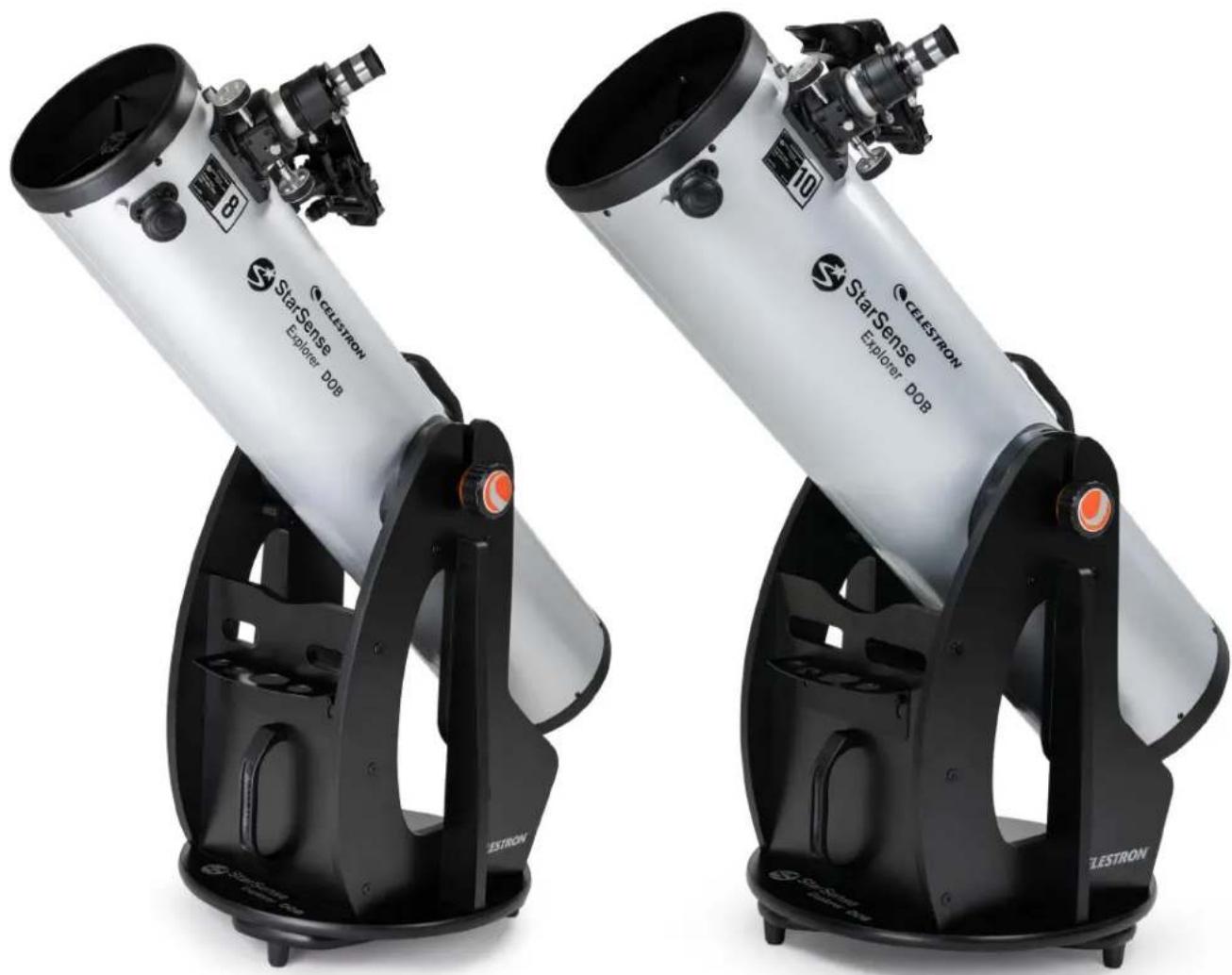
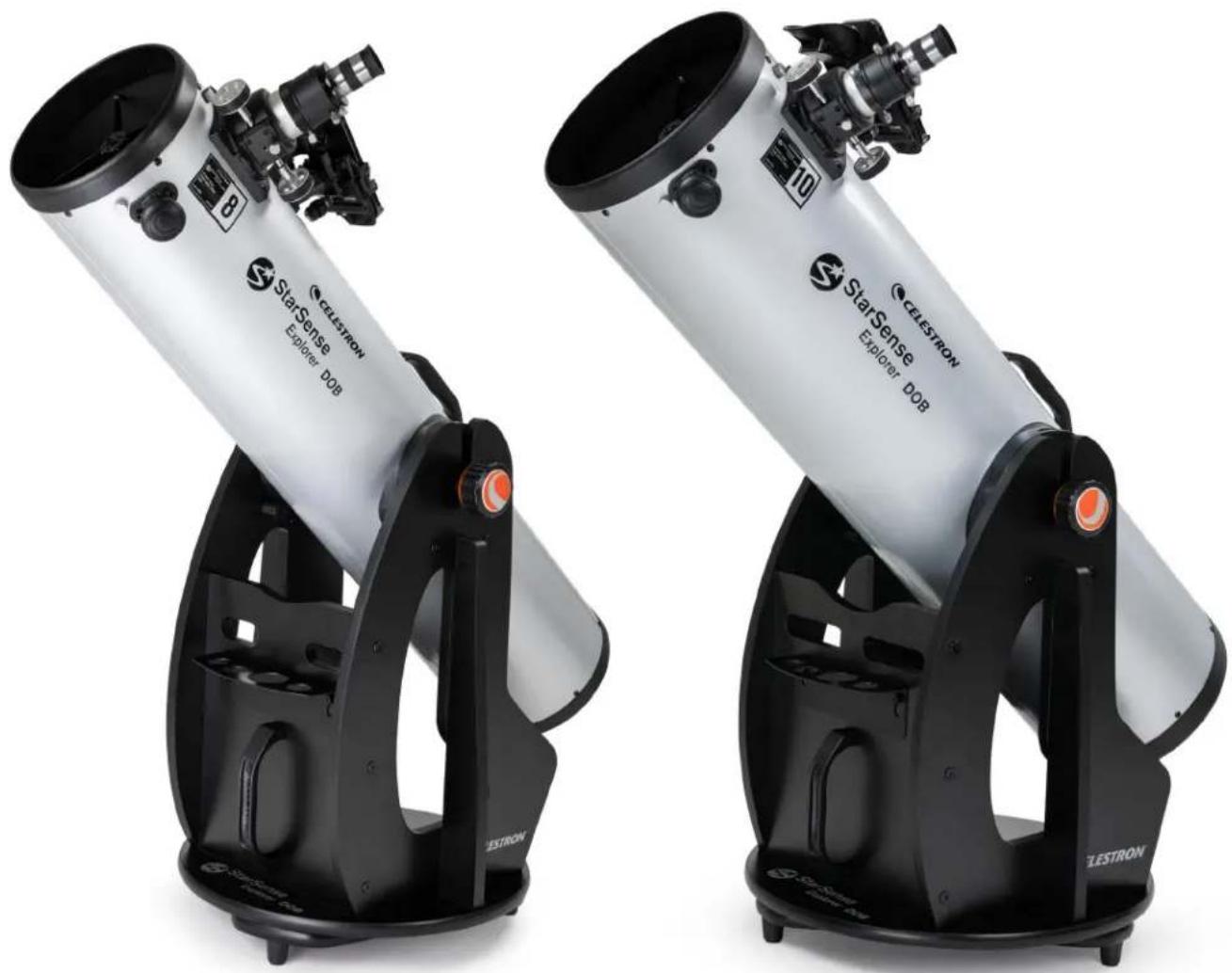
Congratulations on your purchase of the StarSense Explorer Dobsonian (SSE Dob) telescope. Your SSE Dob combines large optics with the exciting StarSense Explorer dock and app to make finding and observing all kinds of astronomical objects fun and easy! You'll be able to locate faint deep-sky objects—galaxies, nebulae, star clusters and more—and place them within the field of view of the eyepiece in seconds. The large primary mirror collects lots of light, enabling you to see details in objects that you have never seen before.
Before you take your StarSense Explorer Dob outside for your first night of observing, we recommend reading through this manual. It will help you to better understand the features of your telescope and know what to expect.
TABLE OF CONTENTS
What's in the Box 4
1. Base Assembly 5
Telescope Assembly 6
Pointing the Telescope 7
Focusing. 8
Using the StarPointer 9
StarSense Explorer Dock and App 10
Determining Magnification and Selecting Eyepieces 11
Cooling your Telescope's Optics 11
Your First Night Out - What to Expect 12
Dark Adaptation and Light Pollution 13
Use of Filters. 13
Collimating the Optics 14
Transporting 16
Care and Maintenance 17
Specifications StarSense Explorer 8" Dobsonian 18
Specifications StarSense Explorer 10" Dobsonian. 19
Solar Warning 20
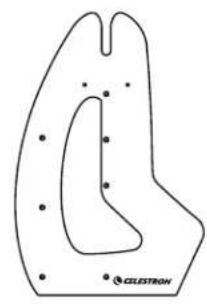
Box 1 - Dobsonian Base

Left side panel
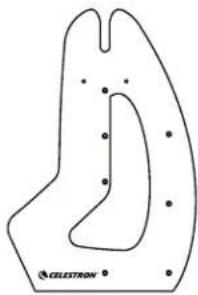

Right side panel
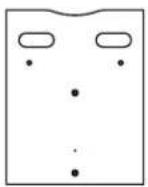

Front panel
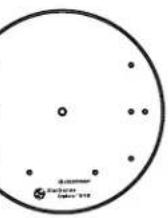

Top plate
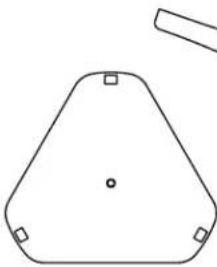

Bottom plate

Side supports (x2)

Base assembly screws (x22)
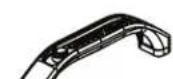
HANDLE ASSEMBLY

Base handle

Handle screws (x2)

AZIMUTH PIVOT BOLT ASSEMBLY


Nut

Steel washers (x2)


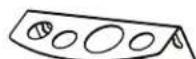
EYEPiece RACK ASSEMBLY

Eyepiece rack

Rack Screws (x2)

ALTITUDE BEARING ASSEMBLY

Altitude bearing cylinders (x4)


Bearing screws (x4)


Rubber bumper

INCLUDED TOOLS
Screwdriver

Crescent wrenches (x2)

Hox keys (x2)
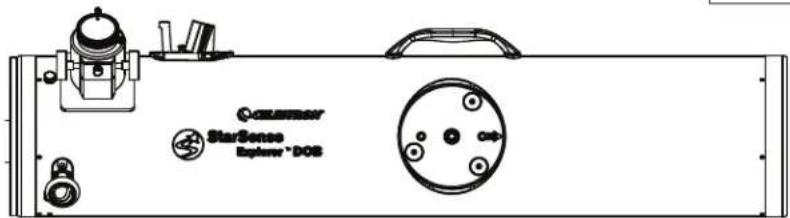
Box 2 - Optical Tube Assembly

Optical tube assembly with dust cover

StarSense dock

StarPointer red dot finderscope
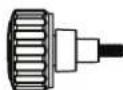

Altitude tensioning knob
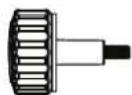

Cosmetic knob


25mm Omni Plossl eyepiece
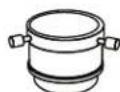


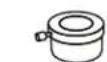
2"-to1.25" eyepiece adapter with 1.25" cover cap
StarSense dock


Collimation cap with 2mm and 2.5mm hex keys* ^2.5mm hex key included with B' Dab only
NOTE: For collimating your telescope's optics, refer to page 14
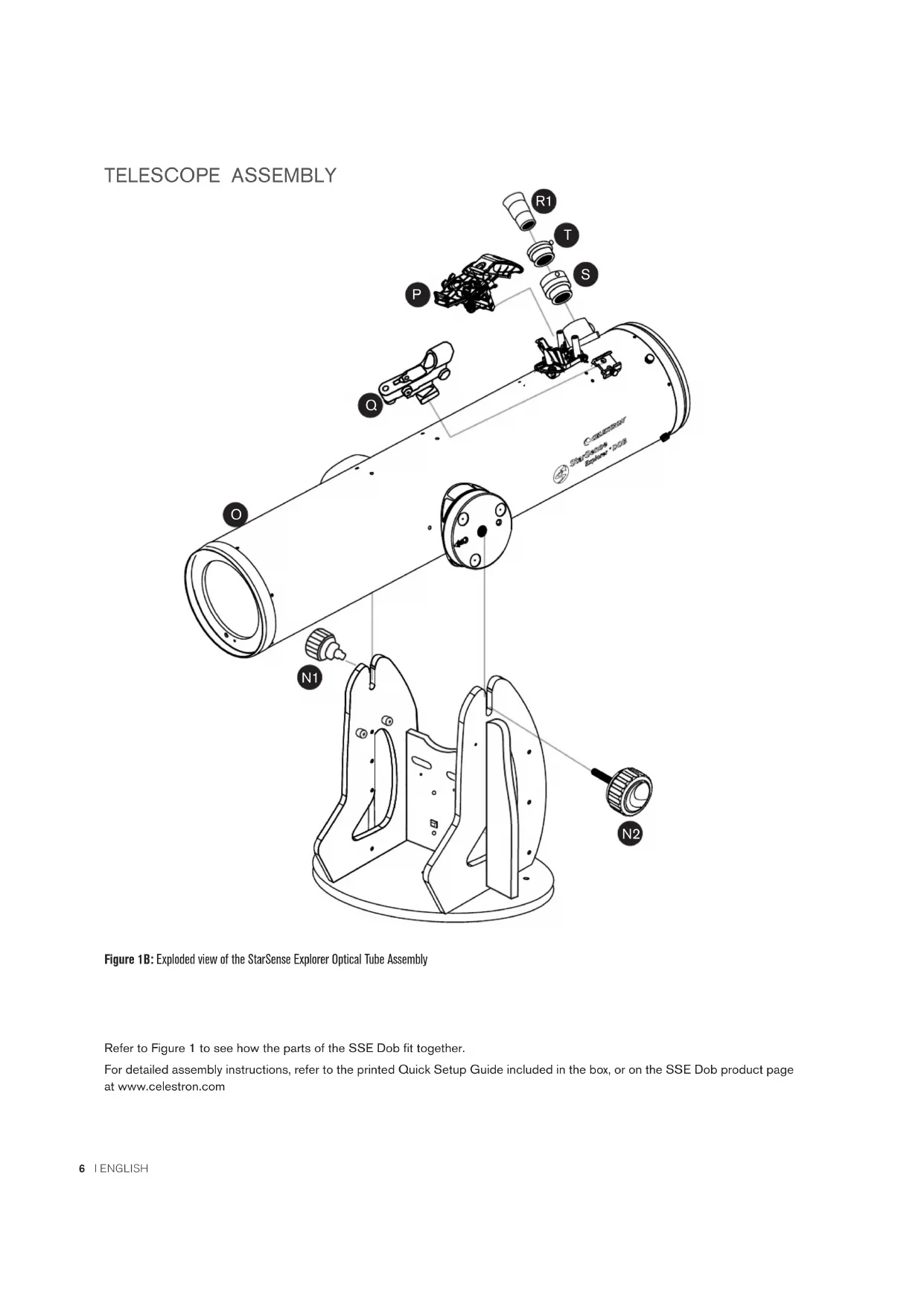
TELESCOPE ASSEMBLY
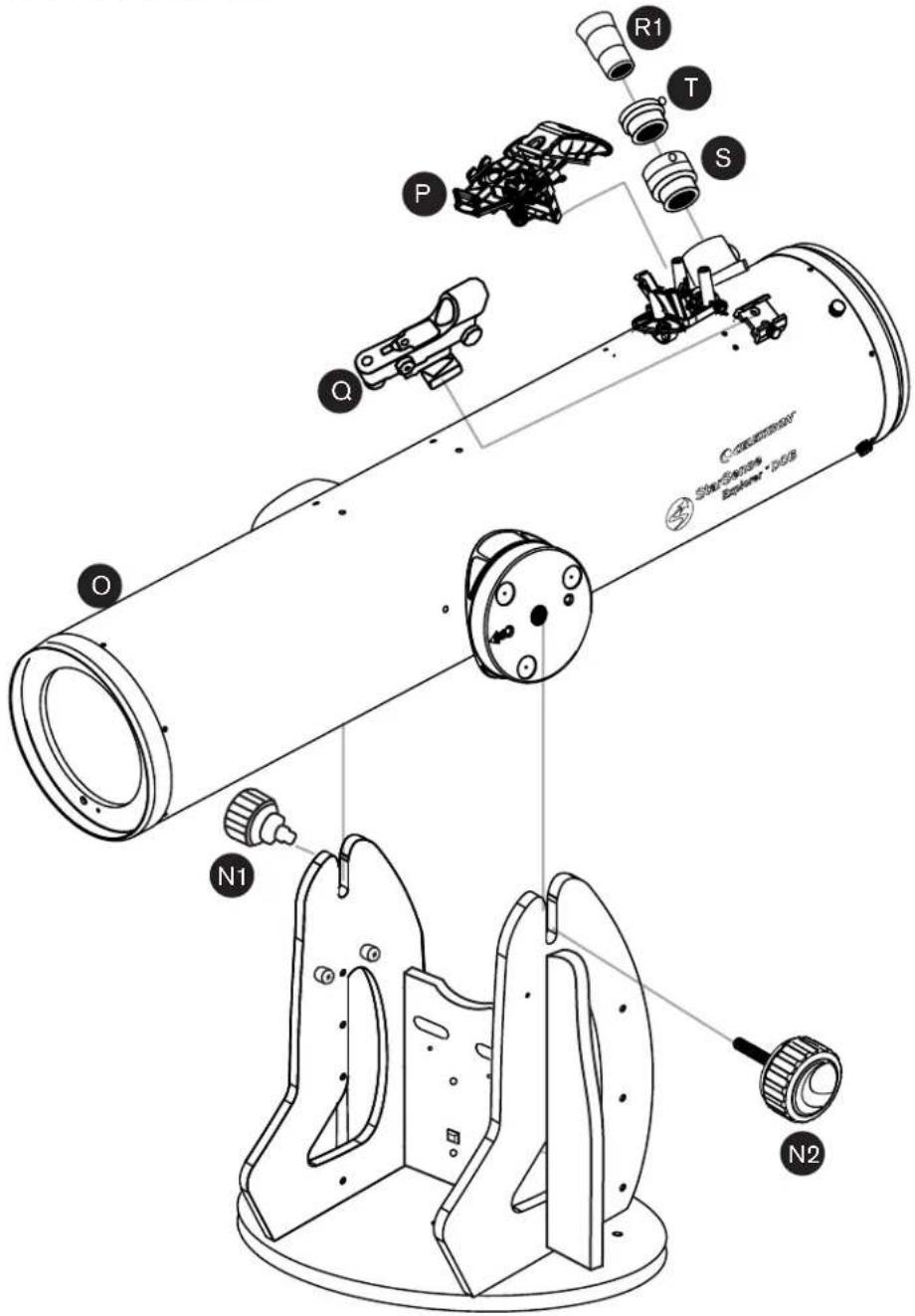
Figure 1B: Exploded view of the StarSense Explorer Optical Tube Assembly
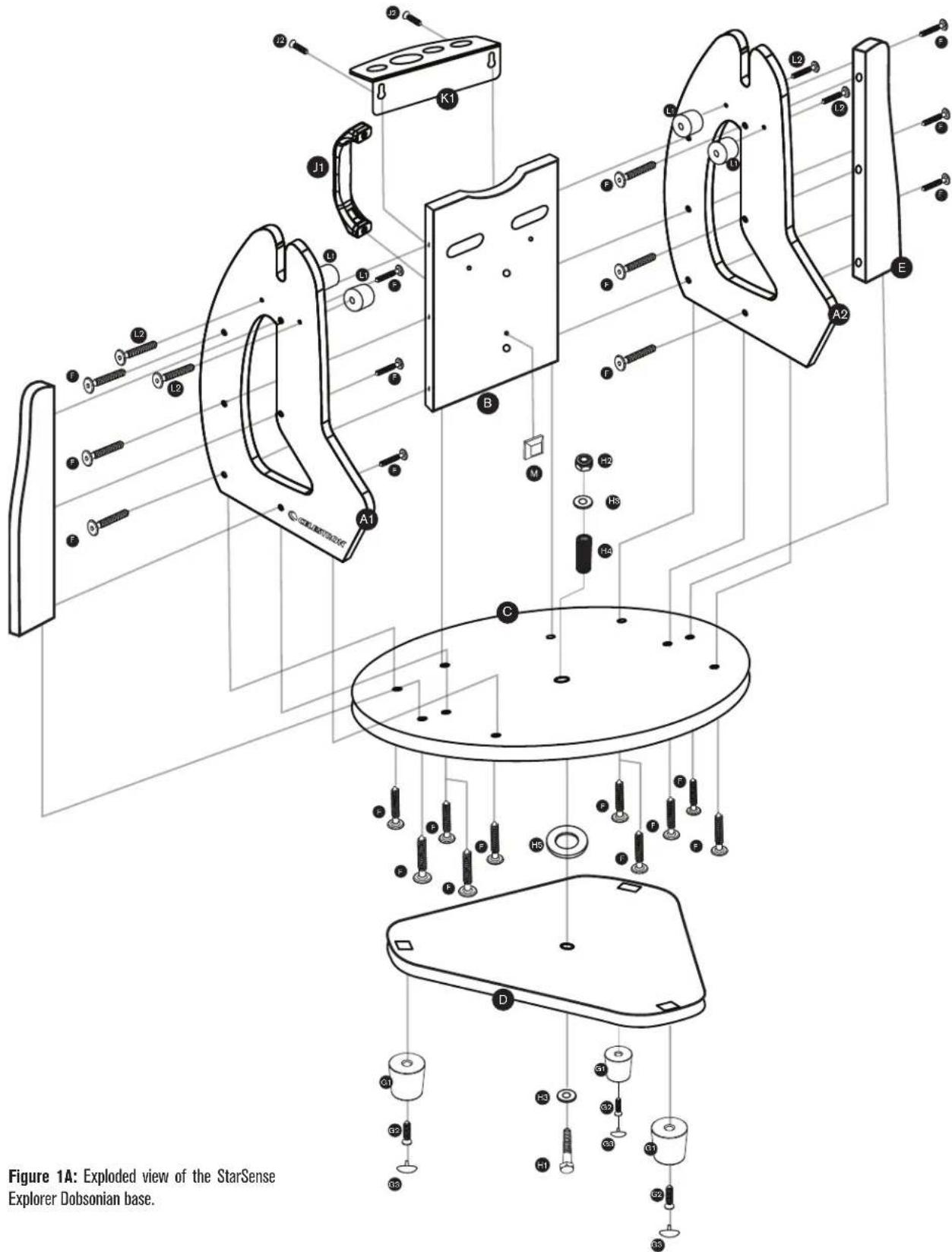
Refer to Figure 1 to see how the parts of the SSE Dob fit together.
For detailed assembly instructions, refer to the printed Quick Setup Guide included in the box, or on the SSE Dob product page at www.celestron.com
Dobsonian bases are altazimuth mounts. This means that the telescope moves in two directions: up-and-down (i.e. altitude), and left-to-right (i.e. azimuth) (Figure 2).
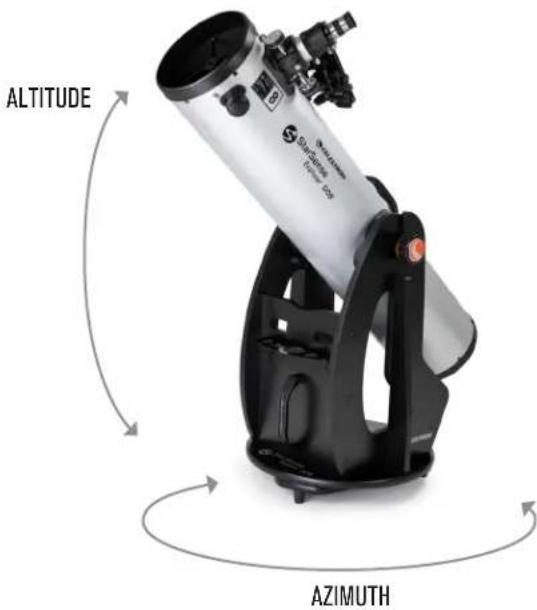
Figure 2: The StarSense Explorer Dobsonians have two axes of motion: altitude (up-and-down) and azimuth (left-to-right).
Pointing your Dob at an object is easy. Simply move the telescope tube up-and-down and left-to-right until the telescope is pointed toward the desired object and the object appears in the telescope's eyepiece. The panning knob at the front of the telescope tube provides a convenient place to grasp the tube for pointing (Figure 3). Using this knob also prevents heat from your hand from entering the optical path, which can temporarily distort the view.
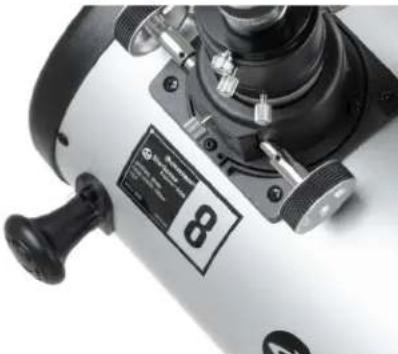
Figure 3: The panning knob provides an excellent place for your fingers to grasp when pointing the telescope.
You can adjust the tension along the altitude axis by turning the knob located on the same side as the telescope's focuser—the altitude tensioning knob (Figure 4).
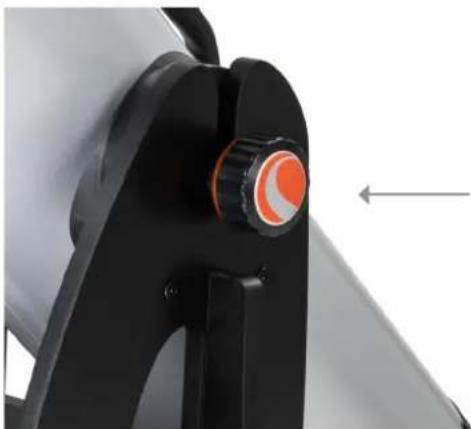
Figure 4: The tension of the altitude motion can be adjusted with the altitude tensioning knob. (NOTE: the other knob on the opposite side does not function for adjusting altitude tension.)
Turn the knob to add enough tension to provide a smooth up-and-down motion. Under most circumstances you won't need to add much tension. The telescope is balanced for normal use. However, if you are using a heavy eyepiece or a larger smartphone, you may need to add more tension so that the telescope remains still when not touched.
The SSE Dobs come with a 2" Crayford focuser, a 2" extension tube, and a 2"-to-1.25" eyepiece adapter. With these three items, you can use virtually any telescope eyepiece with the SSE Dob.
For most eyepieces, make sure the 2^ extension tube is in place in the focuser. If it's not, the eyepiece will not reach focus. If you're using an eyepiece that requires a lot of inward focus travel, remove the 2^ extension tube. You may need to remove the tube if attempting to use your Dob with an astronomical imaging camera.
If you wish to use a 1.25" format eyepiece, you'll need to use the 2"-to-1.25" eyepiece adapter. Simply place it in the focuser (with 2" extension tube attached), and then place the 1.25" eyepiece in the adapter. Tighten the thumbscrew on the adapter to secure the eyepiece in place. The adapter uses an internal brass compression ring so your eyepiece barrel won't be scratched or marred.
To focus, turn the focus knobs clockwise or counterclockwise until the object in the telescope eyepiece is in sharp focus. To lock the focuser position in place once you have achieved sharp focus, tighten the focus lock thumbscrew (Figure 5). If you need to adjust the focus knob's tension, you can tighten or loosen the focuser tensioning set screw using the provided hex key.
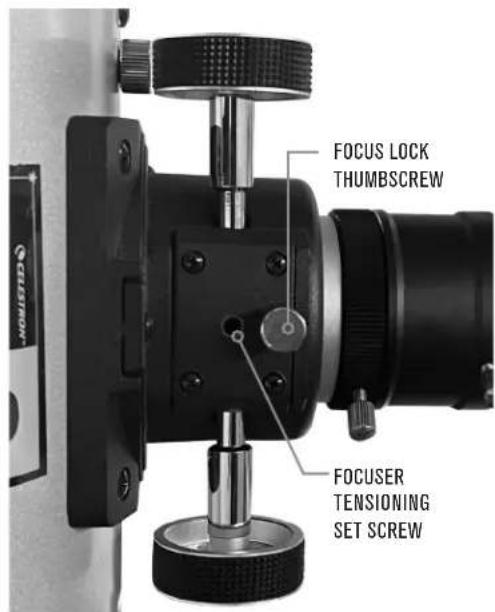
Figure 6: Like all Newtonian reflectors, the SSE Dobs produce images that appear upside-down as compared to the naked eye.
Figure 5: The focus lock thumbscrew locks the focuser in place once focus has been achieved. The focus tensioning set screw adjusts the tension of the focusing knobs.
Since the SSE Dob is a Newtonian reflector, the images you'll see will appear upside-down as compared to the naked eye (Figure 6). While this has little impact on astronomical observing, it can be a bit confusing when you are viewing land-based objects.
DEC California
ABC123DE
NAKED EYE VIEW
30824
D
VIEW THROUGH NEWTONIAN REFLECTOR TELESCOPE
Although you won't need to rely on the StarPointer red-dot finder when you are using the StarSense Explorer app, it can help you align the app with the telescope. The StarPointer also comes in handy when you are locating objects during the day, since the app only works under the stars at night.
To align the StarPointer, first point the telescope at an object that is at least 1/4 mile away. We recommend aligning during the day. Choose a distant tree, sign, building, or other landmark. If you are aligning at night, you can use a streetlight, the Moon, or a bright star or planet.
Once you have pointed the telescope at the object, check to ensure that it appears in the eyepiece. Next, turn the StarPointer on using the LED dial (Figure 7).
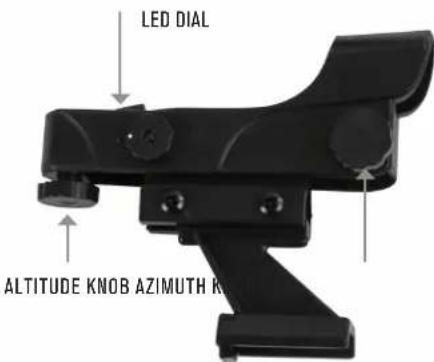
Figure 7: The StarPointer red-dot finderscope.
Turn up the brightness level until you can easily see the red dot. Now, without moving the telescope, use the StarPointer's altitude and azimuth adjustment knobs to center the red dot on the same object that you centered in the telescope eyepiece. When you're finished, check to make sure the object is still centered in the telescope eyepiece. If it is, you are done aligning the StarPointer. If not, move the telescope so the object in the telescope's eyepiece is centered again. Continue using StarPointer's altitude and azimuth adjustment knobs to center the red dot on the object again.
Turn off the StarPointer when you aren't using it to conserve its battery. While the StarPoner's battery should last a long time, eventually it will need to be replaced with a CR2032 3V Lithium button cell battery. These are very common and available from a wide variety of retailers.
To replace the battery:
- Use a Phillips-head screwdriver to remove the battery cover securing screw (Figure 8).
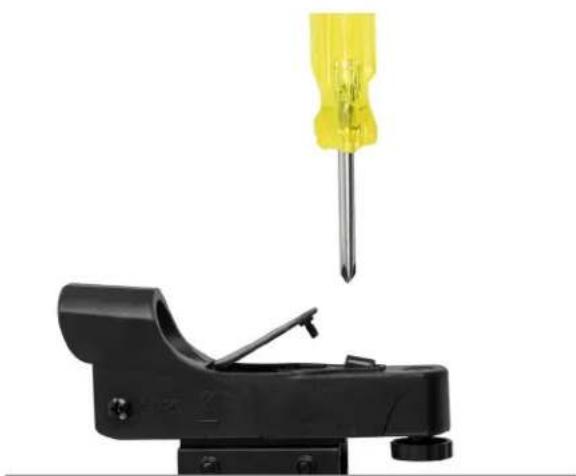
Figure 8: To open the StarPointer's battery cover, first remove the securing screw.
- Remove the discharged battery from the battery compartment. You may need to use a knife or screwdriver to pry the battery out of its holder.
- Insert the new battery so that the positive side is visible to you. Make sure the battery is properly seated within the battery compartment (Figure 9).
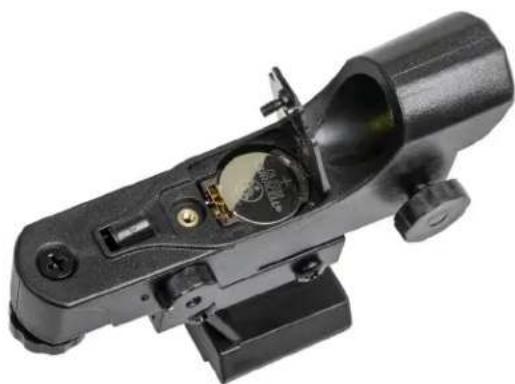
Figure 9: When the battery is properly seated in the compartment as shown, the battery cover should be easy to reinstall.
- Close the battery compartment and reinstall the securing screw.
STARSENSE EXPLORER DOCK AND APP
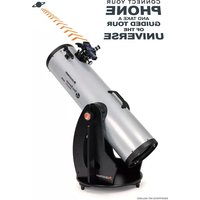
Perhaps the most exciting feature of the StarSense Explorer Dobsonian is the StarSense Explorer dock and the StarSense Explorer smartphone app. With the app to guide you, you'll spend more time observing objects instead of struggling to find them among myriad stars overhead! The Celestron StarSense Explorer is the only Dobsonian that includes this incredible feature.
To begin, download and install the app from the Apple App Store (iOS) or Google Play (Android). You'll also find the minimum system requirements there. If you have any questions about whether your smartphone is compatible with the app, please visit celestron.com/SSE
Once you have downloaded the app, use the app unlock code that you'll find on the printed card that came with your telescope (Figure 10).
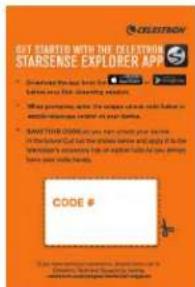
Figure 10: The StarSense Explorer App unlock code is printed on the card included with your telescope.
Each code can enable up to five devices to use the StarSense Explorer functionality. If you use the code all five times and need to unlock the app on more devices, please contact Celestron Technical Support at celestron.com/ pages/technical-support for options.
With the app unlocked, you are ready to begin. Place your smartphone into the StarSense Explorer dock and press the StarSense icon at the bottom of the planetarium screen (Figure 11).
Choose the "NEEDS ALIGNMENT" option and follow the on-screen prompts to align the smartphone's camera with the telescope. Once this procedure is complete, you can use the app to locate objects.
Select an object to view from the planetarium or the "Tonight's Best" list (i.e. press the star icon). Arrows will appear on screen, guiding you to the object. Follow the arrows until the bullseye turns green and the object is in your telescope's field of view. It's that easy!
While you observe, you can read detailed information about the object. Hundreds of the most popular objects also offer an audio presentation. To listen, press the bar at the bottom of the screen that contains the object's name (Figure 12).
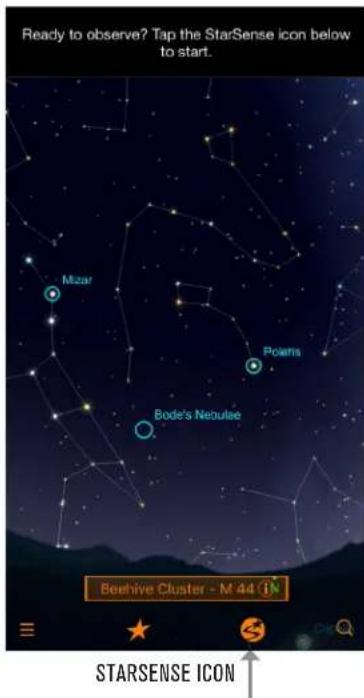
Figure 11: Once you have unlocked the StarSense Explorer app, press the StarSense icon to begin finding objects.
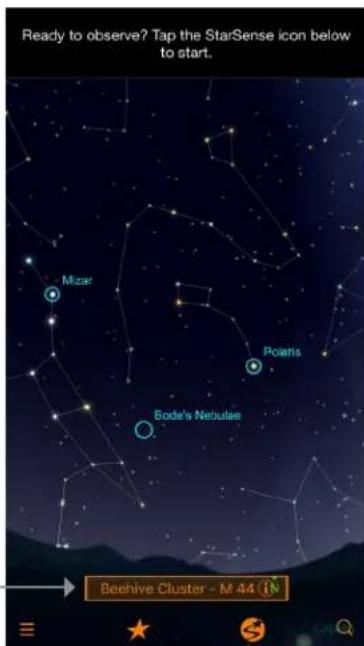
Figure 12: Press the Object Info bar to receive additional information about the selected object, including images and audio presentations for many objects.
DETERMINING MAGNIFICATION AND SELECTING EYEPIECES
To change the magnification of the telescope, you'll need to swap out the eyepiece in the telescope's focuser. To calculate the magnification you can achieve with a given eyepiece, use this formula:
Focal length of telescope ^+ Focal length of eyepiece Magnification
The SSE Dobs have a focal length of 1200mm . They come with a 25mm Omni Plossl eyepiece. Using the formula, we can calculate that this combination yields a magnification of 48x ( 1200mm ÷ 25mm = 48x ). This is an excellent magnification for locating and observing wide-field deep space objects. You may want to consider purchasing a higher-magnification eyepiece, like a 10mm Omni Plossl, for higher-power views of the Moon and planets. Do not increase magnification too much though, or the view may degrade due to atmospheric seeing conditions (i.e. air turbulence).
The maximum magnification for any telescope is about 60 times per inch, which equates to 480x for the 8^ SSE Dob, and 600x for the 10^ SSE Dob. In many locations, however, it will be difficult to achieve sharp images much over 100x magnification due to turbulence in the air above you. If you notice that the stars overhead are twinkling heavily, seeing conditions are poor. You should stick to lower magnification. If the stars appear to shine steadily, seeing conditions are good. You can try using higher-magnification eyepieces.
The SSE Dobs can accept both 1.25" and 2" format eyepieces. 2" eyepieces generally provide a wider field of view but can cost significantly more. To use a 2" eyepiece, remove the 2"-to-1.25" adapter from the focuser and insert the eyepiece directly into the 2" extension tube. Secure the eyepiece with the thumbscrews on the 2" extension tube.
The eyepiece rack located on the front of the base provides a convenient place to put eyepieces when they are not in use. It can accept three 1.25" eyepieces and one 2" eyepiece (Figure 13).
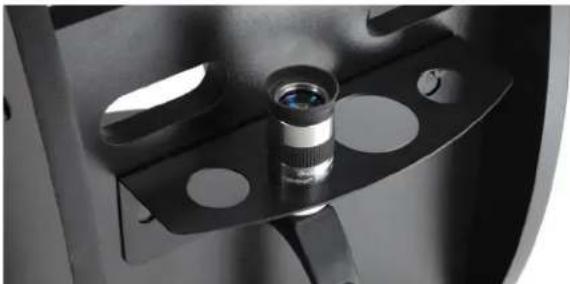
Figure 13: The eyepiece rack is a convenient place to store additional eyepieces during your observing session.
COOLING YOUR TELESCOPE'S OPTICS
You'll get the best views through your telescope when it has reached thermal equilibrium with the ambient air. If the telescope is warmer than the outside air, the mirror will be acclimating to the temperature and its figure will be changing. The images you see through a telescope that has not cooled will not appear as sharp as they otherwise would. If you are taking your telescope from a heated house to the outdoors, allow around one hour before expecting it to produce sharp images. For this reason, we recommend storing your telescope in a dry but unheated area like a garage or storage shed.
For the 10" SSE Dob, there is an optional USB Cooling Fan for Dobsonians available. It mounts onto the rear of the mirror cell and blows air on the mirror to expedite cooling (Figure 14). The fan will help the optics reach thermal equilibrium faster. (The 8" SSE Dob does not have a fan mount so it is not compatible with the Cooling Fan.)

Figure 14: The optional USB Cooling Fan for Dobsonians is compatible with the 10^ SSE Dob..
YOUR FIRST NIGHT OUT - WHAT TO EXPECT
You can observe literally thousands of objects with the larger aperture of the SSE Dobs:
The Moon
Observing the lunar surface is a great place to start. You'll easily see craters, maria, lacus, valleys, mountains, and other features. The Moon is so bright that you might want to consider using an optional Moon filter. It threads onto bottom of the eyepiece to dim the view. We also recommend a higher-power eyepiece to help you explore the Moon up-close.
Planets
The best planets to view are Jupiter, Saturn, Mars, and Venus. A higher-power eyepiece will help bring out the fine details. You'll be able to see the rings of Saturn, surface detail on Jupiter along with its moons, the phases of Venus, and perhaps some surface detail on Mars if it is near opposition (i.e. when it is closest to the Earth).
Stars and Double Stars
Stars will appear like points of light regardless of the magnification used. However, a telescope can reveal a star's color and also "split" double stars using higher magnifications. For variable stars, see if you can detect a star's change in brightness over a period of days or weeks.
Open Star Clusters
These are star groups that formed together within our Milky Way galaxy. They can appear spectacular in the telescope eyepiece, even from somewhat light-polluted skies. Astronomers often describe star clusters as resembling "crushed diamonds on black velvet" in the telescope's eyepiece. Clusters are generally best viewed with low-power eyepieces, as they usually require a wide field of view to see the entire cluster.
Globular Star Clusters
These are tight clusters of hundreds of thousands of stars that coalesced early in our galaxy's formation. These clusters appear like globes of light. The brighter ones can be resolved into individual stars in good conditions. Most globular clusters are best viewed with a medium-power eyepiece, as they are not nearly as wide as open clusters, yet not bright enough for high power either.
Nebulae
You'll generally need to be under dark skies to see gaseous nebulae, which appear as a faint glow around stars. Don't expect to see any nebulosity from urban skies except for perhaps the brightest ones, like the Orion Nebula and Lagoon Nebula.
Galaxies
Perhaps the most fascinating of all objects to view, galaxies are like "island universes" unto themselves. While you can detect the brightest galaxies, like the Andromeda Galaxy, from somewhat light-polluted skies, they are best observed from dark skies. Literally hundreds of galaxies are well within the observing reach of the SSE Dobs. The best ones display fine details like faint spiral arms and dust lanes. Many, however, will just appear as non-stellar "streaks" or "blobs." Even so, just being able to detect the light from another galaxy outside our own is rewarding in itself.
One thing to keep in mind is that the SSE Dobs are not motorized. This means that they will not automatically track celestial objects as the Earth rotates. As a result, you will notice that objects drift a bit as you observe them and will exit the eyepiece's field of view within a minute or two, depending on the magnification you are using. Objects will drift out of the field of higher-power eyepieces faster, since their field of view is narrower. You will need to manually push the Dob along to keep objects centered over time. This is easy to do. Grab hold of the telescope's panning knob and move it slightly up-and-down and left-to-right as needed.
DARK ADAPTATION AND LIGHT POLLUTION
It takes at least a half-hour for the human eye to become dark-adapted, so don't immediately expect to see subtle detail in faint deep-sky objects as soon as you get outside. While you are observing, avoid any bright lights (like going from outside to inside a lighted house) or else your dark adaption will need time to reset. Use red flashlights designed for astronomical use, as the red light will not greatly affect your night vision. The Moon will also affect your dark adaptation, so if you directly observe the Moon expect it to take time to regain your night vision.
Local light pollution will greatly diminish the appearance and contrast of fainter deep-sky objects in the telescope. Do not expect to see much detail from urban skies. You'll get your best views from dark sky locations away from city or suburban night lighting. Bright objects such as the Moon, planets, double stars, and bright open star clusters are not affected by light pollution as much, so they make good objects for backyard viewing regardless of where you are. Also keep in mind that the Moon itself can light up much of the night sky, preventing views of faint objects even from dark sites. So schedule deep sky observing when the Moon won't be visible.
USE OF FILTERS
Experiment with adding optional filters to your setup to help improve the view. Astronomical filters thread onto the bottom of your eyepiece and usually come in both 1.25" and 2" formats. Simply remove the eyepiece from the focuser, thread the filter onto the bottom of the eyepiece's barrel, and then reinsert it into the focuser.
There are many useful filters to choose from:
Moon Filter - An essential for viewing lunar details, this filter cuts down on glare and makes bright objects dimmer.
Variable Polarizer - Like a Moon filter, a polarizer dims your view. The key difference is that you can customize the extent of the dimming effect by rotating the polarizer.
Color Filters - Available in a variety of colors, these can improve contrast when observing planetary details.
Light Pollution Filters - If you are viewing deep-space objects from urban or suburban skies, these improve contrast by blocking the "bad" light from local light pollution and transmitting the "good light" from deep-sky objects. You'll notice the greatest improvement in contrast when observing nebulae
Collimation is the process of aligning the telescope's optics. Dobsonians use the Newtonian reflector optical design, which consists of a parabolic primary mirror and a flat secondary mirror. To ensure best performance, you should periodically check the alignment of the optics. To help with this, we have included a special "collimation cap" you can use. In addition, the primary mirror is center-marked with an adhesive ring label to aid in collimation.
To check alignment of the mirrors, first remove any eyepieces. Make sure the 2^n -to-1.25" adapter is installed in the focuser. Then, place the collimation cap in the focuser (Figure 15).
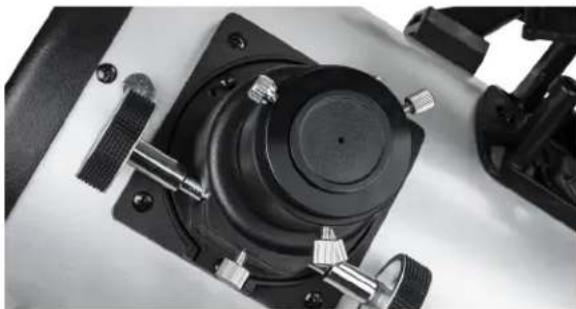
Figure 15: To check the alignment of the mirrors, use the included collimation cap in the focuser.
Look through the small hole in the center of the collimation cap. The view should look like Figure 16. If it does not, you'll need to make some adjustments to the mirrors' alignment.
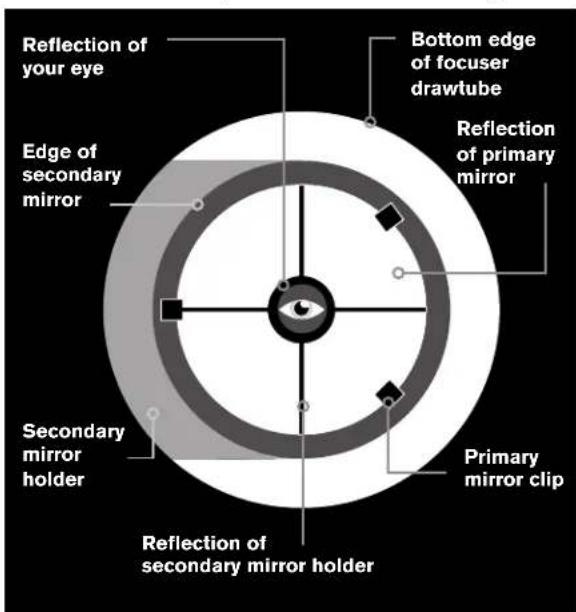
Figure 16: If your telescope is properly aligned, the view through the collimation cap should look like the drawing above.
It is easiest to collimate a telescope during the day with the telescope pointed toward a blank wall. This will provide a high-contrast view, making it easier to determine which adjustments should be made. Use the supplied hex key(s) to make adjustments. The 8" SSE Dob comes with 2mm and 2.5mm hex keys. The 10" SSE Dob comes with a single 2mm hex key. For the 8" SSE Dob, you'll also need to use the supplied Phillips head screwdriver.
First, adjust the secondary mirror at the front of the telescope using the 2mm hex key. While making adjustments, we recommend positioning the tube horizontally. This prevents anything from falling onto the primary mirror.
- You should be able to see the reflection of the entire primary mirror centered within the secondary mirror as shown in Figure 16. If you can't (like in Figure 17, for example), use the three socket-head set screws in the secondary mirror holder to adjust the tilt of the secondary mirror (Figure 18).
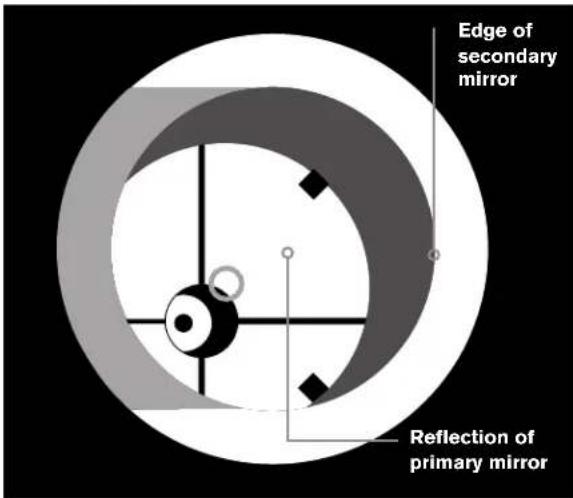
Figure 17: If the reflection of the primary mirror is not centered within the secondary mirror as shown above, you will need to adjust the tilt of the secondary mirror.
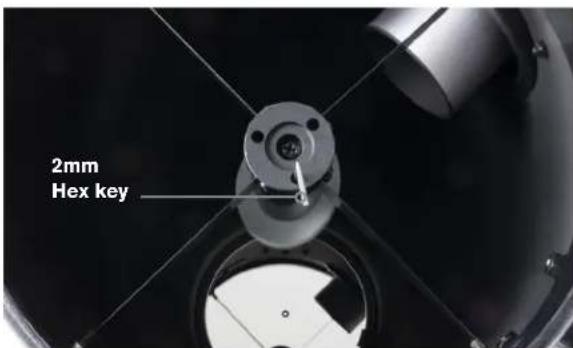
Figure 18: The three socket head set screws in the secondary mirror holder adjust the tilt of the secondary mirror.
a. Adjust one set screw at a time. Make only small adjustments.
b. If one set screw becomes too tight or too loose, make adjustments to the other set screws to compensate.
- Continue adjusting the set screws until the primary mirror appears centered within the secondary mirror (Figure 19). When you are finished, make sure all three of the set screws are snug.
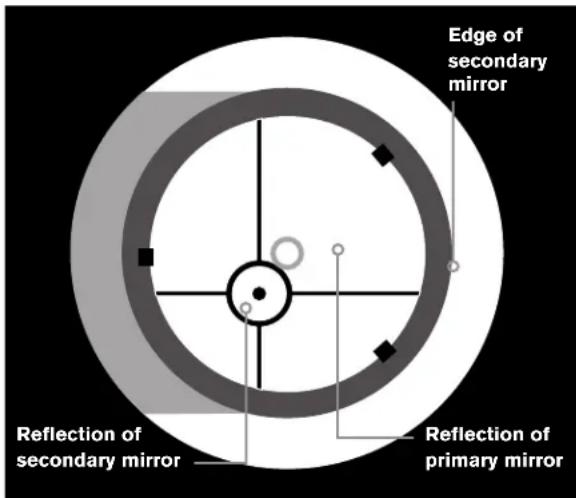
Figure 19: Continue making tilt adjustments to the secondary mirror until the primary mirror reflection is centered as shown in the drawing above.
- Next, adjust the tilt of the primary mirror until the reflection of the secondary mirror is centered within the reflection of the primary mirror.
For the 8" Dobsonian, use the 2.5mm hex key and Phillips head screwdriver to tilt the primary mirror. There are three pairs of collimation screws. Each pair works together to adjust the tilt.
a. Adjust one pair of screws at a time. Start by loosening one of the screws in the pair and tightening the other (Figure 20).
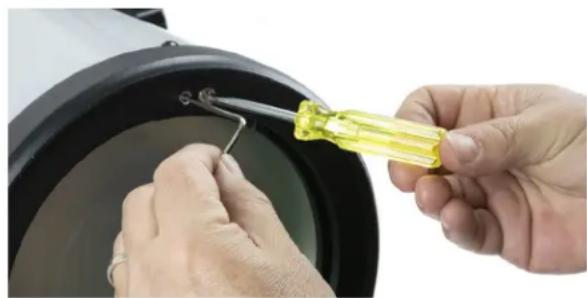
Figure 20: For the 8^ Dob, there are three sets of push-pull screws in the mirror cell that adjust the tilt of the primary mirror. Loosen one screw in the pair and tighten the other to adjust the tilt.
b. If the mirror tilts opposite the desired direction, loosen the screw that you previously tightened, and tighten the other screw in the pair.
c. Once you have adjusted one pair of screws as much as you can, move onto another pair of screws.
d. Continue adjusting until the reflection of the secondary mirror is centered within the reflection of the primary mirror. When you are finished, the view through the collimation cap should look like Figure 16.
For the 10" Dobsonian, you won't need any tools to tilt the primary mirror. Instead, simply adjust the thumbscrews. Three of the thumbscrews are locking screws, while the other three thumbscrews adjust the tilt.
a. Start by loosening all three of the locking thumbscrews (Figure 21).
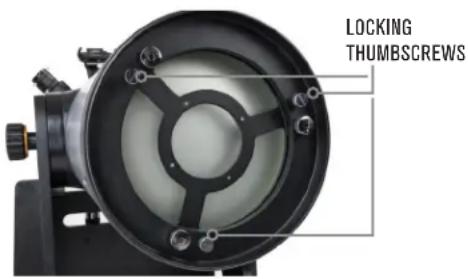
Figure 21: For the 10^ Dob, there are three spring-loaded collimation thumbscrews that adjust the tilt of the primary mirror. The other three thumbscrews lock the mirror in place once tilt adjustments are completed.
b. Adjust the collimation thumbscrews one at a time. Each collimation thumbscrew is spring-loaded, so you can rotate it clockwise or counterclockwise.
c. Continue adjusting the screws until the reflection of the secondary mirror is centered within the reflection of the primary mirror.
d. Re-tighten the three locking thumbscrews until snug.
e. When you are finished, the view through the collimation cap should look like Figure 16.
Your telescope's optics are now aligned and ready for use. You can also confirm a telescope's alignment at night by pointing the telescope at a bright star at high magnification. Center the star in the field of view and slightly defocus the star—it should appear like a circle with a hole in the middle. (The "hole" is the shadow from the secondary mirror.) If the hole is not centered within the circle, you'll need to make additional adjustments to collimation (Figure 22).
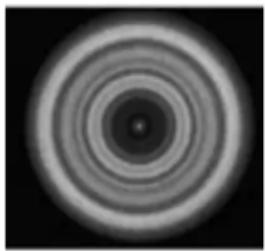
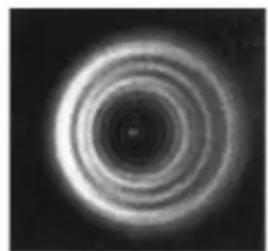
GOOD COLLIMATION NEEDS ADJUSTMENT
Figure 22: You can check collimation by defocusing a bright star centered in the field of view and checking to see if the "hole" is centered. If it is not centered, some adjustment is needed.
TRANSPORTING
Transporting the StarSense Explorer Dobsonian is easy, especially considering its size. First, remove the telescope tube from the base by loosening the altitude tensioning knob and lifting the telescope tube. You can carry the tube and the base separately by their integrated carry handles. The handles are positioned to balance the load, so neither component should be awkward to carry.
Store the telescope indoors in a dry place. A garage is ideal; it will keep the optics near the ambient outdoor temperature so the optics won't take as long to acclimate. Keep the dust cover on the front of the telescope and the cover cap on the focuser when the telescope is not in use. Otherwise, dust and particles can accumulate on the optics.
If the telescope is wet from dew, dry the exterior of the telescope tube and base with a towel prior to storage. While a small amount of water on the exterior of the tube and base won't harm the telescope, storing it wet long-term could cause corrosion or water damage. The wooden base has sealed melamine surfaces. Still, water can seep into cracks if left wet during storage.
It is normal for some dust and particles to accumulate on the primary mirror over time. They will not have any effect on optical performance. However, if the primary mirror gets excessively dirty, you should clean it.
To clean the primary mirror:
- Remove the primary mirror cell from the telescope tube by removing the screws on the tube just above the mirror cell (Figure 23). You'll need the Phillips head screwdriver to do this.
- Carefully pull the mirror cell off of the tube.
- The mirror surface is now exposed for cleaning. We recommend leaving the primary mirror in its cell during cleaning.
- Use a blower bulb and optics cleaning brush to remove larger particles and dust. In some instances, this will be all the cleaning necessary.
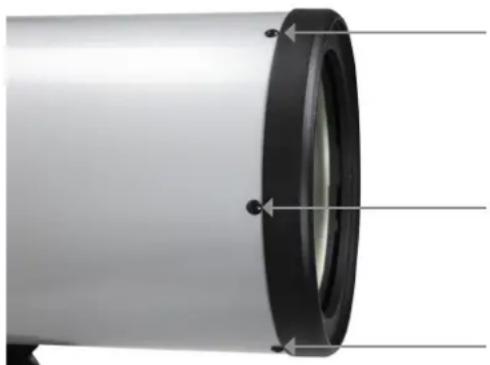
Figure 23: To remove the primary mirror from the telescope tube for cleaning, first remove the screws located just above the mirror cell.
- To remove marks and oils, use lens cleaning fluid and lens cleaning tissue to clean the mirror surface. Apply the fluid to the tissue and gently wipe the mirror surface. Use radial strokes (i.e. from the center of the mirror to the edge). Use a new tissue for every wipe. Avoid rubbing; this typically just spreads oils around instead of removing them.
- Once the mirror is clean, reinstall the mirror cell into the telescope tube and replace the screws.
The secondary mirror will not get dirty often, as its optical surface is pointed downward. However, if it does require cleaning, it can be cleaned in the same manner as the primary mirror. You do not need to remove the secondary mirror from the telescope to clean it. Point the telescope horizontally during cleaning to prevent anything from falling onto the primary mirror.
You may clean the exposed optical surfaces of your eyepieces in the same manner described above.
22470 StarSense Explorer 8" Dobsonian
| Optical Design Newtonian reflector | |
| Aperture 8" (203mm) | |
| Focal Length 1200mm | |
| Focal Ratio F/5.9 | |
| Optical Coatings XLT reflective coatings with silicon dioxide and tantalum pentoxide protective overcoatings for primary and secondary mirrors | |
| Mirror Material Pyrex equivalent for primary and secondary mirrors | |
| Primary mirror thickness 25mm (approx. 1:8 thickness ratio) | |
| Secondary mirror thickness 8.5mm | |
| Minor axis of secondary mirror 47mm | |
| Tube material Steel | |
| Focuser 2" Crayford, includes 2" extension tube and 2"-to-1.25" adapter | |
| Eyepiece / Magnification 25mm Plössl, 48x | |
| Finderscope StarPointer red-dot finderscope | |
| Other Accessories | StarSense Explorer dock, eyepiece rack, collimation cap, carry handles for OTA and base, pointing knob, dust covers |
| Tripod | Altazimuth Dobsonian base, adjustable altitude tensioning |
| Optical Tube Dimensions | 44" x 9.5" diameter |
| Optical Tube Weight | 20.6 lbs. |
| Base dimensions | 27" x 19" x 19" |
| Base weight 22.8 lbs. | |
| Total Telescope Kit Weight 43.4 lbs. | |
22471 StarSense Explorer 10" Dobsonian
| Optical Design Newtonian reflector | |
| Aperture 10" (254mm) | |
| Focal Length 1200mm | |
| Focal Ratio F/4.7 | |
| Optical Coatings XLT reflective coatings with silicon dioxide and tantalum pentoxide protective overcoatings for primary and secondary mirrors | |
| Mirror Material Pyrex equivalent for primary and secondary mirrors | |
| Primary mirror thickness 30mm (approx. 1:8.5 thickness ratio) | |
| Secondary mirror thickness 11.5mm | |
| Minor axis of secondary mirror 64mm | |
| Tube material Steel | |
| Focuser 2" Crayford, includes 2" extension tube and 2"-to-1.25" adapter | |
| Eyepiece / Magnification 25mm Plössl, 48x | |
| Finderscope | StarPointer red-dot finderscope |
| Other Accessories | StarSense Explorer dock, eyepiece rack, collimation cap, carry handles for OTA and base, pointing knob, dust covers |
| Tripod | Altazimuth Dobsonian base, adjustable altitude tensioning |
| Optical Tube Dimensions | 44" x 11.5" diameter |
| Optical Tube Weight | 29.2 lbs. |
| Base dimensions | 26.5" x 21" x 21" |
| Base weight | 25.6 lbs. |
| Total Telescope Kit Weight | 54.8 lbs. |

- Never look directly at the Sun with the naked eye or with a telescope (unless you have the proper solar filter). Permanent and irreversible eye damage may result.
- Never use your telescope to project an image of the Sun onto any surface. Internal heat build-up can damage the telescope and any accessories attached to it.
- Never use an eyepiece solar filter or a Herschel wedge. Internal heat build-up inside the telescope can cause these devices to crack or break, allowing unfiltered sunlight to pass through to the eye.
- Never leave the telescope unsupervised. Make sure an adult who is familiar with the correct operating procedures is with your telescope at all times, especially when children are present.
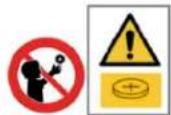
WARNING: KEEP BATTERIES OUT OF REACH OF CHILDREN.
- Examine devices and make sure the battery compartment is correctly secured, e.g. that the screw or other mechanical fastener is tightened.
- Do not use if compartment is not secure.
- Dispose of used button batteries immediately and safely. Flat batteries can still be dangerous.
- Tell others about the risk associated with button batteries and how to keep their children safe.
CFC RoHS

This device complies with Part 15 of the FCC Rules. Operation is subject to the following two conditions: (1) This device may not cause harmful interference and (2) this device must accept any interference received, including interference that may cause undesired operation.
CAUTION: Changes or modifications not expressly approved by the party responsible for compliance could void the user's authority to operate the equipment.
NOTE: This equipment has been tested and found to comply with the limits for a Class B digital device, pursuant to part 15 of the FCC Rules. These limits are designed to provide reasonable protection against harmful interference in a residential installation.
This equipment generates uses and can radiate radio frequency energy and, if not installed and used in accordance with the instructions may cause harmful interference to radio communications. However, there is no guarantee that interference will not occur in a particular installation.
If this equipment costs harmful interference to radio or television reception, which can be determined by turning the equipment off and on, the user is encouraged to try to correct the interference by are or more of the following measures.
- Reagent or reconstate the receiving antenna.
- Increase the separation between the equipment and receiver.
- Connect the equipment into an outlet on a circuit different from that to which the receiver is connected.
- Consult the dealer or an experienced radio/TV technician for help.
Product design and specifications are subject to change without prior notification. This product is designed and intended for use by those 14 years of age and older.
Need assistance?
Contact Celestron Technical Support by visiting
teleston.com/pagas/technical-support
celestron.com
© 2022 Celestron • All rights reserved • celestron.com
2835 Columbia Street · Torrance, CA 90503 U.S.A.

StarSense
Explorer™ DOB
INTRODUCTION
DEC California ABC123DE
VUE A L'QEIL NU
30
WARNING: KEEP BATTERIES OUT OF REACH OF CHILDREN.
AVERTISSEMENT: GARDEZ LES PILES HORS DE PORTEED DES ENFANTS.
calastan.com/pages/technical-support
celestron.com
colestan.com/pages/technical-support
celestron.com
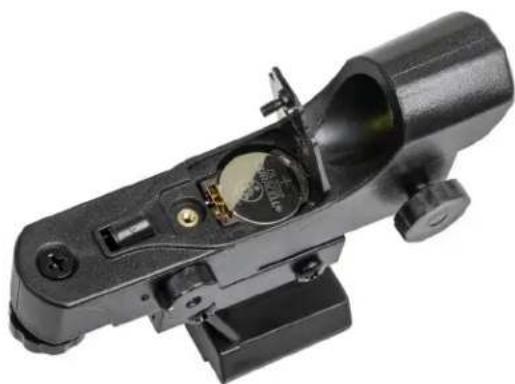
Figure 9: When the battery is properly seated in the compartment as shown, the battery cover should be easy to reinstall.
ceastan.com/pages/technical-support
celestron.com
© 2022 Celestron • Tutti i diritti riservati • celestron.com
2835 Columbia Street • Torrance, CA 90503 Stati Uniti

StarSense
Explorer™ DOB
ceastan.com/pages/technical-support