CHTF 544SH - Freezer CANDY - Free user manual and instructions
Find the device manual for free CHTF 544SH CANDY in PDF.



| Product type | Upright freezer |
| Brand | Candy |
| Model | CHTF 544SH |
| Climate class | SN, N, ST, T |
| Ambient temperature | From +10°C to +43°C (depending on class) |
| Power supply | 220-240 V, 50 Hz |
| Refrigerant | R600a (isobutane) |
| Insulation | Cyclopentane |
| Number of drawers | 4 (estimate) |
| Defrosting | Manual |
| Ice cube production | Yes (ice trays) |
| Door opening direction reversal | Yes |
| Adjustable feet | Yes |
| Spacer blocks | Yes |
| Condenser cleaning | Recommended annually |
Frequently Asked Questions - CHTF 544SH CANDY
User questions about CHTF 544SH CANDY
0 question about this device. Answer the ones you know or ask your own.
Ask a new question about this device
Download the instructions for your Freezer in PDF format for free! Find your manual CHTF 544SH - CANDY and take your electronic device back in hand. On this page are published all the documents necessary for the use of your device. CHTF 544SH by CANDY.
USER MANUAL CHTF 544SH CANDY
Thank you for purchasing this product.
Before using your refrigerator, please carefully read this instruction manual in order to maximize its performance. Store all documentation for subsequent usage or other owners. This product is intended solely for household use or similar applications such as:
- the kitchen area for personnel in shops, offices and other working environments
- on farms, by clientele of hotels, motels and other environments of a residential type
- at bed and breakfasts (B & B)
- For catering services and similar applications not for retail sale.
This appliance must be used only for purposes of storage of food, any other use is considered dangerous and the manufacturer will not be responsible for any omissions. Also, it is recommended that you take note of the warranty conditions.
SAFETY INFORMATION
The refrigerator contains a refrigerant gas (R600a:isobutene) and insulating gas (cyclopentane), with high compatibility with the environment, that are, however, inflammable.
We recommend that you follow the following regulations so as to avoid situations dangerous to you:
- Before performing any operation, unplug the power cord from the power socket.
- The refrigeration system positioned behind and inside the appliance contains refrigerant. Therefore, avoid damaging the tubes.
- If in the refrigeration system a leak is noted, do not touch the wall outlet and do not use open flames. Open the window and let air into the room. Then call a service center to ask for repair.
- Do not scrape with a knife or sharp object to remove frost or ice that occurs. With these, the refrigerant circuit can be damaged, the spill from which can cause a fire or damage your eyes.
- Do not install the appliance in humid, oily or dusty places, nor expose it to direct sunlight and to water.
- Do not install the appliance near heaters or inflammable materials.
• Do not use extension cords or adapters.
- Do not excessively pull or fold the power cord or touch the plug with wet hands.
- Do not damage the plug and/or the power cord; this could cause electrical shocks or fires.
- It is recommended to keep the plug clean, any excessive dust residues on the plug can be the cause fire.
- Do not use mechanical devices or other equipment to hasten the defrosting process.
- Absolutely avoid the use of open flame or electrical equipment, such as heaters, steam cleaners, candles, oil lamps and the like in order to speed up the defrosting phase.
- Do not use or store inflammable sprays, such as spray paint, near the appliance, it could cause an explosion or fire.
- Do not use electrical appliances inside the food storage compartments, unless they are of the type recommended by the manufacturer.
- Do not place or store inflammable and highly volatile materials such as ether, petrol, LPG, propane gas, aerosol spray cans, adhesives, pure alcohol, etc. These materials may cause an explosion.
- Do not store medicine or research materials in the appliance. When the material that requires a strict control of storage temperatures is to be stored, it is possible that it will deteriorate or an uncontrolled reaction may occur that can cause risks.
- Maintain the ventilation openings in the appliance enclosure or in the built-in structure, free of obstruction.
- Do not place objects and/or containers filled with water on the top of the appliance.
- Do not perform repairs on this appliance. All interventions must be performed solely by qualified
personnel.
- This appliance can be used by children aged from 8 years and above and by persons with reduced physical, sensory or mental capabilities or with a lack of experience and knowledge; provided that they have been given adequate supervision or instruction concerning how to use the appliance in a safe way and understand the hazards involved.
•Children should not play with the appliance. Cleaning and user maintenance should not be made by children without supervision
Scrapping old appliance
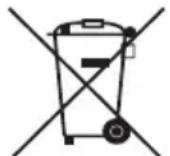
This appliance is marked according to the European directive 2012/19/EU on Waste Electrical and Electronic Equipment (WEEE).
WEEE contains both polluting substances (which can cause negative consequences for the environment) and basic components (which can be re-used). It is important to have WEEE subjected to specific treatments, in order to remove and dispose
properly all pollutants, and recover and recycle all materials.
Individuals can play an important role in ensuring that WEEE does not become an environmental issue; it is essential to follow some basic rules:
- WEEE should not be treated as household waste;
- WEEE should be handed over to the relevant collection points managed by the municipality or by registered companies. In many countries, for large WEEE, home collection could be present.
In many countries, when you buy a new appliance, the old one may be returned to the retailer who has to collect it free of charge on a one-to-one basis, as long as the equipment is of equivalent type and has the same functions as the supplied equipment.
Conformity

By placing the mark on this product, we are confirming compliance to all relevant
European safety, health and environmental requirements which are applicable in legislation for this product.
Energy Saving
For better energy saving we suggest :
Installing tge appliance away from heat sources and not exposed to direct sunlight and in a well ventilated roo.
Avoid putting hot food into the refrigerator to avoid increasing the internal temperature and therefore causing continuos functionaliting of the compressor.
Do not excessively stuff foods so as to ensure proper air circulation.
Defrost the appliance in case there is ice to facilitate the transfer of cold.
In case of absence of electrical energy, it is advisable to keep the refrigerator door closed.
Open or keep the doors of the appliance open as little as possible
Avoid adjusting the setting to temperatures too cold.
Remove dust present on the rear of the appliance
SINGLE DOOR FREEZER
Wait at least two hours before switching the appliance on, in order to ensure that the refrigerant circuit is fully efficient.
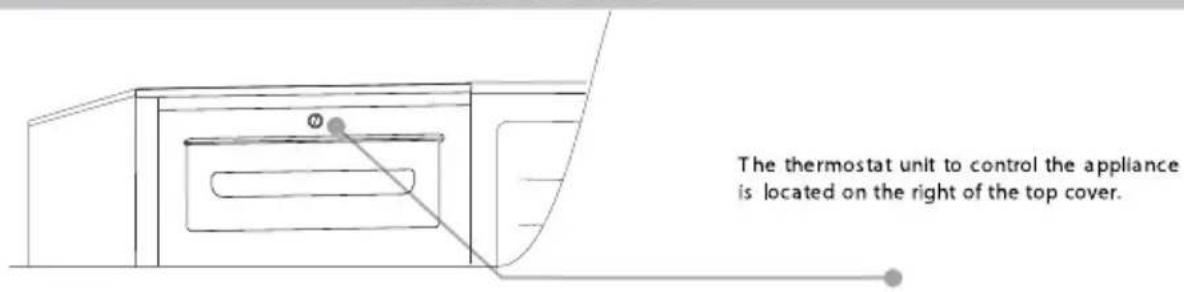
CONTROL PANEL
DEFROSTING and FREEZING
The rating plate states the maximum quantity of foods that can be frozen, (see "gure 2). Freezing is guaranteed with any knob setting.
(Figure 2)
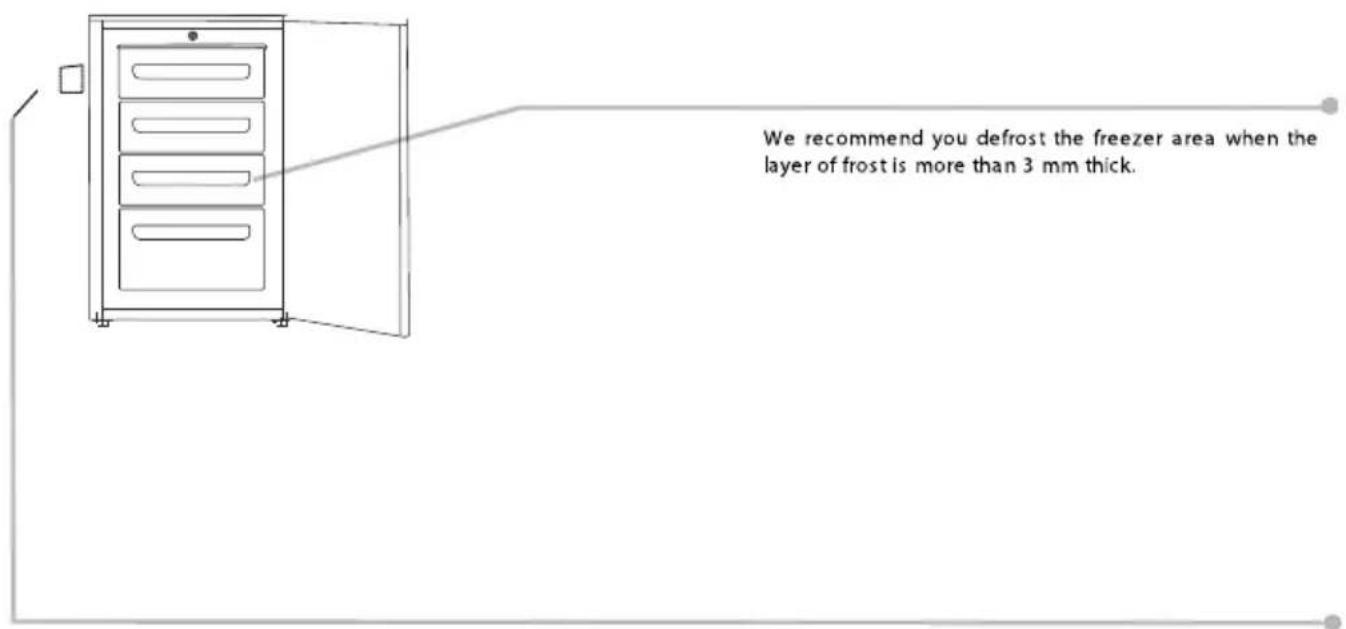
NB. This is the rating plate. If you need to contact our Service Department in the event of faults, remember to give them the information on the plate.
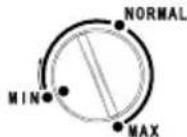
Important: If the room temperature is very warm, the appliance may work continuously and a layer of frost will deposit on the surface of the evaporator tubes and wires. In this case, turn the knob to lower settings (MIN).
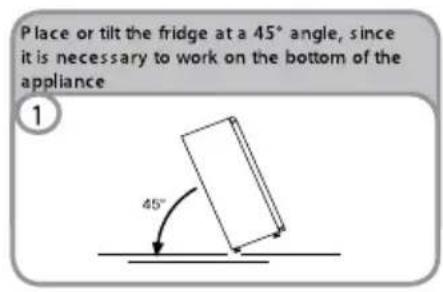
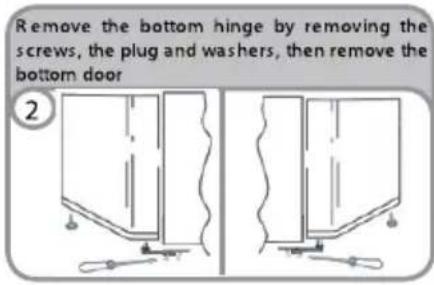
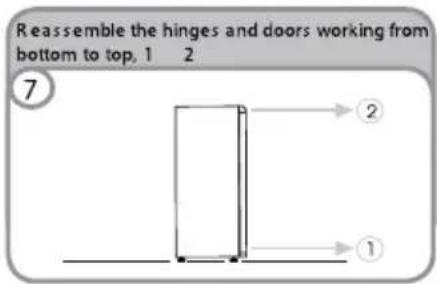
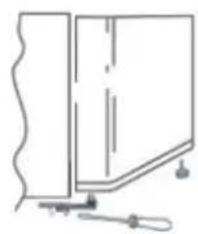
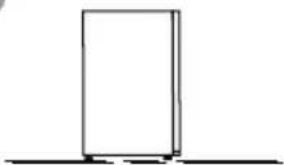
In order to reverse the opening of the doors, follow the indications in relation to the insert and hinge type your product is made up of.
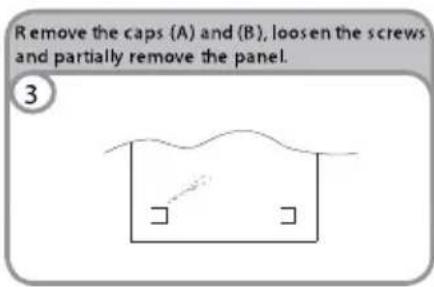
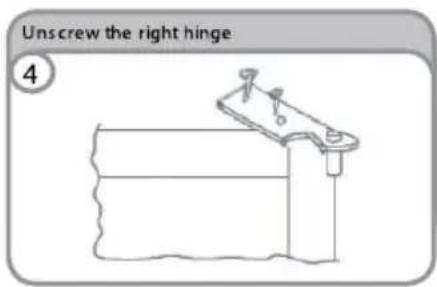
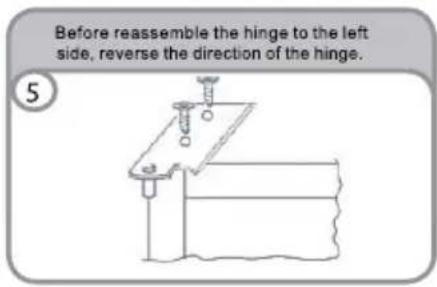
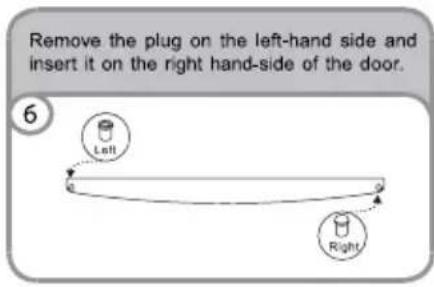
OVEN KÄTISYYDEN KÄÄNTÖ
VEDLIKEHOLD OG RENGJ∅RING:
OMHENGLING AV D∅R:
Installation
Espace requis
Installation
Positionnement
Zmena smeru ot(árania )(erí
Premiestnite záves v4avo
6
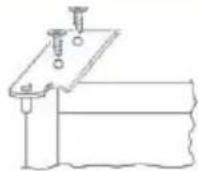
Naložte záves/ a dvierka postupne zdola hore
8
Retire as tampas (A) e (B), desaperte os parafusos e remova parcialmente o painel.
3

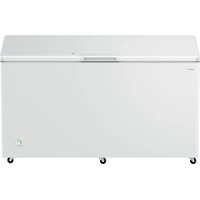

Brand : CANDY
Model : CHTF 544SH
Category : Freezer