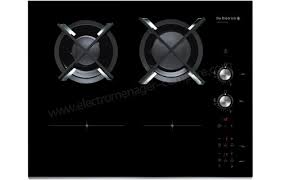
DTI1102X, DTG1102X, DTI1102V - Hob DE DIETRICH - Free user manual and instructions
Find the device manual for free DTI1102X, DTG1102X, DTI1102V DE DIETRICH in PDF.


| Brand | DE DIETRICH |
| Models | DTI1102X, DTG1102X, DTI1102V |
| Product type | Mixed gas and induction hob |
| Table dimensions (W x D) | 600 x 518 mm |
| Box dimensions (W x H x D) | 549 x 59 x 470 mm |
| Weight | 11.4 kg |
| Power supply | 220-240 V ~ 50 Hz, 3100 W (for induction part) |
| Gas connection | Natural gas (G20/G25) or butane/propane (G30/G31) - injectors supplied for adaptation |
| Number of burners | 2 gas burners (large rapid 3.1 kW and semi-rapid 1.5 kW) + 2 induction zones (diam. 210 mm 3100 W and 160 mm 2000 W) |
| Controls | Knobs for gas, touch controls for induction with displays |
| Induction functions | Power adjustment from 1 to 60, rotating timer, elapsed time function, programmable direct access |
| Child safety | Lock/unlock controls, Clean Lock |
| Other safety features | Automatic shutdown, pan detection, electronic safety, empty pot safety |
| Surface material | Ceramic glass |
| Care and cleaning | Cleaning of burners, grids, induction zones and glass surface with appropriate products (non-abrasive, special for ceramic glass) |
| Installation | Built-in into worktop (min. thickness 3 cm), safety distance, gasket supplied |
| Spare parts | Spare injectors for different gases, spark plugs, gaskets |
| General information | Manual available in French, 144 pages |
Frequently Asked Questions - DTI1102X, DTG1102X, DTI1102V DE DIETRICH
User questions about DTI1102X, DTG1102X, DTI1102V DE DIETRICH
0 question about this device. Answer the ones you know or ask your own.
Ask a new question about this device
Download the instructions for your Hob in PDF format for free! Find your manual DTI1102X, DTG1102X, DTI1102V - DE DIETRICH and take your electronic device back in hand. On this page are published all the documents necessary for the use of your device. DTI1102X, DTG1102X, DTI1102V by DE DIETRICH.
USER MANUAL DTI1102X, DTG1102X, DTI1102V DE DIETRICH
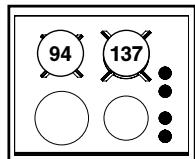
Table 60 cm 2 faux gaz + 2 foyers induction
- RELATIONS CONSOMMATEURS
FR 02
EN 30
ES 58 Dear Customer,
PT 86 When you discover De Dietrich products you experience feelings that only objects of value can arouse.
DE 114
You are immediately attracted as soon as you see them. The quality of the design is illustrated by its timelessness, degree of refinement and elegance, and high standard of finish, resulting in perfect harmony between different appliances.
Then comes the irresistible urge to touch. De Dietrich design makes the most of sturdy and noble materials; priority is given to authenticity.
By combining the most advanced technologies with the best materials, De Dietrich makes products of the highest quality for the benefit of all those who love cooking.
We hope you are extremely satisfied with this new appliance and will be happy to receive your suggestions and to answer your questions. Please contact our customer service department or use our Internet site.
We invite you to register your product at www.de-dietrich.com to take advantage of all the benefits the brand has to offer.
Thanking you for your confidence.
De Dietrich
Find further details on the brand at www.de-dietrich.com Visit La Galerie De Dietrich, 6 rue de la Pétinière in Paris Open Tuesday to Saturday 10 a.m. to 7 p.m.
De Dietrich Customer Service 0892 02 88 04
1/USERNOTICES
·Safety instructions 32
- Respect for the environment 33
- Description of your appliance 34
2 / INSTALLING YOUR APPLIANCE
- Correct positioning 35
- Flush mounting 35
- Tips for flush mounting 36
- Installing your hob above a drawer, a cupboard or an oven 36
- Installing your hob above a dishwasher 38
- Electrical connection 39
Gas connection 40 - Changing the gas supply 42
3 / USING YOUR APPLIANCE
- Description of your hob 45
- Lighting the gas burners 46
Cookware to be used with gas burners 47 - Turning on the induction zones 48
- Child safety function: locking/unlocking 48
- Description of control panel 49
- Switching on 49
- Turning off 49
- Adjusting the power level 49
- Adjusting the rotating timer 49
- Using the ELAPSED TIME touch control 50
·Induction-safe cookware 51
4 / DAILY CARE OF YOUR APPLIANCE
- Maintaining your appliance 53
5 / SPECIAL MESSAGES, DIFFICULTIES
While in use 54
6 / COOKING CHART
·Induction cooking guide 55
Gas cooking guide 56
7/AFEWTIPS 56
8 / AFTER-SALES SERVICE AND CUSTOMER RELATIONS
- Service calls 57

Important
Keep this user guide with your appliance. If the appliance is ever sold or transferred to another person, ensure that the new owner receives this user guide. Please become familiar with these recommendations before installing and using your oven. They were written for your safety and the safety of others.
SAFETY GUIDELINES
- We have designed this cooking hob for use by private individuals in their homes.
- This hob must be installed in accordance with current regulations and used only in a well-ventilated area. Consult this guide before installing and using your appliance.
- Never leave the appliance unattended when in use.
- These cooking hobs are intended exclusively for cooking beverages and foodstuffs and do not contain any asbestos-based materials.
- This appliance is not connected to a combustion by-product disposal system. It must be installed and connected in accordance with current regulations. Special attention should be given to regulations regarding the proper levels of ventilation.
- Do not store CLEANING or FLAMMABLE products (aerosol cans, pressurised containers, papers, cookbooks, etc.) in the area underneath your hob.
- If the hob has been installed over a drawer, we recommend that you avoid using it to store flammable items (plastics, papers, aerosol cans, etc.).
- Your hob must be disconnected from the power supply (electricity and gas) before undertaking any repair work.
- If you plug electrical appliances into a socket close to the hob, ensure that no cable comes into contact with the cooking zones and burners.
-
As a safety measure, remember to shut off the mains gas supply or the butane/propane gas cylinder when not in use.
-
The CE compliance designation is affixed to these hobs.
- Installation should only be undertaken by qualified fitters and technicians.
Before installation, ensure that the conditions of local distribution (gas type and pressure) and the settings of the appliance are compatible. - This appliance is not intended for use by persons (including children) with impaired physical, sensory or mental capacities, or by inexperienced or untrained persons, unless they have received prior instruction or supervision in its operation by a person responsible for their safety.
Children must be supervised to prevent them from playing with the appliance.
If a crack appears in the surface of the glass, disconnect your appliance from the power supply to avoid electric shock. Contact the After-Sales Service department.
- This hob complies with the EN 60335-2-6 standard with regard to the heating of cabinets and the Class 3 standard with regard to installation (according to the EN 30-1-1 standard).
Note - The
-
The required settings for this hob are printed on a sticker inside the instruction guide pouch and on the packaging.
-
So that you can easily locate any reference numbers for your appliance, we recommend that you make a note of them on the "After-Sales Service and Customer Relations" page (this page also explains where this information may be found on your appliance).
-
If a crack appears in the surface of the glass, disconnect your appliance from the power supply to avoid electric shock. Contact the After-Sales Service department.
CARING FOR THE ENVIRONMENT
- This appliance's packing materials are recyclable. Recycle them and help to protect the environment by disposing of them in the council receptacles provided for this purpose.
Your appliance also contains various recyclable materials. It is therefore marked with this logo to indicate that, in European Union countries, used appliances must not be mixed with other waste.
Appliance recycling organised by
your manufacturer will thus be carried out in optimum conditions, in accordance with European directive 2002/96/EC on waste electrical and electronic equipment. Consult your local authority or your retailer to find the drop-off points for used appliances nearest to your home.
We thank you for your help in protecting the environment.
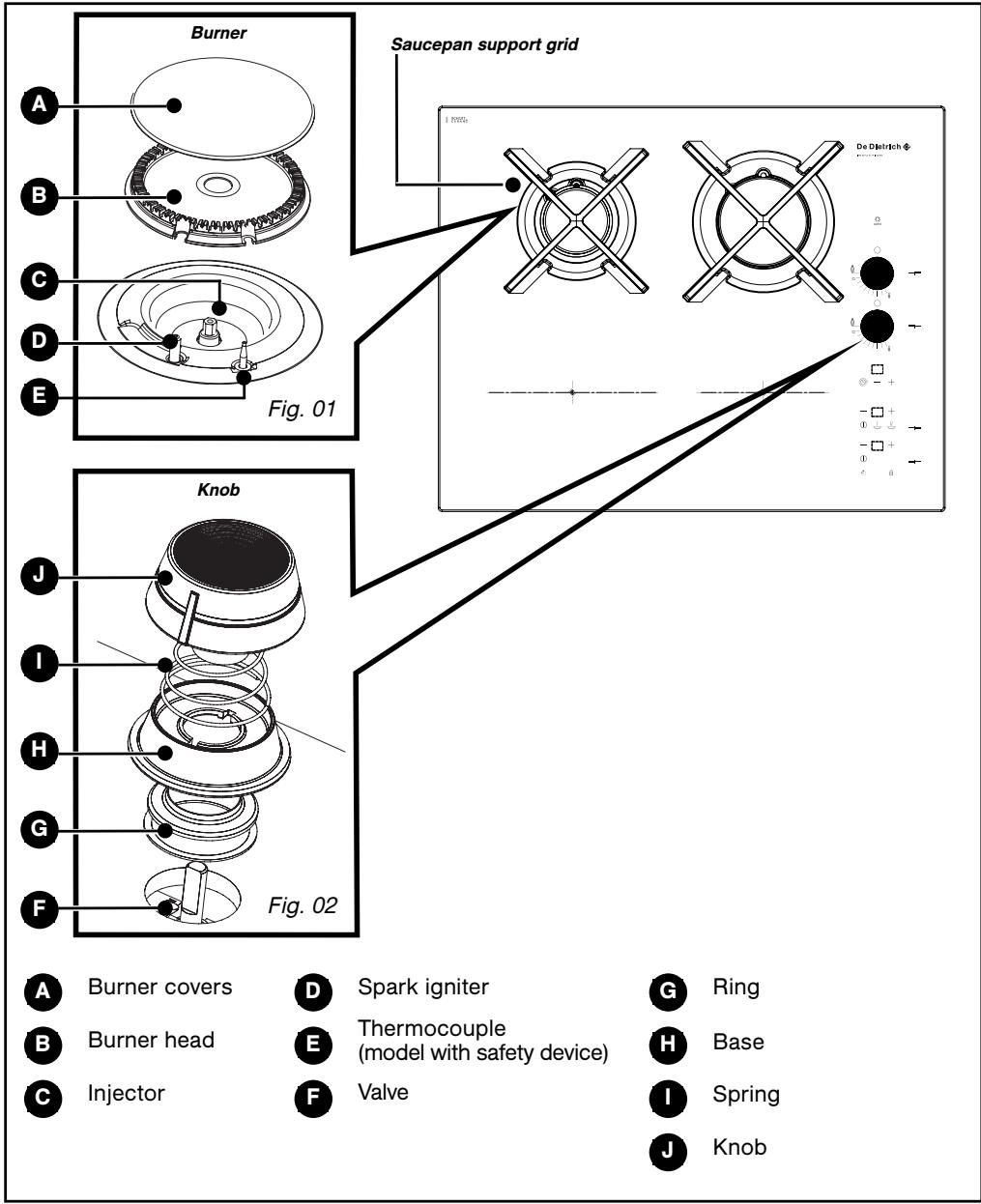
DESCRIPTION OF THE HOB
CORRECT POSITIONING
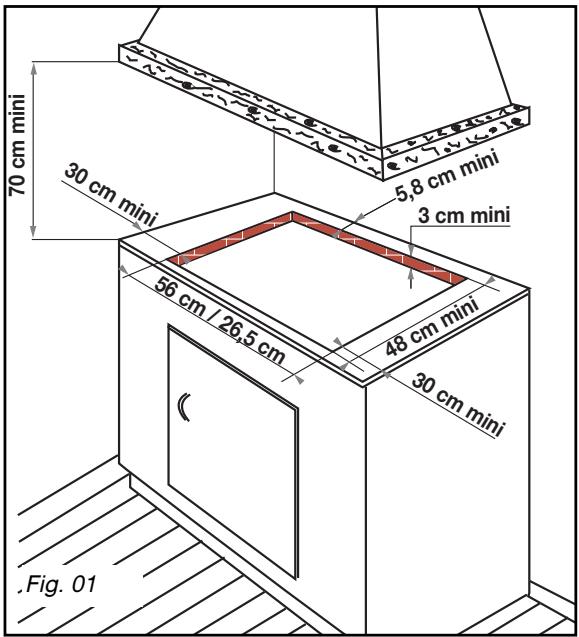
Your appliance should be built into the surface of a support cabinet that is a minimum of three cm thick, made of a material that resists heat or that is covered with such a material.
To ensure that cooking utensils can be handled safely, a minimum of 30~cm either side of the hob should be kept free from any obstructions (cabinets or walls).
If a horizontal divider wall is positioned under the hob, it should be placed between 10 cm and 15 cm away from the top of the work top. In any event, do not store aerosol cans or containers under pressure in any compartment that may exist under the hob (See "Safety Recommendations" chapter).
BEFORE INSTALLING
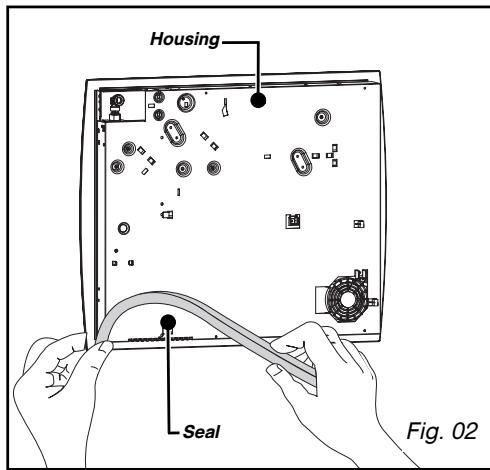
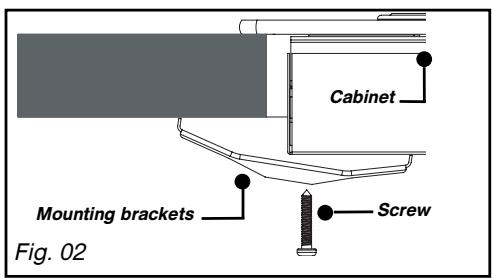
your hob, and to ensure there are no leaks between the unit and the work surface, make sure that you use the sealant strip provided (Fig. 02).
- Remove the pan supports, the burner covers and burner heads, noting their positions.
Turn the hob over and carefully place it on top of the opening in the cabinet so as not to damage the knobs and spark plugs.
- Glue the foam seal, supplied with the appliance, to the outside edge of the frame. This strip will ensure the join between the glass and the work surface is properly sealed.
- Place your hob in the opening of the support unit, carefully centring it in the cut-out.
| APPLIANCE | ||||
| Width | Depth | Thickness | Model | |
| For standard cabinet | 56 cm | 49 cm | depending on cabinet | 60 cm |
| For standard cabinet | 26.5 cm | 49 cm | depending on cabinet | 30 cm |
| Total dimensions above the work top | 71 cm | 52.2 cm | 5 cm | 60 cm |
| 31 cm | 51 cm | 5 cm | 30 cm | |
| Total dimensions below the work top | 55.4 cm | 47 cm | 5.1 cm | 60 cm |
| 26 cm | 47 cm | 5.1 cm | 30 cm | |
- Reposition the pan supports, burner covers and burner heads.
- Connect the hob's power cable to your kitchen's electricity supply (see "Electric connection section).
- Connect your appliance to the gas supply (see "Gas connection" section).
TIPS FOR FLUSH MOUNTING

Fixing holes
-
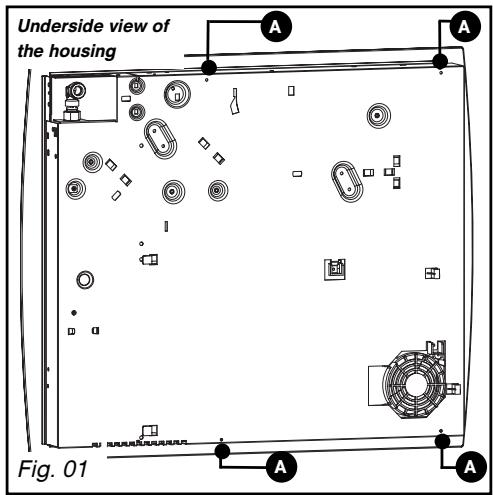
If you wish, you can immobilise the hob using the four mounting brackets delivered with a screw (Fig. 02) to attach them to the four corners of the housing. You must use the holes provided for this purpose, according to the diagram above (Fig. 01).
-
Tighten the screws until the fixing bracket starts to pull out of shape.
Do not use a power screwdriver.
- INSTALLING YOUR HOB ABOVE A DRAWER, A CUPBOARD OR AN OVEN
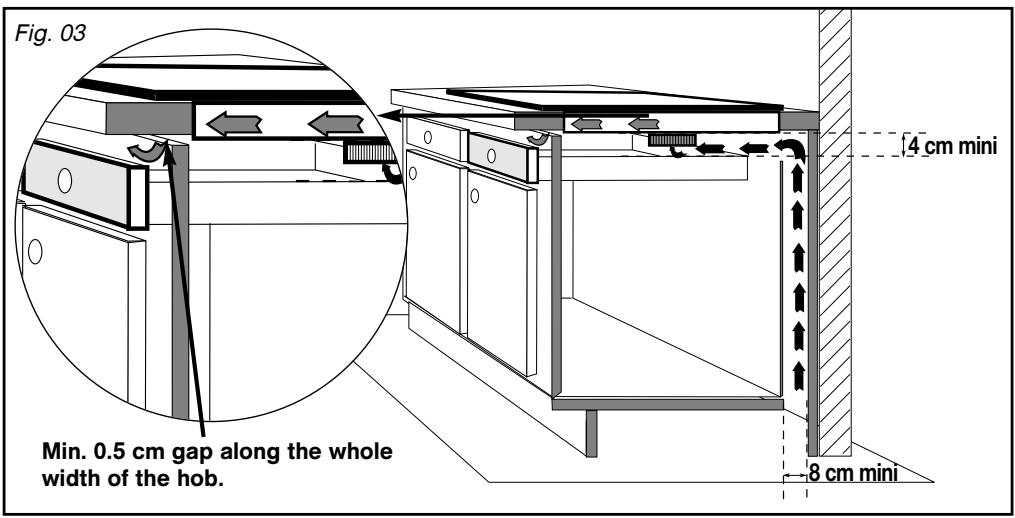
- Above an empty cabinet or a drawer (Fig. 03).
Leave a minimum ventilation space of 8 cm behind the cabinet, and a 0.5 cm gap along the whole width of the cabinet.
- INSTALLING YOUR HOB ABOVE A DRAWER, A CUPBOARD OR AN OVEN (continued)
- Above an oven (Fig. 01)
The oven must be low mounted. At the front there must be a 0.5cm opening around the width of the cabinet and an air inlet of 30~cm^2 minimum at the back of the unit. If the oven is not fitted with a ventilation system with an air outlet at the front, you must use an insulation kit between the oven and the hob (to be ordered from the distributor).
If the oven has a "pyrolysis" function, NEVER use the cooking hob during pyrolysis.
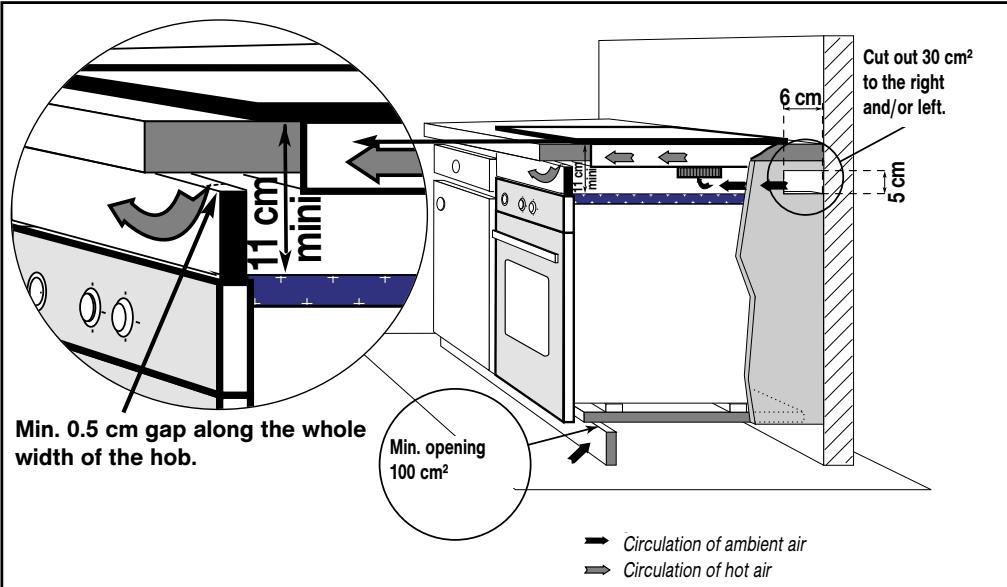
Fig. 01
- INSTALLING YOUR HOB ABOVE A DISHWASHER
The hob may be installed above a dishwasher providing that the following basic precautions are taken:
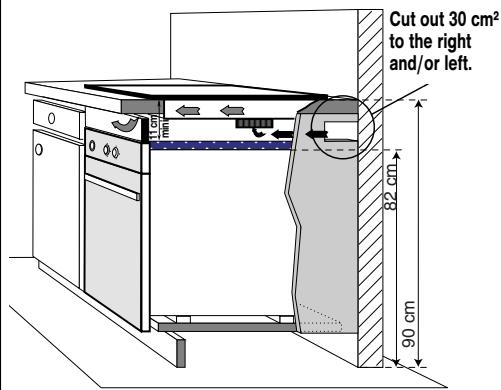
- The height of your work surface must be greater than or equal to 90~cm .
- You must cover the top of your dishwasher with an insulation plate to prevent the particles from its thermal insulation being sucked up by the hob's fans. This plate is available from your After-Sales Service Department.
A minimum amount of fresh air must be let in, so that the hob's fan can adequately cool the electronic components inside.
We suggest cutting out a 30~cm^2 ventilation hole at the rear of one of the sides of the housing (Fig. 01).
Fig. 01
Circulation of ambient air
Circulation of hot air
ELECTRICAL CONNECTION
Your hob is sold with a H05 VV-F type power cable with three conductors (cross section 1.5mm^2 ). Connection to the 220-240V single-phase mains power supply is carried out using the power cable fitted with a 2 pole + earth mains plug or connected to an all-pole cutoff device in compliance with the installation regulations in force.
The electrical plug must remain accessible after installation.
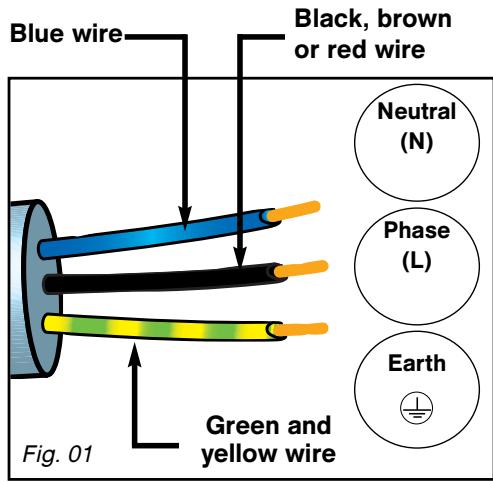
- Connect the wires to the electricity supply, taking note of the colour of each wire (Fig.01).
| CROSS-SECTION OF CABLE TO BE USED | |
| 220-240 V~ - 50 Hz | |
| H05VVF cable | 3 conductors, including 1 one ground wire |
| Cross-section of wires in mm² | 1.5 |
| Fuse | 16 A |

Note
-
The safety wire (green and yellow) is connected to the appliance's earth terminal and must be connected to the mains earth terminal .
-
If the power cable is damaged, it should be replaced by the manufacturer, its after-sales service department or by a similarly qualified person in order to avoid danger.
- If a cooking hob is used that is not connected to the ground or has a faulty ground electrode, the manufacturer's liability shall under no circumstances be incurred in the event of an incident or for any of its consequences.
- GAS CONNECTION
Preliminary remarks
If your hob is installed above an oven or if there is a risk of the gas supply line overheating due to the proximity of other heating elements, a rigid pipe should be used for the gas supply. If a flexible hose or tube is used (as is the case with bottled butane), it must not come into contact with any moving parts or be positioned where it might become snagged.
The hob must be connected to the gas supply in accordance with the regulations in the country of installation.
Gas distributed by pipe, natural gas, propane-air gas or butane-air gas
For your safety, you must choose from the three following connection options:
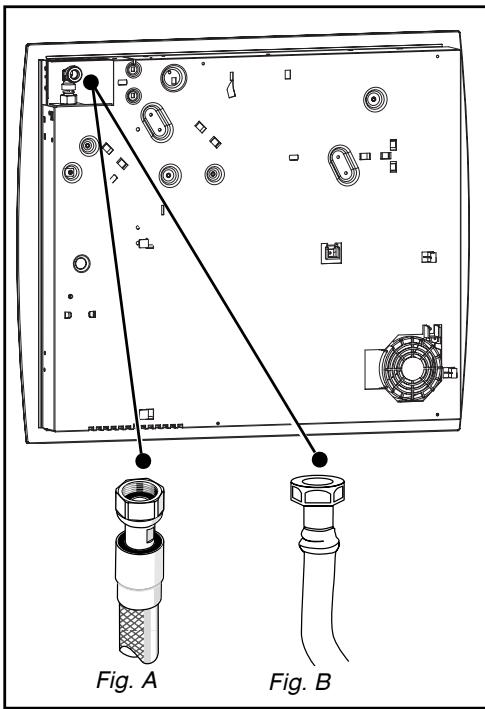
- Use rigid copper pipe with screw-on mechanical connectors (G1/2 gas standard mark). Connect directly to the elbow joint fitted on the appliance.
- Use a flexible metal corrugated hose (stainless steel) with screw-on mechanical connectors (compliant with standard NF D 36-121) with an unlimited guarantee (Fig. A).
- Use a reinforced rubber hose with screw-on mechanical connectors (compliant with standard NF D 36-103) with a 10-year guarantee (Fig. B).

Note
When connecting your hob's gas supply, if you have to change the direction of the elbow fitted on the appliance:
① Change the gasket.
② Screw on the elbow's nut, careful not to exceed a torque of 17 N.m.
Gas supplied by tank or cylinder (butane/propane)
For your safety, you must choose from the three following connection options:
-
Use rigid copper pipe with screw-on mechanical connectors (G1/2 gas standard mark). Connect directly to the elbow joint fitted on the appliance.
-
Use a flexible metal hose (stainless steel) with screw-on mechanical connectors (compliant with the NF D 36-125 standard) with an unlimited guarantee (Fig. 01).
-
Use a reinforced rubber hose with screw-on mechanical connectors (compliant with the NF D 36-112 standard) with a 10-year guarantee (Fig. 02).
In an existing system, a flexible pipe fitted with hose clips (compliant with the XP D 36-
110 standard) with a 5-year guarantee may be used. In this case an adaptor must be used and a sealing washer must be inserted between the adaptor and the elbow joint (Fig. 03).

Tip
You can obtain the adaptor and the sealing from your After-Sales Service.
tment.

Note
Screw on the adaptor with a torque not exceeding 25 N.m.
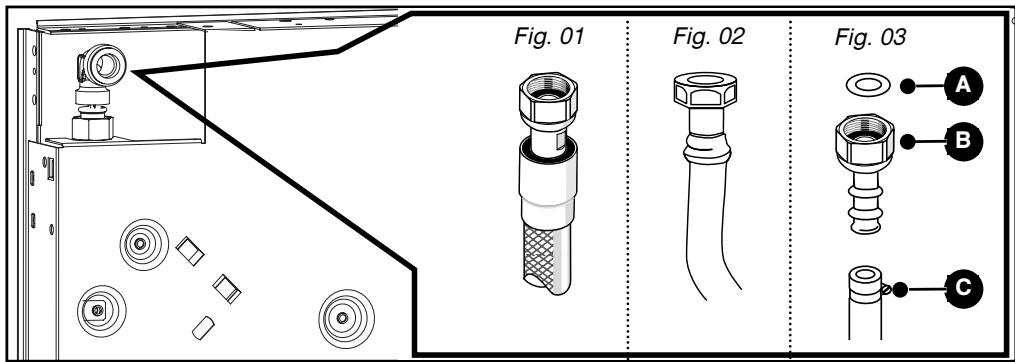
A Sealing washer (not provided)
Adaptor (not provided)
C Hose clip (not provided)

Note
Flexible pipes and hoses with a limited guarantee should be no more than 2 metres long and must be accessible along their entire length. They must be replaced before the end of their guarantee (indicated on the pipe). Whatever type of connection is chosen, after installing the hob use soapy water to ensure that the connection is airtight.
In France, you must use a hose or a pipe bearing the stamp NF Gaz.
GAZ
- CHANGING THE GAS SUPPLY

Note
The default settings on your hob are
for natural gas.
The injectors required for adapting the hob to a butane/propane supply can be found in the same plastic pocket as this guide.

Tip
In France, this hob can also be
adapted to propane/butane-air gas. The adaptation kit is supplied on request by your After-Sales Service Department.
Each time you change the gas supply, you must complete the following steps:
- Adapt the gas connection
- Change the injectors
-
Adjust the hob connections.
-
Adjust the gas connection: refer to the "Gas connection" paragraph.
-
Change the injectors proceeding as follows:
-
Remove the pan supports, heads and covers from all burners.
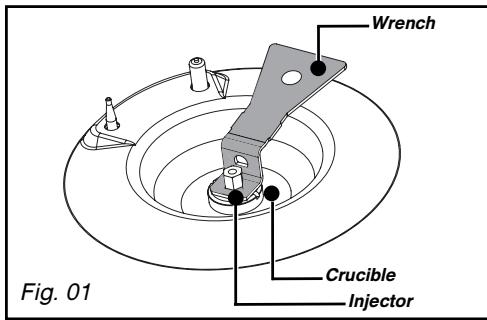
- Using the tool provided, unscrew and remove the injectors located under each crucible (Fig. 01).
- Replace with the new gas injectors; refer to the injector positioning markers and the gas settings table at the end of this chapter. The new injectors should be fitted as follows:
- First, manually tighten as far as possible.
- Then fully engage the key onto the injector.
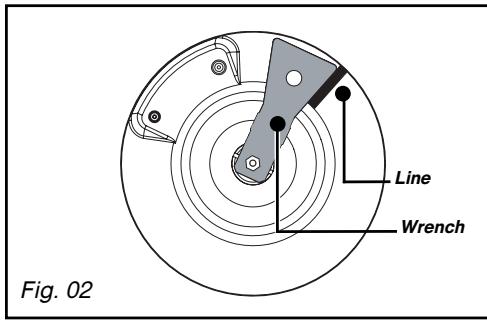
- Draw a line on the burner plate using a pencil, as shown (Fig. 02).
Turn the wrench clockwise until the line appears on the opposite side of the key (Fig. 03).

Note
Exceeding this limit may damage the
product.
-Replace the burner heads, burner covers and pan supports on the hob.

Tip
Each time you change the gas supply, tick the box corresponding to the new gas level on the label found in the plastic bag. See "Gas connection".

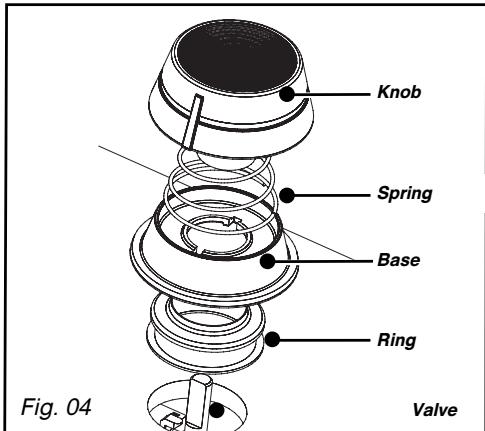
- Adjust the burner power screws: they are located under the knobs (Fig. 04).
- Proceed one tap at a time.
-
Remove the knobs and the gaskets by pulling them up.
-
Switching from natural gas or propane/butane-air gas to propane/butane gas
-
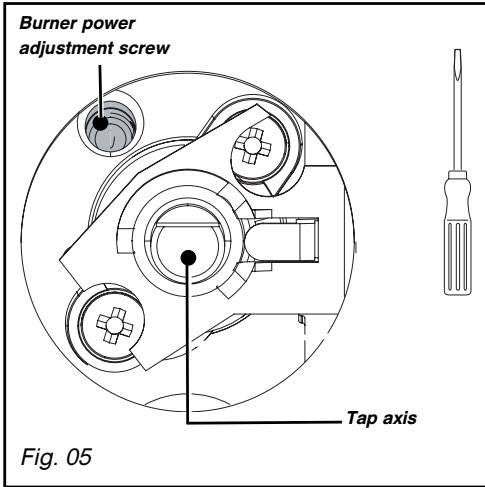
With a small flat-head screwdriver, screw in all the way the brass (yellow) burner power screws (Fig. 05), in a clockwise direction.
-
Replace the gaskets and the knobs, paying careful attention to their direction and ensuring that the knobs are pushed in all the way.
-
Switching from butane/propane to natural gas or butane-air gas/propane-air gas
-
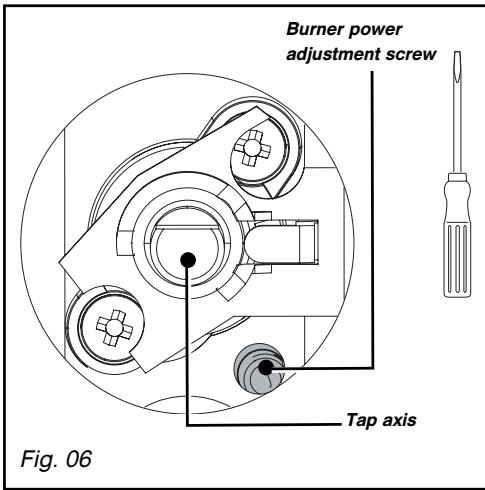
Unscrew the brass (yellow) burner power screws (Fig. 06), using a small flat-head screwdriver, turn twice counter-clockwise.
- Replace the knob.
- Light the burner in maximum heat mode, then turn down to reduced heat mode.
- Remove the knob again, then turn the burner power screw clockwise until it reaches the lowest possible setting that does not extinguish the flame.
- Replace the gasket and knob.
- Make several attempts to shift from the maximum flow rate to the minimum: the flame should not go out; if it does, unscrew the burner power screw so as to obtain good flame retention during these position switches.
- Replace the burner heads, burner covers and pan supports on the hob.
Gas settings
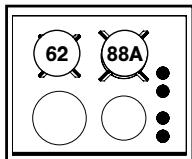
| FR-CH ES-IT PT | FR-CH ES-IT PT | FR-CH ES-IT PT-CY EE - PL LT | FR | |
| Appliance intended to be installed in: FR .....................cat : II2E+3+ CH - ES - IT - PT .......cat : II2H3+ CY - EE - PL .......cat : II2H3B/P LT .....................cat : I2H Hourly rate below: 25 mbar at 15°C under 1013 mbar | Butane G30 28-30 mbar | Propane G31 37mbar | Natural Gas G20 20 mbar | Natural Gas G25 25 mbar |
| HIGH SPEED BURNER Marking on injector Nominal heat release rate (kW) Reduced heat release rate (kW) Hourly rate (g/h) Hourly rate (l/h) | 88A 3.15 0.830 229 | 88A 3.15 225 | 137 3.10 0.870 295 | 137 3.10 0.870 343 |
| SEMI-FAST BURNER Marking on injector Nominal heat release rate (kW) Reduced heat release rate (kW) Hourly rate (g/h) Hourly rate (l/h) | 62 1.50 0.620 109 | 62 1.50 107 | 94 1.50 0.615 143 | 94 1.50 0.615 166 |
| 60 CM HOB WITH 2 GAS BURNERS Total heat release rate (kW) Maximum rate (g/h) (l/h) | 4.60 334 | 4.60 328 | 4.60 438 | 4.60 509 |
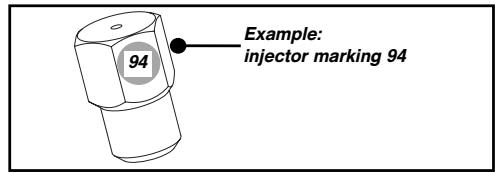
- Identifying the injectors
The table below shows where the injectors can be found on your appliance, according to the type of gas used.
The number is marked on each injector.
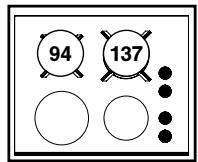
60 cm hob with 2 gas burners and 2 induction zones
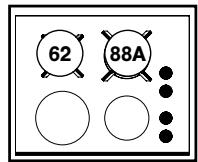
| Operating voltage : | 220-240 V~ - 50 Hz |
| Total absorbed electric power: | |
| - 2 induction zone model | 3100 W (1) |
| Hob dimensions: | |
| - Width | 600 mm |
| - Depth | 518 mm |
| Weight: | 11.4 kg |
| - Dimensions of unit: | |
| - Width | 549 mm |
| - Height | 59 mm |
| - Depth | 470 mm |
(1) The heating powers are only given by way of indication. It will depend on the type and shape of the cookware.
Subject to modification.
DESCRIPTION OF YOUR HOB
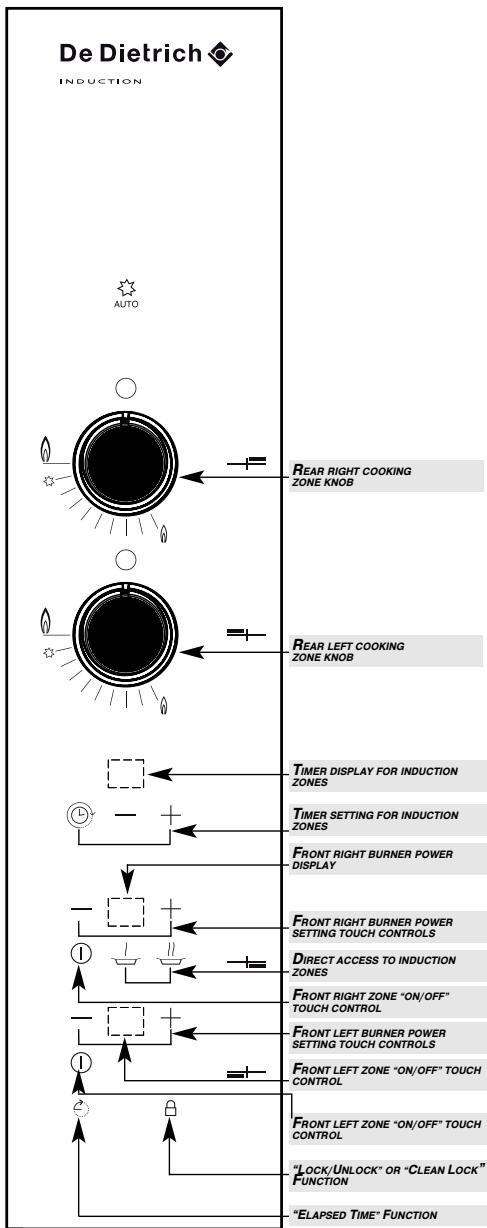
DESCRIPTION OF YOUR CONTROL PANEL
Model with 2 gas burners and 2 induction zones (DTI 1102V*)
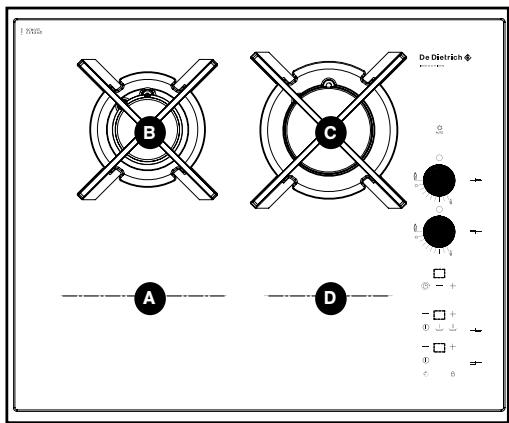
A Induction cooking plate diam. 210 - 3100 W
B Semi-fast burner 1.5kW^
High speed burner 3.1 kW ()
Induction cooking plate diam. 160 - 2000 W
(*) Power obtained with natural gas G20
- LIGHTING THE GAS BURNERS
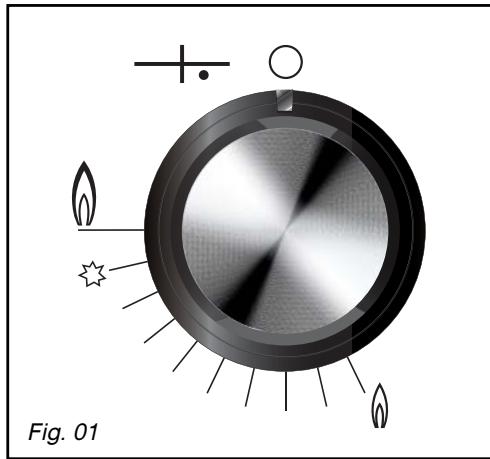
Each burner is supplied by a tap which can be opened by pressing it and turning it in in a counter-clockwise direction.
The "O" point corresponds to closing the tap.
- Select the desired burner by referring to the symbols located near the knobs (e.g. front right burner).
The control knobs on your hob have a built-in ignition system.
- To light a burner, press on the knob and turn it in a counter-clockwise direction to
the maximum setting
- Keep the knob pressed in, which triggers a series of sparks, until the burner lights.
The settings for more moderate flame intensities are between the symbol and
the symbol.

Tip
When a knob becomes difficult to turn, do not force it. Call your installer for an emergency visit.
If a flame is accidentally extinguished, relight it as normal following the instructions above.
COOKWARE SUITABLE FOR GAS BURNERS
- Which burner should you use for your pans?
| Large burner high speed | Small burner semi-fast |
| 18 to 28 cm | 12 to 20 cm |
| Frying, | Sauces, |
| Boiling | Reheating |
- Adjust the ring of flames so that it does not extend beyond the edge of the pan (Fig. 01).
- Do not use cookware with a concave or convex bottom (Fig. 02).
- Do not leave empty cookware over an ignited gas burner.
- Do not use cookware that partially covers the knobs.
- Do not use cookware that goes over the edges of the cooking hob.
- Do not use heat regulators, toasters, griddle pans or stewpots with feet which sit on or touch the glass top.

-
Ensure that all natural ventilation is in or install a mechanical ventilation device (mechanical ventilation hood).
-
Intensive, prolonged use of the appliance may require additional ventilation, for example by opening a window, or more effective ventilation, by increasing the power of any mechanical ventilation device (a minimum air flow of 2m^3/hr per kW of gas power is required).
Example: 60 cm hob - 2 gas burners
total power: 1.5 + 3.1 = 4.6 kW
4.6 kW x 2 = 9.2 m³/hr minimum flow
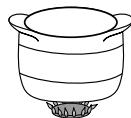
CORRECT
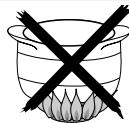
INCORRECT
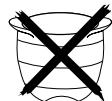
Fig. 01
CONVEX
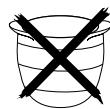
CONCAVE
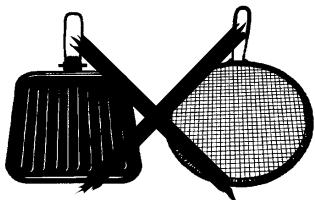
Fig. 02
Fig. 03
TURING ON THE INDUCTION ZONES
To use a function touch control...
Place your finger squarely on the chosen touch control until the display shows the new setting.
How do I switch on and adjust the power?
Your hob has a heating power of 50 W to 2800 W or 3100 W (model with 1 induction zone). 1 is the lowest setting and 15 is the highest.
- Press ① touch control to switch the cooking plate on.
-
You can either:
-
Press to select position 60 (Boiling).
- Press to select position 7 (GENTLE SIMMER).
- Press - or + adjust the power as required.
The last command always has priority.
- Programmable direct access for either cooking zone
- With zone turned off, press and hold touch control then press the + touch control until the desired power level is reached (example: power level 5).
This setting is automatically validated if nothing has been pressed for 2 seconds.

Tip
To adjust the settings faster, keep finger on the touch control for longer.
- CHILD SAFETY:
- LOCKING THE HOB
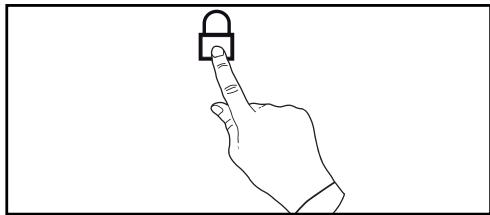
The controls may be locked:
- either when the hob is switched off (cleaning),
- or during use (the hob continues what it was doing and the settings displayed remain active).
However, for safety reasons, the off touch control will override the lock feature and cut off the power supply to the hob.
-Press and hold for 3 to 4 seconds.
The display (luminous dot) appears and disappears after a few seconds. If any of the touch controls are pressed whilst the hob is locked, the 0-7 key symbol will be displayed.
- UNLOCKING
- Press and hold for 3 to 4 seconds.
The display (luminous dot) disappears.
- CLEAN LOCK
This function allows you to temporarily lock your hob while cleaning.
To activate Clean Lock:
- Your hob must be turned off.
- Briefly press touch control.
You will hear a beep and the indicator will start flashing.
- After a preset time, the lock will automatically disengage. A double beep sounds and the indicator goes out.

Tip
Remember to unlock your hob before using it (see "CHILD SAFETY: UNLOCKING").
- THE CONTROLS
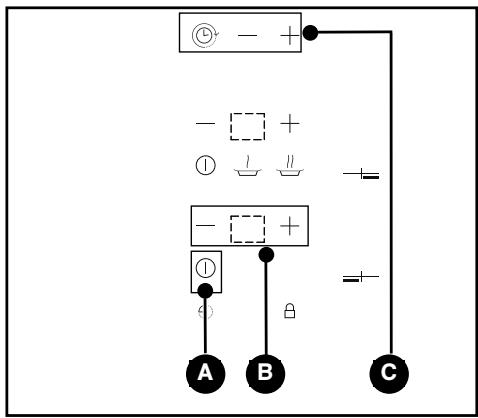
A On/off touch controls
B Power level touch controls
C Timer touch controls
- POWERING ON
Press the ① touch control for the zone you want to use.
A flashing 0 display and a beep indicates that the zone is on. You can now set the power you require.
If you do not select a power level, the cooking zone will automatically switch off.
OFF
Press the ① touch control for the zone used or power - touch control until 0 is displayed.
Press - or + touch control to adjust your power level between 1 and b0 (maximum power = b0 ).
When the appliance is switched on, you can move directly to maximum power by pressing touch control.

Tip
When using one cooking zone at maximum power, the other cooking zone will be automatically limited, as shown on the display.
- SETTING THE TIMER
A timer is available for all the cooking zones but can only be used for one at a time.
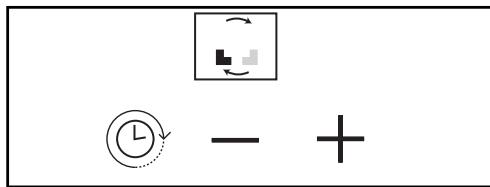
With a series of presses of the touch control you can select the cooking zone to which you want the timer to apply.
The timer can only be used for a plate that is already in use.
To use the timer:
- Switch on the cooking zone and adjust the power level.
- Position the rotating symbol on this cooking zone.
- Adjust the time by pressing - or +. A dot will light up on the display to confirm your operation.
The timer starts counting only if the cooking zone is covered with an item of cookware. When cooking is finished the zone switches off, the timer indicates 0, and you are notified by a beeping sound.
-
Press - or + touch control of the timer to stop the beep.
-
To change the timer settings:
- Press the - or + timer touch controls.
To stop the timer: - Press the ⑥ touch control.
-
To change the cooking plate to which the timer is applied:
-
Stop the current timer.
-
By pressing the touch control successively, assign a new operating cooking zone.
- USING THE "ELAPSED TIME" TOUCH CONTROL
This function displays the time elapsed since the last time the power setting was adjusted for a given cooking zone.
To use this function, press touch control. The time that has passed flashes on the timer display for the chosen burner.
If you want cooking to end in a specific period, press touch control then, in 5 seconds, press + on the timer to increase the cooking time that you wish to set. The time display becomes fixed for 3 seconds, then the remaining cooking time will appear. A beep will confirm your choice. This function can be used with or without the timer.
Note: If a time is displayed on the timer, this time cannot be modified for 5 seconds after pressing . After these 5 seconds have elapsed, you can modify your cooking time.
- INDUCTION-SAFE COOKWARE
- Which cookware is the most suitable?
You probably already have pans that are suitable for an induction hob.
-
Enamelled steel pans with or without non-stick coating: casserole dishes, deep fryers, saucepans or griddle pans.
-
Cast-iron pans:so as not to scratch the vitroceramic surface, avoid sliding pans over the hob surface, or choose a pan with an enamel-coated base.
-
Induction-safe stainless steel pans: most stainless steel pans are suitable for induction cooking (saucepans, casserole dishes, frying pans and deep fryers).
Aluminium pans with special bases: choose pans with flat, thick bottoms, which provide a more even cooking (the heat is distributed better).
- An "INDUCTION CLASS" logo
Only glass, terra cotta, aluminium without a special finish on the bottom, copper and some non-magnetic stainless steels do not work with induction cooking. We recommend that you select cookware with a thick, flat bottom.
When you buy your cookware, make sure that this logo is on the package; it assures you that it is compatible with induction cooking.

To help you choose, a list of utensils is provided in this booklet.
- Residual heat indicator
After intensive use, the cooking area may remain hot for a few minutes.
A H will be displayed. Do not touch the zones concerned during this time.
- What type of pans must I not use?
GLASS, CERAMIC, EARTHENWARE, ALUMINIUM WITHOUT A SPECIAL BASE, COPPER AND CERTAIN NON-MAGNETIC STAINLESS STEEL COOKWARE.
The "cookware" test
Thanks to its cutting edge technology, the hob is able to recognise most types of cookware. Place your pan on a cooking zone, for example at power level 4, if the display is normal, your pan is OK to use; if it flashes, your pan is not suitable for use on an induction hob. Even pans without a completely flat bottom can be used, as long as the bottom isn't too out of shape.
Automatic-stop
Automatic stop is a safety feature of your hob. It is automatically activated if you forget to turn off the cooker:
| Power level used | The cooking zone automatically turns off after: |
| Positioned: between 1.......7 between 8.......11 above 12 | 8 hours 2 hours 1 hour |
AS is shown on the display for the cooking zone concerned, and a beep sounds for about 2 minutes. AS will continue to be displayed until you press one of the touch controls for the cooking zone. A double beep will sound to confirm that a touch control has been pressed.
- INDUCTION-SAFE COOKWARE (continued)
- Precautions for use
-
When using non-stick pans (such as Teflon) and little or no butter or oil, briefly preheat on position 9 or position 10. Never use position 11 or 12, as this may damage your pan.
-
Never heat sealed cans as they may explode (this applies to any type of cooking).
-
It is recommended to avoid placing metal objects such as knives, forks, spoons and lids on the cooking surface, as they may heat up.

Note
Objects not intended for cooking could never be placed on the hob.
When cooking, never use aluminium foil and never place products wrapped in aluminium directly on the hob. The aluminium would melt and would permanently damage your appliance.
"Electronic" safety feature
If the temperature in the electronic circuits becomes too high, the safety feature will automatically reduce the power delivered by the hob.
"Empty saucepan" safety feature
Each heating zone is equipped with a safety device that constantly detects the temperature of the heating zone. Thus there is no risk of overheating caused by empty pans.
Use the correct cooking zone for the pan (depending on the model)
Multiple cookware
This 23 cm cooking zone:
- Automatically adapts to the diameter of the cookware.
- Delivers the optimum power level.
- Ensures excellent distribution of heat.
- Provides an even cooking temperature, so that whether you are cooking large pancakes, a large fish, etc., or large amounts of small foodstuffs, they will be cooked evenly.
012....26cm
0 23 cm
Multiple services
0 18 cm
012....22cm
0 21 cm
018....24cm
Small cookware
0 16 cm
0 10..... 18 cm
Gentle cooking (sauces, creams, etc.). Preparation of small amounts or individual portions.

Note
- If an oven is located below your hob (see "Flush mounting"), the hob's thermal safety devices will make it impossible to use the hob and your oven's pyrolysis function at the same time.
When using the induction hob, do not place objects that can be magnetised on the glass worktop (e.g. credit cards, cassettes, etc.)
Special warning for people with active implants (pacemakers, insulin pumps, etc.): your induction hob generates a magnetic field in the immediate area. We therefore recommend that you contact the manufacturer of your active implant to determine any possible incompatibilities.
MAINTAINING YOUR APPLIANCE
| MAINTENANCE...... | WHAT TO DO | PRODUCTS/ACCESSORIES TO USE |
| The spark igniters and injectors | In the event that the spark plugs become soiled, clean them using a small, hard-bristled brush (non-metallic). The gas injector is located in the depression in the centre of the burner. Be sure not to block the injector during cleaning, as this will affect hob performance. Use a safety pin to unblock the injector if necessary. | Small, hard-bristled brush. Safety pin. |
| The pan supports and gas burners | For tough stains, use a non-abrasive cream, then rinse with clean water. Carefully wipe each part of the burner before using your hob again. | Gentle scouring cream. Kitchen sponge. |
| Induction zones | - Clean with warm water and then wipe. If necessary finish with the scouring side of a sponge then wipe. - For tough stains, use products designed for vitroceramic glass (example opposite). | Kitchen sponge. Special vitroceramic glass products (e.g. Cera-clean). |
| The glass top | - Clean with warm water and then wipe. For tough stains, use special vitroceramic glass cleaning products. | Kitchen sponge. Special vitroceramic glass products (e.g. Cera-clean). |

Note
- Never clean your appliance while it is in use. Set all the electric and gas controls to
zero.
If a crack appears in the surface of the glass, disconnect your appliance from the power supply to avoid electric shock. Contact the After-Sales Service department.

Tips
-
We recommend cleaning the hob fittings by hand rather than in a dishwasher.
-
Do not use an abrasive sponge to clean your hob.
- Do not use a steam cleaner.
DURING OPERATION
| YOU NOTICE THAT: | WHAT YOU SHOULD DO: |
| ·Lighting the burners: No sparks appear when the control knobs are pressed. | ·Check the electrical connection of your appliance. ·Check that the spark ignitors are clean. ·Check that the burners are clean and correctly assembled. ·If the hob is secured to the work top, check that the mounting brackets are not deformed. ·Check that the gaskets under the control knobs are not out of position. |
| ·When you press on a knob, there are sparks on all of the burners simultaneously. | ·This is normal. The ignition function is centralised and controls all burners at the same time. |
| ·There are sparks, but the burner does not light. | ·Check that the gas inlet pipe is not pinched. ·Check that the length of the gas inlet pipe is less than 2 metres. ·Check that the gas inlet is open. ·If you use gas from a cylinder or tank, check that it is not empty. ·If you have just installed the hob or changed the gas cylinder, hold the knob down in the maximum open position until gas arrives in the burners. ·Check that the injector is not clogged; if it is, unclog it with a safety pin. ·Light your burner before placing your saucepan on it. |
| ·Upon ignition, the flames light up and then are extinguished once the knob is released. | ·Press firmly down on the knobs and hold them down for a few seconds after the appearance of flames. ·Check that the parts of the burner are correctly mounted. ·Check that the gaskets under the control knobs are not out of position. ·Avoid strong drafts in the room. ·Light your burner before placing your saucepan on it. |
| ·In reduced heat mode, the burner goes out or the flames remain high. | ·Avoid strong drafts in the room. ·Check that the correct injectors have been fitted for the type of gas being used (see the markings on the injectors in the "Gas settings" section). Reminder: The default settings on the hob are for a mains gas supply (natural gas). ·Check that the burner low power screws are properly set (See the "Changing the Gas Supply" chapter). |
| ·The flames are irregular or uneven. | ·Check the cleanliness of the burners and injectors under the burners, the assembly of the burners, etc. ·Check that there is enough gas in the cylinder. |
| ·The hob produces an odour during the first cooking sessions. | ·Operate each burner for half an hour with a saucepan full of water. |
| ·Your hob emits a slight clicking noise. | ·This is normal. This noise is caused by the distribution of power between the two induction zones. |
| ·The saucepans make a noise during cooking on the induction zones. | ·At high powers, this phenomenon is normal with certain types of saucepan. It presents no risk to the hob. |
- INDUCTION COOKING GUIDE
| PREPARING | FRYING | COOKING/BROWNING | COOKING/SIMMERING | KEEP WARM | |||||||||
| BRANDING TO THE BOIL | RETURNING TO THE BOIL | ||||||||||||
| COOKING ZONE POWER LEVEL | 12 | 11 | 10 | 9 | 8 | 7 | 6 | 5 | 4 | 3 | 2 | 1 | |
| SOUPS | BROTHS | ||||||||||||
| THICK SOUPS | |||||||||||||
| FISH | COURT-BOUILON | ||||||||||||
| FROZEN FISH | |||||||||||||
| SAUCES | THICK, FLOUR-BASED | ||||||||||||
| WITH BUTTER AND EGGS | |||||||||||||
| (BÉARNAISE, HOLLANDAISE) | |||||||||||||
| VEGETABLES | CHICORY, SPINACH | ||||||||||||
| DRY VEGETABLES | |||||||||||||
| BOILED POTATOES | |||||||||||||
| BROWNED POTATOES | |||||||||||||
| SAUTEED POTATOES | |||||||||||||
| DEFROSTING OF VEGETABLES | |||||||||||||
| MEAT | THIN CUTS OF MEAT | ||||||||||||
| PAN-FRIED STEAKS | |||||||||||||
| GRILLED MEAT (CAST IRON GRILL) | |||||||||||||
| FRIED FOODS | FROZEN CHIPS | ||||||||||||
| FRESH CHIPS | |||||||||||||
| OTHER | PRESSURE COOKER | (FROM WHEN IT STARTS TO WHISTLE) | |||||||||||
| COMPOTES | |||||||||||||
| PANCAKES | |||||||||||||
| CUSTARD | |||||||||||||
| MELTED CHOCOLATE | |||||||||||||
| JAMS | |||||||||||||
| MILK | |||||||||||||
| FRIED EGGS | |||||||||||||
| PASTA | |||||||||||||
| JARS OF BABY FOOD (BAIN MARIE) | |||||||||||||
| RAGOUTS | |||||||||||||
| CREOLE RICE | |||||||||||||
| RICE PUDDING | |||||||||||||
- GAS COOKING GUIDE
| PREPARATIONS | TIME | HIGH SPEED | SEMI-FAST | |
| SOUPS | Bouillons Thick soups | 8-10 minutes | X | |
| FISH | Court bouillon Barbecue | 8-10 minutes | X | |
| 8-10 minutes | X | |||
| SAUCES | Hollmandaise, béarnaise Béchamel, aurore | 10 minutes | X X | |
| VEGETABLES | Chicory, spinach Cooked peas Provençal tomatoes Fried potatoes Pasta | 25-30 minutes | X X X X X | |
| 15-20 minutes | ||||
| MEAT | Steak Blanquette, Osso-bucco Sautéed poultry breasts Tournedos | 90 minutes | X X X X | |
| 10-12 minutes | ||||
| 10 minutes | ||||
| FRYING | French fries Fritters | X X | ||
| DESSERTS | Rice pudding Fruit compote Pancakes Chocolate Custard Coffee (small percolator) | 25 minutes | X X | |
| 3-4 minutes | ||||
| 3-4 minutes | ||||
| 10 minutes | X |
7 / A FEW TIPS
| Lighting with gas safety feature | . Keep holding down the control knob for a few seconds after the flame has appeared in order to activate the safety system. . If there is a power failure, a burner can be lit by holding down the control knob and placing a lighted match against the burner. |
| Use of cookware | . The gas and electric hobs should only be used with stable, heat-resistant cookware with flat bottoms. . Use cookware of a suitable size: the diameter of the bottom of the cookware should be equal to or greater than the diameter of the electric cooking zone. |
| General maintenance | . Clean the burners regularly: this is essential to keep them working correctly and to ensure a stable and even flame. . Do not forget the spark igniters. Thoroughly dry the burners and burner covers before replacing them. . Finish cleaning by wiping the glass worktop using a piece of absorbent paper to remove any traces of damp. |
| Tips | . Once water starts to boil, reduce the flame to prevent it boiling over. . Cover your saucepans with lids to save energy. . Try turning off an electric cooking zone a few minutes before the end of the cooking time. |
- SERVICE CALLS
Any repairs to your appliance must be carried out by a qualified professional authorised to work on this brand. When you call, state your appliance's complete reference information (model, type, serial number). This information appears on the manufacturer's nameplate (Fig. 01).
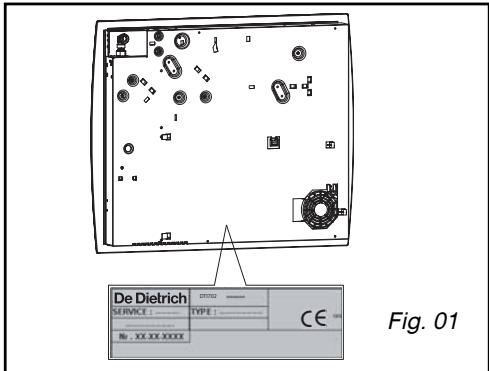
Fig. 01
ORIGINAL PARTS
During any servicing, request the use of genuine replacement parts only.

FagorBrandt SAS, tenant-manager - SAS with share capital of €20,000,000 RCS Nanterre 440 303 196.
-Volte a colocar as grelhas de suporte dos acessórios, as tampas e as cabecas dos bicos.

Conselho
Cada vez que mudar de gás, marque a casa que corresponde ao novo tipo de gás na etiqueta existente na Bolsa.


- - RELATIONS CONSOMMATEURS
- 1/USERNOTICES
- / INSTALLING YOUR APPLIANCE
- / USING YOUR APPLIANCE
- / DAILY CARE OF YOUR APPLIANCE
- / SPECIAL MESSAGES, DIFFICULTIES
- / COOKING CHART
- 7/AFEWTIPS 56
- / AFTER-SALES SERVICE AND CUSTOMER RELATIONS
- Important
- SAFETY GUIDELINES
- Note - The
- CARING FOR THE ENVIRONMENT
- DESCRIPTION OF THE HOB
- CORRECT POSITIONING
- BEFORE INSTALLING
- TIPS FOR FLUSH MOUNTING
- - INSTALLING YOUR HOB ABOVE A DRAWER, A CUPBOARD OR AN OVEN
- - INSTALLING YOUR HOB ABOVE A DRAWER, A CUPBOARD OR AN OVEN (continued)
- - Above an oven (Fig. 01)
- - INSTALLING YOUR HOB ABOVE A DISHWASHER
- ELECTRICAL CONNECTION
- Note
- - GAS CONNECTION
- Preliminary remarks
- Gas distributed by pipe, natural gas, propane-air gas or butane-air gas
- Gas supplied by tank or cylinder (butane/propane)
- - CHANGING THE GAS SUPPLY
- Tip
- product.
- Gas settings
- - Identifying the injectors
- DESCRIPTION OF YOUR HOB
- DESCRIPTION OF YOUR CONTROL PANEL
- Model with 2 gas burners and 2 induction zones (DTI 1102V*)
- - LIGHTING THE GAS BURNERS
- COOKWARE SUITABLE FOR GAS BURNERS
- TURING ON THE INDUCTION ZONES
- How do I switch on and adjust the power?
- - Programmable direct access for either cooking zone
- - CHILD SAFETY:
- - UNLOCKING
- - CLEAN LOCK
- - THE CONTROLS
- - POWERING ON
- OFF
- - SETTING THE TIMER
- To use the timer:
- - USING THE "ELAPSED TIME" TOUCH CONTROL
- - INDUCTION-SAFE COOKWARE
- - Which cookware is the most suitable?
- - An "INDUCTION CLASS" logo
- - Residual heat indicator
- The "cookware" test
- Automatic-stop
- - INDUCTION-SAFE COOKWARE (continued)
- - Precautions for use
- "Electronic" safety feature
- "Empty saucepan" safety feature
- Use the correct cooking zone for the pan (depending on the model)
- Multiple cookware
- This 23 cm cooking zone:
- Multiple services
- Small cookware
- MAINTAINING YOUR APPLIANCE
- Tips
- DURING OPERATION
- - GAS COOKING GUIDE
- / A FEW TIPS
- - SERVICE CALLS
- ORIGINAL PARTS
- Conselho
Brand : DE DIETRICH
Model : DTI1102X, DTG1102X, DTI1102V
Category : Hob