Magic 2 WiFi next - Powerline Adapter DEVOLO - Free user manual and instructions
Find the device manual for free Magic 2 WiFi next DEVOLO in PDF.



User questions about Magic 2 WiFi next DEVOLO
0 question about this device. Answer the ones you know or ask your own.
Ask a new question about this device
Download the instructions for your Powerline Adapter in PDF format for free! Find your manual Magic 2 WiFi next - DEVOLO and take your electronic device back in hand. On this page are published all the documents necessary for the use of your device. Magic 2 WiFi next by DEVOLO.
USER MANUAL Magic 2 WiFi next DEVOLO
© 2022 devolo AG Aachen (Germany)
B12.11 (also called "fast Roaming") accelerates the login of a WiFi device to this WFI access point. Requirement: The device was already connected to another WiFi access point with B12.11 enabled, identical network name (SSID), and identical encryption. Unfortunately, B12.11 is not compatible with every WiFi device and may cause interoperability issues with WFA3 encryption. If you experience problems with any of your devices, please disable this option.
□20211
WiFi Clone
Senden (Mbit/s): Datensenderate
Access Point Steering 13, 41
Airtime Fairness 13, 41
Dynamic Frequency Selection 12
E
Entsorgung 57
© 2022 devolo AG Aachen (Germany)
The reproduction and distribution of the documentation and software supplied with this product and the use of its contents is subject to written authorization from devolo. We reserve the right to make any alterations that arise as the result of technical development.
Trademarks
Android™ is a registered trademark of Open Handset Alliance.
Linux is a registered trademark of Linus Torvalds.
Ubuntu *is a registered trademark of Canonical Ltd.
Mac* and Mac OS X* are registered trademarks of Apple Computer, Inc.
iPhone*,iPad* and iPod* are registered trademarks of Apple Computer, Inc.
Windows and Microsoft are registered trademarks of Microsoft, Corp.
Wi-Fi, Wi-Fi Protected AccessTM, WPA™, WPA2™ and Wi-Fi Protected SetupTM are registered trademarks of the Wi-Fi Alliance*.
devolo and the devolo logo are registered trademarks of devolo AG.
The firmware package from devolo contains files which are covered by different licenses, in particular under devolo proprietary license and under open source license (GNU General Public License, GNU Lesser General Public License or FreeBSD License). The source code which is available for Open Source distribution can be requested in writing from gpl@devolo.de.
All other names mentioned may be trademarks or registered trademarks of their respective owners. Subject to change without notice, No liability for technical errors or omissions.
This product has been manufactured and is sold under a licence granted to devolo AG by Vectis One Ltd for patents concerning WiFi-technology and owned by Wi-Fi One, LLC ("Licence"). The Licence is limited exclusively to finished electronics for end-use and does not extend rights to any third party device or process used or sold in combination with this product.
devolo AG
Charlottenburger Allee 67
52068 Aachen
Germany
www.devolo.global
Version 1.1_8/22
Contents
1 Preface 7
1.1 About this manual 7
1.2 Safety 7
1.2.1 About the flyer "Safety & service" 7
1.2.2 Description of the icons 8
1.2.3 Intended use 9
1.2.4 CE conformity 9
1.2.5 UKCA conformity 10
1.3 devolo on the Internet 10
2 Introduction 11
2.1 devolo Magic 11
2.2 Introduction to the devolo Magic adapter 12
2.3 Pairing - Establishing a PLC connection 13
2.3.1 Reading the PLC indicator light 15
2.3.2 Wi-Fi button 18
2.3.3 Reading the Wi-Fi indicator light 19
2.3.4 Reset button 21
2.3.5 Network jacks 21
2.3.6 Wi-Fi antennas 21
2.3.7 Integrated electrical socket 21
3 Initial use 22
3.1 Package contents 22
3.2 System requirements 22
3.3 Important notes 23
3.4 Connecting the devolo Magic 2 WiFi next 23
3.4.1 Starter Kit – Automatic set-up for a new devolo Magic PLC network 24
3.4.2 Addition - Expanding an existing PLC network by adding another devolo Magic 2 WiFi next 24
3.4.3 Changing the network password 25
3.4.4 Establish a Wi-Fi connection with the devolo Magic 2 WiFi next 25
3.5 Installation of devolo software 26
3.6 Removing the devolo Magic adapter from a PLC network 27
4 Network configuration 28
4.1 Calling up the built-in web interface 28
4.2 General information about the menu 28
4.3 Overview 31
4.3.1 System 31
4.3.2 Wi-Fi 31
4.3.3 Powerline 31
4.3.4 LAN 32
4.4 Wi-Fi 32
4.4.1 Status 32
4.4.2 Wi-Fi networks 33
4.4.3 Guest network 35
4.4.4 Mesh 36
4.4.5 Schedule control 38
4.4.6 Parental control 39
4.4.7 Wi-Fi Protected Setup (WPS) 40
4.4.8 Neighbour networks 41
4.5 Powerline 42
4.6 LAN 45
4.6.1 Status 45
4.6.2 IPv4/IPv6 configuration 45
System 46
4.7.1 Status 46
4.7.2 Management 47
4.7.3 Configuration 49
4.7.4 Firmware 49
4.7.5 Config Sync 51
5 Appendix 52
5.1 Bandwidth optimization 52
5.2 Warranty conditions 52
1 Preface
Welcome to the fantastic world of devolo Magic 2 WiFi next!
In no time at all, devolo Magic transforms your house into a multimedia home that is ready for the future today. devolo Magic gives you noticeably higher speeds, more stability and greater range, providing the perfect Internet experience as a result!
1.1 About this manual
Chapter 1: Preface - covers safety-related product information as well as general information on this document.
Chapter 2: Introduction - gives a brief introduction of "devolo Magic" and a presentation of the devolo Magic 2 WiFi next adapter
Chapter 3: Installation - shows how to successfully start using the adapter in your network and describes the devolo software as well as the reset of a devolo Magic adapter.
Chapter 4: Configuration - describes in detail the setting options of the built-in devolo Magic 2 WiFi next configuration interface.
1.2 Safety
It is essential to have read and understood all safety and operating instructions before the device is used for the first time; keep this manual and/or installation guide as well as the flyer "Safety & service" safe for future reference.
1.2.1 About the flyer "Safety & service"
The flyer "Safety & service" provides cross-product and conformity-relevant safety information e.g. general safety notes, data of frequency range and transmitting power as well as channels and carrier frequencies details of Wi-Fi products and disposal information.

Printouts of the flyer and the installation guide are included with each product; this product manual is provided digitally.
Furthermore, these and other relevant product descriptions are available to you in the download area of the respective product page on the Internet at www.devolo.global.
1.2.2Description of the icons
This section contains a brief description of the icons used in this manual and/or on the rating plate, the device connector.
| Icon Description | |
| Very important safety symbol that warns you of hazardous electrical voltage which if not avoided can result in serious injury or death. | |
| An important safety symbol that warns you of a potentially dangerous situation involving a tripping hazard which can result in injuries. | |
| An important note that should be observed which can potentially lead to material damages. | |
| The device may only be used in-doors in dry conditions. | |
| Icon Description | |
| Only applicable for devices with Wi-Fi in the 5 GHz band:Wi-Fi connections in the 5 GHz band from 5.15 to 5.35 GHz are intended exclusively for operation inside closed rooms. | |
| The device is a Class I product. All electrically conductive (made of metal) housing parts where a voltage can be applied during operation or maintenance in the event of an error must be continuously connected to the earth wire. | |
| CE | The manufacturer/distributing company uses the CE marking to declare that the product meets all applicable European regulations and has been subjected to the prescribed conformity assessment procedures. |
| UKCA | The manufacturer/distributing company uses the UKCA marking to declare that the product meets all applicable regulations of Great Britain and has been subjected to the prescribed conformity assessment procedures. |
| i | Additional information, background material and configuration tips for your device. |
| ✓ | Indicates a completed course of action |
1.2.3 Intended use
Use the devolo devices as described to prevent damage and injury.
devolo Magic 2 WiFi next
The device is a communication device only designed for indoors and is equipped with a PLC - (PowerLine Communication) and a Wi-Fi module. The devices communicate with each other by means of, PLC and Wi-Fi.
The device enable transmission of the existing Internet/data signal over the in-house wiring and via Wi-Fi and integrate Internet-compatible terminal devices into the home network.
devolo Magic 2 LAN
The device is a communication device only designed for indoors and is equipped with a PLC (PowerLine Communication) module. The devices communicate with each other by means of PLC.
The device enable transmission of the existing Internet/data signal over the in-house wiring and integrate Internet-compatible terminal devices into the home network.
The delivered products are intended for operation in the EU, EFTA and UK.
1.2.4CE conformity
A printout of the simplified CE declaration of this product is separately included. The complete CE declaration can be found under www.devolo.global/support/ce.
1.2.5UKCA conformity

A printout of the simplified UKCA declaration of this product is separately included. The complete UKCA declaration can be found at www.devolo.global/support/UKCA.
1.3 devolo on the Internet
For detailed information on our products, visit www.devolo.global.
There you will find product descriptions and documentation, and also updates of devolo software and your device's firmware.
If you have any further ideas or suggestions related to our products, please don't hesitate to contact us at support@devolo.global!
2 Introduction
2.1 devolo Magic
Home is where devolo Magic is – in no time at all, devolo Magic transforms your house or flat into a multimedia home of the future with noticeably higher speed, more stability and greater range, providing the perfect Internet experience as a result!
Be inspired by products that are astonishingly easy to install, with impressive, innovative technology and unbeatable performance.
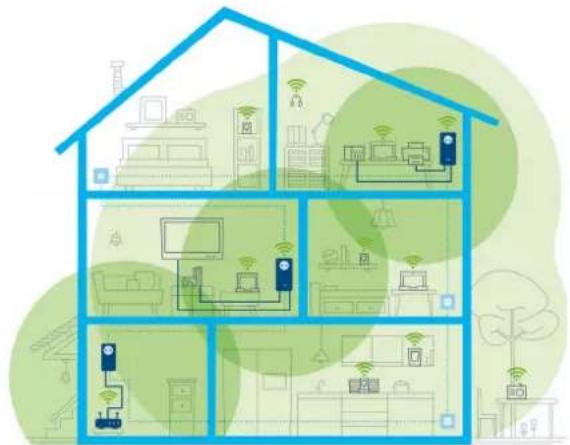
Fig. 1 devolo Magic throughout the home
Be ready for the technology of the future today devolo Magic embodies the new generation of the tried-and-tested Powerline technology (PLC) based on the cutting-edge G.hn architecture. G.hn was developed by the International Telecommunication Union (ITU) with ongoing development provided primarily by the HomeGrid Forum industry association. devolo Magic products are certified according to HomeGrid standards and are compatible with other HomeGrid-certified products.
Like the HomePlug AV technology used in established devolo dLAN devices, devolo Magic uses the household mains supply for data transmission and secures ideal performance and stability in locations where network cables are not viable or desired and/or the Wi-Fi frequently falls short due to ceilings and walls.

To set up a devolo Magic network, you need at least two devolo Magic devices. For technical reasons, devices from the devolo Magic series are not compatible with dLAN devices.
2.2 Introduction to the devolo Magic adapter
Unpack- plug in - get started and be prepared for the new generation of the tried-and-tested Powerline technology and innovative mesh Wi-Fi with swiftness and stability:
Powerline
At speeds up to 2400 Mbps
Over distances up to 500 metres
Security - with 128-bit AES Powerline encryption
Mesh Wi-Fi
At speeds up to 1200 Mbps
Four antennas cover the 2.4 and 5 GHz Wi-Fi frequencies at the same time and use the full extent of the entire 5 GHz frequency band (Dynamic Frequency Selection, DFS).
Multi-user MIMO technology The devolo Magic 2 WiFi next supplies your smartphone, tablet and other devices with data streams simultaneously - at the speed you require and at an efficient transfer rate.
Airtime Fairness - Quicker Wi-Fi devices take priority in the network.
Band steering - Use of the optimum frequency band (2.4 and 5 GHz frequency band)
Roaming - Quickly and seamlessly connect to the strongest Wi-Fi access point
Security - with WPA2/WPA3 for wireless ac ("IEEE 802.11a/b/g/n/ac" Wi-Fi high-speed standards)
- Convenient additional functions such as parental controls, guest Wi-Fi, time control and Config Sync are integrated in the devolo Magic 2 WiFi.
Efficiency - The integrated PowerSave mode reduces energy consumption automatically at low data traffic.
The 2 gigabit network connectors on the devolo Magic 2 WiFi next let you of stationary network devices—such as a game console, TV or media receiver—to your Internet access point over the Powerline network (e.g. Internet router).
It's integrated electrical socket can be used like a normal wall socket to supply power to an additional network device or a power strip.
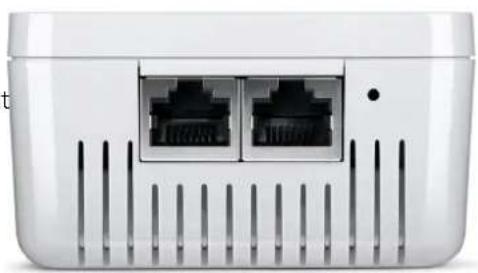
Fig. 3 Network connections
The devolo Magic 2 WiFi next features
An integrated electrical socket,
A PLC button with LED status display,
A Wi-Fi button with LED status display,
Four internal Wi-Fi antennas,
Two gigabit network connectors
A reset button (next to the network connectors).

The LED status displays can be disabled. You can find more information about this in Chapter 4 Network configuration or online at www.devolo.global/devolo-cockpit.
2.3 Pairing - Establishing a PLC connection
devolo Magic adapters that are in the factory default condition, i.e. have been recently purchased or successfully reset (see Chapter 3.6 Removing the devolo Magic adapter from a PLC network), automatically start to attempt to pair (establish a PLC connection) with anotherdevolo Magic adapter when reconnected to the mains supply.
Starting up a new devolo Magic PLC network
After plugging the devolo Magic adapters into available power sockets, a new devolo Magic network is established automatically within 3 minutes.
Expanding an existing devolo Magic PLC network by adding another devolo Magic adapter
In order to use a new devolo Magic 2 WiFi in your devolo Magic- network, first you have to connect it to your existing devolo Magic adapters devices as a network. This is accomplished by using a shared PLC password, which can be assigned in various ways:
Using devolo Cockpit or the devolo Home Network App (see Chapter 3.5 Installation of devolo software)
Using the web interface (see Chapter 4.5 Powerline)
Using the PLC button as described below.
To do so, plug the new devolo Magic adapter into an available power socket and, for approximately 1 second, press the PLC button on a devolo Magic adapter in your existing devolo Magic network.
The new devolo Magic adapter pairs automatically so no button needs to be pressed. The LED of this adapter now also flashes white.
After a short time, the flashing LED becomes a steady white light. The devolo Magic adapter has been successfully integrated into your existing devolo Magic network.
For each pairing operation, only one additional devolo Magic adapter can be added at a time.
You can find detailed information about installing devolo Magic adapters in Chapter
3.4 Connecting the devolo Magic 2 WiFi next.
2.3.1 Reading the PLC indicator light
The integrated PLC indicator light (LED) shows the status for the devolo Magic 2 WiFi by illuminating and/or flashing:
| LED Flashing behaviour | Meaning LED status display | (web interface*) | ||
| 1 Red LED Lights up for up to 2 sec. | Start-up process Cannot be disabled | |||
| 2 Red LED Flashes at intervals of 0.5 sec. (on/off) | Status 1: The reset of the devolo Magic adapter was successful. The PLC/reset button has been pressed and held for 10 seconds.Status 2: The devolo Magic adapter (once again) has the factory default settings. Since the last reset, no pairing with another devolo Magic adapter has taken place Connect the adapter with another devolo Magic adapter to create a full-fledged devolo Magic network as described in Chapter 2.3 Pairing - Establishing a PLC connection. | Cannot be disabled | ||
| LED Flashing behaviour | Meaning LED status display | (web interface*) | ||
| 3 Red LED Lights up steady | Status 1: The other network nodes are in standby mode and cannot currently be accessed over the mains supply. The PLC LEDs of the other devolo Magic adapters flash white only for a short time.Status 2: The connection to the other network nodes has been interrupted. There may be electromagnetic or radio frequency interference on the power line. In this case, put the devolo Magic adapters closer to each other or try to shut off the source of interference. | Can be disabled | ||
| 4 | R e white LED | dFlashes atnin- tervals of 0.1 sec. red/2 sec. white | dData transmission rate not in optimum range ** | Can be disabled |
17 Introduction
| LED Flashing behaviour | Meaning LED status display | (web interface*) | ||
| 5 | W h LED | Status 1: e Flashes at intervals of 0.5 sec. (on/off) Status 2: Flashes at intervals of 1 sec. (on/off) | Status 1: This devolo Magic adapter is in pairing mode and the system is searching for new devolo Magic adapters.Status 2: Someone has triggered the "Identify device" function on the web interface or in the devolo Home Network App. This function identifies the devolo Magic adapter being sought. | Cannot be disabled |
| 6 | W h LED | Lights upsteady | The devolo Magic connection does not have any issues and the devolo Magic adapter is ready to operate. | Can be disabled |
| 7 | W h LED | Flashes at intervals of 0.1 sec. on / 5 sec. off | The devolo Magic adapter is in standby mode.*** | Can be disabled |
| 8 | R e white LED | dFlashes atnin- tervals of 0.5 sec. red/ 0.5 sec. white | dThe devolo Magic adapter is carrying out a firmware update. | Cannot be disabled |
- Information about the web interface can be found in Chapter 4 Network configuration.
** Information on improving the transmission rate can be found in Chapter 5.1 Bandwidth optimization.
***A devolo Magic adapter switches to standby mode after approximately 10 minutes if no active network device (e.g. computer) is connected to the network interface and the Wi-Fi is switched off. In this mode, the devolo Magic adapter cannot be accessed over the electrical wiring. As soon as the network device (e.g. computer) connected to the network interface is switched on again, your devolo Magic adapter can also be accessed over the electrical wiring again.

Check whether the adapter is connected to the mains supply correctly and whether the pairing operation has been carried out successfully. For more information about this, refer to 3.4 Connecting the devolo Magic 2 WiFi next.
2.3.2Wi-Fi button

This button controls the following functions:
Wi-Fi on/off
In the factory default settings, the Wi-Fi setting is already enabled and the Wi-Fi encryption is set to WPA2. The default Wi-Fi key for the initial installation of the devolo Magic 2 WiFi next is the device's Wi-Fi key.
You can find the device's unique key on the label on the rear side of the housing. Before the networking procedure, write down the WiFi key of the devolo Magic 2 WiFi next.

Fig. 4: WiFi key on the country-specific type plate
In order to connect the devolo Magic 2 WiFi next with your laptop, tablet or smartphone later via WiFi, enter the noted WiFi key as the network security key.
In order to switch Wi-Fi off, press and hold the Wi-Fi button longer than 3 seconds.
In order to switch Wi-Fi back on, briefly tap the Wi-Fi button.
Connecting Wi-Fi devices via WPS
If the device is still on factory defaults, tap the Wi-Fi button in order to activate WPS.
- If the Wi-Fi connection was switched off and you would like to activate WPS, press the Wi-Fi button twice; once to switch Wi-Fi on, and again to activate WPS.
- If the Wi-Fi connection is switched on and you want to copy these settings to another devolo Magic adapter, continue reading with the Chapter 4.7.5 Config Sync.

WPS is one of the encryption standards developed by the Wi-Fi Alliance. The objective of WPS is to make it easier to add devices to an existing network. For more detailed information, refer to Chapter 4.4.7 Wi-Fi Protected Setup (WPS).
2.3.3Reading the Wi-Fi indicator light
The integrated Wi-Fi indicator light (LED) shows the status of the devolo Magic 2 WiFi by illuminating and/or flashing
| Wi-Fi-LED Flashing behavior Measuring LED status display (web interface*) | |||
| 1 W White LED Flashes at intervals of 0,1 sec. on / 5 sec. off | The devolo Magic adapter is in WPS mode to integrate Wi-Fi-enabled devices via WPS. | Cannot be disabled | |
| 2 W White LED Lights up steady Wi-Fi is swtched on and active. Can be disabled | |||
| Wi-Fi-LED Flashing behavior Meaning | led status display | (web interface*) | |
| 3 Wite LED Off Status 1: | The Wi-Fi LED is switched off and the devolo magic adapter is still ready for use.Status 2:The Wi-Fi function ist disabled. | Can be disabled | |
- Information about the web interface can be found in Chapter 4 Network configuration.
2.3.4Reset button
The reset button (next to the network jacks) has two different functions:
Restart
The device restarts if you press the Reset button for less than 10 seconds.
Factory default settings
To remove a devolo Magic adapter from your devolo Magic network and successfully restore its entire configuration to the factory defaults, press and hold the reset button longer than 10 seconds.
Keep in mind that all settings that have already been made will be lost!
Wait until the LED flashes white and then disconnect the devolo Magic adapter from the mains supply.

The devolo Magic adapter has been successfully removed from your existing devolo Magic network.
2.3.5 Network jacks
You can use the network jacks on the devolo Magic adapter to connect it to stationary devices such as computers, game consoles, etc. using a standard network cable.
2.3.6Wi-Fi antennas
The internal Wi-Fi antennas are for connecting to other network devices wirelessly.
2.3.7 Integrated electrical socket
Always use the integrated electrical socket on the devolo Magic adapter when connecting other consumers to the mains supply. In particular, electronic devices with mains adapter can negatively affect PLC performance.
The integrated mains filter in the devolo Magic adapter filters any such external interference and reduces any impairment of PLC performance.
3 Initial use
This chapter tells you everything you need to know to set up and use your devolo Magic 2 WiFi next. We describe how to connect the device and briefly describe the devolo software that comes with it. For more information, please visit our website www.devolo.global.
3.1 Package contents
Please ensure that the delivery is complete before beginning with the installation of your devolo Magic 2 WiFi next:
Single Kit:
1 devolo Magic 2 WiFi next
Printed installation guide
Printed flyer "Safety & service"
Printed simplified UKCA/CE declaration
Online manual
or
Starter Kit:
1 devolo Magic 2 WiFi next
1 devolo Magic 2 LAN
1 network cable
Printed installation guide
Printed flyer "Safety & service"
Printed simplified UKCA/CE declaration
Online manual
or
Multiroom Kit:
2 devolo Magic 2 WiFi next
1 devolo Magic 2 LAN
1 network cable
Printed installation guide
Printed flyer "Safety & service"
Printed simplified UKCA/CE declaration
Online manual
devolo AG reserves the right to change the package contents without prior notice.
3.2 System requirements
- Operating systems supported by devolo Cockpit:
from Windows 7 (32-bit/64-bit),
from Ubuntu 13.10 (32-bit/64-bit),
from Mac (OS X 10.9)
Gigabit network connection
Network connection
devolo Magic 2 WiFi next

Please note that your computer or other device must have a network card or network adapter with a network interface.
To set up a devolo network, you need at least two devolo adapters.
3.3 Important notes
Use the devolo devices, the devolo software and the provided accessories as described to prevent damage and injury.
It is essential to have read and understood all safety and operating instructions before the device is used for the first time.

In this context, please read the chapter 1.2 Safety as well as the supplied flyer „Safety & service".
The flyer is also available in the download area of the respective product page on the Internet at www.devolo.global.

CAUTION! Damage to the device caused by ambient conditions
Only use device indoors in dry conditions

DANGER! Electrical shock by electricity
Device must be plugged into a power socket with a connected earth wire (PE)

CAUTION! Damage to the device caused by unpermitted voltage range
Only operate devices on mains power supply as described on the rating plate.
Technical data

For the permitted voltage range for operating the device and the power consumption, refer to the type plate on the rear of the device.
For further technical data of this product, please refer to the data sheet in the download area of the respective product page on the Internet at www.devolo.global.
3.4 Connecting the devolo Magic 2 WiFi next
In the following sections we describe how to connect the devolo Magic 2 WiFi next and integrate it into a network. We clarify the exact procedu-res based on potential network scenarios.
3.4.1 Starter Kit – Automatic set-up for a new devolo Magic PLC network
- Connect one devolo Magic 2 LAN to your Internet access device's network connection (e.g. your Internet router).

CAUTION! Tripping hazard
Lay the cable in a barrier-free manner and ensure that the electrical socket and the connected network devices are easily accessible
Plug both devolo Magic adapters into available power sockets within 3 minutes. As soon as the LEDs on both adapters flash white at regular intervals of 0.5 sec., they are ready to operate and automatically start the process of establishing an encrypted connection to each other (see Chapter 2.3.1 Reading the PLC indicator light).

If the LEDs on both devolo Magic adapters light up in white, then your devolo Magic network has been set up according to your individual specifications and is protected from unauthorised access.
3.4.2Addition - Expanding an existing PLC network by adding another devolo Magic 2 WiFi next
Plug the devolo Magic 2 WiFi next into an available power socket. As soon as the LED flashes white at regular intervals of 0.5 seconds, the adapter is ready to operate but not yet integrated into a devolo Magic network (see Chapter 2.3.1 Reading the PLC indicator light).
Pairing - Establishing a PLC connection

Before you can use the new devolo Magic 2 WiFi next devolo Magic network, first you have to connect it to your existing devolo Magic adapters as a network. This is accomplished by using a shared password:
Within 3 minutes, press the PLC button on a devolo Magic adapter in your existing devolo Magic network for approximately 1 sec.

The new devolo Magic adapter pairs automatically so no button needs to be pressed. The LED of this adapter now also flashes white.

If the LEDs light up white on both devolo Magic adapters, the new adapter has been successfully integrated into your existing devolo Magic network.

For each pairing operation, only one additional adapter can be added at a time.
3.4.3 Changing the network password
A network password can also be changed in the following ways:
Using the web interface of the devolo Magic adapter (see Chapter 4.5 Powerline)
or
Using devolo Cockpit or the devolo Home Network App. For more information, refer to the chapter. 3.5 Installation of devolo software
3.4.4Establish a Wi-Fi connection with the devolo Magic 2 WiFi next
Establish the Wi-Fi connection with your laptop, tablet or smartphone by entering the previously noted WiFi key as the network security key (see chapter Wi-Fi on/off)
Integrate the Wi-Fi adapter into an existing Wi-Fi network
To ensure that the devolo Magic 2 WiFi next has the same Wi-Fi configuration as your Wi-Fi router, you can apply the Wi-Fi access data at the touch of a button using the WiFi Clone function. This can be enabled in different ways:
Activating WiFi Clone:
- Activating WiFi Clone by pressing a button: Briefly press the PLC button on your devolo Magic WiFi adapter. After the button is pressed, the LED flashes white. Press the WPS button on your router within 2 minutes. Please consult your router's instruction for use to find out how long to press the button for.
or
- Activating WiFi Clone from the web interface. More information about this function can be found in Chapter WiFi Clone.
3.5 Installation of devolo software
Installing devolo Cockpit software
devolo Cockpit finds all accessible devolo Magic adapters in your devolo Magic network, displays information about these devices and encrypts your devolo Magic network individually. You can use the software to navigate to the integrated web interface.
Operating systems supported by devolo Cockpit (Version 5.0 or later):
from Windows 7 (32-bit/64-bit) or later,
from Ubuntu 13.10 (32-bit/64-bit),
from Mac (OS X 10.9)
You can find the product manual, software and additional information on devolo Cockpit online www.devolo.global/devolo-cockpit.
Downloading the devolo Home Network App
The devolo Home Network App is devolo's free app also for checking and configuring WiFi, PLC and LAN connections for the devolo Magic adapter (using a smartphone or tablet). The smartphone or
tablet connects to the devolo Magic adapter at home over Wi-Fi.
Download the devolo Home Network App to your smartphone or tablet computer from the corresponding store.
The devolo Home Network App is placed in your smartphone's or tablet's app list as usual. Tapping on the devolo Home Network App icon brings you to the start menu.
You can find more information about the devolo Home Network App online at www.devolo.global/home-network-app.
at
3.6 Removing the devolo Magic adapter from a PLC network
To remove a devolo Magic adapter from your network and successfully restore its entire configuration to the factory default settings,
press the reset button longer than 10 seconds.
Wait until the LED flashes white and then disconnect the adapter from the mains supply.
Keep in mind that all settings that have already been made will be lost!
To integrate the mains supply into another network, proceed as described in Chapter 3.4.2 Addition - Expanding an existing PLC network by adding another devolo Magic 2 WiFi next.
4 Network configuration
The devolo Magic adapter has a built-in web interface that can be called up using a standard web browser. All settings for operating the device can be modified here.
4.1 Calling up the built-in web interface
You can access the built-in online web interface for the devolo Magic adapter in different ways:
Using the devolo Home Network App on your smartphone or tablet, you can access the device's web interface by tapping on the corresponding adapter symbol.
or
- Using the Cockpit software, you can get to the device's web interface by clicking on the corresponding tab for the devolo Magic adapter. Then the program determines the current IP address and starts the configuration in the web browser.

By default, the web interface will open directly. However, if an access password has been set via the option System Management, you have to enter that password first. Read more about this under 4.7 System.
You can find more information on devolo Home Network App and Cockpit software in Chapter 3.5 Installation of devolo software.
4.2 General information about the menu
All menu functions are described in the corresponding interface as well as in the associated chapter in the manual. The sequence of the description in the manual follows the structure of the menu. The figures for the device interface serve as examples.
Logging in
The web interface is not password protected. Assigning a login password is mandatory when logging in for the first time to prevent unauthorised access by third parties.
Enter your existing password each time you login again and confirm by pressing Log in.
Please log in with your password!
Password
Login
Logging out
Log out of the web interface by clicking Log out.
Language selection

Select the desired language in the language selection list.
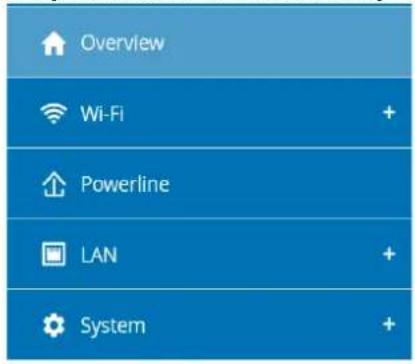
The central areas of the web interface and their sub-categories are listed on the left edge. Click the entry for an area to move directly into it.
Making changes
Once you make a change, two icons are shown on the corresponding menu page:
- Disk icon: Your settings are being saved.
- X icon: The operation is being cancelled. Your settings are not being saved.
Required fields
Fields with a red border are required fields. This means entries must be made in these fields to continue with the configuration.
Help text blank fields
Fields that have not been filled in yet contain greyed out help text, which indicates the required content for the field. This help text disappears immediately once content has been entered.
Default settings
Some fields contain default settings which ensure the greatest amount of compatibility and ease of use. Default settings are identified with an * in drop-down menus.
Default settings can of course be replaced with customised information.
Recommended settings
Some fields include recommended settings.
Recommended settings can of course be replaced with customised information.
Tables
You can make changes within a table by clicking the corresponding table row in Time Control and Parental Control. In edit mode, the corresponding table rows have a blue background. In edit mode, the corresponding table rows have a blue background.
Invalid entries
Entry errors are either highlighted by a red border or error messages are shown.
Buttons
Click the Disk icon to save the settings for the respective web interface area.
Click the X icon or use the Menu path above the buttons to exit the respective web interface area.
Click the Recycle bin icon to delete an entry.
Click the Arrow icon to refresh a list.
4.3 Overview
The Overview area shows the status of the devolo Magic adapter and the connected LAN, PLC and Wi-Fi devices.
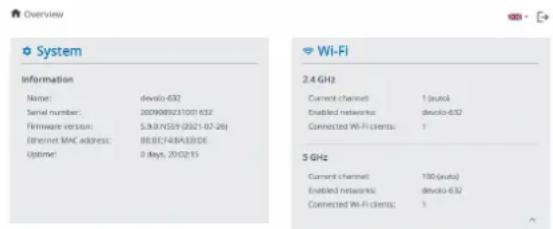
4.3.1 System
Name: Device name
Serial number: Device serial number
Firmware version: Firmware version of the device
4.3.2Wi-Fi
2.4 GHz
Current channel: used frequency channel in the 2.4-GHz frequency range
Enabled SSID: name of the enabled Wi-Fi network
Connected Wi-Fi clients: number of devices connected to the network.
5 GHz
Current channel: used frequency channel in the 5-GHz frequency range
Enabled SSIDs: Name of the enabled Wi-Fi networks
Connected Wi-Fi clients: number of devices connected to the network.
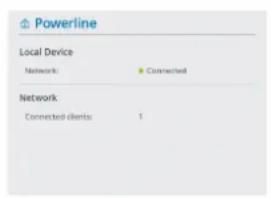
4.3.3Powerline
Local device
Network: status information "connected" or "not connected"
Network
Connected clients: number of devices connected to the Powerline network
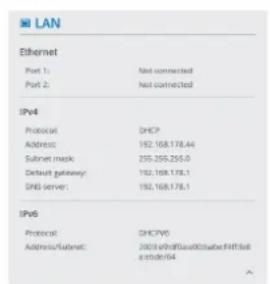
4.3.4LAN
IPv4
Protocol: Display indicating whether DHCP is switched on or switched off
Address: IPv4 address in use
Subnet mask: IPv4 network mask in use
Default gateway: IPv4 gateway in use
Name server: DNSv4 server in use
IPv6
Protocol: Display indicating whether DHCPv6 is switched on or switched off
Address: IPv64 address in use
Subnet mask: IPv6 network mask in use
4.4 Wi-Fi
Make all changes to your wireless network in the Wi-Fi area.
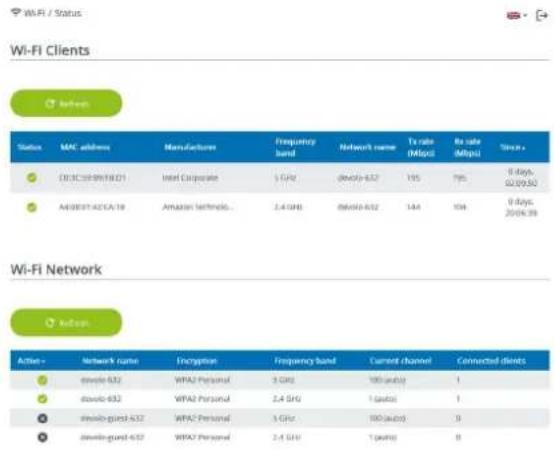
4.4.1Status
You can see the current status of your Wi-Fi network configuration here, e.g. the connected Wi-Fi stations, the MAC address, the selected frequency band, the SSID, the transfer rates and the connection duration.
4.4.2Wi-Fi networks
You can make all necessary changes to your Wi-Fi network here.
Wi-Fi/Wi-Fi networks
WiFi network mode

Use same settings
2.4 GHz + 5 GHz
Network name 2.4 + 5 GHz
device32
Channel 2.4 GHz
Auto(或app)
Channel 5 GHz:
Auto (all changes)
Hidessd
Encryption:
1
(续表)
1
。
(1)
1
HUAAN RESEARCH
Password:
中
One of the following key is required: a pre/post frame with a length of 8 to 52 characters or a pre/post key with a length of 56 characters.
Wi-Fi network mode
The devolo Magic adapter supports both the parallel operation of the Wi-Fi frequency bands and their separate use.
The Wi-Fi network mode field lets you define your preferred setting by clicking the respective field:
2.4 GHz + 5 GHz - Both frequency bands are used
2.4 GHz - Only the 2.4 GHz frequency band is used
5 GHz - Only the 5 GHz frequency band is used
- Off - If desired, you can completely switch off the Wi-Fi section of your devolo Magic adapter here.
Keep in mind that after saving this setting, you will be disconnected from any existing wireless connection to the devolo Magic adapter. In this case, configure the device over Ethernet.
Network name
The network name (SSID) determines the name of your wireless network. You can see this name when logging onto the Wi-Fi, allowing you to identify the correct Wi-Fi network.
Channels
There are 13 channels available in the 2.4 GHz frequency band. The channels recommended for Europe are channels 1, 6 and 11. This ensures the frequency bands of the channels do not overlap and any connection problems are avoided.
There are 19 channels available in the 5 GHz frequency band.
The channel selection default setting is Automatic.
The devolo Magic adapter regularly and automatically executes the channel selection in this setting. In other words, if the last connected station logs out, a search for a suitable channel is carried out immediately. If no stations are connected, the device automatically selects a channel every 15 minutes.
It is worth noting that connected devices also have to support the increased frequency band of 5 GHz. From channel 52 onward you go into the radar range. When accessing the device for the first time, a radar detection phase (DFS) starts automatically, during which time the devolo Magic adapter cannot be accessed via Wi-Fi. This can take up to 10 minutes.
In the Channel field, you can manually select a 2.4 GHz and a 5 GHz channel. If you are not sure which wireless channels are used by nearby devices, select the Automatic option.
Hide SSID:
The SSID specifies the name of your wireless network. You can see this name when logging onto the Wi-Fi, allowing you to identify the correct subnet.
If the Hide SSID option is disabled, your network name is visible. If this option is disabled, potential network users must know the exact SSID and enter it manually to be able to set up a connection.

Some Wi-Fi stations have difficulty connecting to hidden wireless networks. If the connection to a hidden SSID poses problems, first try to set up the connection with a visible SSID and only then try to hide it.
Security
The WPA/WPA2/WPA3 Personal (Wi-Fi Protected Access) security standard is available for securing data transmission in your wireless network. This method allows for individualised keys consisting of letters and numbers and the depicted special characters with a length of up
to 63 characters. You can simply enter them into the Key field via the keyboard.
When the WPA3 encryption standard is enabled, the WPS function is not available for technical reasons.

You can find more information in Chapter 4.4.7 Wi-Fi Protected Setup (WPS)
4.4.3Guest network
If you have friends or acquaintances visiting and you want to provide them with Internet access but without giving away the password for your Wi-Fi, you can set up a separate guest account in addition to the main Internet connection. The guest account can have its own network name, time limit and Wi-Fi password. This way your visitors can browse the Internet without having access to your local network.
Wi-Fi / Guest network
Configuration
Enable
The guest network does only allow access to the internet.
Frequency band
2.4GHz+5GHz
Network name:
devio:guest-632
Encryption:
none
WPAPWPA2
WPA2
WPA2/WPA3
VFA3
Password:
One of the following key component is: pre-processed with a length of 6 to 10 dimensions or a pre-sampled key with a length of 44 characters.
The QR-Code gives you easy access to the guest network using mobile devices such as smartphones or tablets. While scanning the QR-code the credentials for the guest network will be transferred to your mobile device.

To set up a guest account, activate the Enable option.
The guest account has an Automatic shutoff feature. This feature automatically disables the guest network once the selected time period ends.
You can use the Enable option to activate the shut-off feature.

You can also enable or disable the guest account in the devolo Home Network App using the Guest account button.
Frequency band
In the Frequency band field, you select the frequency band mode you are using (see Chapter Wi-Fi network mode).
Network name
Define the name of the guest network in the Network name field.
Key
You should also encrypt the guest account to prevent anyone in signal range from intruding into your network and, for example, sharing your Internet connection. The WPA/WPA2/WPA3 (Wi-Fi Protected Access) security standard is available for this.
This method allows for individualised keys consisting of letters and numbers with a length of up to 63 characters. You can simply enter them via the keyboard.
To do so, enter a corresponding number of characters into the Key field.
When the WPA3 encryption standard is enabled, the WPS function is not available for technical reasons.

You can find more information in Chapter 4.4.7 Wi-Fi Protected Setup (WPS)
QR code
Using the QR code, you can conveniently set up the connection to the guest network for mobile devices. Scanning the QR code automatically transfers the credentials for the guest network to the respective mobile device. The QR code is visible only if the guest network has been enabled.
4.4.4Mesh
Mesh
All devolo Magic Wi-Fi adapters offer Mesh Wi-Fi, which entails completely new and improved Wi-Fi functions:
Multi-user MIMO technology
More often than not, you use multiple end devices in your Wi-Fi network, such as a smartphone, tablet, smart TV or a game console. This
devolo Magic 2 WiFi next
can present a real challenge for your Wi-Fi network—it has to regulate the distribution of data streams from the Wi-Fi access point (e.g. router, devolo device) to the end devices. Multi-user MIMO technology makes it possible for your devolo device to supply your smartphone, tablet and other devices with data streams simultaneously—at the speed you require and at an efficient transfer rate.
Thanks to Multi-user MIMO technology, you can finally enjoy using the Internet without long wait times during online gaming, sporadic drop-outs while streaming in HD or slow downloads.
- Fast roaming (IEEE 802.11r) streamlines the registration process for Wi-Fi end devices, such as smartphones or tablets, when switching to another Wi-Fi hotspot.

The feature Fast roaming is not compatible with all Wi-Fi clients. If there will be connection problems with one of your devices, please deactivate these option.
In factory default condition of the devolo Magic adapter Fast roaming is turned off by default.
The access-point steering feature (AP steering) function enhances your Wi-Fi access
point by adding intelligent network optimisation. This function actively helps your end devices connect to the optimal network access point. If the Wi-Fi access point identifies another Wi-Fi access point within your own network that has a stronger signal and better reception, it redirects the end device to that point automatically.

In particular, older smartphones, tablets and the like will remain connected to their Wi-Fi access point (e.g. router, devolo device) until the signal gets interrupted. Only then will they switch to a new Wi-Fi access point with better reception.
- Integrated band steering ensures that all Wi-Fi stations automatically switch to the optimum frequency band (2.4 and 5 GHz frequency band) in order to use the best Wi-Fi connection at all times.
- With the new Airtime Fairness function, fast Wi-Fi devices are treated preferentially. Older devices for example, that take a long time to download something, no longer slow down the Wi-Fi network.
In order to turn the mesh functions on, activate the Enable option. The mesh function of the devolo Magic adapter is switched on by default.
中
Mesh Wi-Fi
Enabling the Mesh functionality features will optimize your privacy Wi-Fi network experience while using your mobile devices. In virtue of our existing security client problem, AP Steering, Band Steering and Dynamic Frequency Selection provides Wi-Fi access even without a device.
Enable
feature
(IEEE 802.11) (also called "First Rowstring") accelerates the login of a WiFi device to this WFI access point. Requirement: The device was already connected to another WiFi access point with IEEE 11r enabled, identical network name (SSID), and identical encryption. Unfortunately, IEEE 11r is not compatible with every WiFi device and may cause Interoperability issues with WPA3 encryption. If you experience problems with any of your devices, please disable this option.
□
WiFi Clone
WiFi Cloner allows you to apply the Wi-Fi access data (network name and Wi-Fi password) of another Wi-Fi access point to this device automatically. This requires that you start the configuration process and then press the WPS button on the device containing the Wi-Fi access data (SSID and Wi-Fi password) to be applied.
WiFi Clone
WiFi Clone makes it possible to simply copy the Wi-Fi configuration data of an existing Wi-Fi access point (e.g. your Wi-Fi router) to all Wi-Fi access points (Single SSID). Start the procedure with the Start Configuration option and then press the WPS button of the device with the Wi-Fi access data (SSID and Wi-Fi password) to be applied.
4.4.5Schedule control
The Schedule control area lets you define when and if your Wi-Fi is switched on and off.
Wi-Fi Schedule Settings
Overview of the Wi-Fi Schedule Settings

WEnabled WEnabled
Configuration
Here you can define the time intervals for when you want your Wi-Fi to be activated.

图1
11
13/14
12 =
图 1
X
Enabling Wi-Fi schedule control
In order to be able to use time control, activate the Enable option.
Configuration
You can define multiple time periods during which your wireless network is to be enabled for each weekday. Then the time control automatically switches the wireless network on or off.
Automatic disconnection
If you enable the Automatic disconnection option, the wireless network is not switched off until the last station has logged off.

Manually switching the device on and off (using a button) always has priority over automatic time control. The configured time control then takes effect automatically during the next defined time period.
4.4.6Parental control
You can regulate Wi-Fi access for specific devices based on time using this function. For instance, to prevent your children from using the Internet excessively, you can define how long they may use the Wi-Fi per day. Synchronisation with an (Internet) time server is necessary to be able to use the parental control. In this case, the time server (System Management Time Server (NTP)) for the devolo Magic adapter has to be enabled and an active Internet connection is also required.

The time server pool.ntp.org is enabled by default. You can find more information in Chapter 4.7.2 Management.
If you would like to set up a time quota (usage time in hours) or a time period (active from/to), ac
tivate the Enable option. Now enter the MAC addresses of the devices you want to set up parental control for.
Under Type, define either a time quota (time limit) or a time period for when you want the MAC addresses entered to receive Internet access. Under Select interval, select the desired time frame.

Parental Control
3
A1:55:EE:7E:17:9E
Configuration
Paeaae aae aeae eaeae aeae aeae aeae aeae aeae aeae aeae aeae aeae aeae aeae aeae aeae aeae aeae aeae aeae aeae aeae aeae aeae aeae aeae aeae aeae aeae aeae aeae aeae aeae aeae aeae aeae aeae aeae aeae aeae aeae aeae aeae aeae aeae aeae aeae aeae aeae aeae aeae aeae aeae aaee
You can get access to certain Web services by the iMac address. Please enter the time periods during which iMac access is allowed.
Setting the time quota
Under Time Quota, the time limit can be selected.
Confirm your settings by clicking the Disk icon.
Setting the time period
Under Time Period, the desired time period can be selected. After entering the interval, enter the desired start and end times in hour and minute format.
Confirm your settings by clicking the Disk icon.
If you want to delete a time quota (time limit) or a time period from the list, click/touch the dustbin icon.
4.4.7Wi-Fi Protected Setup (WPS)
Wi-Fi Protected Setup (WPS) is one of the international encryption standards developed by the Wi-Fi Alliance for easily and quickly setting up a secure wireless network. The encryption keys of the respective Wi-Fi devices are transmitted automatically and continuously to the other Wi-Fi device(s) in the wireless network.
Enabling WPS encryption
In order to be able to use WPS encryption, activate the Enable option.
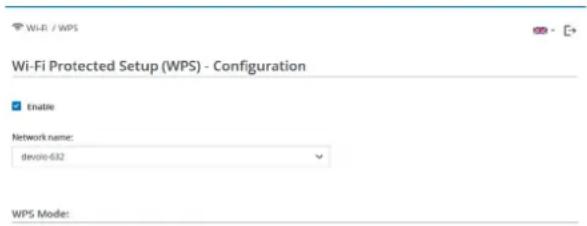

The devolo Magic adapters offers two different variants for transmitting these encryption keys:
WPS using WPS pushbutton
Start the encryption process on the devolo Magic adapter
By pressing the Wi-Fi button on the front side of the device or
By pressing the corresponding Start button on the user interface under Wi-Fi WPS Pushbutton.
Then either press the WPS key of the Wi-Fi device you are adding or enable the WPS
mechanism in the Wi-Fi settings of the Wi-Fi device. Now the devices exchange their encryption keys and establish a secure Wi-Fi connection. The Wi-Fi LED on the front panel indicates the synchronisation process by flashing.
WPS via PIN
To interconnect Wi-Fi devices in your wireless network securely using a PIN variant, go to the web interface and, under Wi-Fi WPS WPS PIN, enter the WPS PIN generated by your Android smartphone or tablet and start the encryption process by pressing the corresponding Start button.
Use of the WPS method implies the use of the WPA/WPA2 or WPA2 or WPA2/WPA3 encryption standard.
When the WPA3 encryption standard is enabled, the WPS function is not available for technical reasons.

You can find more information in Chapter 4.4.2 Wi-Fi networks.
Therefore take note of the following automatic settings:
If under Wi-Fi Wi-Fi networks, the No encryption option is selected in advance,
WPA2 is set automatically. The newly generated password is displayed under Wi-Fi Wi-Fi networks in the Key field.
- If under Wi-Fi Wi-Fi networks, the WPA/WPA2 option is selected in advance, this setting remains with the previously assigned password.
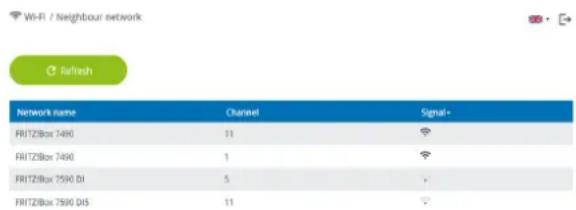
4.4.8Neighbour networks
The Neighbour networks area displays visible wireless networks in your surroundings.
4.5 Powerline
Make all changes to your PLC network in the Powerline area.
Powerline
Powerline Network
To form one Powerline network, all devices need to receive a common encryption password.
This happens automatically if you initiate pressing by pressing the Powerline button on two or more devices in succession. The automatically generated password of the first device will be assigned to all other devices.
Instead of pressing the physical button on the device itself, you can also activate the following button.

When you actuarie the following button, the current password will be deleted:

Instead of the auto-generated password, you can also assign your own password for encryption. The same password must be entered for all devices which should be part of the same Powerline network. Note that if you change the password, the Powerline connection to this device will be interrupted.
Ferencline password:

Fanning domain name:
In order to use a new devolo Magic adapter in your devolo Magic network, first you have to connect it to your existing devolo Magic adapters devices as a network. This is accomplished by using a shared password. This can be assigned in different ways:
Using devolo Cockpit or the devolo Home Network App (see Chapter 3.5 Installation of devolo software),
- Only using the PLC button (see Chapter 2.3 Pairing - Establishing a PLC connection and 3.4 Connecting the devolo Magic 2 WiFi next)
Using the web interface, in the PLC menu; as described below:
Pairing - Using on-screen button
- Click Start pairing to start the pairing operation. This may take some time.
As soon as the new devolo Magic adapter is integrated into your existing network, it appears in a list of available and established connections.
Pairing - Using custom password
You can also assign your network a custom PLC password you pick yourself. Enter this password for each devolo Magic adapter in the Network password field and confirm your settings by clicking the Disk icon.
Note that the custom password is not assigned to the whole PLC network automatically. In
stead, you must assign it separately to each of your devolo Magic adapters.
Powerline domain name
The Powerline domain name specifies the name of your PLC network.
Master selection
The function can be used to improve the quality of the network.
- Preferred at gateway: defines the devolo Magic adapter connected directly to the router; this option is useful if the main task of this devolo Magic adapter is to connect to the router/internet while any other devolo Magic adapter in the PLC network communicates directly with it. Each adapter of the PLC network must be within the range of the adapter on the router.
Automatic: master mode is assigned spontaneously depending on the current connection quality; the devolo Magic adapter with the strongest connection is selected.
Unpairing - Removing an adapter from a network
To remove a devolo Magic adapter from your devolo Magic network, click Leave Powerline network.
Wait until the LED flashes red and then disconnect the devolo Magic adapter from the mains supply.
Compatibility mode
Using as VDSL connection may negatively impact the performance of the bandwidth connection by crosstalk of the signal.
Compatibility Mode
In rcase, VDS, convection problems can be caused by crosstalk with the powerline signal. If automatic compatibility mode is enabled, the device will try to detect this situation and adjust its output signal accordingly, which should provide the best balance between performance and mitigation of crosstalk.
Automatic compatibility mode (recurrent model)
if automatic mode is disabled or cannot reliably detect crosscut, a static mitigation profile will be used instead. Select the profile which matches the type of your VDSU connection or select "Full Power" for no mitigation at all.

*If enabled, any change will cause a PLC restart, thus connection might be lost.
In order to mitigate any potential negative effects the device provides the following options:
Automatic compatibility mode If the option Automatic compatibility mode (re
commended) is enabled, the device can automatically adjust the output signal to avoid interference as much as possible. This option is configured by default.
Manual compatibility mode
If an interference has not been eliminated despite activating the automatic setting, please disable it and set the compatibility mode as well as the signal transmission profile manually:
MIMO
Full power
VDSL 17a (default)
VDSL35b
SISO
Full power
VDSL 17a (default)
VDSL 35b

Get in touch with your internet provider to find out which signal transmission profile is the best option for your internet connection.
The MIMO operating mode and the VDSL 17a signal transmission profile are configured by default.
Connections
The table lists all available and connected devolo Magic adapters for your network along with displaying the following details:
Connections
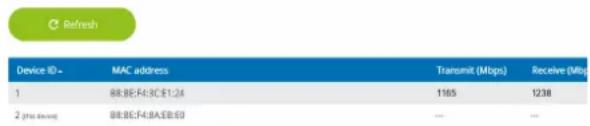
Device ID: Device ID (number) of the respective devolo Magic adapter in the devolo Magic network
MAC address: MAC address of the respective devolo Magic adapter
Send (Mbps): Rate for sending data
Receive (Mbps): Rate for receiving data
4.6 LAN
You make changes to the network settings in the LAN area.
4.6.1Status
You can see the current LAN status of the devolo Magic adapters here. The Ethernet area shows the network devices connected to the two network connectors Port 1 and Port 2 (e.g. PC, NAS, etc.).
IPv4/IPv6
Depending on how the devolo Magic adapter is connected to the Internet (IPv4 or IPv6), current network information is displayed, such as Address, Subnet mask, Standard gateway and DNS server.
LAN/Status
Ethernet
| Port 1: | 1000 Mbit/s |
| Port 2: | Not connected |
| Ethernet: | B8:BE F4:8A:EB:DE |
IPv4
| Protocol: | DHCP |
| Address: | 192.168.178.44 |
| Subnet mask: | 255.255.255.0 |
| Default gateway: | 192.168.178.1 |
| DNS server: | 192.168.178.1 |
IPv6
| Protocol: | DHCPV6 |
| Address: | 2003:e9:df0a:e00:babe:f4fffe8a:ebde |
| Subnet mask: | 64 |
4.6.2IPv4/IPv6 configuration
In the factory default settings, only the Retrieve network settings from a DHCP server option for IPv4 is enabled. This means that the IPv4 address is retrieved automatically from a DHCP server. The
currently assigned network data are visible (greyed out).
If a DHCP server is already present on the network for assigning IP addresses (e.g. your Internet router), you should leave the Retrieve network settings from a DHCP server option enabled so that the devolo Magic adapter automatically receives an address from it.
If you want to assign a static IP address, make entries accordingly for the Address, Subnet mask, Default gateway and DNS server fields.
Confirm your settings by clicking the Disk icon.
Then, restart the devolo Magic adapter (see Chapter 4.7.3 Configuration) to ensure that your changes take effect.
IPv6 configuration
If you want automatic IP address assignment and there is already a DHCP server present on the network for assigning IP addresses (e.g. your Internet router), enable the Retrieve network settings from a DHCP server option to ensure that the devolo Magic adapter automatically receives an address from it.
If you want to assign a static IP address, make entries accordingly for the Address, Subnet mask, Default gateway and DNS server fields.
Confirm your settings by clicking the Disk icon.
4.7 System
In the System area, you can configure the settings for security and other devolo Magic adapter device functions.
4.7.1 Status
Here you can view the most important information on the devolo Magic adapter, including the current date and time, time zone, MAC address of the
adapter, status of the Wi-Fi and Powerline LEDs and the two operating buttons.
Date and Time
| Local time: | Wed, 28/07/2021, 13:56:28 |
| Time zone: | Europe/Berlin |
| Time server 1: | ptbttime1.ptb.de |
| Time server 2: | ptbttime2.ptb.de |
| Time server 3: | ptbttime3.ptb.de |
MAC address
| Ethernet: | BEEF4:BA:EBCDE |
Temperature
| PLC: | 84°C | full throughput |
| Wi-Fi 2.4 GHz: | 65°C | full throughput |
| Wi-Fi 5 GHz: | 71°C | full throughput |
LEDS
| Wi-Fi LED: | ● Enabled |
| Powerline LED: | ● Enabled |
Buttons
| PLC button: | ● Enabled |
| Wi-Fi button: | ● Enabled |
4.7.2 Management
System information lets you enter user-defined names in the Device name (hostname) and Device location fields. Both pieces of information are particularly helpful if multiple devolo Magic adapters are to be used and identified in the network.
Under Change access password, a login password can be set for accessing the web interface.
By default, the built-in web interface of the devolo Magic adapter is not protected by a password. We recommend assigning a password when the installation of the devolo Magic adapter is complete to protect it against tampering by third parties.

To do so, enter the desired new password twice. Now the web interface is protected against unauthorised access with your custom password!
You can use Identify Device to identify the corresponding devolo Magic adapterby a flashing PLC LED (house symbol). This is especially helpful when using multiple devolo Magic adapters.
In Power Management, you can enable Powersave mode and Standby mode on the devolo Magic adapter.
If Powersave mode has been enabled, the devolo Magic adapter switches to PowerSave mode automatically whenever reduced data transmission over ethernet is detected.

The latency (time for transmitting a data packet) may be negatively affected.
If Standby mode is enabled, the devolo Magic adapter automatically switches to Standby mode if no ethernet connection has been enabled, i.e. if no network device (e.g. computer) is switched on and connected to the network interface and if Wi-Fi is disabled.
In this mode, the devolo Magic adapter is not accessible over the Powerline network. As soon as the network device (e.g. computer) connected to the network interface is switched on again, your adapter can also be accessed over the electrical wiring again.
- Powersave mode is disabled in the devolo Magic adapter factory default settings.
Standby mode is enabled in the devolo Magic adapter factory default condition.
The LED settings let you disable the LED status display of the Wi-Fi and Powerline LEDs.
An error status is indicated by corresponding flashing behaviour regardless of this setting.

For information on the LED behaviour of the devolo Magic adapter in standby mode, refer to Chapter 2.3.1 Reading the PLC indicator light/ 2.3.3 Reading the Wi-Fi indicator light.
You can completely disable the operating buttons on the devolo Magic adapter in order to protect yourself against possible changes. Simply disable the Enable PLC button or Enable Wi-Fi button option.
The operating buttons are enabled in the devolo Magic adapter factory default settings.
Under Time zone, you can select the current time zone, e.g. Europe/Berlin. The Time server (NTP) option lets you specify a time server. A time server is a server on the Internet whose task consists of providing the exact time. Most time servers are coupled with a radio clock. Select your time zone and time server; the devolo Magic adapter auto
matically switches between standard time and summer time.
4.7.3 Configuration
Saving the device configuration
To save the enabled configuration to your computer as a file, select the corresponding button in the System Configuration Save Configuration to File area. The system starts downloading the current device configuration.
Restoring the device configuration
An existing configuration file can be sent to the devolo Magic adapter in the System Configuration area and enabled there. Select a suitable file via the Select file ... button and start the operation by clicking the Restore button.
Factory Settings
The devolo Magic adapter is reset to the original factory defaults in the System Configuration area with the Factory Reset option.

Doing so causes you to lose your personal Wi-Fi and PLC settings. The last-assigned passwords for the devolo Magic adapter are also reset.
For backup purposes, all active configuration settings can be transmitted to your computer, stored there as a file and reloaded into the devolo Magic adapter. This function can be useful for creating a variety of configurations that will let you quickly and easily set up the device for use in different network environments.
Reboot device
In order to reboot the devolo Magic adapter, select the Reboot button in the System Configurati on area.
4.7.4Firmware
The firmware of the devolo Magic adapter includes the software for operating the device. If necessary, devolo offers new versions on the Internet as a file download, for example to modify existing functions.
Current firmware
The currently installed firmware of the devolo Magic adapter is displayed here.
Searching for and updating firmware automatically
The adapter can also look for up-to-date firmware automatically. To do this, enable the Regular check for firmware updates option.

The devolo Magic adapter lets you know when a new firmware version becomes available. The option is enabled by default.
The Automatically install firmware updates option allows the adapter to automatically install the firmware it has found.

The devolo Magic adapter automatically updates its firmware. The option is enabled by default.
Download updated firmware
- If you have downloaded an updated firmware file for the devolo Magic adapter to your computer, navigate to the System → Firmware → Update firmware area. Click Browse... and select the downloaded file.
- Confirm the update procedure with Upload. After a successful update, the devolo Magic adapter restarts automatically.
Ensure that the update procedure is not interrupted.
System / Firmware

Current Firmware
Firmware version: 5.9.2 (2021-08-31)
Firmware update
Your device can regularly check the download update server for firmware updates. New versions can be installed either manually or completely automatically at night.
Regularly check for firmware updates
Automatically install firmware updates
Instead of using the update server, you can also upload a new firmware file from your computer. You can download them on the devolo website.


4.7.5Config Sync
Config Sync allows settings to be configured uniformly for all devolo Magic devices in the network. This includes the following settings e.g.:
Wi-Fi network
Guest network
Mesh Wi-Fi
- Time control and time server settings.
In order to switch Config Sync on, activate the Enable option.

Please note that the Wi-Fi is always switched on or off for the entire network. Therefore, stop Config Sync first on a device that you want to configure or switch separately.
5 Appendix
5.1 Bandwidth optimization
To significantly improve the transmission capacity of the network, we recommend that you comply with the following "connection rules":
Plug the devolo Magic 2 WiFi next directly into a wall socket. Avoid using power strips. This may impair the transmission of the PLC signals.
- If there are several sockets in the wall directly next to each other, they behave like a power strip. Individual sockets are optimal.
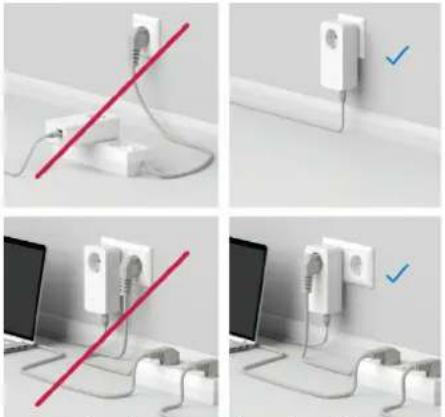
Fig.5: devolo Magic bandwidth optimization
5.2 Warranty conditions
If your devolo device is found to be defective during initial installation or within the warranty period, please contact the vendor who sold you the product. The vendor will take care of the repair or warranty claim for you. The complete warranty conditions can be found at
www.devolo.global/support.
Index
A
Access Point Steering 37
Adapter equipment 13
Airtime Fairness 12, 37
B
Band steering 12, 37
C
CE declaration 9
Changing/assigning the network password 14, 25
Channels and frequencies in the 2.4-GHz band 7
Channels and frequencies in the 5-GHz band 7
Config Sync 51
D
DefaultWiFikey18
devolo App 26
devolo Cockpit 26
devolo Magic 11
devolo software 26
DHCP server 46
Disposal 7
Dynamic Frequency Selection 12
E
Expanding an existing devolo Magic network 14
F
Factory default settings 21, 27
Integrated electrical socket 21
Intended use 9
IPv4 45
L
LAN (network connection) 21
LED status display 13
Login password 28
M
Mesh 36
Multi-user MIMO technology 12, 36
N
Network connection 21
0
Operating buttons 48
P
Package contents 22
Pairing (establishing a PLC connection) 13
PLC 11
PLC status display 15
Powerline 11
R
Reset 13, 21
Roaming 12, 37
S
Safety information 7
SSID 34
Starting up a new devolo Magic network 14
Symbol description 8
System requirements 22
T
Time server 48
Transmitting power in the 2.4-GHz band 7
Transmitting power in the 5-GHz band 7
U
UKCA declaration 10
W
Warranty 52
Wi-Fi antenna 21
WiFi Clone 38
WiFi key 18
Wi-Fi status display 19
WPA/WPA2/WPA3 34, 36
devolo Magic 2 WiFi next
© 2022 devolo AG Aachen (Germany)
Activer/désactiver le WiFi
IEEE 802.11 (also called "Fast Streaming") accelerates the login of a WiFi device to this WiFi access point. Requirement: This device was already connected to another WiFi device with BZ2.1r enabled. Typical network name (SSID), and identical encryption. Unfortunately, BZ2.1r is not compatible with every WiFi device and may cause interoperability issues with WiPA3 encryption. If you experience problems with any of your devices, please disable this option.
□2027.002.119
WiFi Clone
WIFI Chinese uses, permitt to de represe automatismeigl. the dianies of acols. WFI (norm de nereis et rict de la pasive WFI) t a priorite othertion. 100

Access Point Steering 11, 37
Airtime Fairness 11, 38
Antenne Wi-Fi 21
Band Steering 11, 37
© 2022 devolo AG Aachen (Germany)
A工程技术 of the adaptation to a new technology is a process of change in the way that people and organizations use. It is a process of change in which people, organizations, and institutions are changed by new information and methods.
2.3.5 Antenas Wi-Fi
m = 311
WPA7
WP42WP43
WPA3
Contrasefac
m = 311
m = 311 ;
m = 311 ;
m = 311
m = 311
Tequeree rane de BcCarees (emprase o de 64carees (gse shred key)
IEEE 802.11a (who called "Fast Roaming") accelerates the login of a WiFi device to this WiFi access point. Requirement: The device was already connected to another WiFi access point with IEEE 111 protocol, identified network name (SSID), and identical encryption. Unfortunately, IEEE 111 is not compatible with every WiFi device and may cause interoperability issues with WPA3 encryption, if you experience problems with any of your devices; please disable this option.
□星期日17
WIFI Clone
Mediana WiFi Clote, ave disposi tude paoed autoriznlaeae a kios datos de accesso de Wi-Fi (nombrde red y contrainduel HwH) de oto punto de accesso Wi-Fi Para el, mea e el proce del configuracion g. a configuracion, pulse et brasil RPS del positivdo que se vaan a obturar los datos de accesso Wi-Fi (SEID) y variazuraFel del WIF).

WiFi Clone
Access Point Steering 11, 38
Airtime Fairness 11, 39
Ampliar la red devolo Magic existente 14
Antena Wi-Fi 22
Band Steering 11, 38
Boton PLC 28
Botones de control 49
C
Dynamic Frequency Selection 11
E
WPA/WPA2/WPA3 35, 37
devolo Magic 2 WiFi next
© 2022 devolo AG Aachen (Germany)
ITE 802.11t (also called "Test Reading") accelerates the login of a WiFi device to this WiFi access point. Requirement: The device was already connected to another WiFi access point with 802.11t enabled, identical network name (SSID), and identical encryption. Unfortunately, 802.11t is not compatible with every WiFi device and may cause interoperability issues with WPA5 encryption. If you experience problems with any of your devices, please disable this option.
□本报记者602.13
WiFi Clone
Utilizando WFI. Clone e possible confirmar automaticamente por quente disposicao i dais de accesso WFI (nome rete e passivert WFI o umanotherpto de accesso WFI Avaiare quinlhe procedura di configuzione e premier le taux WPI del disposicao por il qalei es necessario confeririei di dais accesso WFI (SSD + passivocerei).

WiFi Clone
WPS tramite pulsante WPS
Access Point Steering 11, 38
Adattatore 12
Airtime Fairness 11, 38
Antenna Wi-Fi 22
B
Band Steering 11, 38
C
Dynamic Frequency Selection 11
F
Factory Reset 22
G
Garanzia 54
1
WPA/WPA2/WPA3 35, 37
devolo Magic 2 WiFi next
© 2022 devolo AG Aachen (Germany)
Mesh (Multiroom WiFi)
IEEE 802.11 (also called "Fast Streaming") accelerates the logs of a Wi-Fi device to this Wi-Fi access point. Requirement: The device is already connected to another Wi-Fi access point with 802.11 enabled, identical network name (SSID), and identical encryption. Unfortunately, 802.11 is not compatible with every Wi-Fi device and may cause interoperability issues with WPA3 encryption. If you experience problems with any of your devices, please disable this option.
□E80211
WiFi Clone
m = 311 ;
2.00
WiFi Clone
Powerline-wroughtwood
Airtime Fairness 11, 38
AP Steering 11
B
Band Steering 11, 38
Bedieningsknop 50
Dynamic Frequency Selection 11
F
Flyer "Veiligheid en service" 6
Mesh (Multiroom WiFi) 37
N
WPA/WPA2/WPA3 36, 37
devolo Magic 2 WiFi next
© 2022 devolo AG Aachen (Germany)
Automatico (todos on canals)
Esconder SSID
Codificacao:
(1)


Paloura passae
liver (water consumption, 3 or ID: no)


10
Modo de rede Wi-Fi
A fundamental device that permits a user to perform a task.

Fungoes
IEE 802.11a (which called "Test-Roaring") accelerates the login of a WiFi device to this WiFi access point. Requirement: The device was already connected to another WiFi access point with 802.11r enabled, identical network name (SSID), and identical encryption. Unfortunately, 802.11r is not compatible with every WiFi device and may cause interoperability issues with WPA3 encryption. If you experience problems with any of your devices, please disable this option.

WiFi Clone
At least one Wi-Fi clone should assume automatically some daos of access Wi-Fi (some dae a rede e palaeive-passing Wi) in umo other points of access Wi-Fi para this espositivo. Para lnso, inie a processo de configuracao e, em seguida, prestnione a botao WPS no disposicao cacos da accessa Wi-Fi (SSID e palaeive-passing Wi) derem ser asubstituents.

WiFi Clone
Immobilization of PTH WPS

```c register dispositions na rede W-1 aneak do PN. Introduce o PN dispositions do a行动计划 a thru rede W-1.
Existem两大 variantes distinctas para a transferenciadeste��do segurarca:
WPS por botão WPS
Inicie o processo de codificacao no adaptor devolo Magic, pressionando
Innssr autmatione rne frrwars at aeddo
Access Point Steering 38
Airtime Fairness 11, 38
Alargaruma redevolo Magic existente 14
Alterar/attribuirpalavra-passede rede14,26
Antena Wi-Fi 22
AP Steering 11
B
Band Steering 11, 38
Botao reset 28
Botoes de commando 50
C
Canais e frequencias portadoras dos 2,4 GHz 6
Canais e frequencias portadoras dos 5 GHz 6
CE7
Dynamic Frequency Selection 11
E
Emparelhamento (estabelecer ligaçao PLC) 13
Estado de entrega 22, 28
F
Factory Reset 22
Folheto "Seguranca & service" 6
G
WPA/WPA2/WPA3 36, 37
devolo Magic 2 WiFi next
© 2022 devolo AG Aachen (Germany)
Connected Wi-Fi clients
5 GHz
Connected Wi-Fi clients
4.3.3Powerline
Local device
Enabling the Mech Functionality features will optimize your infrastructure with network expertise while using your mobile devices. Inflow routing and access control, Band Sharing and Dynamic frequency Selective priorities will allow access even with many clients and Airtime-Friendly operations your bandwidth.
Features
BEE 802.11a (also called "Fast Roaming") accelerates the lag of a Wi-Fi device to this Wi-Fi access point. Requirement: The device was already connected to the Wi-Fi access point by a Wi-Fi access point. This is not compatible with any Wi-Fi access point. BEE 802.11b (also called "Fast Roaming" and "Fast Roaming" in both versions) is not compatible with every Wi-Fi device. If you experience problems with any of your devices, please disable this option.
2
WiFi Clone
With CLI allows you to apply the RWA access data (network name and Password) of another RWA access point to this device automatically. This will allow you to set up the configuration process and then press the WPA button on the device consisting the RWA access, data (USB) and the password) to be applied.
Start Configuration
WiFi Clone
4.4.5Schedule control
WiFi schedule settings
WiFi schedule control
WIFI convenience function
When the WIR convergence function is activated, the wireless network is not switched off until the last WIR device has turned off from your device.
Please note that many tablets/macrom phones maintain their WiFi connection indefinitely.
Overview of the will schedule settings

Wentamrtd wth disabled
Configuration
Here you can define the time intervals for when you want your WF to be activated.

Enabling Wi-Fi schedule control
Automatic disconnection
You can limit access to certain Wi-Fi devices by the MAC address. Please define the time periods during which Wi-Fi access is allowed.
| MBC address | Type | |||
| A155.8E.8E.14:00 | Internal | Sat+Sun | 10:00 | 20:00 |
| A155.8E.8E.14:00 | Internal | Nitin+Pit | 16:13 | 20:00 |
WiFi Protected Setup (WPS)- Configuration
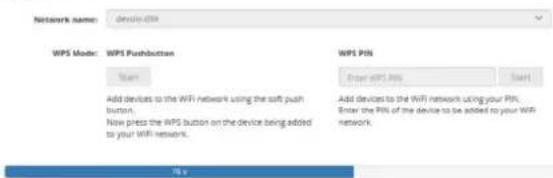
WFS Application is active.
4.4.8Neighbour networks
Powerline Network
To form one Powerline network, all Services need to receive a common encryption password.
This happens automatically if you initiate pairing by pressing the PowerLine button on two or more devices in succession. The automatically generated password of the first device will be assigned to all other devices.
Instead of pressing the physical button on the device itself, you can also activate the following button:
Start point
When you activate the following button, the current password will be deleted.
4ppw#o#r#n# network
Instead of the auto-generated passwords you can also assign your own password for encryption. The same password must be entered for all devices which should be part of the Same Powerline network.

Compatibility Mode
In rare cases, VDLS connection problems can be caused by crosstalk with the powerline signal. of automatic compatibility mode is enabled; the powerline connection problem in this situation and adjust its output signal accordingly, which should provide the best balance between performance and mitigation of crosstalk.
Automatic compatibility mode (recommended)
If automatic mode is disabled, or cannot reliably direct crosstalk, a static mitigation profile will be used instead. Select the profile which matches the type of your VSDL connection, or select "Fail Power" for no mitigation at all.

| Port 1: | Not connected |
| Port 2: | Not connected |
| Ethernet | 30:03:2D:AF:8B |
IPv4
| Protocol: | DHCP |
| Address: | 172.25.201.89 |
| Subnet mask: | 255.255.0.0 |
| DNS server: | 172.25.1.12 |
IPv6
| Protocol: | DHCPV6 |
| Address: | 2a00:fe0:313:25:32d3:2fff:fea8bb9 |
| Subnet mask: | 64 |
Access Point Steering 15, 40
Airtime Fairness 15, 40
Antena WLAN 25
Band Steering 15, 40
C
CE9
Config Sync 53
D
devolo Cockpit 29
devolo Magic 13
Dynamic Frequency Selection 14
F
Factory Reset 25
G
Gwarancja 58
H
Haslo logowania 31
1
IPv4 48
K
Klucz Wi-Fi 22