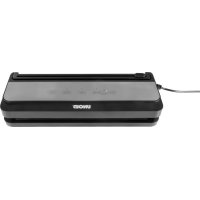
Food Saver 48055 - Vacuum packaging machines UNOLD - Free user manual and instructions
Find the device manual for free Food Saver 48055 UNOLD in PDF.


| Features | Details |
|---|---|
| Device type | Vacuum packaging device |
| Dimensions | Not specified |
| Weight | Not specified |
| Power | Not specified |
| Vacuum capacity | Not specified |
| Additional features | Not specified |
| Usage | Vacuum packaging of food to extend its preservation |
| Maintenance | Regular cleaning of surfaces and seals |
| Repair | Contact after-sales service for any malfunction |
| Safety | Use according to manufacturer instructions to avoid accidents |
| General information | Check the compatibility of packaging bags before use |
Frequently Asked Questions - Food Saver 48055 UNOLD
User questions about Food Saver 48055 UNOLD
0 question about this device. Answer the ones you know or ask your own.
Ask a new question about this device
Download the instructions for your Vacuum packaging machines in PDF format for free! Find your manual Food Saver 48055 - UNOLD and take your electronic device back in hand. On this page are published all the documents necessary for the use of your device. Food Saver 48055 by UNOLD.
USER MANUAL Food Saver 48055 UNOLD
natural_image
Black UNOLD vacuum cleaner with fresh vegetables and a plastic bag of tomatoes (no text or symbols visible)Bedienungsanleitung
Instructions for use I Notice d'utilisation Gebruiksaanwijzing I Istruzioni per l'uso Instrucciones de uso I Instrukcja obsługi
Modell 48055
INHALTSVERZEICHNIS
Explanation of symbols....24
Safety Information....25
Information and tips on vacuum sealing.....27
Handling food in a sanitary way....29
Explanation of the control element .....29
Putting the appliance into operation ....30
Evacuating or sealing in bags....30
Evacuating or sealing with film ....32
Operating the cutting unit ....33
Evacuating in the container ....33
Cleaning and care 34
Troubleshooting 36
Guarantee Conditions....38
Waste Disposal/Environmental Protection ...38
Service 22
1 Lid
2 Welding seal
3 Rubber seal
4 Evacuation chamber
5 Fold-out cutting unit
6 Control buttons/indicator lamps
7 Closures
8 Hose connector
E Página 80
natural_image
Black rectangular electronic device with two red circular markers on its side, connected to a cable (no visible text or symbols)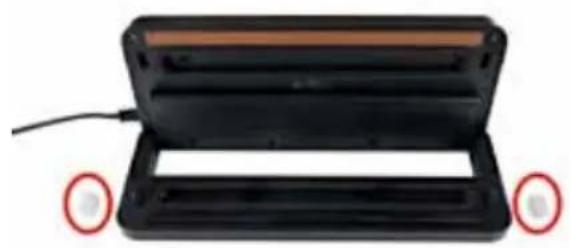
natural_image
Black rectangular electronic device with two red circular buttons on the side, no visible text or symbols.natural_image
Technical diagram of a device showing internal components and mounting holes (no text or symbols)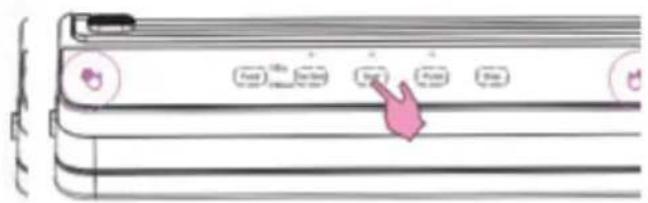
text_image
Fruit Cotton Dairy Meat Palm Shrimpnatural_image
Pure technical line drawing of a layered electronic component with no text or symbolsnatural_image
Technical diagram of a mechanical component with internal channels and grid pattern (no text or symbols)text_image
Diagram illustrating a medical or laboratory setup with labeled components and connected devices, including a device with ports and tubing.REINIGEN UND PFLEGEN
natural_image
Black rubber band with curved tip, isolated on white background (no text or symbols)Thank you for having chosen a quality product from the Unold range. Please read the instruction manual carefully. This will allow you to familiarise yourself quickly with all functions of your new vacuum sealer (hereinafter referred to as „appliance“).
Please make sure that all persons who use, clean or maintain the appliance have read the instructions and adhere to them. When handing over the appliance to a new owner, always include the instruction manual.
If you have any queries that are not answered in this document, or if you encounter technical problems, please contact our customer service department or your dealer.
Important: Figures and drawings are provided for reference purposes and can differ from the actual product.
TECHNICAL DATA
Power: 130 Watt, 220–240 V\~, 50–60 Hz
Dimensions: approx. 37 x 13.3 x 5.8 cm (L/W/H)
Power cord: approx. 115 cm
Weight: approx. 1.05 kg
Protection class: II
Suction power: 9 liters per minute
Vacuum of the pump: 0.7 bar
Features: For sealing or evacuating and sealing, function indicators,
pulse function, integrated cutter for easily cutting the films to size
Accessories: 1 hose (approx. 55 cm), 1 replacement seal, 10 vacuum
bags (15 x 25 cm), 1 vacuum roll (20 x 100 cm), instruction manual
Features, technology, colours and design are subject to change without notice; errors excepted.
EXPLANATION OF SYMBOLS

This symbol denotes a possible hazard which could cause injury or damage to the appliance.

This symbol indicates a potential burning hazard. Please be especially careful at all times here.
SAFETY INFORMATION
Please read the following instructions and keep them on hand for later reference.
Persons in household
- This appliance can be used by children aged from 8 years and above and persons with reduced physical, sensory or mental capabilities or lack of experience and knowledge if they have been given supervision or instruction concerning use of the appliance in a safe way and understand the hazards involved.
- Children shall not play with the appliance.
- Cleaning and user maintenance must not be performed by children, unless they are older than 8 years and are supervised.
- Keep the appliance and the power cord out of the reach of children under 8 years.
- Keep the appliance out of the reach of children.
- Only connect the appliance to an AC power supply with voltage corresponding to the voltage specified on the rating plate.
- This appliance must not be operated with an external timer or a remote control system.
- Never immerse the appliance in water or other liquids.
- Do not clean the appliance in a dishwasher.
- Keep films and bags away from children to prevent them from pulling the bags over their heads – danger of suffocation!
- The knife of the cutting unit is extremely sharp – risk of injury!
- The vacuum packing machine should never come into contact with water or other liquids. However, if this should happen, all parts must dry completely before it is used again.
- The appliance is intended for household use only, or for similar areas of use, such as, ■kitchenettes in businesses, offices or other workplaces,
■agricultural enterprises,
■for use by guests in hotels, motels or other lodgings,
■in private guest houses or holiday homes.
Electric safety
- Never touch the appliance or power cord with wet hands.
- For safety reasons, never place the appliance on hot surfaces, a metal tray or a wet surface. Do not place the appliance or power cord near open flames during operation.
- Always use the vacuum packing machine on a level, uncluttered surface.
- Ensure that the power cord does not hang over the edge of the counter top or table, since this can cause accidents, for example if small children pull on the cord.
- When disconnecting the power cord from the power socket, always pull on the plug and never directly on the power cord. Do not lift the appliance by the power cord.
- Unplug the mains plug from the electrical outlet after use and before cleaning. Never leave the appliance unattended when the mains plug is plugged in.
- Check the appliance, the plug and the power cord regularly for wear or damage. In case of damage to the power cord or other parts, please send the appliance for inspection and repair to our customer service department.
Information on safe set-up and operation
-
Keep the films and bags out of the reach of children so that they do not place them over their heads – danger of suffocation!
-
Never operate near sources of combustion such as gas-fired stoves, etc.
-
Never vacuum seal potentially explosive materials such as foods containing alcohol.
-
The sealing gasket in the vacuum packing chamber becomes hot during operation of the appliance. Consequently do not touch the sealing gasket during operation – danger of burn injury.
- Do not operate or store the vacuum packing machine outdoors.
- To avoid damage, do not use the appliance with accessories of other manufacturers or brands.
- Clean the appliance after every use.
- Unauthorised repairs can result in serious hazards for the user and void the warranty.

Never open the appliance housing. Risk of injury from electric shock!

The welding seal and the welding wire inside the evacuation chamber become hot while the appliance is in operation. Therefore, do not touch during operation on account of the risk of injury from burns.
The manufacturer is not responsible for any damage attributable to improper or incorrect use or repairs performed by non-authorised third parties.
INFORMATION AND TIPS ON VACUUM SEALING
Vacuum packaging allows you to preserve vegetables, meat, etc. for longer periods. Aside from keeping the food from taking on foreign odours, vacuum sealing also reliably protects the food against bacteria, moulding, etc.
What is more, vacuum sealing also lets you store tea or other dry foodstuffs for longer periods so that you can use them, for instance, for special offers. Please note, however, that vacuum sealing is no substitute for refrigeration or freezing. Please use only suitable bags and films or the separately sold container for vacuum sealing. Other bags may melt and cause damage to the appliance on account of the high temperatures. Other containers may be destroyed by the generated pressure and, thus, cause injuries.
Our vacuum bags and films are made from a special and patented type of plastic. This material is optimally suited for preserving food. Besides being washable and
reusable, the included bags can even be cleaned in the dishwasher. For more details, refer to the section “Cleaning and care”.
However, we recommend, for sanitary reasons, that you use the bags only once if sealing easily perishable food such as raw fish.
We recommend that you use the container for vacuum sealing food that you need frequently. The vacuum sealing container considerably shortens the time required for marinating meat you wish to use for particular dishes as the vacuum lets the marinade penetrate the meat more quickly and deeply.
Another advantage is that salad can be kept fresher for a longer time (when sealing salad, you should place a paper towel in the container before filling in and vacuum sealing the salad).
You can also vacuum seal liquid food provided you freeze it beforehand.
Never place the container in the freezer in order to avoid damage to the container. You should allow hot food to cool off before vacuum sealing it in the container. If exposed to temperatures that are too low (below -18 °C) or too high (above 100 °C), the material of the container may sustain damage. Apart from being an excellent choice for vacuum sealing meat or fish, the bags can also be used for packaging portions of prepared meals and storing them for extended periods. Please make sure to briefly freeze moist food before vacuum sealing it, as the liquid will otherwise leak during the vacuum sealing process and keep the vacuum from forming. Also, no liquid, such as fat or similar substances, must touch the sealing seam of the bag, as this will keep the vacuum from forming as well. Tip: Turn the bag inside out before filling it with the food and fold the edges of the bag back up. This will keep the sealing seam clean! By the way: Food is not the only material that can be vacuum sealed. Vacuum sealing can also be used to keep photographs, stamps, documents or silverware protected against harmful environmental conditions. You can heat up bags containing vacuum-sealed food directly in the microwave. When doing so, keep in mind to punch a small hole in the bag to allow the pressure to escape. We recommend that you do not use bags again that have been used to reheat food. Vacuum-sealed bags are, of course, also ideally suited for the sous-vide cooking method. Sous vide is a type of low temperature cooking that is designed to cook such vacuum-sealed food as meat, vegetables or fish in a water bath at constantly low temperatures and in an extremely slow and exceptionally gentle way. The matching appliance we carry for this type of cooking is the Sous-Vide Stick 58915.
HANDLING FOOD IN A SANITARY WAY
Always wash your hands before handling food and prior to vacuum sealing.
Use only clean kitchen utensils.
Perishable food must be chilled / frozen immediately after it has been vacuum sealed.
Once defrosted, perishable food must be processed and heated through well without delay.
Never vacuum seal garlic or mushrooms. The vacuum sealing of these types of food causes a chemical reaction which may result in their spoiling.
Food forming gases, such as all types of cabbage, should be blanched briefly prior to vacuum sealing.

Keep in mind that, as a general rule, all types of food, including vacuum-sealed food, needs to be stored properly. It is necessary, for instance, to store perishable food in refrigeration.
EXPLANATION OF THE CONTROL ELEMENT

flowchart
graph TD
    A["1"] --> B["2"]
    B --> C["3"]
    C --> D["4"]
    D --> E["5"]
    F["0"] --> G["0"]
    H["0"] --> I["0"]
    J["0"] --> K["0"]
    L["0"] --> M["0"]
    N["0"] --> O["0"]
    P["0"] --> Q["0"]
    R["0"] --> S["0"]
    T["0"] --> U["0"]
    V["0"] --> W["0"]
    X["0"] --> Y["0"]
    Z["0"] --> AA["0"]
    AB["0"] --> AC["0"]
    AD["0"] --> AE["0"]
    AF["0"] --> AG["0"]
    AH["0"] --> AI["0"]
    AJ["0"] --> AK["0"]
    AL["0"] --> AM["0"]
    AN["0"] --> AO["0"]
    AP["0"] --> AQ["0"]
    AR["0"] --> AS["0"]
    AT["0"] --> AU["0"]
    AV["0"] --> AW["0"]
    AX["0"] --> AY["0"]
    AZ["0"] --> BA["0"]
    BB["0"] --> BC["0"]
    BD["0"] --> BE["0"]
    BF["0"] --> BG["0"]
    BH["0"] --> BI["0"]
    BJ["0"] --> BK["0"]
    BL["0"] --> BM["0"]
    BN["0"] --> BO["0"]
    BP["0"] --> BQ["0"]
    BR["0"] --> BS["0"]
    BT["0"] --> BU["0"]
    BV["0"] --> BW["0"]
    BX["0"] --> BY["0"]
    BZ["0"] --> CA["0"]
    CB["0"] --> CC["0"]
    CD["0"] --> CE["0"]
    CF["0"] --> CG["0"]
    CH["0"] --> CI["0"]
    CJ["0"] --> CK["0"]
    CE --> CR["0"]
    CS["0"] --> CT["0"]
    CU["0"] --> CV["0"]
    CW["0"] --> CX["0"]
    CY["0"] --> CZ["0"]
    DA["1"] --> AE
    DB["Dry Moist"] --> DC["Vac Seal"]
    DC --> EV["Saeal"]
    EV --> DG["Pulse"]
    DG --> DH["Stop"]
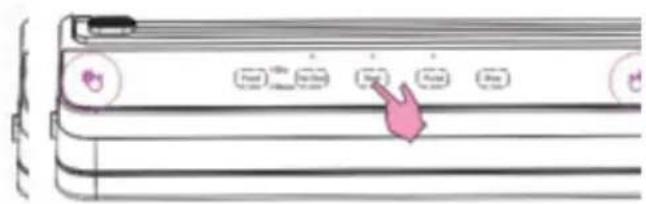
Food button
1 The appliance can operate with the settings “Moist” or “Dry”. The default setting is “Dry”. If the items you wish to vacuum are highly liquid, it is best to use the “Moist” setting.
Vac Seal button / evacuating and sealing
2 With a press of this button you can evacuate and seal the bags and films in a single work step.
3 Seal button / sealing A press of this button merely seals the bag.
4 Pulse button Manual evacuation is used for evacuating containers.
5 Stop button Press the Stop button to cancel the currently running process at any time.
PUTTING THE APPLIANCE INTO OPERATION
- Remove all packaging materials and any transport guards and stickers (not the type plate or the serial number!). The two small white protective covers on the bottom left and right inside the evacuation chamber need to be removed as well. Keep the packaging material away from children and animals - choke hazard! Dispose of the packaging material according to the applicable statutory waste disposal regulations.
- Inspect the appliance for damage. If there is visible damage, do not operate the appliance; instead, contact our customer service department.
- Clean all parts with a damp cloth, as described in the section „Cleaning and maintenance“.
- Place the appliance on a flat and suitable work surface.
- Make sure to leave enough room in front of the appliance so that you can place each bag you wish to evacuate in front of the appliance.
- Connect the appliance via the power cord to the power supply (alternating current, 220–240 V\~, 50–60 Hz).
- All indicator lamps flash briefly before the indicator lamp "Dry" comes on permanently, indicating that the appliance is ready for use.
EVACUATING OR SEALING IN BAGS
- Prepare the appliance as described under “Putting the appliance into operation”.
- Open the lid of the appliance.
-
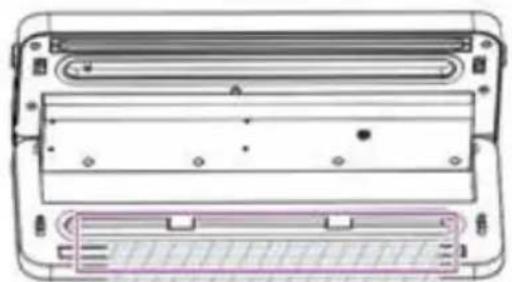
Check if the seal in the appliance is clean. If detecting any foreign objects, e.g. crumbs, on the seal, you need to remove them as the appliance will otherwise not be able to generate a vacuum.
-
Fill the bag with the items you wish to evacuate. To achieve an optimum result, you should not add too many items to the bag. Leave a space of approx. 8 cm between the contents and the end of the bag.
-
Place the open end of the bag into the centre of the evacuation chamber. Make sure to leave sufficient space on the left and the right. Do not press the bag into the chamber too firmly. If the bag is not inserted properly, the appliance will not be able to generate the proper vacuum. Therefore, make sure the bag is seated properly before continuing. Close the lid of the appliance until the lid audibly locks into place.
natural_image
Technical diagram of a device casing with internal components and mounting holes (no text or symbols)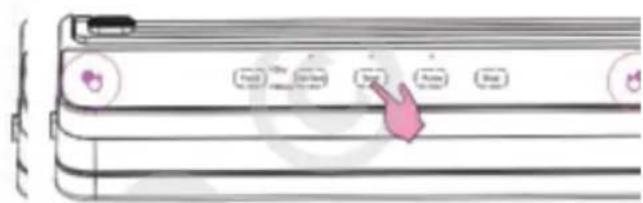
text_image
Enter Close Close Close Close Close Close Close Close Close Close Close Close Close Close Close Close Close Close Close Close Close Close Close Close Close Close Close Close Close Close Close Close Close Close Close Close Close Close Close Close Close Close Close Close Close Close Close Close Close Close Crown- Now, use the “Food” button to select either “Dry” (dry items to be evacuated) or “Moist” (moist items to be evacuated), thus adjusting the evacuation process to the specific consistency of the items. The default setting is “Dry”.
- Next, press the “Vac/Seal” button. The indicator lamp of the button indicates which evacuation process is currently running. Caution: this indicator lamp will remain lit for a few seconds after the subsequent sealing process was started and will afterwards go out.
- Once the evacuation process has produced an optimum result, the bag will be sealed: The indicator lamp of the “Seal” button signals this status as well.
- The appliance starts sealing, and the vacuum pump will - depending on the set vacuum value - only run at the beginning and then stop.
natural_image
Pure technical line drawing of a layered electronic component with no text or symbols- When the process is complete, the indicator lamp is switched off.
- If you wish to interrupt the process, press the "Stop" button.
-
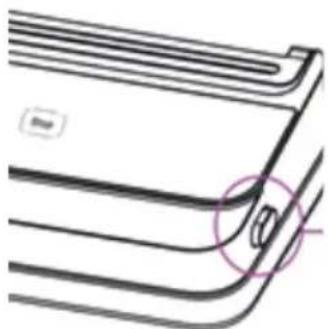
Now, press on both closures on the right and the left of the appliance at the same time. The lock is released, and you can remove the finished bag.
-
The evacuation process is finished, and the food in the back has been vacuum packaged.
- If you merely wish to the seal the bag without evacuating it, place the bag in the appliance as described above. In that case, press the “Seal” button. Once the indicator lamp of this button goes out, the bag will be sealed and can be removed as described.
- Always check if the evacuation result is to your satisfaction and make sure that the sealing seam is continuous and in proper order.

The evacuation chamber will become hot while the appliance is in operation. Therefore, do not touch during operation on account of the risk of injury from burns.
EVACUATING OR SEALING WITH FILM
- Prepare the appliance as described under “Putting the appliance into operation”.
- Open the lid of the appliance.
- Check if the seal in the appliance is clean. If detecting any foreign objects, e.g. crumbs, on the seal, you need to remove them as the appliance will otherwise not be able to generate a vacuum.
- Cut the required piece of film off the roll. Caution: You will have to add at least 8 cm, which you will need for evacuating. If you would like to reuse this bag, you need to factor in more space, i.e. 2.5 cm for each evacuation process.
- Place the open end of the film into the evacuation chamber. Make sure to leave sufficient space on the left and the right.
- Close the lid of the appliance until the lid audibly locks into place.
- Press the "Seal" button.
- The appliance starts sealing, and the vacuum pump will - depending on the set vacuum value - only run at the beginning and then stop.
- When the process is complete, the indicator lamp "Seal" is switched off.
- Now, press on both closures on the right and the left of the appliance at the same time. The lock is released, and you can remove the finished bag.
- Always check if the result is to your satisfaction and make sure that the sealing seam is continuous and in proper order.
-
You can now start evacuating as described on page 30.
-
If you wish to interrupt the process, press the "Stop" button.

The evacuation chamber will become hot while the appliance is in operation. Therefore, do not touch during operation on account of the risk of injury from burns.
natural_image
Diagram of a rectangular device with internal grid pattern and two black components, no visible text or symbols-
Make sure that the cutting slide holding the knife has been moved all the way to one side.
-
Flip up the cutting unit. Place the bag or film underneath and flip the cutting unit back down.
-
Slightly press on the cutting unit to fix the bag or film in place
and proceed by drawing the cutting slide across the items you wish to cut.
- Finish by removing the bag / film again.

Caution. Risk of injury. The cutting knife is very sharp!
EVACUATING IN THE CONTAINER
Use only containers that are suitable for evacuation. The maximum diameter must not exceed 32 cm. You can order them from your customer service. If you wish to evacuate liquids in a container, you should cool them in the refrigerator beforehand. If you wish to evacuate ground or granular food in the container, place a paper towel on the food before closing the lid and starting the evacuation process.
- Prepare the appliance as described under "Putting the appliance into operation".
- Place the items you wish to evacuate in the container. Leave at least 1 cm of space between the items you wish to evacuate and the top edge of the container.
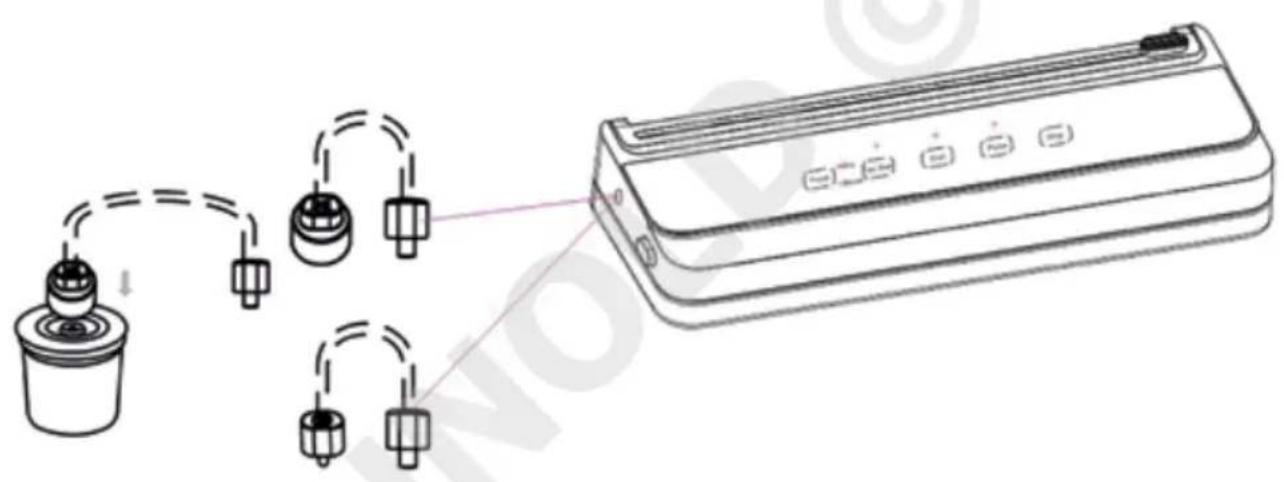
- Plug one end of the included hose into the connector on the vacuum sealer and the other end into the valve housed in the lid of the vacuum sealing container.
-
Close the lid of the vacuum sealer until the lid audibly locks into place.
-
It is also necessary for the lid of the vacuum sealing container to be closed properly and for the valve to be set to “Evacuate”.
- Press the "Pulse" button. The indicator lamp shows that the appliance is in operation.
- Hold down the button until the result of the evacuation process is to your satisfaction. Release the button afterwards.
- Remove the hose from the appliance and the container.
- The evacuation process is complete, and the food in the container has been vacuum-packaged.
Opening the vacuum sealing container
To open the container, press down on the button in the centre of the lid. The vacuum is released, allowing you to remove the lid from the container.
text_image
Diagram showing a device connected to a rack-mounted air conditioner unit with labeled components and wiring connections.CLEANING AND CARE
Cleaning the appliance

Before cleaning the appliance, switch it off and disconnect the plug from the power socket.
The appliance and the power cord must not be immersed in water or another liquid.
Let the appliance cool down before cleaning it.
- Remove any food still clinging to the appliance using a damp cloth.
- Wipe off the vacuum sealer with a damp cloth and a little washing-up liquid.
-
Never use scouring agents, steel wool, metal objects, hot cleaners or disinfectants.
-
Before starting the appliance, make sure that the appliance and the power plug are completely dry.
- If necessary, you can pull the upper section of the housing up and off the bottom section. To reassemble the appliance, carefully insert the two bottom brackets on the left and the right into the recesses on the bottom section of the housing and flip the upper housing section down.
- If one of the sealing seams is worn out, you can replace it with the included seal. The seal has been pre-punched into the material. Remove the excess material carefully.
- Remove the defective sealing seam in the appliance and carefully insert the new seal before pressing it in firmly. Only if the seam is seated correctly can the appliance function properly.
- Store the fully dried vacuum sealer in a place that is dry and protected against dust, impact, heat and moisture.
- We recommend that you close the lid of the appliance only slightly to protect the seals on the inside from being subjected to continuous pressure.
Cleaning the vacuum sealing bags
- The vacuum sealing bags can be cleaned in warm water with a little washing-up liquid added.
- You can also clean the bags in the dishwasher. To do so, carefully turn the corresponding bag inside out and place it in the top rack of the dishwasher. Make sure that all surfaces of the bag are coming into contact with the water.
- Never use scouring agents, steel wool, metal objects, hot cleaners or disinfectants.
- Dry the bags carefully before reusing them.
- We recommend not to reuse bags in which you vacuum-packaged raw meat or fish.
- If you evacuated very fatty food, the bags you used may also not be suitable for reuse.
Cleaning the vacuum sealing container
- The vacuum sealing container can be cleaned in warm water with a little washing-up liquid added.
- Never use scouring agents, steel wool, metal objects, hot cleaners or disinfectants.
- Dry the container and the lid carefully before reusing them.
TROUBLESHOOTING
Problem Solution
No function when a button is pressed.
No vacuum can be created.
The bag loses the vacuum.
- Check to make sure that the appliance is correctly plugged into the power supply.
■ Check for damage to the power cord. - Check to make sure that the power outlet you are using functions properly by plugging another appliance into it.
- Check for holes in the bag. To do so, you can seal the bag so that there is still some air in it. Place the bag in water and press down on it somewhat. If air bubbles rise from the bag, there is a hole in it. Please use a new bag.
■ If you are using a bag you have made yourself, check the sealing strip of the bag. If there is a crease in the sealing strip, this prevents air from being drawn from the bag. Cut the bag off at this point and seal it again.
■ Check the sealing strip of the bag. If there is a crease in the sealing strip, no vacuum can be created. Open the bag and vacuum pack it again.
■ Remnants of fat, liquids, crumbs, etc. in the vicinity of the sealing bar can cause the air to escape. Open the bag, clean the affected area thoroughly and vacuum pack it again.
- Foods with sharp edges, such as bones, can damage the bag. In this case, you will have to use a new bag. If you wish to vacuum pack such foods, first wrap them in a paper towel.
Problem Solution
| The bag cannot be sealed. | ■ Remnants of fat, liquids, crumbs, etc. in the vicinity of the sealing strip can keep the bag from sealing. Open the bag, clean the affected area thoroughly and seal it again. |
| No vacuum can be created in the container. | ■ Make sure that the hose is correctly connected.■ Check to make sure that there is at least 2,5 cm of space between the contents and the top edge of the container, since otherwise no vacuum can be created.■ Make sure that the container and the lid are not damaged by hairline cracks. Hairline cracks can cause the container to leak, and no vacuum can be created. In this case, the container has to be replaced. |
| The appliance is working but can not seal the bag. | ■ When the appliance is working time too long, the heating thread is overheated. In order to ensure the machine safety and the sealing performance, the heating thread is stopped by the temperature controller. In this case please stop the appliance working for about two minutes; the heating thread will cool down. Then restart the appliance. |
GUARANTEE CONDITIONS
We grant a 24 months guarantee, and in case of commercial use a 12 months guarantee, starting from the date of purchase for any damage demonstrably due to manufacturing defects and when the appliance has been used according to its intended use. Within the warranty period we will remedy defective materials or workmanship through repair or replacement, at our option. Our warranty terms apply only to appliances sold in Germany and Austria. For other countries, please contact the responsible importer. In the event of a claim for remedy of defects, please send the appliance to our after sales service, properly packaged, together with a copy of the automatically generated sales receipt, which must show the date of purchase, and a description of the defect. You can print out a return receipt on our website www.unold.de/ruecksendung. (only for entries from Germany and Austria). The warranty does not cover damage from normal wear, improper handling and failure to comply with the maintenance and care instructions. The warranty is void if repairs or modifications are made to the appliance by third parties. Any claims of the end consumer vis-à-vis the retailer are not limited by this warranty.
WASTE DISPOSAL / ENVIRONMENTAL PROTECTION
Our appliances are produced on a high quality level for a long lifetime. Regular maintenance and expert repairs
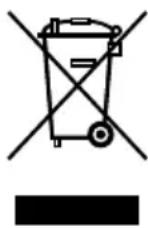
by our after-sales service can extend the useful life of the appliance. If an appliance is defective and repair is not possible we ask you to follow the following instructions for disposal. Do not dispose this appliance together with your standard household waste. Please bring this product to an approved collection point for recycling of electric and electronic products. By separate collection and disposal of waste products you help to protect natural resources and ensure, that the product is disposed in an adequate way to protect health and environment.
NOTICE D'UTILISATION MODÈLE 48055
AVANT-PROPOS
natural_image
Diagram of a computer RAM module showing internal components and memory slots (no text or labels)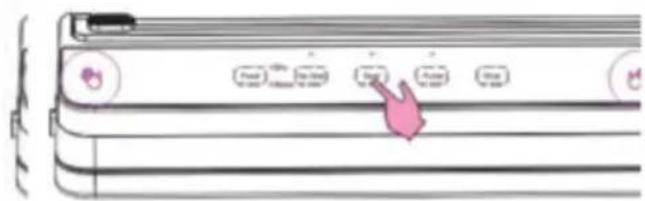
text_image
Diagram of a refrigerator front panel with labeled buttons and a pink cursor pointing to the button.natural_image
Pure technical line drawing of a curved mechanical component with no text or symbolsnatural_image
Technical diagram of a mechanical component with internal channels and grid pattern (no text or symbols)text_image
Diagram showing connections between a power plug, two microcontroller units, and an air conditioner unit with labeled buttons.NETTOYAGE ET ENTRETIEN
CONDITIONS DE GARANTIE
HYGIËNISCHE OMGANG MET LEVENSMIDDELEN
natural_image
Diagram of a device's internal structure showing two rectangular panels with internal components and mounting holes (no text or symbols)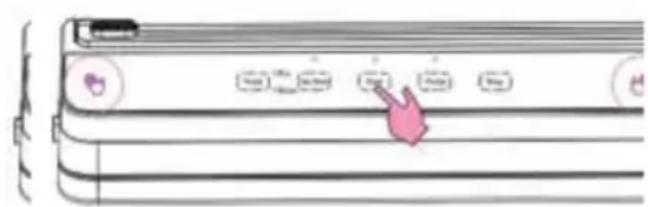
text_image
Diagram of a mobile phone status bar with labeled buttons and a pink cursor pointing to the 'OK' button.natural_image
Pure technical line drawing of a layered electronic component with no text or symbolsnatural_image
Diagram of a mechanical device with internal components and grid pattern (no text or symbols)natural_image
Pure technical line drawing of a layered structure with no text or symbolsnatural_image
Technical diagram of a mechanical component with internal channels and grid pattern (no text or symbols)text_image
Diagram showing connections between a power supply unit and three connected modules with labeled portsCURA E PULIZIA
DIAGNOSTICA DEI PROBLEMI
Problema Soluzione
natural_image
Diagram of a device showing internal components with no visible text or symbols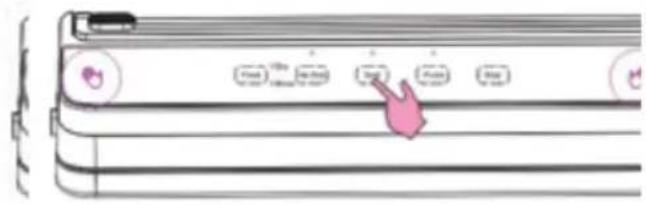
text_image
Home Backed Up Down Up Up Up UpA
natural_image
Pure technical line drawing of a layered structure with no text or symbolsnatural_image
Technical diagram of a mechanical component with grid pattern and directional arrows (no text or symbols)text_image
Diagram showing a device connected to a rack-mounted air conditioner unit with labeled components and wiring connections.LIMPIEZA Y CUIDADO
natural_image
Technical line drawing of a device casing with internal components and mounting holes (no text or symbols)