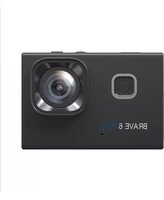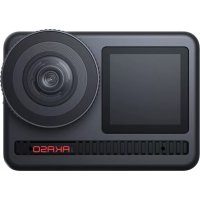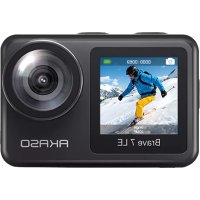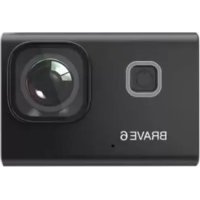
V50 X - Action camera Akaso - Free user manual and instructions
Find the device manual for free V50 X Akaso in PDF.



| Product type | Sport camera |
| Brand | Akaso |
| Model | V50 X |
| Video resolution | Up to 4K30fps, 1080P90fps, 720P120fps |
| Photo resolution | 20MP, 12MP, 8MP, 5MP, 3MP |
| Video modes | Normal video, slow motion, time-lapse, fixed photo |
| Photo modes | Photo, self-timer, burst, time-lapse |
| Image stabilization | Yes (electronic, can be turned on/off) |
| Video encoder | H.264 / H.265 |
| Field of view | 170°, 140°, 110°, 70° |
| Screen | Built-in LCD |
| Built-in Wi-Fi | Yes |
| Mobile app | AKASO GO (iOS/Android) |
| Remote control | Included (CR2032 battery) |
| Battery | Built-in rechargeable |
| Power supply | Lithium-ion battery, charging via Mini USB port |
| Storage | microSD card (UHS-III, up to 512GB, FAT32) |
| Water resistance | Waterproof up to 30m with included waterproof case |
| Dimensions (approx.) | Not specified, compact form factor |
| Weight (approx.) | Not specified |
| Box contents | Camera, handle, waterproof case, mounts, remote control, wrist strap, lens cloth, bandages, battery charger, USB cable |
| Care and cleaning | Clean the lens with a soft, lint-free cloth; blow on the microphone to remove debris |
| Safety | Do not disassemble, do not expose to extreme temperatures, do not use if damaged |
| Spare parts and repairability | Spare parts available upon request; customer support by email |
| General information | Contact: cs@akasotech.com |
Frequently Asked Questions - V50 X Akaso
User questions about V50 X Akaso
0 question about this device. Answer the ones you know or ask your own.
Ask a new question about this device
Download the instructions for your Action camera in PDF format for free! Find your manual V50 X - Akaso and take your electronic device back in hand. On this page are published all the documents necessary for the use of your device. V50 X by Akaso.
USER MANUAL V50 X Akaso
AKASO V50X Action Camera
01 - 27
28 - 54
55 - 81
82 - 108
109 - 135
136 - 162
CONTENTS
What's in the Box 2
3
Getting Started 5
Overview of Modes 7
Customizing Your V50X 11
Connecting to the App 19
Playing Back Your Content 20
Deleting Your Content 20
Offloading Your Content 21
Maintaining Your Camera 21
Maximizing Battery Life 22
Battery Storage and Handling 22
Remote 23
Mounting Your Camera 25
Contact Us 27
WHAT'S IN THE BOX
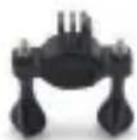
| Waterproof HousingAKASO V50X Handle Bar/Pole Mount Mount 1 | |||
| Mount 2 | Mount 3 Mount 5 Mount 4 | ||
| Mount 6 Mount 7 Mount 8 | Mount 8 | √ | Helmet Mounts |
| Protective Backdoor | ChargerBatteryU | ||
| Remote | Bandages | 1 | Lens ClothTethers |
| Wrist Strap for Remote | Quick Start Guide | ||
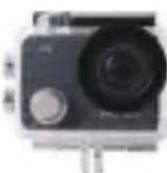
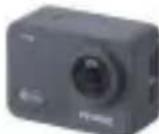
YOUR V50X
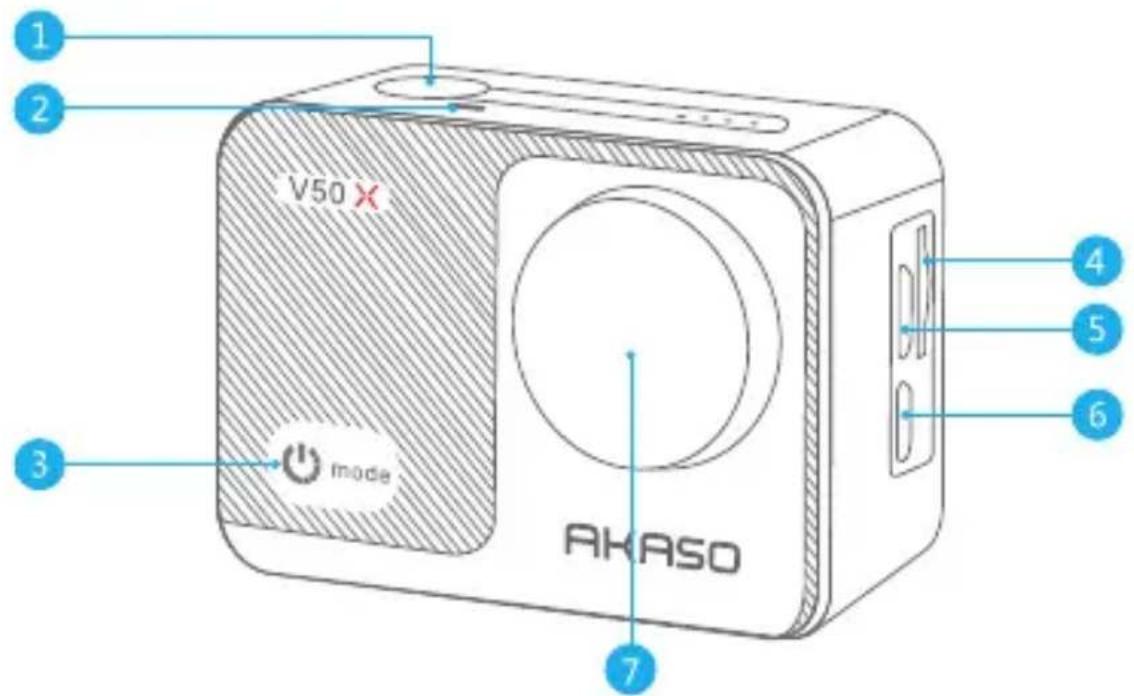
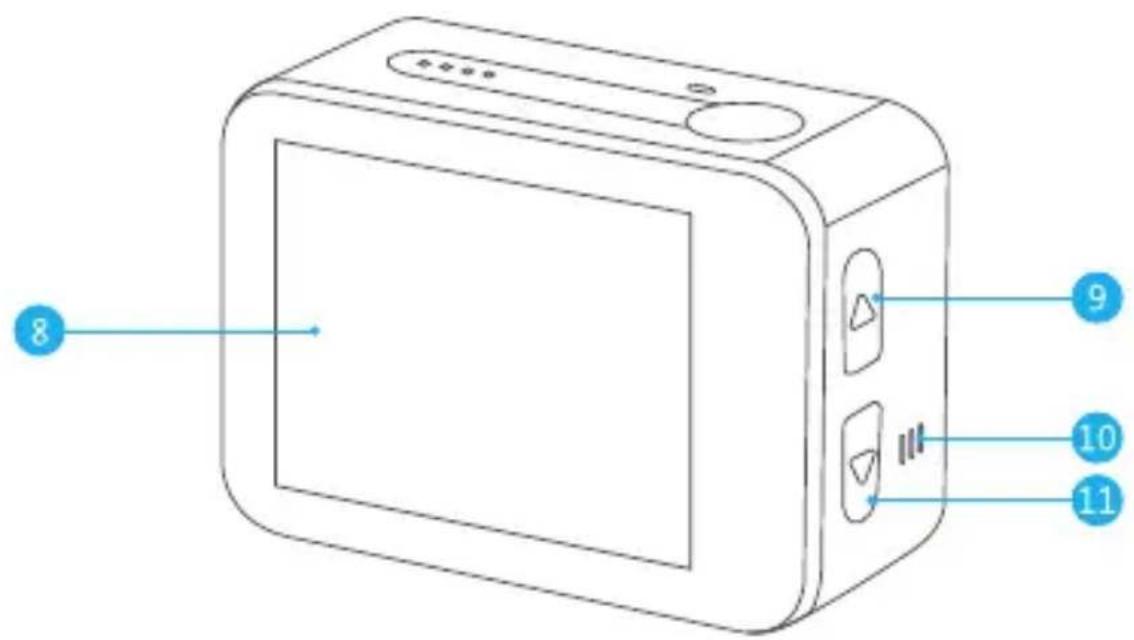
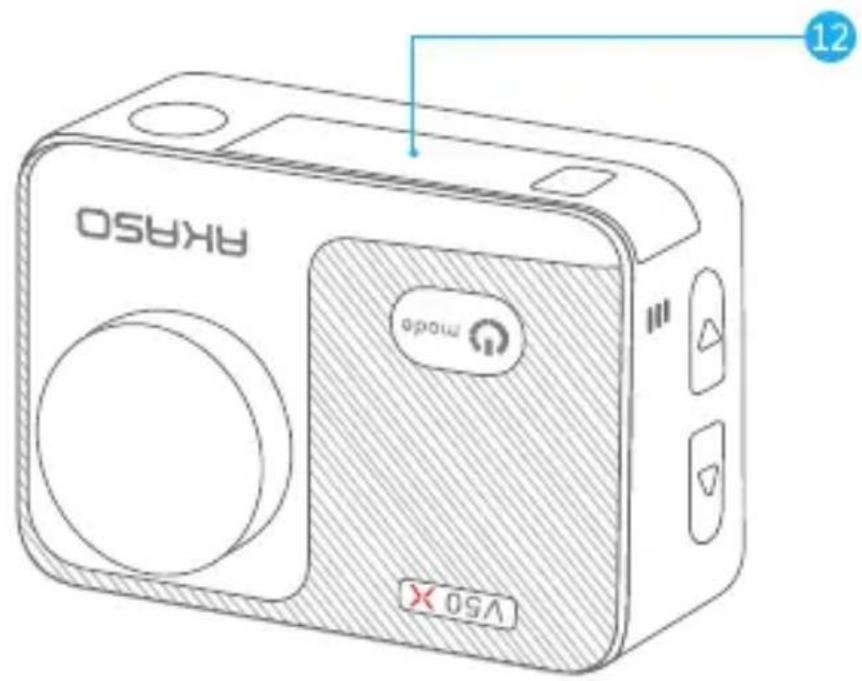
1 Shutter/Select Button
2 Indicator
3 Power/Mode Button
4 Memory Card Slot
5 Micro USB Port
6 Micro HDMI Port
7 Lens
8 Screen
Up Button
10 Speaker
11 Down Button
12 Battery Door
Note: The camera does not record sound when it is in the waterproof case.
GETTING STARTED
Welcome to your AKASO V50X. To capture videos and photos, you need a memory card (sold separately) to start recording.
Memory Cards
Please use brand name memory cards that meet these requirements:
UHS-III rating
- Capacity up to 512GB (FAT32)
Note:
- Please format the memory card first in this camera before using. To keep your memory card in good condition, reformat it on a regular basis. Reformatting erases all your content, so please make sure to offload your photos and videos before reformatting.
- FAT32 format memory card stops recording when the file size reaches 4GB, and starts to record again on a new file.
Powering On and Off
Press and hold the Power button for 3 seconds. The camera beeps while the camera status light is on. When information appears on the display, your camera is on. When the camera is on, press and hold the Power button again to power off.
Switching Modes
Turn on the camera, press the Mode button or tap the shooting mode area on the screen to switch modes.
Turing On and Off Wifi
Turn on the camera, press the Up button to turn on Wifi, the Wifi name and password will appear on the screen. Press the Up button again to turn off Wifi.
Shortcut Menu
Swipe down from the top of the screen, you can quickly turn on Wifi, lock the display and power off.
OVERVIEW OF MODES
There are 9 modes: Photo, Self-Timer, Burst Photo, Time Lapse Photo, Video, Slow Motion, Time Lapse Video, Still Photo and Driving Mode.
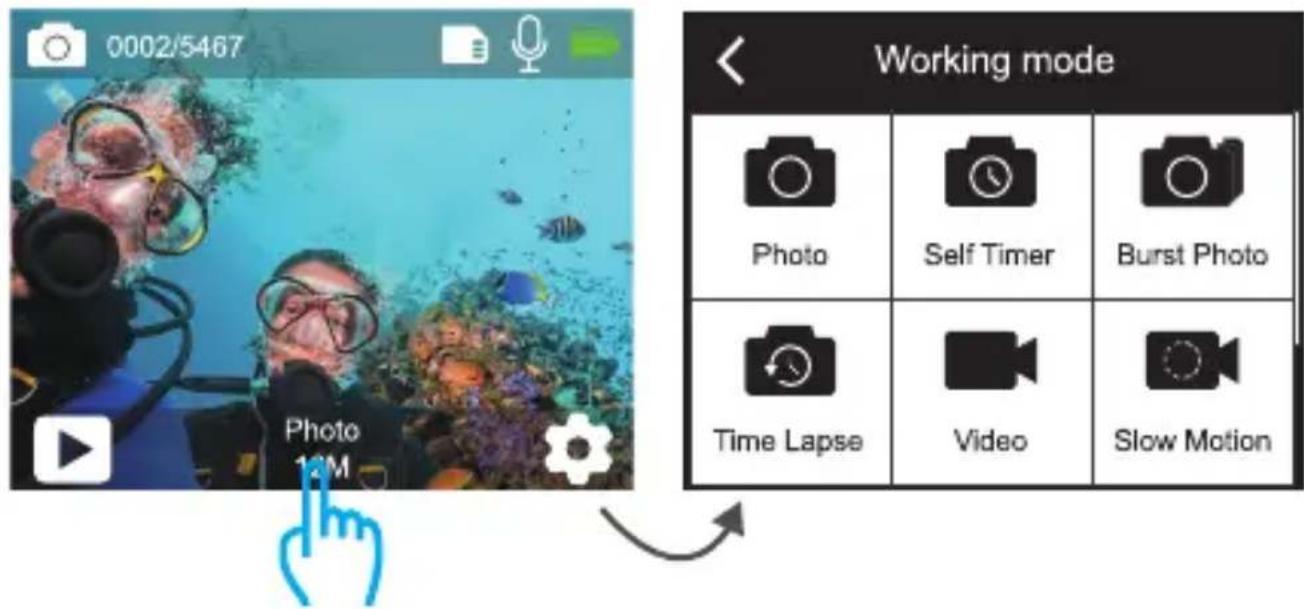
Tap here
Photo Mode
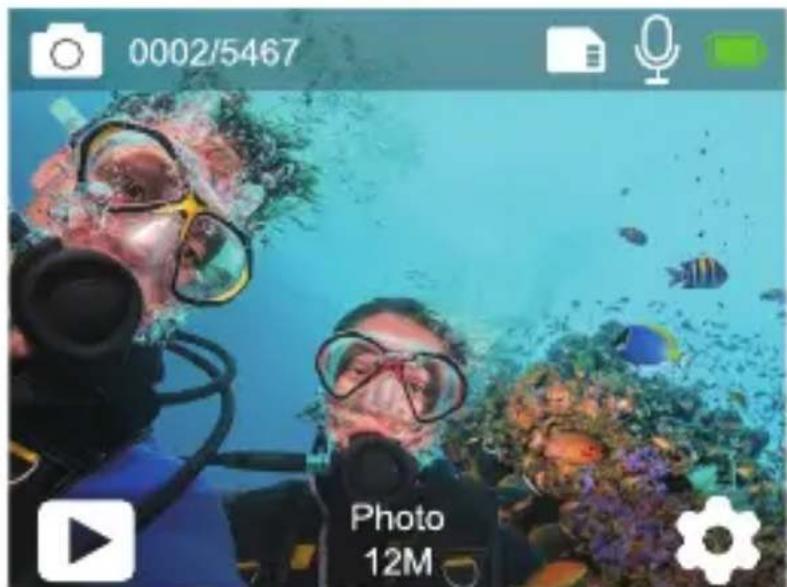
Press the Mode button or tap the shooting mode area on the screen to switch to Photo Mode after you turn on the camera.
In Photo Mode, press the Shutter button to take photos. Press and hold the Up or Down button to adjust the zoom level.
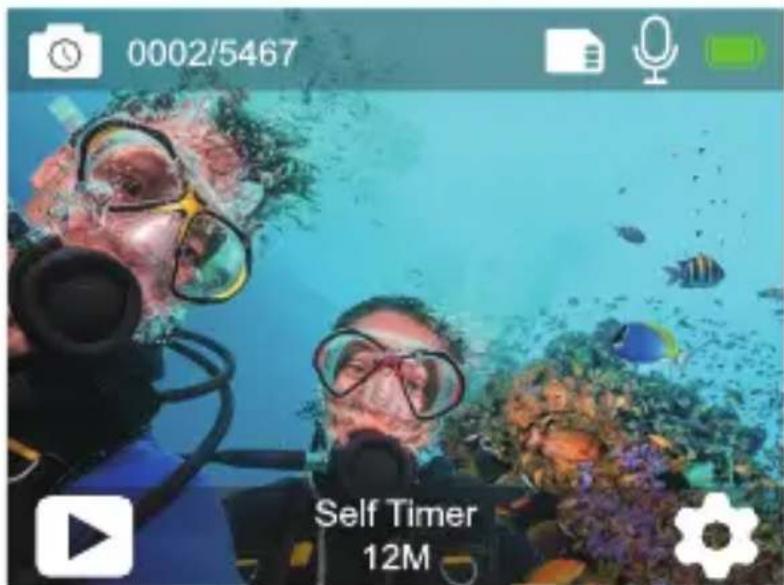
Self-Timer Mode
Press the Mode button or tap the shooting mode area on the screen to switch to Self-Timer Mode after you turn on the camera.
In Self-Timer mode, press the Shutter button, it takes a self-timer photo. Press and hold the Up or Down button to adjust the zoom level.
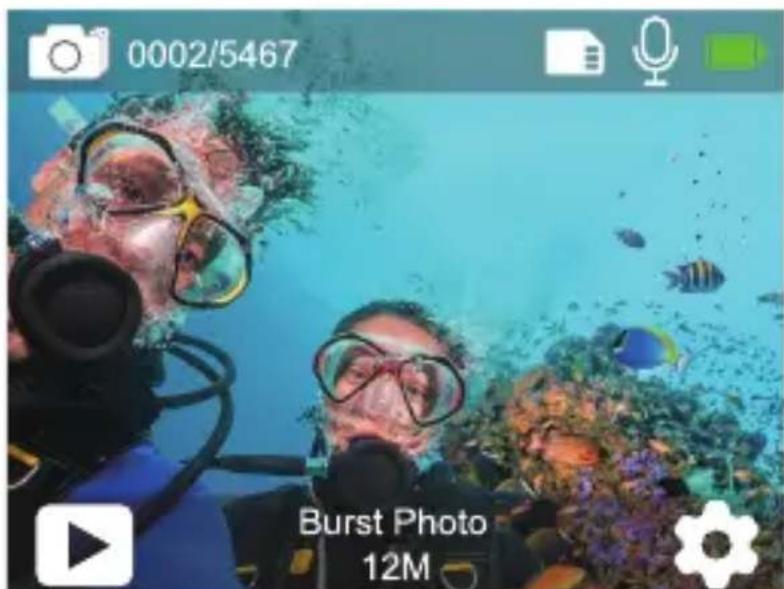
Burst Photo Mode
In Burst Photo mode, press the Shutter button, several photographs are captured in quick succession, so it is perfect for capturing fast-moving activities. Press and hold the Up or Down button to adjust the zoom level.
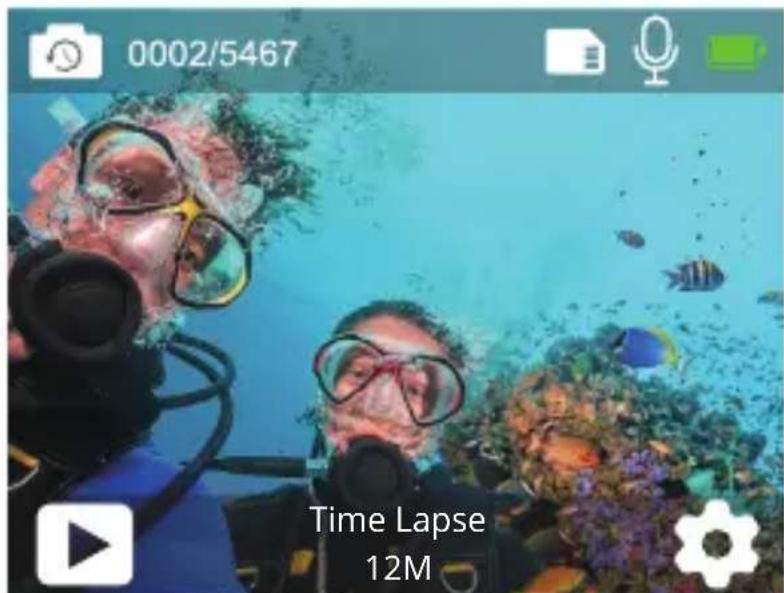
Time Lapse Photo Mode
In Time Lapse Photo Mode, press the Shutter button, it captures a series of photos at specific intervals. Use this mode to capture photos of any activity, then choose the best ones later. Press and hold the Up or Down button to adjust the zoom level.
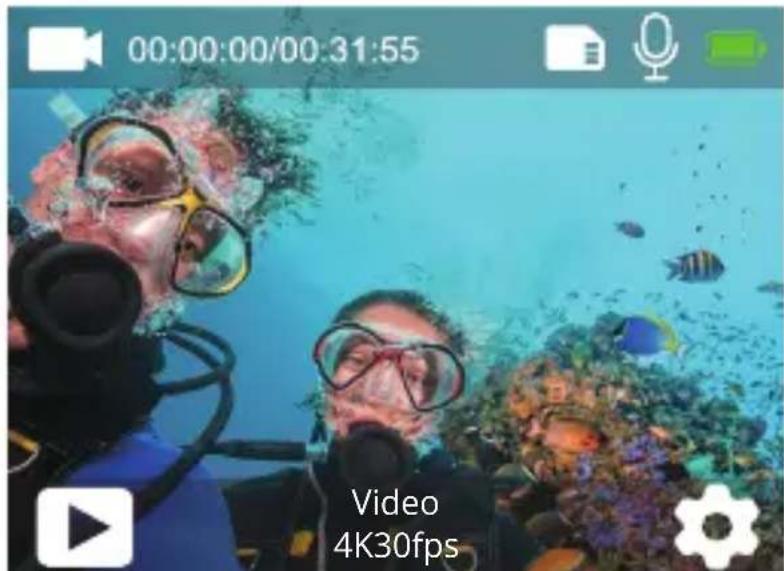
Video Mode
Video Mode is the default mode when you turn on the camera. In Video Mode, press the Shutter button, the camera starts recording video. Press the Shutter button again to stop recording video. Press and hold the Up or Down button to adjust the zoom level.
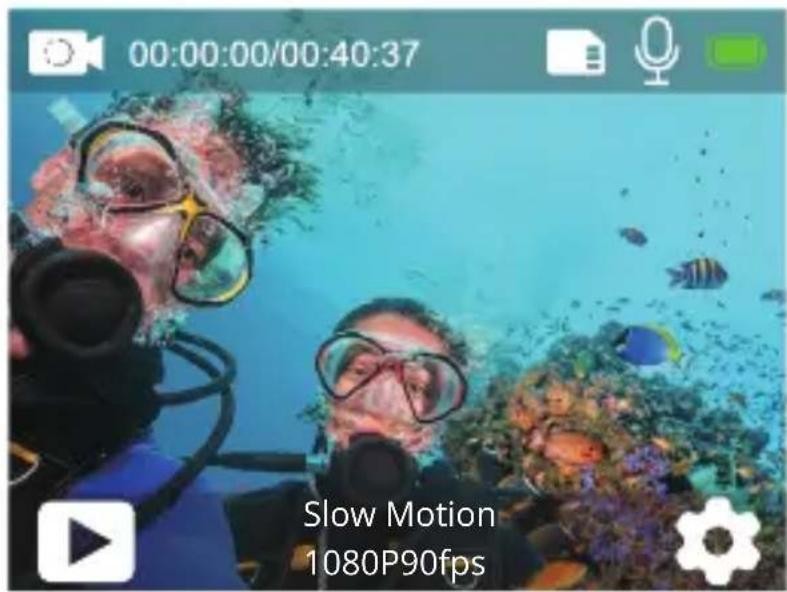
Slow Motion Mode
In Slow Motion Mode, press the Shutter button, the camera records slow-motion video. Press and hold the Up or Down button to adjust the zoom level.
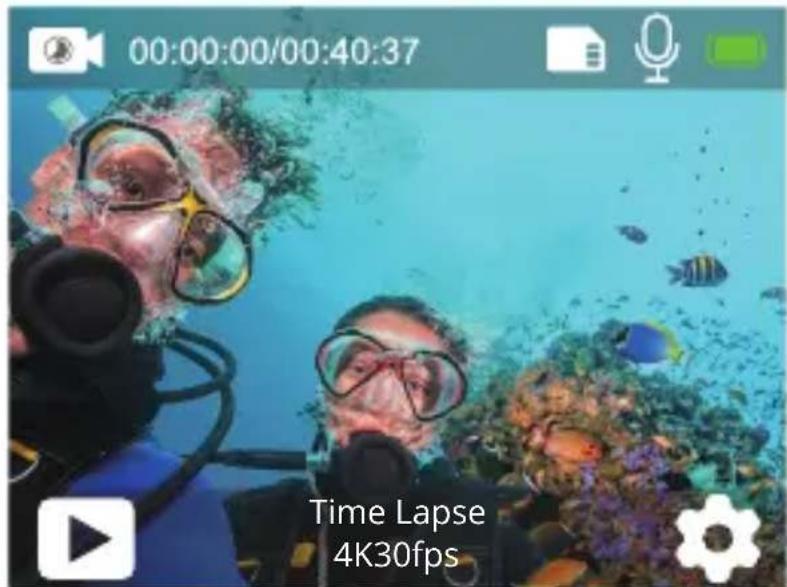
Time Lapse Video Mode
In Time Lapse Video Mode, press the Shutter button, the camera records video from frames captured at specific intervals. Press and hold the Up or Down button to adjust the zoom level.
Note: Time Lapse Video is captured without audio.
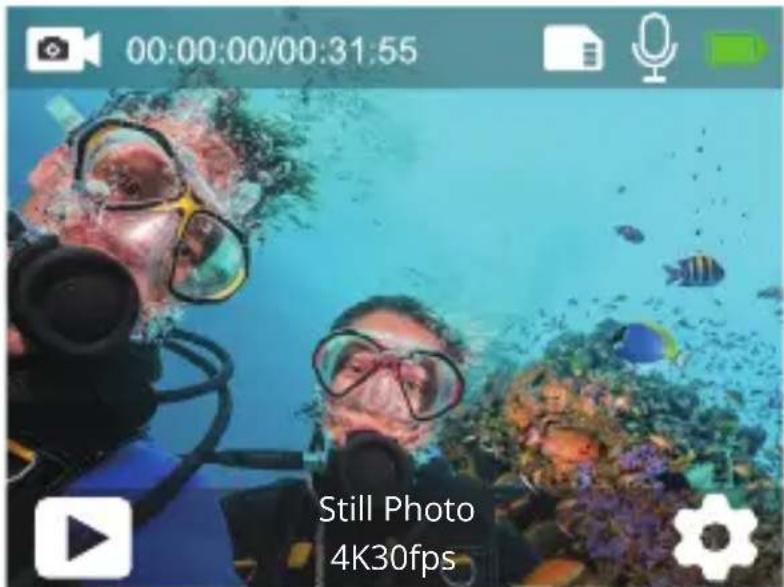
Still Photo Mode
In Still Photo mode, press the Shutter button, the camera starts recording video, and it will take photos automatically during video recording. Press and hold the Up or Down button to adjust the zoom level.
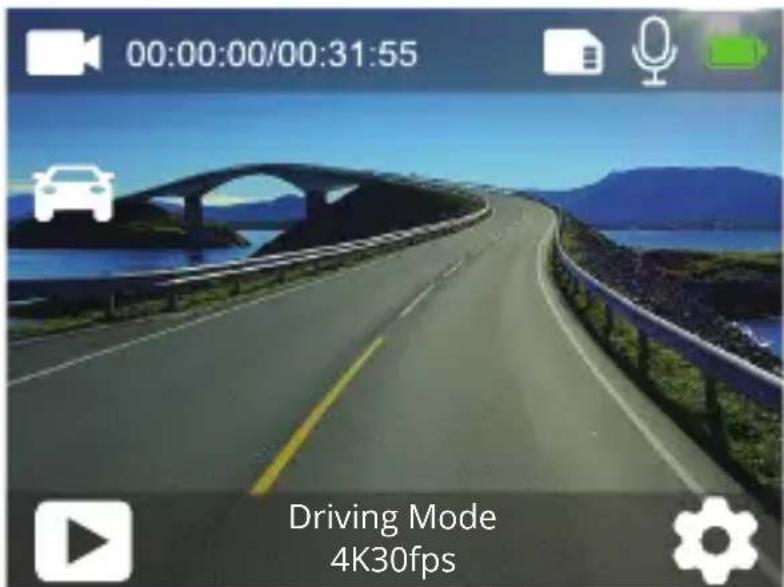
Driving Mode
In Driving Mode, you connect the camera with car cigarette lighter, the camera will turn on automatically if you start your car and will turn off if you stop your car.
CUSTOMIZING YOUR V50X
Video Settings
- Resolution: 4K30fps/2.7K30fps/1080P90fps/1080P60fps/1080P30fps/720P120fps/720P60fps/720P30fps
Default setting is 4K30fps.
Note: When capturing video at high resolutions or high frame rates in warm ambient temperatures, the camera may become warm and use more power.
- Image Stabilization: OFF/ON
Default setting is off.
- Gyroscope: OFF/ON
Default setting is off.
This setting adjusts the footage to offset motion during capture. The result is smoother footage, especially in activities with relatively small but fast motion including cycling, motorcycling, and handheld uses.
- Video Encode: H.264/H.265
Default setting is H.264.
A video codec is an electronic circuit or software that compresses or decompresses digital video. It converts uncompressed video to a compressed format or vice versa. According to multiple studies, HEVC, High Efficiency Video Coding (H.265) should deliver up to 50% better compression than H.264 in video on demand (VOD) applications, which means better quality at half the bit rate. In live encoding, which obviously has to be performed in real time, the initial expectations are a 35% bandwidth reduction at similar quality levels. Alternatively, HEVC can also enable larger resolution movies, whether 2K or 4K. In addition, encoding existing SD and HD content with HEVC rather than H.264 will add to cost savings and/or the ability to stream higher quality video to lower bit rate connections.
- Slow Motion: 1080P90fps/720P120fps
Default setting is 1080P90fps.
Slow motion is an effect in film-making whereby time appears to be slowed down.
Note: If you want to record slow motion video, please turn off Image Stabilization first.
Default setting is 4K30fps.
7. Still Photo Time: 3 Sec/5 Sec/10 Sec/30 Sec
Default setting is 3 Sec.
In still photo mode, the camera takes a photo every 3 Sec/5 Sec/10 Sec/30 Sec automatically during video recording.
8. Time Lapse Interval: 0.2 Sec/0.3 Sec/0.5 Sec/1 Sec/2 Sec/5 Sec/10 Sec/30 Sec/1 Min Default setting is 0.5 Sec.
Time Lapse Video creates video from frames captured at specific intervals.
Time Lapse Video is captured without audio. Select 2 seconds means recording 2 seconds to get one frame per second. For example, if you select 4K30fps and 2 seconds, you need to record 60 seconds, then you can get 1 second video for 4K30fps.
9. Loop Recording Time: Off/3 Min/5 Min/7 Min
Default setting is off.
Loop recording allows your camera to overwrite old files with new files. Once the memory card becomes full, the camera will delete the first video file to make room for the latest file. For example, if the setting for loop recording is "1 Minute", then the camera will create video clips of 1 minute in length, and a 1-minute clip will be deleted when the camera needs more memory.
10. External Microphone: ON/OFF
Default setting is off.
11. Audio Record: ON/OFF
Default setting is ON.
Turn off Audio Record, the camera does not record sound when you record video.
- Exposure Value: -2/-1.7/-1.5/-1.3/-1/-0.5/-0.3/0/+0.3/+0.5/+1/+1.3/+1.5/+1.7/+2 Default setting is 0.
By default, your camera uses the entire image to determine the appropriate exposure level.
However, Exposure lets you select an area that you want the camera to prioritize when determining exposure. This setting is particularly useful in shots where an important region might otherwise be over- or underexposed.
13.ISO:Auto/100/200/400/800
Default setting is Auto.
ISO determines the camera's sensitivity to light, and creates a trade-off between brightness and resulting image noise. Image noise refers to the degree of graininess in the image. In low light, higher ISO values result in brighter images, but with greater image noise. Lower values result in lower image noise, but darker images.
- White Balance: Auto/Tungsten/Fluorescent/Daylight/Cloudy/Dawn
Default setting is Auto.
White Balance lets you adjust the color temperature of videos and photos to
optimize for cool or warm lighting conditions.
- Meter: Center/Average/Spot
Default setting is Average.
In photography, the metering mode refers to the way in which a camera determines exposure. Cameras generally allow the user to select between center, average or spot metering modes. The different metering modes allow the user to select the most appropriate one for use in a variety of lighting conditions.
- Color: Natural/Black & White/Sepia
Default setting is Natural.
Photo Settings
- Resolution: 20MP/12MP/8MP/5MP/3MP
Default setting is 20MP.
- Output Format: JPEG/JPEG+PNG
Default setting is JPEG.
DNG file extension refers to a raw Image format. The image data is uncompressed and kept in a lossless state. The camera does not support Distortion Calibration and DNG format at the resolution of 20MP.
- Self-Timer: 1 Sec/3 Sec/5 Sec/10 Sec/30 Sec
Default setting is 3 Sec.
A Self Timer gives a delay between pressing the shutter release and the shutter's firing. It is most commonly used to let photographers to take a photo of themselves.
- Time Lapse Photo: 3 Sec/5 Sec/10 Sec/30 Sec/1 Min
Default setting is 3 Sec.
It captures a series of photos at specific intervals.
- Burst Photo: 3shots/5shots/10shots
Default setting is 3shots/1s.
In burst mode, several photographs are captured in quick succession, so it is perfect for capturing fast-moving activities.
- Scene: Auto/Light Painting
Default setting is Auto.
- Exposure Value: -2/-1.7/-1.5/-1.3/-1/-0.5/-0.3/0/+0.3/+0.5/+1/+1.3/+1.5/+1.7/+2
Default setting is 0.
By default, your camera uses the entire image to determine the appropriate exposure level. However, Exposure lets you select an area that you want the
camera to prioritize when determining exposure. This setting is particularly useful in shots where an important region might otherwise be over- or underexposed.
8. Exposure Time: Auto/2 Sec/5 Sec/10 Sec/30 Sec
Default setting is Auto.
The exposure time, respectively period of exposure means the time span for which the film of a traditional camera or a sensor of a modern digital camera is actually exposed to the light so as to record a picture.
9.ISO:Auto/400/800/1600/3200
Default setting is Auto.
ISO determines the camera's sensitivity to light, and creates a trade-off between brightness and resulting image noise. Image noise refers to the degree of graininess in the image. In low light, higher ISO values result in brighter images, but with greater image noise. Lower values result in lower image noise, but darker images.
10. White Balance: Auto/Tungsten/Fluorescent/Daylight/Cloudy/Dawn
Default setting is Auto.
White Balance lets you adjust the color temperature of videos and photos to optimize for cool or warm lighting conditions.
11. Meter: Center/Average/Spot
Default setting is Average.
In photography, the metering mode refers to the way in which a camera determines exposure. Cameras generally allow the user to select between center, average or spot metering modes. The different metering modes allow the user to select the most appropriate one for use in a variety of lighting conditions.
- Sharpness: Strong/Normal/Soft
Default setting is Normal.
Sharpness controls the quality of details captured in your video footage or photos.
- Color: Natural/Black & White/Sepia
Default setting is Natural.
- Photo Quality: Fine/Normal/Economy
Default setting is Fine.
System Settings
- Sounds: Volume/Key Tone/Touch Tone/Boot Tone
You can adjust the volume of the camera and turn on/off key tone, touch tone or boot tone.
- Distortion Calibration: ON/OFF
Default setting is OFF.
Turn on Distortion Calibration, it can correct the image distortion.
Note: In video mode, the Distortion Calibration only works when Image
Stabilization is enabled at the same time, and the opening angle of Distortion
Calibration in video mode is slightly smaller than that in photo mode.
- Angle: 170^ / 140^ / 110^ / 70^
Default setting is 170^
The angle refers to how much of the scene (measured in degrees) can be captured through the camera lens. 170^ angle captures the largest amount of the scene, while 70^ angle captures the least.
4. Diving Mode: ON/OFF
Default setting is OFF.
Turn on Diving Mode, it can compensate for the lack of red light in underwater scenes. Diving Mode is designed to be used in tropical and blue water, optimized for use between 10 and 80 feet.
5. WDR: ON/OFF
Default setting is OFF.
Wide Dynamic Range (WDR) retains a greater level of detail in the dark and bright areas of an image. The result is a photo that is properly exposed for both of these extremes. This setting is especially useful for scenes that are backlist or that have large bright regions and a dark foreground.
6. Auto Power Off: Off/1 Min/3 Min/5 Min/10 Min
Default setting is OFF.
The camera will power off after a period of inactivity to save battery life.
7. Screen Saver: Off/30 Sec/1 Min/3 Min
Default setting is 1 Min.
The display will be turned off after a period of inactivity to save battery life. To turn on the display again, press any button on the camera.
8. Language: English/Francais/Deutsch/Espanol/Italiano/日本语/Português
Default setting is English.
9. Date Format: YYYY/MM/DD, MM/DD/YYYY, DD/MM/YYYY
Default setting is MM/DD/YYYY
10. Set Date: MM/DD/YYYY
You can set the date of the camera.
11. Set Time: HH/MM
You can set the time of the camera.
12. Date Stamp: Off/Date & Time/Date
Default setting is Date & Time.
If you select Date & Time, this camera adds Date & Time stamp to the videos and photos you take.
13. Power Frequency: 50Hz, 60Hz
Default setting is 50Hz
14. Format Card: Format SD? Cancel/Confirm
To keep your memory card in good condition, reformat it on a regular basis.
Reformatting erases all of your content, so be sure to offload your photos andx videos first.
15. Date Format: YYYY/MM/DD, MM/DD/YYYY, DD/MM/YYYY
Default setting is MM/DD/YYYY
16 Set Date: MM/DD/YYYY
You can set the date of the camera.
17. Reset: Reset to factory? Cancel/Confirm
This option resets all settings to their default values.
18. About: Model/Version
You can check the model and version of your V50X.
CONNECTING TO THE APP
Please download and install the AKASO GO app on the App Store or Google Play first. The AKASO GO app lets you control your camera remotely using a smartphone or tablet. Features include camera control, live preview, playback, download and settings.
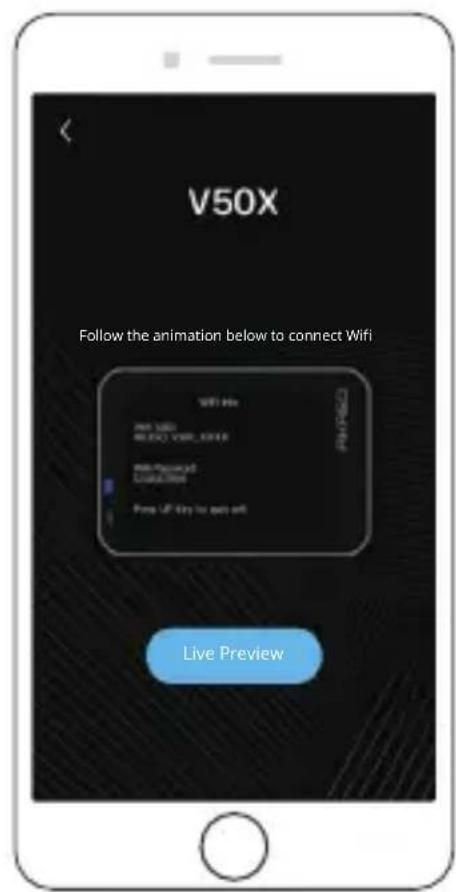
- Turn on the camera, press the Up button to turn on the Wifi. The Wifi name and password are shown on the camera screen.
- Connect the Wifi "V50X" and enter the password on your smartphone WLAN setting.
- Open the AKASO GO app, tap "+" icon on the upper right corner. Add "V50X" and click the "Live Preview".
- Your camera will be connected with the AKASO GO app.
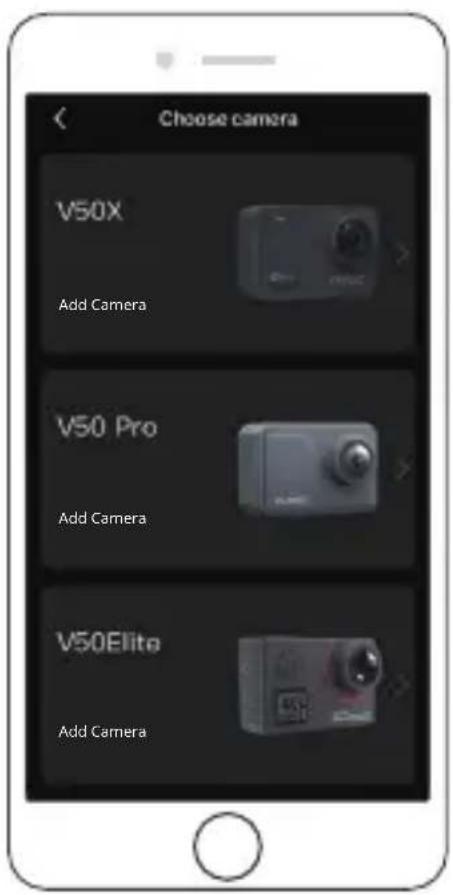
You can play back your content on the camera, your computer, TV, smartphone or tablet. You can also play back content by inserting the memory card directly into a device, such as a computer or a compatible TV. With this method, play back resolution depends on the resolution of the device and its ability to play back that resolution.
Note: To play back your videos and photos on a computer, you must first transfer these files to a computer. Transferring also frees up space on your memory card for new content.
Playing Back on Your V50X
Turn on the camera, tap the Playback icon on the left side of the screen or press Down button to enter the Playback Mode.
In Playback Mode, swipe your finger across the screen to scroll through the files.
DELETING YOUR CONTENT
Deleting Files on Your V50X
- Enter Playback mode. If your memory card contains a lot of content, it might take a minute for it to load.
- Swipe your finger across the screen to scroll through video or photo files.
- Tap the Delete icon on the screen then select the files you want to delete. Tap the delete icon again to confirm to delete the selected files or all files.
- To exitPlayback mode, tap Return icon or press the Mode button.
Deleting Files on AKASO App
- Open the AKASO GO app. Connect the camera with the app.
- Tap Playback icon to see all the videos and photos.
- Select the photo or video you want to delete and then tap the More icon at the right upper corner, and choose Delete.
OFFLOADING YOUR CONTENT
Offloading Your Content to A Computer
To offload files to a computer, you need a card reader (sold separately). Insert a memory card into your card reader, then connect the card reader to the computer via a USB port. You can then transfer files to your computer or delete selected files by using file explorer.
Offloading Your Content to Smartphone
- Open the AKASO GO app. Connect the camera with the app.
- Tap Playback icon to see all the videos and photos.
- Select the photo or video you want to download and then tap the More icon at the right upper corner, and choose Download.
Note:
- If you cannot offload videos or photos to iPhone or iPad, please enter Setting Privacy Photos, find "AKASO GO" and select "Read and Write".
- iPhone and iPad do not allow you to download 4K or 2.7K video via the app. Please offload 4K or 2.7K videos via a card reader.
MAINTAINING YOUR CAMERA
Please follow these guidelines to get the best performance from your camera:
- For best audio performance, shake the camera or blow on the mic to remove debris from the microphone holes.
- To clean the lens, wipe it with a soft, lint-free cloth. Do not insert foreign objects around the lens.
- Don't touch the lens with fingers.
- Keep the camera away from drops and bumps, which may cause damage to the parts inside.
- Keep the camera away from high temperature and strong sunshine to avoid being damaged.
MAXIMIZING BATTERY LIFE
If the battery reaches 0% while recording, the camera will save the file and power off.
To maximize battery life, follow these guidelines when possible:
- Turn off Wireless Connections
- Capture video at lower frame rates and resolutions
- Use Screen Saver setting.
BATTERY STORAGE AND HANDLING
The camera contains sensitive components, including the battery. Avoid exposing your camera to very cold or hot temperatures. Low or high temperature conditions may temporarily shorten the battery life or cause the camera to temporarily stop working properly. Avoid dramatic changes in temperature or humidity when using the camera, as condensation may form on or within the camera.
- Do not dry the camera or battery with an external heat source such as a microwave oven or hair dryer. Damage to the camera or battery caused by contact with liquid inside the camera is not covered under the warranty.
- Do not store your battery with metal objects, such as coins, keys or necklaces. If the battery terminals contacts with metal objects, this may cause a fire.
- Do not make any unauthorized alterations to the camera. Doing so may compromise safety, regulatory compliance, performance, and may void the warranty.
WARNING: Do not drop, disassemble, open, crush, bend, deform, puncture, shred, microwave, incinerate or paint the camera or battery. Do not insert foreign objects into the battery opening on the camera. Do not use the camera or the battery if it has been damaged-for example, if cracked, punctured or harmed by water. Disassembling or puncturing the battery can cause an explosion or fire.
REMOTE
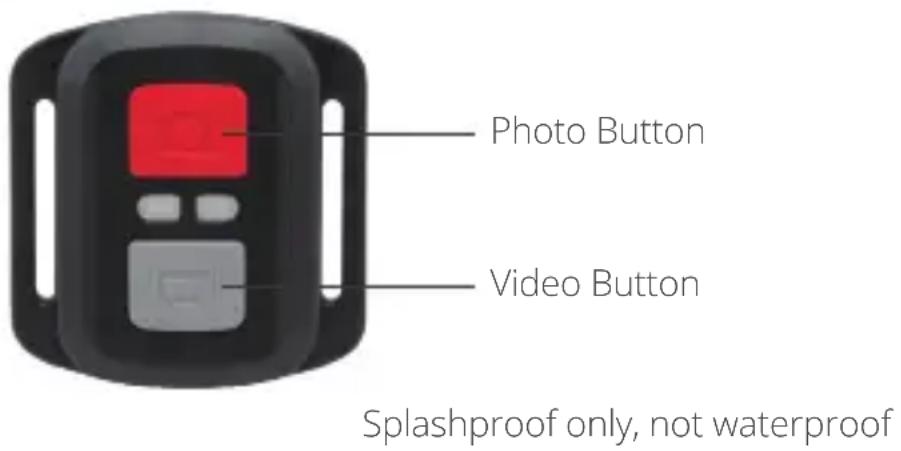
VIDEO
To record a video, verify the camera is in Video mode.
To start recording:
Press the gray Video button. The camera beeps and the camera light flashes while recording.
To stop recording:
Press the gray Video button again. The camera beeps and the camera status light stops flashing.
PHOTO
To capture a photo, verify the camera is in Photo mode.
To take a photo:
Press the red Photo button. The camera will emit a camera shutter sound.
CR2032 BATTERY REPLACEMENT FOR REMOTE
- Remove the 4 screws on the back cover of the remote with a 1.8mm Phillips tip screwdriver.
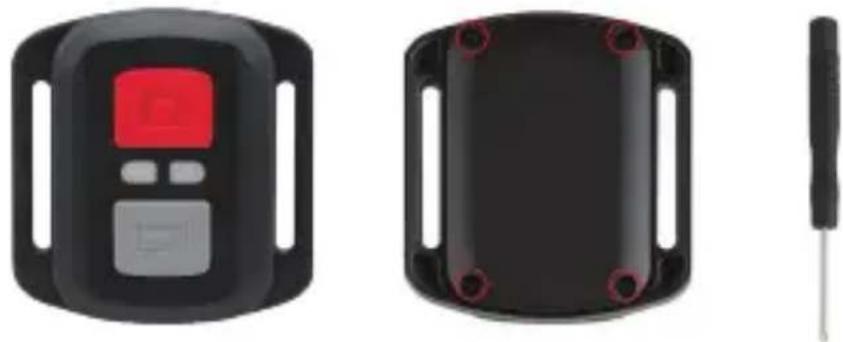
- Remove another 4 screws on PCB board.
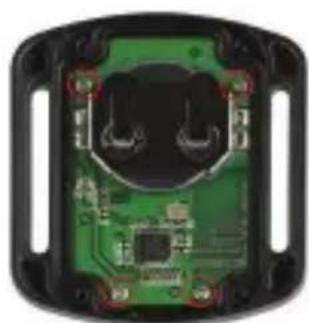
- Lift the PCB board and slide out the battery, as shown in the picture.
Note: Do NOT rotate the PCB board to avoid reversing the camera and video button functions.
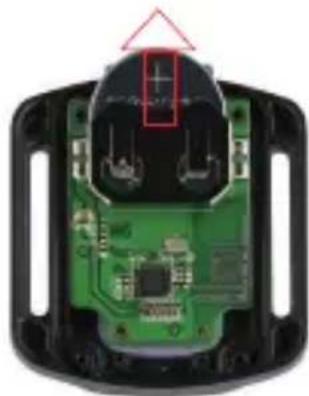
- Install the new battery, keeping the "+" pole facing up.
- Install all 4 screws back onto the PCB board.
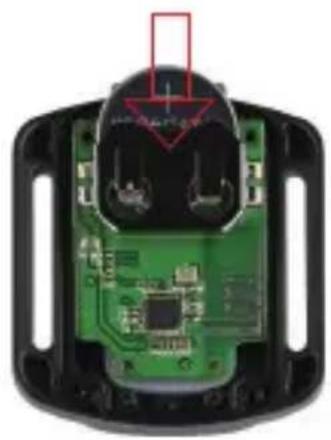
- Install all 4 screws back into the cover.
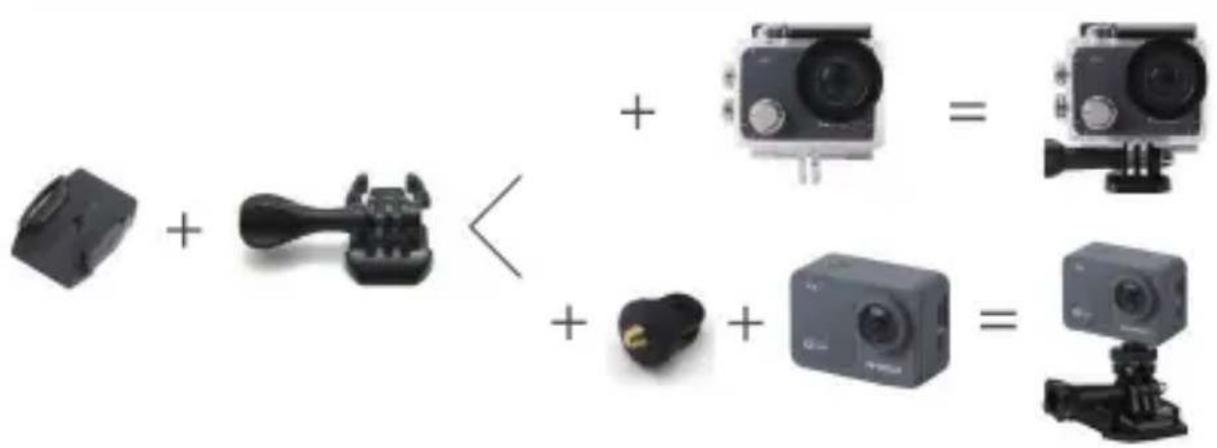
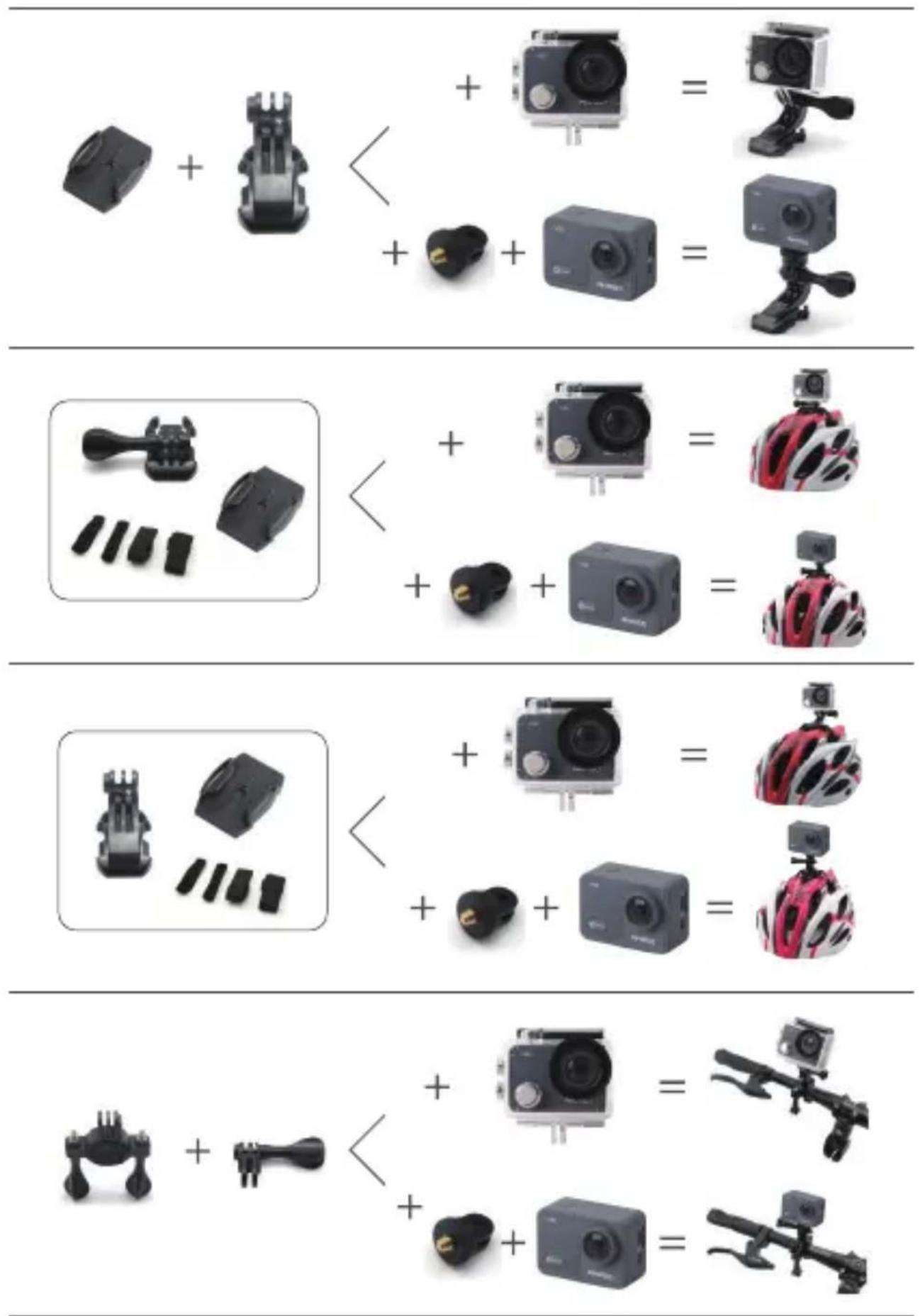
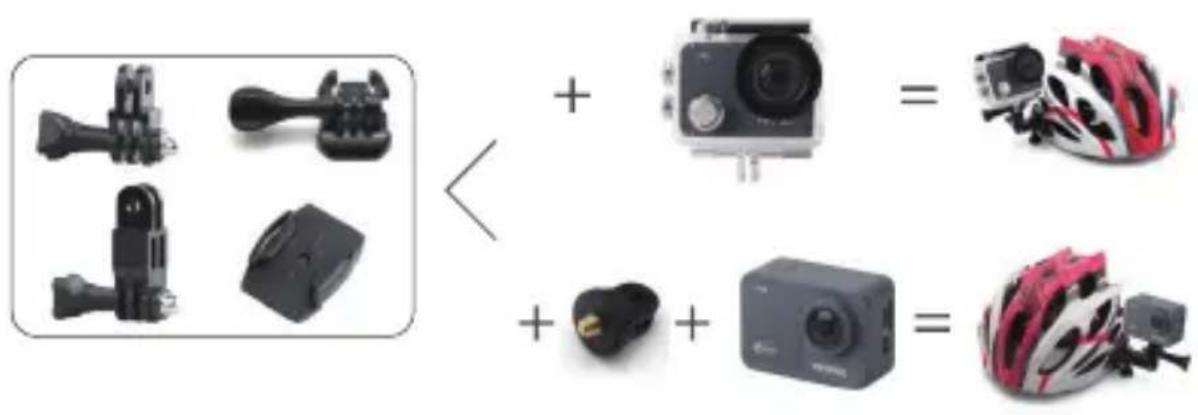
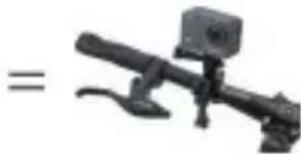
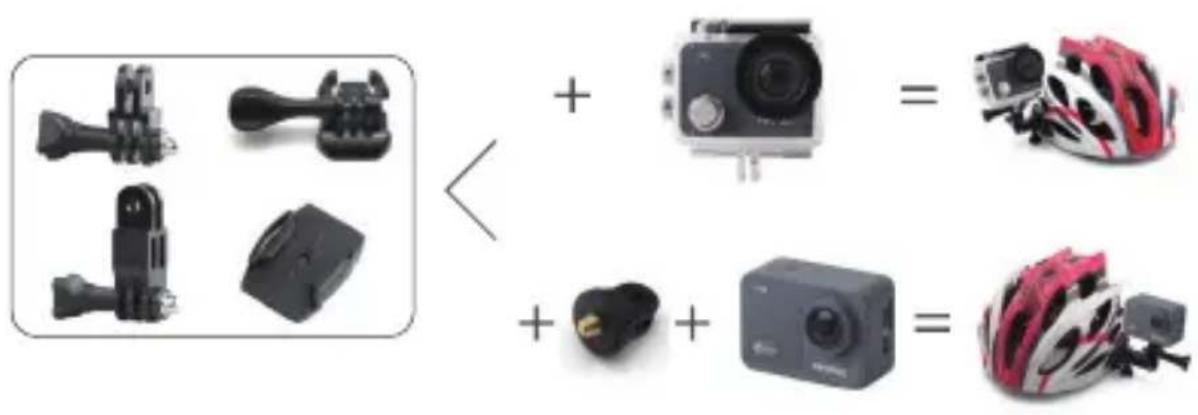
MOUNTING YOUR CAMERA
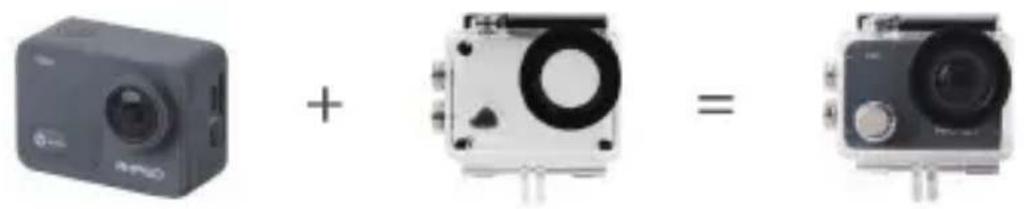
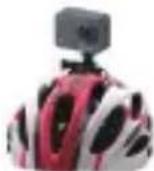
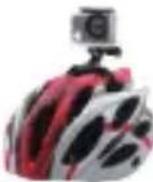
Attach your camera to helmets, gear and equipment.
CONTACT US
For any inquiries about AKASO products, please feel free to contact us. We will respond within 24 hours.
Tel: (888) 466-9222 (US)
Email: cs@akasotech.com
Web: www.akasotech.com
The microSD, microSDHC, microSDXC and SD marks and logos are trademarks of SD-3C, LLC.
INHALT
4 Video Encode: H.264/H.265
AA video codec is an electronic circuit or software that compresses or decompresses digital video. It converts uncompressed video to a compressed format or vice versa.
According to multiple studies, HEVC, High Efficiency Video Coding (H.265) should deliver up to 50% better compression than H.264 in video on demand (VOD) applications, which means better quality at half the bit rate. In live encoding, which obviously has to be performed in real time, the initial expectations are a 35% bandwidth reduction at similar quality levels. Alternatively, HEVC can also enable larger resolution movies, whether 2K or 4K. In addition, encoding existing speicherkarte and HD content with HEVC rather than H.264 will add to cost savings and/or the ability to stream higher quality video to lower bit rate connections.
- Burst Foto: 3shots/5shots/10shots
m = 311
一
111
+
一

+
+

+
+
+
KONTAKTIERE UNS
Activer/Désactiver le Wifi
- Résolution: 4K30fps/2.7K30fps/1080P90fps/1080P60fps/1080P30fps/720P120fps/720P60fps/720P30fps
- Photo en Rafale: 3shots/5shots/10shots
Official website: www.akasotech.com
COSA C'ENE LLLA SCATOLA
- Risoluzione: 4K30fps/2.7K30fps/1080P90fps/1080P60fps/1080P30fps/720P120fps/720P60fps/720P30fps
Official website: www.akasotech.com
The microSD, microSDHC, microSDXC and SD marks and logos are trademarks of SD-3C, LLC.
目次
製品一覽 137
はしだに 138
一卜機能一覽 139
取掇説明 146
The microSD, microSDHC, microSDXC and SD marks and logos are trademarks of SD-3C, LLC.