GSL360 - Brush cutter BLACK & DECKER - Free user manual and instructions
Find the device manual for free GSL360 BLACK & DECKER in PDF.



| Product type | Brush cutter / Grass shear and hedge trimmer |
| Brand | Black & Decker |
| Model | GSL360 |
| Rated voltage | 3.6 V DC |
| Blade strokes (no load) | 850 min⁻¹ |
| Shear blade length | 10 cm |
| Shear blade gap | 23 mm |
| Brush cutter blade length | 15 cm |
| Brush cutter blade gap | 8 mm |
| Blade stop time | < 1 s |
| Weight | 0.65 kg |
| Charger type | 905450xx / 905527xx / 9062xxxx |
| Charger mains voltage | 230 V AC |
| Charger output voltage | 9 V DC |
| Charging current | 100 mA |
| Approximate charging time | 19 h |
| Sound pressure level | 66 dB(A) (uncertainty 3 dB(A)) |
| Sound power level | 77 dB(A) (uncertainty 3 dB(A)), guaranteed 87 dB(A) |
| Vibrations (total value) | 3.1 m/s² (uncertainty 1.5 m/s²) |
| Warranty | 24 months |
| Intended use | Consumer: lawn trimming, hedges, bushes and brambles |
| Protection | Double insulation (charger) |
| Recommended charging temperature | 24 °C (between 10 °C and 40 °C) |
Frequently Asked Questions - GSL360 BLACK & DECKER
User questions about GSL360 BLACK & DECKER
0 question about this device. Answer the ones you know or ask your own.
Ask a new question about this device
Download the instructions for your Brush cutter in PDF format for free! Find your manual GSL360 - BLACK & DECKER and take your electronic device back in hand. On this page are published all the documents necessary for the use of your device. GSL360 by BLACK & DECKER.
USER MANUAL GSL360 BLACK & DECKER
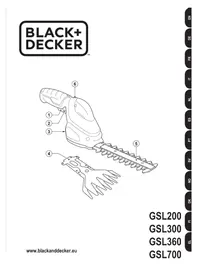
GSL200
GSL300
GSL360
GSL700
natural_image
Line drawing of a mechanical device with a spring-like extension attached to a vertical rod, mounted on a rectangular base (no text or symbols)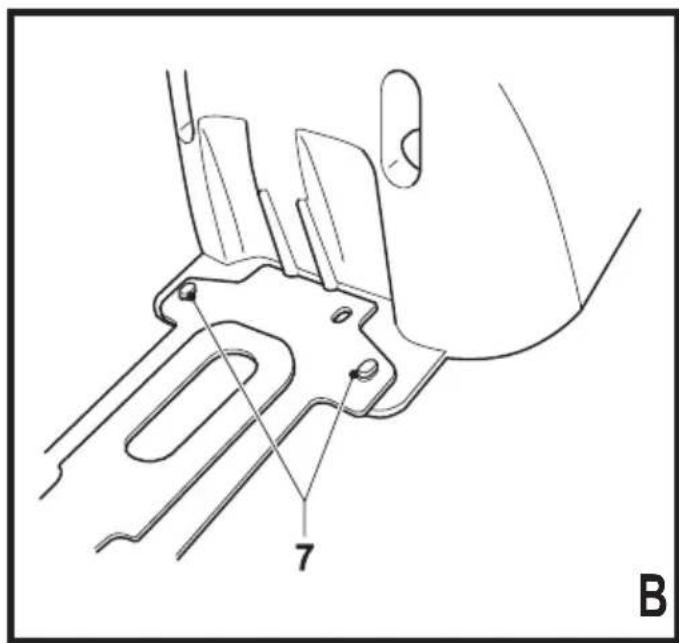
natural_image
Hand holding a small electronic device with internal components (no text or symbols visible)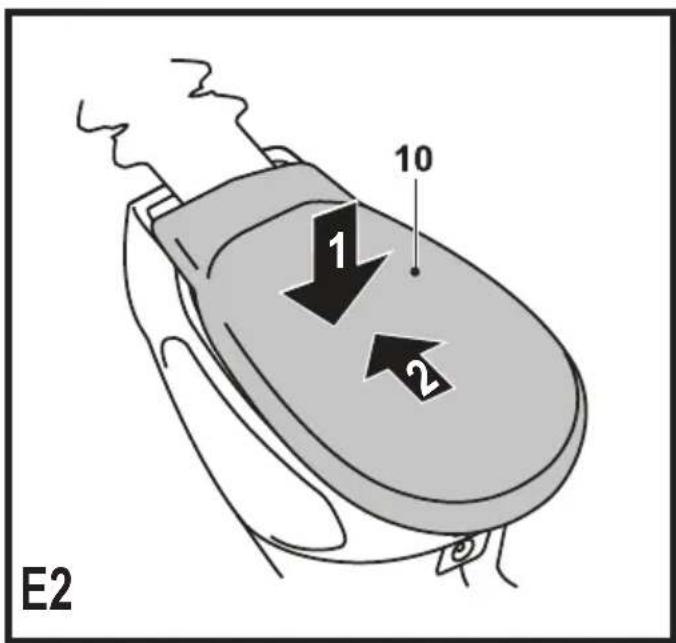
natural_image
Technical line drawing of a mechanical component with labeled part '11' (no text or symbols beyond label)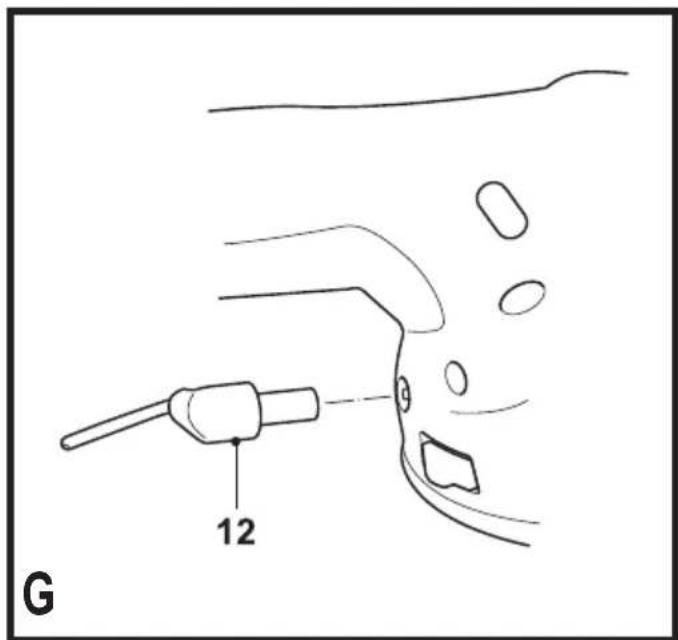
natural_image
Line drawing of a hand cleaning a surface with a tool, no text or symbols present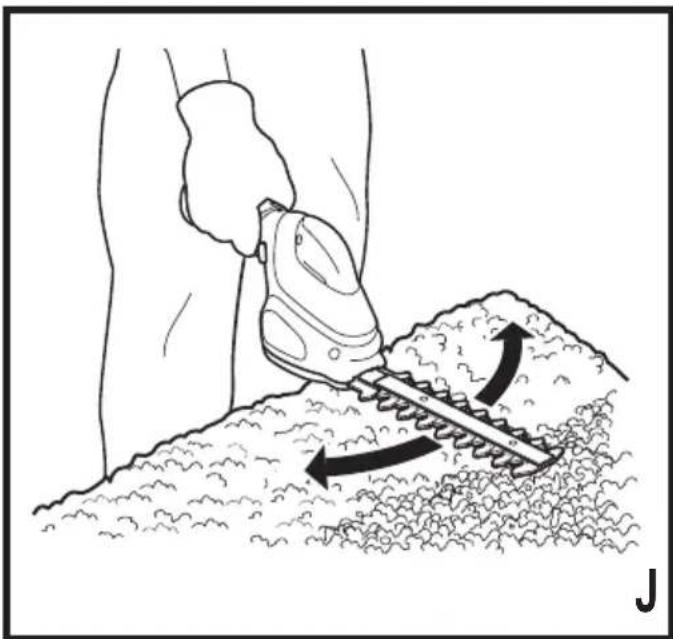
natural_image
Line drawing of a hand using a power shaver to cut a pile of cotton or gravel, with directional arrows indicating cutting process (no text or symbols)Intended use
Your BLACK+DECKER™ GSL200, GSL300, GSL360, GSL700 shear/trimmer has been designed for trimming grass, hedges, shrubs and brambles. This tool is intended for consumer use only.
Your BLACK+DECKER charger has been designed for charging BLACK+DECKER batteries of the type supplied with this tool.
Safety instructions
General power tool safety warnings

Warning! Read all safety warnings and all instructions.
Failure to follow the warnings and instructions listed below may result in electric shock, fire and/or serious injury.
Save all warnings and instructions for future reference.
The term "power tool" in all of the warnings listed below refers to your mains operated (corded) power tool or battery operated (cordless) power tool.
1. Work area safety
a. Keep work area clean and well lit.
Cluttered or dark areas invite accidents.
b. Do not operate power tools in explosive atmospheres, such as in the presence of flammable liquids, gases or dust. Power tools create sparks which may ignite the dust or fumes.
c. Keep children and bystanders away while operating a power tool.
Distractions can cause you to lose control.
2. Electrical safety
a. Power tool plugs must match the outlet. Never modify the plug in any way. Do not use any adapter plugs with earthed (grounded) power tools. Unmodified plugs and matching outlets will reduce risk of electric shock.
b. Avoid body contact with earthed or grounded surfaces such as pipes, radiators, ranges and refrigerators. There is an increased risk of electric shock if your body is earthed or grounded.
c. Do not expose power tools to rain or wet conditions. Water entering a power tool will increase the risk of electric shock.
d. Do not abuse the cord. Never use the cord for carrying, pulling or unplugging the power tool. Keep cord away from heat, oil, sharp edges or moving parts. Damaged or entangled cords increase the risk of electric shock.
e. When operating a power tool outdoors, use an extension cord suitable for outdoor use. Use of a cord suitable for outdoor use reduces the risk of electric shock.
f. If operating a power tool in a damp location is unavoidable, use a residual current device (RCD) protected supply. Use of an RCD reduces the risk of electric shock.
- Personal safety
a. Stay alert, watch what you are doing and use common sense when operating a power tool. Do not use a power tool while you are tired or under the influence of drugs, alcohol or medication. A moment of inattention while operating power tools may result in serious personal injury.
b. Use personal protective equipment.
Always wear eye protection.
Protective equipment such as dust mask, non-skid safety shoes, hard hat, or hearing protection used for appropriate conditions will reduce personal injuries.
c. Prevent unintentional starting.
Ensure the switch is in the off-
position before connecting to power
source and/or battery pack, picking
up or carrying the tool. Carrying
power tools with your finger on the
switch or energising power tools that
have the switch on invites accidents.
d. Remove any adjusting key or wrench before turning the power tool on. A wrench or a key left attached to a rotating part of the power tool may result in personal injury.
e. Do not overreach. Keep proper footing and balance at all times.
This enables better control of the power tool in unexpected situations.
f. Dress properly. Do not wear loose clothing or jewellery. Keep your hair, clothing and gloves away from moving parts. Loose clothes,
jewellery or long hair can be caught in moving parts.
g. If devices are provided for the connection of dust extraction and collection facilities, ensure these are connected and properly used. Use of dust collection can reduce dust-related hazards.
h. Do not let familiarity gained from frequent use of tools allow you to become complacent and ignore tool safety principles. A careless action can cause severe injury within a fraction of a second.
- Power tool use and care
a. Do not force the power tool. Use the correct power tool for your application. The correct power tool will do the job better and safer at the rate for which it was designed.
b. Do not use the power tool if the switch does not turn it on and off.
Any power tool that cannot be controlled with the switch is dangerous and must be repaired.
c. Disconnect the plug from the power source and/or the battery pack from the power tool before making any adjustments, changing accessories, or storing power tools. Such preventive safety measures reduce the risk of starting the power tool accidentally.
d. Store idle power tools out of the reach of children and do not allow persons unfamiliar with the power tool or these instructions to operate
the power tool. Power tools are dangerous in the hands of untrained users.
e. Maintain power tools. Check for misalignment or binding of moving parts, breakage of parts and any other condition that may affect the power tools operation. If damaged, have the power tool repaired before use. Many accidents are caused by poorly maintained power tools.
f. Keep cutting tools sharp and clean.
Properly maintained cutting tools with sharp cutting edges are less likely to bind and are easier to control.
g. Use the power tool, accessories and tool bits etc. in accordance with these instructions, taking into account the working conditions and the work to be performed. Use of the power tool for operations different from those intended could result in a hazardous situation.
h. Keep handles and grasping surfaces dry, clean and free from oil and grease. Slippery handles and grasing surfaces do not allow for safe handling and control of the tool in unexpected situations.
5. Battery tool use and care
a. Recharge only with the charger specified by the manufacturer. A charger that is suitable for one type of battery pack may create a risk of fire when used with another battery pack.
b. Use power tools only with specifically designated battery
packs. Use of any other battery packs may create a risk of injury and fire.
c. When battery pack is not in use, keep it away from other metal objects, like paper clips, coins, keys, nails, screws, or other small metal objects, that can make a connection from one terminal to another. Shorting the battery terminals together may cause burns or a fire.
d. Under abusive conditions, liquid may be ejected from the battery; avoid contact. If contact accidentally occurs, flush with water. If liquid contacts eyes, additionally seek medical help.
Liquid ejected from the battery may cause irritation or burns.
e. Do not use a battery pack or tool that is damaged or modified.
Damaged or modified batteries may exhibit unpredictable behaviour resulting in fire, explosion or risk of injury.
f. Do not expose a battery pack or tool to fire or excessive temperature.
Exposure to fire or temperature above 130 °C may cause explosion.
g. Follow all charging instructions and do not charge the battery pack or tool outside the temperature range specified in the instructions.
Charging improperly or at temperatures outside the specified range may damage the battery and increase the risk of fire.
6. Service
a. Have your power tool serviced by a qualified repair person using only identical replacement parts. This will ensure that the safety of the power tool is maintained.
b. Never service damaged battery packs. Service of battery packs should only be performed by the manufacturer or authorised service providers.
Additional power tool safety warnings

Warning! Additional safety warnings for hedge trimmers
- Keep all parts of the body away from the cutter blade. Do not remove cut material or hold material to be cut when blades are moving. Make sure the switch is off when clearing jammed material. A moment of inattention while operating the hedge trimmer may result in serious personal injury.
- Carry the hedge trimmer by the handle with the cutter blade stopped. When transporting or storing the hedge trimmer always fit the cutting device cover. Proper handling of the hedge trimmer will reduce possible personal injury from the cutter blades.
-
Keep cable away from cutting area. During operation the cable may be hidden in shrubs and can be accidentally cut by the blade.
-
Hold the power tool by insulated gripping surfaces only, because the cutter blade may contact hidden wiring. Cutter blades contacting a "live" wire may make exposed metal parts of the power tool "live" and could give the operator an electric shock.
- The intended use is described in this instruction manual. The use of any accessory or attachment or performance of any operation with this tool other than those recommended in this instruction manual may present a risk of personal injury and/or damage to property.
- If you have not used a hedge trimmer before, preferably seek practical instruction by an experienced user in addition to studying this manual.
- Never touch the blades while the tool is running.
- Never attempt to force the blades to come to a standstill.
- Do not put the tool down until the blades have come to a complete standstill.
- Regularly check the blades for damage and wear. Do not use the tool when the blades are damaged.
Take care to avoid hard objects (e.g. metal wire, railings) when trimming. Should you accidentally hit any such object, immediately switch the tool off and check for any damage. -
Should the tool start to vibrate abnormally, immediately switch it off and check for any damage.
-
If the tool stalls, immediately switch it off.
- After use, place the blade sheath supplied over the blades. Store the tool, making sure that the blade is not exposed.
- Always ensure that all guards are fitted when using the tool. Never attempt to use an incomplete tool or a tool with unauthorised modifications.
- Never allow children to use the tool.
- Be aware of falling debris when cutting the higher slides of a hedge.
Additional power tool safety warnings

Warning! Additional safety warnings for shears
- Never allow people unfamiliar with these instructions or children to use the machine. Local regulations can restrict the age of the operator.
- Keep in mind that the operator or user is responsible for accidents or hazards occurring to other people or their property.
- Never operate the machine while people, especially children, or pets are nearby.
- Use the machine only in daylight or good artificial light.
- Always ensure that the ventilation openings are kept clear of debris.
- Use only the manufacturer's recommended replacement parts and accessories.
- Inspect and maintain the machine regularly. Have the machine repaired only by an authorized repairer.
Safety of others
- This appliance can be used by children aged from 8 years and above and persons with reduced physical, sensory or mental capabilities or lack of experience and knowledge if they have been given supervision or instruction concerning use of the appliance in a safe way and understand the hazards involved.
- Children shall not play with the appliance. Cleaning and user maintenance shall not be made by children without supervision.
Vibration
The declared vibration emission values stated in the technical data and the declaration of conformity have been measured in accordance with a standard test method provided by EN 60745 and may be used for comparing one tool with another. The declared vibration emission value may also be used in a preliminary assessment of exposure.
Warning! The vibration emission value during actual use of the power tool can differ from the declared value depending on the ways in which the tool is used. The vibration level may increase above the level stated.
When assessing vibration exposure to determine safety measures required by 2002/44/EC to protect persons regularly using power tools in employment, an estimation of vibration exposure should consider, the actual conditions of use and the way the tool is used, including taking account of all parts of the operating cycle such as the times when the tool is switched off and when it is running idle in addition to the trigger time.
Labels on tool
The following pictograms along with the date code are shown on the tool:

Warning! To reduce the risk of injury, the user must read the instruction manual.

Wear safety glasses or goggles when operating this tool.

Do not expose the tool to rain or high humidity.
Beware of sharp blades.
Blades continue to move after the motor is switched off.

Beware of flying objects. Keep bystanders away.

Class III appliance.

Directive 2000/14/EC
guaranteed sound power.
Additional safety instructions for batteries and chargers
Batteries
- Never attempt to open for any reason.
- Do not expose the battery to water.
- Do not store in locations where the temperature may exceed 40 °C.
- Charge only at ambient temperatures between 10 °C and 40 °C.
- Charge only using the charger provided with the appliance/tool. Using the wrong charger could result in an electric shock or overheating of the battery.
- When disposing of batteries, follow the instructions given in the section "Protecting the environment".
- Do not damage/deform the battery either by puncture or impact, as this may create a risk of injury and fire.
- Do not charge damaged batteries.
- Under extreme conditions, battery leakage may occur. When you notice liquid on the batteries carefully wipe the liquid off using a cloth. Avoid skin contact.
- In case of skin or eye contact, follow the instructions below.
Warning! The battery fluid may cause personal injury or damage to property. In case of skin contact, immediately rinse with water. If redness, pain or irritation occurs seek medical attention. In case of eye contact, rinse immediately with clean water and seek medical attention.
Chargers
Your charger has been designed for a specific voltage. Always check that the
mains voltage corresponds to the voltage on the rating plate.
Warning! Never attempt to replace the charger unit with a regular mains plug.
- Use your BLACK+DECKER charger only to charge the battery in the tool with which it was supplied. Other batteries could burst, causing personal injury and damage.
- Never attempt to charge non-rechargeable batteries.
- If the supply cord is damaged, it must be replaced by the manufacturer or an authorised BLACK+DECKER Service Centre in order to avoid a hazard.
- Do not expose the charger to water.
- Do not open the charger.
- Do not probe the charger.
- The appliance/tool/battery must be placed in a well ventilated area when charging.

The charger is intended for indoor use only.

Read the instruction manual before use.
Electrical safety

charger is double insulated; therefore no earth wire is required. Always check that the mains voltage corresponds to the voltage on the rating plate.
- If the supply cord is damaged, it must be replaced by the manufacturer or an
authorised BLACK+DECKER Service Centre in order to avoid a hazard.
- Warning! Never attempt to replace the charger unit with a regular mains plug.
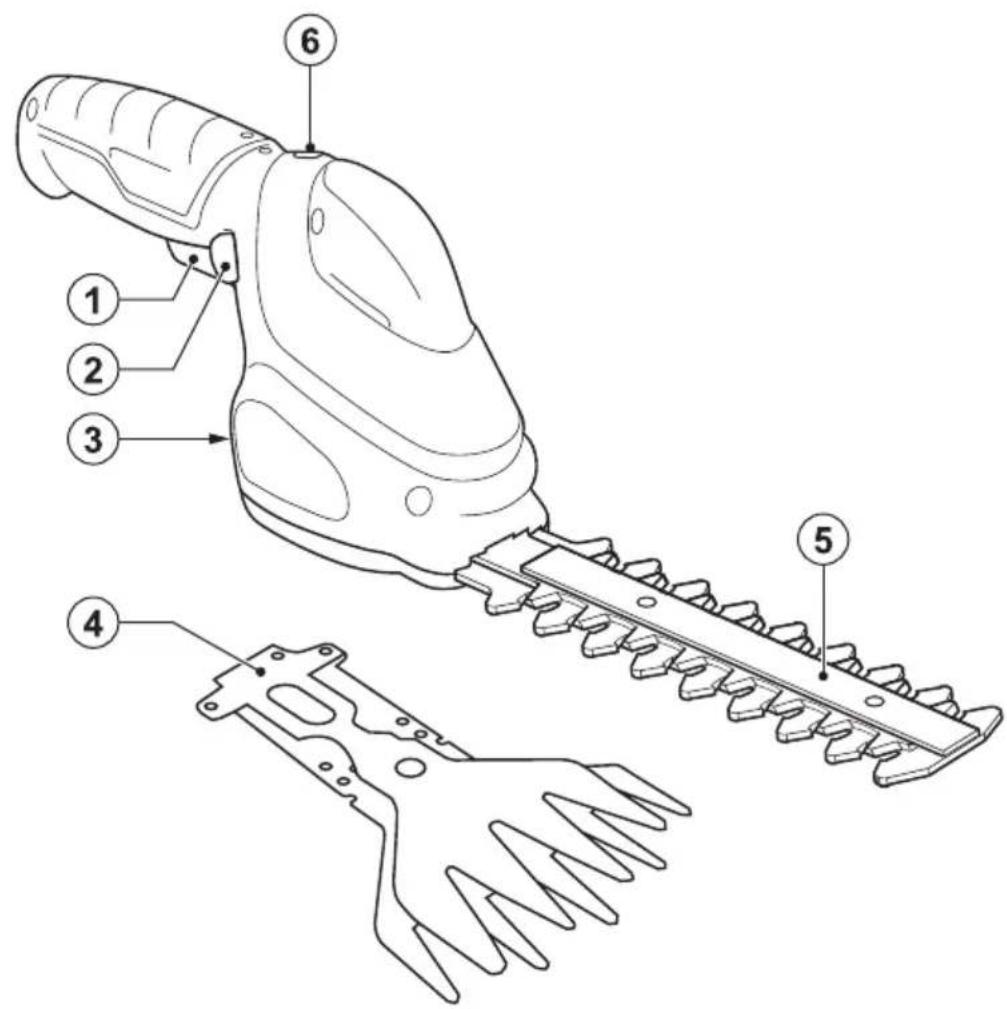
Features
- On/off switch
- Lock-off button
- Blade release button
- Shear blade (GSL200/GSL360/GSL700)
- Trim blade (GSL300/GSL360/GSL700)
- Charging indicator
Assembly
Warning! Avoid accidentally switching the tool on during assembly.
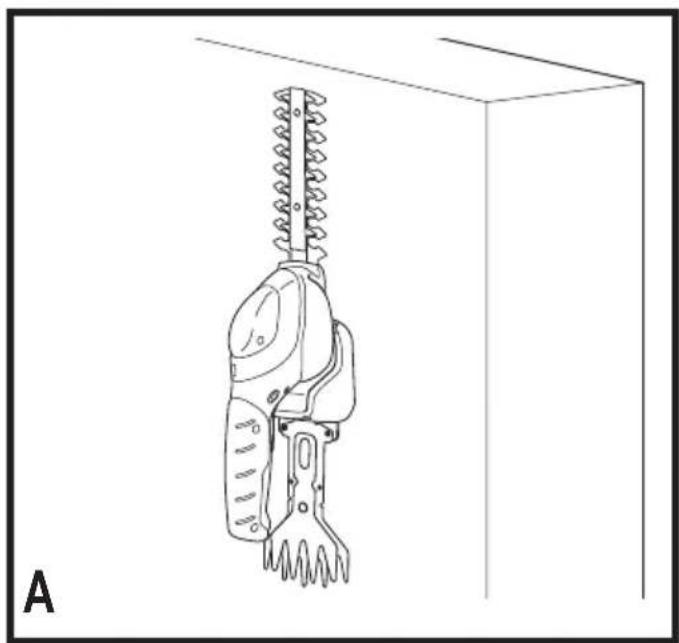
Fitting the wall mount to the wall (fig. A & B)
The wall mount can be fitted to the wall to provide a convenient storage and charging point for the tool.
- Drive the screws in the wall through the holes in the crevices of wall mount.
◆ Place the tool on the wall mount.
◆ Plug in the charger making sure the charging indicator (6) lights up (fig. A). - If required, use the two pegs (7) below the wall mount to store the spare blade (fig. B).
Warning! Avoid damaging the power cord when mounting the wall mount to the wall.
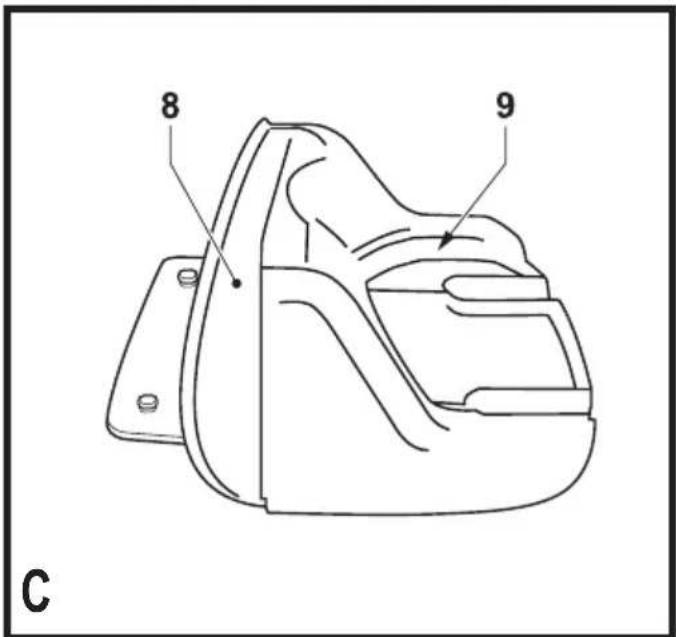
Removing the charger plug from the wall mount (fig. C)
The tool can be charged without using the wall mount. The charger plug can be connected to the tool directly.
◆ Remove the screws from the back of the wall mount.
◆ Slide the back part (8) from the front part (9) to open the wall mount.
◆ Remove the charger plug from the wall mount.
Fitting and removing the blade (fig. D & E)
The shear blade (4) has been designed for trimming grass and weeds. The trim blade (5) has been designed for trimming hedges and shrubs.
◆ Remove the blade cover.
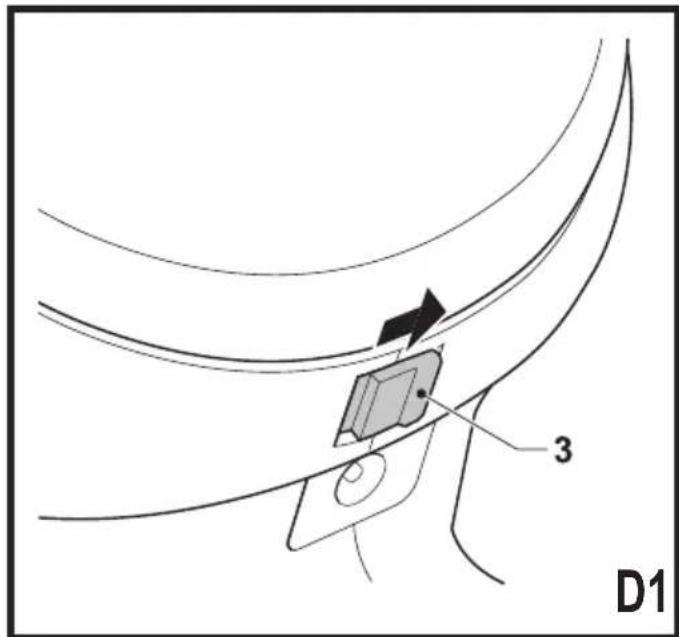
◆ Push and hold the blade release button (3) in the direction of the arrow (fig. D1).
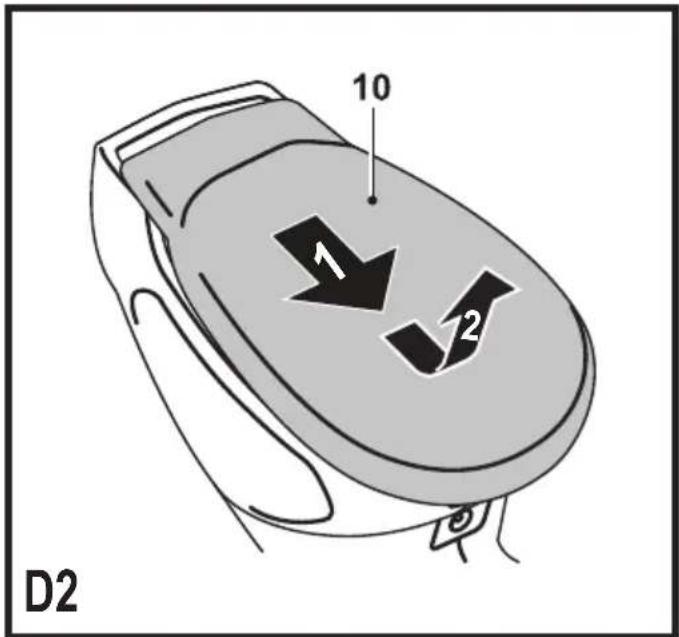
◆ Slide the blade cover (10) backward and lift off (fig. D2).
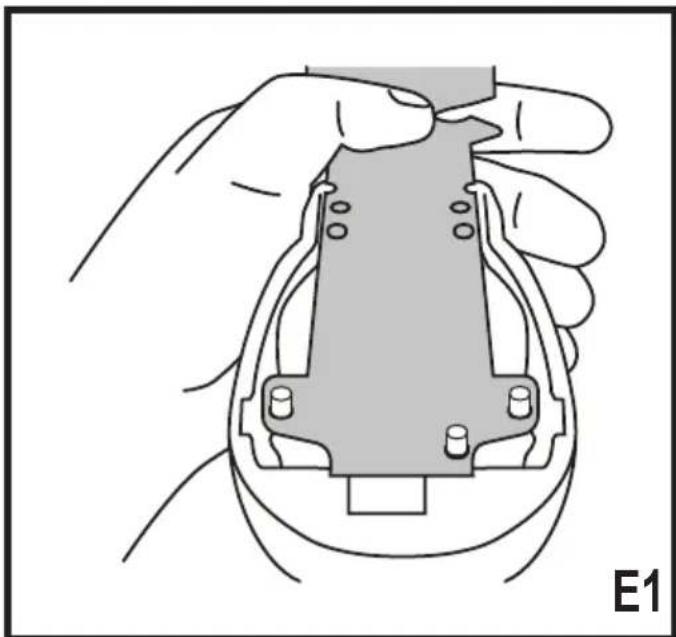
◆ Lower the blade onto the pins.
- While holding the blade onto the pins (fig. E1), replace the blade cover (10) and slide it forward (fig. E2).
Note: No alignment of blade with drive pin is required and operation of the blade cover release button is not required when re-fitting the blade cover.
Use
Warning! Let the tool work at its own pace. Do not overload.
Charging the battery
The battery needs to be charged before first use and whenever it fails to produce sufficient power on jobs that were easily done before. When charging the battery for the first time, or after prolonged storage, it will only accept an 80% charge. After several charge and discharge cycles, the battery will attain full capacity. The battery may become warm while charging; this is normal and does not indicate a problem.
Warning! Do not charge the battery at ambient temperatures below 10 °C or above 40 °C. Recommended charging temperature: approx. 24 °C.
The tool can be left connected to the charger indefinitely. To maximise the lifetime of the battery, it is recommended to keep the battery connected to the charger whenever the tool is not in use. When the battery is full, the power consumption of the charger is negligible.
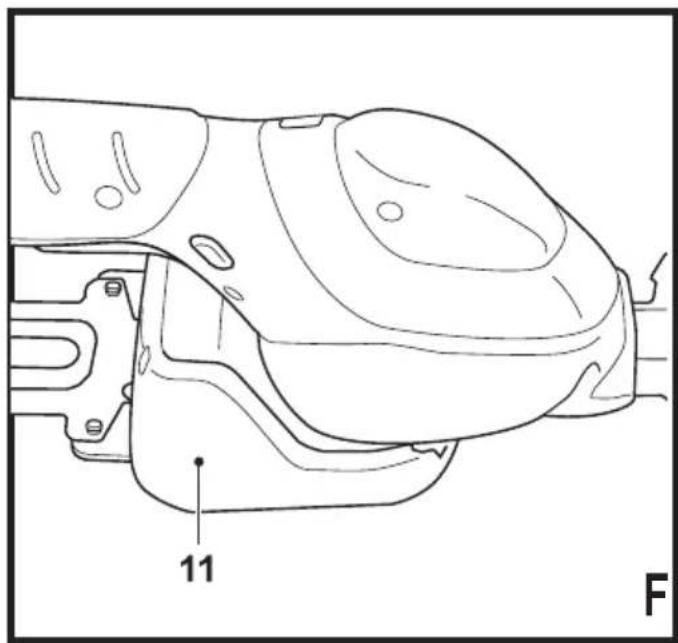
Charging with the wall mount (fig. F)
◆ Place the tool on the wall mount (11).
◆ Plug in the charger.
Charging with the charger plug (fig. G)
The charger plug is designed with lock outs to prevent the use of an incorrect charger.
- Insert the charger plug (12) into the charger connector at the rear of the tool.
◆ Plug in the charger.
GSL700 - Charging the battery
◆ Charge the battery.
When the battery is charging the charging indicator (6) flashes. The charging indicator will stop flashing when the charging is complete.
GSL200/GSL300/GSL360 - Charging the battery
◆ Charge the battery.
When the battery is charging the charging indicator (6) flashes. The charging indicator will stop flashing when the charging is complete. The charging indicator flashes quickly to indicate a charging problem. When a charging problem occurs, connect the tool directly to the charger plug by removing the wall mount. If the charging problem still occurs, the charger must be disconnected from the mains supply and taken to an authorised service centre for repair.
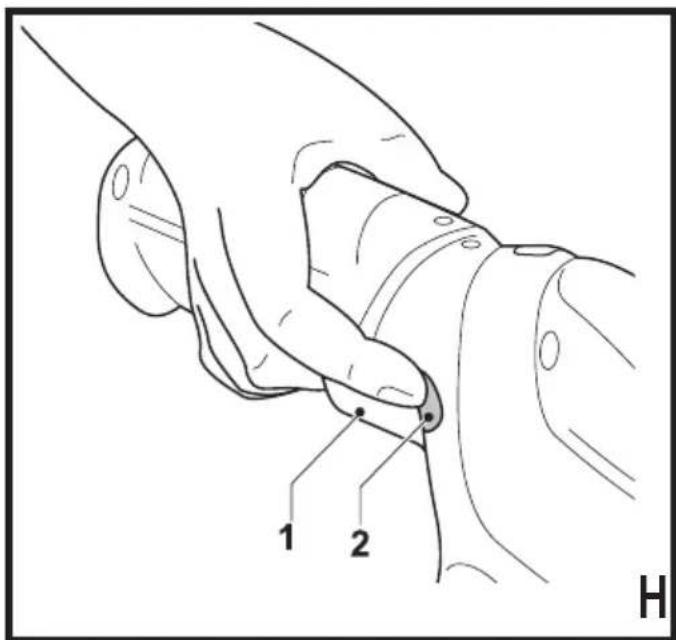
Switching on and off (fig. H)
Switching on
◆ Push and hold the lock button (2) to the right or to the left and then squeeze the on/off switch (1).
◆ Release the lock-off button.
Switching off
◆ Release the on/off switch (1).
Warning! Never attempt to lock the switch in the on position.
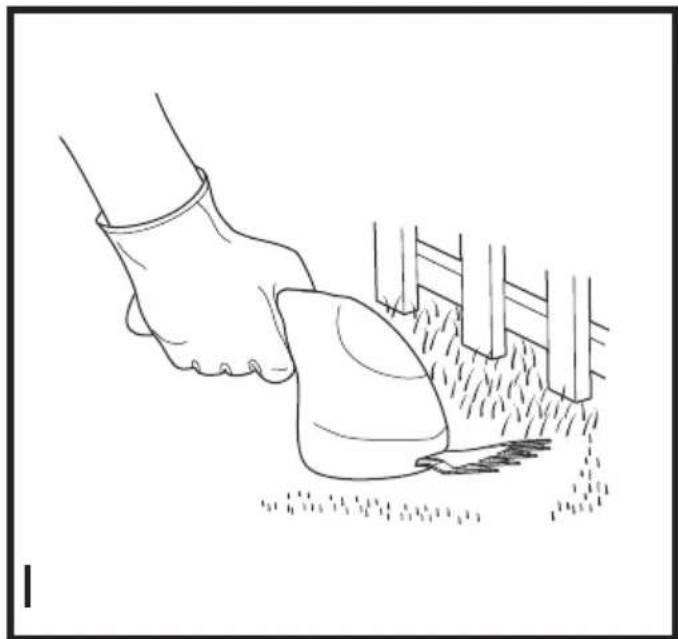
Hints for optimum use (fig. I & J)
- Spray the blade with a light coating of light general use oil before first use and whenever the blades begin to look dry.
Trimming grass
- In order to achieve optimum cutting results, only cut dry grass.
- Hold the tool as shown in fig. 1. Keep your other hand well away from the blade. Maintain a stable working position so that you do not slip. Do not overreach.
- When cutting long grass, work in stages from the top. Take small cuts.
◆ Keep the tool away from hard objects and delicate plants.
◆ If the tool starts running slowly, reduce the load.
◆ To make a closer cut, slightly tilt the tool.
Trimming hedges
- Slightly tilt the tool (up to 15° relative to the line of cut) so that the blade tips point slightly towards the hedge (fig. J). This will cause the blades to cut more effectively.
- Start by trimming the top of the hedge. Hold the tool at the desired angle and move it steadily along the line of cut. The double-sided blade allows you to cut in either direction.
- In order to obtain a very straight cut, stretch a piece of string along the length of the hedge at the desired height. Use the string as a guideline, cutting just above it.
- In order to obtain flat sides, cut upwards with the growth. Younger stems move outwards when the blade cuts downwards, causing shallow patches in the hedge.
Take care to avoid any foreign objects. Especially avoid hard objects such as metal wire and railings, as these could damage the blades.
◆ Regularly oil the blades.
Guidelines for trimming (UK & Ireland)
- Trim hedges and shrubs with seasonal leaves (new leaves every year) in June and October.
◆ Trim evergreens in April and August. - Trim conifers and other fast growing shrubs every six weeks from May until October.
Guidelines for trimming (Australia & New Zealand)
- Trim hedges and shrubs with seasonal leaves (new leaves every year) in December and March.
◆ Trim evergreens in September and February. - Trim conifers and other fast growing shrubs every six weeks from October until March.
Maintenance
Your BLACK+DECKER corded/cordless appliance/tool has been designed to operate over a long period of time with a minimum of maintenance. Continuous satisfactory operation depends upon proper tool care and regular cleaning.
Warning! Before performing any maintenance on corded/cordless power tools:
◆ Switch off and unplug the appliance/tool.
- Or switch off and remove the battery from the appliance/tool if the appliance/tool has a separate battery pack.
- Or run the battery down completely if it is integral and then switch off.
◆ Unplug the charger before cleaning it. Your charger does not require any maintenance apart from regular cleaning.
- Regularly clean the ventilation slots in your appliance/tool/charger using a soft brush or dry cloth.
◆ Regularly clean the motor housing using a damp cloth. Do not use any abrasive or solvent-based cleaner.
- Regularly open the chuck and tap it to remove any dust from the interior (when fitted).
- After use, carefully clean the blades. After cleaning, apply a film of light machine oil to prevent the blades from rusting.
Storage
When the tool will not be used for several months, ideally leave the battery connected to the charger. Otherwise proceed as follows:
◆ Fully charge the battery.
- Store the tool in a secure and dry location. The storage temperature must always remain in the range of +10 °C to +40 °C.
- Before using the tool after prolonged storage, fully charge the battery again.
Protecting the environment

Separate collection. Products and batteries marked with this symbol must not be disposed of with normal household waste.
Products and batteries contain materials that can be recovered or recycled reducing the demand for raw materials.
Please recycle electrical products and batteries according to local provisions. Further information is available at www.2helpU.com
Technical data
| GSL200 (H1) GSL300 (H1) | |||
| Voltage V | DC | 3.6 3.6 | |
| Blade strokes (no load) mir | -1 | 850 850 | |
| Blade length (shear) cm 10 - | |||
| Blade gap (shear) mm 23 - | |||
| Blade length (trimmer) cm - | 15 | ||
| Blade gap (trimmer) mm - | 8 | ||
| Blade brake time | s | < 1 | < 1 |
| Weight | kg | 0.65 | 0.65 |
| GSL360 (H1) GSL700 (H1) | |||
| Voltage V | _DC | 3.6 7.0 | |
| Blade strokes (no load) mir | -1 | 850 850 | |
| Blade length (shear) cm 10 | 10 | ||
| Blade gap (shear) mm 23 | 23 | ||
| Blade length (trimmer) cm | 5 | 15 | |
| Blade gap (trimmer) mm 8 | 8 | ||
| Blade brake time | s | <1 | <1 |
| Weight | kg | 0.65 | 0.65 |
| Charger | 905450xx | 905527xx9062xxxx | |
| Input voltage | V_AC | 230 | 230 |
| Output voltage | V_DC | 9 | 10 |
| Current | mA | 100 | 120 |
| Approx. charging time | h 19 14 | ||
| Weight | kg | 0.15 | 0.15 |
| Level of sound pressure according to EN 60745: |
| Sound pressure (LpA) 66 dB(A), uncertainty (K) 3 dB(A) |
| Sound power (LWA) 77 dB(A), uncertainty (K) 3 dB(A) |
| Vibration total values (triax vector sum) according to EN 60745: |
| (a_n) 3.1 m/s ^2 , uncertainty (K) 1.5 m/s ^2 |
MACHINERY DIRECTIVE OUTDOOR NOISE DIRECTIVE

GSL200, GSL300, GSL360, GSL700 - Shear/Trimmer
Black & Decker declares that these products described under "technical data" are in compliance with:
EN60745-1:2009+A11:2010, EN60745-2-15:2009+A1:2010
2000/14/EC, Trimmer, Annex V
Level of acoustic power according to (5) 2000/14/EC (Article 13):
L_WA (measured sound power) 77 dB(A)
L_WA (guaranteed sound power) 87 dB(A)
These products also comply with Directive
2006/42/EC, 2014/30/EU and 2011/65/EU.
For more information, please contact Black & Decker at the following address or refer to the back of the manual.
The undersigned is responsible for compilation of the technical file and makes this declaration on behalf of Black & Decker.
Ray Laverick
Director of Engineering
Black & Decker Europe, 210 Bath Road, Slough, Berkshire, SL1 3YD
United Kingdom
24/07/2018
Guarantee
Black & Decker is confident of the quality of its products and offers consumers a 24 month guarantee from the date of purchase. This guarantee is in addition to and in no way prejudices your statutory rights. The guarantee is valid within the territories of the Member States of the European Union and the European Free Trade Area.
To claim on the guarantee, the claim must be in accordance with Black&Decker Terms and Conditions and you will need to submit proof of purchase to the seller or an authorised repair agent. Terms and conditions of the Black&Decker 2 year guarantee and the location of your nearest authorised repair agent can be obtained on the Internet at www.2helpU.com, or by contacting your local Black & Decker office at the address indicated in this manual.
Please visit our website www.blackanddecker.co.uk to register your new Black & Decker product and receive updates on new products and special offers.
Director of Engineering
Black & Decker Europe, 210 Bath Road, Slough,
Berkshire, SL1 3YD
Engineering Director
Black & Decker Europe, 210 Bath Road, Slough,
Berkshire, SL1 3YD
Royaume Uni
24/07/2018
Garantie
Director of Engineering
Black & Decker Europe, 210 Bath Road, Slough,
Berkshire, SL1 3YD
Regno Unito
24/07/2018
Garanzia
Director of Engineering
Black & Decker Europe, 210 Bath Road, Slough,
Berkshire, SL1 3YD
United Kingdom
24/07/2018
NEDERLANDS
◆ Place the tool on the wall mount (11).
◆ Plug in the charger.
Director of Engineering
Black & Decker Europe, 210 Bath Road, Slough,
Berkshire, SL1 3YD
Reino Unido
24/07/2018
Garantía
Director of Engineering
Black & Decker Europe, 210 Bath Road, Slough,
Berkshire, SL1 3YD
Reino Unido
24/07/2018
PORTUGUÊS
Director of Engineering
Black & Decker Europe, 210 Bath Road, Slough,
Berkshire, SL1 3YD
Storbrittannien
24/07/2018
SVENSKA
2000/14/EF, Trimmer, Vedlegg V
Nivået av akustisk effekt i henhold til (5) 2000/14/EC
(Artikkel 13):
L_WA (målt lydeffekt) 77 dB(A)
L_WA (garantert lydeffekt) 87 dB(A)
Director of Engineering
Black & Decker Europe, 210 Bath Road, Slough,
Berkshire, SL1 3YD
Storbritannia
24/07/2018
Garanti
Charging the battery
Director of Engineering
Black & Decker Europe, 210 Bath Road, Slough,
Berkshire, SL1 3YD
Storbritannien
24/07/2018
Garanti
Director of Engineering
Black & Decker Europe, 210 Bath Road, Slough,
Berkshire, SL1 3YD
Iso-Britannia
24/07/2018
Takuu
Director of Engineering
Black & Decker Europe, 210 Bath Road, Slough,
Berkshire, SL1 3YD
Ηνωμένο Βασίλειο
24/07/2018
Εγγύηση


- Intended use
- Safety instructions
- General power tool safety warnings
- Warning! Read all safety warnings and all instructions.
- Save all warnings and instructions for future reference.
- Work area safety
- Electrical safety
- Service
- Additional power tool safety warnings
- Warning! Additional safety warnings for shears
- Safety of others
- Vibration
- Labels on tool
- Additional safety instructions for batteries and chargers
- Batteries
- Chargers
- Warning! Never attempt to replace the charger unit with a regular mains plug.
- Electrical safety
- Features
- Assembly
- Fitting the wall mount to the wall (fig. A & B)
- Removing the charger plug from the wall mount (fig. C)
- Fitting and removing the blade (fig. D & E)
- Use
- Charging the battery
- Charging with the wall mount (fig. F)
- Charging with the charger plug (fig. G)
- GSL700 - Charging the battery
- GSL200/GSL300/GSL360 - Charging the battery
- Switching on and off (fig. H)
- Switching on
- Switching off
- Hints for optimum use (fig. I & J)
- Trimming grass
- Trimming hedges
- Guidelines for trimming (UK & Ireland)
- Guidelines for trimming (Australia & New Zealand)
- Maintenance
- Warning! Before performing any maintenance on corded/cordless power tools:
- Storage
- Protecting the environment
- MACHINERY DIRECTIVE OUTDOOR NOISE DIRECTIVE
- Guarantee
- Garantie
- Garanzia
- NEDERLANDS
- Garantía
- PORTUGUÊS
- SVENSKA
- Garanti
- Takuu
- Εγγύηση
Brand : BLACK & DECKER
Model : GSL360
Category : Brush cutter