
EEB230010M - Electric oven AEG - Free user manual and instructions
Find the device manual for free EEB230010M AEG in PDF.
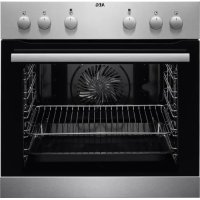



| Product type | Built-in electric oven |
| Brand | AEG |
| Model | EEB230010M |
| Interior volume | 71 L |
| Energy efficiency class | A |
| Energy consumption (conventional mode) | 0.99 kWh/cycle |
| Energy consumption (fan-forced mode) | 0.81 kWh/cycle |
| Dimensions (H x W x D) | 594 x 595 x 567 mm (overall) |
| Built-in dimensions (H x W x D) | 576 x 559 x 546 mm |
| Net weight | 31.5 kg |
| Electrical supply | 230 V / 50 Hz (according to rating plate) |
| Cooking modes | Fan-forced, Top/Bottom heat, Pizza function, Bottom bake, Defrost, Moist fan-forced, Grill, Turbo grill |
| Included accessories | Metal grid, multi-purpose tray |
| Number of cooking levels | 5 levels (removable grid) |
| Interior lighting | Removable bulb, resistant to 300°C |
| Cooling fan | Automatic, continues after stop until cool |
| Cleaning and maintenance | Manual cleaning, disassembly of door and grid supports |
| Spare parts | Original bulb, AEG certified parts |
| Safety | Child safety device recommended, automatic stop at end of cooking |
| Maximum temperature | Up to 250°C (depending on mode) |
Frequently Asked Questions - EEB230010M AEG
User questions about EEB230010M AEG
0 question about this device. Answer the ones you know or ask your own.
Ask a new question about this device
Download the instructions for your Electric oven in PDF format for free! Find your manual EEB230010M - AEG and take your electronic device back in hand. On this page are published all the documents necessary for the use of your device. EEB230010M by AEG.
USER MANUAL EEB230010M AEG
FOR PERFECT RESULTS
For cookware, cake molds, frying.
Roasting pan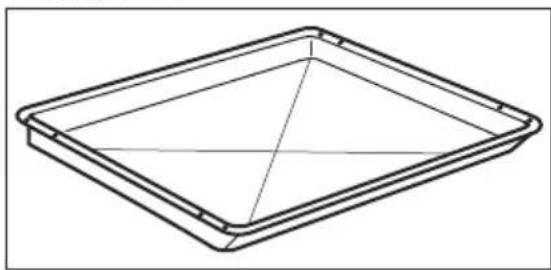
Deep roasting pan:
Wire rack, Deep roasting pan:
8. EXTRA FUNCTIONS
8.1 Cooling fan
Chops / Spareribs 1 - 1.5 170 - 180 60 - 90
Meatloaf 0.75 - 1 160 - 170 50 - 60
Pork knuckle, pre-cooked 0.75 - 1 150 - 170 90 - 120

VEAL

Use the function: Turbo grill.


(kg)

(°C) (min.)

Veal roast 1 160 - 180 90 - 120
Veal shank 1.5 - 2 160 - 180 120 - 150

LAMB

Use function: Turbo grill.


(kg)

(°C) (min.)

Lamb leg / Lamb roast 1 - 1.5 150 - 170 100 - 120
Lamb saddle 1 - 1.5 160 - 180 40 - 60

GAME

Use function: Conventional heating.


(kg)

(°C) (min.)

Pizza pan
Baking pan
Tart pan
10.2 Removal: Oven racks
Step 5 Install the oven racks.
Step 3
Problem Check that ...
Braising pan:
Baking tray, Braising pan:
8. EXTRA FUNCTIONS
8.1 Cooling fan
Pizza pan
Oven dish
Flan base tin
Step 5 Install the sliding rails.
11. TROUBLESHOOTING

WARNING!
Thank you for choosing this AEG product. We have created it to give you impeccable performance for many years, with innovative technologies that help make life simpler – features you might not find on ordinary appliances. Please spend a few minutes reading to get the very best from it.
Visit our website to:

Get usage advice, brochures, trouble shooter, service and repair information: www.aeg.com/support

Register your product for better service: www.registeraeg.com

Buy Accessories, Consumables and Original spare parts for your appliance: www.aeg.com/shop
CUSTOMER CARE AND SERVICE
Always use original spare parts.
When contacting our Authorised Service Centre, ensure that you have the following data available: Model, PNC, Serial Number.
The information can be found on the rating plate.

Warning / Caution-Safety information

General information and tips

Environmental information
Subject to change without notice.
CONTENTS
- SAFETY INFORMATION......59
- SAFETY INSTRUCTIONS....60
- PRODUCT DESCRIPTION....63
- CONTROL PANEL....63
- BEFORE FIRST USE....64
- DAILY USE....64
- USING THE ACCESSORIES....65
- ADDITIONAL FUNCTIONS....66
- HINTS AND TIPS....66
- CARE AND CLEANING....80
- TROUBLESHOOTING....83
- ENERGY EFFICIENCY....83
- ENVIRONMENTAL CONCERNS....84
1. SAFETY INFORMATION
Before the installation and use of the appliance, carefully read the supplied instructions. The manufacturer is not responsible for any injuries or damage that are the result of incorrect installation or usage. Always keep the instructions in a safe and accessible location for future reference.
1.1 Children and vulnerable people safety
- This appliance can be used by children aged from 8 years and above and persons with reduced physical, sensory or mental capabilities or lack of experience and knowledge if they have been given supervision or instruction concerning the use of the appliance in a safe way and understand the hazards involved. Children of less than 8 years of age and persons with very extensive and complex disabilities shall be kept away from the appliance unless continuously supervised.
- Children should be supervised to ensure that they do not play with the appliance.
- Keep all packaging away from children and dispose of it appropriately.
- WARNING: Keep children and pets away from the appliance when it operates or when it cools down. Accessible parts become hot during use.
- If the appliance has a child safety device, it should be activated.
- Children shall not carry out cleaning and user maintenance of the appliance without supervision.
1.2 General Safety
- Only a qualified person must install this appliance and replace the cable.
- Do not use the appliance before installing it in the built-in structure.
- Disconnect the appliance from the power supply before carrying out any maintenance.
- If the mains power supply cable is damaged, it must be replaced by the manufacturer, its Authorised Service Centre or similarly qualified persons to avoid an electrical hazard.
- The control panel must be connected to specified heating unit with matching colours of connectors, to avoid possible hazard.
- The means for disconnection must be incorporated in the fixed wiring in accordance with the wiring rules.
- WARNING: Ensure that the appliance is switched off before replacing the lamp to avoid the possibility of electric shock.
- WARNING: The appliance and its accessible parts become hot during use. Care should be taken to avoid touching heating elements. Always use oven gloves to remove or put in accessories or ovenware.
- To remove the shelf supports, first pull the front of the shelf support and then the rear end away from the side walls. Install the shelf supports in the opposite sequence.
- Do not use a steam cleaner to clean the appliance.
- Do not use harsh abrasive cleaners or sharp metal scrapers to clean the glass door since they can scratch the surface, which may result in shattering of the glass.
2. SAFETY INSTRUCTIONS
2.1 Installation

WARNING!
Only a qualified person must install this appliance.
- Remove all the packaging.
- Do not install or use a damaged appliance.
- Follow the installation instructions supplied with the appliance. Always take care when moving the appliance as it is heavy. Always use safety gloves and enclosed footwear.
- Do not pull the appliance by the handle. Install the appliance in a safe and suitable place that meets installation requirements.
- The kitchen cabinet and the recess must have suitable dimensions.
- Keep the minimum distance from other appliances and units.
- Before mounting the appliance, check if the oven door opens without restraint.
- Parts of the appliance carry current. Close the appliance with furniture to prevent touching the dangerous parts.
- The appliance is equipped with an electric cooling system. It must be operated with the electric power supply.
- The built-in unit must meet the stability requirements of DIN 68930.
| Cabinet minimum height(Cabinet under the worktopminimum height) | 578 (600) mm |
| Cabinet width 560 mm | |
| Cabinet depth 550 (550) mm | |
| Height of the front of the appliance | 594 mm |
| Height of the back of the appliance | 576 mm |
| Width of the front of the appliance | 595 mm |
| Width of the back of the appliance | 559 mm |
| Depth of the appliance 567 mm | |
| Built in depth of the appliance | 546 mm |
| Depth with open door 1027 mm | |
| Ventilation opening minimum size. Opening placed on the bottom rear side | 560 x 20 mm |
| Mounting screws 4 x 25 mm | |
2.2 Electrical connection

WARNING!
Risk of fire and electric shock.
- All electrical connections should be made by a qualified electrician. • The appliance must be earthed. • Make sure that the parameters on the rating plate are compatible with the electrical ratings of the mains power supply. • Always use a correctly installed shockproof socket.
- Do not use multi-plug adapters and extension cables. • Make sure not to cause damage to the mains plug and to the mains cable. Should the mains cable need to be replaced, this must be carried out by our Authorised Service Centre.
- Do not let mains cables touch or come near the appliance door or the niche below the appliance, especially when it operates or the door is hot.
- The shock protection of live and insulated parts must be fastened in such a way that it cannot be removed without tools.
- Connect the mains plug to the mains socket only at the end of the installation. Make sure that there is access to the mains plug after the installation.
- If the mains socket is loose, do not connect the mains plug.
- Do not pull the mains cable to disconnect the appliance. Always pull the mains plug.
- Use only correct isolation devices: line protecting cut-outs, fuses (screw type fuses removed from the holder), earth leakage trips and contactors.
- The electrical installation must have an isolation device which lets you disconnect the appliance from the mains at all poles. The isolation device must have a contact opening width of minimum 3 mm. This appliance is supplied without a main plug and a main cable.
2.3 Use

WARNING!
Risk of injury, burns and electric shock or explosion.
- This appliance is for household (indoors) use only.
- Do not change the specification of this appliance. Make sure that the ventilation openings are not blocked.
- Do not let the appliance stay unattended during operation.
- Deactivate the appliance after each use.
- Be careful when you open the appliance door while the appliance is in operation. Hot air can release.
- Do not operate the appliance with wet hands or when it has contact with water.
- Do not apply pressure on the open door.
- Do not use the appliance as a work surface or as a storage surface.
- Open the appliance door carefully. The use of ingredients with alcohol can cause a mixture of alcohol and air.
- Do not let sparks or open flames come in contact with the appliance when you open the door.
- Do not put flammable products or items that are wet with flammable products in, near, or on the appliance.

WARNING!
Risk of damage to the appliance.
• To prevent damage or discoloration to the enamel:
- do not put ovenware or other objects in the appliance directly on the bottom.
- do not put aluminium foil directly on the bottom of the cavity of the appliance. – do not put water directly into the hot appliance.
- do not keep moist dishes and food in the appliance after you finish the cooking.
- be careful when you remove or install the accessories.
- Discoloration of the enamel or stainless steel has no effect on the performance of the appliance.
- Use a deep pan for moist cakes. Fruit juices cause stains that can be permanent. This appliance is for cooking purposes only. It must not be used for other purposes, for example room heating. Always cook with the oven door closed.
2.4 Care and cleaning

WARNING!
Risk of injury, fire, or damage to the appliance.
- Before maintenance, deactivate the appliance and disconnect the mains plug from the mains socket. Make sure the appliance is cold. There is the risk that the glass panels can break.
- Replace immediately the door glass panels when they are damaged. Contact the Authorised Service Centre.
- Be careful when you remove the door from the appliance. The door is heavy!
- Clean regularly the appliance to prevent the deterioration of the surface material.
- Clean the appliance with a moist soft cloth. Use only neutral detergents. Do not use abrasive products, abrasive cleaning pads, solvents or metal objects.
- If you use an oven spray, follow the safety instructions on its packaging.
2.5 Internal lighting

WARNING!
Risk of electric shock.
- Concerning the lamp(s) inside this product and spare part lamps sold separately: These lamps are intended to withstand extreme physical conditions in household appliances, such as temperature, vibration, humidity, or are intended to signal information about the operational status of the appliance. They are not intended to be used in other applications and are not suitable for household room illumination.
- Use only lamps with the same specifications.
2.6 Service
• To repair the appliance contact the Authorised Service Centre. - Use original spare parts only.
2.7 Disposal

WARNING!
Risk of injury or suffocation.
- Contact your municipal authority for information on how to dispose of the appliance.
- Disconnect the appliance from the mains supply.
- Cut off the mains electrical cable close to the appliance and dispose of it.
- Remove the door catch to prevent children or pets from becoming trapped in the appliance.
3. PRODUCT DESCRIPTION
3.1 General overview
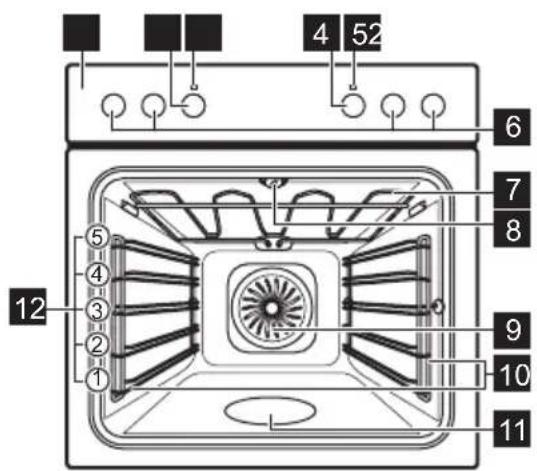
1 Control panel 2 Knob for the heating functions 3 Power lamp / symbol 4 Control knob (for the temperature) 5 Temperature indicator / symbol 6 Knobs for the cooking zones 7 Heating element 8 Lamp 9 Fan 10 Shelf support, removable 11 Cavity embossment 12 Shelf positions
3.2 Accessories
Wire shelf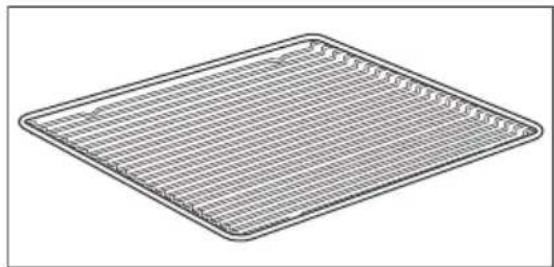
For cookware, cake tins, roasts.
Combi pan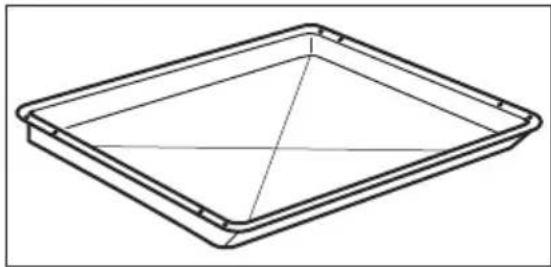
For cakes and biscuits. To bake and roast or as a pan to collect fat.
4. CONTROL PANEL
4.1 Knobs for the cooking zones
You can operate the hob with the knobs for the cooking zones.

You must read the Safety chapters in the hob user manual.
4.2 Heat settings
Knob indication Function
0 Off position
Knob indication Function
| Keep warm setting | |
| 1 - 9 Heat settings | |
- Turn the knob to a necessary heat setting.
- To complete the cooking process, turn the knob to the off position.
4.3 Automatic heat-up

Only applicable for hobs with the automatic heat-up function.
The automatic heat-up function heats the cooking zone with full power for some time.
- Turn the knob for the cooking zone clockwise as far as possible (beyond the highest heat setting).
- Immediately set the necessary heat setting.
- To deactivate the function, turn the knob to the off position.
4.4 Using the double zone (if applicable)

To activate the double zone, turn the knob clockwise. Do not turn it through the stop position.
- Turn the knob clockwise to position 9.
- Turn the knob slowly until you can hear a click. The two cooking zones are on.
- To set the necessary heat setting refer to "Heat settings".
5. BEFORE FIRST USE

WARNING!
Refer to Safety chapters.
5.1 Before first use
The oven can emit an odour and smoke during preheating. Make sure that the room is ventilated.
Step 1
Step 2
Clean the oven Preheat the empty oven
- Remove all accessories and removable shelf supports from the oven.
- Clean the oven and the accessories with a soft cloth, warm water and a mild detergent.
- Set the maximum temperature for the function: Time: 1 h.

- Set the maximum temperature for the function: Time: 15 min.

Turn off the oven and wait until it is cold. Place the accessories and the removable shelf supports in the oven.
6. DAILY USE

WARNING!
Refer to Safety chapters.
6.1 How to set: Heating function
Step 1 Turn the knob for the heating functions to select a heating function.
Step 2 Turn the control knob to select the temperature.
Step 3 When the cooking ends, turn the knobs to the off position to turn off the oven.
6.2 Heating functions
| Heating func-tion | Application |
| [0820] | The oven is off. |
| Off position | |
| [76C] | To turn on the lamp. |
| Light | |
| [2307] | To bake on up to three shelf positions at the same time and to dry food. |
| True Fan Cooking | Set the temperature 20 - 40 °C lower than for Conventional Cooking. |
 | To bake pizza. To make intensive browning and a crispy bot-tom. |
| Pizza Function | |
| [AB12] | To bake and roast food on one shelf position. |
| Conventional Cooking | |
 | To bake cakes with crispy bot-tom and to preserve food. |
| Bottom Heat | |
| [WAZD] | To defrost food (vegetables and fruit). The defrosting time depends on the amount and size of the frozen food. |
| Defrost |
7. USING THE ACCESSORIES

WARNING!
Refer to Safety chapters.
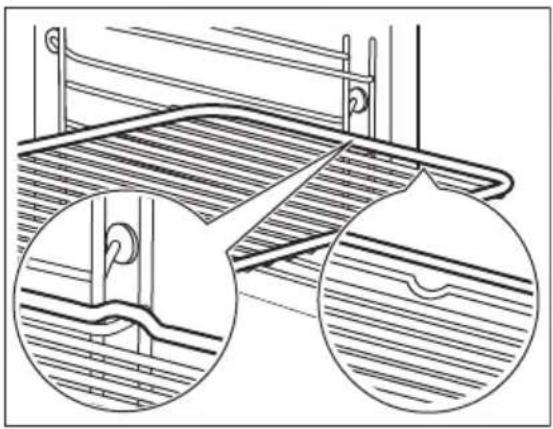
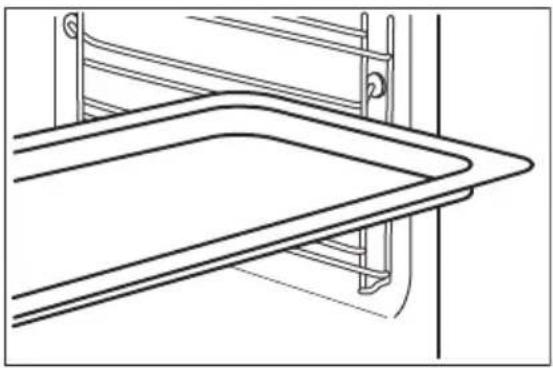
7.1 Inserting accessories
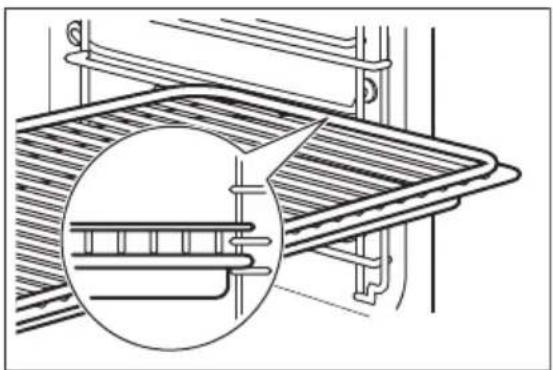
A small indentation at the top increases safety. The indentations are also anti-tip
| Heating func-tion | Application |
 Moist Fan Baking Moist Fan Baking | This function is designed to save energy during cooking. When you use this function, the temperature in the cavity may differ from the set temperature. The heating power may be re-duced. For more information refer to "Daily Use" chapter, Notes on: Moist Fan Baking. |
 Grill Grill | To grill thin pieces of food and to toast bread. |
 Turbo Grilling Turbo Grilling | To roast large meat joints or poultry with bones on one shelf position. To make gratins and to brown. |

The lamp may turn off automatically at a temperature below 60 °C during some oven functions.
6.3 Notes on: Moist Fan Baking
This function was used to comply with the energy efficiency class and ecodesign requirements according to EU 65/2014 and EU 66/2014. Tests according to EN 60350-1.
The oven door should be closed during cooking so that the function is not interrupted and the oven operates with the highest energy efficiency possible.
For the cooking instructions refer to "Hints and tips" chapter, Moist Fan Baking. For general energy saving recommendations refer to "Energy Efficiency" chapter, Energy Saving.
devices. The high rim around the shelf prevents cookware from slipping off the shelf.
Wire shelf:
Push the shelf between the guide bars of the shelf support.
Deep pan:
Push the tray between the guide bars of the shelf support.
Wire shelf, Deep pan:
Push the tray between the guide bars of the shelf support and the wire shelf on the guide bars above.
8. ADDITIONAL FUNCTIONS
8.1 Cooling fan
When the oven operates, the cooling fan turns on automatically to keep the surfaces of
the oven cool. If you turn off the oven, the cooling fan can continue to operate until the oven cools down.
9. HINTS AND TIPS
i
Refer to Safety chapters.
9.1 Examples of cooking applications for the hob
| Heat setting | Application Time | Hints (min) |
| 1 To keep cooked food warm. as required Put a lid on the cookware. | ||
| 1 - 2 To make Hollandaise sauce, and to melt butter, chocolate and gelatine. | 5 - 25 Mix at intervals. | |
| 1 - 2 To solidify fluffy omelettes and baked eggs. | 10 - 40 Cook with a lid on. | |
| 2 - 3 To simmer rice and milk-based dishes, and to heat up ready-cooked meals. | 25 - 50 Add a minimum of two times as much liquid as rice. Stir milk dishes halfway through. | |
| 3 - 4 To steam vegetables, fish and meat. 20 - 45 Add some tablespoons of a liquid. | ||
| 4 - 5 To steam potatoes. 20 - 60 Use a maximum of 1/4 l water for 750 g of potatoes. | ||
| 4 - 5 To cook larger quantities of food, stews and soups. | 60 - 150 Add a maximum of 3 l of a liquid to the ingredients. | |
| 6 - 7 To lightly fry escalopes, veal cordon bleu, cutlets, rissoles, sausages, liver, eggs, pancakes and doughnuts, and to cook roux. | as required Turn halfway through. | |
| 7 - 8 To fry hash browns, loin steaks and steaks. | 5 - 15 Turn halfway through. | |
| 9 To boil large quantities of water, to cook pasta, to sear meat (goulash, pot roast) and to deep-fry chips. | ||
9.2 Cooking recommendations

The temperature and cooking times in the tables are guidelines only. They depend on the recipes and the quality and quantity of the ingredients used.
Your oven may bake or roast differently to the oven you had before. The tables below show recommended settings for temperature, cooking time and shelf position for specific types of the food.
If you cannot find the settings for a special recipe, look for the similar one.
9.3 Baking
For the first baking, use the lower temperature.
You can extend the baking time by 10 – 15 minutes if you bake cakes on more than one shelf position.
Cakes and pastries at different heights do not always brown equally. There is no need to
change the temperature setting if an unequal browning occurs. The differences equalize during baking.
Trays in the oven can distort during baking. When the trays are cold again, the distortions disappear.
9.4 Tips on baking
Baking results Possible cause Remedy
| The bottom of the cake is not baked sufficiently. | The shelf position is incorrect. Put the cake on a lower shelf. | |
| The cake sinks and becomes soggy or streaky. | The oven temperature is too high. Next time set slightly lower oven temperature. | |
| The oven temperature is too high and the baking time is too short. | Next time set a longer baking time and lower oven temperature. | |
| The cake is too dry. The oven temperature is too low. Next time set higher oven temperature. | ||
| The cake bakes unevenly. The oven temperature is too high and the baking time is too short. | Next time set a longer baking time and lower oven temperature. | |
| The cake is not ready in the baking time specified in a recipe. | The oven temperature is too low. Next time set a slightly higher oven temperature. | |
9.5 Baking on one shelf level


ING IN TINS (°C) (min)



Flan base - short pastry, preheat the empty oven: True Fan Cooking 170 - 180, 10 - 25, 2
Flan base - sponge cake mixture: True Fan Cooking 150 - 170, 20 - 25, 2
Ring cake / Brioche: True Fan Cooking 150 - 160, 50 - 70, 1
Madeira cake / Fruit cakes: True Fan Cooking 140 - 160, 70 - 90, 1
Cheesecake: Conventional Cooking 170 - 190, 60 - 90, 1
Use the third shelf position.
Use the function: True Fan Cooking.
Use a baking tray.
CAKES / PASTRIES / BREADS

(°C) (min)

Cake with crumble topping: 150 - 160, 20 - 40
Fruit flans (made of yeast dough / sponge cake mixture), use a deep pan: 150, 35 - 55
Fruit flans made of short pastry: 160 - 170, 40 - 80
Preheat the empty oven.
Use the function: Conventional Cooking.
Use a baking tray.
CAKES /

PASTRIES / BREADS (°C) (min)

Swiss roll 180 - 200 10 - 20 3
Rye bread: first: 230 20 1
then: 160 - 180 30 - 60
Buttered almond cake / Sugar cakes
190 - 210 20 - 30 3
Cream puffs / Eclairs 190 - 210 20 - 35 3
Plaited bread / Bread crown
170 - 190 30 - 40 3
Fruit flans (made of yeast dough / sponge cake mixture), use a deep pan
170 35 - 55 3
Yeast cakes with delicate toppings (e.g. quark, cream, custard)
160 - 180 40 - 80 3
Christstollen 160 - 180 50 - 70 2
Use the third shelf position.
BISCUITS


(°C) (min)
Short pastry biscuits
True Fan Cooking
150 - 160
10 - 20
Rolls, preheat the empty oven
True Fan Cooking
160
10 - 25
Biscuits made of sponge cake mixture
True Fan Cooking
150 - 160
15 - 20
Puff pastries, preheat the empty oven
True Fan Cooking
170 - 180
20 - 30

BISCUITS


(°C) (min)

Biscuits made of yeast dough True Fan Cooking 150 - 160 20 - 40
Macaroons True Fan Cooking 100 - 120 30 - 50
Pastries made of egg white / True Fan Cooking 80 - 100 120 - 150
Meringues
Rolls, preheat the empty oven Conventional Cooking 190 - 210 10 - 25
9.6 Bakes and gratins
Use the first shelf position.


(°C) (min)
Baguettes topped with melted cheese True Fan Cooking 160 - 170 15 - 30
Vegetables au gratin, pre- Turbo Grilling 160 - 170 15 - 30 heat the empty oven
Lasagne Conventional Cooking 180 - 200 25 - 40
Fish bakes Conventional Cooking 180 - 200 30 - 60
Stuffed vegetables True Fan Cooking 160 - 170 30 - 60
Sweet bakes Conventional Cooking 180 - 200 40 - 60
Pasta bake Conventional Cooking 180 - 200 45 - 60
9.7 Multilevel Baking
Use the function: True Fan Cooking.
Use the baking trays.
CAKES /
PASTRIES

(°C)

(min)
2 positions
Cream puffs / Eclairs, pre- 160 - 180 25 - 45 1 / 4 heat the empty oven
Dry streusel cake 150 - 160 30 - 45 1 / 4
BIS-
CUITS / SMALL
CAKES / PAS-
TRIES / ROLLS

(°C) (min)

2 positions 3 positions
Rolls 180 20 - 30 1 / 4 -
Short pastry biscuits 150 - 160 20 - 40 1 / 4 1 / 3 / 5
Biscuits made of sponge cake mixture 160 - 170 25 - 40 1 / 4 -
Puff pastries, pre- 170 - 180 30 - 50 1 / 4 - heat the empty oven
Biscuits made of 160 - 170 30 - 60 1 / 4 - yeast dough
Macaroons 100 - 120 40 - 80 1 / 4 -
Biscuits made of egg white / Meringues 80 - 100 130 - 170 1 / 4
9.8 Tips on Roasting
Use heat-resistant ovenware.
Roast lean meat covered (you can use aluminium foil).
Roast large meat joints directly in the tray or on the wire shelf placed above the tray.
Put some water in the tray to prevent dripping fat from burning.
Turn the roast after 1/2 - 2/3 of the cooking time.
Roast meat and fish in large pieces (1 kg or more).
Baste meat joints with their own juice several times during roasting.
9.9 Roasting
Use the first shelf position.

BEEF


(°C) (min)
Pot roast 1 - 1.5 kg Conventional Cook-
230 120 - 150
Roast beef or fillet, rare, per cm of thickness: Turbo Grilling 190-200, 5-6 min. Preheat the empty oven.
Roast beef or fillet, medium, per cm of thickness: Turbo Grilling 180-190, 6-8 min. Preheat the empty oven.
BEEF


(°C) (min)
Roast beef or fillet, well done: Preheat the empty oven.
Per cm of thickness: Turbo Grilling 170-180, 8-10 min.
PORK

Use the function: Turbo Grilling.

(kg)
(°C) (min)

Shoulder / Neck / Ham joint: 1-1.5 kg, 160-180 °C, 90-120 min.
Chops / Spare rib: 1-1.5 kg, 170-180 °C, 60-90 min.
Meatloaf: 0.75-1 kg, 160-170 °C, 50-60 min.
Pork knuckle, precooked: 0.75-1 kg, 150-170 °C, 90-120 min.
VEAL

Use the function: Turbo Grilling.

(kg)
(°C) (min)

Roast veal 1 160 - 180 90 - 120
Veal knuckle
1.5 - 2
160 - 180 120 - 150

LAMB

Use the function: Turbo Grilling.

(kg)
(°C) (min)

Lamb leg / Roast lamb 1 - 1.5 150 - 170 100 - 120
Lamb saddle 1 - 1.5 160 - 180 40 - 60

GAME

Use the function: Conventional Cooking.

(kg)
(°C) (min)

Saddle / Hare leg, preheat up to 1 230 30 - 40 the empty oven
Venison saddle 1.5 - 2 210 - 220 35 - 40
Haunch of venison 1.5 - 2 180 - 200 60 - 90

POULTRY

Use the function: Turbo Grilling.

(kg)
(°C) (min)

Poultry, portions 0.2 - 0.25 each 200 - 220 30 - 50
Chicken, half 0.4 - 0.5 each 190 - 210 35 - 50
Chicken, poulard 1 - 1.5 190 - 210 50 - 70
Duck 1.5 - 2 180 - 200 80 - 100
Goose 3.5 - 5 160 - 180 120 - 180
Turkey 2.5 - 3.5 160 - 180 120 - 150
Turkey 4 - 6 140 - 160 150 - 240
FISH (STEAMED)

Use the function: Conventional Cooking.

(kg)
(°C) (min)

Whole fish 1 - 1.5 210 - 220 40 - 60
9.10 Crispy baking with: Pizza Function

PIZZA

Use the first shelf position.


(°C) (min)
Tarts 180 - 200 40 - 55
Spinach flan 160 - 180 45 - 60
Quiche lorraine / 170 - 190 45 - 55
Swiss flan
Cheesecake 140 - 160 60 - 90
Vegetable pie 160 - 180 50 - 60

PIZZA

Preheat the empty oven before cooking.
Use the second shelf position.

(°C) (min)


Pizza, thin crust, 200 - 230 15 - 20 use a deep pan
PIZZA

Preheat the empty oven before cooking.

Use the second shelf position.

(°C) (min)


Pizza, thick crust
180 - 200 20 - 30
Unleavened bread
Unleavened bread
230 - 250 10 - 20
Puff pastry flan 160 - 180 45 - 55
Flammkuchen 230 - 250 12 - 20
Pierogi 180 - 200 15 - 25
9.11 Grill
Preheat the empty oven before cooking.
Grill only thin pieces of meat or fish.
Put a pan on the first shelf position to collect fat.

GRILL

Use the function: Grill


(°C) (min)

1st side

(min)
2nd side
Roast beef 210 - 230 30 - 40 30 - 40 2
Beef fillet 230 20 - 30 20 - 30 3
Pork loin 210 - 230 30 - 40 30 - 40 2
Veal loin 210 - 230 30 - 40 30 - 40 2
Lamb saddle 210 - 230 25 - 35 20 - 25 3
Whole fish, 0.5 kg - 1 kg 210 - 230 15 - 30 15 - 30 3 / 4
9.12 Frozen Foods

DEFROSTING

Use the function: True Fan Cooking.


(°C) (min)

Pizza, frozen 200 - 220 15 - 25 2
Pizza American, frozen 190 - 210 20 - 25 2
Pizza, chilled 210 - 230 13 - 25 2
Pizza snacks, frozen 180 - 200 15 - 30 2
French fries, thin 200 - 220 20 - 30 3
French fries, thick 200 - 220 25 - 35 3
Wedges / Croquettes 220 - 230 20 - 35 3
Hash browns 210 - 230 20 - 30 3
Lasagne / Cannelloni, fresh 170 - 190 35 - 45 2
Lasagne / Cannelloni, frozen 160 - 180 40 - 60 2
Baked cheese 170 - 190 20 - 30 3

DEFROSTING

Use the function: True Fan Cooking.


(°C) (min)

Chicken wings 190 - 210 20 - 30 2
9.13 Defrost
Remove the food packaging and put the food on a plate.
Do not cover the food, as this can extend the defrost time.
For large portions of food place an upturned empty plate on the bottom of the oven cavity. Put the food in a deep dish and set it on top of the plate inside the oven. Remove the shelf supports if necessary.
Use the first shelf position.


(kg)

(min)
Defrosting time

(min)
Further defrosting time

Chicken 1 100 - 140 20 - 30 Turn halfway through.
Meat 1 100 - 140 20 - 30 Turn halfway through.
Trout 0.15 25 - 35 10 - 15 -
Strawberries 0.3 30 - 40 10 - 20 -
Butter 0.25 30 - 40 10 - 15 -
Cream 2 x 0.2 80 - 100
10 - 15 Whip the cream when
still slightly frozen in places.
Gateau
1.4 60 60
9.14 Preserving
Use the function Bottom Heat.
Use only preserve jars of the same dimensions available on the market.
Do not use jars with twist-off and bayonet type lids or metal tins.
Use the first shelf position.
Put no more than six one-litre preserve jars on the baking tray.
Fill the jars equally and close with a clamp.
The jars cannot touch each other.
Put approximately 1/2 litre of water into the baking tray to give sufficient moisture in the oven.
When the liquid in the jars starts to simmer (after approximately 35 - 60 minutes with one-litre jars), stop the oven or decrease the temperature to 100 °C (see the table).
Set the temperature to 160 - 170 °C.

SOFT FRUIT

(min) Cooking time until simmering
Strawberries / Blueberries / Raspberries / Ripe gooseberries
35 - 45

STONE
FRUIT (min)

Cooking time until simmering

(min) Continue to cook at 100 °C
Peaches / Quinces / Plums
35 - 45 10 - 15
VEGETABLES (min)
Cooking time until simmering

(min) Continue to cook at 100 °C

Carrots 50 - 60 5 - 10
Cucumbers 50 - 60 -
Mixed pickles 50 - 60 5 - 10
Kohlrabi / Peas / Asparagus 50 - 60 15 - 20
9.15 Dehydrating - True Fan Cooking
Cover trays with greaseproof paper or baking parchment.
Cover trays with greaseproof paper or baking parchment.
For a better result, stop the oven halfway through the drying time, open the door and let it cool down for one night to complete the drying.
For 1 tray use the third shelf position.
For 2 trays use the first and fourth shelf position.
VEGETABLES (°C) (h)
Beans 60 - 70 6 - 8
Peppers 60 - 70 5 - 6
Vegetables for soup 60 - 70 5 - 6
Mushrooms 50 - 60 6 - 8
Herbs 40 - 50 2 - 3
Set the temperature to 60 - 70 °C.


FRUIT (h)

Plums 8 - 10

Apricots 8 - 10
Plums 8 - 10
Apricots 8 - 10
Apple slices 6 - 8
Pears 6-9
9.16 Moist Fan Baking - recommended accessories
Use dark and non-reflective tins and containers. They have better heat absorption than light-colored and reflective dishes.
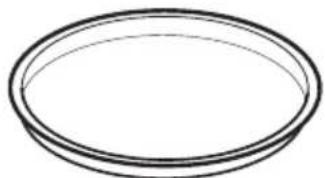
Pizza pan: dark, non-reflective, 28 cm diameter
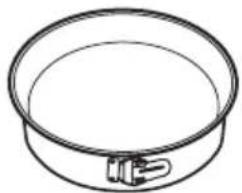
Baking dish: dark, non-reflective, 26 cm diameter
Ramekins: ceramic, 8 cm diameter, 5 cm height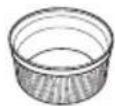
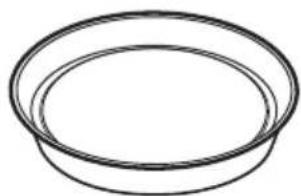
Flan base tin: dark, non-reflective, 28 cm diameter
9.17 Moist Fan Baking
For the best results, follow the suggestions listed in the table below.


(°C) (min)
Sweet rolls, 16 pieces: baking tray or dripping pan, 190°C, 3, 45-55 min
Pizza, frozen, 0.35 kg: wire shelf, 190°C, 2, 45-50 min
Swiss roll: baking tray or dripping pan, 180°C, 2, 45-55 min
Brownie: baking tray or dripping pan, 180°C, 2, 55-60 min
Sponge flan base: flan base tin on wire shelf, 180, 2, 40 - 50
Poached fish, 0.3 kg: baking tray or dripping pan, 180, 3, 25 - 35
Whole fish, 0.2 kg: baking tray or dripping pan, 180, 3, 25 - 35
Fish fillet, 0.3 kg: pizza pan on wire shelf, 180, 3, 40 - 50
Poached meat, 0.25 kg: baking tray or dripping pan, 190, 3, 40 - 50
Shashlik, 0.5 kg: baking tray or dripping pan, 190, 3, 35 - 45
Cookies, 16 pieces: baking tray or dripping pan, 160, 2, 40 - 50
Macaroons, 24 pieces: baking tray or dripping pan, 150, 2, 35 - 45
Muffins, 12 pieces: baking tray or dripping pan, 160, 2, 35 - 45
Savory pastry, 20 pieces: baking tray or dripping pan, 170, 2, 35 - 45
Short crust biscuits, 20 pieces: baking tray or dripping pan, 150, 2, 40 - 45
Tartlets, 8 pieces: baking tray or dripping pan, 170, 2, 35 - 45
Vegetables, poached, 0.4 kg: baking tray or dripping pan, 180, 3, 45 - 55
Vegetarian omelette: pizza pan on wire shelf, 190, 3, 40 - 50
9.18 Information for test institutes
Tests according to: EN 60350, IEC 60350.
BAKING ON ONE LEVEL. Baking in tins


(°C) (min)
Fatless sponge cake True Fan Cooking 140 - 150 35 - 50 2
Fatless sponge cake Conventional Cooking 160 35 - 50 2
Apple pie, 2 tins ∅20 cm True Fan Cooking 160 60 - 90 2
Apple pie, 2 tins ∅20 cm Conventional Cooking 180 70 - 90 1
BAKING ON ONE LEVEL. Biscuits
Use the third shelf position.


(°C) (min)

Short bread / Pastry strips True Fan Cooking 140 25 - 40
Short bread / Pastry strips, pre- Conventional Cooking 160 20 - 30 heat the empty oven
Small cakes, 20 per tray, preheat True Fan Cooking 150 20 - 35 the empty oven
Small cakes, 20 per tray, preheat Conventional Cooking 170 20 - 30 the empty oven
MULTILEVEL BAKING. Biscuits


(°C) (min)
Short bread / Pastry strips True Fan Cooking 140 25 - 45 1 / 4
Small cakes, 20 per tray, pre-True Fan Cooking 150 23 - 40 1 / 4 heat the empty oven
Fatless sponge cake True Fan Cooking 160 35 - 50 1 / 4

GRILL

Preheat the empty oven for 5 minutes.

Grill with the maximum temperature setting.


(min)
Toast Grill 1 - 3 5
Beef steak, turn halfway through Grill 24 - 30 4
10. CARE AND CLEANING

WARNING!
Refer to Safety chapters.
10.1 Notes on cleaning
Cleaning Agents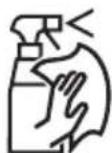
Clean the front of the oven with a soft cloth with warm water and a mild detergent.
Use a cleaning solution to clean metal surfaces.
Clean stains with a mild detergent.
Everyday Use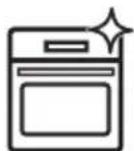
Clean the cavity after each use. Fat accumulation or other residue may cause fire.
Do not store the food in the oven for longer than 20 minutes. Dry the cavity with a soft cloth after each use.
Accessories
Clean all accessories after each use and let them dry. Use a soft cloth with warm water and a mild detergent. Do not clean the accessories in a dishwasher.
Do not clean the non-stick accessories using abrasive cleaner or sharp-edged objects.
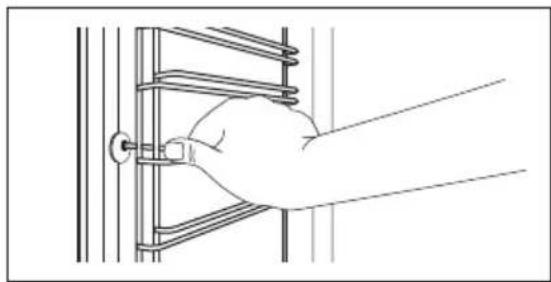
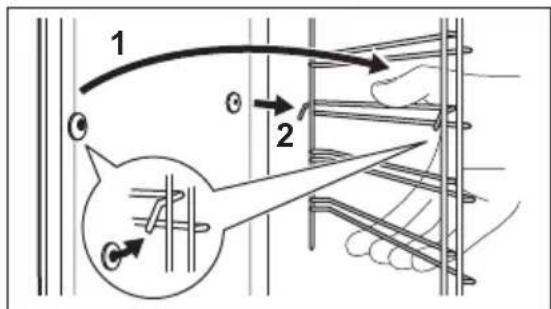
10.2 How to remove: Shelf supports
Remove the shelf supports to clean the oven.
Step 1 Turn off the oven and wait until it is cold.
Step 2 Pull the front of the shelf support away from the side wall.
Step 3 Pull the rear end of the shelf support away from the side wall and remove it.
Step 4 Install the shelf supports in the opposite sequence.
10.3 How to remove: Grill

WARNING!
There is a risk of burns.
Step 1 Turn off the oven and wait until it is cold to clean it. Remove the shelf supports.
Step 2 Grab the grill corners. Pull it forwards against the spring pressure and out of two holders. The grill folds down.
Step 3 Clean the oven ceiling with warm water, a soft cloth and a mild detergent. Let it dry.
Step 4 Install the grill in the opposite sequence.
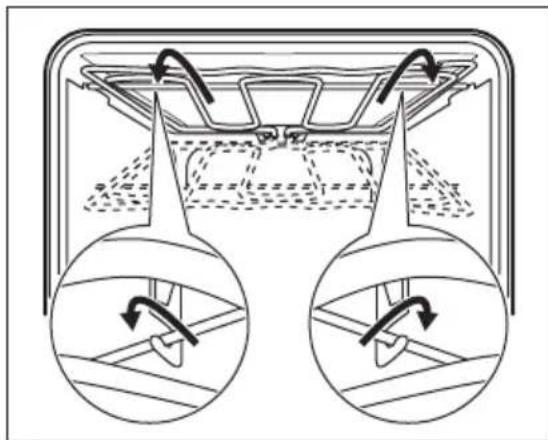
Step 5 Install the shelf supports.
10.4 How to remove and install: Door
You can remove the door and the internal glass panels to clean it. The number of glass panels is different for different models.

WARNING!
The door is heavy.

CAUTION!
Carefully handle the glass, especially around the edges of the front panel. The glass can break.
Step 1 Fully open the door.
Step 2 Lift and press the clamping levers (A) on the two door hinges.
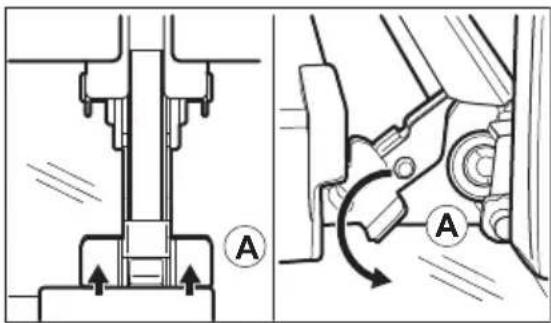
Step 3 Close the oven door to the first opening position (approximately 70° angle). Hold the door at both sides and pull it away from the oven at an upwards angle. Put the door with the outer side down on a soft cloth on a stable surface.
Step 4 Hold the door trim (B) on the top edge of the door at the two sides and push inwards to release the clip seal.
Step 5 Pull the door trim to the front to remove it.
Step 6 Hold the door glass panels on their top edge one by one and pull them up out of the guide.
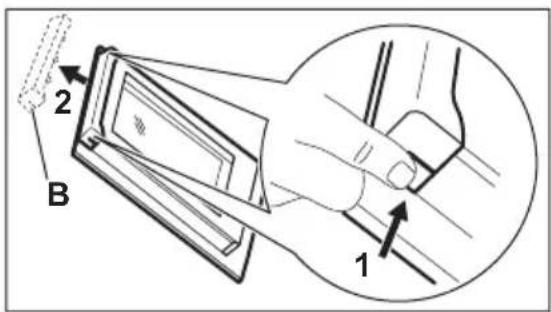
Step 7 Clean the glass panel with water and soap. Dry the glass panel carefully. Do not clean the glass panels in the dishwasher.
Step 8 After cleaning, do the above steps in the opposite sequence.
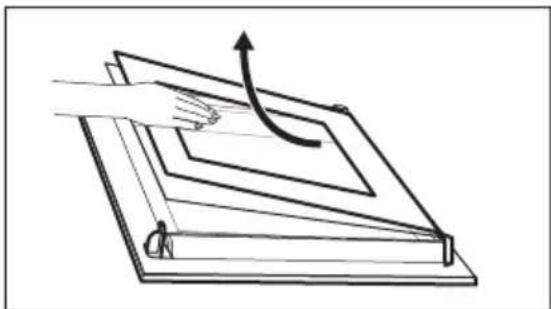
Step 9 Install the smaller panel first, then the larger and the door. Make sure that the glasses are inserted in the correct position otherwise the surface of the door may overheat.
10.5 How to replace: Lamp

WARNING!
Risk of electric shock.
The lamp can be hot.
Before you replace the lamp: Step 1 Step 2 Step 3
| Turn off the oven. Wait until the oven is cold. | Disconnect the oven from the mains. | Put a cloth on the bottom of the cavity. |
Top lamp
Step 1 Turn the glass cover to remove it.
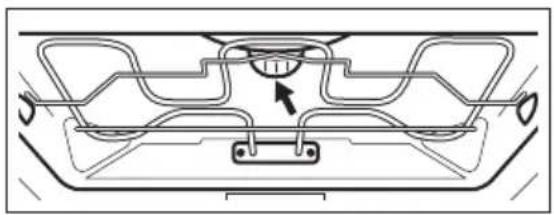
Step 2 Clean the glass cover.
Step 3 Replace the lamp with a suitable 300° C heat-resistant lamp.
Step 4 Install the glass cover.
11. TROUBLESHOOTING

WARNING!
Refer to Safety chapters.
11.1 What to do if...
In any cases not included in this table please contact with an Authorised Service Centre.
Problem Check if...
The oven does not heat up. The fuse is blown.
The lamp does not work. The lamp is burnt out.
11.2 Service data
If you cannot find a solution to the problem yourself, contact your dealer or an Authorised Service Centre.
The necessary data for the service centre is on the rating plate. The rating plate is on the front frame of the oven cavity. Do not remove the rating plate from the oven cavity.
We recommend that you write the data here:
Model (MOD.) ....
Product number (PNC) ....
Serial number (S.N.) ....
12. ENERGY EFFICIENCY
12.1 Product Information and Product Information Sheet*
Supplier's name: AEG
Model identification: EEB230010M 940321361
Energy Efficiency Index: 95.3
Energy efficiency class: A
| Energy consumption with a standard load, conventional mode 0.99 kWh/cycle |
| Energy consumption with a standard load, fan-forced mode 0.81 kWh/cycle |
| Number of cavities 1 |
| Heat source Electricity |
| Volume 71 l |
| Type of oven Built-Under Oven |
| Mass 31.5 kg |
* For European Union according to EU Regulations 65/2014 and 66/2014. For Republic of Belarus according to STB 2478-2017, Appendix G; STB 2477-2017, Annexes A and B. For Ukraine according to 568/32020. Energy efficiency class is not applicable for Russia. EN 60350-1 - Household electric cooking appliances - Part 1: Ranges, ovens, steam ovens and grills - Methods for measuring performance.
12.2 Energy saving

The oven has features which help you save energy during everyday cooking.
Make sure that the oven door is closed when the oven operates. Do not open the oven door too often during cooking. Keep the door gasket clean and make sure it is well fixed in its position.
Use metal cookware to improve energy saving.
When possible, do not preheat the oven before cooking.
Keep breaks between baking as short as possible when you prepare a few dishes at one time.
Cooking with fan
When possible, use the cooking functions with fan to save energy.
Residual heat
When the cooking duration is longer than 30 min, reduce the oven temperature to minimum 3 - 10 min before the end of cooking. The residual heat inside the oven will continue to cook.
Use the residual heat to warm up other dishes.
Keep food warm
Choose the lowest possible temperature setting to use residual heat and keep a meal warm.
Moist Fan Baking
Function designed to save energy during cooking.
13. ENVIRONMENTAL CONCERNS
Recycle materials with the symbol Put the packaging in relevant containers to recycle it. Help protect the environment and human health by recycling waste of electrical and electronic appliances. Do not dispose of
appliances marked with the symbol with the household waste. Return the product to your local recycling facility or contact your municipal office.
Frying pan:
8. ADDITIONAL FUNCTIONS
Pizza pan
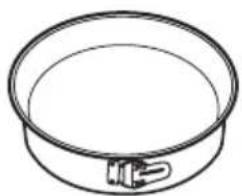
Roasting dish
Individual ramekins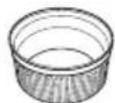
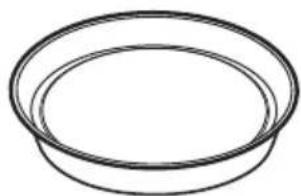
Quiche dish

10.3 Removing: Grill

WARNING!
Risk of burns.
Drip pan:
8. ADDITIONAL FUNCTIONS
2 positions 3 positions
Bread rolls 180 20 - 30 1 / 4 -
Pizza pan
Baking dish
Casserole dish:
8. ADDITIONAL FUNCTIONS
8.1 Cooling fan
Pizza pan
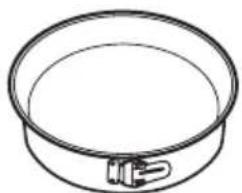
Baking tray
Muffin tin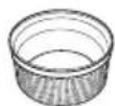
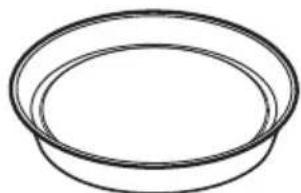
Cake base pan
Deep tray:
Wire rack, Deep tray:
Pizza tray
Baking tray
Base mold
Deep tray:
Wire rack, Deep tray:
8. OPTIONAL FUNCTIONS
8.1 Cooling fan
Root vegetables 60–70 5–6
Mushrooms 50–60 6–8
Herbs 40–50 2–3


Pizza pan
Dark, non-reflective 28 cm in diameter
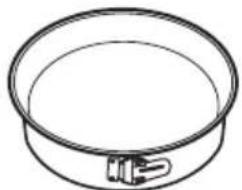
Baking dish
Dark, non-reflective 26 cm in diameter
Ramekins
Ceramic 8 cm diameter, 5 cm high
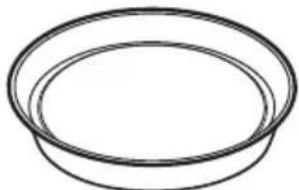
Cake pan
Dark, non-reflective 28 cm in diameter
9.17 Hot air with moisture
CE


- FOR PERFECT RESULTS
- DEEP ROASTING PAN
- WIRE RACK, DEEP ROASTING PAN
- EXTRA FUNCTIONS
- COOLING FAN
- REMOVAL: OVEN RACKS
- PROBLEM CHECK THAT
- BRAISING PAN
- BAKING TRAY, BRAISING PAN
- TROUBLESHOOTING
- WARNING
- CUSTOMER CARE AND SERVICE
- CONTENTS
- SAFETY INFORMATION
- CHILDREN AND VULNERABLE PEOPLE SAFETY
- GENERAL SAFETY
- SAFETY INSTRUCTIONS
- INSTALLATION
- ELECTRICAL CONNECTION
- USE
- CARE AND CLEANING
- INTERNAL LIGHTING
- SERVICE
- DISPOSAL
- PRODUCT DESCRIPTION
- GENERAL OVERVIEW
- ACCESSORIES
- CONTROL PANEL
- KNOBS FOR THE COOKING ZONES
- HEAT SETTINGS
- AUTOMATIC HEAT-UP
- USING THE DOUBLE ZONE (IF APPLICABLE)
- BEFORE FIRST USE
- CLEAN THE OVEN PREHEAT THE EMPTY OVEN
- DAILY USE
- HOW TO SET: HEATING FUNCTION
- HEATING FUNCTIONS
- USING THE ACCESSORIES
- INSERTING ACCESSORIES
- NOTES ON: MOIST FAN BAKING
- WIRE SHELF
- DEEP PAN
- WIRE SHELF, DEEP PAN
- ADDITIONAL FUNCTIONS
- HINTS AND TIPS
- EXAMPLES OF COOKING APPLICATIONS FOR THE HOB
- COOKING RECOMMENDATIONS
- BAKING
- TIPS ON BAKING
- BAKING ON ONE SHELF LEVEL
- CAKES / PASTRIES / BREADS
- (°C) (MIN)
- CAKES
- PASTRIES / BREADS (°C) (MIN)
- BISCUITS
- BAKES AND GRATINS
- MULTILEVEL BAKING
- TIPS ON ROASTING
- ROASTING
- LAMB
- GAME
- POULTRY
- CRISPY BAKING WITH: PIZZA FUNCTION
- GRILL
- FROZEN FOODS
- DEFROSTING
- DEFROST
- PRESERVING
- SOFT FRUIT
- STONE
- FRUIT (MIN)
- VEGETABLES (MIN)
- COOKING TIME UNTIL SIMMERING
- COVER TRAYS WITH GREASEPROOF PAPER OR BAKING PARCHMENT
- VEGETABLES (°C) (H)
- BEANS
- PLUMS
- MOIST FAN BAKING - RECOMMENDED ACCESSORIES
- MOIST FAN BAKING
- INFORMATION FOR TEST INSTITUTES
- NOTES ON CLEANING
- HOW TO REMOVE: SHELF SUPPORTS
- HOW TO REMOVE: GRILL
- HOW TO REMOVE AND INSTALL: DOOR
- CAUTION
- HOW TO REPLACE: LAMP
- TOP LAMP
- WHAT TO DO IF
- PROBLEM CHECK IF
- SERVICE DATA
- WE RECOMMEND THAT YOU WRITE THE DATA HERE
- ENERGY EFFICIENCY
- PRODUCT INFORMATION AND PRODUCT INFORMATION SHEET
- ENERGY SAVING
- COOKING WITH FAN
- RESIDUAL HEAT
- KEEP FOOD WARM
- ENVIRONMENTAL CONCERNS
- FRYING PAN
- REMOVING: GRILL
- DRIP PAN
- CASSEROLE DISH
- DEEP TRAY
- WIRE RACK, DEEP TRAY
- OPTIONAL FUNCTIONS
- HOT AIR WITH MOISTURE
Brand : AEG
Model : EEB230010M
Category : Electric oven