
SDWP 180 A1+ B1 - Scale SILVERCREST - Free user manual and instructions
Find the device manual for free SDWP 180 A1+ B1 SILVERCREST in PDF.
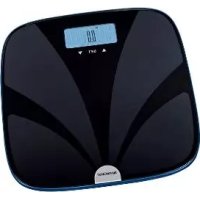



| Product type | Body composition scale |
| Model | SDWP 180 A1+ B1 |
| Brand | SilverCrest |
| Maximum weight capacity | 180 kg / 396 lb / 28 st |
| Weight display accuracy | 0.1 kg / 0.2 lb |
| Accuracy of rates (fat, water, muscle) | 0.1% |
| Bone mass accuracy | 0.1 kg |
| Measured rates | Body fat, water mass, muscle mass, bone mass |
| Calculated functions | BMI, basal metabolic rate, active metabolic rate |
| Measurement method | Bioelectrical impedance analysis via electrodes |
| Number of user profiles | Up to 10 (P0 to P9) |
| Selectable measurement units | kg, lb, st:lb (height in cm or ft) |
| Step-On function | Yes |
| Automatic shutdown | After approx. 10 seconds of inactivity |
| Power supply | 4 AAA 1.5 V batteries (LR03, included) |
| Display | LCD screen with symbols |
| Cleaning | Wipe with a slightly damp cloth; do not immerse |
| Operating conditions | 0 °C to 40 °C, relative humidity 40-85% |
| Contraindications | Medical implants, pregnancy, children under 8 years |
| Package contents | Scale, 4 batteries, instruction manual |
| Warranty | 3 years (HOYER Handel GmbH) |
Frequently Asked Questions - SDWP 180 A1+ B1 SILVERCREST
User questions about SDWP 180 A1+ B1 SILVERCREST
0 question about this device. Answer the ones you know or ask your own.
Ask a new question about this device
Download the instructions for your Scale in PDF format for free! Find your manual SDWP 180 A1+ B1 - SILVERCREST and take your electronic device back in hand. On this page are published all the documents necessary for the use of your device. SDWP 180 A1+ B1 by SILVERCREST.
USER MANUAL SDWP 180 A1+ B1 SILVERCREST
- Overview 23
- Intended purpose 26
- Safety instructions 26
- Items supplied 27 5. How to use 27
- Setting up the scale 27
- Switching on and off 28
- Selecting the units of measurement 28
- Weighing (without diagnostics) 29
- Weighing with diagnostic measurement 29
10.1 Functional principle 29 10.2 Setting the profile 30 10.3 Tips for accurate diagnostic results 31 10.4 Performing the measurement 31 10.5 Meaning of the diagnostic values 32 10.6 Evaluation of the diagnostic values 35
- Replacing batteries 35
- Cleaning 36
- Storage 36
- Disposal 36 15. Troubleshooting 37
- Technical specifications 38
- Warranty of the HOYER Handel GmbH 38
1. Overview
1 Measuring surfaces (for diagnostic values) 2 Touch surfaces:
| SET - Call | up settings - To the next setting point - Complete settings |
| ▲▼· | Change settings - Increase/ decrease values |
3 Display 4 Battery compartment cover 5 Button selecting the units 6 Base 7 Battery compartment 8 4 batteries (1.5 V, AAA, LR03)
Indications on the display
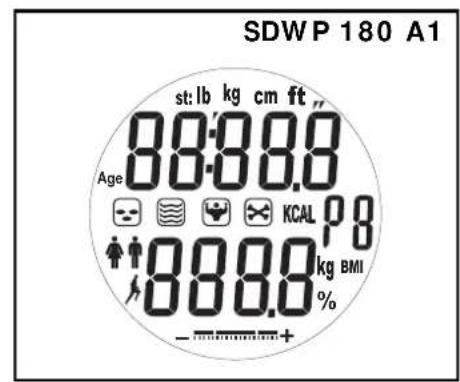
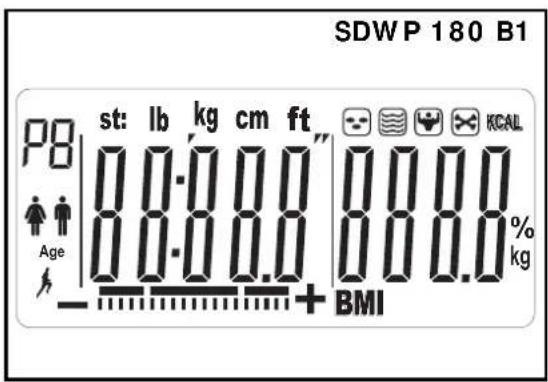
| st: lb kg Weight in | kg, lb or st: lb |
| cm ft Body height in cm or ft | |
| P0 - P9 Profile number | |
| Age Age | |
| Female / male | |
| A1 - A5 | Physical activity index (A1 = none, A5 = very high) |
| Body fat percentage in % | |
| Body water percentage in % | |
| Muscle percentage in % | |
| Proportion of bone in kg | |
| KCAL Energy metabolism (basal metabolic rate/ active metabolic rate) in kcal (kilocalories) | |
| Active metabolic rate | |
| - - - - + | Evaluation body fat percentage (- lower value / Average: standard value / + high value) |
| BMI Body Mass Index | |
Thank you for your trust!
Symbols on your device
Congratulations on your new Diagnostic Scale.
For safe handling of the product and in order to get to know the entire scope of features:
- Thoroughly read these user instructions prior to initial use.
- Above all, observe the safety information! The device should only be used as described in these user instructions.
- Keep these user instructions for information purposes.
- If you pass the device on to someone else, please include this copy of the user instructions. The user instructions are a component of the product.
We hope you enjoy using your new Diagnostics Scale!
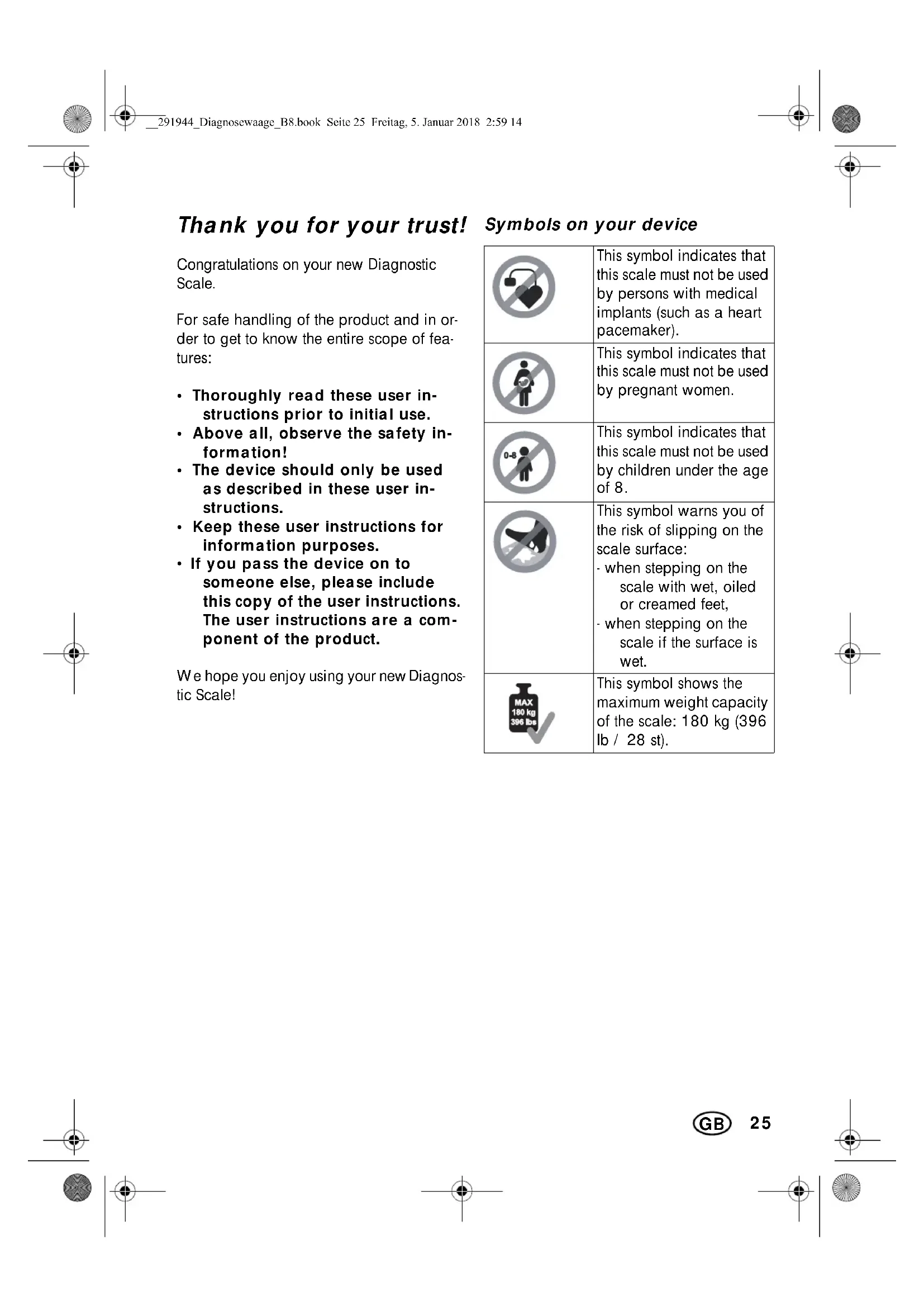
| This symbol indicates that this scale must not be used by persons with medical implants (such as a heart pacemaker). | |
| This symbol indicates that this scale must not be used by pregnant women. | |
| This symbol indicates that this scale must not be used by children under the age of 8. | |
| This symbol warns you of the risk of slipping on the scale surface: - when stepping on the scale with wet, oiled or creamed feet, - when stepping on the scale if the surface is wet. | |
| MAX 180 kg 396 lbs | This symbol shows the maximum weight capacity of the scale: 180 kg (396 lb / 28 st). |

2. Intended purpose
The device is intended as a personal scale with additional functions determining measured values and calculated values (such as body fat, body water, bone mass, etc.). The device is designed for private home use and must not be used for medical or commercial purposes. The scale has not been calibrated. Due to technical design, measuring tolerances are possible.
The device must only be used indoors.
3. Safety instructions
Warnings
If necessary, the following warnings will be used in these user instructions:

DANGER! High risk: failure to observe this warning may result in injury to life and limb.
WARNING! Moderate risk: failure to observe this warning may result in injury or serious material damage.
CAUTION: low risk: failure to observe this warning may result in minor injury or material damage.
NOTE: circumstances and specifics that must be observed when handling the device.

DANGER for children and people with restricted physical, sensory or intellectual abilities
This device can be used by children from the age of 8 and people with restricted physical, sensory or intellectual abilities or people without adequate experience and/ or understanding, if they are supervised or instructed on how to use this device safely and if they are aware of the resulting dangers. Cleaning and user maintenance must not be performed by unsupervised children. Children must not play with the device. Children must not play with packing material. Do not allow children to play with plastic bags. There is a risk of suffocation.

DANGER to or from pets and livestock
- Electrical devices can represent a hazard to pets and livestock. In addition, animals can also cause damage to the device. For this reason you should keep animals away from electrical devices at all times.

RISK of health-related impairments or injuries
The diagnostic scale must not be used by persons with medical implants (such as a heart pacemaker). These may be affected in their function by the measuring current. The diagnostic scale must not be used during pregnancy. The diagnostic scale must not be used by children under the age of 8. Do not only stand on one edge of the scale. Risk of tipping! Do not step on the scale with wet, creamed or oiled feet. Risk of slipping!
Do not step on the scale if its surface is wet. Risk of slipping!

DANGER from batteries
- Only use batteries of the same brand and type and do not use new and used batteries together.
- Be sure to observe the correct polarity when inserting the batteries. Clean the battery and device terminals before you insert the batteries.
- Batteries can be life-threatening if swallowed. You should therefore store batteries and the device out of the reach of small children. If a battery has been swallowed, medical assistance must be sought immediately.
- Batteries must not be charged or reactivated by other means, nor must they be dismantled, thrown into a fire or short-circuited.
- Remove the batteries from the device if you do not intend to use the device for a longer period of time, or if the battery runs out of power. The batteries may leak and damage the device. Do not subject batteries to extreme conditions, e.g. do not place the device on radiators or expose it to direct sunlight. There is an increased danger of batteries leaking.
- If battery acid has leaked, avoid contact with the skin, eyes and mucous membranes. In case of contact with the acid, rinse the affected area at once with plenty of clean water and seek medical assistance immediately.
WARNING! Risk of material damage
The maximum load of the scale is 180 kg (396 lb / 28 st). Do not overload the scale. Do not deposit any objects on the scale if not in use. - Protect the scale against: Dust and dirt
- Moisture Major temperature fluctuations
- Mechanical action such as impacts, firm pressure, impact of pointed objects
- Heat exposure (e. g. by a radiator)
- Strong electromagnetic fields.
Do not use any sharp or abrasive cleaning aids. Do not immerse the scale in water and do not rinse it with water.
4. Items supplied
1 Diagnostic Scale, 4 batteries (1.5 V, AAA, LR03) (inserted), 1 copy of the user instructions
5. How to use
- Remove all packing material.
- Check the diagnostic scale for damages.
- At the time of delivery, the batteries have been inserted. Remove the protective strip from the battery compartment.
6. Setting up the scale
The diagnostic scale is a sensitive measuring device. For good measurement results and to prevent damage to the scale, please follow the instructions:
- Position the scale on a flat and solid floor with a firm floor covering. Carpet is not suited.
- Select a site where the scale is protected against impacts, moisture, severe temperature fluctuations, heat sources and dust.
7. Switching on and off
Step-On function
If you would like to weigh the body weight without diagnostic measurement, switch on the scale using the Step-On function:
- Step on the measuring surfaces 1 of the deactivated scale. After approx.
2 seconds, the scale is switched on showing the weight.
Switching on for diagnostic measurements
- Press the button surface SET 2. The scale is switched on. The menu for the profile settings is shown (see "Setting the profile" on page 30).
Switching off automatically
The diagnostic scale switches off automatically if there is no action for approx. 10 seconds (setting, weighing, displaying).
8. Selecting the units of measurement
You can select the unit of measurement in which the diagnostic scale displays the weight. Simultaneously, the unit of measurement for the setting of the body height is adjusted.
NOTES:
- In the delivery condition and after the battery change, the scale is set to kilograms (kg) and centimetres (cm).
- With the batteries 8 inserted (with sufficient capacity) the setting remains stored after the scale is switched off. The unit of measurement cannot be changed if a weight or measured values are already displayed.
- Switch on the diagnostic scale using the button surface SET 2 and wait until 0.0kg (0.0lb / 0:0.0st/lb) is displayed.
- Press several times the small button for unit selection 5 on the underside of the diagnostic scale to select between the following units:
- kg: kilograms (and cm: centimeters)
- lb: pounds (and ft: feet)
- st:lb: stones, pounds (and ft: feet)
NOTE: By pressing the button SET 2, you access the menu for profile settings (see "Setting the profile" on page 30).
9. Weighing (without diagnostics)

DANGER! Risk of injury
Do not stand on only one edge of the scale. Risk of tipping! Do not step on the scale with wet, creamed, or oiled feet. Risk of slipping! Do not step on the scale if its surface is wet. Risk of slipping!
You can use the diagnostic scale as a simple personal scale for weighing your body weight. For this, no personal presets are necessary.
- Step on the measuring surfaces 1 of the deactivated scale with both feet, staying as calm as possible. After approximately 2 seconds, the scale is switched on showing the weight.
NOTE: For a simple measurement of the weight, you may wear socks or shoes.
10. Weighing with diagnostic measurement

RISK of health-related impairments or injuries
The diagnostic scale must not be used by persons with medical implants (such as a heart pacemaker). These may be affected in their function by the measuring current.
The diagnostic scale must not be used during pregnancy. The diagnostic scale must not be used by children under the age of 8. Do not stand only on one edge of the scale. Risk of tipping! Do not step on the scale with wet, creamed, or oiled feet. Risk of slipping! Do not step on the scale if its surface is wet. Risk of slipping!
10.1 Functional principle
In addition to the weight measurement, the diagnostic scale performs a measurement of the electrical resistance. Since the parts of the body show different electrical conductivity, approximate values can be determined for the percentage of body fat, body water, muscle tissue, and bones.
In order to measure the electrical resistance, briefly a very low, unnoticeable, and harmless current is passed through the body. Only certain groups of persons (e.g., persons with heart pacemakers, pregnant women, children under the age of 8) are not allowed to use the diagnostic scale.
From the measured values and your personal data, entered by you in your profile, the diagnostic scale automatically calculates your individual values. These values are approximate values. The real, medical values
can only be determined by a medical procedure such as a computer tomography.
10.2 Setting the profile
So the diagnostic results can be calculated correctly, you first create a profile by saving some personal data (e.g., body height and age) to the memory. Up to 10 such profiles can be saved.
- Press the button surface SET 2. The scale is switched on. Displayed is the menu for the profile settings. On the display 3 the profile number flashes behind P .
- Using the touch surfaces 2 , set the requested profile number between PO and P9 . Remember this number. Your personal data are saved under this profile number.
- Confirm the setting with SET 2. The value for the body height flashes.
- Now successively enter the following data.
- With 2 you make the settings.
- With SET 2 you save the settings and reach the next item.
| cm ft Body | height in cm or ft (100 - 220 cm / 3' 3.5" - 7' 2.5") |
| Age Age | (from 10 - 100 years of age) |
| Female / male | |
| A1 - A5 | Physical activity index (A1 = none, A5 = very high) (see „Physical activity index“ on page 30). |
- After the last setting, press SET 2. The scale is now ready to perform the diagnostic measurement.
NOTES:
These settings are saved under the profile number and can be called up prior to every diagnostic measurement. - Please note: saving new values will automatically delete old values. If you share the same scale regularly with several persons, it is reasonable to determine a profile number for each user.
Physical activity index
The physical activity index can be based on the following data:
| A1 very lttle activity: daily routine mainly sitting or lying |
| A2 little activity: e. g. going for a walk but mainly seated activity |
| A3 average activity: regularly physi- cal exercise or more activity in the daily life, approx. 2 - 4-times per week physical exercise for half an hour |
| A4 high activity: often physical exer- cise or physical exercise plus a lot of activity in the daily life, ap- prox. 4 - 6-times per week physi- cal exercise for half an hour |
| A5 very high activity: intensive physi- ical exercise or hard physical la- bour |
These data on physical activity are required to calculate your active metabolic rate after the measurement. This is your individual average calorie requirement if you would like to keep your weight.
NOTE: estimate your physical activity over a medium to long-term period.
10.3 Tips for accurate diagnostic results
Many different factors may affect the measurement. In order to receive comparable diagnostic results, take into account the following information and tips:
- There are brief fluctuations of the measured values, e.g., due to the water content, water distribution within the body, and digestive tract contents. The long-term monitoring of the measured values is of interest.
- It is of advantage if you weigh yourself regularly at the same time of the day, best each morning on an empty stomach after using the toilet. After getting up, wait for approximately 15 minutes, so the body water is able to distribute throughout the body. After physical exertion, wait several hours before weighing yourself. Write down your diagnostic results. This way, you are able to monitor the long-term development.
- Weigh yourself undressed.
- The diagnostic measurement can only be performed in bare feet.
- The feet should not be too dry. Very dry foot soles or those with a thick layer of callused skin should be moistened slightly. During the measurement, the feet and legs must not touch anywhere.
- Distribute the body weight evenly on both legs.
- Stand upright and quietly.
Restrictions
In the calculation of the diagnostic values, the scale also includes standard factors regarding the percentage of the parts of the body in addition to the measured values and the individual profile data. Therefore, in case of major deviations from the standard,
implausible diagnostic values may be shown. This may occur, for instance, for: - Children under the age of 10 Competitive athletes, extremely trained muscles Fever - Osteoporosis - Persons in dialysis care - Illnesses with oedemas - Intake of cardiovascular medication (regarding heart and blood vessels) - The intake of vasodilatory or vasoconstrictive medication - Severe anatomic deviations of the length of legs compared to the overall body height Medical implants such as artificial joints or materials stabilising broken bones (metal plates, screws) inserted via surgery.
10.4 Performing the measurement
- Press the button surface SET 2. The scale is switched on. Displayed is the menu for the profile settings. On the display 3 the profile number flashes behind P .
- Using the touch surfaces 2 , set your personal profile number between P0 and P9 .
- Wait until 0.0kg (0.0lb / 0:0.0st:lb) is shown on the display 3, or
press the button surface SET 2 until 0.0kg (0.0lb / 0:0.0st:lb) is shown on the display 3.
- Stand on both measuring surfaces 1 with your bare feed to that the feet and legs do not touch anywhere. Keep standing quietly and upright. First the weight is measured (kg / lb / st:lb flashes).
Afterwards the display 3 shows oooo
while the diagnostic measurement is performed.
- When the display 3 shows the diagnostic values, you can step off the scale.
Now, on display 3 three passes are run successively showing all diagnostic values:
| Body fat percentage in % | |
| Body water percentage in % | |
| Muscle percentage in % | |
| Proportion of bone in kg | |
| KCAL Basal metabolic rate in kcal | |
| KCAL Active metabolic rate in kcal | |
| BMI Body Mass Index | |
At the bottom of the display 3 a measurement of the body fat percentage is shown:

- If the small lines are located in the centre (as shown), the body fat percentage can be considered as normal.
- If the lines are located on the left at -, the body fat percentage can be considered as low.
- If the lines are located on the right at + , the body fat percentage can be considered as high.
- Write down the diagnostic values to monitor the long-term development.
After all diagnostic values have been displayed three times, the display 3 goes off.
10.5 Meaning of the diagnostic values
NOTE: keep in mind that all diagnostic values are only approximate values. If one of your values should be extremely high or low for several measurements, talk to your doctor.
Body fat percentage
A body fat percentage in the normal range should be targeted. An increased as well as an extremely low body fat percentage may harm your health.
The average body fat percentage increases with age. Women usually have a higher body fat percentage than men.
Trained athletes may have a lower body fat percentage.
Based on the following tables, you can determine the range in which your body fat percentage lies.


Body fat percentage women in %
| Age | low | normal | high | very high |
| 10 - 14 | < 16 16 | 21 21.1 | - 26 > 26.1 | |
| 15 - 19 | < 17 17 | 22 22.1 | - 27 > 27.1 | |
| 20 - 29 | < 18 18 | 23 23.1 | - 28 > 28.1 | |
| 30 - 39 | < 19 19 | 24 24.1 | - 29 > 29.1 | |
| 40 - 49 | < 20 20 | 25 25.1 | - 30 > 30.1 | |
| 50 - 59 | < 21 21 | 26 26.1 | - 31 > 31.1 | |
| 60 - 69 | < 22 22 | 27 27.1 | - 32 > 32.1 | |
| 70 - 99 | < 23 23 | 28 28.1 | - 33 > 33.1 |



Body fat percentage men in %
| Age | low | normal | high | very high |
| 10 - 14 | < 11 11 | - 16 16.1 | - 21 > 21. | .1 |
| 15 - 19 | < 12 12 | - 17 17.1 | - 22 > 22. | .1 |
| 20 - 29 | < 13 13 | - 18 18.1 | - 23 > 23. | .1 |
| 30 - 39 | < 14 14 | - 19 19.1 | - 24 > 24. | .1 |
| 40 - 49 | < 15 15 | - 20 20.1 | - 25 > 25. | .1 |
| 50 - 59 | < 16 16 | - 21 21.1 | - 26 > 26. | .1 |
| 60 - 69 | < 17 17 | - 22 22.1 | - 27 > 27. | .1 |
| 70 - 99 | < 18 18 | - 23 23.1 | - 28 > 28. | .1 |
The indication at the bottom of the display 3 allows a quick evaluation of the body fat percentage:

(Explanations: See "Performing the measurement" on page 31.)
Body water percentage
NOTE: the diagnostic value for the body water percentage is not suited to determine water retention (e.g. age-related) on a medical basis. If necessary, ask your doctor.
Basically, a high body water percentage is considered to be of advantage.
Since muscles contain a great amount of water and fat little, people with a low body fat percentage and high muscle percentage usually have a high body water percentage. In contrast, people with a high body fat percentage and low muscle percentage usually have a low body water percentage.
Based on the following tables, you can determine the range in which your body water percentage lies.


Body water percentage women in %
| Age | too low | good | very good |
| 10 - 99 | < 45 45 - 6 | 0 > 60 |


Body water percentage men in %
| Age | too low | good | very good |
| 10 - 99 | < 50 50 - 65 | > 65 |
Muscle percentage
The muscle percentage increases with physical training. The average muscle percentage decreases with age. On average, women have a lower muscle percentage than men.
Based on the following tables, you can determine the range in which your muscle percentage lies.


Muscle percentage women in %
| Age | low | normal | high |
| 10 - 14 | < 36 36 - 4 | 43 > 43 | |
| 15 - 19 | < 35 35 - 4 | 41 > 41 | |
| 20 - 29 | < 34 34 - 3 | 39 > 39 | |
| 30 - 39 | < 33 33 - 3 | 8 > 38 | |
| 40 - 49 | < 31 31 - 3 | 6 > 36 | |
| 50 - 59 | < 29 29 - 3 | 4 > 34 | |
| 60 - 69 | < 28 28 - 3 | 3 > 33 | |
| 70 - 99 | < 27 27 - 3 | 2 > 32 |



Muscle percentage men in %
| Age | low | normal | high |
| 10 - 14 | < 44 44 - 5 | 7 > 57 | |
| 15 - 19 | < 43 43 - 5 | 6 > 56 | |
| 20 - 29 | < 42 42 - 5 | 4 > 54 | |
| 30 - 39 | < 41 41 - 5 | 2 > 52 | |
| 40 - 49 | < 40 40 - 5 | 0 > 50 | |
| 50 - 59 | < 39 39 - 4 | 8 > 48 | |
| 60 - 69 | < 38 38 - 4 | 7 > 47 | |
| 70 - 99 | < 37 37 - 4 | 6 > 46 |
Bone mass
NOTE: the diagnostic value for bone mass does not correspond to a bone density measurement. The bone density can only be determined via medical examinations. If necessary, ask your doctor.
The bone mass depends on age, height, sex and physique. It increases quickly during growth, then, during adulthood remains mainly stable and decreases slightly with increasing age. Healthy nutrition and regular physical exercise counteract a decrease of the bone mass.
There are no approved reference values for bone mass.
Basal metabolic rate
The value for the basal metabolic rate indicates, how many kilocalories (kcal) your body needs per day to maintain the basic functions.
If you do not move at all (e. h. 24 hour bed rest), this is the amount of energy your body needs to absorb from food to maintain the body weight.
Basically, the calculation of the basal metabolic rate includes weight, body height and age.
Active metabolic rate
The value for the active metabolic rate results from the basal metabolic rate and the index for the physical activity saved in your profile. It indicates how many calories your body needs if your physical activity corresponds to your estimation of physical activity.
- If you consume more calories with your food over an extended period of time, the excess energy will be stored in the form of fat reserves. Thus, the body fat percentage increases as well as your weight.
- If you consume less kilocalories, the fat reserves decrease. The body fat percentage and your weight decrease.
Body Mass Index
The Body Mass Index is calculated from body weight and body height and is used as an indication distinguishing between underweight, normal weight and overweight: BMI = weight in kg / (body height in m)2. For an assessment, the BMI is to be considered with regard to age and sex. Based on the following tables, you can determine the range of your BMI (Body Mass Index).

BMI (Body Mass Index) women
| Age | Under- weight | Normal weight | Slightly over- weight | Over- weight |
| 16 - 24 | < 19 19 | 24 25 | 28 > 28 | |
| 25 - 34 | < 20 20 | 25 26 | 29 > 29 | |
| 35 - 44 | < 21 21 | 26 27 | 30 > 30 | |
| 45 - 54 | < 22 22 | 27 28 | 31 > 31 | |
| 55 - 64 | < 23 23 | 28 29 | 32 > 32 | |
| 65 - 99 | < 24 24 | 29 30 | 33 > 33 |

BMI (Body Mass Index) men
| Age | Under-weight | Normal weight | Slightly over-weight | Over-weight |
| 16 < 19 | 19 - 24 | 25 - 28 | 28 | |
| 17 - 24 | < 20 | 25 26 | 29 > 29 | |
| 25 - 34 | < 21 | 26 27 | 30 > 30 | |
| 35 - 44 | < 22 | 27 28 | 31 > 31 | |
| 45 - 54 | < 23 | 28 29 | 32 > 32 | |
| 55 - 64 | < 24 | 29 30 | 33 > 33 | |
| 65 - 99 | < 25 | 30 31 | 34 > 34 |
10.6 Evaluation of the diagnostic values
Monitor long-term changes of the diagnostic values over several weeks or months. Short-term fluctuations are usually based on changes of the water percentage, since fat and muscle percentage change at a slower pace.
- If you go on a diet to lose fat mass, you should notice a decrease of weight and body fat percentage on a long-term basis. If the body fat percentage remains stable or even increases with a short-term decrease in weight, you only lost water. If you exercise physically to build up muscle mass, you should monitor the increase of the muscle percentage on a long-term basis. If you build up a great amount of muscle mass, your weight may even increase. In this case, the muscle percentage increases simultaneously.
NOTE: since muscles contain body water, the addition of the percentage values of the body water percentage, body fat percentage and muscle percentage do not present a reasonable value.
11. Replacing batteries
You need 4 batteries (1.5 V, AAA, LR03) 8. At the time of the delivery these have already been inserted.
When the batteries 8 are almost empty, the display 3 shows Lo.
WARNING! Risk of material damage!
- Be sure to observe the correct polarity when inserting the batteries 8. This is marked inside the battery compartment 7.
- Position the diagnostic scale with the top down on a level and soft base.
- Figure A: slide the battery compartment cover 4 a short distance in the direction of the arrow (OPEN), and remove it upwards.
- Remove the empty batteries 8.
- Insert 4 batteries (1.5 V, AA, LR03) 8 corresponding to the marking inside the battery compartment 7.
- Replace the battery compartment cover 4 and slide it closed until it is firmly closed. First, on the display 3 appears 8888 and then 0.0kg
12. Cleaning
WARNING! Risk of material damage!
Do not immerse the scale in water and do not rinse it with water. Do not use any sharp or abrasive cleaning aids.
- Wipe down the housing of the device with a damp cloth.
13. Storage
- If you are not going to use the diagnostic scale for an extended period, remove the batteries 8.
- Keep the diagnostic scale inaccessible for children.
- Select a storage location protecting the diagnostic scale against:
- Dust and dirt
- Moisture Major temperature fluctuations
- Impacts
- Heat exposure
14. Disposal
This product is subject to the provisions of European Directive 2012/19/EC. The symbol showing a wheelie bin crossed through indicates that the product requires separate refuse collection in the European
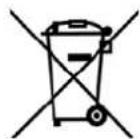
Union. This applies to the product and all accessories marked with this symbol. Products identified with this symbol may not be discarded with normal household waste, but must be taken to a collection point for recycling electric and electronic appliances. Recycling helps to reduce the consumption of raw materials and protect the environment.
Batteries must not be discarded with your household waste. Spent batteries must be disposed of properly. Special containers are available for this purpose in shops selling batteries and at municipality points.
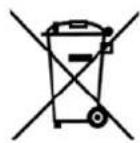
(Rechargeable) batteries marked with the following letters contain harmful substances such as: Cd (cadmium), Hg (mercury), Pb (lead).
Packaging
When disposing of the packaging, make sure you comply with the environmental regulations applicable in your country.
15. Troubleshooting
If your device fails to function as required, please try this checklist first. Perhaps there is only a minor problem, and you can solve it yourself.
WARNING! Risk of material damage
Do not attempt to repair the device yourself under any circumstances.
| Fault | Possible causes / Action |
| Display: Err | Measurement error: skin contact insufficient. Perform the measurement with bare feet, possibly moisten soles slightly prior to the measurement. |
| Display: UnSt | Measurement error: excessive movement during the measurement. Try to stand calmly distributing the body weight evenly onto both legs. |
| Fault | Possible causes / Action |
| No func-tion | Have the batteries 8 been insert-ed? |
| No diag-nostic val-ues | Did you create a profile? See “Setting the profile” on page 30. Did you select the profile prior to the measurement? See “Per-forming the measurement” on page 31. |
| Display:Lo | Batteries 8 almost empty. Insert new batteries. See “Replacing ba-teries” on page 35. |
| Display:Erl | Measurement error: value for body fat percentage too low. Check the data in the profile. See “Setting the profile” on page 30. See “Tips for accurate diag-nostic results” on page 31. |
| Display:ErrH | Measurement error: value for body fat percentage too high. Check the data in the profile. See “Setting the profile” on page 30. See “Tips for accurate diag-nostic results” on page 31. |
16. Technical specifications
| Model: SDWP | 180 A1 / SDWP 180 B1 |
| Batteries: 4x 1 | .5 V AAA, LR03 |
| Maximum weight ca- pacity: | 180 kg / 396 lb |
| Indication ac-curacy: | Weight: 0.1 kg / 0.2 lb Body fat percentage: 0.1% Body water percentage: 0.1% Muscle percentage: 0.1% Bone mass: 0.1 kg |
| General | |
| Ambient and storage condi- tions: | 0 °C to 40 °C Relative humidity 40 to 85 % |
Technical Symbols
| CE | With the CE marking, HOYER Handel GmbH declares the con-formity with EU guidelines. |
| This symbol reminds you to dis-pose of the packaging in an envi-ronmentally friendly manner. | |
| 21PAP | Recyclable materials: cardboard (except corrugated cardboard) |
Subject to technical modifications.
17. Warranty of HOYER Handel GmbH
Dear Customer, your device is provided with a 3-year warranty starting from the date of purchase. In the event of product defects, you are entitled to statutory rights against the vendor. These statutory rights are not restricted by our warranty presented in the following.
Warranty conditions
The warranty period starts from the date of purchase. Please keep the original purchase receipt in a safe place. This document is required to verify the purchase.
If within three years from the date of purchase of this product a material or factory defect occurs, the product will be repaired or replaced by us - at our discretion - free of charge to you. This warranty implies that within the period of three years the defective device and the purchase receipt are presented, including a brief written description of the defect and the time it occurred. If the defect is covered by our warranty, the repaired or a new product will be returned to you. No new warranty period starts with a repair or replacement of the product.
Warranty period and statutory claims for defects
The warranty period is not extended when the warranty has been claimed. This also applies to replaced and repaired parts. Any damages and defects already existing at the time of purchase must be reported immediately upon unpacking. Repairs arising after the expiration of the warranty period are subject to a charge.
Warranty coverage
The device was produced carefully according to strict quality guidelines and tested diligently prior to delivery.
The warranty applies to material or factory defects.
Excluded from the warranty are wear parts subject to normal wear and damages to fragile parts, e.g. switches, batteries, lamps or other parts manufactured from glass.
This warranty expires if the product is damaged, not used as intended or not serviced. For the proper operation of the product, all instructions listed in the operating instructions must be observed carefully. Any form of use and handling that is advised against in the operating instructions or warned against must always be avoided.
The product is only intended for private and not for commercial use. In the case of incorrect and improper treatment, use of force and interventions not performed by our authorised Service Centre, the warranty shall cease.
Handling in case of a warranty claim
In order to ensure prompt processing of your matter, please observe the following notes:
Please keep the article number IAN:291944 and the purchase receipt as a purchase verification for all inquiries. - The article number can be found on the rating plate, an engraving, the title page of your instructions (in the bottom left), or as a label on the rear or underside of the device. - If faulty operation or other defects occur, first contact the Service Centre listed in the following by telephone or email. - Then, you are able to send a product reported as defective free of charge to the service address specified to you, including the purchase receipt and the information on the defect and when it occurred.

Please visit www.lidl-service.com to download this and many other manuals, product videos and software.

Service Centre
GB Service Great Britain Tel.:08715000720 (20.10/Min.) E-Mail: hoyer@lidl.co.uk IE Service Ireland Tel.:1890 930 034 (0,08 EUR/Min.,peak) (0,06 EUR/Min.,off peak)) E-Mail: hoyer@lidl.ie MT Service Malta Tel.:80062230 E-Mail: hoyer@lidl.com CY Service Cyprus Tel.:80094409 E-Mail: hoyer@lidl.com.cy
IAN:291944

Supplier
Please note that the following address is no service address. First contact the aforementioned Service Centre.
- kg kilogram (a cm: centimetr)
- lb pounds (a ft: feet)
- st: lb stones, pounds (a ft: feet)



- OVERVIEW
- INDICATIONS ON THE DISPLAY
- THANK YOU FOR YOUR TRUST
- SYMBOLS ON YOUR DEVICE
- INTENDED PURPOSE
- SAFETY INSTRUCTIONS
- WARNINGS
- DANGER FOR CHILDREN AND PEOPLE WITH RESTRICTED PHYSICAL, SENSORY OR INTELLECTUAL ABILITIES
- DANGER TO OR FROM PETS AND LIVESTOCK
- RISK OF HEALTH-RELATED IMPAIRMENTS OR INJURIES
- DANGER FROM BATTERIES
- WARNING! RISK OF MATERIAL DAMAGE
- ITEMS SUPPLIED
- HOW TO USE
- SETTING UP THE SCALE
- SWITCHING ON AND OFF
- STEP-ON FUNCTION
- SWITCHING ON FOR DIAGNOSTIC MEASUREMENTS
- SWITCHING OFF AUTOMATICALLY
- SELECTING THE UNITS OF MEASUREMENT
- NOTES
- WEIGHING (WITHOUT DIAGNOSTICS)
- DANGER! RISK OF INJURY
- WEIGHING WITH DIAGNOSTIC MEASUREMENT
- FUNCTIONAL PRINCIPLE
- SETTING THE PROFILE
- PHYSICAL ACTIVITY INDEX
- TIPS FOR ACCURATE DIAGNOSTIC RESULTS
- RESTRICTIONS
- PERFORMING THE MEASUREMENT
- MEANING OF THE DIAGNOSTIC VALUES
- BODY FAT PERCENTAGE
- BODY WATER PERCENTAGE
- MUSCLE PERCENTAGE
- BONE MASS
- BASAL METABOLIC RATE
- ACTIVE METABOLIC RATE
- BODY MASS INDEX
- EVALUATION OF THE DIAGNOSTIC VALUES
- REPLACING BATTERIES
- CLEANING
- STORAGE
- DISPOSAL
- PACKAGING
- TROUBLESHOOTING
- TECHNICAL SPECIFICATIONS
- TECHNICAL SYMBOLS
- WARRANTY OF HOYER HANDEL GMBH
- WARRANTY CONDITIONS
- WARRANTY PERIOD AND STATUTORY CLAIMS FOR DEFECTS
- WARRANTY COVERAGE
- HANDLING IN CASE OF A WARRANTY CLAIM
- SERVICE CENTRE
- SUPPLIER
Brand : SILVERCREST
Model : SDWP 180 A1+ B1
Category : Scale