
Rangemaster CRF 900 - Binoculars LEICA - Free user manual and instructions
Find the device manual for free Rangemaster CRF 900 LEICA in PDF.


| Product Type | Laser Rangefinder |
| Brand | Leica |
| Model | Rangemaster CRF 900 |
| Magnification | 7x |
| Objective Diameter | 24 mm |
| Exit Pupil | 3.4 mm |
| Field of View | 115 m at 1000 m / 6.5° |
| Minimum Measurement Distance | 10 m |
| Maximum Range | 825 m |
| Measurement Accuracy | ±1 m up to 366 m, ±2 m up to 732 m, ±0.5% beyond |
| Power Supply | 1 CR2 3V lithium battery |
| Battery Life | Approximately 2000 measurements at 20°C |
| Dimensions (L x H x D) | 75 x 113 x 34 mm |
| Weight (with batteries) | Approximately 220 g |
| Housing Material | Carbon fiber reinforced plastic, painted / Die-cast aluminum |
| Water Resistance | Waterproof up to 1 m depth for 30 min |
| Operating Temperature | -10 to 55 °C |
| Storage Temperature | -15 to 75 °C |
| Diopter Adjustment | ±3.5 dpt |
| Main Functions | Distance measurement, Scan mode, LED display, Diopter compensation |
| Maintenance and Cleaning | Clean with soft brush, damp cloth, and chamois leather; avoid alcohol and chemicals |
| Spare Parts | Eyecup, carrying strap available from customer service |
| Warranty | See included warranty card |
Frequently Asked Questions - Rangemaster CRF 900 LEICA
User questions about Rangemaster CRF 900 LEICA
0 question about this device. Answer the ones you know or ask your own.
Ask a new question about this device
Download the instructions for your Binoculars in PDF format for free! Find your manual Rangemaster CRF 900 - LEICA and take your electronic device back in hand. On this page are published all the documents necessary for the use of your device. Rangemaster CRF 900 by LEICA.
USER MANUAL Rangemaster CRF 900 LEICA
Boutell-Br. 40 517 [Yara-Version]
LEGA BANGSHENG CHI 1200
Folding on the above Ped. or common point, no exist
The following table is in Chinese:
The following described
KoTEN 2/oukaiyinJumorjubhir
非金融类ETF联接
[Unreadable Text]
0.5(8)次文次
for the stock price
6.34.2017.12.25
2.3.10.14.2017年1月1日
(一)本次股东大会的召集和召开程序
Dr. 1974
© 2008 Latin American 76
Inhaltsverzeichnis
natural_image
Close-up of hands holding a small optical device with lens (no visible text or symbols)natural_image
Close-up of a black plastic push-button with a curved handle and flange (no text or symbols visible)
natural_image
Close-up of a black plastic cylindrical object with a curved handle and a small protrusion, labeled 'B' in the top-left corner (no other text or symbols)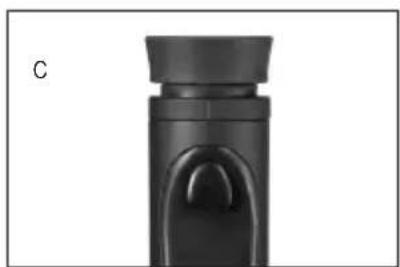
natural_image
Close-up of a black cylindrical object with a curved handle and a flared top, labeled 'C' in the corner (no other text or symbols visible)natural_image
Black-and-white circular image of a mountain goat in snowy terrain, no text or symbols visibleDistanz-Messung
Austrittspupille 3,4mm
Dämmerungszahl 13
2 Carrying cord eyelet
3 Distance measurement release button
4 Laser transmitter optics
5 Lens for viewing optics
6 Battery compartment cover
7 Battery compartment
Scope of delivery
- Rangefinder
- 1 lithium cell 3V type CR2
- Carrying cord
- Cordura case
- Warranty Card
LEICA RANGEMASTER CRF 800
Order no. 40 513 (Meter version)
Order no. 40 514 (Yard version)
LEICA RANGEMASTER CRF 900
Order no. 40 518 (Meter version)
Order no. 40 517 (Yard version)
LEICA RANGEMASTER CRF 1200
Order no. 40 527 (Meter version)
Order no. 40 523 (Yard version)
Foreword
Dear Customer
Worldwide, Leica stands for superb optical quality, close-tolerance precision engineering, absolute reliability, and a long product life. We wish you every success and a great deal of pleasure in using your new Leica Rangemaster CRF. This rangefinder sends out pulses of laser light, which are in the infrared wavelength, harmless and invisible to the naked eye.
Some of these pulses are reflected back. The built-in microprocessor calculates the object distance from these reflected signals. It is equipped with superb 7x-magnification optics, which enable good targeting even in difficult conditions, and its functional design makes it easy to use. Please read the following instructions to get the maximum benefit from this versatile and high quality laser rangefinder.
Warning notice:
As with all binoculars, to avoid damaging your eyes, do not look directly at sources of bright light through your Leica Rangemaster CRF.
Table of Contents
Nomenclature....12
Scope of delivery 12
Foreword 12
Disposal of electric and electronic equipment ....13
Fitting the carrying cord 14
Inserting and changing the battery....14
Battery charge level....15
Use with and without glasses ....16
Diopter compensation ....16
Distance measurement....17
Scan mode....17
Operating range and accuracy....18
Maintenance/cleaning 19
Troubleshooting....20
Technical Data 21
Leica Akademie....22
Leica on the Internet 22
Leica Information Service....22
Leica Customer Service....22
FCC note 23
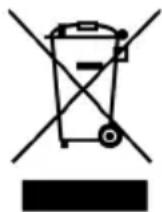
Disposal of electric and electronic equipment
(Applicable in the EU and other European countries with separate collection systems)
This equipment contains electric and/or electronic parts and must therefore not be disposed of as normal household waste.
Instead, it should be disposed at the respective collection points for recycling provided by the communities. For you, this is free of charge.
If the equipment contains exchangeable (rechargeable) batteries, these too must be removed before and, if necessary, in turn be disposed of according to the relevant regulations (see also the respective comments in this unit's instructions).
Further information about the subject is available at your community administration, your local waste collection company, or in the store where you purchased this equipment.

Fitting the carrying cord
Push the smaller loop through the eyelet (2) on the housing of the Leica Rangemaster CRF.
Then, thread the longer loop through the smaller loop and pull it tight so that the carrying cord is securely attached to the eyelet.
natural_image
Close-up of hands holding a small optical device with a bulb (no visible text or symbols)Inserting and changing the battery
The Leica Rangemaster CRF is supplied with power by one 3 Volt lithium cell (e.g. Duracell
DL CR 2, Ucar CR 2, Varta CR 2, or other CR 2 types).
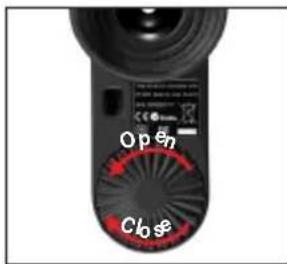
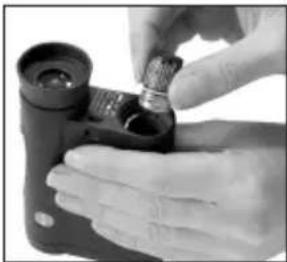
- Open the battery compartment (7) cover (6) by turning it anticlockwise.
- Insert the battery with its positive contact facing forwards (as marked in the battery compartment).
- Close the cover again by turning it clockwise.
Notes:
- Battery performance suffers in the cold. Therefore, at low temperatures, it is a good idea to keep the Leica Rangemaster CRF in an inside pocket (close to the body) and fitted with a fresh battery.
- If the Leica Rangemaster CRF is not going to be used for a long time, the battery should be removed.
- Batteries should be stored in a cool dry place.
Attention:
- Batteries should never be put in a fire, heated, recharged, disassembled, or broken apart.
- Used batteries may not be disposed of as normal, household waste as they contain hazardous materials that are harmful to the environment. To ensure that they are properly recycled, they should be returned to the dealer or disposed of as special waste (at a collection point).
Battery charge level
A flat battery is indicated by the flashing distance display and the target mark. Over 100 further measurements (at a progressively diminishing range) can be taken after the display first starts to flash.
natural_image
Close-up of a black plastic push-button with a curved handle and flange (no text or symbols visible)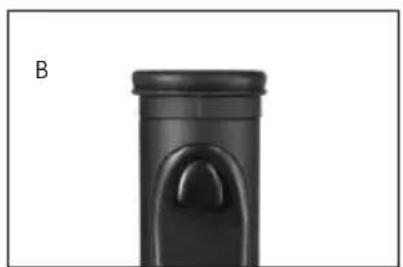
natural_image
Black plastic bottle with curved handle and cap, labeled 'B' in top-left corner (no other text or symbols)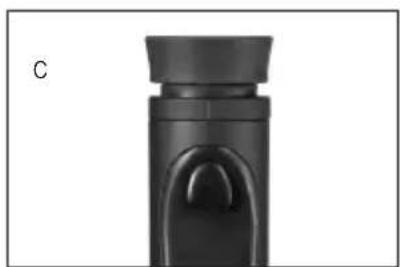
natural_image
Close-up of a black cylindrical object with a curved handle and a flared top, labeled 'C' in the corner (no other text or symbols visible)Use with and without glasses
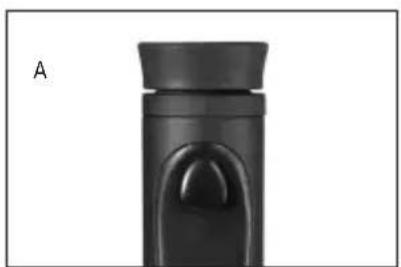
If you are not wearing glasses, leave the rubber eyecup (1a) folded up, as it comes (Figure A). This position gives the correct distance between the eye and the Leica Rangemaster CRF.
When viewing with glasses, fold down the rubber eyecup (Figure B).
Diopter compensation
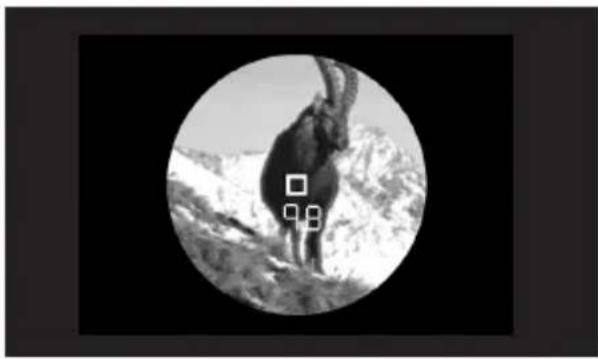
The diopter compensator allows you to adjust the sharpness of the target mark to suit you best. Simply target the Leica Rangemaster CRF on some far away object and turn the rubber eyecup (1a) until the target mark is as sharp as possible. The target mark can be seen by pressing the release button (3). The degree of compensation can be read off the "+" or "-" scale (1b) on the rubber eyecup. Compensation within the range of ±3.5 diopters is possible.
natural_image
Black-and-white circular image of a mountain goat in snowy terrain, no text or symbols visibleDistance measurement
To measure the distance to an object, it must be perfectly targeted. To do this, activate the target mark by pressing the release button (3) once. The target mark remains lit for about 4 seconds after letting the release button go.
If the button is kept pressed, the target mark remains lit.
While the target mark is lit, aim the Leica Range-master CRF at the object and press the release button a second time; the distance is then measured and displayed. The target mark disappears briefly during the measurement. A new measurement can be made at any time, as long as the target mark is
lit, by pressing the release button once again. If the object is less than 10m/11yds away, out of range, or does not provide enough reflection, then
“---” appears on the display. The Leica Rangemaster CRF switches itself off as soon as the display disappears.
Scan mode
With the Leica Rangemaster CRF, continuous measurements can also be made: If the release button (3) is held down the second time it is pressed, the unit switches to scan mode after approx. 0.5 seconds and then takes continuous measurements. This is indicated by the changing display: a new measured value is produced around every 0.5 seconds. Scan mode is particularly practical when measuring to smaller and moving targets.
Note:
Due to the constant measurements, the power consumption is greater in scan mode than for single measurements.
Operating range and accuracy
The measuring accuracy of the Leica Rangemaster CRF is up to ±1 Meter/Yard. The maximum range is achieved with a well reflecting object and unaided visibility of 10km/6.2 miles. The operating range is influenced by the following factors:
Range longer shorter
Color of object white black
Angle of object perpendicular acute
Size of object larger than smaller than measuring beam measuring beam
Sunlight weak strong (cloudy) (midday sun)
Atmospheric clear hazy conditions
Shape of object uniform irregular (house wall) (bush, tree)
Accuracy is as follows in sunshine and good visibility:
Range
| CRF 800 | approx. 10m/11yds to 725m/800yds |
| CRF 900 | approx. 10m/11yds to 825m/900yds |
| CRF 1200 | approx. 10m/11yds to 1100m/1200yds |
| Accuracy | approx. ±1m/3ft 3in to 366m/400yds approx. ±2m/6ft 6in to 732m/800yds approx. ±0.5% beyond 732m/800yds |
Maintenance/cleaning
Your Leica Rangemaster CRF does not require special care. Any large dirt particles, such as sand, should be removed with a soft brush or be blown off. Fingerprints etc. on the lens or eyepiece can be can be cleaned off the lenses by first moistening them with a damp cloth and then wiping with a soft, clean chamois leather or lint-free cloth.
Important:
Do not exert excessive pressure when wiping heavily soiled lens surfaces. Although the coating is highly resistant to abrasion, sand or salt crystals can still damage it.
The housing should be cleaned only with a damp leather. Using dry cloths can lead to an electrostatic build-up. Alcohol and other chemical solvents must not be used to clean the optics or the housing. As well as its type designation, each Leica Rangemaster CRF has its “personal” serial number. Make a note of this number in your documents for security.
Attention:
Do not open the main body under any circumstance!
Spare parts
If you should require any spare parts for your Leica Rangemaster CRF, e.g. eyepiece cup or carrying cord, please contact our Customer Service department (address, see p. 22) or the Leica distributor in your country (see Warranty Card for addresses).
Troubleshooting
Problem Cause Remedy
| Cannot get truly round view without a) Viewer's pupil is not in ocular's exit a) Correct the eye position dark edges pupil b) When wearing glasses, fold down | ||
| b) Eyecup position is not correct for the eyecup, for viewing without, use with / without glasses it should remain up (see p. 16) | ||
| Display not sharp Diopter compensation setting is Repeat diopter compensation adjustment not perfect (see p. 16) | ||
| “--” displayed when measuring | a) Target out of operating range | Note information on measuring range |
| b) Insufficient reflection from target | (see p. 18) | |
| Display flashes or no measurement possible | Battery flat Replace battery (see p. 14) | |
Technical Data
| Magnification 7x | |
| Front lens diameter 24mm / | ^15/_16 in |
| Exit pupil 3.4mm / | ^9/_64 in |
| Twilight factor 13 | |
| Geometric luminous intensity 11.8 | |
| Field of view (at 1.000m/yds) / Objektive angle of view 115m/yds / 6,5° | |
| Exit pupil longitudinal distance (eyepoint) 15mm / | ^19/_64 in |
| Prism system roof-type | |
| Coating on lens elements High Durable Coating (HDC ^TM ) | |
| on prisms phase correction coating P40 | |
| Diopter compensation ±3.5dpt. | |
| Usable with glasses yes | |
| Operating temperature | -10 to 55°C / 14 to 131°F |
| Storage temperature | -15 to 75°C / 5 to 167°F |
| Watertightness | for 30 min: up to 1 m/yd water depth |
| Housing / Chassis material | carbon fiber reinforced plastic, soft lacquer coated / die-cast aluminum |
| Maximum range | approx. 725m/800yds (CRF 800)/approx. 825m/900yds (CRF 900)/approx. 1100m/1200yds (CRF 1200) |
| Close focusing distance | approx. 10m/11yds |
| Measuring accuracy | approx. ±1m/3' 3" to 366m/400yds / approx. ± 2m/6' 6" to 732m/800yds / approx. ± 0.5% beyond 732m/800yds |
| Display / measuring unit | 4-digit LED / available either in meter or yard version |
| Battery | 1 3V lithium cell type CR2 |
| Battery lifetime | approx. 2.000 measurements at 20°C / 68°F |
| Laser | invisible, eye-safe according to EN and FDA class 1 |
| Laser beam-divergence | approx. 0.5 x 2.5mrad |
| Maximum measuring time | approx. 0.9s |
| Dimensions (W x H x D) | approx. 75 x 34 x 113mm / 2^61/_64 x 1^11/_32 x 4^29/_64 in |
| Weight (with battery) | approx. 220g / 7.76oz |
Leica Academy
Our seminars offer participants practical information on the Leica world of values and the fascination of skilled use of Leica products. Course programs are application-oriented and informative. They offer a wealth of practical suggestions, help, and advice. More details, along with the current program of seminars, are available from:
Leica Camera AG, Leica Akademie
Oskar-Barnack-Str. 11, D 35606 Solms
Tel: +49(0)64 42-208 421
Fax: +49(0)64 42-208 425
la@leica-camera.com
Leica on the Internet
Up to date information about products, novelties, special events, and the Leica company is available on our home page on the internet at:
http://www.leica-camera.us
http://www.leica-camera.co.uk
Leica Information Service
Should you have any technical questions regarding the use of Leica products, the Leica Information Service will be happy to answer in writing or by phone, fax, or e-mail:
Leica Camera AG, Informations-Service
Postfach 1180, D 35599 Solms
Tel: +49(0)64 42-208 111
Fax: +49(0)64 42-208 339
info@leica-camera.com
Leica Customer Service
For service of your Leica equipment and in case of necessary repairs please contact the Customer Service of Leica Camera AG or of any national Leica agency (see Warranty Card for address list). Ask your authorized dealer and Leica specialist for advice.
Leica Camera AG, Customer Service
Solmser Gewerbepark 8, D 35606 Solms
Tel: +49(0)64 42-208 189
Fax: +49(0)64 42-208 339
customer.service@leica-camera.com
This is a Class B product based on the standard of the Voluntary Control Council for Interference from Information Technology Equipment (VCCI). If this is used near a radio or television receiver in a domestic environment, it may cause radio interference. Install and use the equipment according to the instruction manual.
FCC Note: (U.S. only)
This equipment has been tested and found to comply with the limits for a Class B digital device, pursuant to Part 15 of the FCC Rules. These limits are designed to provide reasonable protection against harmful interference in a residential installation. This equipment generates, uses, and can radiate radio frequency energy and, if not installed and used in accordance with the instructions, may cause harmful interference to radio communications. However, there is no guarantee that interference will not occur in a particular installation. If this equipment does cause harmful interference to radio or television reception, which can be determined by turning the equipment off and on, the user is encouraged to try to correct the interference by one or more of the following measures:
- Reorient or relocate the receiving antenna.
- Increase the separation between the equipment and receiver.
- Connect the equipment into an outlet on a circuit different from that to which the receiver is connected.
- Consult the dealer or an experienced radio/TV technician for help.
FCC Caution:
To assure continued compliance, follow the attached installation instructions and use only shielded interface cables with ferrite core when connecting to computer or peripheral devices.
Any changes or modifications not expressly approved by the party responsible for compliance could void the user's authority to operate this equipment.
Trade Name: LEICA
Model: RANGEMASTER CRF 800
RANGEMASTER CRF 900
RANGEMASTER CRF 1200
Responsible party/
Support contact: Leica Camera Inc.
1 Pearl Court, Unit A
Allendale, New Jersey 07401
Tel.: +1 201 995 0051 232
Fax: +1 201 995 1684
repair@leicacamerausa.com
LEICA RANGEMASTER CRF 800
LEICA RANGEMASTER CRF 900
LEICA RANGEMASTER CRF 1200

Tested To Comply
With FCC Standards
FOR HOME OR OFFICE USE
This device complies with Part 15
of the FCC Rules.
Operation is subject to the following two conditions:
(1) This device may not cause harmful interference, and
(2) this device must accept any interference received, including interference that may cause undesired operation.
This Class B digital apparatus complies with Canadian ICES-003
Chère cliente, Cher client,
natural_image
Close-up of hands holding a small optical device with lens (no visible text or symbols)natural_image
Close-up of a black plastic push-button with a curved handle and flange (no text or symbols visible)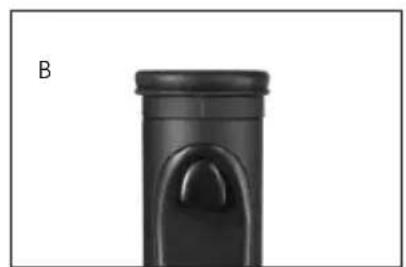
natural_image
Close-up of a black plastic cylindrical object with a curved handle and a flared top, labeled 'B' in the corner (no other text or symbols)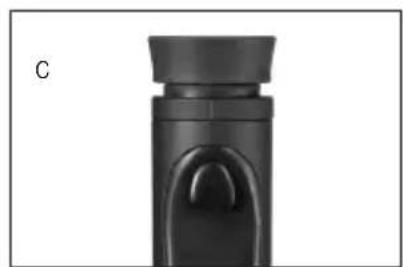
natural_image
Close-up of a black cylindrical object with a curved handle and a flared top, labeled 'C' in the corner (no other text or symbols visible)natural_image
Black-and-white circular image of a mountain goat in snowy terrain, no text or symbols visiblenatural_image
Close-up of hands using a small tool to adjust or install a dark object (no visible text or symbols)natural_image
Close-up of a black plastic push-button with a curved handle and flange (no text or symbols visible)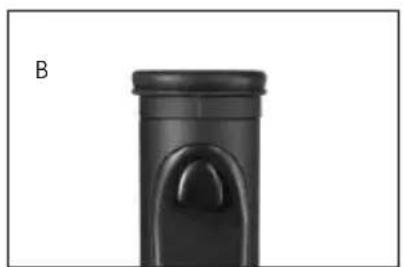
natural_image
Black plastic bottle with curved handle and cap, labeled 'B' in top-left corner (no other text or symbols)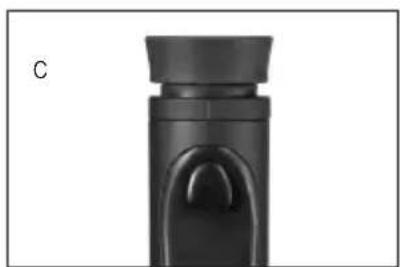
natural_image
Close-up of a black cylindrical object with a curved handle and a flared top, labeled 'C' in the corner (no other text or symbols visible)natural_image
Black-and-white circular image of a mountain goat in snowy terrain, no text or symbols visibleAfstandsmeting
natural_image
Close-up of hands adjusting a small mechanical component (no visible text or symbols)natural_image
Close-up of a black plastic pushpin with a curved handle and flange (no text or symbols visible)natural_image
Black plastic container with curved handle and top rim, labeled 'B' in top-left corner (no other text or symbols)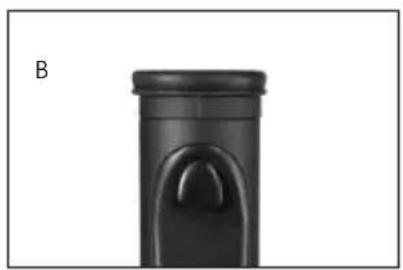
natural_image
Black plastic container with curved handle and top rim, labeled 'B' in top-left corner (no other text or symbols)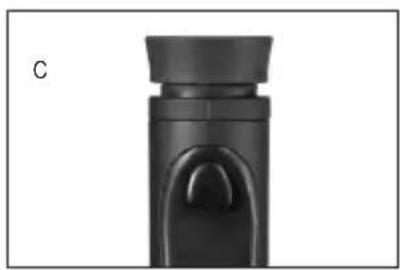
natural_image
Close-up of a black cylindrical object with a curved handle and a flared top, labeled 'C' in the corner (no other text or symbols visible)natural_image
Black-and-white circular image of a mountain goat in snowy terrain, no text or symbols visiblenatural_image
Symbol of a trash bin crossed with no text or labels, accompanied by a horizontal line and a solid rectangle below (no text or symbols present)natural_image
Close-up of hands adjusting a small mechanical component (no visible text or symbols)natural_image
Close-up of a black plastic push-button with a curved handle and flange (no text or symbols visible)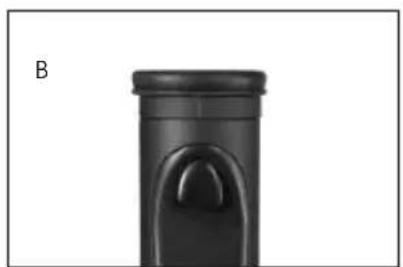
natural_image
Black plastic bottle with curved handle and cap, labeled 'B' in top-left corner (no other text or symbols)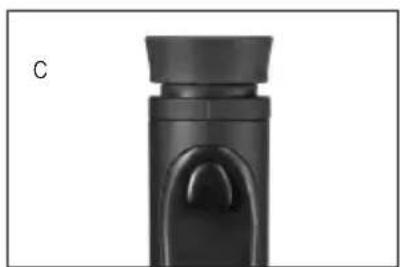
natural_image
Close-up of a black cylindrical object with a curved handle and a flared top, labeled 'C' in the corner (no other text or symbols visible)Uso con y sin gafas
natural_image
Black-and-white circular image of a mountain goat in snowy terrain, no text or symbols visible
- Inhaltsverzeichnis
- Distanz-Messung
- Scope of delivery
- Foreword
- Warning notice:
- Table of Contents
- Disposal of electric and electronic equipment
- Fitting the carrying cord
- Inserting and changing the battery
- Notes:
- Attention:
- Battery charge level
- Use with and without glasses
- Diopter compensation
- Distance measurement
- Scan mode
- Note:
- Operating range and accuracy
- Range longer shorter
- Maintenance/cleaning
- Important:
- Spare parts
- Troubleshooting
- Leica Academy
- Leica on the Internet
- Leica Information Service
- Leica Customer Service
- FCC Note: (U.S. only)
- FCC Caution:
- LEICA RANGEMASTER CRF 800
- LEICA RANGEMASTER CRF 900
- LEICA RANGEMASTER CRF 1200
- This device complies with Part 15
- of the FCC Rules.
- Afstandsmeting
- Uso con y sin gafas
Brand : LEICA
Model : Rangemaster CRF 900
Category : Binoculars