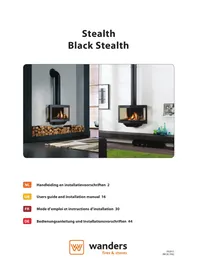
Black Stealth - Heating WANDERS - Free user manual and instructions
Find the device manual for free Black Stealth WANDERS in PDF.

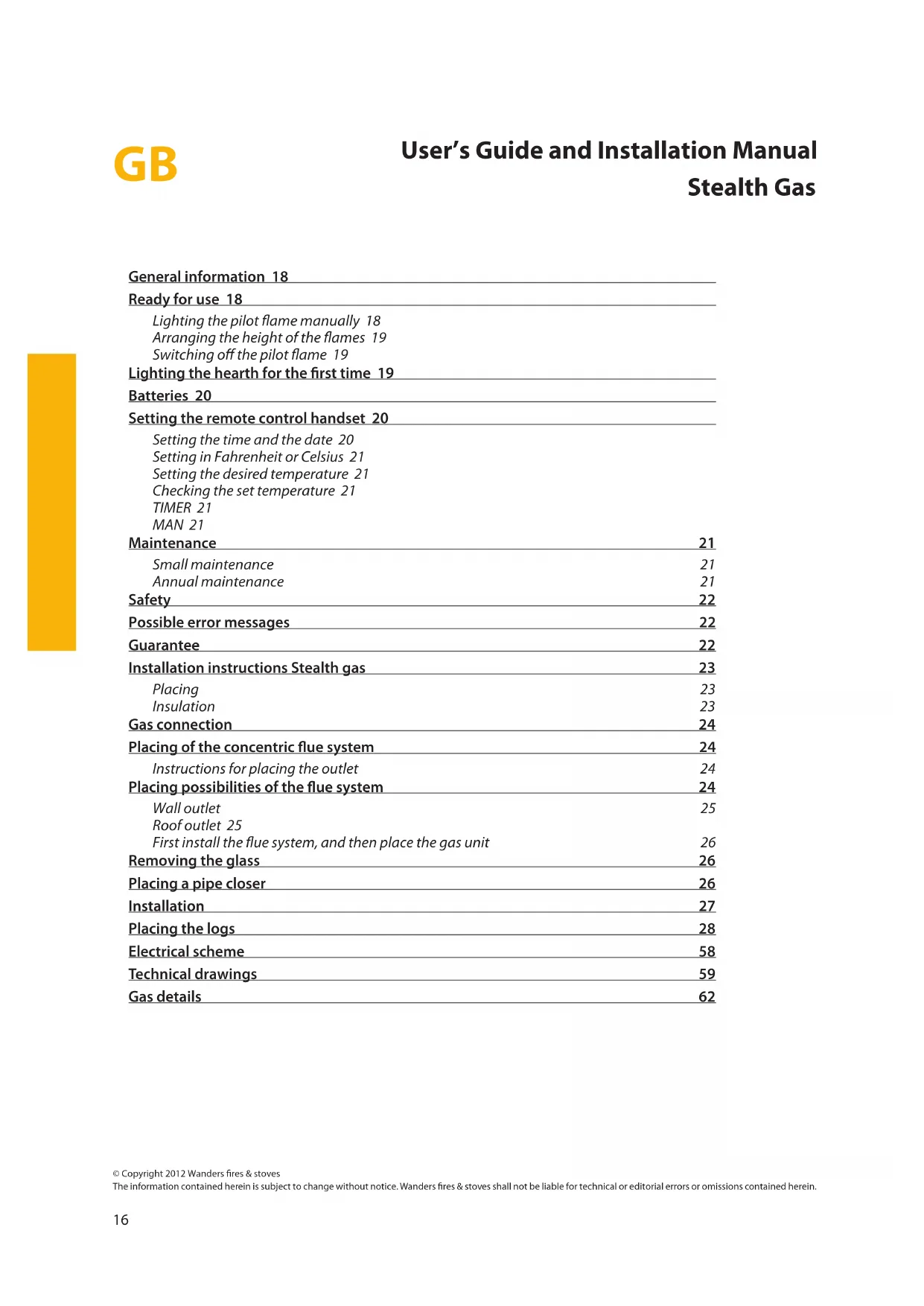


| Product type | Closed gas stove |
| Brand | Wanders |
| Model | Black Stealth |
| Category | Heating |
| Gas supply | Natural gas or propane (according to nameplate) |
| Electrical supply | Batteries: receiver 4x LR6/AA or 9V, remote control 9V |
| Main functions | Manual pilot ignition, flame adjustment via remote control, timer programming, temperature display |
| Routine maintenance | Exterior cleaning with damp cloth (stove cold), glass cleaning with ceramic cleaner |
| Annual maintenance | By certified installer: check seals, gas block, piping, gaskets |
| Safety | Thermocouple protection, use prohibited without glass, safety distance 1.5 m, certified installer required |
| Spare parts | Original WANDERS parts, repair by certified installer |
| Warranty | 1 year from date of purchase (defects in material and workmanship) |
| Flue duct | WANDERS concentric duct ∅100/150 mm, max length 10 m (excluding wall/floor penetration) |
| Standards | CE, installation according to national and local regulations |
| Manufacturing | Netherlands |
Frequently Asked Questions - Black Stealth WANDERS
User questions about Black Stealth WANDERS
0 question about this device. Answer the ones you know or ask your own.
Ask a new question about this device
Download the instructions for your Heating in PDF format for free! Find your manual Black Stealth - WANDERS and take your electronic device back in hand. On this page are published all the documents necessary for the use of your device. Black Stealth by WANDERS.
USER MANUAL Black Stealth WANDERS
Stealth Black Stealth
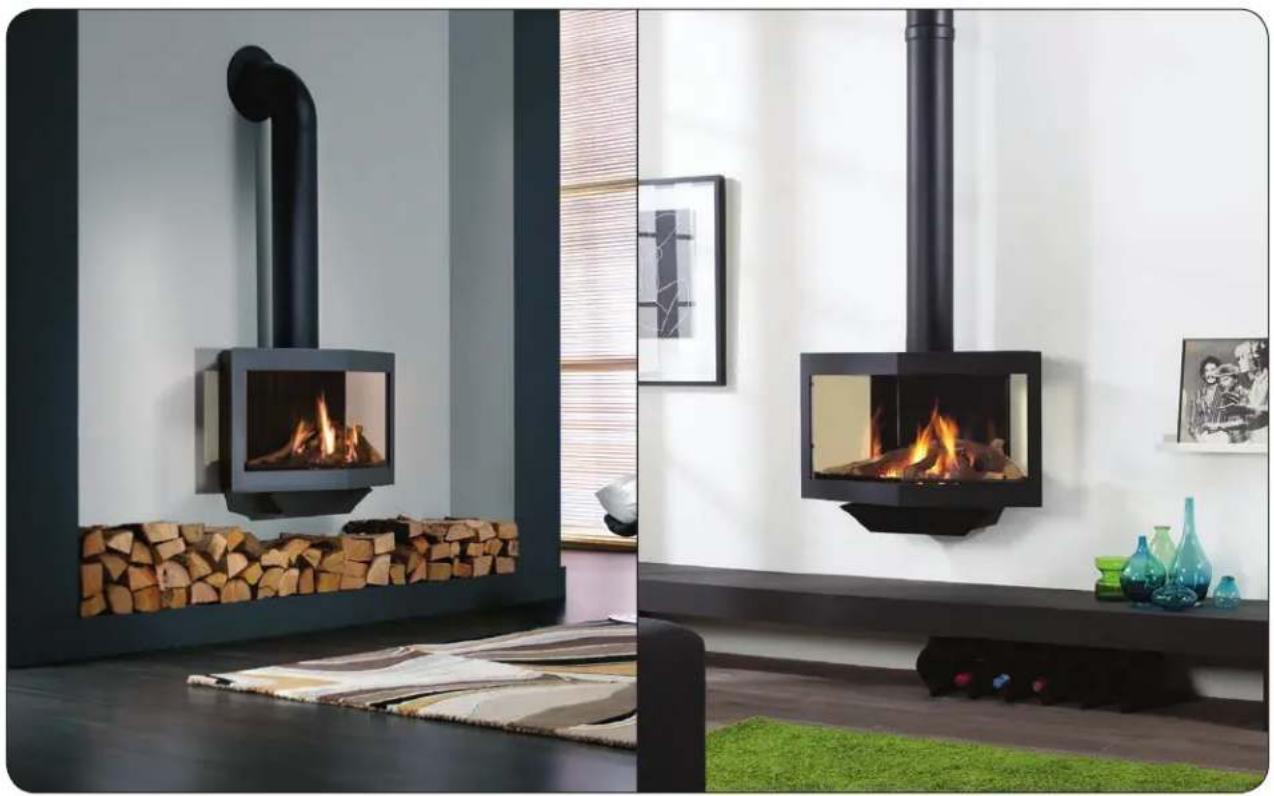
natural_image
Modern minimalist living room with two large outdoor furnishes and a stone rug, no visible text or symbols.NL
Users guide and installation manual 16
FR
text_image
Yellow triangular warning sign with black exclamation mark, commonly used to indicate caution or hazard.natural_image
Two black rectangular electronic devices with vertical slats and ventilation grilles, shown from different angles (no text or symbols visible)natural_image
Black rectangular device with four labeled cylindrical components, no visible text or symbols on the main body.natural_image
Close-up of a black electronic device with attached black cable and a USB flash unit, placed on a metal surface (no visible text or symbols)natural_image
Two identical mechanical component diagrams with black and white sections, each marked with red circles (no text or symbols)Montage stuw
natural_image
Cross-sectional diagram of a mechanical or electrical component with three red-circled highlights (no text or symbols present)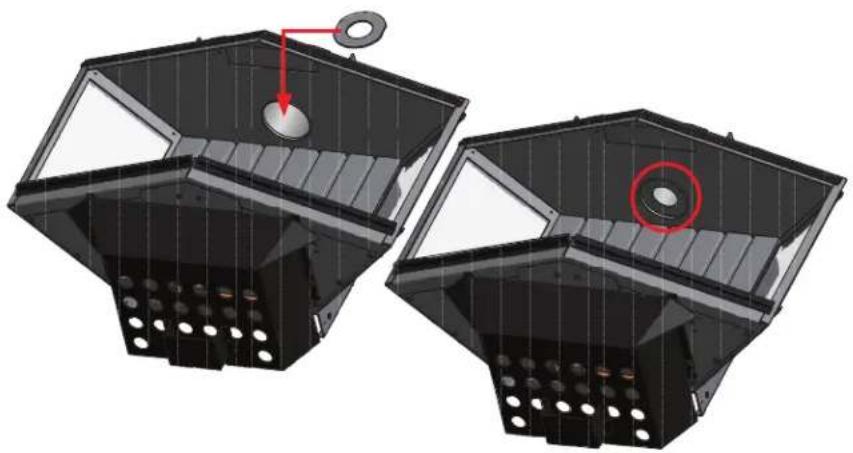
natural_image
3D mechanical component diagram showing two views of a roof structure with mounting holes and a central circular feature (no text or symbols)
natural_image
3D mechanical assembly diagram showing a component with mounting holes and a housing, no visible text or symbolsnatural_image
Three-panel photo sequence showing a firewood firecracker on a tray, with visible wood and wires, no text or symbols present.Lighting the pilot flame manually 18
Arranging the height of the flames 19
Switching off the pilot flame 19
Lighting the hearth for the first time 19
Batteries 20
Setting the remote control handset 20
Setting the time and the date 20
Setting in Fahrenheit or Celsius 21
Setting the desired temperature 21
Checking the set temperature 21
TIMER 21
MAN 21
Maintenance 21
Small maintenance 21
Annual maintenance 21
Safety 22
Possible error messages 22
Guarantee 22
Installation instructions Stealth gas 23
Placing 23
Insulation 23
Gas connection 24
Placing of the concentric flue system 24
Instructions for placing the outlet 24
Placing possibilities of the flue system 24
Wall outlet 25
Roof outlet 25
First install the flue system, and then place the gas unit 26
Removing the glass 26
Placing a pipe closer 26
Installation 27
Placing the logs 28
Electrical scheme 58
Technical drawings 59
Gas details 62
Dear Client,
Congratulations on your new WANDERS gas fireplace. It will be a comfortable source of heat to enjoy for many years on end.
Your gas hearth is fitted with a so-called closed system double-walled flue. The flue gases are directly discharged through the inner flue. The outer pipe extracts fresh air which produces beautiful and evenly burning flames. In principle, your gas unit can be installed in all kinds of spaces, even in rooms without any ventilation or with mechanical ventilation.
When designing this fireplace we took particular care of the ease of use, the safety and the design. Your gas unit is developed and produced at our own factory in Netterden (the Netherlands) and is for the greater part handmade. Only the best materials are used for the construction and comply with current international standards. This will guarantee that your hearth has a long life.
The first part of this user's guide gives you tips and directions about how to use your gas fireplace correctly and safely. The second part of the manual contains the installation instructions and the technical specifications of the gas unit. They are of particular importance to the installer.
We advise you to read this manual thoroughly before using your new gas fireplace and to keep the manual in a handy place. Your installer may need the manual for the yearly maintenance of your fireplace.
We wish you much warmth with your new fireplace!
The WANDERS team

text_image
Yellow triangular warning sign with black exclamation mark, commonly used to indicate a hazard or alert event.• Do not use the appliance without glass.
- Do not put flammable substances on the ceramic wood log set
- Do not place highly flammable materials like nylon clothes of flammable fluids in the neighbourhood of the appliance.
- This appliance is not meant for operation by persons (including children) with limited physical or intellectual faculties, or by persons who are unfamiliar with the operation of gas appliances. Always ensure that they are supervised when near the appliance.
• Use a fire-screen to avoid burning and to protect the above-mentioned children and persons.
- The appliance must be mounted and connected as a 'closed unit' by an acknowledge installer in accordance with the installation instructions and national and currently applicable local regulations
General information
It is common practice for the dealer where you purchased your gas unit to take also care of installing it and connecting it to the mains. If this is not the case, please ensure that the installation is done by a certified installer. Connecting gas devices by unqualified persons is prohibited, in which case we cannot give any guarantee that your gas hearth is functioning properly.
Ready for use
After connecting your Wanders gas unit to the mains and making the necessary adjustments, the hearth is ready for use. The pilot flame must be ignited manually.

text_image
CAUTION! INSERT THE BATTERIES AFTER THE MOTOR IS WIRED A SHORT CIRCUIT CAN DESTROY THE ELECTRICAL COMPONENTSReceiver
text_image
OFF IGN PILOT ON A OFF NO DB3Gas governor
Lighting the pilot flame manually
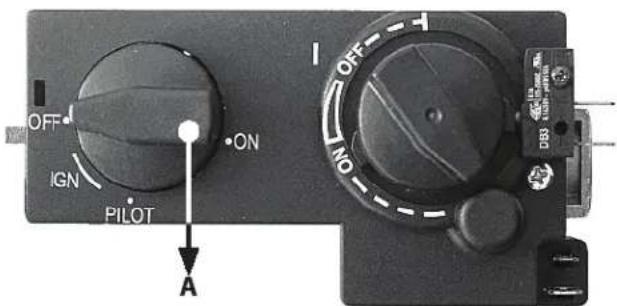
- Open the door underneath the stove to reach the gas governor. Check if the gasvalve is open.

natural_image
Two black industrial heat exchangers with vertical slats and ventilation grilles, shown from different angles (no text or symbols visible)- You're now able to see the controls as shown on the images above.
- Turn the ignition knob (A) until it stops (spark symbol / IGN), then press the knob and wait a few seconds.
- While keeping the knob pressed, turn the knob to the left until you hear a click.
- Look through the glass pane to see whether the pilot flame is burning. If the pilot flame is not ignited, repeat steps 3 and 4.
- If the pilot flame is burning, keep the ignition knob pressed for some time. When you release the knob after 30 seconds, the pilot flame must stay alight. If it doesn't, wait for 5 minutes before trying to light the pilot flame again.
- If the pilot flame stays alight, turn the knob anticlockwise till the symbol of the large flame. Now you can close the flap and regulate the height of the flames with the remote handset.

Child-proof safety lock
If you turn the ignition knob to the symbol of the small flame, the remote control is put out of action while the pilot flame will stay alight.
Arranging the height of the flames
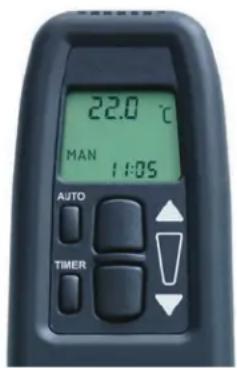
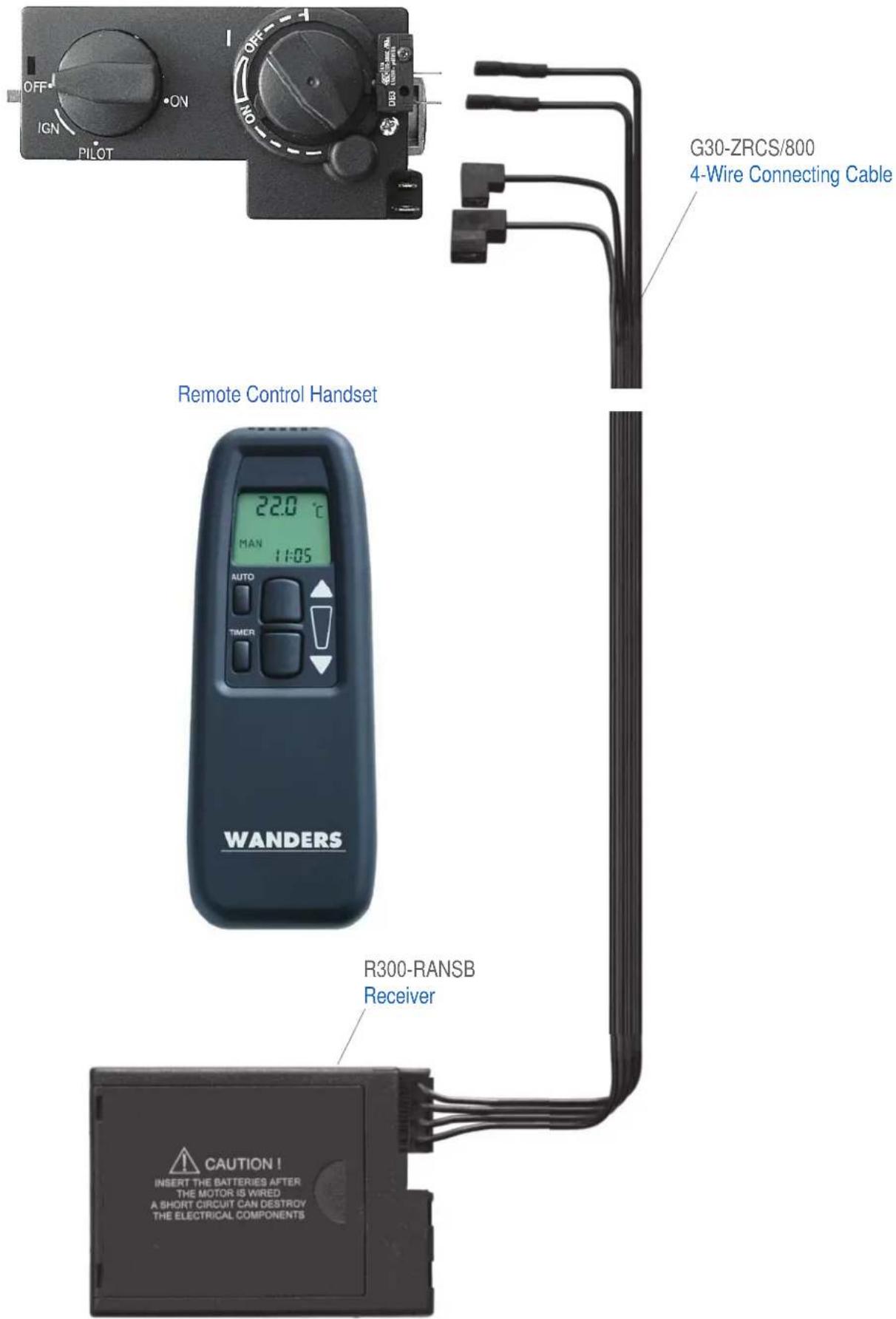
Point the remote control handset towards the gas unit. The hearth will burn higher when pressing the ▲ button. The hearth will burn slower when pressing the ▼ button. When you keep pressing the ▼ the hearth will switch to the pilot flame position. You can also put the hearth on the pilot flame position manually by turning the ignition knob (A) until the minimum is reached (small flame / PILOT).
When you press both buttons, you will see the 'transmit' signal top left on the display. The hearth has reached its highest or lowest position when the LED of the receiver starts blinking.
Switching off the pilot flame
The pilot flame is switched off manually. Remove the frame, gently press the ignition knob (A) and then turn it towards the dot / OFF indication.
text_image
22.0 °C MAN 1:05 AUTO TIMERLighting the hearth for the first time
When you light your gas unit for the first time, the hearth must 'anneal'. The unit has a heat resistant lacquer which must still burn in. Though this may give an unpleasant smell, it is otherwise harmless. It is advisable to turn onto high for about three hours while airing the room well.

Discolouration of walls, ceilings and grates
After lighting your heath the walls, ceilings and grates may show some discolouration. This is caused by the dust particles that burn in the convection cover. This is a natural process for which WANDERS cannot be held responsible. To minimize the discolouring we refer to the advice given for atmospheric hearths. Your installer can give you more information about this.
Some deposit may form on the ceramic glass of the door of the hearth. You can easily remove this deposit with a damp cloth and if necessary some cleansing agent for ceramic rings when the glass has cooled down. On page 26 you'll find a description on how to remove the glass.

Avoid finger marks
Avoid leaving any finger marks on the glass after closing the door. Finger marks leave stains that burn in the glass and cannot be removed later.
When you light your fireplace for the first time, the unit calculates how much time is needed to reach the preset temperature. Your hearth will now select the most efficient way to heat the room.

Ensure that the logs are not placed in front of the pilot flame. The gas must be able to stream freely to the main burner. The main burner is located underneath the log set. See page 28 for placing the log set properly.
It is advisable to keep the pilot flame burning in heating seasons to prevent condensation and possible calcification on the inside of the door.

Newly-built house or recently renovated?
It is advisable to wait six weeks before lighting the hearth in a newly-built house that has recently been delivered, or a space or room that has recently been drastically renovated. The walls and ceilings still contain gases, softeners and moist from plasterwork or paint. The warm air-streams may discolour the dust particles in the space which may stick to walls and ceilings. When the moist in the walls and ceilings warm up, this may also cause yellowish stains.
Batteries
Your gas hearth is delivered with batteries in the receiver. It is advisable to place new batteries in the receiver and the remote handset when installing your gas unit. The receiver in the hearth works on 4 batteries of 1.5 V (type LR6 or AA) or 1 x 9 V alkaline. The remote handset is powered by a 9 V alkaline block battery. The batteries will last for about one year.
When are the batteries due for replacement?
- The batteries of the receiver are due for replacement if you see that the engine works with increased difficulty.
- The battery of the remote control handset is due for replacement when the display shows BATT in the top right hand corner.

natural_image
Black box containing four labeled cans with flame and text, placed on a white surface (no readable text or symbols)Replacing the batteries of the receiver

natural_image
Black electronic device with attached power strip and display, placed on a metal surface (no visible text or symbols)Replacing the batteries in the remote control
Setting the remote control handset
Setting the remote control of your gas unit is simple. Once you have done it you can operate your hearth in less than no time. Your remote can even pre-set four time schedules for the desired temperatures.
It is advisable to switch off your hearth when you pre-set the remote to avoid accidentally changing the temperature of your unit.
If your Stealth hearth has not received a signal from the remote control for two hours, the unit switches automatically back to the pilot flame setting. The pilot flame will burn continuously.

If you switch off the pilot light after lighting your hearth, you must wait at least five minutes before lighting the hearth again.
Setting the time and the date
After placing the batteries, or by pressing the buttons AUTO and TIMER simultaneously, the display will start flashing. With the ▲ button you select the hour. With the ▼ button you set the minutes. Wait for a few seconds, or press the

text_image
22.0 °C MAN 11:05 AUTO TIMER WANDERSTIMER button to save the pre-set time.
Setting in Fahrenheit or Celsius
The display starts blinking after placing the batteries, or after simultaneously pressing the buttons AUTO and TIMER. When the display is still blinking, you can switch from Fahrenheit / 12-hour indication to Celsius / 24-hour indication. The indication will switch when pressing the AUTO button. The display will switch automatically to manual operation after some time
Setting the desired temperature
Press and hold the AUTO button until the TEMP indication blinks. You can set a higher temperature with the ▲ button and a lower temperature with the ▼ button. Then wait a few seconds, or press the AUTO button to switch to the automatic modus.
Checking the set temperature
Briefly press the AUTO button. The display briefly shows the pre-set temperature and then displays the room temperature.
TIMER
You can pre-set a total of four time-settings. When you link up all four time-settings, you can be sure of a comfortable room temperature at all times.
Press and hold the TIMER button until the indication P1<◇> blinks. With the ▲ and ▼ buttons you can set respectively the hours and the minutes. By briefly pressing the TIMER button you can browse through the timer programme P1<◇>, P1<◇>, P2<◇> and P2<◇>. Here is an example of a possible pre-setting.
P1<☀>-temp: 07:30 - 08:30 the pre-set temperature
P1
P2<◇>-temp: 17:00 - 23:00 the pre-set temperature
P2
The TIMER function works only when the pilot flame is on. If the TIMER mode is switched on, the temperature control will be the same as in the AUTO position. You can switch off the TIMER mode with the ▲ and ▼ buttons. The remote control will automatically switch to the MAN function.
MAN
When the display shows the MAN position you can manually turn the hearth higher ▲ and lower ▼ by using the big buttons. When you press and hold the ▼ button the hearth will go to its lowest position: the pilot flame. When you keep these buttons pressed, you will see the 'transmit' symbol top left in the display. You will know when the hearth has reached its highest or lowest position when the LED of the receiver starts blinking.
Maintenance
Small maintenance
You can clean the outside of the hearth with a damp cloth that doesn't give off fluff. Only clean the outside when the hearth is cold. If some coffee is spilled on the unit when it is burning, turn the hearth off immediately. When the hearth has cooled off completely, you can remove any stains with a damp cloth

Do not use any aggressive cleansing agents or abrasives and do not use stove polish.
Annual maintenance
Your gas hearth needs to be checked and maintained by a certified installer at least once a year. He will check and, if necessary, clean the following components:
• The air-tightness of the exhaust pipes for gas and fumes and the pipes for supplying combustion air.
- The proper functioning of the gas governor, the thermocouple interrupter (a safety measure against unexpected outflow of gas) and the ignition of the main burner.
• The entire pipe system, including the exterior wall or roof duct and the external terminal.
• Inspection of possible wear and tear of the sealing of the doors and glass panes.
- The following components will be cleaned: the main burner, the pilot light, the flue tube and the supply of combustion air. Any dust collected in the hearth can be removed with a vacuum cleaner.
Safety
A WANDERS source of heat is more than just a stove in your room; the flue and the roof duct are also part of the heating system. Only when your gas hearth is installed with the concentric flue designed by WANDERS can we guarantee that your hearth is burning safely.
Every gas hearth by WANDERS is installed with a thermocouple interrupter. This will prevent unexpected gas flow if the pilot light has gone out.
Here are some recommendations for safely using your gas hearth:
- Only use your gas hearth when the door is properly closed. When the door is open, or the glass damaged, you must not use the fireplace.
- Prevent small children or the infirm from getting too close to a burning stove and do not leave them alone in the room when the fireplace is ignited. You could use a fire-screen.
- Turn the ignition knob all the way to the symbol of the small flame to deactivate the remote control while the pilot flame stays on. This is to ensure that nobody can accidentally change the temperature of your hearth.
• Never allow children to play with the remote handset. - Do not pour or put any combustible liquids and materials on the log set, as it may damage the unit beyond repair.
- Do not place any combustible materials, such as curtains, close to the fireplace. A minimum distance of 1.5 meters is required.
• The fireplace must be repaired with original parts only, and by a certified installer.
• If for any reason the pilot light goes out, you must wait 5 minutes before igniting the hearth again.
Possible error messages
If your hearth does not function as planned please contact your gas hearth dealer or a certified installer. If the pilot light does not ignite, you can take the following steps.
• Check whether the gas supply is open. If you cannot find the gas supply please contact your installer.
- There may be some air in the pilot feed line. Wait for 5 minutes and light the hearth again. If this does not help please contact a certified installer.
Guarantee
WANDERS Metaalwerken B.V. in Netterden, the Netherlands, gives a one-year guarantee after the purchase date, provided that the fireplace is properly installed and used in accordance with the instructions in the manual. The guarantee includes all defects which can be reduced to flaws in material and construction, in which case you will receive the new parts free of charge. Labour costs or other expenses are not covered by the guarantee. You can send defect parts (carriage paid) to WANDERS Metaalproducten B.V., Amtweg 4, 7077 AL in Netterden [The Netherlands].
The guarantee does not include: failure due to improper use; non-compliance with the installation and operating instructions; installation by a non-certified installer; negligence of the apparatus and converting
the fireplace to be fired with another kind of gas.
Wanders cannot be held responsible for any cracks in stuccoed walls or discolouration of walls, ceilings and/or grates after burning the fireplace. Discolouration is caused by the burning of dust particles in the convection cover. To reduce the chance of cracks in stucco and to minimize discolouration we refer to the advice given for decorative hearths. Your installer can give you more information.
Any complaints will be dealt with after the sales firm, the installer or the gas company filed a complaint and sent a copy of the purchase receipt with purchase date. Any repairs do not entitle you to extend the guarantee term. All consequential damages or loss are excluded.
Installation instructions Stealth gas
Your gas hearth must only be installed by a certified installer and only in combination with the WANDERS concentric pipe system. Only then will the hearth be approved according to the European CE standards for gas appliances. We will not give any guarantees if the gas hearth is fitted and/or installed in an incomplete or improper manner. The pipe system consists of an inner pipe with a diameter of 100 millimetres and an outer pipe with a diameter of 150 millimetres.
The appliance may only be installed and fitted by a certified installer in accordance with current universal gas piping regulations and according to the installation instructions mentioned below. Furthermore, the national and local rules and regulations on placing and using closed gas appliances shall be applicable. Only certified installers are authorized to change the pre-set values (in line with the regulations) or make any other adjustments.

Before installing the appliance, the installer must check whether the information on the type tag of the fireplace corresponds with the gas type and gas pressure to which the appliance is connected. If it does not match, it is not allowed to connect the gas unit.
Placing
The appliance is designed to be mounted on a wall which should be strong enough to hold the weight of the appliance. All materials used in the area of the hearth need to be heat and fire resistant.
The appliance can be placed in a crack-free and/or mechanically ventilated home without difficulty. There is no need for extra ventilation for combustion, or for a smoke and fire vent. Waste gases are discharged by natural draught via the inner pipe into the open. The oxygen needed for burning the fire is supplied from the space between the pipes. This is the reason that no insulation must be placed between the inner and the outer pipe.
Insulation
Due to the high temperatures of the exterior walls (up to approximately 150 °C or 300 °F) it is prohibited to have any combustible materials close to the channel system. The entire concentric pipe system should be encased (heat resistant) from the place where it is out of sight up to the outlet in the exterior wall. Ventilate the encased concentric pipe system by placing a grid near the floor and the ceiling on every floor. Use universal wall clips with a diameter of 150 mm for anchoring the concentric pipe system.
If an existing chimney is used, first make sure whether the chimney is sufficiently insulated and with sufficient diameter to accommodate the concentric pipe system. If the chimney was previously used as a wood-burning or coal-fired stove, the chimney must first be professionally cleaned. You must use special WANDERS connecting sets for connecting a gas hearth to an existing chimney.
Gas connection
• Use a gas supply pipe with an approved G3/8" stopcock with coupling.
• De-aerate the supply pipe before fi tting and fastening the appliance.
- Avoid all tension on the operating valve and pipes to avoid gas leakage.
• Check if the connection is gastight.
Placing of the concentric fl ue system
The concentric channel system consists of three parts: the channels itself, the transit through the roof or through a wall and the outflow. The diameter for the flue pipes of the Stealth is 100/150 mm.
Instructions for placing the outlet
The outflow of the pipe system can be placed on top of the roof or against the side wall of the house.
Roof outlet
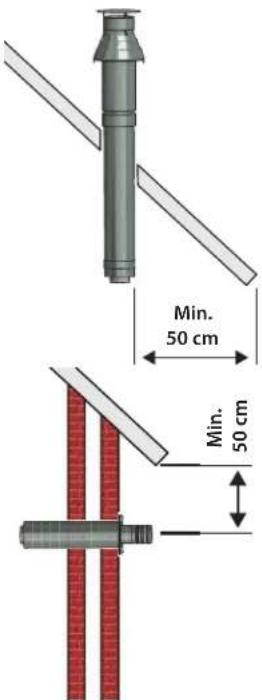
When placing the outflow on top of the roof, make sure that there is a distance of at least 50 cm between the outflow and the edges of the roof, with the exception of a possible existing ridge. You must also take the place of the outflow into account in relation to the existing ventilation openings, movable windows and combustion air supply provisions. Please consult the national and local requirements.
Wall outlet
When placing the outflow into the side wall, make sure that there is distance of at least 50 cm between the outflow and the corners of the building, eaves, gutters, balconies and etcetera. You need not have this distance when the outflow runs through to at least the front of the overhanging part.

You must also take the place of the outflow into account in relation to the existing ventilation openings, movable windows and combustion air supply provisions. Please consult the national and local requirements.
text_image
Min. 50 cm Min. 50 cmPlacing possibilities of the fl ue system
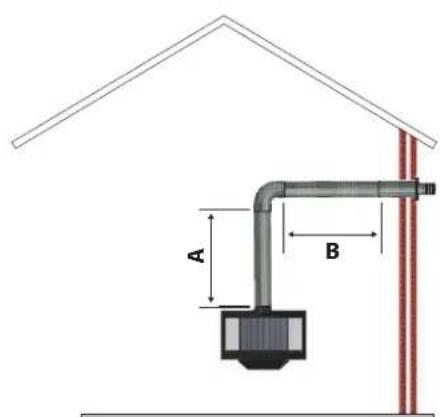
The total length of the pipe system must never be more than 10 metres excluding the passage through the wall and the outflow. A 90° Stealth angle counts as a length of 2 metres. A 45° turn counts as a length of 1 metre.
For the combined flue tube and combustion air supply you must apply one of the shown placing possibilities of the WANDERS concentric pipe systems: with wall duct, with roof duct or with roof duct with bend.
Make your choice from the installation possibilities. Place the first meter of the concentric pipe on the counterpart on the appliance. You will know that you placed it properly if you can see the blue rubber seal ring when looking from above. Keep a distance of at least 5 cm between the inner side of the concentric pipe and the wall or the ceiling.
Pay special attention to proper installing when, due to circumstances, a part of the double-walled pipe system must be built in.
text_image
A B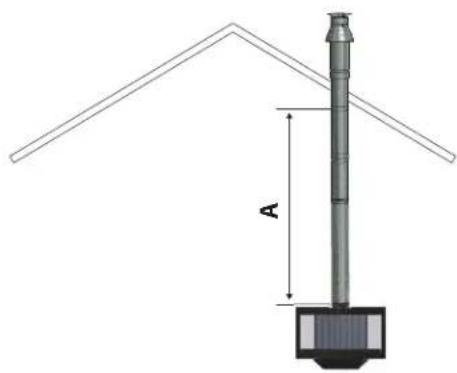
natural_image
Technical diagram of a mechanical support structure with labeled dimension 'A' (no text or symbols beyond the label)| Gastype A (min.-max.) B (min. - max.) Collar shaft Gastype A ( | ||
| Nat. gas 1,0 - 3,0 m 0 - 3,0 | m NO Nat. gas 1,0 - 10,0 m fro | |
| LPG 1,5 - 3,0 m 0 - 3,0 m | NO LPG 1,5 - 10,0 m fro | |
| all dimensions are exclusive the length of the wall outlet | ||
| n. - max) Collar shaft | |||
| 0,0 m ∅ 50 mm | |||
| 0,0 m ∅ 50 mm | |||
| all dimensions are exclusive the length of the roof outlet | |||
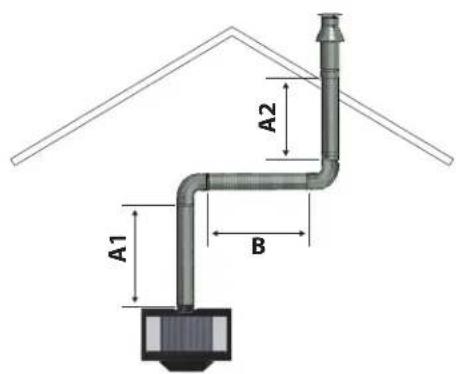
text_image
A2 A1 B| Gastype | B (min. - max.) | A1 (min. - max.) | A1 + A2 (min. - max.) | Collar shaft |
| Nat. gas | 1 - 3 m 1 - 1 | 10 m 1 - 10 | m NO | |
| LPG 1,5 | - 3 m 1 - 10 | 10 m 1 - 10 | m NO | |
| (A1 + A2 : B) : 1 Proportion vertical: horizontal (or 45° up) is always at least 2 : 1 | ||||
| all dimensions are exclusive the length of the roof outlet | ||||
Wall outlet
• Always allow one metre vertical before passing through the outer wall.
• The maximum length of the horizontal placed pipes is 3 meters.
• Determine the location of the gas unit and the exterior wall duct.
• Make an opening of ∅ 155 mm for the wall duct.
- Connect the wall duct with a curve to the mouth of the appliance. Push them firmly together and place the clip bindings. The blue rubber ring ensures sufficient sealing of the discharge system of the waste gas.
- If the appliance is placed more than 1 metre from the wall, place the vertical one-metre pipe first on the appliance, then place the curved part, then the exterior wall duct, and then make them gastight.
Roof outlet
You can place the outflow anywhere on the roof, if necessary with a bend to the ridge of the roof. The roof duct is supplied with a universally adjustable roof tile for a tilted roof, or with an adhesive plate for a flat roof.
• Determine the location of the gas unit and the outflow to the roof.
• Make an opening of ∅ 155 mm for the roof duct.
- Connect the pipes vertically to the mouth of the appliance. Push them firmly together and place the clip bindings.
- Determine the length of the pipes needed and make sure that the transfer tile or the universal roof tile is well fitted to the roof.
- Saw the outer pipe off to measure, and connect the concentric pipes to the roof duct.
First install the flue system, and then place the gas unit
You may also fit the concentric pipe system before placing the gas unit, but then you must the connection to the gas unit with a pipe that can be shifted.
Removing the glass
- Remove the decorative frame by unscrewing the 4 screws on the left and right side as shown on the drawing.
- Remove the glass frames by unscrewing the 4 screws as shown on the drawing.
- Loosen the screws from the bottom glass frame, these do not need to be removed.
• Carefully lift the glass from its place.
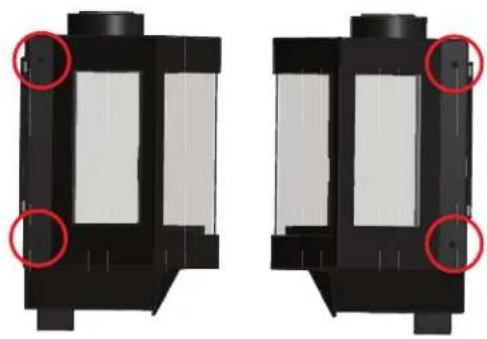
natural_image
Two identical mechanical components with black bases and white internal panels, each marked with a red circle (no text or symbols visible)Placing a pipe closer
Depending on the total length of the concentric flue system (100/150 mm) and the choice of outlet it's possible a pipe closer needs to placed. The diameter of these pipe closers are ∅50 mm. Following the instructions below the closer can be placed in the flue collar inside the combustion chamber as shown on the illustration.
The standard outlet width is 100 mm
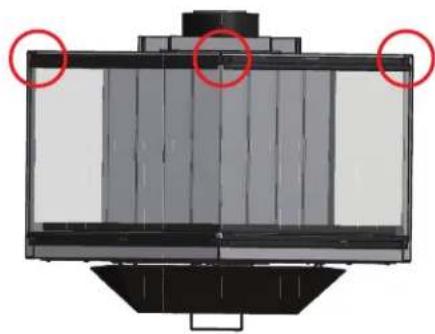
natural_image
Cross-sectional diagram of a mechanical or electrical component with two red-circled highlights (no text or symbols present)
natural_image
3D mechanical component diagram showing two views of a roof structure with mounting holes and a central circular feature (no text or symbols)
Make sure the pipe closer is installed correctly. Installation in the wrong situations, or the in the wrong way may cause malfunctioning of the appliance.
Installation

Ensure the wall can carry the weight of the appliance
- Remove the appliance from its package and remove the inlay.
- Remove the frame and glass as shown on page 26
• Install the bracket which eventually will hold the receiver.

natural_image
3D mechanical assembly diagram showing a component with mounting holes and a housing, no visible text or symbols• Install the wall bracket to the wall.
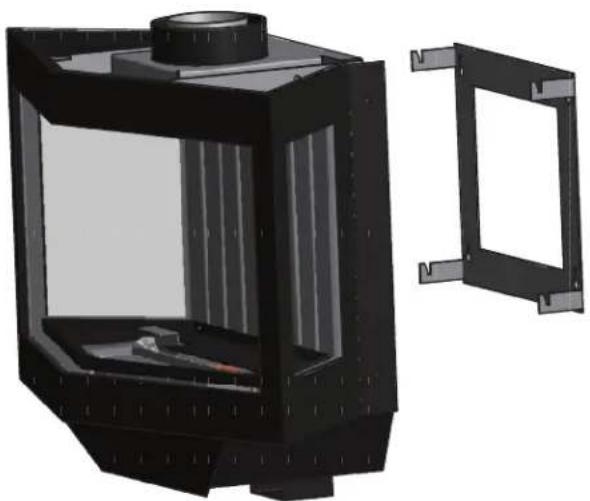
natural_image
3D rendering of a black industrial enclosure with internal structure and side panel (no text or symbols)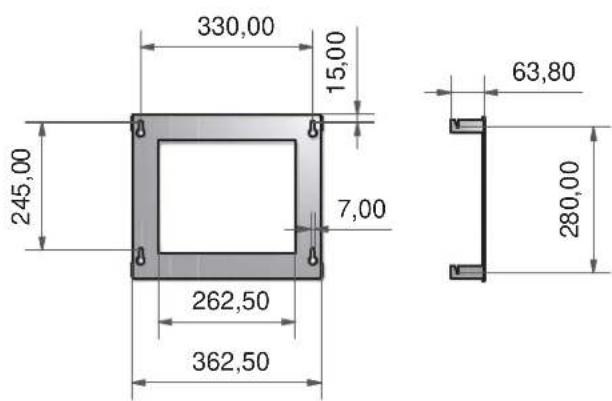
text_image
330,00 15,00 245,00 7,00 262,50 362,50 63,80 280,00• Mount the appliance on to the bracket.
- Place the logs as shown on page 28.
• Re-install the glass and frame.
Placing the logs

To avoid any problems, the layout of the logs needs to be exactly as shown on the images
- Remove the decorative frame and the glass as shown on page 26.
- Place the grains evenly on the main burner.

Do not use the grains if LPG is used.

natural_image
Three-panel photo sequence showing a firewood fire model on a metal tray, with visible cracks and debris (no text or symbols)- Spread the filament over evenly over the main burner.
- Place the embers on the bottom of the appliance but make sure they don't lay on the main burner.
- Place the logs as exactly as shown on the images.
• Re-install the glass and decorative frame.

Be sure not to touch the cleaned glass with your fingers when you replace the pane. Finger marks burn in the glass.
Do not forget to replace the door correctly and close it before lighting the hearth.

Make sure there is no log or stone in front of the pilot as this may prevent the main burner from ignition whereby unburned gas may accumulate in the stove. If this happens, you must extinguish the pilot and notify your installer.

You must not add extra ceramic (wood) logs or any other material to the log set. The usage of grains is prohibited (LPG). The stove may not work properly and become damaged beyond repair. Ceramic log sets may be replaced only by the same kind of WANDERS logs.
Installation 32
Prêt à l'emploi 32
text_image
Warning sign with exclamation mark inside yellow triangle, commonly used for safety alertsnatural_image
Two identical black industrial heat exchangers with vertical slats, shown from different angles (no text or symbols visible)natural_image
Black remote control device with attached USB flash unit and a partially visible card, placed on a metal surface (no text or symbols visible)natural_image
Two identical black mechanical components with white and gray panels, each marked with a red circle (no text or symbols visible)
natural_image
Cross-sectional diagram of a mechanical or electrical component with three red circles highlighting specific areas (no text or symbols present)natural_image
3D mechanical component diagrams showing two views of a housing structure with mounting holes and a central circular feature (no text or symbols)
natural_image
3D mechanical assembly diagram showing a component with mounting holes and a housing, no visible text or symbolsnatural_image
3D rendering of a black industrial enclosure with a cylindrical top and side frame (no text or symbols visible)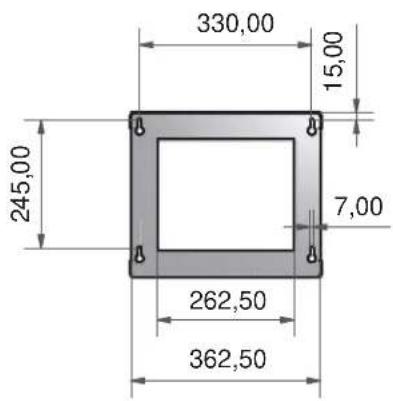
text_image
330,00 15,00 245,00 7,00 262,50 362,50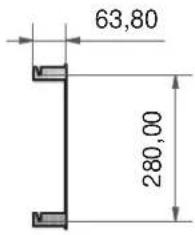
text_image
63,80 280,00natural_image
Three-panel photo sequence showing a fossilized bone specimen on a metal tray, with visible internal structures and wiring (no text or symbols)
text_image
Warning sign with exclamation mark inside yellow triangle, commonly used for safety alertsnatural_image
Two black industrial heat exchangers with vertical slats and ventilation grilles, shown from different angles (no text or symbols visible)text_image
Black box containing four labeled cans with visible brand names and product labels, likely from a beverage or industrial packaging.
natural_image
Black electronic device with a partially visible battery and a separate black strip, placed on a metal surface (no text or symbols visible)natural_image
Two identical mechanical component views with black and white sections, each marked with a red circle (no text or symbols visible)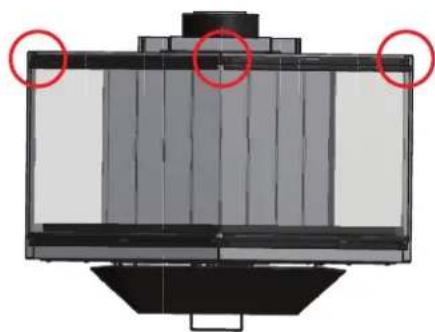
natural_image
Cross-sectional diagram of a mechanical or electrical component with two red-circled highlights (no text or symbols present)natural_image
3D mechanical component diagrams showing two views of a housing structure with mounting holes and a central hub (no text or symbols)
natural_image
3D technical illustration of a mechanical assembly with internal components and directional arrows (no text or symbols)natural_image
3D rendering of a black industrial enclosure with a cylindrical top and side frame (no text or symbols visible)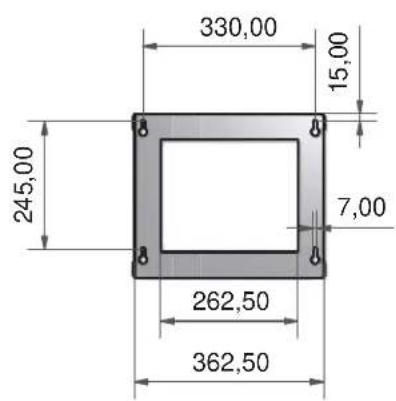
text_image
330,00 15,00 245,00 7,00 262,50 362,50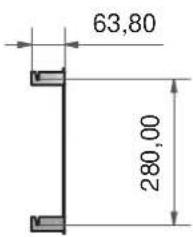
text_image
63,80 280,00natural_image
Experimental setup with a cylindrical sample on a metallic tray, surrounded by wires and ice (no visible text or symbols)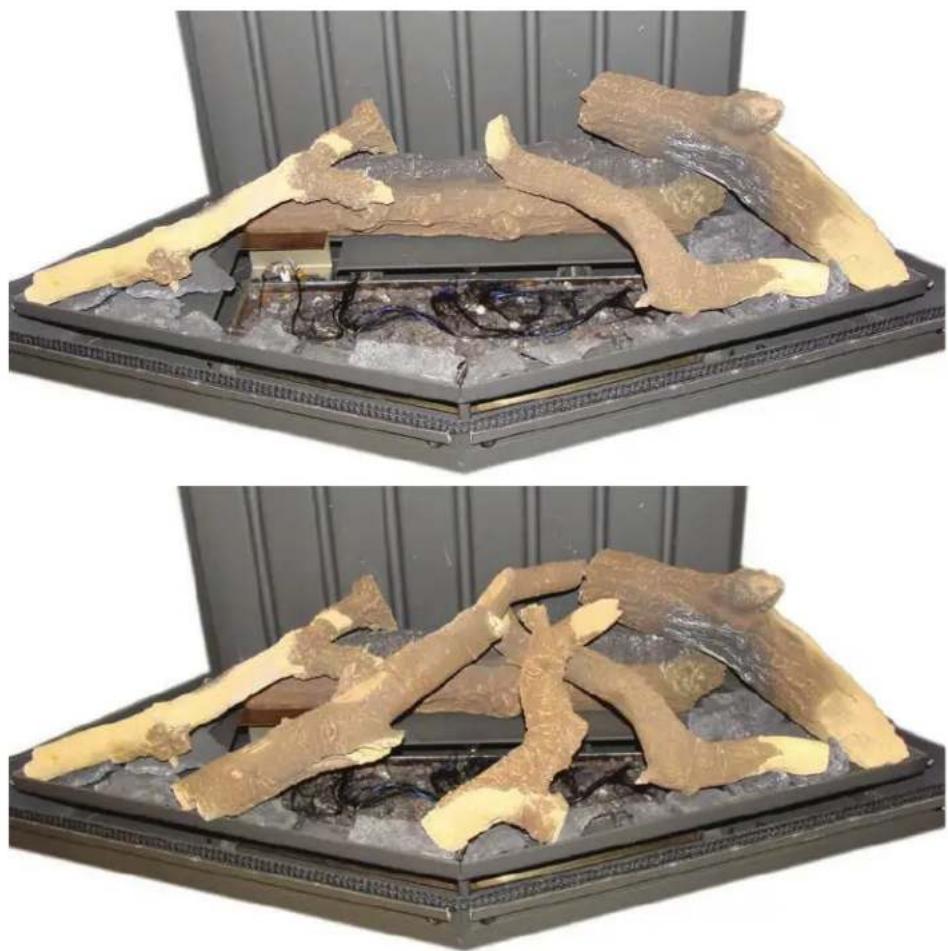
natural_image
Two-panel photo showing fossilized bone specimens on a metal tray, with no visible text or symbols.GV34 Valve with Motor
text_image
OFF IGN PILOT ON OFF NO G30-ZRCS/800 4-Wire Connecting Cable Remote Control Handset 22.0 °C MAN 11:05 AUTO TIMER WANDERS R300-RANSB Receiver CAUTION! INSERT THE BATTERIES AFTER THE MOTOR IS WIRED A SHORT CIRCUIT CAN DESTROY THE ELECTRICAL COMPONENTStext_image
Exploded view diagram of a mechanical device with numbered components for identification| 22 | 1 | HST.0013 | LAMELLENPLAAT |
| 21 | 2 | DRA.00.2503 | rol |
| 19 | 1 | INLEGPLAAT BINNENWERKHST.0014 | |
| 18 | 20 | ST42x16 62456ST42x16 | |
| 17 | 1 | HST.0034 | SCHERMPLAAT VOORKANT |
| 16 | 1 | HST.0010 | |
| 15 | 1 | OPHANGBEUGELSST.0018 | |
| 14 | 1 | HST.0022 | ACHTERSTUK INLEGPLAAT |
| 13 | 1 | SST.5002 | SAM INLEGPLAAT BUITENMANTEL |
| 12 | 1 | HST.0012 | BUITENMANTEL |
| 11 | 1 | SST.5007 | SAM BEDIENINGSDEUR STEALTH |
| INK.00.7310210 | KLEPSCHARNIER | ||
| 9 | 1 | SST.5004 | SAM BEDIENINGSKAST |
| 8 | 4 | HST.0017 | GLASSTRIP ZIJKANT |
| 7 | 5 | HST.0016 | GLASSTRIP VOORKANT |
| 6 | 2 | GLA.00.0911 | ZIJRUIT |
| 5 | 1 | GLA.00.0910 | GLASRUIT |
| 4 | 1 | HST.0015 | AFDICHTPLAAT EXPLOSIELUIK |
| 3 | 1 | SST.5003 | BRANDERSET |
| 2 | 2 | HST.0009 | BEV.BEUGEL BUITENMANTEL |
| 1 | 1 | SST.5000 | SAM BINNENWERK |
text_image
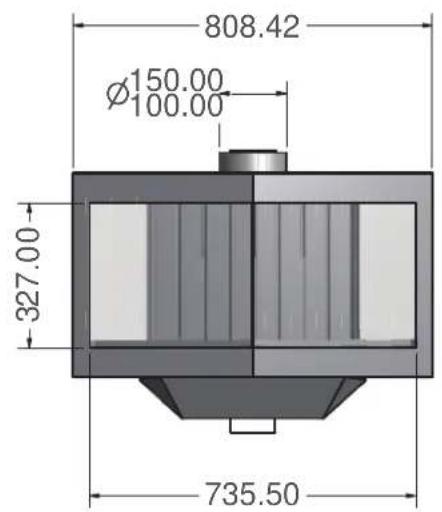
808.42 Ø150.00 100.00 327.00 735.50
text_image
387.70 167.80 588.00 126.50
text_image
266.72 403.54 8.50 396.40
text_image
Exploded view diagram of a device with numbered components for identification| 21 | 2 | DRA.00.2503 | rol |
| 20 | 1 | ACHTERWAND GLASGLA.00.0912 | |
| 19 | 1 | INLEGPLAAT BINNENWERKHST.0014 | |
| 18 | 20 | ST42x16 62456ST42x16 | |
| 17 | 1 | HST.0034 | SCHERMPLAAT VOORKANT |
| HST.0010116 | |||
| 15 | 1 | OPHANGBEUGELSST.0018 | |
| 14 | 1 | HST.0022 | ACHTERSTUK INLEGPLAAT |
| 13 | 1 | SST.5002 | SAM INLEGPLAAT BUITENMANTEL |
| 12 | 1 | HST.0012 | BUITENMANTEL |
| 11 | 1 | SST.5007 | SAM BEDIENINGSDEUR STEALTH |
| INK.00.7310210 | KLEPSCHARNIER | ||
| 9 | 1 | SST.5004 | SAM BEDIENINGSKAST |
| 8 | 4 | HST.0017 | GLASSTRIP ZIJKANT |
| 7 | 5 | HST.0016 | GLASSTRIP VOORKANT |
| 6 | 2 | GLA.00.0911 | ZIJRUIT |
| 5 | 1 | GLA.00.0910 | GLASRUIT |
| 4 | 1 | HST.0015 | AFDICHTPLAAT EXPLOSIELUIK |
| 3 | 1 | SST.5003 | BRANDERSET |
| 2 | 2 | HST.0009 | BEV.BEUGEL BUITENMANTEL |
| 1 | 1 | SST.5000 | SAM BINNENWERK |
text_image
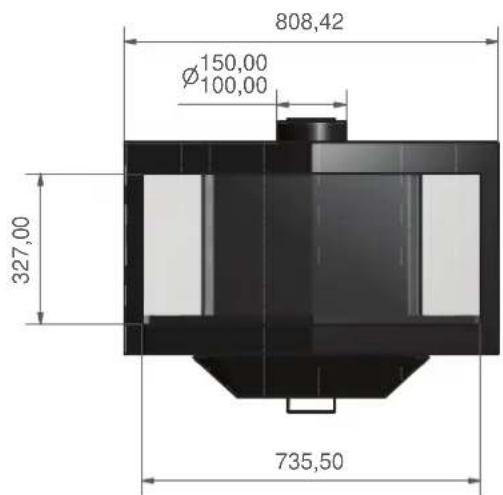
808,42 Ø150,00 Ø100,00 327,00 735,50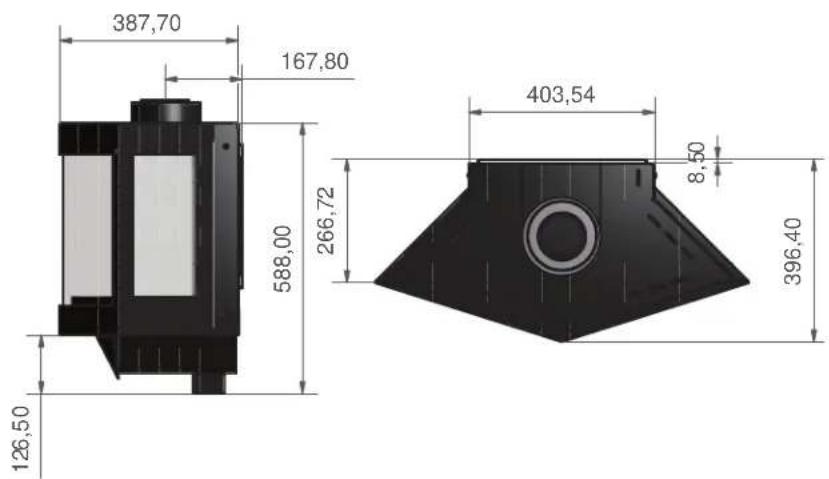
text_image
387,70 167,80 588,00 266,72 403,54 8,50 396,40 126,50Before installing the appliance, the installer must check whether the information on the type tag of the fireplace corresponds with the gas type and gas pressure to which the appliance is connected. If it does not match, it is not allowed to connect the gas unit.
/// please enclose copy of proof of purchase
The guarantee includes all defects which can be reduced to flaws in material and construction, in which case you will receive the new parts free of charge. Labour costs or other expenses are not covered by the guarantee. You can send defect parts (shipping paid) to WANDERS Metaalproducten B.V., Amtweg 4, 7077 AL in Netterden [The Netherlands].
Before installing your stove you must check if there is any visible damage to the unit. If there is, do not accept the unit and contact your supplier.
The guarantee does not include: the glass, failure due to improper use; non-compliance with the national regulations and enclosed installation and operating instructions; installation by an installer of dealer who is not acknowledged by WANDERS, negligence of the unit and change of owner. The guarantee is also disclaimed when a wrong fuel is used.
WANDERS disclaims responsibility for any cracks in stuccoed walls or discolouration of walls, ceilings and/or grates after burning the fireplace. Discolouration can be caused when dust particles burn in the convection cover. To minimize the chance of cracks in stucco and discolouration we refer to the advice given for decorative hearths. Your installer can give you more information.
Any complaints will be dealt with after the sales firm, the installer has filed a complaint and sent a copy of the purchase receipt with purchase date. Any repairs do not entitle you to extend the guarantee term.
All consequential damages or loss are excluded.