BR021000 - Inhaler Inqua - Free user manual and instructions
Find the device manual for free BR021000 Inqua in PDF.


Frequently Asked Questions - BR021000 Inqua
User questions about BR021000 Inqua
0 question about this device. Answer the ones you know or ask your own.
Ask a new question about this device
Download the instructions for your Inhaler in PDF format for free! Find your manual BR021000 - Inqua and take your electronic device back in hand. On this page are published all the documents necessary for the use of your device. BR021000 by Inqua.
USER MANUAL BR021000 Inqua
Manufacturer's data 29
Notes on the instructions for use 29
PRODUCT DESCRIPTION 30
Notes on the product 30
Technical data 33
Components 34
NOTES ON PRODUCT SAFETY 35
APPLICATION 36
Preparation 36
Installation location 37
Preparing for inhalation 40
Performing the inhalation 41
Completing the inhalation 42
CLEANING, MAINTENANCE, REPAIR 43
Cleaning operations 43
Maintenance 43
Repairs 44
Storage 45
TROUBLESHOOTING 45
MISCELLANEOUS 45
Transportation 45
Storage 46
Terms and conditions of warranty 46
Disposal 47
Information about RoHS 47
SPARE PARTS 48

Read these instructions for use carefully and completely before using for the first time. Do not use the INQUA® Inhalator unless you fully understand the contents of these instructions for use.
□ If symptoms persist or if your condition worsens, discontinue the application and contact your doctor immediately.
Manufacturer's data
See back of instructions for use.
Notes on the instructions for use
Purpose of the instructions for use
These instructions for use describe how the INQUA® Inhalator is assembled, how it works, and how it should be used. They are intended to ensure that the individual components can be used in complete safety.
These instructions for use do not include information on using the nebuliser that is to be attached to the compressor, nor for the masks. Please read the instructions for use of the nebuliser which accompany that item.
Forms of emphasis
The following forms of emphasis are used in these instructions for use to indicate important parts of the text:
The arrow indicates that a given action must be taken.
Representation of hazard warnings
In these instructions for use, hazard warnings are indicated by a warning triangle and a signal word. The following signal words are used depending on the nature and degree of danger being described.
NOTICE
Indicates general precautionary measures which are to be observed to avoid damaging the product during use.
CAUTION
Indicates a hazard that may cause mild to moderate injury or damage if it is not avoided.
WARNING
Indicates a hazard that may cause serious injury or death if it is not avoided.
Note on storing the instructions for use
These instructions for use must be stored so that anyone who is using the INQUA® Inhalator can access them whenever necessary.
They are an integral part of the product and must be included with the device if the INQUA® Inhalator changes hands (e.g. is sold).
The instructions for use are available in printed form on request from INQUA GmbH. Check whether a more recent version of the instructions for use is available at regular intervals.
PRODUCT DESCRIPTION
Notes on the product
Product components

Figure 1
1 INQUA ® compressor 3 Connection tubing
2 Nebuliser (applied part)
Control elements
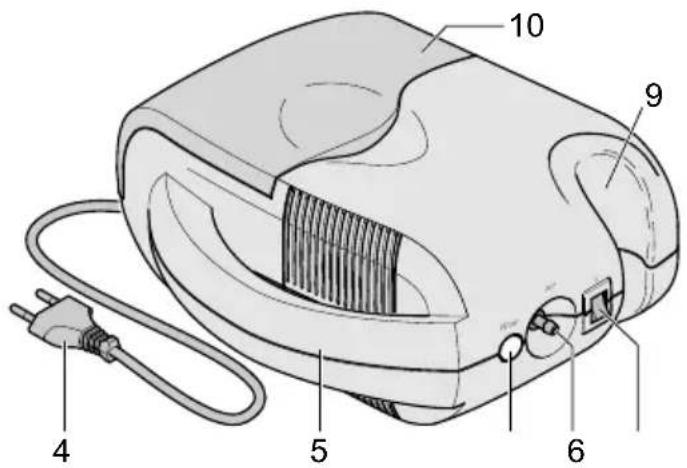
Figure 2
7
4 Power cord 8 On/off switch
5 Carrying handle 9 Holder for nebuliser
6 Air filter 10 Storage compartment
7 Air outlet ("Air")
Correct use
When used in conjunction with the accompanying nebuliser, the INQUA® Inhalator forms an inhalation device for treatment of the upper and lower respiratory tracts with nebulised medication. It is suitable for temporary1) oral or nasal inhalation. It may be used to inhale all liquid medications that have been authorised for use in inhalation therapy or prescribed or recommended by a doctor. Always read the notes (restrictions, frequency of application) in the accompanying information for the medication to be inhaled, and ask your doctor or pharmacist if you have any questions.
The INQUA® Inhalator must only be used for inhalation treatment. Any application other than the use described here is considered improper, and therefore dangerous.
The INQUA® Inhalator is intended exclusively for use in the home. In all cases the user is liable for the safe operation of the appliance if it is not used according to the instructions.
Conformity
The INQUA® Inhalator satisfies the requirements of Directive 93/42/EEC (EC Medical Device Directive).
Marking on the product
The following markings are on the compressor:

Please follow the instructions for use (background = blue, symbol = white)
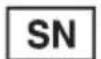
Serial number of the device
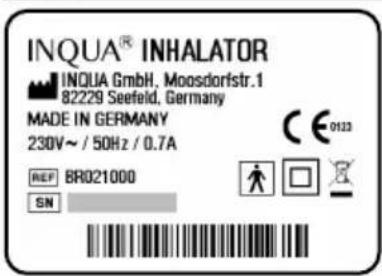
Type identification plate (example, bottom of compressor)

"Off" for a part of the device

"On"
Alternating current

Protection class of the part used: Type BF

Protect the device from moisture

Protection class II device

Minimum and maximum ambient temperature

Minimum and maximum humidity
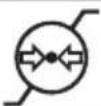
Minimum and maximum air pressure

Order number
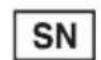
Serial number
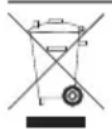
The medical device was distributed commercially after 13 August 2005. This product must not be disposed of with normal domestic waste. The symbol of the refuse bin with a cross through it indicates that it must be collected separately.

Manufacturer
C∈0123
This product satisfies the requirements of 93/42/EEC (Medical devices) and 2011/65/EU (RoHS).
Technical data General
Dimensions: L 28.5 cm, W 22.5 cm, H 13.0 cm
Weight: 2.10kg
Max. sound intensity: 59 dBA acc. to: DIN EN 13544-1
Section 26
Electrical data
Supply voltage: 230 V
Mains frequency: 50 Hz
Power consumption: 0.7 A
Device specifications
Jet flow: 4 l/min
Operating pressure: 1.1 bar
Electromagnetic compatibility
The INQUA® Inhalator satisfies the requirements of
DIN EN 60601-1-2 with regard to electromagnetic compatibility.
Safety mechanisms
The compressor is fitted with a fuse and also a temperature monitor to prevent the device from overheating.
Operating life
The compressor has an average expected operating life of:
approx. 1000 operating hours
max. 4 years
Classification of INQUA® Inhalator according to DIN EN 60601-1
| Type of electric shock protection: Protection class II | |
| Degree of protection from electric shock of the applied part: | Type BF |
| Degree of protection against water ingress in accordance with IEC 529 (IP rating): | No protection |
| Degree of protection when used in the presence of flammable mixtures of anaesthetics with air or with oxygen or nitrous oxide: | No protection |
| Operating mode: Continuous operation | |
We reserve the right to make technical changes.
Components The INQUA
Inhalator item no. BR021000 will be delivered with the
following parts:
Qty Description
1 INQUA ^密 compressor
1 Nebuliser kit (applied part), consisting of:
1 Nebuliser
1 Mouthpiece
1 Adult mask
1 Child mask
1 Connection tubing
1 Air filter for the compressor
1 Removal tool for changing the filter
Upon receipt
Check the components.
Inspect the individual parts: Has the compressor suffered visible damage during shipping? If the compressor is visibly damaged or if you suspect that there is a fault, do not operate the device under any circumstances. Notify the manufacturer (see back of instructions for use) or your sales partner.
Keep the delivery note and the original packaging in a safe place.
NOTES ON PRODUCT SAFETY
During the development of the INQUA® Inhalator, great importance was placed on compliance with recognised safety regulations and consideration of the latest technology. However, improper use of the product may endanger the user or the patient. In order to avoid this, follow the instructions in the following chapters.
The following general instructions apply:
People with mental, physical or sensory disabilities and children do not recognise the risks that may arise when using the inhalation device and its components. Never allow anyone from these groups access to the inhalation device without supervision. For example, there is a risk that individual parts may be swallowed, bitten or bitten off, or that the inhalation device may be pulled off the table by the connection tubing or power cord. There is also a danger of strangulation with the connection tubing or power cord.
Small components, such as the air filter or removal tool, can be swallowed or block the respiratory tract, and may thus represent a choking hazard. Therefore, keep and dispose of all small parts out of the reach of children!
- Only plug the compressor into mains sockets that are compliant with current safety regulations. If necessary, consult a qualified electrician. If the compressor is plugged into a non-compliant mains socket, there is a danger of electric shock.
The compressor is designed for use with the supply voltage printed on the type identification plate. If the compressor is plugged into a mains socket with a different supply voltage, the compressor may be damaged.
To avoid the hazard of an electric shock, unplug the mains plug from the socket immediately
- if a malfunction occurs during operation,
- before cleaning and maintaining the appliance,
- after each use.
Do not run the power cord over sharp edges, or allow it to be pinched or hang unsupported. There is a risk of electric shock if the compressor is operated with a damaged power cord.
- Do not attempt to make any conversions or unauthorised additions to the product, because this will impair the product's operating reliability.
Store and operate the inhalation device only in places where it is supported firmly and cannot fall. Because of the weight of the inhalation device, it represents a danger to anyone or anything below it if it falls.
Use only accessories recommended by INQUA to operate the INQUA® Inhalator. Operational reliability and the success of the treatment may be compromised if accessories from other manufacturers are used.
Never leave the compressor unsupervised while it is in operation.
The compressor is not protected against sprayed water. Protect the compressor, the power cord and the power plug from liquids and moisture.
Please follow the instructions for use of the accompanying nebuliser as well!
APPLICATION
Preparation
Check that the compressor housing, the power cord and the power plug are in perfect condition before each inhalation session.

WARNING: Danger of electric shock if compressor is damaged The INQUA® Inhalator is designed so that the user is protected from live parts. In a faulty device, this protection may be rendered ineffective.
If the compressor, the power cord or the power plug is visibly damaged, or if you suspect that there is a fault, do not operate the INQUA® Inhalator under any circumstances. Disconnect the power plug from the socket immediately and notify the manufacturer (see back of instructions for use) or your sales partner.
Check the connection tubing and the air filter for dirt, discolouration or dampness. Faulty, damaged or dirty parts must be replaced before the device is used.
Installation location
The INQUA® Inhalator is designed exclusively for indoor use, it is not intended to be used outdoors.
Follow these instructions regarding the installation location:

CAUTION: Risk of damage to the compressor due to overheating and dust
The compressor is fitted with a fan to ensure that the motor is cooled constantly. If the fan is not able to cool the motor sufficiently, the motor may overheat and be damaged.
Only operate the compressor in locations with low dust contamination and an adequate air supply. The ventilation slits of the compressor must never be obstructed.
Never cover the compressor while it is in use.
Do not run the compressor on carpets or in very dusty environments, e.g. under the bed, in workshops etc.
Observe the ambient conditions specified in section "Environmental conditions for operation", page 39.
Do not operate the compressor in explosion-prone areas or in the presence of oxidising gases (e.g. oxygen, nitrous oxide, flammable anaesthetics), or in damp locations.
Protect the power cord from excessive heat and oil.
Do not operate the compressor close to flammable objects such as curtains, tablecloths, or paper.
Keep the compressor and the power cord away from hot surfaces (e.g., cookers, radiators, open fires). These might damage the compressor housing or the power cord insulation.
Keep the power cord away from household pets (e.g. rodents). Animals may damage the insulation on the power cord.
Plug the compressor into an easily accessible mains socket so that it can be disconnected from the power source quickly.
Route the power cord in such a way that it does not present a tripping hazard and people cannot become entangled in it.
Make sure that children are not able to pull the compressor down by the power cord or connection tubing.
Summary of data in accordance with EMC standard DIN EN 60601-1-2:
Electrical medical equipment is subject to special precautionary measures with regard to electromagnetic compatibility (EMC). Such equipment must only be installed and operated in accordance with EMC instructions. Portable and mobile high-frequency (HF) communication devices can disrupt electrical medical equipment. Refrain from using such communication devices or move away from the compressor while it is in use.
Using accessories, converters and power cords other than those specified (with the exception of converters and power cords that the manufacturer of the medical electrical device sells as spare parts for internal components), can result in higher emission levels or lower the resistance to interference of the device.
The device must not be placed directly beside or on top of other devices for operation. If the medical electrical device must be placed beside or on top of other devices to operate it, it should be monitored constantly to ensure that it is operating properly in the arrangement used.
The compressor only uses HF energy for its internal function.
The HF emission from the compressor is very low. It is unlikely that it will interfere with other electronic equipment in the vicinity.
The electrical field generated during compressor operation can interfere with screens and monitors (flickering). For this reason, the INQUA® Inhalator must be placed far enough away from screens/ monitors so that image quality is not affected.
The INQUA® Inhalator is suitable for use in all buildings, including those used for accommodation and those that are connected directly to a public power supply which also supplies residential buildings.
Floors should be made from wood or concrete or covered with ceramic tiles. If the floor is covered with a synthetic material, the relative humidity must be at least 30% .
The quality of the supply voltage should be equal to that of a typical residential, business or hospital environment and must match the information on the type identification plate.
Magnetic fields for the mains frequency should correspond to the values typically recorded in a commercial or hospital environment. Detailed information in table form is available upon request from INQUA or can be downloaded from the "Service/Downloads" tab at www.inqua.de.
Recommended safety distances
Recommended safety distances between portable and mobile high frequency (HF) telecommunication devices and the INQUA® Inhalator:
The INQUA® Inhalator is intended for operation in an electromagnetic environment in which radiated HF interference is controlled. The customer or the user of the INQUA® Inhalator can help to prevent electromagnetic interference by observing minimum safety distances between portable and mobile HF communication devices (transmitters) and the INQUA® Inhalator, as recommended below according to the maximum output power of the device.
Table 6 DIN EN 60601-1-2:2007 (IEC 60601-1-2:2007)
| Rated power of the transmitter [W] | Safety distance depending on transmitting frequency [m] | ||
| 150 kHz to 80 MHz d = 3.5/3 * SQRT (P) | 80 MHz to 800 MHz d = 3.5/3 * SQRT (P) | 800 MHz to 2.5 GHz d =7/3 * SQRT (P) | |
| 0.01 0.1 0.1 0.2 | |||
| 0.1 0.4 0.4 0.7 | |||
| 1 1.2 1.2 2.3 | |||
| 10 3.7 3.7 7.4 | |||
| 100 11.7 11.7 23.3 | |||
For transmitters whose maximum rated power does not appear in the table above, the recommended safety distance "d" can be calculated in metres (m) using the equation associated with the respective column, where "P" is the maximum rated power of the transmitter in Watt (W) as indicated by the device manufacturer.
Note 1: The higher frequency range applies for 80 MHz and 800 MHz.
Note 2: These guidelines may not apply in all cases.
Electromagnetic propagation is affected by absorption and reflection factors of buildings, objects and people.
Environmental conditions for operation
| Ambient temperature: ++10 °C to +30 °C |
| Relative humidity: 30% to 75% (non-condensing) |
| Atmospheric pressure: 700 hPa to 1060 hPa |
Preparing for inhalation
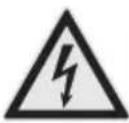
WARNING: Danger of electric shock
Never take hold of the power cord or the power plug for the compressor with wet or damp hands, and do not start the INQUA® Inhalator with wet or damp hands.
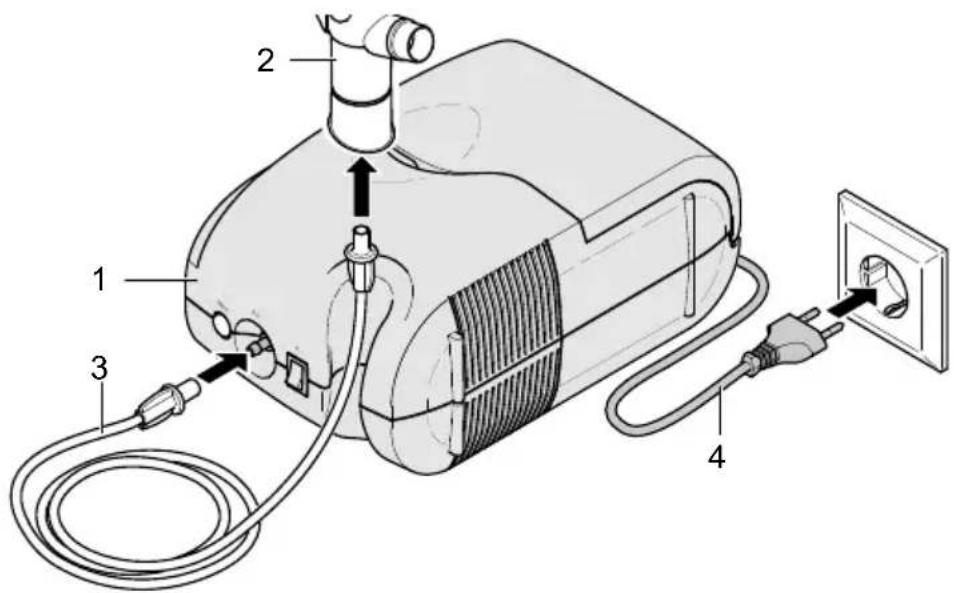
Figure 3
Unwind the power cord (4) on the bottom of the compressor.
Place the compressor (1) on a flat, stable surface.
Plug the power plug into the socket.

WARNING: Danger to health if connection tubings are mixed up
Check carefully to ensure that the other end of the connection tubing connected to the compressor is attached to the nebuliser.
If several tubing systems are used for different applications at the same time (e.g. infusion and inhalation), there is a danger that the tubing systems may be confused. In extreme cases, this can even result in death.
NOTICE:
The compressor can only be used in conjunction with the nebuliser recommended by INQUA.
Place one end of the connection tubing (3) firmly over the air outlet on the compressor.
Place the other end over the corresponding connector on the nebuliser (2, see instructions for use of the nebuliser).
Assemble the nebuliser as described in the instructions for use of the nebuliser.
Attach the mouthpiece or the mask.
Place the nebuliser in the nebuliser holder on the compressor to fill it.
The INQUA® Inhalator is ready for use.
Performing the inhalation

WARNING: Danger to health from inhaling unsuitable medications or incorrect dosages or incorrect use
Follow the instructions in the package insert for the medication.
Before inhalation, read and comply with the instructions for use of the nebuliser.
Children and anyone who requires assistance must be supervised constantly by an adult during inhalation therapy. Otherwise, safe and effective treatment cannot be guaranteed.

CAUTION: Danger of burning if the air outlet is touched directly during inhalation
The ambient air that passes from the compressor to the connection tubing heats up the air outlet. As a result, the air outlet can become very hot. Therefore, avoid direct contact with the air outlet during inhalation.
NOTICE:
To ensure perfect functioning of the compressor, the device must be at room temperature before it is put into operation.
Fill the nebuliser as described in the instructions for use of the nebuliser.
Pull the nebuliser up and out of its holder.
Switch the compressor on at the ON/OFF switch (8).
The nebuliser will now generate a clearly visible aerosol mist.
Perform the inhalation as described in the instructions for use of the accompanying nebuliser.
The inhalation session is complete when no more aerosol is produced by the nebuliser.
Completing the inhalation
NOTICE:
The power plug must be disconnected from the socket to ensure that power is completely cut off.
Place the nebuliser back in its holder.
Switch the compressor off.
Disconnect the power plug from the mains socket.
Clean the compressor (see Chapter "Cleaning, maintenance, repair", Section "Cleaning operations", page 43).
Prepare the nebuliser and the mask for hygienic re-use as described in the instructions for use of the nebuliser.
Wind up the power cord in a clockwise direction on the bottom of the compressor.
When they have dried, stow the parts in the storage compartment of the compressor.
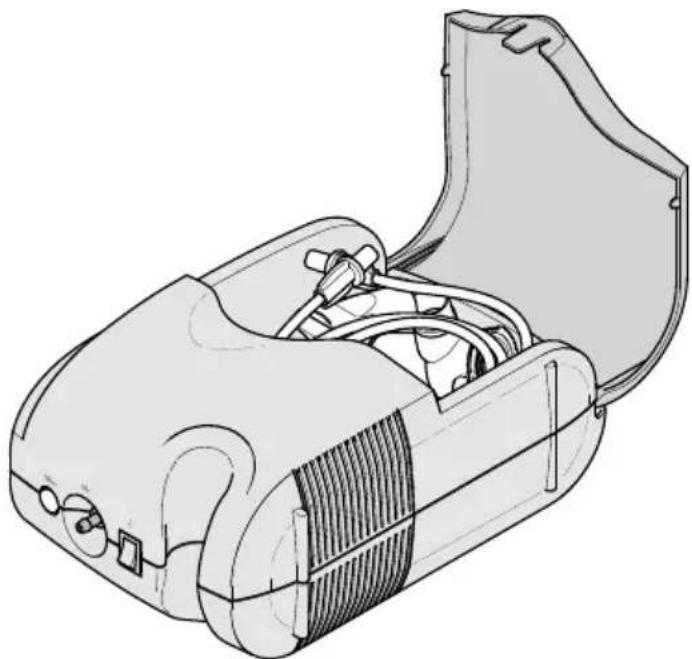
Figure 4
Keep the INQUAlInhalator in a dry, dust-free place out of the reach of children (see Chapter "Miscellaneous", Section "Storage", page 46).
Cleaning operations
Wipe the compressor housing and the storage compartment down with a dry or slightly damp cloth.
Prepare all other parts for hygienic re-use in accordance with the instructions for use of the nebuliser.

WARNING: Danger of electric shock or malfunction caused by liquids getting into the compressor
Liquids can conduct electric current. If liquid has got into the compressor, the housing may be live and a short circuit may occur in the device.
Never spray any liquids onto the compressor or into the compressor's ventilation slits.
Wipe the compressor down with a damp cloth, not a wet one.
Do not immerse the compressor in liquids such as water or disinfectant solution.
Always switch the compressor off and disconnect the power plug from the socket before working on the device. Always pull on the plug to disconnect it, not the cord.
If liquid does get into the compressor, contact the manufacturer (see back of instructions for use) or your sales partner before you use the INQUA® Inhalator again.

CAUTION: Danger of infection from contaminated nebuliser/mask
Read the chapter entitled "Hygienic re-use" in the instructions for use of the nebuliser you are using, and carry out the procedures for hygienic re-use described there.
Maintenance With the exception of the filter, the compressor contains no parts that are serviceable by the user.
If used twice daily for inhalation for a total of twice 20 minutes a day, the expected life cycle of the compressor is four years. If the compressor is still being used after four years, contact INQUA or a local sales partner to have the device tested.
Filter change
The air filter in the compressor must be replaced after every 200 operating hours, but at least once a year or if it becomes visibly dirty, discoloured or damp.
To do this, proceed as follows:
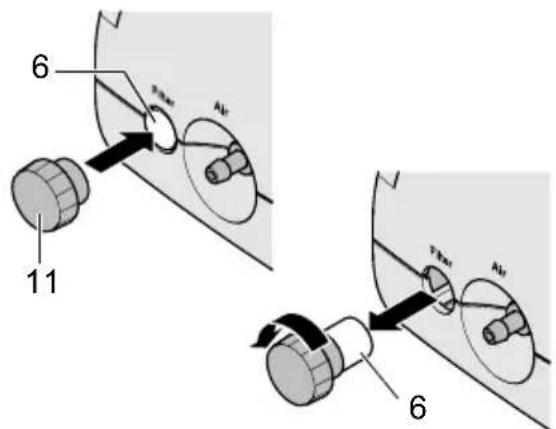
Figure 5
6 Air filter
11 Removal tool
Place the removal tool (11) supplied with the replacement filter firmly on the filter (6) in the compressor.
Turn the removal tool until you can pull the old filter out of the compressor.
Pull the old filter out of the removal tool and dispose of it.
Push the new filter as far as it will go into the compressor filter seating.

CAUTION: Damage to the compressor or impaired treatment caused by unsuitable air filter
Using an air filter made by a different manufacturer may damage the compressor or impair the effect of the inhalation treatment.
Use only air filters that are recommended by INQUA for use with the INQUA® Inhalator.
Replacing the nebuliser
Note the information regarding material resistance and replaceability in the instructions for use of the nebuliser.
Repairs
NOTICE:
If the compressor is opened without authorisation, all guarantees and claims under the warranty will be null and void.
Repairs must not be carried out on the INQUA® Inhalator except by the manufacturer. If the compressor needs to be repaired, contact the manufacturer or your sales partner (see back of instructions for use).
Storage Keep the compressor and all accessories out of continuous direct sunlight.
Do not leave the compressor connected to the mains when storing because all electrical devices that are connected to mains electricity represent a potential hazard.
TROUBLESHOOTING
| Fault Possible cause Procedure | ||
| The compressor does not start up. | The power plug is not plugged into the mains socket correctly. | Check that the power plug is plugged into the mains socket correctly. |
| No aerosol is coming out of the nebuliser. | The nebuliser nozzle is blocked. | Clean the nebuliser. |
| The connection tubing is not connected properly. | Check that both ends of the tubing are seated properly. | |
| The connection tubing is leaking. | Replace the connection tubing. | |
Contact your local sales partner or the manufacturer
if the motor is unusually loud,
if the device switches off automatically after a few seconds,
if no compressed air is generated,
if the recommended procedure is unsuccessful.
MISCELLANEOUS
Transportation For transporting inside a building, stow the parts of the
INQUA® Inhalator in the compressor's storage compartment and hold the INQUA® Inhalator by the carrying handle.
For transporting over longer distances, pack the INQUA® Inhalator in its original packaging. This is the best way to prevent it from being damaged.
Storage If the INQUA
Inhalator is to be stored for a prolonged break in trellowing environmental conditions must be observed:
| Minimum ambient temperature: | -25 °C (without monitoring of relative humidity) |
| Maximum ambient temperature: | +70 °C (with relative humidity of up to 93%, non-condensing) |
| Humidity: 0% – 93% | |
| Atmospheric pressure: 500 hPa to 1,060 hPa | |
Store the compressor and accessories safely out of continuous direct sunlight.
Additional instructions for storing the nebuliser are included in the instructions for use of the nebuliser.
Terms and conditions of warranty
We guarantee that if used correctly your device will be free from defects in material and workmanship caused during its manufacture for the indicated warranty period of 24 months from the initial purchase date. The warranty period will expire after 12 months. This warranty applies in addition to the warranty obligation of your vendor. Your statutory rights with respect to your dealer in the event of defects are not limited by the warranty or any claim under the warranty. Your receipt serves as your proof of warranty and ownership.
What does the warranty cover?
If, exceptionally, a fault should occur, we will at our discretion repair or replace the device, or refund the purchase price of the product. If it is replaced, the replacement device may either be the same model or a model that is at least comparably equipped. Replacement or repair of the device shall not serve as the basis for a new warranty. All used devices or parts that are replaced become our property. Further claims are excluded. This applies particularly for any claims for compensatory damages. This disclaimer of warranty shall be ineffective in the event of injury to life, limb or health, in cases of wilful malfeasance and gross negligence, product liability and if substantive obligations under the warranty agreement are violated.
The warranty shall be cancelled if
the device has been operated or used improperly with respect to the descriptions in the instructions for use
damage is present that is attributable to the effects of water, fire, lightning, etc.
the damage was caused by transporting the device incorrectly or a falling impact
the device has been misused or not cared for correctly
the serial number on the device has been changed, removed, or otherwise rendered illegible
□ repairs, adaptations or modifications have been made to the device by unauthorised persons
Moreover, the warranty does not cover wearing parts, that is to say device parts that are exposed to normal wear. If you wish to make a claim under the warranty, please contact your sales partner or the manufacturer directly (see back of instructions for use).
The "warranty period" begins on the date of purchase.
Disposal This product falls within the scope of the European Council Directive
on Waste Electrical and Electronic Equipment (WEEE ^1) ) and is included in Product Category 8: Medical Devices for the purposes thereof. Accordingly, this product must not be disposed of with domestic waste. The disposal regulations prevailing in the respective member countries must be observed (e.g., disposal by local authorities or dealers).
Materials recycling helps to reduce the consumption of raw materials and protect the environment.
Information about RoHS
This product satisfies the requirements of Directive 2011/65/EU on the restriction of the use of certain hazardous substances in electrical and electronic equipment (RoHS). The product is therefore marked with the characters "CE0123".
SPARE PARTS
For spare parts, contact a sales partner or the manufacturer (see back of instructions for use).
Information as of: August 2014
INDICATIONS SUR LA SECURITE DU PRODUIT 79
UTILISATION 80
Preparation 80
Lieud'implantation 81
Preparation de l'inhalation 84
Execution de l'inhalation 85
Dimensions:L28,5cm,I22,5cm,H13,0cm
Poids:2,10 kg
INDICATIONS SUR LA SÉCURITÉ DU PRODUIT
PRODUCTBESCHRIJVING 118
Elektrik Şebekesine®,®,®,®,®,®,®,®,®,®,®,®,®,®,®,®,®,®,®,®,®,®,®,®,®,®,®,®,®,®,®,®,®,®,®,®,®,®,®,®,®,®,®,®,®,®,®,®,®,®,®,®,®,®,®,®,®,®,®,®,®,®,®,®,®,®,®,®,®,®,®,®,®,®,®,®,®,®,®,®,®,®,®,®,®,®,®,®,®,®,®,®,®,®,®,®,®,®,®,®,®. Elektrik Şebekesine"—)—olan elektrikli cihazlarin potansiyel bir sehike kaynagi olusturmasindan dolayi kompresörü daima elektrik Şebekesinden ayrı bir yerde muhafaza edin.
HATA TESPITI
Electromagnetic compatibility - Guidance and manufacturer's declaration DIN EN 60601-1-2:2007 (IEC 60601-1-2:2007)
Equipment Under Test (EUT): INQUA® Inhalator
Medical electrical devices are subject to special precautionary measures in particular regarding the EMV with the installation and the operation.
Portable and mobile HF-communication devices e.g. mobile phone can affect medical electrical devices.
A use of other accessories and lines than the indicated, can lead to an increased sending or a reduced noise immunity of the equipment. The equipment has to be operated exclusively with original accessories.
The device should not be used adjacent to or stacked with other equipment. If adjacent or stacked use is necessary, the device should be observed to verify normal operation in the configuration in which it will be used.
The EUT is intended for use in the electromagnetic environment specified below. The customer or the user of the EUT should assure that it is used in such environment.
ELECTROMAGNETIC EMISSIONS
Table 1 of DIN EN 60601-1-2:2007 (IEC 60601-1-2:2007)
| Emission test Compliance Electromagnetic environment – Guidance | ||
| RF emissions | Group 1 EUT uses RF energy only for its internal func- tion. | |
| CISPR 11 | Therefore, RF-emission is very low and are not likely to cause any interference in nearby elec- tronic equipment. | |
| Class B The EUT is suitable for use in all establish- ments, including domestic establishments and those directly connected to the public low-volt- age power supply network that supplies build- ings used for domestic purposes. | ||
| Harmonic emissions | Class A | |
| IEC 61000-3-2 | ||
| Voltage fluctuations / flicker emissions | Passed | |
| IEC 61000-3-3 | ||
ELECTROMAGNETIC IMMUNITY
| Immunity test IEC 60601 test level | Compliance level | Electromagnetic environment – Guidance | |
| Electrostatic discharge (ESD)IEC 61000-4-2 | ±6 kV contact±8 kV air | ±6 kV contact±8 kV air | Floors should be wood, concrete or ceramic tile. If floors are covered with synthetic material, the relative humidity should be at least 30%. |
| Electrical fast transient /burstIEC 61000-4-4 | ±2 kV for power supply lines±1 kV for input / output lines | ±2 kV for power supply lines±1 kV for input / output lines | Mains power quality should be similar to that of a typical commercial or hospital environment. |
| SurgeIEC 61000-4-5 | ±1 kV common mode±2 kV differential mode | ±1 kV common mode±2 kV differential mode | Mains power quality should be similar to that of a typical commercial or hospital environment. |
| Voltage dips, short interruptions and voltage variations on power supply input linesIEC 61000-4-11 | <5% UT1)(>95% dip of UT)for 1/2 cycle40% UT(60% dip of UT)for 5 cycles70% UT(30% dip of UT)for 25 cycles<5% UT(>95% dip of UT)for 5 s | <5% UT(>95% dip of UT)for 1/2 cycle40% UT(60% dip of UT)for 5 cycles70% UT(30% dip of UT)for 25 cycles<5% UT(>95% dip of UT)for 5 s | Mains power quality should be similar to that of a typical commercial or hospital environment. When the user of the Medical Electrical Equipment continued function also calls in the event of disruption of supply, it is recommended the EUT from an uninterruptible power supply or a battery. |
| Power frequency (50 Hz/60 Hz)magnetic fieldIEC 61000-4-8 | 3 A/m 3 A/m Power frequency magnetic fields | should be at levels characteristic of a typical location in a typical commercial or hospital environment. | |
| Conducted RFIEC 61000-4-6 | 3 Veff150 kHz to80 MHz | 3 Veff150 kHz to80 MHz | Portable and mobile RF communication equipment should be used no closer to any part of the EUT, including cables, than the recommended separation distance calculated from the equation applicable to the frequency of the transmitter. |
Table 2 and 4 of DIN EN 60601-1-2:2007 (IEC 60601-1-2:2007)
| Immunity test IEC 60601 test level | Compliance level | Electromagnetic environment – Guidance | |
| Radiated RF | 3 V/m | 3 V/m Recommended separation distance: | |
| IEC 61000-4-3 | 80 MHz to 2,5 GHz | d = 3,5/3 * SQRT (P) d = 3,5/3 * SQRT (P) 80 MHz to 800 MHz d = 7/3 * SQRT (P) 800 MHz to 2,5 GHz where „P“ is the maximum output power rating of the transmitter in watts (W) according to the transmit-ter manufacturer and d is the recommended separation distance in metres (m). Field strengths from fixed RF trans- mitters, as determined by an elec- tromagnetic site survey2), should be less than the compliance level in each frequency range3). Interfer- ence may occur in the vicinity of equipment marked with the follow- ing symbol: | |
- U_T is the ac mains voltage prior to application of the test level.
- Field strengths from fixed transmitters, such as base stations for radio (cellular/cordless) telephones and land mobile radios, amateur radio, AM and FM radio broadcast and TV broadcast cannot be predicted theoretically with accuracy.
To assess the electromagnetic environment due to fixed RF transmitters, an electromagnetic site survey should be considered. If the measured field strength in the location in which the EUT is used exceeds the applicable RF compliance level above, the EUT should be observed to verify normal operation.
If abnormal performance is observed, additional measures may be necessary, such as reorienting or relocating the EUT.
- Over the frequency range 150kHz to 80MHz , field strengths should be less than 3V / m .
Note 1: At 80Hz and 800MHz, the higher frequency range applies.
Note 2: These guidances may not apply in all situations. Electromagnetic propagation is affected by absorption and reflection from structures, objects and people.
RECOMMENDED SEPARATION DISTANCES
for portable an mobile RF communication equipment and the EUT.
The EUT is intended for use in the electromagnetic environment in which radiated RF disturbances are controlled. The customer or user of the EUT can help prevent electromagnetic interference by maintaining a minimum distance between portable and mobile RF communication equipment (transmitters) and the EUT as recommended below, according to the maximum output power of the communications equipment.
Table 6 of DIN EN 60601-1-2:2007 (IEC 60601-1-2:2007)
| Rated maximum output power of transmitter [W] | Separation distance according to frequency of transmitter in [m] | ||
| 150 kHz to 80 MHz d = 3.5/3 * SQRT (P) | 80 MHz to 800 MHz d = 3.5/3 * SQRT (P) | 800 MHz to 2.5 GHz d = 7/3 * SQRT (P) | |
| 0.01 | 0.1 | 0.1 | 0.2 |
| 0.1 | 0.4 | 0.4 | 0.7 |
| 1 | 1.2 | 1.2 | 2.3 |
| 10 | 3.7 | 3.7 | 7.4 |
| 100 | 11.7 | 11.7 | 23.3 |
For transmitters rated at a maximum output power not listed above, the recommended separation distance d in metres [m] can be determined using the equation applicable to the frequency of the transmitter, where P is the maximum output power rating of the transmitter in watts [W] according to the transmitter manufacturer.
Note 1: At 80 MHz and 800 MHz, the higher frequency range applies.
Note 2: These guidances may not apply in all situations. Electromagnetic propagation is affected by absorption and reflection from structures, objects and people.
INQUA®

INQUA GmbH
Moosdorfr.1 · 82229 Seefeld · Germany
Tel.: +49 (0)8152 - 99 34 0
Fax: +49 (0)8152 - 99 34 20
E-Mail: info@inqua.de • www.inqua.de