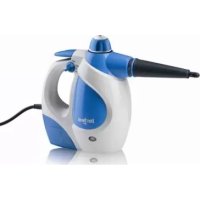
AquaClean M317 - Steam cleaner DIRT DEVIL - Free user manual and instructions
Find the device manual for free AquaClean M317 DIRT DEVIL in PDF.



| Product Type | Manual Steam Cleaner |
| Brand | Dirt Devil |
| Model | AquaClean M317 |
| Power Supply | 220-240 V ~, 50/60 Hz |
| Power | 1000-1200 W |
| Weight (without accessories, empty tanks) | Approx. 1.8 kg |
| Water Tank Capacity | Approx. 300 ml |
| Disinfectant Tank Capacity | Approx. 150 ml |
| Power Cord Length | Approx. 5.0 m |
| Heating Time | Approx. 3-4 minutes |
| Operating Time per Fill | Approx. 10 minutes (depending on steam flow) |
| Steam Temperature | Approx. 110 °C |
| Protection Class | I, IPX4 (protected against water splashes) |
| Use | Domestic only |
| Child Safety | Yes, sliding lock |
| Overheat Protection | Yes, automatic shut-off when tank empty |
| Included Accessories | Flexible hose, spot nozzle, 2-in-1 combined nozzle, cotton pouch, synthetic brush, metal brush, hard-to-reach brush, spatula nozzle, jet nozzle |
| Warranty | Legal warranty according to Directive 1999/44/EC |
Frequently Asked Questions - AquaClean M317 DIRT DEVIL
User questions about AquaClean M317 DIRT DEVIL
0 question about this device. Answer the ones you know or ask your own.
Ask a new question about this device
Download the instructions for your Steam cleaner in PDF format for free! Find your manual AquaClean M317 - DIRT DEVIL and take your electronic device back in hand. On this page are published all the documents necessary for the use of your device. AquaClean M317 by DIRT DEVIL.
USER MANUAL AquaClean M317 DIRT DEVIL
Operating Manual Hand-held steam cleaner

Your new 'Aquaclean' is a versatile hand-held steam cleaner that will help do a great many household jobs quickly and effectively.
You can also optionally add disinfectant to the hot steam if this is included in the scope of delivery or if you have acquired it separately.
Scope of delivery
1 Handle
2 Steam button
3 Child lock
4 Disinfectant regulator
5 Safety valve
6 Water tank cap
7 Connection piece
8 Water tank
9 Steam ready indicator
10 Release button of the disinfectant tank
11 Power cord with plug
12 Release catch of the steam hose adapter
13 Steam hose adapter
14 2-in-1 combi attachment
15 Cotton cloth for 2in1 combi attachment
16 Steam hose
17 Spatula attachment
18 Jet nozzle
19 Plastic brush
20 Wire brush
21 Crevice brush
22 Steam nozzle on steam hose
23 Pinpoint jet nozzle
24 Steam nozzle on the pinpoint jet nozzle
25Refilling container (optional)
26Disinfectant bottle (optional)
27 Disinfectant tank
28 Disinfectant tank cap
29Cleaning needle (optional)
30 Operating manual
- depending on model and scope of delivery
Technical data Designations
Type of appliance : Hand-held steam cleaner
Model name : AquaClean
Model M317
Voltage: 220 - 240V , 50/60 Hz
Power:1000-1200W
Max. operating : approx. 10 min (depend- time per tank filling ing on the steam ex- pelled)
Steam availability: after approx. 3-4 minutes
Water tank : approx. 300 ml
Disinfectant tank : approx. 150 ml
Power cord length : approx. 5.0 m
Weight (without : approx. 1.8kg accessories, with the tanks empty)

(-0 / - 1 / / - 8 / - 9)
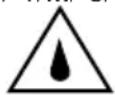
IPX4
: Satisfies the applicable European directives

: Protection class I, IPX4 (splash-proof)
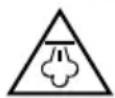
:Warning: Hot steam! Danger of scalding! Chapter 2.2
Technical and design specifications may be changed in the course of continuous product improvement. © Royal Appliance International GmbH
Table of Contents
Overview drawing. 3
1 Overview 28
Scope of delivery 28
Technical data 28
Designations 28
2 Safety instructions 30
2.1 Concerning the Operating Manual 30
2.2 About hot steam and hot parts of the appliance 30
2.3 Concerning certain groups of person 32
2.4 If you use a disinfectant 33
2.5 Concerning the power supply 35
2.6 Concerning appropriate use 36
3 Preparing the appliance 38
3.1 Unpacking 38
3.2 Attaching the steam hose 38
3.3 Attaching the pinpoint nozzle 39
3.4 Attaching the special nozzles 40
3.5 Filling the water tank 41
3.6 Filling the disinfectant tank 43
3.7 Before connecting the appliance 44
4 Use 45
4.1 Steam cleaning 45
4.2 Steam cleaning using disinfectant 46
4.3 Steam-cleaning glass surfaces 47
4.4 Refreshing upholstery and clothing 47
4.5 Immediately after steam cleaning 48
4.6 Storage 48
5 Troubleshooting 49
5.1 Before you send in the appliance 49
5.2 Accessories and spare parts 50
5.3 If the appliance is defective 51
5.4 Disposal 51
5.5 Warranty 51

2.1 Concerning the Operating Manual

Violation of these instructions may cause injury or damage the appliance. We take no responsibility for damage due to violation of this operating manual.
Read this operating manual completely before working with the appliance. Keep this operating manual in a safe place.
Include this operating manual if you pass the appliance on to someone else.
Important notes for your safety are specially marked. Always observe these notices to avoid accidents and damage to the appliance.

WARNING:
Warning concerning health hazards describing possible risks of injury.

ATTENTION:
Warning concerning possible dangers to the appliance or other objects.
NOTE:
Highlights tips and information for you.
2.2 About hot steam and hot parts of the appliance
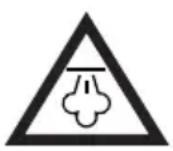
WARNING - Risk of scalding
The appliance produces hot steam for cleaning at a temperature of approx. 110^ . Various hazards are associated with hot steam:
■ Never direct the steam jet at people, animals or plants. Point the steam jet downwards towards the surface to be cleaned only. Even then, make sure that you keep parts of the body out of the steam jet at all times. There is a risk of scalding.
- Do not leave the appliance unsupervised whilst it is connected to a socket. Never lay the appliance on its side during operation. There is a risk of scalding
- Do not point the steam jet at electrical devices, sockets, cables, etc. or inside ovens. There is a risk of electric shock.
The appliance produces steam under pressure for cleaning purposes. Even after you have unplugged the appliance, hot steam will be available for approx. 30 more minutes. So purposely discharge the remaining steam from the appliance towards the end of the cleaning process by pressing the steam button immediately after pulling the plug from the socket.
Never use the device without the water tank cap screwed on correctly. The safety valve should prevent the water tank cap from being removed prematurely. So do not use force to open the water tank cap. - Do not use the appliance to clean pressure containers, containers which are filled with liquids, or containers if you do not know what they contain. There is a danger of them bursting or exploding!
Take care not to use the steam cleaner on one spot for too long. Otherwise, the surface might be damaged.
■ Provide adequate ventilation during and after your cleaning work. Otherwise, the increased humidity after cleaning could, in the worst case, cause the formation of mould.

CAUTION - hot surface
Let the hot appliance and its accessories cool off before touching them. Carry the appliance by its handle only. There is a danger of burning yourself!
2.3 Concerning certain groups of person
This appliance can be used by persons with impaired physical, sensory or mental abilities or insufficient experience or knowledge if suitable supervision or clear instruction for use of the appliance is assured, and they understand the associated dangers.
Children must not play with the appliance. Always lock the child lock after use.
Children must not perform cleaning or user maintenance tasks without supervision.
- Keep the appliance away from children when it is switched on or is cooling down.
Packing material must not be used to play with. There is danger of suffocation.
If, in addition to water vapour, you use disinfectant, keep it out of the reach of children. If swallowed there is a risk of poisoning!
People with sensory problems, especially with reduced sensitivity to temperature differences, must use great caution when working with this appliance.
2.4 If you use a disinfectant
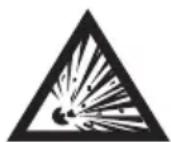
Only use the disinfectant supplied or ordered from us. Otherwise there is a risk of fire or explosion!
Never use cleaners which contain alcohol, solvents (thinners, benzene, acetone), strong acids or alkalis or any other aggressive cleaning agents including waxes, polishes or scouring agents.
- Do not add disinfectant or any other additives such as cleaning agents, alcohol, perfumes or chemicals into the water tank. These make the use of the appliance unsafe.

Keep the disinfectant out of the reach of children. If swallowed there is a risk of poisoning!
- Keep it away from the eyes and mucous membranes in particular.
-
Carefully pour it into the disinfectant tank. If supplied, use the refilling container provided to do so. If you have sensitive skin, wear gloves when filling.
-
Wash your hands after handling the disinfectant.
- Do not clean surfaces which come into contact with food with the appliance or the disinfectant.
Also observe the instructions on the disinfectant bottle.
2 Safety instructions
What to do in an emergency, i. e. after handling disinfectant negligently:
If the disinfectant has got into your eyes:
- If you are wearing contact lenses, remove them immediately.
- Rinse out your eyes immediately with copious amounts of clean water for at least 10 minutes.
- Consult a doctor if your eyes remain irritated.
If you have swallowed the disinfectant:
- First rinse out your mouth with copious amounts of water.
- Dilute the content of your stomach with copious amounts of water.
- Do not induce vomiting!
- Consult a doctor as a precaution.
If you have inhaled the vapours:
- Go into the open air. If you have trouble breathing, consult a doctor immediately!
If the disinfectant has come into contact with skin or clothes:
- Immediately wash the affected skin with water.
- Take off the relevant pieces of clothing and wash them before wearing them again.
2.5 Concerning the power supply
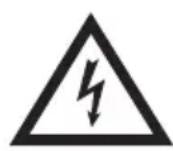
The appliance is charged and operated with electrical power which means there is always a risk of electric shock. So please observe the following:
- Keep the jet of steam away from the power cord of the appliance when in operation. Never touch the plug with wet hands. Power cords must not come into contact with any sources of heat or damp.
Only fill up the water tank after completing cleaning and when the mains plug is pulled out.
Never immerse the appliance in water or other liquids; keep it away from rain and moisture.
Always use a refilling container to fill the water tank. Keep the other parts of the appliance dry.
The appliance must not be used if it has fallen, if there is visible damage or if it is not leak tight.
Always check the power cord for possible damage before using the appliance.
Never carry the appliance by its power cord. Take care that the power cord is not bent, pinched, or rolled over and ensure it does not come into contact with heat sources. Also take care that it does not become a stumbling hazard.
Before connecting to the power supply, make sure that the voltage stated on the type plate matches the voltage of your plug socket. Only use sockets with a ground/safety contact.
If possible, do not use extension cords. If you must use an extension cord, use only safety-certified, water-protected single extension cords (no multi-socket distributors) designed for the power consumption of the appliance.
Before finishing work, pull the plug out of the socket.
Always pull directly on the plug if you want to disconnect the appliance from the mains. Never pull on the cable as this could damage it.
Before cleaning or performing maintenance on the appliance, ensure that the plug has been removed from the socket.
2.6 Concerning appropriate use

The appliance may only be operated in households. It is not suitable for industrial or commercial use. Only use the steam cleaner in the home to clean reg-
ular dirt from surfaces that can withstand the high temperature, pressure, and moisture of hot steam. And follow the cleaning instructions of the material manufacturers.
Used with care and skill, the steam cleaner can also be used to refresh upholstery, drapes, clothing, etc. But only if the materials and colours can withstand steam cleaning (approx. 110^ ). And also follow the cleaning recommendations of the material manufacturers.
Any other use is considered inappropriate and is prohibited. It is especially forbidden:
To use the appliance near explosive or easily flammable substances or on pressurized containers. There is a risk of fire or explosion or of the container bursting.
To fill the water tank with liquids other than cold water. Additives in the water tank, such as the disinfectant, make using the appliance unsafe.
Filling the disinfectant tank with liquids other than those supplied and disinfectant that has been ordered from us. Other products make using the appliance unsafe.
It is also forbidden:
To use the appliance as a humidifier or as a space-heating system.
To operate the appliance when the water tank is empty or without the tank lid.
To stick objects into the appliance's openings.
To modify or repair the appliance on your own.
To use accessories not supplied by the original manufacturer.
To clean:
- Persons, animals or plants, including clothing that is still being worn.
- Surfaces which contain materials that are hazardous to health. The hot steam might release these materials.
- Surfaces which come into contact with food.
- Leather, furniture, unsealed, lacquered, oiled or waxed wood or parquet flooring, or surfaces made of soft or shiny plastic material. These might be damaged.
- Textiles made from acrylic fibre, dralon, velvet or linen. These might be damaged.
3.1 Unpacking
- Unpack the appliance and all its accessories.
- Check the contents for completeness and possible damage (Fig. 1).
NOTE:
Immediately contact your dealer if you have found damage resulting from transport.
ATTENTION:
Always transport or ship the appliance in its original packaging to avoid damage. Keep the packaging for such an event. Dispose of no longer needed packaging material according to the laws of your country of residence.
3.2 Attaching the steam hose
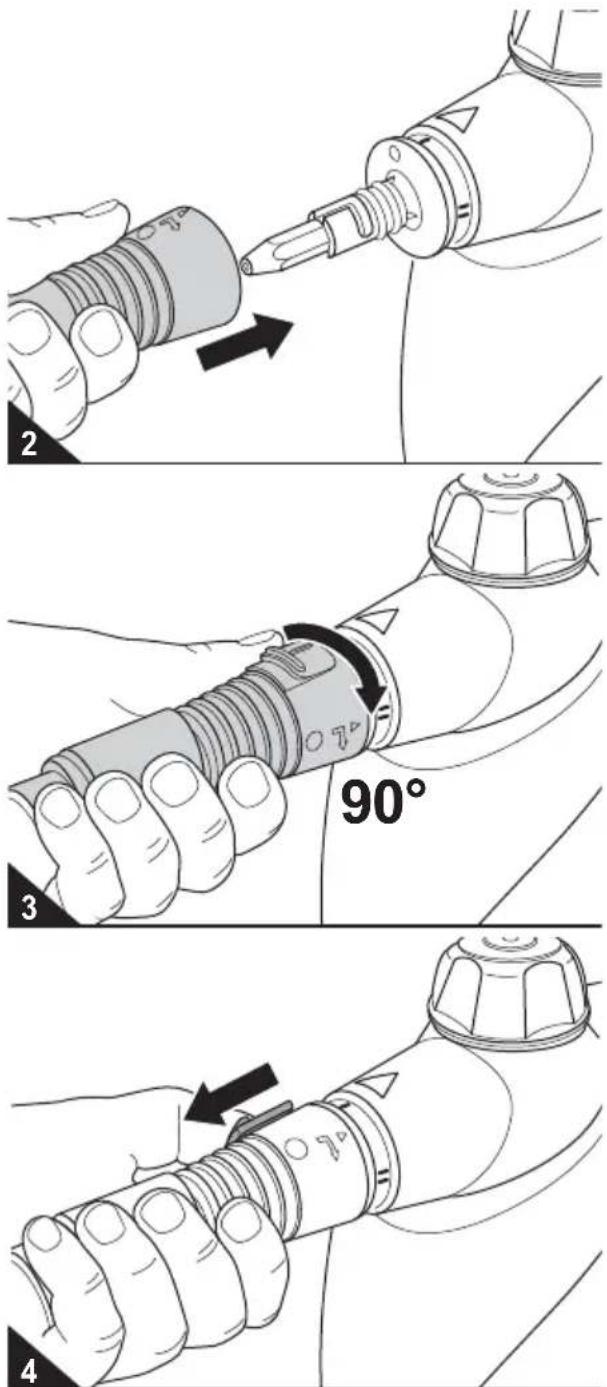
-
Slide the steam hose adapter onto the connection piece, so that the small arrow on the adapter is opposite the 'I' on the connection piece (Fig. 2).
-
Fasten the steam hose by pushing it and simultaneously turning it 90^ in the direction of the arrow (Fig. 3).
The small arrow on the adapter now has to be opposite the 'll' on the connection piece.
WARNING:
Danger of burns! The tip of the steam hose gets very hot during operation. Only run the appliance after further accessories have been fitted to the steam hose.
- Now mount the pinpoint nozzle on the steam hose (Chapter 3.3, "Attaching the pinpoint nozzle").
NOTE:
You can detach the steam hose by simultaneously pushing it in and turning it in the opposite direction.
3.3 Attaching the pinpoint nozzle
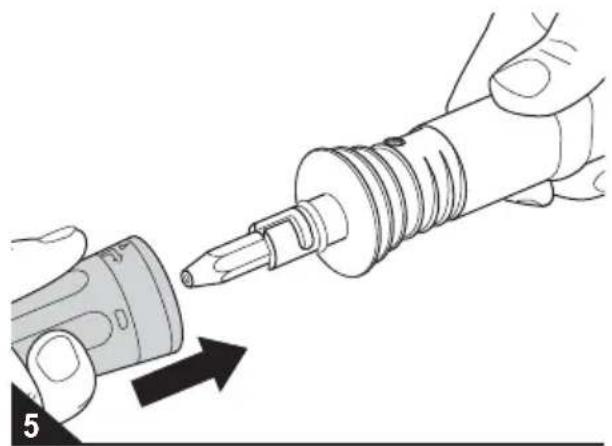
You can use the pinpoint nozzle to powerfully and accurately steam clean crevices, Venetian blinds, toilet bowls, bathroom fixtures, etc.
NOTE:
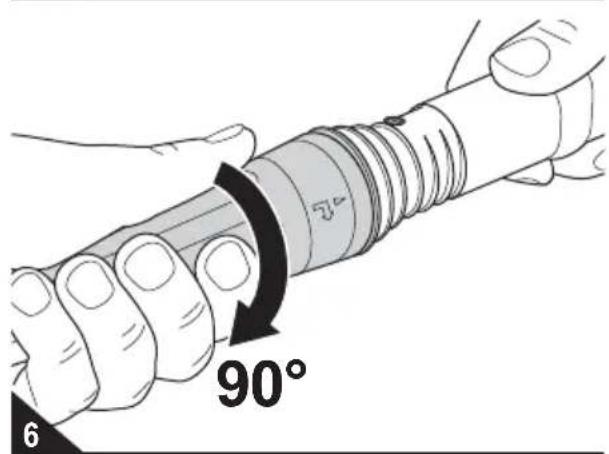
For greater range we recommend fitting the pinpoint nozzle on the connection piece of the steam hose (Fig. 5 and Fig. 6).
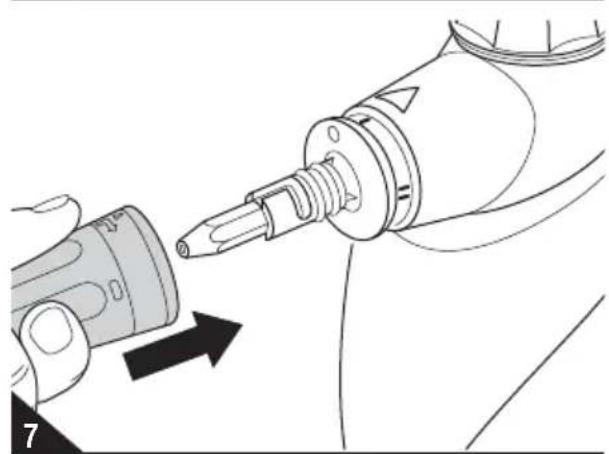
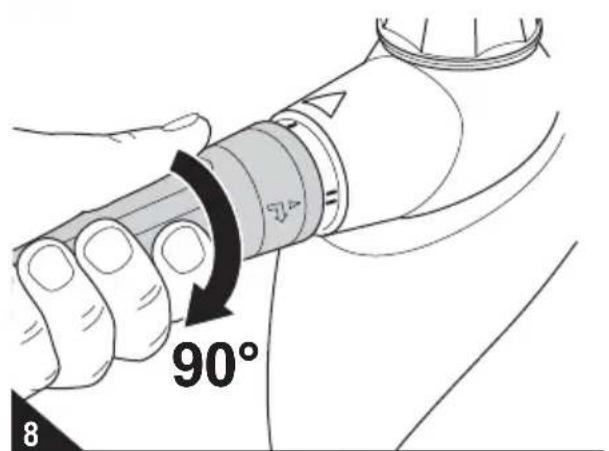
If you prefer to operate the hand-held steam cleaner with one hand, we recommend that you fit the pinpoint nozzle directly on the connection piece (Fig. 7 and Fig. 8).
- If desired fit on the steam hose as described, Chapter 3.2, "Attaching the steam hose".
- Now slide the pinpoint jet nozzle into the nozzle of the steam hose (Fig. 5) or the appliance (Fig. 7).
- Fasten the pinpoint nozzle by pushing it and simultaneously turning it 90^ in the direction of the arrow (Fig. 6, Fig. 8).
NOTE:
You can detach the pinpoint nozzle by simultaneously pushing it in and turning it in the opposite direction.
3.4 Attaching the special nozzles
NOTE:
All special nozzles can only be fitted onto the previously mounted pinpoint nozzle. All special nozzles are attached in the same way.
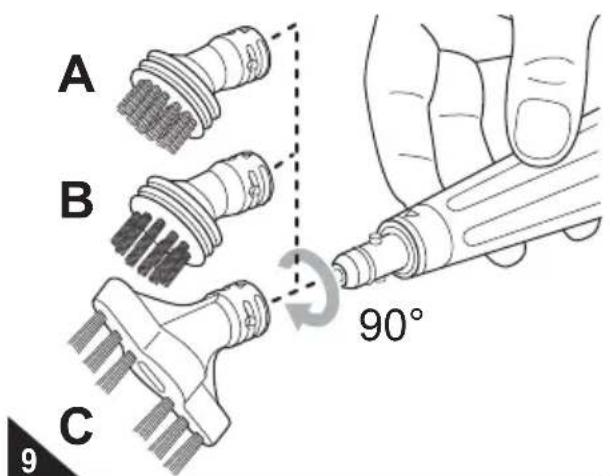
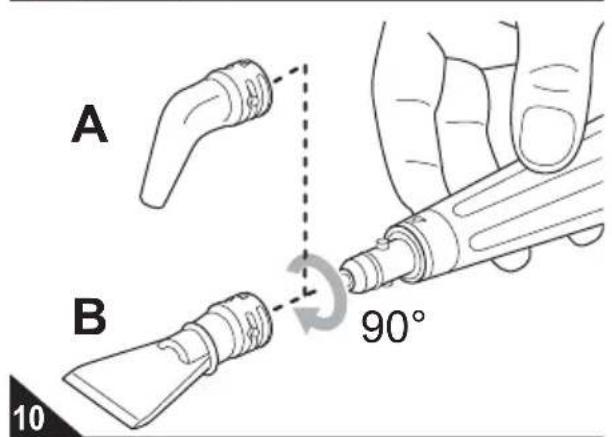
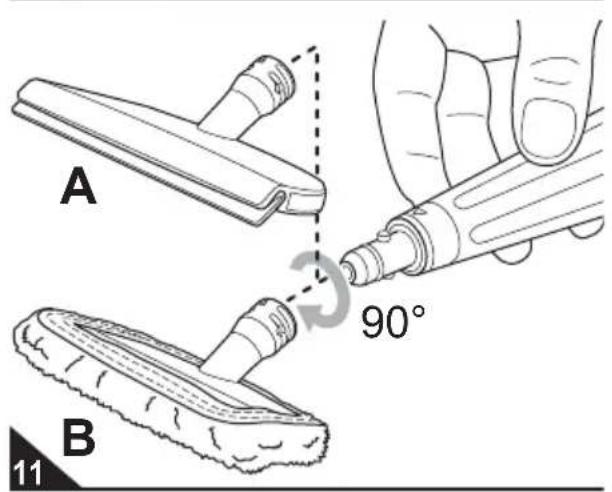
- Fit the pinpoint nozzle as described, Chapter 3.3, "Attaching the pinpoint nozzle".
- If the cleaning effect of the jet of steam alone is not sufficient for your cleaning task, select a special nozzle.
The wire brush (Fig. 9/A) serves to remove stubborn dirt from very hard-wearing surfaces.
The plastic brush (Fig. 9/B) serves to remove stubborn dirt from scratch-resistant surfaces.
The crevice brush (Fig. 9/C) works best for removing dirt from between tiles and grooves.
The jet nozzle (Fig. 10/A) is recommended if the jet of steam has to be very concentrated like for the pinpoint jet nozzle.
The spatula attachment (Fig. 10/B) serves to scrape off dirt from scratch-resistant, smooth surfaces.
The 2-in-1 combi attachment (Fig. 11/A) serves to scrape off glass surfaces to which steam had previously been applied. Observe the instructions under Chapter 4.3, "Steam-cleaning glass surfaces" for this.
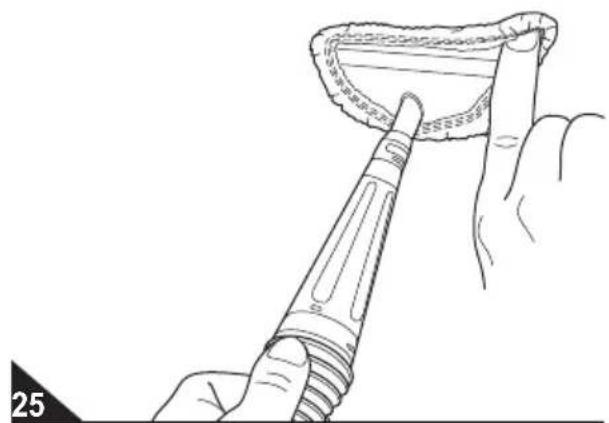
The 2-in-1 combi attachment (Fig. 11/B) with cotton cover serves to freshen up upholstery and clothes. Observe the instructions under Chapter 4.4, "Refreshing upholstery and clothing" for this.
3. Slide the respective special nozzle onto the pinpoint jet nozzle.
4. Fasten the respective special nozzle by turning it 90^ in the direction of the arrow.
NOTE:
By turning is in the opposite direction you can release the respective special nozzle again.
3.5 Filling the water tank

WARNING:
Danger of electric shock! Never fill an appliance with water when it is connected to the mains. Never submerge the appliance in water to fill it. Always fill the water tank carefully using a refilling container.

WARNING:
Danger of injury! Do not add disinfectant or any other additives such as cleaning agents, alcohol, perfumes or chemicals into the water tank. These make use of the appliance unsafe. If the refilling container, which you want to use to fill the water tank, was previously in contact with disinfectant, rinse the refilling container out before using it to fill the water tank.
- If the appliance was previously in operation:

WARNING:
Danger of scalding! The water tank is under pressure as soon as the appliance is switched on. Even after you have pulled the plug from the socket, compressed steam could still be present:
a Before finishing cleaning work, pull the plug out of the socket.
b Release the remaining steam reserves by holding down the steam button.
c Allow the appliance to cool off until the red pin in the water tank cap goes down. This can take up to thirty minutes. Only then can the water tank cap be opened.
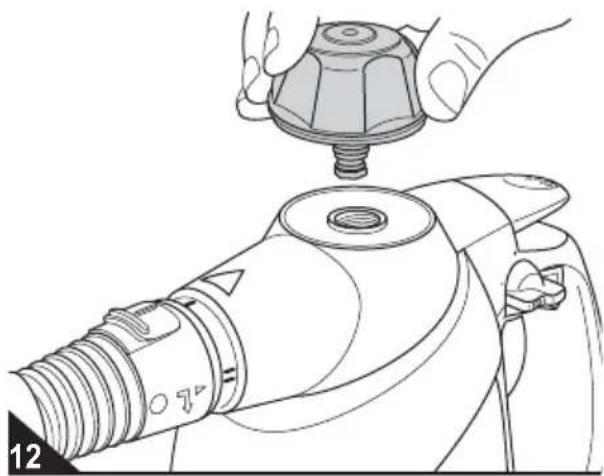
- Twist the water tank cap counter-clockwise and take it completely off the water tank (Fig. 12).
NOTE:
If the cap will not open after steps 1.a-1.c, push down the red pin in the water tank cap. Only after this has been done can you unscrew the water tank cap and fill the water tank as described below.

WARNING:
Danger of burns! If the appliance was in operation beforehand, the water tank cap and the appliance parts around it could still be hot. Always fill the water tank carefully using a refilling container.
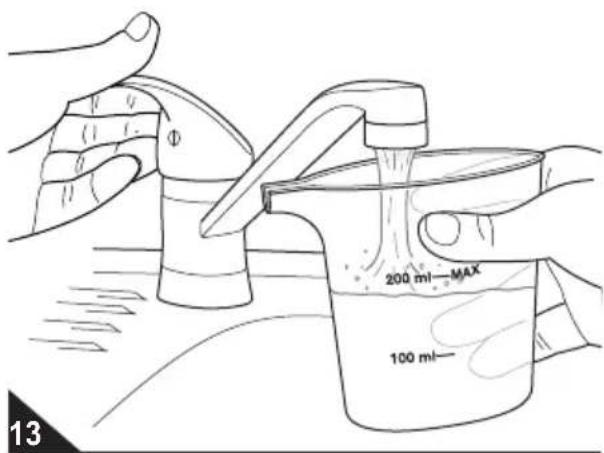
- Fill a refilling container with cold, clear tap water to the 'MAX" mark.
3 Preparing the appliance
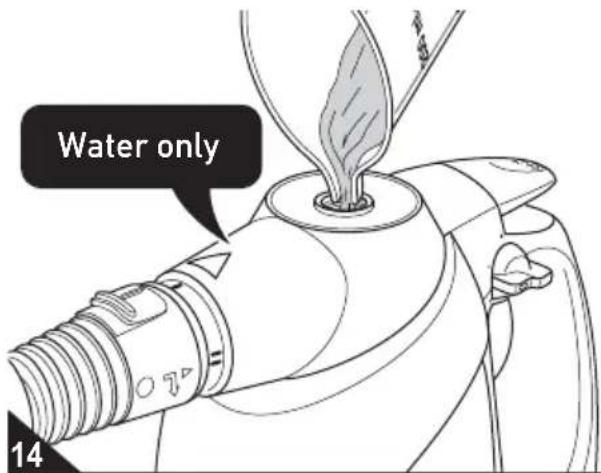
- Empty the refilling container into the water tank (Fig. 14).
NOTE:
The water tank holds about 300ml of water. Do not overfill the tank. Be aware of any residual water in the tank. If there was already water in the tank, the tank is certainly full enough now. Pour the water in slowly and carefully.
-
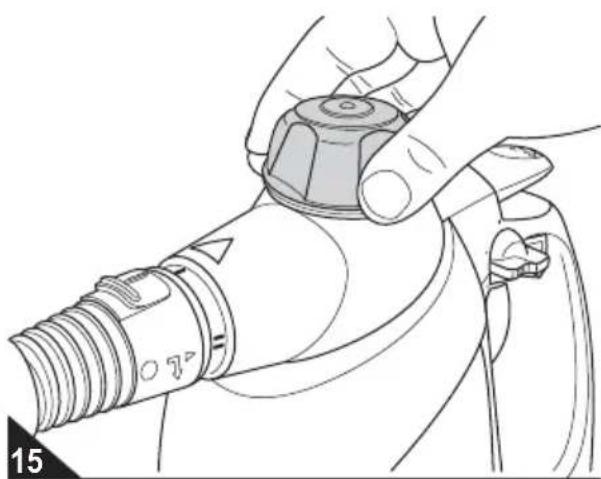
Refit the water tank filler cap and fasten it by firmly turning it clockwise (Fig. 15).
-
Check that it is securely fitted.
3.6 Filling the disinfectant tank

WARNING:
Health hazard! Always make sure that the disinfectant is inaccessible to children, particularly just after filling the disinfectant tank and before steam cleaning. Also observe the instructions on the disinfectant bottle.

WARNING:
Health hazard! Only use the disinfectant supplied or ordered from us. The device has been designed for and tested with this disinfectant. Do not mix this disinfectant. Other products may make using the appliance unsafe.
NOTE:
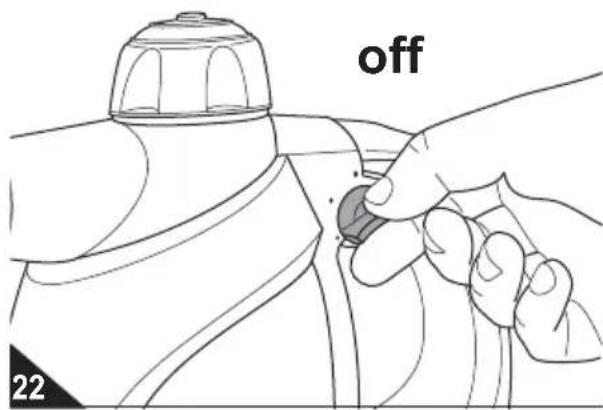
If you do not have any original disinfectant available, leave the disinfectant tank empty. You can steam clean with the appliance completely normally. In this case, simply set the disinfectant regulator to 'OFF' (Fig. 22).
- Make certain that the power cord has been disconnected from the socket.
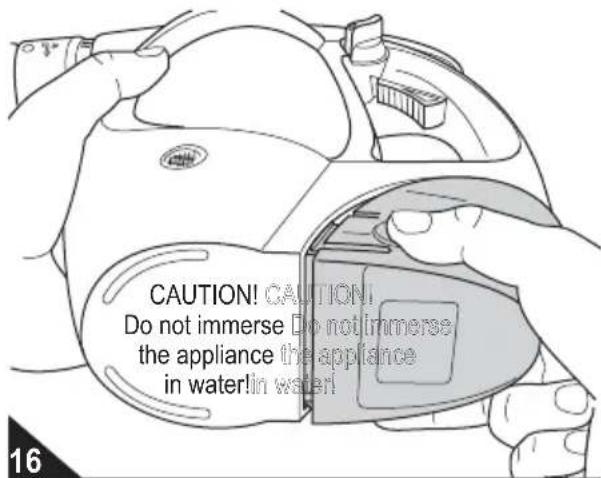
- Take hold of the appliance and disinfectant tank as shown (Fig. 16), push the release buttons in, and pull the tank out of the appliance vigorously.
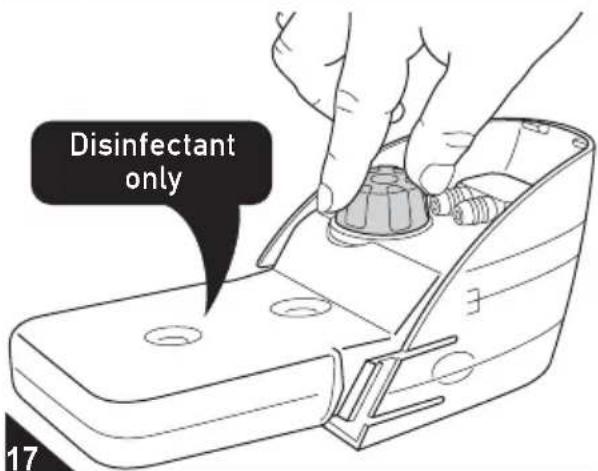
- Unscrew the tank cap from the disinfectant tank (Fig. 17).
- Add the disinfectant carefully and undiluted into a refilling container.
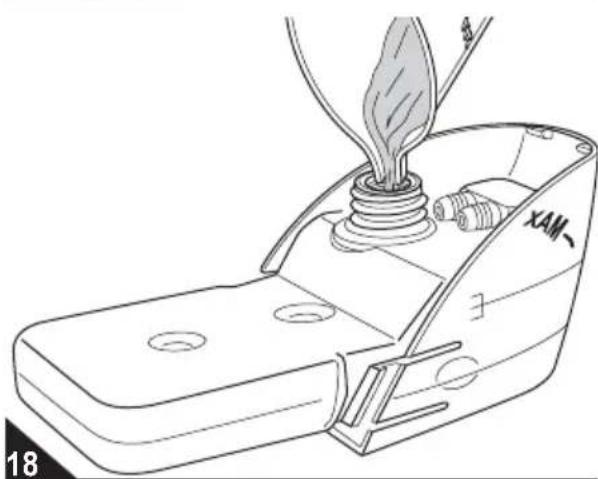
- Now carefully pour the disinfectant into the disinfectant tank using the refilling container (Fig. 18).
NOTE:
Do not overfill the tank. It will hold no more than 150ml . Check the level constantly by looking through the transparent outer wall and make sure that it does not exceed the 'MAX' mark (Fig. 18).
- Refit the tank cap and fasten it (Fig. 17).
- Check that it is securely fitted.
- Rinse out the refilling container with clear water.
3.7 Before connecting the appliance

WARNING:
Danger of injury! Check appliance and power cord before each use. A damaged appliance must never be used.

ATTENTION:
Before starting cleaning, check whether the surface to be cleaned is suitable for steam cleaning. Always follow the cleaning recommendations of the material manufacturers. The steam cleaner is definitely not suitable for use on uncoated wood, soft plastics and polished furniture. Cold glass surfaces can shatter as a result of heat shock. Do not work on window panes on cold days!

ATTENTION:
Before connecting the appliance to the power supply, make sure that the voltage stated on the type plate matches the voltage of your plug socket. Only use sockets with a ground/safety contact. If possible, do not use extension cords. If you must use an extension cord, use only safety-certified, water-protected single extension cords (no multi-socket distributors) designed for the power consumption of the appliance.

ATTENTION:
Operate the device only with the water tank filled. Although the appliance is fitted with overheating protection, running it without water would shorten the appliance's service life.
NOTE:
The steam cleaner has overheating protection. It will switch off automatically if overheated (e.g. due to an empty water tank). If this happens, pull the mains plug and refill the water tank Chapter 3.5, "Filling the water tank". Wait for about 45 minutes. Once the steam cleaner has cooled down you can switch it on again.
NOTE:
Have a microfibre cloth or a cotton cloth ready for follow-up wiping. This serves to absorb water and loosened dirt.
NOTE:
Provide adequate ventilation during steam cleaning. Otherwise, the increased humidity after cleaning could, in the worst case, cause the formation of mould. Preferably operate the steam cleaner on warm days when the air can absorb more moisture without condensation.
4.1 Steam cleaning

WARNING:
Danger of scalding when using the appliance!
Never direct the steam jet at persons, animals or plants.
Always point the steam jet downwards towards the surface to be cleaned. Even then, take care that parts of your body never get into the steam jet.
Never use your hand to test whether steam is coming out!
Never lay the appliance on its side during operation.
- Check that the water tank is full. If not, fill it (Chapter 3.5, "Filling the water tank").
-
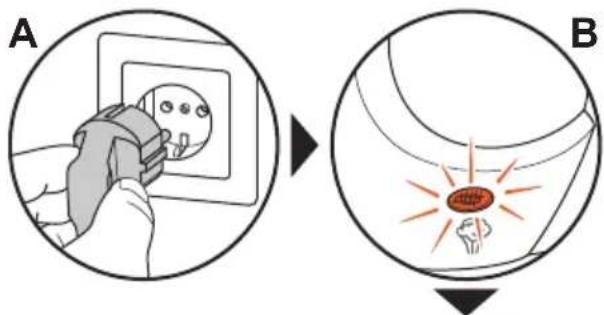
Insert the mains plug into a socket with ground/safety contact (Fig. 19/A).
-
The steam ready indicator is illuminated red (Fig. 19/B).
-
The appliance will now heat up.
-
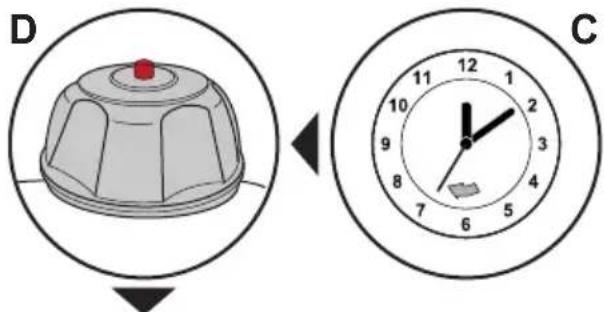
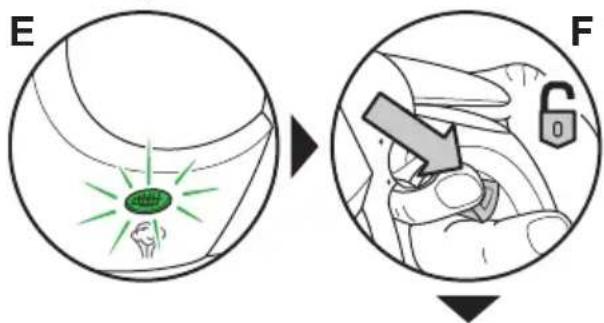
Wait about 3-4 minutes (Fig. 19/C) until the pin in the water tank cap goes up (Fig. 19/D) and the steam ready indicator changes from red to green (Fig. 19/E). Your appliance is now ready for steam cleaning.
NOTE:
The time until your appliance has built up steam can vary according to the water temperature and quantity in the water tank.
- Release the child lock (Fig. 19/F) by pushing it down.
-
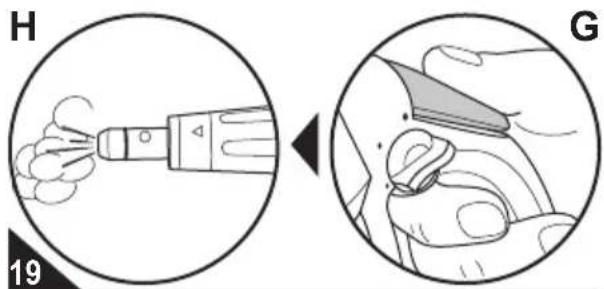
Now, you can push the steam button (Fig. 19/G).
-
A few drops of water will be ejected first. Collect these if you want to avoid puddles.
- After a short while, a steam jet will appear (Fig. 19/H).
- The steam flow will stop as soon as you release the steam button.
ATTENTION:
Do not operate the appliance on one spot for a prolonged time. Keep moving the appliance back and forth to loosen dirt on a larger area. Otherwise there is danger of damaging the surface to be cleaned.
NOTE:
If the steam ready indicator changes from green to red, you can continue to work. Only if the steam produced is no longer sufficient, should you release the steam button and wait so the device can reaccumulate pressure and produce steam again.

WARNING:
Danger of scalding when interrupting work!
Pull the plug from the socket if you interrupt work, e.g. to change attachments.
Wait at least ten minutes before removing the fitted attachments.
NOTE:
You can also regulate steam power and cleaning effect by adjusting the distance to the surface to be cleaned.
4.2 Steam cleaning using disinfectant
- Check that the disinfectant tank is full. If not, fill it (Chapter 3.6, "Filling the disinfectant tank").
-
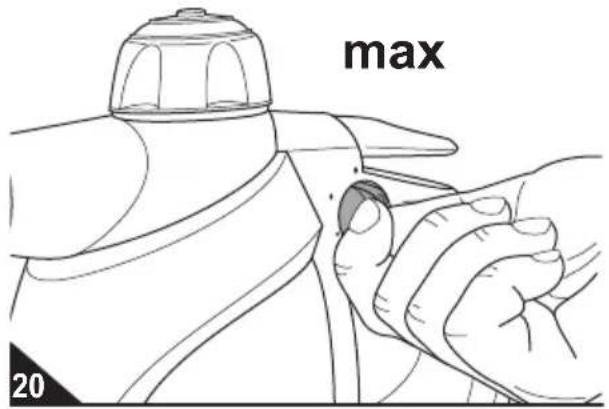
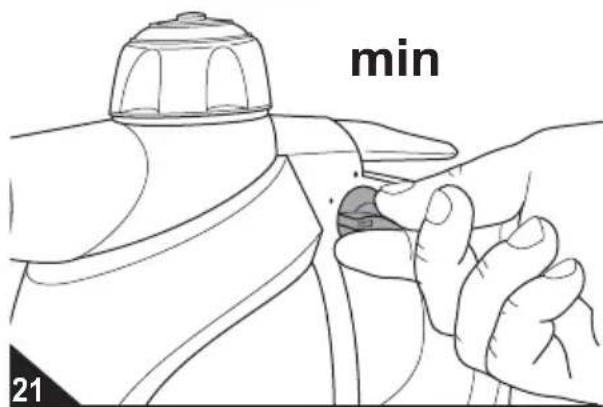
Turn the disinfectant regulator on the handle according to whether you want to add a lot of disinfectant to the jet of steam or just a little:
-
for a lot of disinfectant in the jet of steam: 'MAX' position (Fig. 20).
- for a small quantity of disinfectant in the jet of steam: MIN' position (Fig. 21).
NOTE:
Make sure that the controller clicks into the position chosen. Positions between the three marked positions are pointless and obstruct problem-free function.
- Insert the plug into a mains socket with a ground/safety contact and proceed as described in Chapter 4.1, "Steam cleaning".
NOTE:
Disinfectant will be added to the jet of steam until the disinfectant tank is empty or you turn the regulator for the addition of disinfectant back to the 'OFF' position (Fig. 22).
4.3 Steam-cleaning glass surfaces
ATTENTION:
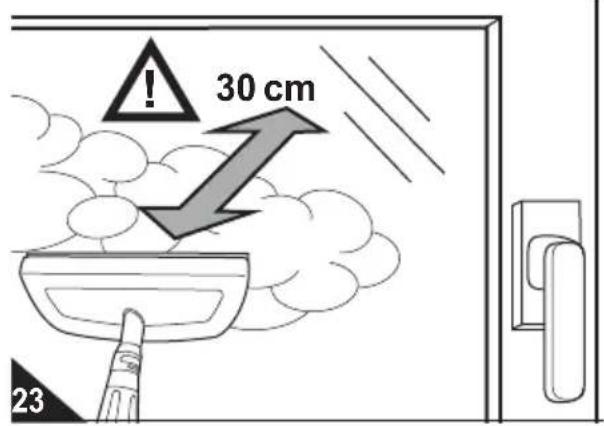
Cold glass surfaces can shatter as a result of heat shock. Always warm glass surfaces before using steam on them. Do not work on window panes on cold days!
- Warm the glass surface to be cleaned by applying steam from a distance of about 30~cm (Fig. 23).
- After a time reduce the distance to about 20 cm to cover the glass surface evenly with steam.
- Stop the supply of steam by releasing the steam button.
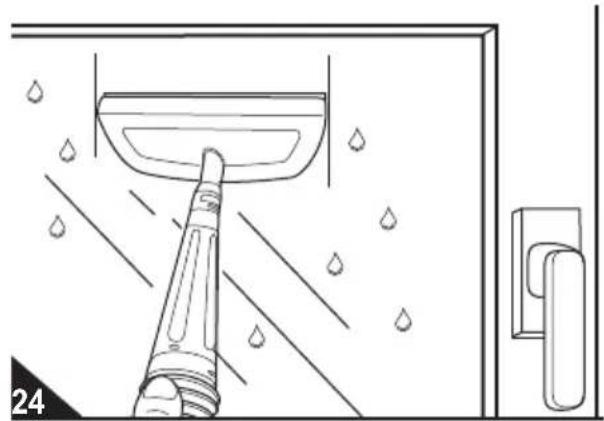
- Strip the water off of the glass surface with the scraper lip of the 2-in-1 combi attachment (Fig. 24).
- Wipe the scraper lip and the bottom edge of the glass surface dry after each pass of the squeezegee.
4.4 Refreshing upholstery and clothing
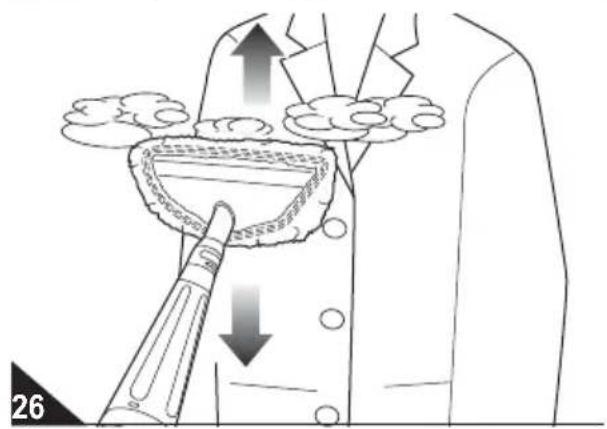
WARNING:
Danger of scalding! Never apply the steam jet directly to pieces of clothing while they are still being worn by persons or animals!
ATTENTION:
Before refreshing upholstery or clothes, make sure that their material and colour is suitable for steam cleaning. And follow the cleaning recommendations of the material manufacturers.
NOTE:
We recommend always using the cotton cover (Fig. 25) when refreshing upholstery or clothing as this reduces the formation of condensation drops that can adversely affect the cleaning result.
4.5 Immediately after steam cleaning
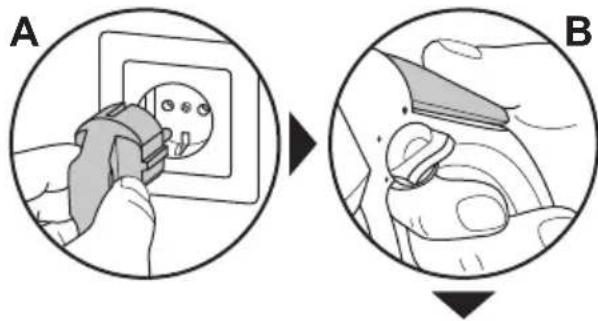
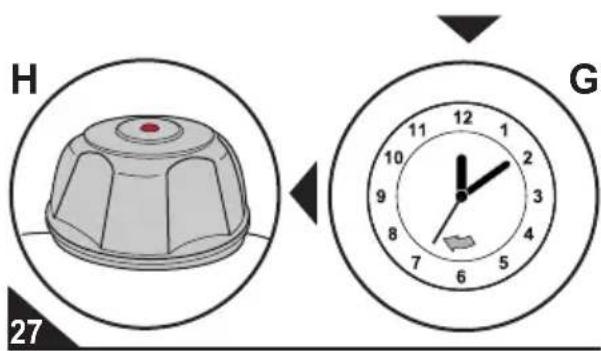
- Before finishing cleaning work, pull the plug out of the socket (Fig. 27/A).
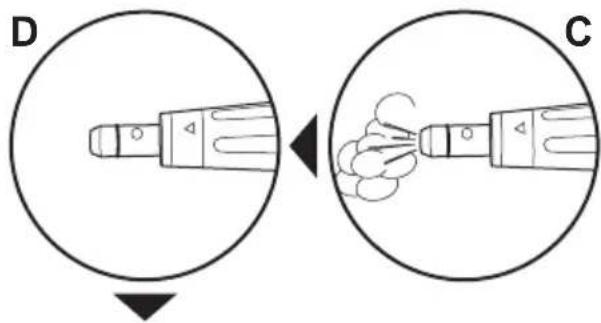
- Release the remaining steam reserves by holding down the steam button (Fig. 27/B) until steam stops coming out (Fig. 27/C,D).
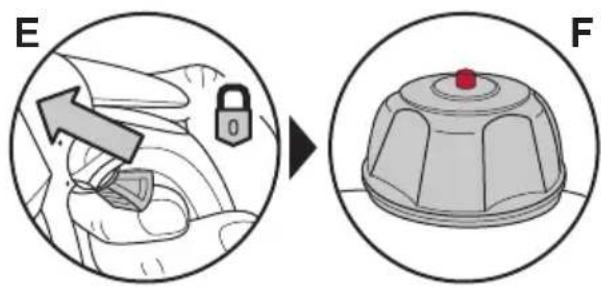
- Lock the child lock (Fig. 27/E).
- Allow the appliance to cool off (Fig. 27/G) until the red pin in the water tank cap goes down (Fig. 27/F,H). This can take up to thirty minutes.
NOTE:
If the red pin in the water tank cap does not drop as described, proceed as described in Chapter 5, "Troubleshooting", no. 2.
- Take the attached accessory from the appliance as soon as it has cooled off so that it can dry better.

ATTENTION:
Otherwise condensation might collect and leak out later.
- If you have used the cotton cover, take it off and let it dry or wash it straight away.

ATTENTION:
When doing so, observe the manufacturer's cleaning instructions on its label.
- Coil the power cord and lay it safely beside the appliance.
4.6 Storage

ATTENTION:
Only stow away the appliance and its accessories if completely dry.
NOTE:
If you have not used up all the disinfectant, the remaining disinfectant can be left in the tank.
If you want to store the appliance for a longer period of time, empty the water tank and let it dry completely.
Store the appliance in a cool, dry place, out of the reach of children.
5.1 Before you send in the appliance
See if you can solve the problem yourself by following the steps in the adjacent table.
Problem Possible cause / solution
| The steam button (Fig. 1/2) cannot be actuated | The child lock (Fig. 1/3) has not been released. Release the child lock by pushing it down. |
| The steam ready light (Fig. 1/8) is on, but even after >3 minutes no steam is produced when the steam button (Fig. 1/2) is pushed. | The overheating protection device has tripped due to an empty water tank. Fill the water tank (▷Chapter 3.5, "Filling the water tank"). |
| Water tank and/or heating elements are calcified. Decalcify the appliance as follows: 1. Fill the water tank with clear, cold water and add biological decalcifier (available commercially). Follow the decalcifier manufacturer's instruc-tions on use and dosage. 2. Direct the attached nozzle into a heat-resistant container which can col-lect the steam. 3. Connect the appliance to the mains. 4. Wait until the appliance is steam-ready and then let the decalcifying so-lution run through for about 5 minutes. 5. Then wait another 5 minutes with the appliance still plugged in. 6. Repeat this procedure three times and dispose of the remaining solu-tion. | |
| The water tank cap cannot be opened af-ter you have pulled the plug, dischar-ged the remaining steam, and have al-owed it to cool for at least 30 minutes. | The pressure in the water tank is still too high or the safety valve integrated into the water tank cap is stuck. 1. Press the steam button again to discharge any remaining steam. 2. If this is not enough, press the red pin in the water tank cap with a sharp object (e. g. a pen), thus releasing the water tank cap for opening. |
| Less steam escapes than was the case with earlier tasks. | The steam channels are calcified. Decalcify the appliance (see above). |
| The nozzles are clogged by limescale. Clean the nozzles, e.g. using the cleaning needle (Fig. 1/28, optional). |
NOTE:
If you cannot solve the problem following this table, please contact us, Page 174, "International Service".
5.2 Accessories and spare parts
| ATTENTION: Only use original spare parts from the scope of delivery or those that you have purchased by reordering. | ||
| You can order accessories and spare parts. | ||
| Item no. Description | ||
| 0317001 6-piece brush set consisting of: | 1 plastic brush, 1 wire brush, 1 crevice brush, 1 jet nozzle, 1 spatula attachment, 1 cleaning needle | |
| 0319002 Set of three bottles of disinfectant | ||
| 0317003 2-in-1 combi attachment plus cotton cover | ||
You can get these at www.dirtdevil.de or from the companies:
Page 174, "International Service"
5.3 If the appliance is defective

WARNING:
Danger of injury! Never use a defective appliance or operate an appliance with a defective power cord!
If the power cord of the appliance is damaged, it must be replaced by the manufacturer, their authorised service representative, or a similarly qualified person to avoid danger.
Bring or send defective appliances to a specialist dealer or to Dirt Devil Customer Services for repair (Page 174, "International Service").

5.4 Disposal
Electrical waste may not be disposed of together with domestic waste. Use local old-appliance collection points instead.
Dispose of the appliance in compliance with the environmental protection laws of your country.
5.5 Warranty
The statutory warranty regulations in accordance with the EU Directive 1999/44/EC apply.
In non-EU countries the minimum requirements of the warranty in the respective country apply.
Merci beaucoup!
Tension :220- 240 V~, 50/60 Hz
Puissance :1000- 1200 W
Lenge stroomkabel :ca. 5,0 m
WAARSCHUWING - verbrandingsgevaar
Paraacularly, the above mentioned methods are used to describe how to use the above mentioned methods. For example, the following are used:
Pagina 175, "International Service"
- € 0.14 per minute from German landlines, maximum German mobile phone tariff € 0.42 per minute.
The cost of calls from abroad—outside Germany—depend upon the current prices of the respective foreign telephone company.
FR

- Scope of delivery
- Technical data Designations
- Table of Contents
- Overview drawing. 3
- Overview 28
- Safety instructions 30
- Preparing the appliance 38
- Use 45
- Troubleshooting 49
- Concerning the Operating Manual
- WARNING:
- ATTENTION:
- About hot steam and hot parts of the appliance
- WARNING - Risk of scalding
- CAUTION - hot surface
- Concerning certain groups of person
- If you use a disinfectant
- Safety instructions
- Concerning the power supply
- Concerning appropriate use
- Any other use is considered inappropriate and is prohibited. It is especially forbidden:
- It is also forbidden:
- Unpacking
- NOTE:
- Attaching the steam hose
- Attaching the pinpoint nozzle
- Attaching the special nozzles
- Filling the water tank
- Preparing the appliance
- Filling the disinfectant tank
- Before connecting the appliance
- Steam cleaning
- Steam cleaning using disinfectant
- Steam-cleaning glass surfaces
- Refreshing upholstery and clothing
- Immediately after steam cleaning
- Storage
- Before you send in the appliance
- Accessories and spare parts
- If the appliance is defective
- Disposal
- Warranty
- Merci beaucoup!
- WAARSCHUWING - verbrandingsgevaar
- FR
Brand : DIRT DEVIL
Model : AquaClean M317
Category : Steam cleaner