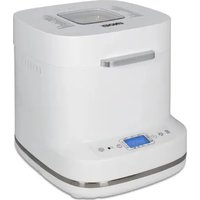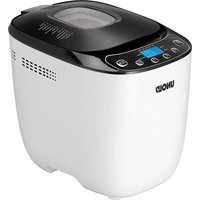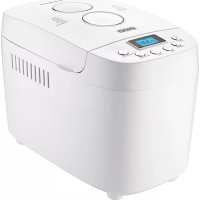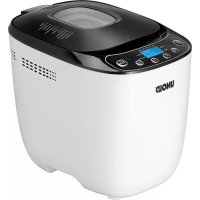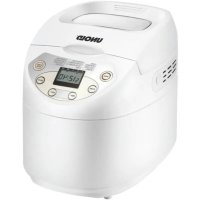
Backmeister 68110 - Bread maker UNOLD - Free user manual and instructions
Find the device manual for free Backmeister 68110 UNOLD in PDF.



| Product type | Bread machine |
| Brand | UNOLD |
| Model | Backmeister 68110 |
| Container dimensions | 16.8 x 12.8 x 14.3 cm |
| Bread capacity | 700 g to 1,000 g (depending on program) |
| Number of programs | 12 |
| Available programs | Basic, White bread, Whole wheat, Rapid, Yeast cake, Ultra-rapid, Jam, Dough, Gluten-free, Baking powder, Toast, Bake |
| Browning levels | 3 (light, medium, dark) |
| Delayed start timer | Up to 13 hours |
| Keep warm | 1 hour after baking |
| Housing material | Plastic (white/black) |
| Lid | Plastic with viewing window |
| Power cord length | 80 cm (fixed) |
| Included accessories | Removable non-stick baking pan, kneading paddle, measuring cup, measuring spoon, paddle hook, instruction manual with recipes |
| Care and cleaning | Clean the pan and paddle with soapy water; never immerse the appliance |
| Safety | Overheat protection (display H HH); automatic shutdown in case of prolonged power failure |
| Warranty | 24 months (domestic use) |
| Spare parts and repairability | Additional baking pan available (optional); UNOLD after-sales service |
Frequently Asked Questions - Backmeister 68110 UNOLD
User questions about Backmeister 68110 UNOLD
0 question about this device. Answer the ones you know or ask your own.
Ask a new question about this device
Download the instructions for your Bread maker in PDF format for free! Find your manual Backmeister 68110 - UNOLD and take your electronic device back in hand. On this page are published all the documents necessary for the use of your device. Backmeister 68110 by UNOLD.
USER MANUAL Backmeister 68110 UNOLD
Instructions for use model 68010
Technical specifications 34
Explanation of symbols 34
Safety information 34
Start-up 36
Quick guide - the first bread 37
Explanation of the symbols 38
Explanations of the control panel 38
The functions of the breadmaker 39
The program process of the breadmaker 40
Cleaning and care. 41
Timing process of the programs 42
Questions and answer concerning the use
of the breadmaker 44
Trouble shooting - appliance 46
Trouble shooting - recipes. 47
Comments on baking 48
Bread recipes 50
Breads for persons with allergies. 52
Bread mixtures 53
Cake recipe 53
Dough preparation 54
Preparation of jam and marmelade 55
Guarantee conditions 55
Waste disposal / environmental protection 55
Service 32
Specification technique 56
Preparation de pate 76
Preparation de confiture 77
Conditions de garantie 77
Cake - basisrecept 98
Deegbereiding 99
Confiturenbereiden 99
1 Kneader
2 Baking pan
3 lid with viewing window
4 Control panel with display
5 Look to remove the kneading blade
6 Measuring spoon
7 Measuring cup
FR Page 56
Dimensions: Approx. 24.7 × 36.2 × 29.1 cm (L/W/H)
Weight: Approx. 4.4 kg
Bread pan Inner dimensions approx. 16,8 × 12,8 × 14,3 cm (L/W/H)
Volume: 700-1.000 g bread weight
Power cord: Approx. 80 cm fitted
Housing: Plastic, white/black
Lid: Lid with large control window
Features: 12 memorized programs, select key for two weight levels, select key for three browning levels of the crust, timer for up to 13 hours presetting, automatic keep warm phase
Accessories: Removable bread pan with non-stick coating, 1 kneading blade, measuring jug, measuring spoon, hook to remove the kneder, instruction manual with extensive recipe section
Equipment features, technology, colours and design are subject to change without notice.
EXPLANATION OF SYMBOLS

This symbol denotes a possible hazard which could cause injury or damage to the appliance.
This symbol indicates a potential burning hazard. Please be especially careful at all times here.
SAFETY INFORMATION
Please read the following instructions and keep them on hand for later reference.
- This appliance can be used by children 8 years and older, as well as by persons with reduced physical, sensory or mental abilities or with lack of experience and/or knowledge, if they are supervised or if they have been instructed with regard to safe use of the appliance and have understood the dangers that can result from use of the appliance.
- Children must not play with the appliance.
-
Children are not allowed to perform cleaning and user maintenance, unless they are 8 years of age or older and are supervised.
-
Keep the appliance and the power cord out of the reach of children under 8 years of age.
- CAUTION - parts of this product can become very hot and cause burn injuries! Particular caution is required if children or persons at risk are present.
- Connect the appliance only to an AC power supply with the voltage indicated on the rating plate.
- Do not operate this appliance with an external timer or remote control system.
- Never immerse the appliance or the lead cable in water or other liquids.
- Always switch off and disconnect the power supply plug from the mains
when the appliance is not being used and before it is cleaned.
- Do not use the breadmaker if the power supply cable is damaged, in the event of faulty performance or if the breadmaker itself is damaged. The breadmaker must only be examined and repaired by an authorised repair workshop. Do not attempt to repair the breadmaker yourself as the guarantee will then become null and void.
- The use of alien accessories that have not been approved by the manufacturer can damage the breadmaker, and which must only be used for its intended purpose.
- This appliance is intended for domestic and similar use such as:
staff kitchen areas in shops, offices and other working environments;
agricultural enterprises;
by clients in hotels, motels and other accommodation facilities;
bed and breakfast accommodations and holiday homes.
- Place the breadmaker on a surface in such a manner that it cannot slip, as can happen when kneading a stiff dough. This must be taken into account with advance programming when the breadmaker operates unattended. Use a thin rubber mat on a slippery surface so that the danger of slipping is prevented.
- The Backmeister must be operated at least 10 cm from other objects. The breadmaker must not be used outdoors!
- Ensure that the power supply cable does not come into contact with hot surfaces, nor hang down from the
worktop so that children cannot pull the cable.
- Never place the breadmaker on a gas or electric hob or alongside a hot baking oven.
- Utmost care must be taken when moving the breadmaker when it contains hot ingredients.
- Never remove the baking tin during operation.
- Never fill the baking tin with more than the specified quantities, particularly with white bread. The bread will not be baked uniformly and the dough will overflow! Please refer to the instructions.
- Provide close supervision when testing new recipes. Before a certain type of bread is baked overnight, you should always try out the recipe first to confirm the correct mixing ratio of the individual ingredients, that the dough is not too stiff or thin, or that the quantity is not excessive and overflow.
- Never heart the appliance without properly placed bread pan filled with ingredients.
- Never beat the bread pan on a working top or edge to remove the pan. This may entail damages.
- Metal foils or other materials must not be inserted into the breadmaker as this can give rise to the risk of a fire or short circuit.
-
Never cover the breadmaker with a towel or any other material. Heat and steam must escape freely. A fire can be caused if the breadmaker is covered by, or comes into contact with, combustible material, e.g. curtains.
-
Before a certain type of bread is baked overnight, you should always try out the recipe first to confirm the correct mixing ratio of the individual ingredients, that the dough is not too stiff or thin, or that the quantity is not excessive and overflow.
-
Check the appliance, the wall socket and the lead cable regularly for wear
or damage. In case the lead cable or other parts appear damaged, please send the appliance or the base to our after sales service for inspection and repair. Unauthorised repairs can constitute serious risks for the user and void the warranty.
CAUTION:
The appliance becomes very hot during operation and maintains the heat during some time after disconnection!

Never open the housing of the appliance. This can result in electric shock.
The manufacturer will not be liable in the event of incorrect assembly, improper or incorrect use or if repairs are carried out by unauthorized third parties.
START-UP
- Remove all packaging materials and any transport safety devices. Keep packaging materials away from children - danger of suffocation!
- Please check, if all parts and accessories are complete and faultless.
- Before using the machine for the first time, remove all packing materials and loose parts from the inside. Keep packaging materials away from children - danger of suffocation!
- Wipe the bread pans of the Backmeister® with warm water and a mild detergent and clean the kneading blades.
-
Wipe the exterior of the appliance with a damp cloth. Do not immerse the appliance into water.
-
Dry all past thoroughly. Place the bread pan into the machine.
- Put the plug into a power socket. The breadmaker is now ready for operation and can be programmed.
- During the first operation cycle, steam may be produced. We recommend to use the appliance for the first time with only the bread pan inserted (no kneading blades, no ingredients) in the program BAKING POWDER. Afterwards let the appliance cool down.
- Now your breadmaker is ready for baking the first bread.
QUICK GUIDE - THE FIRST BREAD
- Prepare the appliance as described in the chapter "Start-up".
- Open the lid of the Backmeister® breadmaker and take out the bread pan.
- Fill the hole for the kneading blade with heat resistant margarine in order to prevent the dough from entering and adhering to it.
- Put the kneading blade on the drive shaft in the bread pan.
- Add the ingredients into the bread pan as described in the corresponding recipe. With thick dough you will achieve best results changing the order of the ingredients, i.e. adding first the dry ingredients and then the liquid. Nevertheless, mind that the yeast does not get in contact with the liquid when using the time presetting feature.
- Put the bread pan back into the appliance and turn clockwise until it latches into position.
- Close the lid of the Backmeister breadmaker.
- Connect the plug of the appliance to the wall socket.
- Select the desired programme. You may find the details for the different programmes from page 39 onwards. For a standard bread mix you will obtain good results using the programme „Basis" for example.
- Select the desired browning setting (Hell - Mittel - Dunkel) (Light - Medium - Dark). Please bear in mind that the browning setting cannot be selected in all baking programmes. You may find the corresponding details on page 39.
- Select the desired bread size. Please bear in mind that the bread size cannot be selected in all baking programmes. You may find the corresponding details on page 39.
- After having selected all desired adjustments, push the Start/Stop button.
-
According to the programme selected a repeated beep can be heard during the second kneading process. Now you may open the lid and add the desired ingredients like nuts to the dough. Close the lid afterwards.
-
The Backmeister® breadmaker emits a repeated beep when your bread is ready and can be taken out. If you want to take the bread out before the temperature maintenance time is over, push the Start/Stop button and keep it pressed shortly until the interruption of the programme is confirmed with a beep.
- Carefully take out the bread pan. In order to avoid burns, please use adequate pot holders. Turn the bread pan upside-down and let the bread slip onto a cake cooler to cool down. If the bread does not slip out immediately onto the cake cooler, move the kneading drive slightly from one side to another from the bottom until the bread comes out. Please remember that the kneading drive may still be hot and use adequate pot holders. Never knock the bread pan on an edge or the working plate, as this may deform the bread pan.
- If the kneader sticks to the bread, it may be loosened with the provided hook. Insert the hook on the bottom side of the warm bread in the opening of the kneader and twist it at the bottom rim of the kneader where the blade is. Then pull the kneader carefully upwards using the hook. This allows you to see where the blade of the kneader is inside the bread and pull it out.
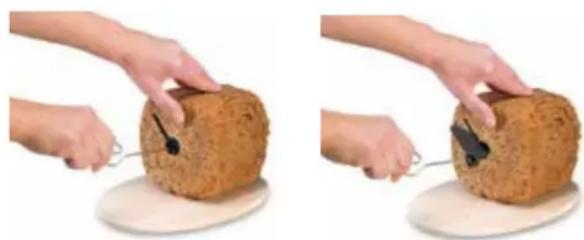
- Clean the bread pan afterwards as described on page 41.
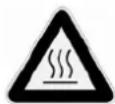
CAUTION: The appliance becomes very hot during operation
EXPLANATION OF THE SYMBOLS
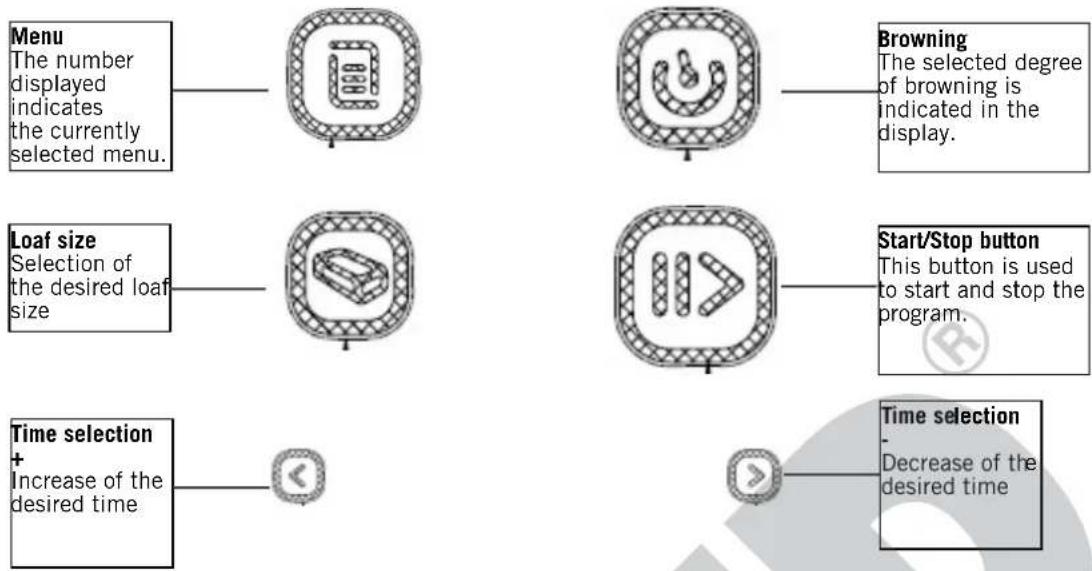
EXPLANATIONS OF THE CONTROL PANEL
BASIC SETTING
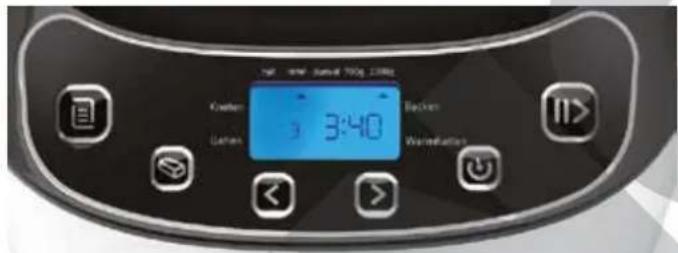
As soon as the plug is inserted in the socket, the display shows 3:00 - (the figures do not flash). During operation the programme stage can be read from the time-remaining clock as well as from the details on the display.
START/STOP
For starting and terminating the program. With the Start/ Stop-Button you can terminate the program in every stage. Keep the button pressed until a bleep can be heard. The starting position is shown in the display. Should you wish to choose an alternative program, this can be done with the menu button.
ZEIT + / - TIME PRESETTING
Only use the time presetting for recipes which you have already tested under close supervision and do not modify
these recipes to avoid overflowing of the dough with all it's risks.
CAUTION: In case of too much dough the dough may flow over and may burn on the heating.
Most of the programs, can be started with a timing delay. You must add the hours and minutes after which the preparation is to be started to the time that is automatically applicable for the respective program and, if appropriate, the 1 hour keep-warm time (following the baking process).
Example:
It is evening 8:00 p.m. and you wish to have freshly baked white bread at 7:00 in the morning. The ingredients in the prescribed order are put into the pan and set in the appliance. Care must be taken that the yeast does not come into contact with liquid. Choose the required program with the Menu button and enter the required browning with the BRAUNUNG button.
In this example we choose program 1 = BASIS/Basic. In order to get fresh warm bread at 7:00 in the morning, you must set the timing at 8:00 the previous evening to 11 hours with the ZEIT/Time button and start the program. The program is finished at 7:00 a.m., the keep-warm phase starts and ends exactly at 8:00 a.m. If you don't need the keep-warm-phase, you can push the Start/Stop-button
ATTENTION: For time delayed baking please do not use perishable ingredients such as milk, eggs, fruit, yoghurt or onions, etc. The beep alert to add ingredients and the beep alert at the end of the program can not be deactivated for night operation.
MENU
With the Menu button you can call up the individual programs that are described in detail in the table "Timing Process". The programs are used for the following preparations:
| 1 BASIS Basic | This is the most widely used program, for white and mixed bread. |
| 2 WEISSBROT White Bread | For more soft white bread with a longer rising phase |
| 3 VO LKORN Wholemeal | For wholemeal bread |
| 4 SCHNELL Fast | For fast preparation of white and mixed bread |
| 5 HEFEKUCHEN Sweet | For preparation of sweet yeast dough |
| 6 ULTRA For all recipes of size 1, which can be prepared in the programs BASIS, WEISSBROT, FAST, or TOAST. Please note, that the rising phase is short-ened in the Ultra-Fast program, therefore the bread will be less soft and more compact. Always use lukewarm liquids for preparations in this program. | |
| 7 KO NFITÜRE JAM | For cooking jams and jellies. For for making jam, you should purchase a second baking pan which is used only for this purpose. |
| 8 TE G Dough | For the preparation of yeast dough - e.g. dough for pizza, without baking function |
| 9 GL JTENFRE I gluten-free | The standard program for all gluten-free breads |
| 10 | BACKPULVER Baking powder | For cakes and biscuits baked with baking powder |
| 11 | TOASTBROT Toast | To prepare toast bread |
| 12 | ACKEN Bake | To bake separately prepared yeast or cake dough (by hand or in the program TEIG). This program is not fitted for special preparations such as choux pastry mixture or short-crust pastry). |
In some programs (BASIS, WEISSBROT, VOLLKORN, HEFE-KUCHEN, TOASTBROT and GLUTENFREI) several beeps during the second kneading phase remind you to add more ingredients such as nuts, seeds, dried fruit etc. Just open the lid, add the ingredients and close the lid again.
BRAUNUNG/CRUST
To select the browning degree of the crust: HELL/LIGHT, MITTEL/MEDIUM or DUNKEL/DARK, available in the programs 1-6, 9-12. The respective setting is indicated by an arrow in the LCD display.
BROTGRUSSE/SIZE
This enables the following setting in the various programs: ST. I / SIZE I = for a small bread weight, approx. 700 g ST II / SIZE II = for a larger bread weigh, approx. 1.000 g
Please note, that this option is only available in the programs 1, 2, 3, 5, 9, 11. Please note also our recommendations in the recipes.
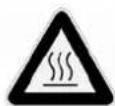
CAUTION: The appliance becomes very hot during operation
THE FUNCTIONS OF THE BREADMAKER
Alarm function
The alarm sounds:
whenever an active button is pressed,
- during the second kneading process, to remind you to add seeds, fruit, nuts or other ingredients. Please
note that this function cannot be deactivated, e.g. in the time preset function,
- at the end of the baking process, the appliance beeps 10 times during the keep-warm phase,
- at the end of the keep-warm phase 1 beep remind you that the appliance is now switched off and the bread
has to be taken out of the bread pan. Please note that this function cannot be deactivated, e.g. in the time preset function.
Repeat function after power outage
Should the electricity supply been cut off during the operation of the Breadmaker, the appliance will re-start, on reinstatement of the supply, automatically from the point arrived at when the cut-off occurred as long as the interruption is not longer than 10 minutes. If the interruption in the electricity supply lasts more than 20 minutes and the display shows the basic setting, the Breadmaker must be restarted. This is only practical if the dough was not further than the kneading phase when the break occurred. If the program was already in the last rising cycle when the power broke down and the interruption lasts over a longer time, the dough cannot be saved and the program has to be started again.
Safety functions
The lid should not be opened after the program has started, except during the second kneading phase for adding of ingredients. During the rising and baking phase the lid should never be opened, as the bread may sink down.
If the temperature in the appliance, due to previous use, is too high for a newly chosen program, when an attempt to restart is made, the display will show "HH" and an alarm sound will be heard. Should this occur, remove the pan and wait until the appliance has cooled off and is back to the beginning of the originally chosen program.
Please not that the breadmaker has no top heating for safety reasons, so the crust will be lighter on top and darker at the sides and bottom of the bread. For safety reasons an additional top heating is not allowed.
If after pressing START/STOP, "E rr" is shown in the display, the temperature control is defective. In this case please send the appliance to our technical service.
If the display shows" LL L" after pressing the Start/Stop button ( except the program BAKE and JAM), it means the temperature inside is too low accompanied by 5 beep sounds. Stop sound by pressing the Start/Stop button, open the lid and let the machine rest for 10 to 20 minutes to return to room temperature.
THE PROGRAM PROCESS OF THE BREADMAKER
1. Inserting the Bread pan
Hold the non-stick bread pan with both hands and slide it slightly inclined on the socle inside the baking chamber. Turn the bread pan clockwise, until it clicks into position. Fill the holes of the kneading blade with heat resisting margarine before fitting it into the bread pan. This avoids that dough penetrates and bakes into the kneading blade.
2. Pouring in the ingredients
The ingredients must be poured into the pan in the order prescribed in the recipe. In case of very heavy dough, e.g. with a high rye portion, we recommend to fill in first the liquid, then the flour and other ingredients and finally the yeast to ensure better kneading results. When using the time preset function, it must be ensured that no contact between the water and the yeast takes place before the program is started.
3. Selecting the program process
- Select the required program process with the menu button.
- Select the stage appropriate for the program. Select the required browning. You can set a delay with the timing button. Press the START button. After pressing START further corrections are no more possible.
4. Mixing and kneading dough
The Breadmaker mixes and kneads the dough automatically as long as necessary to reach the proper consistency.
5. Pause
After each kneading process there is a pause to allow the liquid to slowly penetrate the yeast and the flour.
6. Dough raising
After each kneading phase the Breadmaker produces the optimal temperature for the rising of the dough.
7. Baking
The bread baking automatic regulates the baking temperature and the timing automatically.
8. Keeping warm
When the baking is over, a 10 beeps sound indicates that the bread or food can be removed. At the same time a keep-warm time of 1 hour starts. If you want to remove the bread before the keep-warm phase has ended, just press the STOP button and take out the bread.
9. End of the program process
After the end of the program process, take out the pan with the help of handcloths by turning it counter-clockwise.
Stand it on end and, when the bread does not immediately fall onto the cooling wire, waggle the kneading drive from below until the bread falls out. Do not knock the bread pan on an edge or table, as the warm bread pan may be deformed. If the kneader sticks in the bread, use the hook to remove it. Push it on the underside of the still-warm bread in the (almost) round opening of the kneader and fold it on the bottom edge of the kneader, ideally at the point where the kneader blade is. Then pull the kneader up with the hooked skewer. You can then see where the blade is in the bread.
CLEANING AND CARE

Always allow the breadmaker to cool down before it is cleaned and stored. It takes approximately 30 minutes for the breadmaker to cool down before it can be used again for baking and dough preparation.
Always switch off the appliance, disconnect the power supply plug from the mains, and allow the breadmaker to cool down, before it is cleaned. Always use a mild washing-up liquid. Never use chemical cleaners, benzine, oven cleaners and scouring agents.
- Before the Backmeister® is used for the first time, wash the baking container and kneader with warm water and a mild washing-up liquid.
-
Remove all ingredients and crumbs from the lid, case and baking chamber with a moist cloth. Never immerse the breadmaker in water and never fill the baking chamber with water.
-
Wipe the baking tin with a moist cloth. The inside of the tin can be rinsed with warm water and a washing-up liquid. Do not soak the tin in water for prolonged periods.
- Both the kneader and driving shaft should be cleaned immediately after use. The kneader may be difficult to remove if it remains in the baking tin. In such an event fill the container with warm water and allow it to soak for approx. 30 minutes. The kneader can then be easily removed for cleaning.
- The bread pan is equipped with a high quality non-stick coating. Never use metal objects or scourers to clean the surface of the non-stick container. It is normal for the colour of the non-stick surface to change in the course of time. This does not influence the non-stick function.
- Condensation from the steam accumulates between the inside and outside lid during baking and flows off the lid when baking has been completed. This is normal. Any discolouration of the lid is of no consequence, but it can be removed with an appropriate cleaner.
- Before the breadmaker is packed away for storage ensure that it has completely cooled down, is clean and dry, and that the lid is closed.
TIMING PROCESS OF THE PROGRAMS
| 1 2 3 4 5 | ||||||||||
| BASIS Weissbrot Vollkorn Schnell HEFEKUCHEN | ||||||||||
| Basic White bread Wholemeal Fast Sweet | ||||||||||
| Select bread size ST. | ST. II ST. | I ST. II ST. | I ST. II ST. | I ST. II | ||||||
| Crust | ● | ● | ● | ● | ● | ● | ● | ● | ● | |
| Total time | 2:53 | 3:00 | 3:40 | 3:50 | 3:32 | 3:40 | 1:40 | 2:50 | 2:55 | |
| 1. Kreading (Heating OFF) | 9 | 10 | 16 | 18 | 9 | 10 | 7 | 10 | 10 | |
| 1. Rising | Heating ON/OFF no Kneading | 20 | 20 | 40 | 40 | 25 | 25 | 5 | 5 | 5 |
| 2. Kreading | 14 Add ingred. | 15 Add ingred. | 19 Add ingred. | 22 Add ingred. | 18 Add ingred. | 20 Add ingred. | 8 | 20 Add ingred. | 20 Add ingred. | |
| 2. Rising | Heating ON/OFF | 25 | 25 | 30 | 30 | 35 | 35 | 30 | 30 | |
| 3. Rising | Heating ON/OFF no Kneading | 40 | 40 | 45 | 45 | 60 | 60 | 15 | 40 | 40 |
| Bake | Heating ON/OFF | 65 | 70 | 70 | 75 | 65 | 70 | 65 | 65 | 70 |
| Keep warm | at 60 °C Heating ON/OFF | 60 | 60 | 60 | 60 | 60 | 60 | 60 | 60 | 60 |
TIMING PROCESS OF THE PROGRAMS
| 678910 | 1112 | ||||||||
| ULTRA KON | FITTURE TEIG | GLUTENF | REI BACKPULVER TOASTBROT BACKEN | ||||||
| Ultra Jam Dough Glutenfree | Baking | Powder | Toast Bake | ||||||
| Select bread size | ST.I | ST.I | ST.I | ST.I | ST.I | ||||
| Crust | ● | ● | ● | ● | ● | ● | ● | ||
| Total time | 0:58 | 1:20 | 1:30 | 3:15 | 3:20 | 2:50 | 2:55 | 3:00 | |
| 1. Kneading(Heating OFF) | 12 | 20 | 12 | 12 | 10 | 15 | 15 | ||
| 1. Rising | Heating ON/OFFno Kneading | 0 | 15 Heating ON/OFF | 20 | 20 | 5 | 40 | 40 | |
| 2. Kneading | 0 | 13 Add ingred. | 13 Add ingred. | 20 | 5 Add ingred. | 5 Add ingred. | |||
| 2. Rising | Heating ON/OFF | 0 | 30 | 45 | 45 | 30 | 25 | 25 | |
| 3. Rising | Heating ON/OFFno Kneading | 11 45 | Kneading ON/OFF Heating ON/OFF | 40 | 45 | 45 | 35 | 40 | 40 |
| Bake | Heating ON/OFF | 35 | Rest 20 | 60 | 65 | 70 | 50 | 55 | |
| Keep warm | at 60 °C Heating ON/OFF | 60 | 60 | 60 | 60 | 60 | 60 | 60 | |
QUESTIONS AND ANSWER CONCERNING THE USE OF THE BREADMAKER
The bread sticks in the pan after baking
Allow the bread to cool off for approx. 10 minutes. Stand the pan on its head - if appropriate, lightly waggle the blade (kneader connection) at the underside of the bread pan. Before placing the kneading blade, fill the hole in it with heat-resistant margarine (full-fat), this avoids, that dough may penetrate between kneading blade and shaft and may bake there. Before baking is commenced, rub a little oil on the kneaders.
If you intend to make jam in the breadmaker we recommend to buy a second bread pan exclusively for making jam, as bread may stick in the pan of jam has been prepared in the same one before. Before making bread: smash food or materials such as fruit, nuts etc... and put them into bread pan, then start the breadmaker
How can the holes in the bread from the kneader be avoided?
Before the last raising phase, you can remove the kneader with floured fingers (see the timing of the program process on the display.
Should you not wish to do that, after baking use the hooked skewer. If care is taken, larger holes are avoidable.
The dough flows over the bread pan
This may happen, when wheat flour is used, as wheat contains more gluten and thus rises more. In this case reduce the flour amount and adapt the other ingredients.
The bread will nevertheless have the desired volume.
add 1 tablespoon of liquid butter or margarine.
The bread rises, but sinks in the baking phase
If a "V"-formed channel appears in the bread flour gluten is missing, that means that the flour contains too little protein (occurs in rainy summers) or the flour is damp.
Help:
- Add to the flour 1 tablespoon of wheat gluten for every 500g of flour.
- Use a shorter programm, e.g. SCHNELL or ULTRASCHNELL.
If the bread sinks like a funnel in the middle then it could be that:
the water temperature was too high,
too much water was used.
flour gluten is missing.
When can the Breadmaker lid be opened during the baking process?
Basically it is always possible when the kneading is taking place. In this time, one can add small amounts of flour or liquid when applicable.
If the bread has to have a particular appearance after baking, take the following steps: before the last raising, carefully and shortly open the lid (see the program process table), make a cut in the crust with a sharp pre-warmed knife, strew corns on the surface or spread a potato-flour and water mixture on the crust so that it shines after baking. This is the last phase in which the BREADMAKER lid can be opened, otherwise the bread will sink.
What is wholemeal flour?
Wholemeal flour can be made from all sorts of grain, even wheat. The designation whole meal means that the flour is ground from the whole grain and thus has more roughage. Therefore wheat wholemeal flour is darker. Wholemeal bread is not necessarily darker as is often assumed.
What has to taken into account when using rye flour?
Rye flour does not contain any binding substances, thus bread made from it does not rise very much. To make it edible, a RYE WHOLEMEAL BREAD must be made with leaven dough.
The dough will only rise when using rye flour that contains no gluten, if at least 14 of the amount is replaced by wheat flour type 550.
What means binding substances in the flour?
The higher the type figure in the above schedule, the lower the contained binding substances. This means in general that flours with high type figures do not rise as much as flour with low type figures. The flour with the highest portion of binding substances is wheat flour of type 550.
Which are the different kind of flour and how are they used?
Corn, rice, potato flour
- is ideal for persons suffering from a gluten allergy or brown.
from sprue or coeliakia. In the following you will find recipes as well as contact addresses of manufacturers for special allergy products.
Spelt flour
the quantity set in relation to the amount of flour used, with both yeast and leaven dough. The rising capacity of yeast is depending on the freshness of the yeast as well as of the water quality. If the water is very soft, the yeast will rise much more, so it may become necessary to reduce the yeast by up to 25% if you live in regions with soft water.
The bread tastes of yeast
If sugar is used, leave it out, but the bread will not be so
Add to the water a quantity of spirits vinegar, for a small loaf = 1 tablespoon - for a large loaf 1.5 tablespoons.
Replace the water with buttermilk or kefir, which is possible with all recipes and is recommended due to the fresh
- is quite expensive, but completely free of chemicalness of the bread.
deposits, as spelt only grows on very poor ground and does not tolerate any fertilizers. Sprout flour is ideal for persons suffering from allergies. All recipies for flour types 405 – 550 – 1050 can also be prepared with spelt flour.
Hard wheat flour (durum/semolina)
■ is ideal for French baguette due to its consistency, but can be replaced by hard wheat semolina.
How can fresh bread be made more edible?
If a boiled mashed potato is added to the dough, the fresh bread is more edible.
In what proportion can one use rising substances?
It can be bought in various quantities, so the manufacturer's instructions on the packing have to be followed and
Why has bread from the breadmaker another taste than out of the oven?
This is due to the different humidity. In an oven, the bread becomes more dry because of the larger space, in the breadmaker, the bread remains more humid.
What do the type figures mean with flour?
The lower the figure the less roughage is contained in the flour and the lighter it is and the more it rises because it contains a higher proportion of gluten.
Please find on the next page a schedule with the different types for Germany, Austria, and Switzerland as well as some rough explanations
| Description German | Type No. | Austrian Type No. | Swiss Type No. | |
| Wheat flour | very fine, white, for cake 405 480 400 | |||
| white flour for bread 550 780 550 | ||||
| medium flour 1050 1600 1100 | ||||
| wholemeal flour, rough 1600 1700 1900 | ||||
| Rye flour | very fine 815 500 720 | |||
| fine 997 960 1100 | ||||
| medium 1150 960 1100 | ||||
| wholemeal, rough | 1740 2500 | 1900 |
TROUBLE SHOOTING - APPLIANCE
| Default Cause Remedy | ||
| Smoke coming out of the baking chamber or vents | Ingredients sticking to baking cham-ber or on the outside of the baking tin | Switch off the machine, disconnect the mains plug; wait until cooled down, then clean the baking chamber and tin. |
| Bread has partly collapsed and is moist at the bottom | Bread remained too long in tin after being kept warm | Remove bread at the latest after end of keep-warm function, to allow the steam to escape. |
| Bread cannot be easily removed from the tin. | The loaf is sticking to the kneading knife. | Before baking the next bread, clean kneading knife and shaft after If necessary fill the tin with warm water and soak for 30 minutes. The kneading knife can then be easily removed |
| Ingredients have not been properly mixed or the bread has not been properly baked. | Incorrect program Ch d menu;edet sahther program. | |
| START/STOP key was touched while breadmaker was operating | Discard ingredients and start anew | |
| The lid was opened several times during operation | The lid should only be opened when display reads more than 1:30. Ensure that the lid is properly closed after it has been opened. | |
| Prolonged power failure during operation | Discard ingredients and start anew. | |
| Kneader rotation is blocked. | Check whether kneader is blocked by grains Remove tin and check whether catch rotates. If not send breadmaker for repair. | |
TROUBLE SHOOTING - RECIPES
| Mistake Cause Remedy | ||
| Bread rises too much. Too much yeast, too much flour not enough salt, or a combination of these causes | a/b | |
| Bread does not rise or only insufficiently | No or insufficient yeast Old yeast. Liquid too hot Yeast came into contact with liquid Wrong or old flour. Too much or insufficient liquid. Not enough sugar | a/b e c d e a/b/g a/b |
| Dough rises and flows over the baking tin. | Very soft water so that yeast fermentation is stronger. Too much milk has influenced yeast fermentation | f/k c |
| Bread has collapsed. Bread volume larger than the bread pan causing it to collapse Too early or too fast yeast fermentation due to warm water, warm baking chamber or high humidity level. | a/f c/h/i | |
| Bread is dented after baking. Not enough gluten in the flour. Too much liquid | I a/b/h | |
| Stiff, lumpy texture. Too much flour | or insufficient liqu i d Not enough yeast or sugar Too much fruit, wholemeal or other ingredients. Old or poor quality flour | a/b/g a/b b e |
| Not baked in the centre. Too much or | insufficient liqu id. High amount of moisture. Recipe with moist ingredients, e.g. yoghurt. | a/b/g h g |
| Open, coarse texture or full of holes. | Too much water. No salt. High amount of moisture; water was too warm. Liquid was too hot. | g b h/i c |
| Mushroom-like surface that has not been baked properly | Bread volume larger than the tin Too much flour, particularly with white bread. Too much yeast or insufficient salt. Too much sugar Sweet ingredients in addition to the sugar. | a/f f a/b a/b b |
| Unevenly sliced or lumpy bread. | Bread has not cooled down sufficiently. Flour was not properly kneaded in at the sides g/l | j |
Remedying the mistakes
a Measure thegredient s correctly
b Match the quantity of ingredients accordingly and check whether an ingredient has been forgotten.
c Use another liquid or allow it toooI down to room temperature.
d Add the ingredients in the sequence listed in the recipe. Produce a small hole in the centre and immediately add the crumbled or dried yeast. Avoid direct contact between yeast and liquid.
e Only use fresh and properly stored ingredients.
Reduce the overall quantity; do not use more that the specified quantity of flour. Reduce all ingredients by one third.
g Correct the amount of liquid. If moist ingredients are used then the amount of liquid must be reduced.
h Use 1-2 tablespoons less during wet weather.
i Do not use the timing program in hot weather. Use cold liquids. Use the program SCHNELL or ULTRA-SCHNELL to shorten the rising phases.
j Immediately remove the bread from the tin after baking and allow it to cool down on a grid for at least 15 minutes before it is cut.
k Diminish the yeast or all ingredients by one quarter of the specified amount.
I Add one tablespoon of wheat gluten to the dough.
COMMENTS ON BAKING
1. Ingredients
As each ingredient has a particular role in the success of bread-making, the measuring is important as the correct order of adding ingredients.
The important ingredients, such as liquid, flour, salt, sugar and yeast (both dry and fresh yeast can be used) affect the successful results in the preparation of bread and dough.
Therefore always use the appropriate quantities in the correct proportions to one another.
Use lukewarm ingredients if you are immediately starting to bake. If the TIME program is to be used, the ingredients must be cold so that the yeast does not ferment too soon.
Margarine, butter and milk only affect the taste of the bread.
Sugar can be reduced by 20% so that the crust will be lighter and thinner without otherwise affecting the baking results. Should you prefer a softer and lighter crust, you can replace the sugar with honey.
Gluten, that is formed through kneading, provides the structure of the bread. The ideal flour mixture contains 40% wholemeal flour and 60% white flour.
Should you wish to add whole grains, soften them up overnight. Appropriately reduce the quantity of flour and liquid (up to 1/5 less).
Leaven is indispensable in the making of rye flour bread. It contains milk and vinegar acid bacteria that cause the bread to be light and slightly sour. Making it up oneself takes up quite some time. Therefore we use in the following recipes concentrated leaven-dough powder which comes in packs of 15g (for 1kg of flour). The quantities in the recipes (12 - 34 - 1 bag) must be adhered to cut down on bread crumbing.
If leaven-dough powder is used in other concentrations, (packs of 100g for 1kg flour), 1kg flour must be reduced by 80g or as appropriate to suit the recipe.
Liquid leaven dough, available packed in bags, can also be used well. As far as quantities are concerned adjust to the details on the packing. Fill the leaven dough into a meas
uring jug and add the appropriate quantity of liquid mentioned in the recipe.
Wheat leaven dough, that can also be bought dried, improves the dough quality, the freshness and the taste. It is milder than rye leaven dough.
Bake leaven bread in the BASIS or the VOLLKORN programs, so that it rises and bakes properly.
Wheat bran should be added to the dough when a particu- larly roughage-full and light bread is required. Use 1 ES for 500g of flour and raise the quantity of liquid by 12 ES.
Wheat germ is a natural helper out of grain protein. It makes the bread lighter, gives a better volume, sinks less often and is more wholesome. This is particularly the case with wholemeal breads and pastries and those made from self-ground flour.
Colour malt, which we use in several recipes, is a dark-roasted barley malt. It is used to obtain a darker crumb and crust (such as black bread). A rye malt is also available and is not so dark. Such malts are available in whole food shops.
Bread seasoning can be added to all mixed breads. The quantity used depends on the taste and the information of the manufacturer.
Pure lecithin powder is a natural emulsion that raises the baking volume, makes the crumb tender and softer and prolongs the freshness.
All the above boldly-printed baking substances and ingredients are available in whole food, health food shops and the health food departments of grocery stores or from flour mills.
2. Adjusting the ingredients
In cases where certain ingredients are increased or reduced, ensure that the proportions in the original recipe are maintained. In order to achieve a perfect result, take note of the following basic rules on adjusting the ingredients:
Liquid/flour: The dough must be soft (not too soft), slightly sticky and not stringy. Light dough is in a ball, whereas with heavier dough, such as rye wholemeal or other wholemeal breads, this is not the case. Check the dough 5 minutes after the first kneading. Should it be too moist, add more flour until the correct consistency is achieved. If the dough is too dry, knead in spoonful by spoonful of water.
Replacing liquids: Should you replace ingredients in the recipes which contain liquid (such as cream-cheese, yoghurt, etc.), the appropriate liquid quantities must be adjusted accordingly. When using eggs, break then into the measuring jug and fill up with liquid to the required level. If you live high up (above 2,500 ft.), the dough rises more quickly. In such regions the amount of yeast can be reduced by 14 to 12 TS, to avoid excessive rising. The same is the case in regions where soft water is present.
3. Adding and measuring the ingredients and quantities
Always first add the liquid and then the yeast. Only in case of very heavy dough such as rye bread, we recommend to fill in first the flour and the dry yeast and to pour the liquid on top to ensure proper kneading. However, if this is combined with the TIME function, make sure, that any contact between yeast and liquid is avoided until the program starts.
In order to prevent the yeast from fermenting too soon (in particular using the time delay), contact between the yeast and the liquid must be avoided.
Always use the same units in measuring, which means that with the indication of tablespoon and teaspoons either use the measuring spoon supplied with baking automatic or spoons which are normally used in the household.
Weighing in grams is preferable due to their accuracy.
The supplied measuring jug can be used for millilitres measurements.
Abbreviations in the recipes mean:
tbsp = tablespoons (or measuring spoon large)
tsp. = level tea spoon (or measuring spoon small)
g = grams
ml = millilitres
bag = bag package dry yeast of 7 g content for
500g flour - corresponds to 20g fresh yeast
4. Adding of fruit, nuts or corn
Should you wish to include further ingredients, this can be done in all programs (except Schnell, Ultra, Jam, Dough, Cake, Bake) as soon as the peep sound is heard. If the ingredients are added too soon, they can be ground up by the kneader.
Should there be no sizes mentioned in the recipes because they do not exist in the prescribed program, then the small and also the large quantities will be successful for the appropriate type in the mentioned program. The programs without size selection are programmed appropriately.
5. Bread weights and volumes
In the following recipes you will find exact details of bread: However, you will see that the weights for pure white bread are less than those for wholemeal bread. This is because white flour rises more and therefore is somewhat limited. In spite of these exact weight details, certain differences may occur. The actual bread weight is very much dependant on the humidity in the air on preparation. All breads that have a high proportion of wheat will achieve a greater volume and in the highest weight class will rise above the pan edge after the last raising. Nevertheless, they do not overflow. The bread bulging over the pan edge will be somewhat lighter browned as the bread in the pan. It is recommended to use the FAST program for sweet breads, or the HEFEKUCHEN program; thus the bread will be lighter. Do not use more than the quantities of step I in this program.
6. Baking results
The baking results are in particular dependant upon the local situation (soft water, high humidity, great heights state of the ingredients, etc.). For this reason, the figures in the recipes are only clues and have to be adapted accordingly. If one or other recipe is not successful, do not give up, moreover try to find out the cause and try again, for example with alternative quantity proportions. Before you bake a bread overnight with the timer delay, we recommend that you make a trial bread so that, in certain circumstances, the recipe can be altered.
BREAD RECIPES
| Classical Whitebread | ||
| Step I Step II | ||
| Bread weight, approx. | 500 g 750 g | |
| Water 230 ml 350 ml | ||
| Salt ¾ tsp 1 tsp | ||
| Sugar ¾ tsp 1 tsp | ||
| Semolina 100 g | 150 g | |
| Flour, type 550 | 230 g 350 g | |
| Dry yeast ½ bag | ¾ bag | |
| Program: SCHNELL (Fast) | ||
| If the water is replaced by milk, you will get an toast bread. | ||
| 100 % wholemeal bread | ||
| Step I Step II | ||
| Bread weight, approx. | 560 g 850 g | |
| Water | 230 ml 350 ml | |
| Salt | 2/3 tsp 1 tsp | |
| Honey | 1/3 tsp 1 tsp | |
| Wholemeal flour | 360 g 540 g | |
| Dry yeast 1/2 bag ag | 3/4 b | |
| Program: | VOLLKORN | |
| Sultana bread | ||
| Step Ⅰ | Step Ⅱ | |
| Bread weight, approx. | 560 g 85 | 0 g |
| Water 0 ml | 58ml | 27 |
| Margarine/ butter | 20 g g | 30 |
| Salt 1/3 1/2 tsp | tsp | |
| Honey 2/3 tbsp | 1 tbsp | |
| Flour type 405 | 330 g 500 g | |
| Cinnamon | 1/2 tsp 3/4 tsp | |
| Dry yeast 1/2 bag | 3/4 bag | |
| Sultanas (or dried fruits) | 50 g 75 g | |
| Program: SCHNEEL (Fast) or HEFEKUCHEN (Sweet) | ||
| Country bread | ||
| Step I Step II | ||
| Bread weight, approx. | 500 g 750 g | |
| Milk 180 ml 275 ml | ||
| Margarine/ butter | 15 g 25 g | |
| Salt 1/3 tsp 1 tsp | ||
| Sugar 1/3 tsp 1 tsp | ||
| Flour type 1050 | 330 g 500 g | |
| Dry yeast | 3½bag | |
| Program: | BASIS or WOTSSBR | |
| Leaven bread | ||
| Step Ⅰ | Step | |
| Bread weight, approx. | 740 g 1 50 g | 0 |
| Dry leaven | ½ bag | ¾ bag |
| Water | 450 ml | |
| Bread spice | ½ tsp | ¾ tsp |
| Salt 1 tsp | 1¼ tsp | |
| Rye flour 250 g | 340 g | |
| Flour Typ 1050 | 250 g | 340 g |
| Dry yeast 1 bag | ½ bag | |
| Program: BASIS | ||
| Wholemeal bread | ||
| Step | Step II | |
| Bread weight, approx. | 570 g 860 g | |
| Water | 230 ml 350 ml | |
| Margarine/ butter | 15 g 25 g | |
| Salt | 2/3 tsp 1 tsp | |
| Sugar | 1/3 tsp 1 tsp | |
| Flour type 1050 | 180 g 270 g | |
| Wholemeal flour | 180 g 270 g | |
| Dry yeast | ½ bag ¾ bag | |
| Program: | SCHNELL / VOLLKORN | |
| Pure wholemeal bread | ||
| Step I Step II | ||
| Bread weight, approx. | 570 g 860 g | |
| Water 230 ml 350 ml | ||
| Salt 2/3 tsp 1 tsp | ||
| Vegetable oil 2/3 | tblsp 1 tblsp | |
| Honey 1/2 tsp ¾ | tsp | |
| Beet syrup ½ tsp | ¾ tsp | |
| Wholemeal flour | 330 g 500 g | |
| Vital wheat gluten | ½ tblsp ¾ tblsp | |
| Dry yeast ½ bag | ¾ bag | |
| Program: VOLLKORN | ||
| Farmer bread | ||
| Step I Step II | ||
| Bread weight, approx. | 520 g 780 g | |
| Water 200 ml 300 ml | ||
| Salt 2/3 tsp 1 tsp | ||
| Dried wheat leaven (no concentrate) | 15 g 25 g | |
| Flour type 1050 | 330 g 500 g | |
| Sugar 2/3 tsp 1 tsp | ||
| Dry yeast 1/2 bag | 3/4 bag | |
| Program: | BASIS | |
| Fig-walnut bread | ||
| Step I Step II | ||
| Bread weight, approx. | 600 g 900 g | |
| Water 230 ml 350 ml | ||
| Wheat flour type 1050 | 170 g 260 g | |
| Rye flour | 260 g 400 g | |
| Salt 2/3 tsp 1 tsp | ||
| Figs, finely chopped | 30 g 50 | g |
| Walnuts, choppedt | 30 g 50 g | |
| Honey | 1 tsp | 1 1/2 tsp |
| Dry leaven | 1/2 bag | 3/4 bag |
| Dry yeast | 1/2 bag | 3/4 bag |
| Program: | BASIS | |
| Egg Bread | ||
| Step Ⅰ | Step | |
| Bread weight, approx. | 480 g | 73 |
| Eggs fill up with water or milk to be totally | 1 | 2 |
| 180 ml | 275 ml | |
| Margarine/butter | 15 g | |
| Salt | 2/3 tsp 1 tsp | |
| Sugar | 2/3 tsp 1 tsp | |
| Flour, type 550 | 330 g | |
| Yeast | 1/2 bag | 3/4 bag |
| Program: | Basis | |
| Bake immediately and do not conserve | ||
| Cottage cheese bread | |||
| Step I | p II | Ste | |
| Bread weight, approx. | 530 g | 0 g | 80 |
| Water or milk | 130 ml | 200 ml | |
| Margarine/ butter | 20 g | 30 g | |
| Egg, complete | 1 small 1 | ||
| Salt | 2/3 tsp 1 tsp | ||
| Sugar 2/3 tbsp | tbsp | ||
| Cottage cheese | 80 g | 125 g | |
| Flour type 550 | 330 g | 500 g | |
| Dry yeast | ½ bag ¾ bag | ||
| Program: | SCHNELL | ||
| French herb bread | ||
| Step I Step II | ||
| Bread weight, approx. | 560 g 850 g | |
| Water | 230 ml 350 ml | |
| Wheat flour type 550 | 350 g 525 g | |
| Durum wheat flour | 50 g 75 g | |
| Sugar 2/3 tsp 1 | tsp | |
| Salt | 1/3 tsp 1 tsp | |
| Chopped parsley, dill,etc. | 1 tblsp | 1½ tblsp |
| Garlic gloves, mashed | 1 St. | 2 St. |
| Butter | 10 g 15 g | |
| Dry yeast | ½ bag ¾ bag | |
| Program: BASIS / SCHNELL | ||
BREADS FOR PERSONS WITH ALLERGIES
Please note the following when preparing gluten-free breads:
- Gluten-free flour needs more liquid than flour containing gluten (400-500 ml lukewarm liquid per 500 g flour).
- Gluten-free flours need a little oil or fat for successful baking. You can use vegetable oil, butter or margarine (10 to 20 g).
- When you bake bread from gluten-free flour, you cannot use the timer function. The program has to be started right away.
- Gluten-free bread from the breadmaker requires less yeast then bread baked in the oven. Use about 3.5 to 5g of dry yeast for a standard loaf.
- If the bread collapses in the middle during baking, reduce the amount of yeast by about 1g . If the bread still collapses, beat on e egg in the measuring cup and then fill the cup with the amount of liquid stated in the recipe. Important: do not add the egg to the quantity of liquid!
- The crust of gluten-free breads does not brown as much as that of breads containing gluten. For safety reasons, breadmakers cannot be equipped with top heating elements, so the top side of the bread is lighter in color. To give the bread a more attractive color, you can whisk one egg yolk with 1 tsp of sweet cream and brush this on the bread when the display shows a remaining time of 1:15.
After about eight minutes of kneading, loosen the flour or dough from the edge of the baking pan with a silicone dough scraper. You can loosen the edge of the dough from the baking pan again when the remaining time is 1:15 for better results.
For persons who suffer from grain allergies or who have to follow strict diets, we have tested various flour mixes made with cornstarch, rice starch or potato starch in the Backmeister® with very good results. When using baking mixes, please follow the instructions on the package.
We have achieved good results with products from the Schär company and Hammermühle Diät GmbH. If you have questions about gluten-free products or intolerabilities, please contact these companies directly:
Hotline
Fa.
Schar
Hotline
Hammermühle
Deutschland
Tel. 0800/1813537
Deutschland
Tel. 06321/95890
Österreich
Tel. 0800/291728
The necessary ingredients can be purchased in health food stores. Hammermühle products can be ordered directly from the manufacturer at the above number. All flour types listed are suitable for cakes and breads for special diets necessitated by affliction with sprue. Breads baked in the Backmeister® are also relatively compact when the quantity of yeast or cream of tartar is increased.
Add the ingredients to the baking pan. Select the following programs:
- "GLUTENFREI"
■ for preparing dough not to be baked in the breadmaker: "TEIG" program
■ for preparing bread with baking powder or cream of tartar as the raising agent: “BAKING POWDER” program
| Schar dark sandwich loaf | ||
| Ingredients Step 1 Step 1 | ||
| Bread mix, dark 375 g 500 g | ||
| Vegetable oil | 4 g | 6 g |
| Dry yeast | 1 package (7 g) | 10 g |
| Water, lukewarm | 470 ml | 630 ml |
| Salt | 3/4 tsp. | 1 tsp. |
| You can add the following, as desired | ||
| caraway or | 2 tsp | 3 tsp |
| walnuts or | 50 g 75 g | |
| roasted onions or | 50 g 75 g | |
| bacon bits or | 50 g 75 g | |
| flaxseed | 1 tbsp. | 1 1/2 tsp. |
BREAD MIXTURES
As our recipes are based on products which are only available on the German market, we did not translate these recipes, but will give you some general information. You may use any bread mixtures available in your country for baking bread in the bread maker. Please note, that some mixtures contain already the necessary amount of dry yeast. Please follow the instructions of the respective manufacturer, in particular concerning the relation from flour to water, but do not exceed the following maximum quantity of 500g flour mix and approx. 350ml of liquid.
CAKE RECIPE
You may also prepare cake in the BACKMEISTER®. As it is equipped with kneading blades, the cake will not be as light as usual, but very delicious. The cake program cannot be preset. You may add different ingredients to the basic recipe. However, do not take more than the quantities below to ensure good baking results. After baking, take the container out of the machine and put it on a wet towel. Let the cake cool down for about 15 minutes in the mould before turning the mould to take out the cake.
| Ingredients for a weight of 700 g | |
| Egg | 3 |
| soft Butter | 100 g |
| Sugar 100 g | |
| Vanilla sugar 1 bag | |
| Flour type 405 300 g | |
| Baking powder 1 bag | |
| Ingredients: | |
| grated nuts 50 g | |
| or: grated chocolate 50 g | |
| or: coconut flakes 50 g | |
| Or peleed an cubes apples | 50 g |
| Program: BACKPULVER | |
DOUGH PREPARATION
You may use your Backmeister® to prepare dough, which is formed and baked in the oven. Select the program TEIG (dough). Ingredients can be added after the beep during the second kneading. The program TEIG (dough) does not dispose of several bread sizes. However, we offer to amounts for different cake sizes:
| Christmas cake (German speciality) | |
| Weight 750 g | |
| Milk 100 ml | |
| Melted butter 100 g | |
| Egg 1 | |
| Rum 2 tblsp | |
| Flour type 405 375 g | |
| Sugar 75 g | |
| Candied lemon peel 40 g | |
| Candied orange peel 20 g | |
| Almonds, grated 40 g | |
| Sultanas | 750 g |
| Salt | 1 pinch |
| Cinnamon | 1 pinch |
| Dry yeast | 1.5 bags |
| Take dough out of the container, fill into a long mould (special German form) and bake at 180 °C about 1 to 1:15 hs | |
| Program: | TEIG |
| Pretzel | |
| Ingredients for 9-10 pcs. | |
| Water 200 ml | |
| Salt 1/4 tsp | |
| Flour type 405 360 g | |
| Sugar 1/2 tsp | |
| Dry yeast | 1/2 bag |
| Egg (beaten) to brush the surface | 1 |
| coarse salt to sprinkle on the surface | |
| Fill all ingredients except the egg and the salt into the container. Select the program: TEIG (dough)When the signal sounds an the display shows „0:00“, press Stop.Preheat the oven to 230 °C: Divide the dough in portions form thin rolls. Form pretzels and lay them on a greased baking plate: Brush the pretzels with beaten egg and sprinkle them with coarse salt.Bake in the preheated oven at 200 °C 12-15 minutes. | |
| Program: TEIG | |
| Teatime cake | |
| Ingredients for a form of 22 cmø | |
| Milk | 170 ml |
| Salt | 1/4 tsp |
| Egg yolk | 1 |
| Butter/margarine | 10 g |
| Flour type 550 50g3 | |
| Sugar | 35 g |
| Dry yeast | 1/2 bag |
| Program: TEIG | |
| Take the dough out of the machine, knead it again and roll it. Lay the dough plate into the mould and spread the following topping on the dough. | |
| Melted butter | 2 tbsp |
| Sugar 75 g | |
| Cinnamon | 1 tsp |
| Chopped nuts | 60 g |
| Sugar icing | |
| Spread butter on the dough. Mix sugar, cinnamon and nuts, spread and the butter. Let leave for 30 min. and bake. | |
| Wholemeal pizza | |
| Ingredients for 2 Pizzas | |
| Water 150 ml | |
| Salt 1/2 tsp | |
| Olive oil | 2 tbsp |
| Wholemeal flour | 300 g |
| Wheat sprouts | 1 tbsp |
| Dry yeast 1/2 bag | |
| Roll the dough, place it on a baking plate and let it leaven for 10 minutes.Distribute pizza sauce and the desired topping on the dough. Bake it about 20 minutes. | |
| Program: TEIG | |
PREPARATION OF JAM AND MARMELADE
Jam and marmelade can be prepared rapidly and easily in the Backmeister®. Even if you have never tried it before, you should do this now. You will get very delicious jam. Just process as follows:
- Wash fresh fruit. Peels apples, peaches, pears and other fruit with hard skin. Never take more than the prescribed quantities. Otherwise the fruit will cook too early and will overcook. Weight the fruit, cut hem into small pieces (max. 1 cm) or mash them with a handblender and fill them into the container.
-
Add preserving sugar ^,2:1^ in the indicated amount. Never use standard sugar or preserving sugar "1:1", as jam will be remain liquid. Mix fruit and sugar and start the program which will run fully automatically.
-
After 1:20 hour the machine beeps and you may fill the jam into glasses and close them.
| Orange marmelade | |
| Fresh strawberries washed, cut or mashed | 600 g |
| Preserving sugar „2:1“ 400 | g |
| Orange marmelade | |
| Peel oranges and cut them into small cubes. Add sugar and mix all ingredients in the container..Select the program „KONFITÜRE“ (jam) and start. Remove sugar residues from the side withs of a rubber scraper. After the beep remove the container from the machine. Attention: HOT! Fill the jam into glasses and close them carefully. | |
| Program: KONFIT | ÜRE |
The authors have thoroughly considered and tested the recipes included in these operating instructions. Nevertheless, a guarantee cannot be accepted. The authors, respectively UNOLD AG and their assignees shall not be liable for personal injuries, material damages and financial loss.
GUARANTEE CONDITIONS
We grant a 24 months guarantee, and in case of commercial use a 12 months guarantee, starting from the date of purchase for any damage demonstrably due to manufacturing defects and when the appliance has been used according to its intended use. Within the warranty period we will remedy defective materials or workmanship through repair or replacement, at our option. Our warranty terms apply only to appliances sold in Germany and Austria. For other countries, please contact the responsible importer. In the event of a claim for remedy of defects, please send the appliance to our after sales service, properly packaged, together with a copy of the automatically generated sales receipt, which must show the date of purchase, and a description of the defect. You can print out a return receipt on our website www.unold.de/ruecksending. (only for entries from Germany and Austria). The warranty does not cover damage from normal wear, improper handling and failure to comply with the maintenance and care instructions. The warranty is void if repairs or modifications are made to the appliance by third parties. Any claims of the end consumer vis-à-vis the retailer are not limited by this warranty.
WASTE DISPOSAL / ENVIRONMENTAL PROTECTION
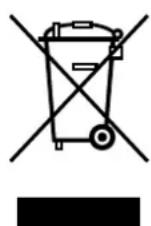
Our appliances are produced on a high quality level for a long lifetime. Regular maintenance and expert repairs by our after-sales service can extend the useful life of the appliance. If an appliance is defective and repair is not possible we ask you to follow the following instructions for disposal. Do not dispose this appliance together with your standard household waste. Please bring this product to an approved collection point for recycling of electric and electronic products. By separate collection and disposal of waste products you help to protect natural resources and ensure, that the product is disposed in an adequate way to protect health and environment.
NOTICE D'UTILISATION MODELE 68010
SPECIFICATION TECHNIQUE
Puisance:550W,220-240V\~,50Hz
Dimensions:Env.24,7 × 36,2 × 29,1 cm (L/B/H)
Poids:Env.4,4 kg
CONDITIONS DE GARANTIE
FOUT AAN HET APPARAAT
$$ g = \text {g r a m} $$
$$ \mathrm {m l} = \text {m i l l i l i t e r} $$
$$ g = \text {g r a m m i} $$
$$ m l = m i l l i t r i $$
$$ \text {c o n f .} = \text {c o n f e z i o n e , a d e s .} $$