Rotus P - Exercise bike KETTLER - Free user manual and instructions
Find the device manual for free Rotus P KETTLER in PDF.


| Product type | Exercise bike |
| Brand | Kettler |
| Model | Rotus P |
| Dimensions (L x W x H) | Approx. 105 x 55 x 130 cm |
| Weight | Approx. 35 kg |
| Power supply | 220-240 V, 50 Hz (mains plug) |
| Main functions | Training computer with MANUAL, FITNESS, PROGRAM, H.R.C., USER programs; motorised resistance adjustment; display of speed, distance, time, calories, pulse; fitness score calculation |
| Training programs | Manual, Fitness, 12 preset programs, target heart rate training, customisable user program |
| Pulse measurement | Hand grip sensors, earlobe clip (optional), POLAR T34 chest strap (optional) |
| Display | Screen with user area, bar profile route, segments for time, distance, calories, pulse |
| Resistance adjustment | Motorised, 16 levels |
| User capacity (max weight) | Approx. 130 kg |
| Maintenance and cleaning | Wipe with a damp cloth; regularly check tightness of connections; do not use in damp rooms |
| Safety | Consult a doctor before any training; use only on a solid surface; immediately replace defective parts with original Kettler parts |
| Spare parts and repairability | Use only original Kettler spare parts; have the device checked regularly |
| General information | Designed for amateur athletes; suitable for cardiovascular training; user data memory (U1-U4); unit selection (km/h or mph, °C or °F) |
Frequently Asked Questions - Rotus P KETTLER
User questions about Rotus P KETTLER
0 question about this device. Answer the ones you know or ask your own.
Ask a new question about this device
Download the instructions for your Exercise bike in PDF format for free! Find your manual Rotus P - KETTLER and take your electronic device back in hand. On this page are published all the documents necessary for the use of your device. Rotus P by KETTLER.
USER MANUAL Rotus P KETTLER
MANUAL Manuelles Training
Training > MANUAL Manuelles Training
Functional area and buttons 24-25
- Display area 25-27
Quick start 27
For beginners 27
Individual presets 28
- User presetting (U1-U0) 28
General training program 28
MANUAL 29
FITNESS 29
PROGRAM 29
H.R.C. (target heart rate) 29
- USER 29
Target values 30
PULSE Heart rate 30
TIME Training time 30
- RPM/SPEED 30
- DISTANCE Training course 30
CALORIES Energy consumption 30
Personal training settings 30
·General 30
- Target value settings 31
Example: DISTANCE
- Sleep mode 31
- Stop or pause training 32
Training 33 Setting the training program 33
MANUAL 33
Manual training
FITNESS 33-34
Preset program for fitness training
PROGRAM 34
12 preset programs
for training
H.R.C. (target heart rate) 35-36 Training using a target heart rate (THR)
- USER 36-37 Training program using user settings
RECOVERY 37
Recovery heart rate
General information 38
Calculation of fitness level 38
Formula 35
Information on pulse measurement 38
With an ear clip 38
With a hand pulse sensor 38
With a chest strap 38
Computer faults 38
Training instructions 39
Endurance training 39
- Training intensity 39
- Training distance 39
Glossary 40
G
The use of this symbol in the instructions makes reference to the glossary. The respective term is explained in this glossary.
Safety information
Please observe the following points for your personal safety:
- The training machine must be assembled on an appropriate and solid surface.
- Ensure that the connections are secure before first putting the machine into operation and after approximately six days of use.
- In order to prevent injury as a result of incorrect use or overloading, the training machine may only be operated according to the instructions.
- A permanent installation of the machine in wet rooms is not recommended due to the formation of rust.
- Ensure that the training machine is in a perfect functioning and working order on a frequent basis.
-
Safety checks are included under the obligations of the operator and must be carried out correctly and on a regular basis.
-
Faults or damaged parts must be exchanged immediately. Only original KETTLER spare parts may be used.
- The machine may not be used until repairs have been completed.
- The safety level of the machine can only be maintained on the condition that it is regularly checked for damage and wear and tear.
For your safety:
- Before starting to train, please consult your doctor to ensure that you are physically fit and able to train on this machine. The results from this examination should form the basis for the structuring of your training program. Incorrect or excessive training may pose potential risks to your health.
Brief description
The machine is equipped with a functional area with buttons and a display area (display) with variable symbols and graphics.
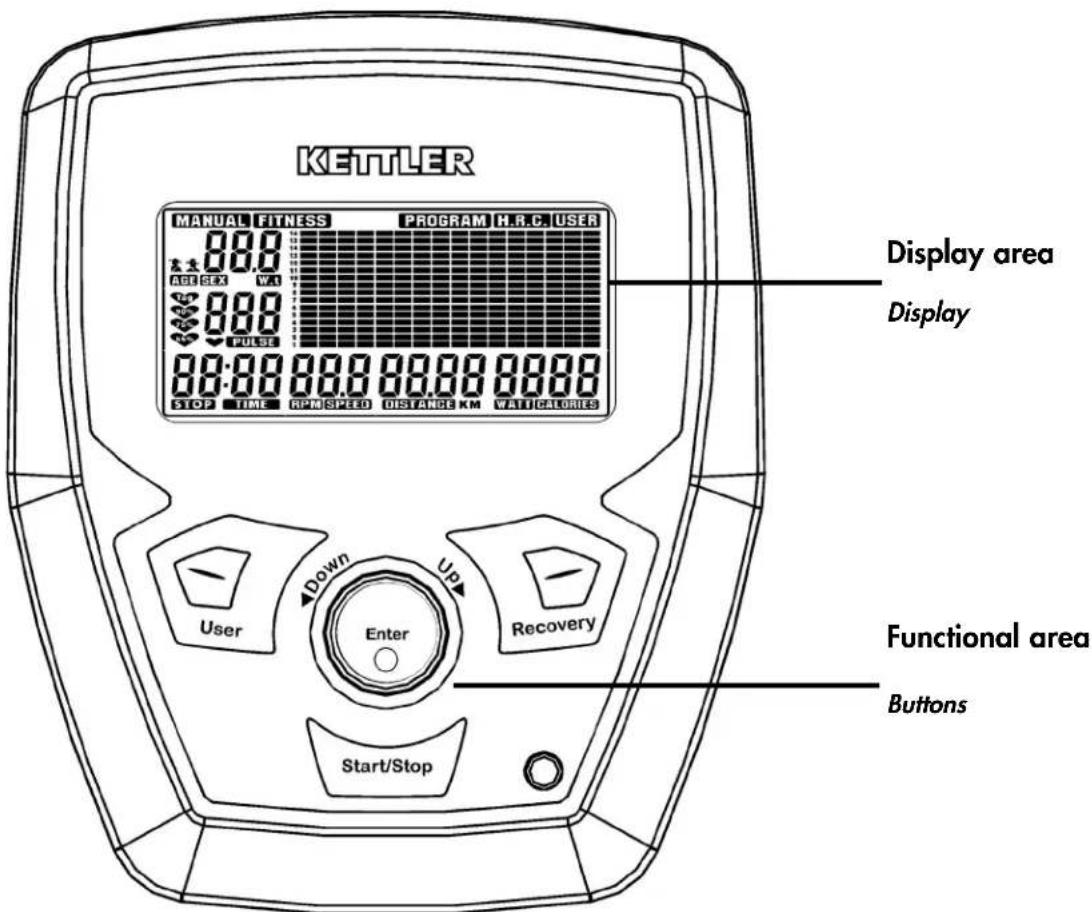
The electronics have the following functions:
- Personal user settings can be saved on a long-term basis U1 - U4; gender, age, weight
Monitoring with visual and audible signals Age-related maximum pulse, target heart rate - Display of fitness level between 1 and 6 calculated from the recovery heart rate after 1 minute
- Training program with individual or preset options for fitness, endurance, strength or target heart rate training
- Motor-controlled brake stage adjustment
- Calculation of energy consumption according to the brake stage and pedaling frequency
- Selection of the speed and distance display [KM/H or M/H]
- Selection of the temperature display [^ C or ^ F]
- Pre-installed pulse receiver for the T34 POLAR chest strap.
Training and operating instructions
Brief instructions
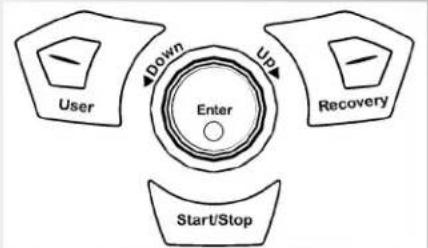
Functional area
The buttons are briefly explained below.
The correct use of these buttons is explained in the individual chapters. The names of the functional buttons are also used in these descriptions as follows:
START/STOP
This button starts the workout. By pressing this button again, the computer counter is stopped and the settings can be adjusted. If the START button is then pressed again, the computer will continue to count according to the new settings.
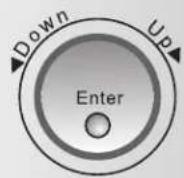
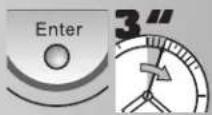
ENTER
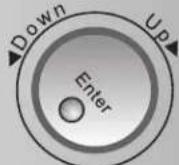
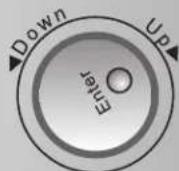
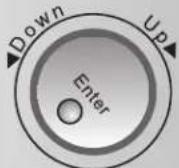
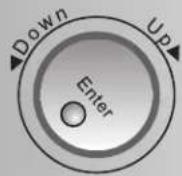
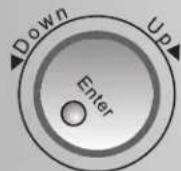
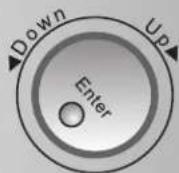
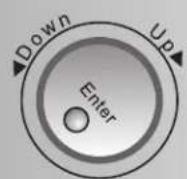
The ENTER button is combined with the UP/DOWN control knob. The ENTER button is pressed to confirm the settings, menus, programs and functions which have been selected by turning the control knob.
Pressing and holding the ENTER button restarts the training computer, see chapter 1.
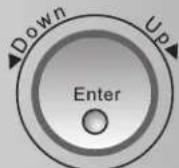
UP/DOWN
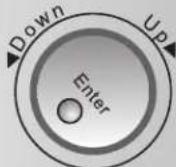
The UP/DOWN control knob is combined with the ENTER button. Turning this knob slowly gradually changes the set values. Turning the knob quickly allows for a quick change of the set values. The ENTER button is pressed to confirm the settings, menus, programs and functions which have been selected by turning the control knob.
-
Using the UP/DOWN control knob, default values can be adjusted. This must take place when the machine is in a STOP position > the bottom left STOP button will blink
-
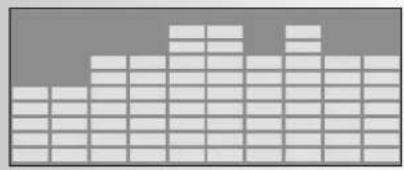
During training, this control knob can be used to increase or decrease the overall intensity level > graphical bar chart.
-
The desired user settings are preselected using the UP or DOWN control knob (USER U1-U0).
-
The selection of a training program (MANUAL, PROGRAM, USER or H.R.C.) is also carried out using the UP or DOWN control knob.
After selecting and confirming a training program, the further parameter settings for this training program are also set and confirmed using the UP/DOWN control knob: TIME, DISTANCE, CALORIES or PULSE.
UP Upwards adjustment of default values.
By turning the control knob to the right (UP), you can increase the set value.
DOWN Downwards adjustment of default values.
By turning the control knob to the left (DOWN), you can decrease the set value.
User presetting (U1 / U2 / U3 / U4 / U0)
Using the USER button, the desired or preset user can be selected.
If the machine has to be disconnected from the mains and reconnected for e.g. due to a change in location, the input personal user data will be retained when the machine is restarted (U1 to U4).
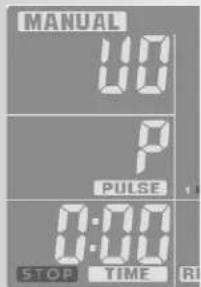
U O can be selected for a guest user.
IMPORTANT! No training data is saved using this USER setting (TIME, DISTANCE and CALORIES)! This data is only counted during a training session.
RECOVERY
The RECOVERY button can be used to activate the recovery heart rate measurement after your training session.
Heart rate measurement
The heart rate measurement can be taken in 3 ways:
- Hand pulse sensor (standard)
- Ear clip (optional) The plug is connected to a socket in the machine.
- Chest strap without receiver (optional) The receiver is built into this electronic unit behind the display. If an ear clip is plugged in, this must be removed. The POLAR T34 chest strap without a plug-in receiver is available as an accessory (Item no. 67002000).
Display functions
General
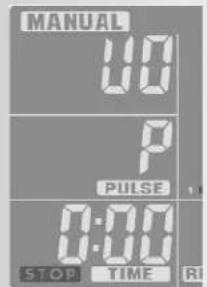
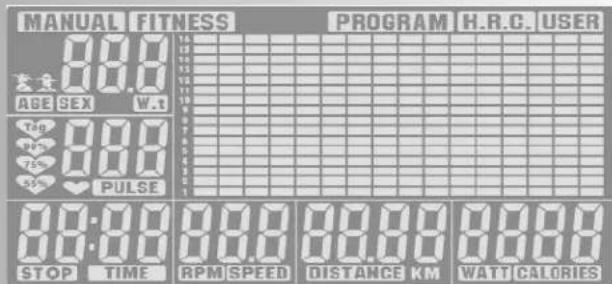
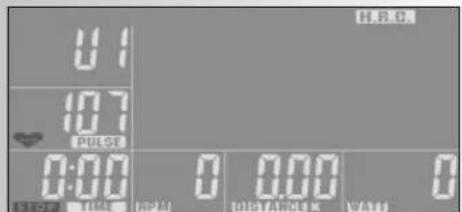
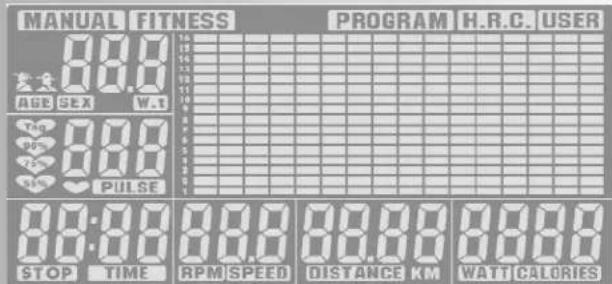
The display is divided into four separate display areas
- The top row displays information on the status or selected training program
- The top left zone gives information on the current user (U 0-4) and user-specific data is recorded: gender, age and weight.
Using this input data, the computer calculates data relating to heart rate and the level of intensity during training.
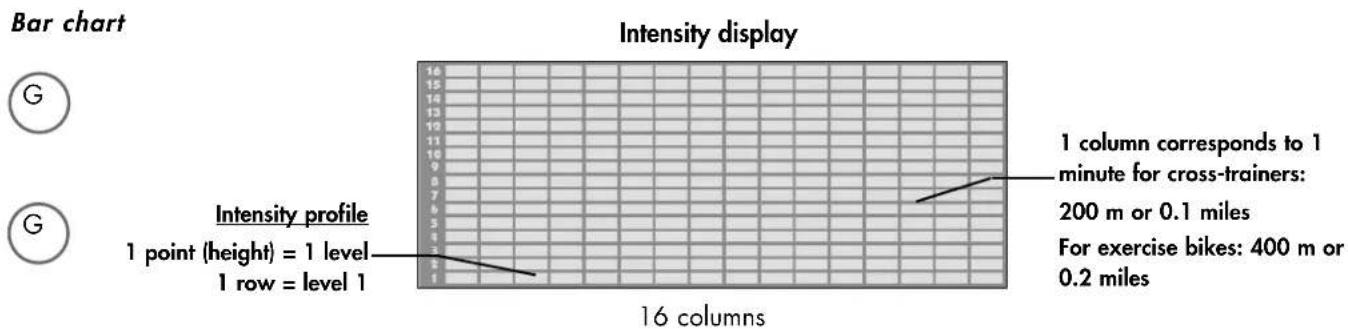
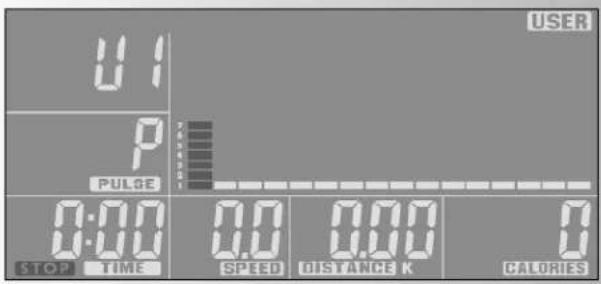
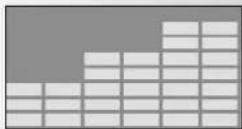
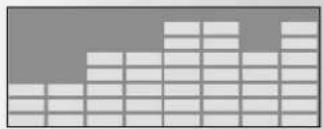
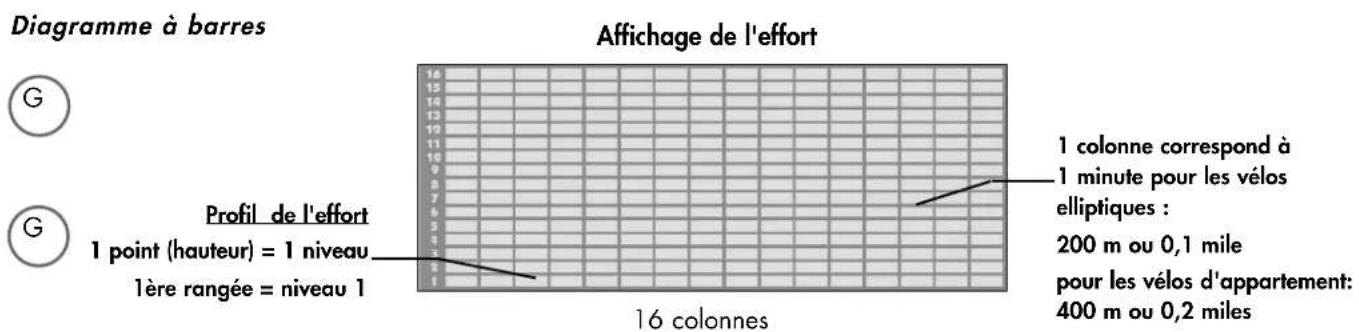
- The large screen which displays a graphic image of the training distance (course profile) offers simple user guidance during the training session. One bar = low intensity; 16 bars above one another = maximum intensity.
- Below the user display and in the entire bottom row of the screen, there are several adjacent symbols where the different target values and training units are displayed. When presetting these units, the functional symbol will blink > e.g. TIME.


Training and operating instructions
Training program
Personal user data
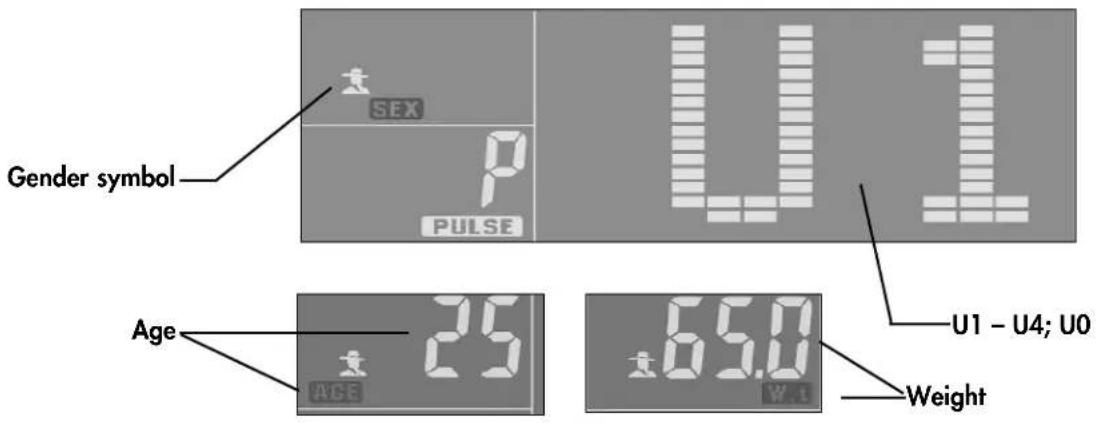
Display of heart rate

Time / training time / start - stop

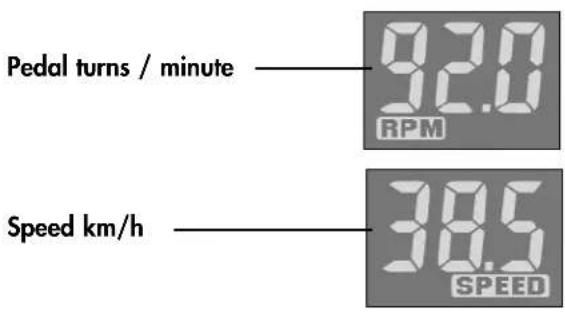
Turns / speed
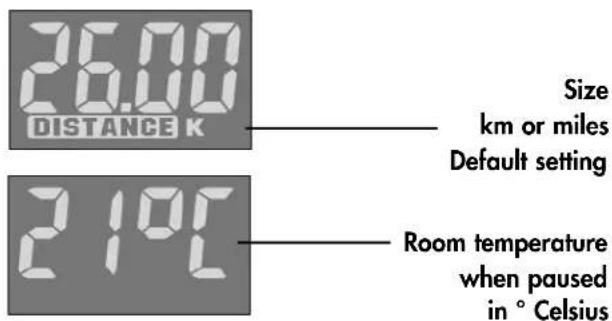
Distance / temperature
Quick start (for beginners)
You can start training without previous experience. The different information will then be displayed on the screen. For an effective training session and to adjust your personal training settings, please read and follow these operating instructions.
Please also read the general information in the training instructions.
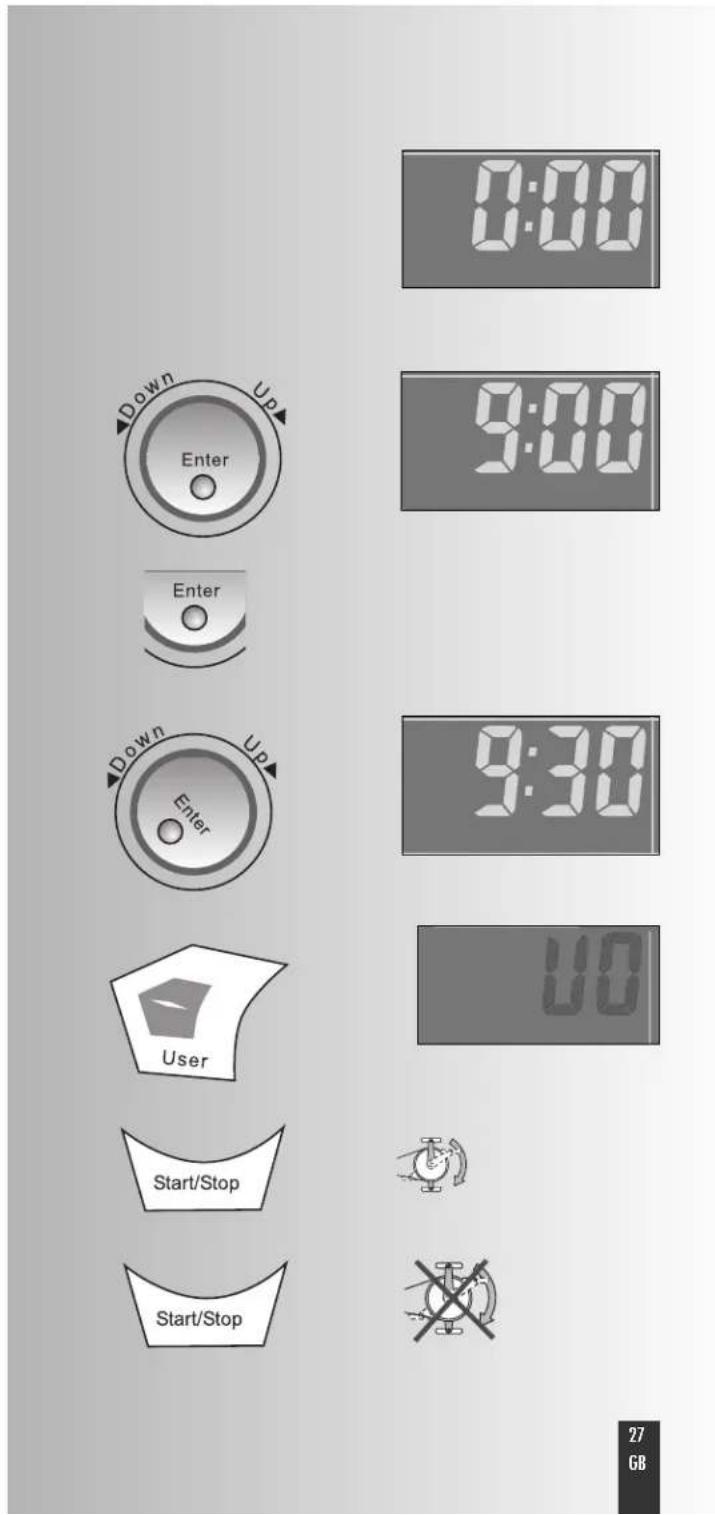
Setting the time:
After first switching on or reconnecting the machine to the mains, the time window will be displayed on the bottom left of the screen with setting options for hours and minutes.
The time can be changed using the UP/DOWN control knob: First move the hours UP/DOWN and confirm by pressing ENTER, then repeat to set the minutes and confirm the selected time by pressing the ENTER button.
If the machine is restarted by pressing and holding the ENTER button, the set time will be maintained as normal. By pressing the ENTER button twice (confirming the time) you will have further selection options.
The user display will then appear (U 1-0) U = USER. By pressing the USER button you can opt for a quick start U 0 > guest user.
Press the START button and start training.
You can finish your workout by stopping and pressing the STOP button. The training values achieved will then be displayed.
Training and operating instructions

Individual presets
User presetting
(U1 / U2 / U3 / U4 / U0)
The personal data can be saved for up to four different users and recalled when restarting the machine. The individual training program can therefore be used by four different people over a long period of time using their personal saved data.
The personal data is recalled and includes: gender, age and weight.
Guest user = U 0.
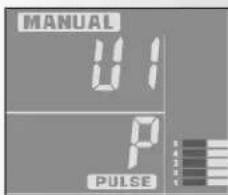
With the USER button, the desired or preset user can be selected. In the user field (top left) U1 will blink; if you press this again > U2 will appear; continue to press until reaching U0.
If you do not wish to change your preset personal data, turn the UP/DOWN control knob. This will take you directly to the program selection in the upper part of the display.
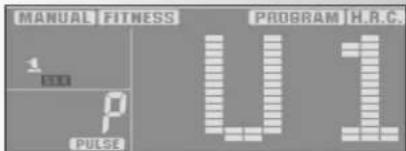
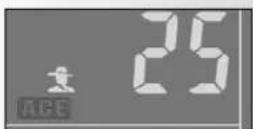
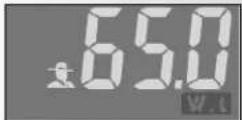
If, after selecting a user (e.g. U1) you press the control knob once (ENTER), you will be able to enter or change your personal data > gender, age and weight. U1 is located at the right of the large display screen. In the user display (top left) the symbol SEX (gender) will blink and a male or female symbol can be selected. Adjusting these settings once again takes place by turning the control knob UP/DOWN, until the desired value or symbol is displayed and confirmed by pressing the ENTER button > press the control knob once. Example: male (symbol + SEX); 25 (AGE); 65 (WEIGHT).
By pressing the ENTER button once again, this will allow you to set your training program.
If the machine is disconnected from the mains or reconnected for e.g. due to a change in location, the input user data (U1 to U4) will be retained when restarting.
U O can be selected as a guest user. For training, it is not possible to input personal data such as gender, age and weight and this data is therefore not saved. Only the training functions MANUAL and PROGRAM may be accessed by the guest user.
IMPORTANT! In the user setting (U1 to U4), only personal data is saved, not training data such as TIME, DISTANCE and CALORIES.
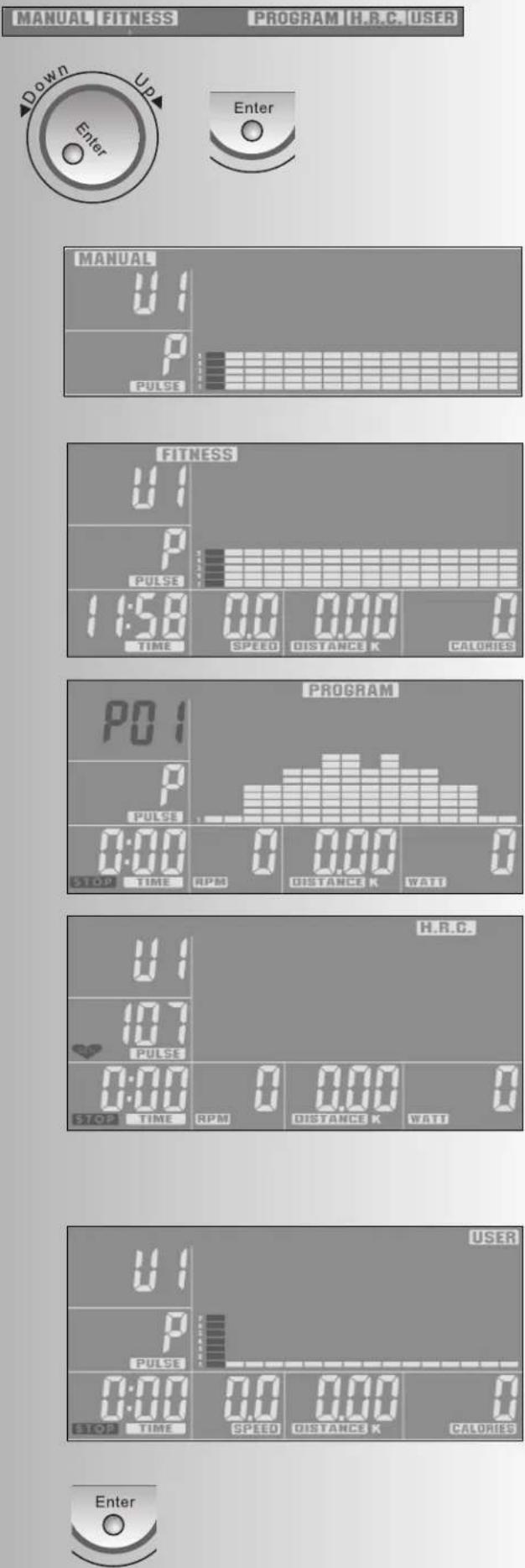
Training program (top display row)
The different training programs are selected with the UP/DOWN control knob and confirmed by pressing ENTER.
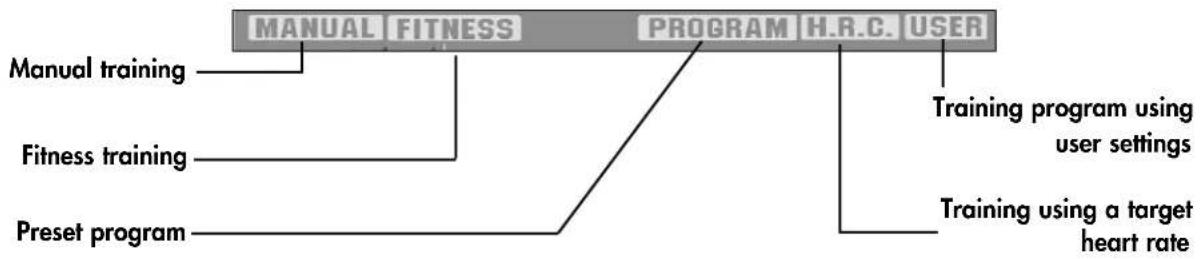
Detailed information is explained under "Setting the training program". The differences in programs are defined as follows:
MANUAL Manual Training
This setting is selected for an individual training session, in which the individual functions are set manually [TIME, DISTANCE, CALORIES and PULSE].
The course profile remains linear and runs from left to right over the set timeframe. The resistance level can be increased or decreased using the UP/DOWN control knob during the training.
FITNESS preset program for fitness training
This program setting has a fixed time and intensity setting and can not be changed. At the end of the training session the program gives an analysis of training success using the calculated pulse data. This is displayed analogously to the recovery setting with F1 corresponding to the best score and F6 the worst.
PROGRAM preset training program
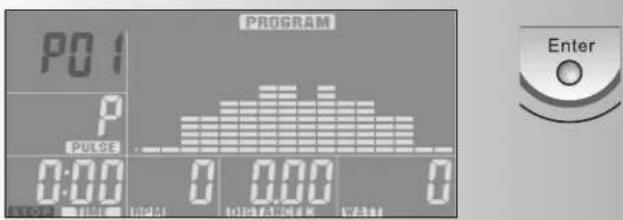
There are 12 fixed training program settings available. Using the course profile you can see the level of difficulty for each setting.
H.R.C. Training using a target heart rate (THR)
In this program setting, the intensity is set according to the preset heart rate. It is therefore necessary that the heart rate is recorded during training.
See > Pulse recording options.
The program offers 3 preset target values: 55, 75 and 90% of the heart rate.
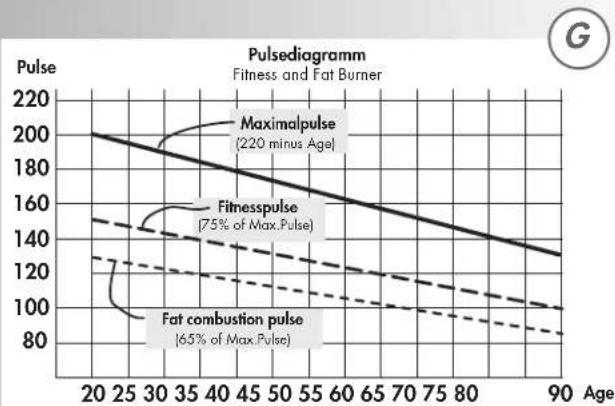
Heart rate = 220 minus your age.
A further variable target value is also possible: "day"
You can personally define the target value using this setting. When reaching the set heart rate during the training session, the machine will emit a signal.
USER training program with user settings
This program allows for an individual adjustment of the course profile. At least one default value must be selected. > [TIME, DISTANCE, CALORIES or PULSE].
After selecting and setting the training program, you can view the target values by pressing the ENTER button.
Training and operating instructions
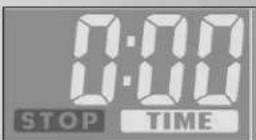
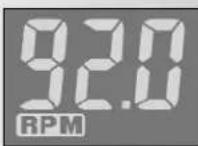
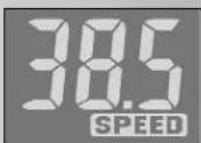
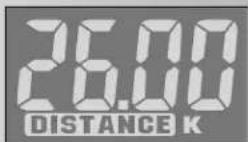
Target values and training units
In the bottom display row, there are several segment symbols displayed with the different target values and training units.
PULSE Pulse / Heart rate
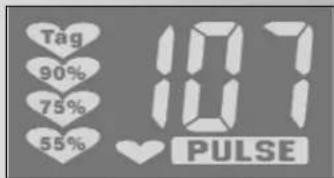
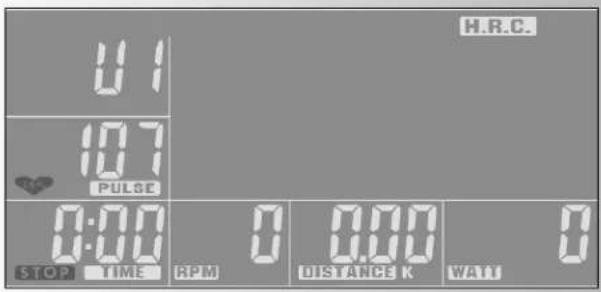
If the pulse is recorded during the training session, the heart symbol will blink in this segment and the pulse value will be displayed as heart beats per minute. Display area: min. 30 to a max. 240.
Once the target pulse value has been achieved during the training session, the computer will emit an alarm signal.
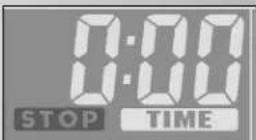
TIME Training time
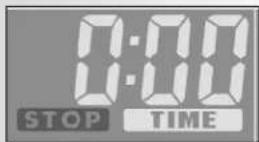
The training time is measured in minutes and seconds in this display. Display area: min. 00:00 to a max. 99:00
RPM /SPEED Speed
In this display area, the RPM (Rounds per minute) and SPEED are displayed in km/h at 6 second intervals. Display area: min. 0.0 to max. 99.9 km/h
DISTANCE Training course
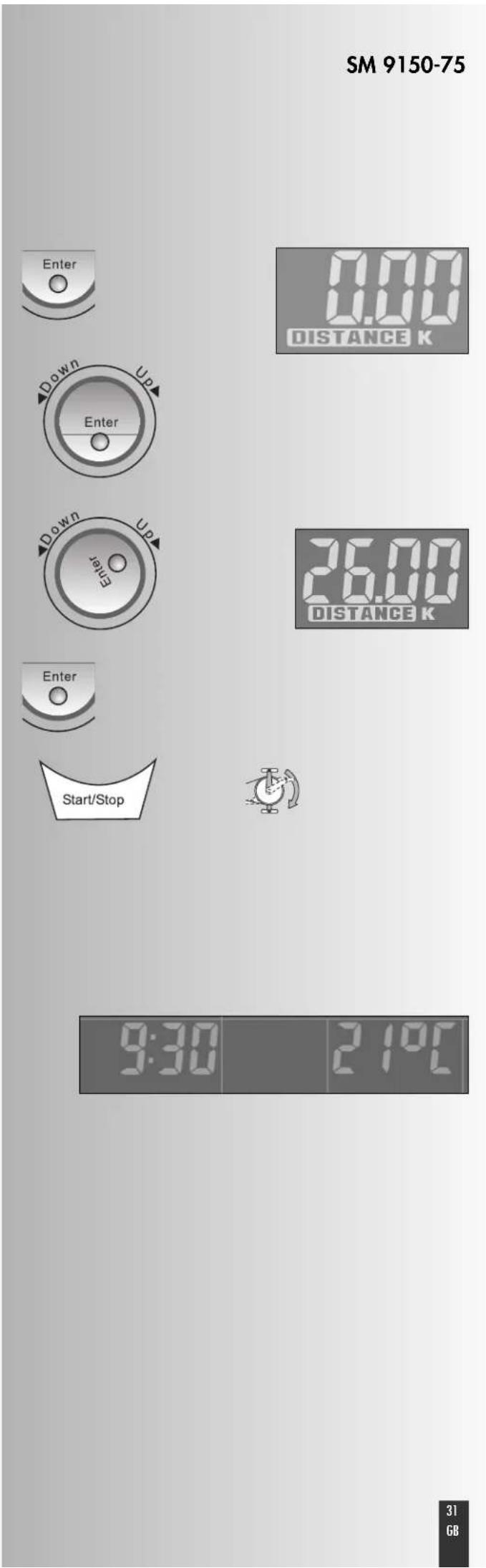
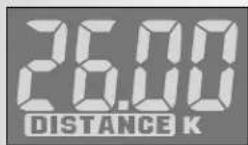
The distance covered is measured in km. The calculation of distance covered begins at >0< and can be displayed to a maximum of 99.99km . This calculation takes place at distances of 0.01km = 10 metres.
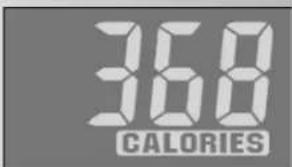
CALORIES Calories burnt, energy consumption
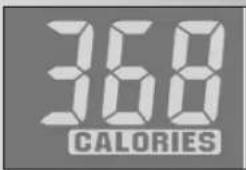
In this display, the calculated number of burnt calories is displayed. The value is determined in training using the resistance and time measurements. Display area: min. 0 to a max. of 990. However, the data merely serves as a rough estimate by comparison to the different exercises and can not be used for medical purposes.
Personal training settings
General
-
Without configuring particular presets, the values for the individual settings [TIME; DISTANCE, CALORIES and PULSE] are counted upwards from >0< .
-
The set target values for TIME; DISTANCE, CALORIES and PULSE are retained every time the machine is restarted and are counted down to >0< during the workout. However, these target values can be reset at any time.
-
For a meaningful workout, it is sufficient to enter just one target value for one setting [TIME; DISTANCE, CALORIES or PULSE].
If a personal target value is set as a training value, the computer will begin counting down from this value. When the target value has reached >0 < signal will sound. If the workout is continued without setting a new target value, the
computer will begin counting down from the preset value in this mode after pressing the START button.
Once target values have been set, the workout can not be changed unless the STOP button is pressed.
Target values
The setting of target values is the same for all default settings:
e.g. DISTANCE
- Press the ENTER button until the >DISTANCE< symbol blinks in the display area.
- By turning the control knob in an UPWARDS direction you can increase the value, e.g. increase the DISTANCE in stages of 0.1km
- If you would like to further reduce the target value, you must turn the knob DOWNWARDs. The computer will continue to count down from the previous value.
- Once you have set the target value, press the ENTER button. The value is then saved in this function and this will take you to the next function e.g. CALORIES.
- If possible, only one default value should be entered. Otherwise the training targets will overlap for e.g. if you would like to reach the preset target value before the preset course target.
- The other default values [TIME, CALORIES or PULSE] are also entered using the UP, DOWN and ENTER buttons as described under points 1-4.
After entering all default values, press the START button and begin your workout.
During the training session, all current values can be read beside one another. The preset value is counted down to >0< .
SLEEP MODE
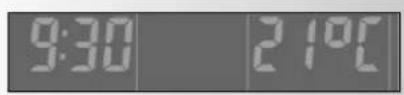
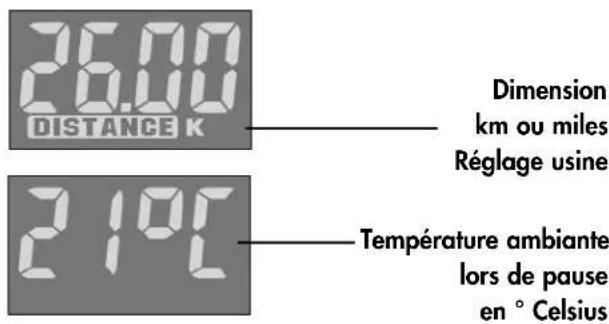
If no RPM or PULSE values are recorded or no manual settings are carried out within 4 minutes, the machine will switch to sleep mode. The time and room temperature are displayed in the TIME and DISTANCE segments respectively. After a few seconds, the machine will switch to energy-saving mode meaning that the values will only be faintly visible.
Training and operating instructions

Stop or pause training.
- If training is paused and no further settings are adjusted, the time will continue (TIME). Upon resuming the workout the other units will also continue to be counted (DISTANCE, CALORIES and PULSE).
- If the workout is stopped using the STOP button and there is no further setting input, the time counter is also stopped. After pressing the START button and resuming the workout all units (TIME, DISTANCE, CALORIES and PULSE) will continue to be counted.
- If the workout is stopped using the STOP button and there is a change of user, program or target value selection, all units (TIME, DISTANCE, CALORIES and PULSE) will then begin counting from the standard start value. IMPORTANT! In this case, the previous training values are not saved!
If the machine is removed from the mains or reconnected e.g. due to a change of location, all units will be counted (TIME, DISTANCE, CALORIES and PULSE) from the standard start value. IMPORTANT! In this case, the previous training values are not saved!
Training
Setting the training program
After switching on the machine and selecting a user (U 0-4) the program field in the upper display area will blink.
When training is stopped using the STOP button, you will be taken directly to the program field in the upper display area.
- Select the training program (MANUAL, PROGRAM, H.R.C. or USER) with the control knob and confirm by pressing ENTER.
- If the training mode that you have selected is MANUAL, PROGRAM or USER, and you preset a target heart rate value, the computer will emit a visual and audible alarm, as soon as the heart rate value has reached the target value.
Training > MANUAL Manual Training
The course profile is displayed in one smooth line. All default settings can be set individually: [TIME, DISTANCE, CALORIES or PULSE]
Start the workout by pressing the START button and active training.
By using the UP/DOWN control knob, the entire course profile can be increased or decreased before or during the workout.
During the set training time (TIME), the computer counts from left to right in the course profile (bar graph) with the blinking bars indicating training progress. Once the preset value [TIME, DISTANCE, CALORIES or PULSE] has been reached, an audible signal will sound for 8 seconds. No further training data will be counted. You have reached the training target! By pressing the START button and without changing the target value, you can repeat the workout session.
FITNESS Preset program for fitness training
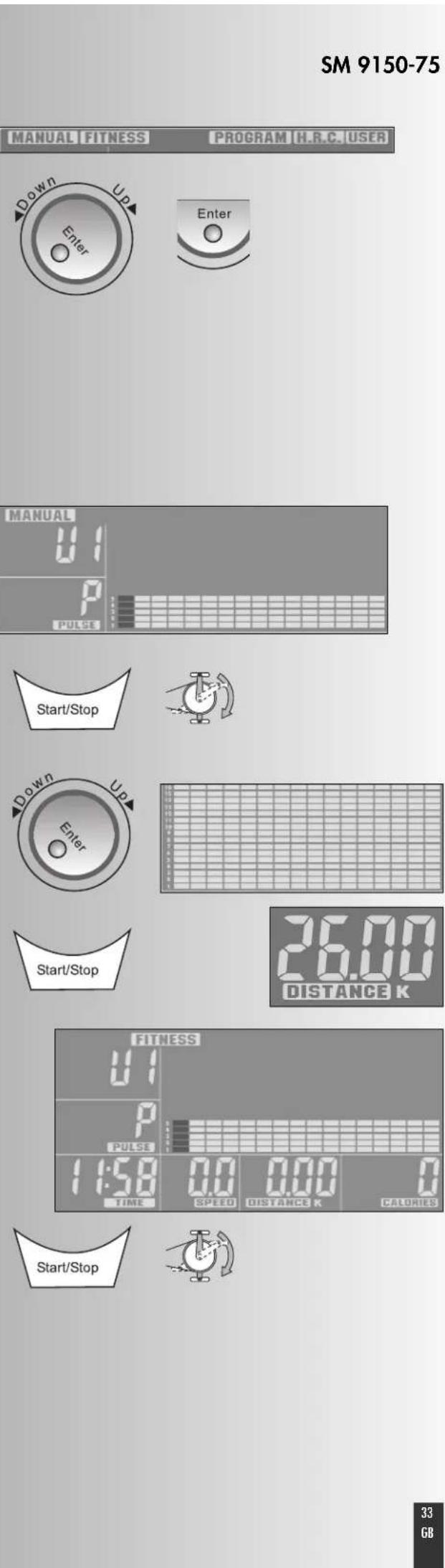
This program setting has a fixed time and intensity setting and can not be changed. For this type of workout, the time (TIME) will count downwards from 12 minutes to 0.
The program intensity setting is consistent (5 bars), and the intensity setting can not be moved upwards or downwards in this training mode. The computer will calculate a fitness score on the basis of the target (DISTANCE), (RPM/SPEED) and (CALORIES).
If training is paused for more than 4 seconds or if the STOP button is pressed, counting is stopped and the fitness score is displayed. After this time, counting can not be resumed but only restarted using the START button with the target value of 12 minutes.
Training and operating instructions
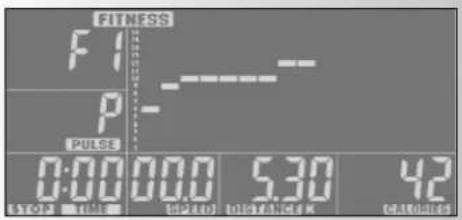

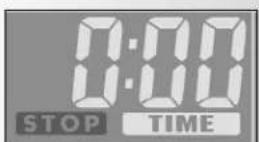
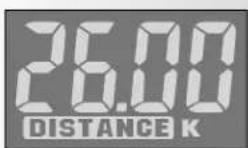
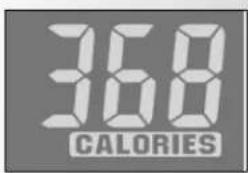
At the end of the 12 minute workout, the program will give an evaluation of training success using the calculated pulse data. This is displayed analogously to the recovery setting with F1 corresponding to the best and F6 the worst score respectively.
If the fitness score F1 is achieved in less than 12 minutes, the program will automatically stop the workout session.
Training > PROGRAM
Preset programs for your training
In the training enter PROGRAM you can select one of 12 different factory-pre-set training programs:
By turning the turning knob upwards or downwards, you can move from one program to the next. The alternating display shows the program number (P1-12) for about 1 second and then the route profile in blinking form. Via the ENTER key you confirm your selection, or select another program via UP and/or DOWN.
If you have selected your program, you can additionally enter a default value [TIME, DISTANCE, CALORIES or PULSE].
Press the ENTER key to reach the respective next setting possibility. Training start by pressing the START key and active training.
Via the UP and DOWN turning knob, the entire route profile can be increased or reduced either prior to the start of or during the training. By means of the set training period (TIME), the computer counts the training progress in the route profile (bar graph from left to right with a blinking bar. If the pre-set value [TIME, DISTANCE, CALORIES or PULSE] is reached, an acoustic signal will sound for 8 seconds. The training data is not counted further. You have reached your training target! By pressing the START key, it is also possible to continue your training.
Training > H.R.C.
Training via target heart rate (THR
In this training mode the route profile is automatically adapted to the user's input values (U 1-4) as well as the measured heart rate.
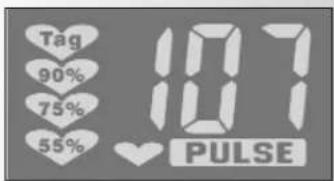
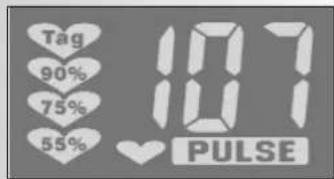
If you have selected the training mode H.R.C. using the keys START/STOP, UP/DOWN and ENTER, the bottom heart symbol will blink in the PULSE segment with the value 55% . You can select 55, 75 or 90% using the turning knob and set the individual target heart rate "date".
The percentage defaults 55% 75% and 90% refer to the maximum pulse rate (220 - age) and predetermine 3 general training intensities for the fitness training.
- 55% of the max. heart rate (220 - age) corresponds to the starting phase of the general fat burning trainings. This default can then also be increased manually to 65% .
- 75% of the max. heart rate (220 - age) corresponds to the phase for a general fitness training.
- 90% of the max. heart rate (220 - age) is only suited for shorter sub-maximum exertion intervals for performance increase in interval training.
- The setting "Tag" allows you to enter an individual pulse value as your training target. If this set value is exceeded, a signal will sound.
In this training mode it is not possible to set an additional PULSE value. All other default values can be set as desired. [TIME, DISTANCE or CALORIES] After selecting your THR value, confirm it via ENTER. You then reach the default setting.
In this training enter it is not possible to set a PULSE value. All other default values can be set freely. [TIME, DISTANCE or CALORIES]
Training start by pressing the START key and active training.
The computer compares your currently measured heart rate with the pre-set target value and accordingly adapts the braking level during your training.
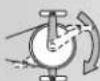
If the current heart rate is lower than the target value, the braking level will be increased by one step every 30 seconds, until the maximum value of the resistance or the set heart rate is reached.
If the current heart rate is above the target value, the braking level is automatically reduced. It will be reduced by one step every 15 seconds until the set heart rate is reached.
Training and operating instructions
If the brake stage is reduced to 1 but the heart rate value remains higher than the target value for one minute, the computer will stop and an audible alarm signal will sound as a warning. Reduce the workout intensity or stop the workout session. It is imperative that medical safety recommendations are followed!
Over the set training period [TIME] the computer counts the training progress in the route profile (bar graph) from left to right with a blinking bar.
- If the pre-set value [TIME, DISTANCE or CALORIES] is reached, an acoustic signal will sound for 8 seconds. The training data is not counted further. You have reached your training target! By pressing the START key, it is also possible to continue your training.
Training > USER
Training program using the user setting
This training mode has no connection with the user setting (U1 - U0) when starting the machine!
In the training enter USER you can design your individual route profile.
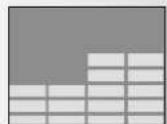
The setting is made via the turning knob UP /DOWN in order to adjust the profile height. Your reach the next bar via the ENTER key; then UP or DOWN again for height, etc. Program all 16 bars. Training start by pressing the START key and active training.
If you have designed your individual route profile, you can additionally set the default values. To this end, press the START STOP key. To this end, press and hold the ENTER key for 2 seconds. The TIME segment is blinking. Turn the UP / DOWN knob to enter any training time value (TIME), then confirm with ENTER. You will thus reach the distance setting (DISTANCE), etc.
All default values can be set individually [TIME, DISTANCE, CALORIES or PULSE]. At least one default value must be selected. After completing the setting of the default values, you can start your training by pressing the START key and start your active training.
The entire route profile can be increased or reduced via the UP and DOWN keys either prior to the start of or during the training.
By means of the set training period (TIME), the computer counts the training progress in the route profile (bar graph from left to right with a blinking bar. If the pre-set value [TIME, DISTANCE, CALORIES or PULSE] is reached, an acoustic signal will sound for 8 seconds. The training data is not counted further. You have reached your training target! By pressing the START key, it is also possible to continue your training.
RECOVERY Recovery heart rate phase
The RECOVERY function can be used after every training program.
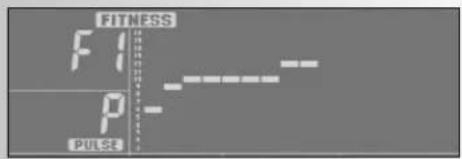
Using the RECOVERY button, a measurement of the recovery heart rate can be taken at the end of the workout. The difference between the start and end heart rate per minute is calculated and a fitness score is determined. For regular training, the improvement of this score is a measure of increasing levels of fitness.
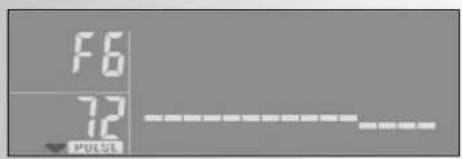
If the target values are reached, finish the workout, press the RECOVERY button and then place your hands on the hand pulse sensors. For a previous pulse measurement, 00:60 appears in the time display and the current pulse value blinks in the PULSE symbol. The time begins to count down from 00:60. Place your hands on the hand pulse sensors until reaching >0< . In the user display screen, a value between F1 and F6 will be displayed with being F1 the best and F6 the worst level. The line in the bar chart shows the pulse course during the measurement time. Press the RECOVERY button once again to end the function.
SM 9150-75
Training and operating instructions
General information
Calculation of fitness score
The computer calculates and assess the difference between the training and recovery heart rate and the resulting "fitness score" according to the following formula:
$$ \text {N o t e} (F) = 6 - \left(\frac {1 0 \times (P 1 - P 2)}{P 1}\right) ^ {2} $$
P1 = Training pulse P2 = Recovery pulse
Score 1 = very good Score 6 = poor
A comparison of the training and recovery heart rate is a quick and easy way in which to determine physical fitness. The fitness score is an orientation value to asses your recovering ability after physical exercise. Before pressing the recovery heart rate button and determining your fitness score, you should train at your own level of intensity for a significant period of time e.g. 10 minutes. For regular cardiovascular training you will discover that your "fitness score" improves.
Possibilities for Pulse Measurement
The pulse measurement starts as soon as the heart in the display blinks in time with your pulse beat.
With ear clip
The pulse sensor works with infrared light and measures the variations in translucence in your skin, which are produced by your pulse beat. Rub your ear ten times strongly to activate the blood circulation before attaching the pulse sensor to your earlobe.
Avoid disturbing pulses.
- Attach the ear clip properly to your earlobe and look for the best point for the measurement (heart symbol blinks without interruption).
- Do not train directly under strong incidence of light, e.g. neon light, halogen light, spotlight, sun light.
- Completely eliminate any shocks or bounces of the ear sensor and the cable. Always attach the cable with a clip at your clothing or, even better, at your headband.
With breast clip
The internal pulse receiver is compatible to un-coded POLAR chest strap transmitters. For coded systems, wrong pulse values may be displayed. We recommend T34 by POLAR. Please observe the corresponding instructions.
A plug-in receiver is not necessary and should not be used for technical reasons.
With hand pulse
An extra-low voltage caused by the contractions of your heart is registered by the hand sensors and evaluated by the electronics assembly of the device.
- Always grab the contact faces with both hands.
- Avoid jerky grasping.
- Hold your hands calmly and avoid contractions and rubbing on the contact faces.
Comment:
Only one way of pulse measurement is possible: either with ear clip or with hand pulse or with breast belt. If no ear clip is located in the pulse plug, hand pulse measurement is activated. If you insert an ear clip in the pulse plug, hand pulse measurement is automatically deactivated. It is not necessary to disconnect the plug of the hand pulse measurement.
Faults in the Training Computer
If the computer display is not functioning correctly, please remove the power supply and switch off the machine.
| √ | √ | |
| optional | √ | |
| optional | optional |
For Your Safety:
Before beginning your program of exercise, consult your doctor to ensure that you are fit enough to use the equipment. Base your program of exercise on the advice given by your doctor. Incorrect or excessive exercise may damage your health.
Training Instructions
This device has particularly been designed and developed for leisure time sportsmen. It is excellently suited for cardiovascular training.
The training methodically has to be organised on the principles of stamina training. This will predominantly cause changes and adaptations of the cardiovascular system. This includes the reduction of the resting pulse frequency and of the load pulse.
This gives the heart more time for filling the ventricles and for the blood circulation of the cardiac musculature (through the coronary vessels. Moreover, depth of breathing and the volume of air that can be breathed in (vital capacity) are increased. Further positive changes take place in the metabolic system. In order to achieve these positive changes, the training has to be planned according to certain guidelines.
Planning and control of your training
The basis for your training planning is your current physical fitness condition. Your family doctor can diagnose your personal fitness by means of an exercise tolerance test, which will constitute the basis for your training planning. If you have not undergone an exercise tolerance test, high training exertion and/or overstrainng must be avoided in all cases. The following rule should be considered in your planning: stamina training is controlled via the scope of exertion as well as via the level / intensity of exertion.
Regarding exertion intensity
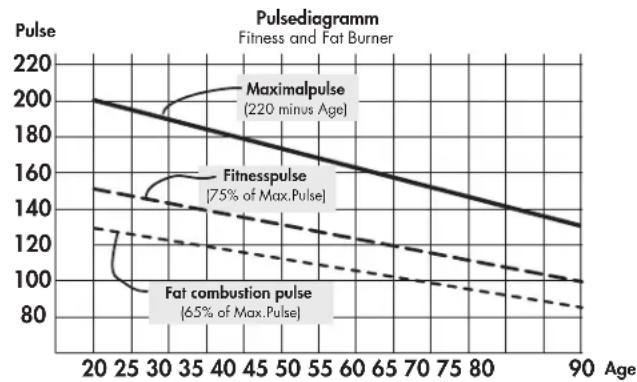
The intensity of exertion should preferably be checked in your fitness training via your heart's pulse rate. The maximum heart rate per minute of >220 minus age must not be exceeded. The optimum training pulse is determined by age and training target.
Training target: fat burning/weight reduction
The optimum pulse frequency is calculated using the empirical formula (220 - age) × 0.65
Advice: fat burning for energy supply only gains significance after a minimum training period of 30 minutes.
Training target cardio-vascular fitness:
The optimum pulse frequency is calculated using the empirical formula (220 - age) × 0.75
The intensity is predetermined in your training by means of the braking levels, ranging from 1-16. As a beginner, you should avoid too high braking level settings for your training, as this will quickly lead to exceeding the recommended pulse rate range. Start by using a low braking level setting and then approach your optimum training pulse step by step. Do not forget to regularly check during your fitness training whether you still range within the intensity area according to the above stated recommendations.
Sports physicians consider the following load factors to be positive for fitness:
| Frequency | Duration | |
| daily | 10 min | |
| 2-3 times weekly | 20-30 | min |
| 1-2 times weekly | 30-60 | min |
Beginners should not start with training units of 30 to 60 minutes.
A beginner training could be organised as follows during the first four weeks:
Training frequency, PART of training session
| 1st week | |
| 3 times a week | 2 minutes of training Break of 1 minute for physical exercises 2 minutes of training Break of 1 minute for physical exercises 2 minutes of training |
| 2nd week | |
| 3 times a week | 3 minutes of training Break of 1 minute for physical exercises 3 minutes of training Break of 1 minute for physical exercises 2 minutes of training |
| 3rd week | |
| 3 times a week | 4 minutes of training Break of 1 minute for physical exercises 4 minutes of training Break of 1 minute for physical exercises 3 minutes of training |
| 4th week | |
| 3 times a week | 5 minutes of training Break of 1 minute for physical exercises 4 minutes of training Break of 1 minute for physical exercises 4 minutes of training |
In order to have a personal training documentation, you can enter the training values achieved in the performance table.
Prior to and after every training unit gymnastic exercises lasting approx. 5 minutes serve the warming up and/or cooling down. There should be a day without training between two training units, if you later on prefer to train three
times a week for 20 - 30 minutes each. Otherwise nothing can be said against a daily training.
Training and operating instructions
Glossary
Bar chart
Display area with 16 × 16 points for the display of intensity and pulse profiles as well as text and value symbols.
Recovery
Recovery heart rate measurement at the end of the workout. The difference between the start and end heart rate per minute is determined and a fitness score is determined. For regular training, the improvement of this score is a measure of increasing levels of fitness.
Programs
Training options that include manual or certain program intensities or target pulses.
Profiles
The change of intensity over time or a throughout course is displayed in the point field.
Units
Units for the display of km/h or mph, kjoules or kcal
Energy
Calculates the body's metabolic rate
Control
The electronic mechanisms regulate the intensity or the heart rate according to manually set or predefined values.
Pulse
Recording of heart beats per minute
Maximum pulse
Value calculated from 220 minus age
Target pulse
Manual or program-specific pulse value that should be reached.
Fat burn pulse
Value calculated from: 65% max. pulse
Fitness pulse
Value calculated from: 75% max. pulse
Manual
Value calculated from: 40 - 90% max. pulse
Age
Press here to calculate your maximum pulse.
Menu
Display in which values should be entered or selected.
Glossary
A list of explanations
Performance table
| Date | Restpulse | Stress pulse | Recovery pulse | Slope | Time (min) (km) (Kcal) | Distance (Kcal) | Energy consumption (Kcal) | Fitness | Mark |
F
Table des matieres
Instructions succinctes
Zone fonctions
Distance/ Temperature
Training >MANUAL Entrainement manuel
Entrainement >H.R.C.
MANUAL Manuele training
Setting the training program
Training > MANUAL manuele training
2-3 peer week 20-30 min
1-2 peer week 30-60 min
3 x per week 2 minutes trainen
3 x per week 4 minutes trainen
The display is divided into four separate display areas
- The top row displays information on the status or selected training program
- The top left zone gives information on the current user (U 0-4) and user-specific data is recorded: gender, age and weight.
Using this input data, the computer calculates data relating to heart rate and the level of intensity during training.
- The large screen which displays a graphic image of the training distance (course profile) offers simple user guidance during the training session. One bar = low intensity; 16 bars above one another = maximum intensity.
- Below the user display and in the entire bottom row of the screen, there are several adjacent symbols where the different target values and training units are displayed. When presetting these units, the functional symbol will blink > e.g. TIME.
SM 9150-75


A工程技术 in the design of a portable camera.
A工程技术 in the design of a portable camera.
A Technology in the design of a portable camera.
A Technology in the design of a portable camera.
A Technology in the design of a portable camera.
A Technology in the design of a portable camera.
A Technology in the design of a portable camera.
A Technology in the design of a portable camera.
A Technology in the design of a portable camera.
A Technology in the design of a portable camera.
A Technology in the design of a portable camera.
A Technology In the design of a portable camera.
A Technology In the design of a portable camera.
A Technology In the design of a portable camera.
A Technology In the design of a portable camera.
A Technology In the design of a portable camera.
A Technology In the design of a portable camera.
A Technology In the design of a portable camera.
A Technology In the design of a portable camera.
A Technology In the design of a portable camera.
A Technology In The Design of A Portable Camera.
A Technology In The Design of A Portable Camera.
A Technology In The Design of A Portable Camera.
A Technology In The Design of A Portable Camera.
| Performance table | |||||||||
| Date | Restpulse | Stress pulse | Recovery pulse | Slope | Time (min) (km) (Kcal) | Distance (Kcal) | Energy consumption (Kcal) | Mark | |
Performance table
| Date | Restpulse | Stress pulse | Recovery pulse | Slope | Time (min) (km) (Kcal) | Distance (Kcal) | Energy consumption (Kcal) | Fitness | Mark |

- MANUAL Manuelles Training
- Training > MANUAL Manuelles Training
- Quick start 27
- Individual presets 28
- General training program 28
- Target values 30
- Personal training settings 30
- Training 33 Setting the training program 33
- General information 38
- Training instructions 39
- Glossary 40
- G
- Safety information
- Please observe the following points for your personal safety:
- For your safety:
- Brief description
- The electronics have the following functions:
- Training and operating instructions
- Brief instructions
- Functional area
- START/STOP
- ENTER
- UP/DOWN
- User presetting (U1 / U2 / U3 / U4 / U0)
- RECOVERY
- Heart rate measurement
- Display functions
- General
- Training program
- Personal user data
- Display of heart rate
- Time / training time / start - stop
- Turns / speed
- Distance / temperature
- Quick start (for beginners)
- Please also read the general information in the training instructions.
- Setting the time:
- Individual presets
- User presetting
- (U1 / U2 / U3 / U4 / U0)
- Training program (top display row)
- MANUAL Manual Training
- FITNESS preset program for fitness training
- PROGRAM preset training program
- H.R.C. Training using a target heart rate (THR)
- USER training program with user settings
- Target values and training units
- PULSE Pulse / Heart rate
- TIME Training time
- RPM /SPEED Speed
- DISTANCE Training course
- CALORIES Calories burnt, energy consumption
- Personal training settings
- Target values
- SLEEP MODE
- Stop or pause training.
- Training
- Setting the training program
- Training > MANUAL Manual Training
- Training > PROGRAM
- Preset programs for your training
- Training > H.R.C.
- Training via target heart rate (THR
- Training > USER
- Training program using the user setting
- RECOVERY Recovery heart rate phase
- General information
- Calculation of fitness score
- Possibilities for Pulse Measurement
- With ear clip
- With breast clip
- With hand pulse
- Comment:
- Faults in the Training Computer
- Training Instructions
- Planning and control of your training
- Regarding exertion intensity
- Training target: fat burning/weight reduction
- Training target cardio-vascular fitness:
- Glossary
- Bar chart
- Programs
- Profiles
- Units
- Energy
- Control
- Pulse
- Maximum pulse
- Target pulse
- Fat burn pulse
- Fitness pulse
- Manual
- Age
- Menu
- F
- Table des matieres
- Instructions succinctes
- Zone fonctions
- Training >MANUAL Entrainement manuel
- Entrainement >H.R.C.
- MANUAL Manuele training
- Training > MANUAL manuele training
Brand : KETTLER
Model : Rotus P
Category : Exercise bike