Fixmax - Car seat CONCORD - Free user manual and instructions
Find the device manual for free Fixmax CONCORD in PDF.



User questions about Fixmax CONCORD
0 question about this device. Answer the ones you know or ask your own.
Ask a new question about this device
Download the instructions for your Car seat in PDF format for free! Find your manual Fixmax - CONCORD and take your electronic device back in hand. On this page are published all the documents necessary for the use of your device. Fixmax by CONCORD.
USER MANUAL Fixmax CONCORD
To ensure the function and safety of your child's car seat after replacing spare and accessory parts, please provide your dealer with the following details when placing your order:
Fitting the seat using a three-point belt page 10
Fitting of the seat using a lap belt page 10
Securing the child page 10
Selection of suitable shoulder straps page 11
Lying position page 11
How to convert the FixMax into the Image page 12
booster cushion
CONCORD Image
The Image as a booster cushion page 12
Fitting using a three-point belt page 13
Care instructions page 13
Important information page 13
Guarantee page 15
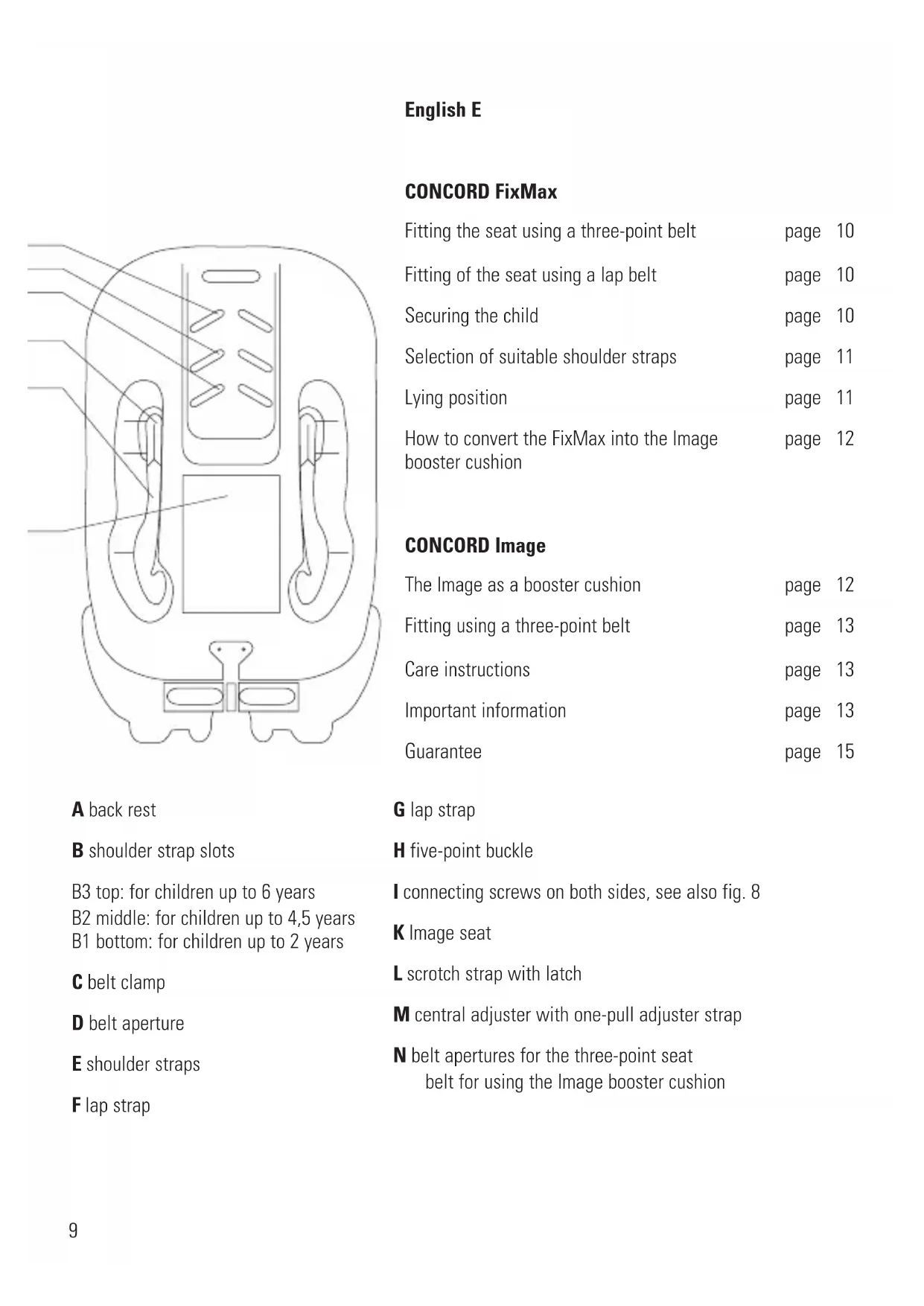
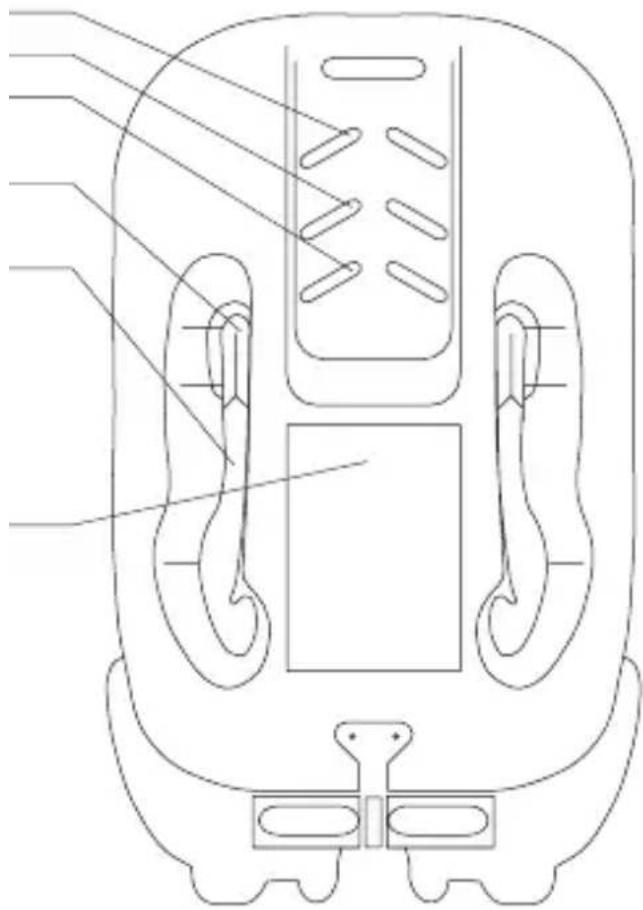
A back rest
B shoulder strap slots
B3 top: for children up to 6 years
B2 middle: for children up to 4,5 years
B1 bottom: for children up to 2 years
C belt clamp
D belt aperture
E shoulder straps
F lap strap
G lap strap
H five-point buckle
I connecting screws on both sides, see also fig. 8
K Image seat
L scratch strap with latch
M central adjuster with one-pull adjuster strap
N belt apertures for the three-point seat belt for using the Image booster cushion
Figure Using the FixMax as a child seat
Congratulations on your purchase of our CONCORD FixMax seat to secure your child. This product is manufactured in compliance with a strict system of quality control. It can only develop it's optimum safety features if it is used properly and you should therefore follow these instructions for fitting and use closely. The seat can be used on any seat in the vehicle which has a three-point belt or a lap belt.
Accident statistics show that the safest place for it is behind the front passenger seat.
When selecting the position for the child seat in your vehicle always use the one which offers the best fitting results.
Fitting the seat using a three-point belt
Fig. 1. Thread the buckle latch on the three-point belt through the slot in the back rest (D) and close the seat belt in the same way as for an adult. If the buckle strap is too long, use the buckle from the next seat. Thread the diagonal belt into the
Fig. 2. belt clamp. Press the seat firmly into the upholstery and pull the diagonal belt tight. The lap belt on the three point belt must also be tight. The belt clip (C) thus ensures that the seat is fitted securely. Ensure that the belt is not twisted and is tight throughout. By raising the back rest cover you can check the position of the belt and retension it if necessary. If the belts do not run at an angle backwards, fit the seat using the lap belt. If the seat is fitted on the front passenger seat, the passenger seat can be moved further forwards.
Fitting the seat using a lap belt
Fig. 3. The child seat can also be fitted on a static lap belt (without an automatic retractor). Thread the latch for the static lap belt through the aperture (D) in the back rest and close the lap belt in the same way as for an adult. Press the seat firmly into the upholstery and pull the lap belt tight. By raising the back rest cover you can check the position of the belt and retension it if necessary. Spare lap belts are available from the trade for retrofitting.
Securing your child
Lengthen the straps by pushing the button on the central adjuster (M) and pulling the shoulder strap (E). Pull the two buckle latches (H) off the seat and the buckle forwards. Sit your child
short version
Insert the three-point belt Lock three-point belt
Insert diagonal belt into the belt clip
Pull diagonal belt thight
Check the belt
Insert static lap belt
Close lap belt Tighten lap belt Check belt
Figure in the seat. Place the two buckle latches together and then Fig.4. connect the visible metal part to the buckle. Lock the system Fig.5. by tipping it forwards slightly. An audible click will be heard. Check that the belts are not twisted.
Fig. 6. Only if the harness straps are positioned correctly and securely will your child have optimum protection. Therefore the belt length should be correct when your child wears different clothing. Tighten the sytem by pulling the belt on the central adjuster (M). Ensure that the cover does not become jammed beneath the adjustment button so that the blocking function is not impaired. To remove the child release the belt system by pushing the red buttom. The lap belt and the buckle should lie against the child's body in the lowest position possible.
Fig. 6. Selection of suitable shoulder strap height
The height of the shoulder straps (E) must be adjusted to the body size of the child. The belts should be threaded through the slots in the back rests (B) as close to the shoulder height of the child as possible.
As a guide to this:
B1: Bottom shoulder strap slots for children up to approx. 2 years of age
B2: Middle shoulder strap slots for children up to approx. 4,5 years of age
B3: Top shoulder strap slots for children up to approx. 6 years of age
The straps are released and secured by removing or attaching the shoulder strap loops to the yoke (G). Ensure that the straps are correctly inserted and are not twisted.
Please ensure that the crotch belt with lock (L) passes through the front opening, from above, and through the back opening from below. The metal plate at the end of the belt must be in the back opening, at the top.
Reclined Position
Fig. 7. The reclined position for the FixMax child seat allows children between approx. 9 month and 4 years (9 - 18 kg) to travel even more comfortably in a sleeping position. The reclined position wedge required for this is available as an accessory.
short version Move belt off the seat Move buckle forwards
Check belts
Length adjustment
Remove the child
Adjust height of the shoulder straps to the size of the child
Figure It is very easy to use:
The wedge-shaped reclined position accessory is simply placed between the FixMax child seat and locked into place in the recess designed for it. Ensure that the lap strap on the five-point system is in the recess for it and the belts are not twisted.
Note:
Do not use the IMAGE booster cushion with the reclining wedge.
How to convert the FixMax into the Image booster cushion
The back rest can be removed at any time when the child's body weight is between 15 and 25kg . For children who frequently fall asleep during car journeys the back rest and the shoulder straps offer good support. We recommend that the back rest is removed when the child is around 5 or 6 (approx. 20kg ). When the child's eyeline is at the top of the back rest or the weight of the child exceeds 25kg the back rest must be removed.
Loosen the plastic rivets or the seam at the end of the belt on the central adjuster (M) and then pull the belt out to the rear. Remove the belt system from the booster cushion by threading the fittings through the aperture in the cushion. Remove the back rest from the booster cushion first
Fig. 8. remove the cover from the back rest at both sides. The screws which then become visible (l) are to be removed with a screwdriver. The back rest can now be removed backwards.
Please pay attention to the fact that the lap strap of the five-point belt system is placed in the appropriate gaps and is not twisted.
Tip: The reclining wedge cannot be used in connection with the booster seat Image.
Using the Image as a booster cushion
The cushion can be used on any of the seats in the car which has a three-point belt. Accident statistics show that the safest place for it is behind the front passenger seat.
Fig. 9. Place the Image on the seat and place your child on it. Fasten the three-point seat belt in the same way as for an adult.
short version
Place reclining accessory beneath the child seat and lock into place Check belts
Note:
In order to optimise the protective effect, we strongly recommend the use of the IMAGE booster seat with the optional LIFT backrest.
Remove belt system
Remove the cover from the back rest
Remove the screws Remove back rest
Seat behind the front passenger seat
Place child on cushion Fasten three-point seat belt
Figure Fitting using a three-point belt
Now thread the belt into the belt apertures (N) for it in the sides of the booster cushion. The bottom section of the diagonal belt must be threaded through the belt aperture (N) together with the lap belt. The top section passes between the shoulder and neck of the child. If the height of your car seat belt can be adjusted, move it to a suitable height. Tighten the belt so that the lap belt and shoulder belt are always in close contact with the body and are not twisted.
Care instructions
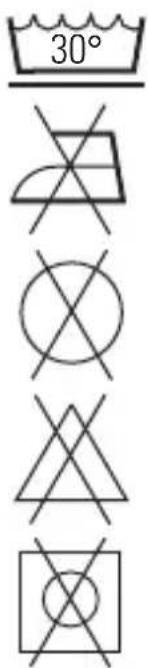
To remove the cover for washing: The seat cover can simply be taken off upwards after removing the belt. During assembly ensure that the belt runs downwards into the front aperture and it fed into the bottom aperture from below with the end fitting lying flat in the rear recess on the top. The belt must not be twisted. The cover on the back rest at the bottom on both sides. Do not use solvents to clean the cover.
- When washed or in contact with any moisture, the cover fabric may fade slightly.
short version
Thread belt into belt apertures
Check belt
Care instructions
Important Informations
- Children sometimes have objects in their jacket and trouser (eg. toys) or wear solid objects on their cloths (eg. belt buckles). Ensure that these objects are not between the child and the seat belt, since in the event of an accident they could cause avoidable injuries.
- These risks also apply for adults. Naturally children are often very playful. Tell your children how important it is to be secure at all times. It will then be a matter of course that the belts' positions will not be changed and the buckle not openend.
- The optimum safety for your child is only ensured if the restraint equipment is fitted and used as instructed.
- The belts in the system must be tight and not twisted and should be protected from damage.
- Protect the areas of the belt system which do not have covers from direct sunlight.
- The child restraint system must not be damaged or jammed by moving parts inside the car or by the doors.
- Do not modify the restraint system. If you do so you will put your child at a risk.
- After an accident the entire child restraint system must be replaced.
- Tell your passengers how to release the child in the event of an accident, etc..
- Do not leave your child in the child seat unsupervised regardless of whether they are strapped in or not.
- The instructions for use must be kept with the child seat at all times.
- Only use CONCORD accessories, others may invalidate guarantee.
- Suitable for vehicles with three-point seat belts or lap belts which are tested to ECE Regulation 16 or an equivalent standard.
Only suitable for vehicles with three-point seat belts or static lap belts which are approved under ECE Regulation No. 16 or a comparable standard. Lap belts must not be used for the Image booster cushion.
This is a "Universal" child restraint. It's approved to Regulation No.44,03 series of amendments, for general use vehicles and it will fit most, but not all, car seats.
A correct fit is likely if the vehicle manufacturer has declared in the vehicle handbook that the vehicle is capable of accepting a "Universal" child restraint for this age group.
This child restraint has been classified as "Universal" under more stringent conditions than those which applied to earlier designs which do not carry this notice. If in doubt, consult either the child restraint manufacturer or the retailer.
Secure all passengers, luggage and other items to reduce the risk of injury in the event of an accident.
If you find any signs or wear or damage on parts of the seat, for example on the belt system, we advise for safety reasons that you have the seat checked.
In the event of an emergency your car seat buckle has been designed to meet the recognised standard for quick release. Children should be persuaded and supervised not to play with the buckle or tamper with the harness.
The child's car seat should not be used on seats protected by activated airbags.
Attention
The child's car safety seats FixMax and Image were tested by simulating a frontal collision with a solid obstruction at the rate of 50~km / h . This corresponds to the international regulation ECE R 44 03 all safety systems are based on. Depending on the seriousness of an accident these child restraint systems will prevent or leirce injuries of children between 8 months and 12 years or weighing 9kg (20 lbs.) to 25kg (80 lbs.) (FixMax) or 18kg (40 lbs.) to 36kg (80 lbs.) (Image) provided that they are used according to the instructions.
Please note that no safety system, whether for children or adults, can replace your responsible and attentive behaviour when on the road.
- The child restraint must not be used without the cover. The seat cover should not be replaced with any other than the one recommended by the manufacturer, because the cover constitutes an integral part of the restraint performance.
- As a result of the very long usage of the FixMax/ Image restraint system it is natural that some parts such as the covers may have to be replaced, Contact your children and baby equipment stockist, the relevant sections of a department store, car accessory shop or mail order companies which will be able to supply the full range of accessories for CONCORD child seats.
- See also the instructions in the vehicle manual concerning carrying children.
CONCORD GmbH
Industriestraße 25
The warranty period shall commence at the time of purchase. The warranty period shall correspond to the duration of the applicable statutory warranty period for the sale of child seats in the respective end user country. Depending on the wishes of the manufacturer, the warranty shall cover rectification, replacement or a price reduction.
The warranty is only valid for the initial purchaser.
Should a defect occur, warranty rights shall only apply if the specialist retailer is notified of the defect immediately after its initial occurrence. If the specialist retailer cannot solve the problem, then it must return the product with an exact description of the problem and official proof of purchase.
The manufacturer shall assume no liability for damage to products which it did not supply.
The warranty shall lapse if:
- the product was altered.
- the product is not returned complete with proof of purchase to the retailer within 14 days of the defect occurring.
- the defect occurred due to incorrect operation or maintenance or anything else deemed to be the fault of the user, or when the user instructions have not been adhered to.
- repairs to the product have been carried out by third parties.
- the defect has occurred as the result of an accident.
- the serial number has been damaged or removed.
Alteration to or deterioration of the product which occurs due to normal wear and tear is not covered by the warranty.
Any corrective action taken by the manufacturer in response to a warranty claim does not extend the duration of warranty.
Nederland
CONCORD FixMax-Image
Bekleding van rugleuning losmaken
Avis important page 37
Garantie page 39