EasyManual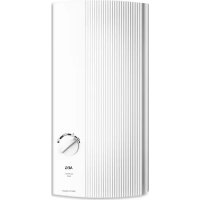
DDLE Basis 11 - Heating AEG - Free user manual and instructions
Find the device manual for free DDLE Basis 11 AEG in PDF.



Questions des utilisateurs sur DDLE Basis 11 AEG
0 question sur cet appareil. Repondez a celles que vous connaissez ou posez la votre.
Poser une nouvelle question sur cet appareil
Download the instructions for your Heating in PDF format for free! Find your manual DDLE Basis 11 - AEG and take your electronic device back in hand. On this page are published all the documents necessary for the use of your device. DDLE Basis 11 by AEG.
USER MANUAL DDLE Basis 11 AEG
- The appliance may be used by children aged 8 and up and persons with reduced physical, sensory or mental capabilities or a lack of experience and know-how, provided that they are supervised or they have been instructed on how to use the appliance safe- ly and have understood the resulting risks. Children must never play with the appliance. Children must never clean the appliance or perform user maintenance unless they are supervised.
- Risk of scalding: The tap can reach temper- atures in excess of 60 °C.
- Ensure the appliance can be separated from the power supply by an isolator that disconnects all poles with at least 3 mm contact separation.
- Secure the appliance as described in chap- ter "Installation / Installation".
- Observe the maximum permissible pres- sure (see chapter Installation / Specica- tion / Data table).
- Drain the appliance as described in chapter "Installation / Maintenance / Draining the appliance".18 Operation – for users and qualied contractors OPERATION
1. General information
The chapters "Special Information" and "Operation" are intended for both the user and qualied contractors.The chapter "Installation" is intended for qualied con-tractors. Note Read these instructions carefully before using the appliance and retain them for future reference.Pass on the instructions to a new user if required.1.1 Safety instructions1.1.1 Structure of safety instructions
KEYWORD Type of riskHere, possible consequences are listed that may re-sult from failure to observe the safety instructions. » Steps to prevent the risk are listed.1.1.2 Symbols, type of riskSymbol Type of risk
Burns(burns, scalding) 1.1.3 KeywordsKEYWORD MeaningDANGER Failure to observe this information will result in seri-ous injury or death.WARNING Failure to observe this information may result in seri-ous injury or death.CAUTION Failure to observe this information may result in non-serious or minor injury.1.2 Other symbols in this documentation Note General information is identied by the adjacent symbol. » Read these texts carefully.Symbol Meaning
Material losses(appliance damage, consequential losses and envi-ronmental pollution)
Appliance disposal » This symbol indicates that you have to do something. The action you need to take is described step by step.1.3 Units of measurement Note All measurements are given in mm unless stated otherwise.
2.1 Intended useThis appliance is intended for domestic use. It can be used safely by untrained persons. The appliance can also be used in a non-domestic environment, e.g. in a small business, as long as it is used in the same way.This pressurised appliance is suitable for heating domes-tic hot water or for reheating preheated water. The appli-ance can supply one or more draw-off points.Any other use beyond that described shall be deemed inappropriate. Observation of these instructions and of instructions for any accessories used is also part of the correct use of this appliance.2.2 General safety instructions CAUTION BurnsDuring operation, the tap can reach temperatures in excess of 60 °C.There is a risk of scalding at outlet temperatures in excess of 43 °C. CAUTION BurnsIf operating with preheated water, e.g. from a solar thermal system, the DHW temperature may vary from the selected set temperature.
WARNING InjuryThe appliance may be used by children aged 8 and up and persons with reduced physical, sensory or mental capabilities or a lack of experience and know-how, provided that they are supervised or they have been instructed on how to use the appliance safely and have understood the resulting risks. Children must never play with the appliance. Children must never clean the appliance or perform user mainte-nance unless they are supervised.Where children or persons with limited physical, sensory or mental abilities are allowed to use this appliance, we recommend a permanent temperature limit. A qualied contractor can set the limit for you.
Material lossesThe user should protect the appliance and its tap against frost.2.3 CE designationThe CE designation shows that the appliance meets all essential requirements according to the:
- Low Voltage Directive
- Electromagnetic Compatibility Directive The maximum permissible mains impedance is in-dicated in chapter "Installation / Specication / Data table".
!19 Operation – for users and qualied contractors 2.4 Test symbolsSee type plate on the appliance.Country-specic approvals and certications: GermanyA general test certicate as verication of suitability re-garding noise emissions has been issued for this appli-ance, based on the State Building Regulations [Germany]. AEG HOL DIN 4109 PA-IX 6814/I
3. Appliance description
The electronically controlled instantaneous water heater with automatic output matching keeps the outlet temper-ature constant up to the output limit. The temperature is then selected via the draw-off tap.Heating systemThe bare wire heating system has a pressure-tested plas-tic casing. The heating system is suitable for hard and soft water areas. This heating system has a low susceptibility to scale build-up. This system ensures rapid and efcient DHW availability. Note The appliance is equipped with an air detector that largely prevents damage to the heating system. If, during operation, air is drawn into the appliance, the appliance shuts down for one minute, thereby protecting the heating system.
The DHW outlet temperature can be variably adjusted.Hand wash basin (approx. 35 °C)Shower (approx. 40 °C)Bath (approx. 45 °C)Kitchen sink (approx. 55 °C) » Turn the temperature selector to the required temperature.Temperature limitYour qualied contractor can set a temperature limit of up to 43 °C inside the appliance. With the temperature limit enabled you can turn the temperature selector across its full range. You can now set the outlet temperature only between 30 °C and 43 °C. Note Should the outlet temperature fail to reach the re-quired level with the draw-off valve fully open and the temperature selector set to maximum, then more water is owing through the appliance than can be heated by the heating system. The appliance is at its output limit. » Reduce the water volume at the draw-off valve.Recommended setting for operation with a thermostatic valveSet the temperature at the appliance to the maximum temperature.Following an interruption of the water supply
Material lossesIn order to prevent the destruction of the bare wire heating system, return the appliance into use follow-ing an interruption of the water supply as follows: » Disconnect the appliance from the power sup-ply by removing the fuses/tripping the MCBs. » Open the tap for one minute until the appliance and its upstream cold water inlet line are free of air. » Switch the mains power back ON again.
5. Cleaning, care and
maintenance » Never use abrasive or corrosive cleaning agents. A damp cloth is sufcient for cleaning the appliance. » Check the taps regularly. Limescale deposits at the tap outlets can be removed using commercially avail-able descaling agents.
Problem Cause RemedyThe appliance will not start despite the DHW valve being fully open.There is no voltage at the appliance. Check the fuses/MCBs in your fuse box/distribution panel.
The flow rate is too low. The aerator in the tap or the shower head is scaled up or contaminated.Clean and/or descale the aerator or shower head. Required tempera-ture > 45 °C is not achieved. The water supply has been interrupted.
Vent the appliance and the cold water inlet line (see chapter "Operation / Set-tings").
The cold water inlet temperature is > 45 °C.Reduce the cold water inlet temperature. If you cannot remedy the fault, notify your qualied contractor. To facilitate and speed up your enquiry, please provide the serial number from the type plate (000000-0000-00000): Nr.: 000000-0000-00000 D000004161420 Installation – for qualied contractors INSTALLATION
Only a qualied contractor should carry out installation, commissioning, maintenance and repair of the appliance.7.1 General safety instructionsWe guarantee trouble-free function and operational relia-bility only if original accessories and spare parts intended for the appliance are used.
Material lossesObserve the maximum inlet temperature. Higher temperatures may damage the appliance. You can limit the maximum inlet temperature by installing a central thermostatic valve.7.2 Instructions, standards and regulations Note Observe all applicable national and regional regula-tions and instructions. ◦ The protection rating IP 25 (hoseproof) can only be ensured with a correctly tted cable grommet. ◦ The specic electrical resistance of the water must not fall below that stated on the type plate. In a linked water network, factor in the lowest electrical resist-ance of the water (see chapter "Installation / Spec-ication / Data table"). Your water supply utility will advise you of the specic electrical water resistance or conductivity.
8. Appliance description
8.1 Standard deliveryThe following are delivered with the appliance: ◦ Wall mounting bracket ◦ Threaded studs, screws and rawl plugs for the wall mounting bracket ◦ Installation template ◦ 2 twin connectors (cold water with shut-off valve) ◦ Flat gaskets ◦ Cable grommet (power cable from above / below) ◦ Screws / rawl plugs for xing the back panel in the case of water connection on nished walls ◦ Additional ow limiter in the cold water pipe (only DDLE Basis 18/21/24)8.2 Accessories Tap ADEo 70 WD Mono lever mixer tap with bath / shower changeoverStove connection setConnection set for the power connection of the DDLE Basis 11 and DDLE Basis 13Installation accessoriesPipe assembly, undersink installation UT 104, connec- tions: Finished walls, G 3/8, top. Water connections with 12 mm compression tting.Universal mounting frameMounting frame with electrical connections.Pipe assembly for undersink appliancesYou will need the undersink installation set if you use the water connections (G 3/8 A) at the top of the appliance.Pipe assembly for offset installationYou will need the pipe assembly with bends if you intend to offset the appliance by 90 mm downwards from the water connection.Pipe assembly for replacing a gas water heaterYou will need the pipe assembly if you are using the exist-ing gas water heater connections (cold water connection on the left-hand side DHW connection on the right-hand side).Load shedding relay (LR 1-A)The load shedding relay for installation in the distribution board provides priority control for the instantaneous water heater when other appliances, such as electric storage heaters, are being operated simultaneously.ZTA 3/4 – Central thermostatic valveThe thermostatic valve is for central premixing, for exam-ple on an instantaneous water heater with solar thermal system.
9.1 Installation site
Material lossesInstall the appliance in a room free from the risk of frost. » Always install the appliance vertically and near the draw-off point.The appliance is suitable for undersink and oversink in-stallations.Undersink installation26_02_02_1345121 Cold water Inlet2 DHW outletOversink installation1226_02_02_13441 Cold water Inlet2 DHW outlet21 Installation – for qualied contractors Note » Mount the appliance on the wall. The wall must have a sufcient load-bearing capacity.
9.2 Water installation
- A safety valve is not required. » Flush the water line thoroughly. » Ensure that the ow rate for switching on the appli-ance is achieved (see chapter "Installation / Spec-ication / Data table", On). If the ow rate is not achieved, remove the ow limiter (see chapter "In-stallation / Installation, Removing the ow limiter"). » If the required ow rate is not achieved when the draw-off valve is fully opened, increase the water line pressure. Taps Use appropriate pressure taps. Open taps are not per-mitted. Note Never use the shut-off valve in the cold water inlet to reduce the ow rate. The shut-off valve is intended to shut off the appliance.Permissible water line materials ◦ Cold water inlet line: Galvanised steel pipe, stainless steel pipe, copper pipe or plastic pipe ◦ DHW outlet line: Stainless steel pipe, copper pipe or plastic pipe
Material lossesIf plastic pipework is used, take into account the maximum inlet temperature and the maximum per-missible pressure (see chapter "Installation / Spec-ication / Data table").Flexible water connection lines » If the appliance is installed with exible water con-nection lines, ensure that the bayonet ttings of the pipe bends do not become twisted inside the appliance. » Secure the back panel at the bottom with two addi-tional screws.
10.1 Standard installation
- Electrical connection from above; installation on un- nished walls ◦ Water connection on unnished walls ◦ DDLE Basis 18/21/24: Connected load 21 kW presetFor further installation options, see chapter "Installation / Installation / Installation options": ◦ Electrical connection from below on unnished walls ◦ Electrical connection on nished walls ◦ Connecting a load shedding relay ◦ Undersink installation, water connections from above ◦ Water installation on nished walls ◦ Operation with preheated water ◦ Temperature limitOpening the applianceD0000041615 » Open the appliance by releasing the snap lock. NTT-so
26_02_02_0762 » Remove the back panel by pressing the two locking hooks and pulling the lower section of the back panel forwards.Preparing the power cable
≥ 30 26_02_02_0887Fitting the wall mounting bracket26_02_02_0972 » Mark out the holes for drilling with the installation template. If the appliance is to be installed with water connections on nished walls, also mark out the x-ing holes in the lower part of the template. » Drill the holes and secure the wall mounting bracket with 2 screws and 2 rawl plugs (screws and rawl plugs are part of the standard delivery). » Fit the threaded stud provided. » Mount the wall mounting bracket.22 Installation – for qualied contractors Fitting the cable grommet 26_02_02_0950 » Fit the cable grommet. For connecting cables > 6 mm², enlarge the hole in the cable grommet. Making the water connection
Material losses Carry out all water connection and installation work in accordance with regulations. 26_02_02_0948 » Seal and insert the twin connectors.
Material losses Never use the shut-off valve in the cold water inlet to reduce the ow rate. Preparing the back panel
Material losses If you break out the wrong knock-out by mistake, use a new back panel.
NT C T- soll X1 1 D0000041894 » Push the back panel over the threaded stud and the cable grommet. Pull the cable grommet by the lock- ing hooks into the back panel using pliers, until both locking hooks audibly click into place. » Remove the transport plugs from the water connections. » Push the back panel rmly against the wall. Lock the xing toggle by turning it 90° clockwise. D0000041925 » Screw the water connection pipes with at gaskets onto the twin connectors.
Material losses The strainer must be tted for the appliance to func- tion. » When replacing an appliance, check whether the strainer is installed (see chapter "Installa- tion / Maintenance").23 Installation – for qualied contractors Removing / replacing the ow limiter Note Never remove the ow limiter if you are using a ther- mostatic valve. L1’
1 Plastic prole washer 2 Flow limiter » Remove the ow limiter. Re-insert the plastic prole washer. DDLE Basis 18/21/24: Replace the ow limiter » If 24 kW connected load has been selected, replace the tted ow limiter (white) with the ow limiter sup- plied (orange, xed to the cold water pipe). Making the electrical connection WARNING Electrocution Carry out all electrical connection and installation work in accordance with relevant regulations. WARNING Electrocution The connection to the power supply must be in the form of a permanent connection in conjunction with the removable cable grommet. Ensure the appliance can be separated from the power supply by an iso- lator that disconnects all poles with at least 3 mm contact separation. WARNING Electrocution Ensure that the appliance is earthed.
Material losses Observe the type plate. The specied voltage must match the mains voltage. » Connect the power cable to the mains terminal (see chapter "Installation / Specication / Wiring diagram"). DDLE Basis 18/21/24: Re-plugging the coding card In its delivered condition, the appliance is plugged to 21 kW. When changing to a different connected load, carry out the following steps: D0000047341 » Re-plug the coding card according to the actual connected load (for connected load options and fuse protection of the appliance, see chapter "Installation / Specication / Data table"). » Tick the selected connected load on the type plate. Please use a ballpoint pen to do this. Fitting the lower section of the back panel
X11 26_02_02_1348 » Fit the lower section into the back panel. Click the lower section of the back panel into place. » Align the mounted appliance by loosening the xing toggle, aligning the power supply and back panel, and then re-tightening the xing toggle. If the appli- ance back panel does not rest against the wall, you can secure the appliance with two additional screws (see chapter "Installation / Installation options / Water installation on nished walls").24 Installation – for qualied contractors
10.2 Installation options
10.2.1 Electrical connection from below on
Material lossesIf you break out the wrong knock-out by mistake, use a new back panel. » Break out the cable grommet knock-out in the back panel. Deburr the sharp edges with a le if necessary. » Reposition the mains terminal in the appliance from the top to the bottom. » Push the back panel over the threaded stud and the cable grommet. Pull the cable grommet by the lock-ing hooks into the back panel using pliers, until both locking hooks audibly click into place. » Push the back panel rmly against the wall. Lock the xing toggle by turning it 90° clockwise.
10.2.2 Electrical connection on nished walls
Note This type of connection changes the protection rat-ing of the appliance. » Change the type plate. Cross out "IP 25" and mark the box "IP 24". Please use a ballpoint pen to do this.
Material lossesIf you break out the wrong knock-out by mistake, use a new back panel. » Cleanly cut or break out the required opening in the appliance back panel (see chapter "Installation / Specication / Dimensions and connections"). De-burr the sharp edges with a le if necessary. » Route the power cable through the cable grommet and connect it to the mains terminal.
10.2.3 Connecting a load shedding relay
Install a load shedding relay in the distribution board in conjunction with other electric appliances, e.g. electric storage heaters. The relay responds when the instanta-neous water heater starts.
Material lossesConnect the phase that switches the load shedding relay to the indicated terminal of the mains terminal in the appliance (see chapter "Installation / Speci-cation / Wiring diagram").
10.2.4 Undersink installation, water connections –
from above An undersink installation with water connections from above can be achieved with an additional pipe assembly for undersink appliances. Cleanly break out the water pipe knock-outs in the back panel and t the pipe assembly.
10.2.5 Water installation on nished walls
Note This type of connection changes the protection rat-ing of the appliance. » Change the type plate. Cross out "IP 25" and mark the box "IP 24". Please use a ballpoint pen to do this.26_02_02_0765 » Fit the water plugs with gaskets in order to seal the connection for unnished walls. » Fit a suitable pressure tap.26_02_02_1006 » Click the lower section of the back panel into place in the upper section of the back panel. » Secure the connection pipes to the appliance. » Secure the back panel at the bottom with two addi-tional screws.
Material lossesIf you break out the wrong knock-out by mistake, use a new back panel.25 Installation – for qualied contractors » Cleanly break out the knock-outs in the appli-ance cover. Deburr the sharp edges with a le if necessary. » Slide the lower section of the back panel under the tap connection pipes. Click the lower section of the back panel into place. » Secure the connection pipes to the appliance.10.2.6 Operation with preheated waterYou can limit the maximum inlet temperature by installing a central thermostatic valve.10.2.7 Temperature limit CAUTION BurnsIf operating with preheated water, the set tempera-ture limit and anti-scalding protection may be inef-fective. » In this case, limit the temperature with an up-stream central thermostatic valve. You can set the temperature limit inside the appliance cover to 43 °C.6 0 °
D0000046203 » Push the set value transducer cable plug onto the 43 °C temperature limiter.After enabling the temperature limit, you can only select temperatures between 30 and 43 °C.
10.3 Completing the installation
» Open the shut-off valve in the twin connector or the cold water inlet line.
WARNING ElectrocutionCommissioning may only be carried out by a qual-ied contractor in accordance with safety regula-tions.
11.1 Initial start-up
26_02_02_0769 » Open and close all connected draw-off valves sever-al times, until all air has been vented from the pipe-work and the appliance. » Carry out a tightness check. » Activate the safety pressure limiter by rmly pressing in the reset button (safety pressure limiter disabled in the delivered condition). » Plug the temperature selector cable plug into the PCB. » Fit the appliance cover. The appliance cover must audibly click into place. Check that the appliance cover is seated correctly. » Switch the mains power ON. » Calibrate the temperature. Turn the temperature se-lector fully clockwise then fully anti-clockwise. » Check the function of the appliance.Appliance handover » Explain the functions of the appliance to the user. Show the user how to operate the appliance. » Make the user aware of potential dangers, especially the risk of scalding. » Hand over these instructions.
11.2 Recommissioning
» Vent the appliance and the cold water inlet line (see chapter "Operation / Settings"). » See chapter "Installation / Installation / Commission-ing / Initial start-up".26 Installation – for qualied contractors
» Isolate all poles of the appliance from the power supply. » Drain the appliance (see chapter "Installation / Maintenance").
WARNING Electrocution To test the appliance, it must be supplied with power. Possible indications of diagnostic trafc light (LED) Red Illuminates in the event of a faultYellow Illuminates during heating modeGreen Flashing: Appliance is supplied with mains power D0000041794 1 Diagnostic trafc light Fault / diagnostic traffic light LED displayCause Remedy The flow rate is too low. The strainer in the appliance is dirty. Clean the strainer. The set temperature is not achieved. One phase down. Check the fuse/MCB in your fuse box/distribution panel.The heating system does not switch on. The system detects air in the water. Heating output stops temporarily.The appliance restarts after one minute. No hot water and no traffic light display. The MCB/fuse has responded/blown. Check the fuse/MCB in your fuse box/distribution panel. The safety pressure limiter has tripped. Remove the cause of the fault (e.g. faulty pressure washer).
Protect the heating system against overheating by opening a draw-off valve downstream of the appli-ance for one minute. This depressurises and cools down the heating system.
Activate the safety pressure limiter at flow pressure by pressing the reset button (see chapter "Installa-tion / Commissioning / Initial start-up").The PCB is faulty. Check the PCB and replace if required.Traffic light display: Green flashing or constantly onThe PCB is faulty. Check the PCB and replace if required. No hot water at a flow rate of > 3 l/min.The flow meter DFE is not plugged in. Plug the flow meter plug back in. The flow meter plug is faulty. Check the flow meter and replace if required. Traffic light display: Yellow constantly on; green flashing No hot water at a flow rate of > 3 l/min.The high limit safety cut-out has responded or its lead is broken. Check the high limit safety cut-out and replace if required. The heating system is faulty. Check the heating system resistor and replace if required. The PCB is faulty. Check the PCB and replace if required. Traffic light display: Yellow constantly on; green flashingThe outlet sensor has been pulled off. A lead is broken.Plug in the outlet sensor or replace if required. Traffic light display: Red constantly on; green flashingThe cold water sensor is faulty. Check the PCB and replace if required. No hot water Required temperature > 45 °C is not achieved.The cold water inlet temperature exceeds 45 °C. Reduce the cold water inlet temperature to the ap-pliance. Traffic light display: Red constantly on; green flashing The outlet sensor is faulty (short circuit). Check the outlet sensor and replace if required.27 Installation – for qualied contractors
WARNING ElectrocutionBefore any work on the appliance, disconnect all poles from the power supply. Draining the appliance You can drain the appliance for maintenance work or to protect it from frost. WARNING BurnsHot water may escape when the appliance is being drained. » Close the shut-off valve in the twin connector or the cold water inlet line. » Open all draw-off valves. » Undo the water connections on the appliance. » If dismantled, store the appliance in a room free from the risk of frost, as water residues remaining inside the appliance can freeze and cause damage. Cleaning the strainer 26_02_02_0949If dirty, clean the strainer in the threaded cold water tting. Close the shut-off valve in the cold water inlet line before removing, cleaning and retting the strainer.
15.1 Dimensions and connections
3/PE ~ 380 - 415 V 85_02_02_00051 Heater2 High limit safety cut-out3 Safety pressure limiter Load shedding relay LR 1-A 85_02_02_0003_211 Control cable to the contactor of the second appli-ance (electrical storage heater for example).2 Control contact opens when switching the instanta-neous water heater on.28 Installation – for qualied contractors
Taps Pressure drop at taps at flow rate of 10 l/min Mono lever mixer tap, approx. MPa 0.04 - 0.08 Thermostatic valve, approx. MPa 0.03 - 0.05 Hand shower, approx. MPa 0.03 - 0.15 Sizing the pipework When calculating the size of the pipework, a pressure drop for the appliance of 0.1 MPa is recommended.
15.6 Fault conditions
In case of faults, loads up to a maximum of 95 °C at a pressure of 1.2 MPa can occur temporarily in the instal- lation.
15.7 Details on energy consumption
Product data complies with EU regulations relating to the Directive on the eco-design of energy related products (ErP). DDLE Basis 11 DDLE Basis 13 DDLE Basis 18 DDLE Basis 18/21/24 DDLE Basis 27
Guarantee The guarantee conditions of our German companies do not apply to appliances acquired outside of Germany. In countries where our subsidiaries sell our products a guarantee can only be issued by those subsidiaries. Such guarantee is only grant
ed if the subsidiary has issued its own terms of guarantee. No other guarantee will be granted. We shall not provide any guarantee for appliances acquired in countries where we have no subsidiary to sell our products. This will not aect warranties issued by any importers. Environment and recycling We would ask you to help protect the environment. After use, dispose of the various materials in accordance with national regulations. Guarantee The guarantee conditions of our German companies do not apply to appliances acquired outside of Germany. In countries where our subsidiaries sell our products a guarantee can only be issued by those subsidiaries. Such guarantee is only grant- ed if the subsidiary has issued its own terms of guarantee. No other guarantee will be granted. We shall not provide any guarantee for appliances acquired in countries where we have no subsidiary to sell our products. This will not aect warranties issued by any importers. Environment and recycling We would ask you to help protect the environment. After use, dispose of the various materials in accordance with national regulations.30 Table des matières - remarques particulières