 ManualGo.com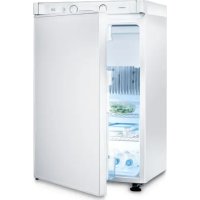
RGE2100 - Fridge DOMETIC - Free user manual and instructions
Find the device manual for free RGE2100 DOMETIC in PDF.



Download the instructions for your Fridge in PDF format for free! Find your manual RGE2100 - DOMETIC and take your electronic device back in hand. On this page are published all the documents necessary for the use of your device. RGE2100 by DOMETIC.
USER MANUAL RGE2100 DOMETIC
General You have made an excellent choice in selec- ting the Dometic Absorption Refrigerator. We are sure that you will be satisfied with your new refrigerator in all respects. The refrigera- tor, which works silently, meets high quality standards and guarantees the efficient utilisa- tion of resources and energy throughout its entire life cycle, during manufacture, in use and when being disposed of.
The information, texts and illustrations in these instructions are copyright protected and are subject to industrial property rights. No part of these instructions may be reprodu- ced, copied or utilised in any other way wit- hout written authorisation by Dometic GmbH, Siegen.
1.3 Copyright protection
Before you start using the refrigerator, please read the operating instructions carefully. These instructions provide you with the neces- sary guidance for the proper use of your refri- gerator. Observe in particular the safety instructions. Observation of the instructions and handling recommendations is important for dealing with the refrigerator safely and for protecting you from injury and the refrigerator from damage. You must understand what you have read before you carry out a task. Keep these instructions in a safe place close to the refrigerator so they may be referred to at any time.
1.2 Guide to these operating
1.4 Explanation of symbols
used in this manual Warning notices are identified by symbols. A supplementary text gives you an explanation of the degree of danger. Observe these warning notices rigorously. You will thus protect yourself and other people from injury, and the appliance from damage. DANGER indicates an imminent hazardous situation which, if not avoided, could result in death or serious injury. DANGER! WARNING indicates a potentially hazardous situation which, if not avoided, could result in death or serious injury WARNING! CAUTION indicates a potentially hazardous situation which, if not avoided, may result in minor or moderate injury. CAUTION! CAUTION (used without the safety alert sym- bol) indicates a potentially hazardous situation which, if not avoided, may result in damage to the appliance. CAUTION! Warning notices 822 6100-94_EN_RGE2100_N1.qxp 31.01.2012 10:19 Seite 45 General Information INFORMATION gives you supplementary and useful guidance when dealing with your refrige- rator. Environmental Tips ENVIRONMENTAL TIPS gives you useful gui- dance for saving energy and disposal of the appliance. Warranty arrangements are in accordance with EC Directive 44/1999/CE and the normal conditions applicable for the country concer- ned. For warranty or other maintenance, plea- se contact our customer services department. Any damage due to improper use is not cover- ed by the warranty. The warranty does not cover any modifications to the appliance or the use of non-original Dometic parts. The warranty does not apply if the installation and operating instructions are not adhered to and no liability shall be entertained.
All information and guidance in these opera- ting instructions were prepared after taking into consideration the applicable standards and regulations as well as the current state of the art. Dometic reserves the right to make changes at any time which are deemed to be in the interest of improving the product and safety.
1.6 Limitation of liability
Dometic offers a pan-European customer ser- vice network. Find your authorised customer service centre by calling the phone number indicated in the EuroService Network book, EuroService Network - which accompanies every refrigerator. You can also obtain the address information of the nearest customer service from www.dometic.com. When con- tacting Dometic Customer Services, please state the model, product number and serial number together with the MLC code, if appli- cable. You will find this information on the rating plate inside the refrigerator. We recom- mend that you note this data in the field provi- ded on the front page of this operation manu- al.
1.7 Customer services
Dometic will assume no liability for damage in the case of : non-observation of the operating instructi- ons application not in accordance with the regulations or provisions use of non-original spare parts improper modifications and interferences to the appliance effect of environmental influences, such as - temperature fluctuations - humidity
Parts can be ordered throughout Europe from our customer services. Always give the model and product number when you contact the customer service! You will find this information on the rating plate inside the refrigerator. 822 6100-94_EN_RGE2100_N1.qxp 31.01.2012 10:19 Seite 56 General
1.10 Declaration of conformity
At an average ambient temperature of 25°C, it is sufficient to operate the refrige- rator at middle thermostat setting. Where possible, always store precooled products. Do not expose the refrigerator to direct sunlight or any other heat source (e.g. hea- ter). Ensure that air circulation of the refrigerati- on unit is not obstructed.
Arrange the shelves evenly in the refrigera- tor (in the cooling compartment) in order to achieve the most efficient use of energy. Maintain a clearance of approx. 10 mm between chilled products and post-evapo- rator ("cooling fins"). Defrosting at regular intervals saves energy
see section 5.10 "Defrosting"). Open the refrigerator door only for a short period of time when removing products. Run the refrigerator for about 12 hours before filling it.
Ammonia (a natural compound of hydrogen and nitrogen) is used in the cooling unit as a coolant. Non-ozone-hazardous cyclopentane is used as a propellant for manufacturing PU foam insulation. In order to ensure that the recyclable packa- ging materials are re-used, they should be sent to the customary local collection system. The appliance should be transferred to a suit- able waste disposal company that will ensure re-use of the recyclable components and pro- per disposal of the rest. For eco-friendly drai- ning of the coolant from all absorber refrigera- tion units, a suitable disposal plant should be used. Appliances bearing this symbol must be depo- sited at the designated local reception point for the disposal of electrical and electronic equip- ment. It is not permitted that this product be disposed of by way of the nor- mal household refuse collection system. Dometic refrigerators bear this symbol on the data plate to be found in the interior of the unit.
The refrigerator is not suitable for the pro- per storage of medication. Please obser- ve in addition the instructions in the medi- cation package inserts. WARNING! The refrigerator is intended for installation in homes, cottages, hunting lodges or similar. The appliance has been certified for this appli- cation in accordance with EU Gas Directive 90/396/EEC. It is not designd for installation in leisure vehicles such as caravans or motorca- ravans or boats. The refrigerator is to be used solely for storing foodstuffs
2.1 Application according to
2.3 Protection of children when
disposing of the equipment When disposing of the refrigerator, detach all refrigerator doors and leave the stora- ge racks in the refrigerator. In this way inadvertent entrappment and suffocation is prevented. WARNING! Work on gas equipment, exhaust system and electrical facilities must be carried out by authorised personnel only. Substantial damage to property and/or injury to persons can arise through unpro- fessional procedures. WARNING! Never use an unshielded flame to check gas bearing parts and pipes for leakage! There is a danger of fire or explosion.. DANGER! Never open the absorber cooling unit! It is under high pressure. There is a danger of injury! WARNING! Anyone operating the refrigerator must be familiar with the safe handling and understand the advice in these operating instructions. This appliance is not intended for use by per- sons (including children) with reduced physi- cal, sensory or mental capabilities, or lack of experience and knowledge, unless they are supervised or have been given instruction concerning use of the appliance by a person responsible for their safety. Children should be supervised to ensure that they do not play with the appliance. Cleaning and user maintenance shall not be made by children. [EN 60335-2-24, 7.12]
2.2 User's responsibility
The appliance must not be exposed to rain. CAUTION! 822 6100-94_EN_RGE2100_N1.qxp 31.01.2012 10:20 Seite 78
2.5 Information on coolant
Ammonia is used as a coolant. This is a natural compound also used in hou- sehold cleaning agents (1 litre of Salmiak cleaner contains up to 200g of ammonia - about twice as much as is used in the refrige- rator). Sodium chromate is used for corrosion protection (1.8% by weight of the solvent). In the event of leakage (easily identifiable from the strong odour), proceed as follows: - Switch off the appliance. - Air the room thoroughly. - Inform authorised customer services. For your safety it was ascertained in an expert's report that no impairment of health exists when the coolant is discharged.. It is imperative that the operating pressure corresponds to the data specified on the rating plate of the appliance. Compare the operating pressure of the rating plate with the data specified on the pressure reducing valve of the liquid gas cylinder.
2.6 Operating the refrigerator
with gas If you smell gas : Open all windows and leave the room. Do not operate any electrical equipment and prevent the use of naked flames. Close the gas cylinder valve and leave it closed until the fault has been rectified. Contact authorised specialist personnel* for advice.
- authorised specialist personnel Authorised specialist personnel are accredited experts who are able, by virtue of their training and knowledge, to vouch that the inspection has been carried out properly. Connection pressure and gas categories The refrigerator is operated using the gases and inlet pressures stated below. The pressu- re reducing valve between the gas cylinder and cooker to be used must comply with the categories stated in the following table. Category Pressure / mbar GAS I3B / P(30) 30 Butane 30 Propane I3+ (28-30/37) 28-30 Butane 37 Propane I3B/P(50) 50 Butane I3B/P(50) 50 Propane Safety instructions 822 6100-94_EN_RGE2100_N1.qxp 31.01.2012 10:20 Seite 89 Instructions for storing food in a refrigera- tor: No refrigerator of any kind can improve the quality of the food; refrigerators can only maintain the food's quality for a short dura- tion as from the time of storing it. Please observe the following particular conditions for storing food in a refrigerator that is built into a vehicle: A change in the climatic conditions such as temperature fluctuations High temperatures inside the room A refrigerator built in behind a window and exposed to direct sunlight Storing the products too soon, i.e. shortly after starting up the appliance for use Under these particular conditions the refrige- rator cannot guarantee reaching the tempera- ture needed for perishables. Perishables include all products with a stipula- ted use-by date and a minimum storage tem- perature of +4°C or less, especially for meat, poultry, fish, sausages, pre-packed foods. Pack raw and cooked foods separately (e.g. in containers, aluminium foil, etc.). Only remove the outside packaging of single packs if all the necessary informati- on, e.g. the use-by date, can also be read on the single packs. Do not leave cooled goods outside the refrigerator for too long. Place the foods with the next use-by date at the front, accordingly. Pack away any left-over food and eat at the first opportunity. Wash your hands before and after handling any food. Regularly clean the inside of the refrigera- tor. Please observe the instructions and informati- on regarding the use-by date on the outside packaging of the food. Please observe section "4.1 Cleaning" of this instruction.
2.7 Safety instructions when
storing foodstuffs The cooling unit's performance is influenced by ambient temperatures. Please select the medium setting for ambient temperatures bet- ween +15°C and +25°C (refer to Fig. 28, tem- perature level 3). The unit operates within its optimum performance range. Dometic refrigerators work according to the absorption principle. For physical reasons, an absorption system responds slowly to changes made by the thermostat controller, by loss of cooling energy through opening the door or during storing food. The devices meet the cooling performance requirements of the Climatic Class SN acc. to EN/ISO 7371 in the temperature range of +10°C to +32°C ambient temperature. Safety instructions 822 6100-94_EN_RGE2100_N1.qxp 31.01.2012 10:20 Seite 910
3.0 Description of model
3.1 Model identification
The rating plate is to be found on the inside of the refrigerator. It contains all important details of the refrigerator. You can read off from this the model identification, the product number and the serial number. You will need these details whenever you contact the customer service centre or when ordering spare parts
Subject to technical changes. *Average consumption measured at an average ambienttemperature of 25°C in pursuance of ISO Standard.
3.4 Description of refrigerator
Operating controls Freezer compartment (removable) Insertable grid shelf (available as option, to be used when freezer compartment is removed) Post-evaporator for cooling compartment Condensation water drain channel Vegetable bin Upper door shelf with flap Lower door shelf with bottle holders
GRE Electrical Gas Refrigerator Absorption refrigerator operated with liquid gas and mains power 0 = manual ignition (Piezo-igniter) Model range Example
This fridge is tested and approved for usage in closed rooms. Mounting the fridge, please note the following points:
4.1 Mounting and connection
The room must have a cubic capacity of at least 20m³, has to be well ventilated and have a window, which can be opened or a door, leading outside. The fridge has to be mounted free-stan- ding, meaning a minimum space to sur- rounding walls or furniture of 50mm (no build-in!) The space between the fridge and objects (cupboards etc.) has to be at least 100mm. The fridge has to be mounted horizontally and on a steady subsurface. The fridge must not be exposed to heat radiation of hot objects (e.g. oven, radia- tor). The cooling unit on the backside (covered) has to be well-ventilated continuously. Do not cover the cooling unit (e.g. towels, curtains). Not sufficient ventilation will lead to loss of cooling performance! The fridge must be protected from spray water. Please respect, that the fridge is not exposed to rain, before or during the mounting.
Gas bottles have to stand up straight. Place the gas bottle well-ventilated. Place the gas-bottle, where it can be easi- ly recognized in case of a fire. The distance between the gas bottle and the fridge must not exceed 1.5m. Only use bottle types and pressure regula- tion device that are valid in the particular country
4.1.2 Placing the gas bottle
The mains plug/socket must be freely accessible. CAUTION! If the connection cable is damaged it must be replaced by the Customer Service at Dometic, or by respectively qualified personnel, in order to prevent any hazards. CAUTION! The supply voltage must correspond to the value specified on the data plate. Any dif- ference in values may result in damage the appliance. The power must be supplied via a properly earthed socket outlet. It is advisable to run the incoming supply through an automatic circuit breaker. The power cable must be laid in such a way that it does not come in contact with hot components of the unit/burner or with sharp edges. 822 6100-94_EN_RGE2100_N1.qxp 31.01.2012 10:20 Seite 1112 Installation
4.1.3 Gas connection
The correct connection of the fridge has to be carried out by a skilled specialist. Note the particularly valid national rules for usage of LG-driven appliances. - Technical Standards EN 732 A preset pressure regulator (1), Fig. 3, has to be installed within the supplying line to the fridge. The fridge must not be operated with any other pressure than the one indi- cated on the rating label. The fridge has to be connected to the gas bottle with a security hose Choose a sufficient length to connect the hose pipe without kinks. The hose must not be longer than 1.5 m. The gas connection to the appliance is effected by means of a suitable coupling tube fitting L8, DIN 2353-ST, complying with EN 1949 (e. g. Ermeto). The hose has to be replaced within the intervals settled in the particular national rules. After having connected the gas bottle, a leak test at all joints and a burner flame test have to be carried out. Use a leak indica- ting spray or a foaming agent carrying out the leak test. After having opened the bott- le valve check the joints for bubbles
Never use a naked flame to check the appliance for leaks. DANGER ! The refrigerator should only be operated using liquid gas (propane, butane). Do not use town gas or natural gas.
at the door and screw onto it.
3. Attach cover and fix
Refrigerator operation The gas burner must be inspected and cleaned as necessary at least once a year.Keep the evidence of maintenance work carried out on your refrigerator. We recommend maintenance following an extended shutdown of the vehicle. Please contact our customer services.
Work on gas and electrical equipment shall be carried out by qualified personnel only. WARNING! The cooling unit is silent in operation. When the appliance is first put into operation, there may be a mild odour which will disappe- ar after a few hours. The refrigerator will take several hours to reach its operating temperature in the cooling com- partment. The freezer compartment should be cold about one hour after switching on the refrigerator. The refrigerator is equipped to operate on three power modes: Mains voltage (230V AC) Gas (liquid gas propane/butane) Select the desired power mode by the energy selector switch (Fig.7).
Before starting up the refrigerator, it is recom- mended that you clean it inside and repeat this at regular intervals. Use a soft cloth and lukewarm water with a mild detergent. Then wipe out the appliance with clean water and dry thoroughly. To avoid material alterations, do not use soap or hard, abrasive or soda-based cleaning agents. Do not allow the door seal to come into contact with oil or grease.
5.0 Refrigerator operation
5.3 Electrical operation
This option should only be selected where the supply voltage of the connection for power supply corresponds to the value specified on the data plate. Any difference in values may result in damage the appliance. CAUTION!
The refrigerator must be operated using liquid gas (propane, butane) (no natural gas or town gas). For physical reasons, gas ignition faults could occur starting from an altitude above sea level of approx. 3280 ft. / 1000 m (No malfunction!) On the initial refrigerator start-up or after a cylinder change, air may be trapped in the gas line. To purge the air from the lines, switch on the refrigerator for a short time. The gas ignites without delay. Each refrigerator with manual ignition is equipped with an automatic flame safety valve which interrupts the gas supply auto- matically after approx. 30 seconds when the flame has extinguished.
822 6100-94_EN_RGE2100_N1.qxp 31.01.2012 10:20 Seite 1314 Refrigerator operation Explanations: Select the desired power supply by turning the energy selector switch (1). The energy selector switch (1) has four settings: Off (2) Mains voltage (230V AC) (3) Off (4) Gas (liquid gas propane/butane) (5) Fig. 8
5.5.1 Explanation of operating controls
5.5.4 Setting of cooling compartment
temperature Select the desired cooling compartment tem- perature by turning the rotary knob (2) . The scale starts with MIN position (small bar = highest temperature) and climbs up to MAX position (large bar = lowest temperature). Note: The temperature levels do not relate to absolute temperature values. Fig. 14
Prior to starting the refrigerator in gas mode : Open the gas cylinder valve.
3. Activate Piezo ignition (3) several times at
nometer (4) begins moving into the green range. Keep knob (2) depressed for approx. 15 seconds and finally release it. The refrigerator is operational.
5.5.2 Electrical operation
Fig. 9 Fig. 10 Fig. 11 Switch on the appliance by turning the energy selection switch (1) clockwise to position : 230V operation.
1. Turn the rotary selector switch (1) to
2. Turn the temperature selector (2) clockwise
and push. Keep the controller button depressed.
5.6 Positioning the storage
racks The storage racks may be pulled out by smoothly lifting them and may be positioned as desired. Fig. 15 Fig. 16 Refrigerator operation To enlarge the cooling compartment, just remove the freezer compartment.
1. Unlock the freezer compartment on both
2. Pull the freezer compartment out.
Store the freezer compartment safely in order to prevent damage Once the freezer compartment is removed, an additional storage rack (3.) may be installed. The storage rack is a piece of extra equipment and may be obtained by Dometic.
5.7 Removable freezer
5.8 Storing food and making ice
cubes Switch the refrigerator on approx. 12 hours before filling it. Always store pre-cooled foods in the refri- gerator. Make sure that the food is well cooled when it is bought and also when transporting it. Use insulated cooling bags. Open the refrigerator door only for a short period of time when removing products. Products must be packed - best of all in closed containers, wrapped in aluminium foil or similar - and stored separately from each other, in order to prevent drying out or odours. Allow foods that have been warmed up to cool down before storing. Avoid storing products in the refrigerator that could emit volatile flammable gases. Do not overfill the storage grids and com- partments to prevent obstructing the inter- nal air circulation. Maintain a clearance of approx. 5 - 10 mm between chilled products and post-evapo- rator ("cooling fins"). Ensure that air circulation of the cooling unit is not obstructed. Keep the ventilation gril- les free from obstructions.
5.8.1 Storing products in the cooling
5.8.2 Storing products in the freezer
compartment Do not keep carbonated drinks in the free- zer. The freezer compartment is suitable for making ice cubes and for short-term stora ge of frozen food. It is not suitable as a means of freezing foods. 822 6100-94_EN_RGE2100_N1.qxp 31.01.2012 10:20 Seite 1617 Refrigerator operation
5.8.3 Refrigerator compartments
When ambient temperatures are lower than +10°C and the refrigerator is exposed to these temperatures for extended periods of time, an even regulation of freezer tempe- rature cannot be guaranteed for system- related reasons. This can cause the tempe- rature in the freezer to rise and the stored goods to melt.
Ice cubes are best frozen overnight. At night, the refrigerator has less work to do and the unit has more reserves.
1. Fill the ice cube tray
with drinking water.
2. Place the ice cube
tray in the freezer compartment. Fig. 20Fig. 19 Only use drinking water! WARNING!
5.9 Shutting off the refrigerator
Set energy selector switch (1) to position "OFF". The appliance is switched off Leave the door open. It shall be slightly ajar. This is to prevent mould from forming inside the appliance. If the refrigerator is to be taken out of ser- vice for an extended period of time, close the onboard shut-off valve and the cylinder valve . Fig. 21Fig. 22 Freezer compartment : already frozen food (deep-frozen food) Middle compartment: Dairy products, convenience food Bottom compartment: Meat, fish, food for defrosting Vegetable compartment: Salads, vegetables, fruit Top door shelf: Eggs, butter Middle door shelf: Cans, dressings, ketchup, jam Bottom door shelf (drinks compart- ment): Drinks in bottles or bags
As time goes by, frost builds up on the fins inside the refrigerator. A layer of frost thicker on one side may occur and does not represent a malfunction. When this layer of frost is about
0.118 inches (3 mm) thick, the refrigerator
should be defrosted.. Switch off the refrigerator, as described in section
5.9 Shutting of the refrigerator
Remove all food and the ice cube tray. Leave the refrigerator door open to allow air to enter and to prevent formation of mildew. After defrosting (freezer compartment and fins free of frost), wipe both cooling com- partments dry with a cloth. Note: Water thawing in the main compartment of the refrigerator runs into an appropriate container at the back of the refrigerator. From there, the water evaporates. The layer of ice must never be removed forcibly, nor may defrosting be accelera- ted using a heat source! CAUTION! Fig. 26Fig. 27Fig. 24
Open the door, unscrew the hinge screw and keep it to hand. Take off the door by moving it in your direc- tion. Loosen hinge pin and screw it in at opposi- te side. Transfer distance washer on lower hinge. Shove door into upper hinge pin and put it on lower hinge. Screw in hinge screw. . Check that the door moves freely and the gasket seals completely when the door is closed. If it is necessary to tilt or lay the fridge onto the side, wait for one hour, before taking the frid- ge into operation. The cooling agent runs back into the reservoir of the cooling unit. Thus a correct operating of the fridge is guaranteed. Fig. 23
5.12 Changing the decor panel
5.13 Trouble-shooting
Failure: The refrigerator does not cool sufficiently. - Inadequate ventilation to the unit. - Thermostat setting is too low. - The condenser is heavily frosted. - Too much warm food has been stored inside within short period of time. - The appliance has been running for only a short period of time. - Ambient temperatures too high. - Check that the ventilation grille of the cooling unit is not covered. - Set thermostat to a higher level. - Check that the refrigerator door closes properly. - Allow warm food to cool down before storage. - Check whether the cooling compartment works after approx. 4 - 5 hours. - Ventilate room. Possible cause Action you can take Failure: The refrigerator does not cool in gas operation mode. - Gas cylinder empty. - Is the upstream shut-off device open ? - Air in the gas pipe ? - Change gas cylinder. - Open shut-off device. - Switch off the appliance and start again. Repeat this procedure 3 - 4 times, if necessary Possible cause Action you can take Failure: The refrigerator does not cool in 230V operation. - On-board fuse defective. - No connection to mains supply voltage. - Heating element defective. - Fit new fuse. - Make a connection to a mains power supply. - Please inform the Dometic Customer Service. Possible cause Action you can take Before notifying the authorised Service Center, please check whether: the instructions in section "Operating the refrigerator" have been observed. the refrigerator stands level. it is possible to operate the refrigerator with any available power source. 822 6100-94_EN_RGE2100_N1.qxp 31.01.2012 10:20 Seite 201 Bedienungsanleitung Absorber-Kühlschrank RGE 2100
: SU]\SDGNX RGFK\áNL XU]ąG]HQLH PRĪH
RGFK\áNL XU]ąG]HQLH PRĪH XOHF
7HUPRVWDW MHVW XVWDZLRQ\ Z ]D QLVNLHM
(PDLO HUVDW]WHLOH#GRPHWLFGH
2GNODGDFLHURãW\URYQRPHUQHUR]PLHVWQLWHY FKODGLDFRPSULHVWRUH
=Y\ãN\ ]QRYX ]DEDĐWH D þR QDMUêFKOHMãLH VSRWUHEXMWH
9 SUtYRGH PXVt E\Ģ N GLVSR]tFLL SRLVWNRYê DXWRPDW
=YRĐWH GRVWDWRþQ~ GĎåNX QD SULSRMHQLH KDGLFRYpKR YHGHQLD EH] ]DORPHQLD +DGLFRYp YHGHQLH QHVPLH E\Ģ GOKãLH DNR
VNUXWNRYDQLH (UPHWR / ',1 67
2WYRUWH GYHUH SRYRĐWH VNUXWN\ ]iYHVX D XVFKRYDMWHLFK
'YHUHRGREHUWHVPHURPGRSUHGX
'LãWDQþQ~SRGORåNXSUHPLHVWQLWHQDVSRGQê ]iYHV
=DVNUXWNXMWHVNUXWNX]iYHVX
(PDLO HUVDW]WHLOH#GRPHWLFGH
2WHYĜHWHYãHFKQDRNQDDRSXVĢWHSURVWRU
3O\QRYi SĜtSRMND N SĜtVWURML VH SURYHGH SRPRFt ãURXEHQt V ĜH]QêP NURXåNHP
'YHĜHVHMPČWHVPČUHPGRSĜHGX
3RYROWH þHS ]iYČVX D QDãURXEXMWH MHM QD GUXKRXVWUDQX
6QHPOMLY]DPU]RYDOQLSUHGDO
9 QDYRGLOLK VR QDYHGHQL SRWUHEQL QDSRWNL ]D
VLWXDFLMR NL ODKNR SR
-DPVWYHQL ]DKWHYNL ERGR REGHODQL Y VNODGX]
HYURSVNR 'LUHNWLYR (6 LQ SRJRML NL
(SRãWD HUVDW]WHLOH#GRPHWLFGH .R VWRSLWH
Y VWLN V NOLFQLP FHQWURP YHGQR
=DJRWRYLWHUD]PLN PHG KODMHQLP
QDSRWNHYQDYRGLOLK]DXSRUDER]GUDYLOD
VWURNRYQMDNL =DUDGL QHVWURNRYQLK
YKRGQL WODNL 2PHMHYDOQLNL WODND PHG MHNOHQNR
YLVRNDWHPSHUDWXUDYSURVWRUX
]DJRWRYLWL SRWUHEQH WHPSHUDWXUH ]D KLWUR
2VWDQNH ]QRYD ]DSDNLUDMWH LQ MLK þLP SUHM SRMHMWH
1DSUDYR SRVWDYLWH YRGRUDYQR QD WUGQR
EUL]JLYRGH3D]LWHGDQDSUDYDSUHGLQPHG
SRVWDYLWYLMRQHERL]SRVWDYOMHQDGHåMX (OHNWULþQDSULNOMXþLWHY
3OLQVNHMHNOHQNHPRUDMRVWDWLQDYSLþQR
RPHMHYDOQLN WODND PRUD ELWL QDPHãþHQ Y GRYRGX G R QDSUDYH +ODGLOQLN VPH REUDWRYDWLL]NOMXþQRVW ODN RPNLMHQDYHGHQ QDWLSVNLWDEOLFL
]HPHOMVNLPSOLQRPPHVWQLPSOLQRP
3OLQVNH YRGH RG]UDþLWH WDNR GD ]D NUDWHN þDV YNORSLWH KODGLOQLN 3OLQ VH YåJH EUH] ]DPLND
9VL KODGLOQLNL VR RSUHPOMHQL ] DYWRPDWVNLP
YDURYDORP SUHG SODPHQRP NL VDPRGHMQR
6QHPOMLY]DPU]RYDOQLSUHGDO
'D EL SRYHþDOL KODGLOQL SURVWRU ODKNR ]DPU]RYDOQLSUHGDORGVWUDQLWH =DPU]RYDOQLSUHGDORGSDKQLWHQDREHK VWUDQHK
,]YOHFLWH]DPU]RYDOQLSUHGDO
=DJRWRYLWHUD]PLNPHGåLYLOLLQXSDUMDOQLNRP KODGLOQLPLUHEULSULEOPP
=DPU]RYDOQL SUHGDO MH QDPHQMHQ SULSUDYL
3RVRGR]DOHG QDSROQLWHVSLWQR YRGR
3RVRGR]DOHG YVWDYLWHY ]DPU]RYDOQLSUHGDO .RQHFXSRUDEH 6O 6O
Turn off gas supply at the bottle
Do not operate any electrical appliances
Check for leaks as detailed in this manual If odor persists, contact your dealer or gas supplier immediately! BURN-BACK (FIRE IN BURNER TUBE OR CHAMBER) In the event of a burn-back, where the flame burns back to the jet, immediately turn off the gas supply at the control valve on the panel. After ensuring the flame is extinguished, wait for 1 minute and re-light the appliance in the normal manner. Should the appliance again burn back, close the control valve and call a service technician. Do not use the appliance again until the service technician has declared that it is safe to do so. GAS-PRESSURE REGULATOR This appliance has been designed to operate at a pressure of 2,8 kPa at the burners. A suitable LPG regulator that complies with the requirements of SANS 1237 must be installed.
IMPORTANT INFORMATION FOR THE USER
This appliance may only be installed by a registered LP Gas installer. All registered installers are issued with a card carrying their registration number. Ask to be shown the card before allowing the instal- lation work to commence and make a note of the installer QCC number. Upon completion of the instal- lation, the installer is required to explain the operational details of the appliance together with the safety instructions. You will be asked to sign acceptance of the installation and be provided with a completion certificate. You should only sign for acceptance of the installation when installation is completed to your satisfaction. Note that your invoice is required in the event that you wish to make a guarantee claim.
IMPORTANT INFORMATION FOR THE INSTALLER
This appliance may only be installed by a LP Gas installer registered with the Liquefied Petroleum Gas Association of Southern Africa. The appliance must be installed in accordance with the requirements of SANS 10087-2 and any fire department regulations and/or local bylaws applicable to the area. If in doubt, check with the relevant authority before undertaking the installation. Upon completion of the installation, you are required to fully demonstrate to the user the operational details and safety practices applicable to the appliance and the installation. Art. No. Date Mobile Refrigeration RMx 5xxx RMx 8xxx RGE xxxx Supplement 1/1 Dometic GmbH In der Steinwiese 16 D-57074 Siegen www.dometic.com &/29/52 3!&%49 2EADTHISCAREFULLY $@@#FJCMBUU@4 EBGSJLB@@RYQ4FJUFDometic Oy Puhelin (09) 6866 110 E-mail info@dometic.fi Pakkalankuja 7 A 13 Fax (09) 6866 1122 Internet www.dometic.fi 01510 VANTAA Y-tunnus 1708059-6