AC201R - Baby monitors ANGELCARE - Free user manual and instructions
Find the device manual for free AC201R ANGELCARE in PDF.



| Product type | Movement and sound monitor |
| Brand | Angelcare |
| Model | AC201-R (rechargeable) |
| Movement sensor dimensions | 260 mm x 406 mm |
| Minimum support board dimensions | 400 mm x 600 mm x 6 mm |
| Baby unit power | 4 AAA batteries or mains adapter (included) |
| Parent unit power | Built-in rechargeable NiCad battery (15h initial charge) + mains adapter |
| Main functions | Sounds and movements (with tick), Sound only, Tick Off |
| Indicators | 4 yellow lights for sound level, green/orange/red lights for movement and alarm |
| Movement absence alarm delay | 20 seconds (15s pre-alarm + 5s alarm) |
| Channels | 2 (A and B) |
| Safety | Passive sensor (no current or emission), baby unit emits low-power radio signals |
| Use | Child's bed with rigid base, DO NOT use in a crib |
| Cleaning | Disconnect, dust with dry cloth, do not immerse or spray |
| Warranty | 1 year limited |
Frequently Asked Questions - AC201R ANGELCARE
User questions about AC201R ANGELCARE
0 question about this device. Answer the ones you know or ask your own.
Ask a new question about this device
Download the instructions for your Baby monitors in PDF format for free! Find your manual AC201R - ANGELCARE and take your electronic device back in hand. On this page are published all the documents necessary for the use of your device. AC201R by ANGELCARE.
USER MANUAL AC201R ANGELCARE
Movement & Sound Monitor
Movement & Sound Monitor (Rechargeable)
Warranty 3
5 Easy Steps to Operate Your Angelcare Monitor 4
Warnings 5
Instructions 5
Testing Your Angelcare Monitor .5
Operating tips 5
Troubleshooting 6
Distributors 43
TABLE DES MATIÈRES
INNHOLDSFORTEGNESELL
INNEHÄLLSFÖRTECKNING
Garanti 31
5 enkla steg till anvandning av din Angelcare monitor . 32
Sakerhetsforeskrifter 33
Instruktioner 33
Att testa din Angelcare monitor 33
Tips for anvandning 33
Felsökning 34
Aterforsaljare 43
INDHOLDSFORTEGNEALSE
Angelcare warrants to the original owner of this product that the Angelcare Movement & Sound Monitor (Model AC201) and the Angelcare Rechargeable Movement & Sound Monitor (Model AC201-R) is free from defects in materials and workmanship for a period of one (1) year from the date of the original purchase. If this monitoring system fails to function properly when used as directed under normal conditions, within the one year period, Angelcare will either repair or replace the product at our option free of charge, when it is returned complete and in its original packaging, prepaid postage, and insured to your distributor (see page 43).
The product must be accompanied by a proof of purchase, either a bill of sale, receipted invoice, or other proof that the monitoring system is within the warranty period. Angelcare will bear the cost of repairing or replacing the product and shipping it back to you.
This warranty does not apply to a product that has been damaged as a result of improper maintenance, accidents, improper voltage supply or other misuse. The warranty is also void if the owner repairs or modifies the product in any way. Angelcare is not liable for any incidental or consequential damages with regard to this product. The warranty also excludes any liability other than what is stated above. No other warranties are given.
LEGAL RIGHTS VARY FROM COUNTRY TO COUNTRY. SOME COUNTRIES DO NOT ALLOW THE EXCLUSION OR LIMITATION OF INCIDENTAL OR CONSEQUENTIAL DAMAGES, SO THE ABOVE LIMITATIONS MAY NOT APPLY TO YOU.
WE ARE NOT IN ANY WAY RESPONSIBLE FOR ANY OUTCOME RESULTING FROM USE.
IMPORTANT! This Angelcare Monitor is a personal care product. Please do not return this product to the store. If you have questions or need help, please call your distributor (see page 43) before returning this product to the retailer.
5 EASY STEPS TO OPERATE YOUR ANGELCARE MONITOR
STEP 1. SENSOR PAD
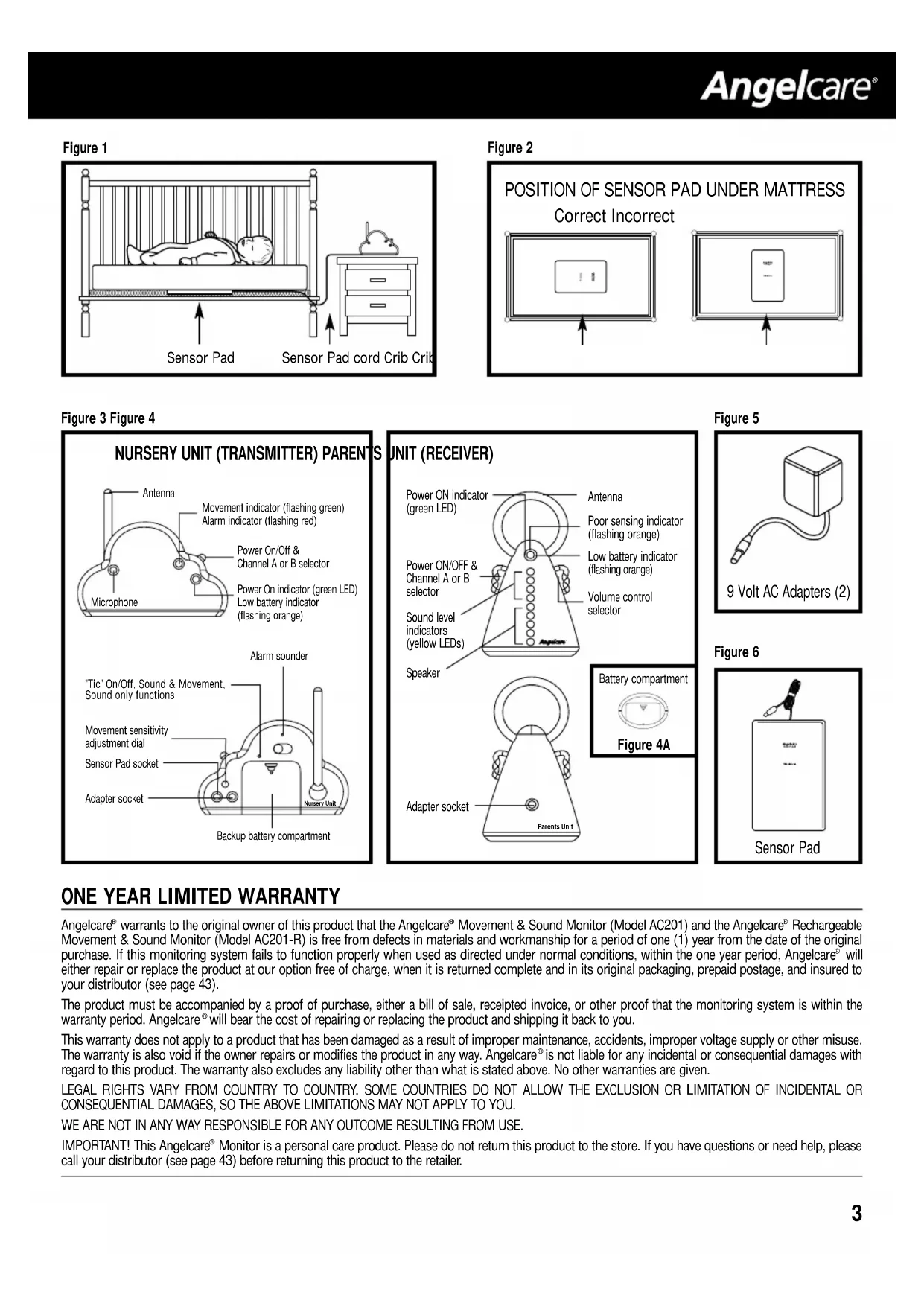
Place Sensor Pad lengthwise under crib mattress, directly under where baby sleeps (Figures 1 and 2). Printed side of Sensor Pad MUST face up. DO NOT place any bedding or linen between crib mattress and Sensor Pad.
Sensor Pad must rest on a firm surface. If your crib has a spring base, place a piece of plywood measuring at least 400mm× 600mm× 6mm (16 x24 x1 / 4 ) on spring base. If your crib has a plywood base, your mattress support is firm enough to properly use monitor.
STEP 2. NURSERY UNIT (TRANSMITTER)
- Insert 4 AAA batteries into Nursery Unit (for battery backup in case of power failure).
- Connect Sensor Pad to Nursery Unit (Figures 3 and 6).
- On the back of the Nursery Unit, select 1 of the 3 functions of how you want to monitor your baby from the Parents Unit:
Sound & Movement: To hear sounds, see sound lights and hear a "Tic" sound with every movement baby makes.
Tic off: Same as Sound & Movement function BUT without the "Tic" sound.
Sound Only: To hear sounds and see sound lights on Parents Unit.
- Connect AC adapter to Nursery Unit and plug adapter into an electrical outlet.
NOTE: The sensitivity adjustment has been preset. DO NOT ADJUST UNLESS NECESSARY. If poor capture of movement (orange flashing light) or false alarm occurs, consult the Movement Sensitivity Adjustment section.
STEP 3. PARENTS UNIT (RECEIVER)
Model AC201: Insert 4 AAA batteries into Parents Unit. Or, connect AC adapter to Parents Unit and plug adapter to an electrical outlet.
Model AC201-R: The pre-installed NiCad rechargeable batteries need to be charged for 15 hours continuously before first-time use. To charge, connect the AC adapter to the Parents Unit. Plug AC adapter to an electrical outlet (Figure 4). The batteries will charge as long as it is connected to a powered AC adapter. The position of the switches will not effect charging.
For longest battery life, only recharge the Parents Unit when the orange Low Battery light flashes.
NOTE: Only the Parents Unit is rechargeable in Model AC201-R.
- Adjust the volume control to the desired level.
STEP 4. TO USE MONITOR
Place baby in crib and switch both units ON by selecting either channel A or B. If reception is not clear, switch to other channel. Make sure both units are on the same channel. When removing baby from crib, switch Nursery Unit to the OFF position. If you forget to switch OFF, a "pre-alarm Tic" will sound after 15 seconds as a reminder.
To avoid feedback (whistling sound), keep both units at least 3 meters apart (10 feet).
STEP 5. BATTERY MODE
- When unplugging AC adapter from each unit, make sure unit is switched OFF. Otherwise, unit will revert to battery mode.
- The monitor will revert to battery mode during a power failure only if batteries are inserted in both units. Insert batteries into Nursery Unit and Parents Unit for Model AC201. When orange Low Battery indicator flashes, change batteries promptly (or recharge Parents Unit for Model AC201-R).
Note:
- Test your Angelcare Monitor BEFORE first-time use and then on a periodic basis.
- When monitor is in use, DO NOT use crib mobile or other crib accessories that produce vibrations. Alarm will not sound as monitor is still detecting movement.
- The Angelcare monitor is perfectly safe. The Sensor Pad and its cord are entirely passive. They carry no electrical current and do not radiate any form of energy. The Nursery Unit emits only very low power radio signals through its antenna. These signals do not present a safety hazard.
- Your monitor can be used in any crib or sleeping area (that has no motion or vibration) designed to safely hold a baby. It must have a firm flat bottom greater than the size of the Sensor Pad - 260 mm x 406 mm (10" x 16"). DO NOT use in a rocking cradle.
- If you have questions or need help, please call your distributor, see page 43.
Warnings
- This product is NOT a medical device nor a device to prevent cases of Sudden Infant Death Syndrome (SIDS).
- This product is NOT a substitute for direct supervision of your baby. Check your baby's activities at regular intervals. Monitoring of premature babies, or those considered to be at risk, should be carried out only under the supervision of a doctor or health professional.
- The Sensor Pad may detect movement from many sources from both inside and outside your baby's room, for example: fans, washing machines, loud music, etc. Ensure that all vibration sources are eliminated before using the Angelcare Monitor. Avoid contact with crib when monitor is in use. Refer to the Movement Sensitivity Adjustment and Troubleshooting sections.
- ALWAYS place both units on flat surface in an upright position, away from baby's reach.
- DO NOT touch the end of the adapter cord when plugged into an electrical outlet.
- The Angelcare Monitor uses public airwaves to transmit signals. The Parents Unit may pick up signals or interference from other nursery monitors in your area. Your monitor may even be picked up by other households. To protect your privacy, make sure both units are in the OFF position when not in use.
- This product should be serviced by qualified personnel. There are no user serviceable parts inside monitor. Refer all service questions to your distributor (see page 43).
Instructions
REtain INSTRUCTIONS: Keep user's manual for future reference.
WATER, MOISTURE AND HEAT DAMAGE: Keep all 3 components away from water (sink, bath tub, swimming pool) and places that emit heat (stove, radiator).
VENTILATION: ALWAYS place both units on flat surface in an upright position so that air can flow freely around them.
AC POWER SOURCE: Use ONLY the AC adapters supplied with the Angelcare Monitor.
CORD PROTECTION: Avoid damage to the Sensor Pad cord and to the adapter cords. Route cords so that they are not likely to be walked on or pinched by items placed upon or against them.
CLEANING: Disconnect all units before cleaning. DO NOT immerse in water. Use a dry cloth to keep monitor free from dust. DO NOT spray with cleaning products or solvents. Wipe Sensor Pad with a very slightly damp cloth with an antiseptic or mild detergent.
OBJECT AND LIQUID ENTRY: Care should be taken so that objects do not fall onto units and that liquids are not spilled into either unit or Sensor Pad through their openings.
NON-USE PERIODS: When not using monitor for long periods, remove the batteries from both units and disconnect the AC adapters from electrical outlet.
Testing Your Angelcare Monitor
Note: Test your Angelcare Monitor BEFORE first-time use and then on a periodic basis.
The Angelcare Monitor can be used outside of the crib, in a different sleeping area. Test monitor when moving Sensor Pad to a new location to ensure sensitivity is adjusted correctly to the new padding or mattress. Consult the Movement Sensitivity Adjustment section.
Step 1. On the Nursery Unit, switch to the "Sound Only" function. Have someone else speak into the Nursery Unit or place a radio near Nursery Unit. You should hear sound from the Parents Unit. If there is no sound, refer to the Troubleshooting section. Make sure that both
units are on the same channel, either both on A or B. If reception is not clear, switch to other channel.
Step 2. Test monitor to detect movement. Switch Nursery Unit to the "Sound & Movement" function. The Movement indicator light will flash red, green and then emit a single "Tic" sound. Gently pat your hand on the mattress. The green light will continue to flash with your every movement. Remove hand from mattress. Due to no movement, a "pre-alarm Tic" sound will emit after 15 seconds. 5 seconds later, the alarm will sound and the red light will flash continuously.
NOTE: If alarm does not sound, the Sensor Pad may be detecting a continuous vibration from the floor, a strong draft or the crib is being touched. Avoid contact with crib when monitor is in use. Place crib near a solid supporting wall and away from strong air currents. The sensitivity of the Sensor Pad may need to be reduced, consult the Movement Sensitivity Adjustment section.
Step 3. To stop alarm, pat your hand lightly on mattress for Sensor Pad to redetect movement. The red Alarm indicator light on the Nursery Unit will continue to flash 1 minute (Figure 3).
Step 4. Verify that the battery mode is functional by operating both units without the AC adapters. The green Power light should appear on both units.
Parents Unit: When orange Low Battery indicator light appears, replace batteries promptly for Model AC201. For Model AC201-R, recharge Parents Unit.
Nursery Unit: When orange Low Battery indicator light appears a rapid "clicking" is heard, replace batteries promptly. If not, the light will eventually turn red and the monitor will stop working.
Operating Tips
Movement Sensitivity Adjustment
The sensitivity adjustment dial has been preset to suit most situations. However in certain circumstances, the sensitivity may not be ideal. DO NOT increase sensitivity unless false alarms occurs and you have followed the advice in the Troubleshooting section for
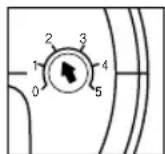
false alarms. Make a note of the pre-set position of the dial should you wish to return to it.
The movement indicator light on the Nursery Unit will flash orange when monitor barely detects movement. This could be a result of: baby being in a very deep sleep or baby having moved away from Sensor Pad to edge of crib. If alarm does NOT sound, no adjustment of sensitivity is required. If the Movement indicator light flashes orange most of the time with baby directly over the location of the Sensor Pad, a false alarm may occur. If this happens, adjust the sensitivity.
To adjust the sensitivity, place baby on mattress or padding and wait until baby is asleep and has settled. This will ensure a more precise tuning. Set dial to 5, then proceed to lower sensitivity until orange light flashes on Nursery Unit. Then slowly increase slightly until green light appears. Add 1/2 point to set the sensitivity level (ex. If green light appears at 3, then set dial at 3.5). Retest monitor.
Channel selection for sound reception
Make sure that both units are on the same channel, either both on A or B. If reception is not clear, switch to other channel. If interference persists, consult the Troubleshooting section.
NOTE: This monitoring system is NOT equipped with an out-of-range indicator. No sound will be received if the Parents Unit and Nursery Unit are too far apart.
Yellow Sound Lights
The four Sound Lights allow you to see baby's sounds. The louder the sounds from baby, the more lights appear.
AC power source
Model AC201: The AC adapters should be used whenever possible to extend the battery life. Batteries can be kept in units while using AC power source.
Model AC201-R: Use AC adapter on Nursery Unit whenever possible to extend the battery life. For Parents Unit, use AC adapter only to charge NiCad batteries.
Replacing the rechargeable batteries (Model AC201-R only)
When the NiCad batteries in the Parents Unit will not charge or only
hold their charge for a short period of time, batteries need to be replaced. You can buy another set of NiCad batteries. In that case, bring old NiCad batteries to ensure proper ones are bought. Or, the Parents Unit can also accommodate NiMh batteries. They require 30 hours of charging time before first-time use. They provide an even longer battery life.
Unscrew the battery compartment door on the Parents Unit. Remove old NiCad batteries. Insert new rechargeable batteries. Screw in the battery compartment door. Plug the Parents Unit into an electrical outlet. Allow new batteries to charge continuously for 15 hours.
TROUBLESHOOTING
| Problem Possible Cause Solution | ||
| False alarms. | ·Baby was removed from crib and Nursery Unit was not switched OFF. ·Sensor Pad cord not connected properly to Nursery Unit. ·Sensor Pad is not in full contact with crib mattress, or crib mattress is not resting on a hard surface. ·Baby has moved away from Sensor Pad, to the edge of the crib. | ·Turn Nursery Unit to the OFF position. ·Verify the connection between the Sensor Pad and Nursery Unit. Unplug and reconnect the cord. ·Make sure there is no bedding between mattress and Sensor Pad. Sensor Pad must rest on a firm surface. If crib has a spring base, place a piece of plywood measuring at least 400 mm x 600 mm x 6 mm (16" x 24" x .25") on spring base. If crib has a plywood base, mattress support is firm enough. ·Make sure Sensor Pad is positioned lengthwise in crib. Sensitivity may need to be adjusted, consult the Movement Sensitivity Adjustment section. |
| Alarm will not sound. | ·Nursery Unit is detecting movement when crib is being touched. ·Nursery Unit is detecting movement from outside the crib such as motorized devices, strong drafts, etc... ·Sensitivity is set too high. | ·Avoid contact with the crib when monitor is ON. ·Place crib near a solid supporting wall to avoid Sensor Pad from detecting movement from outside crib. ·You may need to decrease the sensitivity, consult the Movement Sensitivity Adjustment section. |
| Movement indicator light is flashing orange (monitor is barely detecting movement). | ·Sensor Pad is not in full contact with crib mattress, or the mattress is not resting on a firm surface. ·Baby is in a very deep sleep or has moved away from Sensor Pad, to the edge of the crib. | ·Make sure there is no bedding between mattress and Sensor Pad. Sensor Pad must rest on a firm surface. If crib has a spring base, place a piece of plywood measuring at least 400 mm x 600 mm x 6 mm (16" x 24" x .25") on spring base. If crib has a plywood base, mattress support is firm enough. ·Make sure Sensor Pad is positioned lengthwise in crib. Consult Movement Sensitivity Adjustment section. |
| No sound is being transmitted. | ·Units are too far apart. ·Batteries are low or improperly installed. ·AC adapters are not connected properly or electrical outlet is out of order. ·One of the units is not ON. ·Units are set to different channels. | ·Bring Parents Unit closer to Nursery Unit. ·Check / replace batteries or recharge Parents Unit (Model AC201-R only). ·Check connections or change to another electrical outlet. ·Ensure both units are ON. ·Make sure both units are on the same channel, either both A or B. |
| Power ON indicator (green light) does not light up. | ·Batteries are low or improperly installed. ·AC adapters are not connected properly or electrical outlet is out of order. ·One of the units is not ON. | ·Check / replace batteries or recharge Parents Unit (Model AC201-R only). ·Check connections or change to another electrical outlet. ·Make sure both units are ON and on the same channel, either both A or B. |
| Very weak reception. | ·Units are too far apart. ·One or both units are placed near a large metal mass. ·One or both units are not in the upright position. ·Batteries are low. | ·Bring units closer together. ·Change the position of one or both units. ·Place units on flat surface away from baby's reach. ·Replace the batteries or recharge Parents Unit (Model AC201-R only). |
| Static, distortion, interference (interference from other monitors, wireless phones, walkie-talkies, etc...). | ·Parents Unit is out of range. ·Units are not set to the same channel, either both on channel A or B. ·Parents Unit located near motorized devices, fluorescent lights, television, etc... | ·Bring units closer together. ·Make sure both units are ON and on the same channel, either both on channel A or B. ·Rotate Parents Unit or move it away from source of interference. |
| Feedback (loud noises emitted from Parents Unit). | ·Units are too close to each other. | ·Move units farther apart (at least 3 meters / 10 feet apart). ·Decrease volume on Parents Unit. |
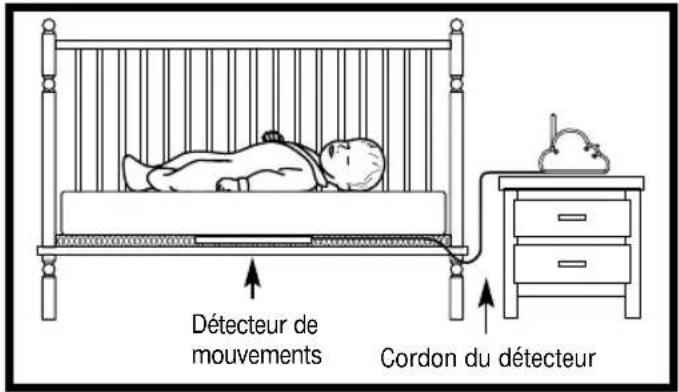
Figure 1
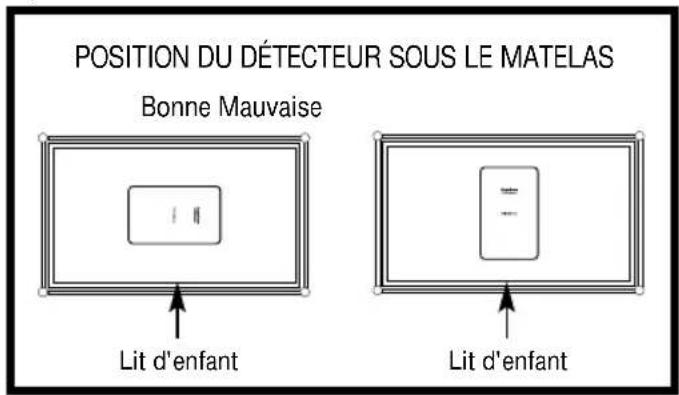
Figure 2
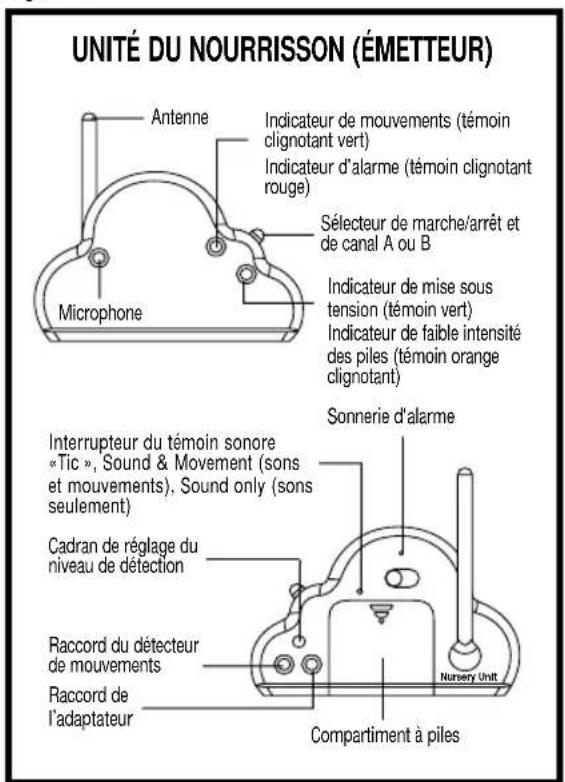
Figure 3
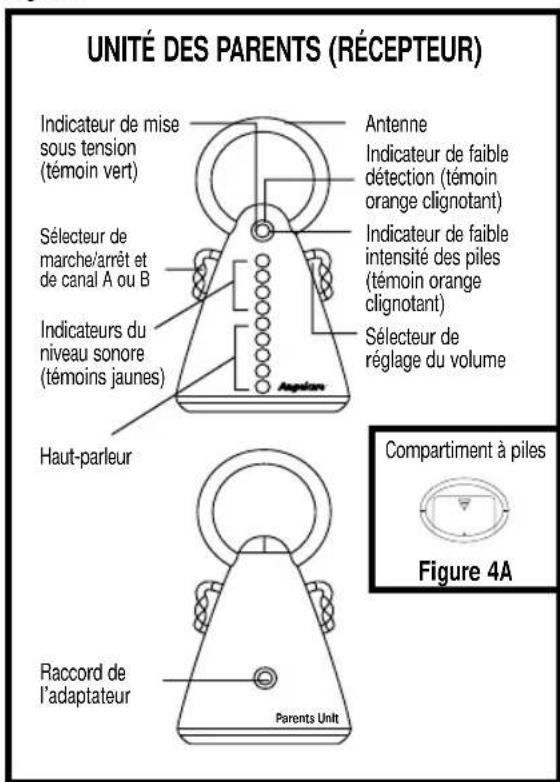
Figure 4
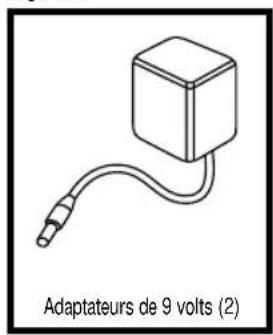
Figure 5
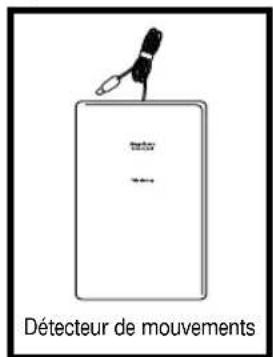
Figure 6
LIMITE DE GARANTIE D'UN AN
PASSO 1. BLOCO SENSOR
Coronel Diaz 2333, 22nd Floor, Office C
1425 Buenos Aires
Tel/Fax:+54-11-4805-3911
E-Mail: efrapal@netverk.com.ar
AUSTRALIA
Valiant Enterprises
323, Warrigal Rd
Cheltenham 3192, Victoria
Tel.: +61-3-9584-5444
Fax: +61-3-9584-8444
Web Site: www.valco.com.au
BENELUX (Belgium, Netherland, Luxembourg)
Mykko B.V.B.A
Lossingstraat 146
2900 Schoten, Belgium
Safety 1st Canada Inc.
804 Deslauriers
St-Laurent, Quebec, Canada H4N 1X1
Angelcare Monitors Inc.
550 chemin du Golf, Suite 202
Nun's Island, Quebec, Canada H3E 1A8
Suite 23A01, 23A/F, Tower 2,
The Gateway, Harbour City,
25 Canton Road,
T.S.T. KLN, Hong Kong
Tel.: +852-2956-2298
Fax:+852-2956-2838
E-Mail: austo@netvigator.com
COLOMBIA
Mockingbird Distribution Co.
4-1-7-Hiroo,#L-802
Shibuya-ku
150-00122 Tokyo
Tel.: +81-3-3797-0430
Fax: +81-3-5467-4144
Web Site: www.mockingbird.co.jp
LIBAN*
Gebran Geahchan & Sons s.a.l.
Horch Talbi, Azar Building, Beirut
Tel.: +961-1495-374
Fax:+961-1486-997
MÉXICO
REGALOS DE IMPULSO S.A. DE C.V.
Av. Rio San Joaquin, 339, Local 9
11490 Mexico City, Mexico
Deka New Zealand Ltd.
21 Laidlaw Way, Flat Bush
Manukau City
Aukland, Private Bag 94020
Tel.: +64-92-72-62-22
Fax: +64-92-72-62-99
Web Site: www.deka.co.nz
NORGE/ISLAND
Simo Alt For Barna
Mosseveien 53-59.
Postboks 130
Fredrikstad, N-1601
Tel.: +47-69-30-05-55
Fax: +47-69-30-05-54
Web Site: www.simo.no
PANAMÁ
A & S Enterprises Inc.
Obarrio, Galerias Espana
Diagonal AI Bingo 90.
Panama Rep. De Pma
Tel.: +507-269-6763
Fax: +507-213-1793
E-Mail: baby@sinfo.net
RéPUBLICA DOMINICANA
Aeroport, Kempton Park
Tel.: +27-11-9741-316
Fax: +27-11-9741-614
Web Site: www.babyboom.co.za
SUOMI
Lastentarvike Oy
Sarkatie 3
01720 Vantaa
Seature Industries Co., Ltd.
4th Fl. 46 Wu Kung Six Rd.
Wu Ku Industrial Park
Taipei Hsien
Tel.: +886- (0)2 22-99-36-26
Fax: +886-0)2 22-99-36-26
E-Mail: seature@ms17.hinet.net
TURKEY*
Metratip Medickal Gerecler
San. Ve Tic; Ltd Sti
Izzenttinbey Cad., Ozgur Sok., No 11/4
81190 Bulgurlu-Uskudar
Istanbul
Tel.: +90-21-64-61-18-70
Fax:+90-21-64-61-87-00
E-Mail: metratip@doru.net.tr
UNITED KINGDOM
Safety 1st Europe Ltd.
Isopad House,
Shenley Road, Borehamwood
Hertfordshire, WD61TE
Tel.: +44-(0)20 8236 0707
- Please note: This company has been transacted by Mykko B.V.B.A. Company.
** Please note: This company has been transacted by Allied Technologies LLC.
www.angelcare-monitor.com
AC201-01-01
INFORMATION TO USER
This device complies with Part 15 of the FCC Rules. Operation is subject to the following two conditions: (1) This device may not cause harmful interference, and (2) This device must accept any interference received, including interference that may cause undesired operation.
This equipment has been tested and found to comply with the limits for Class B Digital Device, pursuant to Part 15 of the FCC Rules. These limits are designed to provide reasonable protection against harmful interference in a residential installation. This equipment generates and can radiate radio frequency energy and, if not installed and used in accordance with the instructions, may cause harmful interference to radio communications. However, there is no guarantee that interference will not occur in a particular installation. If this equipment does cause harmful interference to radio or television reception, which can be determined by turning the equipment off and on, the user is encouraged to try to correct the interference by one or more of the following measures.
Reorient or relocate the receiving antenna
- Increase the separation between the equipment and receiver
- Connect the equipment into an outlet on a circuit different from that to which the receiver is connected
- Consult the dealer or an experienced radio/TV technician for help
Any changes or modifications not expressly approved by the party responsible for compliance could void the user's authority to operate the equipment.
L'UTILISATION DE CE DISPOSITIF EST AUTORISÉE SEULEMENT AUX CONDITIONS SUIVANTES: (1) IL NE DOIT PAS PRODUIR DE BROUILLAGE, ET (2) L'UTILISATEUR DU DISPOSITIF DOIT ÉTRE PRET À ACCEPTER TOUT BROUILLAGE RADIOÉLECTRIQUE REÇU, MÉME SI CE BROUILLAGE EST SUSCEPTIBLE DE COMPROMETTRÉ LE FONCTIONNEMENT DU DISPOSITIF.
User Guide Statement
Angelcare Monitors Inc. declares that the AC201 and AC201-R are in conformity with all essential requirements and other relevant provisions of the R&TTE Directive (1999/5/EC):
This product is marked with C€0165 which signifies conformity with Class II product requirements specified in the R&TTE Directive.
- TABLE DES MATIÈRES
- INNHOLDSFORTEGNESELL
- INNEHÄLLSFÖRTECKNING
- INDHOLDSFORTEGNEALSE
- 5 EASY STEPS TO OPERATE YOUR ANGELCARE MONITOR
- STEP 1. SENSOR PAD
- STEP 2. NURSERY UNIT (TRANSMITTER)
- STEP 3. PARENTS UNIT (RECEIVER)
- STEP 4. TO USE MONITOR
- STEP 5. BATTERY MODE
- NOTE
- WARNINGS
- INSTRUCTIONS
- TESTING YOUR ANGELCARE MONITOR
- OPERATING TIPS
- MOVEMENT SENSITIVITY ADJUSTMENT
- CHANNEL SELECTION FOR SOUND RECEPTION
- YELLOW SOUND LIGHTS
- AC POWER SOURCE
- REPLACING THE RECHARGEABLE BATTERIES (MODEL AC201-R ONLY)
- LIMITE DE GARANTIE D'UN AN
- PASSO 1. BLOCO SENSOR
- AUSTRALIA
- COLOMBIA
- LIBAN
- MÉXICO
- NORGE/ISLAND
- PANAMÁ
- RÉPUBLICA DOMINICANA
- SUOMI
- TURKEY
- UNITED KINGDOM
- WWW.ANGELCARE-MONITOR.COM
- INFORMATION TO USER
- USER GUIDE STATEMENT
Brand : ANGELCARE
Model : AC201R
Category : Baby monitors