EasyManual
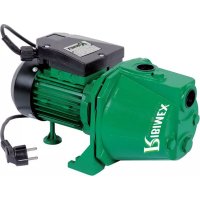
PRPVC7503X1 / 511706 - Drain pump RIBIMEX - Free user manual and instructions
Find the device manual for free PRPVC7503X1 / 511706 RIBIMEX in PDF.


User questions about PRPVC7503X1 / 511706 RIBIMEX
0 question about this device. Answer the ones you know or ask your own.
Ask a new question about this device
Download the instructions for your Drain pump in PDF format for free! Find your manual PRPVC7503X1 / 511706 - RIBIMEX and take your electronic device back in hand. On this page are published all the documents necessary for the use of your device. PRPVC7503X1 / 511706 by RIBIMEX.
USER MANUAL PRPVC7503X1 / 511706 RIBIMEX
EN SUBMERSIBLE DUAL PUMP (FOR CLEAR AND DIRTY WATER) User and maintenance manual
Carefully read this instruction manual before operating this appliance.
Incorrect operation may cause injury and/or damages.
Please keep this manual for future reference.

AVVERTENZA:
Warning: This pump is not intended for pumping drinking water or any other food liquid.
Before using this product, read and understand all safety instructions.
Always follow the safety instructions to minimize risk of damage to property, and to minimize any risk of damages and injuries to persons and animals.
3.1- Symbols (meaning of the symbols found on the product, when applicable)
| Caution! Risk of injury and/or damage and/or deterioration of product in case of non-compliance to safety requirements | |
| Read the instructions manual. | |
| Keep persons (esp. children) and animals away from product and working area | |
| Disconnect product from its power source before maintenance, cleaning or any intervention on product; or when you do not use product. Disconnect product from its main power source, if product, power cable, or extension cord is damaged or cut during operation. Unplug product by pulling the plug. Do not pull the cable. | |
| Do not dispose of this product with household rubbish. Disposition of this product in the nearest recycle centre. Please contact your local authority or local recycle centre for further information for its safe disposal. |
3.2- General safety instructions
READ ALL THE INFORMATION BEFORE OPERATING THE PRODUCT.
- Keep work area clean
Cluttered areas and benches invite accidents and injuries.
2. Consider work area environment
Keep work area well lit (natural light or sufficient artificial lighting).
Keep work area well ventilated.
Do not use product where there is risk to cause fire or explosion (in the presence of flammable liquids, solids or gas).
- Guard against electric shock
Avoid body contact with earthed or grounded surfaces (e.g. pipes, radiators, ranges, refrigerators).
- Keep children away
Do not let bystanders touch the product or its power cable or extension cord.
All bystanders (esp. children) should be kept away from product and work area.
Keep the product away from children or from their environment. Never allow children to operate the appliance. Children should be supervised to ensure that they do not play with the appliance.
- Store idle products
When not in use, product should be stored in a dry, high or locked up place, out of reach of children.
- Do not force the product
It will do the job better and safer at the rate speed for which it is intended.
Do not use the product for purposes other than those for which it is intended. The product will do a better and safer job if it is used only for the purposes it was designed for.
- Use the right product
Do not force small products or attachments to do the job of a heavy duty product.
- Dress properly
When installing, do not wear loose clothing or jewellery; they can be caught in moving parts.
Wear protecting hair covering to contain long hair.
- Use protective equipment
When installing, wear protective equipment appropriate to working conditions and work environment
Wear protective helmet, safety goggles, ear mufflers, face or dust mask, rubber gloves and non-skid footwear to reduce the risk of personal injury during products use or manipulation.
- Do not abuse the power cable
Never carry the product by the cable or yank it to disconnect it from the socket.
Keep the cable away from heat, oil and sharp edges.
Inspect product cable periodically and if damaged have it repaired by an authorized service facility. Inspect extension cords periodically and replace, if damaged.
- Do not overreach
Keep proper footing and balance at all times.
- Maintain product with care
Keep product clean for better and safer performance.
- Disconnect product
When not in use, before servicing and when changing accessories.
- Avoid unintentional starting
Ensure switch is off when plugging in.
- Use of extension leads
When product is used with extension cord, ensure that extension cord withstands product ratings.
If used outdoors, use only extension cords intended for outdoor use.
- Stay alert
Watch what you are doing. Use common sense.
Do not operate product when you are tired, under the influence of alcohol, prescription medicines or drugs.
- Check damaged parts
Before further use or reuse of the product, it should be carefully checked to determine that it will operate properly and perform its intended function.
-
Defective switches or other part that is damaged should be properly repaired or replaced by an authorized service centre. Do not use the product if the switch does not turn it on and off.
-
Warning
The use of any accessory or attachment, other than those recommended in this instruction manual, may present a risk of injury to persons or animals and may cause damages.
The user and/or operator are responsible for any damages or injury caused to properties and/or persons.
- Have your product repaired by a qualified person
Unless otherwise indicated in this instruction manual, repairs or replacement of any damaged part in an authorized service centre is recommended.
This electric product is in accordance with the relevant safety requirements. Repairs should only be carried out by qualified persons using original spare parts, otherwise this may result in considerable danger to the user.
- Remarks:
The safety precautions and instructions given in this manual are unable to cover in detail all the conditions and situations that may arise.
The operator and/or user must use common sense and caution when operating the product especially for any matters that are not referred in the above
3.3- Special warnings when using the pump
- Become familiar with the controls and the proper use of the equipment.
- The use of this product by unsupervised children is forbidden.
- This appliance can be used by children aged from 8 years and above and persons with reduced physical, sensory or mental capabilities or lack of experience and knowledge if they have been given supervision or instruction concerning use of the appliance in a safe way and understand the hazards involved.
- children shall not play with the appliance.
- cleaning and user maintenance shall not be made by children without supervision
- If the power cable is damaged, it must be replaced by the manufacturer, its after sales service or a person with similar qualification in order to avoid any danger.
If the power cable or extension cord is damaged or cut during operation, immediately disconnect plug from its main power source. Do not touch the cable or extension cord before unplugging from main power. - Take care that electrical connection is made within dry area and protected from flooding.
- Before connection, check that your power source voltage matches the data indicted on the product (see characteristics).
3.4- Safety prescriptions
- The supply voltage should correspond to that given on the description label (230 V-50Hz).
Do not use any other type of power supply. - The pump should be supplied by a circuit containing a residual current circuit breaker (RCCD) with a sensitivity not exceeding 30mA .
Consult a qualified electrician.
- The supply cable should be checked periodically and before each use to see if there are any signs of ageing or damage.
If the pump is not in good condition, do not use it. Have it repaired by an authorized center.
-
If an extension is used, ensure that it is officially approved. Keep it well away from sharp edges, heat sources and combustibles.
-
The plug-in connector for the extension should be of 2-pole + earth type of 10-16A/250V, in accordance with CEE standards. The wire section in the cable should be equal to or greater than 1mm^2 . The cable should not be lighter than cables of H05 RN-F type.
- When disconnecting the power cable from the socket, always grip the plug itself and not the cable.
- These pumps can be used in swimming pools, garden ponds (eg ponds and / or garden pond, fountains ...).
If the pump is used for emptying a swimming pool or pond, it should not be used when people or animals are in the water.
Similarly, to avoid accidents during pump operation, it is strictly forbidden to bathe, to swim, to wash, or to water animals near the pump.
Ensure to remove the pump before allowing people and / or animals to enter the water.
- When the pump is immersed, handling should not be carried out using the power cable but using a device (for ex. a rope) connected to the carrying handle.
- Do not use power cable or float switch cable for carrying or hanging up the pump.
IV. GETTING STARTED

Before any intervention on product, ensure that product is disconnected from its power source.
4.1- Unpacking
- Remove product from its packaging.
- Check that product and accessories are not damage
4.2- Connecting the evacuation hose (Fig.2 & 3)
- Fig.2 - Insert the washer (4) then the check valve (3) on the discharge port (1).
Screw the provided universal fitting (2) (if necessary) onto the pump outlet (1).
- Fig.3 - Wedge the discharge hose onto the connection section corresponding to the internal diameter of the hose.
- Add a fixing collar (hose clamp not supplied) to complete the seal.
N.B.: For large diameter hoses and to obtain the optimum discharge output, it will be necessary to cut the end of the universal fitting (Fig.4) so as to only keep the section suitable for the hose used.
4.3- Adjusting the floating switch
- The float switch (14) enables the automatic start of the pump.
When the float switch reaches an angle >45^ , the pump starts up.
When the float switch lowers, then the pump will stop automatically. - By shortening the length of the cable between the pump and the float, it is possible to modify the water heights that trigger starting and stopping of the pump.
- To adjust the cut-in/cut-out height, fix the float switch cable to the float switch lock (12) provided for this purpose.
- Adjust the cable to the required length.
4.4- Start-up
Note: Before use, ensure discharge line is unobstructed.
Observe and respect the minimum water level and max delivery height.
The installation location should not be smaller than 800 × 250 ~mm (if rectangular) or 800 ~mm (if round).
- The pump must be in a vertical position on a flat surface (Fig.5), ensure that it is stable during operation.
- Ensure that the float switch can move freely (Fig.5).
- The suction holes must never be obstructed. It is therefore preferable that the pump should never be
placed directly on the ground or on the bottom of the well, pond or vessel.
For example, use a brick to support the pump.
Warning: to dry out premises (cellar draining for example) it will be necessary to place the pump below floor level.
- During installation, NEVER hang the pump by the power cable or discharge hose.
Hang up the pump using the transport handle (6) or the eyelet (5). - Pump installation must be carried out according to national / local regulations. Should you have any doubt, seek assistance from a qualified person.
- Follow the max submersible depth (H1) and the conveying height (H2) specified in table 1.
4.5- Clear water - dirty water mode
4.5.1- To switch from Clean Water Mode to Dirty Water Mode (Fig.6+7+8)
Place the pump vertically on a flat ground.
With your feet, step on the two flat supports (15) (Fig.6).
Hold the handle (6) with your hand and lift up the pump until it can't move.
Rotate the locating ring (9) towards the "23mm" direction until it can't move (Fig.7).
In dirty water mode, the pump suction capacity is up to 23mm from the ground and with particles in suspension that are less than 20mm in diameter (Fig.8).
4.5.2 – To switch from Dirty Water Mode to Clean Water Mode (Fig.6+7+9)
Flush the mud and sand on the pump before switching.
Place the pump vertically on a flat ground.
With your feet, step on the two flat supports (15) (Fig.6).
Hold the handle (6) with your hand and lift up the pump until it can't move.
Rotate the locating ring (9) towards the "1mm" direction until it can't move (Fig.7).
In clear water mode, the pump suction capacity is up to 1mm from the ground and with particles in suspension that are less than 5mm in diameter (Fig.9).
4.6- Finish Running
4.6.1- When drawing water under low water intake,
When all the water has been pumped out, at this time, unplug the plug form the power source.
Then lift the pump up to a water container.
Unscrew the output connector (2) for discharge port (1) and drain all the water in the discharge hose into the container.
4.6.2- When under other working conditions (except complete water draining)
Unplug the plug directly from the power socket.
V. OPERATION
5.1- Intended use
- Clear/Dirty cellar type pumps are submersible pumps intended for domestic use. They are not intended for commercial, artisanal and/or industrial uses. This pump should be used only for drying out flooded premises or for pumping water out of wells or cellars.
- This pump is designed to suck up clear and dirty water with particles in suspension that are less than 5mm and 20mm in diameter respectively.
- The pump is fully submersible: the immersion depth must not exceed 7m (refer to the technical characteristics table).
- The pump should not be used for sucking up liquids or materials that are corrosive, combustible or explosive; fats, oils, heavily dirty water and waste water from toilet, food liquids...
- The temperature of liquids sucked up should not exceed 35^ .
- Any other use, other than that described in the instructions, is likely to damage the pump and to put the user in serious danger.
5.2-Operation
Set the pump in clear water or dirty water mode according to your needs.
Install the pump.
Connect pump to mains power.
5.2.1- In automatic functioning mode,
The pump will start and stop as soon as the float switch reaches the pre-set angles (see 4.3)
5.2.2-In manual functioning mode,
Raise the float switch to start the pump and lower it to stop the pump.
When it is under manual mode, the pump must be operated under user's supervision.
5.2.3- Warning!
Never operate the pump empty and without water.
The pump is not designed for continuous operation!
The submersible pump must be immersed before switching on.
Place pump into water, then let it purge the air (air bubbles) then only you can connect it.
In automatic functioning, the filling-up time before float switch operates is enough to purge the air.
IMPORTANT: Regularly check the water level while the pump is running, to make sure it does not drop too much and leave the pump running dry.
5.3- Advise for users
- if discharge stops although the pump continues to function, switch it off immediately.
Unplug the pump from the mains and check to see what is causing the problem.
Never attempt to remove the turbine when the pump is still connected to the power supply.
- The pump is fitted with a motor protected by a thermal safety. In the event of overheating, the motor stops automatically.
Switch off the pump (or unplug from power source), allow the motor to cool down before restarting it.
Never place hands anywhere near the turbine during this phase. If remedial action is necessary, always unplug the pump from the power supply first.
- The pump is also fitted with an automatic bleed device to evacuate any air that might have got into the suction circuit.
When the water level drops below the vent located in the middle of the pump body, water is evacuated by this hole so as to automatically bleed the circuit: this is not a fault but corresponds to a normal function of the pump.
-
After having pumped dirty water, water containing sand or other material, the pump should be rinsed with clear water.
-
When using the pump for example to drain out a room or empty a tank, when all the water has been pumped out, ten at this moment, unplug the plug form the power source. Lift the pump over a container. Unscrew the output connector (2) from the discharge port (1) and drain all the water in the discharge hose into the container.
VI. MAINTENANCE AND STORAGE

Before any intervention on product, ensure that product is disconnected from its power source.
6.1- Maintenance
- In winter the pump must be thoroughly drained or kept in "frost free" conditions.
- Regularly rinse out the pump with clean water, including the suction circuit.
- After using the pump in a swimming pool or garden pond/basin, thoroughly rinse it with clean water, including the suction line.
- Avoid pumping liquid containing abrasive materials such as sand.
- Before each re-use, ensure that all parts of the pump are in good working order.
- Clean plastic parts with a soft clean cloth.
- Do not use aggressive cleansers (solvents or abrasive cleansers), or an abrasive sponge.
- Locating Ring: over time dirt may deposit causing the rotation of locating ring not smooth enough, thus making the switch function from clean water mode to dirty water mode lose efficiency, therefore the pump should be cleaned up thoroughly and regularly.
Use a suitable soft bristle brush to clean the locating ring and the base, and rinse with clean water.
6.2-Breakdown
Never attempt to dismantle the pump.
If necessary, have it checked and repaired by an authorized centre (consult your dealer).
6.3- Troubleshooting
| Fault | Reason | Trouble shooting |
| The pump runs but doesn't convey the water | There is air in the pump | Plug and unplug the plug of power line for times until the pump conveys the water |
| The water outlet has been blocked | Power off the pump, unplug the power plug and clear up the water outlet | |
| The water level is lower than minimum start water level | Hold the handle, adjust the pump into lower intake condition and make sure the water level is higher than 5mm | |
| The pump can't run, or the pump stops suddenly during operation | The power cuts off | Check fuse device and electrical connection |
| The float switch is not on | Lift up the float switch to make it on | |
| The motor is overheating, so the heat protector of the motor switches off the pump | Switch off the pump, unplug the plug of power supply to make the pump cool, clean the water inlet on the stainless-steel base plate and prevent dry running | |
| There are foreign matters in the water outlet | Switch off the pump, unplug the plug of power supply and get the foreign matters out | |
| The conveying efficiency falls off | The water outlet has been blocked | Switch off the pump, unplug the plug of power supply and clean the water inlet area |
| The conveying efficiency is of too low | The conveying efficiency depends on conveying height, diameter of the water tube and length of the tube. | Pay attention to the max conveying height, refer to technical parameters, and if necessary, select another water tube with different diameter or length |
| The water can't be pumped off, so it can't reach nominal technical parameter. | The area is not flat and has foreign matters | Adjust the pump to a flat location, clear up foreign matters which affect the placement of the pump |
| The pump doesn't adjust into clean water mode. | Turn the pump into clean water mode |
6.4 - Transport
To avoid accident and damage, pay attention to the weight of the device during carrying.
Make sure the pump will not slip down, be squeezed and vibrate during transportation.
Secure firmly the pump during transport to prevent loss of balance, damage or injury.
6.5- Storage
Clean the pump.
Pump must be stored in a dry, clean and ventilated location, protected from extreme temperatures.
Always lock up product and keep out of reach of children.
The pump should be stored in a place where it will not freeze.
6.6- Disposal
Do not dispose the product with household garbage. Do not throw into the environment.
Dispos of the product in a collection centre for waste of electrical and electronic equipment, or a waste drop-off centre; or seek advice from your local municipality.
Disposal of the product, accessories and packaging should be carried out according to local regulations governing environment protection.