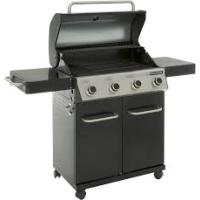
USER MANUAL KENTON 4B NATERIAL
Thank you for purchasing this Naterial product. We recommend that you read the installation, user and maintenance instructions carefully. We have designed this Naterial product to ensure your complete satisfaction. If you require assistance, the team at your retailer is on hand to help you.
1
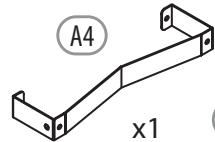

A5
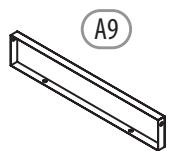
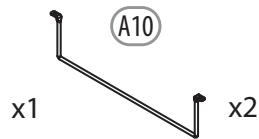
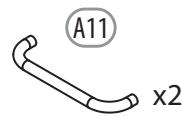
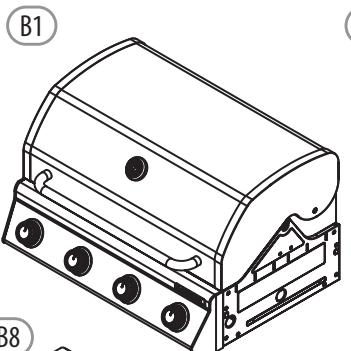
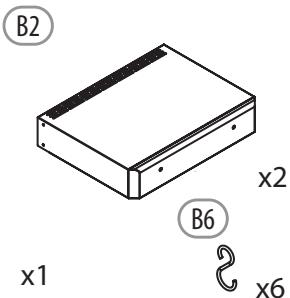
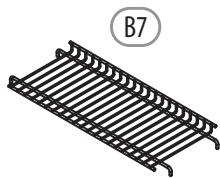
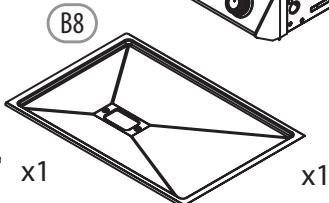
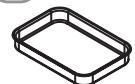
B9

B10
x1

B11
x1
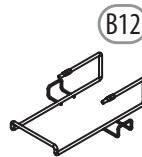
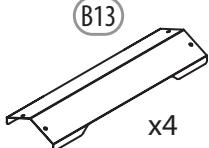
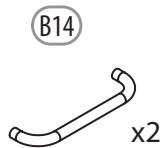
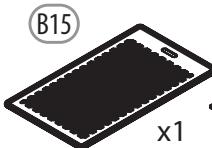
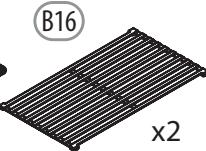
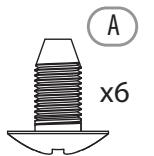
4x8
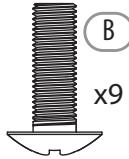
0 4x12
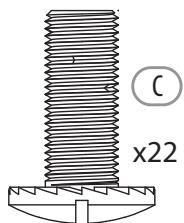
6x15
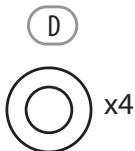
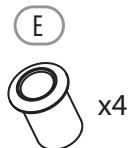
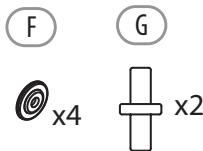


PH
6

N 24 x1
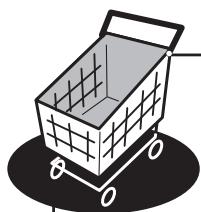


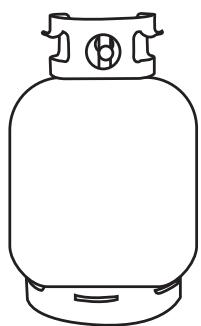
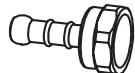
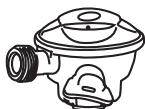
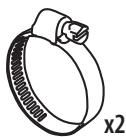


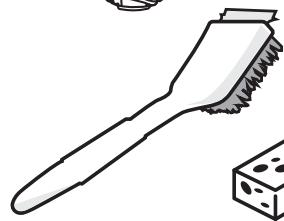
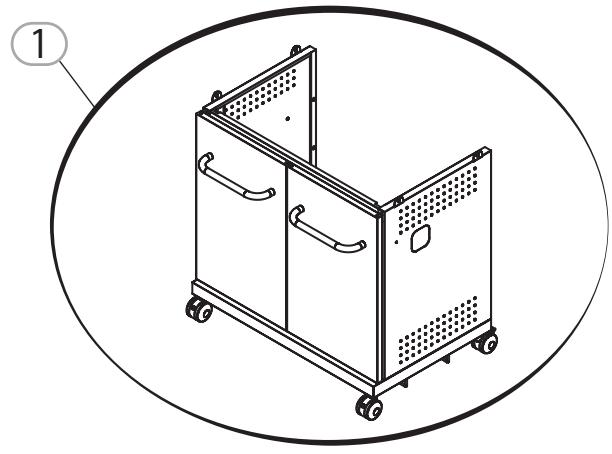


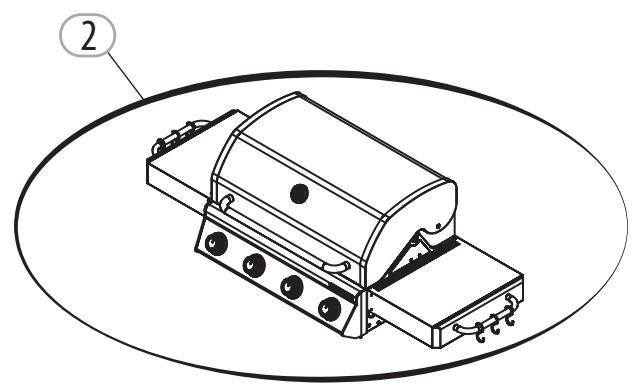


Montage / Montaje / Montagem / Montaggio / Συναρμολόγηση / Montañ / Πθρκa / 3διρκa / Montaj / Montagem / Assembly Pages 1-13

Utilisation / Utilização / Utilização / Uso / Xpônôn / Uzytkowanie / Исторынх / Викорисань / Utilizare / Uso / Use Pages 14-19

Entretien / Mantenimiento / Servço / Manutenzione / Συντήρηση / Konserwacea / Ухов / Догаян / Intreşinere / Manutençao/ Maintenance
Pages 20-22

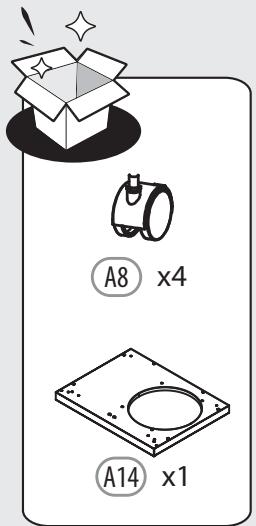
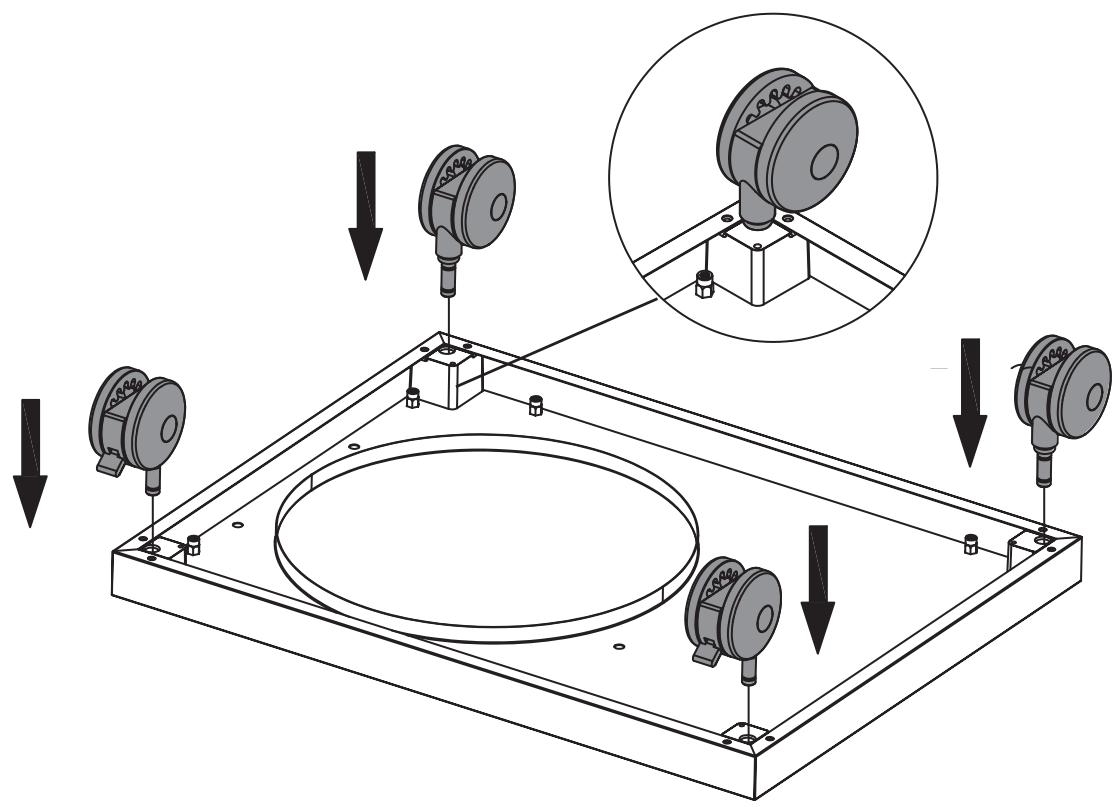
1.1
1.2

1.3
1.4

1.5
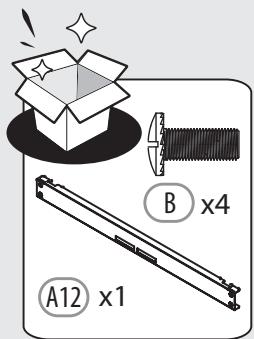
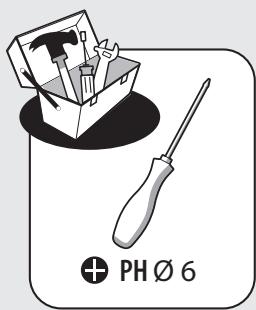
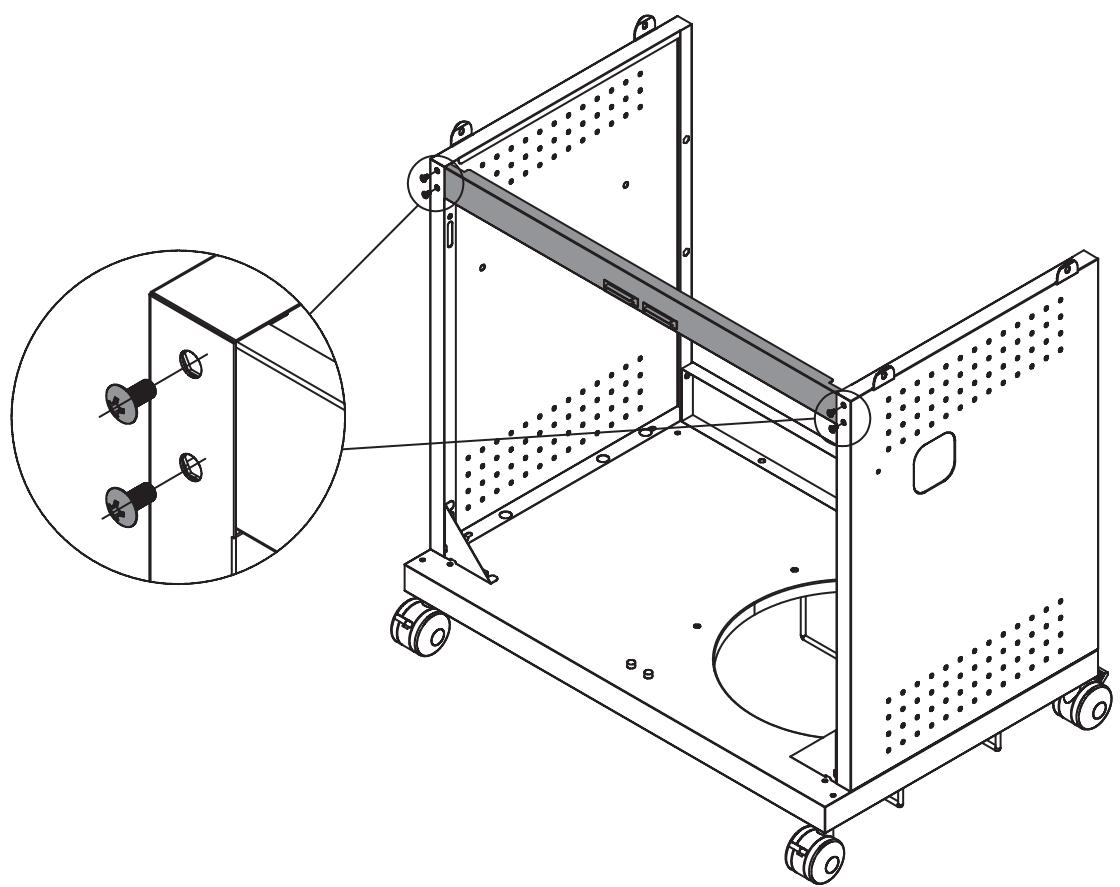
1.6

2.1
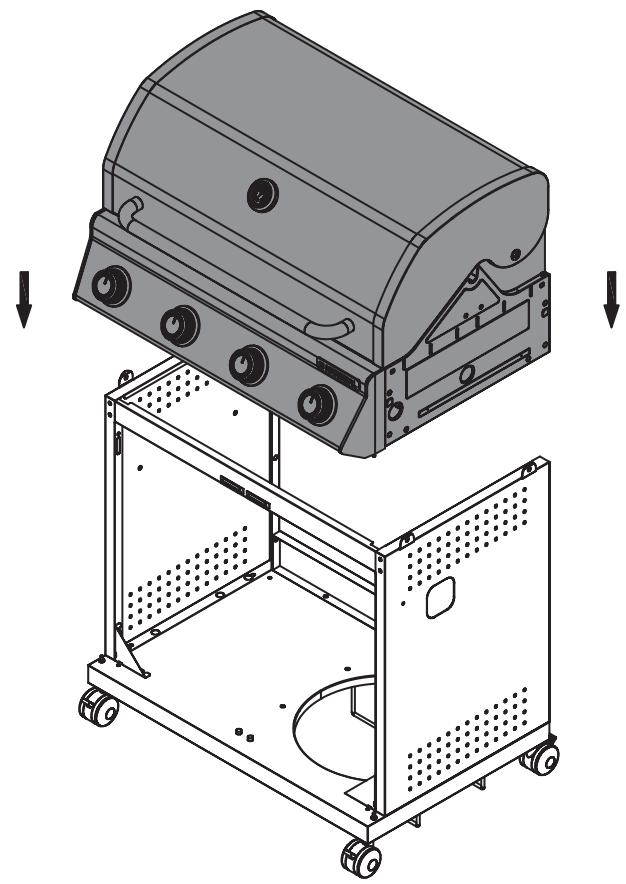
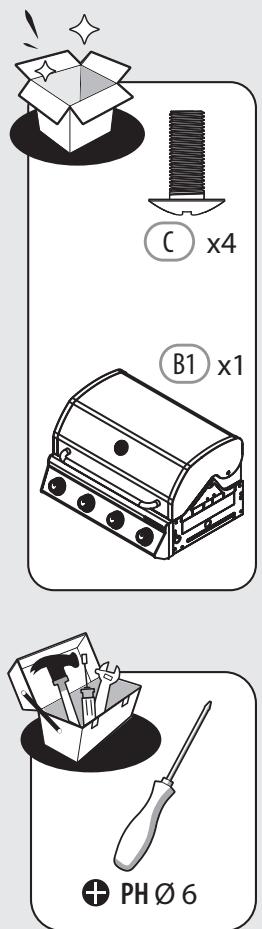
2.2
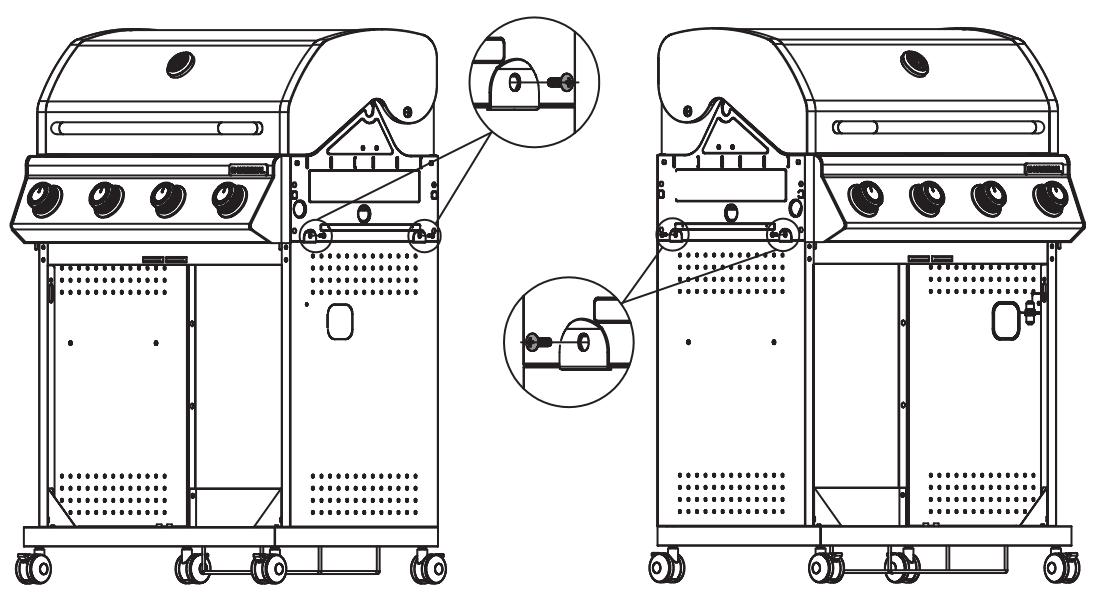

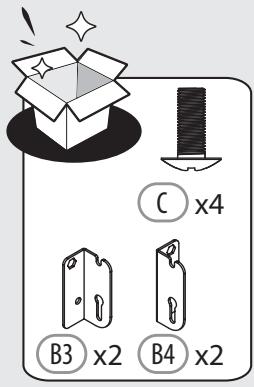
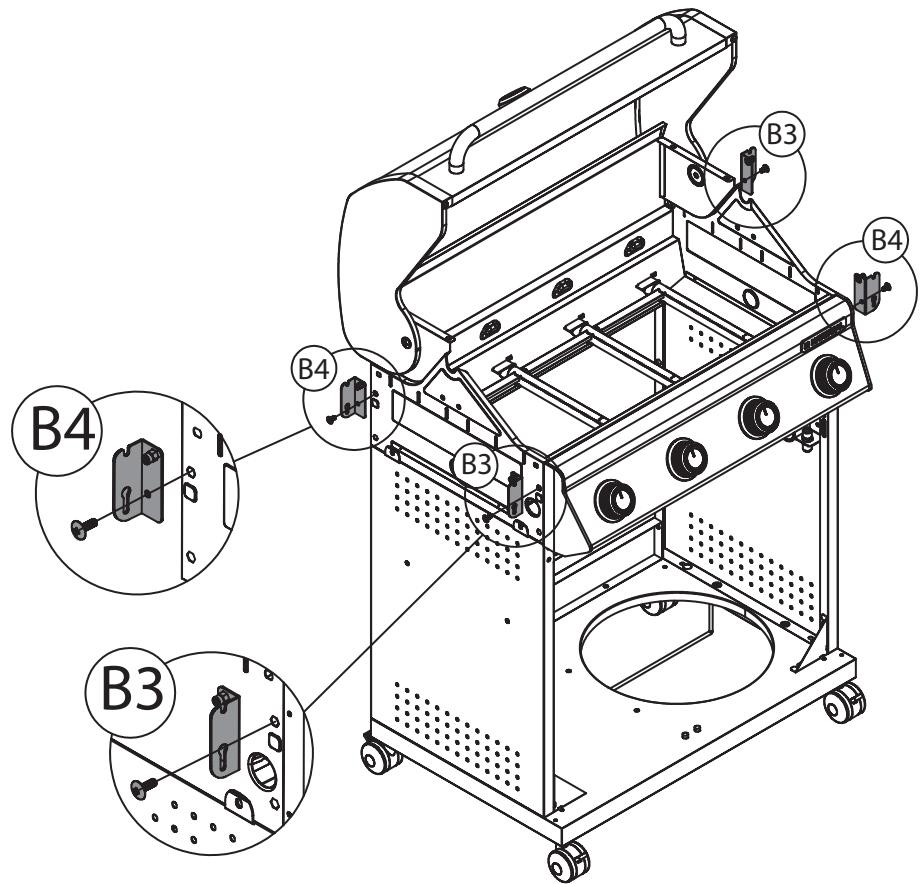
2.3
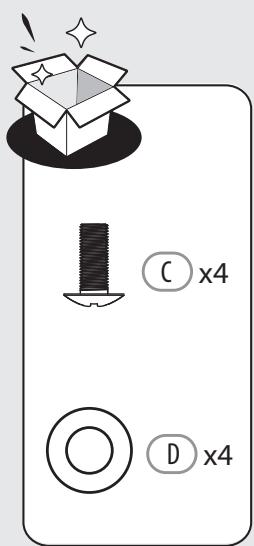
2.4
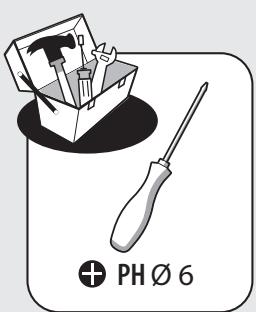
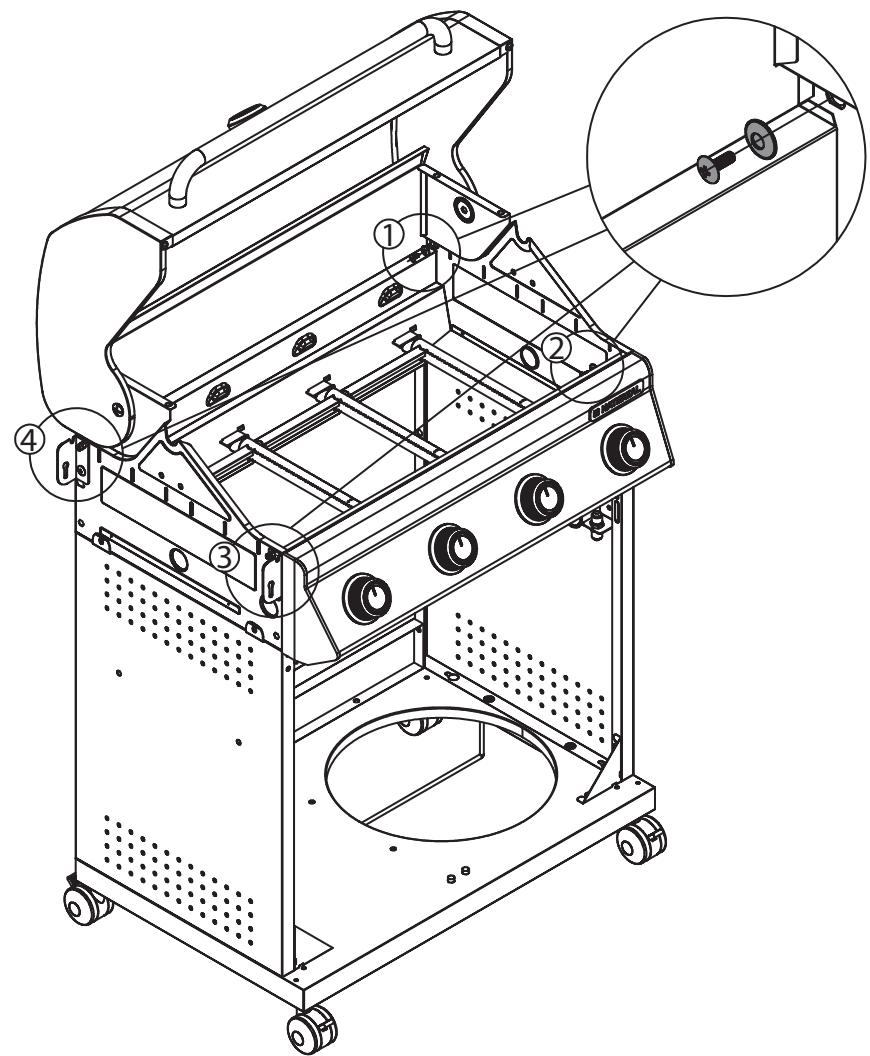

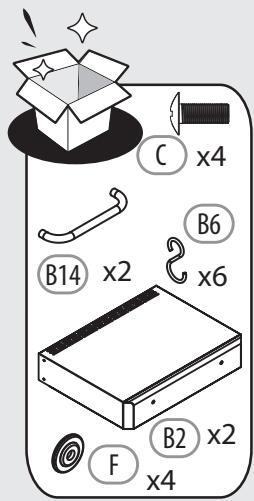
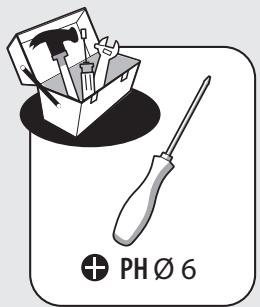
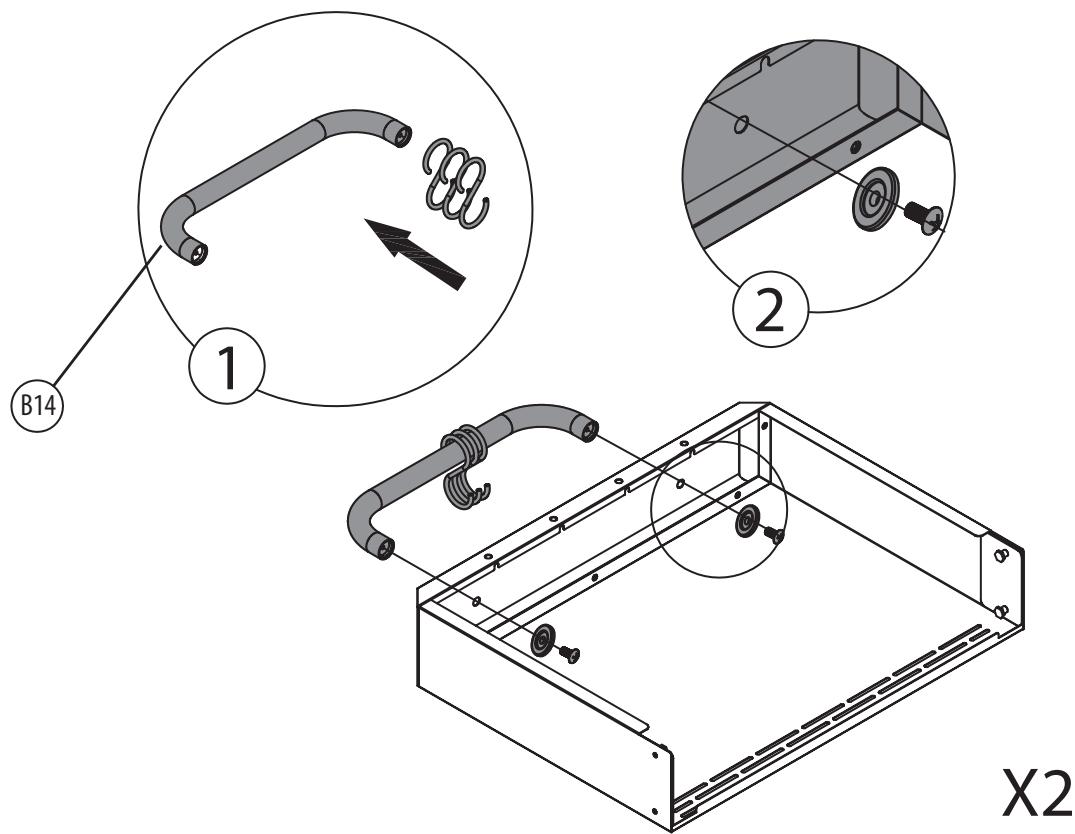
2.5
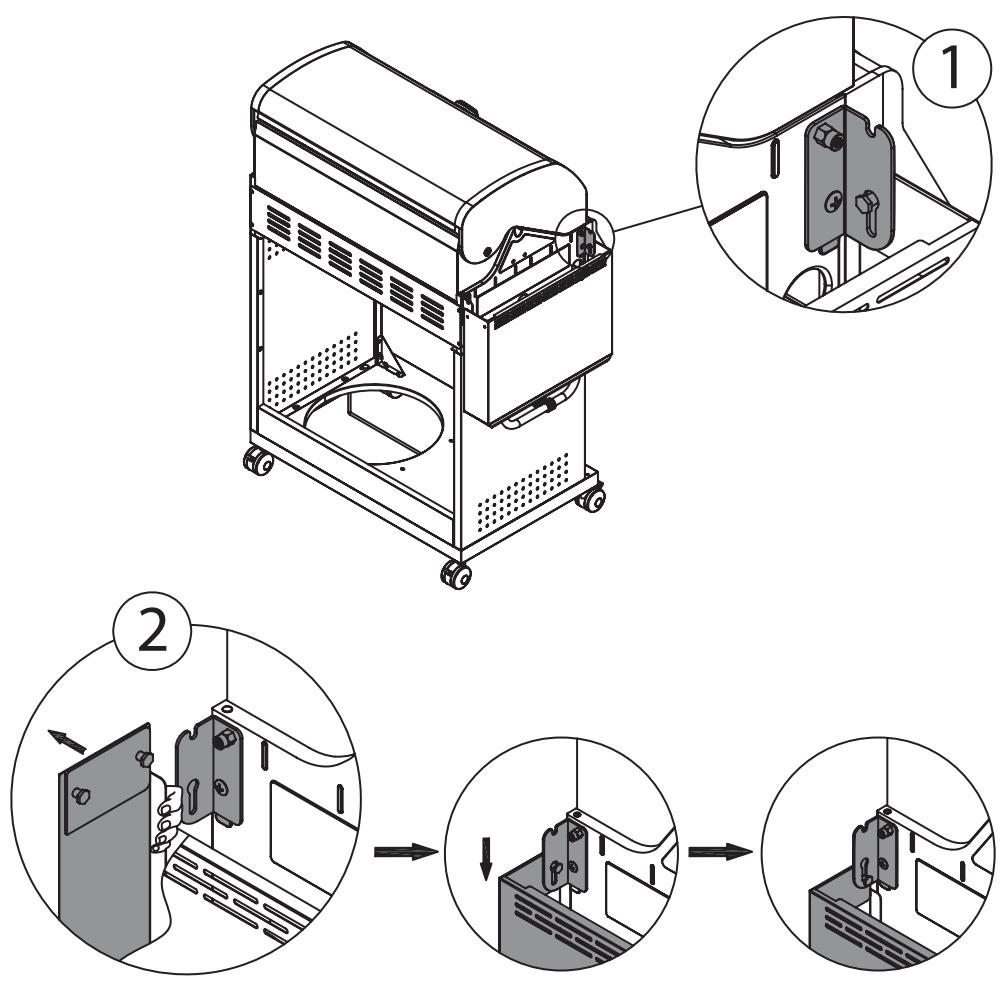
2.6

2.7
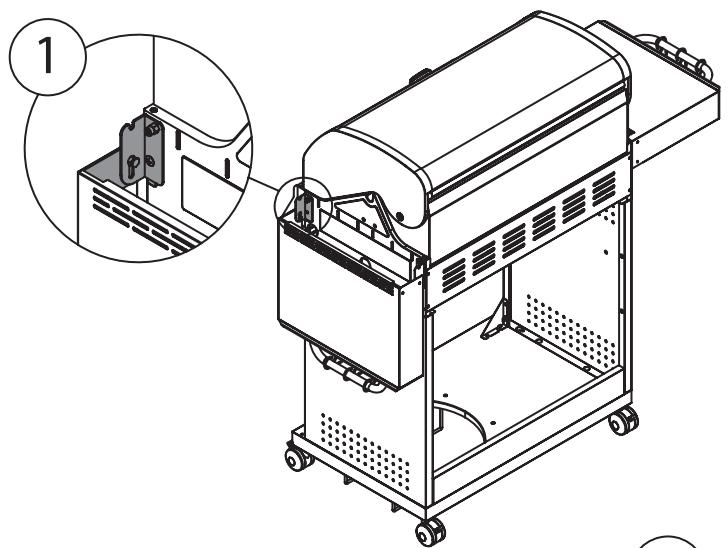
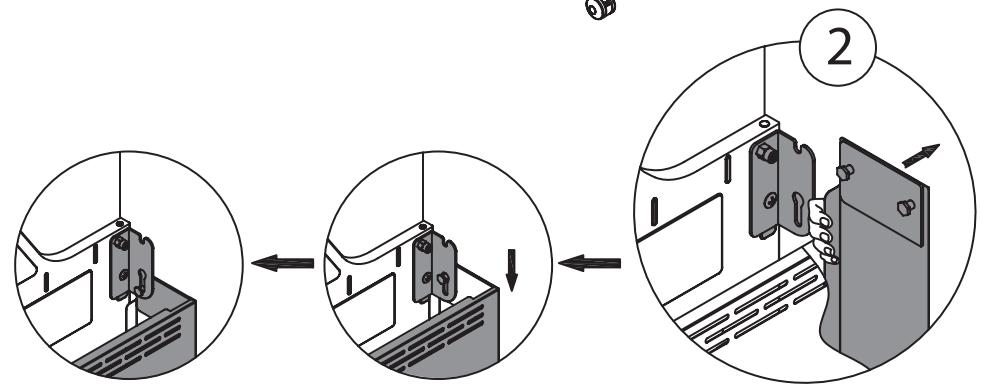
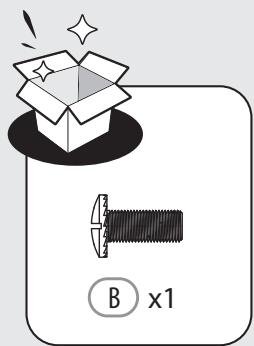
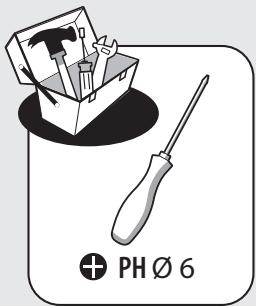
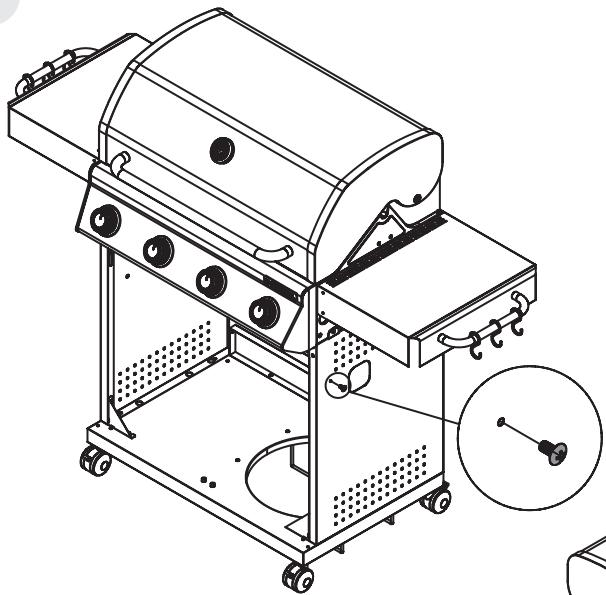
2.8

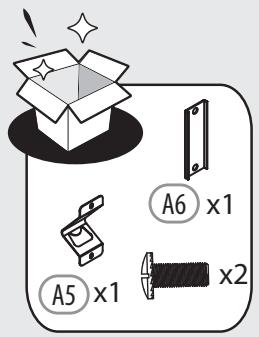

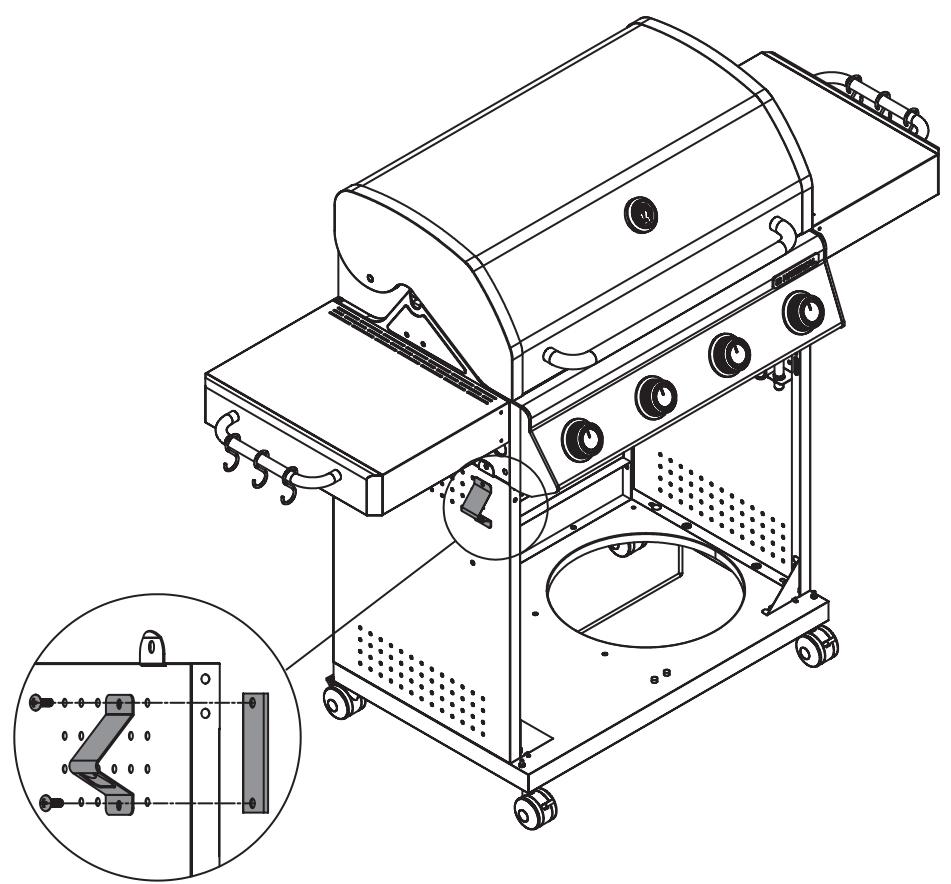
2.9
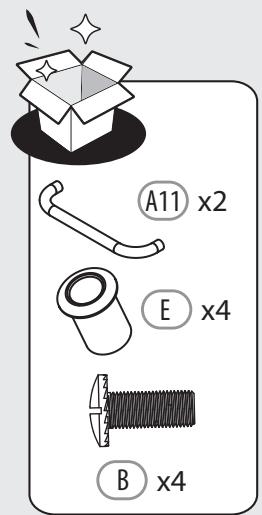
2.10
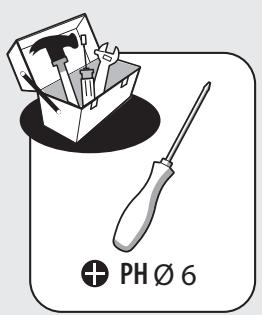
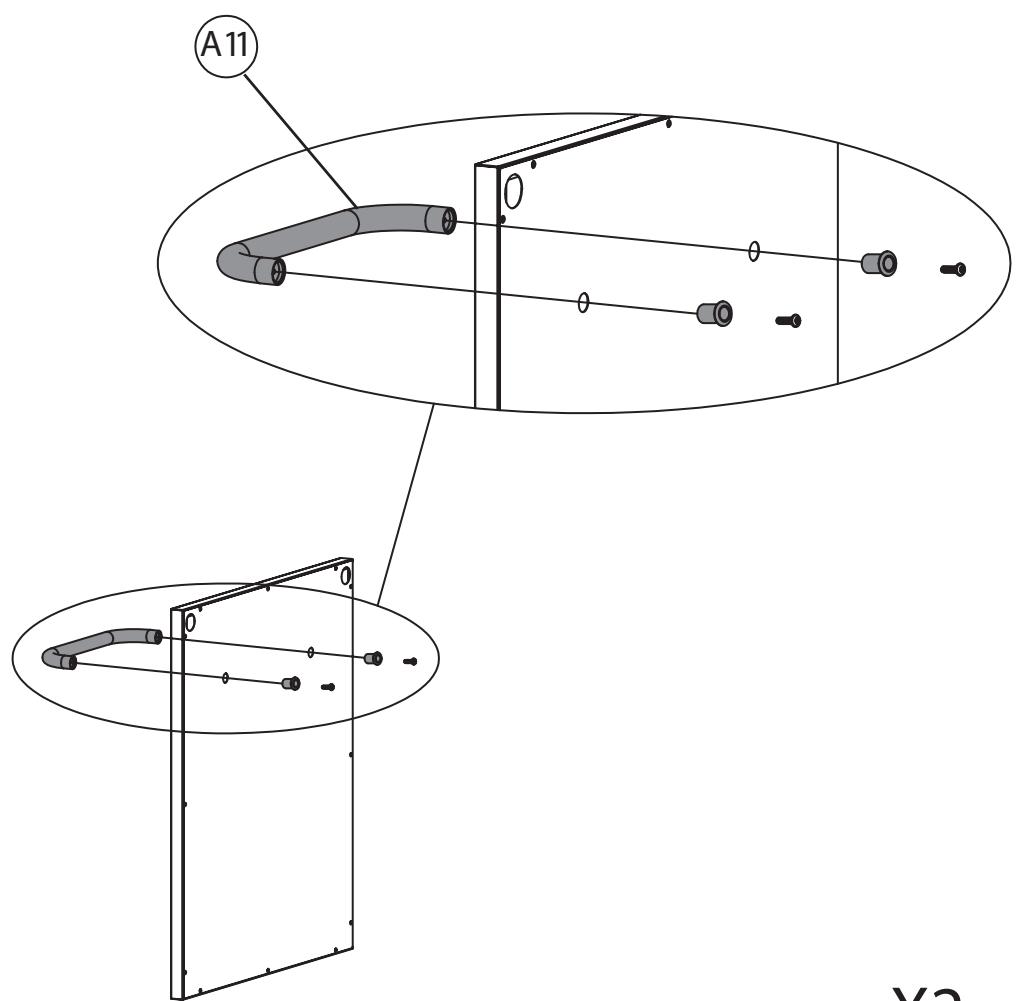
X2

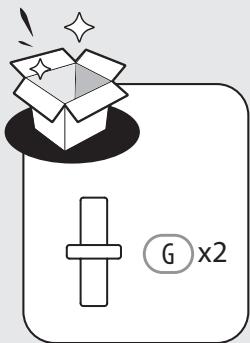
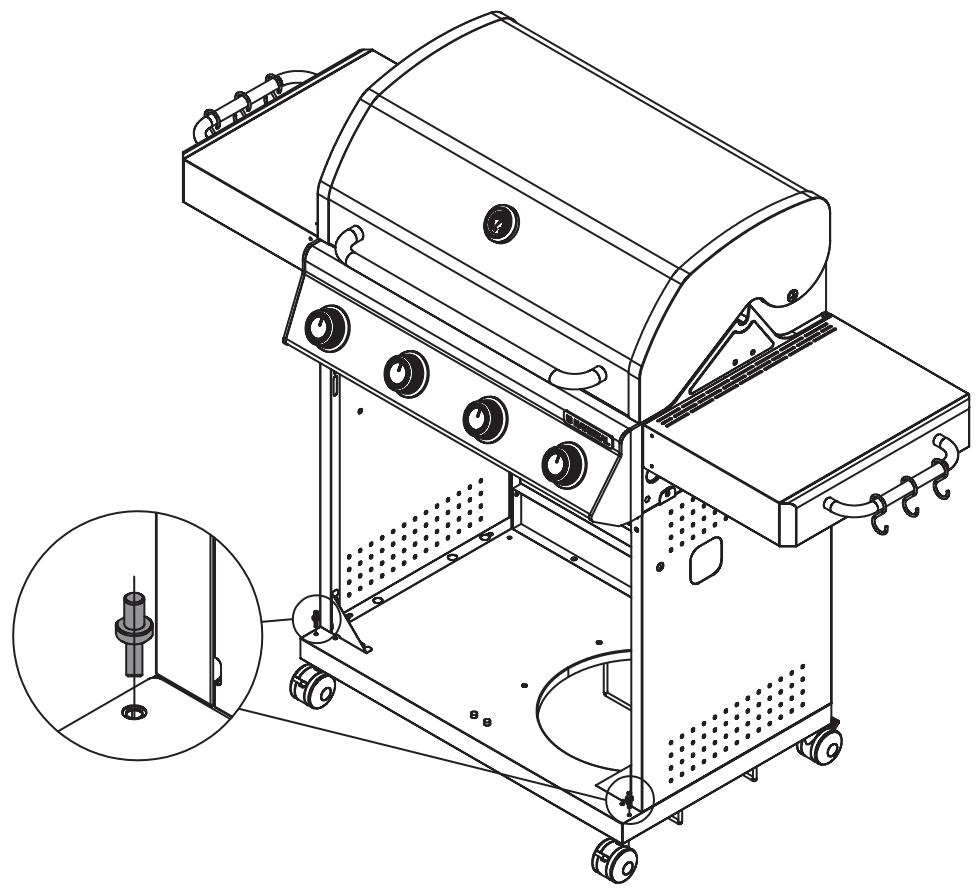
2.11
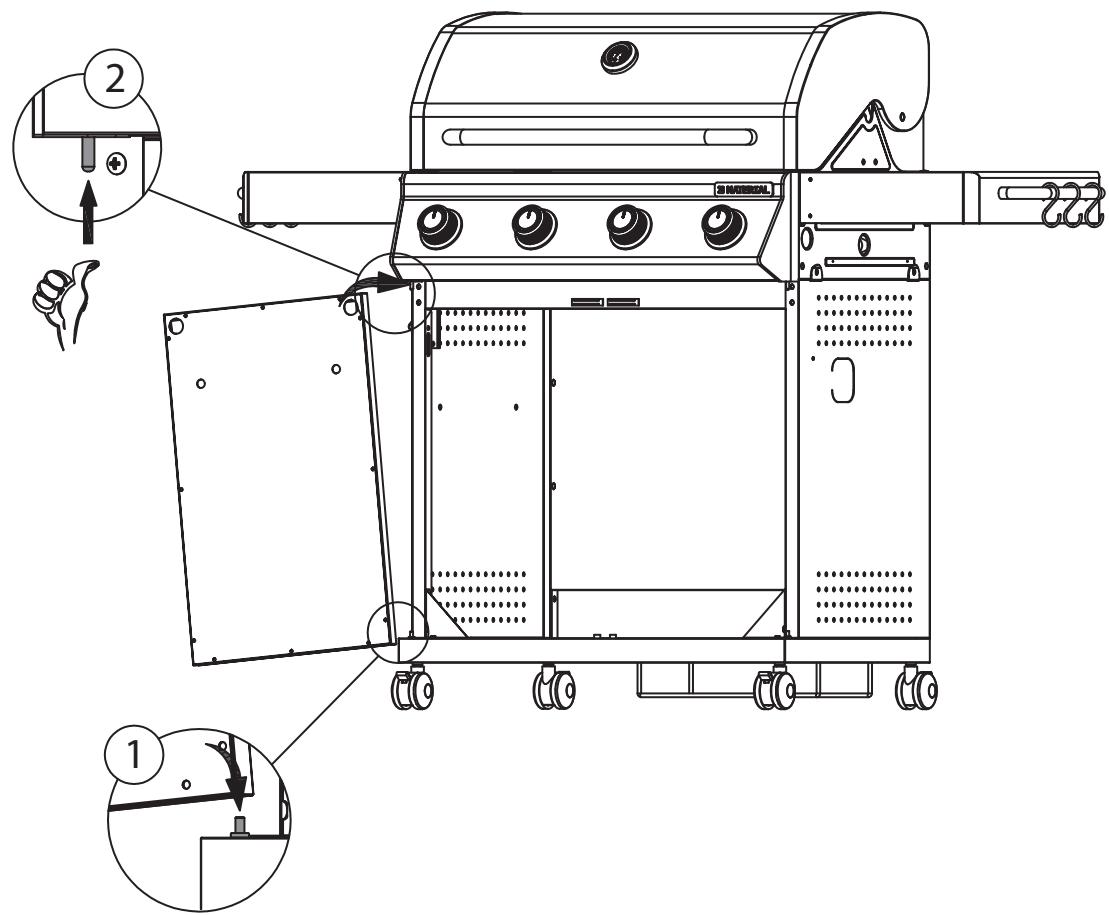
2.12

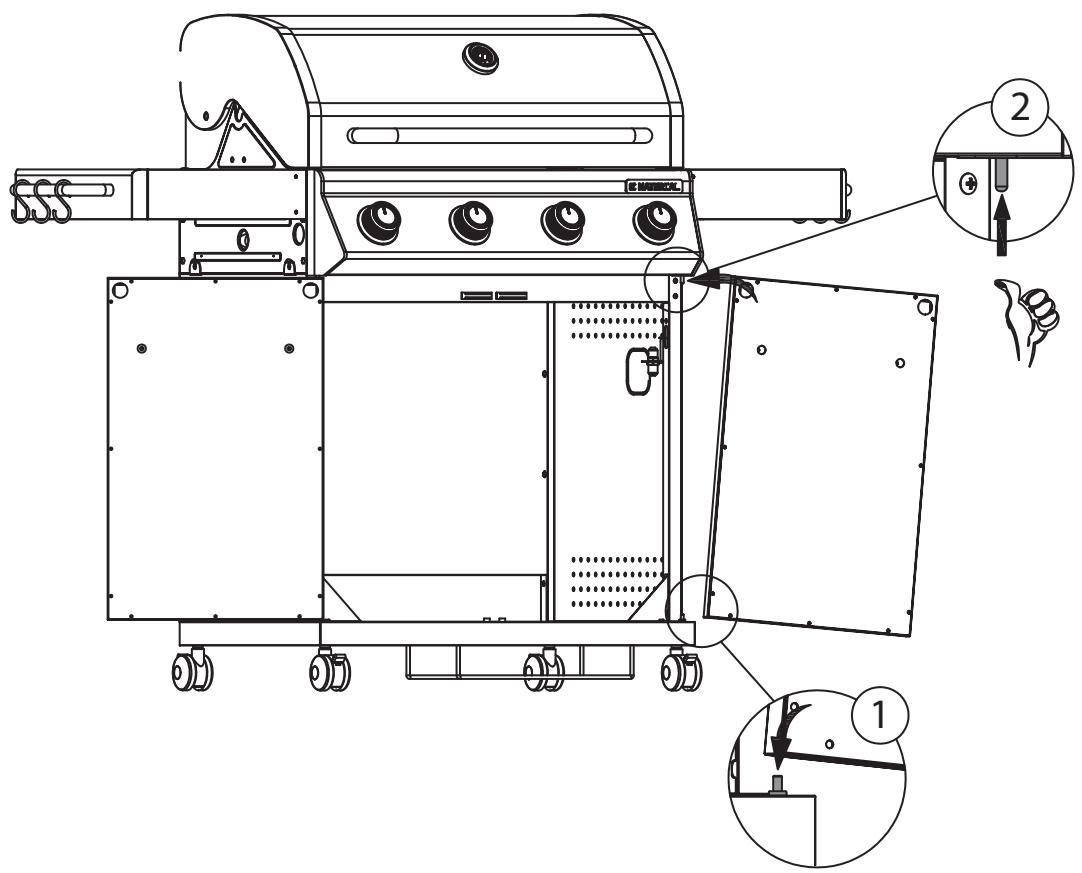
2.13
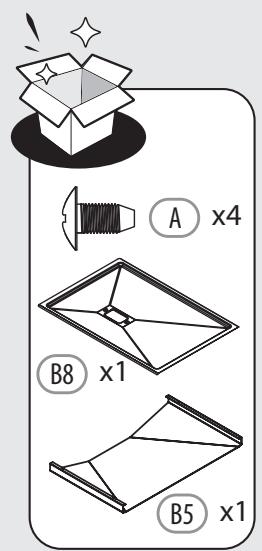
2.14

2.15
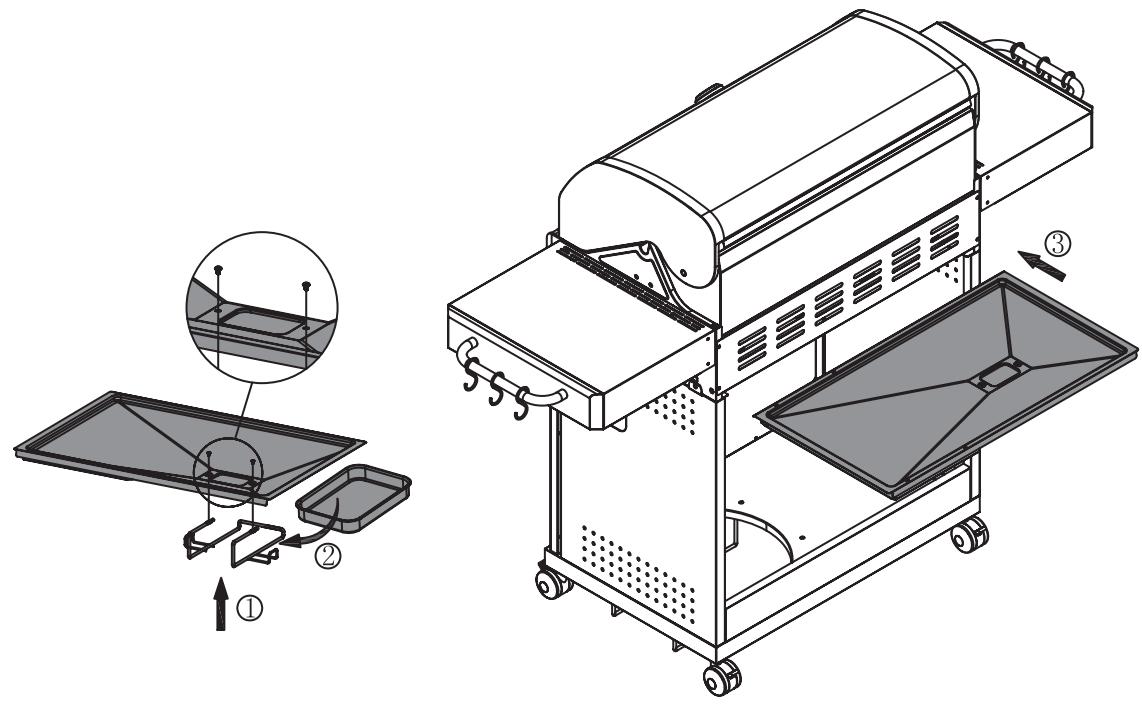
2.16
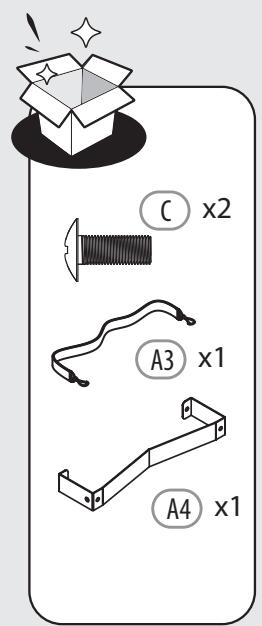
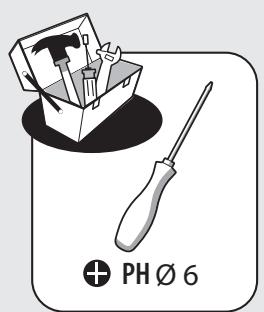
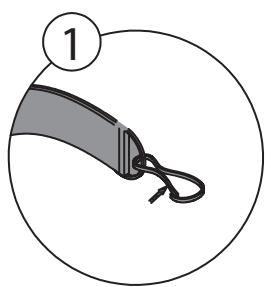
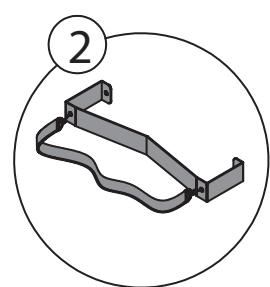
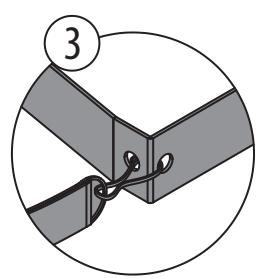
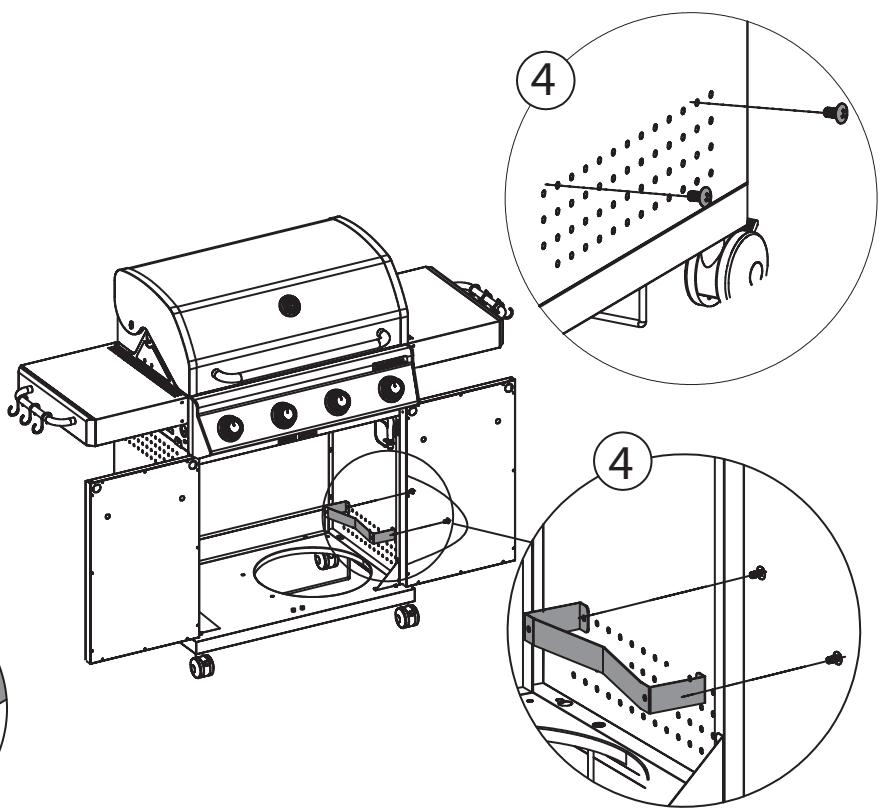

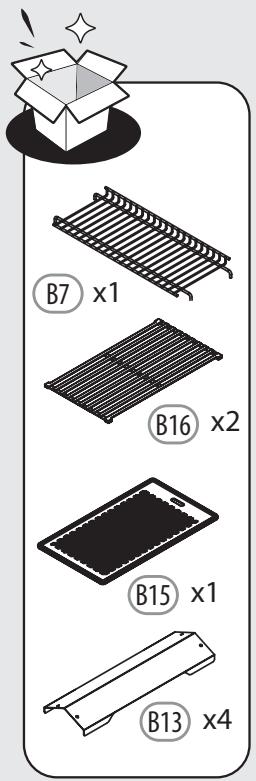
2.17
2.18

1
2


3
4
5

6


7

(3)
50%

50%
+
8
(4)
(5)



9
10

11
12
13

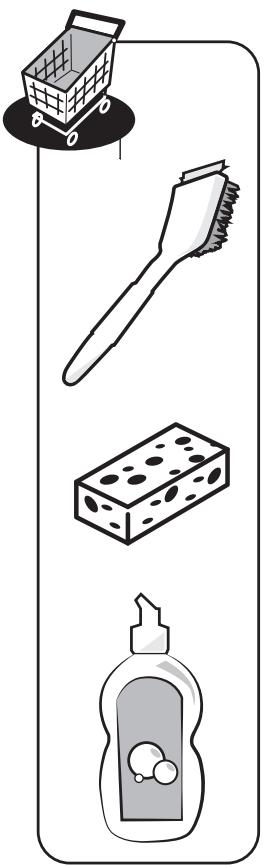
1
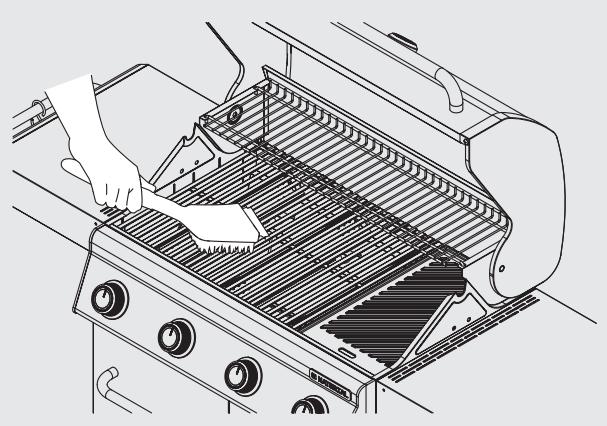
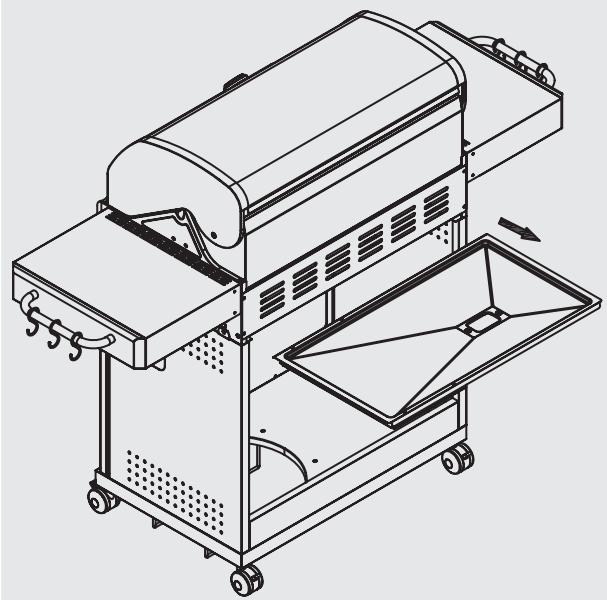
2
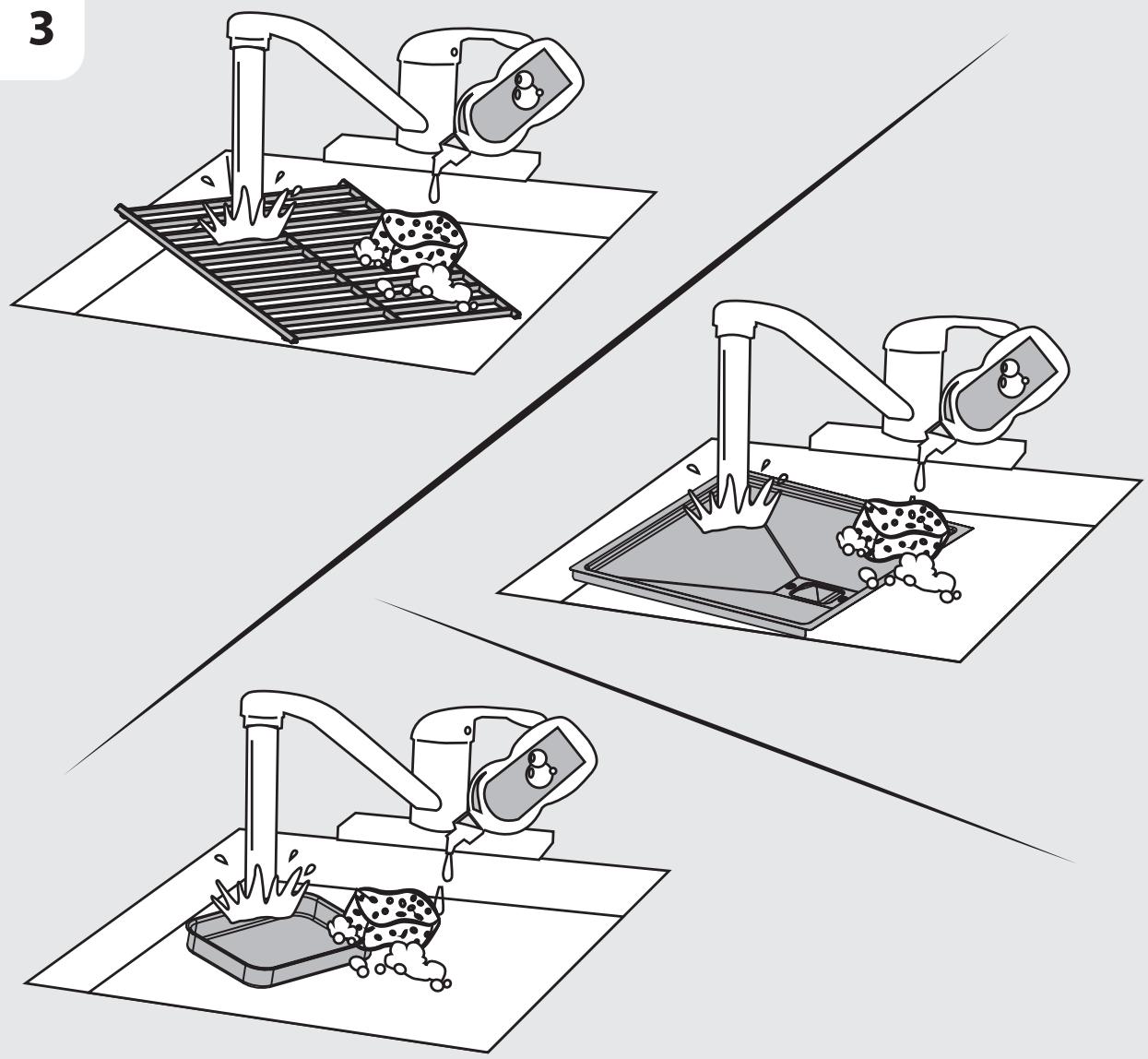
3

4

5
6

7
1. TEST DE FUITE
MODELE: GAS BBQ KENTON 2B, GAS BBQ KENTON 3B, GAS BBQ KENTON 4B
Lot n° : 082267301117, 082267301217, 082267150118, 082267140318
Sourcing Shared Service Center
ADEO Services 135 Rue Sadi Carnot - CS 00001 59790 RONCHIN – France
20/09/2017
MODELO: GAS BBQ KENTON 2B, GAS BBQ KENTON 3B, GAS BBQ KENTON 4B
N.° de lote: 082267301117, 082267301217, 082267150118, 082267140318
MODELO: GAS BBQ KENTON 2B, GAS BBQ KENTON 3B, GAS BBQ KENTON 4B
Número do lote: 082267301117, 082267301217, 082267150118, 082267140318
MODELLO: GAS BBQ KENTON 2B, GAS BBQ KENTON 3B, GAS BBQ KENTON 4B
N. lotto: 082267301117, 082267301217, 082267150118, 082267140318
'Avamua tnc snootapiac
MONTEAO: GAS BBQ KENTON 2B, GAS BBQ KENTON 3B, GAS BBQ KENTON 4B
Aριθμός παρτίδας: 082267301117, 082267301217, 082267150118, 082267140318
Ikavonoiei tic aanaiTnoeic twv Odeltaov tou µ β λi o v
Sourcing Shared Service Center
ADEO Services 135 Rue Sadi Carnot - CS 00001 59790 RONCHIN – France
20/09/2017
MODEL: GAS BBQ KENTON 2B, GAS BBQ KENTON 3B, GAS BBQ KENTON 4B
Nr partii: 082267301117, 082267301217, 082267150118, 082267140318
BbI6Op MecTa yCTaHOBKn
MaHraI cIeJyETNCIOb3OBAbT NCKIIOHTeBHO HA OTKpbITOM BO3dyXe, BXoPOJOBEHTUNIPyEMOM MecTe. HIKOrJa He cTaBbTe erO IOД BOCIIaMeHЯIOSeIcR NOBExHocTbI. HIKOrDA NOBEXHOCTM MaHraI He DOJIKNbI COpNIkAcTbC R C BOCIIaMeHЯIOUIMMCr NOBEXHOCTAM. IepKInTe MaHraI BdJIIN OT BOCIIaMeHЯIOUIMxCr MATEpNAIOB!
TuaTeIbHO BbIbepuTe MeTo EKcNpyaTuIN MaHraJa. MeTo IJy UcTaHOBKn DoJIxHo HaxOHTbcr Ha OTKpbITOM npoctpaHCTBe, He npOdyBaEMOM BeTpOM, BdJIIM OT DepeBbeB IN Dpyrnx 3JIeMeHTOB, Ha KOTOpbie MoKet nepeKInHyTbCRA OTOHb.
Mepbipneoctopoxkhoctn
- He 3aKpbBaIte BeHTnJIaIcIOHbIe OTBepCTnI, IMeIoUncIeCa Ha Kopnyce MaHraJa.
- EcIIN Heo6xOIM0 3aMeHnTb 6aJIIOH, npeBapnteHbHO npOBepbTe, YTO eO 3aADHЯ qAcTb 3aKpbITa N OTCYTCTBYOT ICTOuHNI B03rOpAHNA (CirapeTbI, OTKpbIToe PIAmA, INCKpI N T.D.) NO6IIN3OCTN.
4. YCTAHOBKA
Pa3bem ra3OBoro shaHra ha MaHraJe
5. PABOTA YCTPOICTBA
PpeynpeKdHnA
-Перед Tem Кам Рожиь убдпесь, чTo Bam пою поятын pa3дeн «ВAXHAR ИФОМАЦИ» ДанHorO руковоства.
- KoHCTpyKzIy DaHHOrO MaHraJa NCKIIuOaET NcNoJIb3ObaHne 6OJee 50% BapOuHO' 3OHb I KaueCTBe TBepDoI pHaun. Ecn n PnAnHn PoJIHoCTbIO 3aKpbITbl, BO3MOxHO u36bIToUHoe cKoPJIeHne TeIJa, KOtOpOE MoKet npIBecTn K NOBpeJKeHmO MaHraJa, Ha KOtOpE He paCpNpOCTpaHЯeTcR rapAHTn.
P03xMmaHraJa
- Пец д розию м откочу кршky вашег мангал. НИКОДА He pa3жигаite мангал пп зakрын кршke.
- Поберы, чтобы Се Кноки подачи га за нахODиись в положени CTОП. OТкpoITE клалан Perулровки га за саллоно ини Perулготор га зa.
- Haxmnte KhoNky ropeKn, KOtopyu Tpe6yeTcra p3XeYb, n NobopaunBaIte ee no yacobov cTepeKe do tex np, noka He noCyBCTByeTe conpotNBHeHne BpaSeHIO. IdoxJnte 4 cekynDbI, 3aTe m npOdoJxte BpaSeHne KhoKn Do Tex np, noka He noCblIHTcra 9eLqok (KaK npaBnlo, ropeKa DOnXHa 3aXeYbca). NobToprJe daHHyO onepauHIO heckolbKO pa3, noka ropeKa He 3aXeTcra.
3aJrTe npyrne ropeKn, HeBaJHo, B KaKom npraKe, no notpe6HocTn. PpOBepbTe, uTo ropeKka 3aJrAcb, nepei po3xurom kaxdoi nocJeDyUoJe.
- Ecni ropelka He 3aKnraetc nocIe BblonHeHnO onncAHNo BblIe npoceDpybl, nobepHnte KhoNky B noLoXeHne ocTahOBKn. 3akpoIte klanah perynipOBkn ra3a Ha 6aIIIOHe. IooXdTe pTb MmHT. BHObB noBTOpIte onncAHbIe BblIe 3tanbl. EcNI MaHran Bce TaK Jx He pa6OtaE, o6paTInTeCb K nHCTpyKzmaM P03xNHy BpyHuO, npuBeDeHHbIM HnXe.
- Pocne po3xngra ropeJkn d0JXhbl ropeTb Ha MaKcImaJIbHOM orHe B TeueHne 3-5 MInHyT, yTo6bl pa3oRpeTb MaHraI. DaHHb IpoUeCC dOJXhen BbIIOJIHrTbCnpeed KaJdbIM npiroTOBJeHem Ha MaHraIe. Bo BpEm npEiBaPHTeJIbHO HarPeBa KpbIshka DoJXHa OCTaBaTbCry OTKpbITOn.
- После завршени пеша варпельно harpeBa y6aBbTe oroHb BCEx ropelokdo cna6oro,чTo6bl obecneuHTb Hanluyuime pe3yIbTaTbI rOTOBKN.
5. PABOTA YCTPOICTBA
IHcTpyKznn no po3xNry BpyHyu
- Ipeed po3xngrom otKpOte KpbIshky BaUero MaHraJa. HNKOgA He pa3xngraTe MaHraJ npn 3aKpbToiKpbIshke.
- Поберы, чтося Кноки подачи ra3a нахODильь в положени CTОП. OTKроTe кlaпан Perулровки ra3a на балное иnp Perулготop ra3a.
BBeJTe 3aXKeHHyO cHnUky B cAmoe npaBoe OTBepCTne IJRA p03KnIg, Hxke nHeJI ynpaBHeHnI, mNoJoxITE ee pAOM COTBepCTnEM npaBOI rOpelKn.
- Haxmnte n noBepHnTe KpaHnIO npaByIO pyky B hAnpabJeHn NpoTbV yacOBoN CTpeJKN Do MaKcMyma.
- Ecln npabra ropekn3 3axrnaeb, BkIIOHTe octabuinec ropekn, no nopAky cnpaba HaneBO.
- Pēpei po3xqIrom kαkdoi cnédyuioe i ropeiKn y6eDiTeScb, cyTo ppeblnya 3axgflacb.
- Ecln cama npabra ropejka He 3aXnuraetc, o6paNTecb K MeCTHOMy DUnepy.
- Pocne po3xna r opeJn D0JXHbI ropeTb Ha MaKcImaJIbHOM orHe B TeueHne 3-5 MInHyT, UTo6bl pa3oRpeTb MaHraI. DaHHb IpoUeCC dOJXeH BbIOnHЯTbCnpePd KaXdbIM npiroTOBJeHEm Ha MaHrane. Bo BpemnpeDbapntelbHOro HArpeBa KpbIshKa DoJXHa OCTaBaTbCn OTKpbITOn.
- После завршени рпсдварительно harpeBa y6aBbTe oroHb BCex ropeLOKdo MUNHMaJIbHOrO,уTO6bl obecneuTb haIyUwne pe3yIbTaTbI rOTOBKN.
PpurotoBleHneHa rpnne
- TpeKn n3 HepKabeouei CtaI N obecneuBaIoT HarpB dNphiy3opa TeNa (nn KOp3HbC 6pKeTaM/ naBOBbIM KaHMem) POn TpIneM, KOToPbI, B CBoO OuepeDb, HarpBeaET nnU Ha rpuJe. Bo BpeMraTOBKn cOK n3 npOdykTOB CTeKaET Ha ropauN dNphiy3Op TeNa (nn 6pKeTbI/naBOBbIK KamHe) n i cnpaeTcJ. POn3BOJaunscn PaN eTOM DbIM OkTyBIAeT nnU, HappaBnaCb BBePx, YTO npuaet nnU HeNoBTOpmbl apomat 6ap6ekIO. IJRA o6ceueHn paBHomepHoro npiroTOBLeHn ONyCTnte KpbIku MaHraJa, CJIeJz 3a TEM, qTO6bl ropeKn ropEnHa cIa6om OrHe.
5. PABOTA YCTPOICTBA
Topenhne kupa
-Опорожнайт e n quCTnte BbIDBnKHyO emKOcTb dna Jxupa OT BCEX OCTaTKOB rOTOBKn NocIe KaJdoRo IcNoJIb30BaHnI.
- Ecni MaHraI nCnOlb3yETcI IJI npHeMa 6oJbIoro YIcIa roCTei, Heo6XoIMMo TUuITb rOpEKN KaKdIe DBa yaca N u cIcTntb EMKocTb. Heo6XoIMMo qauSe UcSTntB B Clyuae nprirotOBJeHna 6oJbIoo KOnIueCTBa OueHb JxnpHoiPiUs (KoIbAcbl, CoNcKn I T.D.). Heco6JIouDeHne DaHHbIX peKOMeHdauzm MoKeT npuBeCTN K rOpEnIO Xnpa, BCJeDCTBVE Uero BO3MOXhbl TpaBMbl I IOBpeXJdeHne MaHraJa.
Bcnyae ropehna Knpa/IpdeynpekdeHn:
- Ecln 3TO BO3MOXHNO CdeNaTb B NOJHOB 6e3OpaCHOCTN, npeBeJeNTe B NIOJOKeHne CT0I BCE ra3OBbIe KhoNKn.
- OctaHOBITE noJaCy r3a n3 6aJIIOHa.
-ПопрсUTE BCEx OToHn Ha 6e3ONaCHOe pacCToHne OT MaHraJa NdoJNTecb, nOKa nOraCHet OroHb.
- He 3aKpbIbAaTe KpbIuKy MaHraJa.
- HNKOДA HE JIΕΥ TE BODY HA MAHΓΑЛ. ПОЛьЗΥΙTEСВΟΓΗΤΥΙΝΙΤΕΥ
- IPOOUIKOBOTO TUNA.
HE BbIHIMAITE EMKOCTb IJIa XnPA.
- Ecln OOrHb He OcIa6eBaet IIN CTaHOBUTCnJIbHee, Bbl3ObTe NOKapHbIX.
Pocne 3aBepueHnroTObKn
- Pocne KaJdoTO npuToOBJeHnI pNUs npeBODHTe ropeKN Ha MaKcImaJIbHbI OROH bOCTaBBTe ropeTb B TeueHne 5 MInyT. BnaOadAp aToi npoUeDype cropT octAtKn pNUs, uTo obecneuT yDo6CTBO uNCTKn. Bo BpeM aToI onepaun KpbIka DoJnxHa 6blb OTkpblTa.
- Perylarpno chntte MaHraI nOcne KaXdOro IcNpOb3OBaHn, YTo6bl He dOnyCTNTb cKOpJIeHn Jnpa, KOTopbIM MoKET 3aRopeTbcr.
BbIKIoueHne maHraJa
Bapouchybe noBepxHoctn
- Pocne octbBaHna MaHraJa npOMoTe erO ropeJe BDOJ CMbIOM. Jy dAaJIeHnO OCTaTKOB NIIuN IcNoJIb3yIne MoUSeE cpeDCTBO dIy nocSybl. He nCnoJIb3yIte a6pa3INBHe Iy6Kn IIN MaHHTbI NopoWOk, NocKoJIbKy OHI MOrTy 6e3B03BpaTHo INcOpTtB OTdJeONHoe NOkpbITNe BaUero MaHraJa. XopoWo onOnoCHnte u BbCyUHnte. H peKoMeHNdyETcMaITb PeSEeTKI INIpaHUY B NOCyDMoEOHm MaUNHe I3-3a INX BEca.
- HANOMINAEM, YTO KATEFOPUYECKN 3AIPPEIJAETC NCIIOJIb3OBAHNE IbDA, IN3-3A YERO BO3MOJXEH TEPMNUECKN yIDAP IN PACTPECKNUBAHNE 3MAJIIN PIIAHUY.
- ECJIIN PJKABUNHA IIOBUNACb HA BAPOUHOIIOBEPXHOCTN, COPIKACAIOSEcCIIUEH, INX HEOBXOIM3AMEHITb.
06cnyxmbaHne ropeJok
- TOpelka OtperynipoBaHa TaK, YTo6bl ObecneuHb Heo6xOIMyU IpOn3BODntelbHocTb Pn MaKcImaIbHOM orHe. Pn 3aJrAHHn rOpELKn Bbl yBnDIne 0bUHoe CnHne PnAm, Bo3MOXHO, C XeJIbIM KOnHcKamE. Ecln PnAmckopee XeJItoe, 3TO MoKeT 6bITb 06CNOBHeO 3aRpy3HeHnMn IIN HaceKombIM, CKONBShmucB B OTBepCTnx IIN Tpy6kax TOpELKn. 3TO MoKeT Bbl3BaTb 3aKynopKy IIN ORpaHnueHne NOTOKa ra3a, YTO MoKeT npIBeCTN K Bo3rOpaHnIO pOzAdn PaHeN ynpabNeHn, YTO, B CBOIO OUpeDb, PnPBeDeT K OueHb cepbe3HOMy NOBpeJdeHnIO MaHraJa. B 3tOM cIyuae, ecnn Bo3MOxHO, Heo6xOIMo HEmedJIeHNo nepeKpbItb ra3, NoCTynaHou nI 3 6aIIloHa.
- TOpEnKHeo6xOdImo peYIpaHNo IpoBepaTb, CHIMaTb N UcNCTuTb, NO KpaHne Mepe, Odn H pa3 B rOd, N ChaIe npn CnedyUoIcx ycIOBnx:
-ПииИЗВLEЧЕнMuHranaИЗМecтаУсТаHOBКn.
-eCJIN OJHa NIIH HeCKOJIbKO rOpEJIok He 3aXnIraIOTcA.
- Ecln Пламг ropeknв ceIOM JKeIToR OZBeTa.
- Eçnl rāz 3aЖиraeТСЯпЗдNi paHelen ynpaBJIeHnI.
- Дя понов чісткі رорелій n3Bл eknte MaHraI. Дя удаLEні ржыньі С NOВЕРхоctn rорелій можно ИспальзOBaТь Лergую MeTALIIueCKyU штк.ИспальЗУгte cpeДCTBa Дя чісткі Trpy6 Ии КсOK JxeJIe3Hoi npobOLokn Дя удаLEніЗacopoBВ OTBepCTnx Ии Trpybax rOpeLkn, cneЯ 3 Tem,ЧTo6bl He paCShuPntb OTBepCTne rOpeLkn.
Bam MoKTe nOHaIo6bIb8 cfoHApIK, yTo6bl y6eIITbc8, yTO BHyTpEHHra YacTb Tpy6bl rOpEKN CBO6oHa. NOBepHnTe rOpElyuN CnErKa NoCTyUHTe eIO NO TBepDo NOBepXHOCTN, HAnpIMep, NOKy DepeBa, yTo6bl N3BLeCb BCE 3aqr3HeHnN N3HyTpN.
-При повторим моntахе горелки сддпгета тем,чтобл лубь нахолись перд Форсункам.
Дифузор тени
- YdaIte octaTK nIuI n3 dNphiy3opa TeIIa C NMOU bIO DepeBAAHORO uIN PIACTKOBORO MRAKORO cKpe6Ka IIN JATynHOI ΜeTK. He IcNoJIb3yIte cTaNbHbIe cKpe6Kn IeTK. IpomOIte rOpayeMblbHOI BOIOI XopoIo OOnIOChNTe.
6. yxOДиЧИСТKA
EmkoctbДлЯЖира
- После кождого Исплььзовая ИЗВлескайт e Ичстinte EMКоctь Дяжра OT BCEX KUCKOB NIIU N JIkpa, пи HeobxodmocTN, сnomoцью DepeBraHHORO nII INIactNKOBORO ckpe6ka.
- Пи Нec6июдени Даньix Инстукци суцectByeT риck Bo3ropaия кupa. 3TO может NOBneчь 3a co6oI cepbe3HbIe NOBpeKdENЯ MaHraIa, Ha KOtOpbIe He paacnpoCtpaHЯETcR rapaHTnI. EcIn Heo6xOДIMO, eMkoCTb ДЯ кIPA моJOHO npOMblTb МblHOBI BODoi.
Kopnyc Mahrana
- Perylaryno ydaia Te n36bITkn Jnpa C Kopnyca MaHraIa C nomoBIO TprKn, CMOeHHo B MbIbHO Bode I XopoTo OTeKToN. N36bTOK Jnpa N KycOuKN MoXHO ydaJIInb C BHyTpEHNHe qAcTNI Kopnyca MaHraIa C nOMoUdo DepeBAnHoro IIN nPiactNKOBOrO MArKO rCKpe6Ka. IJy yDObCTBa YnCTKN MoXHO Do6ABNT b JnCT fOJIbTN, KOtOpBI Heo6xOIMo MeHrTB NocLe KaJDoR IOcNoB3OBAHn. CJeIte 3a Tem, YTO6bl He 3aKynopntb OTBepCTnI dIe CTekAHn Jnpa. Ecn Tpe6Byetc DOonHHTelhA qnCTKa, INOnb3yIte TpIky I RopayuMbIbHyO BDOy IIN HeJIoHOByIO UeTKy. He IcNoB3yIte a6pa3iBHBie cpeCTBa. IVBLeKeIte peWetKn (IIIN) IIaanH, a TAKxe RopEnKn nepeq uCtKoB HnIXHe qActn. He norpykaTe ra30Bble KhoNk IIIN rOpEnKn B BDOy. Iocne akkypaTHoro NOBtopHoro MOHTaxa KOMNOHETOB Ha Kopnyc MaHraIa pIOBepbTe po3JNR.
Kpbioka Mahrana
- YnCTnte KpbIshky MaHraNa c NOMOuBIO TpAINu IIN He a6pa3NBHO r6Kn u ropaye MblbHO B0dbI. He nCPOJIb3yIte YnCTaUne r6Kn IIN NOpOuK, TaK KaK MoXHo HABCeRda NOBpeDITb OTDeJIoUHy IOBepxHocTb MaHraNa. Pocne YnCTkn TuaTeNbHO BbCyUHTe, UTO6bI He dOnyCTNtB 6pa3OBAHne pXaBUNbI.
TeIeXkKa
-ПотгптЕТряпко,СмоченивВ Горчey Мьльнов ВОд,аЗаTem Bысушпte.
- KaK dIy Bexn 3dEInn 13 HepXaBeOe CStAn, B cIeJx OecneueHn DOnrO cPoka cnyk6bl BaIero n3dEInn, B YactHOCTN, BHeIhero BVide HepXaBeOe CStAn, peKOMeHdyem peryIaRPHo 6bAsTbBaTb CTaJIbHbIe NOBepxHOCTM MaHraIa 3aIHTHO CMa3KoI, NaHnaC cpeBOrO NcNoIb30BaHn. BpEm oT BpEmHn TaKKe MOnKHO npOTnpaTb NOBepxHOCTb YIcTlIzIM CpeDCTBOM DJIa HepXaBeOe CStAn, 3aTeM BbITepb MArKoI TprIKoI, a 3aTeM NaHcTNTb Do 6IeNcKa. Bbl TAKKe IONUHTe TOHky 3aIHTHyIO PIIENKy DJIa CTaJIbHOINOBepxHOCTN.
Kpennenna
- PeKOMeHdyetc npoBepaTb n 3aTgNBaTb BCE BnTbI, 60NTbI n T.D. cpeyJnPaHbIMn INThepBaJAmN.
XpaHeHne
-Перед Tem Кам Закрын Или Роставпь Maнгал на Храенец поверсы, чобь OH octы. XpaиITE Maнгал в похладом сухом Mecrete.
- 3aKpoIe ropeJIKN foIbIroi, cyO6bl npEIOBpaTntb npOHIKHOBeHne HaceKOMbIX I pyrnx 3aIrp3HeHn B OTBepCTnA ropeJIKN.
- Ecni MaHraJ XpaHITbcB NOMeUeHn, ra3OBbI 6aIIIOH CJIeDyET OTCoeHNHTb N OCTaBHTb ChapxN. Ra3OBbI 6aIIIOH CJIeDyET Bcerda OCTaBIArTa Hb OTKpbITOM B03dyXe, B cyXOM N XOPOIo pIOBeTpNBaEMOM MecTe, BdAIIIO T NCTOuHKnOB TeIIa IIIN BO3rOpAHn. He pa3peSaaTe DeTAM INrpaTb C 6aIIIOHm. He nOdBepraTe ra3OBbI 6aIIIOH BO3DeICTBnIO npMByI Nyuei CoIHua.
- Pered nCpOJIb30BaHnE MaHraJa IocIe dIITeJIbHbIX nepIOJIOB XpaHEny BblIOJIHHTe IpoUeIpy UCTaHOBKn.
7. ПОИСК И OBHAPУЖЕНЕ HECHПAPBHOCTEД
ПОБЛЕМА/PEШЕНЕ
Topelkn
IopeKHe 3aXnraIOTc c NOMoUbIO cnCTeMbI p03Xnra
- Fa30BbI 6aJIIOH nycT A → 3aMeHInTe IOnHbIM 6aJIIOHOM
- PerylraTop HeuCnpaBEN → PioBepbTe uIIN 3aMeHnTe peRyJIaTOp
- Togelkn 3akynopenebl → Tounctnte ropekn
3aKynopka pa3bEmOB nI Ira30BOrO shaHra → POnucntte pa3bEm nI Ira30BbI shaHr
Ka6eJIb 3JneKTPoJa oCna6 nnn OTcoEINHeH OT 3JneKTPoJa → POnCoEINHnTe Ka6eJIb
- ΘeKeTpoДиИн Ka6eIb nOvpeXdEh → 3aMeHnte eKeTpoДиИн Ka6eIb
- BCTpoehnbl 3anaI IOBpeXJdeH → 3aMeHnte ero.
- Henpabnibna yctaHObKa 3neKtroda → 3neKtroddoJxKeH cOBnadaTb C ropeKoC paCCToHnem 3-4 MM MeJy KOHcOM 3neKtroda n OTBepCTnEM Ha ropeJIke. CkoppeKtupyTe noLoXeHne 3neKtroda.
Topejka He 3axnraetc nmoosb0ra3a
- Fa30BbI 6aJIIOH nycT A → 3aMeHInTe IOnHbIM 6aJIIOHOM
- PeruTOp HnCnPaBEN → PpOBePbTe nn 3aMeHnTe peRyJrTOp
- Togopelkn 3aKynOpenebl → TOnuNCTnTe ropeKn
3aKypopka pa3bEmOB uIu ra30BOrO shlaHra → POnucnte pa3bEm uIu ra30BbI shlaH
He6obIbIooe pIamI nnI pIamI noracaet (pIamI B Tpy6e ropelKn, cnblIshen CBnCT nII rYdeHne)
- Fa30b6aJIIOH cIIuKOM MaI → IcnoJIb3yIte 6aJIIOH 6OJIbUero pa3Mepa
- TOpelkn 3aKynOpenebl → TOnuNCTnTe ropeKn
- 3aKynopka pa3bEmOB ivn r30BOrO shaHra → POnicnte pa3bEm ivn r30BbI shaHr
Betepe 10nolb3yIte MaHraHa MeHee BeTeHHOM MeCTe
Khonka ra3oBoro KpaHa nOBopaunBaetc Tpydom
BCTpoEHna cscTeMa po3Xnra 3akInHeH A → 3aMeHnte ra3OBbI KpaH
- Ra30BbI KpaH 3aKJIiHeH → 3aMeHInTe Ra30BbI KpaH y CBOero DnIepa
8. усановая Гарань
- 3 roda (ropeiKN, KpbiShka, MeToДЯ pa3BedeHnO rHЯ n peWetKa) OТ рЖaBvHbI
Bce octaIbHbIe KOMnOHeHTbI 2 rOda
Для nepвонауньного nokynаеля, на данhoe Издение распрocтpanяетс rapaHTи OT ИСХODных Deфektob MaTeрmaNoB И пpon3ВODCTBeHHbI 6paK.
Kak dny Bcex u3deynu 3n HepXaBeOuSe CtaN, BuJnx o6ecneueHn DOJrOc spoka cnyk6bl BaIero u3deynu, B uactHOCTN, BHeuHro BVNe HepXaBeOuSe CtaN, peKOMeHdyem peryIapH0 6pa6aTbIBaTb CTaNbHbIe NOBepXHoCTN BaIero MaHraJa 3auHTHOc MzA3KO, NaHnaC nepBOrO nCpONb30BaHn.
B TeueHne DaHHoro nepnoDa Baw Mara3nH o6ecneuHT 6ecnlaTHyO 3aMeHy DeΦeKTHbIX KOMNoHETOB, IcNoJIb3yUoIuxCRA B DoMaShnX ycNoBnx, npi Co6JIHOdeHn CNe dyUoIux ycNoBn:
Данная rapаHTЯ paCnpoCTpaHЯETcT OIbKO Ha ИСпОЛьЗOBaHme Ha OTДeЛьНСТОЯсЕМ acTHOM MeCTe ДЯ MaHraJa И He npIMeHЯETcK MaHraJam Naterial, ИСпОЛьЗУЕмБИM B KOMМерчecKx, obSceCTBeHhbIX MeCTaX I B MeCTax C HeCKOJIbКIMn MaHraJAmN, HApIMep, B pecToPahx, OTeJAX, TypiNCTUWeCknx JIarepIx I NyHKTax npOKaTa.
B pamkax daHnoi do6pOBOhON rapaHTn H N B Koem cnyae He npedymaTpnaeTcHnKaKaJ KOMneHcaun, npebblauooua cymmy nokynn npno6peTeHHoro n3dienra Naterial.
Bb npHmaeTe Ha ce6a n OTBeTcBeHHocTb 3a nOtepIIOBpeKdHeNe IIN TpaBMbl, KOtOpbIe MOryt 6bTb npUHHeBb Bam nn BaWeMy mUyEcTBy n (nII) TpeTbM nnuam n nx mUyEcTBy B pe3yNbTaTe HnPaBnBHOJ kCnIyatauNN, 3IoynOTpe6JIeHn nn Heco6JIoDeHn INCTpyKcN K n3dEInMa Naterial, npBedeHHbIX B npnlaerom pyKOBoDCTBe.
I3dJIe He IopJIeKHT HnPaBnBHOJ EKnIyAtauIN NII He6peXHOMy 6paueHIO, BkIouaB 03deCTBne KInIaIero Jnpa INI IN3bIToUHOrO PnaMeH, a TAKKe IcNoJIb3oBaHne HeKaueCTBeHHoro peryIaTopa Ra3a INI erO HeKOppeKTHOe IcNoJIb3oBaHne.
I3dJIne He IOnJxH0 NOpBepraTbCRA NOBpeXKeHnM BCJeCTBnE BO3DeICTBnA NOCTOpOHnIX IpEIMeTOB, BeSeCTB nIIH HeCuaCThblx CnyuaeB.
Iapantna npednaraetcB kaueCTBe dOpJHeHnI He 3aMeHreT 3aKOHbIX npab nOTpe6nteJI.
Ecn y Bac nmeotc Bopocbl, cB3aHHbIe C moTaxOM IIN 3KcNpyatauuei BaJero yCTpoiCTBa, o6paTntecb B cnjXby noCnepnoaXHoi noDpeXKn BaJero mara3nHa.
6. OuNsEHHa TAdOgIaI
Perynpho chtbe 6ap6ekio mix 3actocybaHnMa, a oocbno Bo nicra TpuBaInx nepioiB 36epiraHHa. IpekoHaTeCra, 0o 6ap6ekio i noro kOMnOHeHTu DOCTaTHbo OxOJOn, nepei uHneHHaM. HikOn He 3aJIuAaTe 6ap6ekIO haBopi, De BOHO MoKe pIDDaBaTncd II IoroDnX yMOB, i TpuMaTe NOro noDani BID BOIOn.
- Hikon He o6npckyte 6ap6ekio BOIOJ, KOJI nooro nobepxhi rapaui.
HikonHe TopkaTecraapuXn YacTHN He3axnueHmnypKaMn.
Дя耗ошo npodOBKHTn TepMin cny6n i 36epeTn CTan 6ap6ekIO, hactiHo peKOMeHyEMO hakpmbaTn Ioro, kso BV 3aIIuIIMn Ioro Ha BIDKpITomy nobitpi Ha TpmbaIy qac, oO6JIbBO Ha 3mMOB i mcazi. BvcoKOMiun H 6pe3ENT Ta iHsi akcecyapn dЯ 6ap6ekIO MOnkHa pnpdbatn B MicueBOro dinepa.
Habitb kio 6ap6ekno hakpnto dna 3axncty, heo6xidno perynapno nopebiprtu, ockibkn moe yTBopntncra B0Iora a6o KOndeHcT, io moke npnbectn do no Ioro nookjKeHHa. Moke 6ytn Heo6xidno Bucywni 6ap6ekIO i BHytriHIO qactnhy 3axnchoro yoxla. 3aIIuKKn Jnpy moxyt b yTBopOBaTu nnichyBaHa qactnHex 6ap6ekIO. IX Heo6xIDHO OunchNTn rapaoyo MnilbHOIO BOIOJ.
BnBneHi npKabini yactuH, 10 He KOHTaKTyOt b i3 xapoyBmN npOyKTamN, Heo6xIDHO 6pObTu 3ac6oM npOTn ipxI ta nepephiap6byBatn fap6oIO dIra 6ap6ekIO a60 JXAPOMiUHO fap6oIO.
Pobepxhi dI npuroTybaHHa
- Koln 6ap6ekno oxolono, ounstbte noro tenloo Mnilbno BOIOIO. Ira toro 06 BuaJIntu 3aIIuKn iKi, BUKOPNCTOBYITE 3acioI nMTTia nocdy. He BUKOPNCTOBYITE a6pa3NBHr r6kn a6o npOswKn, ocklbKn BOHN MOJyTB nozkOINTU O3do6bneHHRA 6ap6ekno. D6pe onoIoocHt b i BucywiB. Mn He peKOMeHnyEmo uC7ttn rpnii i Deka B nocydomnHi Maunhi uepezixHBOary.
·HARADYEMO,IO HEOBXIINHO YHNIKATN BIKOPNCCTAHN KYBNIIB NbOy,AKIMOXYTB CIPNUHNTI TEMINEPATUPHI N IOKI PO3TPICKYBAHHRAEMAJI DEKA.
- RAKUO HA NOBEPXH I JIJI PNIIGOTYBAHHJ, IIO KOHTAKTYE 3 XAPQOBUMN IPOJYKTAMN, 3'YBJIACTBcR IPXA, HEOBXIXHO II 3AMIHUTN.
06cnyroByBaHHnaJIbHnKiB
- Пальник Вдретуновано takим чином, соб забешил мakсимальни роруктунICTь поу'm. 3a3bчай ви бачтимete等相关дз можлumbи можотим кицamy, кол пальник ratlb. Кю поу'm' paадшжовто кolyбopy, се моче诫и срочино смпгам a60 komaxamn B OTbopax ab60 trpykax пальнka. Ре моче пвесгд do sbokуbaня ab6 obmexeHHЯ notOKy ra3y, со моче срочипнчп пожеку 3a naheллю Керувашия, за моче срйозн ошковити ваше Bavapseкю. Кю се салocb i якю се можлво, Heraho pepekprite ra3 набалоhi.
- Пальник HeobixiДно pergyIapHо nepeBiprtu, BmMaTn i uNCTHTn npHaMHi pa3 Ha pIK, Ha doJaTOKdo TaKnx yMOB:
-ДICTAIOH6ap6eKIO3MiCЯ36epiraHHa.
- JaKIO OJINH a60 KJIbKa naJIbHnKiB He ropaTb.
-ЯкwoВ nonym'6araTo kOBtoro konbopy.
- Ra3aHaJIIOeTbC83aHaHeJIIOKepyBaHHa.
- Μιος πονΗίστου Ουήστην παλβύκιν,Βυδαπιῖν Μότο 3 δαρβεκύ.Лεγκα Μεταληνα ΜιΤΚΑ ΜΟχενικόμεινικόνινινικάν ἀπλαίαληνην ἡρχι 3 Μονερχινινην αύλβύκινα.Βυκοριστόθυγιte 3aζιδ ἀπημενην Κργόκα ὅλμΜατοκ ἀροτύ, Μιος βυδαπιῖνινην Πηρεψκόμινιν Βοτβόρι aδο Θργός Αλβύκινα, Χεχαύην 3a ΣΤΜ, Μιος Ε θεδίνδυμίνινιν Αθυρήν Βαλβύκινγ.
6. OuNsEHHa TAdOgIaI
- Bam Moze 3nao6ntncj lixtapuk, 06 nepekoHaTncs, 0 to ty6ka naBnka BCEpenHi ouHneHa. NobepHitb naBnK i akypatno Bdape Noro 06 TBepny nobepxHIO k mMaToK depeBa, 06 Bu6ntu 6ydb-jaKe CmTTBCEpeDHHi.
- YctahOBJIIOUOn Ha Micce NaIbHnK, nepekoHaITeCra, ITO Tpy6Kn PO3aIoBaHi HABIpOtn φ opcyHok.
Tennop03noiNbHK
- YcynbTe Bci 3aIIuKn iKi 3 TeIIOpO3NoiNbHnKa 3a DOnOMoIO DepeB'HOrO a60 NnactIKOBOrO uKpe6Ka a60 NaTuHoi 7tKn. He BnKOpNCobYuTE cTaeBn UKpe6OK a60 dpoTAny uItKy. IpomNte rapraU O BoIOU 3 MInOM i Do6pe cnolochITb.
Пдон张家界Инру
-Пися Кожног ВИКОпstань 3нIMiТь i OчИсты пIDон ДЯЖИpy BД ус IX MaTочКIB IXI taЖИpy 3a
ДОПOMORЮ DepeВ'ЯHOrO a60 Пл actIKOBOrO wKpe6ka,Якso ue Heo6xidno.
-Яко BV He 6yndeTe DoTPMByBaTnca uX peKomeHdaci, ue Moze cnpuHHTn 3aMaHna Jxpy. Ce moze 3aBdaTn 6ap6ekIO 3NaHoiI shKOdi, Ha kI He noUmpoCTbcra rapaHTi. 3a Heo6XiHocTi niDoH dJIa Xpuy MoxHa MNTn MMlbHOIO BDOIO.
Kopnyc 6ap6ekio
- Perynapro BvdaIaIte 3aBnJxnp i3 Kopnyc 6ap6ekIO 3a donomoroTo TkaHnH, 3moeHOi B mNbHi BoDi i do6pe BiXaIo. HAdnnloK Jxnpy i IImaToOKn XapOBNX npOdykTb MoKytB 6ytN BvdaIeHI 3 Kopnyc 6ap6ekIO DepeB'HNM a60 rHyckm pIactIKOBm shKe6kom. DnI nolereHHr OunSeHHr MOKHa dOdaBaTN aIOMiHcBy foIbgy, 3amInIOUCh II KoxHOro pa3y. ByIte o6epexHi, 106 He 3acMitTu OTBOpN dIra CTKaHn Jxnp. IIn NOBHOrO OUnSeHHRAKOpNCTOBy Te raHupky i TeNpy MUNbHy BOy a60 HeJeNoHOBy uTKy. He BVKnOPNCBOUYte a6pa3uBHi MaTePiAn. 3HIMITb pewiTk i/a60 deKa I naBnKn IpeP peTbHM OUnSeHHM. He onyckaIte ra30Bi pyuK i ra3OpO3noIbHnKu y BOy. IpeBPte 3aapanIOBaHH, akypatHo BCTaHOBuBn enEmENTn B Kopync 6ap6ekIO.
Kpnska 6ap6ekio
- OuNCTbTe KpUShky 6ap6ekIO raHcipKOIO a60 Hea6pa3nBHM TaMNoHOM i rapAHO MmIbHO BOIOJ. He BnKOpNCToBvIte TaMNOH a6O uNCTaHi NopoShKn, OckIbKn BN MoKeTe He3BOPoTHo NooKoDHTN 03d06JIeHHa 6ap6ekIO. PetelhBO BucyItb NiCJa OUYueHHa Dnla 3anO6irAHHH Kopo3II.
Bi30K
-Празгьтб ганчирков,змочевов гаравшим млььши Воби,notim всушт.
-Як i Дд 6удь-яког Виpo6у 3 Нржавioоi CTani i Дд 3a6e3neueHня DOBRObIuHocTi BAшOrO BИpo6y,ЗКрema 3OBhiHbOrO BURJdny HEPXabIOUoCTani, Mп peKOMeHdyEmo peryIaRpHo DORJIaDTu 3a DeTalMn 6ap6ekO 3 HEPXabIOUoCTani 3a DonomorO 3axNCHOrO Macna 3 MOMeHTy nepWOr O BHKOpNCTAHnH. IHOДi Bn MoxTe TAKOX NocInatn NOBepxHIO 3acobmДл NaIeHHeH NepXabIOUoCTani,IpoTePTN M'ЯKOu rAnчipKOU, a NotIM BUnCtITN BCE Do 6IInCKy. Ye 3a6e3neuTb Bam ToHKn 3axNCHm shap Dny NOBepxoHb i3 HEPXabIOUoCTani.
KpinJIeHHa
- Mn pekomehnyem Boam nepebipatni 3aTaryBATN BcI rBnHTn, 6oTn i T.D. chepe3 peyjarpH npomixknu acy.
6. OuNsEHHa TAdOgIaI
36epiraHH
- IpekehaiTeCra, 6ap6ekIO do6pe oxoIoo, nepu hiK hakpmbaTn Ta 36epiraTn noRo. 36epiraTe 6ap6ekIO B npoxoIoHOMy cyxomy MiCi.
- HakpiTe naIbHnki aIHomiHeBOHO oJIbTOIO, IIO6 3aIO6irtnoITpapJIHHIO KOMa Ta iHIJOcMIITBA O TBOpu naIbHnka.
- RaKIO 6ap6ekIO 36epiraTbcra B 3akpntOMy npimiueHHI, ra3OBn 6aON Heo6xIDHO Bi'EDHaTn Ta 3aIIuHTn HndBopi. Ra3OBn 6aON 3abXJIN Heo6xIDHO 3aIIuStn Ha BiDKPNTOMy nobITpi, y cyxomy i do6pe BeHTnIbOBAHOMy Micci, noani BiD Jxepen Tena a60 3aIMaHn. He Do3BOJaTe dITam rpatncr 3 cIm 6aIohom. He donyckaTe nepe6yBaHnRA 3aOBOrO 6aIOna NiD npramm COHcHm CbitlOM.
-Перед Викорисаням барбекю псял Трпвалого пою 3берігань Виковайт поцу BCTановеня.
7. BIVBJIeHHa HEnoJaIcK
ПОБЛЕМА/PIWEHHЯ
PanbHnKu
PnIbHnKHe 3anaJIIOUToBc CnCTeMOIO 3anaJIIOBaHHa
- 3amihTb Ha nobHn 6aoh
- Peryjntop Hecepabn H → IpeBipTe a6o 3amHtB peryjTOp
-3acmiueHHn naIbHnkiB 0uictbTe naIbHnK
- 3acmiiueHHaon ae0ra3OBoro shaHa → 0uHCTbe coNa a6o ra3OBn shaHa
- Ka6eNb eNeKtpoJa He 3akpinJIeHo a60 BiI'cHaHO BiI eNeKtpoJa -3HOByPiI'cHnAHTe Ka6eNb
- EneKtpoI a60 ka6eIb nouKoJKeHo → 3aMiHITbeEneKtpoI ka6eIb
B6yOBAHn 3aJaBnK HeCnpaBnH 3aMInIb nooro
- HenpabnblbHe BiDcTaHb Do eNeKtpoDa → EneKtpoMaE BiIDnoBidaTu naIbHnky, BiDcTaHb MaE 6yTu BiD 3 do 4 MM mix KInceM eNeKtpoDa i OTBOPOM Ha naIbHnKy. IoppaBte eNeKtpoD 3a Heo6xidHocti.
PanbHnK He 3aropεTbcB Bi d ra3oBoi 3anaIbHnKu
- 7a30bH6aHONnopoxhHi 3amHITbHa nOBHn6aHOn
- PerjLTop HeCnpaBnH → IpeBipTe a6o 3amHItb peryJrTOp
3aCmieHnnaJIbHnKIB 0uNCTbTe naJIbHnKIN
3acmieHHa 60ra3OBoro shaHa 0c7te coHa 60ra3OBu shaHr
Cna6ke nolym'a6o noBepHeHHa nolym'a (nolym' a Tpy6ci naIbHka, nomithe uinniHra 60 ryn)
- Fa3OBn 6aJOn 3aMaJIIn → BuKOpucToByuTe BeJIuKn 6aJOn
3aCmieHnnaIbHnKIB 0uNCTbe naIbHnKIN
- 3acmiiueHHa conen a6o ra3OBoro shaHa → OuHCTbTe coNla a6o ra3OBn shaHr
Bitep → Bukopinctobuyte bap6eku B Micci, 00 MeHwe nidaeTbcra BiTy
Pyka peryjatopa ra3y Baxko npoBepTaεTbca
B6yDObaHa cInTeMa 3anaJIIOBaHHa 3aCTpIgA → 3amHITb ra3OBm BeHTnIb
·Ручka Perулованя ra3y 3aCtprla →ДорчItb 3amHy ra30BOrO BeHTnJI CBOcMy dUlepy
8. ΓΑΡΑΤΙΝΗΥΜΟΒι
- 3 pokn (panbHKn, KpuuKa, Kami i pewiTkn) BiD ipxKi
-yci iHsi yactHHN -2 pOKn
Ha uei Bnpi6 hadaetbca rapaHTia noaTKOBOMy nokynio BiD 3aBODcbknx dekeKTIB MaTepiJIiB i HeKICHO BnroTOBneHn.
Bupi6 He nooKoJKeHo CToPOHHIMn PpeMeTaMn, peOBoHAMn a6o BHaClIjOK HeuacnX BInaDkIB.
Lra paantirnaaetbca daatkoBo i daaetbcn 3akohnx npab cnoxnbaa.
Kyo Bac 3aHTaHH 3 yCTaHOBHeHH a60 BnKOpNCaHH npCtpo, BN MoKeTe 3BepHyTncy do cepBicHoro cHTpy CBOrO MaRa3Hv.
MODEL: GAS BBQ KENTON 2B, GAS BBQ KENTON 3B, GAS BBQ KENTON 4B
Nr. lot: 082267301117, 082267301217, 082267150118, 082267140318
Always carry out this test in a well-ventilated area. Carry out this test every year and each time the gas cylinder or hose is replaced.
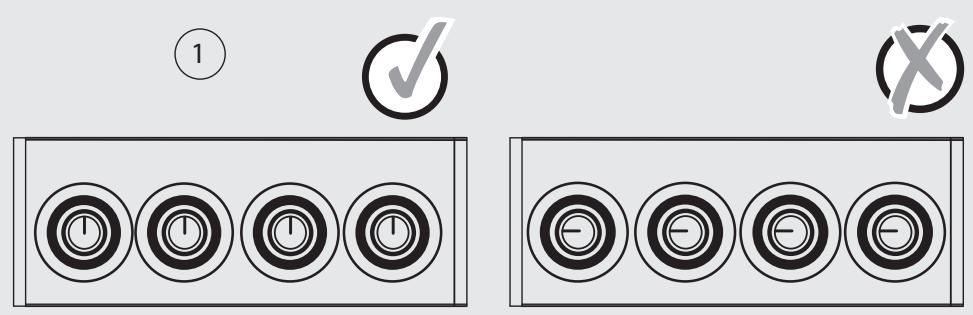
- Step 1 - Check that all buttons are in the OFF position.
- Step 2 - Open the gas control valve on the cylinder or regulator.
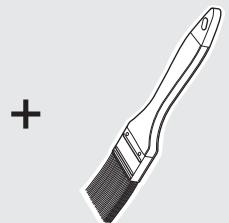
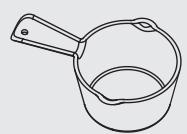
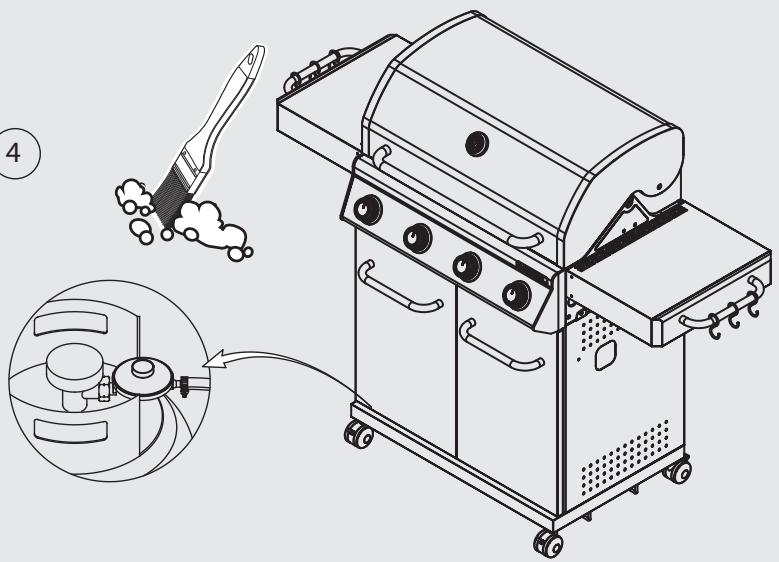
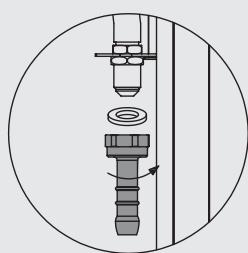
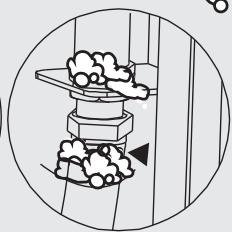
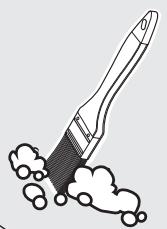
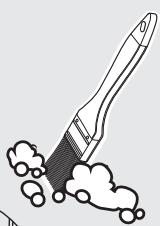
- Step 3 - Check for any potential leaks by coating all of the seals of the gas system, including the connections of the valve on the gas cylinder, hose and regulator, with a water (50%) and soap (50%) solution. NEVER USE A NAKED FLAME to test for leaks.
- Step 4 – The formation of bubbles above certain seals indicates a leak.
- Cut the gas supply
- Retighten all of the seals
- Begin the test again
- If bubbles form again, do not use the barbecue and contact your local retailer for assistance.
Thoroughly clean the water/soap solution from all of the seals and connections after carrying out the leak test.

PLEASE READ THESE INSTRUCTIONS CAREFULLY BEFORE ASSEMBLING AND USING THE BARBECUE
- Please read these instructions carefully before assembling and using the barbecue
- Keep these instructions for future reference.
- For outdoor use only. Do not use this appliance indoors.
- Do not use the barbecue and do not store the gas cylinders below ground level. Gas is heavier than air: If there is a gas leak, it will accumulate at a low point and can explode on contact with a flame or spark.
- For use only with cylinders of liquefied combustible gas. You should use a regulator designed for propane, butane or mixed gases.
- Remove the plastic packaging from all parts before lighting the barbecue.
- Ensure that the barbecue is used at least one metre from any structure or flammable surface. Do not use under flammable surfaces.
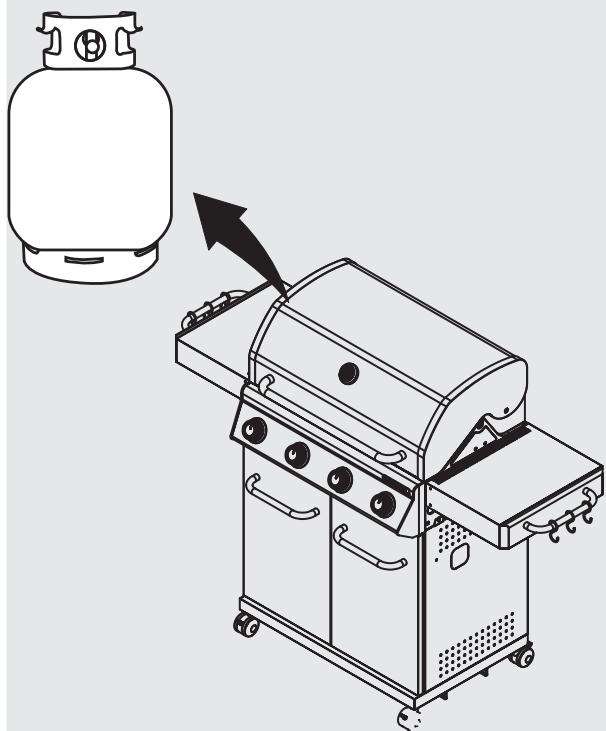
- Gas cylinders must not be placed directly under the barbecue.
- Gas cylinders must not be stored or used in the horizontal position. Any leak could be very serious and liquid may leak into the gas line.
- Open the hood of your barbecue before lighting it.
- Never store gas cylinders indoors.
- Do not move the appliance during use.
- This barbecue must not be left unattended when it is lit.
- The handle of the hood may become very hot. Only grip the centre of the handle.
- Use of an oven glove is recommended.
- Use utensils especially designed for barbecues, that are equipped with long, heat-resistant handles.
- Be careful of any hot steam that may emerge when you open the hood.
- Some parts of this barbecue may become very hot. Be careful when children, elderly people and animals are present.
- Turn off the gas supply at the gas cylinder after use.
- Never cover the barbecue until it has cooled down completely.
- Use the barbecue only on a flat and stable surface.
- Carry out a leak test before using your barbecue. It is the only reliable way to detect a gas leak on seals or connections after assembly.
- Carry out the leak test every year and each time the gas cylinder or hose is removed or replaced.
- This appliance must be kept away from flammable materials during use.
- Do not use aerosols near the barbecue.
- Failure to follow the instructions in this manual could lead to serious injury or damage.
- Please contact your local retailer should you have any questions regarding the instructions.
- Any modifications to this barbecue could be dangerous. They are not permitted and will render the warranty null and void.
- Do not modify the appliance.
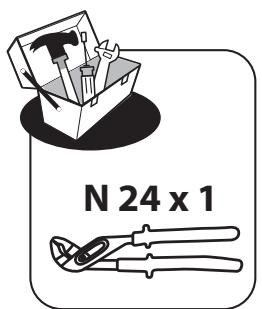
This barbecue can be supplied by liquefied combustible propane or butane in cylinder form. Propane cylinders will provide gas all year round, even in winter, when it is cold. You may need a wrench (not included) to change the cylinders. Butane cylinders provide a sufficient gas supply during the summer, but the performance of the barbecue may be affected when the temperature of the gas falls below +10°C . Check that you have the correct gas cylinder and regulator for your barbecue.
- The hose must hang freely without being bent, folded or twisted so as not to obstruct the passage of gas. Always inspect the hose before use, in case of cracks, cuts or excessive wear.
- Apart from the connection point, no part of the hose should touch the hot parts of the barbecue. If the hose is damaged, replace it with a suitable hose designed specifically for use with liquefied combustible gas and in accordance with the national standards of the country in which it is used.
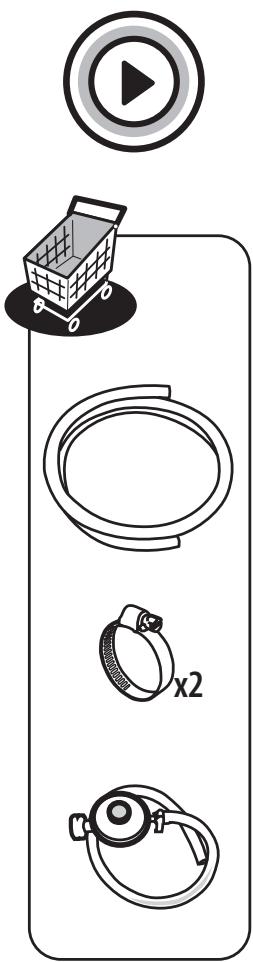
- Use an appropriate hose that complies with standard ISO3821, the length of which should not exceed 1.5 m .
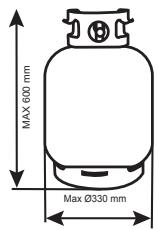
For optimal performance, we recommend using a 6-kg cylinder of butane or a 5-kg cylinder of propane. Use an appropriate regulator that complies with standard EN16129. YOU MUST HAVE A REGULATOR AND GAS CYLINDER THAT WILL ADEQUATELY ENSURE THE SAFETY AND EFFICACY OF YOUR BARBECUE. USING AN INAPPROPRIATE OR FAULTY REGULATOR IS DANGEROUS AND WILL Void THE WARRANTY. Please consult your local gas retailer to determine which gas cylinders and regulators are most suitable.
Parts sealed by the manufacturer or his agent must not be altered by the user.
| BE,CH,ES,FR,GB,GR,IT, LU,MT,PT | Butane (G30) 28-30 mbar | I3+ |
| Propane (G31) 37 mbar |
| CZ,CY,DK,EE,FI,HU,IS,LT, LV,MT,NO,NL,SE,SI,SK,RO,TR | Butane (G30) 30 mbar | I3B/P |
| Propane (G31) 30 mbar |
| PL | Propane (G31) 37 mbar | I3P |
4. INSTALLATION
Selecting an area
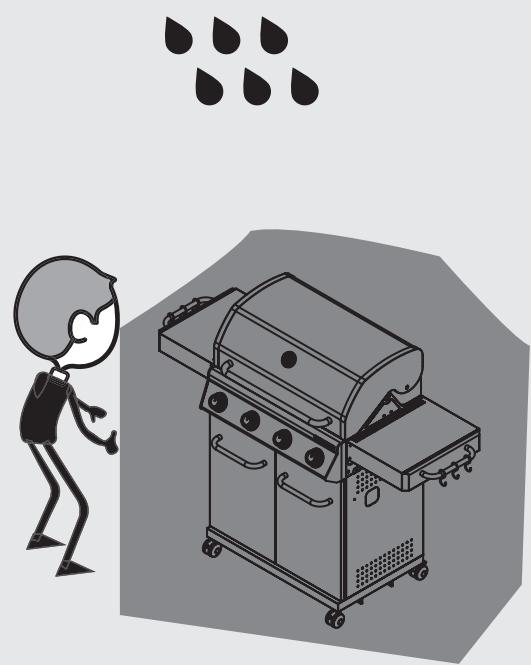
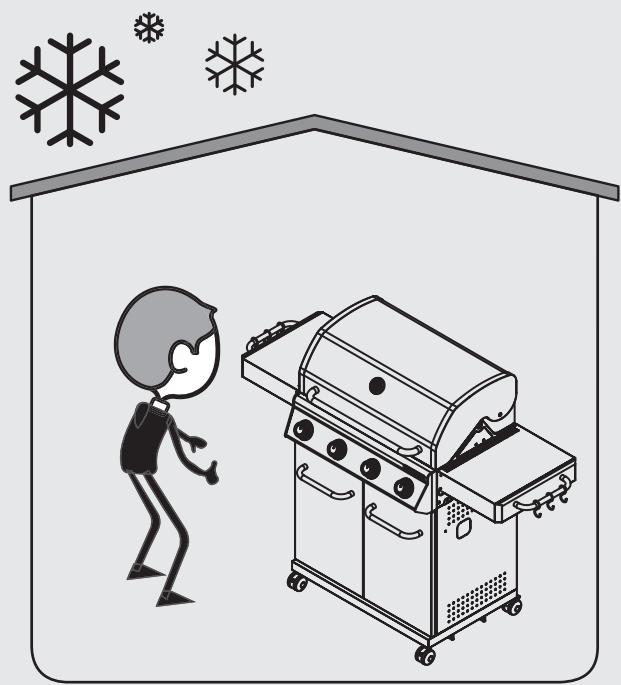
- This barbecue must only be used outdoors and must be placed in a well-ventilated area. Take care never to place it UNDER a combustible surface. The sides of the barbecue must NEVER be less than one metre from any combustible surface. Keep this barbecue away from flammable materials!
- Carefully select the area in which to use the barbecue. It should be placed in an open but sheltered space away from trees and other objects that could catch fire.
4.INSULATION
Precautions
- Do not block the air intakes on the body of the barbecue.
- If you have to replace the cylinder, check that it is fully closed and that there are no ignition sources (cigarettes, naked flames, sparks, etc.) nearby before continuing.
Connecting a gas hose to the barbecue
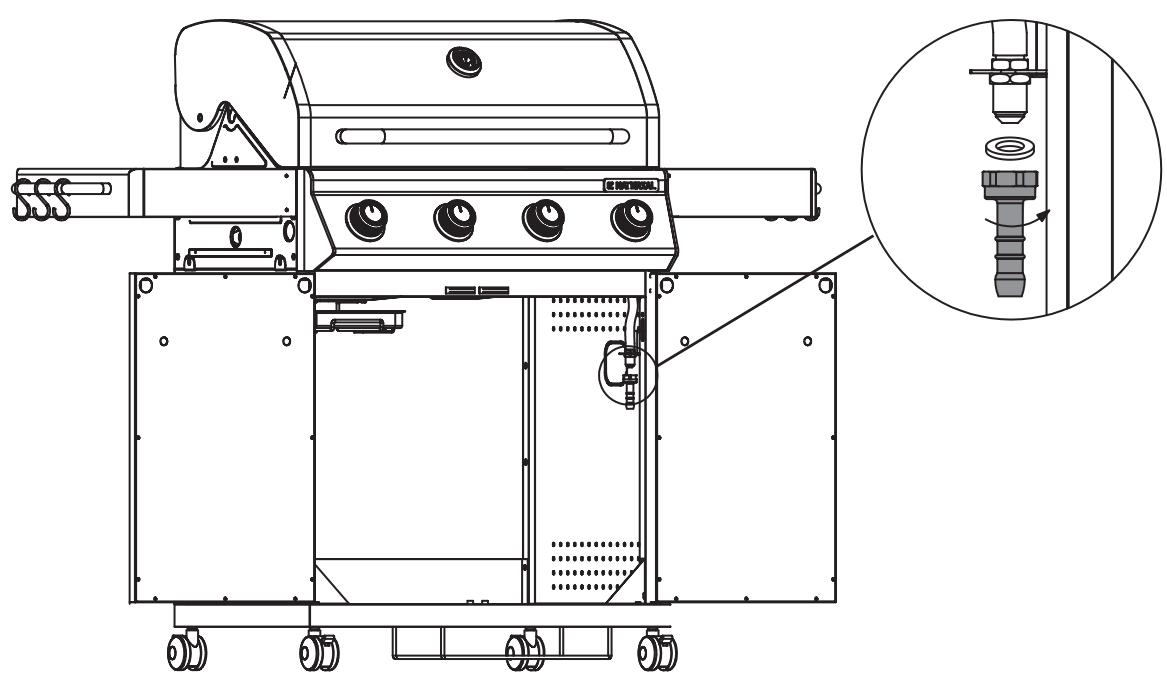
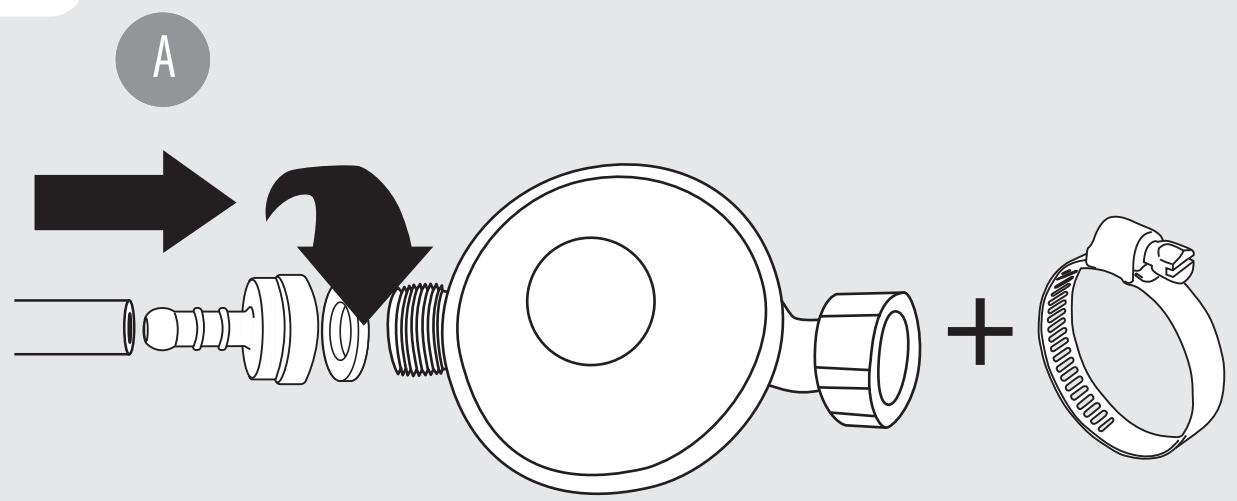
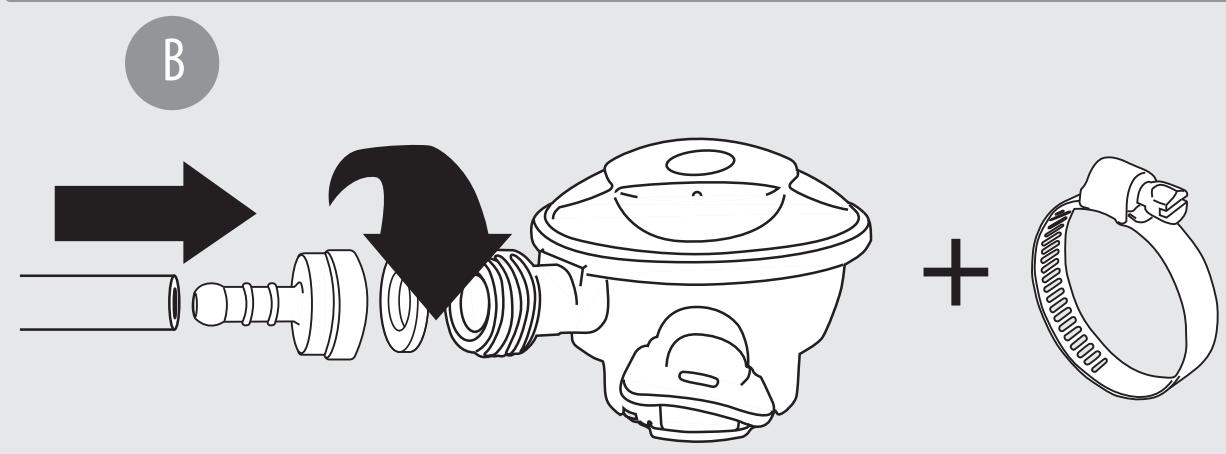
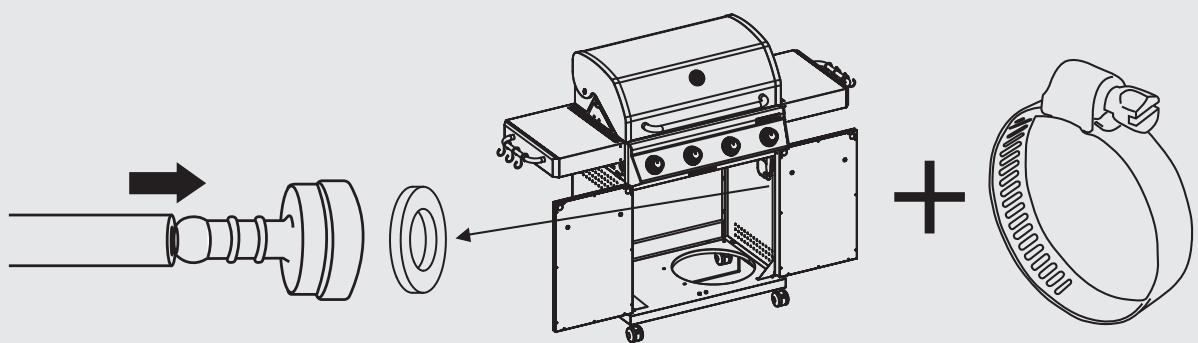
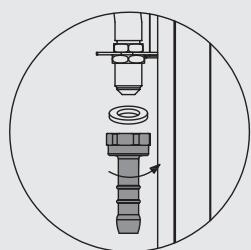
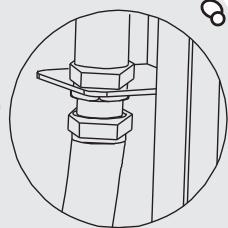
- Connect the gas hose at the gas intake point, on the left side of the barbecue. Do not over-tighten it. Do not use adhesive tape or liquid adhesive on the connection.
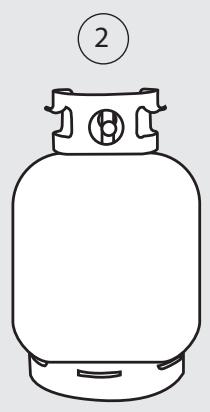
- Tighten them by hand.
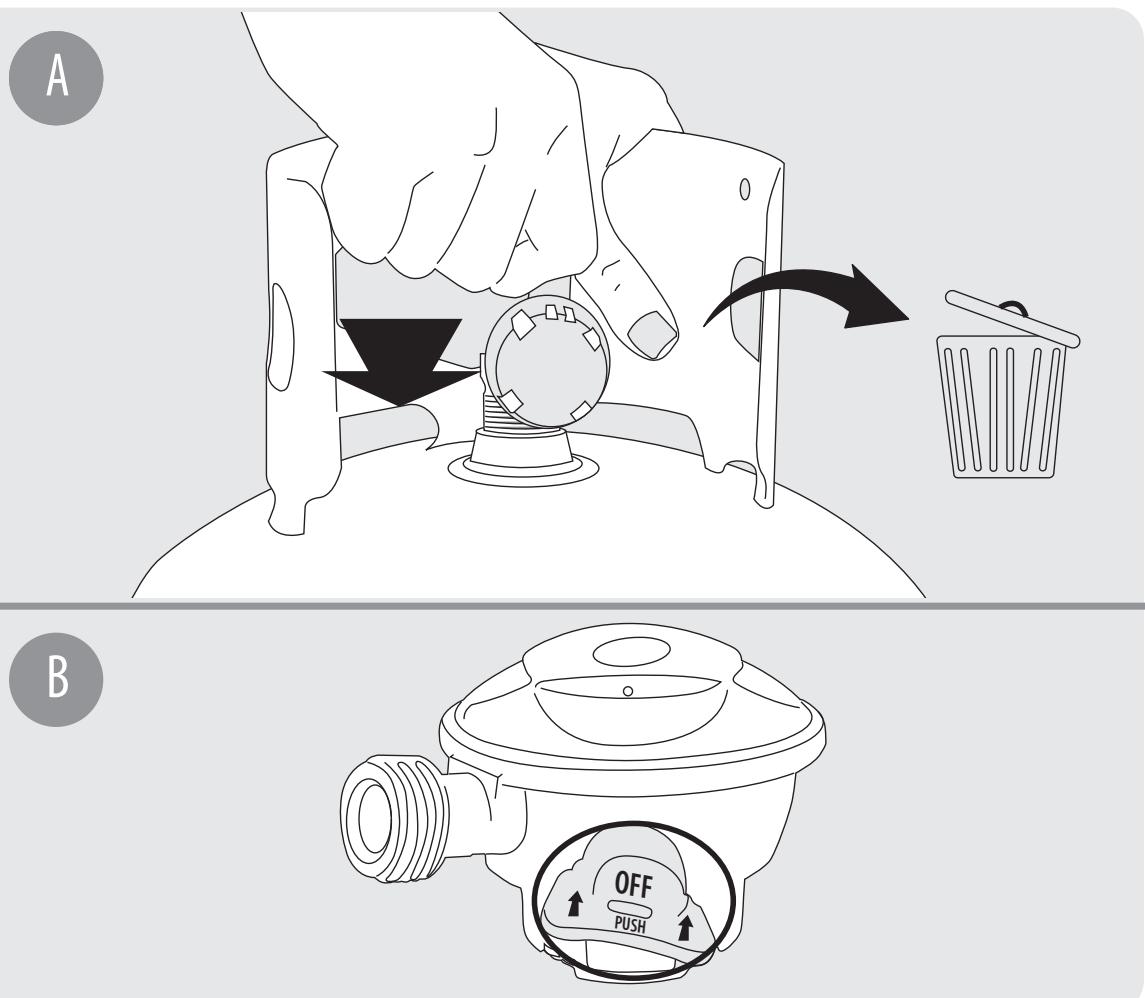
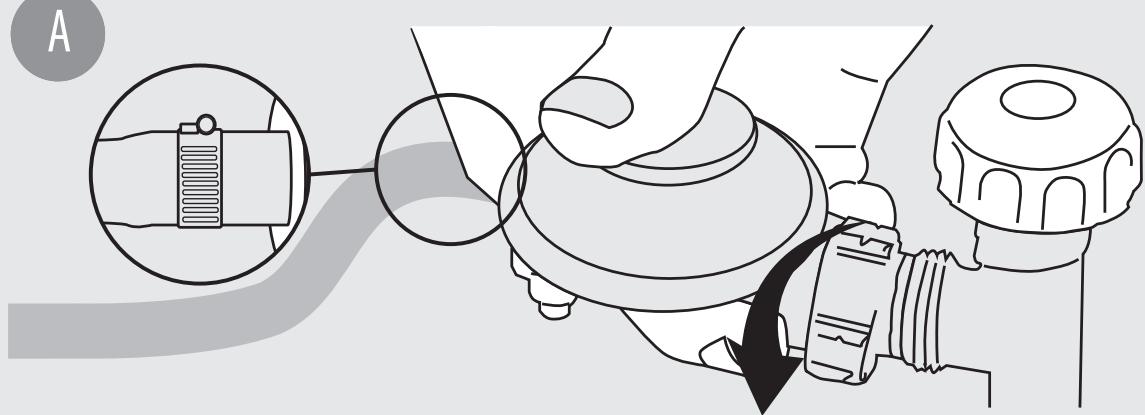
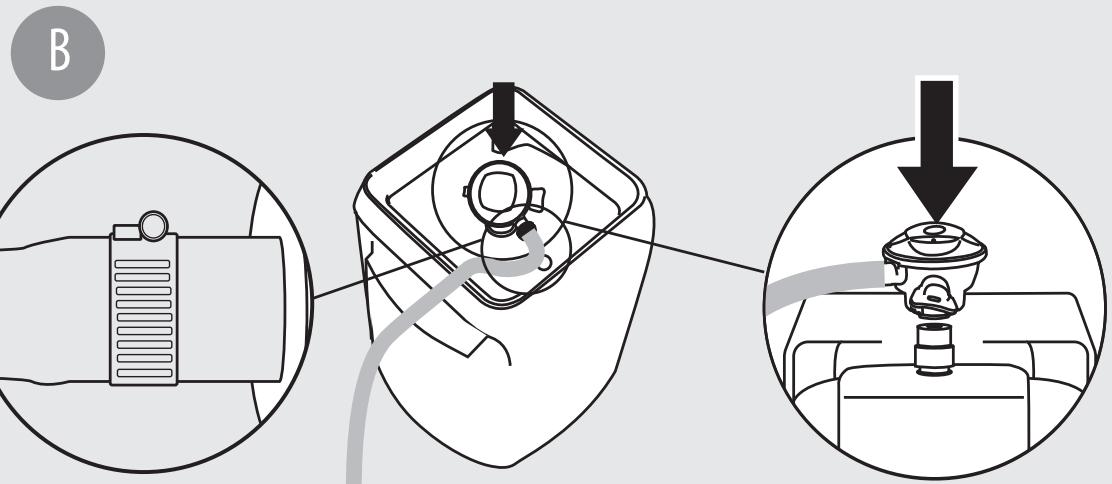
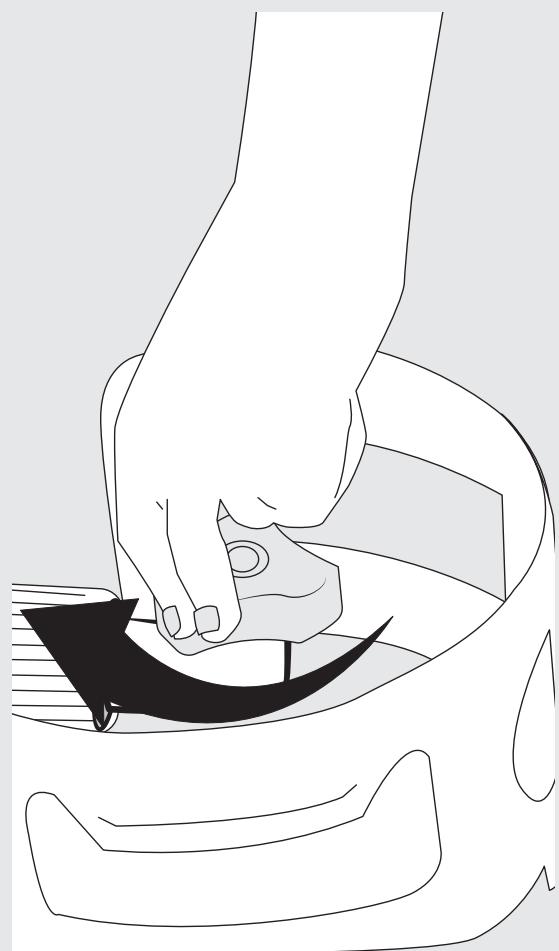
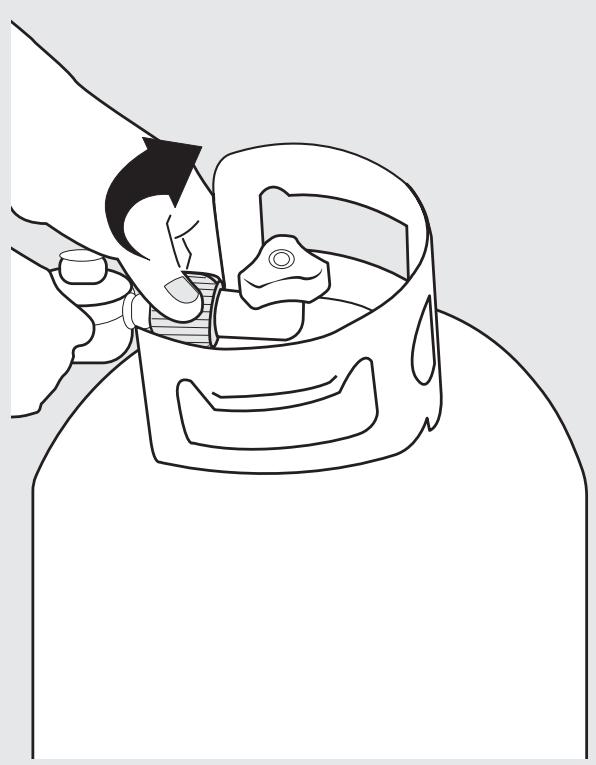
- Check that all of the barbecue control buttons are in the OFF position. Connect the regulator to the gas cylinder, following the instructions provided by the regulator and cylinder retailer.
Affixing the regulator to the gas cylinder
- Check that all of the barbecue control buttons are in the OFF position. Connect the regulator to the gas cylinder, following the instructions provided by the regulator and cylinder retailer.
5.OPERATION
Warnings
- Before continuing, ensure that you have correctly understood the IMPORTANT INFORMATION section of this manual.
- The design of this barbecue prohibits the use of more than 50% of the cooking zone as a solid plate. If the plates are completely covered, the resulting excessive heat build-up could damage the barbecue, which the warranty does not cover.
Lighting the barbecue
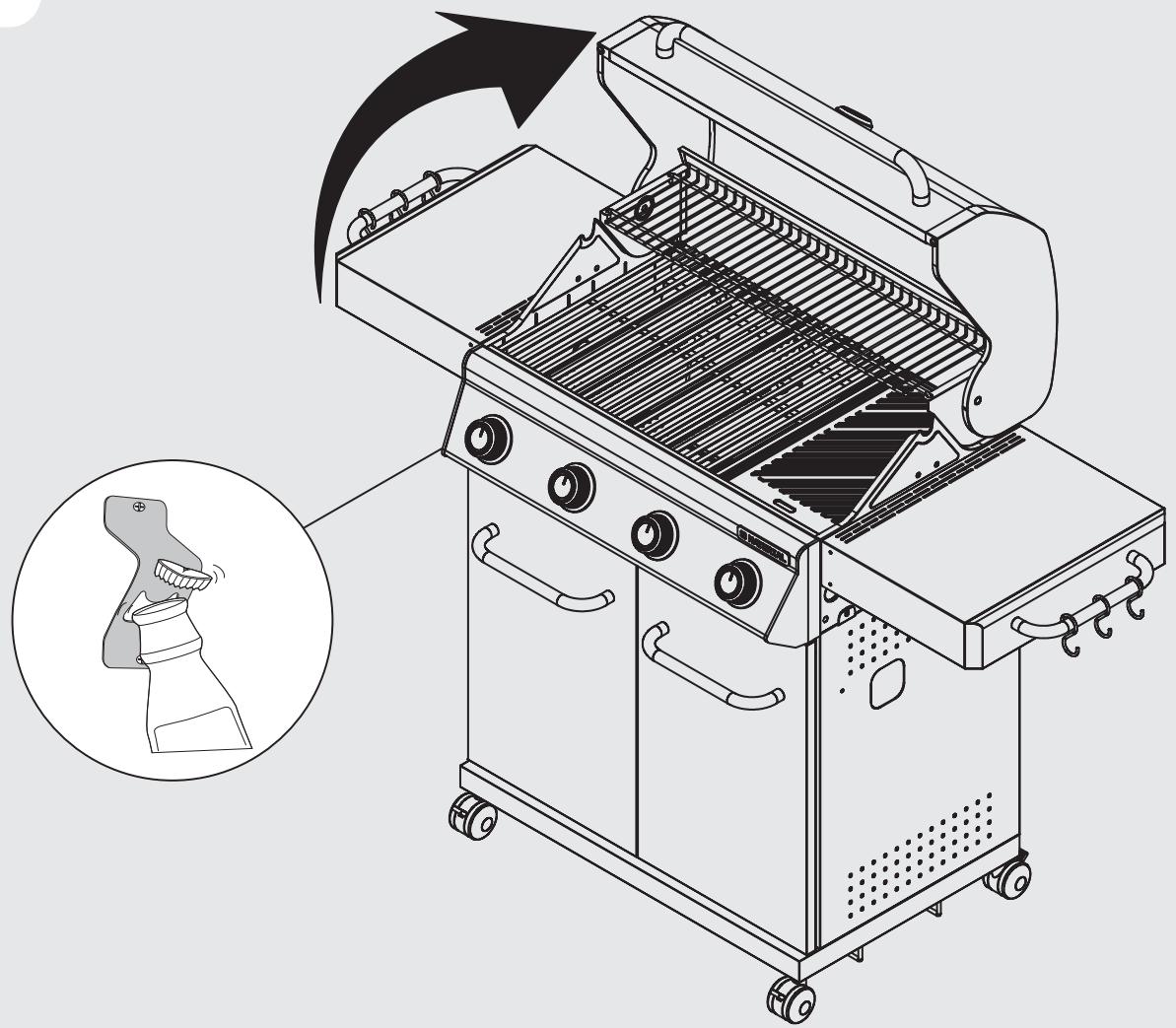
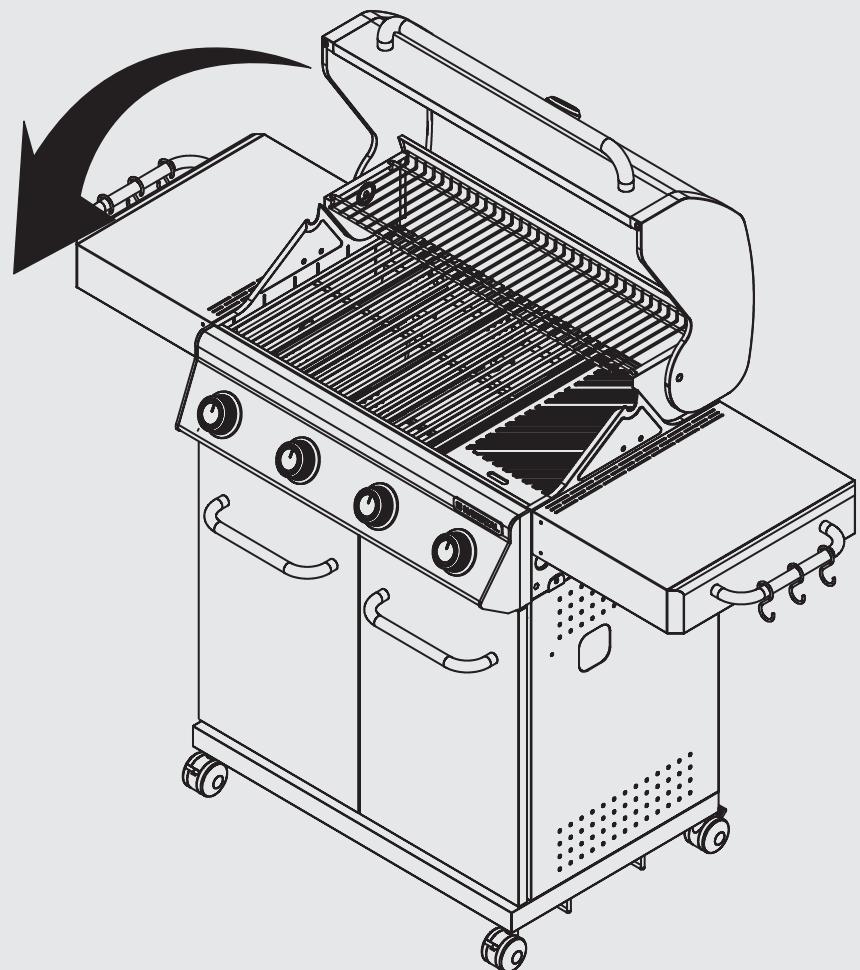
- Open the hood of your barbecue before lighting it. NEVER light your barbecue with the hood closed.
- Ensure that all of the gas buttons are OFF. Open the gas control valve on the gas cylinder or regulator.
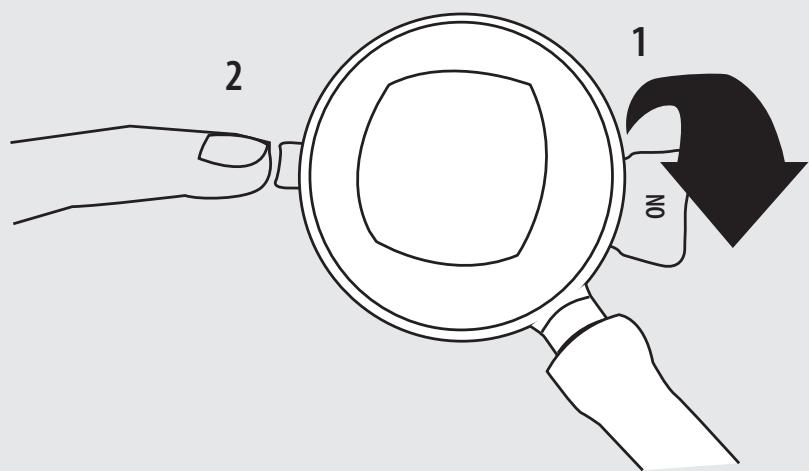
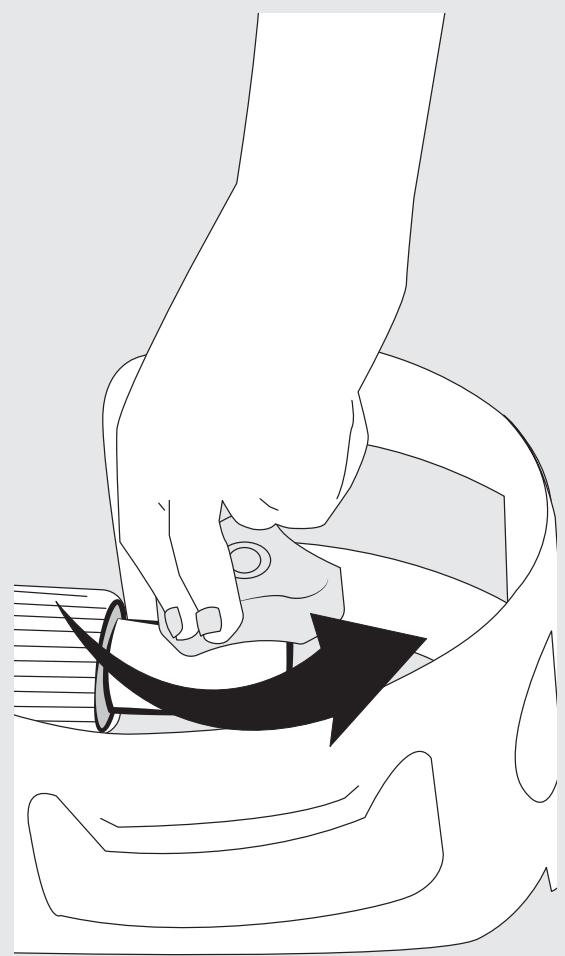
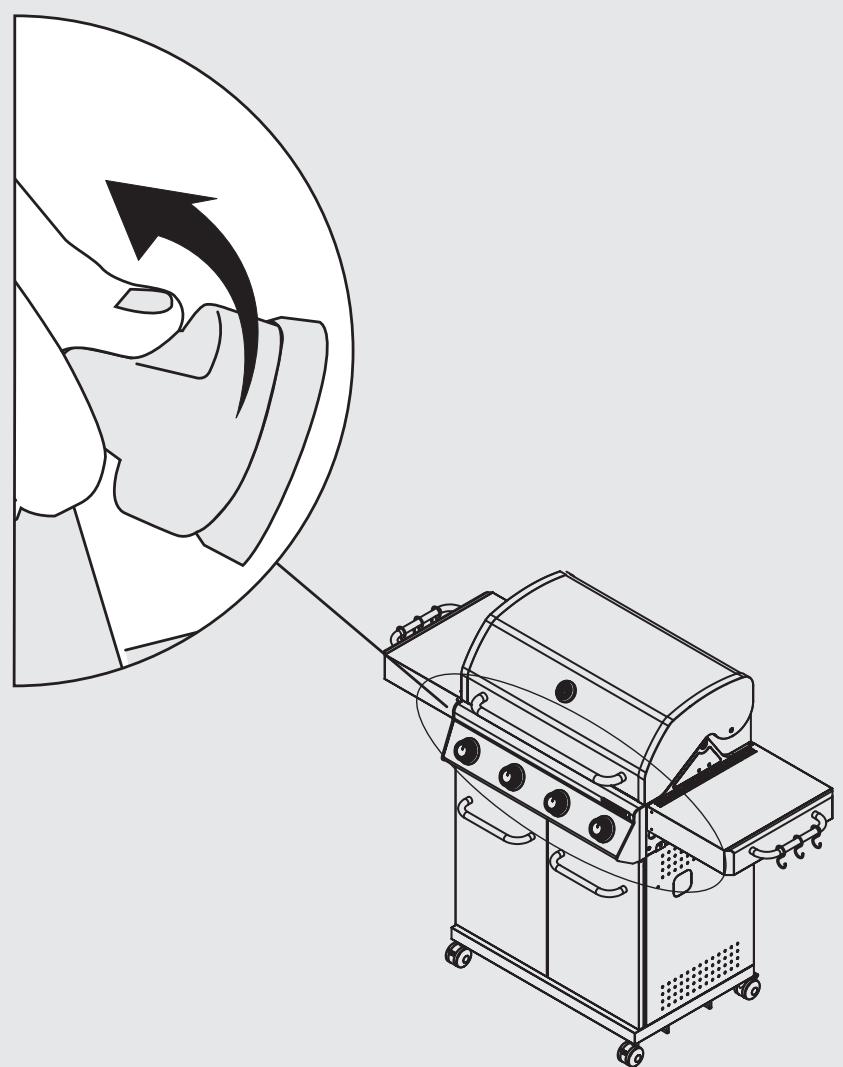
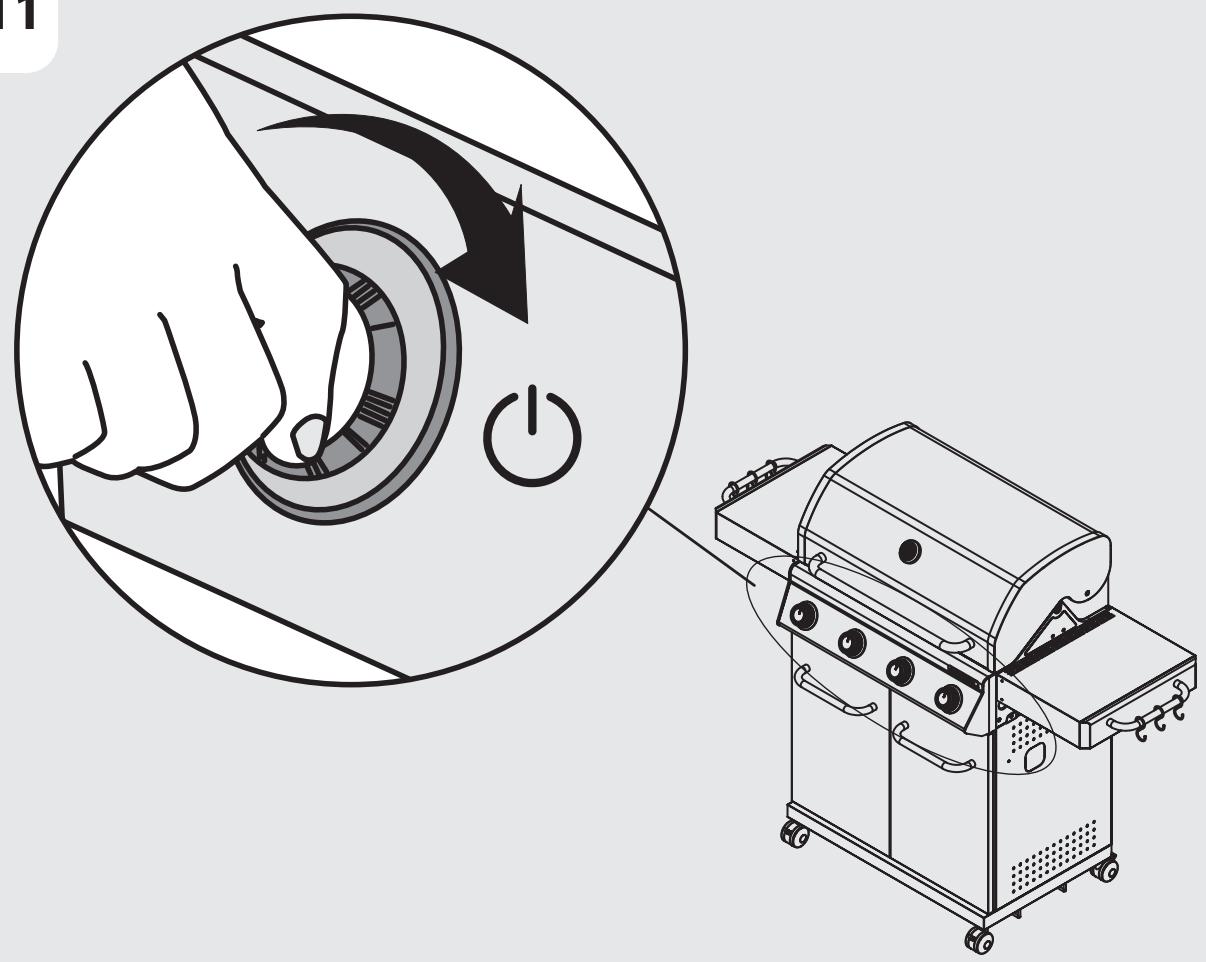
- Push the button of the burner that you want to light and turn it anti-clockwise until you feel a resistance to rotation. Wait 4 seconds, then continue to turn the knob until you hear a click (the burner will normally ignite). Repeat this operation several times until the burner ignites.
- Light the other burners in any order, depending on your needs. Check that each burner is lit before lighting the next.
- If the burner does not light after following the procedure above, turn the knobs to the off position. Close the gas valve on the gas cylinder. Wait five minutes. Repeat the steps above. If the barbecue still does not light, please refer to the manual lighting instructions below.
- After lighting, the burners must burn at the maximum position for 3 to 5 minutes to pre-heat the barbecue. This process must be carried out before each cooking session. The hood must remain open during pre-heating.
- Once pre-heating is finished, turn all of the burners to low heat to ensure the best cooking results.
5.OPERATION
Instructions for manual lighting
- Open the hood of your barbecue before lighting it. NEVER light your barbecue with the hood closed.
- Ensure that all of the gas buttons are OFF. Open the gas control valve on the gas cylinder or regulator.
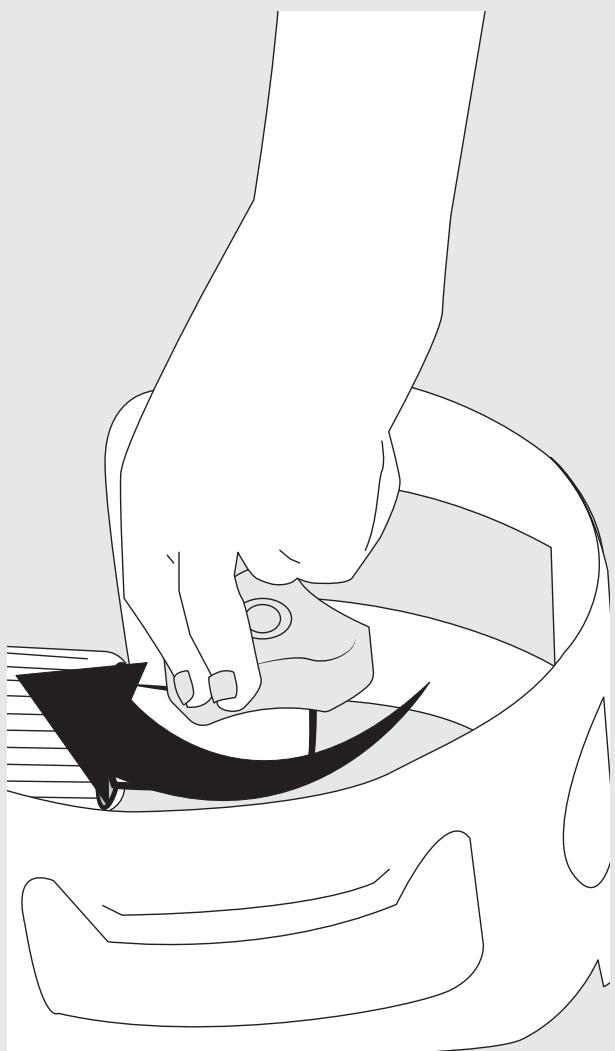
- Insert a lit match through the rightmost ignition hole below the control panel and place it near the right burner hole.
- Push and turn the far right knob anti-clockwise to the maximum position.
- When the right burner is lit, turn on the remaining burners from right to left.
- Make sure that each burner is lit before lighting the next burner.
- If the far right burner does not light, contact your local retailer.
- After lighting, the burners must burn at the maximum position for 3 to 5 minutes to pre-heat the barbecue. This process must be carried out before each cooking session. The hood must remain open during pre-heating.
- Once pre-heating is finished, turn all of the burners to the minimum position to ensure the best cooking results.
Cooking on the grill
- The stainless steel burners heat the heat diffuser (or the basket with briquettes/ lava stone) under the grill, which in turn heats the food placed on the grill. The natural juices produced by the food during cooking flow over the heat diffuser (or briquettes/ lava stone) and evaporate. The resulting smoke envelops the food, escaping upwards, giving the food the unique aroma of a barbecue. To obtain a more even cooking, lower the barbecue hood, making sure the burners are on low heat.
Cooking on the plate
- The burners directly heat the plate, which cooks the food placed on it. The plates allow you to cook smaller foods, such as seafood, that could fall between the bars of the grill. They also cook foods that require a high temperature/ short cooking times such as vegetables and small pieces of fish. Similarly, they can be used just like a kitchen hotplate to grill steaks, cook eggs, etc. They can also be used to heat pans or keep food warm.
Controlling flares *Very Important*
- Flares occur when the food is cooking and the juices and fats run over the hot heat diffusers. Smoke, of course, helps to give food that great barbecue taste, but it is better to avoid flares to prevent the food from burning. To control these flares, it is ABSOLUTELY ESSENTIAL to remove the excess fat from the food before cooking. Use a reasonable amount of marinades and cooking sauces. The burners must also be set to MIN for cooking.
- When flares occur they can normally be extinguished by putting baking powder or salt directly onto the heat diffusers. Always protect your hands when working near the barbecue surface, taking care to protect yourself against flames.
- In case of a grease fire please follow the instructions below.
Fat fires
- Empty and clean the grease trap of all cooking debris after each use.
- If the barbecue is used for large parties, it will need to be turned off every two hours and cleaned. It should be cleaned more often if you cook a lot of very fatty food (sausages, verguez, etc.). Failure to follow these guidelines can cause fat fires, which can cause injury and can damage the barbecue.
5.OPERATION
In the event of a fat fire/Warnings:
- If you can do so safely, turn off all of the gas knobs.
- Close the gas cylinder.
- Keep everyone away from the barbecue and wait for the fire to go out.
- Do not close the barbecue hood.
- NEVER SPRAY YOUR BARBECUE WITH WATER. IF YOU USE A FIRE EXTINGUISHER,
- IT MUST BE A POWDER EXTINGUISHER.
DO NOT REMOVE THE GREASE TRAP.
- If the fire does not appear to be diminishing or seems to be getting worse, contact the fire brigade for assistance.
After cooking
- After each cooking session, set the barbecue burners to the maximum position and allow them to burn for 5 minutes. This will burn off any cooking residue and consequently help cleaning. Make sure the hood is open during this operation.
- Always clean your barbecue after each use to prevent the build-up of grease that could catch fire.
Switching off the barbecue
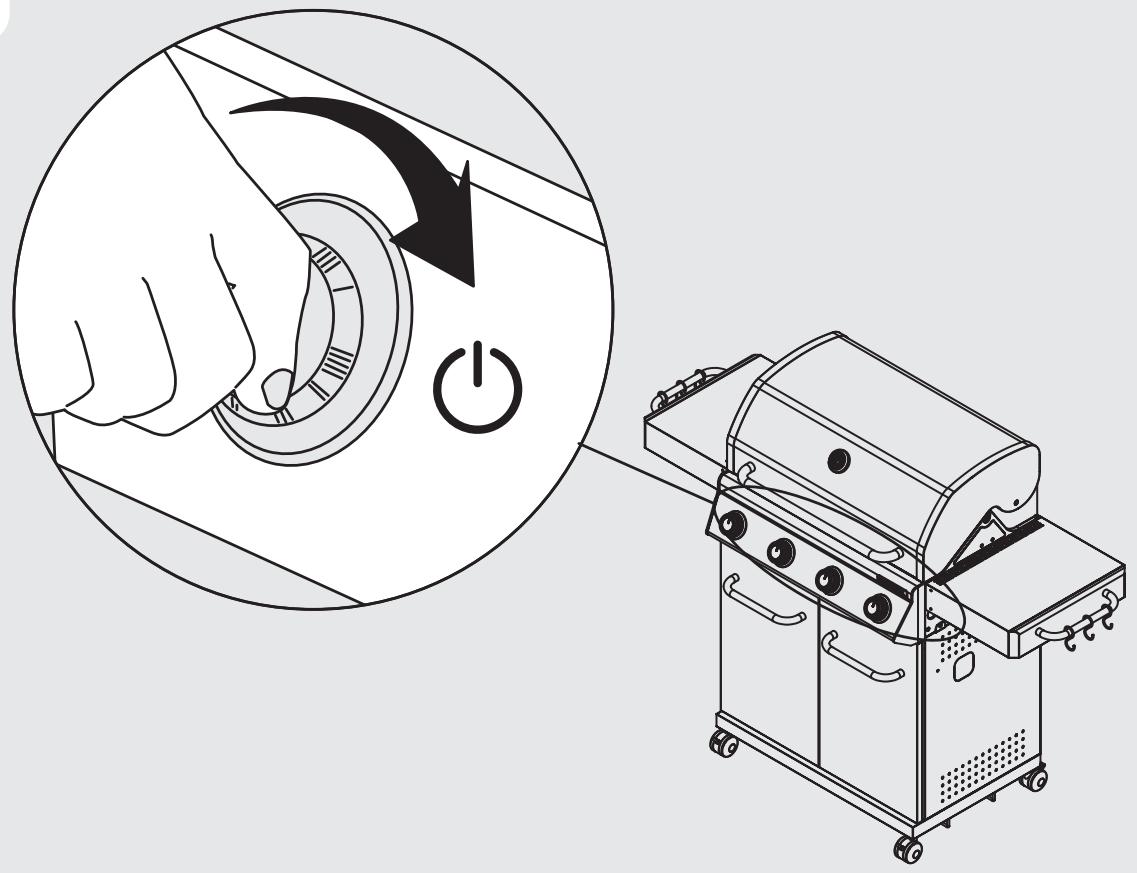
- When you have finished using the barbecue, turn all of the gas valves fully clockwise to the OFF position and turn off the gas supply to the cylinder.
- Wait until the barbecue is cold before closing the hood.
6.CARE AND MAINTENANCE
- Clean your barbecue regularly between uses and especially after extended periods of storage. Check that the barbecue and its components are cold enough before cleaning. Never leave the barbecue exposed to the elements and keep it away from moisture.
- Never spray the barbecue with water when its surfaces are hot.
- Never handle hot parts without protecting your hands.
- To prolong its life and maintain the condition of your barbecue, we strongly recommend that you cover it if left outdoors for extended periods, especially during the winter months. High-strength tarpaulins and other accessories for barbecues are available from your local retailer.
- Even if your barbecue is covered for protection, it should be inspected regularly as moisture or condensation may form, which could damage it. It may be necessary to dry the barbecue and the inside of its protective cover. Fat residues may mould on parts of the barbecue. This should be cleaned with very hot soapy water.
- Any rusty parts you find that are not in contact with the food should be treated with a rust inhibitor and repainted with a barbecue or heat-resistant paint.
6.CARE AND MAINTENANCE
Cooking surfaces
- When the barbecue has cooled down, clean it with warm, soapy water. To remove food residue, use a dishwashing detergent. Do not use abrasive sponges or scouring powders as they could permanently damage the finish of your barbecue. Rinse and dry well. We do not recommend cleaning the grills and plates in a dishwasher because of their weight.
- REMEMBER THAT THE USE OF ICECUBES, WHICH MAY CAUSE THERMAL SHOCK AND CRACK THE ENAMEL OF THE PLATE, MUST BE AVOIDED.
IF RUST APPEARS ON THE COOKING SURFACE IN CONTACT WITH THE FOOD, IT MUST BE REPLACED.
Maintaining the burners
- Your burner has been set to provide maximum flame performance. You will normally see a blue flame, that maybe has a yellow end, when the burner is lit. If the flame tends to be more yellow, it could be due to debris or insects in the holes or tubes of the burner. This could cause a blockage or restriction of the gas flow, which could cause a fire behind the control panel, seriously damaging your barbecue. If this happens, and if possible, the gas must be switched off immediately.
- The burner must be inspected, removed and cleaned regularly, at least once a year, in addition to the following conditions:
- Removing your barbecue from storage.
- If one or more burners do not ignite.
- If the flame of the burner is too yellow.
- If the gas ignites behind the control panel.
- To clean a burner completely, remove it from the barbecue. A lightweight wire brush can be used to remove rust from the burner surface. Use a pipe cleaner or a piece of wire to remove obstructions in the holes or tubes of the burner, taking care not to enlarge the burner holes.
- You may need a torch to ensure that the inside of the burner tube is clear. Turn the burner and tap it gently against a hard surface like a piece of wood to dislodge any debris from the inside.
- When replacing the burner, make sure that the tubes are facing the nozzles.
Heat diffuser
- Remove any food residue from the heat diffuser with a wooden or soft plastic scraper or with a brass brush. Do not use a steel scraper or brush. Clean with warm, soapy water and rinse thoroughly.
Grease collection tray
- After each use, remove and clean all food and fat deposits from the grease collection tray, using a wooden or plastic scraper if necessary.
- If you do not follow these instructions, it may cause a grease fire. This could result in serious damage to your barbecue that will not be covered by the warranty. If necessary, the grease collection tray can be cleaned with soapy water.
6.CARE AND MAINTENANCE
Barbecue body
- Regularly remove excess grease from the barbecue body using a cloth that has been soaked in soapy water and thoroughly wrung out. Excess fat and food deposits can be removed from the inside of the barbecue body using a wooden or soft plastic scraper. For ease of cleaning, you can add a sheet of aluminium foil that will be changed with each use. Be careful not to block the grease drain holes. If you need to clean it thoroughly, use a cloth and hot soapy water or a nylon brush. Do not use abrasive cleaning agents. Remove the grills and/or plates and burners before cleaning thoroughly. Do not immerse gas knobs or fuel lines in water. Check the ignition after carefully replacing the components in the barbecue body.
Barbecue hood
- Clean the barbecue hood with a non-abrasive cloth or pad and hot, soapy water. Do not use scouring pads or powders as this will permanently damage the finish of your barbecue. Dry thoroughly after cleaning to prevent rusting.
Trolley
- Wipe with a cloth soaked in hot soapy water, then dry.
- As with any stainless steel product and to guarantee the longevity of your product, particularly the appearance of the stainless steel, we recommend regularly maintaining the stainless steel parts of your barbecue using a protective oil, and to do this from first use. From time to time, you can also spray the surface with a stainless steel cleaner, then rub with a soft cloth and polish it. This will provide you with a thin layer of protection for your stainless steel surfaces.
Fittings
- We recommend that you check and tighten all screws, bolts, etc. at regular intervals.
Storage
- Make sure your barbecue is cool before covering or storing it. Store your barbecue in a cool and dry place.
- Cover the burners with aluminium foil to prevent insects and other debris from entering the burner orifices.
- If the barbecue is stored indoors, the gas cylinder must be disconnected and left outside. The gas cylinder should always be left outdoors in a dry, well-ventilated area away from heat or ignition sources. Do not let children play with this cylinder. Do not expose the gas cylinder to direct sunlight.
- Before using the barbecue after extended periods of storage, follow the installation procedures.
7.TROUBLESHOOTING
PROBLEM/SOLUTION
Burners
The burners do not ignite with the ignition system
- The gas cylinder is empty Replace with a full cylinder
- Faulty regulator → Check or replace the regulator
- Burners clogged → Clean the burners
Gas hose or nozzles clogged Clean the gas hose or nozzles
- The electrode cable is loose or disconnected from the electrode. Reconnect the cable
- The electrode or cable is damaged Replace the electrode and the cable
- The integrated igniter is faulty Replace it
- Incorrect electrode gap → The electrode must comply with the burner, with a distance of 3 to 4mm between the end of the electrode and the port on the burner. Realign the electrode as required.
The burner does not ignite with a gas igniter
- The gas cylinder is empty Replace with a full cylinder
- Faulty regulator → Check or replace the regulator
- Burners clogged → Clean the burners
Gas hose or nozzles clogged → Clean the gas hose or nozzles
Small flame or flashback (flame in the burner tube, whistling or perceptible whirring)
- The gas cylinder is too small → Use a bigger cylinder
- Burners clogged → Clean the burners
Gas hose or nozzles clogged → Clean the gas hose or nozzles
- Wind Use the barbecue in an area that is less exposed to wind
The gas valve knob is difficult to turn
- Integrated ignition system jammed Replace the gas valve
Gas valve jammed Have your retailer replace the gas valve
8.WARRANTY CONDITIONS
- 3 years (burners, lid, fireplace and grates) against rust
All other parts 2 years
This product is warranted, for the original purchaser, against original defects to materials and malfunction.
As with any stainless steel product and to guarantee the longevity of your product, particularly the appearance of the stainless steel, we recommend regularly maintaining the stainless steel parts of your barbecue using a protective oil, and to do this from first use.
Your retailer will ensure, free of charge during this period, the replacement of faulty parts for household use if the following conditions are met:
This warranty shall only apply to use by a single private residence and shall not apply to Naterial barbecues used in a commercial or communal environment, or to multiple residences such as restaurants, hotels, holiday centres and rented properties.
Under no circumstances shall compensation of any kind be in excess of the amount of the purchase price of the Material product sold under this voluntary guarantee.
You shall assume the risk and responsibility for any loss, damage or injury to you and your property and/or to others and their property resulting from the misuse or abuse of the product or failure to follow the instructions provided by Naterial in the attached owner's guide.
The product has not been subject to misuse or neglect, including grease fires or excess flame or use of a defective or incorrect gas regulator.
The product has not been damaged by foreign objects, substances or accidents.
The warranty is offered as an extra and is in addition to the legal rights of the consumer.
If you have any questions regarding the installation or use of your appliance, please contact your retailer's After-Sales service.
| ADEO Service | CE 0359-17 |
| Product Name | Outdoor Gas Grill |
| Model Number | K114DD2-N2 |
| Product Identification Number | 0359CP1429 |
| Gas Category | 13+(28-30/37) | 13B/P(30) | 13B/P(37) | 13B/P(50) |
| Gas and Supply Pressure | Butane(G30) | Propane(G31) | Butane | Butane | Butane |
| 28-30 mbar | 37 mbar | 29 mbar | 37 mbar | 50 mbar |
| Country of Destination | 13+(28-30/37):BE,CH,CY,CZ,ES,FR,GB,GR,IE,IT,LT,LU,LV,PT,SK,SI.I3B/P(30):BE,CY,CZ,DK,EE,FI,FR,HU,LT,IT,NO,NL,SE,SI,SK,RO,HR,TR,BG,IS,LU,MT.I3B/P(50):AT,CH,CZ,DE,SK.I3B/P(37):PL |
| Main Burner Injector Size | Ø 0.92 mm | Ø 0.92 mm | Ø 0.86 mm | Ø 0.81 mm |
| | | | |
| Total Nominal Heat Inputs(Hs) | 14kW (1017g/h) |
| |
| |
| Serial Number | |
| Use outdoors only. |
| Read the instructions before using the appliance. |
| Warning: Accessible parts may be very hot. Keep young children away. |
| Made in China |
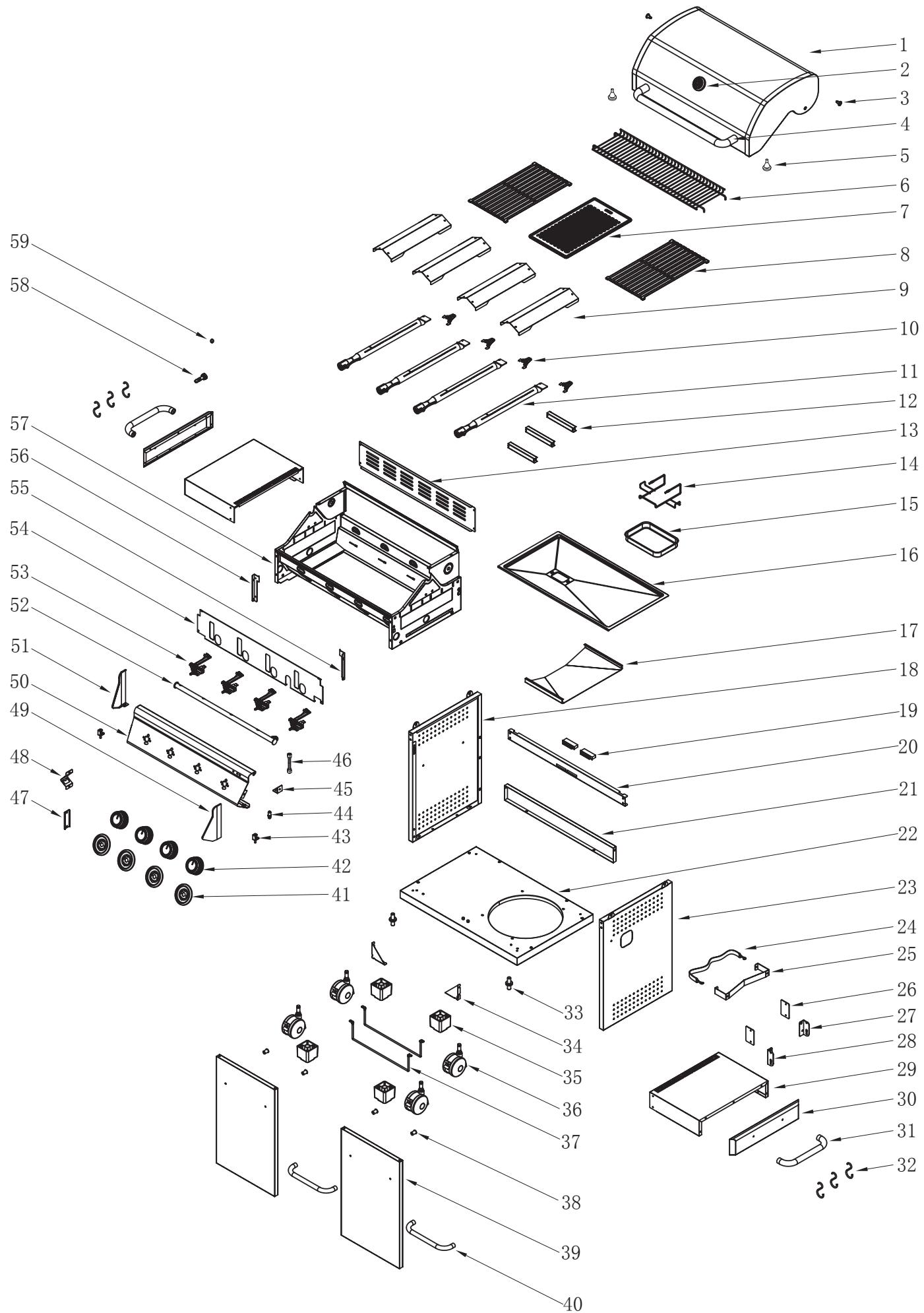
EXPLODED VIEW
We : ADEO Services 135 Rue Sadi Carnot - CS 00001 59790 RONCHIN - France
Declare that the product detailed below: GAS BBQ/ Plancha MODEL: GAS BBQ KENTON 2B, GAS BBQ KENTON 3B, GAS BBQ KENTON 4B Batch no.: 082267301117, 082267301217, 082267150118, 082267140318
Satisfies the requirement of the Council Directives: Gas Appliance Directive 2009/142/EC (ex-90/396/EEC)
And conforms with the norms: BS EN 498:2012 BS EN 484:1998
Position of Signatory:
Gael CONSIGNY, Asian Quality Director Global Sourcing Authorized representative of Bruno Pottie, Director of Global Sourcing Shared Service Center
ADEO Services 135 Rue Sadi Carnot - CS 00001 59790 RONCHIN - France
Last two numbers of the year CE marking applied: 17
20/09/2017
| CONTACT ADDRESS | CONTACT PHONE NUMBER | CONTACT MAIL |
| Leroy Merlin France | LEROY MERLIN France
rue Chanzy
Lezennes 59712 Lille Cedex 9, France | (+33) 0 810 634 634
.service 0,05€/appel + prix
appl | https://www.leroymerlin.fr |
| Weldom | WELDOM FRANCE
ZI Breuil le Sec 60 608 Clermont Cedex | (+33) 03 44 77 82 60 | https://www.weldom.fr/ |
| Leroy Merlin Spain | Leroy Merlin Espagne SLU
Avenida de la Vega, 2
28108 - Alcobendas. Madrid | (+34) 917496000 | http://www.leroymerlin.es |
| AKI Spain | AKI Bricolaje España, S.L.U.
Edificio Cristal, planta 5a Centro Comercial Baricentro
Ctra Nacional 150, km. 6.7 08210 Barberà del Vallès Espagne | (+34) 91 644 79 00/ 91 644 79 01 | atencioncliente@aki.es |
| Leroy Merlin Portugal | LEROY MERLIN PORTUGAL
Rua Quinta do Paizinho, 10/12 2790-237 - Carnaxide - Portugal | (+351) 800 108 005 | http://www.leroymerlin.pt |
| AKI Portugal | Servços Centrais
BRICODIS, S.A.
Servico de Apoio a Clientes
Rua Quinta do Paizinho, n° 10-12
2790-237 Carnaxide | (+351) 808 201 002. | https://www.aki.pt |
| Leroy Merlin Italy | LEROY MERLIN ITALIE
Strada, 8 Palazzo, N 20089 Rozzano - Milano Italie | | https://www.leroymerlin.it |
| Bricocenter | BRICOCENTER ITALIE
Strada 8, Palazzo, N 20089 Rozzano - Milano Italie | +39 02 399761 | http://contattaci.bricocenter.it |
| Leroy Merlin Greece Cyprus | LEROY MERLIN GREECE
44, avenue Kifisias,Monumental Plaza Building A, 15125 Marousi Grèce | | https://www.leroymerlin.gr/
https://www.leroymerlin.gr/gr/
epikoinoniste-mazi-mas/ |
| Leroy Merlin Poland | Leroy Merlin Polska
UI. Targowa 72,
03-734 Warszawa | JACKONET
Jacek Skwieciński
Tel: +48 664 045 745 | Email: skwieciński@jackonet.pl
www.jackonet.pl |
| Leroy Merlin Romania | Leroy Merlin Bricolaj Romania Sos. Chitilei, nr. 178, Et. 1, Ap. 2
Sect. 1, 012403 Bucarest Rouanie | | https://www.leroymerlin.ro/ |
| Leroy Merlin Brazil | Leroy Merlin
Rua Domingas Galleteri Blotta, 315 Jd Consórcio
04455 - 360 São Paulo/SP - Brésil | | http://www.leroymerlin.com.br/ |
| Leroy Merlin South Africa | | | http://www.leroymerlin.co.za/ |
- Garantie 3 ans / 3 años de garantía / Garantia de 3 años / Garanzia 3 Anni / Eyyúnŋon 3 ετών/
Gwarancja 3-letnia / Γαραπτηλ 3 ογα / Γαραπτιδε 3 ροκιβ / Garanţie 3 ani /