
ER-GB80-S503 - Electric mower PANASONIC - Free user manual and instructions
Find the device manual for free ER-GB80-S503 PANASONIC in PDF.



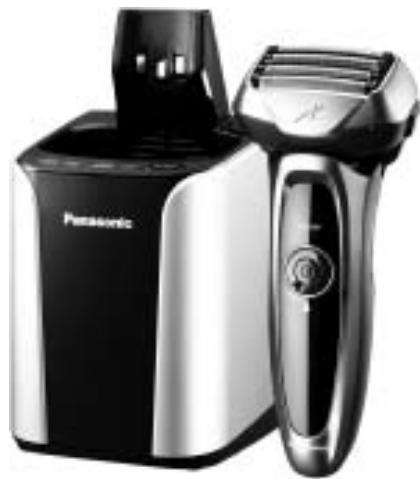
| Product Type | Electric trimmer (rechargeable shaver) |
| Model | ER-GB80-S503 |
| Brand | Panasonic |
| Dimensions (L x W x H) | 6.7 cm x 2.5 cm x 9.2 cm |
| Weight | 145 g |
| Power Supply | AC adapter (model RE7-59), automatic voltage, rechargeable lithium-ion battery |
| Charging Time | Approx. 1 hour |
| Battery Life | Approx. 14 shaves of 3 minutes per charge |
| Shaving Types | Dry and wet (with shaving gel) |
| Shaving Modes | Shaving detection mode and normal mode |
| Built-in Trimmer | Pop-up trimmer for sideburns and pre-shave |
| Pivoting Head | FREE/LOCK selector for pivoting or locking |
| Waterproof | Usable in shower, washable with water |
| Cleaning System | Auto-cleaning charger with Cleaning/Drying/Charging modes |
| Manual Cleaning | Sonic vibration mode, cleaning brush included |
| Lubrication | Oil provided, one drop per foil after cleaning |
| Replacement Parts Available | Protective foil (WES9173), inner blades (WES9170), special detergent (WES4L03) |
| Battery Service Life | Approx. 3 years (charging every two weeks) |
| Safety | Lock ring, automatic stop, overheating protection |
| Included Accessories | AC adapter, auto-cleaning charger, liquid tank, travel pouch, brush, oil, detergent |
| Intended Use | Household only |
| Sound Level | 63 dB(A) in shaver mode, 64 dB(A) in trimmer mode |
Frequently Asked Questions - ER-GB80-S503 PANASONIC
User questions about ER-GB80-S503 PANASONIC
0 question about this device. Answer the ones you know or ask your own.
Ask a new question about this device
Download the instructions for your Electric mower in PDF format for free! Find your manual ER-GB80-S503 - PANASONIC and take your electronic device back in hand. On this page are published all the documents necessary for the use of your device. ER-GB80-S503 by PANASONIC.
USER MANUAL ER-GB80-S503 PANASONIC
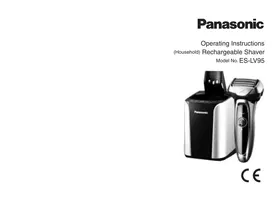
Operating Instructions
(Household) Rechargeable Shaver
Model No. ES-LV95
CE
GB English.... 5 DK Dansk.... 149 CZ Česky.... 285 D Deutsch ...... 29 P Português ...... 171 SK Slovensky ...... 309 F Français...... 53 N Norsk ...... 195 H Magyar...... 333 I Italiano....77 S Svenska....217 RO Română....357 NL Nederlands ..... 101 FIN Suomi..... 239 TR Türkçe..... 381 E Español.... 125 PL Polski.... 261
1
2
A Front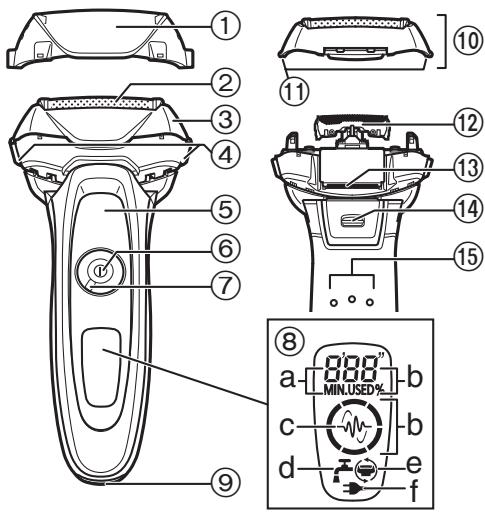
Back
D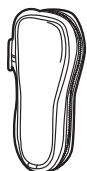
E F

G
H
|
Panasonic
Operating Instructions
(Household) Rechargeable Shaver
Model No. ES-LV95
Contents
Safety precautions......8
Intended use 12
Parts identification .... 13
Charge 13
Using the shaver....15
Clean....17
Troubleshooting 21
Service....26
For environmental protection and recycling of materials....26
Specifications 27
Warning
- This appliance can be used by children aged from 8 years and above and persons with reduced physical, sensory or mental capabilities or lack of experience and knowledge if they have been given supervision or instruction concerning use of the appliance in a safe way and understand the hazards involved. Children shall not play with the appliance. Cleaning and user maintenance shall not be made by children without supervision.
- The supply cord cannot be replaced. If the cord is damaged, the AC adaptor should be scrapped.
- This WET/DRY shaver can be used for wet shaving using shaving lather or for dry shaving. You can use this watertight shaver in the shower and clean with water. The following symbol means suitable for use in a bath or shower.

- Do not use anything other than the supplied AC adaptor.
Safety precautions
To reduce the risk of injury, loss of life, electric shock, fire, malfunction, and damage to equipment or property, always observe the following safety precautions.
Explanation of symbols
The following symbols are used to classify and describe the level of hazard, injury, and property damage caused when the denotation is disregarded and improper use is performed.

DANGER
Denotes a potential hazard that will result in serious injury or death.

WARNING
Denotes a potential hazard that could result in serious injury or death.

CAUTION
Denotes a hazard that could result in minor injury.
The following symbols are used to classify and describe the type of instructions to be observed.

This symbol is used to alert users to a specific operating procedure that must not be performed.

This symbol is used to alert users to a specific operating procedure that must be followed in order to operate the unit safely.

WARNING

Always unplug the AC adaptor from a household outlet when cleaning.
- Failure to do so may cause electric shock or injury.

Always ensure the appliance is operated on an electric power source matched to the rated voltage indicated on the AC adaptor.
Fully insert the power plug.
- Failure to do so may cause fire or electric shock.

Regularly clean the power plug and the appliance plug to prevent dust from accumulating.
- Failure to do so may cause fire due to insulation failure caused by humidity.
Disconnect the adaptor and wipe with a dry cloth.
Immediately stop using and remove the adaptor if there is an abnormality or failure.
- Using it in such conditions may cause fire, electric shock, or injury.
- The main unit, self-cleaning recharger, adaptor or cord is deformed or abnormally hot.
- The main unit, self-cleaning recharger, adaptor or cord smells of burning.
- There is abnormal sound during use or charging of the main unit, self-cleaning recharger, adaptor or cord.
- Immediately request inspection or repair at an authorized service centre.

WARNING
If detergent contacts skin, wash immediately and thoroughly with soap.

If you experience skin irritation anywhere on the body, stop using immediately and contact a physician.
- Failure to follow these instructions may result in physical injury or injury to the skin.

If detergent or oil is consumed accidentally, do not induce vomiting, drink a large amount of water and contact a physician.
If detergent or oil comes into contact with eyes, wash immediately and thoroughly with running water and contact a physician.
- Failure to follow these instructions may result in physical problems.

This shaver has a built-in rechargeable battery. Do not throw into fire, apply heat, or charge, use, or leave in a high temperature environment.
- Doing so may cause overheating, ignition, or explosion.

Do not connect or disconnect the adaptor to a household outlet with a wet hand.
- Doing so may cause electric shock or injury.

Do not immerse the AC adaptor and the self-cleaning recharger in water or wash with water.
- Doing so may cause electric shock or fire due to a short circuit.

Never use the AC adaptor and the self-cleaning recharger in the bathroom or shower room.
- Doing so may cause electric shock or fire due to a short circuit.

Never disassemble except when disposing of the product.
- Doing so may cause fire, electric shock, or injury.

Do not use anything other than the supplied AC adaptor and the self-cleaning recharger. Also, do not charge any other product with the supplied AC adaptor and the self-cleaning recharger.
- Doing so may cause burn or fire due to a short circuit.

Do not modify or repair.
- Doing so may cause fire, electric shock, or injury. Contact an authorized service centre for repair (battery change etc).

Persons using an implanted medical electronic device, such as a pacemaker, should not allow this unit to touch the skin where the medical electronic device is implanted.
- Doing so may cause an accident or illness.

Do not store within reach of children or infants. Do not let them use it.
- Putting the inner blades and/or the cleaning brush in the mouth or drinking the oil or detergent may cause accidents and injury.

Never use the appliance if the AC adaptor is damaged or if the power plug fits loosely in a household outlet.
- Doing so may cause electric shock or fire due to a short circuit.

WARNING
Do not damage, modify, or forcibly bend, pull, or twist the cord.

Also, do not place anything heavy on or pinch the cord.
- Doing so may cause electric shock or fire due to a short circuit.

Do not use in a way exceeding the rating of the household outlet or the wiring.
- Exceeding the rating by connecting too many plugs to one household outlet may cause fire due to overheating.

CAUTION
Disconnect the adaptor from the household outlet when not charging.

- Failure to do so may cause electric shock or fire due to electrical leakage resulting from insulation deterioration.

Check the system outer foil for cracks or deformations before use.
- Failure to do so may cause injury to the skin.

Be sure to place the shaver in its protective cap when carrying around or storing.
- Failure to do so may cause injury to skin or reduce the life of the system outer foil.

Disconnect the adaptor or the appliance plug by holding onto the adaptor or the appliance plug instead of the cord.
- Failure to do so may cause electric shock or injury.

Use caution when opening detergent as spout is sharp.
- Failure to do so may cause injury.

Do not allow pins or trash to adhere to the power plug or the appliance plug.
- Doing so may cause electric shock or fire due to a short circuit.

Do not use excessive pressure to apply the system outer foil to your lip or other part of your face. Do not apply the system outer foil directly to blemishes or injured skin.
- Doing so may cause injury to the skin.

Do not forcefully press the system outer foil. Also, do not touch the system outer foil with fingers or nails when in use.
- Doing so may cause injury to skin or reduce the life of the system outer foil.

Do not touch the blade section (metallic section) of the inner blade.
- Doing so may cause injury to your hands.

Do not use this product for hair on head or any other part of the body.
- Doing so may cause injury to skin or reduce the life of the system outer foil.

Do not share your shaver with your family or other people.
- Doing so may result in infection or inflammation.

CAUTION

Do not remove the shaver from the self-cleaning recharger while using the “Clean/Dry/Charge” mode or “Dry/Charge” mode.
- Doing so may cause burn due to high temperatures around the blades.

Do not drop or subject to shock.
- Doing so may cause injury.

Do not wrap the cord around the adaptor when storing.
- Doing so may cause the wire in the cord to break with the load, and may cause fire due to a short circuit.

Do not use detergent for any purpose other than washing the shaver blades.
- Using it with other products may cause discoloration or cracking.
▶ Disposing of the rechargeable battery

DANGER
The rechargeable battery is exclusively for use with this shaver. Do not use the battery with other products.
Do not charge the battery after it has been removed from the product.
- Do not throw into fire or apply heat.
- Do not hit, disassemble, modify, or puncture with a nail.
- Do not let the positive and negative terminals of the battery get in contact with each other through metallic objects.
- Do not carry or store the battery together with metallic jewelry such as necklaces and hairpins.
- Do not charge, use, or leave the battery where it will be exposed to high temperatures, such as under direct sunlight or near other sources of heat.
- Never peel off the tube.
- Doing so may cause overheating, ignition, or explosion.

WARNING
After removing the rechargeable battery, do not keep it within reach of children and infants.

- The battery will harm the body if accidentally swallowed. If this happens, consult a physician immediately.

WARNING
If the battery fluid leaks out, take the following procedures. Do not touch the battery with your bare hands.

- The battery fluid may cause blindness if it comes in contact with your eyes. Do not rub your eyes. Wash immediately with clean water and consult a physician.
- The battery fluid may cause inflammation or injury if it comes in contact with the skin or clothes. Wash it off thoroughly with clean water and consult a physician.
Intended use
- Treat yourself to wet lather shaves for at least three weeks and notice the difference. Your Panasonic WET/DRY shaver requires a little time to get used to because your skin and beard need about a month to adjust to any new shaving method.
- Keep both the inner blades inserted. If only one of the inner blades is inserted, the shaver may be damaged.
- If you clean the shaver with water, do not use salt water or hot water. Do not soak the shaver in water for a long period of time.
- Clean the housing only with a soft cloth slightly dampened with tap water or soapy tap water. Do not use thinner, benzine, alcohol or other chemicals.
- Store the shaver in a place with low humidity after use.
- Do not store the shaver or detergent where it will be exposed to direct sunlight or other heat sources.
- The self-cleaning recharger cleans the inner blades and the system outer foil. Brush or wash with water to remove beard trimmings in other areas.
- Depending on the environment, the shaver may not dry even if you select a mode that includes the “Dry” function. In this case, wipe off any drops of water with a dry cloth.
Parts identification
A Main body
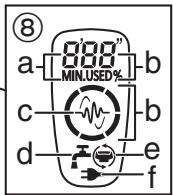
① Protective cap ② System outer foil ③ Foil frame ④ Foil frame release buttons ⑤ Finger rest ⑥ Power switch ⑦ Lock ring ⑧ Lamp display
a. Used time lamp b. Battery capacity lamp c. Shaving sensor lamp (m) d. Clean lamp e. Foil/blade check lamp f. Charge status lamp (→)
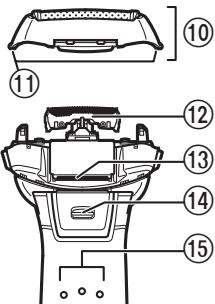
⑨ Appliance socket ⑩ Outer foil section ⑪ System outer foil release buttons ⑫ Inner blades ⑬ Trimmer ⑭ Trimmer handle ⑮ Main body rear terminals
B Self-cleaning recharger
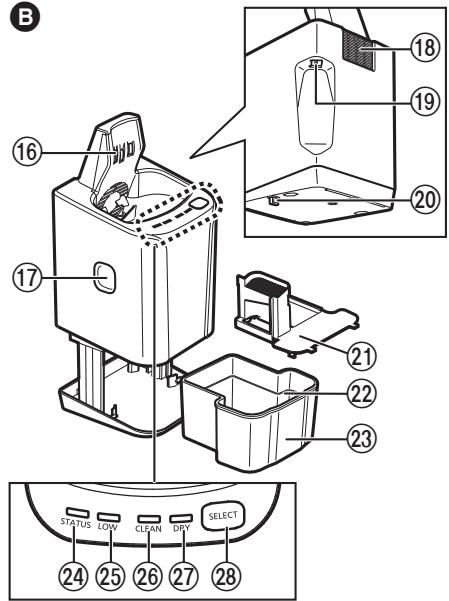
⑯ Charging terminals ⑰ Cleaning liquid unit removal button
⑱ Intake port ⑲ Self-cleaning recharger socket ⑳ Lock release lever ②1 Cleaning liquid filter ②2 Water maximum line ②3 Cleaning liquid unit ⑳ STATUS lamp ⑲ LOW lamp ②6 CLEAN lamp ⑳ DRY lamp ⑳ SELECT button
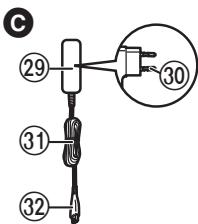
© AC adaptor (RE7-59) (The shape of the AC adaptor differs depending on the area.)
⑲ Adaptor ③0 Power plug ③1 Cord ③2 Appliance plug
Accessories
D Travel case E Cleaning brush F Oil G Special detergent (Detergent) H Operating Instructions ① Guarantee Card
Using the lock ring
Use the lock ring [A⑦] to lock or unlock the power switch [A⑥].
Rotate the lock ring until it clicks.

Rotate the lock ring to “○” to unlock the power switch:
Used when shaving, washing the shaver, lubricating the shaver.

Rotate the lock ring to “☐” to lock the power switch:
Used when carrying the shaver.
Charge
Charging using the self-cleaning recharger
Thoroughly wipe off any drops of water on or around the self-cleaning recharger so that it is dry before charging the shaver.
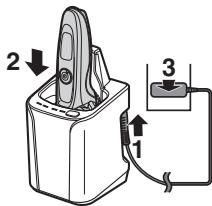
1 Insert the appliance plug [C③2] into the self-cleaning recharger [B].
2 Remove the protective cap [A①] and then attach the shaver.
- Turn the shaver off before attaching.
- Wipe off any water droplets on the main body rear terminals.
- Check that the outer foil is not deformed or damaged when you are attaching the shaver.
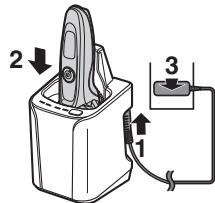
3 Plug in the adaptor [C⑲] into a household outlet.
- The “Charge” mode starts when attaching the shaver.
- Check that the charge status lamp (→) glows.
- Charging is completed after approx. 1 hour. The charging time may decrease depending on the charging capacity.
While charging![PANASONIC ER-GB80-S503 - Plug in the adaptor [C⑲] into a household outlet. - 1](/content/2020/11/209362/images/43321c2b96133fefa1f9d725478857fcdf6e7ede6d51f3d24bd7d7d01fa5be0d.jpg)
The charge status lamp (→) glows.
The number of the battery capacity lamp will increase as charging progresses.
After charging is completed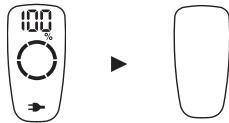
The battery capacity lamp and the charge status lamp will light up and then turn off after 5 seconds.
Abnormal charging![PANASONIC ER-GB80-S503 - Plug in the adaptor [C⑲] into a household outlet. - 3](/content/2020/11/209362/images/00dfdc52a7bc1d10d99e1b826a2f1afe6d1b942e47ad789287596df5c84c193a.jpg)
The charge status lamp (→) will blink twice every second.
- After charging is completed, turning the power switch ON with the shaver plugged in will cause the battery capacity lamp and the charge status lamp to light up and then turn off after 5 seconds.
This shows that the shaver is fully charged.
- Recommended ambient temperature for charging is 10 – 35 °C. It may take longer to charge or the battery may fail to charge properly in extremely high or low temperatures. Charge the shaver within the recommended ambient temperature range.
- When charging the shaver for the first time or when it has not been in use for more than 6 months, the charge status lamp (▶) may not glow. It will eventually glow if kept connected.
4 Disconnect the adaptor after charging is completed.
- You can charge even with the STATUS lamp of the self-cleaning recharger glowing.
- The appliance can be charged even with the cleaning liquid unit removed.
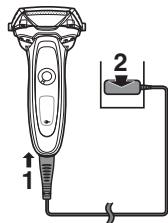
Charging without the self-cleaning recharger
You can also charge without the self-cleaning recharger.
1 Insert the appliance plug [C③2] into the shaver.
- Turn the shaver off before inserting. 2 Plug in the adaptor [C⑲] into a household outlet.
- Wipe off any water droplets on the appliance socket.
3 Disconnect the adaptor after charging is completed.
Note
You cannot operate the shaver while charging.
Using the shaver
1 Rotate the lock ring [A⑦] to unlock the power switch [A⑥]. (See page 13.)
2 Press the power switch to select the desired shaving mode.
- Each time you press the power switch, the shaving mode changes from “Shaving sensor mode” → “Normal mode” → “OFF”.
| Shaving mode | Shaving sensor mode | Normal mode | OFF |
| Description | Beard thickness is automatically sensed and the power is automatically adjusted when shaving. | The power level is constantly maintained while shaving. | — |
| Operation | 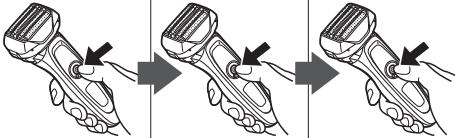 | ||
| Shaving sensor lamp |  The shaving sensor lamp blinks. The shaving sensor lamp blinks. | —The shaving sensor lamp turns off. | —The shaving sensor lamp turns off. |
- The shaving sensor may not respond depending on the thickness of the beard or the type of the shaving gel and shaving foam, but this is normal.
- The shaving sensor may not respond when the remaining battery capacity is low. If this happens, recharge the shaver.
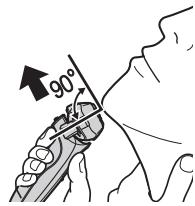
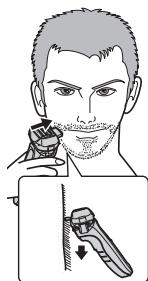
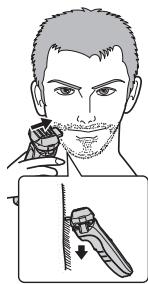
3 Hold the shaver as illustrated and shave.
- Start shaving by applying gentle pressure to your face. Stretch your skin with your free hand and move the shaver back and forth in the direction of your beard. You may gently increase the amount of pressure as your skin becomes accustomed to this shaver. Applying excessive pressure does not provide a closer shave.
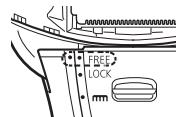
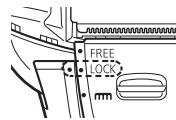
▶ Switching the shaver head
You can change the pivot action.
FREE
You can move the shaver head.
LOCK
You can lock the shaver head.
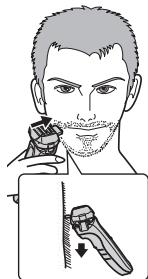
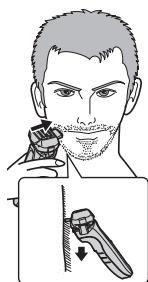
▶ Using the trimmer
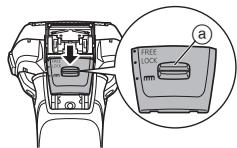
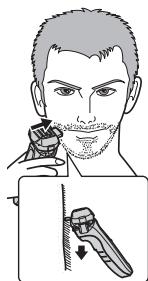
Slide the trimmer handle up to the "mm" position so that the trimmer stands upright.
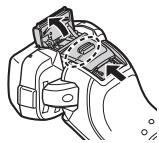
Press and hold the lock release button (a) and slide the trimmer handle down to lower the trimmer.
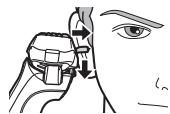
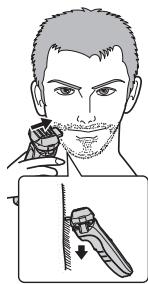
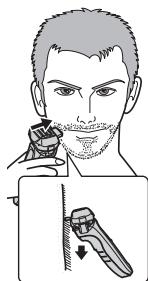
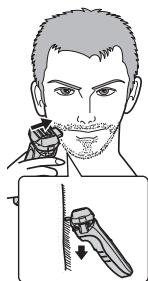
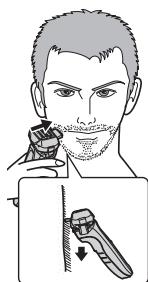
Trimming sideburns
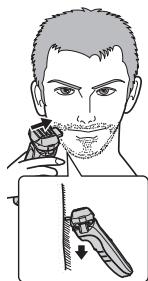
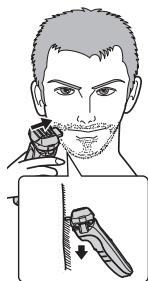
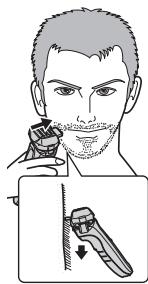
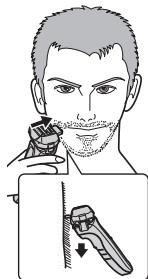
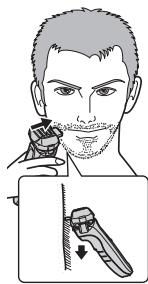
Slide the trimmer handle up. Turn the shaver on and place it at a right angle to your skin, then move downwards to trim your sideburns.
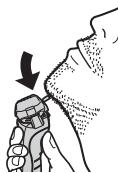
Pre-shave
The trimmer can be used for a pre-shave of long beards.
Notes
- If you press the power switch for more than 2 seconds, the sonic vibration cleaning mode is activated. (See page 19.) You cannot shave in this mode.
- Do not place your fingers on the power switch while using the shaver. This may cause the shaver to switch modes or turn off. Place your fingers on the finger rest while using the shaver.
- We recommend using the shaver in an ambient temperature range of 5 - 35°C. If used outside this range, the appliance may stop operating.
Reading lamps when using
During use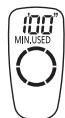
The used time and remaining battery capacity are shown and then turn off after 5 seconds.
- The shown time returns to [0'00"] after 10 minutes.
After use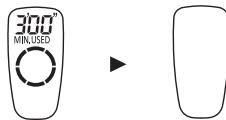
The lamps will light up and then turn off after 8 seconds.
When the battery capacity is low
“10%” appears and “—” blinks.
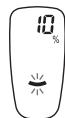
- You can shave 1 to 2 times after “10%” appears. (This will differ depending on usage.)
- A full charge will supply enough power for approx. 14 shaves of 3 minutes each. (This will differ depending on usage.)
Clean
Cleaning using the self-cleaning recharger
▶ Preparing the self-cleaning recharger
Remove the shaver and the appliance plug from the self-cleaning recharger.
1 Place the self-cleaning recharger [B] on a hard, flat surface.
- When the self-cleaning recharger is lifted, or on the soft surface such as carpets, the lock release lever will not fit in the recharger properly. In that case, the cleaning liquid unit cannot be removed.
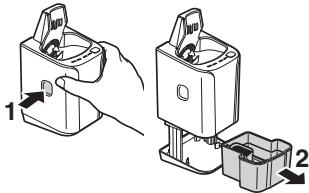
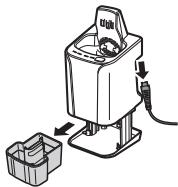
2 Press the cleaning liquid unit removal button [B⒏] and remove the cleaning liquid unit [B②].
3 Wash away the old cleaning liquid and beard trimmings and then rinse the cleaning liquid unit.
• After washing, be sure to attach the cleaning liquid filter.
4 Pour tap water and detergent into the cleaning liquid unit.
- Do not let the water rise above the maximum water line. This may cause the cleaning liquid to spill.
1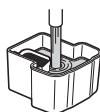
2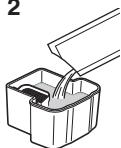
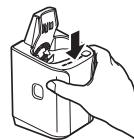
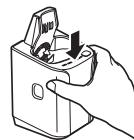
5 Attach the cleaning liquid unit.
- Immediately wipe up any cleaning liquid that has been spilt.
Be careful not to drop cleaning liquid onto leather products or wooden floors as it may cause discoloration.
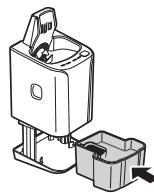
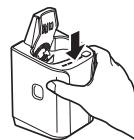
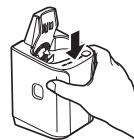
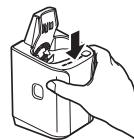
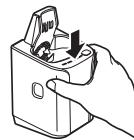
6 Press the top of the self-cleaning recharger down and securely attach until it clicks.

Notes
- The water and detergent will mix after cleaning begins, making cleaning liquid.
- When the cleaning liquid level has dropped, the LOW lamp will glow to indicate the cleaning liquid should be replaced.
- After the LOW lamp glows, you can clean the shaver with the self-cleaning recharger for approximately 7 days.
- Replace the cleaning liquid when the STATUS lamp glows.
- When replaced, the cleaning liquid will last for approximately 30 days if used once per day. (This will differ depending on beard thickness and the ambient temperature.)
- Use the detergent within approximately 6 months after opening the package. When 6 months have passed, discard the cleaning liquid, and then pour new water and detergent into the cleaning liquid unit.
- Replace the water and detergent at the same time. Otherwise the cleaning function may deteriorate.
- Only use self-cleaning recharger detergent for Panasonic shavers.
▶ Cleaning the shaver
Remove any soap or water on the shaver if it has been washed with hand soap or any other detergent.
1 Insert the appliance plug [C③2] into the self-cleaning recharger [B]. 2 Remove the protective cap [A①] and then attach the shaver. 3 Plug in the adaptor [C⑲] into a household outlet.
- Turn the shaver off before attaching.
- Wipe off any water droplets on the main body rear terminals.
- Check that the outer foil is not deformed or damaged when you are attaching the shaver.
4 Press the SELECT button [B28] to select the mode.
- The “Charge” mode starts when attaching the shaver.
- Each time you press the SELECT button, the mode changes from “Clean/Dry/Charge” → “Dry/Charge” → “Charge”.
- The modes start approximately 6 seconds after they are selected.
- The mode will be aborted if the power is cut off. In this case, perform the mode again from the beginning.
- Do not press the cleaning liquid unit removal button as the cleaning liquid may spill causing a malfunction.
| Mode | Time required (guide) | |
| 1 ChargeCLEAN DRY | Charge0 to 60 minCLEAN DRY | |
| 2 Clean/Dry/ChargeCLEAN DRY | Clean10 minCLEAN DRY | Dry80 min(170 min*)CLEAN DRY |
| • It is not possible to change the mode afterthe “Clean/Dry/Charge” mode has started. | ||
| 3 Dry/ChargeCLEAN DRY | Dry180 minCLEAN DRY | Charge0 to 60 minCLEAN DRY |
| • It is possible to change to the “Clean/Dry/Charge” mode even after the “Dry/Charge”mode has started. | ||
* When the ambient temperature of the self-cleaning recharger is low (approx. 15 °C or lower), the time it takes to dry the shaver increases. - Use the self-cleaning recharger in temperatures between 15°C and 35°C. - The Clean or Dry function may stop under extreme low temperatures (approx. 0 °C or lower). In such a case, the STATUS lamp will glow for approximately 5 seconds and the mode will switch to the “Charge” mode without allowing you to select the “Clean/Dry/Charge” mode or the “Dry/Charge” mode.
Cleaning the shaver without the self-cleaning recharger
We recommend that you clean your shaver with the self-cleaning recharger or the sonic vibration cleaning mode when the faucet symbol appears on the lamp display.
- Disconnect the cord from the shaver.
- Apply some hand soap and some water to the system outer foil.
- Rotate the lock ring [A⑦] to unlock the power switch [A⑥].
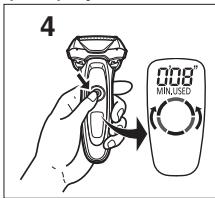
- Press the power switch for more than 2 seconds to activate the sonic vibration cleaning mode.
- The battery capacity lamps blink in order. • After about 20 seconds, it will be automatically turned off, or you can turn it off by pressing the power switch.
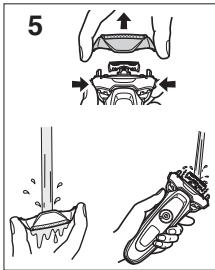
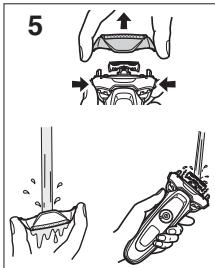
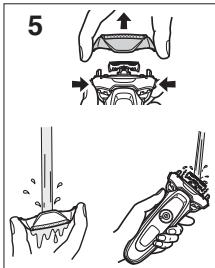
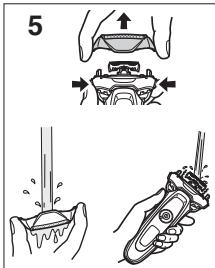
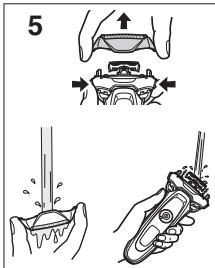
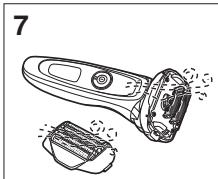
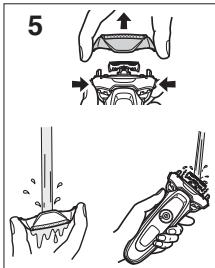
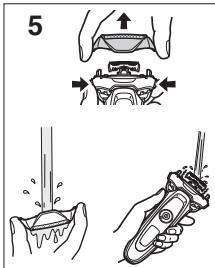
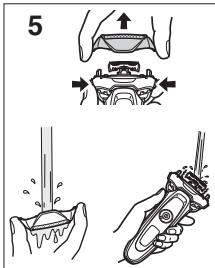
- Remove the outer foil section [A10] and press the power switch for more than 2 seconds to activate the sonic vibration cleaning mode and clean it with running water.
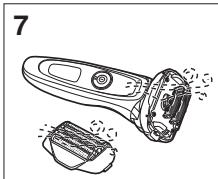
- Wipe off any drops of water with a dry cloth.
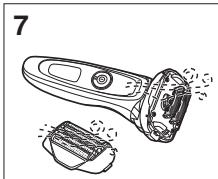
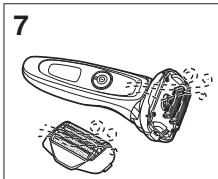
- Dry the outer foil section and the shaver completely.
- Attach the outer foil section to the shaver.
- Lubricate the shaver.
▶ Drying the shaver with the self-cleaning recharger
- Attach the outer foil section [A⑩] to the shaver.
- Dry the shaver with self-cleaning recharger using "Dry/Charge" mode.
- Lubricate the shaver.
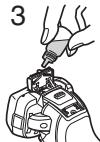
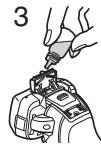
Lubrication
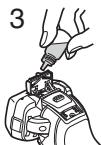
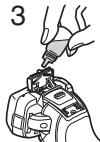
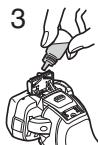
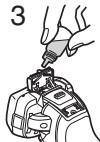
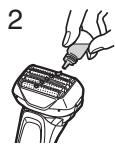
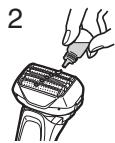
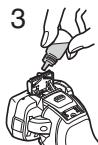
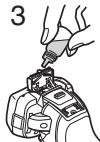
To maintain shaving comfort for a long time, it is recommended that the oil provided with the shaver is used.
- Switch off the shaver.
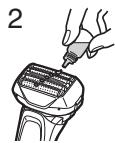
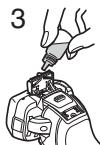
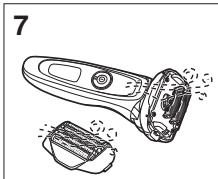
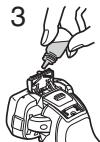
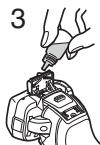
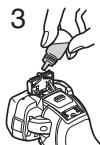
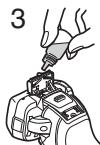
- Apply one drop of oil to each of the outer foils.
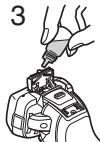
- Raise the trimmer and apply a drop of oil.
- Switch the shaver on, and run it for approximately five seconds.
- Switch off the shaver, and wipe off any excess oil from the outer foils with a soft cloth.
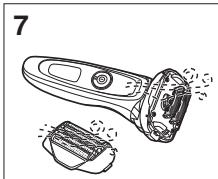
Cleaning with the brush
▶ Cleaning with the long brush
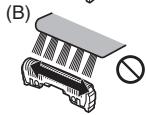
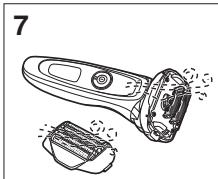
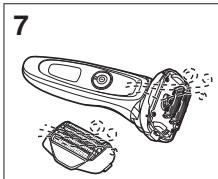
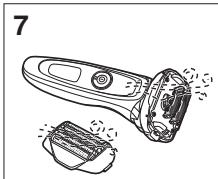
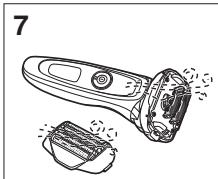
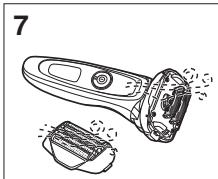
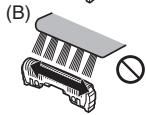
Clean the system outer foil (a), the shaver body (b) and the trimmer (c) using the long brush.
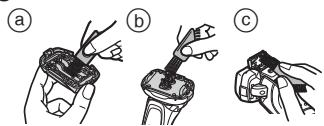
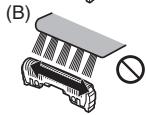
▶ Cleaning with the short brush
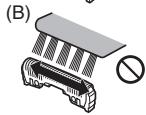
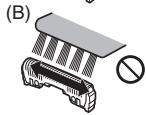
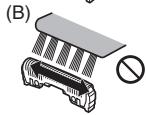
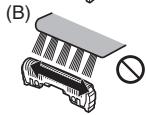
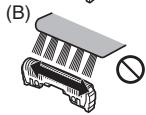
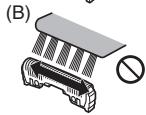
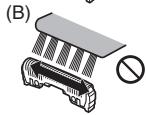
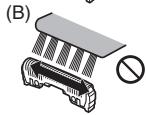
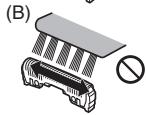
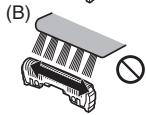
Clean the inner blades [A⑫] using the short brush by moving it in direction (A).
- Do not move the short brush in direction (B) as it will damage the inner blades and affect their sharpness.
- Do not use the short brush to clean the outer foils.
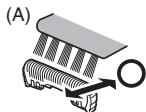
Replacing the system outer foil and the inner blades
appears on the lamp display once a year. (This will differ depending on usage.) We recommend checking the system outer foil and the inner blades when it appears.
Press the power switch for more than 30 seconds to turn off ⏻.
| system outer foil | once every year |
| inner blades | once every two years |
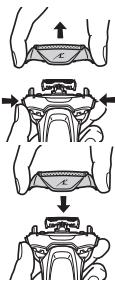
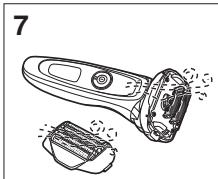
▶ Removing the outer foil section
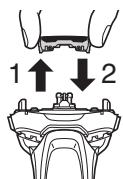
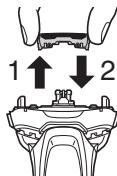
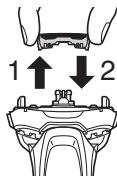
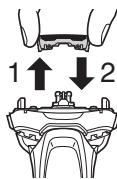
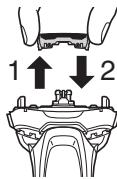
Press the foil frame release buttons [A④] and lift the outer foil section [A⑩] upwards.
▶ Attaching the outer foil section
After turning the foil frame mark ( ) to the front, securely attach the outer foil section [A⑩] to the shaver until it clicks.
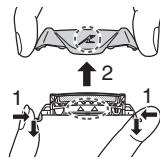
▶ Replacing the system outer foil
- Press the system outer foil release buttons [A⑪] and pull down the system outer foil.
- Align the foil frame mark ( ) and the system outer foil mark ( ) and securely attach together.
- The system outer foil cannot be reversely attached. • Always insert the system outer foil to the foil frame when attaching to the shaver.
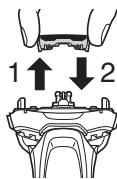
▶ Replacing the inner blades
- Remove the inner blades [A⑫] one at a time.
- Do not touch the edges (metal parts) of the inner blades to prevent injury to your hand.
- Insert the inner blades one at a time until they click.
Cleaning the self-cleaning recharger
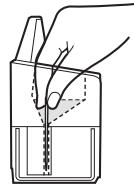
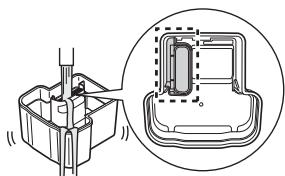
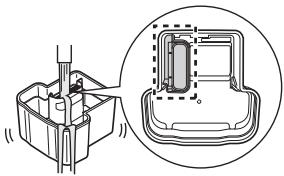
Beard trimmings may become attached to the cleaning tray of the self-cleaning recharger. Follow the steps below to remove them. We recommend doing this each time you change the cleaning liquid.
- Be sure to remove the cleaning liquid unit [B②3] and the appliance plug [C③2] from the self-cleaning recharger [B].
- Be careful not to spill the cleaning liquid.
- Some cleaning liquid components and skin oil may separate and adhere to the cleaning liquid unit and cleaning liquid filter. This does not indicate a problem.
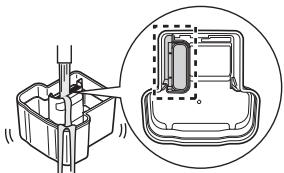
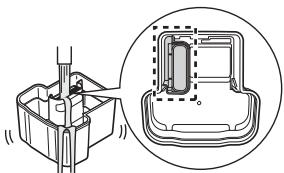
- Pour water as illustrated while tilting the cleaning liquid unit and shaking it gently.
- You can clean with the cleaning liquid filter removed. • After washing, be sure to attach the cleaning liquid filter.
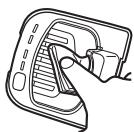
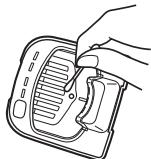
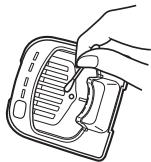
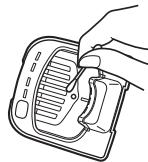
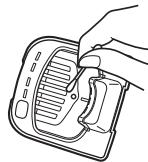
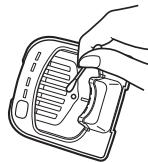
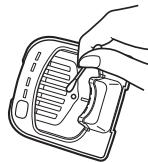
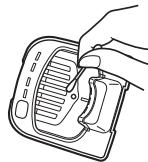
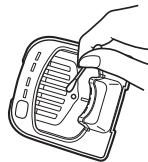
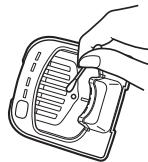
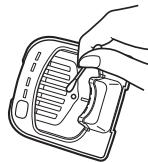
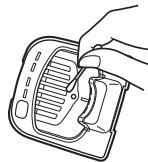
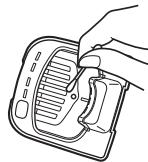
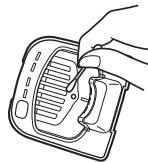
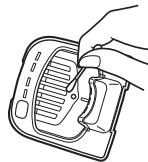
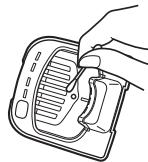
- Gently wipe off any beard trimmings attached to the inside of the cleaning tray with a cloth or tissue paper dampened with water.
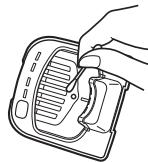
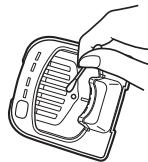
Clean the corners and uneven parts of the cleaning tray with a cotton swab dampened with water.
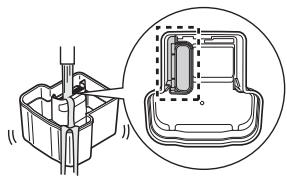
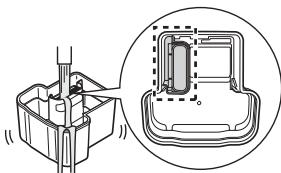
When the water does not drain from the cleaning tray
Beard trimmings may clog the drain at the bottom of the cleaning tray.
In this case, you cannot clean or dry the shaver.
Push the beard trimmings down through the drain with a toothpick, etc.
Troubleshooting
Self-cleaning recharger
Problem
The blade has not been thoroughly washed.
Action
If the shaver is not cleaned for more than 2 weeks, first clean
with the cleaning brush to remove beard trimmings. (See page 19.)
Do not add detergent and water except when replacing the
▶ cleaning liquid. Doing so may deteriorate the cleaning function. (See page 17.)
After cleaning, oil-like droplets may remain on the outside of the foil frame. This is the
▶ lubricating component of the cleaning liquid and does not indicate a problem. You may wipe it off with a soft cloth.
| Problem | Action | Problem | Action |
| The STATUS lamp glows. | See page 25. | The cleaning liquid unit cannot be removed. | Place the self-cleaning recharger on a hard, flat surface.When the self-cleaning recharger is lifted, or on the soft surface such as carpets, the lock release lever will not fit in the recharger properly.In that case, the cleaning liquid unit cannot be removed. |
| The mode does not start. | Check that the AC adaptor is connected to the self-cleaning recharger, and that the recharger is plugged in to a household outlet.(See page 13.) | ||
| Confirm that the shaver is properly attached to the self-cleaning recharger.(See page 13.) | Makes a loud sound. | During cleaning:The self-cleaning recharger makes a loud sound due to the cleaning of the blades.After cleaning:The self-cleaning recharger makes a loud sound due to the removal of water droplets in order to speed drying. | |
| The Clean or Dry operation may not function under extreme low temperatures (approx. 0 °C or lower). | |||
| Check if the STATUS lamp glows. (See page 25.) | |||
| Cleaning liquid has accumulated in the cleaning tray. | Remove any waste, etc. that has accumulated in the drain at the bottom of the cleaning tray.(See page 21.) | The sound after cleaning is different from the sound during cleaning. The water level has dropped and it is removing water droplets from the blades after cleaning. This does not indicate a problem. | |
| If you use the self-cleaning recharger when the shaver is wet or when soap or shaving gel is on the shaver, cleaning liquid may accumulate in the cleaning tray. | The shaver cannot be charged. | Gently wipe the main body rear terminals and the charging terminals of the self-cleaning recharger with a cloth or tissue dampened with water. |
| Problem | Action |
| The blades are not dry or are sticky. | The blades may not dry quickly due to temperature conditions.Run the “Dry/Charge” mode again or wipe with a soft cloth before shaving. |
| The blades crack or deform during cleaning. | Do not insert any foreign objects into the recharger.Replace the system outer foil and/or inner blades.(See page 20.) |
| The cleaning liquid has foamed. | If you mix soapy water or hand soap with the detergent or use another detergent, the cleaning liquid will foam. Use the self-cleaning recharger after thoroughly washing and drying the shaver.Replace the cleaning liquid. |
| Cleaning liquid leaked from the cleaning liquid unit. | Do not press the cleaning liquid unit removal button during the mode.Place the self-cleaning recharger horizontally.If you use the self-cleaning recharger when the shaver is wet or when soap or shaving gel is on the shaver, cleaning liquid may leak. |
▶ Shaver
| Problem | Action |
| Trimmed hairs fly all over. | This can be improved by cleaning every time after shaving. |
| Clean the inner blades with the brush. | |
| Apply oil after cleaning with water and leaving to dry thoroughly. | |
| System outer foil gets hot. | Apply oil.(See page 19.) |
| Replace the system outer foil if it is damaged or deformed.(See page 20.) | |
| The power switch cannot be pressed. | Unlock the power switch. |
| Operating time is short even after charging. | Apply oil. |
| When the number of operations per charge starts to decrease, the battery is nearing the end of its life. | |
| Makes a loud sound. | Apply oil. |
| Confirm that the blades are properly attached. | |
| The shaver makes a high-pitched sound due to the linear motor drive. This does not indicate a problem. | |
| Clean the system outer foil with the brush. | |
| The odor is getting stronger. | This can be improved by cleaning every time after shaving. |
| You do not get as close a shave as before. | This can be improved by cleaning every time after shaving. |
| Replace the system outer foil and/or inner blades. Expected life of system outer foil and inner blades: System outer foil: Approximately 1 year Inner blades: Approximately 2 years | |
| Apply oil. |
| Problem | Action |
| The shaving sensor does not respond. | The shaving sensor may not respond when the remaining battery capacity is low. If this happens, recharge the shaver. |
| Depending on the beard thickness, the shaving sensor may not react and the driving sound may not change. This is not abnormal. | |
| The shaving sensor may not respond depending on the thickness of the beard or the type of the shaving gel and shaving foam, but this is normal. | |
| Apply oil. The shaving sensor may not respond when there is not enough oil on the blades. | |
| The shaving sensor responds even though the shaver is not in contact with the skin. | Clean the beard trimmings from the shaver.When the shaver is extremely dirty, remove the foil frame and wash with water.(See page 19.) |
| Replace the system outer foil and/or inner blades.Expected life of system outer foil and inner blades:System outer foil:Approximately 1 yearInner blades:Approximately 2 years | |
| The shaver cannot be charged with the self-cleaning recharger. | Gently wipe the main body rear terminals and the charging terminals of the self-cleaning recharger with a cloth or tissue dampened with water. |
| Shaver stopped functioning. | Recommended ambient temperature for operation is 5 – 35 °C. The shaver may stop functioning when out of recommended ambient temperature range.The battery has reached the end of its life. |
| Problem | Action |
| The driving sound changes while shaving. | While the shaving sensor lamp glows, the shaving sensor is operating. The sound changes depending on the beard thickness. |
| The power will not switch to OFF. | Press the power switch twice while using in the shaving sensor mode. |
▶ When the STATUS lamp glows
| Problem | Action |
| It is time to replace the cleaning liquid. | Pour new water and detergent into the cleaning liquid unit. |
| The cleaning liquid unit is not properly attached. | Properly attach the cleaning liquid unit. |
| The self-cleaning recharger is tilted. | Place the self-cleaning recharger on a horizontal surface. |
| Use the self-cleaning recharger outside the range of the recommended usage temperature. | Use within the recommended temperature range of 15 – 35 °C. |
After performing the above operation, press the SELECT button and select a mode.
- When all self-cleaning recharger's lamps blink
| Problem | Action |
| Device failure | Contact an authorized service centre. |
Service
Contact
Please visit Panasonic web site http://panasonic.net or contact an authorized service centre (you find its contact address in the pan european guarantee leaflet.) if you need information or if the shaver or the cord gets damaged.
Replacement parts
Replacement parts are available at your dealer or Service Centre.
| Replacement parts for ES-LV95 | System outer foil and inner blades | WES9032 |
| System outer foil | WES9173 | |
| Inner blades | WES9170 | |
| Special Detergent for Shaver Cleaning & Charging System | WES4L03 | |
Battery life
The life of the battery is 3 years if charged approximately once every two weeks. The battery in this shaver is not intended to be replaced by consumers. Have the battery replaced by an authorized service centre.
For environmental protection and recycling of materials
This shaver contains a Lithium-ion battery.
Please make sure that the battery is disposed of at an officially assigned location, if there is one in your country.
Information for Users on Collection and Disposal of Old Equipment and used Batteries
These symbols on the products, packaging, and/or accompanying documents mean that used electrical and electronic products and batteries should not be mixed with general household waste.

For proper treatment, recovery and recycling of old products and used batteries, please take them to applicable collection points, in accordance with your national legislation and the Directives 2002/96/EC and 2006/66/EC.
By disposing of these products and batteries correctly, you will help to save valuable resources and prevent
any potential negative effects on human health and the environment which could otherwise arise from inappropriate waste handling.
For more information about collection and recycling of old products and batteries, please contact your local municipality, your waste disposal service or the point of sale where you purchased the items. Penalties may be applicable for incorrect disposal of this waste, in accordance with national legislation.
For business users in the European Union
If you wish to discard electrical and electronic equipment, please contact your dealer or supplier for further information.
[Information on Disposal in other Countries outside the European Union]
These symbols are only valid in the European Union. If you wish to discard these items, please contact your local authorities or dealer and ask for the correct method of disposal.
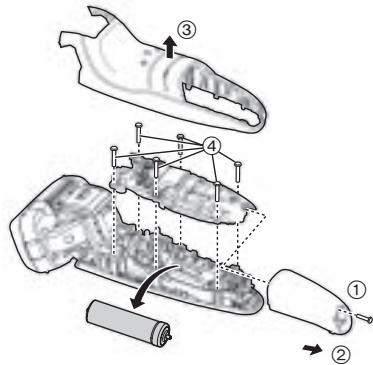
Disposal of the built-in rechargeable battery
Remove the built-in rechargeable battery before disposing the shaver.
Please make sure that the battery is disposed of at an officially designated location if there is one.
This figure must only be used when disposing the shaver, and must not be used to repair it. If you dismantle the shaver yourself, it will no longer be waterproof, which may cause it to malfunction.
- Remove the shaver from the AC adaptor.
- Press the power switch to turn on the power and then keep the power on until the battery is completely discharged.
- Perform steps ① to ④ and lift the battery, and then remove it.
- Please take care not to short-circuit the battery.
Specifications
| Power source | See the name plate on the AC adaptor. (Automatic voltage conversion) |
| Motor voltage | 3.6 V--- |
| Charging time | Approx. 1 hour |
| Airborne Acoustical Noise | In shaving mode: 63 (dB (A) re 1 pW) In trimmer mode: 64 (dB (A) re 1 pW) |
This product is intended for household use only.
Panasonic
Operating Instructions
Pre-shave
▶ Notes
▶ Notes
▶ Attaching the shaver head
Troubleshooting
▶ Cleaning/Charging station
Specifications
Pre-shave
Notes
Notes

Troubleshooting
▶ Self-cleaning charger
Specifications
Pre-shave
▶ Note
▶ Note
Specifications
Pre-shave
▶ Notes
▶ Notes

▶ Replacing the shaving heads
Troubleshooting
▶ Self-cleaning charger
Specifications
Pre-shave
▶ Notes
▶ Notes
Specifications
Pre-shave

▶ Notes
▶ Notes
Troubleshooting
▶ Self-cleaning charger
Specifications
Pre-shave
▶ Notes
3 Remove the old cleaning liquid and beard residue, then rinse the cleaning liquid unit.
▶ Notes
Specifications
© Power adapter (RE7-59)
Shaving
▶ Notes
▶ Notes
Replacing the system's outer foil and inner blades
▶ Replacing the system's outer foil
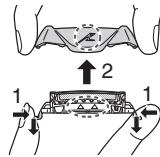
- Press the release buttons for the system's outer foil [A⑪] and pull the system's outer foil down.
- Align the mark on the foil frame ( ) with the mark on the system's outer foil ( ) and press them firmly together.
- The system's outer foil cannot be screwed on in the opposite direction.
- Always insert the system's outer foil into the foil frame when attaching it to the shaver.
▶ Replace the inner blades
- Remove the inner blades [A⑫], one at a time.
Troubleshooting
▶ Self-cleaning charger
Specifications
| Strømkilde | Se merkeplaten på vekselstrømsadapteren. (Automatisk spenningsomformer) |
| Motorspenning | 3,6 V--- |
| Ladetid | Omtrent 1 time |
| Luftbåren akustisk støy | Under barbering: 63 (dB (A) re 1 pW) Under trimming: 64 (dB (A) re 1 pW) |
This product is intended for household use only.
Panasonic
Instruction Manual
Förrakning
▶ CAUTION!
▶ CAUTION!

Troubleshooting
▶ Self-cleaning charger
Specifications
| Driftspänning | Se AC-adapterns märkplåt.(automatisk spänningskonvertering) |
| Motorspänning | 3,6 V--- |
| Laddningstid | Cirka 1 timme |
| Luftburet akustisktbuller | I rakningsläge: 63 (dB (A) re 1 pW)I trimmerläge: 64 (dB (A) re 1 pW) |
Partakoneen käyttö
Esiparranajo

▶ Notes
▶ Notes
Cleaning with a brush
▶ Replacing the blade grid
Troubleshooting
Technical specifications
Preliminary shaving

▶ Notes
▶ Notes
Technical specifications
▶ Notes
The indicator lights come on and go out after 8 seconds.
▶ Notes
Troubleshooting
Self-cleaning charger
Technical data
Pre-shave
▶ Notes
3 Rinse out the old cleaning fluid and hair clippings, then rinse the cleaning fluid unit.
5 Install the cleaning fluid unit.
▶ Notes

▶ Drying the shaver using the self-cleaning charger
- Attach the outer foil part [A⑩] to the shaver.
- Dry the shaver using the self-cleaning charger's "Drying/Charging" mode.
- Lubricate the shaver.
Lubrication
Troubleshooting
Technical data
Pre-shave
Notes
Notes
Cleaning with the brush
Troubleshooting
Self-cleaning charger
Problem
Technical specifications
Before shaving
Notes
Notes
Troubleshooting
Specifications
Before shaving
Notes
Notes
Troubleshooting
Features
- PANASONIC
- CONTENTS
- SAFETY PRECAUTIONS
- WARNING
- EXPLANATION OF SYMBOLS
- DANGER
- CAUTION
- DISPOSING OF THE RECHARGEABLE BATTERY
- INTENDED USE
- PARTS IDENTIFICATION
- A MAIN BODY
- B SELF-CLEANING RECHARGER
- © AC ADAPTOR (RE7-59) (THE SHAPE OF THE AC ADAPTOR DIFFERS DEPENDING ON THE AREA.)
- USING THE LOCK RING
- CHARGE
- CHARGING USING THE SELF-CLEANING RECHARGER
- INSERT THE APPLIANCE PLUG [C③2] INTO THE SELF-CLEANING RECHARGER [B]
- REMOVE THE PROTECTIVE CAP [A①] AND THEN ATTACH THE SHAVER
- PLUG IN THE ADAPTOR [C⑲] INTO A HOUSEHOLD OUTLET
- DISCONNECT THE ADAPTOR AFTER CHARGING IS COMPLETED
- CHARGING WITHOUT THE SELF-CLEANING RECHARGER
- USING THE SHAVER
- HOLD THE SHAVER AS ILLUSTRATED AND SHAVE
- SWITCHING THE SHAVER HEAD
- FREE
- LOCK
- USING THE TRIMMER
- TRIMMING SIDEBURNS
- PRE-SHAVE
- NOTES
- READING LAMPS WHEN USING
- CLEAN
- CLEANING USING THE SELF-CLEANING RECHARGER
- PREPARING THE SELF-CLEANING RECHARGER
- PLACE THE SELF-CLEANING RECHARGER [B] ON A HARD, FLAT SURFACE
- PRESS THE CLEANING LIQUID UNIT REMOVAL BUTTON [B⒏] AND REMOVE THE CLEANING LIQUID UNIT [B②]
- WASH AWAY THE OLD CLEANING LIQUID AND BEARD TRIMMINGS AND THEN RINSE THE CLEANING LIQUID UNIT
- POUR TAP WATER AND DETERGENT INTO THE CLEANING LIQUID UNIT
- ATTACH THE CLEANING LIQUID UNIT
- PRESS THE TOP OF THE SELF-CLEANING RECHARGER DOWN AND SECURELY ATTACH UNTIL IT CLICKS
- CLEANING THE SHAVER
- CLEANING THE SHAVER WITHOUT THE SELF-CLEANING RECHARGER
- DRYING THE SHAVER WITH THE SELF-CLEANING RECHARGER
- LUBRICATION
- CLEANING WITH THE BRUSH
- CLEANING WITH THE LONG BRUSH
- CLEANING WITH THE SHORT BRUSH
- REPLACING THE SYSTEM OUTER FOIL AND THE INNER BLADES
- REMOVING THE OUTER FOIL SECTION
- ATTACHING THE OUTER FOIL SECTION
- REPLACING THE SYSTEM OUTER FOIL
- REPLACING THE INNER BLADES
- CLEANING THE SELF-CLEANING RECHARGER
- TROUBLESHOOTING
- PROBLEM
- ACTION
- SERVICE
- CONTACT
- REPLACEMENT PARTS
- BATTERY LIFE
- FOR ENVIRONMENTAL PROTECTION AND RECYCLING OF MATERIALS
- INFORMATION FOR USERS ON COLLECTION AND DISPOSAL OF OLD EQUIPMENT AND USED BATTERIES
- FOR BUSINESS USERS IN THE EUROPEAN UNION
- [INFORMATION ON DISPOSAL IN OTHER COUNTRIES OUTSIDE THE EUROPEAN UNION]
- DISPOSAL OF THE BUILT-IN RECHARGEABLE BATTERY
- REMOVE THE BUILT-IN RECHARGEABLE BATTERY BEFORE DISPOSING THE SHAVER
- ATTACHING THE SHAVER HEAD
- CLEANING/CHARGING STATION
- SELF-CLEANING CHARGER
- SPECIFICATIONS
- NOTE
- REPLACING THE SHAVING HEADS
- REMOVE THE OLD CLEANING LIQUID AND BEARD RESIDUE, THEN RINSE THE CLEANING LIQUID UNIT
- © POWER ADAPTER (RE7-59)
- SHAVING
- REPLACING THE SYSTEM'S OUTER FOIL AND INNER BLADES
- REPLACING THE SYSTEM'S OUTER FOIL
- REPLACE THE INNER BLADES
- FÖRRAKNING
- PARTAKONEEN KÄYTTÖ
- ESIPARRANAJO
- CLEANING WITH A BRUSH
- REPLACING THE BLADE GRID
- PRELIMINARY SHAVING
- TECHNICAL SPECIFICATIONS
- RINSE OUT THE OLD CLEANING FLUID AND HAIR CLIPPINGS, THEN RINSE THE CLEANING FLUID UNIT
- INSTALL THE CLEANING FLUID UNIT
- BEFORE SHAVING
Brand : PANASONIC
Model : ER-GB80-S503
Category : Electric mower