
TMC 200 - Professional audio equipment BEGLEC - Free user manual and instructions
Find the device manual for free TMC 200 BEGLEC in PDF.
Download the instructions for your Professional audio equipment in PDF format for free! Find your manual TMC 200 - BEGLEC and take your electronic device back in hand. On this page are published all the documents necessary for the use of your device. TMC 200 by BEGLEC.
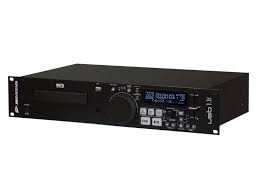
USER MANUAL TMC 200 BEGLEC
WWW.BEGLEC.COM
Copyright © 2010 by BEGLEC NV ‘t Hofveld 2C ~ B1702 Groot-Bijgaarden ~ Belgium Reproduction or publication of the content in any manner, without express permission of the publisher, is prohibited. Version: 1.0 The Power Source for DJ’s
EN - DISPOSAL OF THE DEVICE
Dispose of the unit and used batteries in an environment friendly manner according to your country regulations. Thank you for buying this JB Systems product. To take full advantage of all possibilities, please read these operating instructions very carefully. FEATURES
This symbol means: indoor use only This symbol means: Read instructions This symbol means: Safety Class II appliance To prevent fire or shock hazard, do not expose this appliance to rain or moisture. To avoid condensation to be formed inside, allow the unit to adapt to the surrounding temperatures when bringing it into a warm room after transport. Condense sometimes prevents the unit from working at full performance or may even cause damages. This unit is for indoor use only. Don’t place metal objects or spill liquid inside the unit. No objects filled with liquids, such as vases, shall be placed on this appliance. Electric shock or malfunction may result. If a foreign object enters the unit, immediately disconnect the mains power. No naked flame sources, such as lighted candles, should be placed on the appliance. Don’t cover any ventilation openings as this may result in overheating. Prevent use in dusty environments and clean the unit regularly. Keep the unit away from children. Inexperienced persons should not operate this device. Maximum save ambient temperature is 40°C. Don’t use this unit at higher ambient temperatures. Always unplug the unit when it is not used for a longer time or before you start servicing. The electrical installation should be carried out by qualified personal only, according to the regulations for electrical and mechanical safety in your country. Check that the available voltage is not higher than the one stated on the rear panel of the unit. The socket inlet shall remain operable for disconnection from the mains. The power cord should always be in perfect condition: switch the unit immediately off when the power cord is squashed or damaged. Never let the power-cord come into contact with other cables! When the power switch is in OFF position, this unit is not completely disconnected from the mains! In order to prevent electric shock, do not open the cover. Apart from the mains fuse there are no user serviceable parts inside. Never repair a fuse or bypass the fuse holder. Always replace a damaged fuse with a fuse of the same type and electrical specifications! In the event of serious operating problems, stop using the appliance and contact your dealer immediately. Please use the original packing when the device is to be transported. Due to safety reasons it is prohibited to make unauthorized modifications to the unit. BEFORE USE Check the contents: Check that the carton contains the following items: TMC200 unit User manual 1 Mains cable 1 cinch/cinch cable 1 mono mini-jack cable for fader start and relay play 1/78 The lightning flash with arrowhead symbol within the equilateral triangle is intended to alert the use or the presence of un-insulated “dangerous voltage” within the product’s enclosure that may be of sufficient magnitude to constitute a risk of electric shock. The exclamation point within the equilateral triangle is intended to alert the user to the presence of important operation and maintenance (servicing) instructions in the literature accompanying this appliance. Full MP3 Playback (max. 999 MP3-files / 255 Folders on 1 CD) o MPEG1 layer3 (32 + 44,1 + 48kHz) o MPEG2 layer3 (16 + 22,05 + 24kHz) o MPEG2.5 layer3 (8 + 11,025 + 12kHz) o Supports both CBR and VBR bitrate modes. Digital scratch effect via touch sensitive jog wheel Electronic brake effect + 3 digital effects: o Echo, flanger, filter o Manual control of parameters o Beat synchronized mode Alphanumeric LCD display (CD-TEXT and ID3v2 tags: shows title, artist, bitrate, …) Hot Cue buttons can hold up to 4 cue points or seamless loops per track! Permanent memory for up to 2000 hot cue points and loops Seamless real-time loop edit function! Full automatic BPM counter Real-time cue (“Cue on the fly”) Anti-shock Memory 10seconds 1/75sec Frame search, also on MP3 Pitch Lock (Master Tempo) Pitch ranges: +/-4% +/-8% +/-16% +/-100% (up to +/-16% on MP3) Pitch bend on jog wheel and buttons for perfect mixes Ultra fast memory start within 10msec Auto cue function(-48dB) Fader start, fader stop (back cue), S/PDIF digital audio RCA coaxial Reads CD-DA, CD-R, CD-RW Selectable elapsed, remain and total remain time display Single/continuous play Relay play allows consecutive playback on two decks 60 seconds Transport Protection Sleep mode (saves the life span of the laser) JB SYSTEMS® CAUTION: To reduce the risk of electric shock, do not remove the top cover. No user-serviceable parts inside. Refer servicing to qualified service personnel only. INSTALLATION GUIDELINES: Install the unit in a well-ventilated location where it will not be exposed to high temperatures or humidity. Placing and using the unit for long periods near heat-generating sources such as amplifiers, spotlights, etc. will affect its performance and may even damage the unit. Take care to minimize shocks and vibrations during transport. When installed in a booth or flight case, please make sure to have good ventilation to improve heat evacuation of the unit. To avoid condensation to be formed inside, allow the unit to adapt to the surrounding temperatures when bringing it into a warm room after transport. Condense sometimes prevents the unit from working at full performance. TMC200 JB SYSTEMS® 2/78 TMC200 ENGLISH USER MANUAL CLEANING THE CD-PLAYER: Clean by wiping with a polished cloth slightly dipped with water. Avoid getting water inside the unit. Do not use volatile liquids such as benzene or thinner which will damage the unit. CONNECTIONS Use the supplied cinch cable to connect the audio output of the CD player with a CD input on your mixing unit. Also connect the fader start cable if your audio mixer has fader start connections. (Synq® or Pioneer® compatible) Connect the mains cable.
CONTROLS AND FUNCTIONS
SEARCH Buttons: These buttons have 4 forward and 4 backward speed positions for searching through songs. The longer you press a button in either direction the faster you will search through the music. TRACK SEARCH Knob: several functions are available: Normal track search: turn the knob to browse the tracks by +1/-1 steps. Fast track search: keep the knob pressed while turning to browse the tracks by +10/-10steps. Restart display info: pressing the knob shortly will force the display to show the information from the beginning (restart scrolling) FOLDER SELECTOR Knob: several functions are available: Folder search: if your CD has MP3 subfolders, you can select these by simply turning this folder selector. The display shows you the folder number + name. Check the next chapter for more JB SYSTEMS® 3/78 TMC200 ENGLISH USER MANUAL information on the use of subfolders. When the CD doesn’t contain subfolders, this selector is not used. Show folder name: The folder name is shown instantly when you press the folder selector shortly. Switch between FOLDER / TRACK mode: press the knob for about 1second, the display starts switching between “FOLDERmd” and “TRACKmd”. Release the knob when the desired mode is shown. FOLDER MODE: you can only select tracks inside the selected folder. To go to another folder just use the FOLDER selector. TRACK MODE: you will be able to browse all the tracks on your CD as if no subfolders where present. To move quickly (by 10tracks) through the CD, press the TRACK selector while turning it forward/backward.
4. IN/R.CUE button: Allows you to set the cue point without stopping the playback (CUE ON THE FLY).
This button also sets the beginning of a seamless loop. When you play one of the hot cues(9), the starting point is also copied to this button.
5. OUT button: Used to set the endpoint when looping music. The player starts to loop seamlessly until
you press this button again to exit. When a loop is programmed but not active you can also restart the loop. The point where you press the button will be memorized as the new end point of the loop. When the player is in “loop edit mode” pressing this button stops the loop editing and saves the current endpoint of the loop.
6. RELOOP/STUTTER button: This button has 3 functions:
RELOOP: If a loop is programmed and you have hit the OUT button(5), press the reloop button to enter the loop again. Just press the OUT(5) button to exit the loop. (intro and end points of the loop are unchanged) STUTTER: When a loop is playing you can press this button to restart the loop at once. You can also press this button when a track is not playing in loop. Every time the RELOOP/STUTTER button is pressed, it will restart the music from the preprogrammed cue point. This stutter effect adds extra creativity to your performance. LOOP EDIT: When a loop is programmed, press the RELOOP/STUTTER button for about 2 seconds to enter “loop edit” mode. Now you are able to change the endpoint of the loop. See chapter “How to use…” for more information.
7. CUE button: Pressing the CUE button during playback provides an immediate return to the position at
which playback was started. Playback starts immediately from the programmed cue point for as long as the CUE button is pressed. The CD player jumps back to the cue point as soon as the CUE button is released. Also with the unit in pause mode (Play/Pause LED blinks) the jog wheel is used to set a different start point. By pressing "PLAY/PAUSE" button then "CUE", you can confirm this new cue point.
8. PLAY/PAUSE button: every time you press the PLAY/PAUSE button the CD player changes from play
to pause or from pause to play. The button blinks as long as the player is set to pause.
9. HOT CUE buttons: 4 programmable buttons where you can store ordinary cue points and/or loops.
When a normal cue point is stored, the corresponding button is blue, when a loop is stored the corresponding button turns white. All stored cue points and loops can be backed up to permanent memory for future use. Check the chapter “HOW TO USE” for more information on how to program cue points etc.
10. MEMORY Button: is used to store cue points and loops to the Hot Cue buttons and to the permanent
cue memory: Storing to HOT CUE buttons: Press the MEMORY button shortly to prepare the TMC200 for storing a cue point or loop to one of the 4 HOT CUE buttons. Storing to permanent memory: Press the MEMORY button until it starts flashing and the LCD display shows “SAVING”. The contents of the HOT CUE buttons for this track are stored to permanent memory. Important: Not only the HOT CUE buttons are stored to permanent memory, also a lot of other parameters are saved so you don’t have to set these again each time you switch the player on. Apart from the hot cue buttons, the following parameters will also be saved: pitch range, single/cont mode, time display, jog wheel setting, auto cue, auto BPM mode, pitch on/off, pitch lock on/off and start/stop parameter. Look further in this manual for more information on how to use these functions.
11. DELETE CUE Button: this button has several functions:
DELETE 1 HOT CUE: press the DELETE CUE button, followed by the HOT CUE button that you want to delete from track memory. The deleted button turns dark. JB SYSTEMS® 4/78 TMC200 ENGLISH
USER MANUAL DELETE 4 HOT CUES: press the DELETE CUE button for about 2seconds to erase all 4 hot cues from track memory. DELETE TRACK: press the DELETE CUE button and MEMORY button (10) together for about 2seconds to delete the hot cues for the entire track from permanent memory. Because there will be no way back, the display first asks you if you're sure: using the PITCH BEND buttons (21) you can choose YES or NO. Please refer to the chapter “HOW TO USE” for more information. OPEN/CLOSE button: press this button to open and close the disc tray in the front of the TMC200. This button is disabled during playback. If the tray is not closed after 60sec. It will close automatically to prevent damage. CD TRAY INDICATOR: is lit when a CD is loaded. EFFECT buttons: each of these buttons has its own settings, described below: ECHO EFFECT button: press this button to activate the echo effect. Depending on the sync-mode (manual or beat synchronized), different settings are possible: Manual mode: the BPM-SYNC button (17) is dark. You can set all parameters manually, use the following controls: Jog-wheel (27): used to set the echo time from 1ms to 2000ms. IMPACT button (16): as long as the IMPACT-button is lit you can use the jog-wheel (27) to change the impact (dry/wet) of the effect. Beat synchronized mode: the BPM-SYNC button (17) is lit. You can use the following controls: EFFECT SYNC-buttons (15+16): choose one of the beat synchronized echo presets. IMPACT button (16): as long as the IMPACT-button is lit you can use the jog-wheel (27) to change the impact (dry/wet) of the effect signal. FLANGER EFFECT button: press this button to activate the flanger effect. Depending on the syncmode (manual or beat synchronized), different settings are possible: Manual mode: the BPM-SYNC button (17) is dark. You can set all parameters manually, use the following controls: Jog-wheel (27): used to manually change the effect. IMPACT button (16): as long as the IMPACT-button is lit you can use the jog-wheel (27) to change the impact (dry/wet) of the effect. Beat synchronized mode: the BPM-SYNC button (17) is lit. You can use the following controls: EFFECT SYNC-buttons (15+16): choose one of the beat synchronized sweep presets. IMPACT button (16): as long as the IMPACT-button is lit you can use the jog-wheel (27) to change the impact (dry/wet) of the effect signal. FILTER EFFECT button: press this button to activate the filter effect. Depending on the sync-mode (manual or beat synchronized), different settings are possible: Manual mode: the BPM-SYNC button (17) is dark. You can set all parameters manually, use the following controls: Jog-wheel (27): used to manually change the cutoff frequency of the filter. IMPACT button (16): as long as the IMPACT-button is lit you can use the jog-wheel (27) to change the impact (Q-factor) of the filter. Beat synchronized mode: the BPM-SYNC button (17) is lit. You can use the following controls: EFFECT SYNC-buttons (15+16): choose one of the beat synchronized sweep presets. IMPACT button (16): as long as the IMPACT-button is lit you can use the jog-wheel (27) to change the impact (Q-factor) of the filter. BRAKE button: press this button to activate the brake effect. Now you can determine the acceleration/deceleration speed of the music while using the PLAY/PAUSE button (8). You can set the parameters with buttons (15+16), see below. EFFECT SYNC/START-button: this button has several functions, depending on the effect mode: BPM-Synced effects: when an effect is used in beat synchronized mode, this button is lit. You can now choose how you want the effect to be synchronized to the beat. Use this button to cut the current BPM-parameter in half. BRAKE effect: press this button to change the acceleration time (time from zero to full speed). While the button is lit, you can use the jog-wheel (27) to change the time from 0,0s (instant start) to almost 10s. (very slow start) EFFECT SYNC/STOP/IMPACT-button: this button has several functions, depending on the effect mode: BPM-Synced effects: when an effect is used in beat synchronized mode, this button is lit. You can now choose how you want the effect to be synchronized to the beat. Use this button to double the current BPM-parameter. JB SYSTEMS® 5/78 TMC200 ENGLISH
USER MANUAL BRAKE effect: press this button to change the deceleration time (time from full speed to zero). While the button is lit, you can use the jog-wheel (27) to change the time from 0,0s (instant stop) to almost 10s. (very slow stop) IMPACT parameter: while one of the 3 DSP-effects is activated, press the button until it starts blinking. Now you can adapt the impact of the selected effect, also see EFFECT buttons (14). BPM-SYNC button: press this button to toggle between manual and beat synchronized effect mode! Please refer to point (14) for more information. PITCH RANGE Button: Every time you press this button, you will change the scale of the speed slider(20). On normal audio CDs you can select +/-4%, +/-8%, +/-16% and +/-100%. The +/-100% option is not available on MP3 CDs. SPEED Button: This button is used to turn the speed function on and off. SPEED slider: Press the SPEED button(19), so it is lit. The speed can be changed up to +/-100% by moving the fader. The speed will not change if the SPEED button(19) is off. You can change the pitch range with the PITCH RANGE button(18) PITCH BEND buttons: The speed rises while the “+ button” is pressed and returns to the original pitch when the button is released. The speed drops when the “– button” is pressed and returns to the original pitch when the button is released. These buttons can be used to synchronize the beats of 2 tracks. They are also used to confirm (or not) the questions that are sometimes shown on the display. PITCH LOCK Button: (Master tempo) activates the Pitch Lock function. This function allows you to make adjustments to a tracks speed using the pitch control without altering its tonal pitch. This button turns blue when the Pitch Lock is on. NOTE: be informed that the pitch lock function has its limitations. From a certain speed deviation (depends on the music style) the pitch lock won’t be able to keep the same pitch anymore. First you will hear a small distortion that becomes more important at higher speed deviations. This is not always a disadvantage: at very low speeds you can also use it as a special “distortion effect”! TIME Button: The TIME button switches between elapsed playing time, remaining time in a selection and total remaining time of the disc. (standard = remaining /track) The “total remaining time of the disc” is not available on MP3 CDs. SGL/CTN Button: with this button you can choose between “single track mode” and “continuous play”. You can also switch the auto cue function (-48dB) on and off. Continuous play: the complete CD will be played without interruption. (mostly used in pubs) Single track: player stops at the end of each track and waits at the beginning of the next track. The player waits at the first music note of each track. This means that badly indexed CDs will not interfere with the instant start capabilities of this CD player. This is a very useful feature for deejays! Auto Cue on/off: The TMC200 automatically detects the first “music note” on each track to ensure the music starts immediately when you press the play button. To turn this Auto Cue function on/off just press the SGL/CTN button for about 2 seconds. The display shows “A.CUE” when the function is active. BPM-TAP button: This player has a full automatic BPM-counter. In some rare cases the automatic beat counter doesn’t count as it should do (beats are out of the normal range or there’s simply no beat to detect). In these cases you can help the beat counter by manually tapping this button to the rhythm of the beat. You can switch back to the automatic beat counter by pressing the TAP button until the “AUTOBPM” in the left upper corner of the display turns on. ID3-TAGS Button: to make things easier for you most MP3-tracks contain ID3-tags to give you more information about the selected song. The TMC200 can show some of these tags on the display: “Song title” information: by default the display shows the “song title”. “Artist” information: press the ID3-TAGS-button 1x to show the artist name, the display returns automatically to default. “Bit-rate” information: press the ID3-TAGS-button 2x to show the bit-rate (recording quality) of the track, the display returns automatically to default. When the track doesn’t have ID3-tags, the display shows the file name (xxxxxxxxx.mp3) TACTILE JOG-WHEEL: This jog wheel serves different functions depending on the working mode: The jog wheel acts as a slow frame search (1/75sec) control when the CD is not playing but either paused or set to a cue point. To set a new cue point, spin the wheel then press PLAY(8) or LOOP IN(4) when you have determined the proper position. Press CUE(7) to return to the “CUE POINT”. If the track is playing, the jog wheel temporarily bends the pitch of the music up to +/-100% by rotating the wheel clockwise to speed it up or counterclockwise to slow it down. The amount of pitch change is determined by the speed of rotation. This is an alternative to the PITCH BEND buttons(21). JB SYSTEMS® 6/78 TMC200 ENGLISH USER MANUAL In scratch mode (SCRATCH button (28) activated) the jog wheel is used to manipulate playback of the music in real time. As a result you can scratch the music on your CD the way you do this with a normal analog vinyl record. To match the vinyl feel as close as possible and largely improve scratch performance, the the jog-wheel uses a patented touch-sensitive technology! You can manipulate the DSP-effects while they are used in manual mode, see EFFECT buttons (14).
28. SCRATCH button: Used to put the TMC200 in scratch mode. This option gives you the possibility to
scratch any track on the CD in real time. You can use the scratch function in both play and pause mode: In play mode: The music plays normally until you touch the big jog wheel(27). While manipulating the jog wheel(27), the scratch effect is audible. Once the jog wheel is stopped, the music continues playing from the point where you stopped turning it. In pause mode: the music is paused for as long as the jog wheel(27) isn’t moved. When you start manipulating the jog wheel(27), the scratch effect is audible. Once the jog wheel is stopped, the music stops playing and waits in pause mode. NOTE: during scratch mode you can switch between play and pause mode by simply pressing the PLAY/PAUSE button(8) ENGLISH LCD DISPLAY
29. Audio output: Output for the audio signals from the CD-player. Use the supplied cinch/cinch cable to
connect this output to a CD/line input of your mixing unit.
30. Digital out socket: Use this connector to connect the digital signal (S/PDIF format) to the input of a
digital amplifier or digital recorder (ex. Mini disc)
31. RELAY Socket: you can use this connector in two ways: you can use it with the fader start option on
certain mixers or you can connect two TMC200 players together to obtain the relay play function. Relay play: Use the supplied mono mini jack/jack cable to connect the RELAY sockets of two TMC200 players together. Look further in this manual to learn how to perform the relay play function. Fader start: If you are using a mixer with fader start function, use the supplied mono mini jack/jack cable to connect the player with the fader start of the mixer. Please note that this socket must never be connected with any voltage. Attention: This remote control is only compatible with certain (Synq® or Pioneer® compatible) mixers. Mixers with remote starts functioning with a signal switched to ground will not work.
32. POWER ON/OFF switch: switches the TMC200 on and off.
33. MAINS INPUT: connect the CD player to the AC mains, using the supplied power-cord.
PLAY: appears while the unit is playing a CD. PAUSE: appears while the player is in pause or cue mode. TOUCH INDICATOR: appears when the touch sensitive part of the jog wheel is active. ANTI SHOCK AND BUFFER INDICATOR: The memory status is represented on the display by a bucket being filled up or emptied. The bucket itself represents that the instant start function is available. If the bucket is flashing, the instant start is not available. Each segment within the bucket represents about 2 seconds of anti shock protection. CUE: appears when the master cue point is programmed. PITCH DISPLAY: Shows the actual percentage of speed change, selected with the SPEED slider(20). TIME BAR: shows either time remaining or elapsed depending on the setting of the TIME button(23). Starts flashing at the end of each track to alert the user to take action. FRAME: Shows “frame” time information of current track. (1 frame = 1/75 sec.) SECOND: Shows “seconds” time information of current track. MINUTE: Shows “minutes” time information of current track. ELAPSED, TOTAL REMAIN: indicates that the time shown on the display is the track elapsed, remaining or total remaining time. RELOOP: appears when the loop is played. (repeating a particular area) LOOP: shows when a loop is programmed. You can return to the loop with the reloop button(6). SINGLE: appears when the unit is set to play just one track at a time. When it is not shown, the CD plays continuously through all tracks. The function is controlled by the SGL/CTN button(24). TRACK / FOLDER: Shows current track or folder number. VISUAL MARKER: indicates the play position in frames: a full rotation equals 95 frames. The marker moves clockwise in normal play mode and counter-clockwise when the track plays backwards. In pause mode the marker stops moving. AUTO CUE: The display shows “A.CUE” when the auto cue function is active. AUTO BPM: This indicator is always on present to indicate that the automatic beat counter is working. PITCH LOCK: when Master Tempo is active, the display shows a small “lock” to indicate that the pitch of the music is locked. CD/MP3: indicates if you have loaded a normal digital audio or MP3 CD. ALPHANUMERIC DISPLAY: Shows the names of folders and MP3 tracks. For MP3 tracks recorded in CBR also the bit rate is shown. For VBR recorded MP3 tracks the display only shows “VBR”. For Audio CD’s CD-TEXT information will be shown when it’s available on the CD, otherwise the display shows “No Text”. BPM/PARAMETER: The automatic beat counter shows the number of Beats Per Minute on the display. When the effects are activated, this part of the display shows the applied effect parameters. JB SYSTEMS® 8/78 TMC200 ENGLISH USER MANUAL
HOW TO USE …
Most of the common functions are explained in the previous chapter “controls and functions” In this chapter we talk about the functions that need a little more explanation. SOME GENERAL FUNCTIONS: SLEEP MODE: The CD player automatically shuts off the transport and laser after about 15 minutes (when in pause or cue mode). This extends the life of your motor drive and laser. During sleep mode the display shows the word “z Z ... SLEEP”. To wake up the player, just press the cue or play button, the display turns to normal and is ready to receive instructions. PITCH BENDING: This function is used to synchronize the beats of two tracks. This can be done in two ways: PITCH BEND buttons: The speed increases or decreases respectively as long as the PITCH BEND+ or PITCH BEND- buttons are pressed. JOG WHEEL: While the effects are not used in manual mode, the JOG WHEEL will temporarily bend the pitch of the music by turning the JOG WHEEL clockwise to speed up or counterclockwise to slowdown. The rotation speed the JOG WHEEL determines the percent of pitch bend. CD-TEXT: Not only MP3 files can show the track name on the display. Some normal audio CDs use CD-TEXT to show the track names. Also some CDR burning software (ex. Nero) can add CD-TEXT to a normal audio CD. When the TMC200 detects these CD-TEXT data, the display will show them automatically. PLAYING/RECORDING CD-R and CD-RW: Apart from normal audio CD’s the TMC200 can play both CD-R (CD recordable) and CD-RW (CD rewriteable). Please note that you should always use the “disc at once” and “track at once” disc writing options! Although the TMC200 is capable of reading CD-R and CD-RW recorded at higher speeds, we suggest not using recording speeds more than x12 to increase readability. Always buy good quality brands for CD-R and CD-RW! If the disc is multi session, it will only play the first session: if the first session is CD-DA you can only play CD-DA tracks. if the first session is MP3 you can only play MP3 files. ENGLISH USER MANUAL Check if both players are in Single mode (the “single” indicator(14) on the display appears). If one of the players is not in single mode, press its SGL/CNT button(24) of that player. Begin playback on one of the two players. Alternately a track will be played from both players. You can always put a new CD in the player that is waiting in pause. In this way you can create an endless program, perfect for use in pubs etc. Remove the relay cable if you don’t want to use the relay function anymore. ABOUT LOOPS: CREATE A LOOP: While a track is playing, press IN/R.CUE button to program the starting point of the loop. Now press the OUT button to program the endpoint of the loop. The seamless loop starts playing at once. (With some practice you will be able to create perfect loops!) While the loop is playing, you can press the OUT button again to exit the loop and continue the rest of the track. It is possible to program a new loop, even when the current loop is still playing. While the loop is playing, simply press the IN/R.CUE button to set the starting point of the new loop. Now enter the endpoint by pressing the OUT button. Your new loop is programmed and playing. RESTART A LOOP: This can be done in 3 ways: When a loop is programmed and you left it by pressing the OUT button, just press RELOOP to restart the loop. When a loop is programmed and you left it by pressing the OUT button, just press OUT again to restart the loop. The point where you pressed OUT is now programmed as the new endpoint of the loop. When the loop is still playing, press the RELOOP button to restart the loop immediately. You can repeat this several times to create a “Stutter” effect. EDIT A LOOP: When a loop is programmed, press the RELOOP/STUTTER button for about 2 seconds to enter “loop edit” mode. While the loop is seamlessly playing, the alphanumerical display shows the time information of the loop endpoint. Use the big jog wheel to set the new loop endpoint. To make things very easy you can hear your modifications to the loop endpoint continuously. When the loop is perfect, press the LOOP OUT button to save the new loop endpoint and leave the loop. NOTE: You can store loops under the HOT CUE buttons. This means that you have up to 4 loops per track to play with. In the next paragraph you learn how to store these loops. PLAYING MP3 FILES: The CD player automatically detects if a CD contains MP3 files. The TMC200 is able to read several different MP3 formats. The display shows some of the ID3-tags (song title / performer / bitrate). The CD may contain up to 999 MP3- files, spread over maximum 255 folders. The MP3-files may have the following file extensions: .mp3 ~ .MP3 ~ .mP3 ~ .Mp3 Check the technical specifications to see which MP3-files are allowed. ABOUT EFFECTS: In the description of the effects you can already find a lot of information, don’t forget to also check that part! USE THE EFFECTS IN BEAT SYNCHRONIZED MODE: While music is playing you can press any of the 3 effects and press the BPM-SYNC button (17) so it’s lit: the effect works in beat synchronized mode. Use the EFFECT-SYNC buttons (15+16) to choose different beat presets. Use the IMPACT-button (16) to adapt the impact of the effect. FOLDER / TRACK SELECTORS: Most of the time a CDR contains a lot of MP3 files (sometimes 150 or more). To keep things manageable you can sort your MP3 files in different subfolders (directories). These folders can be named after the names of the performers, after the music genres (techno, slows, salsa …), the BPM count (100BPM, 110BPM, 120BPM …) or any other idea you have to sort your music… With the FOLDER / TRACK selectors you can easily browse through the different folders and tracks. You can put the TMC200 in FOLDER mode and TRACK mode, also see FOLDER SELECTOR knob (3): FOLDER MODE: use the FOLDER selector to select the desired folder. With the TRACK selector you can select the desired MP3 tracks in this folder. Note that you can only select tracks inside the selected folder. To go to another folder just use the FOLDER selector. TRACK MODE: you will be able to browse all the tracks on your CD as if no subfolders were present. To move quickly (by 10tracks) through the CD, press the TRACK selector while turning it forward/backward. USE THE EFFECTS IN MANUAL MODE: While music is playing you can press any of the 3 effects and press the BPM-SYNC button (17) so it’s dark: use the JOG WHEEL (27) to change the effect in real-time. Use the IMPACT-button (16) to adapt the impact of the effect. RELAY FUNCTION: First check if the special fader start cable connects the two TMC200 players. Put a disc in both players. Open the 2 channel faders of the corresponding CD inputs on your mixer. JB SYSTEMS® 9/78 TMC200 ABOUT MEMORY: DIFFERENT MEMORIES: Before we talk about using the memory, we have to know the difference between “track memory” and “permanent memory”: Track Memory: This is the memory where the TMC200 stores a set of up to four cue points and/or loops for one track. You can set up a “track memory” for every single track on a CD. Example: your CD contains 16 tracks for every track you can store up to 4 cue points and/or loops. This makes a total of 16 x 4 = 64 cue points and/or loops on one CD Permanent Memory: This is the large memory where all the cue points and loops are permanently stored. In fact it’s an indexed collection of “track memories”. When you recall previously stored cue points of a certain track, you make a transfer from “permanent memory” to “track memory”. JB SYSTEMS® 10/78 TMC200 ENGLISH USER MANUAL USING THE “TRACK MEMORY”: STORING A MASTER CUE POINT: There are 2 ways to set a master cue point: Press the LOOP IN (4) button during normal playback to set the new cue point (“CUE on the fly”). Put the player in pause and use the jog/shuttle wheel to search for the exact location for the cue point. Once this location is found, press LOOP IN button (4) to set the new cue point. (or press PLAY/PAUSE button) Once the cue point is programmed, just press the CUE button (7) to recall it. STORING A SIMPLE CUE POINT TO THE “HOT CUE” BUTTONS: First press the MEMORY button(10) to make the unit enter hot cue memory mode (MEMORY button is lit). Press one of the four HOT CUE buttons at the right moment during normal playback: the HOT CUE button you just pressed turns to blue colour to indicate that the desired cue point is stored. (“Cue on the fly”). Put the player in pause and use the jog/shuttle wheel to search for the exact location for the cue point. Once this location is found, press one of the four HOT CUE buttons to set the new cue point: the HOT CUE button you just pressed turns to blue colour to indicate that the desired cue point is stored. Once the cue point is programmed, just press the HOT CUE button to start playback from the stored cue point. STORING A LOOP TO THE “HOT CUE” BUTTONS: This is very similar to storing a simple cue point. The only difference is that you have to put the TMC200 in loop mode first. When the loop is playing, you press the MEMORY button to make the CD-player enter hot cue memory mode (MEMORY button is lit). After this press one of the four HOT CUE buttons: the HOT CUE button you just pressed turns to white colour to indicate that the loop, playing at that moment, is stored. You can store up to 4 loops! DELETE THE “HOT CUE” BUTTONS: You can easily delete the contents of a HOT CUE button by pressing the DELETE CUE button (11), followed by the HOT CUE button you want to delete. Or simply store a new cue point or loop to this HOT CUE button. You can also erase all four HOT CUE buttons together by pushing the DELETE CUE button (11) for more than 2 seconds. You will notice that all 4 HOT CUE buttons turn dark to indicate that the HOT CUE buttons are empty. USING THE “PERMANENT MEMORY”: For security reasons the cue points and loops stored in the HOT CUE buttons are not automatically stored to the permanent memory. This means that if you recall a set of cue points and loops from permanent memory to the HOT CUE buttons (which is track memory), you can change, edit and delete them as much as you want. The permanent memory will not be affected until you make a backup of the HOT CUE buttons to permanent memory. STORING TO “PERMANENT MEMORY”: Press the MEMORY button (10) for 2seconds. The display shows “Saving” to indicate that the cue points and loops in the HOT CUE buttons for that track are stored to permanent memory. DELETE A TRACK IN “PERMANENT MEMORY”: Select the track that you want to delete and load the hot cues. Press the “DELETE CUE” and “MEMORY” buttons together until the display asks “DEL ALL?”. If you press the YES button (PITCH BEND+ button), the track information will be deleted in the permanent memory. RECALLING “HOT CUE POINTS/LOOPS” FROM PERMANENT MEMORY: Because it takes some seconds to load the permanent cue points, they are not automatically restored. Sometimes you simply don’t need them so why would you wait for them? Below we explain how everything works: No cue points stored: When you select a track that has no cue points or loops stored in permanent memory, nothing happens: you can start playback right away. Cue points stored: When you select a track where cue points or loops are stored in permanent memory, the TMC200 shows “Load Cues?” and wants to know if you want to load the cue points. This is what you can do: JB SYSTEMS® 11/78 TMC200 ENGLISH USER MANUAL You press the YES button: Press yes (pitch bend + button) to load the pre-stored cue points and loops. The display shows RECALL while the Hot cue buttons are filled up. You press the NO button: the cue points are not loaded and the display becomes normal. You can start playback right away. You do nothing: after some seconds the display becomes automatically normal and of course the cue points are not loaded. DELETE THE ENTIRE PERMANENT CUE MEMORY: Keep both the DELETE CUE-button (11) and MEMORY-button (10) pressed while switching the TMC200 on: the permanent cue memory is cleared. During this action the display shows “clearALL”. CAUTION: THIS ACTION IS IRREVERSIBLE; ALL CUE POINTS/LOOPS WILL BE DELETED!!! FIRMWARE UPDATES To increase flexibility TMC200 can be upgraded at any moment, to add new functions or repair bugs if they would exist. We suggest you check our website (www.jbsystems.be) from time to time to see if any firmware update is available for download. Checking the actual firmware version(s) Keep the SGL/CTN-button (24) pressed while you turn the player on: the currently installed firmware versions are shown on the display. The firmware contains different parts: Control + DSP + Servo, each with their own version number. Upgrading instructions Since upgrading instructions may change, please check the file “TMC200 – upgrade instructions.txt” included with each update. SPECIFICATIONS Power Supply: Power Consumption: Output level: Frequency response: THD + noise (20kHz LPF): S/N Ratio (IHF-A): Short access time (next track): Long access time (track 1 20): Laser Pickup: Electronic tracking: DISC FORMAT: Possible file extensions: ID3 tag compatibility: ISO9660: Joliet: CD-ROM sector format: Max. Folders: Max. Files: MP3 FORMATS: MPEG1 Layer3 (ISO/IEC11172-3): Bitrates: Bitrate modes: MPEG2 Layer3 (ISO/IEC13818-3): Bitrates: Bitrate modes: MPEG2,5 Layer3: Bitrates: Bitrate modes: Dimensions: Weight: AC 100-240V, 50/60Hz 13W 2,0V +/0.5dB @ 1kHz, 0dB 17-20.000Hz (+/-0,4dB) 0,006% @ 1kHz, 0dB >130dB @ 1kHz, 0dB <2sec <4sec Sanyo 3spot detection 780nm Full automatic digital tracking...mp3 ~ .MP3 ~ .mP3 ~ .Mp3 ID3v2 and earlier Level1 (max. 8”/8.3” character style) Level2 (max. 31/30 character style) max. 63/63 character style mode-1 only 999 (max. 255 per folder) mono / stereo sampled at: 32 - 44,1 - 48kHz 32 – 320 Kbps CBR (Constant Bitrate) or VBR (Variable Bitrate) mono / stereo sampled at: 16 – 22,05 - 24kHz 32 – 160 Kbps CBR (Constant Bitrate) or VBR (Variable Bitrate) mono / stereo sampled at: 8 – 11,025 - 12kHz 32 – 160 Kbps CBR (Constant Bitrate) or VBR (Variable Bitrate) 246(W) x 103,5(H) x 348(D) mm 2,66 kg Every information is subject to change without prior notice You can download the latest version of this user manual on our website: www.beglec.com JB SYSTEMS® 12/78 TMC200 FRANCAIS
MODE D’EMPLOI
MODE D’EMPLOI
MODE D’EMPLOI
AC 100-240V, 50/60Hz 13W 2,0V +/-0,5dB @ 1kHz, 0dB 17-20.000Hz (+/-0,4dB) 0.006% @ 1kHz, 0dB (20kHz LPF) >130dB @ 1kHz, 0dB <2sec <4sec Sanyo, détection 3spot 780nm Full automatic digital tracking. .mp3 ~ .MP3 ~ .mP3 ~ .Mp3 ID3v2 et antérieur Level1 (max. 8”/8.3” character style) Level2 (max. 31/30 character style) max. 63/63 character style mode-1 only 999 (max. 255 par fichier) mono / stereo sampled at: 32 - 44,1 - 48kHz 32 – 320 Kbps CBR (Constant Bitrate) or VBR (Variable Bitrate) mono / stereo sampled at: 16 – 22,05 - 24kHz 32 – 160 Kbps CBR (Constant Bitrate) or VBR (Variable Bitrate) mono / stereo sampled at: 8 – 11,025 - 12kHz 32 – 160 Kbps CBR (Constant Bitrate) or VBR (Variable Bitrate) 246 (L) x 103,5 (H) x 348 (P) mm 2,66 kg Joliet: CD-ROM sector format: Max. Folders: Max. Files: MP3 FORMATS: MPEG1 Layer3 (ISO/IEC11172-3): Bitrates: Bitrate modes: MPEG2 Layer3 (ISO/IEC13818-3): Bitrates: Bitrate modes: MPEG2,5 Layer3: Bitrates: Bitrate modes: Afmetingen: Gewicht: BEDIENUNGSANLEITUNG BEDIENUNGSANLEITUNG
AC 100-240V, 50/60Hz 13W 2,0V +/-0,5dB @ 1kHz, 0dB 17-20.000Hz (+/-0.4dB) 0.006% @ 1kHz, 0dB >130dB @ 1kHz, 0dB <2sec <4sec Sanyo 3spot detectie 780nm volautomatische digitale tracking. .mp3 ~ .MP3 ~ .mP3 ~ .Mp3 ID3v2 en vroeger Level1 (max. 8”/8.3” character style) Level2 (max. 31/30 character style) max. 63/63 character style mode-1 only 999 (max. 255 per folder) mono / stereo sampled at: 32 - 44,1 - 48kHz 32 – 320 Kbps CBR (Constant Bitrate) or VBR (Variable Bitrate) mono / stereo sampled at: 16 – 22,05 - 24kHz 32 – 160 Kbps CBR (Constant Bitrate) or VBR (Variable Bitrate) mono / stereo sampled at: 8 – 11,025 - 12kHz 32 – 160 Kbps CBR (Constant Bitrate) or VBR (Variable Bitrate) 246(B) x 103,5(H) x 348(D) mm 2,66 kg
ManualGo.com