
KS 2201 - Chain saw ATIKA - Free user manual and instructions
Find the device manual for free KS 2201 ATIKA in PDF.




| Product type | Electric chainsaw |
| Brand | ATIKA |
| Model | KS 2201 |
| Nominal power | 2200 W |
| Supply voltage | 230 V ~ |
| Frequency | 50 Hz |
| Chain speed | 13.5 m/s |
| Blade length | 400 mm |
| Oil tank capacity | 150 ml |
| Weight | 5.9 kg |
| Protection class | II |
| Sound pressure level | 94.3 dB(A) |
| Guaranteed sound power level | 105 dB(A) |
| Front hand-arm vibrations | < 3.39 m/s² |
| Rear hand-arm vibrations | < 3.69 m/s² |
| Chain brake delay | 0.1 s |
| Overall length (approx.) | 670 mm |
| Width (approx.) | 250 mm |
| Height (approx.) | 200 mm |
| Chain type | Ref. 362992 |
| Blade type | Ref. 362645 |
| Recommended chain oil | Biodegradable oil |
| Main functions | Wood cutting, tree felling, pruning |
| Maintenance and cleaning | Sharpening, cleaning, automatic lubrication |
| Safety | Chain brake, start lock, anti-shock protection |
| Spare parts and repairability | Blade, chain, sprocket, brushes, etc. available |
| Warranty | According to the enclosed warranty declaration |
Frequently Asked Questions - KS 2201 ATIKA
User questions about KS 2201 ATIKA
0 question about this device. Answer the ones you know or ask your own.
Ask a new question about this device
Download the instructions for your Chain saw in PDF format for free! Find your manual KS 2201 - ATIKA and take your electronic device back in hand. On this page are published all the documents necessary for the use of your device. KS 2201 by ATIKA.
USER MANUAL KS 2201 ATIKA
Operating Manual - Safety instructions - Spare parts
Tronçonneuse
Declaration of conformity 17
Extent of delivery 17
Operating times 17
Symbols on the chain saw 18
Symbols Operating instructions 18
Normal intended use 18
Residual risks 18
Security instructions 18
- Electrical safety 20
Assembly 20
Before the first commissioning 20
-Chain lubrication 20
- Charging the oil tank 20
Commissioning 21
- Mains connection 21
- Mains fuse 21
- Electrical mains supply impedance 21
- Switching On/Off 21
- Chain brake 21
- Checking of chain brake 21
- Clamping of saw chain 21
Working with the chain saw 22
Before sawing 22
Sawbackstroke 22
- How to avoid backstrokes 22
General conduct when sawing 22
- Additional advices for sawing trunks 23
Additional advices for sawing timber under tension/release 23
Additional advices for chopping down trees 23
Maintenance and cleaning 24
Maintenance 24
- Sharpening of saw chain 24
- Exchanging saw chain and sword 24
-Chain wheel 24
- Checking of the oil automatic 24
- Cleaning 25
Transport 25
Storage 25
Guarantee 25
Technical data 25
Possible faults 26
Discription of chain saw / Spare parts 26/177
EC Declaration of Conformity
according to Directive 98/37 EC
ATIKA GmbH & Co. KG
Schinkelstraße 97
59229 Ahlen - Germany
declare under our sole responsibility, that the product
chain saw typ KS 2001/40, KS 2201/40
to which this declaration relates corresponds to the relevant basic safety and health requirements of the Directive 98/37/EC, and to the requirements for the other relevant Directives:
2004/108/EG, 2006/95/EC.
conformity assessment procedure:2000/14/EC-Appendix V.
Measured sound power level L_WA104 dB (A)
Guaranteed sound power level L_WA105 dB (A)
Ahlen, 06.12.2007
After unpacking, check the contents of the box
That it is complete
Check for possible transport damage
Report any damage or missing items to your dealer, supplier or the manufacturer immediately. Complaints made at a later date will not be acknowledged.
1 chain saw
1 sword
1 saw chain
1 chain protection
1 bottle of chain oil (100 ml)
1 operating instructions
Operating times
Before initiating the device please observe the provisions pertaining to corresponding laws (regional provisions) for the noise control.
Symbols on the chain saw

Carefully read operator's manual before handling the machine. Observe instructions and safety rules when operating.

Shut off engine and remove power cord before performing cleaning, maintenance or repair work.

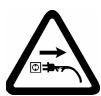
When connecting cable is damaged or cut through immediately pull out the power plug.

Wear hardhat, eye and ear protection.

Wear protective gloves.

Do not expose to rain. Protect against humidity.

maximum cutting length 400mm
Symbols Operating instructions
| ! | Threatened hazard or hazardous situation. Not observing this instruction can lead to injuries or cause damage to property. |
| i | Important information on proper handling of the saw. Not observing this instruction can lead to faults in the chain saw. |
| User information. This information helps you to use all the functions of the chain saw optimally. | |
| Assembly, operation and servicing the chain saw. Here you are explained exactly what to do. |
Normal intended use
The chain saw is suitable for
- sawing of trunks, perches, wood trusses, boards etc. and can be used for transverse or longitudinal cuts.
-
Chopping down of trees.
-
Do not use the chain saw for sawing of building materials and synthetic materials.
The chain saw is only suitable for the private use in the house and hobby garden. -
The chain saw is not suitable for forestry works (chopping and cutting off of perches in the forest). The necessary safety of the operator is not guaranteed by the cable joint.
- The intended usage also includes compliance with the operating, servicing and repair conditions prescribed by the manufacturer and following the safety instructions included in the instructions.
The relevant accident prevention regulations for the operation as well as the other generally acknowledged occupational medicine and safety rules must be complied with.
Residual risks
Even if used properly, residual risks can exist even if the relevant safety regulations are complied with due to the design determined by the intended purpose.
Residual risks can be minimised if the "Safety information" and the "Intended usage" as well as the whole of the operating instructions are observed.
Observing these instructions, and taking proper care, will reduce the risk of personal injury or damage to the equipment.
- Risk of backstrokes when touching the sword pike with a hard object.
■ Risk of injuries of fingers and hands by the tool (saw chain).
Injury by catapulted workpiece parts.
Electric shock.
■ Risk from electricity, by using non-standard electrical connections.
Touching live parts of opened electrical components.
Impairment of hearing when working on the machine for longer periods of time without ear protection.
Fire danger.
In addition, in spite of all the precautionary measures taken, non-obvious residual risks can still exist.

Safety instructions
Observe the following advices in order to protect yourself and other persons against possible injuries.
(i) Keep these security advices (operating instructions) always together with the chain saw.
The chain saw shall only be operated by persons with sufficient experience.
Give or lend the chain saw only to persons who are familiar with the chain saw and its operation. Give always the operating instruction to take with them.
Repair works on the device must be carried out by the manufacturer or by companies appointed by the manufacturer respectively.
Primary users
Persons working for the first time with the chain saw must obtain a practical instruction to the use of the chain saw and the operator protection equipment by an experienced operating person. Primary users shall first of all practice cutting of round timber on a sawhorse or a rack.
- Be observant. Attend to what you do. Start working with rationality. Do not use the device when you are tired or under the influence of drugs, alcohol or medicaments. One moment of carelessness when using the device can result in serious injuries.
Make yourself familiar with the equipment before using it, by reading and understanding the operating instructions.
- Do not use the machine for unsuitable purposes (see "Normal intended use").
- Avoid abnormal posture. Provide a safe standing position and keep at any time the balance.
- Wear suitable work clothes:
- do not wear loose-fitting clothes or jewellery; they can catch in moving parts.
slip-proof shoes -
wear a hair-net if your hair is long
-
Wear protective clothing:
-ear protection
- protective goggles or face protection
- gloves
certificated hardhat in situations where injuries to the head must be expected (e.g. when chopping or releasing trees).
We recommend wearing a leg protection.
-
Keep your workplace in an orderly condition! Untidiness can result in accidents.
Take into consideration environmental influences: -
Do not expose the chain saw to rain.
- Do not use the chain saw in humid or wet environment.
- Delay the work in case of disadvantageous weather (rain, snow, ice, wind) – increased risk of accidents!
- Provide for good illumination.
- Do not use the chain saw near inflammable liquids or gases.
Never leave the saw unattended.
- For breaks the chain saw has to be put down in such a manner that no person will be endangered. Assure the chain saw against unauthorised access.
- Persons under the age of 18 must not operate the chain saw.
- Keep other persons away.
The operator is responsible for accidents or risks which occur to other persons or their properties.
The operator is responsible to third persons within the area of operations. - Keep children away.
- Do not allow other persons, especially children, to touch the tool or cable.
Keep them away from your working area.
- Protect yourself against electric shocks. Avoid body contact with grounded parts (e.g. pipes, heating apparatus, cookers, fridges etc.)
- Do not use any cracked saw chains or such that have changed their shape.
- Use only well sharpened saw chains as edgeless saw chains increase not only the risk of backstrokes but also charge the motor.
Start cutting only when the saw chain has reached the full number of revolutions. - When switching on the chain saw must be supported and held safely. Chain and sword must stand free.
- Do not overload the machine! You work better and safer in the given performance range.
- Only operate the machine with complete and correctly attached safety equipment and do not alter anything on the machine that could impair the safety.
- Do not modify the device or parts of the device respectively.
- Do not hose down the device with water. (origin of danger electric current).
- Keep the device in a safe place. Keep not used devices in a dry, closed and for children inaccessible room.
-
Switch the machine off and remove the mains plug from the socket when
-
contact of chain saw with soil, stones, nails or other foreign substances
check immediately chain and sword - carrying out repair works
- maintenance and cleaning
- removal of faults
cut through connection cables - checking of connection cables whether they are swallowed or damaged
- transport
clamping again the chain
chain change - leaving of machine (also for short-term interruption)
Maintain your chain saw with care:
- Keep your tools sharp and clean in order to be able to work better and safer.
- Comply with the maintenance instructions and the advices for lubrication and for the tool change.
- Keep the handholds dry and free from resin, oil and grease.
Check the machine for possible damage:
- Before further use of the machine the protection devices or slightly damaged parts must be checked carefully for their proper and intended function.
- Check whether the movable parts function perfectly and do not stick or whether the parts are damaged. All parts must be correctly installed and fulfil all conditions to ensure perfect operation of the chain saw.
- Damaged guards and parts must be properly repaired or exchanged by a recognized, specialist workshop; insofar as nothing else is stated in the instructions for use.

- Damaged or illegible security labels have to be replaced.

Electrical safety
■ Design of the connection cable according to IEC 60 245 (H 07 RN-F) with a core cross-profile section of at least
1.5 mm² for cable lengths up to 25 m
2.5 mm² for cable lengths over 25 m
- Long and thin connection lines result in a potential drop. The motor does not reach any longer its maximal power; the function of the device is reduced.
Plugs and coupler outlets on connection cables must be made of rubber, non-rigid PVC or other thermoplastic material of same mechanical stability or be covered with this material.
The connector of the connection cable must be splashproof. - When running the connection line observe that it does not interfere, is not squeezed, bended and the plug connection does not get wet.
- Do not use the cable for purposes for which it is not meant. Protect the cable against heat, oil and sharp edges. Do not use the cable to pull the plug from the socket.
Wind off completely the cable when using a cable drum. - Regularly check the extension cables and replace them if they are damaged.
- Do not use any defective connection cables.
- When working outdoors, only use extension cables especially approved and appropriately labelled for outdoor use.
- Do not set up any provisional electrical connections.
- Never bypass protective devices or deactivate them.
- Only hook up the machine by means of a fault-current circuit breaker (30 mA).
The electrical connection or repairs to electrical parts of the machine must be carried out by a certified electrician or one of our customer service points. Local regulations - especially regarding protective measures - must be observed.
Repairs to other parts of the machine must be carried out by the manufacturer or one of his customer service points.
Use only original spare. Accidents can arise for the user through the use of other spare parts. The manufacturer is not liable for any damage or injury resulting from such action.
Assembly
Connect chain saw to power supply system only after having finished the complete assembly.
Risk of injury! Wear protective gloves when assembling.
Put the chain saw with motor facing downward on an even face.
Remove the cover (10) by loosening the fastening screw (11).
Insert the saw chains into the circular guide slot of the sword. Attend to the correct running direction of the chain links.
Put on the sword. 3
When assembling, pay attention that the chain links are lying correctly within the guide slot and on the chain wheel (13).
Saw chain can hardly be put around the chain wheel?
Turn the chain clamp (22) anti-clockwise until the saw chain can easily be put around the chain wheel. Turn the chain clamp (22) clockwise until the saw chain is firmly clamped.
Now, refasten the cover (10).
Clamp the saw chain as described in paragraph "Clamping of saw chain".
Before the first commissioning
Chain lubrication
The chain saw is not delivered filled with saw chain adhering oil.
The use without saw chain adhering oil results in damages of the chain saw.
The durability and cutting power of the chain depends on the optimal lubrication. During operation the chain saw is lubricated automatically with oil via the oil flow canal.
Charging the oil tank: 5
Put the chain saw on a suitable base.
Unscrew the oil tank lock (9).
Fill the oil tank with bio-degradable chain saw adhering oil (app. 100 ml). The fill level can be seen on the inspection window (17). For easier filling use a funnel. When filling observe that no dirt reaches the oil tank.
Screw on the oil tank lock again.
Once you have filled the oil tank for the first time or after it was completely emptied press the "primer" about 10 times to pump oil in the circuit.
Never use recycled oil or used oil. The guarantee expires when using oil which is not allowed for chain saws.
Commissioning
(1) Mains connection
Compare the voltage given on the machine model plate e.g. 230V with the mains voltage and connect the saw to the relevant and properly earthed plug.
Use a shockproof plug, mains voltage 230V with residual current circuit breaker (FI switch 30mA ).
Only use connection cables with sufficient diameters.
Switching On / Off
Do not use a device where
- the contactor can not be switched on and off.
- the chain and motor brake does not work properly
Damaged switches must be repaired or replaced immediately by the customer service.
When switching on the chain saw must be supported and held safely. Chain and sword must stand free.

Switch on 6
Push and hold automatic trip switch (5). Then operate the On/Off switch (6). Release now automatic trip switch.

Switching off
Release On/Off switch.
Chain brake
The chain brake is a protective mechanism which in case of a stroke back chain saw is initiated via the front hand protection or after releasing the on/off switch. The saw chain stops immediately (< 0,1 sec.).
Checking of chain brake
Check from time to time the function of the chain brake.
Set the chain brake release (3) in pos. 2 and switch on the chain saw.
Pos. 2 = Chain brake active
Chain saw does not initiate
Set the chain brake release (3) in pos. 1 and switch on the chain saw.
Pos. 1 = Chain brake released
Saw chain initiates
Clamping of saw chain
Check the saw chain tension before
start of work
after the first steps
during sawing regularly all 10 minutes
Only with a correct clamped saw chain and a sufficient lubrication you can influence the durability.
(1) Please observe the following:
a new saw chain must be reclamped more often until it has elongated.
in case of heating of chain to operating temperature it expands and needs to be reclamped.
After finishing the sawing works release tension of saw chain as in case of cooling too high tensions would emerge in the saw chain.
if chain slackers or comes out of the guide clamp it again immediately.
Clamping of saw chain:
- Put the chain saw with motor facing downward on an even face.
- Loosen the fastening screw (11) 1-2 revolutions anticlockwise.
- Turn the chain tension ring (12) stepwise clockwise until the correct chain tension is reached. The engaging effect prevents that the chain tension loosens.
(1) The fastening screw (11) turns with it; possibly it must be released again during the clamping process.
- The saw chain is correctly clamped when it can be lifted in the centre of the sword by appr. 3 - 4 mm. 10
- Turn the chain tension ring (12) anti-clockwise when the saw chain is clamped to much.
- Refasten the fastening screw with the hand.
- Check wether the chain links are positioned correctly in the guide slot of the sword.
Working with the chain saw
Before sawing
Carry out the following checks before the initiation and regularly during the sawing process:
Is he chain saw assembled completely and properly?
Is the chain saw in good and safe condition?
Is the oil tank filled?
Check regularly the oil level at the inspection window (17). Replenish immediately oil when oil level indicates "MIN" so that the saw chain does not run dry.
Is saw chain clamped correctly?
Observe the points in paragraph „Clamping saw chain".
Is saw chain sharpened correctly?
You only work well and safely with a sharpened saw chain.
Is chain brake released and works properly?
The chain brake release (3) must be set to pos. 1. Observe the points in paragraph „Checking the chain brake".
Is handhold clean and dry - free of oil and resin?
Is workplace free of risks to stumble?
Do you wear the required protective equipment?
Did you read and understand all advices?
Is the power plug and the extension cable in good condition?
Do not use any defect cables
Is the extension cable correctly placed? Connect the connector plug with the extension cable. Then, form with the extension cable a tight noose and push it through the safety web. Then hang the noose
into the clamp. The plug connection is now saved against automatic release.
When carrying out the works observe that the extension cable is always leading backwards from the chain saw, and is outside the zone of the saw chain and the sawing material.
Saw backstroke
What is saw backstroke? Saw backstroke is the sudden strike upwards or backwards of the running chain saw in direction of the operator.
This happens when
- the sword pike gets in contact with the sawing material (unintended) or other hard objects.
in case of jamming saw chain.
The chain saw reacts uncontrolled and causes frequently heavy injuries with the operator.
4 Carry out lateral cuts, diagonal cuts and longitudinal cuts with increased attention because here the claw stopper (16) is not put on.
How to avoid saw backstroke?
- Never try to put on the sword pike for cutting. 12
- Never saw with the upper egde of the sword pike. 13
Always put on the chain saw as plane as possible. 15 - Start cutting only with running saw chain.
- Never switch on the machine with the saw chain put on.
- Only work with sharp and correctly sharpened saw chain.
- Never work with loose or worn out saw chain.
Only work with correctly clamped saw chain.
Always hold the chain saw firmly with both hands.
Use claw stopper as lever. 16 - Never work above height of shoulders.
- Never cut through several perches at the same time. When releasing make sure that no other perch is touched.
If possible use a sawhorse when cutting to length. - Stab cuts shall only be carried out by instructed personal.
General conduct when sawing
- Do not work on snow, ice or recently peeled wood – slip hazard.
- Do not work under insufficient light conditions (e.g. fog, rain, snow flurry or twilight). You can not see anymore details within the falling area – risk of accident.
Provide for a safe and cleaned workplace. - Avoid abnormal posture. Keep at any time the balance. Do not work with the upper part of the body leaned forward.
- Operate the chain saw only with safe standing position. Hold the chain saw slightly on the right of the own body.
Do not use the chain saw for lifting or moving of wood.
Make sure that the wood is free of foreign object (stones, nails etc).
Hold the chain saw always firmly with both hands, left hand on the front handhold (4) and right hand on the rear handhold (17). Never saw with only one hand. 14
Make sure that the wood can not turn when sawing.
- Saw splintered wood with care. There is risk of injury by wood pieces carried away.
- Initiate saw chain before getting in contact with the wood.
- Only cut the sawing material with the lower edge. Cutting with the upper edge causes saw backstrokes.
Put on the chain saw as plane as possible.
Use the claw stopper (16) for fixing the chain saw on the wood. Use the claw stopper when sawing as lever. 16
- When sawing thicker perches or trunks set back the claw stopper (16) on a deeper point. For setting back release the claw stopper from the wood and place it again in a deeper position. Do not remove the saw here out of the cut.
- Let the chain saw work by producing a light leverage pressure over the claw stopper. When sawing do not press with strength.
Never work
with stretched arms
on hardly accessible places
- standing on a ladder, a staging or a tree.
Never saw with the chain saw above shoulder height.
- Do not overload the chain saw. You obtain best cutting results when the chain speed does not fall.
- Be careful at the end of a sawing cut. As far as the saw leaves the wood the force of weight changes. There is risk of accident for legs and feet.
- Remove the chain saw only with running saw chain out of the cut.
- Never get in contact with the running saw with metallic fences or the ground.
- Switch off the chain saw between the cuts when several cuts are carried out.
If the saw chain jams in the wood switch off immediately the device and pull out the power plug. Use a block to free the sword.
Make breaks when sawing so that the electric motor can cool down.
Additional advices for sawing trunks
-
Never put the trunk for sawing on the ground. Support the trunk in such manner that the cut does not close and the saw chain jams. Use a safe base (e.g. sawhorse). Avoid contact to ground with the sword pike or saw chain.
Adapt shorter trunks before sawing and clamp them firmly. -
Avoid cutting of thin bosk and lumber. The chain saw is not suitable for those works.
- Carry out longitudinal cuts with special care as the claw stopper is not used. Avoid saw backstroke by guiding the saw with a small angle.
- When working at a slope take always the position above or on the side of the trunk or the lying sawing material respectively. Pay attention to rolling trunks.
Additional advices for sawing timber under tension/release
If perches, trees or wood under tension become free of tension by sawing extreme caution is demanded. The sawing material can react completely uncontrolled and result in heavy injuries or death.
Such works shall only be carried out by instructed specialists.
For all works set always first of all on the pressure side 1 the releasing cut and then the dividing cut 2 - otherwise the chain saw can jam or strike back.
Wood on the upper side in tension 17
1 Place one cut (one third of the diameter of the trunk) from the bottom up.
Then place a second cut on the same point from top which cuts through the trunk.
Wood on the lower side in tension 18
1 Place one cut (one third of the diameter of the trunk) from top to bottom.
Then place a second cut on the same point from bottom which cuts through the trunk.
Strong trunks and strong tension 19
1 Place one cut (one third of the diameter of the trunk) from buttom up.
Then place a second cut with distance to the first cut from top which cuts through the trunk.
Cutting off of perches 20
1 Set 15 cm away from the trunk a cut from the bottom up (one third of the trunk diameter).
Then place from top the second cut appr. 8 cm more outside which cuts through the perch.
For removing the remaining part cut the perch close to the trunk from bottom one third.
Place from top the second cut which removes the remaining part.
Additional advices for chopping down trees
Always wear a helmet in order to protect yourself against perches falling down.
Pay attention to the length of the sword. Only those trees shall be chopped down which have a trunk diameter which is smaller than the length of the sword.
Before chopping down safeguard the working area. Make sure that there are no persons or animals in the fall area (minimum distance 2 tree lengths).
Make sure that the working area around the trunk is free of risk to stumble and that you have an escape route which is free of obstacles.
Provide for a safe standing position.
Hint:
Before chopping the tree decide on the chopping direction. Consider in this case the balance point of the treetop, neighbour trees, slope direction, state of health of the tree and the wind direction. On this side the kerf is cut in.
- Chopping a tree:
Clean the working area at the trunk from molesting perches, brushes and obstacles.
Clean thougghly the trunk foot - sand, stones and other foreign objects make the saw chain edgeless.
Consider the state of health of the tree - be careful with trunks with damages or deadwood (droughty, rotten or dead wood).
Cut a kerf with the saw of approximately one third of the tree diameter into the trunk. First of all place the horizontal cut and then as secondly a cut from top in an angle of 45^ .
Now saw on the opposite side of the trunk a horizontal chopping cut. This cut should be placed a bit higher (appr. 4 cm) than the horizontal cut of the kerf.
By no means cut through the trunk. Appr. 1/10 of the trunk diameter must remain. If the tree starts falling ahead of time pull out the chain saw immediately out of the cut and step back or to the side.
Push a key into the horizontal chopping cut in order to make the tree falling.
Pay attention, when tree starts falling, to perches or twigs falling down.
Maintenance and cleaning

Before each maintenance and cleaning work
- switch off device
- wait for stop of chain saw
- pull out main plug
Further maintenance and cleaning works than described in this chapter shall only be carried out by the manufacturer or companies named by the manufacturer.
For maintaining and cleaning, removed security devices must unconditionally be mounted properly and proved again.
Use only original parts. Other parts can result in unexpected damages and injuries.
Maintenance
In order to aviod possible injuries wear gloves.
To guarantee a long and reliable usage of the chain saws carry out the following maintenance works regularly.
Check the chain saw for obvious defects such as
loose, hung out or damaged saw chain
loose fastenings
- worn or damaged components
Check the chain saw after each application for
- wear, especially chain, sword and chain wheel.
- correctly assembled and faultless covers and protective devices.
Necessary repair works or maintenance works have to be carried out before the usage of the chain saw.
Sharpening of saw chain
For sharpening a saw chain some expertise is necessary. The saw chain must be regrinded in a specialised shop.
You can also sharpen your saw chain yourself by using our electric sharpener KSG 220 (article-no.: 302360).
You can only work safely and well with a sharp and clean saw chain.
Exchanging saw chain and sword
Saw chain and sword are exposed to great wearing demands. Immediately exchange saw chain and sword when the faultless function is not guaranteed.
Put the chain saw with motor downward on an even face.
Remove the cover (10) by loosening the fastening screw (11).
Turn the chain clamper (22) anti-clockwise in order to release the saw chain a bit. 3
Take off the sword with saw chain.
Clean the guide slot thoroughly when only the saw chain is exchanged.
When assembling, pay attention that the chain links are lying correctly within the guide slot and on the chain wheel (13).
Turn the chain clamp (22) clockwise until the saw chain is clamped.
Now, refasten the cover (10).
Clamp the saw chain as described in paragraph "Clamping of saw chain".
Chain wheel
The demand of the chain wheel (13) is particularly great. Check regularly the teeth of the chain wheel for wear or damages.
A worn or damaged chain wheel reduces the durability of the saw chain and should therefore immediately be exchanged by the customer service.
Checking of the oil automatic
Check the function of the automatic chain lubrication by switching on the chain saw and holding it with the pike in direction of a carton or paper on the ground.
Do not get in contact with the ground with the chain. Keep a safe distance of 20~cm
If an increasing oil track is caused when checking it the oil automatic works faultless.
If there is no oil track despite full oil tank
clean the oil flow canal (14) and the upper chain clamping boring (15). 23
If this is not successful please contact the customer service.
Cleaning
Clean the chain saw thoroughly after each application so that the faultless function is kept.
Clean the case with a soft brush or a dry cloth.
Water, solvents and polishing agents shall not be applied.
Pay attention to that the ventilation slots for the motor cooling are free (risk of overheating).
After a longer application period (1 - 3 hours) disassemble the cover, the sword and the chain and clean them with a brush. 24
In case of harder pollution or resins put the chain for some hours in a container with chain cleaner. Afterwards wash up the chain with clear water.
Remove all adhering substances with a brush from the chain wheel and the sword fastening.
Clean the oil flow canal with a clean cloth.
Transport


Remove mains plug before each transport.
Transport the chain only with the chain protection put on.
Storage
- Store unused equipment in a dry, locked place out of the reach of children.
To extend the service life of the saw and guarantee smooth operation, before storing for a longer period
thoroughly clean the chain saw
Remove the oil from the oil tank.
Hint:
Some chain oils tend to encrustations after a longer period. For this reason the oil system should be flushed before a longer storing with a chain saw cleaner. Fill the cleaner up to the middle (appr. 50 ml) into the oil tank. Close the tank. Switch on the chain saw without assembled sword and chain until the complete cleaner has left the oil opening of the chain saw.
Put the saw chain for a short time into an oil bath and enwrap it afterwards in an oil paper.
Guarantee
Please observe the enclosed terms of guarantee.
Technical data
| Typ | KS 2001/40 | KS 2201/40 |
| Motor rating P1 | 2000 W | 2200 W |
| Mains voltage | 230 V~ | |
| Mains frequency | 50 Hz | |
| No-load speed n0 | 7600 min-1 | |
| Mains fuse | 16 A inert | |
| Length of sword | 400 mm | |
| Saw chain speed | 13,5 m/s | |
| Oil tank volume max. | 150 ml | |
| Protection class | II /回 | |
| Braking time of the chain brake | 0,1 sec. | |
| Weight | ca. 5,9 kg | |
| measured sound power level LWA | 104 dB (A) (measured according to regulation 2000/14/EC) | |
| guaranteed sound power level LWA | 105 dB (A) (measured according to regulation 2000/14/EC) | |
| Sound power level LPa (according to regulation 2000/14/EC) | 94,3 dB (A) | |
| Hand-arm vibration front (according to EN 1033/DIN 45675) | avhw = < 3,39 m/s2 | |
| Hand-arm vibration rear (according to EN 1033/DIN 45675) | avhw = < 3,69 m/s2 | |

Before each maintenance and cleaning work
- switch off device
- wait for stop of chain saw
- pull out main plug
After each fault clearance, put into operation and recheck all security installations.
| Fault | Possible cause | Removal |
| Chain saw does not initiate after switching on | Chain brakeno powerExtension cable damagedMain plug, motor or switch defect | Release chain brakeCheck power supply, power outlet, fuse protectionCheck extension cable, exchange defect cable immediatelyHave motor or switch checked by an approved electrician or replaced by original spare parts. |
| Chain saw works with interruptions | external loose connectioninternal loose connectionCircuit closer/breaker defect | Please contact the after sales service. |
| Chain saw picks, vibrates or does not saw correctly | Chain edgelessChain wornChain tensionChain not assembled correctly (teeth face to wrong direction) | Chain must be regrinded or exchangedExchange chainCheck and adjust chain tensionAssemble chain again |
| Chain saw does not work with full power | Extension cable too long or diameter too smallPower outlet to far away from main connection | Use extension cable with sufficient diameterUse power oulet which is nearer within the working area |
| Saw chain gets hot | no oil in the tankoil flow canal blockedchain tension too highChain edgeless | Refill oilClean oil flow canalAdjust chain tensionChain must be regrinded or exchanged |
| no saw chain lubrication | no oil in the tankoil flow canal blocked | Refill oilClean oil flow canal |
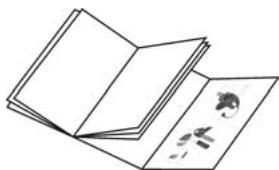
Description of device / spare parts
| Position | Order number | Denomination |
| 1 | 362645 | Sword |
| 2 | 362992 | Saw chain |
| 3 | 362623 | Chain brake release |
| 4 | 362624 | Front handhold |
| 5 | Trip switch | |
| 6 | Circuit closer/breaker | |
| 7 | Ventilation slots - motor | |
| 8 | Apparatus cable with plug | |
| 9 | 362610 | Oil tank lock |
| 10 | 362625 | Cover |
| 11 | Fastening screw | |
| 12 | Chain tension ring |
| Position | Order number | Denomination |
| 13 | 362923 | Chain wheel |
| 14 | Oil flow canal | |
| 15 | Upper chain clamping boring | |
| 16 | 362626 | Claw stopper |
| 17 | Rear handhold | |
| 18 | 362921 | Chain protection |
| 19 | 362622 | Safety label |
| 20 | 362627 | Carbon brush set (without pict.) |
| 21 | 362928 | Saw chain oil 100 ml |
| 22 | Chain clamp (without pic.) | |
| 400144 | Saw chain oil 1 l (without pic.) | |
Sommaire
2004/108/EG, 2006/95/EG.
2004/108/EG, 2006/95/EG.
Overensstemmelsesvurderingsprocedure: 2000/14/EF – Appendiks V.
Malt lydeffektniveau LwA 104 dB (A)
Garanteret lydeffektniveau LwA 105 dB (A)
Ahlen, 06.12.2007
2004/108/EG, 2006/95/EG.
2004/108/EG, 2006/95/EG.
Postupak ocjenjivanja konformnosti: 2000/14/EG - Prilog V
2004/108/EG e 2006/95/EWG
2004/108/EG, 2006/95/EG.
Conformiteit-beoordeling-procedures: 2000/14/EG -
Aanhangsel V
2004/108/EG, 2006/95/EG
KOMJIIEKTHOCTb IOCTaBKn,
HaNNUHc BO3MOXHbIX NOBpeKdEHN B pe3yJIbTaTe TpaHCnOpTnpOBKn.
He3aMeIInTeIbHO COo6uIte O peKlAmaIauNx TOPROB Op-raHn3aUIN, NOCTaBUnKy-CMExNHky IIN, COOTB., Ha 3aBOIDn3rOToBtIeB. PeKlAmaIauN, 3aABNeHHbIe N03Xe, He npn-3HaIOTc.
1 ceHna nila
13aunta nIbHOn ceN
1 3aapanha zenb "Oregon"
16ytbIka macna dnn Cma3kn ceen (100 mJ)
1 INHCTpykunno 0Kcnnyatau
Bpempa60tbI
Ppocb6a co6nIpaTb pernoHaJIbHbe IpeDncaHna.
СиMbOЛы, ИспОЛьзУЕмBLEВ устpoиCTBe

Ipeed BBODOMB 3KcNpyatauHIO npOHTaTb N CO6HODaTB INCTpyKUHO NO 3KcNpyatauH N yka3AHNA NO TEXHKe 6e30nachOCTN.

V Ipeed npoBeHeHem pa60t no peMoHTy, TexO6cIyXuBaNIO uOChTke OTKIOuHTb DBrTaTeJIb N BblaUHTb BuNkY CoEINHITeJIbHOrO UHypa.n.
B cnyuae NOBpeXdEHNn IINI nepepe3aHn COeHNHTeNbHO Ka6eJI He3aMeDNIteJbHO N3bTb CeTeBOI uTeKeP n3 p03ETKn

IoiJIb3OBAtbc3aUHTHO KaCKo, CpeIcTBAMn 3aUHTbI rna3 n cnyxa..

Takke pa6oTaB b 3aunThbIX nepuataKax.

He donyckaTb nonaahanna nOДdoKdb. 3aunuataB ot Bnarn.

MaKcMaJIbHaJaIInHa paCnHa 400 MM
СиMbOЛы, ИспОльь3уЕмbie ВИнструкци NOЭКСПЛуатуци
Jalee, HeCMOTpHa Bce npHrTbIe Mepbl npedocTopoXHOCTn MOyT NMeTbCRA OCTaTOUHbIe NCTOuHNIK pNcKa, He OueBnHbIe ODo3HaUHO.
Yka3aHnI NO TexHnKe 6e3OpacHOCTN
CobnIeHne cJeDyUoXu Yka3aHn Heo6xOJMo dJa 3aunbI Ce6n Ipynx OT BO3MOxHbIX TpaBM.
CleyuET Bcerda xpaHnTb 3Tu yka3aHnI NO TEXHnKe 6e3OpacHocTn (HNCtpyKuIg IIO 3KcNpyataunBmecTe C cENHOIINoI.
Pabotatb c zenHoi nIIOI pa3peaetcra TOnbko IIMUAM, IMEQUUM DOCTaTOUYHbI ONbIT.
OTdaBaTb cENHyo NnIy IIN CdaBaTb ee Ha npokat CneDyET TOJbKO JInzam, yMeIOUm EIO nOlb3ObaTbCra. IIpn 3tOM Heo6xOdIme Bcerda npinaraTb K NIIne INHCTpyKUIO NO ee 3KcNlnyatauIN.
Pemont nIJIbI pa3pe7aetcBbINOJHrTb H3ROTOBNTeJIIO NIN yNOJHOMOeHHbIM MM cnnpMaM.
■ NepBbI NOJIb3OBaTeIb
Пиц, Ворьgie pa6oTaHооe C ZeHOn ПИО, DoJxHo ПОЛучITь паKTичecКи ИНСТPyКТж� NO ee ИСПОЛьЗOBaHи и рIMeHEnHIO CpeДСТВ НрсОнБHо 3aUHTbI OT ONbITHORO ПОЛьЗOBaTeJIЯ. ПЕрьbie ПОЛьЗOBaTeJIи ДОЛЖнbl BHaЧаJIе NOTpeHInpOBAtBcR pe3Ke KpyTlbIX JECOMaTePnaJNoB Na KO3nax ДлЯ pacnINbA纳и 6peBEN ИЛ KapKace.
Ipepe nCnoJb3OBaHnEm yCTpoiCTBa Heo6xOdmo O3HaKOMtbcr C Hm Ha OCHOBaHn IHCTpykun IIO eO 3KcPnyatau.
He nCnoIb3yIte yCTpoIcTBO IJIa ueIeI, IJIa KOTOpbIX OHO He npEHa3NaYeHO (CM. pa3JeIbI "NcNoIb3OBAHne B COOTBcETCBn C Ha3NaYeHnEM" n "Pa6ota c caoOBbIM N3MeJIbUHTeJIeM").
Heo6xOJIMO n36eraTb HeeCTeCTBeHHORo IOnOKeHnIa npn pa6ote. Pn pa6ote c yctpOiCTBOM IOnb3OBaTeJIb DOJIKeH NMeTb HAdExHyIO OnOpY IcoJIIOdaTb BCE BpeM paBHObecne.
T Pa6o7bI Heo6xOaHMo BbINOpHrTb B COOTBeTCTByIOUeN CneOJeKDe
- OdexJa He DoJxHa 6bItb ShnpOKo, 3anpeaetc Hocntb BO BpempaOtbl yKpaUeHn, OHN MOryt nonactb BO BpauIoUneCn DeTaN PaOtaTb B nepuAtkax N HeckoJIb3raJe n ObyBn.
-ДлэзацитblHor pa6oTaTbВДлнHHbIXбPIOkax.
Pa60TaB CneuOdek:
3aunTa cnyxa
3aunthbIe OUKN INN 3aunTy Nlca
- nepyataKn
3aunTHyMoACKy, npoWeDsyu NcBbITAHnB, B CNTyaCnIax, KOrda BO3MOxHa TpaBMa rOJIOBbl (HapnMep, pnBaJIke DepeBBeB n O6pe3Ke cyhBeB).
■ Pekomehnyem pa6oTaTb TaKKe c IcNoIb3ObaHneM 3aunTbI Hor.
Copejnte Bauy pa6oyu 30Hy B nopAke! Henopdok MOKeT 6bITb npuHOn Hechacthbx CnyaEB.
CobIIOdaTb TaKke BInraHnOkpyXaIoSe Cpebl:
- Ⅲ6eRaTb nonaHaHna YenHoN pInIbl npddoXdb.
3anpeaetcnaonb3oBaTbcnHyu Nnny BycIOBnX NOBblueHHO BlaxHOCTn. - Пи He6laoropnraTHbIX nOroHbIX yCNoBnax (doXdb, cher, rOloned, BeTeP) Heo6xoJIMo nepenectn pa60tI Ha 60nee no3dHn cpoK -noBbIeHHa onaCHOCTb NOlyueHn TpaBM!
- Pa6oTaTb Heo6xOДmO TaKKe npn XopoWeM OCBeUeHnn.
3anpeaetcnaonb3oBaTbcnHnyB6n3n BocnIameHouxxCsJNdkOCTe nnra3OB.
Hnkorda He octabJrTe annapaT 6e3 Hnd30pa
■Пи перьвaxВ pa6ote yknabIbATb ueHny nIy TaKIM o6pa3OM, YTO6bl He BO3NkAJaOnaCHOCTb TpaBMnPOBaHn. IpeOxpanrB ueHny nIy ot HecaHKUOHnpOBaHHOr DoCTyna.
3anpeaaetcpa6oTaTb cJeHToHOn nIIOJnIaM MoIooKe 18 JeT.
Cneintb 3a TeM, YTO6bI B BaWei pa6OeH 30He He HaxoINcB dpyrNe IIOIn JXMBOTbIe.
■Пльзовать HeCET OTBETCTBEHHOCTh 3a HeCyaCTHbIe Cnyuaи ИЛи ONaCHOCTN, JKePTBOI KOTOpbIX CTaII NpyrIe IIncaИЛIN IX CO6CTBEHHOCTh.
O6cIyKnBaIoUm yCTpOJCTBO HecET OTBeTCTBHeHOCtB nepeTdpeTbIMN IuCaMn B pa6oey 3OHe yCTpOJCTBa.
He noDnyscKaTb 6nI3Ko dTeT.
He donyckaTb, yTO6bl dpyrne Iuca, B oco6eHHocTn DeTn, pRkacalncb K pexyuemeMy HnCtpymeHTy nIIN Ka6eIIO.
Cleintb 3a tem, yTo6b B Bauei pa6oey 30he He HaxOuINcB dpyrne IIOu N XNBOTbIe.
Heo6xoJIMO npHnTb Mepbl no 3aunTe OT nopaxKeHna 3JeKTPnueckm TOKOM. CneDyET TaKxe n36eRaTb npNKOCHOBEHnK 3a3EmJIeHHbIM PpeDMetam (HaNPmEp, Tpy6am OTOnNTeJIbHbIM npN6opam, pIITam, XOLOINJBHKAM n T.D.)
3anpeaetcNcnoJb3OBaTb NnIbHbIe cenn, Meoune TpeunHbI INn DeopmnpoBaHbIe.
CneJyET NcNoIb3OBA TbToIbKO XopoOo 3aToeHHbIe NnIbHbIe cenn, TaK KaK TynIbe PInIbHbIe cENn He ToIbKO NOBbIshaOT ONaCHOCT b OTdauN, HO TaKKe OKa3bIbAIOT NOBbIeHHHy HArpy3ky Ha DBIrataJIb.
Heo6xOJIMO HaunHaTb pe3aHne TOJIbKO nocJe TORO, KaK IIJIbHOI ZeIbIO DOCTnIHyTa POJIHa YACTOTa BpaueHna.
■Пи Вкlioуени цenho плbl ee Heo6xOIMHOHadexHo nOpnpaTb u ydepKuBaTb.цьипьно annapaT He doJHKHO HNUTo 3aropaKuBaTb.
Pnpn np6nnxhen npynx nOJe, npexde Bcero DeTeH nn DOMaunnx XNBOTbIX Nn CmHe pa6oey 3OnbI BblNCHaytB annapaT.
Takke 3anpeuaetcnaeepykaMaunHy.B yka3aHHOM danaa30He MouHocn pa6ota BbINOJIHReTcJyuWe nHaJeKHee.
3anpezaetcN3MeHrTB NJy Nn ee KOMNOHeHTbl.
He cMbBaTb yCTpoiCTBO BOIOJ. (VcTOUHk ONaCHOCTN - 3JIeKTPnueCKn TOK).
XpaHnTb NnIy B HaNexHOM MecTe. HencNoJIb3yEmble nIblxpaHnTb BCyXOM, 3aMbIkaEMbIM IN HeIOCTynHOM dIra DeTei NOMEuEHNI.
CneJyET BbIKHouaTb MaINHy N BbITaCKnBaTb N3 pO3eTKn CeTeBOI uTEKeP B CneJyUxN CNyJaX:
- Conpikocohene ΚeHNoI Πnblc c rpyHTOM, KamHMy, rBO3dMy IJIN pOChM NOCToPOHHMn PpeMeTaM
Cpa3y npoBepntb cenb nnilbHbI annapat
— npn BbIIOJIHeHm peMOHTbIx pa6oT - pnp npoBeHn TExO6cnyKuBaHnN OChCTKn
— npu ycTpaHEnn HncnpaBHOCTeN - Ipepepe3aHHbIe coeHNHITJIbHbIe Ka6eJIi
- PpOBepka coeHNHTeJIbHbIX Ka6eIeN Ha cnTybIBaHne NII INOBpeXdEHne
- TpaHcnpTnpoBka
IopTnBaHne cenn - 3aemeHa zeenn
- YdaJIeHHe OTo MaIINHbI (TaKKe I npN KpaTKOBpeMeHHbIX nepepbIbax)
Texyoxo3a ceHNoI pInoI Heo6xOIMo npOBOnTb TuaTeNbHO:
- Pexyuine HNCTpymeHTbI Hado COdepxaTb B 3aTOUeHHOM N YnCTOM COCTOARHIN, 3TO N03BOJNT do6ntbcra Jyuxnx HnadejXhix pe3yJIbTaTOB B pa6ote.
Co6IIOaTb npedncaHnno npoBeHeHIO texO6cnyKuBaHnny uKa3aHnno cMa3Ke n 3aMeHe nHCTpymENTOB.
-PyukndoJXhbl6bItb cyxImn He 3aqr3HeHbI CMOJIO,Macnom KOHCNCTeHTHOcm3KOJ.
CleyuET npOBepaTb MaunHy Ha BO3MOXHbIe NOBpeKdEHH:
-Передпоследуюцин ИСПОЛьЗОВАнеМашины 3aцHTьe npсncoc6ObENH nIIN JERKO NOBpeжденьeЧ actN DoJIxHb 6bITb TцaTeJbHO npOBepeHbHa nx HaNEXHoe N NaIeXaUneФyHKUOHropOBaHne.
- Heo6xOIMO npOBepaTb nCnpaBHOCTb yHKUHIOPOBAHn BpaaOuXcxA Detanei, He 3aeJaOT IOn Hn HneMeOt IIN NOBpeKdEHH. IJIy oBeCeNeueHn HaIeKaIe pa60tbl CTaHka BCE KOMNoHEhbl DOJHXbl 6bl TnpaBnIbHo CMOHTPOBaHbI N BbINOJIHeHbl BCE PpeIOcblIKN DJIa 3TOrO.
- EcIn B INHCTpyKuIN IO KcNlPyatauIN He yka3aHO dpyrOTo NOBpeXKeHHbI 3aUHTbIE npNCIOco6bJIeHN I KOMNoHEtbl DOJXHbI 6bITb KBaINΦnIUPOBaHHO OTpeMOHTnpOBaHbI IINI 3aMeHeHbIB aBTOpN3OBaHHo CneuaIIN3NPobAHHO MaCTepCKoN (IIIN N3rTOBNTeJIeM).
He6xOdmo 3aMeHrTb IOBpeXJDeHHbIe IIN HeuHTaEmbIe HAKJIeKn C yKa3aHnA Mn PO TexHnKe 6e3oNaocCTn.

3JIeKtpo6e30nacHocTb
IcnoJIHHeNe coeHHTeJbHorO Ka6eJI B COOTBeTCTBn c M3K 60 245 (H 07 RN-F) c InonepueHbIM ceyeHnEM Jn He MeHee -1,5 MM² npi dInHe Ka6eJIa do 25 M -2,5 MM² npi dInHe Ka6eJIa 6oJe 25 M
ДиHHIe I TOHKe COeINHInTeJIbHbIe Ka6eN IOHNJHaOT HAnpJxKeHne.ДВrAteIb He MoXeT 6OJIbWe DOCTnRaTb CBOe IMKcIMaJIbHOH MOUHOCTN, CHIXJaETcA ΦYHKuHOHaJIbHaI CNOCO6HOCTb YCTPOICTBa.
Tekepb npo3eToHbIe qactn 3JeKtpuecckx coeHHteJe Ha CoeHHTeJIbHbIX Ka6eJX DOJXHbI 6bITb n3 pe3nHbI, MraKoro PBX nn DpyrOTo TepMOJIaCTuHOro MaTePnaTaN ToKo JKeMexAHuecKO npOCHTo nnn POKpbITbOboJOnQKo n3 3TOrMaTePnAna..
3JIeKtpnueckn COeINHnteNb COeINHNTeNbHOrKa6eJrdoJKeH 6bTb 6pbI3ro3aunuenceHHbI.
Pn npoknaKe coeHHTbHoro Kaebn CneHtB 3a Tem, Yo6bl OH He COzdaBn PpeTCTBn, He 6bl NpeDaBHe, nepErHyT, a 3NeKtpueckn CoeHHTb He HamOyeH.
He nCnoIb3OBAt b Ka6eB B ueJx,ДЯ KOTopbIX OH He npEHa3HaueH. Heo6XoJMo 3aunuatab Ka6eB OT HArpeBa, Macna n OcTpbiX KpOMok. 3aIpeuaetcT TaHyTB 3a Ka6eB dIy N3bYrN I TeKepa IV3 po3ETKn.
■Пи Использовани Кабелвого бараза ha Ka6eNB Heo6xOДМО NOJIHOCTBIO pa3MaTbIbTaB c Hero
CneIyET peryIpyrHO KOHTpOJInpoBaT yDnHInTeIbHbIe Ka6enn 3aMeHrTb B Cnyae IN NOBpeXdEHHa.
3anpeuaeTcNcNoJIb3OBaTb DeΦeKTHbIE coeHHTeJIbHbIe Ka6eIi.
■Пи ВьлОнHeHn pa6OT noD OTKpbIbIM He6OM n3PONb3OBAtB TOJIbKO pa3peWeHHbIe IЯ 3TOrO u COOTBeTCTByUoIIM O6pa3OM NOMEueHHbIe ydInHITeJIbHbIe Ka6eJIi.
3anpeaetcnaOJIb3OBaTb BpeMeHHbIe 3JIeKTPnueckne IOnkJIIOUHeHnI.
Kateropnueckn 3anpeaaetc coeHnA Tb nepeMbIyKOH NIN OTKNIOHTb 3aUNTHbIe yCTPOIcTBa..
IpoKluOaTb yCTPOJCTBO uepe3 BblKnIOuAteJIb 3aunTbI OT TOKOB NOBpeXdHnA (30 mA).
BbINOJIHeHne 3NeKTPnuecknx NOdkIIOUeHn IIN peMOHTa Ha 3NeKTPnuecknx KOMNOHEHTax MaJINHBi DOJIXHO OCUYCECTBIAITbcra CNEUaJINCtOM IO 3NeKTPoYCTaHOBkAM, IMeIoUIM NIIeH3NIO IIN OdHoi n3 HauixxCepBnCHbIX cIyX6. Co6IIOdaTb MeCTHbIe ppeDnCaHnA, B OCO6eHHOCTN KacaIOuIeC8 3aIITbIX MEP
PemontpoBaTb Dpyrne KOMNOHeHTbMaHnHbI DOJIKeH N3ROTOBtEnb INn OJHa IN3 eRO CepBnChbIX Cnyk6.
Pa3pe7aetcNcnoJIb3OBAtB TOIbKO opnHnHaIbHbIe 3anYactn npHaJdIeXHoCTn. NcnoJIb3ObaHne dpynx 3anYacteN npHaJdIeXHoCTe MoKcT pInBeCTN K TpaBMIpOBaHnIO nOJIb3OBaTeIy. 3a
PnuiHHeHHbI B TaKnx CJIyuaX yUepe6 n3roTOBntelb OTBeTCTBeHHoCTn He Hecet.
C6opka
I I OdkJIIOuATb cenHyTO pNny K 3NEKTPoCeTn CneDyET TOnbKO nocne OKOHaTeMbHOc6OpKn.
Onachocb noluyehn TpaMbbl! C6opky Heo6xOIMMO BbInONHrTb B 3aunTHbIX nepuataKax.
YIIOXINTe ZENHHy IINy Ha pOBHOe OCHOBAHHe. 1
Ocna6nB KpeNexHbI BnHT (11), ydaJInte KpbIuKy (10).
BLOXnTB nJIbHbIe cENB OOKpyxHyIO HAnpaBIAHOU npope3b nJIbHOrO annapaTa. CNeIITb 3a npabINbHbIM HApBaBHeHem XoJa 3BeHbE BcENI.2
HanoKHTb nIbHbI annapaT. 3
→При монтaxes OбрааТь Bнмане HaTo,чTO6bl 3BeHЯцп ПраВиЛьНО BOшЛВ HарвлгИоуTO npope3иHa BeDyUso 3Be3doUky (13).
Пиьная цьп loxO yKnaIbIbAeTcR BOKpyr BeDyuSei 3Be3dOчкN?
CeteBoe npedoxpahene

Ин electroboHIO-ПлавКиЕdoхразнели 16 A
BkJIoucheHne / BbIKIOUeHne
3anpeaaetcncnoIb3oBaTb nny, mMeouyocneyuoune dekeKtbl
- BbIKIIOyateJIb He BbINOJIHЯET ΦyHKcNn BkIIOUyeHn N BbIKIIOUeHn,
- HeNaIeJaUeeФyHKUOHNpOBaHne TOPMO3a ZeNn DBrIraTeJIa
3anpeuetaTcNcNoIb30BaTb CTAHOK, BblKJIIOUaTeJIb KOtOporo He BKJIIOHaETcN He BblKJIIOUaETc
IobpeXdeHHbIe BbIKHIOaTeJI NdoJXHbI He3aMeIINTEbHO peMOHTnPOBaTbCЯNIM 3aMeHrTbCc cepBnCHo cnyxboi.
Pn BkIIOeHn cENHO nIbI ee Heo6xOIMo HAdEHXo IOpInpaT b udepXNBaTb. Cen b n IINbHO annapat He DOJIXHO HNUTo 3aropaxNBaTb.

BkIIOUeHne 6
HaxaTb uYdepXnBaTb B 3tOM COCTOHN 6JOKnPOBky BKJIIOUeHnA (5). 3aTeM BKJIIOUHTb BBIKJIIOuATeNb 3JIeKTPoPNTAHnA (6). BHOBb OTNycTnTb 6JOKnPOBky BKJIIOUeHnA.

BbIKJIoueHne
OTnyctntb BbIKJUoyateIb 3JIeKtpOnItaHna.
Topm03 cei
TopMo3 ceNn YBnIeTc3aUHTbIM MExaHn3MOM, cpa6aTbIBaHOzMM npn OTdAue CEHNoI pINbI uepe3 nepeDnIO 3aunTy pyk INn Nocne OTnyckAHN BbIKNoHaTeJI 3NeKTPoNtAHN.IINbHaa CEnb OCTaHaBnBaEeTcHe3aMeDInTeBHo (<0,1c).
KoHTpOJIb TOPMo3a ZeEN
Hkeo6xOdmo Bpem O T BpeMeH npOBepTb 0yHKUHOHPOBaHne TOPM03a ceni.
Пocтави综合体а срабатуваима цenного Тормо3a (3)В поожене 2 И Вклочиь цпную пиу.7ПОЗ.2= 贝нов Тормо3akTNBupOBan,ПИльнаць He 3anyckaetca
Пoctabntb pbuhar cpaabaBAnHnue ceHoro TOpMo3a (3) B noJoxHeN 1 n BKnHouHTb ceHnyo nnIy. 8 Po3.1= 9eHNOrTopMo3 OTnyuEh, NIIbHaar cenb 3anyccaetcra
HaTajkeHne cenn nnilbI
- Ipeed nactpoikon nIIN npOBepkO HnpanjKeHn nnBHOI cEN N BItaunTb n3 p03eTK cTeBOI wTEkep.
Bo n36eXaHne TpaBM cJeIyEt pa6OtaTb B 3aunTHbIX nepuATkax.
HauaJiom pa60TbI,
nocne BbIOnHeHnepBbIX npOINIOB,
→ BO Bpemn nnieny uepe3 KaKdbie 10 MmhyT
Tolbko npn pa6ote c npabunbHbIM HaTjXeHNEMIINbHOI cENN I DOCTaTOUHOcMa3KO Bbl MoXeTeIOBJIaRbHa cPOK cnyK6bl IIbI.
i Pnocm TaKxe co6JIIOdaTb cNe dyUoIne ycNoBna:
Hobyo nIbHyu ceIb Heo6xOIMO HaTgNBaTb YaIe, Do Tex nop noka OHa He pactraHETc.
→Пинharpebeцeni do pa6oey TemnepaTypbI Oha pactraHbAeTcR N ee CneDyET NOdTARBaTb.
Iocne paCnIOBKn PnJbHyU cenb Hado BHOBb Ocna6ntb, TAK KAc PnO OxJaXdEHN B HeN BO3HKn 6bl CnHKOM 6oJIbWne CnJIb HATJKeHn.
Ecniu cenb Bn6pnpuyet nINBbIXoNT n3 HanpaBraHoue, To ee Hado cpa3y Jxne NOtTMyTb.
HaTaeHne nIyBHOJ cenn:
- Пложит bцeну nIy ha poBhoE ochOBaHne DBuRaTeJem BHN3.
- OcnaBntb KpeJexHbI BnHT (11) nocpeIcTBOM 1-2 NOBOPOTOB npOTnB XoDa YacOBoi CTpeJIKN.
3.ПocTeHNo npOBOpaNBaT KoJIbO HATJxHeHn Yen (12) no xOdy yacBOB CTpeJIKN Do tex nop, noka He 6yIeT DOCTInHyTO npabINbHOe HATJxKeHne. 3ΦΦeKT fNkcauN PpeDynpexJaet Ocna6bHeHne Zen.
① Kpenexhbl BnHT (11) BpaaaetcBMeCTe, BO3MOxHNO, yTo ero nOtpe6yETc Ocna6ntb npN BbIOpHHeHH pOueDypbHaTJKeHn.
- Hataxhe He cenn YBnEeTcnpaBnHbIM,ecn B cepeHHe nIbHoro annapata ee MOxHO IOdHrTB BBepX Ha 3-4 MM.10
- Ecni nIbnae neb nepetHa, To CneDyET npOBepHyTb KOJIbQo HaTJKeHnA ceni (12) npOTnB XOda YacBOB CTpeJIKN.
- BHOBb 3aTaNHe BpyHyIO KpeNExKbI BNHT.
- Поверпь, павильно Лп leжат 3вень сени в наразвляюш的新рорец.
Pa6ota c ceHnoI nIIOJ
Перед пльенем
Ipeed BBODOM B 3KcnnyatauHIO BO Bpemra pacnllIOBKn Heo6xOIMPOperyIaRHO npOBOnTb CneDyUOune npOBepKN:
Плнocтью И НадlexациМ ЛИ OБраЗOM CMOHTIPOBaHa цEHЯ пЛа?
HaxoJntcay nI cenHaa nIIa B xopoWem 6e3onacHom coCTOHHn?
HanonHeH Jn MacNo6ak? Heo6xOIMO peryIaRHO npOBepTb yPoBeHb MaCna B CMOTPOBOM OKHe (17).HaIO cpa3y Je DoJIntb MacJa, ecNI erO yPoBeHb HaxODNTcHa OTMeTke ,MIN",YTo6bl PnIbHajr cIeN He pa6oTana BCxyU.
→ПраВиьhoeЛИнHaTЯжehneпльHoHцeп? TaKke Heo6xOДМо co6nIodaTBpyHKTbI B pa3dJIe „HaTЯжehneпльHoHцeп".
Правиьная Л 3аTOUka ПИльноцEN? ToJIbKO C npaBnIbHO 3aTOUeHHoN ПИльноцEN MOxHNO DoCTuB XopoOSeH N 6e3OnaCHO pa6Tobl.
Ocna6JIeH JI TopMo3 cENn I pa6Otaet JI OH NaJIeXaUIM o6pa3OM?
Cpa6aTbIbATEnb CEHoro TOPMo3a (3)doJxeh HaxoIITbcB P03uIN 1. TaKxe Heo6XoIMo co6JIIOaTb NyHKTbl B pa3dene ,KoHTpOJIb TOPMo3a CEII".
Ynctara n cyxara nn pyka - cbo6oHa nn OHa ot MacJa n CMOJIbI?
Het Jn Ha pa6oyem MecTe npenrTcbn, o6 KOtOpbIe MOxHO CNOTKHyTbcr?
IcnpIb3yeTe Nn Bbl cpeIcTba 3aunTbI?
Пожтонл Вами NOHЯтб BCE yka3aHn?
→BHaDnEkaaem JN COCTOAHH N HAXoJTCa CeTeBOI
WTEKeP u yDnHHTeNbHbIKa6JIb? 3anpeuaeTcra cnoJb30BaT DepeKTHbIE Ka6JI.
→ IpaBnIbHO n npOIOxH yDNHHTeHbH bKab6JIb? CoeINHITb 7TEKeP yCTPOINCTBa c yDNHHTeHbH bIM Ka6eJIeM. CMOTaTB yDNHHTeHbH b KABeJIb B y3KYIO neTIIIO npOJeTb erO uepe3 npEdoXpAHHTeHbHyIO nepemblky. 3aTeM NOBecNTb neTIIIO Ha KpIK. Teepb 7TEKePHoe COeINHeHne npEdoXpAHEHO OT camoCTOaTeHbHO pa3beINHeHnra.1
BoBpempa60bIcneiNb3aTeM,yTO6blyDINHHTeNBbIKabeJIbBCERdaOTXoDNlHa3adOTcENHOINbI,BHE3OHBInlbHOUcENnPacnINbNAEMORMaTepeNaJa.
OTdaua nIbI
UTo 03HauaET OTdaua NnIb? OTdaue NnIb Ha3bIBaetc HEOXmHaHHbI NOdCKOK IOTCKOK Ha3ad pa6oTaIOSe IeHNHO NnIbIB HAnpaBLeHnn pa6oTaIOSeO C Hei.
3ToIpnocXoJNT,ecnI
- KOHeU NIIbHOrO aInpaTa npKacaeTcA (HepeHaMepeHHo) K pacNIIBaEMomy MaTePnAny IINI dpyIM TBePdbIM PpeDMeTAm,
a TaKKe npn 3aeDaHn nIInbHO nCeHn.
B TaKnx Cnyuayx ZeHna NnJa CTaHOBNTc8 beckoHTpoJIbHOI uacto npuHreT TKeJIbIe TpaBMbl noJIb3OBAteJIIO.
A IIOaTOMy 6okOBbIe, KocIe n npoJoIbHbIe npoJIbIi Hado BblOpHrTb KpaIHe OCTOpOxHO, TAK KaK 3deCb He NcNoJIb3yETcra 3y6UaTbI ynop (16).
Kak Moxho n36eKaTb OTdauH nnbl?
He haunhaTb npOnn KOHcOM nInbHoro annapaTa. 12
- Kateropnueckn 3anpeuaetcra NJIHTb BepxHei KpOMKo NNJbHoro annapaTa. 13
-Подвориь сeнHyю ПИу KpacnINBaemomy MaTePnaIy NO BO3MOxHOCHTN B TOpN3OHTaJIbHOM nIOJKeHIn. 15
-He hauinhaTb npoannc pa6oTaOuSei nIbHOI cenbIO.
- Hnkorga He BkIIOuATb MaUHy C npIcTaBHeHHo K Yemy-Jn6o NnJbHOu ZenbU.
- Pa6oTaTb ToJIbKO C OCTpoN IJIN npaBnIbHO 3aToeHHOJ NJIbHOJ cIeHIO.
- Kateropnueckn 3aIpeaaetcpa6oTaTb c ocna6neHHo nn H3HOeHHo nJIbHOu ceHbO.
- Pa6oTaTb Hano TOJbKO C npaBnIbHO HATaHyToI NJIbHNo CEInIO.
- LcHny nIy Heo6xOIMo Bcerda KpeNko DePkaTb oBeuM pykam.
- IcnojIb3OBAtB 3y6uAtbI ynp B KaueCTBe pbUpara. 16
- Hnkorda He pa6oTaB bIiue ypoBna pIeua.
- Bcerda otpe3aTb TOnIbKO IO OndHomy cyKy 3a OndH npOII. Pn OTnnINBaHN cyUbeB CneIITb 3a TEM, YTO6bl He 3aTeB dpyroK cyK.
- PnppackpexBke NcnoJb3OBaTb NO BO3MOXHOCTN KO3JIbl.
- Ппинлваиме метом Тараза пазршаетс Только obучehнomy nepcoharly.
ОвICIе па вILA NOВЕДENЯ рпплени
3anpeuetaTcpa60TaHa chery, Ibdy nINCBexKeOpEHNO dpeBecnHe - MOxHO NOCKOJIb3HyTbcra.
TaKKe He HaIo pa6oTaTb npn HeIOCTaTOUHOM OCBeUeHInn (HaPnPMeR, B TymaH, DoXDb, BbIpy NINB
cymeKax).B 3tix ycIOBnIx yKe 6OJIbIe HeBO3MOxHO 3aMeHaT b IOJPO6HocTb B 3OHe BaIKN - ONaCHOCTb IOnyueHn TpaBMbl.
Bcerda cneyuTe oBeceNeuBaTb 6e3onacHoe n y6paHHoe pa6ooye meTo.
Heo6xOIMO n36eRaT HeecTeCTBENHOro IIOLOXeHnIra TeHa npa6ote. TaKxe HaIo Bce BpeM rcoBIOdaTb paBHOBeCne. TaKxe 3aPepaetcra pa6oTaTb HAKJIOHNBWHScB BnpeEi.
Pa6oTaB HAO TOIbKO C cENHOI pINoH, IMeIOUeHnADEXHbI ynp. LcENHyIO pNly cIeNyET dEpxaTbClerka cnpaba ot ce6ra.
3anpeaetcnaonb30BaTbcnHyo nnny dnoHnTnI nepeDbNKeHn DpeBecnbl.
CneiTe 3a TeM, UTo6bHa Ha IpeBecnHe He 6blNo nocToPOHHnx IpeMeTOB (kAMHn, rBO3n nT.D.).
LcHny npny Heo6xOIMO Bcerda KpeNko DepxaTb o6eMn pykamn, IeBOi pyoJ 3a nepeDHOpyky (4), a npabOy 3a 3aNDIOO pyKy (17). KaTeprueckn 3anpeuaetcnpNTb OHOpyKO. 14
Cneinte 3a TeM, UTo6bl DpeBecnHa He Kopo6nlaoc B0 BpempaCnIOBKn.
PacuennHny DpeBecnHy pacnIINBaTb Hado coctopoxHo. Tak kak npncytCTByeT onachoctb noJyehn TpaMbI OT OTOPBaHHbIX IeNOK.
CneJyET 3anyckaTb NnIbHyIO cenb Do ee KOHTaKTa C dpBeBecInHOH.
ПиЛNTь ДревесиHy Надо TOльКо HнЖHeи КрOMКО ПиЛьНо Уп. PaCиNIOВka ВерхHeи КрOMКО Bbl3bIBAeT OTDAчу ПиЛы.
IIOBODNTb CEHnyo Nnly K pacnINBaemomy MaTePnaJy NO BO3MOXHOCTN B TOpN3OHTaJIbHOM IIOJoxeHH.
Дя Фнсюваня сений пьы на древсану И спльзоваты 3у6чаты уpop (16).Во врем расиловки сд endet Испльзоваты 3у6чаты уpop В каунстve рьчara.16
■ Pn pe3aHn TOJIcTBIX 3yUbeB nIN CTBOJOB nepeDburatb 3y6uTaBiy np (16) Ha 6OJee HxHHe toKn. Pn nepemeueHN 3y6uToR Oynopa cIeDyET BbITaUNTb eO I3 dpeBecNbI IN BHOBb yCTAHOBtB noHxke. Pn ATOM He BBIOdnte pInIy n3 pa3pe3a.
Pa6oTaIe c ceHNoi nnIO, co3dabra npn nOmoi 3y6uato rO ynpa IerKoe pbUaxHoe ycInne. PpN paCnIOBKe He cIeDyET hAxIMaTb Ha nnPy CcNOi.
Kateropnueckn 3anpeaetcpa6oTaTb
C BbITrAHyTbIMn pykamn,
B TpyHNOIOCTyINhbIX MeCTax,
Ha cTpemHKe, pa6oUnx Iecax uIN Ha depeBe.
Hnkorga He pa6oTaTb C cenHoi nnoi Bblue ypOBnna.
TaKe 3anpeaetc neperpykaTb cenHyIO nIy. HannyuHne pe3yIbTaTbI pacnINOBKn DoCTnraOTcB TOM Cnyae,ecNI He CNJxAeTcckOpocTb cENI.
B KOHcpe pa3pe3a cIeJyET 6blb ocTOPOXHbIM. KaK TOnbKO NIIa BByIOJNT N3 dpeBecnbl, cpa3y JeN3MeHJeTcBecOBoE ycJIne. PpN 3Tom BO3MOxHa TpaBMHor.
YdaJIaTb cENHyIO nIy n3 pa3pe3a Hado TOnbKO npI pa6OtaUoSe IINbHOu cEN.
Kateropnueckn 3anpeaetc npkacaTbcra pa6oTaUeien nIIO K npOBOnOHybIM 3abopam nnrpyHTy.
EcnBbINONHraTcHeCKoJIbKO npOnnIOB,TO cENHyIO NJIy CNeDyET BbIKNHOaTb Nay3ax MExd HmM.
■При захати пььнoiцenв древсанe Heo6xodmo cpa3y BbIKIIOHTb ПИу ИЗЯтб сTeBOишТЕкер.Дя BBICBO6OJXdENI PnIbHOrO anPnapata Heo6xODmO nCNoJIb3OBaTB KInH.
■При расиловке Heo6xOДИМО COBepшат b nay3bl cцью oxlaжденя 3JNeKTPoDnBuRatela.
- BBbIKJIIOUYHTb CTAHOK
- OdoXdaTb OCTaHOBa ZeHNOI NJIbI
- BbItaunTb CeTeBOu WTeKeP
2004/108/EG, 2006/95/EWG.
2004/108/EG, 2006/95/EWG.
Hodnoty shody sa riadia podla: 2000/14/EG-Priloha V. Nameranova hladina hluku LwA 104 dB (A).Zaručená hladina hluku LwA 105 dB (A).
Ahlen, 06.12.2007
2004/108/EG, 2006/95/EWG.
Postopek za ugotavljanje skladnosti: 2000/14/ES - Dodatek V.
Izmerjen nivo zvočne jakosti LwA 104 dB (A), garantirani nivo zvočne jakosti LwA 105 dB (A).
Ahlen, 06.12.2007