
B&W ASW600 - Subwoofer B&W - Free user manual and instructions
Find the device manual for free B&W ASW600 B&W in PDF.


| Product type | Active subwoofer |
| Brand | B&W |
| Model | ASW600 |
| Power supply | Mains, voltage according to rear label (e.g., 230V or 110-120V) |
| Power | Not specified in the manual (typical estimate: 200-300 W RMS) |
| Audio inputs | Line level (RCA) and speaker level (binding posts) |
| Available adjustments | Volume, low-pass filter cutoff frequency, phase (0/180°), equalization (EQ A/B), On/Auto mode |
| Operating indicator | LED: green (active), red (standby) |
| Auto standby mode | Yes (after 5 minutes without signal) |
| Built-in high-pass filter | Yes (for feeding satellite speakers) |
| Warranty | 5 years (speaker) / 2 years (electronics) from date of purchase |
| Supplied accessories | 4 screw-in rubber feet, 4 screw-in spikes with lock nuts, international warranty card |
| Maintenance | Dry soft cloth; front grille cleanable with very soft brush; unplug before cleaning |
| Safety | Do not open the device; keep away from water and humidity; do not obstruct ventilation; use only with a compatible mains supply |
| Country of origin | Designed and manufactured by B&W (United Kingdom) |
| Repairability | Repair exclusively by authorized technician; internal fuses replaceable only by authorized agent |
Frequently Asked Questions - B&W ASW600 B&W
User questions about B&W ASW600 B&W
0 question about this device. Answer the ones you know or ask your own.
Ask a new question about this device
Download the instructions for your Subwoofer in PDF format for free! Find your manual B&W ASW600 - B&W and take your electronic device back in hand. On this page are published all the documents necessary for the use of your device. B&W ASW600 by B&W.
USER MANUAL B&W ASW600 B&W
Limited Warranty............2
Owner's Manual. 2
François
Garantie limitée. 6
This product has been designed and manufactured to the highest quality standards. However, if something does go wrong with this product, B&W Loudspeakers and its national distributors warrant free of charge labour (exclusion may apply) and replacement parts in any country served by an official B&W distributor.
This limited warranty is valid for a period of five years from the date of purchase or two years for electronics including amplified loudspeakers.
Terms and Conditions
1 The warranty is limited to the repair of the equipment. Neither transportation, nor any other costs, nor any risk for removal, transportation and installation of products is covered by this warranty.
2 This warranty is only valid for the original owner. It is not transferable.
3 This warranty will not be applicable in cases other than defects in materials and/or workmanship at the time of purchase and will not be applicable:
a for damages caused by incorrect installation, connection or packing.
b for damages caused by any use other than correct use described in the user manual, negligence, modifications, or use of parts that are not made or authorised by B&W,
c for damages caused by faulty or unsuitable ancillary equipment,
d for damages caused by accidents, lightning, water, fire heat, war, public disturbances or any other cause beyond the reasonable control of B&W and its appointed distributors,
e for products whose serial number has been altered, deleted, removed or made illegible,
if repairs or modifications have been executed by an unauthorised person.
4 This guarantee complements any national/regional law obligations of dealers or national distributors and does not affect your statutory rights as a customer.
How to claim repairs under warranty
Should service be required, please follow the following procedure:
1 If the equipment is being used in the country of purchase, you should contact the B&W authorised dealer from whom the equipment was purchased.
2 If the equipment is being used outside the country of purchase, you should contact B&W national distributor in the country of residence who will advise
where the equipment can be serviced. You can call B&W in the UK or visit our web site to get the contact details of your local distributor.
To validate your warranty, you will need to produce this warranty booklet completed and stamped by your dealer on the date of purchase. Alternatively, you will need the original sales invoice or other proof of ownership and date of purchase.
Owner's manual
IMPORTANT SAFETY INSTRUCTIONS

CAUTION RISK OF ELECTRIC SHOCK DO NOT OPEN

Caution:
To reduce the risk of electric shock, do not remove the back panel. No user-serviceable parts inside. Refer servicing to qualified personnel.
Explanation of Graphical Symbols:

The lightning flash within an equilateral triangle is intended to alert you to the presence of uninsulated "dangerous voltage" within the product's enclosure that may be of sufficient magnitude to constitute an electric shock to persons.

The exclamation point within an equilateral triangle is intended to alert you to the presence of important operating and maintenance (servicing) instructions in the literature accompanying the appliance.
WARNING:
1 Read Instructions - All the safety and operating instructions should be read before the appliance is operated.
2 Retain Instructions - The safety and operating instructions should be retained for future reference.
3 Heed Warnings - All warnings on the appliance and in the operating instructions should be adhered to.
4. Follow Instructions - All operating and use instructions should be followed.
5 Power Sources - This product should be operated only from the type of power source indicated by the marking situated on the rear panel. If you are not sure of the type of power supply to your home, consult your product dealer or local power company.
6 Grounding or Polarisation - The appliance is not required to be
grounded. Ensure the plug is fully inserted into the wall outlet or extension cord receptacle to prevent blade or pin exposure. Versions of the product marked for use with 110V - 120V power supplies are equipped with a power cord fitted with a polarised alternating line plug (a plug having one blade wider than the other). This plug will fit onto the power outlet only one way. This is a safety feature. If you are unable to insert the plug fully into the outlet, try reversing the plug. If the plug should still fail to fit, contact your electrician to replace your obsolete outlet. Do not defeat the safety purpose of the polarised plug. When using an extension power-supply cord or a power-supply cord other than that supplied with the appliance, it should be fitted with the appropriate moulded-on plugs and carry safety approval appropriate to the country of use.
7 Power Cord Protection - Power-supply cords should be routed so that they are not likely to be walked on or pinched by items placed on or against them, paying particular attention to cords at plugs, convenience receptacles and the point where they exit from the appliance.
Overloading - Do not overload wall outlets, extension cords or integral convenience receptacles, as this can result in a risk of fire or electric shock.
9 Ventilation - The amplifier panel at the rear of the product forms part of the cooling mechanism and must not be obscured by placing the product on a bed, sofa, rug, or other similar surface. Ensure the heat sink fins are aligned vertically to ensure proper cooling. The product should not be placed in a built-in installation, such as a rack, bookcase or cabinet unless proper ventilation is provided or the manufacturer's instructions have been adhered to.
10 Heat - The product should be situated away from heat sources such as radiators, heat registers, stoves, or other products (including amplifiers) that produce heat.
11 Wall or Ceiling Mounting - The product should be mounted to a wall or ceiling only as recommended by the manufacturer.
12 Water and Moisture - Do not use this product near water - for example, near a bathtub, washbowl, kitchen sink, laundry tub, in a wet basement, or near a swimming pool and the like.
13 Object and Liquid Entry - Never push objects of any kind into this product through openings, as they may touch dangerous voltage points or short out parts that could result in a fire or electric shock. Never spill liquid of any kind on the product. Do not place any object containing liquid on top of the product.
14 Cleaning - Unplug the product from the wall outlet before cleaning. Refer to
the cleaning instructions in the section of the manual titled "Aftercare".
15 Attachments - Do not use attachments not recommended by the product manufacturer, as they may cause hazards.
16 Accessories - Do not place this product on an unstable cart, stand, tripod, bracket or table. The product may fall, causing serious injury to a child or adult, and serious damage to the product. Use only with a cart, stand, tripod, bracket or table recommended by the manufacturer or sold with the product. Any mounting of the product should follow the manufacturer's instructions and should use a mounting accessory recommended by the manufacturer.
17 Moving the appliance - A product and cart combination should be moved with care. Quick stops, excessive force and uneven surfaces may cause the product and cart combination to overturn. Check that there are no cables under the carpet that may be damaged by the spike feet. Do not walk the product on the spike feet as this may cause them to become detached from the cabinet and cause damage. Take care not to impale yourself with the spike feet.
18 Non-use Periods - The power cord of the appliance should be unplugged from the outlet when left unused for a long period of time.
19 Servicing - Do not attempt to service this product yourself, as opening or removing covers may expose you to dangerous voltage or other hazards. Refer all servicing to qualified service personnel.
20 Damage Requiring Service - Unplug this product from the wall outlet and refer servicing to qualified personnel under the following conditions:
a When the power-supply cord or plug has been damaged.
b If liquid has been spilled or objects have fallen into the appliance.
c If the product has been exposed to rain or water.
d If the product does not operate normally by following the operating instructions. Adjust only those controls that are covered by the operating instructions, as an improper adjustment of other controls may result in damage and will often require extensive work by a qualified technician to restore the product to its normal operation.
e If the product has been dropped, or damaged in any way.
f When the product exhibits a distinct change in performance - this indicates a need for service.
21 Replacement Parts - When replacement parts are required, be sure the service technician has used replacement parts specified by the manufacturer or have the same
characteristics as the original part. Unauthorised substitutions may result in fire, electric shock or other hazards.
22 Mains fuses are located inside the amplifier and replacement should be entrusted to an authorised B&W agent. Replacement fuse types are shown in the specification.
23 Safety Check - Upon completion of any service or repairs to this product, ask the service technician to perform safety checks to determine that the product is in proper operating condition.
24 Magnetic fields - The product creates a stray static magnetic field. Do not place any object that may be damaged by this magnetic field (eg cathode ray tube televisions or computer monitors, audio and viseo tapes and swipe cards) within 0.5m (2 feet) of the appliance. The appliance may cause distortion of cathode ray tube images beyond this distance.
Introduction
Thank you for purchasing this B&W Active Subwoofer.
Since its foundation in 1966, the continuing philosophy of B&W has been the quest for perfect sound reproduction. Inspired by the company's founder, the late John Bowers, this quest has entailed not only high investment in audio technology and innovation but also an abiding appreciation of music and the demands of film sound to ensure that the technology is put to maximum effect.
This subwoofer has been designed for Home Theatre installations and to augment the bass performance of 'full range' speakers in 2-channel audio use. Adding the subwoofer to your system not only extends the bass to lower frequencies, it improves the midrange clarity by reducing the low-frequency demands on your existing speakers.
Please read through this manual fully before using the subwoofer. All sound installations require some planning and experimentation if you are to get the best out of the products used and this manual will guide you in this process.
As the subwoofer is connected to the electricity power supply, it is important that you familiarise yourself with the safety instructions and heed all warnings.
Keep this manual in a safe place for future reference.
B&W loudspeakers are distributed to over 60 countries worldwide and we maintain an international network of carefully chosen and dedicated distributors. If you have a problem, which your dealer cannot resolve, our distributors will be more than willing to assist you.
Unpacking (figure 1)
The easiest way to unpack the subwoofer and avoid damage is as follows:
-
Open the carton flaps right back and invert the carton and contents.
-
Lift the carton away from the product.
We recommend that you retain the packaging for future use.
In addition to this manual, the carton should contain:
1 Subwoofer
4 screw-in rubber feet
4 screw-in spike feet with lock nuts
1 International warranty document
A tour of the subwoofer (figure 2)
1 Heat sink
2 Speaker level connectors
3 Line level sockets
4 EQ (equalisation) switch
5 LOW-PASS FILTER frequency control
6 PHASE switch
7 LOW-PASS FILTER defeat switch
8 MODE On/Auto switch
9 On/Standby indicator light
10 VOLUME control
11 Power cord
12 POWER On/Off switch
What the subwoofer does
Application: Home Theatre
The primary function of the subwoofer is to reproduce signals from the Low Frequency Effects (LFE) channel. In addition, the processor may be configured to divert the low bass portion of some or all of the other channels and add it to the LFE information by configuring those speakers to 'small' in the processor set-up procedure.
Application: 2-channel audio
The subwoofer is used to extend the bass response beyond that provided by the satellite speakers. In most cases, best results are obtained if the satellite speakers are run full range as normal directly from the power amplifier. The subwoofer low-pass filter is then set so that its output rises as that of the satellite speakers falls naturally. However, if the satellite speakers are very small, the system output level may be limited by overloading their bass drivers. If this is the case, better results may be obtained by using the high-pass filters in the subwoofer to limit the bass energy fed to the satellite speakers.
Positioning the subwoofer
Because the subwoofer produces only low-frequency sounds, positioning is less critical in some respects compared to full-range speakers. Directional information is much less precise and you have more choice where to place the speakers to good effect. This said, best results are obtained if the subwoofer is placed between the left and right speakers or in the vicinity of one of them. If you use two subwoofer, it is best to put one near the left and one near the right speaker.
Placing the subwoofer behind the listeners, even in surround sound installations,
generally gives inferior imaging, but may be an acceptable compromise if domestic considerations dictate.
As with all speakers, the proximity of room boundaries affects the sound. Bass is generally increased as more surfaces come into close proximity with the speakers. Unlike full-range speakers, however, you can always restore the correct overall system balance by adjusting the volume level of the subwoofer. The more boost you get from the room, the less hard the speaker has to work; but there is a down side. Corner positions often excite more low-frequency room resonances, making the bass more uneven with frequency. There is no substitute for experiment as all rooms behave differently, so try the subwoofer in a variety of positions before making a final decision. A piece of music with a bass line ascending or descending the musical scale is useful for assessing the smoothness of the bass response. Listen for exaggerated or quiet notes. Having a separate subwoofer does enable you to optimise for room resonances independently from sitting the satellite speakers for best imaging.
If the subwoofer is to be used in a confined space (eg in custom furniture), the space must be ventilated to allow sufficient air to circulate and cool the unit. Ask your dealer for advice.
The subwoofer is supplied with four spike feet. The spikes pierce through carpet pile, giving a firm support directly to the floor surface without crushing the pile.
If the unit is to be placed on a vulnerable surface, such as a wooden floor, either place a protective disc under each spike or fit the four rubber feet in place of the spikes.
When fitting either the rubber feet or the spike feet, first screw the lock nuts fully onto the thread and then screw the feet fully onto the threaded inserts in the base of the cabinet. If the unit rocks, loosen the relevant two opposing feet until the support is firm, then re-tighten the lock nuts to the inserts.
Electrical connections
Disconnect all sound system equipment from the power supply until the signal connections have been made and checked. This avoids the risk of damage whilst connections are made or broken.
The subwoofer will input and output both line-level signals via the RCA Phono sockets and speaker level signals via the binding posts located on the back panel.
Use the following guide to select the correct wiring method for your installation:
Application: Home Theatre
Processor with separate power amplifiers feeding one or more subwoofoers - fig 3
Processor with integrated power amplifiers feeding one or more subwooers:
- with line level subwoofer output - fig 4
- with speaker level subwoofer output - fig 5
Application: 2-channel audio
Separate pre- & power amplifiers:
Full range signal to satellite speakers and:
-One subwoofer -fig 6
Two subwoofoers - fig 7
-
High-pass signal to satellite speakers and:
-
One subwoofer - fig 8
-
Two subwoofoers - fig 9
Integrated pre- & power amplifier:
Full range signal to satellite speakers and:
-One subwoofer -fig 10
-
Two subwooers - fig 11
-
High-pass signal to satellite speakers and:
-One subwoofer -fig 12
- Two subwoofoers - fig 13
Using more than one subwoofer
Using more than one unit in a single installation can improve performance in the following ways:
- Maintain stereo separation to the lowest frequencies.
Cope with larger listening rooms. - Enable greater maximum sound output – often useful for effectively reproducing special effects in Home Theatre applications.
- Smooth out the effects of low-frequency room resonances.
If you are using two subwoofer for 2-channel audio, stereo separation is improved if each channel has its own subwoofer, providing each one is placed close to the relevant satellite speaker. Only use the mono connection of figure 8 if you cannot place each subwoofer close to its satellite speaker.
Double-check the connections
ENSURE THAT THE VOLTAGE INDICATED ON THE AMPLIFIER PANEL MATCHES THAT OF THE POWER SUPPLY.
Before auditioning the sound quality of your new installation and fine-tuning it, double-check the connections. All too often, users complain that they cannot get a decent sound however they set the controls, only to discover something has been wrongly connected. Make sure that:
- The phasing is correct - there should be no positive to negative connections to the satellite speakers. If something is out of phase you may get a fuzzy sound with an imprecise and floating image, a lack of bass or a combination of the two.
- There are no left to right mix-ups – this can result, for example, in the orchestra being the wrong way round or, more disastrously, sounds on your Home Theatre going in the opposite direction to the action on the screen.
Switching on and off
We recommend that you switch the subwoofer on before any power amplifiers receiving signals from the subwoofer. Similarly, when switching off, switch the subwoofer off last.
THE MODE On/Auto switch (8) and indicator light (9) operate as follows:
On:
With the switch in this position, the amplifier remains permanently fully active, and the light glows green.
Auto:
On first switching on the subwoofer while set to Auto, the amplifier becomes fully active and the light (9) glows green. After a period of about 5 minutes without an input signal, the amplifier automatically reverts to standby mode, and the light glows red. When an input signal is detected, the amplifier automatically becomes fully active and the light glows green.
Setting the controls
There are 5 controls to consider:
The VOLUME control (10)
- The LOW-PASS FILTER frequency control (5)
The LOW-PASS FILTER switch (7)
The PHASE switch (6)
The EQ (equalisation) switch (4)
The optimum settings depend on the other equipment used with the subwoofer. If using more than one subwoofer, ensure the controls on each one are set the same.
Home theatre
The subwoofer is not a THX® licensed component, but may be used with a THX® controller if desired.
- Set the VOLUME control initially to the 9 o'clock position.
- Set the LOW-PASS FILTER switch to OUT.
- Set the EQ switch initially to position A.
- Set the PHASE switch initially to 0^ .
- The setting of the LOW-PASS FILTER frequency control is irrelevant.
See also the section "Fine tuning".
If you have a THX® controller, ensure that the subwoofer function is enabled. When so configured it incorporates all the filtering and level setting required for the subwoofer in all modes. For level calibration, the internal test noise and channel level controls in the THX® controller should be used. In all cases the levels should be set to obtain 75dB SPL (C-weighted) at the listening position from the controller's internal noise test signal.
With other processors, configure the front and surround speakers to "large" or "small" as appropriate before setting the levels. Use the internal noise test signal and volume controls of the processor to set the levels of all the speakers. Only change the VOLUME control on the subwoofer if there is not enough range in the processor to
achieve the correct levels.
Inexpensive sound level meters are readily available from electronics stores and should be used to calibrate the levels. Refer to your processor manual for further details on how to set the levels.
2-channel audio
- Set the VOLUME control initially to the 9 o'clock position.
- Set the LOW-PASS FILTER switch to IN.
- Set the EQ switch initially to position A.
- Set the PHASE switch initially to 180^ .
If you are running the satellite speakers full range (figs 6, 7, 10, 11).
- Set the LOW-PASS FILTER frequency to the -6dB cut-off frequency of your satellite speakers.
Both -3dB and -6dB figures are to be found in the specification of each B&W speaker model. However, if the manufacturer of the satellite speakers does not quote a -6dB frequency, but only a -3dB frequency, the optimum setting for the LOW-PASS FILTER frequency control will be between 0.6 and 0.9 times the -3dB frequency, depending on the roll-off alignment. The more gradual the roll-off rate of the satellite speakers, the lower the frequency should be set.
If you are running the satellite speakers high-passed (figs 8, 9, 12, 13).
- Set the LOW-PASS FILTER frequency initially to 80Hz.
See also the section "Fine tuning".
Fine-tuning
Home theatre
With home theatre the subwoofer (LFE) signal is a separate channel rather than an extension of the signal to the satellite speakers. The LOW-PASS FILTER is switched out, because the processor provides all the filtering for any speakers set to "small". However, the position of the phase switch must still be assessed. Normally the phase will be set to 0^ , but if the subwoofer is positioned at a distance significantly different from the other speakers, or the power amplifier driving the other speakers happens to invert the signal, the 180^ position may be preferable. Listen with the switch in both positions and choose the one that gives the fullest sound. If there is little difference, leave the switch at 0^ .
Surround sound processors normally have a calibrated noise signal that can be used to set the relative levels of all the speakers, making the task somewhat more straightforward than for 2-channel audio. However, do not be afraid to alter the settings to your personal preference. It is all too easy to get carried away with the capabilities of the subwoofer, especially with some special low-frequency effects. Often a more realistic portrayal, and one more satisfying in the long term, is to be had by setting the subwoofer level lower than the standard calibration level.
2-channel audio
The optimum settings of the PHASE switch and the LOW-PASS FILTER frequency control are inter-related and also dependent on the low-frequency cut-off characteristic of the satellite speaker. However, the settings recommended above for the LOW-PASS FILTER frequency and PHASE have been chosen to add well to most bass alignments, whether closed-box or vented-box (reflex), with -dB frequencies within the adjustment range of the subwoofer.
If feeding the satellite speakers via the high-pass filter of the subwoofer, the frequency will need to be set lower than the initial value of 80Hz if the -3dB frequency of the satellite speakers is lower than 80Hz and higher if above.
Set the system up in the preferred position and play some programme with a steady bass content.
Using the initial settings guide, first check the setting of the PHASE switch. Choose the position that gives the fullest sound. Normally the recommended position will be optimum, but may not be in certain circumstances, such as if you are using line level connections and the power amplifiers feeding the satellite speakers invert the signal, or if the subwoofoers are not placed close to the satellite speakers.
Next, set the loudness of the subwoofer relative to the satellite systems to your liking. Use a wide variety of programme material to get an average setting. One that sounds impressive on one piece may sound overpowering on another. Listen at realistic levels as the perception of balance varies with sound level.
Finally, adjust the LOW-PASS FILTER frequency to give the smoothest transition between the subwoofer and satellite speakers. This is probably the most difficult to optimise.
All applications
The EQ switch alters the bass roll-off alignment. The bass you hear is a combination of the subwoofer plus the effects of the room and you should choose the position that best complements your room and the position of the subwoofer. Position A gives a drier alignment, more suited to placing the subwoofer in a corner or compensating a boomy room. Position B is more suited to a dry room acoustic and use away from a corner.
If you get problems with uneven bass - if certain bass notes are exaggerated more than others - then you probably have a room interface problem and it is worth experimenting with the placement of the subwoofer. What may seem like small changes in position - 15cm (6in) or so - can have a profound effect on the sound. Try raising the subwoofer clear of the floor as well as lateral movement. The use of multiple subwoofer can smooth the effects of room resonances, as each subwoofer will tend to excite resonances at different frequencies. If you alter the relative distances from the subwoofer(s) and satellite speakers to the listeners appreciably, reassess the phase switch
setting. You should also check the level setting of the subwoofer (using either the processor output levels or the volume control on the subwoofer amplifier as appropriate), but only after setting the phase correctly.
When using more than one subwoofer, ensure that each one has its LOW-PASS FILTER frequency and PHASE set the same way.
Taking care of the subwoofer
The cabinet of the subwoofer may be cleaned by dusting with a dry cloth. If you wish to use an aerosol cleaning spray, do not spray directly on the cabinet; spray onto the cloth. Remove the grille first so that the cloth does not become stained, but be careful not to disturb the drive unit. The grille itself may be cleaned using a soft brush.
Do not use the subwoofer as a table. When in use, objects left on top of the subwoofer are liable to rattle. In particular, avoid the risk of liquids being spilled (eg from drinks or vases of flowers).
If the system is taken out of use for a long period, disconnect the subwoofer from the power supply.
Français
Garantie limitee
Cher Client,
Bienvenue à B&W.
Déballage (figure 1)
PIOeCCOP CM BCTPOENHbMM yCNITIELM MOUHOCTN, NITAHNE OHDTO nn 60nee c68ypeoB:
- C bblXOdom dana c6byΦepa liHneHOro yopBnA - pnc.4
-cBbXoDMIaC6byΦepa BcKoKOrO yOpBN-PIC.5
Пrimонениeme: 2-kaнальная audynocstema
COTdEBMbHmPnpeyCINNTENEMYCINNTENMOUHOCTN:
-Да ba ca6bypepa-pnc.7
-
Φινήλθροναῦς Bù Cúrnan ha cateŋηλτην ὀ:
-
Odnh ca6Bypep - pnc.8
-Два ca6Byфepa-pnc.9
C HnterpnoBABHbMn npEduCYNTHENEM yucNTHENEM MOUHOCTI:
-Поннданаоаньн сиган ha cateлелNTANx!
- Odnh ca6bypep - pnc. 10
-Два ca6byфepa-pnc.11
-Фильсторовский BС синан на сateлгэнх:
- OdnH ca6bByΦeP - pnc. 12
-Да ca6Bypepa-pnc.13
IcnoIb3ObaHne HeckoJIbKnx ca6Byfepeh
NcnoIb3oBaHne 6Ooe, cem Ondoro cabByfepa BOnOH ayuNOcCTeMe MOKET yUynHTB BOCPON3BeDEHnE 3ByKa cnDeyUOIMN CNOCOBAM:
- Podepkka pa3aedneHnaKoAHANO DO cambIX NHKHXVACOT.
CnOc06HOCTb CNTeMbI Ka pOBe T BoluxhiX NOMeEHHaN. - OctnHexHe 60nbIeMakCImaJIbHO MOUHOCTN 3ByKA,TOYJNUHuaET BOICPON3BeHEe 3ByKOBXb 3ΦΦEKTB DOMaUMHEM KHXOTEaTe.
- YMHeBSheHne BnIaHnH NmKouchToTHOrO pe30HaHcA nOMUeHnH.
B2-kaHbNho ayDnOcnCTeME
pa3delenHe CTpeo KaHANOB
yynuAaTcE PnY cUOBnO, YTOKaKdbI
KahAN OCHaJIeH CBOHM CaBByΦepOM,
pacNOJoxEHMH PmAD Co CBOE
KOLHOKH-CATENJNTOM. Ecnbl BHe
MOKeTe 06ecneHTb TakoE
pacNOJoxEHMe, CNEyET NcPb3OBAtB
MOHO CoeDNHeHNE, NOKa3AHHO He npc.8.
Поверка правлььhoeст норкlioун
YBEDINTECB, YTO HANPRXJEHNE 3JANEKTPOCETN COOTBETCTBYET IAPAMETPAM NITAKIOEYO HANPRXJEHNA, YKA3AHHBIM HA PAHEJIYUCNNTIEL
Ipeep npOBeRPKO KaeeCTBa 3BvAnHH
HOBOy aUHOCINCTEMb I eE TOHNO
HAcTPOKOB, DABJxDpOBeBTe
npAByNtBocTB CeX CoEDInHEN.
PiOBo3OBATEnHu cato XaYIOUTC,TTO He
MOrTy DoobTcR XoPOwero 3BvAnHH
CStEMbI BHe 3aBNCIMOCn OT eE
perynipOBKn. ToK, kak npaBINO,
Bb3BaHO nHePnABINbHM NODKnIOChENHE.
Y6BDntCeB b TOM, TTO:
Mby peKoMeHnyem BkIIOuOaTb ca6bByΦep D0 BKIOUeHnH yCINNTeJIe MOnHocSTn, nOnyauOuIX CnHAn OT cBAbYΦepa, a BblKIOuHbT eRb, hAo6OpOT, noCleDHM.
PteKeKIOUaTeN bMODE On/Auto (8) nCBTeOBn HmDkaTOp (9) pa6oTaOT cNeDuYOnMb Opa30AM:
On:
Pnpeeknloateene B TOM NOLOXeHH, yCUNITnelb NOCTORHNO OCTaTcR BKIOUeyHHbIM M CBETOB NHINKAtOPC CBETNTC3ENbHM CBTOM.
Auto:
ПпрьомВКИLOЧENСаБУбЕРБа АВО-PEKIMDE,ycINITeNsПОПСТЮ ВКЛЮЧАСТСИ CBETOBU INДКИТOP(9) CBETTc3eHbIM cBETOM.PPМерEH чЕр5 MHHUT,ecIиBAxOD He NOCYTHIN CRIHAI,ycINITeN ABOTMATUHECKIN NEPEXODINT B PEKIM ROTOBHOCTN uCBET INDIKAТОРМA MEHERTC HA KPCAHIN.Пг.ОБСAPKEYEXEKN BXODHORO CIRHANA yCINITeNs ABOTMATUHECKIN NEPEXODINT B PAOCHI PEKIM N INDKIATOP CTAHOBITCR 3eHbIM.
Hactpoika ca6Byepa
Ca6Bypep cnabxhen 5-IO oprahammy npapablennna:
- PergunlTopom rpoMkoCTn (VOLUME) (10)
PeyranTOpOM pRanHNoH qAChToB HcФnIbTpa (LOW-PASS FILTER) (5) - BbKIOHcTeEN HU φnIbTpa (LOWPASS FILTER IN/OUT) (7)
- IpeekIIOUaTeJIeM cIa3bl (PHASE) (6)
- Пеккючatelem Саутэнй корSpecин (EQ) (4)
OnTImaJIbHoe nOLOXeHHepepyIaTOpOB 3aBcIITOTOK,KakoOEoOpyObaHne IcNIOJIb3OTcO CBMeCTHO CcbyFepOM. PIn NcNOJIb3OBAHmN 60Jee OJnHO cBaCyFepA,Y6EJIITcE,YTOpeRyIaTOpbl oBOxN caBSyFepOB HaxoJaTcB OdINHaKOBOM pONJOeHNi.
BДOMaWHeMTeaTpe
CaBbyepe He ABHnEca IINHeHNPOBAHbIM KOMNOHEHTOM THX, HO, pN I XeJAHnn, MOKET 6blTb NCNOb3bOaH C KOHTPONNePM THX.
YSTAOHOBITE peryrnapot VOLUME B nolONKHEME "9'c0B"
- VctaHOBtBE BbIKnIOuHATEINb LOWPASS FILTER B noJonoKeHne OUT(BbIKNoeH).
- IpeBOHaayIbHO, yCTaHOBIne peKeKIOuHTeB EQ B nonOxeneA.
- IepboHaayJIbHo, yctaHOBtnepeKIOuOATEb PHASE B nONOXeHNe 0°.
- Плоскене ретунтoga LOW-PASS FILTER He IMeET 3aHcHnE.
Cm. TaKxe pa3deJ "ToUHa nactpoKa"
EcnBbNoIb3yeTebc KOHTponlnePOM THX°,y6eDntepeC,7OToAkhVbPOBaHera 8ero fynKUcna CabSyBepa. B 30m cnyae KOHTponlne cam bblonnHaet BCIO fbnIbTaPQuo CnHArA nycTahOBky yopBnJa nCaBpyPeBa Bo cex pexMam.ДЯ KaniNb6pBkn yOpBNr IrpMaXn rCnDeYt mCOnNb3ObaT TectOBth rehepatop UyMa n peyurTbotpU yOpBNa KanaBoK OHTponlpea THX°.Bo BcEx cnyaJx Ha Mecte npocLnuBnAHn DOnJKeh 6bItb DoCTnTHyt yOpBeH 3BykOBO daBnEny 75 d5 (B3BeuHenHH no KPNB C)Ha TectOBm CnHane.
Pnncnbo30aHnn DpynHex npoecccopOB, oxapKeTepu3yte fpoHTalbIbe AC nTbIOBle AC kak "6oIbWne" mIiMaJIe" nepeD kaN6pOBOkY yOPOBn rPoMKoCTn.ДЯ kalnbopBKN yOBOHr pOMKoCTn INcNoB3yTE tTeOBoTH reHeptOp TUpMa npeyraTOpbl yOBOH KAanAOB npoceeoppa.NmEHHre NOOxHenepeyraTOpVOLUME cabSyphaToIbKO bTom CnUyae, eCNI npocceOP He oBADaaET DoCTaTOHbIM dINApAzoHOM dIOCTXKeHnnpaBInbHO rOPOBn rPoMKoCTn.
Ecnna hataeIntbI noaetcN cnIbTpoBaHHb BCHcHnan (Pnc.8,9, 12,13).
- YctaHOBtE nepeKIOHOpATEb LOWPASS FILTER nepboHOaHbHOHa80Tc.
Cm. TaKke pa3deJ "ToUHaN hAcTpoKa"
Tochna hactpoika
B domaunem Teatpe
NocyaioHnHa c6bpyc HnHn H3KooaTc0THbXeΦeKToB (LFE) npedctabIetaC6oB OTdeBnHk KaHn, a He npodJxehne CnHana, noDabaemorH na Dpyrye KONoHN. Hq FInbTp BbIKNoyeh, ta Kek npoecopp OboeNCYBaTe BCIO FInbTaPZMIO dJe NIObXbO KOHOK, OoxApkeTep3MObaHHbIX KaK "MaJIbe. OAnHko, noLOXeHNO nepeKNoUChTe PAbsI DoJNxo 6bItb yDeHeo BHImAHne. OblyHo FOa3a yCTaHaBNIaBcTcH na 0^ HO eCNi Ca6ByePacnoONoHn H orpa3do 60blwem PaccToHNn ONcUWateN, cEm dpYrHE KONoHN, nINu YcNlnteB MOIOHCTN, nIIaTOIOu DpyrKe NOLOHN, nINBHePTyET CnHn, to NOLOXeHMe 180 MOKET OKa3atbCn pndnoHTtEnbHe. IpnO3BeNTe npocnuBnaHme C nepeKNoUChTe B oO6HX NOLOXeHnx H bblbepTe To, KOtOpoe o6bcNeuBAeT NaHbOee HauCbIeHHe 3bVuaHe. EcnI pa3HnCa He6bIshaar, OCTabTe nepeKNoUChTe B noLOXeHN 0°
Obchyno npouecccpby IMeHOT TeCTOBbl
rehepatop uMBOBORCINHLA,
nCNOb3yEmbMy dNtCAYBOHK
OTHCOnTeNbHbX yOBpHE rPOMKoCTN BcEX
KOLOHOK, YTO6OBHeaT HAcTPOKy
CNCTeMebl DOmauHero KNHOteATpa NO
cPABHeHHo C DBykXAHAbHbON
ayDIOOCNTEmo. OJHaKO, He 60IeBc
MeHTb HAcTPOKBy KCOBTETCBN C
BaUHM BxCOM. OChEB NERKO yBNeBcB
BO3MOXHOCTHMn CaBvEpha, Oc6BeHN
CneuIMueCKHMn H3KHOACTOTbHMn
3ΦΦeKTAMn. BCE Je, HanBoepe
peAInCTMHyoe N, BOKeHCM HTore,
HaMeHee yTomtEnbHOe 3ByuHae
DOCTMaTeC TcAToHBKOYOBHBA
CaBsyEepa HnHex, Yem CTanDaPTHbI
yOBpEBK KANlBpaQm.
B 2-kaHajbHnoy aynocncteme
Ontnimablbhe yctahobkn nepeklnquatela PHASE n peryarntopa LOW-PASS FILTER B3aImoC8B3aHbI, nommo 3Toro, 3aBcrt OT napametrob HU cnada xapaekertnK catenlntOB. TeM he meehe, pekomehdoBHHbe BVlle yctahobkn PHASE n LOW-PASS FILTER xopoo npobotaot B 60bnHCTBe cnyae; h3aBncmHO TO Tzo, 3akpbTbI nn KOpNc catenlntOB nnn Ch6a6xhen fa3oHNbepToPOM; pnp Tom YTO IN rpaHnHra qactota no ypOBNH-6 nb HaxoDnTCB n PpeDenex peryinpoBKn ca6bypeha.
PnBKnIOHennCateIeNtOBHepe3BQ FbIbTp cabBypeFceJeYctaHOBNb TaOCTo HNKe nePBOnHaJcMbHx 80 T,ecnn rpanHnHaJy cactota CateIeNtOB no ypOBo-3 d5 NHe 80 T; n BIIwe,ecnn Bblwe.
UCTAHOBITE CNTCTMY Bbl6pAHHOne nONIOXeHNe I BKNIOTHe Mcybky CpaHOBmepHO b6c0BcOoCTABnRHOe.
Chaunapnpobepbte,cootbetctbyet nI nponojehne nepeknouatae PHASE 3nauehyo,ykaazahHomyBpa3dene "Hacptpoika cabbypepa" Bb6npaite to
noLoXHe, npN KOtOpOM 6ac 3ByuHn
han6o0ee noHn HnBaIeHNO. O6bHuO
peKOMHOBOAHHO NOxOKeHne
OKa3bIAeTc ONtMAmlbHbIM. Ho hOrda
3TO MoXET 6bIb He taK; hapmIEp, ecN
BbI cNoPb3ye CoedInHeNn IInHeHoro
yOPOBnA, aCYNNTeIN MoUHcNtO,
PiAtAOuHE CateNITbI, INHBeprNpyIOT
CnHaN; nIeCNn cABbyFepb
paCOnLOXHeB dAnEo OT cATENlTOB.
Iocne 3TOO yctahOBITE rpoMKoCTb
ca6bypefa no OTHOWEHMO K cateJIINAM
B 3aBnMCNOTc OT mHNO HBO CKA. Jn
Bblbopa ycpeDHeHHORO BapnAHTa,
npocnyuatae pa3Ho06pa3HBe
MBykALbHbJe npO3BDEHNr. To, TTO
BNeVATaNET Ha OChOM MATEPNAIE, MOKET
nOKa3bCBA CnIHKOM MoUHbIM DnA
dpyrTO. BCOpNITAE 6BanACa 3ABcNTc
OT yPOBnR pRMOKCTn, nO3TOMY
pOni3BODtne npOcnyuWBaHHe na
pa3yHMn rpoMKoCTn.
Hakoneu, BvBeptn TACTOTY
pernyTopom LOW-PASS FILTER TK,
Tc0b6 tBtKOBKa xapaKTePnCTIK
Ca6ByDfepa n catEnIITob 6bJa
MaKcImaBNo PAnBaHn. Bo3MOxHo, 3TO
HaanBoepe Tpydna 3aDaua.
BoBcexCcnyuaX
IpekeJIOUATEb YacCTOHOK KOPKEJIIN EQ n3mehaTe Bn HU cnada xapaKTpeNCTNI c6BvyepeHa. Nahe BOCpRnTHe baca 3aBNCHT kak OT ca6Bvyepe, taK NT peakcmn NOMEeHNe. Bb6Pnape TNOJKeHne IpeKJIouCteTn, o6ceNcHBAoUee haNyUwIe pEeYbTstB aDHHOM NOMEeHNe i npi DAHONM MeToIOnOJeHm C6Bvyepe. IOnOeHne A daet 60ene CdePxahHoe 3ByuHne I nyuwe pa6oTaET npi yrNtOBm PaaMeueHm C6Bvyepe Hm B rYkOk KOHate. IOnOeHne B 6bLsBe NDxOHT dnn "rLyXo" KOMHaTbI naP3MeueHn Ca6Bvyepe BdAn ot Yrna.
EcNb Bly oUyuaTe HepaBnHoeMoHc0tb
6aca, t.e. HeKOpTbe 6acObBe ToHa
3Byut 6BoJe NooDpKHyTO, QEm
OctaIbHBe, TO npuHHoH 3ToO MoKet
6bIby p3eOHAnC hOmeHnnu ncldyet
No3KcpePImEHTnpOBat c
pacIOLOXeHMe CabByfepe.A DaKe
He6lbUoE, -OkO 15 CM, -
IpeMouHHeMe MOeCTy CUsceCTBeHHo
NOBnIaRt Ha KaueCTBO 3Byka.
IOnpoBSyte He TOnkBO nepeBnIaRt
ca6Byfepe, Ho INpnODnIHr Ero Na
noIOM. IcNcoBzOBaHne HEckOJbKxh
Ca6Byfepeo Mob KcTeAInT pe3OHaNC,
T.K. KaJdbi Cab6Byfepe BsdET b3bBaTb
pe3OHaNC haPa3hNx quchTao. Pn
CuSyceTBHeHOM u3MeHEnH paCctOHH
OT c6Byfepe, In nuC6Byfepeo) i
catEnIITob DO cnUyataenel He6bXDoIMo
3aHOBO npOBePrtb IonoKoeHene
peReKnLooTuatena Pa3by. TaKxe, npOBePte
UypBoeHrpOMKcSt Cab6Byfepe (npn
nmoOnu BixHO DOr CInHana Ipocecoppa
nI nperyrTota RpOMKcTc C6Byfepe,
no Cntyaun), HO nCpeBa He6bXDoIMo
npABInHo hAcTPONT phazy.
PnncnoB30aBHH 6oJIe cHem OJHO rcbypefa, y6dntcB b TOM, YTO IN peryIANTopbLY LOW-PASS FILTER N PHASE yCTAOBNHeI OHNAKOBO.
Yxoid3ac6Byepeom
CTmpatbNbIbC Kopnyca c6abyfepa MoKHO KYCKOM cyXO TKAHN. Ipn NIOJIb3OBAHn Aa3O30JNbHMn YCHTAHMM CpeCDTBAWM IN CLEyET PacNBJLByt He npAmo HA KOpNc, a HTKaN. Chauana CHMIMTE JeKOpATnBHyU POeWTeK, YTO6bI He 3aNaAChkBte ee, Ondako 6yDte octOpoxKnI h NeOBpeNTe DNHAMMK. PeWTeK MyoHO NcHTt MMRK oEToKN.
He nCOnNoB3yIte Ca6Bypep B KaueCTBe CTOnIIka. Iprn BkJIIOHEnHm Ca6Bypepa PnpDMTeb, JneJauaHne Hem, 6OyD TAp6e6MaTb. H O C06BENHOtN, N3EgerAte CTaBnTB Ha Ca6Bypep Ba3b C ZEBaMn, CTaKaHb C HAnITKAMN H.T.N., TAK KA K npONiTaH XIMKOCTb MOKET Bb3BaTb NOBpeXdenn annapata.
ECNCHCTEMA DNOH e HNCNBJETC, OTOEOHNITc BA6byPOT 0IeKTPcEIN.
Norsk
Tidsbegrenset garanti
Kjare kunde, velkommen til B&W
| Description | Active closed-box subwoofer system | Active closed-box subwoofer system | ||
| Drive units | 250mm (10 in) paper/Kevlar® cone | 300mm (12 in) paper/Kevlar® cone | ||
| System frequency range | -6dB at 22Hz and 180Hz adjustable (EQ at A) | -6dB at 20Hz and 180Hz adjustable (EQ at A) | ||
| System frequency response | -3dB 26Hz - 150Hz adjustable (EQ at A) | -3dB 25Hz - 150Hz adjustable (EQ at A) | ||
| Amplifier | Power output: | 1.50W continuous | Power output: | 200W continuous |
| Input impedance: | 22kW | Input impedance: | 22kW | |
| Signal / noise: | >90dB | Signal / noise: | >90dB | |
| Functions: | Output level | Functions: | Output level | |
| Low-pass filter frequency | Low-pass filter frequency | |||
| Low-pass filter bypass | Low-pass filter bypass | |||
| Bass roll-off alignment | Bass roll-off alignment | |||
| Auto sense on/standby | Auto sense on/standby | |||
| Inputs: | Line In | Inputs: | Line In | |
| Speaker level (binding posts) | Speaker level (binding posts) | |||
| Outputs: | Line Out (high-passed) | Outputs: | Line Out (high-passed) | |
| Link Out (parallel to Line In) | Speaker | Link Out (parallel to Line In) | ||
| level out (high-passed) | Speaker level out (high-passed) | |||
| Low-Pass Filter | Active 2nd-order, variable cutoff frequency | Active 2nd-order, variable cutoff frequency | ||
| High-Pass Filter | Line level: Active 3rd-order at 80Hz | Line level: Active 3rd-order at 80Hz | ||
| Speaker level: Passive 1st-order at 80Hz (8Ω load) | Speaker level: Passive 1st-order at 80Hz (8Ω load) | |||
| Dimensions | Height: | 365mm (14.4 in) | Height: | 415mm (16.4 in) |
| not including spike feet | not including spike feet | |||
| Width: | 365mm (14.4 in) | Width: | 415mm (16.4 in) | |
| Depth: | 450mm (17.7 in) | Depth: | 495mm (19.5 in) | |
| including grille and controls | including grille and controls | |||
| Net Weight | 19.5kg (43 lb) | 25.5kg (56 lb) | ||
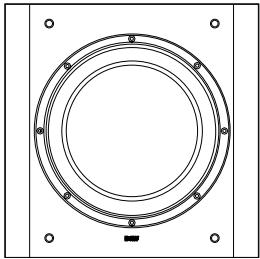
ASW650
Active closed-box subwoofer system
300mm (12 in) paper/Kevlar cone
-6dB at 20Hz and 180Hz adjustable (EQ at A)
-3dB 25Hz - 150Hz adjustable (EQ at A)
Power output: 200W continuous
Input impedance: 22kW
Signal/noise: >90dB
Functions: Output level
Low-pass filter frequency
Low-pass filter bypass
Bass roll-off alignment
Auto sense on/standby
Inputs: Line In
Speaker level (binding posts)
Outputs: Line Out (high-passed)
Link Out (parallel to Line In)
Speaker level out (high-passed)
Active 2nd-order, variable cut-off frequency
Line level: Active 3rd-order at 80Hz
Speaker level: Passive 1 st-order at 80Hz (8Ω load)
Height: 415mm (16.4 in)
not including spike feet
Width: 415mm (16.4 in)
Depth: 495mm (19.5 in)
including grille and controls
25.5kg (56 lb)
B&W Bowers & Wilkins
B&W Loudspeakers Ltd
Dale Road
Worthing West Sussex
BN11 2BH England
T +44 (0) 1903 221800
F +44 (0) 1903 221801
info@bwspeakers.com
www.bwspeakers.com
UK Sales Enquiries and Service
T+441903221500
Euksales@bwspeakers.com
B&W Loudspeakers of America
T +1 978 664 2870
E marketing@bwaudio.com
B&W Loudspeakers (Asia) Ltd
T +852 2 790 8903
E bwahome@bwspeakerasia.com.hk
Kevlar is a registered trademark of Dupont.
Nautilus is trademark of B&W Loudspeakers Ltd.
Copyright © B&W Loudspeakers Ltd. E&OE
Designed by Thomas Mansss & Company.
Printed in Spain.