
DESHYDRATEUR NUTRIS - Food Dehydrator LAGRANGE - Free user manual and instructions
Find the device manual for free DESHYDRATEUR NUTRIS LAGRANGE in PDF.



| Product Type | Food Dehydrator |
| Brand | LAGRANGE |
| Model | Nutris (ref. 499001) |
| Number of Trays | 5 stackable trays |
| Tray Diameter | 32 cm |
| Total Drying Area | Approx. 0.4 m² |
| Base Material | Thermoplastic |
| Tray and Lid Material | Polystyrene |
| Power Supply | 230 V ~ 50 Hz, 250 W |
| Plug Type | 10/16 A 230 V |
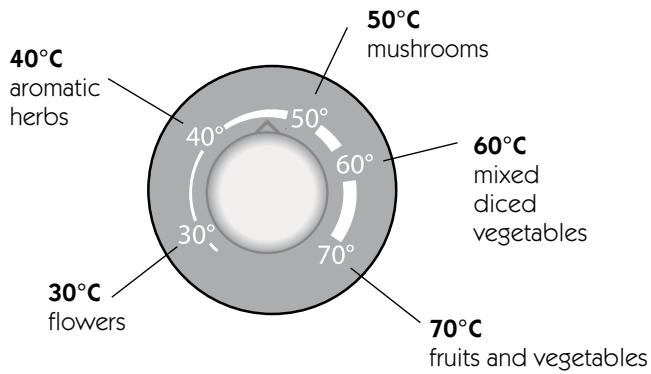
| Temperature Setting | Temperature selector (30°C to 70°C depending on food) |
| Main Features | Hot air drying, optimized air circulation, suitable for fruits, vegetables, herbs, flowers, etc. |
| Safety | Automatic shut-off after 40 hours of continuous operation (2 hours cooling required), overheating protection, vented lid |
| Maintenance | Base cleaned with a damp sponge (do not immerse), trays dishwasher safe (moderate temperature) |
| Color | Not specified (white or gray likely) |
| Dimensions (approx.) | Height: approx. 35 cm (stacked), diameter 32 cm |
| Weight | Not specified (estimated 3-4 kg) |
| Included Accessories | 5 trays, lid, base, temperature selector |
| Spare Parts and Repairability | Spare parts available via LAGRANGE customer service, repair by authorized after-sales service |
| Warranty | 2 years (free 1-year extension upon online registration) |
| General Information | Compliant with EC directives (2006/95/EC, 2004/108/EC, WEEE 2002/96/EC, RoHS 2002/95/EC), food contact EC 1935/2004 |
Frequently Asked Questions - DESHYDRATEUR NUTRIS LAGRANGE
User questions about DESHYDRATEUR NUTRIS LAGRANGE
0 question about this device. Answer the ones you know or ask your own.
Ask a new question about this device
Download the instructions for your Food Dehydrator in PDF format for free! Find your manual DESHYDRATEUR NUTRIS - LAGRANGE and take your electronic device back in hand. On this page are published all the documents necessary for the use of your device. DESHYDRATEUR NUTRIS by LAGRANGE.
USER MANUAL DESHYDRATEUR NUTRIS LAGRANGE
CONDITIONS DE GARANTIE
- BESCHRIJVING APPARAAT -
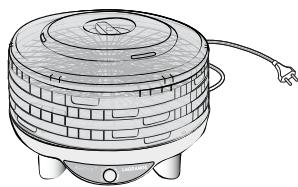
- Cover
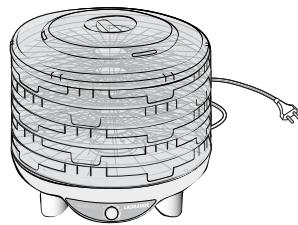
- 5 stackable drying plates (diameter 32cm )
- Holder
- Base
- Temperature selector
Nutris
Ref: 499001
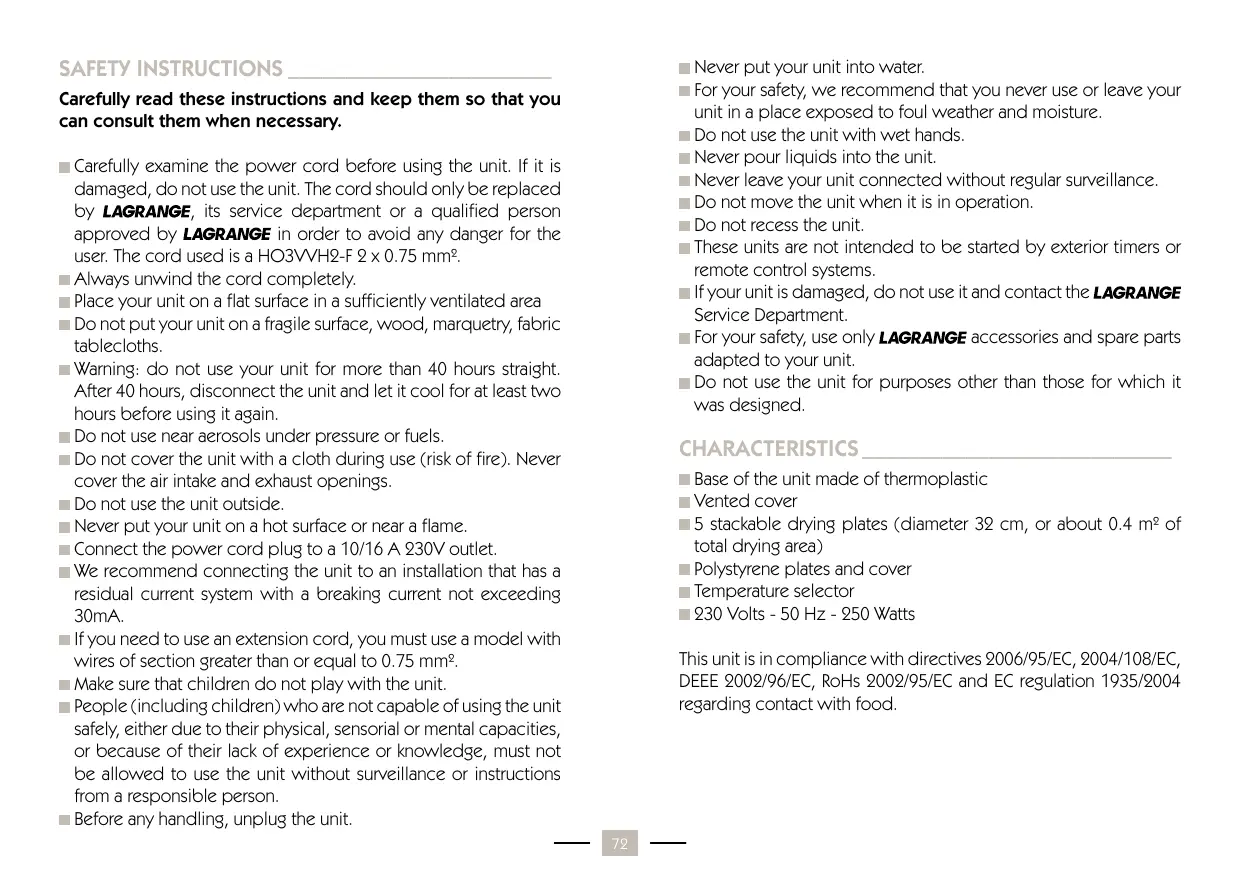
Carefully read these instructions and keep them so that you can consult them when necessary.
Carefully examine the power cord before using the unit. If it is damaged, do not use the unit. The cord should only be replaced by LAGRANGE, its service department or a qualified person approved by LAGRANGE in order to avoid any danger for the user. The cord used is a HO3VH2-F 2 x 0.75 mm².
Always unwind the cord completely.
Place your unit on a flat surface in a sufficiently ventilated area
- Do not put your unit on a fragile surface, wood, marquetry, fabric, tablecloths.
Warning: do not use your unit for more than 40 hours straight. After 40 hours, disconnect the unit and let it cool for at least two hours before using it again.
Do not use near aerosols under pressure or fuels.
- Do not cover the unit with a cloth during use (risk of fire). Never cover the air intake and exhaust openings.
Do not use the unit outside.
Never put your unit on a hot surface or near a flame.
Connect the power cord plug to a 10/16 A 230V outlet.
We recommend connecting the unit to an installation that has a residual current system with a breaking current not exceeding 30mA .
If you need to use an extension cord, you must use a model with wires of section greater than or equal to 0.75 mm2 .
Make sure that children do not play with the unit.
People (including children) who are not capable of using the unit safely, either due to their physical, sensorial or mental capacities, or because of their lack of experience or knowledge, must not be allowed to use the unit without surveillance or instructions from a responsible person.
Before any handling, unplug the unit.
Never put your unit into water.
For your safety, we recommend that you never use or leave your unit in a place exposed to foul weather and moisture.
Do not use the unit with wet hands.
Never pour liquids into the unit.
Never leave your unit connected without regular surveillance.
Do not move the unit when it is in operation.
Do not recess the unit.
These units are not intended to be started by exterior timers or remote control systems.
If your unit is damaged, do not use it and contact the LAGRANGE Service Department.
For your safety, use only LAGRANGE accessories and spare parts adapted to your unit.
- Do not use the unit for purposes other than those for which it was designed.
CHARACTERISTICS
Base of the unit made of thermoplastic
Vented cover
5 stackable drying plates (diameter 32 cm, or about 0.4m2 of total drying area)
Polystyrene plates and cover
Temperature selector
230 Volts - 50 Hz - 250 Watts
This unit is in compliance with directives 2006/95/EC, 2004/108/EC, DEE 2002/96/EC, RoHs 2002/95/EC and EC regulation 1935/2004 regarding contact with food.
Protection of the environment - DIRECTIVE 2002/96/CE
In order to protect our environment and our health, the elimination of electrical appliances at the end of their working life must be done according to very specific rules requiring everyone's involvement, supplier and user.
For this reason, your unit, as indicated by the symbol on its nameplate, must not be discarded in a public or private garbage can intended for household wastes.
For its elimination, it is your responsibility to take your unit to a public collection center designated for the recycling of electrical or electronic equipment. For information about centers for the collection and recycling of units being discarded, contact the local authorities of your region, the household waste collection services or the store where you purchased your unit.
PRACTICAL ADVICE
Drying is an ancestral method for preserving food in a simple and natural way.
Your LAGRANGE dehydrator also allows you to adapt the temperature as a function of the type of food.
You can dry flowers, aromatic herbs, fruits and vegetables without altering their nutritional qualities. The foods thus keep their vitamins and minerals, and the aromas are also preserved or even intensified due to their concentration.
Dehydrated foods can be stored away from moisture for several months (one year at most) in glass or plastic jars that can be closed with a rubber seal.
You can also keep them in a vacuum in plastic bags designed for this purpose.
STARTING AND USE
1stUSE
1/ When unwrapping your unit, carefully remove all of the packaging elements.
2/ Check to make sure that all of the parts and accessories are present and intact.
3/ Before using your unit, thoroughly wash all of the parts, See the UPKEEP Section.
USE
1/ Read the instructions before using.
2/ Prepare the food as a function of its category. See section CHOICE AND PREPARATION OF FOOD.
3/ Arrange the foods on the various plates.
It is the hot air that dehydrates the foods. The air must therefore be able to circulate freely. Do not overload the plates and do not have foods overlapping.
We recommend first filling the upper plate, then filling them from top to bottom.
The foods that dry the most slowly should be put at the bottom of the stack.
For small food items (which will be smaller still after the drying), we recommend putting baking parchment on the plates. In that case, pierce the paper with a fork so that the air can circulate.
NB: we recommend using all 5 plates, regardless of whether they are filled or not. If some plates are empty, put them below for easier monitoring of the dehydrated foods.
4/ Adjust the height of the plates. See Fig 1. The low position is sufficient for most foods but the high position is useful for foods that are 1.25cm to 2.5cm high.
5/ Put the dehydrator on a flat, heat-resistant surface. Plug in the unit and select the temperature required as a function of the type of food. See p.1 and the section FOOD DEHYDRATION TABLES.
6/ Note the approximate time at which each ingredient should be dehydrated, consulting the food dehydration table. Warning: the times differ as a function of the type of food, the size of the cut pieces, the quantity of food put on the plates, the humidity in the room and the desired texture. The times indicated in the table are thus approximate.
7/ We recommend alternating the plates for uniform dehydration on the various levels, because foods positioned on the lower levels will dry more quickly that those on the upper plate.
8/ Check the foods shortly before the end of the dehydration. The degree of dehydration may not be the same for all of the pieces depending on their size and/or position in the dehydrator. Don't hesitate to remove fruits if they are ready and to continue the dehydration of the other pieces. To check whether food is sufficiently dehydrated, cut into a piece of the dehydrated food. There should be no drops of water on the surface in the place where the cut was made.
9/ Once the dehydration is complete, put the foods in airtight containers. We recommend that you label your containers with the date, the nature of the food and its dehydration time so that you can repeat the operation later on.
10/ Unplug your unit to turn it off.
11/ Clean it. See the UPKEEP Section.
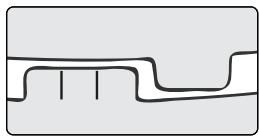
Low position
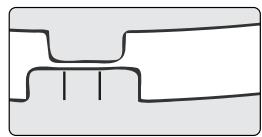
High position
Fig.1
CHOICE AND PREPARATION OF FOODS
CHOICE OF FOODS:
Use foods that are in good condition and wash them first if they are to be eaten.
Most fruits and vegetables can be dehydrated, but some take more time than others. See the FOOD DEHYDRATION TABLES section. By choosing ripe fruit, you increase the vitamin content and the taste of the dehydrated foods. Choose fresh vegetables without marks.
PREPARATION AND PROCESSING OF FOODS:
After washing the fruits or vegetables, wipe them and remove the imperfections.
Remove the pits from cherries, peaches, apricots, etc.
Cut the fruits or vegetables into slices of about 5 to 12mm . The more finely the foods are cut, the quicker the dehydration.
We recommend always cutting foods because the larger the cut surface, the quicker the dehydration, with the skin slowing down the process. E.g. cut strawberries in half, beans and asparagus lengthwise, etc.
Small fruits such as grapes, cherries, etc. may be dehydrated whole, but it is still better to pierce the skin or blanch the fruits by soaking them in boiling water for a few seconds. The skin will crack during the dehydration to better release the moisture of the fruit. After blanching the fruit, wipe them carefully before putting them on the plates of the dehydrator.
You can dehydrate fruits and vegetables peeled or not, it depends on how you plan to use them. In order to maximize the vitamin content, we recommend keeping the skin on. For dehydration with the skin, make the drying time a little bit longer.
- Don't forget to wipe the fruits and vegetables in order to remove moisture before putting them in the dehydrator.
Some light-colored fruits tend to turn brown during and after dehydration (apples, pears, peaches, apricots and bananas). In order to maintain a good color, you can soak the slices in lemon, orange or pineapple juice for 2 minutes. You can also soak them in a solution of ascorbic acid (purchase at a pharmacy) composed of one tablespoon of ascorbic acid for four tablespoons of water. Carefully wipe the slices with absorbent paper after soaking to absorb the moisture, then put them on the plates. NB: the real taste of the fruit may be altered by this soaking.
For mushrooms, soak them in a mixture composed of one tablespoon of lemon juice for one cup of water in order to avoid their browning during the dehydration.
The drying times indicated in the following tables are only indications. Several factors influence the exact dehydration time: the category, size and quality of the foods, the quantity placed on the plates, the atmospheric conditions and personal preferences. You can note your preferences in a table at the end of this manual.
FRUITS - 70°C
| Foods | Preparation | Texture after dehydration | Time(hours) |
| Apricots | Cut into halves or quarters. The skin side must be down. | Soft | 10 to 18 |
| Citrus fruits | Do not peel. Cut into 6 mm slices. For lemons, grate them after dehydration. | Soft | 4 to 15 |
| Pineapples | Remove the skin and the core. Cut into 6 mm slices. | Soft | 8 to 12 |
| Bananas | Remove the skin and cut into 3 mm slices. | Tough | 8 to 12 |
| Cherries | Remove the stems and the pits. Cut in half and put them skin side down on the plate. | Tough and sticky | 8 to 18 |
| Figs | Remove the imperfections and put them in one layer, facing downward. | Soft | 6 to 26 |
| Strawberries | Hull and cut in half or into 6 mm slices. | Tough and crisp | 6 to 15 |
| Kakis | Remove the tops and peel. Cut into 6 mm slices. | Tough | 8 to 15 |
| Kiwi | Peel, remove the core and cut into 6 mm slices. | Tough and crisp | 7 to 15 |
| Mangoes | Peel, remove the pit and cut into 6 mm slices. | Soft | 7 to 15 |
| Melon | Remove the rind and the seeds. Cut into 6 mm slices. | Soft and sticky | 8 to 12 |
| Blackberries | Put them in as in. For blackberries with waxy skin, blanch in boiling water for 1 to 2 minutes. | Tough | 10 to 15 |
| Whortleberries | Put the whole fruits onto the plates. | Tough and crisp | 4 to 6 |
| Nectarines | Peel (option), remove the pits and cut into 9 mm slices. | Soft | 8 to 16 |
| Watermelon | Remove the rind and the seeds. Cut into 6 mm slices. | Soft and sticky | 8 to 20 |
| Peaches | Peel, remove the pits and cut into 6 mm slices. | Soft | 8 to 24 |
| Pears | Peel, remove the pits and cut into 6 mm slices. Soak in lemon juice (optional) and wipe to soak it up. It is also possible to cut into quarters, but the dehydration time will be longer. | Soft | 8 to 30 |
| Apples | Peel (optional), core and slice. Soak in lemon juice (optional) and wipe to soak it up. It is also possible to sprinkle them with cinnamon. | Soft | 6 to 10 |
| Plums | Blanch in boiling water for 1 to 2 minutes. Cut in half and remove the pits. | Soft | 10 to 36 |
| Grapes | Remove the stems. Blanch in boiling water for 1 to 2 minutes. | Soft | 8 to 15 |
| Rhubarb | Cut into 25 mm lengths. | Tough | 3 to 12 |
It is possible to make fruit leather and cut it to make delicious snacks.
To do this, mix the fruits in a blender to make a puree. You can add a little sugar or honey but be careful not to sweeten it too much because the flavors and the sugar will become concentrated when it dries.
Some more farinaceous fruits, such as apples for example, must first be cooked.
N.B. You can also make fruit mixtures: e.g. strawberry-banana / apple-pear / pineapple-orange.
Spread out the puree on stretch wrap or baking parchment put on the plates.
Be sure to make a hole in the center that is large enough to maintain good air circulation.
The thickness must be about 5-6 mm.
Dehydrate at 70°C , as for fruits, for 6 to 8 hours.
Make small rolls before the paste cools.
You can also cut out pieces with cookie cutters that will make delicious candies.
Keep them wrapped in stretch wrap in an airtight box.
VEGETABLES - 70°C (60°C if cut into cubes / 50°C for mushrooms)
| Foods | Preparation | Texture after dehydration | Time(hours) |
| Garlic | Separate the cloves. Peel, slice and arrange them. It is possible to cut the pieces once they have been dried. | Crumbly | 4 to 12 |
| Artichokes | Cut the hearts into 3 mm strips. Boil for 5 to 8 minutes in a mixture of 15 ml of lemon juice and 250 ml of water. | Crumbly | 4 to 12 |
| Asparagus | Cut into 25 mm pieces or in half lengthwise. | Crumbly | 4 to 8 |
| Eggplant/Aubergines | Peel and cut into 6 to 12 mm-thick slices. | Tough | 4 to 15 |
| Beets | Remove the stems, skin and roots. Blanch until they are tender. Cut into 6 mm-thick slices or pieces. | Crumbly | 4 to 12 |
| Broccoli | Separate the florets and blanch them. | Crumbly | 4 to 15 |
| Carrots | Cut into 6 mm slices and blanch them. | Tough | 6 to 12 |
| Celery stalks | Separate the leaves and stalks and cut the stalks into 6 mm slices. Remember to remove the leaves before the stalks. | Crumbly | 6 to 12 |
| Mushrooms | Use young mushrooms if possible. Brush them to clean them. Cut them into 10 mm-thick slices. Soak them in lemon juice so they stay white. | Tough | 2 to 8 |
| Cabbage | Cut into thin strips about 3 mm thick. | Tough | 4 to 10 |
| Brussels Sprouts | Remove the stems and cut them in half. Blanch until they are tender. | Crumbly | 10 to 16 |
| Cauliflower | Remove the florets. Blanch until they are tender. | Tough | 6 to 15 |
| Cucumbers | Peel and cut into 6 mm thick slices. | Tough | 6 to 10 |
| Zucchini/Courgettes | Cut into 3 mm slices. | Tough | 7 to 15 |
| Spinach | Wash well and remove the stems. Blanch until they are wilted. | Very crumbly | 4 to 10 |
| Green (or yellow) beans | Cut into 25 mm pieces. Blanch until they are translucent. | Crumbly | 6 to 15 |
| Stir once during the dehydration. | |||
| Mixed vegetables | Cut the vegetables into small cubes (brunoise) and put them on a sheet of pierced baking parchment. | Tough | 5 to 8 |
| Corn/Maize | Blanch the ears until they are tender. Shell and put on the plate. Use a filter cloth or pierced baking parchment to prevent the grains from falling through the plates. Stir during the dehydration so that it is uniform. | Crumbly | 4 to 12 |
| Turnips | Cut into 6 mm slices or cubes. Blanch until they are tender. | Tough | 20 to 30 |
| Onions | Trim and peel. Cut into 12 mm slices or pieces. Use a filter cloth or pierced baking parchment to prevent the pieces from falling through the plates. Stir from time to time. | Crumbly | 5 to 12 |
| Parsnips | Cut into 6 mm slices or cubes. Blanch until they are tender. | Tough | 6 to 12 |
| Green peas | Shell, blanch and stir from time to time. | Crumbly | 8 to 12 |
| Chili peppers | Depending on the size of the pepper, place it whole on the plate or cut it in half. Use gloves. | Tough | 4 to 12 |
| Leeks | Trim and peel. Cut into 12 mm slices or pieces. Use a filter cloth or pierced baking parchment to prevent the pieces from falling through the plates. Stir from time to time. | Crumbly | 5 to 12 |
| Bell peppers | Cut in half, remove the seeds and cut into 6 mm strips. | Tough | 4 to 12 |
| Potatoes | It is not necessary to peel them. Cut them into 6 mm slices or cubes. Blanch until they are tender. You can also grate them. | Crumbly | 6 to 15 |
| Pumpkin | Peel and remove the seeds. Cut into 8 mm strips or slices. | Tough | 4 to 15 |
| Tomatoes | Peel the tomatoes by plunging them into boiling water. Cut into 6 mm slices. You can also cut them in half once they have been peeled, but the dehydration time will be longer. | Tough | 6 to 20 |
| Foods | Preparation | Temperature | Time (hours) |
| Basil | Put in the small leaves whole and cut the large ones into pieces. | 40°C | 4 to 6 |
| Chives | Put the stems in whole. | 40°C | 6 to 8 |
| Ginger | Slice. | 40°C | 6 to 8 |
| Mint | Put the stems on the plates. | 40°C | 6 to 8 |
| Oregano | Put the stems on the plates. | 40°C | 6 to 8 |
| Bread | Cut the bread into small pieces. Remove the crust. | 40°C | 1 to 2 |
| Pasta | Put the pasta on plates in a single layer. | 60°C | 2 to 4 |
| Plants for tea brewing | Put the stems on the plates. | 40°C | 6 to 8 |
| Flower petals | Put the petals on the plates. | 30°C | 4 to 6 |
| Parsley | Separate into sprigs. Chop when they are dehydrated. | 40°C | 4 to 6 |
| Thyme | Put the stems on the plates. | 40°C | 4 to 6 |
N.B. Once the herbs have been dehydrated, the stems can be removed.
CONSERVATION AND USE OF FOODS
STORAGE OF DEHYDRATED FOODS:
- Do not put dehydrated foods into airtight boxes until the foods have completely cooled. Conservation is only possible if the food cannot absorb moisture during storage. Vacuum packing may allow for another few months of conservation.
It is also possible to keep them in zipped plastic bags, removing the air from the inside.
Avoid storing dehydrated foods directly in a metallic box. - Keep the dehydrated foods in a cool room at about 15° C and away from light.
Avoid reducing fine herbs into crumbs so that they keep their aromas as long as possible.
N.B.: dehydrated fruits and vegetables cannot be kept for more than one year.
N.B.: If during the first days of dehydration your dehydrated foods sweat, it is necessary to dehydrate them again, the dehydration time was not sufficient.
REHYDRATION OF DEHYDRATED FOODS:
In general, dehydrated fruits can be eaten as is and do not need to be rehydrated.
To make tarts or sauces however, they can be rehydrated.
Vegetables must generally be rehydrated unless they are used in a soup, meat in sauce, etc.
To rehydrate fruits and vegetables, there are several solutions: soak them, boil them, steam cook them or use them directly as ingredients in a recipe.
NB: do not add sugar or salt to the cooking water as this will slow down the rehydration.
Soaking:
NB: we recommend soaking the dehydrated fruits or vegetables in the refrigerator to avoid the development of bacteria.
The water should barely cover the fruits. The rehydration time is about 4 hours. If in doubt, reduce the time slightly, because if they soak too long, they become soggy.
For vegetables, the rehydration time is from 2 to 10 hours.
Vegetables can also be soaked in bouillon.
For information, one cup of dehydrated fruits or vegetables gives about 2 cups of rehydrated fruits or vegetables.
Boiling:
Put one cup of dehydrated fruits in a cup of water and let simmer until the fruits have a good consistency.
Put one cup of dehydrated vegetables in a cup of boiling water. Put it aside and let them soak for 5 to 20 minutes, until the vegetables have a good consistency.
Steam cooking:
Steam cook the fruits for 3 to 5 minutes.
Cook vegetables until they are perfectly cooked (this depends on the type of food and its size).
Cooking:
Add vegetables directly into the recipe. NB: add a little water to promote the rehydration.
USE OF DEHYDRATED FOODS
Fruits can be eaten as is or rehydrated for used in yogurts, cakes, ice creams, etc.
Vegetables can be either rehydrated or put directly into soups or jardinières if they were cut into very small pieces.
It is also possible to grind them before rehydration to flavor your cooking, e.g. bell peppers, chili peppers, garlic, onions, leeks, etc. Tomato reduced to powder can be used to make a tomato sauce by simply adding some hot water.
N.B. We recommend blanching vegetables before dehydration if they require substantial cooking time.
Always strictly follow the preparation process described in this manual. In this way you will avoid most problems. If you do have problems, here is a table that will help you to understand why, and how to solve them.
| Problem | Cause | Solution |
| The unit goes off suddenly. | The unit is disturbed by an accumulation of heat at its base. The safety therefore automatically cut off the circuit. 2 possible causes: - The plates are overfilled. - The aeration motor is defective. | Let the unit cool down. Remove the surplus food to be dried. Plug in the unit and repeat the operation. If it goes off again, the unit is broken. Contact your retailer. All responsibility will be waived if you attempt to repair the unit yourself. |
| The unit does not blow or does not heat up. | There is no current in the unit. | Make sure that the unit is plugged in. |
| Make sure that the button is properly positioned on a temperature. | ||
| Make sure that the electrical outlet is working. | ||
| The unit blows but does not heat up. | A wire is cut in the unit. | Return it to your store's service department. |
| The thermostat is not working properly. | ||
| The unit heats up but does not blow. | The motor or the fan is jammed. | Turn off and unplug the unit and then make sure that no foreign matter (pieces of dehydrated food) is jamming the fan. Turn the base on its side and shake it to remove particles. Plug in the unit again, and if it still is not working, return it to your store's service department. |
| If liquid was poured into the aeration openings or the fan unit, immediately disconnect the unit and return it to your store's service department. | ||
| The unit takes a long time to dehydrate. | The plates are overloaded. | The air must be able to circulate freely for optimal dehydration. Reduce the quantity of food on the plates or arrange them differently. |
| The fan is too slow or too weak. | Turn off and unplug the unit and then make sure that no foreign matter (pieces of dehydrated food) is jamming the fan. Turn the base on its side and shake it to remove particles. Plug in the unit again, and if it still is not working, return it to the after-sale service department of your store. | |
| There are air leaks due to a deformation or poor stacking of the plates. | Reposition the plates correctly. N.B. The heat during the drying cycle in most dishwashers can warp the plates. | |
| The drying is irregular. | There are variations in the thickness or ripeness of the foods. | Make sure that the foods were cut regularly. |
| The plates were not alternated. | Alternate the plates once or twice during the cycle: put the ones on the bottom on top and those on top on the bottom. | |
| The plates are overloaded. | Make sure that food is not blocking the air circulation. | |
| The motor or the blower is making noise. | The motor or fan is jammed. | Turn off and unplug the unit and then make sure that no foreign matter (pieces of dehydrated food) is jamming the fan. Turn the base on its side and shake it to remove particles. Plug in the unit again, and if it still is not working, return it to the after-sale service department of your store. |
WARNING:
Disconnect the unit before cleaning it.
Leave enough time for the unit to cool down (about 30 minutes).
Base of the unit: Clean it with a moist sponge. Do not use aggressive or abrasive tools or products to avoid damaging the plastic and its shine.
Warning: Never put the base of the unit or its cord in water. Never put it in a dishwasher.
Plates: Clean them with a moist sponge and dishwashing liquid. Do not use aggressive or abrasive tools or products to avoid damaging the plastic and its shine. The plates can be put in a dishwasher, but not at very high temperatures.
Remark: Always dry all of the parts thoroughly before repositioning them and storing them.
GUARANTEE TERMS
Your unit is guaranteed for 2 years.
To benefit from an additional year of guarantee coverage at no extra charge, register on our Internet site LAGRANGE (www.lagrange.fr). The guarantee includes parts and labor and covers faulty manufacturing. The following are excluded from the guarantee: deterioration due to poor use or non-observation of the instructions, and breakage due to falling.
THIS GUARANTEE APPLIES TO HOUSEHOLD USE, NOT PROFESSIONAL USES.
The legal guarantee due from the seller does not in any way exclude the legal guarantee due from the Manufacturer for faulty manufacturing or flaws according to articles 1641 and following of the Civil Code. In the event of a breakdown or malfunction, contact your retailer. In the event of technical defectiveness within 8 days of purchase, the unit will be exchanged. Beyond this period it will be repaired by the LAGRANGE after sale service department.
| Food | Size of pieces | Quantity | Dehydrating time |


- CONDITIONS DE GARANTIE
- BESCHRIJVING APPARAAT
- CAREFULLY READ THESE INSTRUCTIONS AND KEEP THEM SO THAT YOU CAN CONSULT THEM WHEN NECESSARY
- CHARACTERISTICS
- PROTECTION OF THE ENVIRONMENT - DIRECTIVE 2002/96/CE
- PRACTICAL ADVICE
- STARTING AND USE
- 1STUSE
- USE
- CHOICE AND PREPARATION OF FOODS
- CHOICE OF FOODS
- PREPARATION AND PROCESSING OF FOODS
- CONSERVATION AND USE OF FOODS
- STORAGE OF DEHYDRATED FOODS
- REHYDRATION OF DEHYDRATED FOODS
- SOAKING
- BOILING
- STEAM COOKING
- COOKING
- USE OF DEHYDRATED FOODS
- WARNING
- GUARANTEE TERMS
- YOUR UNIT IS GUARANTEED FOR 2 YEARS
Brand : LAGRANGE
Model : DESHYDRATEUR NUTRIS
Category : Food Dehydrator