Bolero Coolmarket 2d 204 E - Refrigerator CECOTEC - Free user manual and instructions
Find the device manual for free Bolero Coolmarket 2d 204 E CECOTEC in PDF.


User questions about Bolero Coolmarket 2d 204 E CECOTEC
0 question about this device. Answer the ones you know or ask your own.
Ask a new question about this device
Download the instructions for your Refrigerator in PDF format for free! Find your manual Bolero Coolmarket 2d 204 E - CECOTEC and take your electronic device back in hand. On this page are published all the documents necessary for the use of your device. Bolero Coolmarket 2d 204 E by CECOTEC.
USER MANUAL Bolero Coolmarket 2d 204 E CECOTEC
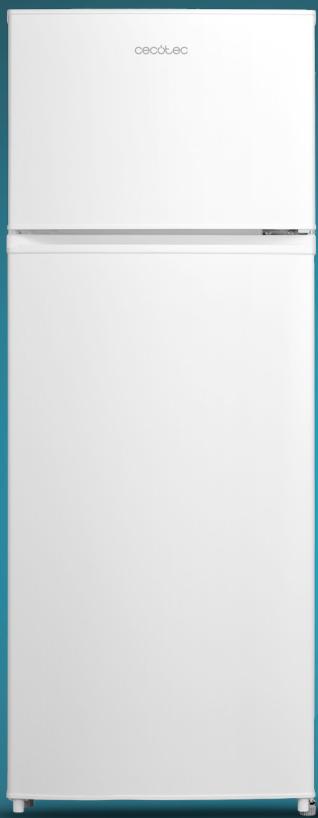
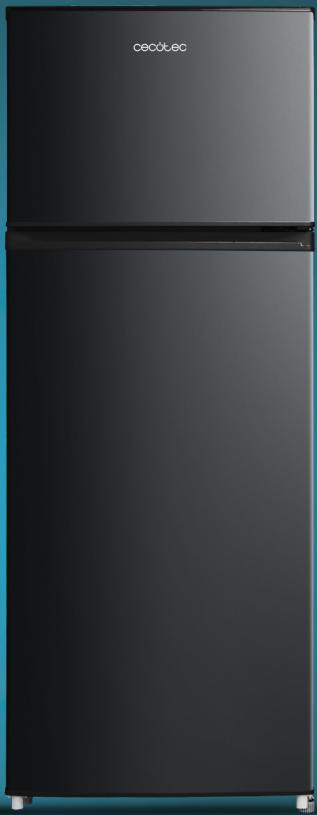
2-door refrigerator, mechanical control, 204L
Safety instructions 11
-
Parts and components 107
-
Before use 107
-
Assembly 108
-
Operation 111
-
Food storage instructions 112
-
Cleaning and maintenance 116
-
Troubleshooting 118
-
Recycling of electrical and electronic equipment 123
-
Copyright 123
-
Simplified EU Declaration of Conformity 123
SOMMAIRE
EU01_109964 Bolero CoolMarket 2D 204 White E
EU01_109965 Bolero CoolMarket 2D 204 Black E
EN · The coding in this manual is generic and applies to all code variants of the appliance.
Read the following instructions carefully before using the appliance. Keep this instruction manual for future reference or new users.
- It is important to make sure all users are familiar with the appliance's operation and safety features to prevent faults and unnecessary accidents.
- Make sure that the mains voltage in your house matches the voltage stated on the rating label of the appliance.
- This appliance can be used by children aged 8 and above and persons with reduced physical, sensory, or mental capabilities or lack of experience and knowledge, as long as they have been given supervision or instruction concerning the use of the appliance in a safe way and understand the hazards involved. Children must not play with the appliance. Cleaning and maintenance should not be carried out by children without supervision.
- To avoid the risk of suffocation, keep the packaging material away from children.
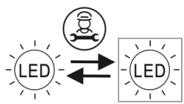
WARNING: if the interior light is damaged, contact the official Cecotec Technical Support Service. Do not try to repair it yourself.
- WARNING: when positioning the appliance, make sure the power cord does not get trapped or damaged. A crushed or damaged plug may heat up and cause a fire.
- Make sure the appliance plug is accessible after installation.
- Do not place food directly against the air outlet on the interior of the appliance.
- Keep the ventilation openings clear from obstructions.
- Do not place carbonated or soft drinks in the freezer compartment, as this creates pressure in the can, which
could explode and damage the appliance.
- WARNING: do not use mechanical devices or other means to speed up the defrosting process other than those recommended by Cecotec.
- WARNING: do not damage the cooling circuit.
- If the cord is damaged, it must be replaced by the manufacturer, the supplier, or qualified personnel to avoid hazards.
- WARNING: do not use electrical appliances inside the refrigerator.
- It is recommended to regularly check the power cord for any signs of damage. Do not use the appliance if the cord is damaged.
- To avoid injuries or death caused by electric shock, do not use the appliance with your hands wet or over a wet surface.
- Do not use the appliance with an extension cable or a multi-socket adaptor. Make sure the appliance is plugged in directly to a power supply.
- When positioning the appliance, make sure there is enough free space at the rear, as it is the main heat outlet. This will allow for adequate ventilation.
- Do not place hot food or drinks in the refrigerator, allow them to cool down to room temperature beforehand.
- Do not place any other appliance on the refrigerator and do not wet it.
- Do not store explosive substances such as aerosols or flammable propellants in this appliance.
- This appliance is intended for domestic use only and is not suitable for use in commercial establishments such as bars, restaurants, farms, hotels, motels, and offices.
- WARNING: to avoid any risk due to the instability of the refrigerator, you must install it according to these
instructions.
- Wait 5 minutes after a power failure before turning the appliance back on. Otherwise, the compressor may get damaged.
- This appliance is not intended to be operated by means of an external timer or separate remote-control system.
- Always handle the appliance carefully to avoid damaging it.
- Frozen food can cause frostbites if consumed right after removing it from the freezer compartment.
- Do not remove or touch items in the freezer compartment with your hands wet, as it could cause skin abrasions or frost/freeze burns.
- Never use the base, drawers, or door as support.
- Do not overload the door shelves or place too much food on the drawers to prevent items from falling off and damaging the appliance.
- WARNING: do not attach multi-socket adaptors or multiple power supplies to the rear part of the appliance.
-
To avoid food contamination, please follow the instructions below:
-
Opening the door for a long period of time may cause a significant increase in temperature in the appliance compartments.
- Regularly clean the surfaces that come into contact with food and with the accessible draining systems.
- Store raw meat and fish in proper containers in the freezer, so they do not come into contact with or leak on other food.
- The two-star compartments are suitable for storing pre-frozen food, storing or making ice cream, and making ice cubes.
o Compartments with one, two, or three stars are not
suitable for freezing fresh food.
- If the appliance is not going to be used or be empty for a long period of time, switch it off, allow it to defrost, clean it, dry it, and leave the doors open to prevent interior mould growth.
- Before carrying out any maintenance and cleaning task, turn off the appliance and unplug it.
- It is advisable to wait for at least four hours before connecting the appliance to allow oil to flow through the compressor.
- Air must flow around the appliance. Lack of air leads to overheating. To achieve good ventilation, follow the installation instructions.
- Whenever possible, the rear part of the appliance should not be too close to the wall to prevent it from touching or reaching the hot parts (the compressor and the condenser). To avoid risk of fire, follow the installation instructions.
- Make sure that the plug is accessible after installation of the appliance.
- All electrical work required to maintain this appliance must be carried out by a qualified electrician.
- Use the appliance only for the purposes described in this manual. Improper or incorrect use may pose a hazard to both the appliance and the user.
Temperature range
- The appliance temperature range information can be found on its marking. Indicates the optimum room temperature for proper operation of the appliance.
| Climate class | Optimal room temperature |
| SN | From +10 °C to +32 °C |
| N | From +16 °C to +32 °C |
| ST | From +16 °C to +38 °C |
| T | From +16°C to +43°C |
Notes:
- Taking into account the limiting values of the room temperature range for the climates for which the appliance is designed and that internal temperatures may be affected by factors such as the location of the appliance, room temperature and frequency of door opening, it may be necessary to modify the setting of any temperature control device according to these factors.
- If the appliance is operated in an environment other than the specified climate type (i.e. beyond the rated ambient temperature range), it may not be able to maintain the desired indoor temperatures.
Refrigerant
- Isobutane refrigerant (R600a), contained within the refrigeration circuit of the appliance, is a natural gas with a high level of environmental compatibility; however, it is flammable. Make sure that no components of the refrigeration circuit have been damaged during the transport and installation of the appliance.
- WARNING: the refrigerant and the insulator gas are flammable. When disposing of the appliance, only dispose of it at an authorised waste-disposal facility. Do not expose
it to flames.
- WARNING: the appliance contains refrigerant and gases in the insulation. The appliance and gases must be disposed of professionally, as they may cause injuries to eyes or ignition. Make sure the refrigeration-circuit pipe is not damaged before disposing of it correctly.
- This symbol means: warning, risk of fire/flammable materials.
-
If the refrigeration circuit is damaged:
-
Avoid open flames and sources of ignition.
o Fully ventilate the room where the appliance is located.
INSTRUCTIONS DE SÉCURITÉ
cdot in the case of the proof that the proof is not possible.
- Freezer shelf
- Temperature control knob
- Refrigerator shelf
- Crisper drawer cover
- Crisper drawer
- Door shelf
Note:
The graphics in this manual are schematic representations and may not exactly match the product.
2. BEFORE USE
- This appliance comes in a packaging designed to protect it during transport. Remove the appliance from its box. You can keep the original box and other packaging materials in a safe place to prevent damage to the appliance if you need to transport it in the future. If you wish to dispose of the original packaging, make sure all items are recycled properly.
- Check that all parts and components are included and in good condition. If any of them are missing or damaged, please contact Cecotec's Official Technical Support Service immediately.
- Remove the outer and inner packaging, wipe the outside thoroughly with a soft, dry cloth and the inside with a warm, damp cloth.
- Avoid placing the appliance in a narrow gap or near any source of heat, direct sunlight or moisture.
- Allow air to circulate freely around the unit. When installing the unit, be sure to leave 10 cm of free space on both sides, 10 cm at the back of the unit and 10 cm at the top of the unit.
Box content:
- Refrigerator
- Instruction manual
- Do not remove the product serial number in order to keep proper traceability of the appliance in case assistance is required.
3. ASSEMBLY
Location
Figure 2 shows the dimensions of the refrigerator and the space requirements for its installation. (All dimensions in mm).
| A | B | C | D | E |
| 550 | 1430 | 550 | 927 | 913 |
- Place the appliance on a solid, flat floor to keep it stable, otherwise vibrations and noises will occur. Placing the appliance on soft, uneven or unstable surfaces such as carpets, straw or polyvinyl chloride mats, etc., may reduce the efficiency of the refrigerator, increase the risk of malfunction and potentially cause damage to the appliance or its surroundings.
- The place where the appliance is installed must be well ventilated.
- After installing the product, let it stand for more than 2 hours before turning it on, otherwise it will cause a decrease in cooling capacity or damage to the product.
- Let the appliance run empty for 24 hours to allow the compartment to cool to the proper temperature.
Moving the appliance
- Remove all items from the appliance.
- Pull out the plug, insert it and attach it to the plug hook on the back or top of the appliance.
- Tape parts such as the shelves and door to prevent them from falling off when moving the appliance.
- Move the device carefully between more than two people. When transporting the device over long distances, keep it in an upright position.
NOTE:
- This refrigerator must be installed separately and cannot be built-in. Otherwise, it will cause problems, such as reduced performance and reduced lifetime of the device. In addition, the warranty will be voided.
- The refrigeration and freezing speed of the appliance depends on the amount of food stored and the ambient temperature. If too many room temperature foods are introduced at the same time, the temperature should be reduced.
- Large foods should be divided into small pieces for freezing, otherwise they may deteriorate.
- Check that all accessories are properly in place before connecting the equipment and inserting the food.

If the appliance is installed in a wet place, be sure to check if the earthed cable and the circuit breaker are working normally. If vibration noises occur due to contact of the
appliance with the wall or if the wall becomes discoloured due to air convection around the compressor, keep the appliance further away from the wall. This appliance may cause interference in mobile phones, landline phones, radio receivers, or televisions near the refrigerator, so in this case, keep the appliance as far away from these objects as possible.
Door reversal
Depending on the location where you plan to use your refrigerator, you may find it more convenient to reverse the position of the door.
ATTENTION: To avoid personal injury or property damage, we recommend that someone assist you during the door reversal process.
You will need a standard screwdriver and a Philips screwdriver.
Notes:
- Make sure the refrigerator is unplugged and empty.
- Save any parts you remove for later reuse.
Figure 3 shows the parts already mounted on the refrigerator door.
Fig. 3
- Upper hinge assembly
- Hole plug
- Centre hinge
- Bottom hinge
- Adjustable foot
- Stop
To change the door, follow the instructions below:
- Turn off the refrigerator and remove all items from the door shelves.
- Remove the top hinge plug, top hinge, freezer door protective cap and hole plug from the other side. Fig. 4
Figure 4 key
- Hole plug
- Upper hinge plug
- Top hinge
-
Bushing
-
Remove the centre hinge from the freezer compartment door. Fig. 5.
Fig. 5 key
- Bushing
- Centre hinge
-
Hole plug
-
Remove the refrigerator door, remove the bottom hinge and the adjustable leg on the other side.
- Assemble the lower hinge assembly and adjustable leg on the other side. Fig. 6.
Fig. 6 key
- Bottom hinge
-
Adjustable foot
-
Mount the refrigerator door stop on the other side.
- Place the refrigerator door on the bottom hinge, mount the centre hinge, the hole plugs and the refrigerator door protective tube. Fig. 7
Fig. 7
- Centre hinge
- Bushing
- Hole plug
-
Stop
-
Mount the freezer door stop on the other side.
- Place the freezer door on the centre hinge, mount the top hinge, top hinge plug, mount freezer door bushing and hole plug on the other side. Fig. 8
Figure 8 key
- Hinge plug
- Top hinge
- Bushing
- Orifice plug
Levelling
Levelling feet
- To avoid vibrations, the device must be level.
- If necessary, adjust the levelling feet to compensate for uneven floors.
- The front should be slightly higher than the rear to facilitate closing the door.
- The levelling feet can be easily rotated by slightly tilting the cabinet.
- Turn the levelling feet counterclockwise to raise the unit, clockwise to lower it.
4. OPERATION
Functions
Fig. 9
- LED 1 light
- LED 2 light
- LED 3 light
- LED 4 light
A. Setting the refrigerator compartment temperature
Display
- Once initially switched on, all LEDs light up for 2 seconds and then the refrigerator will operate at the default setting (LED3 light is on).
- If there are no faults, it will display the current temperature setting of the refrigerator.
- In case of failure, the corresponding LED will flash.
- The fault code display will disappear after 30 minutes. If you need to re-display the fault code, disconnect the power supply and turn it back on.
Temperature settings
Each time the temperature setting button A is pressed once, the temperature setting will change by one level.
Once the temperature setting is completed, the refrigerator will operate according to the set value after 30 seconds.
The change regulation is:
LED1 → LED2 → LED3 → LED4 → LED1 (continuous cycle)
Super Freeze Mode
- Press and hold the temperature setting button for 6 seconds. The Super Freeze mode will be activated after 30 seconds and LED3 and LED4 will light up at the same time.
- After running for 40 hours in Super Freeze mode or if the set button is pressed, it will exit Super Freeze mode and return to the previous setting.
- It is suggested to activate the Super Freeze mode for 12 hours before placing a large amount of frozen food in the freezer compartment at one time.
Note: The Super Freeze function is designed to maintain the nutritional value of the food in the freezer. You can freeze food in the shortest possible time. If a large amount of food is frozen at one time, it is recommended that the user activate the Super Freeze function and insert the food. At this time, the freezing speed of the freezer compartment increases, allowing food to be frozen quickly, effectively preserving its nutrients and facilitating storage.
Fast Cooling mode
- Press and hold the temperature adjustment button for 3 seconds to enter Super cooling mode after 30 seconds. LED1 and LED2 will light up at the same time.
- After running for 6 hours in Super cooling mode or if the setting button is pressed, it will exit Super cooling mode and return to the previous setting.
Standby mode
- Press and hold the settings button for 10 seconds. All LEDs on the control panel will turn off and Standby mode will be activated after 30 seconds.
- Once in Standby mode, press the set button again to turn on all LEDs and exit the mode.
- The refrigerator will stop operating and the lamp will automatically turn off in Standby mode.
Fault codes
| Fault codes | Error description |
| LED1 / LED3 flashing. | Room temperature sensor failure |
| LED1 / LED2 / LED4 flashing. | Refrigerator defrost sensor fault. |
5. FOOD STORAGE INSTRUCTIONS
Freezer compartment
- The freezer compartment is designed for low temperature freezing of food, long-term
storage of frozen food and production of ice cubes.
- Pay attention to the ratings according to the number of stars in the freezer compartment and the resulting storage periods for frozen foods.
- Do not store fresh and frozen foods side by side. Frozen foods may thaw.
- When freezing large quantities of fresh foods, such as meat or fish, divide them into several small pieces before storing so that they can be quickly frozen and easily removed.
- Do not store poisonous or dangerous substances in the freezer compartment. Your freezer is designed to store only edible products.
- There should always be some space between the food inside to allow air to circulate.
- Food should be kept in airtight containers to avoid drying out or giving off odours.
- Let hot food cool down to room temperature before putting it in the freezer compartment.
- Reducing the frequency of door opening can reduce electricity consumption.
- Do not open the door frequently or leave it open longer than necessary.
- If the room temperature is high, the selected temperature is also low and the freezer compartment is full, the compressor may run continuously, causing frost or ice formation on the evaporator. If this happens, increase the freezer temperature.
- Ensure good ventilation.
- Before freezing, wrap and seal fresh food with aluminium foil, film, freezer bags, airtight containers, etc.
- It is advisable to label and date all frozen foods. This will help to identify foods and to know when they should be used before they get spoil.
- Observe the storage times recommended by food suppliers.
- Food must be fresh when you freeze it (especially fruit and vegetables).
- Do not freeze bottles or cans containing liquids, particularly carbonated drinks, as they may explode during freezing.
- Do not put hot food in the freezer compartment. Cool them to room temperature before placing them.
- Do not use ice cubes or eat ice cream or popsicles immediately after removing them from the freezer.
- Do not refreeze thawed food. If the food has thawed, cook it, allow it to cool and then freeze it.
- Consume thawed food immediately.
- Too low a temperature setting may shorten the service life of the freezer compartment.
- The entire freezer compartment is suitable for the storage of frozen food products.
- Leave enough space around the food to allow air to circulate freely.
- For proper storage, refer to the label on the food package.
- It is important to wrap the food in such a way as to prevent water from entering.
- Before storing food, make sure that the packaging is not damaged as the food may deteriorate. If the container is swollen or damp, it may not have been stored under optimal conditions.
-
To limit the defrosting process, place frozen food immediately in the freezer after purchase.
-
If food has thawed, even partially, do not refreeze it. Consume them as soon as possible.
- In the event of a prolonged power failure or equipment breakdown, remove stored frozen foods and check if they are still edible. Then store them in a sufficiently cool place or in another freezer.
- To thaw foods, remove them from the freezer and let them thaw at room temperature or in the refrigerator compartment. For quick defrosting, you can use the microwave defrost function.
- If you only want to thaw part of a package, remove the portion you need and immediately close the rest. This will prevent freezer burn and reduce icing of the remaining food.
ATTENTION: Storing too much food during operation after initial connection may adversely affect the freezing effect.
IMPORTANT: Prolonged storage at inadequate freezing temperatures can cause loss of quality or spoilage of food and may even cause food poisoning. The minimum temperature in most cases should be -18° C or lower.
- Observe the expiry date and the storage instructions on the package. The following table shows approximate storage time (Note: these times depend on many factors):
| Food item | Storage time (months) |
| Bread | 3 |
| Fruit (except citrus) | 6-12 |
| Vegetables | 8-10 |
| Meatless leftovers | 1-2 |
| Daily food | |
| Butter | 6-9 |
| Mild cheese (e.g. mozzarella) | 3-4 |
| Strong cheese (e.g. parmesan, cheddar) | 6 |
| Fish and seafood | |
| Oily fish (e.g. salmon, mackerel) | 2-3 |
| White fish (e.g. cod, sole) | 4-6 |
| Shrimp | 12 |
| Shelled clams and mussels | 3-4 |
| Cooked fish | 1-2 |
| Meat | |
| Poultry | 9-12 |
| Beef | 6-12 |
| Pork | 4-6 |
| Lamb | 6-9 |
| Sausages | 1-2 |
| Ham | 1-2 |
| Leftovers with meat | 2-3 |
Refrigerator compartment
- Do not store poisonous or dangerous substances in the refrigerator compartment. Your refrigerator has been designed to store only edible products.
- To reduce moisture and subsequent ice buildup, never put liquids in an unsealed container. The scales tend to concentrate in the cooler areas of the evaporator. Storing liquids uncapped means more frequent thawing.
- Never place hot food in the refrigerator compartment. They should first be cooled to room temperature and then placed in such a way as to ensure adequate air circulation inside.
- Food and containers should not touch the rear wall of the refrigerator compartment, as they may freeze.
- Do not open the door too often.
- Cleaned meat and fish (packed in a bag or cling film) can be stored in the refrigerator compartment and can be consumed within one or two days.
- Fruits and vegetables without packaging can be placed in their specific drawer.
Energy saving tips
- Do not place the appliance near ovens, radiators or other heat sources. If the ambient temperature is high, the compressor will run more frequently and longer, resulting in higher energy consumption.
- Ensure that there is sufficient ventilation at the base of the unit, at the sides of the unit and at the rear of the unit.
- See also the space dimensions in the "Installation" section.
-
The arrangement of drawers, shelves and trays shown in the product description provides the most efficient use of energy and should be maintained as far as possible.
-
To obtain more storage space (e.g. for large refrigerated/frozen products), the central drawers and shelves can be removed. Top and bottom drawers and shelves should be removed last if necessary.
- An evenly filled refrigerator/freezer compartment contributes to optimal energy use.
- Allow hot foods to cool before placing them in the refrigerator/freezer compartment. Food that has already cooled increases energy efficiency.
- Allow frozen foods to defrost in the refrigerator compartment. The coldness of frozen foods reduces energy consumption in the refrigerator compartment and thus increases energy efficiency.
- Open the door only as long as strictly necessary to minimize cold loss. Opening the door briefly and closing it properly reduces energy consumption.
- Setting the temperature no colder than necessary contributes to optimal energy use.
- The door seals of your appliance must be perfectly intact so that the doors close properly and energy consumption does not increase unnecessarily.
6. CLEANING AND MAINTENANCE

Before cleaning the appliance, disconnect it from the mains. Wait at least 5 minutes before restarting, as frequent starting may damage the compressor. Do not touch the plug with wet hands; doing so may result in electric shock. Avoid spilling water on the appliance, so that it does not rust or cause an accident.
Cleaning the interior and exterior
- Do not use mechanical devices or other means to accelerate the defrosting process, other than those recommended in this instruction manual.
- Food residues can produce unpleasant odours, so you should clean the interior of the appliance on a regular basis.
- Use a soft cloth or sponge to clean the inside of the product. You can use two tablespoons of baking soda and one litre of warm water. Then rinse with clean water and dry thoroughly. After cleaning, open the door and allow it to air dry before turning it on.
- For hard-to-reach areas, such as corners, a soft-bristled cloth or brush is recommended to ensure that contaminants and bacteria do not accumulate.
- Clean the dust that accumulates on the rear panel frequently to avoid fire hazards as well as increased power consumption. It is recommended at least once a year.
- If you have used mild soap, be sure to rinse it with clean water. Next, dry it with a dry cloth.
- Do not use any abrasive materials or corrosive products to clean the device, hard or wire brushes, organic solvents (alcohol, acetone, benzene, isoamyl acetate, etc.), boiling water, acidic or alkaline products, as they may damage the surface or the interior and deform or damage plastic parts.
- Clean the exterior surface with a soft cloth dampened with soapy water, neutral
detergent, etc., and then wipe dry.
- Check the door gasket regularly to ensure that there is no debris. Clean the gasket with a soft cloth lightly dampened with soapy water or diluted mild soap. Carefully dry the door seal.
- Do not rinse directly with water or other liquids during cleaning to avoid short circuits or affecting the electrical insulation.
- It is recommended that the refrigerator be operated continuously after start-up. As a general rule, its operation should not be interrupted, otherwise its service life could be affected.
Interruption of use of the appliance for a long period of time
If the appliance is not to be used for several months, first switch it off and disconnect the plug from the mains socket.
Remove all the food.
- Clean and dry the interior completely. To avoid mould or unpleasant odours, leave the door slightly open.
- Store the appliance in a ventilated and dry place, away from heat sources; place the appliance carefully and do not place heavy objects on it.
- Keep the appliance out of the reach of children, so that they do not play with it.
Power failure or cooling system fault
- If the appliance stops working for a prolonged period of time, food may spoil.
- Try to open the appliance door as little as possible, this way you will be able to preserve the food in good condition for a while.
- If you know that a power cut is going to occur in advance:
- Select the lowest temperature in advance. Do not introduce new food. Adjust the temperature back to the original setting when power is restored.

Note: It is best not to interrupt the operation of the appliance; this could affect its lifespan.
Defrosting
- Although your appliance defrosts automatically, over time, a layer of frost may form on the inside walls of the freezer compartment if the door is opened frequently or kept open too long. If the frost is too thick, choose a time when there is little food and proceed as follows:
- Disconnect the device from the mains.
-
Remove food and all interior accessories, leave doors open. Ventilate the room well to speed up the defrosting process.
-
After defrosting is complete, clean the freezer compartment as described above.
- Dry the interior thoroughly before reinserting accessories and food.

CAUTION! Do not use sharp objects to remove frost from the freezer compartment. Do not reconnect the appliance to the mains until the interior is completely dry.
Cleaning door shelves
- Following the direction of the arrow in figure 10, press the shelf with both hands and push it upwards to remove it.
- After washing the shelf with warm water, dry it thoroughly and replace it by adjusting the installation height to your needs.
Cleaning of the glass shelf
- Since the innermost part of the refrigerator liner, in contact with the trays, has a stop, you will need to lift the trays to remove them. Fig. 11
- Clean the trays with lukewarm water and replace them once they are thoroughly dry.
Cleaning the crisper drawer
- Remove the contents of the drawer.
- Grasp the vegetable drawer handle and pull it all the way out until it stops.
- Lift the vegetable drawer upwards and remove it by pulling it out. Fig. 12
Replacing the light lamp
- Any replacement or maintenance of the LED lamp must be performed by Cecotec's Official Technical Support Service or a similar qualified professional.
- This appliance features an G rating energy efficient light source.
Safety check after maintenance
- Check that the power cable is not broken or damaged.
- Check that the plug is correctly inserted into the socket.
- Check that the plug does not overheat.
Note: If the power cord and plug are damaged or dusty, electric shock and fire may occur. If there is any malfunction, disconnect the power cord and contact Cecotec's Official Technical Support Service.
7. TROUBLESHOOTING
For the following minor malfunctions, please try to solve the problem yourself before contacting Cecotec's Official Technical Support Service.
| Fault | Possible causes | Possible solutions |
| The appliance does not work. | The appliance is not plugged into the mains. | Unplug the cable and plug it in again. |
| Circuit breakers or fuses are damaged.There is no electricity. | Check the electrical panel of your electrical installation. | |
| The light does not work. | The appliance is not connected to the mains. | Plug the device in. |
| The lamp is burned out. | The lamp must be replaced by Cecotec's Official Technical Support Service or a qualified technician. | |
| Fruits and vegetables are frozen. | Are they placed at the rear of the refrigerator compartment?The area near the rear wall is where the temperature is lowest. | Do not place food that can easily freeze in the back of the refrigerator compartment.Store fruits and vegetables in their corresponding drawer. |
| Refrigerator/freezer cools down too much. | The temperature control is not set correctly. | Set a higher temperature. |
| The appliance makes noise. | The appliance is not stable. | Place the freezer on a level surface. |
| The appliance touches the wall. | Move the appliance away from the wall. | |
| The appliance has low cooling efficiency. | The food inside is hot or there is too much food. | Introduce food in the appliance when it is at room temperature. |
| You open the door too often. | Keep the door closed. | |
| Something is caught in the door gasket. | Remove the object obstructing the door gasket. | |
| The appliance receives direct sunlight or is close to a heat source. | Remove the appliance from the heat source. | |
| The place where the appliance is placed is not well ventilated. | Ventilate the room. | |
| The selected temperature is too high. | Adjust the temperature. | |
| The appliance gives off unpleasant odours. | There is spoiled food inside. | Dispose of food which is spoiled. Clean the appliance. |
| There is food with a strong odour inside. | Pack the strong-smelling foods. | |
| Compressor runs for a long time. | High ambient temperature results in long operating time. | This is normal. |
| Too many foods are introduced at the same time. | Do not put in too much food at the same time. | |
| Food is introduced while still hot. | Wait for the food to cool before putting it in the freezer. | |
| The door is opened too often. | Open the door only when it is necessary. | |
| The layer of frost on the inside is too thick. | Needs defrosting. |
| The door does not close properly. | Some object jams the door. | There is too much food, or it is not placed in the correct way. |
| There is too much food in storage. | Do not overload the refrigerator with food. | |
| The bolt gasket is deformed. | Heat the gasket with an electric dryer or hot water, then let it cool and replace it.If the problem persists, contact Cecotec's Official Technical Support Service. | |
| The external part is hot. | When the unit is in operation, the heat is dissipated to the outside through the metal tubes inside the unit. | It is normal for the outside temperature to be higher. |
| Higher ambient temperature in summer causes an increase in the outside temperature. | Increase the heat dissipation space or place the unit in a cooler, more ventilated location. | |
| Transverse or vertical spacers are hot. | Inside the separators there are metal tubes and the heat released by the tubes prevents condensation. | This is normal. |
| Condensation forms on the outside. | Condensation may form when the humidity in the room is high. | This is normal. Wipe off condensation with a dry cloth |
| Condensation forms inside the refrigerator compartment. | Refrigerator compartment maintains high humidity to keep vegetables and other foods fresh. | Wipe off condensation with a dry cloth. |
| The humidity in the room is too high and the appliance doors have been opened frequently. | Do not open the doors too often or keep them open for too long. | |
| The door gasket is not maintaining airtightness. | Check door seal. | |
| It is difficult to open the door. | The difference in air pressure between the inside and outside of the freezer can sometimes make it difficult to open the door. | Wait a few moments and then try to open the door slowly. |
| Frost around the ventilation louvers. | The door is not closed properly. | Make sure that food does not block the door. |
| Door gasket not tightened correctly. | Check the door gasket. | |
| Actual temperature differs from set temperature. | When hot foods are introduced, the temperature will temporarily rise. | This is normal. |
| After setting a new temperature, it will take some time to reach the new temperature. | Wait for some time before checking the actual temperature. | |
| After temperature stabilization, the actual temperatures at the different points in the compartments vary, with an approximate deviation of +/- 3°C. |

Note: If none of these situations match your problem, do not attempt to disassemble or repair the appliance yourself. All repairs must be carried out by qualified personnel.
Contact Cecotec's Official Technical Support Service. Repairs must be carried out by an authorised technician and only original spare parts must be used.
NOTE:
- Certain noises may be heard during normal use, which do not affect its correct operation.
-
Noises that can be easily avoided:
-
Noise caused by an uneven appliance: adjust the position with the adjustable front feet (not available on all models).
- Noise caused by rubbing against an adjacent piece of furniture or cabinet: move the
appliance away.
- Creaking in drawers or shelves: remove and replace them.
o Sounds of bottles clinking: separate the bottles.
- The noises heard during normal use are mainly due to the operation of the compressor (ignition) and the refrigeration system (thermal expansion and contraction caused by the flow of refrigerant).
8. RECYCLING OF ELECTRICAL AND ELECTRONIC EQUIPMENT
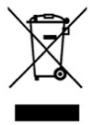
This symbol indicates that, according to the applicable regulations, the product and/or battery must be disposed of separately from household waste. When this product reaches the end of its shelf life, you should dispose of the batteries/accumulators and take them to a collection point designated by the local authorities.
For detailed information on how to properly dispose of electrical and electronic equipment and/or the corresponding batteries, consumers should contact their local authorities.
Compliance with the above guidelines will help protecting the environment.
9. COPYRIGHT
The intellectual property rights over the texts in this manual belong to CECOTEC INNOVACIONES, S.L. All rights reserved. The content of this publication may not, either in part or in its entirety, be reproduced, stored in a retrieval system, transmitted or distributed by any means (electronic, mechanical, photocopying, recording or similar) without prior authorisation from CECOTEC INNOVACIONES, S.L.
10. SIMPLIFIED EU DECLARATION OF CONFORMITY

Cecotec Innovaciones hereby declares that this appliance complies with the essential requirements and other relevant provisions of applicable European Union regulations. This appliance has been designed, manufactured and tested
in compliance with required safety and quality standards. The full text of the EU Declaration of Conformity can be found on the following website: https://cecotec.es/es/information/declaration-of-conformity
1. PIÈCES ET COMPOSANTS
Image 1
- Luz LED 1
- Luz LED 2
- Luz LED 3
- Luz LED 4
A. Definir a temperatura do compartimento frigorífico
Display
7. PROBLEEMOPLOSSING
Fig./Img./Abb./Afb./Rys./Obr./Şekil/Eik./ábra/1

Fig./Img./Abb./Afb./Rys./Obr./Şekil/Eik./ábra/2
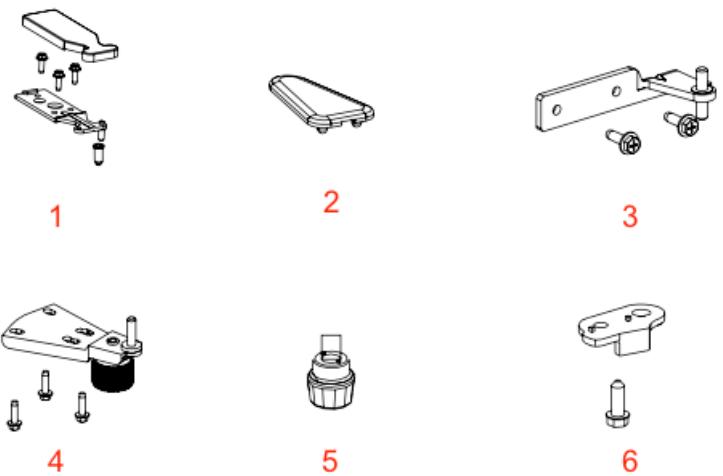
Fig./Img./Abb./Afb./Rys./Obr./Şekil/Eik./ábra/3

Fig./Img./Abb./Afb./Rys./Obr./Şekil/Eik./ábra/4

Fig./Img./Abb./Afb./Rys./Obr./Şekil/Eik./ábra/لکشلا 5
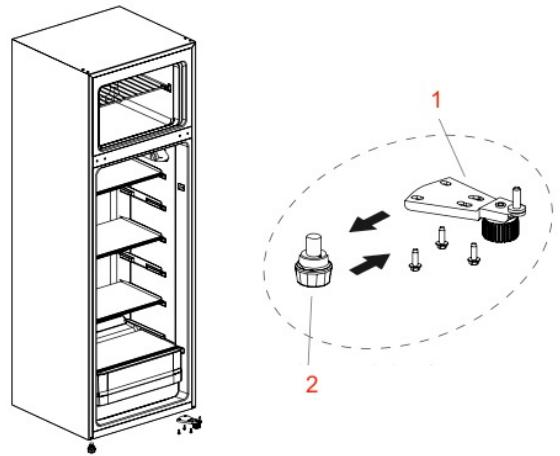
Fig./Img./Abb./Afb./Rys./Obr./Şekil/Eik./ábra/6

Fig./Img./Abb./Afb./Rys./Obr./Şekil/Eik./ábra/7
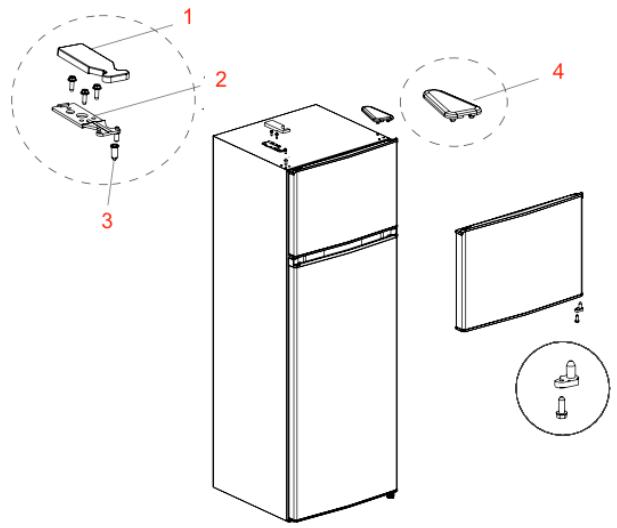
Fig./Img./Abb./Afb./Rys./Obr./Şekil/Eik./ábra/8

Fig./Img./Abb./Afb./Rys./Obr./Şekil/Eik./ábra/9

Fig./Img./Abb./Afb./Rys./Obr./Şekil/Eik./ábra/10

Fig./Img./Abb./Afb./Rys./Obr./Şekil/Eik./ábra/12

Fig./Img./Abb./Afb./Rys./Obr./Şekil/Eik./ábra/11
www.cecotec.es
- SOMMAIRE
- TEMPERATURE RANGE
- NOTES
- REFRIGERANT
- INSTRUCTIONS DE SÉCURITÉ
- NOTE
- BEFORE USE
- BOX CONTENT
- ASSEMBLY
- LOCATION
- MOVING THE APPLIANCE
- DOOR REVERSAL
- FIG. 3
- FIGURE 4 KEY
- FIG. 5 KEY
- FIG. 6 KEY
- FIG. 7
- FIGURE 8 KEY
- LEVELLING
- LEVELLING FEET
- OPERATION
- FUNCTIONS
- FIG. 9
- DISPLAY
- TEMPERATURE SETTINGS
- SUPER FREEZE MODE
- FAST COOLING MODE
- STANDBY MODE
- FOOD STORAGE INSTRUCTIONS
- FREEZER COMPARTMENT
- REFRIGERATOR COMPARTMENT
- ENERGY SAVING TIPS
- CLEANING AND MAINTENANCE
- CLEANING THE INTERIOR AND EXTERIOR
- INTERRUPTION OF USE OF THE APPLIANCE FOR A LONG PERIOD OF TIME
- POWER FAILURE OR COOLING SYSTEM FAULT
- DEFROSTING
- CLEANING DOOR SHELVES
- CLEANING OF THE GLASS SHELF
- CLEANING THE CRISPER DRAWER
- REPLACING THE LIGHT LAMP
- SAFETY CHECK AFTER MAINTENANCE
- TROUBLESHOOTING
- RECYCLING OF ELECTRICAL AND ELECTRONIC EQUIPMENT
- COPYRIGHT
- SIMPLIFIED EU DECLARATION OF CONFORMITY
- PIÈCES ET COMPOSANTS
- IMAGE 1
- PROBLEEMOPLOSSING
Brand : CECOTEC
Model : Bolero Coolmarket 2d 204 E
Category : Refrigerator