
WX22-230, WX22-230 - Angle grinder METABO - Free user manual and instructions
Find the device manual for free WX22-230, WX22-230 METABO in PDF.


| Product type | Angle grinder |
| Brand | METABO |
| Model | WX22-230 |
| Max accessory diameter | 230 mm |
| Spindle thread | M14 |
| Weight (without cable) | Approx 5.5 kg |
| Protection class | II |
| Power supply | 230 V ~ 50/60 Hz |
| Main functions | Grinding, sanding, wire brushing, cutting |
| Protection guard | Tool-free adjustable, lever adjustment |
| Additional handle | Vibration-dampened, three positions |
| Main handle | Rotatable 90° on each side |
| Spindle lock | Yes, for wheel change |
| Quick clamping system | Quick clamping nut (for wheels ≤8 mm thickness) |
| Electronic protection | Overload protection, S-automatic (stop in case of jamming), restart protection |
| Cleaning | Regularly blow compressed air through ventilation slots |
| Maintenance and repairs | Repairs only by a Metabo specialist |
| Compatible accessories | Grinding discs, cutting wheels, cup grinding wheels, flap discs, wire brushes, etc. |
| General information | Conforms to EU directives, operating manual available in multiple languages |
Frequently Asked Questions - WX22-230, WX22-230 METABO
User questions about WX22-230, WX22-230 METABO
0 question about this device. Answer the ones you know or ask your own.
Ask a new question about this device
Download the instructions for your Angle grinder in PDF format for free! Find your manual WX22-230, WX22-230 - METABO and take your electronic device back in hand. On this page are published all the documents necessary for the use of your device. WX22-230, WX22-230 by METABO.
USER MANUAL WX22-230, WX22-230 METABO
W 22-180, W 22-230, W 24-180, W 24-230, W 26-180, W 26-230:
Original instructions
1. Conformity Declaration
We, being solely responsible, hereby declare that these angle grinders conform to the standards and directives specified on page 3.
2. Specified Use
Machines fitted with original Metabo accessories are suitable for grinding, sanding, separating and wire brushing metal, concrete, stone and similar materials without the use of water.
The user bears sole responsibility for any damage caused by improper use.
Generally accepted accident prevention regulations and the enclosed safety information must be observed.
3. General Safety Instructions

For your own protection and for the protection of your electrical tool, pay attention to all parts of the text that are marked with this symbol!

WARNING - Reading the operating instructions will reduce the risk of injury.

WARNING Read all safety warnings and instructions. Failure to follow all safety warn-and instructions may result in electric shock, nd/or serious injury.
Keep all safety instructions and information for future reference.
Pass on your electrical tool only together with these documents.
4. Special Safety Instructions
4.1 SafetyWarnings Common for Grinding, Sanding, Wire Brushing or Abrasive Cutting-Off Operations:
Use
a) This power tool is intended to function as a grinder, sander, wire brush or cut-off tool. Read all safety warnings, instructions, illustrations and specifications provided with this power tool. Failure to follow all instructions listed below may result in electric shock, fire and/or serious injury.
b) Operations such as polishing are not recommended to be performed with this power tool. Operations for which the power tool was not designed may create a hazard and cause personal injury.
c) Do not use accessories which are not specifically designed and recommended by the tool manufacturer. Just because the accessory can be attached to your power tool, it does not assure safe operation.
d) The rated speed of the accessory must be at least equal to the maximum speed marked on the power tool. Accessories running faster than their rated speed can break and fly apart.
e) The outside diameter and the thickness of your accessory must be within the capacity rating of your power tool. Incorrectly sized accessories cannot be adequately guarded or controlled.
f) The arbour size of wheels, flanges, backing pads or any other accessory must properly fit the spindle of the power tool. Accessories with arbour holes that do not match the mounting hardware of the power tool will run out of balance, vibrate excessively and may cause loss of control.
g) Do not use a damaged accessory. Before each use inspect the accessory such as abrasive wheels for chips and cracks, backing pad for cracks, tear or excess wear, wire brush for loose or cracked wires. If a power tool or accessory is dropped, inspect for damage or install an undamaged accessory. After inspecting and installing an accessory, position yourself and bystanders away from the plane of the rotating accessory and run the power tool at maximum no-load speed for one minute. Damaged accessories will normally break apart during this test time.
h) Wear personal protective equipment. Depending on application, use face shield, safety goggles or safety glasses. As appropriate, wear dust mask, hearing protectors, gloves and workshop apron capable of stopping small abrasive or workpiece fragments. The eye protection must be capable of stopping flying debris generated by various operations. The dust mask or respirator must be capable of filtering particles generated by your operation. Prolonged exposure to high intensity noise may cause hearing loss.
i) Keep bystanders a safe distance away from work area. Anyone entering the work area must wear personal protective equipment. Fragments of workpiece or of a broken accessory may fly away and cause injury beyond immediate area of operation.
j) Hold power tool by insulated gripping surfaces only, when performing an operation where the cutting accessory may contact hidden wiring or its own cord. A cutting accessory contacting a "live" wire may make exposed metal parts of the power tool "live" and give the operator an electric shock.
k) Position the cord clear of the spinning accessory. If you lose control, the cord may be cut or snagged and your hand or arm may be pulled into the spinning accessory.
1) Never lay the power tool down until the accessory has come to a complete stop. The spinning accessory may grab the surface and pull the power tool out of your control.
m) Do not run the power tool while carrying it at your side. Accidental contact with the spinning accessory could snag your clothing, pulling the accessory into your body.
n) Regularly clean the power tool's air vents. The motor's fan will draw the dust inside the housing and excessive accumulation of powdered metal may cause electrical hazards.
o) Do not operate the power tool near flammable materials. Sparks could ignite these materials.
p) Do not use accessories that require liquid coolants. Using water or other liquid coolants may result in electrocution or shock.
4.2 Kickback and RelatedWarnings
Kickback is a sudden reaction to a pinched or snagged rotating wheel, backing pad, brush or any other accessory. Pinching or snagging causes rapid stalling of the rotating accessory which in turn causes the uncontrolled power tool to be forced in the direction opposite of the accessory's rotation at the point of the binding.
For example, if an abrasive wheel is snagged or pinched by the workpiece, the edge of the wheel that is entering into the pinch point can dig into the surface of the material causing the wheel to climb out or kick out. The wheel may either jump toward or away from the operator, depending on direction of the wheel's movement at the point of pinching. Abrasive wheels may also break under these conditions.
Kickback is the result of power tool misuse and/or incorrect operating procedures or conditions and can be avoided by taking proper precautions as given below.
a) Maintain a firm grip on the power tool and position your body and arm to allow you to resist kickback forces. Always use the auxiliary handle, if provided, for maximum control over kickback or torque reaction during start-up. The operator can control torque reactions or kickback forces, if proper precautions are taken.
b) Never place your hand near the rotating accessory. Accessory may kickback over your hand.
c) Do not position your body in the area where power tool will move if kickback occurs. Kickback will propel the tool in direction opposite to the wheel's movement at the point of snagging.
d) Use special care when working corners, sharp edges etc. Avoid bouncing and snagging the accessory. Corners, sharp edges or bouncing have a tendency to snag the rotating accessory and cause loss of control or kickback.
e) Do not attach a saw chain woodcarving blade or toothed saw blade. Such blades create frequent kickback and loss of control.
4.3 SafetyWarnings Specific for Grinding and Cutting-Off Operations:
a) Use only wheel types that are recommended for your power tool and the specific guard designed for the selected wheel. Wheels for which the power tool was not designed cannot be adequately guarded and are unsafe.
b) The guard must be securely attached to the power tool and positioned for maximum safety, so the least amount of wheel is exposed towards the operator. The guard helps to protect the operator from broken fragments, accidental contact with the wheel and sparks that could ignite clothing.
c) Wheels must be used only for recommended applications. For example: do not grind with the side of cutoff wheel. Abrasive cut-off wheels are intended for peripheral grinding, side forces applied to these wheels may cause them to shatter.
d) Always use undamaged wheel flanges that are of correct size and shape for your selected wheel. Proper wheel flanges support the wheel thus reducing the possibility of wheel breakage. Flanges for cut-off wheels may be different from grinding wheel flanges.
e) Do not use worn down wheels from larger power tools. Wheels intended for larger power tools are not suitable for the higher speed of a smaller tool and may burst.
4.4 Additional SafetyWarnings Specific for Abrasive Cutting-Off Operations:
a) Do not "jam" the cut-off wheel or apply excessive pressure. Do not attempt to make an excessive depth of cut. Overstressing the wheel increases the loading and susceptibility to twisting or binding of the wheel in the cut and the possibility of kickback or wheel breakage.
b) Do not position your body in line with and behind the rotating wheel. When the wheel, at the point of operation, is moving away from your body, the possible kickback may propel the spinning wheel and the power tool directly at you.
c) When wheel is binding or when interrupting a cut for any reason, switch off the power tool and hold the power tool motionless until the wheel comes to a complete stop. Never attempt to remove the cut-off wheel from the cut while the wheel is in motion otherwise kickback may occur. Investigate and take corrective action to eliminate the cause of wheel binding.
d) Do not restart the cutting operation in the workpiece. Let the wheel reach full speed and carefully reenter the cut. The wheel may bind, walk up or kickback if the power tool is restarted in the workpiece.
e) Support panels or any oversized workpiece to minimize the risk of wheel pinching and kickback. Large workpieces tend to sag under their own weight. Supports must be placed under the workpiece near the line of cut and near the edge of the workpiece on both sides of the wheel.
f) Use extra caution when making a "pocket cut" into existing walls or other blind areas. The protruding wheel may cut gas or water pipes, electrical wiring or objects that can cause kickback.
4.5 SafetyWarnings Specific for Sanding Operations:
a) Do not use excessively oversized sanding disc paper. Follow manufacturer's recommendations when selecting sanding paper. Larger sanding paper extending beyond the sanding pad presents a laceration hazard and may cause snagging, tearing of the disc or kickback.
4.6 SafetyWarnings Specific for Wire Brushing Operations:
a) Be aware that wire bristles are thrown by the brush even during ordinary operation. Do not overstress the wires by applying excessive load to the brush. The wire bristles can easily penetrate light clothing and/or skin.
b) If the use of a guard is recommended for wire brushing, do not allow any interference of the wire wheel or brush with the guard. Wire wheel or brush may expand in diameter due to work load and centrifugal forces.
4.7 Additional Safety Instructions

WARNING - Always wear protective goggles.
Use elastic cushioning layers if they have been supplied with the abrasive and if required.
Observe the specifications of the tool or accessory manufacturer! Protect the discs from grease or impacts!
Grinding discs must be stored and handled with care in accordance with the manufacturer's instructions.
Never use parting grinder discs for roughing work! Do not apply pressure to the side of parting grinder discs.
The workpiece must lay flat and be secured against slipping, e.g. using clamps. Large workpieces must be sufficiently supported.
If accessories with threaded inserts are used, the end of the spindle may not touch the base of the hole on the grinding tool. Make sure that the thread in the accessory is long enough to accommodate the full length of the spindle. The thread in the accessory must match the thread on the spindle. See page 3 and chapter 14. Technical Specifications for more information on the spindle length and thread.
During machining, of metals in particular, conductive dust can form deposits inside the machine. This can lead to the transfer of electrical energy onto the machine housing. This can mean a temporary danger of electric shocks. This is why it is necessary when the machine is running to blow compressed air through the rear ventilation slots of the machine regularly,
frequently and thoroughly. Here, the machine must be held firmly.
It is recommended to use a stationary extraction system and to place a ground fault circuit interrupter (GFCI) downstream. When the angle grinder is shut down via the FI circuit breaker, it must be checked and cleaned. See chapter 9. Cleaning for more information on cleaning the motor.
Dust from material such as paint containing lead, some wood species, minerals and metal may be harmful. Contact with or inhalation of the dust may cause allergic reactions and/or respiratory diseases to the operator or bystanders.
Certain kinds of dust are classified as carcinogenic such as oak and beech dust especially in conjunction with additives for wood conditioning (chromate, wood preservative). Material containing asbestos must only be treated by specialists.
- Where the use of a dust extraction device is possible it shall be used.
- The work place must be well ventilated.
- The use of a dust mask of filter class P2 is recommended.
Follow national requirements for the materials you want to work with.
Materials that generate dusts or vapours that may be harmful to health (e.g. asbestos) must not be processed.
When working in dusty conditions, ensure that ventilation openings are not blocked. If it becomes necessary to remove dust, first disconnect the power tool from the mains supply (use non-metallic objects) and avoid damaging internal components.
Damaged, eccentric or vibrating tools must not be used.
Avoid damage to gas or water pipes, electrical cables and loadbearing walls (static).
Connect a FI circuit-breaker with max. release current (30 mA) upstream when using the machine outdoors!
Pull the plug out of the socket before making any adjustments, converting or servicing the machine.
A damaged or cracked additional handle must be replaced. Never operate a machine with a defective additional handle.
A damaged or cracked safety guard must be replaced. Never operate a machine with a defective safety guard.
Do not switch on the machine if tool parts or guard devices are missing or defective.
Machines with a soft start (indicated by an "X" in the model designation): An electronic error occurs if the machine accelerates to maximum speed very quickly when switched on. Other safety-related electronic functions are no longer available. Have the machine repaired immediately (see 12.).
5. Overview
See page 2.
1 "Quick"clamping nut *
2 Support flange
3 Spindle
4 Spindle locking button
5 Electronic signal indicator
6 Lock (to prevent the machine from being switched on unintentionally, or for continuous operation)
7 Trigger (for switching on and off)
8 Button (to turn the main handle)
9 Main handle
10 Additional handle / Additional handle with vibration damping *
11 Safety guard
12 Clamping nut
13 2-hole spanner
14 Lever (to adjust safety guard without the use of tools)
- depending on equipment/not in scope of delivery
6. Commissioning
If delivered without a mains plug, arrange for a suitable mains plug to be connected by a qualified electrician ONLY.
Before plugging in, check to see that the rated mains voltage and mains frequency, as specified on the rating label, match your power supply.
Always use an extension cable with a minimum diameter of 1.5mm^2 . The extension cable must be suitable for the machine power rating (see Technical Specifications). If using a roll of cable, always roll up the cable completely.
6.1 Attaching the additional handle
Always work with the additional handle attached (10)! Manually screw in the additional handle securely in the left, centre or right threaded hole (depending on requirements).
6.2 Attaching the safety guard
(for work involving grinding wheels)
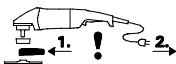
Prior to commissioning: Fit the protective cover.
For reasons of safety, the safety guard (11) should always be attached when roughing work is performed.
For reasons of safety, the special parting guard should always be attached before parting work is performed (see chapter 11. Accessories).
See illustration E on page 2.
- Push and hold the lever (14). Place the safety guard (11) in the position indicated.
-
Release the lever and turn the safety guard until the lever engages.
-
Push the lever and turn the safety guard until the closed section is facing the operator.
- Make sure that the guard is seated securely: the lever must engage and you should not be able to turn the safety guard.
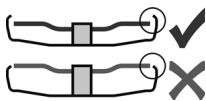
Use only accessories that are covered by at least 3.4mm by the safety guard.
6.3 Rotatable main handle (depending on features)
Only work with the main handle (9) engaged. See illustration B on page 2.
- Push in the button (8).
- The main handle (9) can now be turned 90^ to both sides and can be engaged.
- Make sure that it is securely positioned: the main handle (9) must be engaged and it should not be possible to move it.
6.4 Power supply
The mains sockets must be protected using timedelay fuses or circuit breakers.
Machines with "X" in the model designation: (with integrated, automatic restriction of the starting current (soft start)). The mains sockets can also be protected using fast-acting fuses or circuit breakers.
7. Attaching the grinding wheel
Disconnect the mains plug before changing any accessories. The machine must be switched off and the spindle at a standstill.
For reasons of safety, attach the parting guard before performing parting work (see chapter 11. Accessories).
7.1 Locking the spindle
Press in the spindle locking button (4) only when the spindle is stationary!
- Press in the spindle locking button (4) and turn the spindle
(3) by hand until you feel the spindle locking button engage.
7.2 Placing the grinding wheel in position
See illustration C on page 2.
- Fit the support flange (2) on the spindle. The flange should not turn on the spindle when properly attached.
- Position the grinding wheel on the support flange (2) as shown in illustration C. The grinding wheel must lay flat on the supporting flange. The metal flange on the parting grinder disc must lay flat on the support flange.
7.3 Securing/Releasing the "Quick" clamping nut (depending on features)

Securing the "Quick" clamping nut (1):
! Do not use the "Quick" clamping nut if the accessory has a clamping shank thicker than 8mm! In this case, use the clamping nut (12) with 2-hole spanner (13).
Only use the "Quick" clamping nut when undamaged and in perfect operating condition: the arrow must point to the notch on the outer ring (see illustration on page 2).
- Lock the spindle (see chapter 7.1).
- Fit the "Quick"clamping nut (1) on the spindle (3). See illustration on page 2.
- Tighten the "Quick" clamping nut by turning clockwise by hand.
- Turn the grinding wheel firmly clockwise to tighten the "Quick" clamping nut.
Releasing the "Quick" clamping nut (1):
- Lock the spindle (see chapter 7.1).
- Turn the "Quick" clamping nut (1) anticlockwise to unscrew.
7.4 Securing/Releasing the clamping nut (depending on features)
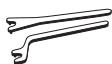
Securing the clamping nut (12):
The 2 sides of the clamping nut are different. Screw the clamping nut onto the spindle as follows:
See illustration D on page 2.
- A) For thin grinding wheels:
The edge of the clamping nut (12) faces upwards so that the thin grinding wheel can be attached securely.
B) For thick grinding wheels:
The edge of the clamping nut (12) faces downwards so that the clamping nut can be attached securely to the spindle.
- Lock the spindle. Turn the clamping nut (12) clockwise using the 2-hole spanner (13) to secure.
Releasing the clamping nut:
- Lock the spindle (see chapter 7.1). Turn the clamping nut (12) anticlockwise using the 2-hole spanner (13) to unscrew.
8. Use
8.1 Switching On and Off

Always guide the machine with both hands.
Switch on first, then guide the accessory towards the workpiece.

The machine must not be allowed to draw in any additional dust and shavings. When switching the machine on and off, keep it away from dust deposits. After switching off the machine, only places down when the motor has come to a standstill.

Avoid inadvertent starts: always switch the tool off when the plug is removed from the s socket or if there has been a power cut.

In continuous operation, the machine continues running if it is forced out of your
hands. Therefore, always hold the machine with both hands at the intended handles, take a secure stance and concentrate on the work.
See illustration A on page 2.
Torque activation
Switching on: Slide the lock (6) in the direction of the arrow and press the trigger (7).
Switching off: Release the trigger (7).
Continuous operation (depending on features)
Switching on: Slide the lock (6) in the direction of the arrow, press the trigger (7) and keep it pressed. The machine is now switched on. Now slide the lock (6) in the direction of the arrow once more to lock the trigger (7) (continuous operation).
Switching off: Press the trigger (7) and release.
8.2 Working instructions
Grinding:
Press down the machine evenly on the surface and move back and forth so that the surface of the workpiece does not become too hot.
Roughing: position the machine at an angle of 30^ - 40^ for the best working results.
Separating:
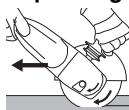
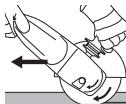
Always work against the run of the disc (see illustration). Otherwise there is the danger of the machine kicking back from the cut out of control. Guide the machine evenly at a speed
suitable for the material being processed. Do not tilt, apply excessive force or sway from side to side.
Sanding:
Press down the machine evenly on the surface and move back and forth so that the surface of the workpiece does not become too hot.
Wire brushing:
Press down the machine evenly.
9. Cleaning
Motor cleaning: blow compressed air through the rear ventilation slots of the machine regularly, frequently and thoroughly. Here, the machine must be held firmly.
Button (8) for adjustment of the handle (depending on features): Occasionally blow compressed air through the button (when pressed, in all 3 main handle positions).
10. Troubleshooting
Machine with "X" in the model designation:
- Overload protection: The electronic signal display (5) lights up and the load speed decreases dramatically. The motor temperature is too high! Run the machine in idling until it cools down and the electronic signal display switches off.
Overload protection: The electronic signal display (5) lights up and the load speed
decreases slightly. The machine is overloaded. Work with a reduced load until the electronic signal display goes out.
- Metabo S-automatic safety stop: The electronic signal display (5) lights up and the machine SWITCHES OFF automatically. If the slew rate of the current is too high (for example, if the machine suddenly seizes or kickback occurs), the machine switches off. Switch off the machine at the trigger (7). Switch it on again and continue to work as normal. Try to prevent the machine from seizing. See section 4.2.
- Restart protection: The electronic signal display (5) FLASHES and the machine does not start. The restart protection is active. If the mains plug is inserted with the machine switched on, or if the current supply is restored following an interruption, the machine does not start up. Switch the machine off and on again.
- When switched on, the machine accelerates to maximum speed very quickly, i.e. automatic restriction of the starting current does not work (soft start). An electronic error exists. Other safety-related electronic functions are no longer available. Have the machine repaired immediately (see 12.).
W 22-180.W 22-230.W 24-180.W 24-230, W 26-180.W 26-230:
- Switching on procedures produce brief reductions in voltage. Unfavourable power conditions can be detrimental to other devices. Power impedances smaller than 0.2 ohm should not cause any malfunction.
11. Accessories
Use only genuine Metabo accessories.
Use only accessories that fulfil the requirements and specifications listed in these operating instructions.
Fit accessories securely. Secure the machine if it is operated in a bracket. Loss of control can cause personal injury.
See page 4.
A Roughing disc (always use with safety guard attached)
B Louver disc (always use with safety guard attached)
C Parting safety guard.
D Parting disc (always use with parting safety guard attached)
E Diamond discs (always use with safety guard or parting safety guard attached)
F Cup wheel guard (place on machine and secure with screws (f)). Secure cup wheel as described in chapter 7.. Use an offset 2-hole spanner if necessary. Use the wing screws to adjust the safety guard until the cup wheel protrudes between 0.5cm - 1cm
G Cup wheels (always use with cup wheel safety guard attached)
H Offset 2-hole spanner (for securing/loosening the clamping nut (12) on cup wheels)
1 Parting safety guard with guide slot (place on machine and secure with screws.) (with adapter for connection to a suitable dust extractor for extraction of stone dust generated when cutting stone slabs.)
J Hand guard (for attaching under the additional side-mounted handle.)
K Extension piece (for working with supporting discs. Increases the distance between the spindle and the supporting disc by approx. 35 mm)
L Supporting disc for fibre discs (always attach using the supporting disc clamping nut supplied.) (always use with the hand guard attached.)
M Fibre discs (always use with the hand guard attached.)
N Steel wire brushes (always use with the hand guard attached.)
O Bench cut-off stand
P Adjusting nut (12)
Q "Quick"clamping nut (1)
For complete range of accessories, see www.metabo.com or refer to the main catalogue.
12. Repairs

Repairs to electrical tools must be carried out by qualified electricians ONLY!
Contact your local Metabo representative if you have Metabo power tools requiring repairs. For addresses see www.metabo.com.
You can download a list of spare parts from www.metabo.com.
13. Environmental Protection
The sanding dust generated may contain hazardous materials: do not dispose of with the household waste, but at a special collection point for hazardous waste.
Observe national regulations on environmentally compatible disposal and on the recycling of disused machines, packaging and accessories.

Only for EU countries: Never dispose of power tools in your household waste! In accordance with European Guideline 2002/
96/EC on used electronic and electric equipment and its implementation in national legal systems, used power tools must be collected separately and handed in for environmentally compatible recycling.
14. Technical Specifications
Explanation of details on page 3. Subject to changes serving technical progress.
D_ = max.diameter of accessory
t_,1 = . permitted thickness of clamping shank on accessory when using clamping nut (12)
t_,2 = . permitted thickness of clamping shank on accessory when using "Quick"clamping nut (1)
en ENGLISH
t_max,3 =Roughing disc/Parting disc: max. permitted thickness of accessory M = Spindle thread I = Length of the grinding spindle n = No-load speed (maximum speed) P_1 = Nominal power input P_2 = Power output m = Weight without mains cable Measured values determined in conformity with EN 60745.
Machine in protection class II
Alternating current
The technical specifications quoted are subject to tolerances (in compliance with the relevant valid standards).
A Emission values
These values make it possible to assess the emissions from the power tool and to compare different power tools. Depending on the operating conditions, the condition of the power tool or the accessories, the actual load may be higher or lower. For assessment purposes, please allow for breaks and periods when the load is lower. Based on the adjusted estimates, arrange protective measures for the user e.g. organisational measures.
Vibration total value (vector sum of three directions) determined in accordance with EN 60745:
a_h,SG = Vibration emission value (sanding surfaces)
a_h,DS = Vibration emission value (sanding with sanding pad)
Typical A-effective perceived sound levels:
L_pA =Sound pressure level
W 22-180, W 22-230, W 24-180, W 24-230, W 26-180, W 26-230:
W 22-180, W 22-230, W 24-180, W 24-230, W 26-180, W 26-230:
W 22-180, W 22-230, W 24-180, W 24-230,
W 26-180. W 26-230:
W 22-180, W 22-230, W 24-180, W 24-230.
W 26-180, W 26-230:
W 22-180, W 22-230, W 24-180, W 24-230.
W 26-180, W 26-230:
W 22-180, W 22-230, W 24-180, W 24-230, W 26-180, W 26-230:
W 22-180, W 22-230, W 24-180, W 24-230.
W 26-180, W 26-230:
W 22-180, W 22-230, W 24-180, W 24-230, W 26-180, W 26-230:
Reservedelsestiner kan downloads paa www.metabo.com.
13. Miljobeskyttelse
W 22-180, W 22-230, W 24-180, W 24-230, W 26-180, W 26-230:
- Oi diaiokaies evepyoinoans pokaovuovtuoe cpiwosic tacn. 2e nepiinnwnouduoevwov uovtknov oto dktuo tou emuatocmuopouvva ephiaviotouv npoBnmuatae alaa epyaiaia. 2e nepiinnwn eptednoewdiktuuukpotaee a0 2d eavapeovtai npoBnmuata.
11. Eξαρτήματα
XpoiooieTe movo yvnoia EaaptnmaTa Tc Metabo.
Xpoiouoieite mOvo EApntmuTa, ta onoia
TAnpovu Tc attaithoeic kai Ta Xapaktnpiotka
toixieu nau avapeovtai e autec tic obnyiec
lambdayic.
ToonTeiTe to EApTma e aofaEia. Otav xpooutoieita to eyaaleio e eva onpivma: Tepewote me aofaEia to eyaaleio. H anwEia touexyou nopei va oynnoe i e Tpaumatiouc.
Bλέπε σελίδα 4.
A DIOKOC EEXOVDBIOMaTOCS (XpHON mOvo ME TOIOEETnueVO Tov npoUakTnpa)
B Dlakoc iavon uIaPakia (XpHnO mOvo too0eTmEVO tv npofoAaKtnpa)
C Pnpoulaaktnpac sikou konns
D iokoc koinc (Xpnoo mov o e toioe tnevo tv npoulaakntpa diokou konic)
E iauavtoδiokoi kOnc (Xpnoj mOvo μe TOnoθετημévo πoΦuλakntρa n TPOΦuλakntρa δiokou konnc)
F IpoΦuλakπρaç kaɪnávac λεiavɔnc (TOnoθεtησι náw οτο εpyαεlio kai Θερεωπ με τι Μβδa (f)). Σερεωτe Tnv kaɪnáva λεiavɔnc, διως περίγραφεται στο κεφαλaio 7.. Evδexouενως χραμοιοιησο έπαστό γαντόκλειδο. Pθμιοτε Tov InpoΦuλakπρa με τι βδες túntou πεταλουδa c ἀται, ωτε η kaɪnáva λεiavɔnc va προεξεχι 0,5 cm -1 cm.
G Kaɪnáveç λεiavoc (Xpɪnən μóvo με Κοτθεινεν oʊ Tɒpɒuλkτɪŋpa Kaɪnávac λεiavoc)
H Σπaστό γαντόκλειδό (Για σφίεμι/λωιμιο του παξμαδιού συσφίγξης (12) στις καμπάνες λειανοής)
I PpOuAaKtnpac TPOxou Konnc nEa oDyOnC (ToOnoetnAn npw OTo epyaEio kai otepewon mE tn BiDa) Me otou yua tyn avappOphiTNC oKovnc TNC pTaoc nou 8noupeiata kat to Kopsiotw nvtpivw vAakov mE mia katalaln an oukeun avappOphiOnc)
J PpOoTaia xepiou (Ia tonoTheon kAtw ano TnV pLEvupkn npo0eTn laβn)
K EEAPTnma EtkKaonc (Tia Tnv Epyaoic mu Touc dioKouc oTNIg. AuVaeI Tnv aoTOn anavaeo stov avOva kai tOto diKo OTniEONS nepinou kata 35 mm)
L Diokoc stnptiNs yia diokouc aeivanc Fiber (Toonotnmo vto ovnuuveo naiuadi suoiyNcdiakoustnEgXpnmo vto tonoetnev nTnpoata xepoi)
M Diokai i a v o n s Fiber (Xpno mov o e tooetnuevtynipooataia xepiou)
N XaIubdiun oumuatobouptoA (Xpno mov oE tooetnuevtnpvnootaa xepiou)
O Baoon konns
P IaEiμaδι σuOΦiγξης (12)
Q NaEiμδι ταχνούσφιγξης (1)
W 22-180, W 22-230, W 24-180, W 24-230,
W 26-180, W 26-230:
3) NcnoIb3yIte cpeDCTBa HnHbNduaJIbHOJ 3aunTbI. NcnoIb3yIte, B 3aBNCMocTH OT
Bnda pa60tbl, Macny noJHoi 3aunTbI nla ca, cpeDCTBa 3aunTbI rna3 nn 3aunTHbIe OCHN. Iyra 3aunTbI OT MeJHx qachu a6pa3NBHO HNCPTpymenta H MaTePnala HadeBaHTe pecnnapTopr, 3aunTHbIe HayUnHHN, 3aunTHbIe nepaTHKn Hn CneuaJIbHbIy foarTyK. 3aun7aIte rna3a ot OTJeTaIOx NOctTOPOHNX npedMeTOB.Pecnnatopby IN 3aunTHbIe MACKO JOnJIbHbOTfONJIbTPOBBiBaTb nbIb, BO3HNaIOUy IO BVPempa60tbl. dInTeJIbHoe Bo3deCtBE rPOMKOro Wyma MoKeht npinBeCTn K Notepe Cnyxa.
n) Cnejnte 3a TeM, TTO6bI dpyrhe IIOH haxoJINbc Ha 6e3oNaChom pacCTOHHN OT Bawero paOoJero MecTa. KaJdbI yelOBeK, BXoJyIMB PA6OuyU 3OHy, O83aH NadeBaTb cpeDCTBa HNDNBdAyalbHOH 3auHTbl. OTLeTaOHue OcOJIHKn O6paBaTbBAeMoH DeTALn HNIbOLOMBiWbIeCe pa6OuH NcHtpyMeHbI MOYr HAHeCTN TpABMy DaKe BHe pa6Oeu 3OnbI.
K)Пи ВьINOLHHeHH pa6ObT B6JIH3N ChpblToI 3JIeHTponPobODoH nIIu CTeBOrO Ka6EJIa camoro 3JIeHTponHCTpymEtA dePHEHtne HNCTpymEt TOJbHO 3a H3OIINPOBaHHBe NOBepxHOctn. KOHTaKT C ToKOpBOJauei JInHNeM MOKeT npIBeCTn K IOnaYe HApRJeHEnHa Na MetaLIJIuNEcKHe YAcTHn HNCTpyMeHTa N BbI3BaTb yIap 3JIeKTpNIeCkIM TOKOM.
JI) DepeHnTe CeTeBOH Ka6eHb NpOaIbWe OT BpauaoOeOra pa6oOer IHCTpyMeHTa.B Clyuae NTOpEri KOHTPOJHaN IHCTPyMeHTOM OH MOKeT NepePe3aTb HIN 3aTMyHtB CeTeBOH Ka6eHb, IN pRi TcOM BaWb PUYK MoYr MOnyT NpOaTb B 3OHy BpaUeHn PA6oOEr IHCTpyMeHTa.
M) HnKoIgDa He KlaJaTe 3JeKtPOnHCTpymEt
doNoJIHOJ octaHOBn pa6Oero
HnCTpymEtA. BpaUaOuIcN pa6Ouyn
HnCTpymEt MOKeT KOCHyTbC NOBepxHOCTN, IN B
pe3yIbTaTe 3TOO MOKeT PON3OHTN Notepa
KOHTPOJIra NaD 3JeKtPOINHCTpymEtOM.
H) He BHKIOUaTe 3JeHTPOINHCTPymeT BO BVPMa Ero nepeHOCHn. Bpaauouiyra paobouhi HNCTpymEt MOKeT 3axBaVTb DeTaIi ODeJbI, B pe3yIbTaTe Yeo Bbl MoKeTe NOLyUHTb TpaBMY.
o) PerylphO ouHsauTe BeHTnlaOnHbIe ounTHePcyma. BeHTnlaTOp DInrataTeI 3aTARnBaet TbIb B KOpNyc, a 60JIbWoE cONLHeMe TaJIyNeCKoB TbIb COnpRKeHo C ONaHOCTbIO BO3DeiCTBnA 3JeKtPrHeCKOrTo ToKa.
n) He nCnoIb3yIte 3JeHTponHCTpymeHT B6JIa3N IeKHOBCOcPnIaMeHIOUxCer MaTePnaJIoB. NcKpbI MoRyT Bbl3BaT BOCPiMaHeHne 3TNX MaTePnaJIoB.
p) He nCnoIb3yIte pa6OuHne HNCTpyMeHTbl, KOTOpBle TpeB6yOt PnIMeHENHe OXlaHdaIOUeH HNDOCTH.NcNoJIb3OBaHne BOdI INHIN OXLaJDaIOUeH HNDOCTH MOKeT npINBeCTN K yDapA 3JeHTpnHeCKM TOKOM.
4.2 OToDaHa n COOTBETCTBYIOUe yKa3aHnNo TExHNHe 6e3oNaCHOCTn
OtdaaypepdctabIeTc6oHneOJuaHHyopeakunBpe3yIbTaTe3aueJIeHnNn3aKlnHBaHnBpaauOJeROca6oero
HnCTpymeHa: ⅢnФkpya, ⅢnΦtapelKn,
KapdoTKeTn T. D. 3auePienHe nIi 6loKnpoBbA
BeyT K BHe3aHoi octaHOBHe bpaauoJcOerC
pa6oery HnCTpymeHa. B peshyIbTaTe
npocxOdiN HeKOHTpOInPyemoe DnIXKeHne
3JIeKTOPOHCTpymeHa B HanpaBLeHn, 6baTHOM
HanpaBLeHnIO BpaSeHnI.
EcIn, HApnMep, abpa3aHbHbI Kpyr 3aKHMaeTcB
6obpa6aTbBaEMo DetaiN, KpOMKa Kpyra
3acTpeBaet IN OH MOKeT O6IoMnTbcN IN Bbl3BaTb
OTdA. BcJeCTBne 3TOG WINΦKpyr DBNKeTcB
HanpaBHeHN OnepaTopa INB
IpOTnBOJIOJXHOM HApPABLeHN, B3aBNCMOCTN
OT HApPABHeHN BpaSeHn Kpyra B MeCeT
3aKHMa. Ppi 3tOM a6pa3HbHbI Kpyr MoKeT
pa3LOMntbcR.
OTdya rBJIeTcraIeCTBnEM He npabHbHOI nII neMyEmoI 3KnLIyataun 3JeKtPOHCTpyMeHTa. Ee MoJHO 16E6b4t bpi CO6JIIODeHHO ONIcaHbIX HnKe Me pnpocToKHOCTN.
a) Hpenko Deepnnte 3JeHTponHCTpymEnB pyhax N BCTaHbTe TaK, YTO6bl Bbl MOrIn npOTNbOeJeCTBOBaT bCHe OTdauN. PnH NaHnHu BCerda NcNoJIb3yIte DOnOJHNTeJIbHyU pyKoRTHy, YTO6bl MaHCmMaJIbHO HOHTPOIpnoBaT bCnly OTdauN Hn peAKTHNBHbMOMeHT pRn pa3roHe. PnCo6JIIODeHN Mep IpeDocToPojKHOCTN Bbl CMoKeTe UnpaBIArTB OTdauNe N peAKTINBHbIMCNJIaMNI.
6) HnKorda He depHnTe pykU B6Jn3n O T Bpaaounxca pa6oynx nHcTpyMeHTOB. PnO OTdae pa6oynu INCTpyMeNT MOKeT pniTuB COnpNKOCBOHeMe c ykoN.
B) He cToIte Ha NyTH BO3MOxHcN OToaCh 3JIeKTPoHNCTpyMeHa. HanpaBJeHne DvIXeHnna 3JIeKTPoHNCTpyMeHa npN OToaHe npOTbONIOJXHO DvIXeHnIO ShINΦKpyRa B MeCeT 3aJHMa.
r) Pa6oTaIte ocObeHNO octOpOHHo B o6laCTn yIIOB, oCtPbIX KpOMOK H. n. He DOnyChaIte OTCsHaHbAHNue HIN 3aUeMJIeHnna P6oOHX INcTpyMeHToB O6pa6Ba7bIBaEMoJ DeTAn. BpauaIoIscra pa6oHni NcHcTpyMeHT cKloHEn K 3aUeMJIeHnpo npi pa6oTe B o6laCTn yIIOB, OCTpbIX KpOMOK H. npi pN OTcKaHbAHN. 3TO BBi3bIbAeT NOTepIO KOHTPOJIЯ nIOTdaCy.
d) He nCnoIb3yIte cenHoi nn 3y6aTbI nnIbHbI nnck. IIOo6bIe paoboune IHCTpyMeHTbY qACTO BBy3bIbAOT OTDaHy nnI NOtepHO KHTpOJN HAD 3JIeKTHPOINCHTPyMeHTOM.
4.3 Oc06bIe yHa3aHnI NO TexHnHe 6e3oNaChOCTn dIy IJIuΦOBaHnI a6pa3HBHO pe3Kn:
a) HcnoIb3yIte ToIbHIO NOxOJaIIN dIaBawero 3JeKTHPONHCTPymeHTa abpa3HBblnHCTpymeHT n3aunTHbI KOxUx, npedHa3NaueHHbI dIaNHO b63aNBHO nHCTpymeHTa. Abpa3HBIbe MaTepnalbI, He npedHa3NaueHHbI dIaNHO 3JIeKTHPONHCTpymeHTa, He 3KpaHpyOTcB DOCTaTOHOr CTeneHn I He RAJIYOTc8 Be3OnaChbIMI.
6) 3aunthbik KOHyx DOJHcEN 6bItb HaJeHHO 3aKpeIJIe Hn HNCTpymEtne I dJa MaHCmMaJIbHO6BeONACHOCTn OTperyIINPOBaH TaH, YTObI OTHpblOT OTeBAlaCb LIHb CaMaJ MaJAActb a6pa3HBORo HNCTpymHa.
3aunTHbIKoKxClyHNTIa3aunTbIonepaTopa OCHOLKOB INcyaHNOrO COnpHKOCHOBENCA 6ap3aHBIM HCTPymToA, aTaKHe OT NCKP,OT KOTOpbX MoJET3aGopeTBc OJeHJa.
B) A6pa3nBhIe MaTePnaIbI pa3pe7aetc HcNoJIbOBAt ToJIbHO JJIpeHOMeHOBaHHbIX BIVIOB pa6OT.
Hanpimep: HNKoRda He npOBoNDte
ShnΦoBaHne 6oHOBoN NOBepxHOCTbIO
OTpe3HOrO Kpyra. OTrpe3HbIe KpyrN
npedHa3NaYeHbI Dny ChTnA MaTePnAla KpOMKO
Kpyra. BoHOBOe CINoBOe BO3JeCTBHe Na
OTpe3Hoi Kpyr MoKeT pa3pyuINt b erO.
r) Bcerda nCnoJb3yIte hCnpaBhbl 3aHMMHOI ΦaHaEu, erO pa3meP u FopMa doJIoHHbI COOTBETCTBOBaT bVb6paHOMHy a6pa3HBHOMy Kpyr.ФlaHaEu npedctabJIeT c6oB onOpY dJa a6pa3HBHO Kpyra i TaKIM o6pa3OM cHnKaet onaCHOCTb erO pa3lOMa.ФlaHaUb IJRA OTpe3HbIX KpyROB MOrYT OTInuAcbTcR O fPaHaUeB IJRA dpyrNx a6pa3HBHbIX KpyROB.
Д) He nCNoIb3yIte a6pa3nBHbIe KpyrN co cIeIaMn N3HOca OT 3JIeKTPoIHcTpymEHTa 6OJbIwero pa3Mepa. A6pa3nBHbIe KpyrN dIa 3JIeKTPoIHcTpymEHTa 6OJIbIwero pa3Mepa He paccHTaHbI Ha NOBIseHHyIO YaCTOTy BpaIeHMy 3JIeKTPoIHcTpymEHTa MeHbIwero pa3Mepa I MOryt pa3IOMITbcR.
MOKeT OTCKOHTb H3 O6pa6aTbIbAeMoN DeTaII INI BbI3BaTb OTdAy.
d)ДЯСнЖЕHЯ риСHA OТDAчN B pe3yЛьТаTe 3aJIINHHBANHу OTe3HORO Kpyra npn 06pa6Othe pIHT N3aRTOBOH 6oJbWorO pa3Mepa NOBEdITE NOH INOpy. 3aRTOBKN 6oJbWorO pa3Mepa MOrY nPOrHyTbcr NOd DeIeCTBHeM CO6CTBeHHORO BEca. IIOd 3aRTOBky CJIeDyET NOBcEttOnOpbl cDbYx CTOPOH B6JIIN3H Pe3A HKpOMKn.
e) BybTe Oc06eHNO OCTOpOHnI npn Bblpe3aHHN HnB C cyueeCTByIOUx CTehax nI INDpyRnE HnpocMaTPMbAeMbX 3OHaX. IporpyKaembl Otpe3HO Kpyr MOKET Bbl3BaTb OTdAny pnpa3pe3aHHn Ra3o- N BOOpnpOBDoB, 3JIeKTHmecckn NpOBDoB NII INhBIX oBeKTOB.
4.5 Oco6bIe yHa3aHnI NO TexHnKe 6e3oNaChOCTn IJIg WInΦOBAHnC HcNoJIb3OBAHNEm HaKDaUHOr 6ymar:
a) He nCnoIb3yIte 7nnIeJIHCTbl CnIshHOM 6OJIbWoRo pa3MaPe, npIepeHHBaITecb 3aDaHHbIX 3NaueHIn pa3MePOB IHCtOB.
LHnФHnCTbI, BbICTynaOuNHe 3a KpaTapeNoK, MOryT CTaTb PnUHcNHO TpaBm, Pa0pBaTbC8a, a TaHKe PnIbEeCTK 3aJHmY uNlK OTdAe.
4.6 OcObIe yHa3aHnNo ToxHnHe 6e3OpacHoCTn DJIpa6oTbIC HapDoUeTHAMH:
a)ИмerteВиdu,ЧToИЗ hapdoшETн
BbInadaIoT HycOCHN npOBOLOHи Ппг
ob6HNoH 3xCnIyatauHi. He neperpykaiTe
npOBOLOKHy 3NlMHe BbICOKHm DaBJIeHNem
npINHmMa. OTJeTaIOUne HycOCHN npOBOLOKn
MOrγЛЯгко пpoHnKHytв ChBO3b ToHKyO ODeJxdy
n/INn KOJy.
6) Ecni peHOMeHDoBaHO npImeHHeNe 3aunTHoro KOHyxa, He dOnychaIte COpHHoCHOBeHnra 3aunTHoro KOHyxa n KapdoiETKn. DnaMeTp TepJIbTuBIX N aUWeHbIX UcTOK MOJET YBEJIuHbBAtCBN IOB3dEiCTBnEM DaJIbHnna IpnKHMa N cHTPoBeXhBix CnI.
4.7 DoONHHTeIbHbIe yHa3aHnNo TEXHKe 6e30NaCHOCTN:

PPEyIpyEeHHe -Bcerda Hocnte 3aunTHbIe OCHN.
Bcnyaax, Tpe6yUoInx npImeHEnHn 3naCTNHybIX npOMeJxTOChbIX 3JIeMHTOB, INCNoJIb3yIte pOHKlaIaN, NOCTaBIAReMbIe BMeCTe C IHCTpyMHTOM.
CoblioudaIte yka3aHnna I3rOToBnteJIcMeHHbIX INCTpymeHTOB nI npHaJNeKHOCTe! BepeRHTe KpynOT ydapOB nKOHTaTc c JnpaMn n CMA3kamn!
XpaHnTb N npmEHaTb a6pa3nBhIbe KpyHn HEO6xOdMn aKkpyaTHo N B COOTBCTBN C npedNcAHHMn pOn13BOHITeJIa.
HnKoIa He nCnoIb3yIe OTeP3hIe Kpyr nIy IuIiOboA hBbIX pa60T! OTe3Nbe Kpyr Helb3ra noDBeRaTB 6OKOBMy dAbLeHIO.
06pa6aTbIbAeMyo DeTaJIb HUJHIO npOuHO 3aKpeINb N a3aFInHCnpoBaTb OT CdBnFA, HAnpIMep, C NOMOuBIO 3aKHMbIX npICNocO6BLeHNI. KpyNIIbe 3aOTOBKn DOJIHHbI IMTeB DoCTaTOHyO ONOpY.
EcInnCnOJIb3yIOTcra pa6OuHe INHCTpyMeNTbI c pe3b6oB0 BCTaBKnO, KOHeu ⅢOJIxHcAcatbCS OCHOBaHIYr OTBepCTnI
WIIINHCTpyMeNTa CLeDyeT o6paUaTb
BHIMAHne Ha To, QTO6bl pe3b6a pa6OeHO
IHCTpyMeNTa IMeLa DocTaTOHyIO dLIHy IJIA
PpIeMa dLIhBi ⅢINHdEJa. Pe3b6a pa6OeHO
IHCTpyMeNTa DOJIxHa COBNaATb C pe3b6oB
WIIINHdEJa. Yka3aHnNo IO dLIHe i pe3b6e
WIIINHdEJa CM. Ha c. 3 N b r.l. 14. «TexHHueckne
XapakTEpcntIKN»

PnO6pa6oTKe MaTePnaJIoB, BOC6eHHoCTN MeTaJIIOB, BHyTpI
3JIeKTPoHnCTpymEHTa MoJET HaKaIINBaTbC8 TOKOpnoBODIaq TaJIb. 3TO MoJET npIBecTI K 3JIeKTPuYeCKOMa Pa3Pry Ha KopNyc. PO tOTo pInuHne MoJET Bo3HNKHyTb ONACHOCTb NopAKeHnIg 3JIeKTPuYeCKIM ToKOM. Po3TOMy HeOBxOdImo peYIrpHO (NdoCTaTOUHO qACTO) TtAUteNBIO pODoYBaTb pa6OtaUOsiN INCTpymEHT CkA TbIM Bo3DyXOM uepe3 eRc 3aDNHe BEHTINIAUONHbIe UeJIi. PnI eTOM depKInTe erO Kpenko.
KOMmaHnpeKOMeHnyETNCNoB3OBoTbCTaUHOAPHy UCTaHOBkyIyuaJIeHnN pblnn npEdbapntelbHo BkIIOuHaT bATOMat 3auNTbIOT ToKa yTeuKn (F).BI CcUyae OTKluOeHnYrJLOBOI shINΦMaunHbI aBTOMaTOM 3auNTbFI HnCTpymEn CJIeDyET nPoBePHTb N OOnCahHe OOnCTKn DBVaTeJa CM.B rlaBe 9.«OOnCTHa'.
HeOnyckaetcO6pa0bTaMaTePnAIOB, BbIeJIaIOxN OAnChIe IJr3OpOBbI PbIb IIN npAb (B YacCTHOCTn, ac6ecta).
Clende 3a Tem, yTo6bI B ycNoBnx
3aNblJHNOCTn paObTaJI Nce BEHTnLIzIOHHbIe
OTBepCTn. PnH Heo6XoIMOCtN OcHCTKn
NHCTpyMeNTa OT PbIIN OTHJIOUHTe ETO CETn H
Clende 3a Tem, yTo6bI PnOCHTE He
npOn30WlNO NOBpeJKeHn BHyTPeHHNX Detalne
(NcNoIb3yIte HEmeTaJIuueCeKne PpeMTebl).
He donyuckaetcnpimehenne noBpeKdEHHbIX, DeΦopMnpoBaHbIX nIIN Bn6pnpUoXnx pa6OuNX HNCTpyMeHTOB.
HeOnyckaTe NoBpeXdEnHn rAzo- nIn BOOpnpoBOoB, IInn HJekTpOHTaHnI N HeCyusX CTeH.
6. BbOaB 3HcNpyaTaunIO
Ipeep BBODOMB 3KcnpnyaTaunIO npOBepbTe COOTBECTBNE HAnpJxHEnu NacTOBtCETH, yHa3aHHbIX Ha 3aBoDcOK ToBnUHKe,napaMeTpam CeTN 3JIeKTPONITAHN.
NcnoIb3yIte TOLbKO yDInHnTeIbHbN KabeB C MHNIMaJIbHbIM CeueHHeM 1,5 MM.
YdINHnTeIbHbIE Ka6eHn DOJHXbI COOTBETCTBOBaTb NOTpe6JIeMo MOUHOCTn IHCTpymEHTa (cp.TexNHueCHe XapaKTepuCtHKn).Pnp HcNOJIb3OBAHN Ka6eHbHO 6apab6aHa Ka6eNb cJeDuET POJHOCTbIO pa3MOTaTb.
6.1 YctaHOBHTe DOnOpHnTeJbHyO pyHOrTHy
Pa6oTaIte TOLbKO C yCTaHOBLeHHoJ DOnOJIHNTeJIbHOJ pyKoTko(10)! BBnHTne DOnOJIHNTeJIbHyO pyKoTky Do yNopa B JIeBOe, CpeDHee NII npaBoe (B 3aBncMocTn OT notpe6hOCTn) pe3b6OBoE OTBepCtne n 3aTAHnTe OTpyKn.
6.2 YctaHOBNTe 3aunTHbI HOxYx
Cm. pncyHok A Ha c. 2.
KpaTHOBpeMeHHoe BnHIOueHHe:
BkIouHeHn: nepeBbNbTe 6IoknpaTop (6) HanpabJIeHn cTpeJIKN I NaKmTe nepeKlOyuTeIb (7).
BbIKIOueHHe:OTnycTe npeKIOuAtelb(7).
HenpepbIBhbi peHIM pa6oTbI (B 3aBnCHMOCTN OT KOMJIeKTAuIN):
BkIIOHHe: nepeBbINbTe 6IoKHpAToP (6) B HApBaJIeHN CTepeIKnHaHKeMnTe peKHOUaTeJIb (7).3JeKtponHcTpymeHT BKnIOHe. Tenepb nepeBdHbTe 6IoKHpAToP (6) eue pa3 B HappaBLeHN CTpeJIKN, YTObI 3abLOKInpOBA Tb HaJHMHOI peKHOUaTeJIb (7) (peJHM He nppepbIBHOJ paBObl).
BbiklkyeHne: haxmnte nOTnyctnte nepeklouyateIb (7).
8.2 Yka3aHnno 3Kcnnyataun
UHnΦOBaHne:
Пижимаи TE ИСТРУМЕТС yмершьIM yсилел mпөрдгИАг Te erno NOBEPXHOCTN B3aД nВпэрд,чTOБы NOBERPXDHOCbOBpaBaIBaEMOДTeТAN He nerpepeBaIacb.
Odbnpoohoe shnfoBaHne:JnI noluyennaXopoUero pe3yIbTaTapa6oTaTe CycTaHOBOuHbIM yrLoM 30^ - 40^
A6pa3nBHOe OTepeaHHe:
Pnabpa3NBOMOTpe3aHIN Bcerda pa6oTaIte BO BCTpeHOM
HnpaBJIeHnn (CM.pucyHoH).NHaue HnCTpymEt MOxHt HeoJiDaHNo BbICKoHTb N3 npOnJa. PaobTaTae C
YmepenHNo, COOTBETCTBYUoIeN
6pbabtBbAeMOMy MATEpnaJy NODaYe. He nepeKaunBaITe, He NaKImaITe, He packaNbIaTe.
IJIHΦOBaHne c IcNoIb3OBAHnEm HauJaHou 6ymar:
Пижимаи TE ИСТPyмЕNT CУМЕрньIM YCИЛпEM I nepeДВИгАЯTE erо NO nobepxHOCtN B3aI N Bneped, YTOБы NOBepxHOCtB obpaBaTaIBaEMOД DeTaN He neperpeBaJauCb.
Pa60tblcnapdooethamn:
UmepeHNO npnKmMaTe nHcTpymeNT.
9. Ouchtsa
OuHCTHa DbHrTaTeIa: peryIyRPho (IOcTaToUHO uacto) nTuaTeJIbHo npOduyBaIte HNCTpymEnT
CZATbIM BO3dYxOM Chepe3 3aHHe
BHTINIaIOHOHbIe IeJI. PpI 3TOM DePKeHITe erO
KpEIIKO.
KhoHnha (8)IypeRyIInpOBHNpyHOaTHN(B 3aBNCIMoCTNOT KOMIIeHTaUIN):
nepnoDnueChN npOdyBaiTe KHNkyIaIpeYyIPOBKNpyKoTKN(BHaHaTOM COCTOHN,BO BCEx TpEx NIOJKeHNX).
10. YctpaHHe HEnCnpaBHOcte
3aBOJCHOM 0603HaehHIN:
- 3auneta ot neperpuy3HN: 3JeHTpOHbIb CnHbIbHbN HNDHaKATOp (5) 3aRaopTa N qactota BpaueHn oJd Harpy3HOJ 3AMETHO ChnKaetc. TOnBIIeHnaTempePaTypa DnRgTaTeJI! DaIte nopA6oTaTb 3JeLHTPOOHCTPymeHTy Ha XOIOCTOM XOdy, NOKa OH He OCTbIeHt N He NoraCHET 3JeHTpOHbIb CNHbIbN HNDKnATOp.
-3aunTaOT neperpy3Kn: 3eKtpoHbI CNHaNbBn HNDnKaTOp (5) 3aropaeTcN qactota BpaueHnnoJnHarpy3KoCJIeFGHAnHnaTeC. 3eKtpoHCTpymeHT neperpyKeH. PpoDOnKaIte pa6OtaTb C noHNxJenHoH nHarpy3Ko, nOKa 3eKtpoHbI CNHaNbBn HNDnKaTOp He noraCHet.
-Be3onachoe OTHJIoueHne Metabo S automatic: 3JeHTPOHHB CNHbHbN HnDnHaTOp (5) Ropnt n 3JeHTponHCTpyment abTomatuechN OTHJIOUChIc. Pnp cnLshKOM 6bICTPOM HapactaHm TOka (3TO npONCXODIT HApnpME np IN BHe3aHNoi 6LOKnPOBKe IIN OTDAye) 3JeHTponHCTpyment OTHJIOUaTeC. BbIKIOUChTE 3JeHTponHCTpyment NaHIMHBIM NpeKJIIOUaTeJeM (7).PiOce 3tOro ero CNEyE TCHOB BKNIOUHTb N pOdoJIHbTaBOTy B HopMaJIbHom peJHmme. H36eraJIte 6LOKnPOBKn B DaJIbHeHWe. Cm. rIaby 4.2. - 3auneta OT NOBTOPHORO nyska: 3JeHTPOHHbI CNHnHaBbN HnDnKATOp (5) MNTAET n 3JeHTPOHNCTPymeT He paobotaet. CpaobTaIa 3auneta OT NOBTOPHORO nyska.EcIIN pRiN BkJIuOyEHHom INHCTPymeTe CeTeBaJ BnIka BCTaBIAReTcR B PO3eTKU INIIN BOCCTaHOBnIacb NODaY aJeHTPOnTAnHIn oncLe c6oR, INHCTPymeT He 3aynCkaeTcR. BbIKIOChte INCHOBA BKNIOHTE INHCTPymeHT.
- PnB KIIIOUeHNN 3JIeHTpOHNCTPymENT OChEB6IcTPO DOCTHRAE MAKCNMAJbHOY CAACTOTbIBaueHHN, T. e.ABTOMaTHueCKH NOrpaHnHTeJIbNysCHOBORO TOKA (ФИнКUП NIAJABHOrO NcKa) He cpa6aTbIBaet. IMeET MeCTo OUn6Ka B 3JIeKTPoHNM 6JIoHe;ДугNe Yka3aHnI PO TEXHNKe 6e3OpanCHOCTN OTHOcNTeJIbHOФИнКUIN 3JIeKTPoHNO 6JIoKa He npINBojATcR. HEmdJIeHHo CsaIte 3JIeKTPoHNCTPymENT B pemONT (CM. rIaby 12.).
W 22-180, W 22-230, W 24-180, W 24-230, W 26-180, W 26-230:
IpoceccbI BkIOUeHnB Bb3bIBaOT KpaTHKOCPOHyBnaDEHn HnApRKeHn. Ipn He6laorponrTHbN npamaTePax cTeN MOryt BbHTn n3 CTpor dpyrHe np6Opbl. Ipn noJHom
COPOTBBLENH CETM MeHee 0,2 OM NOBpeJDeHn MaIOBepoTHbl.
11.Пинадлесноctи
IcnoIb3yTe ToIbKO opnHaNbHbIe npHaadJeK-HocTn Metabo.
IcnoIb3yIteToIbHO Te npHaIeJHIOCTN, KOtOpIbe OTBeaIOT Tpe6ObaHnAM I npaMeTpam, nepeuNCJIeHNbIM B daHHom pyKOBoDCTBE IO 3KcPlyatau.
HaJeKHo FHKcnpyTe npHaJaIeKHOCTn. Ppi 3HcNpIyATAuIMn EJIeKTPOHNCTPymEHTaBepKaTeIe: HaJeKHO 3aKpeINTE 3JIeKTPoIHCTPymEHT. IOTepa KOHTrPOJNa HnHCTpyEMTOM MOKeT npInBeTn K TpaBMnPObaHIO.
CM.c.4.
A LIIHΦKpyI JIy UeRHOBoO 6oBa60THI (NcPONJIb3yIte ToJIbKO C yCTaHOBJIeHHbIM 3aIuNTbIM KOHXOM)
B JAmelbHbI TapeIbTaIb IJINΦOBaIbHbI Kpyr (ICNOL3yIeTOJIbKO C yCTaHOBJIeHHbIM 3aUHTbIM KOxyUM)
C 3aunTHbI KOHx dIy OTe3HOrO kpyra.
D Otpe3HNO Kpyr (IcnoIb3yTe ToIbHO C yCTaHOBJIeHHbIM 3aUHTbIM KOxYOM DJIa Otpe3HOrO Kpyra)
E AIma3HbIe OTe3HbIe Kpyr (NcNoJIb3yIte TOJIbKO C UCTaHOBJIeHHbIM 3aUHTbIM KOJxOM IIN 3aUHTbIM KOJxOM dIa OTe3HOrO Kpyra)
F 3aunTHbI KOxHx QaSeHORO
UHΦOBaJIbHO R Kpyra (yCTAHOBITe Ha
INHCTPymENT N 3aKpeNITE BoJTom (f).
3aKpeNITE UHNΦOBaJIbHbYIO uAaHky, KaK
ONnCAHO B rAabe 7.. PnR Heo6XoDMIOCTH
NCNoJIb3yIte H3OrHtBIM DByUXHTNOTOBbIM
KNIOU. YCTAHOBITe 3aUNTHbI KOxHx C
NOMOuBIO 6apawKObIX BVHTOB TAKIM
O6pa30M, yTObIy UHNΦOBaJIbHaR auaKa
BbICTynJa Ha 0,5-1 cm.
G WlHΦOBaIbHaN auaKa (HcNoJIb3yIe ToIbKo C yTaHOBLeHHbIM 3aunTHbM KOxYOM CaueHORO WlHΦOBaIbHOro Kpyra)
H N30rHyTbIyBxUHTnΦTOBbI KJIIOU (ДЯ 3aKpeJIeNEHr/OTBnIHcYBaHnI 3aJIMHOI rAIKn (12) priShINΦoBaHN cNcPOnIb3OBAHnEM ShINΦOBAJIbHbIX YaIeK)
I 3aunThbI KOxHy dIy OTe3HOrO kpyra c HnnpabJIIOUIMN (YcTaHOBInTe Ha nHCTpymENT n 3akpeNiTE 6oITOM.) (Co wTyuepaMn dIy ydaJIeHnI Oba3yUoSeIc npi pe3Ke KaMeHHbIX PIACTIN PbIIN C NOMOuIoo COOTBeTCTByUoJero PbIeJaIauIoUeO ennnapata.)
J 3aunTHa nCKo6a (nIy yCTaHOBKn noI 60KOByIO DOnOIHNTeBHyO pyKoA rky.)
K YdINHInTeIbHbI 3JIeMeHT (JIA pa6oTbI c onOpHbIMn TapeIHKaMn. YBeJIuNIBaEt paCCTOIRHe MEJdy UINHIDeJIEM I ONOpHOI TapeIKIO pINMEpHO Ha 35 MM)
L OnopHnA TapeIka dIa a6pa3nBbIX BOLOKOHhIx KpyROB (yCTaHaBnBaIeTe ToJIbKO C npInlaeraEMOJ 3aKHMHO raIKo dIa
onopnoTapeJn.)(NcnoJIb3yIeToJIbKO c yCTaHOBJIeHHo 3aUHTHO CHO6oJ.)
M A6pa3nBbIe BOJIOKOHHbIe KpyrN (NCIOJIb3yIte ToIbKO c YcTaHOBJIeHHO H 3aUHTHOI CkO6OI.)
N CtaIbHaJ KApDoUeTka (HcNoIb3yIte TOfIbKo c yCTaHOBJIeHHO 3aUHTHO CKOBoJ.)
O CToHka dIpe3Km MeTaIIa
P 3aHHMna raKa (12)
Q 3aJHmHa raHa «Quick» (1)
Pe3yIbTaTbI N3MpeHn NOnyuYebl B COOTBeCTBn CO CTaHapTom EN 60745.
3NeKtpOnHCTpyMeHT Klaacca 3aunTbI II
\~ PepemEnHbI TOK
Ha yka3aHbIe TeXHueCKeXe XapaKTepnCTHH paacnpoctpaHIOCTOJONYCKN, npEyCMOTpeHHbIe DeIECTBYUcIMTN CTaNDaTpAMi.
3haeHHy Wyma HnBn6paun
3TN 3NaueHnnoB0JIoT OueHnBaTb n cpaBnBaTb WmN Bn6paunHO, CO3DaBaemble npn pa6ote pa3nHbX 3JeTPOHNCTPymeHTOB. B 3aBnCIMoCTN OT yCNOBNI KcNpIyatauNN, COCTOHN H3JeTPOHNCTPymeHTA nn pa6oHx (CMehbIX) INCTPymeHTOB qAnTHeCKaHarpy3ka MoKet 6bITB Bblwe NnHHe. POn nppeJeHnn pImepHERO YPOBnB WmuM N Bn6paounYnuTbBaIte NepepbIBbI B pa6ote N a3bI pa6tBc I NOHNKeHHo (WMOBOH) Hargy3kOH. OnpeJIInTe nepeHuN3aONHbIX Mep No 3aUnTe NOJIb3ObaTeL C yYeTom TEx NII INHbIX 3NaueHn WmuN Bn6paunH.
Cymma Tpex HnapBaeHHa (BeKTopHaa Cymma COCTBUN Co CTAnDAPOM EN 60745:
ah,SG =3MnCCnOHHe 3NaueHne Bn6paun (mNΦOBaHne NOBepxHOCTn)
ah,DS =3MUNCCNHOHHe 3NaUeHNHe Bn6paun (JHINΦOBaHne CO JHINΦOBAJIbHbIM TapeJHKAMi)
Kh,SG/DS KO3ΦΦHnCHeT nOprEeHNoCTn (Bn6paun)
YpOBeHbIyMa IIO MeToyA:
LpA =ypoBHeH3ByKOBOrO daBJIeHnIa
LWA =ypoBHeHb 3ByKOBOI MOUHOCTN
KpA, KwA=KoəΦΦnUeH T nOprEwHocTn

HaedeBaIte 3aunTHbIe HayuHHNn!
PROFESSIONAL POWER TOOLS
metabo®
work. don't play.
Metabowerke GmbH, 72622 Nürtingen, Germany www.metabo.com