City Cross - Stroller Emmaljunga - Free user manual and instructions
Find the device manual for free City Cross Emmaljunga in PDF.


User questions about City Cross Emmaljunga
0 question about this device. Answer the ones you know or ask your own.
Ask a new question about this device
Download the instructions for your Stroller in PDF format for free! Find your manual City Cross - Emmaljunga and take your electronic device back in hand. On this page are published all the documents necessary for the use of your device. City Cross by Emmaljunga.
USER MANUAL City Cross Emmaljunga
HEAD THESE INSTRUCTIONS CAREFULLY BEFORE USE AND KEEP THEM FOR FUTURE REFERENCE. YOUR CHILD'S SAFETY MAY BE AFFECTED IF YOU DO NOT FOLLOW THESE INSTRUCTIONS.
This product complies with DIN EN 1888:2003 + A 1:2005 + A 2:2005 + A 3:2005, EN 1466:2008
This product is suitable for one (1) child from 6 months - 3 years with a maximum weight of 15 kg.
WARNING! The seat-unit is not suitable for children under 6 months. Don't use the seat-unit until your child can sit unaided.
WARNING! The product is not suitable for running or skating.
WARNING! This carrycot is suitable only for a child who cannot sit up unaided, roll over and cannot push itself up on its hands and knees. Maximum weight of the child: 9 kg. WARNING! Never use this carrycot on a stand.
The outer length and width of the Carrycot is 860 mm/450 mm. The outer length and width of the Citycarry Cot is 795 mm/430 mm. The outer length and width of the Quadrolift is 800 mm / 400 mm. The outer length and width of the Babylift is 800 mm / 330 mm.
WARNING! Please visit www.emmaljunga.co.uk for the latest version of this manual before using the product.
INS DISSE INSTRUKSJONER NÖYE F∅R BRUK OG TA VARE PÅ DE FOR FRAMTIDIG BRUK. DITT BARNS SIKKERHET KAN PÅVIRKES OM DU IKKE F∅LGER DISSE INSTRUKSJONER!
Dette produkt tilsvarer standard DIN EN 1888:2003 + A 1:2005 + A 2:2005 + A 3:2005, EN 1466:2008
MERK! Dette produktet er beregnet for transport av et (1) barn fra 6mnd – 3 år med en vekt på maks. 15 kg.
natural_image
Line drawing of a hand holding a small object with an arrow pointing to it, next to a dark rectangular object (no text or symbols)Montera hjulen
natural_image
Illustration of a hand holding a bicycle wheel with attached cable (no text or symbols)text_image
Diagram of a mechanical tool with labeled parts 4 and 5, showing a handle and lever mechanism.text_image
Diagram showing a mechanical component with numbered parts and directional arrows indicating motion or rotation.2
natural_image
Mechanical assembly diagram showing a clamping mechanism with a red component and a downward arrow labeled '1' (no text or symbols beyond the label)natural_image
Illustration of a hand operating a car wheelbase with wheels and suspension (no text or symbols)Manual City Cross & City Carrycot v. 2.2
natural_image
Illustration of a hand using a tool to adjust or install a mechanical component, with an arrow indicating the number 5 (no text or symbols present)natural_image
Illustration of a hand adjusting a bicycle wheel with a numbered label (6), no text or symbols present.natural_image
Mechanical diagram showing a hand operating a bicycle wheel with a tool, no text or symbols presentnatural_image
Close-up of hands adjusting a mechanical component with a circular detail and an arrow indicating motion (no text or symbols)natural_image
Close-up of a car seatbelt buckle with a downward arrow indicating compression or disassembly (no text or symbols)10

text_image
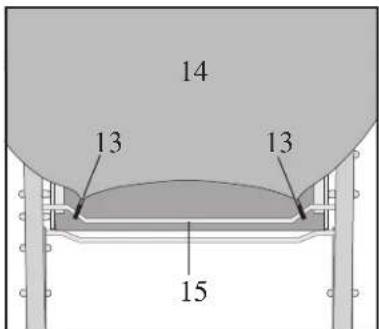
14 13 13 1511
natural_image
Illustration of a person adjusting a seatbelt using a tool (no text or symbols visible)Montera suffletten
natural_image
Illustration of a person seated on a folding chair with hands adjusting the seat (no text or symbols visible)2

text_image
5 6 4 4 33
natural_image
Illustration of a hand using a tool to adjust or install a mechanical component, with no visible text or symbols.4
natural_image
Illustration of a car seat with an open lid and directional arrows indicating rotation (no text or symbols)5
natural_image
Illustration of a medical procedure with a hand holding a tool and a numbered label '8' (no text or symbols on the diagram itself)14
natural_image
Illustration of a hand using a knife to cut a piece, with an arrow labeled '12' indicating direction (no text or symbols beyond the number)9
natural_image
Illustration of a person using a cart to lift a bicycle, showing motion direction (no text or symbols)natural_image
Diagram showing a hand holding a curved object with a downward arrow indicating motion or force (no text or symbols present)4

text_image
5 65

text_image
7 7 8 8natural_image
Illustration of a person adjusting a bicycle wheel (no text or symbols visible)- Bromsa vagnen.
WARNING
natural_image
Technical line drawing of a mechanical component with directional arrows indicating rotation (no text or symbols)Justera suffletten
natural_image
Diagram showing a hand adjusting a car seatbelt with a 9-degree angle indicator (no text or symbols present)natural_image
Close-up of a hand pressing down on a car seatbelt, showing the number 10 and an upward arrow (no text or symbols beyond the number)natural_image
Close-up of a robotic arm handling a metallic cylindrical container with a tool, against a plain white background (no text or symbols visible)
natural_image
Product photo of a black and silver bicycle wheel with a small gas cylinder beside it (no text or symbols visible)This section applies to all products.
Subject
The section applies to the following products
Box content 25
All products
Original Emmaljunga accessories 25 All products
Important safety information 26-29 All products
Assembly of chassis 30 City Cross
Chassis usage 31-32 City Cross
Assembly of seat unit 33-35 City Cross
Stroller usage 36-37 City Cross
Attaching the City Carrycot 38 City Carrycot
Usage of the City Carrycot 39 City Carrycot
Care and Maintenance....40-41 All products
Service Documentation....42 All products
Delivery Check....43 All products
Service Protocol....44 All products
BS 7409:1996 WARNING!
A CHILD'S SAFETY IS YOUR RESPONSIBILITY.
Children should be harnessed in at all times and should never be left unattended. The child should be clear of moving parts while making adjustments. This vehicle requires regular maintenance by the user. Overloading, incorrect folding and the use of non-approved accessories may damage or break this vehicle.
BS 7409:1996
Please Note:
Throughout this manual the term “vehicle” will be used as a short form for “wheeled child conveyance”.
Box content
This section applies to all products.
City Cross
1 pc. seat unit (with 5-point harness attached)
1 set shoulder pads for harness
1 pc. folded chassis with basket
4 pcs. wheels
1 pcs rain cover
1 pc. instruction manual
1 pc. hood
1 pc. seat fabric
1 pc. footrest fabric
1 pc. frontbar cover
1 pc. plastic bag
City Carrycot
1 pc. carry-cot
1 pc. hood
1 pc. mattress
1 pc. instruction manual
1 pc. apron
Original Emmaljunga accessories
Use Emmaljunga original accessories for maximum safety and comfort. Information on accessories that will fit your pram can be found in our catalogue or at our authorised retailers.
Important safety information
Read these instructions carefully before use and keep them for future reference. Your child's safety may be affected if you don't follow these instructions.
Important keep these instructions for future reference.
WARNING Never leave your child unattended.
WARNING Ensure that all the locking devices are engaged before use.
WARNING To avoid injury ensure that your child is kept away when unfolding and folding this product.
WARNING Do not let your child play with this product.
WARNING Use a harness as soon as your child can sit unaided.
WARNING This seat unit is not suitable for children under 6 months.
WARNING Always use the restraint system.
WARNING Check that the pram body or seat unit or car seat attachment devices are correctly engaged before use.
WARNING This product is not suitable for running or skating.
WARNING Accessories or spare parts that the manufacturer has not approved must not be used.
Warning sentences according to prEN1888:2010
WARNING It may be dangerous to leave your child unattended.
WARNING Do not add a mattress thicker than 45mm.
WARNING Any load attached to the handle affects the stability of the pram/pushchair.
WARNING Always use the crotch strap in combinations with the waist belt.
Warning sentences according to EN1888:2003+A1:2005+A2:2005+A3:2005
WARNING A child's safety is your responsibility. Children should be harnessed in at all times and should never be left unattended. The child should be clear of moving parts while making adjustments. This vehicle requires regular maintenance by the user. Overloading, incorrect folding and the use of non-approved accessories may damage or break this vehicle. Read the instructions.
Warning sentences according to BS 7409:1996
Important safety information
This section applies to all products.
WARNING Follow the manufacturer's instructions.
WARNING Put on all the brakes whenever you park the stroller.
WARNING Do not leave children unattended.
WARNING Do not carry extra children or bags on this stroller.
WARNING Make sure children are clear of any moving parts if you adjust the stroller, otherwise they may be injured.
WARNING Not recommended for a child under 6 months old.
Mandatory warning sentences Australia
To avoid injury or death:
WARNING Always apply the brakes whenever the pram/stroller is stationary.
WARNING Do not leave children unattended.
WARNING Secure the child in the harness at all times.
WARNING Do not carry extra children or bags on this pram/stroller.
WARNING Make sure children are clear of any moving parts if you adjust the pram/stroller.
WARNING When not in use disconnect shoulder straps from the waist strap and/or buckle.
WARNING Do not use this bassinet once the child can sit up unaided.
WARNING Do not use or park the vehicle close to open fires or other sources of heat such as radiators for example.
WARNING Avoid steps, stairs and escalators whenever possible. Always stand below the stroller if used on an escalator.
Warning sentences according to AS/NZS 2088:2009
WARNING Do not let other children play unattended near the carrycot.
WARNING Do not use the carrycot if any part is broken, torn or missing.
WARNING Use only replacement parts supplied or approved by the manufacturer.
WARNING Be aware of the risk of open fire and other source of strong heat, such as electric bar fires, gas fires, etc., in the near vicinity of carrycot.
WARNING The handles and the bottom of the carrycot should be inspected regularly for signs of damage and wear.
WARNING Never use the carrycot on a stand.
WARNING Do not leave your child unattended.
WARNING Use only the carrycot on a firm, horizontal level and dry surface.
Warning sentences according to EN 1466:2004+A1:2007
- Your child's safety is your responsibility.
- This product is intended for one (1) child from the age of 6 months up to a maximum weight of 15kg . Only use the pram for the number of children it is intended for.
- The seat unit/pushchair is intended for the transportation of one (1) child from six months up to a maximum weight of 15kg .
- The carrycot can only be used for the transportation of one child from 0 to 6 months up to a maximum weight of 9kg . The product is not suitable for a child that can sit unaided, roll around or support themselves on hands and knees.
- With a lift (original accessory) the pram can be used from birth
- City Cross chassis should only be used together with an City carrycot or a Type A seat unit.
- Follow the care and maintenance instructions.
- The safety instructions and directions in this manual cannot cover all possible conditions and unforeseeable situations which may occur. It must be understood that common sense, caution and care are factors that cannot be built into a product. These factors are the responsibility of the person(s) caring for and operating the pram.
- It is important that these instructions are understood and followed by everyone that uses the pram and accessories. Always inform and instruct each person using the pram and accessories how they should be used, even if the person(s) in question will only use them for a short time.
- The maximum weight for one child using the Toddler Roller accessory on the pram is 20 kg.
- Use a maximum of one accessory on the pram at any one time e.g. Toddler Roller, Toddler Seat or car seat adaptor.
- Do not place objects on the hood. Never use the pram without the hood. The pocket in the hood is intended for the storage of light objects only and must not be loaded with a weight exceeding 250g .
- If any part of this manual is unclear or requires further explanation, please contact an authorised Emmaljunga retailer who will be able to assist you.
- The pram is intended for transportation only. Never use the pram as a bed for your child.
- Never leave the pram with a child in it without engaging the brake.
- The brake should always be engaged when you lift your child in and out of the pram.
-
Never park the pram on a hill or an uneven surface.
-
Do not stand or sit on the footrest. The footrest must only be used as a support for one (1) child's legs and feet. Any other usage may lead to serious personal injury. The maximum load for the footrest is 3kg .
- Never use the product if a part is faulty or damaged.
- Check that all zips and poppers are securely fastened before use.
• Always remove the child before you fold the pram. - Do not place any additional mattresses in the carrycot and only use the mattress that is included with the pram or another mattress recommended by Emmaljunga.
• Overloading, incorrect folding and the use of non-approved accessories may cause injury to your child/children and/or damage the pram. - When using a lift accessory, attach the product to the d-rings on the pram. Check that the carrycot's/lift's carrying straps are fastened securely. The Babylift's carrying straps should be placed inside the product's mini hood.
- Any load that is placed on the pram (e.g. on the handle, backrest or on the sides of the pram) will affect the stability of the pram. Do not use non-approved accessories.
- The shopping tray has a maximum weight limit of 5kg . Always place heavier objects in the centre of the tray. The pram may become unstable if the weight in the tray is unevenly distributed.
- Only use original replacement parts supplied by Emmaljunga.
- Never use the carrycot on a stand.
- Items in the shopping tray should not protrude over the sides as items could get caught in the wheel spokes.
- The seat unit or carrycot must not be used as a car seat.
- Never leave the carrycot carrying straps loose on the outside of the carrycot sides when the pram is in use.
- Never leave the carrycot carrying straps loose on the outside of the carrycot sides when the pram is in use.
- The outer length and width of the Carrycot is 860 ~mm / 450 ~mm .
- The outer length and width of the City Carrycot is 795 ~mm / 430 ~mm .
- The outer length and width of the Quadrolift is 800 ~mm / 400 ~mm .
- The outer length and width of the Babylift is 800 mm / 330 mm.
Assembly of Chassis
This section applies to the following products:
City Cross
1
natural_image
Line drawing of a hand holding a small object with an arrow pointing to it, next to a vertical line (no text or symbols)2

natural_image
Illustration of a hand adjusting a bicycle wheel with a handle (no text or symbols)3

text_image
1 2 34
text_image
Diagram of a mechanical tool with labeled parts 4 and 5, showing a blade and handle assembly.Attaching Wheels
- Remove plastic protectors from chassis axles. Save for future use.
IMPORTANT
- Axles may be covered with axle grease, and can leave stains on fabric.
WARNING
- Choking Hazard - Keep plastic protectors away from children.
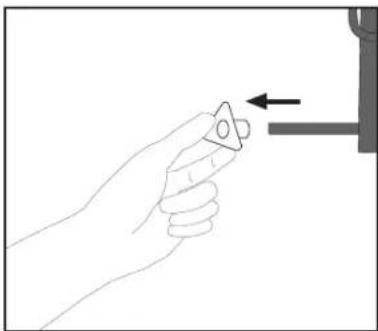
- Make sure the parking device is not engaged. Depress release button on wheel hub, slide the wheel all the way onto axle. Release button and pull wheel toward you until you hear a click.
WARNING
- Pull wheel outwards to be sure wheel is locked on.
Repeat the procedure on each of the four wheels.
Make sure that children are kept away from moving parts when assembling the pram, otherwise they might be at risk of injury.
Assembly of Chassis
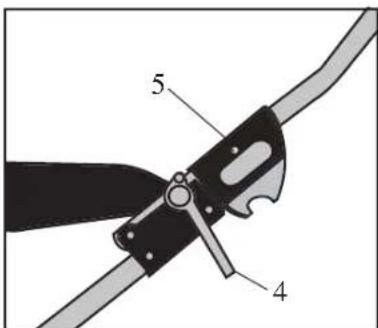
- Engage the parking device (1). Unfold and extend chassis by pulling up on the handlebar (2) while holding down on the chassis sidebar (3).
WARNING
• The chassis-locks must click into position
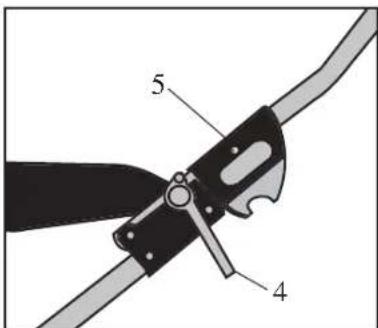
- The secondary locking device (4) will become engaged only if the main locking devices (5) are not correctly in position. This is to prevent accidental folding.
WARNING
- Always check that the main locking devices (5) are engaged correctly before using your pram, it is dangerous to use your vehicle without these in their correct position.
Chassis usage
This section applies to the following products:
City Cross
1
text_image
Diagram showing a mechanical component with numbered parts and directional arrows indicating motion or rotation.2
natural_image
Mechanical assembly diagram showing a clamping mechanism with a red component and a downward arrow labeled '1' (no text or symbols beyond the label)How to use the adjustable suspension E.A.S.T.
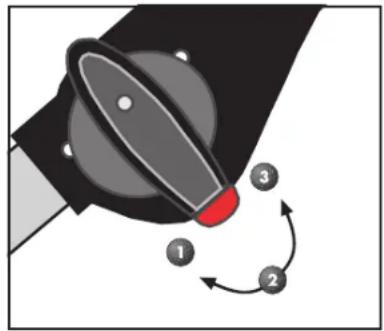
The adjustable suspension system enables you to select the strength of the suspension as the child's weight increases. Also useful for different kinds of surface.
- The suspension may be adjusted into three different positions.
- Soft
- Medium
- Hard
WARNING
- Remove your child from the pram before adjusting the suspension.
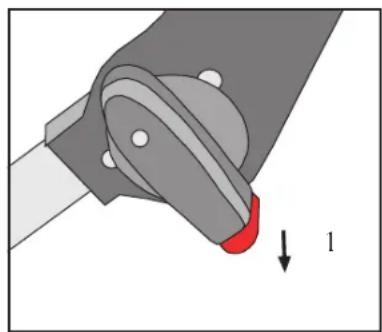
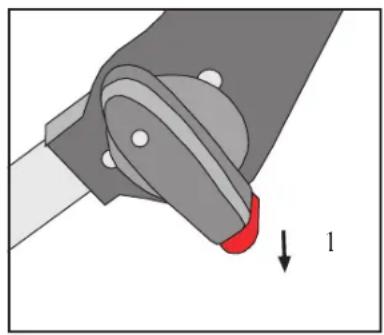
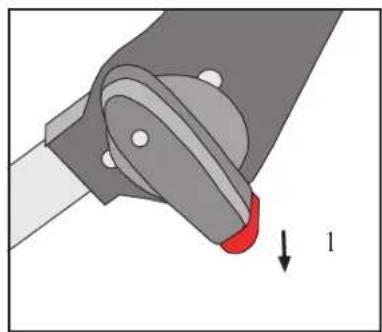
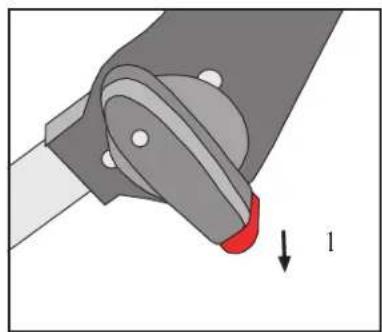
- Adjust the suspension by pulling the grey tab (1) outwards and twist the knob until the grey button locks into the desired position: 1, 2 or 3. Repeat on the other side of the chassis - make sure the knobs are in the same positions on both sides of the chassis.
IMPORTANT
- Adjust the suspension when the chassis is folded to avoid unnecessary wearing of the mechanism.
WARNING
- The suspension must be in the same position on both sides of the chassis to avoid uneven strain and possible damage to the chassis.
- Make sure the grey button has locked into position in order for the suspension to work properly.
3
text_image
3 24
natural_image
Illustration of a hand adjusting a car wheel rim (no text or symbols visible)Manual City Cross & City Carrycot v. 2.2
How to adjust the handle
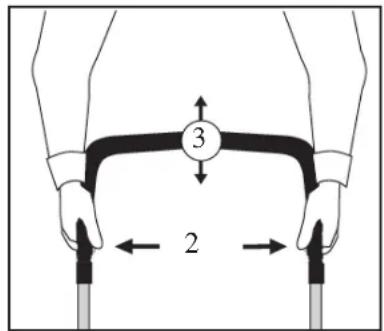
- Adjust the handle by pressing the grey buttons on the inside (2) simultaneously.
Without releasing the buttons adjust the handle upwards or downwards to the desired position (3).
Engaging the Parking Device
- Engage the parking device by pushing down with your foot.
- Disengage the parking device by pulling up.
WARNING
- Never leave the vehicle without first engaging the parking device.
- Avoid uphill or downhill parking.
- The pram's brake should always be engaged when you lift your child in and out of the pram.
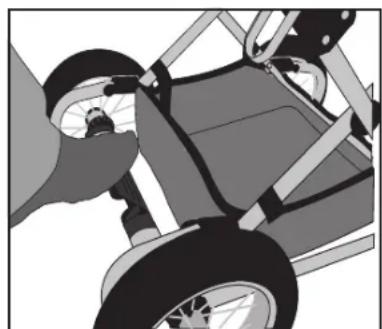
- Make sure that the cogs are attached properly on all 4 wheels
- Make sure that the brake pin engages into the cogs when the vehicle is in parked position.
Chassis usage
This section applies to the following products:
City Cross
5
text_image
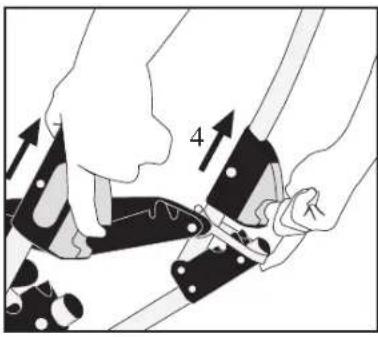
4Make sure children are clear of any moving parts if you adjust the stroller, otherwise they may be injured.
Folding the Chassis
- Fold the chassis by pulling the two main locking devices (4), one on each side, upwards.
6
natural_image
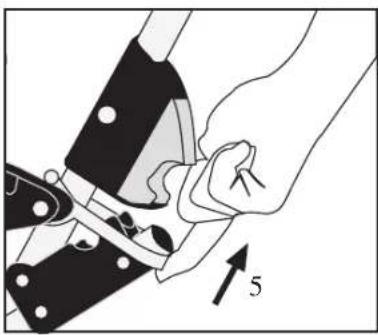
Illustration of a hand using a tool to cut or adjust a mechanical component, with an arrow indicating the number 5 (no text or symbols present)- Lift the secondary locking device (5) and fold the handle forward.
7
natural_image
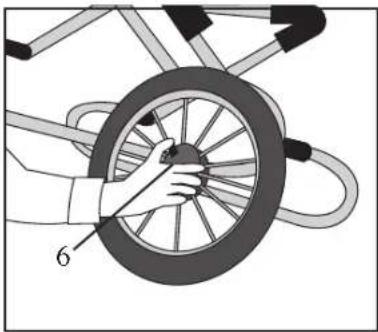
Illustration of a hand adjusting a bicycle wheel with a numbered label (6), no text or symbols present.- To make chassis even more compact, remove wheels by pressing the wheel hub release buttons (6) and pulling the wheels off the axle.
IMPORTANT
- Wipe off the axlestub before reattaching wheels.
8
natural_image
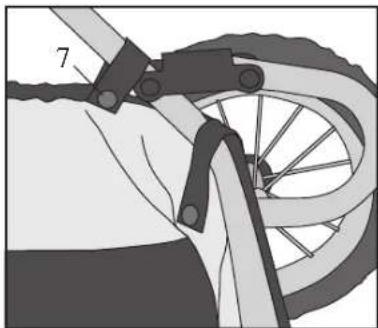
Mechanical diagram showing a person using a tool to lift a bicycle wheel (no text or symbols visible)- The tray is assembled when delivered but can be removed to be washed. The elastic (7) has to be in a straight line with the wheels on the side of the chassis.
Assembly of seat unit
This section applies to the following products:
City Cross
1
2
Assembly of Seat unit and 5-point Harness
- Lift the seat adjustment lever (1). Push the backrest into its upright position (2).
1
2
3 3
- Before assembly, release shoulder straps and waist straps from harness buckle. Slide back pocket of seat fabric (3) over seat frame backrest.
3
4
5 5
6
- Slide the shoulder straps (4) through the holes in the backrest.
- Slide the waist straps (5) through the holes in the seat.
- Slide the crotch strap (6) through the hole in the base and seat.
4
7
8 8
- Slide the shoulder pads onto the shoulder straps (7). Fasten the shoulder straps to the waist straps with the snap clip (8).
Assembly of seat unit
This section applies to the following products:
City Cross
5
text_image
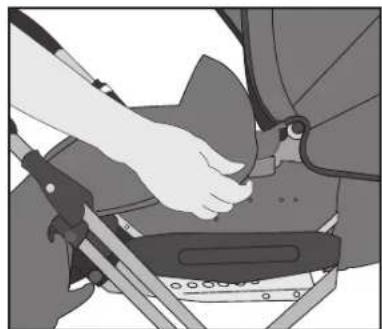
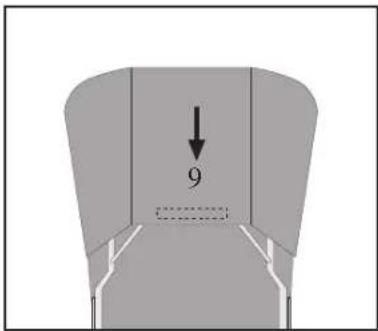
9- Make sure that the fabric backrest is pulled down as far as it will go over the tubular frame. (9).
WARNING
- Always check that the backrest is securely fastened in position before use. This step is very IMPORTANT!
6

natural_image
Close-up of hands adjusting a mechanical component with a circular mark and arrow (no visible text or symbols)- Press stud armrest fabric over both sides of seat frame.
7

text_image
10- Slide the back pocket of footrest cover (10) over footrest frame. - The Footrest cover is reversible.
WARNING
- Do not let your child/children stand on the footrest.
8
text_image
11 12Assembly of Frontbar
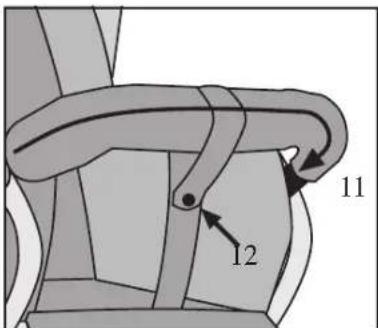
- Zip frontbar padding (11) around metal frontbar. - Press stud the crotch strap (12) around the frontbar of stroller.
Assembly of seat unit
This section applies to the following products:
City Cross
9
natural_image
Close-up of a car seatbelt buckle with a downward arrow indicating compression (no text or symbols)10

text_image
14 13 13 1511
natural_image
Illustration of a person adjusting a seatbelt using a steering wheel (no text or symbols visible)Assembly of Hood
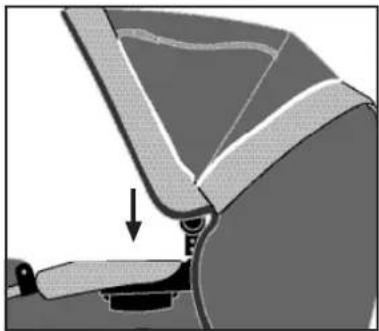
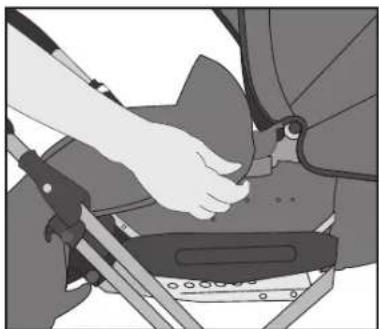
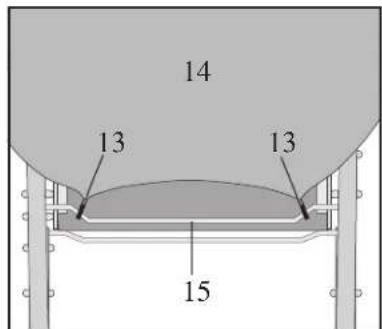
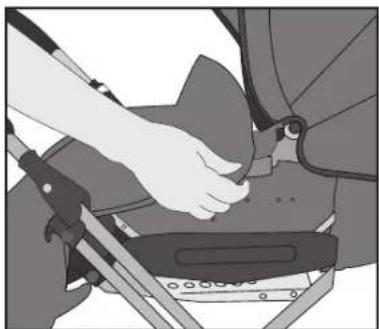
- Press the two plastic legs, one on each side of the hood, into the two plastic holders on the seat frame, one on each side. Make sure they snap into place.
- Fasten the two plastic hooks (13) on the hood apron (14), to the metalbar (15) of the seat adjustment lever.
IMPORTANT
- The hood should always be assembled when the pram is used and the hooks should bed fastened.
Assembly of Apron (Accesory)
- Slip the apron over the footrest and pull toward the front of the hood. Snap the boot onto the four press-studs, two on each side of the hood.
IMPORTANT
- The hood can not be folded with the apron attached.
Stroller usage
This section applies to the following products:
City Cross
1

natural_image
Illustration of a person seated on a folding chair with hands adjusting the seat (no text or symbols visible)2
text_image
5 6 4 4 33
natural_image
Illustration of a hand using a tool to adjust or install a mechanical component (no text or symbols visible)4
natural_image
Illustration of a seat with an open lid and directional arrows indicating rotation (no text or symbols)5

natural_image
Illustration of a person receiving a medical procedure with a tool, labeled with the number 8 (no text or symbols on the diagram itself)Attachment of seat-unit.
- Engage the parking device: Lift the Seat-unit by the handles (1) and push the Easy Fix into the attachments on both sides of the chassis (2) until it locks into its position.
- To release the seat-unit: Start by engaging the parking device. Pull the Easy Fix grip (1) towards you and then lift the seat-unit straight up.
WARNING!
- Don't let any child be placed in the vehicle when it is being folded/unfolded
- Hold the handles steadily until the seat-unit is in place.
- Don't let any child be placed in the vehicle when it is being folded/unfolded - Hold the handles steadily until the seat-unit is in place.
IMPORTANT: Make sure that the seat-unit is in place, before you start to use the vehicle.
- Never lift the top part when it is assembled onto the chassis.
Adjusting the 5-point Harness
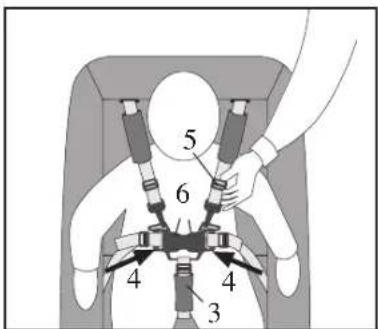
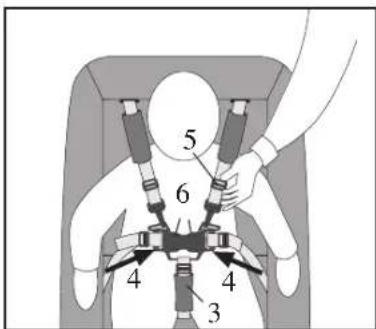
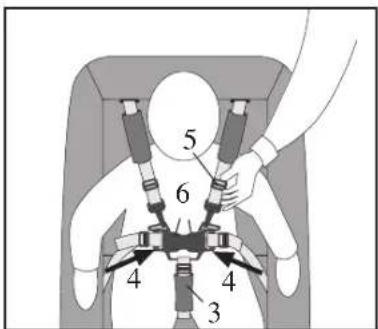
- Bring crutch strap (3) forward between child's legs and up toward front of waist. Insert the waist straps (4) into the harness buckle until they "click" in place. Make sure waist straps are fastened.
- Adjust all straps, using the sliders (5), to fit your child properly.
- To release shoulder and waist straps, press the buttons (6) in the centre of the harness buckle.
- Bring crutch strap (3) forward between child's legs and up toward front of waist. Insert the waist straps (4) into the harness buckle until they "click" in place. Make sure waist straps are fastened. - Adjust all straps, using the sliders (5), to fit your child properly. - To release shoulder and waist straps, press the buttons (6) in the centre of the harness buckle.
Attachment points are provided at the ends of each waist strap for a separate harness complying with BS 6684.
WARNING
• Always use the harness when the child is placed in the vehicle. Make sure that all the buckles are fitted into position and that the harness is attached to the vehicle.
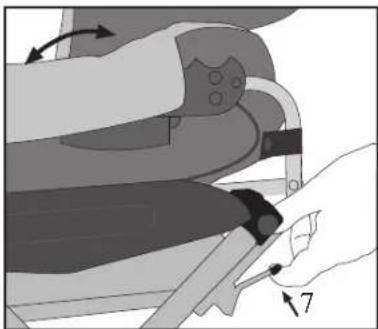
Adjusting the Backrest
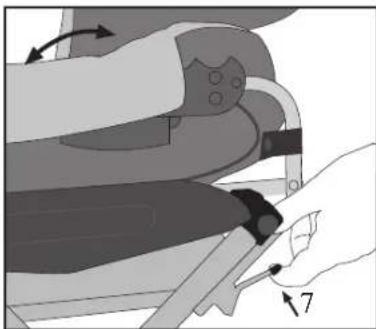
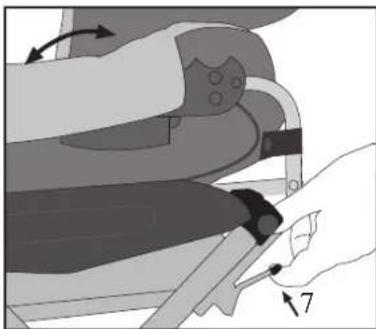
- The seat backrest is adjustable by moving the seat adjustment lever (7) located at the bottom behind seat, toward backrest.
WARNING
- Once in the desired position, push on backrest to ensure a locked position.
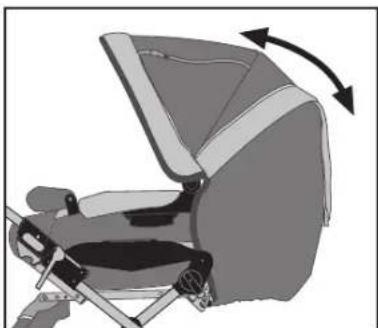
Adjusting the Hood
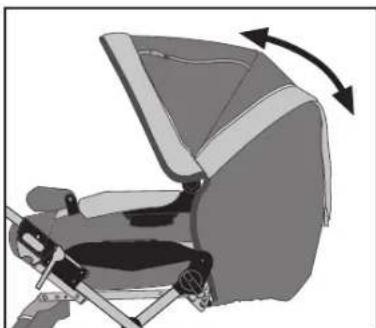
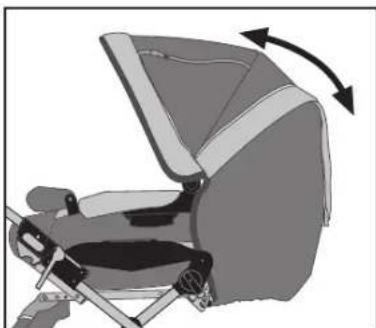
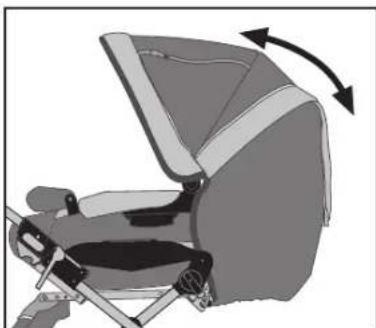
- Adjust hood by gently pulling the front bar of the hood back or forth to desired position.
- A Mosquito net is integrated in the hood and can be pulled over the footrest and attached with the plastic hooks.
IMPORTANT
- Never carry the seat unit by the hood.
- Never lift the seat-unit when it is assembled onto the chassis.
Make sure children are clear of any moving parts if you adjust the stroller, otherwise they may be injured.
Adjusting the Footrest
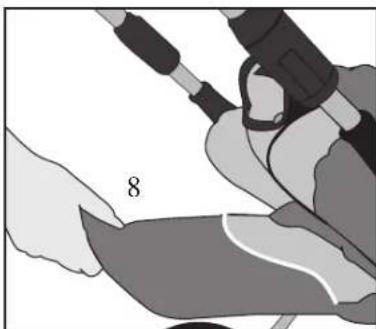
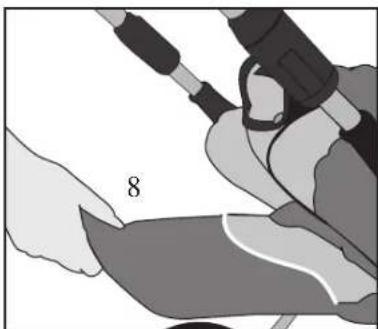
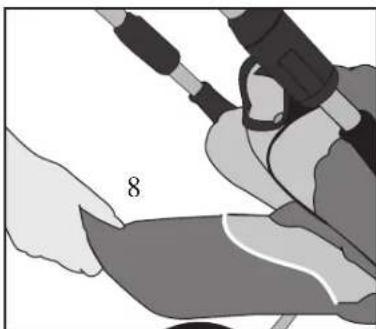
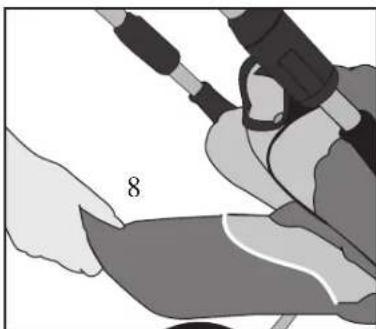
- The footrest can be adjusted into two positions. Adjust the footrest to the down position by releasing the lock on the side of the footrest and pulling the footrest horizontally and downwards (8).
- Make sure that the footrest is locked into desired position before usage.
- The footrest is adjusted by pulling the footrest upwards and then pushing it horizontally back towards the pram
WARNING
- Never let your child/children stand on the footrest.
Stroller usage
This section applies to the following products:
City Cross
6

text_image
9 107

text_image
118

natural_image
Illustration of a hand using a knife to cut a piece, with an arrow labeled '12' indicating direction (no text or symbols beyond the number)9

natural_image
Illustration of a person using a cart with arrows indicating motion (no text or symbols)Make sure children are clear of any moving parts if you adjust the stroller, otherwise they may be injured.
Folding the Stroller
- Engage the parking device. Adjust the backrest into its upright position (7). Fold the hood completely towards the front bar of the seat unit (8). Adjust footrest to “an above horizontal position”.
WARNING!
- No child is to be placed in the vehicle when folding or unfolding the vehicle
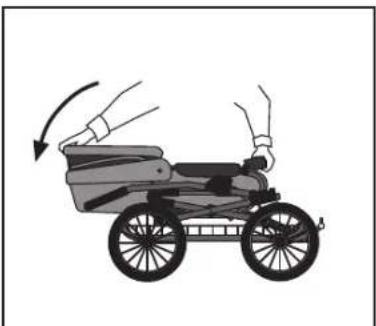
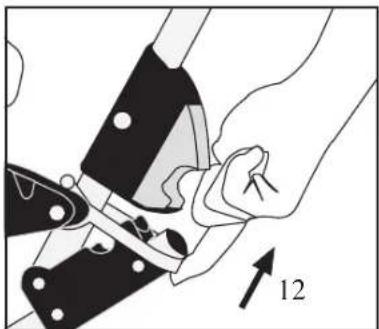
- Fold the chassis by pulling the two main locking devices, one on each side, upwards.
NOTE:
Seat unit is removed from the illustration to clarify the instruction.
- Lift the secondary locking device and fold the handle forward. IMPORTANT
- Make sure no fabric parts get caught in between handle and seat unit.
NOTE:
Seat unit is removed from the illustration to clarify the instruction.
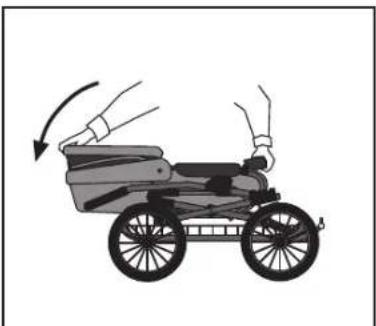
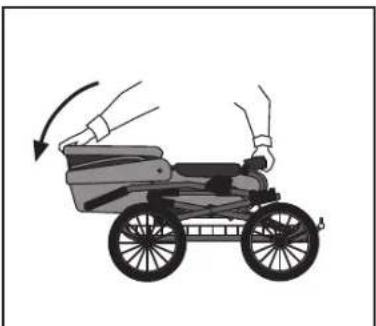
- Fold the backrest from its upright position into full layback position, then push the hood towards the backrest.
- To make stroller even more compact, remove wheels by pressing the wheel hub release buttons and pulling the wheels off the axle.
IMPORTANT
- Wipe off any dirt or sand from axle stubs before reattaching wheels.
Use of the rain cover
- The rain cover is attached by placing the rain cover over the carry-cot and seat-unit. Please note that there is an opening in the raincover near the hood opening. Use the rain cover that is supplied with the pram.
- Always use the rain cover when it's raining or snowing. If the pram is damp before the rain cover is attached, wipe off the fabrics first if possible.
- Make sure the raincover is completely dry before it is placed back into its bag.
Assembly and usage of the City Carry-cot (Accessory to City Cross)
This section applies to the following products: City Carrycot
1
text_image
1 22

text_image
3 43

natural_image
Diagram showing a hand holding a curved object with a downward arrow indicating motion or force (no text or symbols present)4
text_image
5 65

text_image
7 8 7 8Assembly of pram body
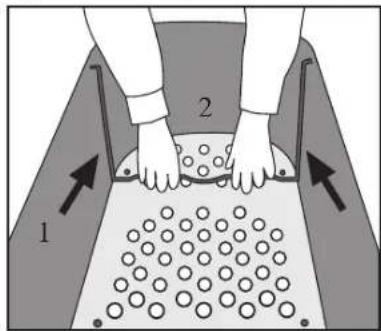
- Remove plastic covers from mattress, fabrics and discard. Slide the two metal support brackets (1) onto the base (2) of the pram body.
• The base is made of wood.
WARNING
- Risk of suffocation. Do not let your children play with the plastic bag.
-
Make sure that the metal support bars are attached so that the pram stability and safety will not be jeopardised.
-
Insert the mattress (4).
- The exclusive mattress consists of a combination of fibre filling and polyeter filling. Make sure that you place the mattress with the firmer polyeter filling facing downwards in the carrycot.
WARNING
- The depth from the top of the mattress together with other bed accessories to the carrycot upper part (3) must be at least 150mm.
- Do not add a mattress thicker than 45 mm.
-
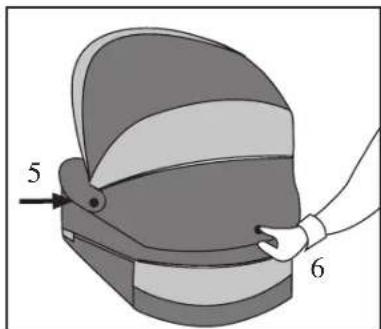
Attach the hood to the pram body by pushing the plastic leg of the hood into the plastic holders on the pram body. Make sure they snap into place.
-
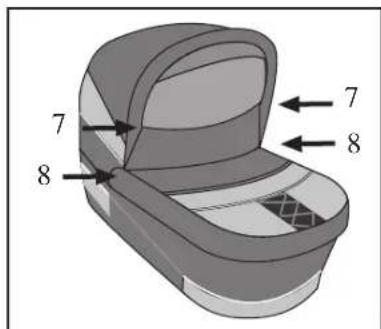
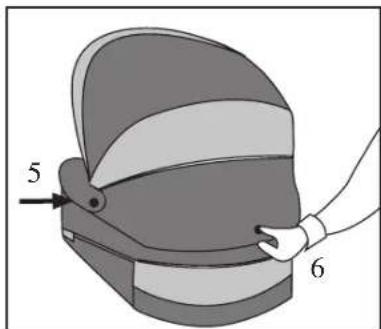
Press the hood fabric onto the plastic holder (5), on each side. Press the velcro (6) onto the pram body.
- The press studs on the back of the hood is to use when roll up the hood for better ventilation when it is hot.
- Press the apron onto the hood (7) and onto the plastic holder (8) on each side.
IMPORTANT
- The hood cannot unfold when the apron is snapped onto the hood without releasing the press studs (7)
How to use the Carrycot
This section applies to the following products:
City Carrycot
6
natural_image
Illustration of a hand operating a small car with wheels and suspension components (no text or symbols visible)7

natural_image
Diagram of a mechanical device with directional arrows indicating rotation or movement (no text or symbols)8
natural_image
Mechanical assembly diagram showing a hand pressing down on a car seatbelt with a numbered component (no text or symbols)9
natural_image
Mechanical assembly diagram showing a hand pressing down a car seatbelt with a 10-degree angle indicator (no text or symbols present)Engaging the Parking Device
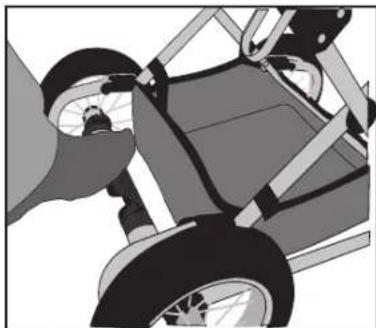
- Engage the parking device by pushing down with your foot.
• Disengage the parking device by pulling up.
WARNING
- Don't let any child be placed in the vehicle when it is being folded/unfolded
Adjust the hood
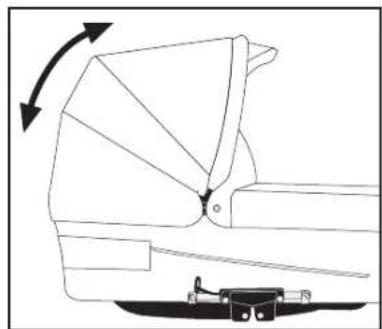
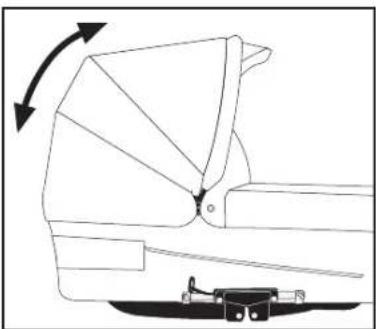
- Adjust the hood by gently pulling the hood forward into desired position.
Do not adjust the hood while the apron is attached.
IMPORTANT
- Never carry the carrycot by the hood.
- Never lift the carrycot when it is assembled onto the chassis.
Attachment of the carry-cot
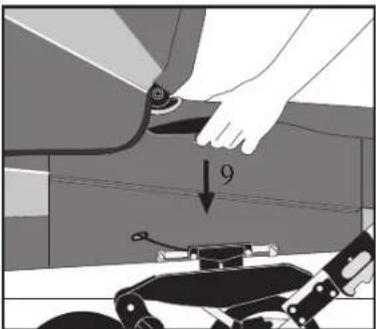
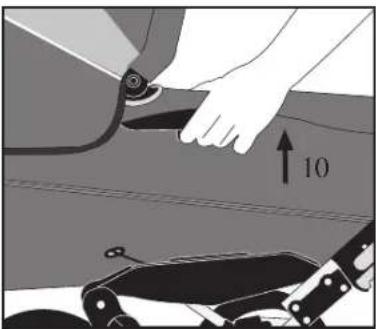
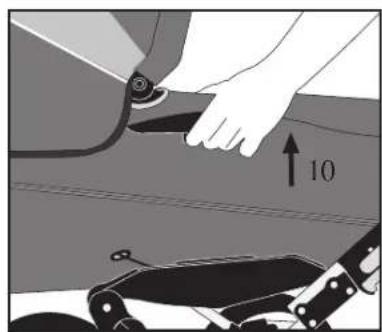
- Engage the parking device: Lift the carrycot by handles and push the Easy Fix into the attachments on both sides of the chassis until it locks into its position.
WARNING
- Make sure that the top part is in locked position on both sides.
To release the carry-cot
- Start by engaging the parking device. Pull the Easy Fix grip towards you and then lift the carrycot straight up.
- When the Easy-Fix can not be pushed any further, the top part can then be removed.
Use of the rain cover
- The rain cover is attached by placing the rain cover over the carrycot and seat-unit. Please note that there is an opening in the rain cover near the hood opening. Use the rain cover that is supplied with the pram.
- Always use the rain cover when it's raining or snowing. If the pram is damp before the rain cover is attached, wipe off the fabrics first if possible.
- Make sure the rain cover is completely dry before it is placed back into its bag.
Care and maintenance
This section applies to all products.
General care and maintenance instructions
- Never expose your vehicle to excessive sunlight for long periods of time.
• Always use a raincover when it is snowing or raining. - Never store your vehicle in cold and/or damp places.
- Should the chassis become wet, dry it off promptly. Make sure vehicle is completely dry before storing.
- If the vehicle is used near the ocean or salted roads, spray the chassis with a hose, and dry.
- Be careful during transportation and storage as the surface of the chassis is fragile. Scratches that arise after the sale are not a justifiable complaint.
Routine Inspection
- Regularly clean the chassis and metal parts of the vehicle, dry off and lubricate all joints of the chassis. Spokes, and fenders on all wheels, should frequently be wiped off with a dry cloth. When the pram is used during the winter time, cleaning of the pram should be done at least once a week. Lack of maintenance could cause corrosion on the spokes and fenders. Should corrosion on the surface occur, which is a possibility, you are required to remove this with a corrosion cleaning agent.
Important! Powdercoated chassis and powdercoated rims shall never be treated with a corrosion cleaning agent as the colour will change.
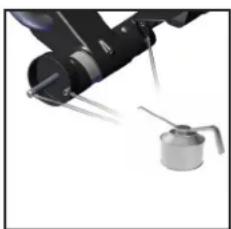
- It is recommended to lubricate the wheel axles and suspension system every three months (clean axles with a cloth prior to lubrication). Axles may be lubricated with petroleum jelly or automobile oil.
Check that:
- all chassis locking devices are functioning properly.
- all rivets, nuts and bolts are firmly tightened and not broken.
- all plastic parts are not cracked or broken.
• the wheel bushings are in a good condition. - all velcros are securely fastened on backrest pocket and seat board flap.
- the press-stud is securely fastened on the footrest flap.
- all elastic straps are in a good condition.
- the secondary locking mechanism is intact and can move freely.
- the parking brake works and the brake rubber is intact.
- the tyre air pressure is correct (see marking on tyre: 28 P.S.I. = 1,8 bar; 35 PSI = 2,5 bar)
- The handles and the bottom of the carrycot should be inspected regularly for signs of damage and wear.
PLEASE OBSERVE
- When in need of servicing with original parts and other technical issues that require a professional decision, always get in touch with your retailer where your Emmaljunga product was purchased. All Emmaljunga products come with a 6-month manufacturing guarantee. This guarantee does not apply when issues arise through normal wear and tear.
• This information is relevant for Great Britain only.
WARNING
- Tyres can when in contact with PVC-flooring or other plastic materials cause discoloration. Always use wheel protection if the pram/stroller is stored on delicate surfaces.
natural_image
Close-up of a robotic arm spraying liquid onto a metallic cylindrical container (no text or symbols visible)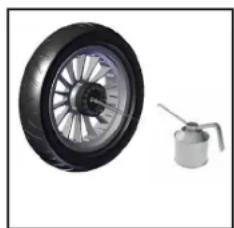
natural_image
Product photo of a wheel rim and a small cylindrical tool (no text or symbols visible)- The parking brake consists of moving parts and requires regular maintenance for correct function.
- To ensure effective functioning always make sure that the parking brake is well lubricated. Immediately remove sand, snow, ice and dirt from any moving part of the braking system.
- Use a silicon or oil based lubricant to lubricate the brake pedal, wheel axle and brake pins on both sides of the parking brake at least once a month. Also lubricate the release mechanism on the wheels on a similarly regular basis.
- If you use your Emmaljunga pram/stroller on sandy beaches or under other dirty and wet conditions make sure to take extra care of the parking brake and maintain the braking system and wheels as detailed above whenever needed.
Care and maintenance
This section applies to all products.
Washing instructions
- Hood:
Take off and extend the hood. Shower the hood from the inside (interior fabric) with luke warm water. Use mild liquid soap as detergent. Cleanse it thoroughly. Drip dry the hood fully extended. Duo Combi: Wash the detachable part of the hood according to the instructions above.
- Seat fabric and 5-point harness:
Remove the seat fabric from the chassis. Handwash seat fabric in lukewarm water. Use mild liquid soap as detergent. Cleanse thoroughly. Drip dry the seat fabric. When the seat fabric is removed the 5-point harness is accessible. Only wipe the nylon straps and plastic parts clean with a damp cloth. Do not hand wash. Make sure the harness is dry before reassembly.
- Front bar cover:
Remove the front bar cover. Hand wash in luke warm water. Use mild liquid soap as detergent on the surface of the exterior fabric. Handle non-woven interior material with care. Drip-dry.
- Mattress:
The exclusive mattress consists of a combination of fibre filling and polyeter filling. We recommend that you hand wash this product. The mattress can be machine washed at 40 degrees, but the fibre filling must be flattened back into shape after washing. Please note that the polyeter mattress does not contain bleach and will therefore naturally become yellow.
- Carrycot:
Remove hood, bed-lining, Hi Pro, mattress and apron. Wipe the exterior fabric and the interior nonwoven material, clean with a damp cloth. Do not hand wash. Dry the pram body in its fully extended position. Make sure the wooden base is protected from any water.
General Information
- Ironing: If any fabric part needs to be ironed, always use a 100 % cotton cloth in-between the iron and the fabric to protect the fabric surface. Iron the exterior fabrics (100 % polyester) and the interior fabrics (65 % cotton/35 % polyester) on gentle heat (110°C on the iron).
- Make sure all parts are completely dry before reassembly. Check the trimmings and the seam on the seat-fabric underneath the backrest-pocket.
- You may apply a material protector (like Scotchgard™) on the exterior fabric after washing. Always apply before reassembly.
WARNING
- Do not place child/children in stroller for at least 24 hours after applying a material protector.
Reassembly
WARNING
- Make sure all parts are assembled correctly according to the instructions in this manual.
IMPORTANT
Cleaning instructions for Leatherette fabrics:
Leatherette Fabrics must not be cleaned according to the above instructions. Leatherette fabrics should only be cleaned with a drop of mild washing up liquid and then wiped off with a damp cloth.
Emmaljunga
Service Documentation
Your pushchair requires regular care and maintenance. We recommend that you have your product serviced regularly, following the suggested service intervals in order for you to take full advantage of and maintain the quality of the product and to minimize the effects of wear and tear.
Always take your product to an authorised Emmaljunga retailer to carry out the service. After every service you will receive a report covering what has been inspected and checked together with a note stating the date on which the service has been carried out.
Before the pram is sent from the factory it has undergone regular checks and testing. Another check is completed before the product is given to you to ensure that it fulfills all safety and quality requirements.
In addition to the regular service by your authorised retailer it is very important that you also check and maintain the product. You can find out more about this under the care and maintenance section in the product manual.
Chassis number
Delivery control
0
Date, stamp, customer name, signature
6 month service
6
Date, stamp, customer name, signature
12 month service
12
Date, stamp, customer name, signature
24 month service
24
Date, stamp, customer name, signature
36 month service
36
Date, stamp, customer name, signature

Emmaljunga
Delivery Check
1. Check that the following items are present in the correct numbers:
□ 1 pc. seat unit (with 5-point harness attached)
□ 1 set shoulder pads for harness
□ 1 pc. folded chassis with basket
□ 4 pcs. wheels
□ 1 pcs rain cover
□ 1 pc. instruction manual
□ 1 pc. hood
□ 1 pc. seat fabric
□ 1 pc. footrest fabric
□ 1 pc. frontbar cover
2. Check the functions of the chassis.
Unfold the chassis.
□ Check that the chassis locks function on both sides.
☐ Check that the safety catch/safety buttons function correctly by folding the pram and checking that the safety catch/safety buttons are activated to prevent accidental folding.
☐ Check that the seat unit/carrycot clicks securely on to the chassis and that it locks on both sides.
☐ Check the harness function on the seat unit by locking and unlocking the harness.
☐ Check the handle height adjustment function by adjusting the handle up and down. The handle should lock securely into each position.
☐ Check that the EAST adjustable suspension function can be secured in the three positions on both sides of the chassis.
☐ Check that the backrest can be adjusted and locks securely into each of its four positions.
☐ Check that the footrest can be adjusted and locks securely into each of its two positions.
3. Wheel and brakes
□ Lubricate the ends of the axles.
□ Attach the wheels and make sure that the wheels lock into position.
☐ Check that the parking device locks both rear wheels when engaged.
4. Overall inspection of the product
□ Check that all rivets, screws and nuts are securely fastened.
☐ Check that all poppers and zips on the seat fabrics and the tray are correctly and securely attached.
□ Make sure that there are no other visible differences on the chassis, seat fabrics, tray and wheels.
Emmaljunga
Service Protocol
Service
Chassis/seat unit/carry cot function
Check the chassis locks function on both sides.
Check the safety catch/safety buttons function by folding the pram and checking that the safety catch/safety buttons are activated to prevent accidental folding.
Check that the seat unit/carrycot clicks securely on to the chassis and that it locks on both sides.
Check the safety catch/safety buttons function by folding the pram and checking that the safety catch/safety buttons are activated to prevent accidental folding.
Check the handle height adjustment function by adjusting the handle up and down. The handle should lock securely into each position.
Check that the EAST adjustable suspension function can be secured into the three positions on both sides of the chassis
Check that the backrest can be adjusted and locks securely into each of its four positions.
Check that the footrest can be adjusted and locks securely into each of its two positions.
Wheels and brakes
Check that the wheels are removable and that they lock onto the axles
Check that the brakes lock both rear wheels
Visual overview
Check that all rivets and screws are tightened correctly
Check that all buttons and zippers are intact and correctly fastened
Check for any other visible deviations on the chassis, fabrics, tray and wheels
Lubrication
Clean and lubricate the wheels, axles, chassis locks, footrest and the safety catch
Other notes (further adjustments or changed details)
English
Innhold
Kapittel Kapittel gjelder for følgende produkter:
Eskens innhold....47 Alle produkter
natural_image
Line drawing of a hand holding a small object with an arrow pointing to it, next to a vertical line (no text or symbols)Montere på hjulene
natural_image
Illustration of a hand adjusting a bicycle wheel with a curved handle (no text or symbols)- Ta av bremsen ved å løfte opp bremsepedalen. Tryck på navkapselns frigöringsknapp, skjut in hjulet på axeln så långt det går. Trykk inn navkapselens frigjöringskanpp, skyv hjulet inn på akslingen så langt det går. Slipp knappen og dra hjulet mot deg til du hører det klikker på plass.
ADVARSEL
text_image
Diagram of a mechanical tool with labeled parts 4 and 5, showing a blade and handle assembly.text_image
Diagram showing a mechanical component with numbered parts and directional arrows indicating motion or rotation.2
natural_image
Mechanical assembly diagram showing a red-handled knob inserted into a gray component, with a downward arrow labeled '1' (no text or symbols beyond the label)natural_image
Illustration of a hand adjusting a car wheel rim and tire (no text or symbols visible)Manual City Cross & City Carrycot v. 2.2
text_image
Diagram showing a hand adjusting a belt buckle with numbered arrows indicating movement or force directionnatural_image
Illustration of a hand using a tool to cut or adjust a mechanical component, with an arrow indicating the number 5 (no text or symbols present)natural_image
Illustration of a hand adjusting a bicycle wheel with a numbered label (6), no text or symbols present.natural_image
Mechanical diagram showing a hand operating a bicycle wheel with a tool, no text or symbols presentnatural_image
Close-up of hands adjusting a mechanical component with a circular detail and an arrow indicating motion (no text or symbols)natural_image
Close-up of a car seatbelt buckle with a downward arrow indicating compression or disassembly (no text or symbols)10
text_image
14 13 13 1511

natural_image
Illustration of a person adjusting a seatbelt device (no text or symbols visible)natural_image
Illustration of a person seated on a chair with hands placed on top (no text or symbols visible)2
text_image
5 6 4 4 33
natural_image
Illustration of a hand using a tool to adjust or install a mechanical component, with no visible text or symbols.4

natural_image
Illustration of a car seat with an open lid and directional arrows indicating rotation (no text or symbols)5

natural_image
Illustration of a hand holding a tool over a device, with the number 8 labeled on the device (no text or symbols beyond the number)natural_image
Illustration of a hand using a knife to cut a piece, with an arrow labeled '12' indicating direction (no text or symbols beyond the number)9

natural_image
Illustration of a person using a cart to lift a bicycle, showing motion direction (no text or symbols)text_image
Diagram illustrating a mechanical or fluid system with labeled components and directional arrows indicating flow or movement.2

text_image
3 43

natural_image
Diagram showing a hand holding a curved object with a downward arrow indicating motion or force (no text or symbols present)4

text_image
5 65
text_image
7 8 7 8Montering av Bag.
natural_image
Illustration of a person using a bicycle tire to adjust wheel rim (no text or symbols visible)- Brems vognen.
ADVARSEL
natural_image
Technical line drawing of a mechanical component with directional arrows indicating motion (no text or symbols)natural_image
Mechanical assembly diagram showing a hand adjusting a component with a numbered arrow indicating 9 (no text or symbols present)natural_image
Close-up of a hand pressing down on a car seatbelt, showing the number 10 and an arrow indicating direction (no text or symbols beyond the number)natural_image
Close-up of a robotic arm handling a metallic cylindrical container with a spool, against a plain white background (no text or symbols visible)
natural_image
Product photo of a black and silver bicycle wheel with a small gas cylinder beside it (no text or symbols visible)natural_image
Line drawing of a hand holding a small object with an arrow pointing to it, next to a vertical line (no text or symbols)2

natural_image
Illustration of a hand holding a bicycle wheel with attached cable (no text or symbols)3

text_image
1 2 34
text_image
Diagram of a mechanical tool with labeled parts 4 and 5, showing a blade and handle assembly.Montage der Räder
text_image
Diagram showing a mechanical component with numbered parts and directional arrows indicating motion or rotation.2

natural_image
Mechanical assembly diagram showing a red-handled component being inserted into a bracket (no text or symbols)natural_image
Illustration of a hand using a tool to adjust or install a car wheel (no text or symbols visible)Manual City Cross & City Carrycot v. 2.2
text_image
Diagram showing a mechanical assembly with labeled parts and directional arrows indicating motion or forcenatural_image
Illustration of a hand using a tool to cut or adjust a mechanical component, with an arrow indicating the number 5 (no text or symbols present)natural_image
Illustration of a hand adjusting a bicycle wheel with a numbered label (6), no text or symbols present.natural_image
Mechanical assembly diagram showing a hand operating a bicycle wheel with a clamp (no text or symbols)natural_image
Close-up of hands adjusting a mechanical component with a circular mark and arrow (no visible text or symbols)natural_image
Close-up of a car seatbelt buckle with a downward arrow indicating compression or disassembly (no text or symbols)10

text_image
14 13 13 1511

natural_image
Illustration of a person adjusting a seatbelt device (no text or symbols visible)natural_image
Illustration of a person seated on a folding chair with hands adjusting the seat (no text or symbols visible)2
text_image
5 6 4 4 33

natural_image
Illustration of a hand using a tool to adjust or install a mechanical component, with no visible text or symbols.4

natural_image
Illustration of a seat with an arrow indicating rotational motion (no text or symbols)5
natural_image
Illustration of a medical procedure with a hand holding a tool and a numbered label '8' (no text or symbols on the diagram itself)80
natural_image
Illustration of a hand using a knife to cut a piece, with an arrow labeled '12' indicating direction (no text or symbols beyond the number)9
natural_image
Illustration of a person using a cart to lift or rotate a vehicle (no text or symbols)natural_image
Diagram showing a hand holding a curved object with a black circular element and a downward arrow pointing to a small dark object on a light surface (no text or symbols)4

text_image
5 65

text_image
7 8 7 8natural_image
Illustration of a hand operating a small car with wheels and suspension components (no text or symbols)7

natural_image
Diagram of a mechanical device with directional arrows indicating rotation or movement (no text or symbols)8

natural_image
Mechanical assembly diagram showing a hand pressing down on a car seatbelt with a numbered component (no text or symbols)9

natural_image
Mechanical assembly diagram showing a hand pressing down a car seatbelt with a 10-degree angle indicator (no text or symbols present)natural_image
Close-up of a robotic arm handling a metallic cylindrical container with a spool, against a plain white background (no text or symbols visible)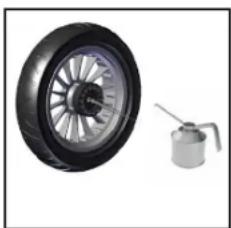
natural_image
Product photo of a black and silver bicycle wheel with a gas can beside it (no text or symbols visible)natural_image
Line drawing of a hand holding a small object with an arrow pointing to it, next to a dark rectangular object (no text or symbols)Pyörien asennus
natural_image
Illustration of a hand holding a bicycle wheel with attached cable (no text or symbols)text_image
Diagram of a mechanical tool with labeled parts 4 and 5, showing a grip mechanism.text_image
Diagram showing a mechanical component with numbered parts and directional arrows indicating motion or rotation.2

natural_image
Mechanical assembly diagram showing a red-handled knob pressing into a gray component (no text or symbols)natural_image
Illustration of a hand adjusting a car wheel rim and tire (no text or symbols visible)Manual City Cross & City Carrycot v. 2.2
natural_image
Illustration of a hand using a tool to cut or adjust a mechanical component, with an arrow indicating the number 5 (no text or symbols present)natural_image
Illustration of a hand adjusting a bicycle wheel with a numbered label (6), no text or symbols present.natural_image
Mechanical diagram showing a hand operating a bicycle wheel with a tool, no text or symbols presenttext_image
Diagram showing two labeled steps (1 and 2) of a mechanical or electrical component with directional arrows indicating motion.natural_image
Close-up of hands adjusting a mechanical component with a circular mark and arrow (no visible text or symbols)natural_image
Close-up of a car seatbelt buckle with a downward arrow indicating compression or disassembly (no text or symbols)10
text_image
14 13 13 1511
natural_image
Illustration of a person adjusting a seatbelt device (no text or symbols visible)natural_image
Illustration of a person seated on a folding chair with hands adjusting the seat (no text or symbols visible)2

text_image
5 6 4 4 33

natural_image
Illustration of a hand using a tool to adjust or install a mechanical component (no text or symbols visible)4
natural_image
Illustration of a car seat with open lid and side-mounted seat, showing rotational arrow (no text or symbols)5
natural_image
Illustration of a hand holding a tool interacting with a device, no visible text or symbolsnatural_image
Diagram showing a hand holding a curved object with an arrow pointing to a small dark object, no text or symbols present4

text_image
5 65

text_image
7 8 7 8Kopan kokoaminen
natural_image
Illustration of a person using a bicycle steering wheel (no text or symbols visible)7
natural_image
Technical line drawing of a mechanical component with directional arrows indicating motion (no text or symbols)8

natural_image
Mechanical assembly diagram showing a hand adjusting a component with a 9-degree angle indicator (no text or symbols present)9
natural_image
Mechanical assembly diagram showing a hand pressing down a belt with an arrow indicating 10 units (no text or symbols present)natural_image
Close-up of a robotic arm handling a metallic cylindrical container with a spool, against a plain white background (no text or symbols visible)
natural_image
Product photo of a black and silver bicycle wheel with a small gas cylinder beside it (no text or symbols visible)natural_image
Line drawing of a hand holding a small object with an arrow pointing to it, next to a vertical line (no text or symbols)Montere hjulene
natural_image
Illustration of a hand adjusting a bicycle wheel with a handle (no text or symbols)text_image
Diagram of a mechanical tool with labeled parts 4 and 5, showing a blade and handle assembly.text_image
Diagram showing a mechanical component with numbered parts and directional arrows indicating motion or rotation.2
natural_image
Mechanical assembly diagram showing a red-handled knob inserted into a gray component, with a downward arrow labeled '1' (no text or symbols beyond the label)Sådan anvender du den justerbare affjedring
natural_image
Illustration of a hand using a tool to adjust or install a car wheel (no text or symbols visible)Manual City Cross & City Carrycot v. 2.2
text_image
Diagram showing a mechanical assembly with labeled parts and directional arrows indicating motion or forcenatural_image
Illustration of a hand using a tool to cut or adjust a mechanical component, with an arrow indicating the number 5 (no text or symbols present)natural_image
Illustration of a hand adjusting a bicycle wheel with a numbered label (6), no text or symbols present.natural_image
Mechanical assembly diagram showing a hand operating a bicycle wheel with a clamp (no text or symbols)natural_image
Close-up of hands adjusting a mechanical component with a circular mark and arrow (no visible text or symbols)natural_image
Close-up of a car seatbelt buckle with a downward arrow indicating compression or disassembly (no text or symbols)natural_image
Illustration of a person adjusting a seatbelt device (no text or symbols visible)natural_image
Illustration of a person seated on a chair with hands placed on top (no text or symbols visible)2

text_image
5 6 4 4 33

natural_image
Illustration of a hand using a tool to adjust or install a mechanical component, with no visible text or symbols.4
natural_image
Illustration of a car seat with open lid and directional arrows indicating rotation (no text or symbols)5
natural_image
Illustration of a hand holding a tool interacting with a device, no visible text or symbolstext_image
Diagram showing mechanical assembly with labeled parts and directional arrows indicating motion or force8
natural_image
Illustration of a hand using a knife to cut a piece, with an arrow labeled '12' indicating direction (no text or symbols beyond the number)9
natural_image
Illustration of a person using a cart to lift a vehicle, showing motion direction (no text or symbols)natural_image
Diagram showing a hand holding a curved object with a downward arrow indicating motion or force (no text or symbols present)4
text_image
5 65

text_image
7 8 7 8Montering af barnevogns overdel
natural_image
Illustration of a hand turning a car wheel with visible wheels and suspension components (no text or symbols)7
natural_image
Diagram of a mechanical device with directional arrows indicating rotation or movement (no text or symbols)8

natural_image
Mechanical assembly diagram showing a hand pressing down on a car seatbelt with a numbered component (no text or symbols)9

natural_image
Close-up of a car seatbelt mechanism with hand pressing down and number 10 on the side (no text or symbols)Anvend bremsen
natural_image
Close-up of a robotic arm handling a metallic cylindrical container with a spool, against a plain white background (no text or symbols visible)
natural_image
Product photo of a black and silver bicycle wheel with a small gas cylinder beside it (no text or symbols visible)Instruction manual for City Cross & City Carrycot
© 2011 Emmaljunga Barnvagnsfabrik AB
All rights reserved
Emmaljunga Barnvagnsfabrik AB