
FROMAGERE 439 601 - Cheese Maker LAGRANGE - Free user manual and instructions
Find the device manual for free FROMAGERE 439 601 LAGRANGE in PDF.



| Product type | Cheesemaker |
| Brand | LAGRANGE |
| Model | FROMAGERE 439 601 |
| Power supply | 230 V ~ 50 Hz, 7 W |
| Total capacity | 1 large pot 1.5 L + 4 small pots 0.25 L each (total 2.5 L) |
| Body material | Thermoplastic |
| Trim | Aluminium |
| Display | Electronic with backlight |
| Audible signal | End of preparation |
| Included accessories | 1 large pot + cheese mold + lid, 4 small pots + cheese molds + lids |
| Cleaning | Base and lid: damp sponge; pots and cheese molds: warm soapy water, dry thoroughly |
| Dishwasher | Do not put the base or lid in the dishwasher |
| Safety | Never immerse in water; check the cord before use; do not use on a hot surface or near a flame; do not cover while operating |
| Warranty | 2 years (1 year extension upon registration at www.lagrange.fr) |
| Compliance | Directives 2006/95/EC, 2004/108/EC, WEEE 2002/96/EC, RoHS 2002/95/EC, EC Regulation 1935/2004 |
| Use | Cow or goat milk; fromage blanc or petit-suisse starter; liquid rennet |
| Preparation time | 8 to 14 h depending on milk type and starter |
| Ambient temperature | Prefer a temperate room, avoid drafts and vibrations |
Frequently Asked Questions - FROMAGERE 439 601 LAGRANGE
User questions about FROMAGERE 439 601 LAGRANGE
0 question about this device. Answer the ones you know or ask your own.
Ask a new question about this device
Download the instructions for your Cheese Maker in PDF format for free! Find your manual FROMAGERE 439 601 - LAGRANGE and take your electronic device back in hand. On this page are published all the documents necessary for the use of your device. FROMAGERE 439 601 by LAGRANGE.
USER MANUAL FROMAGERE 439 601 LAGRANGE
CONDITIONS DE GARANTIE
Fiscelle ardechoises
- Thermoplastic body
Aluminium trim - 1 large pot, strainer and cover for cheese
- capacity 1.5 L
- 4 small pots, strainers and covers for cheese - capacity 0.25 L each
- Backlit electronic display
- Audible ready signal
- 230V - 50 Hz - 7W
Accessories available from LAGRANGE:
- 4 small trainers
- capacity 0.25 L each
- 1 large strainer
- capacity 1.5 L
CORD
Check the power cord carefully before each use. If it appears damaged, do not operate the appliance. To prevent danger to users, the cord should be replaced only by LAGRANGE, its customer service department or an individual certified or authorised by LAGRANGE. These appliances comply with Directives 2006/95/EC, 2004/108/EC, WEEE 2002/96/EC and RoHs 2002/95/EC and with EC Regulation 1935/2004 concerning food contact materials.
ENVIRONMENT
Environmental Protection - DIRECTIVE 2002/96/EC
To protect the environment and people's health, it is important for everyone, including all suppliers and users, to follow specific guidelines for the disposal of any electrical appliance at the end of its useful life.
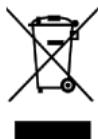
For this reason and as indicated by the symbol on its data plate, you may not dispose of this appliance in any public or private bin meant for household rubbish. To dispose of your appliance, you are instead responsible for taking it to a public collection centre equipped for recycling electrical or electronic devices. For
information on collection and recycling centres for discarded appliances, please contact the local authorities or household rubbish collection service in your region or the shop where you purchased the appliance.
Please read the following instructions and keep them on hand for later reference.
Always unwind the cord completely before use.
- Place the appliance on a flat surface.
- Never place the appliance on a hot surface or near an open flame.
- Insert the cord plug into a 10/16 A outlet.
- Children should be watched to ensure that they do not use the appliance as a toy.
- Persons (including children) not capable of using the appliance in complete safety, whether due to their physical, sensory or mental capacity or to lack of experience or knowledge, may under no circumstances operate this appliance without supervision or instructions from a responsible person.
- Never submerge the appliance in water.
- Before handling, unplug the appliance and let cool completely.
- For your safety, it is recommended to never leave the appliance in a location exposed to weather or damp conditions.
- Do not leave the appliance plugged in when not in use.
- Do not move the appliance while it is operating.
- Do not flush-mount the appliance.
- This appliance is not designed for activation through use of an external timer or any type of remote control system.
- Never drape a cover over the appliance while it is operating.
- Always clean thoroughly all parts coming into contact with food products after each use.
- If your appliance is damaged, stop using it, and contact customer service at LAGRANGE.
- For your safety, use only LAGRANGE accessories and replacement parts designed specifically for your appliance.
- Never put the cheese maker in the refrigerator.
USAGE TIPS
Milk
- You may use either cow's or goat's milk. Goat's milk reduces much more than cow's milk, resulting in greater whey loss.
- Use fresh whole milk where possible when making 'faiselles' (curd cheese) and UHT whole milk when making whipped fromage blanc. Whole milk yields softer cheese and enhances the flavour of fromage blanc.
Refer to the following scale to choose your milk based on the desired consistency.

- If using farm milk, boil it first to prevent any contamination of the milk (proliferation of bacteria can be hazardous). To do this, heat it just to the boiling point for a maximum of 1 minute and then allow to cool to room temperature and strain to remove any skin.
- The fat content and consistency of your cheese will vary widely depending on the milk you use.
Ferment
- When making cheese for the first time, you may use fromage blanc or petit suisse cheese from the store as fermented.
- Afterwards, you can simply set aside 2 generous tablespoons of the cheese you have made or a cup of whey to use for the next batch.
For best results, keep your ferment refrigerated and store for no longer than eight days. This 'regeneration' process should also be followed no more than five times, after which the ferment weakens in effectiveness, affecting the quality of the resulting cheese.
- Another option is to use a special ferment for fromage blanc available in lyophilized form at pharmacies. This ferment may be used to start the first batch instead of fromage blanc or petit suisse cheese or rennet. Use one 2 g packet per batch.
Note: The flavour and consistency of the first batch may be different from subsequent batches started through 'regeneration'.
Rennet
Rennet is sold in dropper bottles at the pharmacy.
Cheesecloth
Cheesecloth is also available at pharmacies. In its place, you may also use sterile gauze compresses or even a damp cloth (preferably of synthetic material to keep the curds from adhering to it).
QUANTITIES AND TIMER SETTINGS
Whichever type of milk you use (cow's or goat's), use the following quantities and times:
Note: Times remain the same if you use the special ferment for fromage blanc available in lyophilized form at pharmacies.
Feel free to use heaping tablespoons of the ferment. It is always better to have plenty of ferment rather than not enough.
| Milk | Ferment | Rennet | Time | |
| First use (fromage blanc or petit suisse cheese from the store) | ||||
| Fresh milk | 1 L | 1 tbsp or 1 petit suisse | 3 drops | 10 hours |
| 1.5 L | 2 tbsp or 2 petit suisse | 5 drops | ||
| Whole UHT milk | 1 L | 1 tbsp or 1 petit suisse | 6 drops | 12 hours |
| 1.5 L | 2 tbsp or 2 petit suisse | 8 drops | ||
| 1/2 skim UHT milk | 1 L | 1 tbsp or 1 petit suisse | 6 drops | 14 hours |
| 1.5 L | 2 tbsp or 2 petit suisse | 8 drops | ||
| Fresh milk | 1 L | 1 tbsp or 1 petit suisse | 6 drops | 12 hours |
| 1.5 L | 2 tbsp or 2 petit suisse | 8 drops | ||
| Regeneration (fromage blanc or whey from previous batch) 5 times maximum | ||||
| Fresh milk | 1 L | 2 tbsp or 1 cup of whey | 3 drops | 8 hours |
| 1.5 L | 3 tbsp or 1 cup of whey | 5 drops | ||
| Whole UHT milk | 1 L | 2 tbsp or 1 cup of whey | 6 drops | |
| 1.5 L | 3 tbsp or 1 cup of whey | 8 drops | ||
| 1/2 skim UHT milk | 1 L | 2 tbsp or 1 cup of whey | 6 drops | |
| 1.5 L | 3 tbsp or 1 cup of whey | 8 drops | ||
| Fresh milk | 1 L | 2 tbsp or 1 cup of whey | 6 drops | 10 hours |
| 1.5 L | 3 tbsp or 1 cup of whey | 8 drops | ||
First Use and Daily Operation
FIRSTUSE
- When unpacking the appliance, take care to remove and check all packing for parts.
- Make sure that no parts or accessories are missing or defective.
- Clean all parts thoroughly before using the appliance (see Maintenance section).
BEFORE USING
- Ensure that the appliance is plugged in before using.
- Wipe the base thoroughly before placing cheese pots in the appliance.
IMPORTANT: Never place the cheese maker on a surface that vibrates (e.g., top of refrigerator) or is exposed to air currents. Never disturb the appliance during the cheese-making process: moving it or removing pots or strainers during this process could compromise the quality of the resulting cheese.
MAKING FROMAGE BLANC
- Use ingredients at room temperature. The cooler the room temperature, the longer the cheese will need to form.
- If you are using fromage blanc or petit suisse cheese to start, beat it alone before adding other ingredients.
-
Note: unlike homemade yoghurt, sugar should not be added before making the fromage blanc or it will not set.
-
In a bowl, mix the selected ferment with a little of the milk (see 'Usage Tips' section for advice on choosing ingredients).
- Beat the mixture until it is uniform and smooth. Add the remaining milk gradually while continuing to beat. As a rule of thumb, use 1 L of milk to make enough of the mixture for 4 pots (0.25 L per pot) or 1.5 L for the large pot.
- Add the rennet and blend in gently. Important: for best results, do not beat the mixture after adding the rennet.
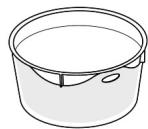
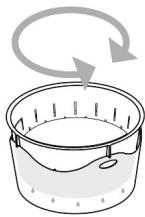
- Place the strainer(s) for fromage blanc in the corresponding pots. The side tabs of each strainer should be in the low position, that is, sitting as low as possible in the pot (see picture 1). Place the large pot or 4 small pots in the cheese maker.
- Pour the mixture into the large pot or distribute evenly among the 4 small pots. Take care not to fill above the high mark on the strainer.
- Important: do not leave the pot covers on the faiselle pots during the cheesemaking process.
- Place the cover on the cheese maker. Plug the appliance into a mains outlet. The screen will begin flashing '00'.
- Press the timer button until the screen displays the desired time (see the 'Quantities and Timer Settings' section). The timer can be set for up to 15 hours. To scroll through time settings quickly, press and hold the button for 2 seconds.
- Press the on/off button. The ready signal sounds and the blue light comes on to confirm that the timer has been set. The screen then displays the time left before the end of the cycle.
-
When the cycle ends, the screen displays '00' without flashing, and the signal sounds 5 times. To stop the signal from sounding, simply press the on/off button.
-
When the appliance is off, the screen flashes '00'.
- Unplug the appliance after each use.
- Allow the appliance to cool for a few minutes before removing the cheese pots.
IMPORTANT: condensation may form inside the appliance cover. When removing the cover, take care not to let any of the accumulated water drip into the cheese mixture.
DRAINING THE FROMAGE BLANC
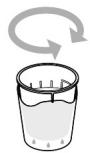
- Carefully remove the cheese pots from the cheese maker. Next, lift and turn each strainer in its pot until the side tabs slip into the notches. The wavelike shape makes this easy.
- Place the pots and strainers in the 'high' drainage position in your refrigerator.
Refer to the following table to determine approximate drainage time depending on the desired use: whipped fromage blanc, 'moist' faisselle (i.e., to be served as is) or 'dry' faisselle.
-1-

Whipped fromage blanc.........Drain 2 - 4 hours
'Moist'faisselle .Drain 5-10 hours
'Dry' faisselle. Drain 12 - 24 hours
- For 'moister' cheese, leave the whey in the pot so that it stays in contact with the fromage blanc to prevent it from 'drying out' too much.
- Of course, if you prefer dryer cheese, simply keep removing the whey as it accumulates. To speed up the drainage process, slice the faisselle carefully in a few places.
- To enjoy the resulting faisselle, you may simply turn it out and serve, or you may whip with a whisk or hand blender to make creamy whipped fromage blanc. Take care not to whip the cheese while it is still in the strainer as this would make it drip out through the holes.
- Add just a small amount of salt if you like your cheese salty. Note that adding salt causes the cheese to produce more whey.
- You may also want to leave your faisselle longer to drain to produce 'dry' cheese.
MAKING 'DRY' CHEESE FROM FROMAGE BLANC
Fromage blanc is the starting point for most cheeses and requires only a few extra steps to create dryer cheese. Here are some suggestions, keeping in mind that the flavour and texture of your cheese may vary widely depending on the time of year, type of milk, amount of salt, temperature and placement of the cheese maker.
Procedure:
- Turn out the cheese and sprinkle a pinch of salt over the top. Season additionally as desired (e.g., pepper, herbs, cumin).
- The next day, turn the cheese over and salt again lightly on the other side.
- Repeat each day for 3 to 4 days for a 1 to 1.5 L cheese or 2 to 3 days for a 0.25 L cheese.
- Your cheese is now ready for the maturing phase. Cheese matures best in a cellar or basement with good air circulation at around 15° C . If a basement is not available, put the cheese in the coolest place in your home and cover it with a mesh cheese cover to keep insects away. Continue turning the cheese over every day.
- For dryer cheese, leave in this manner for several days until reaching the desired consistency. For runnier cheese, follow the same procedure but keep the air temperature at 20 to 22° C and air circulation to a minimum.
Note:
Ripening cheese is an art that takes time to learn. Be patient, and as you experiment you will make quick progress.
Feel free to experiment until you arrive at the type of cheese you prefer.
For example, a semi-soft, crumbly cheese such as Crottin de chèvre takes approximately 0.5 L of milk.
For larger cheeses it is necessary to multiply all proportions.
For your first cheeses, however, we recommend using 1 L of milk.
STORAGE
- Keep your fromage frais cool in the refrigerator.
- To keep the faisselles moist, leave them in their strainers in the low position in their pots so that they stay in contact with the whey.
- For a dryer product, leave the strainer in the low position in its pot after first removing all whey or in the high position to continue drainage.
- Use the supplied covers for the pots to prevent the cheese from taking on the odours and flavours of other foods in the refrigerator.
- You may store your cheese for up to 10 days in this manner.
TROUBLESHOOTING
Always follow the cheese-making instructions in this guide carefully; this will prevent the most common problems. If you still experience difficulties, refer to the following table for possible explanations and tips for resolving your problem.
Remember that the quality of the milk and ferment you use are determining factors in the success of your cheese recipes.
| No. | Problem | Cause | Solution |
| 1 | Cannot turn cheese out of strainer | The rennet is too old | Comply with the use-by dates on packages. |
| The ferment does not work | Try another brand of fromage blanc or petit suisse cheese. | ||
| The regeneration process has expired (max 5 times). | |||
| The milk quality is poor | Try another brand of milk. Use fresh whole milk for best results. | ||
| 2 | The cheese is too liquidy | The ferment does not work | Use a different ferment or increase the quantity. |
| The milk quality is poor | Try reusing the cheese to start your next batch while using higher-quality milk. | ||
| The cheese has not drained enough | Leave the cheese longer to drain. | ||
| Pour out the whey so the cheese is not left sitting in it. | |||
| 3 | The cheese is too crumbly | The ferment is too old (the regeneration process has expired) | Whip the fromage blanc and try a different ferment for the next batch. |
| Cheese left too long to mature | Whip the fromage blanc. | ||
| The product comes out lumpy | Beat the ferment thoroughly before adding the milk. |
MAINTENANCE
IMPORTANT: Never submerge the base of the appliance in water. Always unplug the appliance and allow to cool completely before cleaning.
Appliance base and cover: Clean using a damp sponge. Dry thoroughly. Do not use harsh or abrasive products or cloths to maintain the plastic.
Important: Never put the base or cover in the dishwasher.
Cheese pots and strainers: after each use and when finished turning out or using up the resulting fromage blanc, soak the strainers and pots for a few minutes if necessary in hot water containing detergent and clean thoroughly.
Note: Always dry all parts thoroughly before reassembling appliance for storage. Store the appliance with the cover in place.
STATEMENT OF WARRANTY
Your appliance is subject to a 2-year warranty.
To extend your warranty by an additional year at no charge, simply register at the LAGRANGE website (www.lagrange.fr). The warranty covers parts and labour and applies to manufacturing defects. The warranty does not cover damage due to misuse, failure to follow the user instructions, or dropping the appliance. THIS WARRANTY APPLIES TO DOMESTIC USE; UNDER NO CIRCUMSTANCES DOES IT COVER PROFESSIONAL USE.
The vendor's legal warranty obligations in no way exclude the manufacturer's legal warranty obligations relating to faults or manufacturing defects in accordance with Articles 1641 et seq. of the French Civil Code. In the event of a breakdown or malfunction, contact your retailer. The appliance will be exchanged in the event of a technical defect within 8 days after purchase. After this period, repairs will be carried out by LAGRANGE's after-sales service.
RECIPES
Important: for all recipes it is important to allow time for preparing the cheese in advance.
Refer to the instructions for preparation and drainage times.
SAVOURY DISHES
Assortment of Small Fresh Cheeses in a Variety of Flavours
4 small (0.25 L each) faisselles made of fresh whole cow's or goat's milk
Note: If using UHT milk allow more time for drainage.
If using half-skim milk, you will need to press the cheese in a cheesecloth to eliminate as much whey as possible and help the cheese to form.
1 tbsp dried or fresh herbs, 1 tbsp crushed hazelnuts or other nuts, 1 tbsp cumin or sesame seeds, 1 tbsp powdered pepper or paprika, salt to taste
Prepare your faisselles 48 hours in advance (approx. 10 hours in cheese maker and 1 day for drainage).
Salt the cheeses on both sides.
Coat one cheese with the dried or fresh minced herbs (or chives), another with the crushed hazelnuts or other nuts, the third with the cumin or sesame seeds and the last with the powdered pepper or paprika. Turn over each cheese and repeat on other side.
Arrange on a plate and serve with country-style bread as the cheese course.
Cervelle de Canuts (serves 6)
This Lyonnaise specialty is very easy to prepare.
1 large faiselle made from 1 L of UHT whole cow's milk
1 - 20 cl container crème fraîche, 200 g shallots, 1/2 bunch chives,
1 bunch parsley, 1/2 bunch chervil, 1 dl oil, 1 dl dry white wine, salt and pepper to taste
Prepare your faisselles 48 hours in advance following the instructions (including approx. 1 day or overnight for drainage). Note that your cheese should be quite dry (drain as much whey as possible).
Wash and finely mince the herbs and shallots.
Beat together the cream, white wine, oil and cheese; season with the salt and pepper and add the herbs and shallots.
You may serve this dish with boiled or umber-baked potatoes or spread generously on bread.
Tsatziki (serves 6)
1 large faisselle made from 1 L of UHT whole or half-skim cow's milk
1 tbsp thick cream, 2 cucumbers, 1 bunch fresh mint, 2 cloves garlic, 1 tbsp mustard, 1 tbsp olive oil, salt and pepper to taste
Prepare your faiselles 48 hours in advance following the instructions (including approx. 1 day or overnight for drainage).
Peel and seed the cucumbers and then grate them, add coarse salt and drain in a sieve for several hours.
Whip the faisselle to make a nice, smooth fromage blanc that is not too dry (add a little whey as needed). Add the crème fraîche.
Next add the garlic (pressed in advance), finely chopped mint, mustard, oil and salt and pepper.
Press the grated cucumber in a cloth to remove any remaining water. Lastly, add the grated cucumber to the mixture.
Waffles with Salmon and Dill Fromage Blanc Sauce (Serves 4)
1 large faisselle made from 1 L of UHT whole or half-skim cow's milk
1 tbsp mustard, juice of 1/2 a lemon, 1 bunch dill, salt and pepper to taste
4 nice pieces smoked salmon
Waffle dough: 500 g flour, 1 packet yeast, 3/4 L liquid (water, beer, milk), 125 g butter, 3 to 4 eggs
Prepare your faiselles 48 hours in advance following the instructions (including approx. 1 day or overnight for drainage).
Pour the flour into a mixing bowl and add the salt, yeast and eggs. Beat with a whisk to incorporate the liquid. Add the butter that you have melted and left to cool. Whisk until the batter is completely uniform. Leave to stand for 30 to 60 minutes.
Prepare the fromage blanc mixture during this time.
Whip the fromage blanc until it has a nice, smooth texture that is not too dry (add a little whey as needed).
Add the mustard, lemon juice, salt and pepper and minced dill.
Cook the waffles only immediately before serving so they do not go soft.
Cover them with the fromage blanc sauce and a piece of salmon and serve as an appetizer with a mesclun salad.
You may also cut the waffles in halves or quarters to serve as hors d'oeuvre.
We recommend using a LAGRANGE waffle iron to make sure your waffles are soft and scrumptious inside and pleasantly crispy outside!
Quiche with Fresh Chèvre and Courgette (Serves 6)
1 large faiselle made from 1 L of goat's milk (whole if possible)
Short pastry: 225 g flour, 125 g softened butter, 1 pinch salt, 70 ml water
1 large or 2 small courgettes
3 eggs, 1 cup milk
Prepare your faiselle 24 hours in advance following the instructions (including several hours for drainage to remove as much whey as possible).
Press it in cheesecloth to drain any remaining whey.
Prepare and roll out the short pastry and transfer it to a pan 30 to 40 cm in diameter.
Pierce the pastry in a few places with a fork.
Slice the courgette in half lengthwise, core it and slice thinly.
Beat the eggs and add the milk, salt and pepper.
Arrange the courgette slices in a cooking dish.
Crumble the cheese over the courgette.
Pour the egg mixture over the top and bake at 180° C for 30 to 40 min. depending on your oven.
SWEET DISHES
Whipped Fromage Blanc with Strawberries (Serves 4)
1 large faisselle made from 1 L of UHT whole or half-skim cow's milk
500 g strawberries (400 g for mixture, 100 g sliced up and set aside), 100 g icing sugar
Prepare your faiselles 48 hours in advance following the instructions (including approx. 1 day or overnight for drainage). Whip the fromage blanc using a hand blender.
Mix in the 400 g of strawberries and 100 g of icing sugar. Pour the mixture into a saucepan, add the remaining 100 g of sliced strawberries and place over low heat. Leave to stew, taking care not to bring to a boil. When the coulis begins to stick to your spoon, remove from heat.
Add the fromage blanc and blend thoroughly.
Serve well chilled in small glasses.
Various Side Dish Ideas for Plain Faiselles (Serves 4)
4 small (0.25 L each) faisselles made of fresh whole cow's milk Prepare your faisselles 48 hours in advance (approx. 10 hours in cheese maker and 1 day for drainage).
Chocolate Faiselles
300 g dark chocolate, 0.25 L milk, 50 g sugar, chocolate chips or coconut for decoration
Bring the milk to a boil in a saucepan. Add the dark chocolate cut into small pieces and the sugar. Mix well.
Turn the faiselles out onto small dessert plates and top with the chocolate sauce.
Garnish with a few chocolate chips or some coconut.
1 - 500 g can chestnut puree, 40 cl whipping cream, a few broken-up iced chestnuts for decoration
Whip the cream until it holds peaks (note that the cream must be cold to start).
Add it to the chestnut puree.
Turn the faiselles out onto small dessert plates and top with the chestnut and cream mixture.
Gamish with a few of the iced chestnut pieces.
- Faiselles with Whipped Cream and Fresh Berries
100 g strawberries, 100 g raspberries, 100 g blueberries or other berries
1 tbsp vanilla sugar, 25 cl whipping cream, 6 mint leaves for decoration
Whip the cream until it holds peaks and incorporate the vanilla sugar.
Turn the faiselles out into good-sized dessert cups. Cover with the whipped cream and add berries all round.
Garnish each cup with a mint leaf.
- Faiselles with Gingerbread and Pear Compote
5 nice, firm pears, 4 slices gingerbread, 3 tbsp brown sugar, 20 cl dry white wine, 1 pat butter.
Peel the pears and cut them into good-sized pieces. Put the pat of butter in a deep saucepan and brown the pears.
Next, add the brown sugar and caramelise the pears.
Then add the white wine and crumble 3 of the gingerbread slices into the mixture.
Cover and cook for about 30 minutes while stirring regularly to prevent the pears from sticking.
The result should be nicely caramelised pears in a thick syrup.
Turn the faiselles out onto dessert plates and arrange the warm pears around them. Drizzle the syrup over the plates and crumble the remaining slice of gingerbread over the top.
Fromage Blanc Mousse with Raspberries (Serves 4)
1 large faisselle made from 1 L of UHT whole or half-skim cow's milk (remove and set aside 400g of fromage blanc)
1 egg white, juice of 1 lemon, raspberry coulis, raspberries, 1 sheet of gelatine, 3 tsp caster sugar, 1 pinch salt, white chocolate chips
Prepare your faiselles 48 hours in advance following the instructions (including approx. 1 day or overnight for drainage). Whip the fromage blanc using a hand blender.
Soak the gelatine in cold water according to the package directions and, while waiting, combine the fromage blanc and sugar in a mixing bowl.
Heat the lemon juice.
Drain the gelatine and melt it in the hot lemon juice. Leave to cool. Add the pinch of salt to the egg white and beat until it forms stiff peaks.
Blend the lemon juice and gelatine into the fromage blanc mixture and then incorporate the beaten egg white taking care not to deflate it.
In a clear mixing bowl place a few whole strawberries, then a layer of mousse and then place in the refrigerator to set. Add a tablespoon of the coulis and then a second layer of mousse. Return to the refrigerator to allow the remaining mousse to set.
Garnish with the chocolate chips just before serving.
Gourmet Orange & Chocolate Fromage Blanc Cheesecake (Serves 6)
1 large faiselle made from 1 L of whole cow's milk (remove and set aside 500g of fromage blanc)
4 eggs, 75 g sugar, 150 g dark chocolate, 20 g butter, 75 g flour, 1/2 packet baking powder, 50 g candied oranges, 1 pinch salt
Prepare your faiselles 48 hours in advance following the instructions (including approx. 1 day or overnight for drainage). Whip the fromage blanc using a hand blender.
Mix the egg yolks with the sugar.
Cut the chocolate up into pieces and melt over low heat with the butter.
Add the chocolate to the egg mixture followed by the fromage blanc, flour and baking powder.
Dice the candied oranges and add them as well.
Beat the egg whites with the salt until they form stiff peaks and add to the mixture.
Pour into a greased pan and bake for 20 minutes at 180°C
Turn out and cool before serving accompanied by English cream or vanilla ice cream.
Lemon Cheesecake (Serves 6)
1 large faisselle made from 1.5 L of fresh whole cow's milk (remove and set aside 1 kg of fromage blanc)
4 medium eggs, 2 whole lemons, 200g sugar, 1/2 jar lemon jam or jelly, 1 pinch salt, 400g of dry biscuits, 130g butter, 1 cc of powdered cinnamon.
Prepare your faiselles 24 hours in advance following the instructions (including several hours for drainage). Whip the fromage blanc using a hand blender.
Preheat the oven to 160°C (setting 5/6).
Grease a layer cake pan with removable bottom and cover the bottom with a circle of parchment paper.
Crumble the biscuits coarsely into a bowl and add 130g of melted butter and the cinnamon.
Pour the mixture into the pan (touching the sides) to a depth of 5 mm and place the pan in the refrigerator.
Finely grate the zest of the lemons. Gradually add the sugar, eggs and salt to the whipped fromage blanc until the resulting mixture is nice and creamy.
Pour the mixture into the pan and smooth the surface with a spatula.
Bake for about 70 minutes in the centre of the oven.
Turn off the oven and open the door slightly to allow the cake to cool. Melt the lemon jelly in a small saucepan over low heat. Cool the jelly to lukewarm and pour half a centimetre over the surface of the cake.
Leave in the refrigerator to set for at least 5 hours.
Turn the cheesecake out onto a plate held against the pan. Chill thoroughly and serve.

- CONDITIONS DE GARANTIE
- FISCELLE ARDECHOISES
- ACCESSORIES AVAILABLE FROM LAGRANGE
- CORD
- ENVIRONMENT
- ENVIRONMENTAL PROTECTION - DIRECTIVE 2002/96/EC
- PLEASE READ THE FOLLOWING INSTRUCTIONS AND KEEP THEM ON HAND FOR LATER REFERENCE
- USAGE TIPS
- MILK
- FERMENT
- RENNET
- CHEESECLOTH
- QUANTITIES AND TIMER SETTINGS
- FIRST USE AND DAILY OPERATION
- FIRSTUSE
- BEFORE USING
- MAKING FROMAGE BLANC
- DRAINING THE FROMAGE BLANC
- MAKING 'DRY' CHEESE FROM FROMAGE BLANC
- PROCEDURE
- NOTE
- STORAGE
- TROUBLESHOOTING
- MAINTENANCE
- STATEMENT OF WARRANTY
- RECIPES
- SAVOURY DISHES
- ASSORTMENT OF SMALL FRESH CHEESES IN A VARIETY OF FLAVOURS
- CERVELLE DE CANUTS (SERVES 6)
- TSATZIKI (SERVES 6)
- WAFFLES WITH SALMON AND DILL FROMAGE BLANC SAUCE (SERVES 4)
- QUICHE WITH FRESH CHÈVRE AND COURGETTE (SERVES 6)
- SWEET DISHES
- WHIPPED FROMAGE BLANC WITH STRAWBERRIES (SERVES 4)
- VARIOUS SIDE DISH IDEAS FOR PLAIN FAISELLES (SERVES 4)
- CHOCOLATE FAISELLES
- FAISELLES WITH WHIPPED CREAM AND FRESH BERRIES
- FAISELLES WITH GINGERBREAD AND PEAR COMPOTE
- FROMAGE BLANC MOUSSE WITH RASPBERRIES (SERVES 4)
- GOURMET ORANGE & CHOCOLATE FROMAGE BLANC CHEESECAKE (SERVES 6)
- LEMON CHEESECAKE (SERVES 6)
Brand : LAGRANGE
Model : FROMAGERE 439 601
Category : Cheese Maker