
52G219 - Saw Verto - Free user manual and instructions
Find the device manual for free 52G219 Verto in PDF.


| Product Type | Table saw |
| Model | 52G219 |
| Brand | Verto |
| Power Supply | 230 V AC, 50 Hz |
| Power Consumption | 500 W (S1) / 800 W (S6 15%) |
| No-Load Speed | 2950 rpm |
| Blade Diameter | 200 mm |
| Blade Bore | 16 mm |
| Max. Cutting Depth at 90° | 45 mm |
| Max. Cutting Depth at 45° | 27 mm |
| Miter Range | 0° - 45° |
| Riving Knife Width | 2.2 mm |
| Work Table Dimensions (W x L) | 335 x 505 mm |
| Work Table Height from Ground | 240 mm |
| Weight | 11.1 kg |
| Protection Class | I |
| Noise Level (Sound Pressure) | 96.6 dB(A) (K=3 dB) |
| Noise Level (Sound Power) | 109.6 dB(A) (K=3 dB) |
| Included Accessories | Rip fence, angle bar, push stick, ring spanners, fixing knobs |
| Dust Extraction Outlet | Yes |
| Safety Features | Blade guard, riving knife, anti-kickback, push stick |
| Intended Use | Cutting wood and wood-like materials (not for firewood) |
| Standards Compliance | EN 62841-1, EN 62841-3-1, EMC directives |
Frequently Asked Questions - 52G219 Verto
Always use the rip fence for bevel cuts.
Use protection gloves when handling the blade.
User questions about 52G219 Verto
0 question about this device. Answer the ones you know or ask your own.
Ask a new question about this device
Download the instructions for your Saw in PDF format for free! Find your manual 52G219 - Verto and take your electronic device back in hand. On this page are published all the documents necessary for the use of your device. 52G219 by Verto.
USER MANUAL 52G219 Verto
PL PILARKA STOŁOWA DO DREWNA
GB TABLE SAW
DE TISCHSÄGEMASCHINE ZUR HOLZBEARBEITUNG
RU НАСТОЛЬНАЯ ПИЛА ПО ДЕРЕВУ
UA ПИЛКА ЦИРКУЛЯРНА ДО ДЕРЕВА, ВЕРСТАТНА
HU ASZTALI KÖRFÜRÉSZ
RO CIRCULAR CU MASA PENTRU LEMN
© CZ STOLNÍ PILA NA DŘEVO
SK STOLOVÁ PÍLA NA DREVO
SI MIZNA ŽAGA ZA LES
LT STALINĖS MEDIENOS PJOVIMO STAKLĖS
LV KOKSNES GALDA ZAGIS
EE PUIDUSAEPINK
BG СТАЦИОНАРЕН ЦИРКУЛЯР ЗА ДЪРВО
HR STOLNA PILA ZA DRVO
SR STONA TESTERA ZA DRVO
GR ΕΠΙΤΡΑΠΕΖΙΟ ΔΙΣΚΟΠΡΙΟΝΟ ΞΥΛΟΥΡΓΙΚΗΣ
ES SIERRA DE MESA PARA MADERA
IT SEGA CIRCOLARE DA BANCO PER LEGNO

52G219
PL INSTRUKCJA OBSŁUGI....4
EN INSTRUCTION MANUAL 9
SR UPUTSTVO ZA UPOTREBU....56


UWAGA: PRZED PRZYSTĄPIENIEM DO UŻYTKOWANIA URZĄDZENIA NALEŻY UWAŻNIE PRZECZYTAĆ NINIEJSZĄ INSTRUKCJĘ I ZACHOWAĆ JĄ DO DALSZEGO WYKORZYSTANIA.
SZCZEGÓŁOWE PRZEPISY BEZPIECZEŃSTWA
INFORMACJE NA TEMAT HAŁASU

PL EN HU SK CS
| Producent/Manufacturer//Gyártó//Výrobca/ /Výrobce/ | Grupa Topex Sp. z o.o. Sp.k.ul. Pograniczna 2/4, 02-285 Warszawa |
| Wyrób/Product//Termék/Produkt//Produkt/ | Pilarka stołowa/Table saw//Asztali korfüresz//Stolová pila//Stolní pila/ |
| Model/Model//Modell//Model//Model/ | 52G219 |
| Nazwa handlowa/Commercial name//Kereskedelmi név//Obchodný názov//Obchodního názvu/ | VERTO |
| Numer seryjny/Serial number//Sorszám//Poradové číslo//Výrobního čísla/ | 00001 ÷ 99999 |
| Opisany wyżej wyrób jest zgodny z następującymi dokumentami:/The above listed product is in conformity with the following UE Directives://A fent jelzett termék megfelel az alábbi irányelveknek://Vyššie popísaný výrobok je v zhode s nasledujúcimi dokumentmi://Výše popsaný výrobek splňuje následující dokumenty:/ | |
| Dyrektywa Maszynowa 2006/42/WE/Machinery Directive 2006/42/EC/2006/42/EK Gépek//Smernica Európskeho Parlamentu a Rady 2006/42/ES//Směrnice Evropského Parlamentu a Rady 2006/42/ES/ | Dyrektywa o Kompatybilności Elektromagnetycznej 2014/30/UE/EMC Directive 2014/30/EU/2014/30/EU Elektromágneses összeférhetőség//EMC Smernica Európskeho Parlamentu a Rady 2014/30/EÚ//EMC Směrnice Evropského Parlamentu a Rady 2014/30/EU/ |
| Dyrektywa RoHS 2011/65/UE zmieniona Dyrektywą 2015/863/UE/RoHS Directive 2011/65/EU as amended by Directive 2015/863/EU/A 2015/863/EU irányelvel módosított 2011/65/EU RoHS irányelv//Smernica RoHS 2011/65/EÚ zmenená a doplnená 2015/863/EÚ//Směrnice RoHS 2011/65/EU pozměněná 2015/863/EU/ | |
| oraz spełnia wymagania norm:/and fulfils requirements of the following Standards://valamint megfelel az alábbi szabványoknak://a spĺňa požiadavky://a splňuje požadavkynorem:/ | |
| EN 62841-1:2015; EN 62841-3-1:2014/A11:2017;EN 55014-1:2017; EN 55014-1:2006/A2:2011; EN 55014-2:2015; EN 55014-2:1997/A2:2008; EN 61000-3-2:2014; EN 61000-3-3:2013;EN 62321-1:2013; EN 62321-2:2014; EN 62321-3-1:2014; EN 62321-4:2014; EN 62321-5:2014; EN 62321-6:2015;EN 62321-7-1:2015;EN 62321-7-2:2017; EN 62321-8:2017 | |
| Jednostka notyfikowana: /Noified body://Bejelentett szervezet://Notifikovaný organ://Notifikovaný orgán:/ | Certyfikat badania typu WE numer./Number of EC type certificate://Az EK típusú bizonyitványtanúsítványa://Certifikát počet typuosvedčenia ES://Číslo certifikátu EU přezkoušení typu:/ |
| No. 0123; TÜV SÜD Product Service GmbH Zertifizierstellen;Ridlerstraße 65; 80339 MÜNCHEN; Germany | M6A 055256 0725 |
Deklaracja ta odnosi się wyłącznie do maszyny w stanie, w jakim została wprowadzona do obrotu i nie obejmuje części składowych dodanych przez użytkownika końcowego lub przeprowadzonych przez niego późniejszych działań. /This declaration relates exclusively to the machinery in the state in which it was placed on the market, and excludes components which are added and/or operations carried out subsequently by the final user.//Ez a nyilatkozał a gépnek kizárólag arra az állapotára vonatkozik, amelyben forgalomba hozták, és kizár minden olyan alkatrészt, amelyet hozzáadnak, és/vagy olyan műveletet, amit a végső felhasználó ezt követően végez rajta.//Toto vyhlásenie sa vztahuje výlučne na strojové zariadenie v stave, v akom sa uvádza na trh, a nezahrňa pridané komponenty a/alebo činnosti vykonávané následne koncovým použivateľom.//Toto prohlášení se vztahuje výlučně na strojni zařízení ve stavu, v jakém było uvedeno na trh, a nevztahuje se na součásti, které były následně přídány konečným uživatelem, nebo následně provedené zásahy konečného uživatele./
Nazwisko i adres osoby mającej miejsce zamieszkania lub siedzibę w UE upoważnionej do przygotowania dokumentacji technicznej: /Name and address of the person who established in the Community and authorized to compile the technical file://A műszaki dokumentáció összeállítására felhatalmazott, a közösség területén lakóhellyel vagy székhellyel rendelkező személy neve és címe://Meno a adresa osoby alebo bydliska v EÚ poverená zostavením technickej dokumentácie:// Jméno a adresu osoby pověřené sestavením technické dokumentace, přičemž tato osoba musí být usazena ve Společenství:/
/Signed for and on behalf of:/
/GRUPA TOPEX Quality Agent/
CAUTION: BEFORE USING THE DEVICE READ THIS MANUAL CAREFULLY AND KEEP IT FOR FUTURE REFERENCE.
DETAILED SAFETY REGULATIONS
Safety conditions for table saws
- During operation of table saw follow strictly applicable regulations regarding occupational health and safety.
- Use only cutting blades recommended by the manufacturer, conforming with the standard PN-EN 847-1.
- When replacing cutting blade remember that its width must not exceed width of the riving knife.
- Make sure the cutting blade is suitable for material that you plan to cut.
- Do not use cutting blades made of high speed steel (HSS).
- Make sure direction of cutting blade rotation matches indicated direction of the saw motor.
- Use only cutting blades with allowable maximum speed greater than maximum speed of the table saw spindle.
- Use only sharpened cutting blades, which are free from cracks and deformations.
- Cutting blade of the saw should be free to rotate.
- Always use well positioned riving knife and properly adjusted upper shield of the cutting blade.
- Feed material with a push stick.
- When cutting wood that has already been used, ensure it is free from unwanted objects, such as nails, screws etc.
- Always use anti-splinter goggles, hearing protection and anti-dust mask.
- Always wear proper clothing for your work! Loose items of clothing or jewellery might get caught by rotating cutting blade.
- Before any adjustment, measurement, cleaning or removing jammed pieces of wood always disconnect power supply from the tool with the switch and remove the plug from mains socket!
- After repair or maintenance is carried out, before switching on the table saw install all shields and protective parts.
- Power supply voltage must match value marked on the rating plate of the table saw.
- Connect the table saw only to electrical system equipped with residual current circuit breaker that will cut the power off when earth leakage current exceeds 30 mA in less than 30 ms.
- When working outdoors use only extension cords designed for outdoor use.
- Do not use the table saw for cutting firewood.
- Never keep your hands in position, where there is risk of sliding and contact with the cutting blade.
- Do not start working with the table saw when tired or under influence of medicines.
- It is vital that all persons who operate the table saw are properly trained for operation, adjustments and using the table saw.
- Do not operate or leave the table saw in places exposed to rain or humidity.
- Never use the table saw close to explosive liquids or gases.
• Table saw operator should be adult. - Bystanders should not stay close to connected or operating table saw.
- Check technical condition of the power cord. Never use the table saw with damaged power cord.
- Never attempt to repair the table saw by yourself. In case of fault take the table saw to authorized service workshop for repair.
- Immediately replace damaged protection parts.
- Never overload the table saw, causing rotational speed to drop down considerably.
- Keep the workplace clean. Before working remove waste wood material and unnecessary objects.
- Keep the workplace well illuminated.
-
Do not distract person who is working with the table saw.
-
When working with the table saw, avoid contact with earthed parts, pipes, heat radiators, cookers, refrigerators.
- After the motor is switched off with the switch, never attempt to stop the cutting blade by applying side pressure.
- Immediately replace damaged cutting blade.
- Use protection gloves for cutting blade replacement.
- Never use cutting blades with parameters different from specified in this manual.
- Never attempt to remove or disconnect protection parts of the table saw.
- When a break in work is required, finish current cutting and switch off the table saw.
- When making a break in work and leaving the workplace is required, switch off the table saw with the switch and disconnect it from power supply by removing the plug from mains socket.
- Check technical condition of the table saw before starting to operate:
– all protection parts must be in good working order and operate as supposed to, - screws and other mount parts must not be loosened,
- all adjustment keys must be removed from the tool.
- Do not store material or tools under the table saw.
- Always ensure the processed material adheres to the work table of the saw with its whole surface.
- When cutting long objects use appropriate supports, so the cutting blade does not jam in the material.
- When cutting round pieces of material use clamps to prevent material from rotating when making a cut.
- Never cut several pieces of material at a time.
- When cutting narrow pieces of material use included push stick. Do not cut material that you cannot hold safely.
- Never attempt removing pieces of material, sawdust or other objects when cutting blade of the saw is rotating.
- When working with the table saw, external dust extraction system should be operating.
- Do not unplug the table saw from mains socket by pulling the cord. Protect the power cord against excessive heat, oil and sharp edges.
- When operating the table saw keep your body in firm position.
- All parts of the table saw must be properly fixed.
- Do not make profile or penetrating cuts with the table saw.
- When carrying the table saw, hold only by transport handles, do not hold by saw shields.
- During transportation upper part of the cutting blade must be covered with the shield.
CAUTION! This device is designed to operate indoors.
The design is assumed to be safe, protection measures and additional safety systems are used, nevertheless there is always a small risk of operational injuries.
Explanation of used symbols

- ATTENTION! Take special precautions!
- • Read the operating manual, observe the warnings and safety conditions contained in it !.
- Use personal protective equipment (safety goggles, hearing protection, dust mask).
- • Disconnect the device before repair.
- Use work gloves.
- • Protect the device against moisture.
- • Keep children away from the tool.
CONSTRUCTION AND USE
Table saw is designed for cutting wood and wood-like materials. Do not use the saw for cutting firewood. Attempts to use the table saw for purposes other than specified will be considered an improper use. Use the table saw only with appropriate cutting blades with teeth with solid carbide inserts. Range of use covers repair and building works, and any work from the range of individual, amateur activities (tinkering).
Use the tool according to its purpose only.
DESCRIPTION OF DRAWING PAGES
Below enumeration refers to the device elements depicted on the drawing pages of this manual.
- Angle bar
- Rip fence
- Cutting blade shield
- Fixing knob for cutting blade shield
- Work table
- Locking knob for cutting blade tilt
- Switch
- Fixing knob for rip fence
- Dust extraction outlet
- Cover 11. Riving knife 12. Cutting blade
- Work table insert
* Differences may appear between the product and drawing.
MEANING OF SYMBOLS

EQUIPMENT AND ACCESSORIES
- Rip fence 1 pce
- Screw + washer 2 sets
- Angle bar 1 pce
- Push stick 1 pce
- Ring spanner 2 pcs
It is recommended to firmly fix the table saw to a workbench with the use of mount holes designed for such purpose. They are located on the table saw base and guarantee safe operation and eliminate risk of unwanted machine shifts during operation. Make sure the package is removed from underneath of the motor.
INSTALLATION OF CUTTING BLADE SHIELD
- Put cutting blade shield (3) on the riving knife (11).
- Put the fixing knob fro cutting blade shield (4) into hole in the cutting blade shield (3) and the riving knife (11) and tighten the knob.
- You can remove the cutting blade shield following above procedure in reverse sequence.
Knob for locking the cutting blade shield should be tightened, so the cutting blade shield lifts as the material is fed towards the cutting blade and returns to default position after the cutting is finished.
DUST EXTRACTION
Table saw is equipped with dust extraction outlet (9) which allows sucking off sawdust emerging while cutting. Use appropriate vacuum suction devices or industrial vacuum cleaners for this purpose.
INSTALLATION OF RIP FENCE (HEIGHT OF REACTION)
Rip fence can be installed on either side of the work table.
- Install fixing knobs for rip fence (8) and washer for the rip fence (2).
- Slide the rip fence (2) into slot in the work table (5).
- Set required cutting width using scales located on the work table top (5).
• Tighten fixing knobs for the rip fence (8).
The rip fence (2) has two guiding surfaces (upper and lower setting edge). Depending on thickness of the material to cut, install the rip fence properly (fig. A).
- Loosen the fixing knobs for rip fence (8) and slide the rip fence (2) out of the slots in the work table (5).
- Turn over the rip fence (5) by 1800 and attach it back to the work table (5).
SETTING THE RIVING KNIFE
⚠️ Disconnect the tool from power supply.
- Remove the cutting blade shield (3) and the work table insert (13) by undoing the fixing screws.
- Loosen screws (a) fixing the riving knife (11) (fig. B).
- Set the riving knife (11) so the distance from the cutting blade (12) is between 3 - 5mm (riving knife should be exactly in line with the cutting blade) (fig. C).
- Tighten screws for riving knife locking (a), install table top insert (13) and cutting blade shield (3).
Check position of the riving knife after each replacement of the cutting blade.
⚠ Ensure the table saw is disconnected from power supply network before starting any adjustments. To ensure safe, precise and efficient table saw operation, proceed with all adjustment procedures as a whole. After finishing all the setting and adjustment procedures ensure that all adjustment keys are collected. Check that all threaded joining elements are properly tightened. When making adjustments ensure that all external parts work properly and are in good condition. Any worn out or damaged part must be replaced by qualified personnel before starting to use the table saw.
SWITCHING ON / SWITCHING OFF
The mains voltage must match the voltage on the rating plate of the saw.
Switch on the table saw only when cutting blade is away from the material that is to be cut.
Switching on
- Press the switch button "I" (2) (fig. D). Switching off
- Press the switch button "O" (2).
RIPPING
Ripping is cutting the material to desired width along its whole length.
- Set the rip fence (2) to appropriate cutting width.
- Switch the table saw on and wait until cutting blade reaches its full rotational speed.
- Press the material against the ripping fence (2) and move towards cutting blade to the end of the riving knife (11) (use the push stick when close to the cutting blade).
- Leave the cut material on the work table until the cutting blade stops completely.
Make a try cut after each adjustment to ensure the new setting is correct. When making a cut stand to the side of line of cutting.
BEVEL CUTTING
When making a bevel cut, always use the rip fence.
- Loosen locking knobs for cutting blade tilt (6) located on both sides of the saw.
• Overcome the spring resistance and press the motor body to set the cutting blade (12) at desired angle (fig. E). - You can read out the current angle using the scale (b) and the indicator (c) (fig. F).
- Tighten the locking knobs for cutting blade tilt (6).
- Set the rip fence (2) to required width of cutting.
- Switch on the table saw and make a cut.
CUTTING SMALL OBJECTS
- Set the rip fence holder (2) to appropriate cutting width.
- Use both hands to feed the material, while pressing it against the rip fence. When getting close to the cutting blade (12) always use the push stick (included) to move the material or use additional piece of wood to push material being cut against the rip fence (2).
- Always push the cut material to the end of the riving knife (11). When cutting short and narrow objects, use the push stick from the beginning of the cut.
MAKING A 450 CUT WITH THE USE OF ANGLE BAR
Always use rip fence fence when using the angle bar.
- Set the rip fence (2) to operate at lower guiding surface and fix to the work table (5).
- Attach the angle bar (1) to the rip fence (2).
- Set the rip fence (2) to desired cutting width and secure with fixing knobs for rip fence (8).
- Put workpiece in the angle bar (1).
- Switch on the saw and move the angle bar (1) with the material along the rip fence (2) towards the cutting blade (12).
- Switch the saw off when cutting is finished.
TIPS FOR CUTTING
- It is recommended after each adjustment to make a try cut to ensure the new settings are correct and check dimensions.
- After switching the saw on, wait until cutting blade reaches its top maximum speed running idle, only then you can proceed with cutting.
- Secure long objects from falling after cutting (e.g. with a roller support).
- Be very careful when starting a cut!
- When cutting wood that has already been used, ensure it is free from unwanted objects, such as nails, screws etc.
- Wait until cutting blade comes to a complete stop, only then you can remove cut off pieces.
- Always hold main part of the processed material. Never hold the part that is being cut off.
Disconnect the tool from power supply network before ing any adjustment, maintenance or repair.
- When the work is finished, remove thoroughly all pieces of material, scobs and dust from the work table, area around cutting blade and its guard.
- Clean the table saw with brush or stream of compressed air.
- Do not clean the table saw with water or chemical cleaning agents.
- Store the saw in a dry place, beyond reach of children.
- Keep ventilation holes of the motor unobstructed.
- Regularly check that all bolts and fixing screws are tightened. During operation they may get loosened after some time.
- Entrust replacement of power cord and other repairs only to authorized service workshop.
CUTTING BLADE REPLACEMENT
- Unscrew fixing screws (d) of the cover (10) (fig. G).
- Use the ring spanner to undo a nut (e), while blocking the spindle with the other key (fig. H).
- Important! Turn the nut counter-clockwise, accordingly to direction of rotation of the cutting blade.
- Remove the outer flange and remove cutting blade (12) by sliding it down off the inner flange.
- Carefully clean surfaces of the mount flanges and fix new cutting blade, following above described procedure in reverse order.
Be careful to keep appropriate direction of the cutting blade rotation (see arrow on the cutting blade and shield).
All faults should be repaired by service workshop authorized by the manufacturer.
TECHNICAL PARAMETERS
RATED PARAMETERS
| Table saw 52G219 | |
| Parameter | Value |
| Supply voltage | 230 V AC |
| Power frequency | 50 Hz |
| N-ammonium power | 500 in S1 / 800W S6 15% |
| Idle engine speed | 29 50 / min |
| Miter cutting range | 0° + 45° |
| The outer diameter of the saw | 200 m m |
| Internal diameter of the saw | 16 mm |
| Maximum thickness of the material to be cut - angle of 90° | 45 mm |
| Maximum thickness of the material to be cut - angle 45° | 27 mm |
| Riving knife width | 2.2 mm |
| Working table width | 335 mm |
| Length of the working table | 505 mm |
| Height of the working table from the ground | 240 mm |
| Protection class | I |
| Mass | 11,1kg |
| Year of production | 2020 |
| 5 2G219 stands for both the type and designation of the machine | |
NOISE LEVEL AND VIBRATION PARAMETERS
| Sound pressure level | LpA = 96.6 dB (A) K = 3 dB (A) |
| Sound power level | LWA = 109.6 dB (A) K = 3 dB (A) |
Noise information
The level of noise emitted by the device is described by: the level of the emitted sound pressure Lp A and the sound power level Lw A (where K is the measurement uncertainty).
The following information: emitted sound pressure level Lp A, sound power level Lw A were measured in accordance with EN 62841-1.
ENVIRONMENTAL PROTECTION
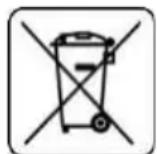
Electrical equipment must not be disposed off with household waste and, instead, should be utilized at appropriate facilities. Information on utilization can be provided by the product vendor or the local authorities. Waste electrical and electronic equipment contains substances that are not neutral to the natural environment. Equipment that is not recycled constitutes a potential hazard to the environment and to human health.
* Right to introduce changes is reserved.
"Grupa Topex Spółka z ograniczoną odpowiedzialnością" Spółka komandytowa with seat in Warsaw at ul. Pograniczna 2/4 (hereinafter Grupa Topex) informs, that all copyrights to this instruction (hereinafter Instruction), including, but not limited to, text, photographies, schemes, drawings and layout of the instruction, belong to Grupa Topex exclusively and are protected by laws accordingly to Copyright and Related Rights Act of 4 February 2004 (ustawa o prawie autorskim i prawach pokrewnych, Dz. U. 2006 No 90 item 631 with later amendments). Copying, processing, publishing, modifications for commercial purposes of the entire Instruction or its parts without written permission of Grupa Topex are strictly forbidden and may cause civil and legal liability.
DETALJNI PROPISI O SIGURNOSTI




- SZCZEGÓŁOWE PRZEPISY BEZPIECZEŃSTWA
- INFORMACJE NA TEMAT HAŁASU
- DETAILED SAFETY REGULATIONS
- SAFETY CONDITIONS FOR TABLE SAWS
- CONSTRUCTION AND USE
- USE THE TOOL ACCORDING TO ITS PURPOSE ONLY
- DESCRIPTION OF DRAWING PAGES
- MEANING OF SYMBOLS
- EQUIPMENT AND ACCESSORIES
- INSTALLATION OF CUTTING BLADE SHIELD
- DUST EXTRACTION
- INSTALLATION OF RIP FENCE (HEIGHT OF REACTION)
- SETTING THE RIVING KNIFE
- ⚠️ DISCONNECT THE TOOL FROM POWER SUPPLY
- SWITCHING ON / SWITCHING OFF
- SWITCHING ON
- RIPPING
- BEVEL CUTTING
- CUTTING SMALL OBJECTS
- MAKING A 450 CUT WITH THE USE OF ANGLE BAR
- TIPS FOR CUTTING
- DISCONNECT THE TOOL FROM POWER SUPPLY NETWORK BEFORE ING ANY ADJUSTMENT, MAINTENANCE OR REPAIR
- CUTTING BLADE REPLACEMENT
- BE CAREFUL TO KEEP APPROPRIATE DIRECTION OF THE CUTTING BLADE ROTATION (SEE ARROW ON THE CUTTING BLADE AND SHIELD)
- TECHNICAL PARAMETERS
- NOISE INFORMATION
- ENVIRONMENTAL PROTECTION
- DETALJNI PROPISI O SIGURNOSTI
Brand : Verto
Model : 52G219
Category : Saw