
HHR 150 - Pressure washer Cocraft - Free user manual and instructions
Find the device manual for free HHR 150 Cocraft in PDF.


| Product Type | Pressure Washer |
| Brand | Cocraft |
| Model | HHR 150 |
| Voltage | 230 V AC, 50 Hz |
| Power | 2000 W |
| Max Water Pressure | 150 bar (15 MPa) |
| Working Pressure | 110 bar (11 MPa) |
| Max Water Flow | 7.3 L/min |
| Rated Water Flow | 5.5 L/min |
| Max Water Temperature | 40 °C |
| IP Rating | IPX5 |
| Sound Pressure Level | 80 dB(A) |
| Sound Power Level | 96 dB(A) |
| Vibration Level | <2.5 m/s² |
| Weight | 12.3 kg |
| Mains Lead Length | 5 m |
| High-Pressure Hose Length | 6.5 m |
| Max Inlet Water Pressure | 6 bar (0.6 MPa) |
| Adjustable Nozzle | Yes (standard lance) |
| Turbo Lance Included | Yes |
| Detergent System | Yes (with container) |
| Hose Reel | Yes |
| Wheels | Yes |
| Safety Features | Trigger lock, double insulation, RCD recommended |
Frequently Asked Questions - HHR 150 Cocraft
User questions about HHR 150 Cocraft
0 question about this device. Answer the ones you know or ask your own.
Ask a new question about this device
Download the instructions for your Pressure washer in PDF format for free! Find your manual HHR 150 - Cocraft and take your electronic device back in hand. On this page are published all the documents necessary for the use of your device. HHR 150 by Cocraft.
USER MANUAL HHR 150 Cocraft
150 BAR. MAX. WATER FLOW: 7.3 L/MIN
HÖGTRYCKSTVÄTT PAINEPESURI
H∅YTRYKKSPYLER HOCHDRUCKREINIGER
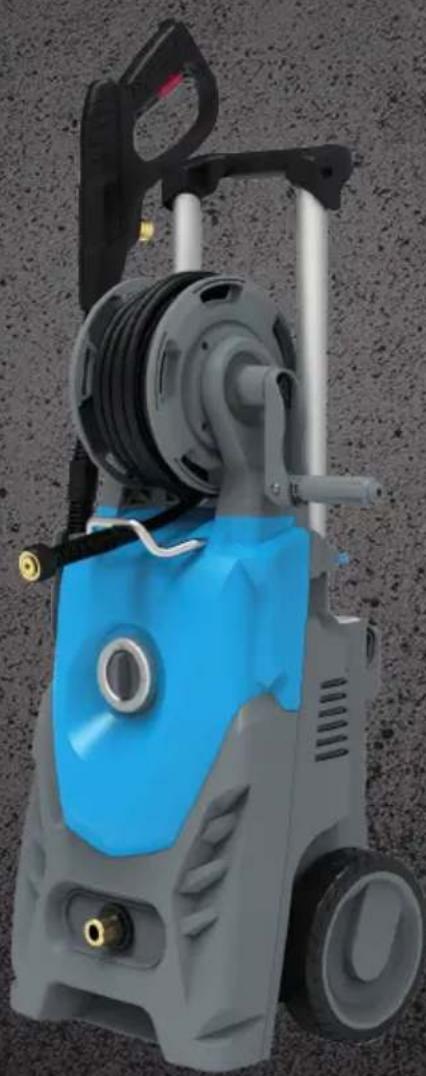
natural_image
Blue and gray 3D-printed power supply cleaner on a textured surface (no visible text or symbols)Art.no Model
18-1490
Q1W-SP04-2200
41-1900
Q1W-SP04-2200

Important:
Read the entire instruction manual carefully and make sure that you fully understand it before you use the equipment. Keep the manual for future reference.
Viktig information:
Original instructions
Bruksanvisning i original
Originalbruksanvisning
HHR150 Pressure Washer
Art.no 18-1490 Model Q1W-SP04-2200
41-1900
Q1W-SP04-2200
Please read the entire instruction manual before use and then save it for future reference. We reserve the right for any errors in text or images and any necessary changes made to technical data. In the event of technical problems or other queries, please contact our Customer Services (see address details on the back).
Safety
General requirements for household electrical appliances
⚠ WARNING
- If the mains lead is damaged in any way it must be replaced by a qualified electrician.
- Keep the product out of children's reach. Children must be supervised and never allowed to play with the product.
- The product may be used by persons with reduced physical, sensory or mental capabilities or persons with a lack of experience or knowledge which could jeopardise their safety, provided they have been instructed in the safe operation of the product and understand the hazards involved.
Particular requirements for high pressure cleaners
WARNING
- The product has been designed for use with the cleaning agent supplied or recommended by the manufacturer. The use of other cleaning agents may adversely affect the safety of the product.
- All persons present within the working area of the product must wear protective clothing.
- Risk of explosion – Never use the product to spray flammable liquids.
- The product must not be used by children or untrained operators.
- High pressure hoses, fittings and couplings are important for the safe use of the product. Only use hoses, fittings and couplings recommended by the manufacturer.
- Only use original parts for repairs and for your own safety.
- Water that has passed through the non-return valve should be considered to be non-potable.
- The product must never be connected to the power supply during cleaning, maintenance or when changing accessories.
- Do not use the product if the mains lead or other parts such as safety devices, high pressure hoses or trigger are damaged in any way.
- Extension leads not designed for use with this product may be dangerous. If an extension cable is used, it must be approved for outdoor use, kept dry and raised above ground level. In order to achieve this it is advisable to use a cable reel which will support the connection at least 60 mm above ground level.

Dangerous voltage
- The wall socket that the product is connected to must have been installed by a competent electrician in accordance with IEC 60364-1 standards.
- The product should be connected to the mains via an RCD (tripping at max. 30 mA within max. 30 ms).
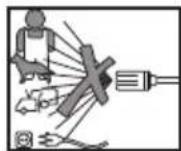
- WARNING: Water jets under high pressure can be dangerous if used incorrectly. Never direct the water jet towards people, animals, the pressure washer itself or any other electrical equipment.
- Never direct the water jet towards yourself or others to clean clothing or footwear.
- Always unplug the product when it is not being used, is left unattended or is to be moved.
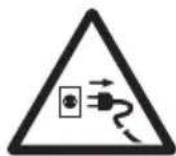
Safety instructions

Always use safety glasses/visor and hearing protection.
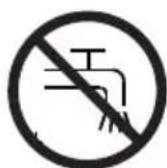
The pressure washer must not be connected directly to the public drinking water supply. If you are forced to use a drinking water supply, the pressure washer must be equipped with a non-return valve and hose meeting IEC 61770 standards.
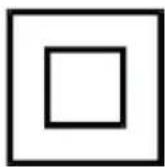
This product is double-insulated.

Declaration of Conformity.
WARNING
- Unplug the pressure washer from the power supply immediately if it should start to vibrate or behave abnormally.
- The pressure washer must never be carried by the mains lead or the pressure hose.
- Keep the work area free of bystanders and pets.
- Never use the pressure washer if you are tired or under the influence of drugs, alcohol or medication.
- Never try to repair the pressure washer or any of its accessories by yourself. All repairs must be carried out by qualified technicians using original spare parts.
Dangerous voltage
• Always unplug the pressure washer if its mains lead is damaged in any way.
- Always check that the pressure washer, mains lead and plug are undamaged before use in order to avoid the possibility of electric shock.
- Make sure that the voltage at the wall outlet corresponds to the voltage marked on the rating plate of the pressure washer.
△ Important
- The pressure washer should be used only as described in this manual. Using the pressure washer for other than its intended use may lead to personal injuries or material damage.
- Do not route the mains lead over a road, track, cycle path, etc., where it could be damaged or where someone could trip over it.
- Always adopt a balanced stance with both feet on the ground when using the pressure washer.
- Make sure that the pressure washer cannot be started accidentally. Always switch the pressure washer off before unplugging it from the wall socket.
- Disconnect the pressure washer from the power supply by unplugging it from the wall socket. Make sure that the wall socket and plug are easily accessible.
- Store the pressure washer in a dry, frost-free location.
Application
- The pressure washer is designed to clean walls, terraces, cars, lawnmowers, bicycles, etc. When necessary, the pressure washer may be used with specialised detergents.
- The pressure washer is designed to be used outdoors for cleaning masonry, wood, metal and plastic materials.
- The pressure washer is only intended for private, non-commercial use.
Product description
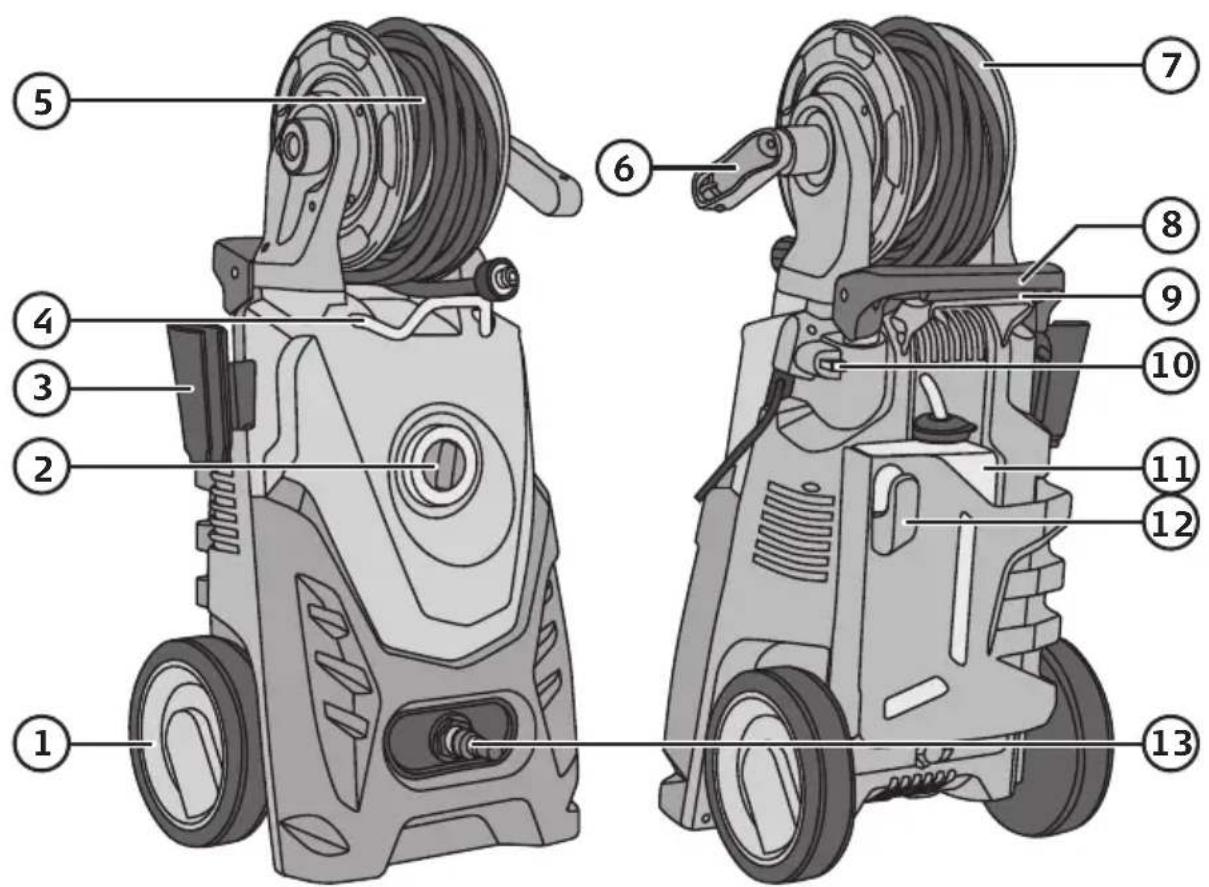
- Wheels
- [I/0] Power switch, on/off
- Trigger gun holster
- Pressure hose guide
- Pressure hose
- Hose reel crank (folding handle)
- Hose Reel
- Trolley handle (telescopic)
- Carrying handle
- Cleaning needle
- Detergent container
- Mains lead holder
- Water supply inlet /hose connector
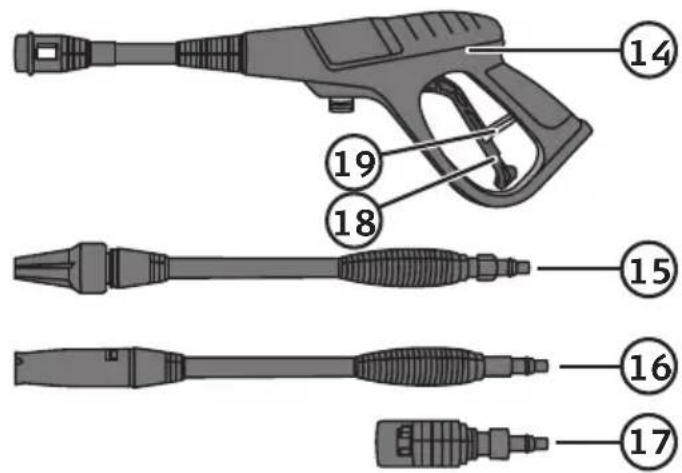
- Trigger gun
- Turbo-nozzle lance
- Standard lance with adjustable nozzle
- Karcher accessory adapter
- Trigger
- Trigger lock
Assembly
natural_image
Circular mechanical dial with central knob and handle, no text or symbols present-
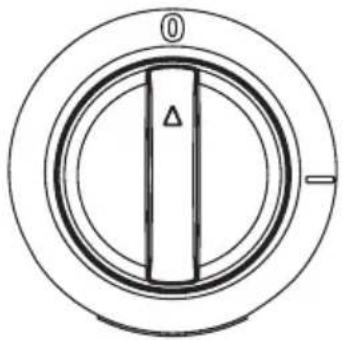
Turn the on-off switch (2) to 0.
-
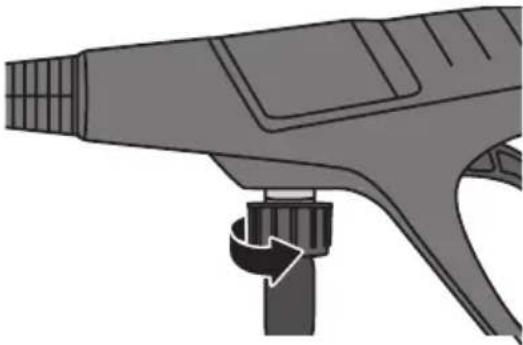
Screw the pressure hose (5) securely onto the trigger gun.
natural_image
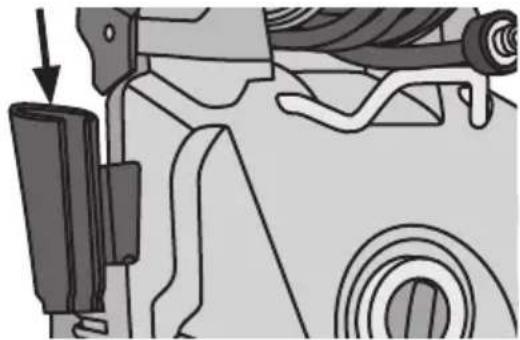
Mechanical assembly diagram showing a belt drive mechanism with no visible text or symbols- Attach the holster (3) for the trigger gun (14) to the bracket on the side of the pressure washer.
natural_image
Illustration of a handheld spray gun with a handle and lever mechanism (no text or symbols)
natural_image
Diagram of a mechanical connector with internal structure and directional arrows (no text or symbols)-
Connect one of the spray lances (15 or 16), the adapter (17) or other accessory (sold separately) to the bayonet fitting on the trigger gun. Twist it 14 turn until it locks.
-
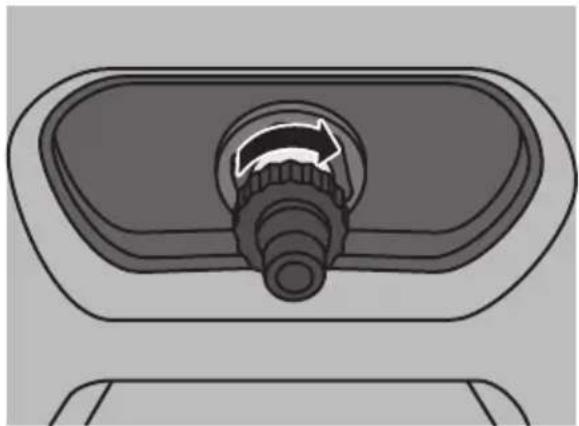
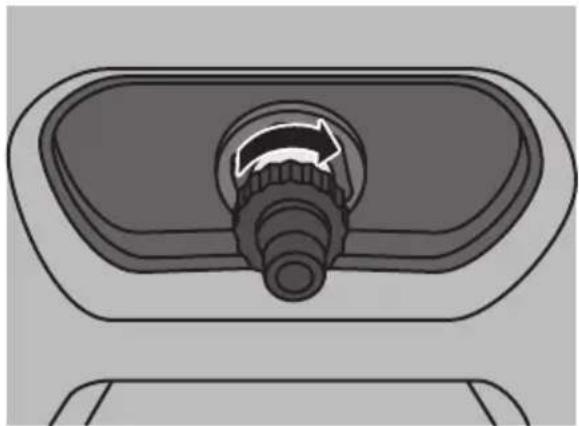
Screw the hose connector (13) to the water inlet connector. Finger-tighten only.
natural_image
Diagram of a mechanical lever or knob with a curved arrow indicating rotation (no text or symbols present)Instructions for use
⚠ Warning: Risk of equipment damage/personal injury.
- The pressure washer should never be run dry (without water) as this may damage the pump.
- The pressure washer must always be operated in an upright/vertical position, never in the horizontal position.
- Bear in mind that the pressure washer may still be under pressure even if it is switched off. De-pressurise the pressure washer by pulling the trigger (18) until no water comes out before disconnecting the hoses. Disconnecting the pressure hose while the system is still under pressure can be dangerous.
- The spray lance/trigger gun is subjected to a recoil force when the water jet is discharged. Make sure that you have a firm footing and are holding the spray lance and trigger gun firmly in both hands.
- Do not use a water connection hose shorter than 6 metres in length and with a diameter of 1/2 inch, the connection hose will buffer any possible pressure surges in the water lines and protect the pressure washer so that it works more smoothly.
- The water supply temperature must not exceed 40 °C. Let the water run for a moment if the hose has been in the sun and become warm.
- Never look into the nozzle when it is attached to the washer.

Read carefully through the instruction manual before using the pressure washer, pay particular attention to the warning texts and symbols.
- Connect a water hose with a 1/2 inch quick-connector to the water inlet hose connector.
- Connect the other end of the hose to a tap.
natural_image
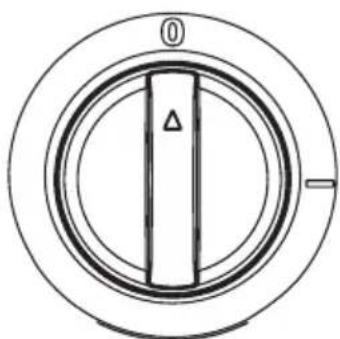
Circular diagram with concentric rings and a central vertical bar, no text or symbols present- Turn the power switch (2) to 0.
- Plug the mains lead into a wall socket.
- Pull the trigger and let water flow through the spray lance for about five seconds.
natural_image
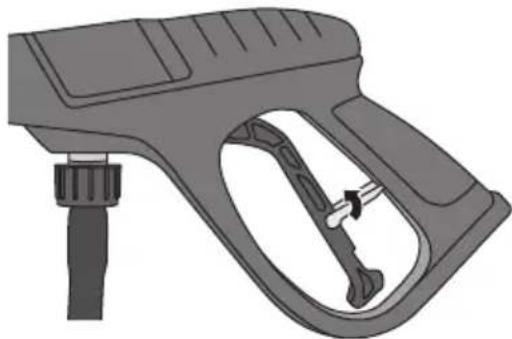
Illustration of a handheld electric water gun with handle and lever (no text or symbols)- Fold out the trigger lock (19) to prevent the trigger from being pulled.
- Unwind a sufficient length of the pressure hose.
natural_image
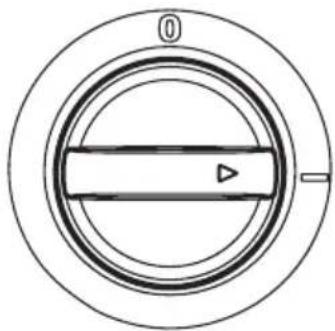
Circular diagram with concentric rings and a central horizontal bar, no text or symbols present-
Turn the power switch to the I position to switch the pressure washer on.
-
Point the trigger gun/attachment towards the object to be cleaned.
natural_image
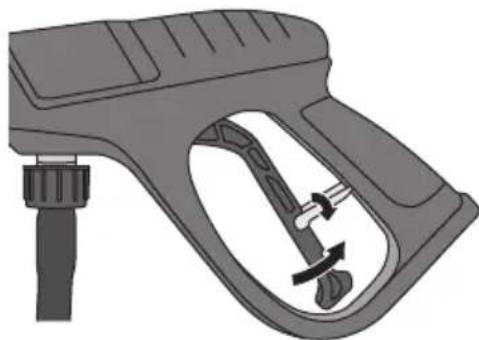
Illustration of a handheld water gun with internal mechanism (no text or symbols)- Fold in the trigger lock and pull the trigger to start spraying water.
i Information: The recommended distance between the nozzle and the surface to be cleaned is approx. 30 cm. Shorter distances provide a higher degree of cleaning power, but can damage the surface being cleaned. Longer distances result in a gentler cleaning jet. Adapt the distance to the suit the sensitivity of the surface.
- Release the trigger when you have finished cleaning.
- Turn the power switch to the 0 position to switch the pressure washer off.
- Turn off the water tap.
- Pull the trigger for a few seconds or however long it takes for water to stop coming out of the nozzle. Fold out the trigger lock.
- Unplug the mains lead from the wall socket. Coil the mains lead and hang it on the holder (12).
- Wind the high-pressure up onto the hose reel (7) using the crank (6).
Adjusting the pressure and spray pattern (does not apply to turbo lance)
The pressure and spread of the water jet can be adjusted when using the standard lance.

natural_image
Diagram showing particle dispersion through a funnel-like device with an arrow indicating direction (no text or symbols)- Move the nozzle towards the end of the lance to lower the pressure.

natural_image
Diagram of a mechanical component with arrows indicating motion or flow direction (no text or symbols)-
Move the nozzle towards the trigger gun to raise the pressure.
-
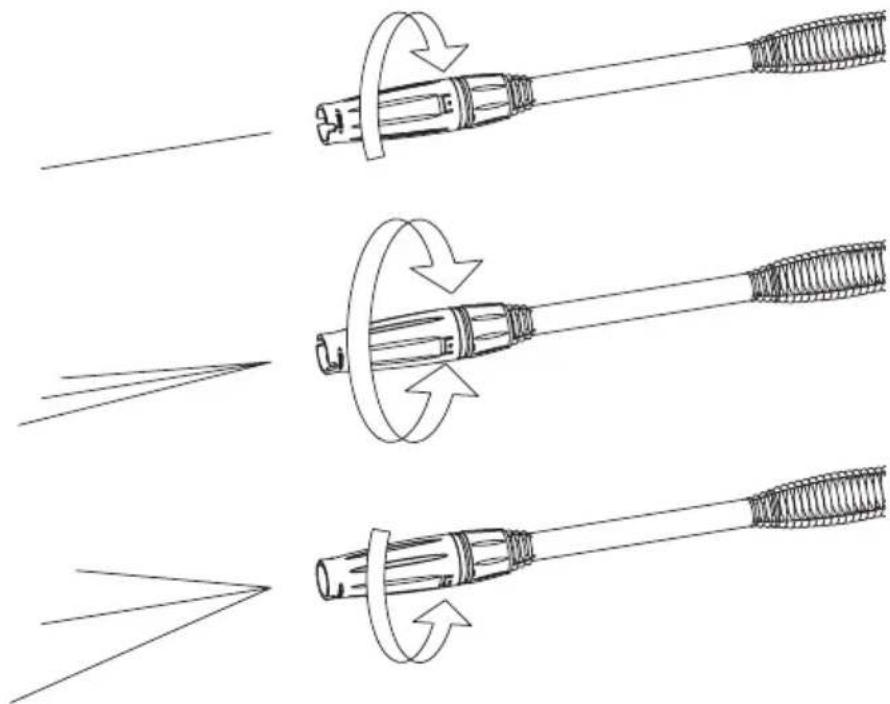
Twist the nozzle to adjust the spray pattern.
natural_image
Three-step diagram showing how to interact with a cable or connector, illustrating mechanical or electrical motion (no text or symbols present)Using detergents (does not apply to turbo lance)
-
Remove the lid and pull the hose out of the detergent container (11).
-
Fill the detergent container with detergent.
-
Refit the hose and the lid.
-
Pull the nozzle forwards to select low pressure and spray detergent onto the surface to be cleaned.

natural_image
Diagram of a nozzle emitting bubbles, no text or symbols present-
Leave the detergent to work for a while (do not let it dry).
-
Spray off the loosened dirt using either high or low pressure. Note: If you choose to spray with low pressure, pull the hose out of the detergent container and spray until only water comes out of the nozzle.
Care and maintenance
• Always unplug the pressure washer from the power point before cleaning it or when it is not to be used for a long time.
- Clean the pressure washer using a damp cloth. Use only mild cleaning agents, never solvents or corrosive chemicals.
Cleaning the inlet filter and nozzle
The hose connector which is screwed onto the water inlet connector is fitted with an inlet filter which hinders sand and other impurities from damaging the valves of the pump.
- Disconnect the hose connector from the water inlet connector.
- Rinse the filter under a tap.
- Screw the hose connector back onto the water inlet connector.
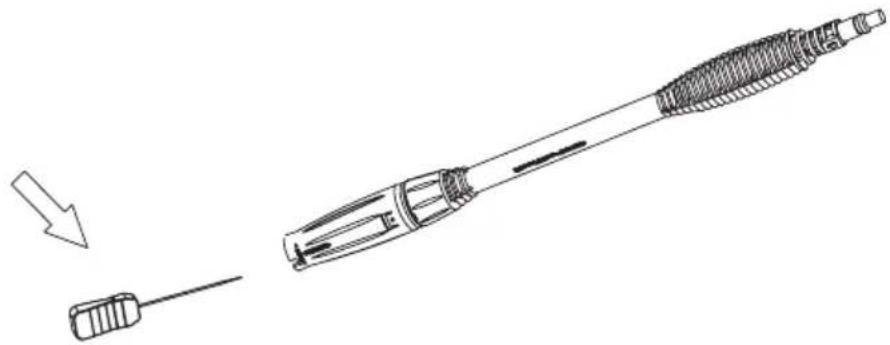
The lance nozzles must be freed from dirt and debris.
-
Insert the cleaning needle (10) into the nozzle.
-
Rinse the nozzle with clean water.
-
Repeat steps 1 and 2 several times for best results.
natural_image
Line drawing of a medical or laboratory tool with an arrow indicating a process step (no text or symbols present)Storage
△ Important
- Protect the pressure washer against frost. Make sure that it is completely drained of all water before it is put away for storage.
- Store the pressure washer in a dry area out of the reach of children and others who do not have the prerequisite knowledge to operate the machine.
- Detach the pressure hose and lance and store them with the pressure washer. Avoid storing the pressure washer in temperatures below 5 °C or above 40 °C.
Troubleshooting
| The machine does not start. | Is the plug is connected, is there power at the socket, has the fuse/RCD blown/tripped?If the pressure washer is under pressure, pull the trigger.Problem with the plug/electrical socket.Problem with the extension lead. Try without a lead.Incorrect voltage. Check voltage.The power switch is set to 0. |
| The pump has insufficient pressure. | Clogged/worn nozzle. Clean or change.Insufficient water supply. Check: A 10-litre container should be able to be filled within a minute.There could be a kink in the hose. Make sure it is straight.The inlet filter might be clogged. Make sure that it is clean.The water hose is clogged or is leaking. Check. |
| Leaking pump. The hose coupling is not tight. | |
| The pump stops. The RCD/fuse has tripped. Check.The extension lead is too long. Try it without an extension lead.Overheating due to an insufficient water supply. The inlet filter may be clogged.Test the water flow: A 10-litre container should be able to be filled within a minute. | |
| The pressure washer starts but little or no water comes out of the nozzle. | The pump is not drawing in water. Pull the trigger to release any trapped air and make sure that the inlet hose is filled with water.The pressure washer must always be operated in an up-right/vertical position, never in the horizontal position.Clogged nozzle. Clean.The inlet or outlet valve is damaged. Change it. |
| The trigger cannot be depressed. | The safety trigger lock is engaged, fold it in to disengage it. |
Responsible disposal
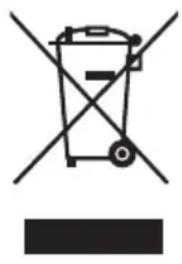
This symbol indicates that this product should not be disposed of with general household waste. This applies throughout the entire EU. In order to prevent any harm to the environment or health hazards caused by incorrect waste disposal, the product must be handed in for recycling so that the material can be disposed of in a responsible manner. When recycling the product, take it to your local collection facility or contact the place of purchase. They will ensure that the product is disposed of in an environmentally sound manner.
natural_image
Symbol of a trash bin crossed with no visible text or labelsSpecifications
Voltage 230 V AC, 50 Hz
Power 2000 W
Max inlet water pressure 6 bar (0.6 MPa)
Working pressure 110 bar (11 MPa)
Max water pressure 150 bar (15 MPa)
Water flow rate 5.5 l/min, max 7.3 l/min
Max water temperature 40 °C
IP rating IPX5
Sound pressure level (LpA) 80 dB(A), KpA: 3 dB(A)
Sound power level (LwA) 96 dB(A)
Vibration value ( a_hv ) < 2.5 m/s ^2 , K: 1.5 m/s ^2
Length of water hose 6.5 m
Length of mains lead 5 m
Weight 12.3 kg
natural_image
Circular mechanical knob diagram with central handle and circular outer ring (no text or symbols)natural_image
Mechanical assembly diagram showing a belt drive mechanism with no visible text or symbolsnatural_image
Illustration of a handheld electric gun with a handle and lever mechanism (no text or symbols)
natural_image
Diagram of a mechanical connector with internal structure and directional arrows (no text or symbols)natural_image
Diagram of a mechanical lever with a curved arrow indicating clockwise motion (no text or symbols)Användning
natural_image
Circular mechanical knob diagram with central knob and handle (no text or symbols)natural_image
Illustration of a handheld water gun with handle and lever mechanism (no text or symbols)natural_image
Circular diagram with concentric rings and a central horizontal bar, no text or symbols presentnatural_image
Illustration of a handheld water gun with internal components and directional arrows (no text or symbols)natural_image
Diagram showing particle dispersion and particle flow through a tool, with no text or symbols present.natural_image
Diagram of a mechanical component with arrows indicating motion or flow direction (no text or symbols)natural_image
Three-step diagram showing how to interact with a cable or connector, illustrating mechanical or electrical motion (no text or symbols present)natural_image
Diagram of a mechanical device emitting particles, showing fluid flow and a directional arrow (no text or symbols)natural_image
Line drawing of a medical or surgical tool with an arrow indicating a dissection or insertion (no text or symbols present)Förvaring
△ Viktigt!
natural_image
Symbol of a trash bin crossed with no visible text or labelsSpecifikationer
natural_image
Circular diagram with concentric rings and a central vertical bar, no text or symbols presentnatural_image
Mechanical assembly diagram showing a belt drive mechanism with no visible text or symbolsnatural_image
Illustration of a handheld electric gun with a handle and lever mechanism (no text or symbols)
natural_image
Diagram of a mechanical connector with internal mesh structure and directional arrows (no text or symbols)-
Fest en av lansene (15 eller 16) på, adapteren (17) eller annet tilbehør (selges separat) i bajonettkoblingen på spylehåndtaket. Drei ¼ omdreining medurs til den låser.
-
Skru fast slangekoblingen (13) på tilkoblingen for innkommende vann. Benytt kun håndkraft.
natural_image
Diagram of a mechanical lever with a curved arrow indicating clockwise motion (no text or symbols)Bruk
natural_image
Circular diagram with concentric rings and a central vertical bar, no text or symbols presentnatural_image
Illustration of a handheld spray gun with handle and lever mechanism (no text or symbols)natural_image
Circular diagram with concentric rings and a central horizontal bar, no text or symbols presentnatural_image
Illustration of a handheld water gun with lever mechanism (no text or symbols)natural_image
Diagram showing particle dispersion and a mechanical component with an arrow indicating direction (no text or symbols)natural_image
Diagram of a mechanical component with arrows indicating motion or flow direction (no text or symbols)natural_image
Three-step diagram showing how to interact with a cable or connector, illustrating mechanical or electrical motion (no text or symbols present)natural_image
Diagram of a nozzle emitting bubbles, no text or symbols presentnatural_image
Line drawing of a medical or surgical tool with an arrow indicating a dissection or insertion (no text or symbols present)Oppbevaring
△Viktig!
natural_image
Symbol of a trash bin crossed out by two crossed lines, with no text or labels present.Spesifikasjoner
natural_image
Circular mechanical knob diagram with central handle and circular outer ring (no text or symbols)natural_image
Mechanical assembly diagram showing a belt drive mechanism with no visible text or symbolsnatural_image
Illustration of a handheld spray gun with a curved grip and lever (no text or symbols)
natural_image
Diagram of a mechanical connector with internal components and directional arrows indicating movement (no text or symbols)natural_image
Diagram of a mechanical lever with a curved arrow indicating clockwise motion (no text or symbols)Käyttö
natural_image
Circular mechanical knob diagram with central knob and handle (no text or symbols)natural_image
Illustration of a handheld electric gun with handle and lever mechanism (no text or symbols)natural_image
Circular diagram with concentric rings and a central horizontal bar, no text or symbols presentnatural_image
Illustration of a handheld water gun with internal components and directional arrows (no text or symbols)natural_image
Diagram showing particle dispersion and a mechanical component with an arrow indicating direction (no text or symbols)natural_image
Diagram of a mechanical component with arrows indicating motion or flow direction (no text or symbols)natural_image
Three-step diagram showing how to interact with a cable or connector, illustrating mechanical or electrical motion (no text or symbols present)natural_image
Illustration of a mechanical component emitting bubbles, with no visible text or symbolsnatural_image
Line drawing of a medical or surgical tool with an arrow indicating compression or disassembly (no text or symbols present)Säilytys
△ Huom.!
natural_image
Symbol of a trash bin crossed out by two crossed lines, with no text or labels present.Tekniset tiedot
natural_image
Circular diagram with concentric rings and a central vertical bar, no text or symbols presentnatural_image
Mechanical assembly diagram showing a belt drive mechanism with no visible text or symbolsnatural_image
Illustration of a handheld electric gun with a lever mechanism (no text or symbols)
natural_image
Diagram of a mechanical connector with internal structure and directional arrows (no text or symbols)natural_image
Diagram of a device handle with a circular knob and directional arrow (no text or symbols)Bedienung
natural_image
Circular mechanical dial with central knob and handle, no text or symbols presentnatural_image
Illustration of a handheld water spray gun with handle and lever (no text or symbols)natural_image
Circular diagram with concentric rings and a central horizontal bar, no text or symbols presentnatural_image
Illustration of a handheld water gun with internal mechanism (no text or symbols)natural_image
Diagram showing particle dispersion through a pointed tool with an arrow indicating direction (no text or symbols)natural_image
Diagram of a mechanical component with arrows indicating direction (no text or symbols)natural_image
Three-step diagram showing how to interact with a cable or connector, illustrating mechanical or electrical motion (no text or symbols present)natural_image
Diagram of a mechanical device emitting particles, showing fluid flow and a black arrow indicating direction (no text or symbols)natural_image
Line drawing of a medical or laboratory tool with an arrow indicating a process step (no text or symbols present)Aufbewahrung
△ Wichtig:
natural_image
Symbol of a trash bin crossed with no visible text or labelsTechnische Daten
Declaration of Conformity
Declares that this product complies with the requirements of the following directives and standards
Machinery Directive 2006/42/EC
EN 62233:2008
EN 60335-2-79:2012
EN 60335-1:2012
+A11:2014
EMC Directive 2014/30/EU
EN 61000-3-2:2014
EN 61000-3-3:2013
EN 61000-3-11:2000
EN 55014-1:2006
+A1+A2:2011
EN 55014-2:2015
Low Voltage Directive 2014/35/EU
Elliner Widushim
Ellinor Wickström
Product Compliance Manager
Insjön, Sweden, 2019-05-15
CLAS OHLSON AB, SE-793 85 INSJÖN, SWEDENN
Sverige
Postal 10 - 13 Market Place
Kingston Upon Thames
Surrey
KT1 1JZ
Deutschland
Kundenservice Hotline: 040 2999 78111
E-Mail: kundenservice@clasohlson.de
Homepage
www.clasohlson.de


- HHR150 Pressure Washer
- Safety
- General requirements for household electrical appliances
- ⚠ WARNING
- Particular requirements for high pressure cleaners
- WARNING
- Dangerous voltage
- Safety instructions
- △ Important
- Application
- Product description
- Assembly
- Instructions for use
- Adjusting the pressure and spray pattern (does not apply to turbo lance)
- Using detergents (does not apply to turbo lance)
- Care and maintenance
- Cleaning the inlet filter and nozzle
- Storage
- Responsible disposal
- Specifications
- Användning
- Förvaring
- △ Viktigt!
- Specifikationer
- Bruk
- Oppbevaring
- △Viktig!
- Spesifikasjoner
- Käyttö
- Säilytys
- △ Huom.!
- Tekniset tiedot
- Bedienung
- Aufbewahrung
- △ Wichtig:
- Technische Daten
- Declaration of Conformity
- Sverige
- Deutschland
Brand : Cocraft
Model : HHR 150
Category : Pressure washer