
HHA 90 - Pressure washer Cocraft - Free user manual and instructions
Find the device manual for free HHA 90 Cocraft in PDF.


| Product Type | High Pressure Washer |
| Model | HHA 90 (90 EPW RU) |
| Rated Voltage | 230 V AC, 50 Hz |
| Input Power | 1400 W |
| Operating Pressure | 60 bar (6 MPa) |
| Max Allowed Pressure | 90 bar (9 MPa) |
| Water Consumption | 4.8 L/min |
| Max Water Supply Pressure | 6 bar (0.6 MPa) |
| Max Water Temperature | 40 °C |
| Weight | 5.5 kg |
| Protection Class | Class II, IPX5 |
| Sound Pressure Level (LpA) | 84 dB(A) (K=3 dB(A)) |
| Sound Power Level (LwA) | 96 dB(A) (K=3 dB(A)) |
| Vibration | <2.5 m/s² (K=1.5 m/s²) |
| Detergent Bottle | Included (attachment for trigger gun) |
| Cleaning Needle | Integrated on back of machine |
| Safety Features | RCD required, trigger lock, non-return valve for drinking water supply |
| Intended Use | Private, non-commercial cleaning of walls, terraces, cars, etc. |
| Accessories Included | Lance, trigger gun, pressure hose, detergent bottle, cleaning needle |
Frequently Asked Questions - HHA 90 Cocraft
User questions about HHA 90 Cocraft
0 question about this device. Answer the ones you know or ask your own.
Ask a new question about this device
Download the instructions for your Pressure washer in PDF format for free! Find your manual HHA 90 - Cocraft and take your electronic device back in hand. On this page are published all the documents necessary for the use of your device. HHA 90 by Cocraft.
USER MANUAL HHA 90 Cocraft
natural_image
Blue Cocraft water purifier with black branding and hose, no visible text or symbols on bodyArt.no Model
18-3601 90 EPW RU
40-9910 90 EPW RU

Important!
Read the entire instruction manual carefully and make sure that you fully understand it before you use the equipment. Keep the manual for future reference.
Viktig information:
Original instructions
Bruksanvisning i original
natural_image
Line drawing of a pressure cooker with attached cable and connector (no text or symbols)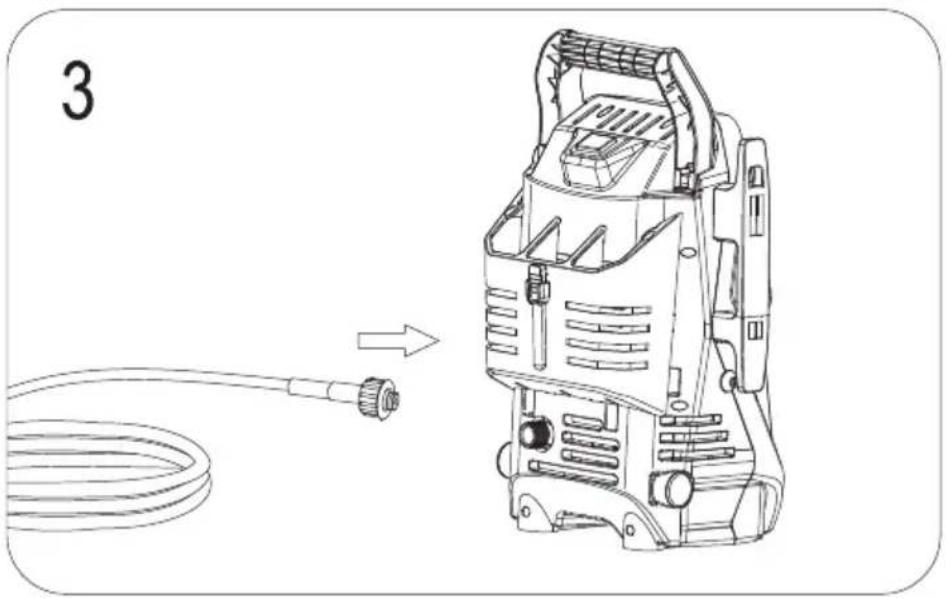
natural_image
Line drawing of a water purifier with attached hose and pipe, no text or symbols present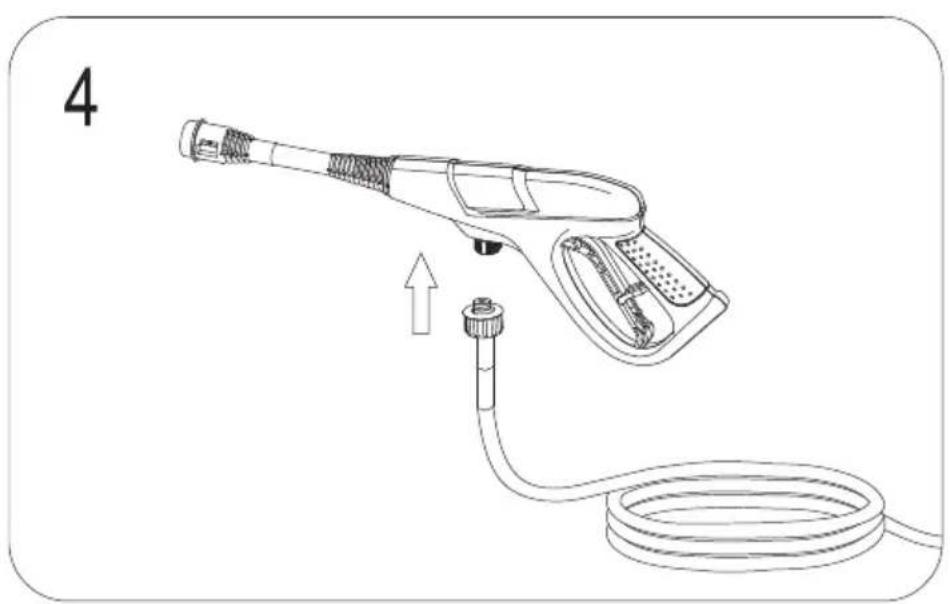
natural_image
Line drawing of a hairless spray gun with attached hose and cap, labeled with number 4 (no text or symbols on the diagram itself)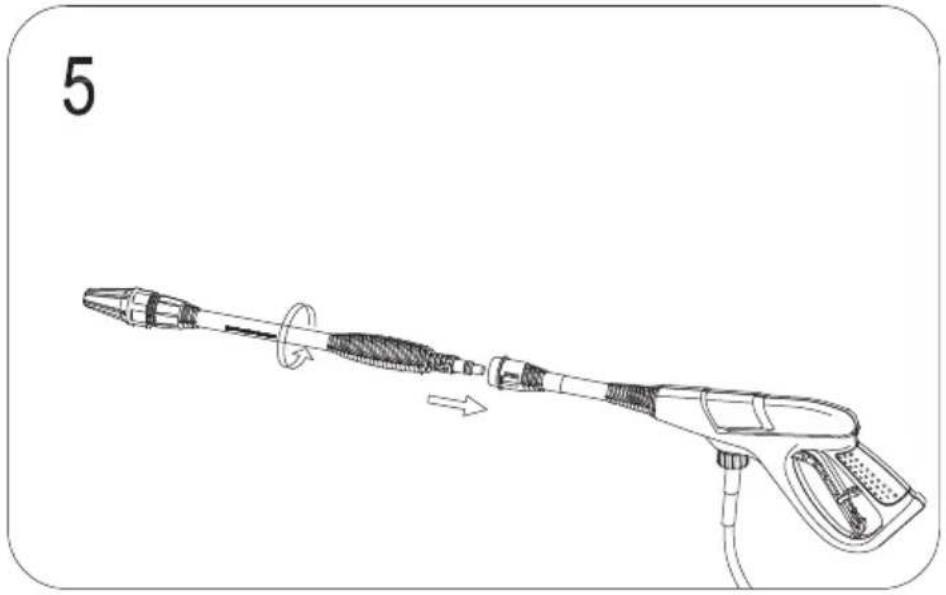
natural_image
Line drawing of a medical or laboratory device with a tool and tubing, no text or symbols present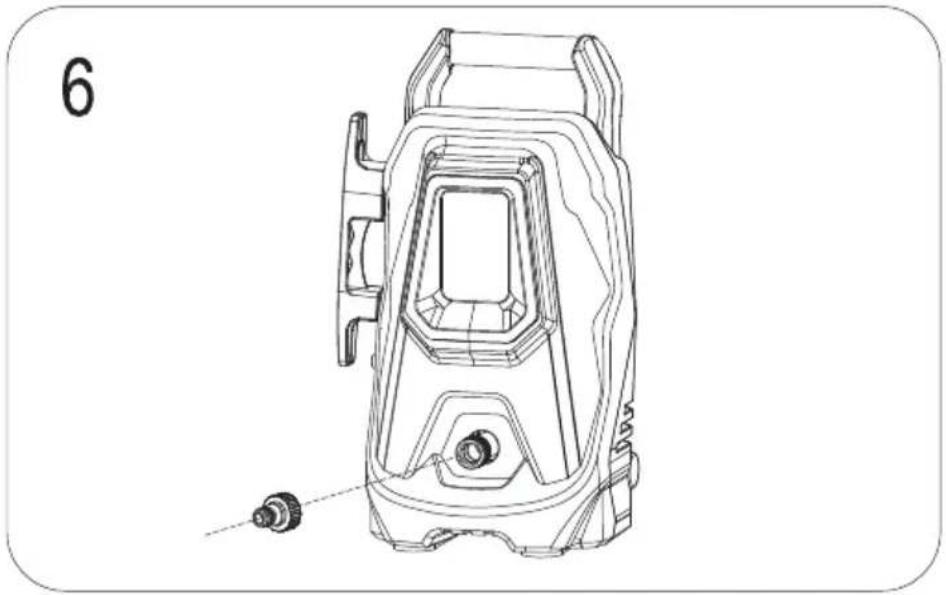
natural_image
Technical line drawing of a pressure water heater device with no visible text or symbols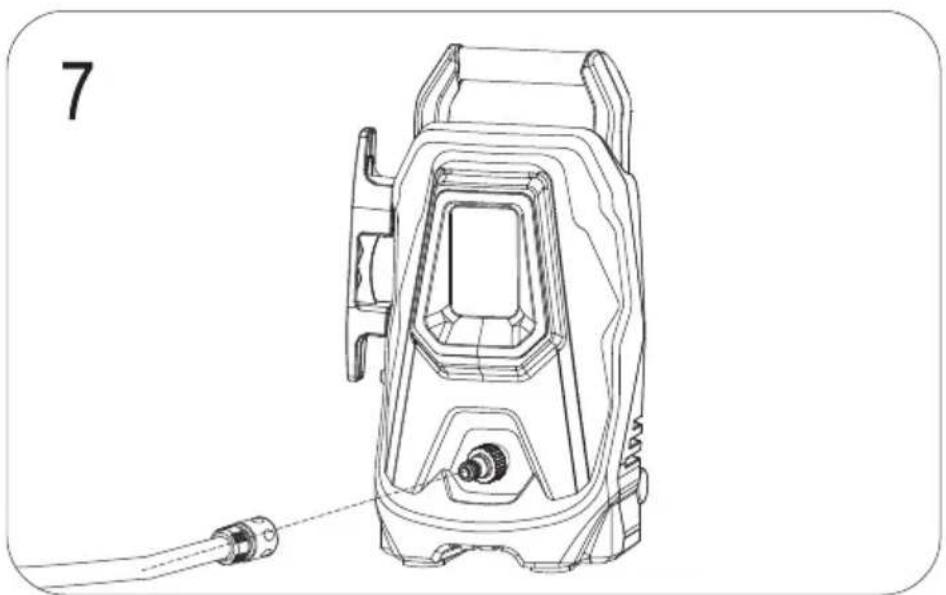
natural_image
Line drawing of a mechanical device with a cable and connector, no text or symbols present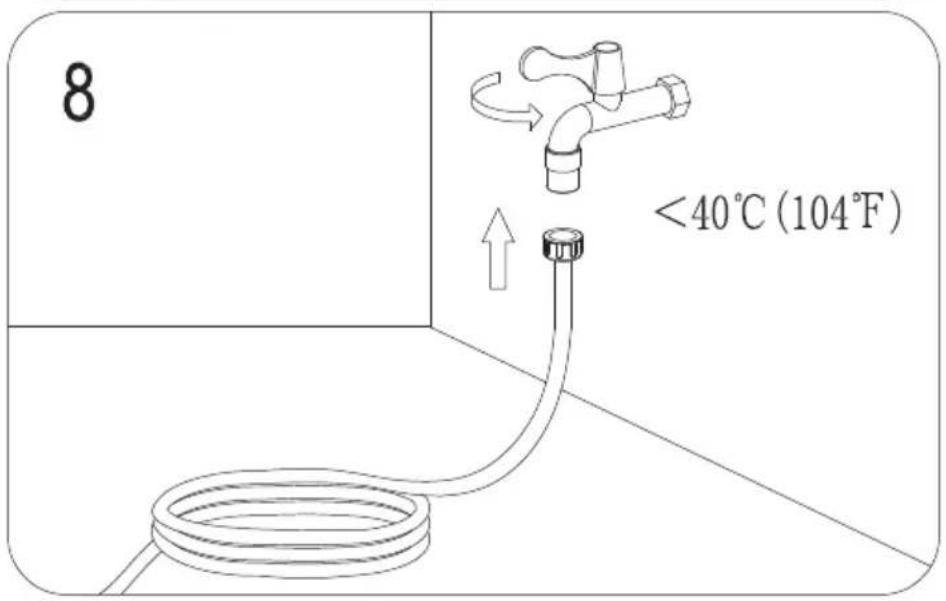
13
natural_image
Line drawing of a handheld electric vehicle with attached cable and connector (no text or symbols)14
natural_image
Line drawing of a bottle pouring liquid into a cylindrical container (no text or symbols)15
natural_image
Diagram showing a spray gun being sprayed onto a spray bottle, with no text or symbols present.16
natural_image
Technical line drawing of a mechanical device with a gear and adjustment knob (no text or symbols)17
natural_image
Technical line drawing of a mechanical component with an arrow indicating direction (no text or symbols)High Pressure Washer
Art.no 18-3601 Model 90 EPW RU
40-9910 90 EPW RU
Please read the entire instruction manual before using the product and then save it for future reference. We reserve the right for any errors in text or images and any necessary changes made to technical data. If you have any questions concerning technical problems please contact our Customer Services.
Contents
Safety....9
General safety instructions 9
Specific safety instructions .... 10
Key to warning symbols 11
Areas of use 12
Description ....13
Assembly instructions....14
Operating instructions ....14
Useful tips....16
Care and maintenance....16
Storage 17
Troubleshooting....17
Responsible disposal....18
Technical specifications....18
Safety
General safety instructions
- Do not use the pressure washer before reading the entire instruction manual.
- Never aim the water jet at yourself or any other person. Risk of personal injury, water spray from high-pressure washers can penetrate the skin.
- The wall socket that the pressure washer is connected to must have been installed by a competent electrician in accordance with IEC 60364-1 standards. The pressure washer should be connected to the mains via an RCD (tripping at max 30 mA within max 30 ms).
- Warning: Use only detergent designed for high-pressure washers. Other detergents and chemicals can damage the washer or result in personal injury.
- Never use the pressure washer if there are bystanders in the vicinity, unless they are wearing protective clothing and safety glasses.
- High-pressure washers can be dangerous if used in an improper way. Never point the water jet at people, animals, the pressure washer itself or any other electrical equipment.
- Never point the water spray at yourself to attempt to wash the clothes or shoes that you are wearing.
- Always pull the plug out of the wall socket before servicing and adjusting the machine.
- The pressure washer may not be used by minors or persons without the prerequisite knowledge of the machine.
- Use only original parts for repairs and for your own safety.
- Warning: High pressure hoses, adaptors and accessories are important safety features. Use only accessories or exchangeable parts which are recommended by the manufacturer.
- Never use the washer if the mains lead or any other important component is damaged such as the safety features, high-pressure hose, lance or trigger gun.
- If an extension lead is used, the plug and socket must be of a watertight construction and designed for outdoor use.
- Warning: Use of incorrect extension leads can be dangerous.
- Be very attentive to minimise the risk of accidents if the pressure washer is to be used around children.
- Learn how the pressure washer works so that you can quickly stop and depressurize it.
- Be alert, think about your actions.
- Never use the pressure washer if you are tired or under the influence of drugs, alcohol or medication.
- Keep the work area free of bystanders and pets.
- Do not overreach or stand on unsteady surfaces. Always adopt a balanced stance with both feet planted firmly on the ground.
- Follow all instructions for service and maintenance as described in the instruction manual.
- Always use protective clothing and safety goggles or a visor. Stones and other small objects may be propelled at high speed by the water jet. Use hearing protection.
- Warning: The pressure washer should not be connected to sources of drinking water. If you are forced to use a drinking water supply, the pressure washer must be equipped with a non-return valve and hose meeting IEC 61770 standards.
- The product must not be used by persons (including children) with any form of reduced physical, sensory or mental capacity, lack of experience and knowledge under the provision that they are supervised or that sufficient instruction has been provided to them by a person willing to take responsibility for their safety.
- Children should be kept under close supervision. The high pressure washer is not a toy.
- Damaged mains leads and switches should always be replaced by a qualified tradesman in order to avoid the risk of damage or possible injury.
- Water that has passed through the non-return valve should not be used as a source of drinking water.
Specific safety instructions
Keep this instruction manual, so that it is ready for use and can be used when loaning out the machine.
- Always make sure that the pressure washer is turned off and cannot be started accidentally.
- The pressure washer should never be rebuilt or modified in any way. Parts not approved by the manufacturer should never be used.
- Only use hoses and connections that are recommended by the manufacturer.
- The pressure washer should never be carried by the mains lead or its pressure hose. Never place your hand on a live power switch while moving the pressure washer.
- The pressure washer should be unplugged when it is not in use, is left unattended or is moved. Unplug the pressure washer when inspecting, cleaning or changing accessories, or when any used extension leads or similar are damaged. Unplug the pressure washer should it begin to excessively vibrate.
- Never try to repair the pressure washer or any of its accessories by yourself. All repairs must only be carried out by qualified service technicians.
- Never operate the pressure washer near any flammable liquids or gas. Doing so can lead to possible fire or explosion.
- Do not use the pressure washer if its high-pressure hose, mains lead, switch or any other component is damaged.
- Any extension lead that is used must be equipped with a waterproof plug and socket connection designed for outdoor use. Using a non-compliant extension lead poses a serious danger.
- The user is ultimately responsible for any accidents or injuries caused to others or their property.
- Store the pressure washer in a dry location out of children's reach.
-
Use care when handling the pressure washer or any of its accessories. Keep all components clean, effective and safe for use.
-
Make sure that the power supply used is rated at 230 V AC at the power point.
- Always check that the pressure washer, mains lead and plug are undamaged before use in order to avoid the possibility of electric shock.
- Damaged leads, adaptors and plugs should not be replaced with parts that do not meet the proper standard safety requirements. Always unplug the pressure washer if its mains lead is damaged in any way.
- Do not use the pressure washer if its switch is damaged. Such a situation requires that the lead be changed immediately by a qualified electrician.
- Never overload the pressure washer. Never use the pressure washer for any other purposes than that for which it was intended.
- Warning: Use only detergent designed for high-pressure washers. Other detergents and chemicals can damage the washer or result in personal injury.
- Warning: High-pressure washers can be dangerous if used in an improper way. Never point the water jet at people, animals, the pressure washer itself or any other electrical equipment.
- Warning: Never use the pressure washer if there are bystanders in the vicinity, unless they are wearing protective clothing and safety glasses.
- Warning: Never point the water spray at yourself to attempt to wash the clothes or shoes that you are wearing.
Key to warning symbols
Important!
The pressure washer is labelled with symbols containing important information or instructions for the safe use of the pressure washer.

Read through the entire instruction manual before use, taking into special consideration all warning symbols and labels.

Warning:
This warning symbol is used throughout the instruction manual whenever there is a risk for personal injury. Ensure that you read this section and understand what all the warnings are meant for.

Always use ear defenders and safety goggles or a visor.
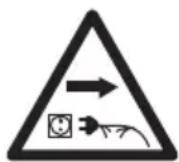
Always unplug the pressure washer if its mains lead is damaged in any way. Always unplug the pressure washer if it is left unattended, even for the shortest of moments.
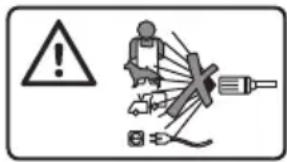
Warning: High-pressure washers can be dangerous if used in an improper way. Never point the water jet at people, animals, the pressure washer itself or any other electrical equipment.
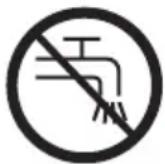
The pressure washer should not be connected to sources of drinking water. If you are forced to use a drinking water supply, the pressure washer must be equipped with a non-return valve and hose meeting IEC 61770 standards.
Areas of use
- The pressure washer is designed to clean walls, terraces, cars, lawnmowers, bicycles, etc. When necessary, the pressure washer may be used with specialised detergents.
- The pressure washer is designed to be used outdoors for cleaning masonry, wood, metal and plastic materials.
- This pressure washer is only intended for private, non-commercial use.
- The pressure washer must not be used in any other manner than that described in this instruction manual.
Warning: Read carefully through the instruction manual before using the pressure washer, being extra attentive to any warning texts and symbols. This pressure washer has many functions that will make any of your jobs quicker and easier. Safety, efficiency and quality have played an important role in the development of this pressure washer, which also make it easy to use and require minimal maintenance.
Description
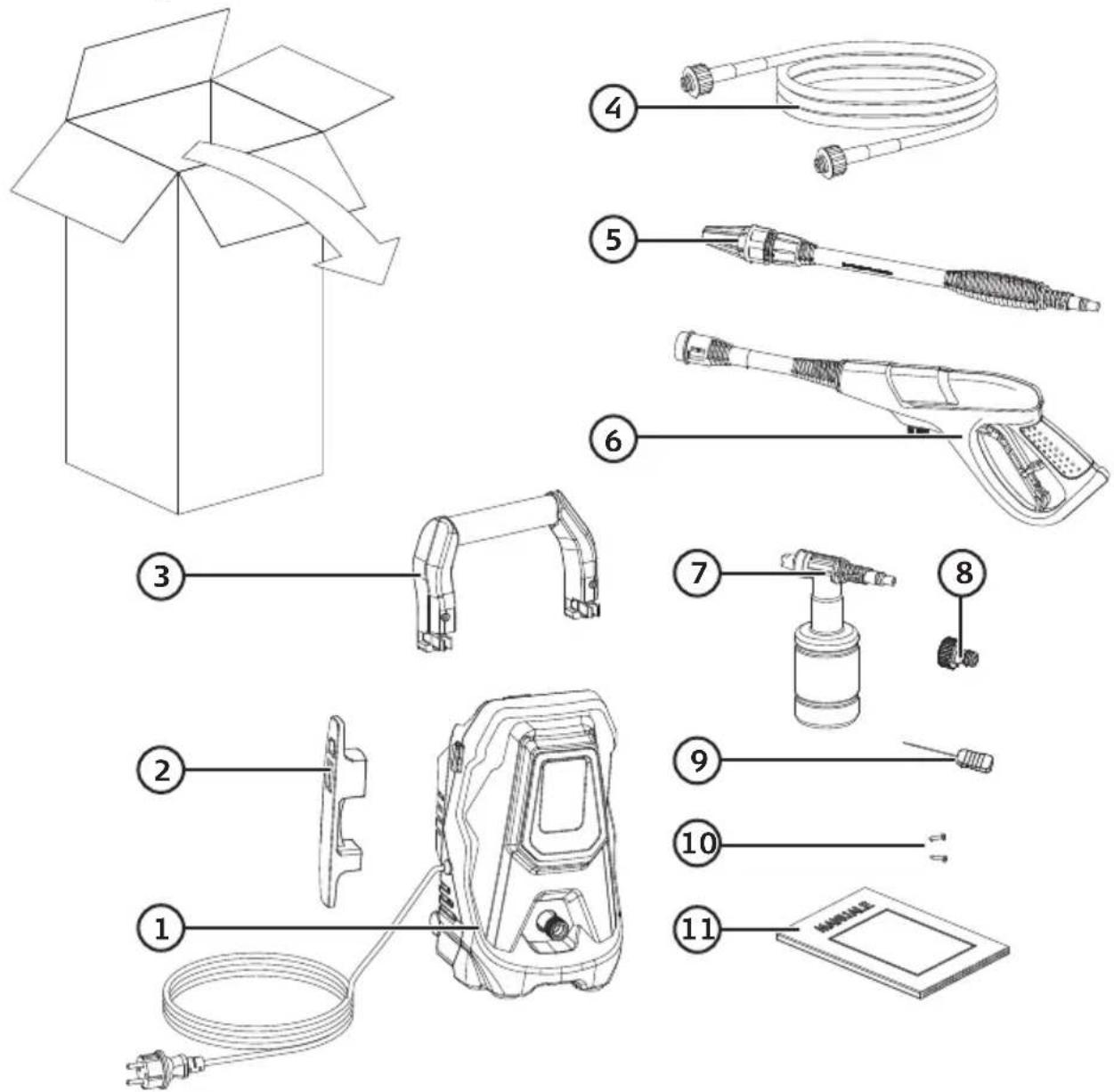
- Pressure washer
- Mains lead bracket
- Handle
- Pressure hose
- Lance
-
Trigger gun
-
Detergent bottle
- Water supply inlet
- Cleaning needle (located next to the power switch)
- Handle retaining screws (× 2)
- Instruction manual
Assembly instructions
Check that all the parts are intact and that nothing is missing.
Warning: Turn off the pressure washer and pull the plug from the wall socket when servicing and adjusting the machine. Check that the power switch is set to the 0 position before assembly.
- Attaching the handle (fig. 1). Insert the handle into the holes in the pressure washer and secure it with the supplied screws.
- Attaching the mains lead bracket (fig. 2). Push the bracket downwards to lock it in place.
- Attaching the pressure hose (fig 3). Screw the pressure hose securely onto the pressure washer.
- Attaching the trigger gun (fig. 4). Screw the pressure hose securely onto the trigger gun.
-
Attaching the lance to the trigger gun (fig. 5).
-
Insert the lance into the bayonet coupling on the trigger gun and turn it a 14 turn clockwise until it locks into place. Do this before beginning to use the pressure washer.
-
Warning: Make sure that the chosen accessory is attached securely onto the trigger gun to avoid the risk of it being forcefully ejected by the high pressure jet once the machine is started.
-
Attaching the water supply inlet adaptor (fig. 6). Screw on the adaptor securely. Do not screw it on too tightly, hand-tighten only.
-
Connecting the water supply hose (fig. 7). Fit a quick-release connector (sold separately) onto the hose and push it onto the water supply inlet connector (8).
-
Connecting the hose to a tap (fig. 8).
- Connect the other end of the water supply hose (sold separately) to a tap.
- Warning: The water supply temperature must not exceed 40 °C. Run the hose for a moment, especially if the hose been lying in the sun and has become warm. The pressure washer must always be operated in an upright/vertical position, never in the prone/horizontal position.
Operating instructions
-
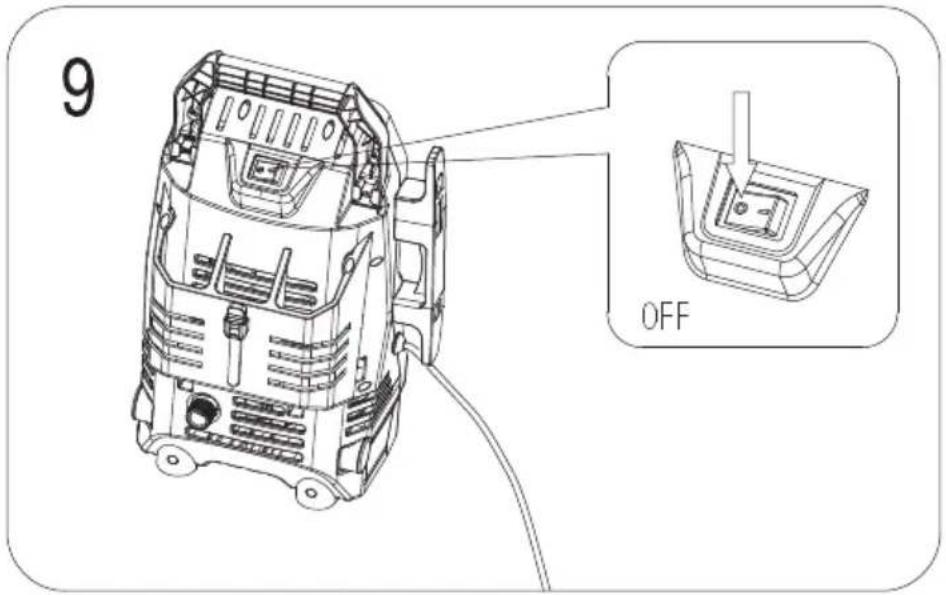
Check that the power switch is set to the 0 position (fig. 9).
-
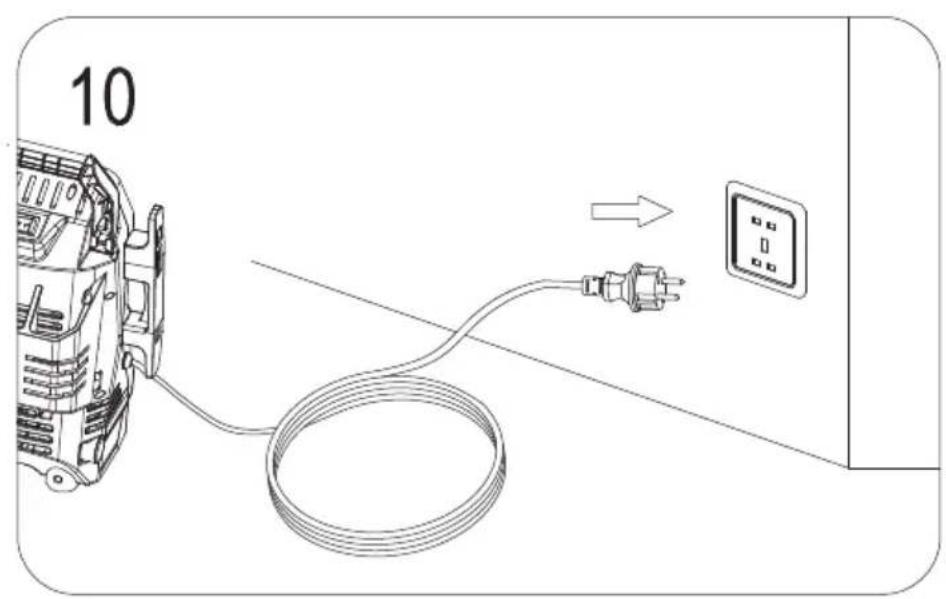
Plug the mains lead into an electrical socket (fig. 10).
-
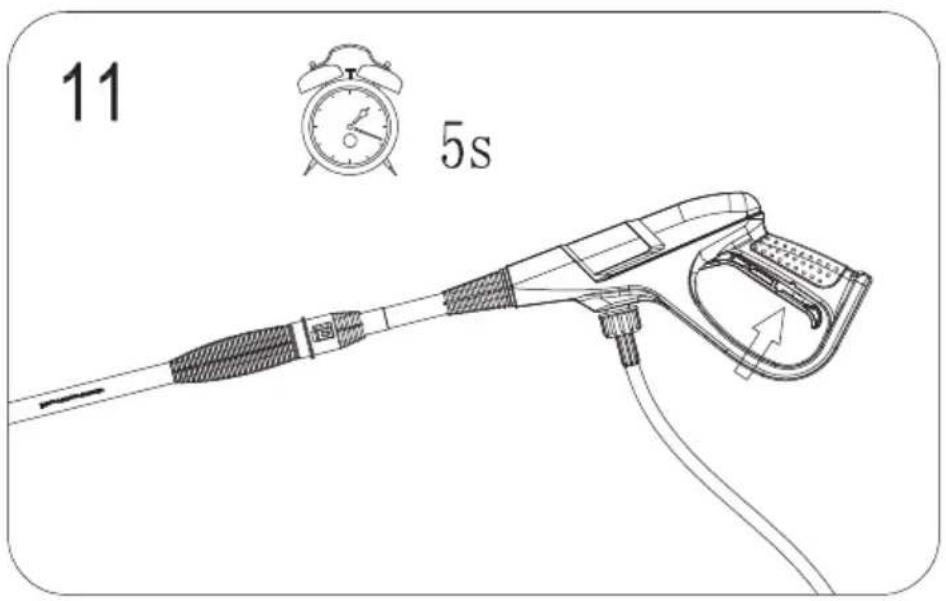
Let the water pass through the lance (fig. 11). Pull the trigger until all the air is expelled and water begins to flow.
-
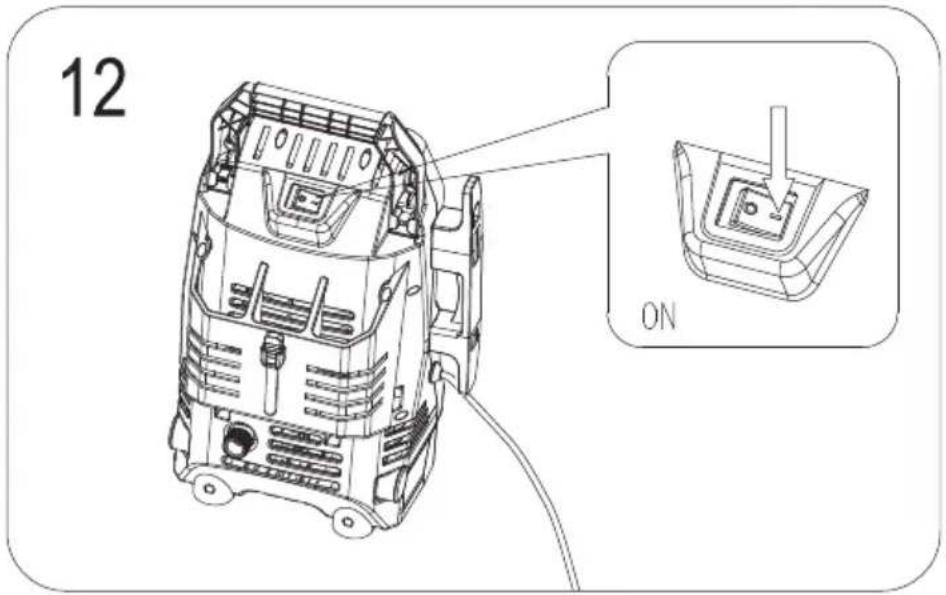
Starting the pressure washer (fig. 12).
-
Set the power switch to position I to start the pressure washer. Point the lance towards a safe area.
-
If the water supply comes from a tank or similar non-pressurised source, both the pump and water supply hose must first be filled with water before the pump is started. The water source tank must be positioned at a higher level than the pressure washer. A water filter must first be installed onto the supply side of inlet if the water source is in any way impure or sedimentary.
-
Stopping the pressure washer (fig. 13).
-
Turn the power switch to the 0 position to turn the pressure washer off.
- Turn off the water tap.
- Minimise the pressure in the pump and hose by pulling the trigger for a few seconds or as long as it takes for all the water to run out of the nozzle.
- Unplug the pressure washer from the electrical socket.
- Flip the safety lock backwards to ensure that the trigger is locked.
Warning: Risk of mechanical damage. The pressure washer should never be run dry (without water) as this may damage the pump. Always fit a filter onto the inlet valve of the pressure washer if the source water contains any impurities, otherwise the pump may be damaged.
-
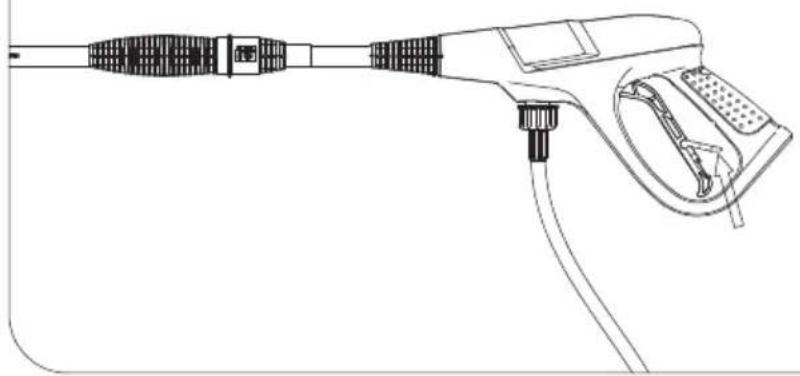
Using detergent (fig. 14).
-
Flip the safety lock backwards to ensure that the trigger is locked.
-
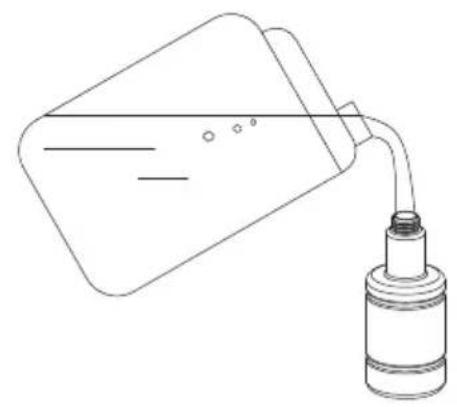
Fill the detergent bottle with detergent.
-
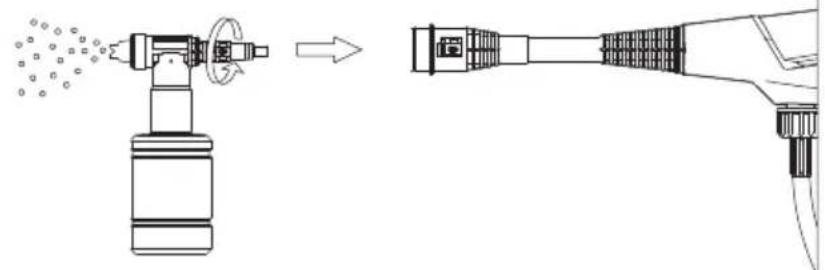
Attaching the detergent bottle to the trigger gun (fig. 15).
-
Insert the top of the detergent bottle into the bayonet coupling of the trigger gun and turn it a 14 turn clockwise until it locks into place. Do this before beginning to use the pressure washer.
-
Warning: Make sure that the detergent bottle is attached securely onto the trigger gun to avoid the risk of it being forcefully ejected by the high pressure jet once the machine is started.
-
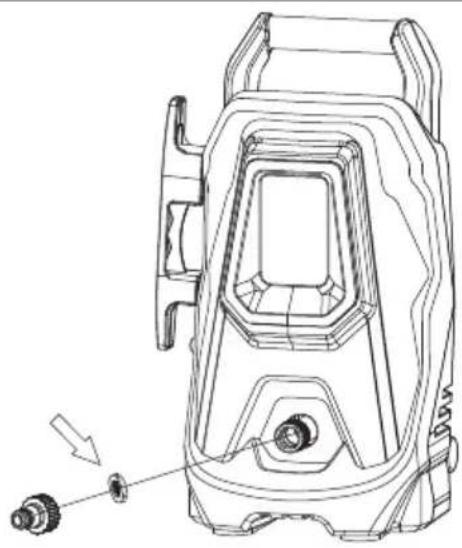
Checking/cleaning the inlet filter (fig. 16).
-
The water inlet is already equipped with a filter from the manufacturer to remove any dirt, sediment and other contaminants which can damage the pressure washer.
-
Unscrew the water inlet adaptor and use tap water to rinse out the filter from the back.
-
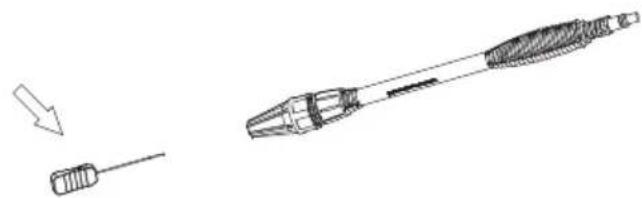
Cleaning the nozzle (fig. 17).
-
Clean the nozzle with the cleaning needle when needed.
- The cleaning needle is located on the back of the pressure washer, below the power switch.
Useful tips
Note: The recommended distance between the nozzle and the surface to be cleaned is approximately 30 cm. Shorter distances will result in higher pressures and may damage the surface being cleaned. Longer distances will be more gentle on the surface being cleaned.
- Do not lay the power lead on roads, cycle paths or where it may be damaged.
Warning: Never use a shorter garden hose than 6 metres (1/2" hose). The hose buffers possible pressure surges in the water lines which protects the pressure washer and allows it work smoothly.
Warning: Water jetting out from the lance will cause it to recoil, so it is important to hold the lance firmly with both hands while standing steady and well balanced.
- Never point the resulting water jet at people, animals, towards the pressure washer itself or any other electrical equipment.
- Use protective glasses since water and particles can spray back towards you when spraying against an object.
Warning: Turn off the pressure washer and pull the plug when taking breaks.
Do not leave the machine on while unattended.
Care and maintenance
Warning: Turn off the pressure washer and pull the plug from the wall socket when servicing and adjusting the machine.
Regular cleaning of the inlet filter and the nozzle are important for the proper operation of the pressure washer. The inlet filter should be removed and cleaned regularly to prevent sediments in the water from damaging the pump and seals.
- Make sure the nozzle is open, carefully remove debris and build-up and rinse with clean water.
- Clean the inlet filter after use: Detach the hose from the connection, remove the filter with pliers, clean if necessary and replace when finished.
- Protect the pressure washer against frost, empty it completely* and remove the pressure hose. Place the pressure washer in dry storage for the winter.
Note: The guarantee is not valid if the machine is frost damaged.
* Start the pump with the trigger pressed or with the pressure hose removed and let the pump run for 30 seconds to completely empty the pump.
Storage
- Make sure that the inlet filter and the nozzle are cleaned before putting the pressure washer away. Store the pressure washer in a dry area out of the reach of children and others who do not have the prerequisite knowledge to operate the machine. Disassemble the pressure hose and lance and store them with the pressure washer. Avoid storing the pressure washer in temperatures below 5 °C or above 40 °C.
Note: Protect the washer against frost. Make sure that it is completely emptied before storing.
Warning: Never run the pressure washer dry, doing so may damage the pump seals.
- Remember that the pressure washer may still be under pressure even when turned off! Depressurise it by pressing the trigger before disconnecting the hoses. Removing the pressure hose while pressurised can be dangerous.
- New nozzles for the pressure washer can be purchased from the supplier. Warning: Never look into the nozzle when it is attached to the washer.
Troubleshooting
The machine does not start
- Is the plug is connected, is there power at the socket, has the fuse/RCD blown/tripped?
- The pressure washer is under pressure. Press the trigger.
• Problem with the plug/electrical socket. - Problem with the extension lead. Try another lead.
- Incorrect voltage. Check voltage.
• The power switch is in the 0 position.
The pump has insufficient pressure
• Clogged/worn nozzle. Clean or change.
- Insufficient water supply. Check: A 10-litre container should be able to be filled within a minute.
• There can be a kink in the hose. Make sure it is straight.
• The inlet filter might be clogged. Make sure that it is clean.
• The water hose is clogged or is leaking. Check.
Leaking pump
• The hose coupling is not tight.
The pump stops
• The RCD/fuse has tripped. Check.
• The extension lead is too long. Try it without an extension lead.
• Overheating due to an insufficient water supply. The inlet filter may be clogged.
Test the water flow: A 10-litre container should be able to be filled within a minute.
No water comes out of the nozzle or there is an insufficient amount of water
- The pump is not drawing in water. Pull the trigger to release any trapped air and make sure that the inlet hose is filled with water. The pressure washer must always be operated in an upright/vertical position, never in the prone/horizontal position.
- Clogged nozzle. Clean.
- The inlet or outlet valve is damaged. Change it.
The trigger cannot be depressed
- The safety lock is engaged, push it forward to disengage it.
Responsible disposal
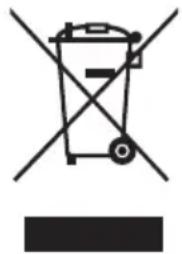
This symbol indicates that this product should not be disposed of with general household waste. This applies throughout the entire EU. In order to prevent any harm to the environment or health hazards caused by incorrect waste disposal, the product must be handed in for recycling so that the material can be disposed of in a responsible manner. When recycling your product, take it to your local collection facility or contact the place of purchase. They will ensure that the product is disposed of in an environmentally sound manner.
natural_image
Symbol of a trash bin crossed with no text or labels, accompanied by a solid black rectangle below (no text or symbols present)Technical specifications
Rated voltage 230 V AC, 50 Hz
Input power 1400 W
Max water supply pressure 6 bar (0.6 MPa)
Operating pressure 60 bar (6 MPa)
Max allowed pressure 90 bar (9 MPa)
Water consumption 4.8 l/min
Max consumption 6.5 l/min
Max water temperature 40 °C
Weight 5.5 kg
Protection class Class II, IPX5
Sound pressure level (LpA) 84 dB(A), K: 3 dB(A)
Sound power level (LwA) 96 dB(A), K: 3 dB(A)
Vibration a_h<2,5 m/s^2, K:1,5 m/s^2
Högtryckstvätt
Art.nr 18-3601 Modell 90 EPW RU
40-9910 90 EPW RU
natural_image
Symbol of a trash bin crossed with no text or labels, representing waste sorting or disposal (no text present)Teknisk specifikation
Märkspänning 230 V AC, 50 Hz
Ineffekt 1400 W
natural_image
Symbol of a trash bin crossed out by two crossed lines, with no text or labels present.natural_image
Symbol of a trash bin crossed with no text or labels, accompanied by a black rectangular block below (no readable text or symbols)Tekniset tiedot
Nimellisjännite 230 V AC, 50 Hz
Teho 1400 W
natural_image
Symbol of a trash bin crossed with no text or labels, accompanied by a black rectangular block below (no readable text or symbols)Technische Daten
Declaration of Conformity
Declares that this product complies with the requirements of the following directives and standards
High Pressure Washer
Cocraft 40-9910 / 18-3601
90 EPW RU
| Machinery Directive2006/42/EC | EMC Directive2004/108/EC | Low Voltage Directive2006/95/EC |
| EN 60335-1:2012+A11:2014EN 60335-2-79:2012 | EN 55014-1:2006+A1:2009 +A2:2011EN 55014-2:1997+A1:2001 +A2:2008EN 61000-3-2:2014EN 61000-3-3:2013 | EN 62233:2008 |
Klas Balkow
President
Insjön, Sweden, 2015-11-20
Sverige
Postal 10 - 13 Market Place
Kingston Upon Thames
Surrey
KT1 1JZ
Deutschland
Kundenservice


- High Pressure Washer
- Contents
- Safety
- General safety instructions
- Specific safety instructions
- Key to warning symbols
- Important!
- Warning:
- Areas of use
- Description
- Assembly instructions
- Operating instructions
- Useful tips
- Care and maintenance
- Storage
- Troubleshooting
- The machine does not start
- The pump has insufficient pressure
- Leaking pump
- The pump stops
- No water comes out of the nozzle or there is an insufficient amount of water
- The trigger cannot be depressed
- Responsible disposal
- Technical specifications
- Högtryckstvätt
- Teknisk specifikation
- Tekniset tiedot
- Technische Daten
- Declaration of Conformity
- Sverige
- Deutschland
Brand : Cocraft
Model : HHA 90
Category : Pressure washer