
HC 224 - Compressor Cocraft - Free user manual and instructions
Find the device manual for free HC 224 Cocraft in PDF.


| Product Type | Air Compressor |
| Brand | Cocraft |
| Model | HC 224 |
| Rated Voltage | 230 V, 50 Hz |
| Power | 1500 W / 2 hp |
| No-Load Speed | 2800 rpm |
| Free Air Delivery at 6 bar | 100 l/min |
| Max Working Pressure | 8 bar |
| Cylinder Displacement | 181 l/min |
| Pressure Vessel Capacity | 24 L |
| Dimensions (L × W × H) | 61 × 32 × 60 cm |
| Weight | 30 kg |
| Oil Capacity | Approx. 0.1 L (1 dl) |
| Recommended Oil (above +10 °C) | SAE 30 compressor oil |
| Recommended Oil (below +10 °C) | SAE 10 compressor oil |
| Noise Emission (Sound Pressure LpA) | 75.2 dB(A), KpA = 2.75 dB(A) |
| Noise Emission (Sound Power LwA) | 97 dB(A), KwA = 2.75 dB(A) |
| Safety Features | Safety valve, motor overload cut-out, pressure switch |
| Maintenance Interval (Oil Change) | First after 10 hours, then every 120 hours |
| Maintenance Interval (Air Filter Cleaning) | Every 120 hours |
| Included Accessories | Wheels, air filter |
| Compliance | CE, Machinery Directive 2006/42/EC, EMC Directive 2014/30/EU |
Frequently Asked Questions - HC 224 Cocraft
User questions about HC 224 Cocraft
0 question about this device. Answer the ones you know or ask your own.
Ask a new question about this device
Download the instructions for your Compressor in PDF format for free! Find your manual HC 224 - Cocraft and take your electronic device back in hand. On this page are published all the documents necessary for the use of your device. HC 224 by Cocraft.
USER MANUAL HC 224 Cocraft
MAX WORKING PRESSURE: 8 BAR
KOMPRESSOR KOMPRESSORI

Important!
Read the entire instruction manual carefully and make sure that you fully understand it before you use the equipment. Keep the manual for future reference.
Viktig information:
natural_image
Line drawing of a Cocraft air compressor with wheels and control panel (no text or symbols on the diagram itself)Art.no Model
18-3613 L224
41-9000 L224
Ver. 20170526
Original instructions
Bruksanvisning i original
Originalbruksanvisning
Please read the entire instruction manual before using the product and then save it for future reference. We reserve the right for any errors in text or images and any necessary changes made to technical data. In the event of technical problems or other queries, please contact our Customer Services (see address details on the back).
Safety
- Always use ear defenders and safety goggles when using the compressor.
- Reduce the risk of electric shocks. Avoid body contact with earthed objects such as water pipes and radiators.
- Use a face mask for dusty work.
- Never use the compressor in areas where flammable liquids/materials or gases (petrol, solvents, gas cylinders) are stored or used.
- Never switch the compressor off by pulling out the plug, always use the ON/OFF button.
- Always unplug the mains lead and empty the pressure vessel of air before servicing or repairing the compressor.
- Always unplug the mains lead and empty the pressure vessel of air before moving the compressor.
- Make sure that the mains lead does not come into contact with heat, oil, or sharp edges.
- Never move the compressor around by pulling the mains lead or air hoses. The compressor must only be moved using the handle.
- If the mains lead is damaged, to prevent any risk of fire or electrocution, it must only be replaced by a qualified electrician.
- Make sure that any air hoses and air tools connected to the compressor are rated to withstand the pressure generated by the compressor and that they are connected correctly.
- This product must not be used by anyone (including children) suffering from physical or mental impairment. This product should not be used by anyone that has not read the instruction manual unless they have been instructed in its use by someone who will take responsibility for their safety.
- Never let children play with the product.
- Do not weld or in any way modify the pressure vessel.
- Never aim compressed air at yourself or any other person.
Symbols

Read the entire instruction manual carefully.

Use ear defenders.

Risk of electric shock.

This unit is remote controlled and can start without warning.

Never switch off the compressor by pulling out the plug or using the isolator switch (if fitted). Always use the ON/OFF button on the compressor.
Product description
The compressor increases the pressure of the air which is pumped into the pressure vessel. When the air pressure in the vessel reaches max, a pressure switch switches off the motor driving the compressor. At the same moment, the air in the compressor is released. This occurs to reduce the pressure in the compressor so that it can restart when the pressure drops to below the minimum pressure. A safety valve releases the air in the pressure vessel if the pressure switch should fail to turn the motor off.
Buttons and functions
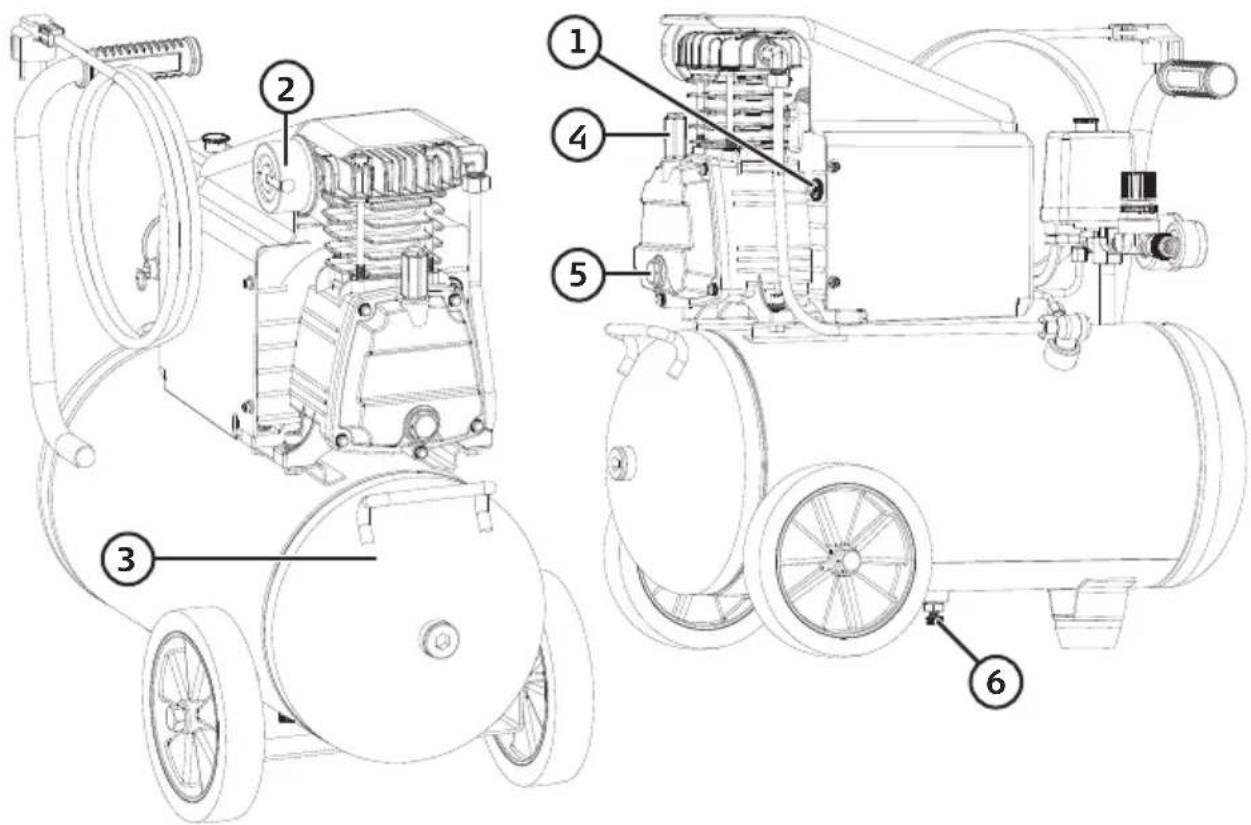
- Motor overload cut-out
- Air filter
-
Pressure vessel
-
Oil filler cap
- Window for checking oil level
-
Drain tap
-
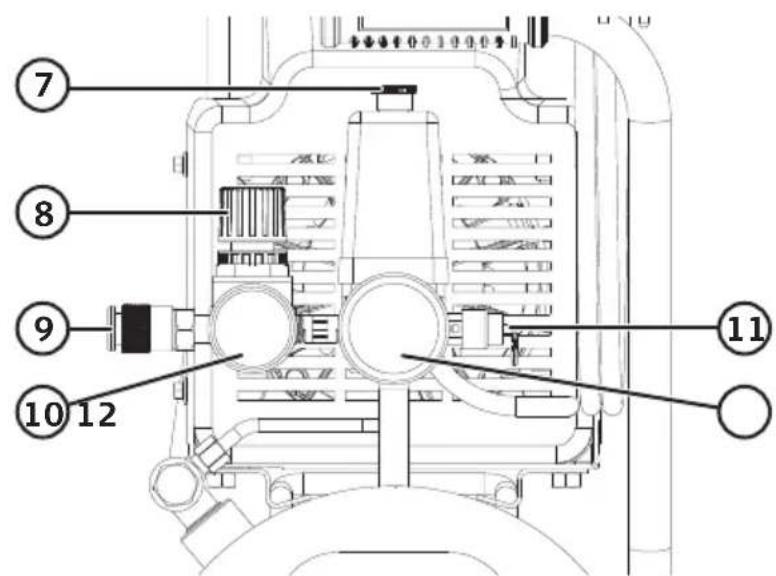
[ON/OFF]
- Pressure regulator (working pressure)
- Air outlet
- Pressure gauge – working pressure
- Safety valve
- Pressure gauge – pressure vessel
Getting started
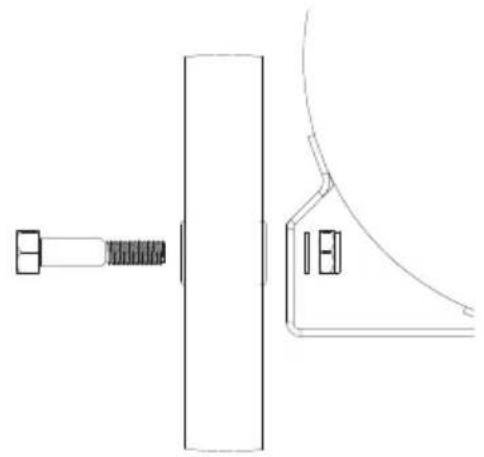
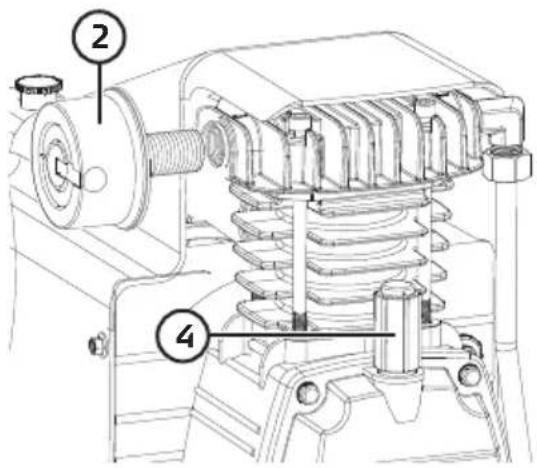
- Attach the wheels to the pressure vessel and the air filter (2) to the compressor (see fig.).
natural_image
Technical line drawing of a mechanical assembly with a bolt and bracket (no text or symbols)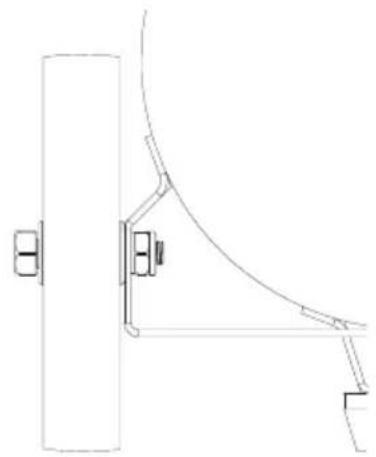
natural_image
Technical line drawing of a mechanical assembly with no visible text or symbols- If a transportation cover is fitted on the oil filler hole (4), remove it and fit the proper cap.
- Place the compressor in a dry and well ventilated place.
- Make sure that it is stable and cannot tip over.
- Make sure that the oil level is up to the red circle in the oil level window (5).
- Connect the mains lead to a permanently installed 230 V wall socket.
Note:
Before using the compressor for the first time: Open the drain tap (6) in the bottom of the pressure vessel, switch the compressor on using the ON/OFF button (7) and let it run for 10 minutes to lubricate all the moving parts. Close the drain tap.
Use
- Check the oil level in the window (5).
- Attach a suitable air tool: blow gun, spray gun, tyre inflator, etc.
- If necessary: Read the instruction manual of the connected air tool and set the recommended working pressure using the regulator (8).
- When you have finished work and the compressor has been switched off, the air should be released manually by pulling out the safety valve (11).
- Use SAE 30 compressor oil at temperatures over +10 °C.
- Use SAE 10 compressor oil at temperatures under +10 °C.
Motor overload cut-out
If the safety cut-out has tripped, the motor has been overloaded in some way.
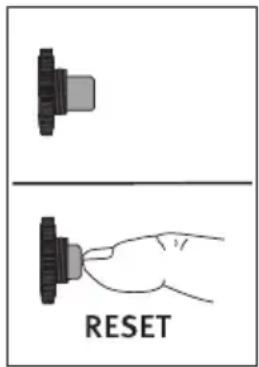
The button on the motor overload cut-out (1) will pop out a couple of millimetres when it has been tripped and is reset by pushing it back in.
There are a number of possible reasons why the overload cut-out might trip such as a voltage drop caused by the use of long extension leads, low ambient temperature (under 10 °C ), or that the pressure switch is not used to turn the compressor on/off in the event of a power cut for example.
Care and maintenance
- The compressor's first oil change should be done after 10 hours of operation.
- Change the oil and clean the air filter after every 120 hours of use. Check the safety valve and pressure gauges at the same time.
- Pull the spring-loaded ring to check the safety valve. If the safety valve is working properly (and the pressure vessel is under pressure) air should seep out through the safety valve.
- Perform a visual inspection at least once a year to check that the inside and outside of the pressure vessel is free of corrosion. Under no circumstances must the wall thickness of the pressure vessel be less than 2 mm.
- Regularly check that the ventilation port in the oil filler cap (4) is open.
- The safety valve must under no circumstances be manipulated or blocked.
- Regularly check that all bolts holding the compressor and pressure vessel together are tight.
- Make it a habit to open the drain tap (6) to release any trapped condensation in the pressure vessel.
- Do not clean the compressor or pressure vessel with solvents or flammable liquids.
- If the compressor is not to be used for an extended period: Unplug it from the mains, empty the pressure vessel and drain it using the drain tap (6).
Changing the oil
- Turn off and unplug the compressor from the wall socket before changing the oil.
- Remove the oil filler plug (4).
- Tilt the compressor so that oil can run out of the oil filler hole into an appropriate receptical.
- Let the oil completely drain from the compressor.
- Replace with new oil until the oil reaches the middle of the oil-display window. Refit the oil filler plug.
Oil capacity: Approx 1 dl.
- Use SAE 30 compressor oil at temperatures above +10 °C.
- Use SAE 10 compressor oil at temperatures below +10 °C.
Compressor oil is especially designed for compressors, e.g. it has additives that prevent foaming. If no compressor oil is available then SAE 10-30 engine oil can be used as a substitute.
Troubleshooting guide
| The compressor does not start. | Is it plugged into a wall socket?Is the wall socket live?Has the motor's overload protection tripped? Reset by pushing in the button (1).Is the mains lead damaged? |
| Heavy vibrations and/or unusual sounds. | Check that all bolts holding the compressor and pressure vessel together are tight.Check all other joints and connections. |
| No pressure build-up in vessel or pressure too low. | Make sure the safety valve is not leaking.Make sure the drain tap is not leaking.Check all hose connections for leaks.Air filter is clogged. |
| Oil consumption too high. | Too much oil in the compressor.The ventilation hole in the oil filler cap is clogged. |
Responsible disposal
This symbol indicates that this product should not be disposed of with general household waste. This applies throughout the entire EU. In order to prevent any harm to the environment or health hazards caused by incorrect waste disposal, the product must be handed in for recycling so that the material can be disposed of in a responsible manner. When recycling your product, take it to your local collection facility or contact the place of purchase. They will ensure that the product is disposed of in an environmentally sound manner.
natural_image
Symbol of a trash bin crossed with two crossed lines, no text or labels presentSpecifications
Rated voltage 230 V, 50 Hz
Power 1500 W / 2 hp
No-load speed 2800 rpm
Free Air Delivery at 6 bar 100 l/min
Max working pressure 8 bar
Noise emission data LpA = 75.2 dB(A), KpA = 2.75 dB(A) LwA = 97 dB(A), KwA = 2.75 dB(A)
Cylinder displacement 181 l/min
Pressure vessel 24
Size (L × W × H) 61 × 32 × 60 cm
Weight 30 kg
Kompressor
Att komma igång
natural_image
Technical line drawing of a mechanical assembly with a cylindrical component and a curved bracket (no text or symbols)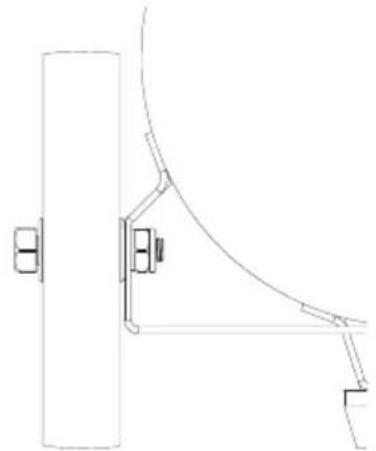
natural_image
Pure technical line drawing of a mechanical assembly without any text, numbers, or symbolsAnvändning
natural_image
Symbol of a trash bin with crossed-out lanes and a blank rectangular block below (no text or labels)Specifikationer
Kom i gang
natural_image
Technical line drawing of a mechanical assembly with a bolt and bracket (no text or symbols)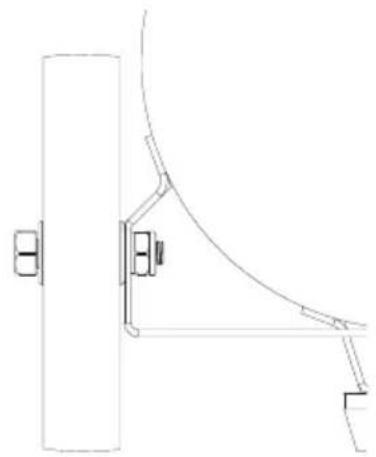
natural_image
Pure technical line drawing of a mechanical assembly without any text, numbers, or symbolsObs!
natural_image
Symbol of a trash bin crossed with no visible text or labelsSpesifikasjoner
Spenning 230 V, 50 Hz
Motoreffekt 1500 W/2 hk
Turtall 2800 rpm
Käytön aloittaminen
natural_image
Technical line drawing of a mechanical assembly with a bolt and bracket (no text or symbols)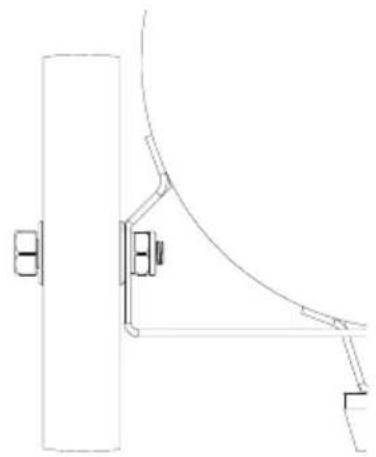
natural_image
Technical line drawing of a mechanical assembly with no visible text or symbolsHuom.!
Inbetriebnahme
natural_image
Technical line drawing of a mechanical assembly with a bolt and bracket (no text or symbols)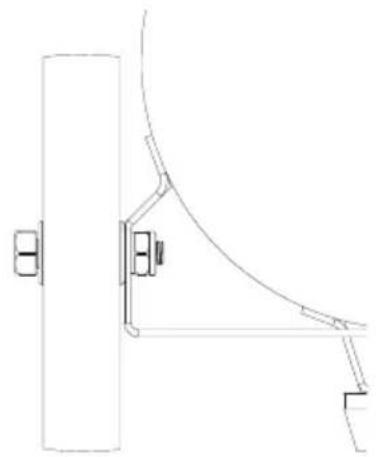
natural_image
Technical line drawing of a mechanical assembly with no visible text or symbolsAchtung:
Declaration of Conformity
Declares that this product complies with the requirements of the following directives and standards
Machinery Directive 2006/42/EC
EN 1012-1:2010
EN 60204-1: 2006
+ A1: 2009
EMC Directive 2014/30/EU
EN 55014-1: 2006
+A1: 2006+A2: 2011
EN 55014-2: 2015
EN 61000-3-2: 2014
EN 61000-3-3: 2013
Hemid Alfredson
Henrik Alfredsson
Manager Technique & Quality
Insjön, Sweden, 2016-11-01
Sverige
Postal 10 - 13 Market Place
Kingston Upon Thames
Surrey
KT1 1JZ
Deutschland
Kundenservice Hotline: 040 2999 78111
E-Mail: kundenservice@clasohlson.de
Homepage
www.clasohlson.de

- Important!
- Viktig information:
- Safety
- Symbols
- Product description
- Buttons and functions
- Getting started
- Note:
- Use
- Motor overload cut-out
- Care and maintenance
- Changing the oil
- Troubleshooting guide
- Responsible disposal
- Specifications
- Kompressor
- Att komma igång
- Användning
- Specifikationer
- Kom i gang
- Obs!
- Spesifikasjoner
- Käytön aloittaminen
- Huom.!
- Inbetriebnahme
- Achtung:
- Declaration of Conformity
- Sverige
- Deutschland
Brand : Cocraft
Model : HC 224
Category : Compressor