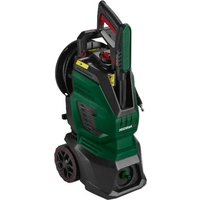
PHD 170 E3 - Pressure washer PARKSIDE - Free user manual and instructions
Find the device manual for free PHD 170 E3 PARKSIDE in PDF.


| Brand | Parkside |
| Model | PHD 170 E3 |
| Product Type | High-pressure cleaner |
| Power supply | 230 V ~, 50 Hz |
| Rated power | 2400 W |
| Working pressure | 12 MPa |
| Maximum pressure | 17 MPa |
| Water flow rate (rated) | 330 l/h (5.5 l/min) |
| Maximum flow rate | 500 l/h (8.3 l/min) |
| Maximum inlet temperature | 40 °C |
| Maximum inlet pressure | 0.8 MPa |
| Weight | 11.4 kg |
| Protection rating | IPX5 |
| Protection class | II (double insulation) |
| High-pressure hose length | 10 m |
| Sound pressure level (LpA) | 79.4 dB |
| Guaranteed sound power level | 95 dB |
| Vibration (ah) | < 2.5 m/s² |
| Child safety | Yes (trigger lock) |
| Turbo nozzle (dirt cutter) | Yes |
| Foam nozzle for detergent | Yes |
Frequently Asked Questions - PHD 170 E3 PARKSIDE
User questions about PHD 170 E3 PARKSIDE
0 question about this device. Answer the ones you know or ask your own.
Ask a new question about this device
Download the instructions for your Pressure washer in PDF format for free! Find your manual PHD 170 E3 - PARKSIDE and take your electronic device back in hand. On this page are published all the documents necessary for the use of your device. PHD 170 E3 by PARKSIDE.
USER MANUAL PHD 170 E3 PARKSIDE
natural_image
Black industrial water heater with adjustable air gap and wheels (no visible text or symbols)Translation of the original instructions
NL BE
Hogedrukreiniger
Before reading, unfold the page containing the illustrations and familiarise yourself with all functions of the device.
FR BE
Inhaltsverzeichnis
Einleitung...... 4
Service-Center....19
Importeur.... 20
Scope of delivery/accessories....22
Description of functions....23
Overview.... 23
Technical data....23
Safety information....24
Meaning of the safety information...... 24
Pictograms and symbols...... 24
Safe initial start-up of the device..... 25
Preparation.... 29
Control elements....29
Setting up the device....29
Establishing a water supply.... 29
Select the attachment....30
Fitting and removing attachments...... 31
Operation.... 31
Cleaning using cleaning agent....31
Switching on.... 31
Interrupting the operation.... 32
Bleeding....32
Ending the operation....32
Transport....32
Cleaning, maintenance and storage..... 32
Cleaning....32
Maintenance.... 33
Storage.... 33
Disposal/environmental protection......33
Troubleshooting.... 34
Service.... 35
Guarantee.... 35
Repair service.... 36
Service Centre.... 36
Importer.... 36
Spare parts and accessories.... 36
Translation of the original EU declaration of conformity.... 37
Introduction
Congratulations on purchasing your new pressure washer (hereafter referred to as device or power tool).
You have chosen a high-quality device. This device was quality-tested and subjected to a final inspection during production, therefore ensuring proper functioning of your device.
In some cases, residual amounts of water may be present on or in the device or in hose lines. This is not a flaw or a defect and is no cause for concern.

The instruction manual forms part of this device. It contains important information on safety, use and disposal. Read the instruction manual carefully. Familiarise yourself with the controls and how to use the device correctly. Use the device only as described and for the stated fields of application. Store the instruction manual carefully and ensure that all documents are handed over in the event that the device is passed on to another user.
Proper use
This device is only intended for the following use:
- Cleaning machines, vehicles, buildings, tools, facades, terraces, garden equipment etc. with a high-pressure water jet. Always follow the manufacturer's instructions for the object being cleaned.
Any other use that is not expressly permitted in this instruction manual may pose a serious hazard to the user and result in damage to the device. The operator or user of the machine is responsible for any accidents or personal injury and/or material damage to third parties or their property. The machine is intended to be used by do-it-yourselfers. It was not designed for heavy commercial use.
The warranty is void in the case of commercial use. The manufacturer is not liable for damage caused by improper use or incorrect operation.
Scope of delivery/accessories
Unpack the device and check that everything is present.
Dispose of the packaging material properly.
- Pressure Washer
- Trigger gun
- Lance
• High-pressure hose - Cleaning agent tank + Cleaning agent nozzle
- Nozzle
- Turbo dirt blaster
-
Rotating washing brush
• Cleaning agent URM 500 (500 ml) -
Coupling (Water connection), Filter insert (pre-assembled)
- Quick connector with garden hose adaptor
- Nozzle cleaning needle
• Translation of the original instructions
Small parts/Accessories are stored in a sealed paper bag.
Description of functions
The pressure washer cleans using a high-pressure water jet.
If necessary, it can also be operated with additional cleaning agents.
Please refer to the descriptions below for information on how the operating elements work.
Overview
The illustrations for the device can be found on the front fold-out page.
1 Lance
2 U-handle
3 Release (U-handle)
4 On/Off switch
5 Trigger gun
6 Holder (Turbo dirt blaster)
7 Holder (Trigger gun)
8 Rotating washing brush
9 High-pressure hose
10 Hose reel with crank handle
11 Holder (Accessories)
12 Holder (Power cord)
13 Power cord
14 Cleaning agent tank
15 Cable clip
16 Coupling (Water connection)
17 Filter insert
18 Water connection
19 Guide for high-pressure hose
20 Nozzle
21 Turbo dirt blaster
22 Release button
23 Switch lever
24 Child safety lock
25 Release (High-pressure hose)
26 Foam nozzle
27 Rotary wheel
28 Articulated joint
29 Cleaning agent
30 Quick connector with garden hose adaptor
31 Nozzle cleaning needle
Technical data
Pressure Washer ......PHD 170 E3
Rated voltage U ....230 V \~; 50 Hz
Rated input power P ....2400 W
Length Power cord 5 m
Protection class ...... □ II
Protection type ......IPX5
Weight 11.4 kg
Length of high-pressure hose ....10 m
Operating pressure (p) 12 MPa
Max. permissible pressure ( p_max ) .....17 MPa
Max. inlet pressure ( p_in;max ) .....0.8 MPa
Max. inlet temperature ( T_in;max ) .....40 °C
Rated flow rate (Q) 330 l/h (5,5 l/min)
Max. rated flow rate ( Q_max ) 500 l/h (8,3 l/min)
Max. suction height 0.5 m
Sound pressure level ( L_pA )
79.4 dB; K_pA=3 dB
Sound power level ( L_WA )
- Measured 92.5 dB; K_WA=2.23 dB
– Guaranteed ....95 dB
Vibration ( a_h ) ....<2.5 m/s ^4
Information on the power supply
This device is only intended for operation in premises having a service current capacity of at least 100 A per phase at the transfer point (house connection). The user must ensure that the device is only operated on a suitable supply network. If necessary, clarify with the responsible power supplier whether the operating current capacity is sufficient for the device.
Levels of noise and vibration were determined according to the standards and regulations in the declaration of conformity.
The specified total vibration value and the stated noise emission value have been measured according to a standardised test
method and can be used to compare one power tool with another. The specified total vibration value and the stated specified noise emission value can also be used for a provisional assessment of the load.
WARNING! The vibration and noise emissions may deviate from the specified values during actual use of the power tool, depending on how the power tool is being used. Try to keep the exposure to vibrations as low as possible. An example of a measure to reduce vibration exposure is limiting the working hours. All parts of the operating cycle have to be considered while doing so (for example, times when the power tool is switched off and times when it is switched on but running without any load).
Safety information

CAUTION! The fol- lowing basic safety precautions must be observed while using electrical devices to protect against elec- tric shock, injury and risk of fire.
Meaning of the safety information
▲ DANGER! If you do not observe this safety instruction, an accident will occur. The result of which is severe bodily injury or death.
⚠ WARNING! If you do not observe this safety instruction, an accident may occur. The result of which is likely severe bodily injury or death.
CAUTION! If you do not observe this safety instruction, an accident will occur. The result of which is likely minor or moderate bodily injury.
NOTICE! If you do not observe this safety instruction, an accident will occur. The result of which is possible damage to property.
Pictograms and symbols Symbols on the device

Attention!

Read the instruction manual carefully. Familiarise yourself with the controls and how to use the device correctly.

Attention! If the cable gets damaged during use, it must be disconnected from the supply network immediately. This also includes connecting to the water supply or trying to eliminate leaks.

According to current regulations, the pressure washer must never be connected to the drinking water network without a system separator. A suitable system separator must be used in accordance with EN 12729 Type BA.

Protection class II (double insulation)

Guaranteed sound power level L_WA in dB.

This device is only intended for operation in premises having a service current capacity of at least 100 A per phase at the interface point.
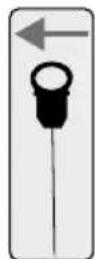
Nozzle cleaning needle
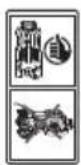
Operate the device vertically only. Never use horizontally.
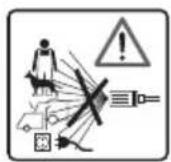
High-pressure jets can be dangerous if used incorrectly. The jet must not be directed at persons, animals, active electrical equipment or the device itself.
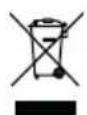
Waste electrical and electronic equipment (WEEE) must not be disposed of with domestic waste.
Safe initial start-up of the device
General Information
- Read the instruction manual carefully. Familiarise yourself with the controls and how to use the device correctly.
- The device must not be used by children. Children must be supervised to ensure that they do not play with the device.
The device can be operated by individuals with reduced physical, sensory or mental abilities or a lack of experience and knowledge if they are su-
pervised or have been in- structed in the safe use of the device and under- stand the resulting haz- ards.
• People who are not familiar with the instruction manual may not use the device.
- Pressure washers may only be operated by instructed persons.
- The machine must not be used at altitudes over 2000 m.
- In the case of a malfunction or defect during operation, the device must be switched off immediately and the mains plug unplugged. For possible causes of a malfunction: Troubleshooting, p. 34. Or, contact our service centre.
• Note that the user is responsible for any accidents or risks to others and their property.
- Observe noise protection rules and other local regulations.
Preparation
- Protect yourself against splashing water or dirt
by wearing protective goggles and suitable protective clothing.
- Aerosols may be produced during the use of pressure washers. Inhalation of aerosols may be harmful to health. Depending on the application, the use of fully shielded nozzles (e.g. surface cleaners) can significantly reduce the emission of aqueous aerosols. Depending on the environment to be cleaned, wear a suitable respirator of class FFP 2 or comparable to protect against the inhalation of aerosols if the use of a fully shielded nozzle is not possible.
- Do not work with a damaged or incomplete device or one which has been converted without the permission of the manufacturer. Before commissioning, have a specialist check that the required electrical protective measures are in place.
- The device may only be connected to a power outlet that has been installed by an experienced electrician in accordance with IEC 60364-1.
- Prior to use, always check the power cord and extension cord for signs of damage or wear and tear. If the cord is damaged during use, it must be disconnected from the supply network immediately. DO NOT TOUCH THE CABLE BEFORE IT HAS BEEN DISCONNECTED FROM THE POWER SUPPLY. Do not use the device if the cord is damaged or worn.
- If the power cord of this device is damaged, it must be replaced by the manufacturer, their customer service or by a similarly qualified person in order to avoid hazards. contact the service centre.
- Connect the device only to a power outlet with a residual current device (RCD) of rated residual
current no more than 30 mA.
- Use only extension cords that are designed for outdoor use. The connection must be dry and routed above the ground. We recommend using a cable drum that holds the power outlet at least 60 mm above the ground.
- Extension cords must have a minimum wire cross section of 2 × 2.5 ~mm^2 .
- High-pressure hoses, fittings and couplings are important for device safety. Only use high-pressure hoses, fittings and couplings recommended by the manufacturer.
- Do not start the device up if the power cord, water supply or other important parts such as the high-pressure hose or spray gun are damaged or leaky.
- Only use the device standing and on a firm, level surface.
• Never use the device if there are children or
animals nearby. People nearby must wear protective clothing.
Operation
- Pay attention, be aware of what you are doing and take the utmost care when working with the device. Do not use the device if you are tired or you are under the influence of drugs, alcohol or medication.
- High-pressure jets can be dangerous if used incorrectly. The jet must not be directed at persons, animals, active electrical equipment or the device itself.
- Do not direct the jet at yourself or others to clean clothing or shoes.
- If you come into contact with cleaning agents, rinse them with sufficient clean water.
-
Never use the power cord to pull the plug out of the outlet or to pull the device. Protect the power cord from heat, oil and sharp edges.
-
Explosion hazard – do not spray flammable liquids.
- Do not use the device near flammable liquids or gases. There is a risk of fire or explosion if this advice is not heeded.
- Never transport the device while the drive is running.
-
Switch off the device and disconnect the plug from the power outlet. Make sure that all moving parts have come to a complete stop
-
when leaving the device,
- before changing the accessories,
- before removing obstructions or loosening blockages,
- before checking the device, cleaning it or performing maintenance work on it.
- If the device starts to vibrate abnormally, an immediate check is required:
- search for signs of damage,
- replace damaged parts,
- contact the service centre.
Cleaning, maintenance and storage
- Allow the motor to cool down before storing the device for a longer period.
- Replace worn or damaged parts in the interests of safety. Use only original spare parts and accessories. Using externally produced parts results in the immediate loss of any warranty claim.
- The device may only be opened by an authorised electrician. Always contact our service centre for repairs.
- Switch the drive off, disconnect the device from the power supply and allow the device to cool off if you want to clean, adjust, store the device or to exchange an accessory part.
- Handle the device with care and keep it clean.
- Store the device out of reach of children.
Preparation
⚠ WARNING! Risk of injury due to unintentional start-up. Do not insert the plug into the outlet until the device is fully prepared for use.
Control elements
Familiarise yourself with the operating elements before using the device for the first time.
U-handle (2)
With the bow-type handle pulled out, you can conveniently roll the device.
- Pulling out the handle:
Pull the curved handle upwards. - Pulling in the handle:
Press the release (3) on the bow-type handle and pull the bow-type handle down.
Trigger gun (5)
- Switch lever (23)
- Pulling the switch lever: Activates the pressure jet
- Releasing the switch lever: Deactivates the pressure jet
- Child safety lock (24) (Viewed from behind)
← The switch lever is locked 🔒.
→ You can pull the switch lever 🔒.
⚠ WARNING! Risk of injury due to pressure jet! Lock the switch lever every time you take a break.
Rotary wheel (27)
Regulates the amount of cleaning agent added to the water.
Setting up the device
- Place the device on a level surface.
- Make sure that the high-pressure hose (9) passes through the guide for the high-pressure hose (19).
- Insert the high-pressure hose (9) into the high-pressure connection on the trigger gun (5).
- Check that the high-pressure hose (9) is firmly attached to the trigger gun (5).
Establishing a water supply
You have two options to supply the device with water:
• Household water connection
- Suctioning standing, clean water, e.g. rain barrel
Household water connection
Requirements
- Supply hose: Garden hose with fitted quick connector with garden hose adaptor (30); ∅13 mm (½"); length between 5 m and 30 m
• Minimum pump capacity: 330 l/h (5,5 l/min) - System separator
A system separator (check valve) prevents the backflow of water and cleaning agent into the drinking water pipeline.
- According to current regulations, a pressure washer must never be connected to the drinking water network without a system separator. A suitable system separator must be used in accordance with EN 12729 Type BA.
- Water that has flowed through a system separator is classified as non-potable.
- System separators are available from specialist dealers.
Procedure
-
Attach the quick connector with garden hose adaptor (30) to the supply hose.
-
Remove the grooved clamping nut.
- Push the clamping nut over the end of the hose.
- Insert the end of the hose into the thread of the quick connector with garden hose adaptor.
- Fix the quick connector with garden hose adaptor with the clamping nut.
-
Check whether the quick connector with garden hose adaptor is fitted securely to the hose.
-
Connect the supply hose to the water supply.
- Bleed the supply hose: Open the water supply until the water flows bubble-free out of the other end of the supply hose. Close the water supply.
- Connect the quick connector with garden hose adaptor (30) on the supply hose to the coupling (16).
Suctioning water
Requirements
- NOTICE! Contamination from back-washed cleaning agent! Do not draw in any water from natural accumulations.
- Suction hose with filter basket (not included, Spare parts and accessories, p. 36)
• standing, clean water, e.g. rain barrel
• Max. suction height: 0.5 m
Procedure
WARNING! Electric shock! The device itself must not be submerged in the water collector.
NOTICE! Damage due to dry running! Ensure there is a sufficient and reliable water supply.
-
Connect the suction hose with filter basket to the coupling (16) on the water connection (18) of the device.
-
Insert the end with the filter basket into the water collector.
-
Remove the lance (1) from the trigger gun (5).
-
Press and hold the switch lever (23).
-
Move the On/Off switch (4) to the position "I" (ON). The device begins to suction water and air can escape.
-
Once the device is free of air, you can release the switch lever.
-
Fit an attachment.
Select the attachment
Nozzle (20)
- Narrow fan jet High pressure
Foam nozzle (26)
- Wide fan jet: Low pressure for cleaning agent
- Use the rotary dial (27) to regulate the amount of cleaning agent added to the water.
Turbo dirt blaster (21)

The rotating water jet is suitable for working with low water consumption.
Rotating washing brush (8)
- The rotating washing brush is not generally suitable for sensitive and painted surfaces (e.g. car paint).
- Do not apply any pressure to the rotating washing brush. The cleaning function is produced by the rotational movement and the flow of water.
Adjusting the rotating washing brush
- Loosen the screw on the articulated joint (28).
- Adjust the angle of the rotating washing brush (8).
- Tighten the screw on the articulated joint (28).
Fitting and removing attachments
Fitting the nozzle
- Fit the lance (1) on the trigger gun (5) (Bayonet locking device: plug and turn).
- Fit the attachment on the lance (1). The attachment clicks into place.
Removing the nozzle
- Press and hold the release button (22) on the front end of the lance (1)
- Pull the attachment off the lance (1).
- Remove the lance (1) from the trigger gun (5) (Bayonet locking device: push, turn and pull).
Fit the rotating washing brush (8)
- Remove the lance (1) from the trigger gun (5) (Bayonet locking device: push, turn and pull).
- Mount the attachment on the trigger gun (5) (Bayonet locking device: plug and turn).
Remove the rotating washing brush (8)
- Remove the attachment from the trigger gun (5) (Bayonet locking device: push, turn and pull).
Operation
Cleaning using cleaning agent
Requirements for the cleaning agent
- This device has been designed to be used with a neutral cleaning agent based on biodegradable anionic surfactants.
- Use of other cleaning agents or chemicals can negatively impact the safety of the device and can cause damage. Such damage to the device is not covered by the warranty.
- You can buy cleaning agents from our online shop (Spare parts and accessories, p. 36).
Requirements
- The cleaning agent tank is filled with cleaning agent.
Filling/emptying the cleaning agent tank (14)
- Twist the foam nozzle (26) off the cleaning agent tank (14).
- Fill or empty the cleaning agent tank (14).
- Twist the foam nozzle (26) back onto the cleaning agent tank (14).
Switching on
⚠ WARNING! A leaky water system can result in electric shock! Move the On/Off switch (4) to the position “0” (OFF). Pull out the plug. Try connecting the water again (see Establishing a water supply, p. 29).
⚠ WARNING! The device may only be used in an upright position! There is a risk of an electric shock if the device falls over. Move the On/Off switch (4) to the position "0" (OFF). Pull out the plug. Only now may you bring the device into the upright position. For your own safety, wait about five minutes until you restore the electrical connection.
⚠ WARNING! Unsuitable extension cables can be dangerous! Use only extension cables that are designed for outdoor use. The connection must be dry and routed above the ground. We recommend using a cable drum that holds the socket at least 60 mm above the ground.
-
Ensure that the On/Off switch (4) is in the "0" (OFF) position.
-
Put the device in an upright position.
-
Insert the mains plug into an socket with residual current circuitry.
The right part of the holder for the mains connection cable (12) as seen from behind is rotatable. This allows you to easily remove the mains connection cable (13).
-
NOTICE! Dry running will damage the device. Do not operate the pressure washer with the tap turned off. Turn the tap on fully.
-
Move the On/Off switch (4) to the position "I" (ON).
The motor switches on briefly until the necessary pressure has built up. The motor then stops.
- WARNING! Be aware of the recoil force when the water jet commences.
There is a risk of injuring yourself or other people. Ensure that your footing is secure. Keep a good hold on the trigger gun (5).
Press the switch lever (23) on the trigger gun (5).
The nozzle starts working at pressure and the motor starts. If you release the switch lever (23), the motor stops. The high pressure is maintained in the system.
Interrupting the operation
You can insert the trigger gun (5) with lance and nozzle into the holder (7) for the trigger gun.
- Release the switch lever (23) on the trigger gun (5).
- If you put down the trigger gun: Lock the switch lever using the child safety lock (24) (seen from behind).
← The switch lever is locked 🔒.
→ You can pull the switch lever 🔒.
⚠ WARNING! Risk of injury due to pressure jet! Lock the switch lever every time you take a break.
- When taking longer breaks: Move the On/Off switch (4) to the position "0" (OFF).
Bleeding
Bleeding the supply hose
- Close the tap.
- Remove the supply hose from the device.
- For more, see Establishing a water supply, p. 29
Bleeding the device
- Move the On/Off switch (4) to the position "I" (ON).
- Wait until pressure has built up and the motor stops.
- Move the On/Off switch (4) to the position "0" (OFF).
- Press the switch lever (23) on the trigger gun (5) until the pressure has been released.
- Repeat these steps several times until there is no more air in the device.
Ending the operation
- After working with cleaning agents:
• Empty the cleaning agent tank (14). - Rinse the device with clear water until the lines are free of cleaning agent.
- Release the switch lever (23).
- Move the On/Off switch (4) to the position "0" (OFF).
- Close the tap.
- Press the switch lever (23) on the trigger gun (5) until the pressure has been released.
- Pull out the plug. Wind the mains connection cable (13) on the holder (12).
- Disconnect the device from the water supply.
Transport
How to prepare the device for safe rolling.
- Switch off the device and disconnect the plug from the power outlet. Make sure that all moving parts have come to a complete stop.
- Roll the high-pressure hose (9) around the hose reel (10), and wrap the power cord (13) around the holder (12).
- Secure the mains plug to the power cord using the cable clip (15).
- Pull out the U-handle.
Ask a second person to help you if you wish to carry the device.
Cleaning, maintenance and storage
WARNING! Electric shock! Risk of injury due to unintentional start-up. Protect yourself when performing maintenance or cleaning work. Switch off the device and disconnect the mains plug from the socket. You should have any repair and maintenance work that is not described in these instructions carried out by our Service Centre. Only use original replacement parts.
Cleaning
NOTICE! Risk of damage! Improper cleaning can damage the device. Never spray down the device with water. Do not clean the device under running water. Do not use any abrasive cleaning agents or solvents.
Always keep the device clean.
Cleaning after operation
- Move the On/Off switch (4) to the position "0" (OFF).
- Pull out the plug.
- Keep the ventilation slits clean and free of objects.
- Clean the device with a soft brush or a slightly damp cloth.
Cleaning the nozzle
In rare cases, the nozzle (20) may become clogged by foreign bodies.
- Remove the nozzle (20).
- Remove the foreign body from the front using the nozzle cleaning needle (31).
- Rinse the nozzle with water from the front to remove the foreign body.
Cleaning the filter insert in the water connection
NOTICE! Clean the filter insert (17) regularly.
Tools and aids required
• Hex key (8 mm) (not included)
Procedure
- Remove the coupling (16) from the water connection (18). If it is too tight, you can use a hex key to help.
- Remove the filter insert (17) from the water connection.
- Clean the filter insert under running water.
- Fit the filter insert (17) and coupling (16) in reverse order.
Maintenance
The device is maintenance free.
Storage
Notes
Always store the device and accessories:
- clean
- dry
- protected against dust
- protected against frost
• out of the reach of children
Preparing the device for storage
NOTICE! The pressure washer and accessories will be destroyed by frost if they are not completely emptied of water.
-
Completely empty the water from the device.
-
Disconnect the device from the water supply.
- Turn on the pressure washer with the On/Off switch (4) for a maximum of 1 minute.
- Press the switch lever (23) on the trigger gun (5) until there is no more water coming out of the trigger gun (5) or the attachments.
-
Turn off the device.
-
Completely empty the water from the accessories.
- Store all attachments upright in the holders with the connection facing downwards.
- Roll the high-pressure hose around the hose reel (10).
- Store the power cord in the holder (12) provided.
- Secure the mains plug to the power cord using the cable clip (15).
Disposal/environmental protection
The device, accessories and packaging should be properly recycled.
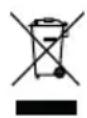
Waste electrical and electronic equipment (WEEE) must not be disposed of with domestic waste.
The symbol of the crossed-out wheeled bin means that this product must not be disposed of as unsorted municipal waste at the end of its useful life.
Directive 2012/19/EU on waste electrical and electronic equipment:
Consumers are legally obliged to recycle electrical and electronic equipment in an environmentally sound manner at the end of its life. In this way, environmentally friendly and resource-saving recycling is ensured.
Depending on the implementation in national law, you may have the following options:
- Return to a shop,
- Hand over to an official collection point,
- Return to the manufacturer/distributor.
This does not affect accessories enclosed with the old devices or tools without any electrical components.
Cleaning agent bottle disposal
- Product residues must be disposed of in compliance with the Waste Directive 2008/98/EC as well as national and regional requirements. For this product, no disposal code in accordance with the European Waste Catalogue (AVV) can be identified, as the use and therefore
the code is determined by the consumer. Within the EU, the disposal code must be determined in consultation with the disposal contractor.
- Non-contaminated packaging can be recycled.
- Packaging that cannot be cleaned must be disposed of in the same way as the material.
Troubleshooting
The following table will assist you in fixing faults:
| Problem Possible cause Error | correction | |
| Machine does not start | On/Off switch (4) switched off Check the position of the On/Off switch | |
| No mains power supply Check the socket, mains connection cable, plug and fuse and have them repaired by a qualified electrician if necessary. | ||
| Incorrect voltage supply Check whether the electrical system matches the information on the type plate | ||
| Device does not convey water Air locks in the pressure washer | Switch on the device and operate the switch lever (23). | |
| Bleeding, p. 32 | ||
| Air locks in the pressure washer | Bleeding, p. 32No pressure in device | |
| Pressure loss in line Check the water supply | ||
| Water system leaky | Connections not correctly installed | Switch off the device and disconnect it from the mains. Re-connect the device to the water supply (see Establishing a water supply, p. 29) |
| Water connection (18) leaky Sw | itch off the device and disconnect it from the mains. Change the coupling (16) on the water connection (18) including sealing ring (see Spare parts and accessories, p. 36) | |
| Strong pressure fluctuations | Nozzle (20) dirty Rinse the nozzle | (20) with water. If required, clean the nozzle bore hole with a nozzle cleaning needle (31; see Cleaning, p. 32). |
| Nozzle (20) blocked Remove the nozzle (20) and ensure that the water emerges unimpeded from the trigger gun (5). | ||
Service
Guarantee
Dear Customer,
This product is provided with a 3 year guarantee from the date of purchase. In case of defects, you have statutory rights against the seller of the product. These statutory rights are not restricted by our guarantee presented below.
Terms of Guarantee
The guarantee period begins on the date of purchase. Please retain the original receipt. This document is required as proof of purchase. If a material or manufacturing defect occurs within three years of the date of purchase of this product, we will repair or replace – at our choice – the product for you free of charge. This guarantee requires the defective product and proof of purchase to be presented within the three-year period with a brief written description of what constitutes the defect and when it occurred. If the defect is covered by our guarantee, you will receive either the repaired product or a new product. No new guarantee period begins on repair or replacement of the product.
Guarantee Period and Statutory Claims for Defects
The guarantee period is not extended by the guarantee service. This also applies for replaced or repaired parts. Any damages and defects already present at the time of purchase must be reported immediately after unpacking. Repairs arising after expiry of the guarantee period are chargeable.
Guarantee Cover
The product has been carefully produced in accordance with strict quality guidelines and conscientiously checked prior to delivery. The guarantee applies for all material and manufacturing defects. This guarantee does not extend to cover product parts that are subject to normal wear and may therefore be considered as wearing parts (e.g. High-pressure hose) or to cover damage to breakable parts (e.g. switch).
This guarantee shall be invalid if the product has been damaged, used incorrectly or not maintained. Precise adherence to all of the instructions specified in the operating manual is required for proper use of the product. Intended uses and actions against which the operating manual advises or warns must be categorically avoided.
The product is designed only for private and not commercial use. The guarantee will be invalidated in case of misuse or improper handling, use of force, or interventions not undertaken by our authorised service branch.
Processing in Case of Guarantee
To ensure efficient handling of your query, please follow the directions below:
- Please have the receipt and product number (IAN 496471_2504) ready as proof of purchase for all enquiries.
- Please refer for the product number to the type plate on the product, an engraving on the product, the title page of the operating instructions (bottom left) or the sticker on the back or underside of the product.
- Should functional errors or other defects occur, please initially contact the service centre specified below by telephone or use the contact form available on parkside-diy.com in the category Service.
- After consultation with our customer service, a product recorded as defective can be sent postage paid to the service address communicated to you, with the proof of purchase (receipt) and specification of what constitutes the defect and when it occurred. In order to avoid acceptance problems and additional costs, please be sure to use only the address communicated to you. Ensure that the consignment is not sent carriage forward or by bulky goods, express or other special freight. Please send the appliance inc. all accessories supplied at the time of purchase and ensure adequate, safe transport packaging.
You can view and download these and many other manuals on parkside-diy.com. This QR code will take you directly to parkside-diy.com. Select your country and search for the operating instructions via the search mask. You can open your operating instructions by entering the article number (IAN) 496471_2504.
Repair service
For repairs that are not covered by warranty, contact the service centre. They will gladly create a cost estimate for you.
• We can only work on devices which are sent in properly packed and with postage paid.
Note: Please send your device cleaned and with an indication of the defect to the address named for the service centre.
- The following are not accepted: devices sent in without prepaid postage, sent as bulky goods, sent as an Express shipment, or devices sent as any other form of special freight.
• We will dispose of defective devices you ship to us free of charge.
Service Centre
GB Service Great Britain Tel.: 0800 051 8970 Contact form on parkside-diy.com IAN 496471_2504
MT Service Malta Tel.: 800 65168 Contact form on parkside-diy.com IAN 496471_2504
Importer
Please note that the address below is not a service address. Contact the service centre named above first.
Spare parts and accessories
You can get spare parts and accessories from www.grizzlytools.shop. If you have any problems with your order, contact us via our online shop. If you have any other questions, contact: Service Centre, p. 36
| Pos. nr. Name Order No. | |
| 1 Lance 91120384 | |
| 2 U-handle 91120376 | |
| 5 Trigger gun 91120383 | |
| 10, 9 Hose reel with crank handle (incl. High-pressure hose, 10 m) 91120377 | |
| 14 Cleaning agent tank 91120386 | |
| 16, 17 Coupling (Water connection), Filter insert 91120380 | |
| 21 Turbo dirt blaster | 91105894 |
| 29 Cleaning agent URM 500 (500 ml) | 30990010 |
| 30 Quick connector with garden hose adaptor | 91120382 |
| 31 Nozzle cleaning needle | 91103736 |
Translation of the original EU declaration of conformity
Product: Pressure Washer
Model: PHD 170 E3
Serial number: 000001-295000
The object of the declaration described above is in conformity with the relevant Union harmonisation legislation:
2006/42/EC • 2014/30/EU • 2000/14/EC & 2005/88/EC • 2011/65/EU & (EU) 2015/863
The object of the declaration described above is in conformity with Directive 2011/65/EU of the European Parliament and of the Council of 8 June 2011 on the restriction of the use of certain hazardous substances in electrical and electronic equipment.
To ensure conformity, the following harmonised standards and national standards and regulations have been applied:
EN 60335-1:2012/A16:2023 • EN 60335-2-79:2012 • EN 62233:2008 EN IEC 55014-1:2021 • EN IEC 55014-2:2021 • EN IEC 63000:2018 EN IEC 61000-3-2:2019/A2:2024 • EN IEC 61000-3-11:2019
In accordance with the Directive 2000/14/EC relating to noise emission, the following is confirmed: Sound power level ( L_WA )
- Measured: 92.5 dB;
- Guaranteed: 95 dB
Followed conformity assessment procedure according to 2000/14/EC, Annex V.
This declaration of conformity is issued under the sole responsibility of the manufacturer:
Authorised representative of documentation
Sommaire
Introduction...... 38
Service-Center....56
Importateur.... 56
Service-Center....73
Importeur.... 73
- WAARSCHUWING! Houd rekening
Service-Center....90
Importador....91
Service-Center....108
Importatore.... 109
Ricambi e accessori.... 109
Service-Center....125
Dovozce....125
Service-Center....141
Importér.... 141
PDF ONLINE
parkside-diy.com
PDF ONLINE parkside-diy.com
Reparationsservice.... 193
Service-Center....194
Importør.... 194
IAN 496471_2504
8=