KB311ML - Fridge Atag - Free user manual and instructions
Find the device manual for free KB311ML Atag in PDF.


User questions about KB311ML Atag
0 question about this device. Answer the ones you know or ask your own.
Ask a new question about this device
Download the instructions for your Fridge in PDF format for free! Find your manual KB311ML - Atag and take your electronic device back in hand. On this page are published all the documents necessary for the use of your device. KB311ML by Atag.
USER MANUAL KB311ML Atag
instructions for use
refrigerator with freezer
natural_image
Three people preparing food together in a kitchen setting (no visible text or symbols)natural_image
Diagram of a table tennis serve with ball, cleaver, and ball (no text or symbols)verwijderen
natural_image
Pure technical line drawing of a mechanical component without any text, numbers, or symbolstext_image
Diagram of a cabinet with numbered components and directional arrows indicating movement or forcenatural_image
Diagram of a table tennis serve with ball positions and overhead bowls (no text or symbols)retirer
natural_image
Pure technical diagram of a mechanical component without any text, numbers, or symbolstext_image
Diagram of a cabinet with numbered components and directional arrows indicating movement or forcetext_image
Diagram illustrating a mechanical or optical setup with labeled components and directional arrows, likely for motion or measurement.Herausnehmen
text_image
Diagram of a cabinet with labeled parts and directional arrows indicating movement or force vectorsÖffnen der Rückwand
your refrigerator with freezer description
your refrigerator with freezer foreword
These instructions for use apply to both the refrigerator with freezer without a Biofresh 3 °C compartment (KB311M) and the refrigerator with freezer with a Biofresh 3 °C compartment (KB611M).
refrigerator compartment Biofresh 3 °C compartment
text_image
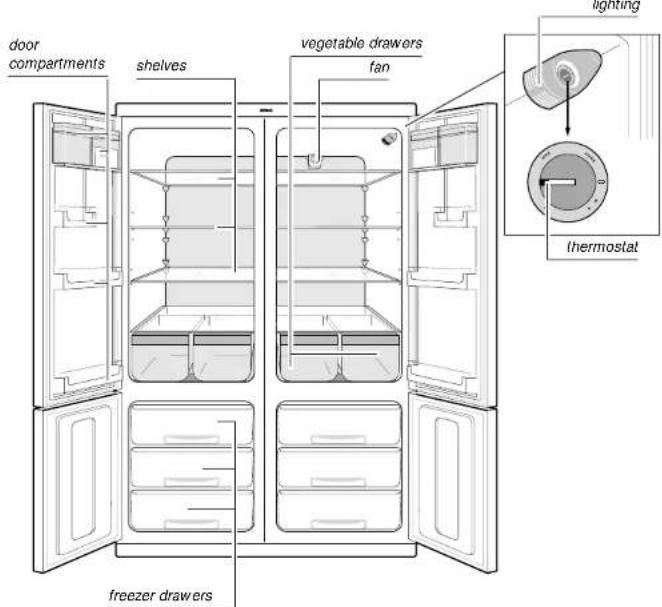
door compartments shelves vegetable drawers fan lighting thermostat freezer drawersfreezer compartment
The controls for this refrigerator with freezer are easy to use. In these instructions for use, we particularly want to give you an idea about all the facilities this appliance has to offer. Clearly set out in the 'use' section are the uses of the refrigerator, freezer and Biofresh 3 °C compartments. In the 'storage tips' section you will find information about the storage life of foods. And in the 'maintenance' section you can read about how to keep the appliance in good condition.
The safety instructions that are important during the installation are included in the installation guide, which is supplied separately and is meant for the installer.
Please keep this manual carefully, since any subsequent user will also find it very useful.
your refrigerator with freezer introduction
your refrigerator with freezer contents
You have chosen a refrigerator with freezer from Atag. The most important factors in the design of this product were: optimum ease of use, easy controls and eye-catching design.
The four-door combination offers space not only for a traditional refrigerator compartment but also for the unique Biofresh 3 °C compartment. In this cold section, food is stored at a temperature of between 0 °C and 3 °C. The fan built into the rear wall keeps the cold air moving and thus ensures an even temperature distribution. In the Biofresh 3 °C compartment, you can keep perishable food such as vegetables, fish and meat fresh for a longer period of time.
The freezer compartment is fitted with practical, extra-deep freezer drawers. The electronic temperature control ensures a constant temperature in both the refrigerator and freezer compartments.
In this very spacious refrigerator with freezer, you can store all your fresh foods under perfect conditions. And thanks to the smooth walls on all sides - on both the inside and outside - the appliance is also easy and quick to clean.
safety
what you should pay attention to 4
operation
before you can use the appliance 6 setting the temperature 7
use
shelves, drawers and door compartments 8
storage tips
refrigerated products 10 frozen products 11
energy tips
position and arrangement 14
maintenance
defrosting 15 cleaning 16 replacing the bulb 18
faults
what should I do if ... 19
environmental aspects
disposing of packaging and appliance 20
safety
what you should pay attention to
safety
what you should pay attention to
For safety tips in relation to the installation, we refer you to the instructions in the accompanying installation guide.
This appliance is extremely safe. There are, however, a number of things you have to pay attention to, just as for any other product.
Repairs should only be carried out by an authorised service engineer.
Never open the casing and do not alter the mechanical and/or electrical structure of the appliance. This could result in dangerous situations (touching live components) and faults.
Do not use the appliance if it is damaged.
The appliance should be disconnected from the mains before being repaired or cleaned. Remove the plug from the socket or turn the switch in the meter cupboard to zero.
Do not use an extension lead to connect up the refrigerator.
Never disconnect the plug from the wall socket by pulling on the lead. Always grip the plug firmly and remove it straight from the socket.
For electrical safety reasons, the appliance must not be cleaned using high-pressure cleaners or steam cleaners.
Pay attention to the distance between the refrigerator and any heat source. The temperature of the mantle must not exceed 75 °C.
Do not bend the coolant lines.
Do not use sharp objects to clean the appliance; this could damage the cooling system.
Call the service department immediately if coolant is released as a result of damage to the cooling system. Ventilate the room containing the appliance.
Keep ventilation openings free.
Never use the plinth, drawers or shelves as a step.
Never let children play with the appliance.
Do not store explosive or easily flammable substances in the refrigerator with freezer.
Alcohol and liquids with a high alcohol content should only be stored upright in a closed container in the refrigerator compartment.
Do not store bottles containing liquids that freeze in the freezer. This could cause the bottles to break.
Remove the door(s) from your old refrigerator if you no longer use it. In this way you will prevent children playing inside it from locking themselves in and endangering their lives.
operation
before you can use the appliance
operation
setting the temperature
cleaning the refrigerator with freezer
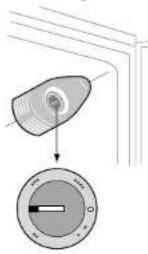
Clean and dry the interior. Use soapy water prepared with a neutral cleaning agent, such as all-purpose cleaner or washing-up liquid. After cleaning, wipe the interior using clean water and then rub dry.
Allow the interior to dry for one or two hours.
Set the thermostat to the middle setting (see also 'setting the temperature', page 7).
Insert the plug into the socket.
thermostat on middle setting
The appliance will now cool continuously until the set temperature has been reached. The freezer is cooled first and then (after ± 1 hour) the refrigerator compartment.
introduction
The thermostat is at the top right of the Biofresh 3 °C compartment and/or the refrigerator compartment. The thermostat is continuously adjustable.
The thermostat of the Biofresh 3 °C compartment can be set from 0 °C to 3 °C.
The thermostat of the refrigerator compartment can be set from 3 °C to 8 °C.
The freezer compartment is cooled to -18^ , regardless of the thermostat setting. A precondition for this is that the ambient temperature is between 10^ and 32^ .
The freezer compartment automatically reaches the optimum storage temperature.
setting the temperature
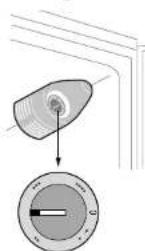
Turn the thermostat's adjusting knob to the setting required using a coin. Turning the knob to the right (clockwise) decreases the storage temperature (makes it colder).
On the 0 setting, both the refrigerator compartment and the freezer compartment underneath it are switched off. The interior light, however, continues to function.
setting the temperature
use
shelves, drawers and door compartments
use
shelves, drawers and door compartments
introduction
The glass shelves can be set at different heights according to requirements. The vegetable and freezer drawers can be removed completely. The freezer drawers are fitted with an end block, so that they cannot be pulled all the way out of the refrigerator with freezer by mistake.
shelves
natural_image
Diagram of a table tennis serve with ball, cleaver, and ball (no text or symbols)removal
-
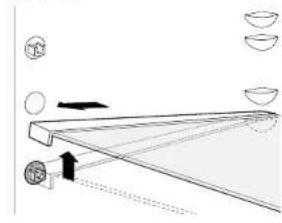
Empty the shelf.
-
Push the shelf up at the front, so that it is no longer held in place.
-
Remove the shelf by sliding it forwards, out of the groove.
insertion
- Select the height required.
- Slide the shelf to the rear, into the groove.
- Push the shelf down at the front, until it clicks into place.
vegetable drawers
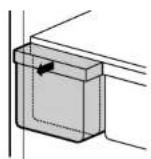
Remove the vegetable drawer by pulling it directly forwards out of the refrigerator compartment. Replace in the reverse order.
freezer drawers
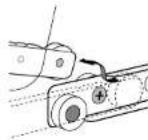
removal
- Open the drawer as far as possible.
- Lift the drawer up a bit at the front.
- Pull the drawer over the end block, out of the freezer compartment.
Insertion
Replace the drawer in the reverse order.
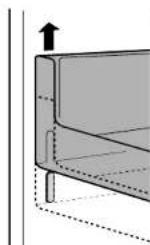
door compartments
All the door compartments are removable. The height of two of them can be adjusted.
removal
- Empty the door compartment.
- Lift the door compartment straight up until the fastening grooves on the left and right sides in the door come free.
- Remove the door compartment.
insertion
- Choose the height required.
- Press the door compartment into the fastening grooves in the door.
what you should pay attention to
Take care with foods that deteriorate under cold conditions.
You cannot store these foods in the Biofresh 3 °C compartment.
Examples include: pineapples, aubergines, avocados,
bananas, pomegranates, gherkins, potatoes, pumpkins,
mangoes, melons, olives, peppers, tomatoes and citrus fruits.
storage table
The table below contains information about the storage life of foods in both the refrigerator compartment and the
Biofresh 3 °C compartment.
| product | refrigerator compartment storage life in days | Biofresh 3 °C compartment storage life in days |
| butter | 20 | 30 |
| poultry | 2 | 5 |
| milk | 2 | 6 |
| slices of sausage | 2 | 7 |
| shellfish | 1 | 3 |
| fresh fish | 1 | 3 |
| fresh mea | 2 | 4 |
| soft cheese 4 | 20 | |
| strawberries | 2 | 5 |
| artichokes | 4 | 20 |
| asparagus | 3 | 15 |
| chives | 15 | 60 |
| cauliflower | 5 | 15 |
| broccoli | 5 | 10 |
| Chinese cabbage | 3 | 14 |
| raspberries | 1 | 6 |
| fruit (general) | 2-7 | 15-20 |
| garlic | 60 | 100 |
| lettuce | 2 | 7 |
| radishes | 7 | 15 |
| Savoy cabbage | 10 | 50 |
| spinach | 2 | 7 |
| fennel | 10 | 20 |
| iceberg lettuce | 3 | 20 |
what you should pay attention to
Only buy food in undamaged packaging.
Put frozen products into the freezer as quickly as possible after purchase. Make sure that they do not defrost while taking them home.
Keep a space of at least 25 mm free between the top of the freezer supplies and the bottom of the drawer above.
Make sure that food that is being frozen does not come into contact with products that are already frozen.
Do not store carbonated drinks in the freezer compartment.
freezer tables
The tables on this and the following pages contain information about the storage life, preparation for freezing and preparation for use of freezer products.
frozen storage life preparation of product preparation of product in months for freezing product for use
| beef 6 to 8 Only freeze meat that is fresh portions. first, thicker pieces pork, lean 5 to 6 divided into convenient portions. first, thinner pieces pork, fat 4 to 5 Avoid a weight of more than 2 kg. (karbonade, goulash) mutton 6 to 8 You can save freezing space by (chops, goulash) can be veal 5 to 6 removing the bones from the meat. slimmered, braised or game 5 to 6 moice up to 2 minnards up to 4 innacon, non-smoked up to 3 boiled sausages and sausages for frying up to 3 Even if sausages are in their skins, provide extra packaging. Defrost. | |||
| sliced cold meats | 4 to 6 Put foil between the slices. | Defrost. | |
| duck goose chicken (for boiling) game birds turkey | 4 to 6 4 to 6 7 to 9 up to 6 7 to 9 | After plucking, draw poultry, wash carefully, make ready for use, bring into a compact shape (ress: lay the wings crossways across each other, put the thighs in the abdominal cavity). The giblets can be frozen separately. | Poultry that is going to be roasted should be defrosted completely. Products that are going to be boiled can be just partially defrosted. |
| frozen product | storage life preparation of product preparation of In months for freezing product for use | ||
| trout | 2 to 4 | Fish can be frozen in such a way that it is ready to be fried or boiled. | Smaller fish are not de-frosted, but coated with breadcrumbs while still |
| tench | 2 to 3 | ||
| carp | 1 to 2 | Remove the fish's scales and | |
| fish fillet | 2 to 4 intestines before packing. Divida the frozen and fried or just fish into the portions required. boiled. | ||
| strawberries, raspberries | 8 to 12 | Sort the fruit immediately after it has been picked or bought. Wash and prepare the fruit as you would do for preserving. Apples, peeled and cut into piezas, should be blanched for 2 to 3 minutes. Freeze currants without sugar. Cover other types of fruit with a 40% sugar solution. | Defrost frozen fruit in closed packaging or in a closed dish or bowl at room temperature. |
| blackberries, cumants | 8 to 12 | ||
| blueberries | 8 to 12 | ||
| apple puree | 8 to 12 | ||
| plums | 8 to 12 | ||
| peaches | 8 to 12 | ||
| cherries | 8 to 12 | ||
| fruit flans and cakes with fresh fruit | 3 to 4 | In the case of products that you want to freeze immediately after baking. minutes. Cakes, tarts and so on should be defrosted | |
| cream cake 2 to 3 first allow them to cool and then plain cakes made of package. yeast-based pastry and choux pastry | 5 to 6 The icing may become sticky. | Bake rolls and pies in the oven for about 5 to 10 | |
| puff pastry, puff pastries bread | 1 to 3 | ||
| 2 to 3 | |||
| rolls | up to 4 days | ||
| cream, whipping cream | 1 to 3 | Quark can be frozen with or without things added (fruit, pulp). We do not advise you to mix onions or shallots into the quark. The whites and yolks | All dairy products (including frozen eggs), except for ice cream, should be defrosted at room temperature before |
| ice-cream | 1 to 3 | ||
| butter | up to 1 | ||
| quark | 4 to 6 | ||
| egg yolk | 1 to 6 of eggs should be stirred thoroughly use. | ||
| egg white | 1 to 6 and passed through a line sieve. | ||
| frozen product | storage life in months | blanching time (in minutes) | preparation of product for freezing | preparation of product for use |
| cauliflower | 9 to 12 | up to 3 | Process vegetables immediately after picking or buying. | Boil the vegetables in water. |
| kale | 9 to 12 | 2 to 2,5 | The cooking time needed is just a half or a third of the time for fresh vegetables. | |
| Brussels sprouts | 9 to 12 | 3 to 4 | Prepare them for use and then blanche them correctly. | |
| savoy cabbage | 9 to 12 | 2 to 3 | vorvolgens op de juiste | |
| kohlrabi | 9 to 12 | 3 | See the blanching times given here alongside! | Take cucumbers and tomatoes out of their freezer packaging and defrost them in a closed bowl or dish at room temperature. Cook |
| spinach | 9 to 12 | 1,5 to 2 | ||
| asparagus | 9 to 12 | 2 to 4 | ||
| French beans, peas | 9 to 12 | 2,5 to 3 | ||
| cucumbers up to 6 | — | cauliflower immediately; otherwise, it becomes bitter. | ||
| red cabbage | 9 to 12 | 2 to 3 | ||
| carrots | 9 to 12 | 2 to 3 | ||
| tomatoes | up to 6 | — | ||
Instant meals storage life preparation of product preparation of in months for freezing product for use
| roast meat Meat dishes are prepared and cooked Just defrost ready-made (pork, veal, game); 1 to 2 in the usual way. The cooking time meals and dishes. Fry rolled meat 2 to 3 should be a bit shorter, so that the roasted dishes again in fat. goulash 1 to 2 meat does not fall into pieces. Put fried potatoes into the meat loaf 1 to 2 Prevent thickened soups and sauces pan frozen and fry them meat stew 1 to 2 separating during freezing, mix them again in plenty of fat. (main course) soups 2 to 3 first for 1 to 2 minutes while they are dumplings of potatoes, bread or flour 2 to 3 chips 2 to 3 hot. |
High ambient temperatures have an adverse effect on energy consumption. Direct sunlight or other heat sources in the immediate vicinity also have an adverse effect on energy consumption.
Keep ventilation openings free. Openings that are covered over or dirty result in higher energy consumption.
use
Temperatures set too low in the refrigerator and freezer compartments cause an unnecessarily high energy consumption.
Allow dishes to cool down before placing them in the refrigerator or freezer compartments.
Open the door(s) as infrequently and briefly as possible.
Always cover dishes before placing them in the refrigerator compartment.
Switch the refrigerator with freezer off if you are not going to use it for a longer period of time (during holidays, for example).
refrigerator compartment and Biofresh 3 °C compartment
Both the refrigerator compartment and the Biofresh 3 °C compartment defrost automatically from time to time. The meltwater runs away via the meltwater drain to a container, where it evaporates.
Keep the meltwater drain free at all times.
If the meltwater drain does ever become blocked, you can unblock it with a cocktail stick, for example.
freezer compartment
Defrost the freezer compartment when the layer of ice has become about five millimetres thick.
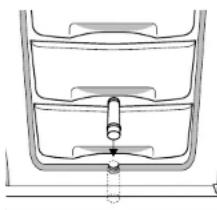
natural_image
Pure technical line drawing of a mechanical component or assembly (no text or symbols)putting the meltwater drainpipe in place
- Remove the frozen food.
Keep the frozen food in a cool place, wrapped in blankets or newspapers. - Remove the freezer drawers (see also 'freezer drawers', page 8).
- Put the meltwater drainpipe in place.
Attention: The door must remain open. - Put a container under the outlet of the meltwater drainpipe.
Attention: Check regularly to make sure the container has not become too full.
- Switch the freezer compartment off by setting the thermostat to the 0 setting.
- Defrost the freezer compartment.
- Clean and dry the freezer compartment.
- Switch the thermostat to the setting required.
- Replace the frozen food in the freezer compartment when the freezer compartment is back at temperature.
The defrosting process can be speeded up by placing a container of hot water in the freezer compartment.
Attention: Never remove the layer of ice using sharp objects, defrosting sprays, a hair-dryer, an electric heater or similar. This can lead to dangerous situations and cause irreparable damage to the appliance.
maintenance cleaning
maintenance cleaning
Attention: Before starting to clean the appliance, disconnect it from the power supply. Remove the plug from the socket or turn the switch in the meter cupboard to zero. Never pull the plug out of the socket by its cable. Always take hold of the plug itself and pull it straight out of the socket (see also 'safety', page 4).
Attention: For electrical safety reasons, the appliance must not be cleaned using high-pressure cleaners or steam cleaners.
Do not use too much moisture.
Avoid any moisture getting into electrical components.
interior
Clean the interior of the appliance once a month.
Use soapy water prepared with a neutral cleaning agent, such as all-purpose cleaner or washing-up liquid, for cleaning.
After cleaning the interior, wipe it down with clean water. Dry it with kitchen paper or a dry cloth.
Leave the appliance to dry for 1 or 2 hours.
exterior
It is best to use a mild cleaning agent (washing-up liquid) and a damp cloth to clean the stainless steel parts. Dry with kitchen paper or a dry cloth. The stainless steel regains its shine if you occasionally use a stainless-steel care product or polish. The polish applies a dirt-resistant layer to the stainless steel. Always clean the stainless steel in the direction of polishing.
Atag supplies cleaning and care products for stainless steel.
Never use abrasive cleaning agents (such as Vim, green scourers or other scouring pads) or polishing cleaning agents (such as liquid abrasives). Never use caustic agents. These can attack the stainless steel.
text_image
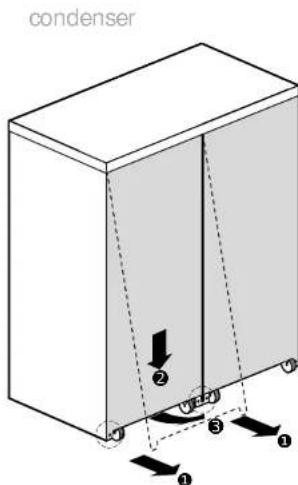
condenser ① ② ③ ④ ⑤opening the rear panel
For the appliance to work optimally, the condenser and the ventilation duct should be cleaned thoroughly at least once a year.
Open the rear panel as shown in the illustration.
- Unscrew fastening screws ① in the rear panel and those of the fastening clip. Remove the fastening clip.
- Push the rear panel approximately one centimetre downwards ②.
- Pull the bottom of the rear panel backwards ③: the top remains in place.
The condenser and ventilation duct are accessible.
Carefully remove the dust using a soft brush and a vacuum cleaner.
Close the rear panel in reverse order.
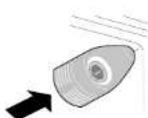
replacing light bulb
Attention: Switch the appliance off before you replace the light bulb. Remove the plug from the socket or turn the switch in the meter cupboard to zero. Never pull the plug out of the socket by the cable. Always take hold of the plug itself and pull it straight out of the socket (see also 'safety', page 4).
- Take hold of the light bulb via the opening at the back of the fitting.
- Unscrew the light bulb.
- Replace the light bulb.
- Connect the appliance again.
Attention: Use only light bulbs of the same type and with the following characteristics:
- voltage 230 V;
- fitting E14;
- maximum wattage 15 W.
| fault | cause | solution |
| Appliance does not do anything; light is not on. | Plug is not in socket. | Put the plug into the socket. |
| Fuse is defective. | Replace the fuse. | |
| Temperature in refrigerator compartment / Biofresh 3 °C compartment is too high or too low. | Thermostat set incorrectly. | Set the thermostat correctly. |
| Water is leaking from the refrigerator compartment / Biofresh 3 °C compartment. | Meltwater drain blocked. | Clear the meltwater drain. |
| Appliance makes a noise. | Food incorrectly arranged in the refrigerator compartment / Biofresh 3 °C compartment. | Arrange the food differently in the refrigerator compartment / Biofresh 3 °C compartment. |
| There is an object touching the appliance. | Remove the object. | |
| Lighting is not on. | Light bulb is defective. | Replace the light bulb. |
environmental aspects
disposing of packaging and appliance
The appliance's packaging is recyclable. The following may be used:
- cardboard;
• polyethylene film (PE);
• CFC-free polystyrene (PS rigid foam).
Dispose of these materials responsibly and in accordance with government regulations.
The government can also provide information about the responsible disposal of discarded domestic appliances.